[00:00:05] Rizal Hamdallah: Okay, Landis, we have a lot going on this winter. Lay it out for us. So, Nosh Live and Brewbound Live are taking place at the same time. That's right. They're both on December 4th and 5th. And on December 6th, we're hosting the third Cannabis Forum for food and beverage.
[00:00:17] Global Chief: And if you're registered for any of our main conferences, then you can also get a half-priced Cannabis Forum ticket, which brings us to the final event, BevNET Live, where we have a full buyout of the Lowe's Santa Monica Beach Hotel for the very first time on December 9th and 10th.
[00:00:29] Rizal Hamdallah: Like I said, a lot going on. Info on all four events can be found at BevNET.com slash events.
[00:00:34] Global Chief: And please don't be shy if you have questions. We know it's a lot, so drop a line to sales at BevNET.com and we'll walk you through everything. And now, Taste Radio Insider.
[00:00:48] Ray Latif: Hello, and thanks for tuning in to Taste Radio Insider. I'm Ray Latif, and you're listening to episode 44 of the podcast. I'm with my BevNET colleagues, John Craven, Mike Schneider, and Jon Landis. We're recording from the Taste Radio studio at BevNET headquarters in Watertown, Mass. And in this episode, we speak with Rizal Hamdallah, the Global Chief Innovation Officer of Ocean Spray, for a conversation that explores current innovation trends in food and beverage, and how larger companies are attempting to keep pace with entrepreneurial brands. If you like what you hear on Taste Radio Insider, please share the podcast with friends and colleagues. And of course, we'd love it if you could rate us on the Apple Podcasts app or your listening platform of choice.
[00:01:26] Global Chief: My computer still has iTunes.
[00:01:30] Ray Latif: It's going to disappear pretty soon.
[00:01:31] Global Chief: Yeah. I don't know if the podcasts are on the iTunes, but it still has an iTunes app.
[00:01:36] Rizal Hamdallah: My login just expired for iTunes.
[00:01:38] Global Chief: It's like, here, let's delete.
[00:01:38] Rizal Hamdallah: It's going to log in and it's expired. Hopefully. That'd be cool. It's just going to be like a big recall.
[00:01:44] Global Chief: If you can still rate on iTunes, if you can, you should, because you know, one day you won't be able to anymore. You'll be nostalgic for it.
[00:01:56] Ray Latif: Mike, that's a bright yellow jersey you got there. Oh, it's Arsenal. Sorry to hear that. Bruce Banana. Yeah. Okay. Well done. Thank you.
[00:02:04] Rizal Hamdallah: You do look like you should be cleaning up trash on the side of the road. from Manchester United.
[00:02:11] Global Chief: That's amazing.
[00:02:12] Rizal Hamdallah: I am visible from space in this Jersey.
[00:02:14] Global Chief: I mean, I just like glance. I thought it was a tour de France thing before I actually saw what it was. It's the new way Jersey.
[00:02:21] Rizal Hamdallah: I got Reese Nelson's Jersey, which assures that he'll be sold or loaned. So yeah, I'll be asking for a refund.
[00:02:27] Ray Latif: You wanna try some CBD coconut water? I got some in my hand. I would like to, yeah. This is a brand called Sea Water. It's made with coconut water and full spectrum hemp extract, 20 milligrams of it. Is there any salt in it? I don't believe so. It's called Sea Water. Oh, I see. Sea, C-W-T-R.
[00:02:45] Rizal Hamdallah: I know, but there's that play on words from a marketing perspective, Ray. So you tell someone, hey, have you ever had seawater? And they're like, of course I've had seawater.
[00:02:51] Ray Latif: That's why you're the CMO of this company.
[00:02:53] Global Chief: I've had seawater up my nose. It's not very pleasant. Exactly.
[00:02:57] Rizal Hamdallah: Sam, it's for cannabis?
[00:02:58] Global Chief: You get slammed by a wave and seawater everywhere.
[00:03:02] Rizal Hamdallah: I like that it's clever. And I think you're sitting in a boardroom and maybe you're not a marketer and you're thinking, hey, this is going to sound really cool. And it does, but it's going to take some education to learn that you mean cannabis water, not seawater. You're probably right. Yeah.
[00:03:14] Ray Latif: How about the drink Good Day cold brew with benefits? Oh, this is an orange slim can with a lot of copy on the front. What does it say on the front? John Craven.
[00:03:24] Rizal Hamdallah: Cold brew with benefits.
[00:03:26] Global Chief: Have a Good Day. Okay. So I think they launched what, three different products, essentially a sparkling water, a tea and a coffee, all with CBD. Oh, is that CBD in it too? Yep. I like that. Because you can't launch a beverage in the summer of 2019 without CBD.
[00:03:42] Rizal Hamdallah: Can I try some of that? I'd like to get some benefits.
[00:03:45] Global Chief: Yeah, you got it.
[00:03:46] Rizal Hamdallah: Great.
[00:03:47] Global Chief: Meanwhile, we have another- Or just to prove me wrong, here's some beverages that are launched at NFCA Day.
[00:03:53] Ray Latif: Meanwhile, we have some Nicks and Kicks in front of us as well. This is a British brand. They make a beverage with a little cayenne for a natural pick-me-up. I didn't make that up, they did. I'm going to try this stuff. I think we've tried this before, haven't we? We have.
[00:04:06] Rizal Hamdallah: I actually brought this back in my suitcase full of dirty laundry, so enjoy. Is that a new flavor?
[00:04:12] Ray Latif: It's a good thing there's a nice seal on there.
[00:04:13] Rizal Hamdallah: I'm totally kidding. I did all my laundry, stayed in a nice Airbnb. It was nice to come home with clean clothes. But yeah, I ran into Kirsten, who is the founder of that in the Whole Foods near Piccadilly Circus, and she was trying to close a deal. I think to get her product moved on the shelf. I don't know how it went, but anyway, she brought me this, their new flavor. It's watermelon hibiscus. It's really good. Has no added sugar, which I think is actually kind of cool for the flavor profile they have with the watermelon and the spice. So for more on this.
[00:04:43] Global Chief: Making it happen, getting out there, getting in front of people, right?
[00:04:46] Rizal Hamdallah: I don't think I've ever witnessed the like, uh, shakedown of like a store manager or category manager, you know, whatever in a, in an English store. So that was, uh, that was kind of fun.
[00:04:58] Global Chief: So were they really proper? No, I would say they were more civil.
[00:05:02] Rizal Hamdallah: There was a more civil conversation going on.
[00:05:05] Global Chief: So no, you were in Piccadilly circus. If you went like, you know, way out into the more rural regions, I'm sure they would have been fisticuffs.
[00:05:14] Rizal Hamdallah: It wasn't like super coffee bros in the aisles fighting each other.
[00:05:17] Global Chief: Yeah.
[00:05:17] Rizal Hamdallah: Those guys at Wegmans, that's like famous for that. She gave me a coupon for a, a free Nixon kicks. And I went and put the Nixon kicks in my cart and I just bought it. So, uh, why do you feel bad for Kirsten and Nixon kicks? Well done. And if you want to hear more about Nixon kicks, you can catch them on Elevator Talk.
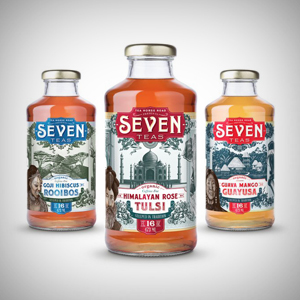
[00:05:37] Ray Latif: Yes, that's right. That's one of the original Elevator Talk episodes that we shot way back in the day. We'll find it and put it in the show notes. If cayenne is an interesting ingredient to infuse into a beverage, how about saffron? Oh, sign me up. Yes, this brand called Seven Teas, maker of organic tea. This variety is saffron mint gunpowder. Okay.
[00:05:58] Rizal Hamdallah: You know that saffron is the most expensive spice in the store.
[00:06:02] Ray Latif: Yeah, this bottle that I'm holding in my hand is $52.
[00:06:04] Rizal Hamdallah: Really?
[00:06:05] Ray Latif: No, I don't know what the retail price is.
[00:06:07] Rizal Hamdallah: No, you don't need, the thing about saffron is you don't need a lot of it. So if you were to buy like, you know, you know how you buy turmeric and you buy a big, how much is in that? What? When you buy any spice, it's like an eight ounce. Like a satchel?
[00:06:19] Ray Latif: Yeah.
[00:06:20] Rizal Hamdallah: No, no, you're talking about a jar of spice. I'm gonna go with those are like. Two or three ounces? Three, four ounces.
[00:06:24] Ray Latif: Well, it depends what the spice is, right? I mean, some spices are lighter than others. Some herbs are lighter than others, right? Right.
[00:06:30] Rizal Hamdallah: But you wouldn't buy that same amount of saffron. You couldn't afford it.
[00:06:33] Ray Latif: No, no, it'd be very expensive. You don't need that much. Well, this is quite good.
[00:06:36] Rizal Hamdallah: So try this one. That Moti lemonade over there also is saffron flavored.
[00:06:41] Ray Latif: Oh, wow. We got saffron all over the table. Is saffron trendy or what? Saffron Rosewater. The name of the brand is Moti, M-O-T-I. This is a lemonade. That's Moti. Moti. Sorry. They say they're reinventing lemonade. That's their tagline, I guess.
[00:06:55] Rizal Hamdallah: So this Seven Teas saffron mint gunpowder. Gunpowder is a kind of Chinese tea. Usually strong. I don't taste a lot of saffron in this.
[00:07:04] Ray Latif: Well, that's the thing. You know, if they added a ton of saffron, it'd be too expensive for you to buy.
[00:07:09] Rizal Hamdallah: But you want saffron to be tasted, right? I mean, the thing, again, the thing about saffron. Pure cold-pressed saffron? Is that what you're going for? Yeah, I don't think that would be good. Good God. You need some seawater to wash it down.
[00:07:18] Ray Latif: I think the hard thing with Seven Teas is that this is 16 ounces of liquid, but it feels like a lot more. This is a pretty significant bottle. I don't know how to describe this. Apothecary look, perhaps? How would you describe this type bottle? It's made of glass, Ray.
[00:07:32] Rizal Hamdallah: It's a glass bottle, Old West look.
[00:07:35] Ray Latif: It's wider.
[00:07:35] Rizal Hamdallah: It's very apothecary and very Old West. It's always a wide mouth. Apothecary looking. That you would want to drink tea out of. For me, it looks like a HealthAid bottle with a wider mouth.
[00:07:45] Ray Latif: It feels like a kombucha bottle, like a HealthAid, one of those bottles with the safety pop.
[00:07:50] Global Chief: I'm like 95% certain that this Seven Teas is the same guys who did Coco To Go. that's a real throwback. Yeah. So it's nice work. It's the Zacharians. I don't remember what their last name is, but they're really nice guys. They came to Bevanette live winter, 2013 pitching the showdown and we'd love to chat with them and chat about seventies. Maybe it's time to come back. Tasty tea. And the branding is really cool.
[00:08:21] Rizal Hamdallah: Yeah, it is good-looking organic tea, you know. What's with the Bumble and Butter here? Bumble and Butter's back. We talked about this a while ago, and you guys were so hot on it, and it's just sitting here unopened. It's pretty tasty. It's super tasty. Cheddar granola. Cheddar granola. Yeah, it's still, it's cheddar and, what does it say, black pepper?
[00:08:37] Ray Latif: This one is sharp cheddar with cracked... Black pepper. Why is that hard to say?
[00:08:42] Rizal Hamdallah: That one I like on a salad. I don't know about garbage mouthing that on the show.
[00:08:45] Ray Latif: It's pretty good. Made with local honey and grass-fed butter, organically sourced. Bumble and Butter endorsed by bees since 2016. I like everything about this.
[00:08:53] Global Chief: It tastes like the cheese. It's savory and sweet at the same time.
[00:08:56] Rizal Hamdallah: It tastes like the cheese from smart food popcorn.
[00:09:00] Global Chief: Yeah, that's good.
[00:09:01] Ray Latif: I want to try it again. I'm going to go for it. Speaking of our sticking with dairy, although this is dairy free, this is Stonyfield Organics new fruit and veggie line. It's a pouch of Fruit? Yes. It's a pouch of smoothie. The one on my hand is the Berry Cherry Blast variety. It's dairy-free, as I mentioned, made with coconut cream. I had one of these this morning. It was fantastic. It's like, what do you need dairy for ever again if it tastes like this? It just kind of... Oh, yours blew up.
[00:09:34] Rizal Hamdallah: Oh my God, it just blew up on John Craven. Yes. Does that taste good? It went all coconut cult on you. How does this look like baby food? It kind of looks like baby food.
[00:09:43] Ray Latif: When was the last time you had baby food?
[00:09:45] Rizal Hamdallah: You know, some months are a little tighter than others. Probably the last time I had baby food is we've had like HPP baby food in here. That's true. There was someone at Nosh too, right?
[00:09:56] Ray Latif: I tasted at Nosh a lot, yeah.
[00:09:57] Rizal Hamdallah: That person, Little Gourmet. Little Gourmet from Pitch Slam. Yeah.
[00:10:02] Ray Latif: The Nosh Pitch Slam?
[00:10:03] Global Chief: The Nosh Pitch Slam.
[00:10:04] Rizal Hamdallah: Oh, okay. I like baby food, what can I say?
[00:10:07] Global Chief: Well, when it tastes like that stuff does, you know, it's easy to eat. Meaning it's really good and like, yeah, everyone loves a little gourmet.
[00:10:15] Ray Latif: This bag of chickpea snacks was on the counter in the kitchen this afternoon. It's a Lebby, L-E-B-B-Y, gluten-free, kosher, and dry roasted chocolate covered chickpeas. They're really good. I like these. They also have a couple of different varieties. The one we had, this one is a mocha variety in my hand. They have a dark chocolate, milk chocolate, and a sesame honey. Have you tried these, Mike?
[00:10:39] Rizal Hamdallah: I have.
[00:10:40] Ray Latif: What do you think?
[00:10:41] Rizal Hamdallah: I like the taste of the coating. I want more chickpea or more chickpea crunch. Like for that category, what I'm used to is the Vienna snack. So I've had that one before. I like the crunch inside. And this one is a little bit different than that. I kind of miss the chickpea flavor. I want malt flavor because it's got the consistency of those Whopper candies.
[00:10:59] Global Chief: Yeah, it looks like Whopper.
[00:11:00] Rizal Hamdallah: If you didn't tell me what this was, I definitely would not know it was chickpeas. You think it was a Whopper dud? I think it was a Whopper.
[00:11:06] Global Chief: They can make Whoppers using chickpeas. That would be pretty awesome. You'd be like expecting the crunch and you'd get this chewy thing. You're like, what happened to my Whoppers? I've had other Lebby products that I've really enjoyed. These are okay. They're not my favorite, but I can certainly see the appeal. Yeah. Anything else?
[00:11:24] Rizal Hamdallah: I know I'm not the only one who's noticed this, but there's been a lot of electrolyte products that have been coming through, like kind of new age Gatorade, make your own. We've had superior- You say new age? Yeah, I guess it's kind of an old term. The irony. The irony of new age is an old term. Yeah. Yeah, it is. It is.
[00:11:41] Ray Latif: I actually saw a new age aisle in a grocery store once and I realized that the grocery store was still stuck in 1983. They're still calling. They literally had a section called, it was an aisle, it was like new age beverages. I was like, really?
[00:11:54] Rizal Hamdallah: I was right there in that aisle going, Hey, look at these.
[00:11:57] Ray Latif: Mike was the category manager for that. All right.
[00:12:00] Rizal Hamdallah: So it's the new, is that better than like the new answer to Gatorade? Um, which we're still looking for an answer to Gatorade for apparently, but, um, is it called body armor? Better for you Gatorade, better for you body armor, perhaps it's, it's, you know, kind of the little pouches that you take. The sticks. The little sticks, yeah.
[00:12:18] Global Chief: Powder sticks.
[00:12:19] Rizal Hamdallah: And there's one called Scratch and there's Superieur Electrolytes and we've had Cure Hydration and Benny has come through. A lot of these are coming through right now.
[00:12:28] Global Chief: Let's remember like SOS Rehydrate and Liquid IV and the ones that we've been around for quite some time too and kind of pioneered this category a bit.
[00:12:36] Rizal Hamdallah: You know what I've noticed about them though is that the newest ones taste pretty good.
[00:12:42] Ray Latif: As well they should. You can't put out a crappy tasting product anymore.
[00:12:45] Rizal Hamdallah: You can't. You can't get away with that. And so they're really figuring out not only how to make these products taste good, but also I didn't hate the stevia in Superior, for instance. And I met the founder at Cambridge Naturals and he was talking to me about the science behind the way that they put stevia in their product and why they put stevia in their product. It's pretty interesting. They've got a pretty good story.
[00:13:07] Ray Latif: There's also Benny, which is a brand of drink mixes that you can add to water or tea. They've got functions Cure Hydration, slow release energy, prebiotics, anti-inflammatory properties. The co-founder is Brian Joseph. He sent us a nice email to askattasteradio.com thanking us for the show and asking if you can send product. Of course you can send product. 44 pleasant street suite one 10 Watertown mass 0 2 4 7 2. He already did, but Mike snaked it all.
[00:13:34] Global Chief: I think it's at your house or something. That's what you said.
[00:13:37] Rizal Hamdallah: Well, to be fair, he, he sent it, he sent it like 45 days ago and yes, I've used it many times and to recover or during soccer matches and it's, it's a good product.
[00:13:47] Ray Latif: I liked it. Indeed. I also got a nice email from the founder of Barnacle, Max Stanley. They're a Juneau, Alaska-based company, and their main ingredient is bull kelp, which they turn into salsa, pickles, seasoning blends, et cetera. Very innovative company. Max, thanks for listening. Thanks for your support. And send us more product when you have an opportunity.
[00:14:08] Global Chief: I think some of that actually just arrived very recently as well. Just letting you know, Melissa talked to him yesterday.
[00:14:14] Rizal Hamdallah: Cure Hydration sent us a nice box with a glass bottle, and again, been trying that as well. If you want to try that, stop by my office. She sent a bunch.
[00:14:22] Global Chief: It's great. All right. You're out there, everybody? You want to try out Cure Hydration?
[00:14:27] Innovation Officer: Come on over.
[00:14:28] Global Chief: Stop by Mike's office.
[00:14:30] Ray Latif: So many brands, so much Innovation Lab little time. And the big question is, can the big brands keep up with the small brands doing all this amazing stuff? Well, we've got an answer for you. As I mentioned at the top of the show, we recently had a chance to sit down with Rizal Hamdallah, who is the Global Chief Innovation Officer of Ocean Spray. Most of you probably know Ocean Spray is a legacy brand of cranberry-based foods and beverages. Rizal came to the company from Tyson Foods, where he was the Managing Director of the company's Innovation Lab, an incubation unit designed to rapidly bring new and innovative products to market. In his current role, he's focused on a similar mission, that of developing new health-focused products for the farmer-owned cooperative. In our interview recorded at Ocean Spray's new Boston office, Rizal discussed the biggest opportunities and challenges for large companies to positively impact the food system through innovation, why he's bullish on the future of personalized nutrition, and why he's critical of how some companies are promoting sustainability. Hey, it's Ray with Taste Radio. I am in the Seaport District of Boston, Massachusetts. I'm at the Officer of Ocean Spray, and with me is Rizal Hamdallah, the Global Chief Innovation Officer of Ocean company. Rizal, thanks so much for being with me. Thanks, Ray, for coming here. So, how's your day going? Are you prepared before this crazy heatwave that's about to hit us?
[00:15:55] Ocean Spray: Well, I'm looking forward for heat. Oh, really? I mean, it's been rough. I came from Chicago, and if you talk to anyone from Chicago, it's not an easy summer so far. So, despite it's a heatwave, but looking forward to have some warmth.
[00:16:11] Ray Latif: Yes, indeed. I'm more of a warm person than a cold person for sure. February, not for me. July, I'm all about that.
[00:16:18] Ocean Spray: Same thing with me.
[00:16:19] Ray Latif: Yeah, totally. You mentioned you came from Chicago. What were you doing before you came Ocean Spray?
[00:16:24] Ocean Spray: I was the managing director of Innovation Lab for Tyson Foods. I was there for two years. And before that, I was with Sarah Johnson, also in Midwest. So I've been spending a lot of time in Midwest. And that's the reason why I live in Chicago. And I just moved here to Boston, literally. six, seven weeks ago. Wow. Yeah, I'm still commuting now, but I will be moving here permanently in September. So looking forward to it.
[00:16:52] Ray Latif: Yeah. How are you liking the city so far?
[00:16:54] Ocean Spray: I love it. I think this is one of the big reasons for us to take this decision because the city is very nice, very clean. The environment is very good, great people, great talents, which I think it's really important for us to continue our life and journey in Ocean Spray as well as in Boston.
[00:17:14] Ray Latif: I'm sure Mayor Marty Walsh would have loved to hear that clip. Maybe he will. Maybe you'll use that. I hope so. To bring folks to the city. So aside from the city itself bringing you here, you know, what brought you to Ocean Spray? Why were you interested in the company?
[00:17:27] Ocean Spray: Yeah, and I like this question because I think it's important there is no bullshit answer about this. Oh, I agree. So I'll give you three reasons why I take the job. Okay. The first one is the company is in the middle of journey. The journey to set up a better and brighter future.
[00:17:48] Ray Latif: Now I should pause there because for folks who aren't familiar with Ocean Spray, I'm sure that they're very few. But for folks who are not familiar with the company, could you tell us a little about what it is and what you guys do here?
[00:17:58] Ocean Spray: Yeah, I mean it's a farm-owned company, Cranberry Juice. I think a lot of people know about this product very well. Maybe if you don't drink it, you probably when you go to the store, you will find this like in your juice ale. But mainly it's a farmer, Cranberry-owned company, if you will, and have been in the market for 89 years.
[00:18:18] Ray Latif: Okay.
[00:18:19] Ocean Spray: So if you don't know, probably your parents know or your grandparents know about this company. Now the key is to let the younger folks know all about the company, right? Exactly. So anyway, because of that, this is the question I ask myself. Do you want to be part of the journey or you don't want to be part of the journey? And I said, yes, because the journey is going to be exciting. It's going to be hard, but exciting. So that's number one reason why I'm taking the job. The second one is the company is a co-op. It's a farmer's owned company. It's very unique in a way because we know this is going to impact for them. for their family, and for the people that work in their farms, if you will. You can see their face. You can relate with these people. The purpose is bigger than just make great Innovation Lab money, make business, and so forth. But the impact to these people is just so powerful. And one thing that I've been telling a lot to my family and also the people that I'm working, I have this principle, if I have only 10 minutes left before I die, I want to be able to tell God and myself, you can take me anytime because I feel content. So I want to make sure anything I do is with the purpose. So that's the second reason why I'm taking the job. And the third reason is great people and great talent in a great city. If the people is not good, I don't think I'm going to continue as well. The people are great. I mean, they have this mindset of doing something different. I know where we should be heading. We just need some help in driving that changes. I want to be part of that. I want to help them in leading that journey. The second one is the people that hear and are coming to this company is also excited. The same thing with the rest of the people that have been with this company for some time. And last point is the city. It's in Boston. I mean, this is the hub for technology, the hub for startup company, Massachusetts especially. So I can see a lot of Innovation Lab come from Boston and especially East Coast.
[00:20:30] Ray Latif: We've said the word Innovation Lab a dozen times at this point. But just generally, how do you define the word innovation? You know, what do you consider to be an innovative concept for food and beverage?
[00:20:42] Ocean Spray: So I received this question lately more than before, which it makes me thinking about a basic what Innovation Lab. Innovation Officer me is about creating something that users are excited about, make money, and have impact for the people and community. That's what Innovation Lab. So how we build Innovation Lab Ocean Spray is different. The mentality is critical because I think what we try to identify is the path to go to the future and creating different models to go to the future. And that's something that I am having so much privilege with our leadership in this company that allow me and the organization to really doing what we think we were not even allowed to do. Like the way we set up our team, the way we created a new model using design thinking and agility model. It's all the stuff that has been becoming the noises in the industry, but you don't actually doing it, right? Everybody wants to be like a startup company. Everyone wants to have this startup mentality and employ. So what we're doing now is creating that environment in our innovation organization. And what happens with that will change the mindset and for sure will change our Innovation Lab will become the output from that mindset. So that's our day-to-day work in the next 90 days to change and make sure that's becoming the experience of Innovation Lab Ocean's Ray.
[00:22:26] Ray Latif: We'll be right back after a quick word from our sponsor.
[00:22:29] Tyson Foods: This is the sound of Rise Nitro Cold Brew. It's the sound of cold brewed awesomeness. The sound of freshness. The sound of organic. It's the sound that says, hey world, I'm ready for ya. Bring it on.
[00:22:45] Ray Latif: I asked about, you know, an innovative concept in food and beverage. Today, you know, what does that represent? What are some of the key elements of an innovative concept? And not necessarily for Ocean Spray, just in general, given your history, given your experience.
[00:23:00] Ocean Spray: I will say a few things here. One is personalized nutrition. It's very important because in the world today, it's about you. This self-centered mentality is becoming more important and important. Is that a good thing or a bad thing? It depends. I think when you talk to these people, I think that's a good thing. Yeah, this is who I am. Great. But looking at from the other generation, the older generation probably this is not so good thing because like, wow, it's hard to please because it just make things more complicated, if you will. So it's always be two different sided, if you will, right? So the way I'm looking at is with using personalized nutrition, the idea of what's important for me, The idea of I'm different and I know exactly what I want to eat. I know exactly what type of drinks will have a benefit that I'm looking for. It changed the landscape, especially with manufacturer company. That in the past, it's all about efficiency. In the past, it's all about creating this big line and produce as much as you can, meanwhile, now with the Chipotle of the world, for example, you have 10 people lining to get your food, but these 10 people actually have 10 different formulation with the food, right? That's the concept of personalization, if you will. So because of that, I think it's so critical for us to start thinking about what this tells us for the future.
[00:24:30] Ray Latif: I saw a presentation that you once gave and it said, we need to develop and deliver innovative products that consumers didn't even know they needed. I've heard that before. But what does that mean? How do you strategize around a thesis?
[00:24:44] Ocean Spray: So first of all, I love to spend a good amount of time upfront for discovery. Within that discovery moment, it's all about what you can use different tools. Ethnography is one of them. There's so many different tools that are existing today. Because sometimes the traditional mindset is asking questions or focus group type of things. They already know what you're asking. The disdain on Rizal's face. Yeah. You should understand their context. Sometimes this type of question like, just show me your Facebook page. And you sort of was like, what are you talking about? Do you mind? I'm asking this question. Sure. Then what actually she said to you is different how she portrayed herself publicly. You need to be able to synthesize all of this data point and connecting the dots. And then after the synthesis, you start thinking about what options are available from products perspective or business model perspective, then it will surprise them. I won't ever think before that this is actually a thing. So I don't know that I'm going to buy it for now, but this is so different in my head. It's kind of like so different and new. But then after you try the product, you probably realize they probably will enjoy more and more. So that question is important for us to really doing well in our discovery phase. If we're doing it really well, you will surprise a lot of our customers and even our consumers. A lot of innovators sometimes skip that. They love to just go to a solution. Oh yeah, another flavor. Oh yeah, change the color from red to blue. All right, you know what, come up with the different features. Add this app, this app, like go to solution. Which probably predicted, but that's becoming clutteredness. You want surprise and delight your user because you don't really do a lot of discovery work.
[00:26:47] Ray Latif: After discovery, you have to test the concept.
[00:26:50] Ocean Spray: Development and co-creation and prototyping.
[00:26:53] Ray Latif: Sure, you have to do all that before you test the product. Oftentimes we hear about entrepreneurs who have a plan, have a strategy, but a lot of the success is based on testing and learning, testing and learning. How do you test and learn in a, I was going to say big, but I'll say mid-sized company?
[00:27:11] Ocean Spray: It's actually, I hate to call it easy, it's supposed to be easy enough. This pressure of learning through testing is becoming more important and important. We used to think you can only run this testing through consumer research. Now, even retailers are open with this mentality. They come up to us, hey, you can test in our five or 10 stores. The question that we need to really answer, what is the KPI for learning? And could you define that for our listeners at home who are not familiar? It depends on what Innovation Lab you're having, right? I mean, if you want to learn about your communication, for example. how this initially the first concept that you created and how consumer believes in it or after they buy it. All of this could be one of them. Second, even testing the price. Is this the price that actually they okay with it? Like sometimes this whole premiumness versus affordability is a tension. This could be a potential learning as well for us to understand. And then the third one could be even the whole proposition of the product and the formula itself. Like is this something that actually consumer enjoy and whatsoever. So it depends on what you're doing, but that's something that you need to make sure before you go for a test or learning phase, you know exactly what question you ask. And then second, be disciplined. Once you get this data, what happens? Ah, good, I'm not going to do anything. And that could be a problem. Where is the iteration? Where is that cycle of getting consumer feedback? It's small anyway. And the willingness to change, the disciplines of willingness to change, it's hard because, oh shoot, I have to change the label because the label actually confuses consumer, for example. Then I have to go back to my printing company, I have to go back to manufacturing, it's a lot of work. So sometimes people use the idea of learning and testing just for the sake of learning and testing. They're not disciplined enough to iterate. And that will be dangerous within the phase of learning and testing.
[00:29:24] Ray Latif: When you have a legacy brand, when you have a very well-known brand, like a Tyson or like an Ocean Spray, how much do you think about your brand loyal consumers and the future, your future consumers?
[00:29:36] Ocean Spray: You actually just answered the question in my opinion. Okay. So it's not about the or, it's about the and. We cannot let go the loyalists of the brand. They've been our customer today. They've been the one who helped us to be who we are today. The question we need to ask, how can we able to create another loyalist to this new generation that have a probably different value with the other generation that already become our loyalists. And that's the other leg that we need to build. So it's about playing both roles, if you will. And it's very critical because it's like setting up our present with the current loyalists of our consumer and setting up the future with the future loyalists. This is like maybe the 17 years old to 25 years old. They will live longer. How can we continuously helping them and be relevant with them and creating something that more easy for them to understand and they enjoy the most. That's something that we need to continue thinking as well. So this is coming from both ends. And I think that's our homework in the next few months to start coming up with something that excites both of them.
[00:30:55] Ray Latif: We'll be back in a flash after a quick word from our sponsor.
[00:30:58] Tyson Foods: At Rise, we know the passion it takes to create something different. So we created an all-organic Nitro Coffee to fuel that journey and to make you roar. Every time you open a Rise Nitro, you'll hear that roar. Rise Brewing Co. Nitro Coffee. Release your roar.
[00:31:19] Ray Latif: What do you see just in your experience, what do you see as being most important to younger consumers these days?
[00:31:26] Ocean Spray: Treat your product like human. Simple. What does that mean? Transparency is included. Trust. You want to gain their trust? Then treat them like human. So our product needs to speak like that. Needs to actually like that. It's a big homework and opportunity in my opinion. I don't think we shared values to that extent. I'm representing corporation. I think the changes start happening, right? They start asking this word of transparency, building trust. It's great. It's a very high level word, if you will. The question how you activate this. By the time you activate this, it's coming back to more corporation approach, mentality, statement, claims, and you name it. This is what the discipline should happen. Because if you really understand the why of this brand existing, you will be able to be authentic about what you do and why you do what you do. And consumer will realize that. It's just the energy that I won't... Oh my God, I'm passionate about this because if you don't know what your brand stands for, you just screw up. If you don't know what this product brand for, you just screw up, especially for the young generation. If you know, you really understand it, they will know it and they will appreciate it and they will become our loyalists. And this is important for us to build, whether coming from the ingredients story and the reality, for example, for Ocean Spray is amazing. It's a farmer's own company. The impact that they create is just amazing. The next one is the product, quality, taste, and the rest of the things from the brand, if you will. So that's something that we have to continue working on.
[00:33:21] Ray Latif: We've seen a lot of new food companies come to market, a lot of new brands come to market, that it's pretty apparent that they're the ones having the biggest impact, that they're the ones that are advancing the conversation when it comes to Innovation Lab the food and beverage industry. Can corporations do that as nimbly or is it something, and I know I sort of asked a similar question before, but do you see Corporations and do you see companies like an Ocean Spray as having that same kind of ability to change the world?
[00:33:52] Ocean Spray: Very good question. Because the company as our size and maybe the big company have scale. That's why a lot of startup companies, I'm not saying everyone, they exit differently. Whether acquired, whether continuously invested by strategic partners or strategic investors, because they don't have the skill. They have a great idea, they have a great product, they have a great intention. The big company or the mid-sized company is able to help them to scale. So to your question, can't we do that, Ocean Spray? Of course we can. We have the skill. So I won't be surprised in the next few months, this is something that's becoming more prominent, coming from us, with our intention, with our purpose, in the same time, showcasing it with our products and our innovation. Because the skill that we have helped us to be able to deliver what we need to deliver faster.
[00:34:57] Ray Latif: So Rizal, you are an innovator. Your role is that of someone who creates and thinks about trends and current trends that are on the tip of everyone's tongue. I wanted to ask you about a few of them and just get your general thoughts on each. Plant-based food.
[00:35:17] Ocean Spray: It's more critical than before. The idea of the trends of consumer that changing their diets differently. flexitarian, vegetarian, vegan, or bringing their heritage, because I don't eat this, I don't drink this, I don't eat this, I don't drink that, it's actually changing the way the world is operating. Plant-based food or beverage even is something that could help them because the versatility of plant that can actually exist within different type of diets, which it's getting more prominent and prominent. Sugar. As an industry, we need to continuously innovate in terms of it's not only sugar, it's about the sweetener. How can we bring this taste profile that deliver better options for health purposes longer term? And I'm sure every companies that play in this space, continuously thinking and innovating. So to your question is something that we need to continue to focus on.
[00:36:22] Ray Latif: You mentioned this word sustainability.
[00:36:24] Ocean Spray: Confusing. I think the word is very big of sustainability. The more I talk about it, I just don't like the word of sustainability is becoming corporation language a little bit. bullshitting, I'm sorry again with my language, but I just don't like it. What do you mean by sustainability? Sometimes I'm looking at these companies with this tagline, just tell me what you're trying to do, right? The same thing I'm asking myself and my organization. what actually that we want to do within that sustainability. So that's why I said confusing because I think we have responsibility to our consumer to really explain what does that mean and how this impact their life. And that's what I think we can do better.
[00:37:09] Ray Latif: Functional ingredients.
[00:37:12] Ocean Spray: It's growing and continuously growing. The idea of going back to the past for the future. we knew our parents have taught us this is working, that's working, right? So the heritage, it's important and becoming more functional. Back to personalized nutrition that I mentioned before, you know better than anybody else about what you want. So you know exactly, okay, I'm gonna have gym at seven o'clock in the morning, I need additional energy before I go into the gym. So because of the awareness is high, so you're looking for more function than just food. drink. So to that question, I will say it's growing and growing. And I think in one point, this could be as equal as plant protein or plant based meat, which I won't be surprised. It's going to be only a few short years from now.
[00:38:08] Ray Latif: Rizal, this has been an outstanding conversation. I really sincerely appreciate you taking the time to be with me today. Welcome to Boston. Thank you. Happy that you're here in the city, and good luck with what you're doing with Ocean Spray. Look forward to talking to you again soon, perhaps in the next six months, and see what the next stage of evolution is for Ocean Spray.
[00:38:30] Ocean Spray: Thanks so much, Ray, for inviting me for this conversation and I hope we can continue talking and if you have any feedback for Ocean's Bay whatsoever, feel free to let me know. I'm looking forward to see how the future looks like and let's connect again after six months. Outstanding. Sounds like a plan. Thank you. Thank you.
[00:38:48] Ray Latif: That brings us to the end of episode 44 of Taste Radio Insider. Thank you so much for listening and thanks to our guest, Rizal Hamdallah. Please subscribe to Taste Radio Insider on the Apple Podcasts app, Spotify, Stitcher, SoundCloud, or Google Play. As always, for questions, comments, ideas for future podcasts, please send us an email to ask at Taste Radio. On behalf of the entire Taste Radio team, thank you for listening, and we'll talk to you next time.