[00:00:04] Ray Latif: Hello, and thanks for tuning into Taste Radio Insider. I'm Ray Latif, the editor and producer of Taste Radio, and you're listening to episode 54 of the podcast. I'm with my BevNET and Nosh colleagues, Martín Caballero, Brad Avery, and Beth Kaiserman. We're recording from Atlanta, where we're at the National Association of Convenience Stores show, 2019. And in this episode, we're joined by Ashleigh and Trey Lockerbie, co-founders of organic kombucha brand, Better Booch. Join us for a conversation about the good, the bad, and the ugly of a brand revamp. If you like what you hear on Taste Radio Insider, please share the podcast with friends and colleagues. And of course, we'd love it if you could review us on the Apple Podcasts app or your listening platform of choice. Beth, Brad, and Marty, how are you guys doing? Doing great, how are you? I'm good, enjoying the sweltering heat here In Atlanta. It's about 95 degrees a day. It has been for the past couple months.
[00:00:56] Trey Lockerbie: It just got chilly back in Boston.
[00:00:58] Ray Latif: It did, I think it's 50 degrees in Boston.
[00:00:59] Trey Lockerbie: Yeah, now we're back in the mid 90s.
[00:01:01] Ray Latif: Indeed. Beth, is this your first Naxx experience?
[00:01:04] Better Booch: Yep, this is my first Naxx. So far, interesting stuff, interesting conversations. I like that it's a little bit easier to access some of the founders of these brands. It's a little bit, you know, less busy, I guess it seems to me. So having some good conversations that are a little more in depth than at the expo use, for example. But yeah, so far, lots of innovation, but at the same time, obviously, lots of, you know, bigger brands to taking over breakfast today. So, you know, Interesting combination there.
[00:01:31] Ray Latif: You mentioned you were at a seminar this morning or a panel this morning and someone was eating Cheetos for breakfast behind you.
[00:01:37] Better Booch: That's correct, yes. They had a spread out of Cheetos and jerkies and I found one RX bar at the bottom of a bowl, which was exciting. Oh, good. Yeah.
[00:01:46] Ray Latif: A little protein for the morning. Yeah, a little protein is always good. Yeah. Well, I mean, it's interesting because, I mean, your business or what you cover and your focus is natural, organic, sustainable and healthy food. And some of the things we're seeing are, what is it, mega Oreo, Marty? The most stuff.
[00:02:02] In March: Most stuff. Yeah, which is, I think, you know, double stuff on steroids.
[00:02:07] Ray Latif: So yeah, there's a lot of stuff. There's a lot of stuff. I think I tried, one of my favorite things was a cookies and cream Twix, which I devoured and then immediately regretted it. Not because it wasn't tasty, but because I have no idea what's in there. That's worrisome, but it's an axe. You ate both, right? Because Twixers always do. They only, you know, they only gave us half, half of one. So I didn't know if it was the right half or the left half, but it was, it was delicious, but still scary. Only half, huh? Yeah. Have you guys been following Craven and Mike's excursions in London right now? Craven put on his Instagram or he posted on Instagram that he had a 24 karat gold Kit Kat. It was, it was Kit Kat infused with gold. So that's the experience they're having in London. They're at a different show than ours. I do not recall any gold leaf bars.
[00:02:54] Trey Lockerbie: I've been eating nothing but 7-Eleven pizzas for the past 24 hours.
[00:02:59] Better Booch: And yet you look wonderful. That's what's fueling your beverage journey here?
[00:03:03] Ray Latif: Yeah. Yeah, fried chicken doughnuts. I have to admit I saw the Krispy Kreme Booth and there was a tractor beam. It just pulled me in it was nothing I could do about it I can't help it. It's there either as these funnel cakes. Oh my god Brad has the biggest smile on his face right now If listeners could see it, it's incredible. Okay Sort of the unhealthy snacks. We've we've had you know, we've talked enough about that I think let's talk about some of the healthier snacks and some of the things we saw at the show Beth What are some of the things that caught your eye?
[00:03:36] Better Booch: Well, I did take it a little bit slow yesterday, so I didn't eat too much. But a couple of the interesting things that I've seen are, I love this idea, actually. It's the idea of bringing the plant-based meat trend to snacks. And that's not by actual plant-based meat, but instead by having something like a probiotic vegan cheeseburger flavored puff, which Vegan Rob's has. It's not a brand new item for them, but I talked to Rob Ehrlich, and he's actually the founder originally of Pirate's Booty. And so he's really about the flavor innovations, and he's also really set on driving home this idea that these better-for-you snacks can be a little bit more expensive, and that's fine, and that brands shouldn't feel pressure to cut their prices to compete with, obviously, these bigger brands. And he thinks convenience can actually be a great channel for that, because consumers generally expect things to be a little bit more expensive in Convenience Stores. And then another brand that's actually doing something similar, which is interesting, is Crunchsters. So they have these really interesting mung bean snacks. So mung bean usually seen in Asian food, not so much in snacks as much here in the US. And so they have a beyond bacon vegan snack. So it's an interesting idea, could be confusing to the consumer, and I think that's something they're still trying to figure out. So it'll be great to see what happens with that. It's an interesting play to see, you know, especially at this show. It's something we've seen a lot from larger brands like Frito-Lay and Conagra. But to see these smaller, better-for-you brands emerge and feature these sort of meat-flavored but not meaty snacks, it's interesting. It may be, you know, a link to get some more better-for-you customers, you know, to their brand and sticking to something that's a little bit more familiar to the average consumer.
[00:05:24] Ray Latif: I also saw a bunch of mushroom jerky. Did you encounter any mushroom jerky?
[00:05:27] Better Booch: Yeah, lots of mushroom jerky. I'm still waiting to see what happens with those. I want to see if people are actually craving mushroom jerky, when they are, when they're using it. A lot of them have a lot of sugar, which makes them tasty. The other thing that's interesting, though, is they don't really taste like jerky to me. Like they all kind of have a little bit of a different consistency. I find a lot of them sort of reminding me of almost like a gummy candy. Because mushrooms are so watery, they end up having a really interesting consistency there. But yeah, definitely plant-based jerkies more and more popping up at these shows each time.
[00:05:59] Ray Latif: Yeah, I saw a brand called Savory Wild. They had a new Smokehouse Bacon, speaking of bacon flavor, which was pretty delicious. They also had a Spicy Creole. There was also a brand called Shrooms, which made crispy mushroom snacks as well as jerky. They also had an interesting product that was a mix of mushroom jerky and beef jerky.
[00:06:17] Better Booch: I actually have that one on my desk back in mass. It's a really interesting concept. And again, it's thinking about that idea of, well, for one thing, obviously, plant based eaters aren't going to grab the mixed version when they could just have the mushroom but playing into that idea of like the flexitarian diet and the question of our plant based consumers craving bacon even you know, is that is that something that's worthwhile to play into or not?
[00:06:42] Ray Latif: Well, bacon makes everything taste better, right? I agree, but... Yeah. On the beverage front, obviously a huge show for the big players. Marty, you were at the Coke booth yesterday. What did you see there?
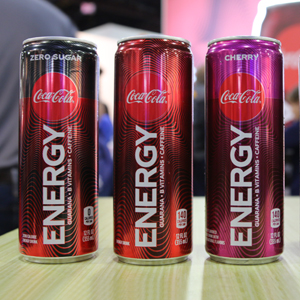
[00:06:55] In March: I think the big showcase for Coke at this show is obviously the U.S. launch of Coke Energy. We've been writing about this and covering this on BevNET over the course of the year. When it was first announced, it launched in Europe in April. It's now available in about 25 countries over there. But the US launch really presents an interesting pivot for Koch in several ways. First of all, clearly because of their relationship with Monster Energy, which I talked about with James Ford yesterday, who's the VP of Category Strategic Advisory at Koch. And he was pretty adamant that this would be sort of an incremental play with Monster. I mean, throughout the entire process of mediation, the two companies have been very sort of steadfast in their belief that they can work together and not sort of take away too much of each other's business. I think that remains to be seen. It's certainly going to be an interesting strategy, and we'll see what actually happens when the product rolls out. But the other thing that's interesting is that this is obviously a product that's coming out under the Coke trademark, which was a big part of the dispute between them and Monster. So it's really lending a lot of that credibility and a lot of that, you know, obvious brand power behind this new product. So I think it should be pretty interesting. I mean, the taste is very similar to, you know, the original Coke. It has a zero calorie version as well. So I think they're really trying to bring this Coke drinker into the energy category. I mean, obviously, Coke already has caffeine. So for people who are maybe looking for a little bit extra to sort of something more incremental, more sort of lateral move, Uh, as opposed to, you know, jumping in full force with a really, uh, bolder kind of energy play that, you know, we've seen in other places. So, so that was the main thing there, but also a lot of interesting stuff going on. I mean, we came from Expo East a couple weeks ago where we saw the launch of, uh, honest cold brew coffee. which is sort of going to be the organic positioned product in that portfolio. We also saw Dunkin Donuts have two SKUs of Cold Brew, which are going to be launching in January, sort of a more conventional play in that sense. And again with that, Honest Tea being the organic proposition now simply is going to be launching a line of teas as well. So we're seeing a lot of diversification in the portfolio and trying to hit these different use occasions, different channels, you know, just trying to broaden things out with a couple different plays In March category.
[00:09:10] Ray Latif: And certainly using well-known brands to expand it to different categories. Odwalla Zero Sugar was introduced here at the show, which was kind of an eye-opener for me. They have a strawberries and cream and a dark choco berry variety flavored smoothies with zero sugar.
[00:09:24] In March: Yeah, a little bit different. I mean, I think we've seen, you know, from other companies as well, sort of trying to innovate within this smoothie category. And I think there are a lot of concerns about sugar. Clearly, it seems to be motivating the launch of this product. So it's interesting. I mean, they're not sort of letting these brands sort of lie. They're trying to, I think, re-stimulate them and sort of revamp them every, every so often. Smartwater had new flavors as well. So yeah, I mean, so just going deeper in the equity that these brands already have, it seems like.
[00:09:54] Ray Latif: A lot of our equity from Monster. At the Monster booth, I saw they have a new Max product, MAXX, made with zero sugar. Also, interestingly, they launched an oat milk variety for their Java Monster product. It was actually pretty tasty. I didn't look at the ingredient list, which is probably a good idea, but yeah, they have that. They also have a Monster Mule product that they launched.
[00:10:14] In March: Well, I think just going back to Coke real quick, the Coke Energy, I mean, I think that's interesting because we've seen companies like Monster, Red Bull, really try to expand the flavor offerings and sort of appeal to people straight up on flavor. And I think that's one thing that Coke is pretty bullish on for their product, is they have a Coke flavor everyone knows, everyone's familiar with. They're having a cherry Coke Energy flavor, which will be exclusive for the US. People are familiar with cherry Coke as well. So I think they're kind of betting on people who would maybe not drink a Red Bull or a Monster because of the taste preference are going to be familiar with this kind of product and make the sort of lateral move to a product that they know the taste, but hey, it has these other benefits Bang Energy as well.
[00:10:56] Ray Latif: We talked about Coke, there's a couple other really big players in that space, well the space of total beverage per se. Pepsi, Brad, what did you see?
[00:11:07] Trey Lockerbie: Yeah, I swung by the Pepsi booth and took note of their new innovations, you know, and a few trends. And we see them playing off of some of the bigger natural plays as well. But zero sugar seemed to be a big part of their 2020 line. You know, saw Pepsi zero sugar, wild cherry flavor. We saw Gatorade zero flavors, which I've written about in the past, but rolling out, you know, fruit punch and other flavor extensions there. Also Mountain Dew Zero Sugar and Mountain Dew Game Fuel Zero Sugar. So they really seem to, on their CSD line, be embracing that better for you approach they've talked about a lot in the past.
[00:11:45] Ray Latif: And they finally answered our technical director, Joshua Pratt's emails about a better for you Mountain Dew, clearly. Of course. A fanatic. Of course. For Mountain Dew.
[00:11:55] Trey Lockerbie: Yeah, but it wasn't just, you know, zero sugar CSDs because we also saw Starbucks, Nitro Cold Brew in a can, just black coffee. And that's something we've seen a lot from, you know, smaller brands doing canned Nitro Cold Brew. But now, you know, as Starbucks has sort of been a leader in RTD coffee there, this is another innovation that, you know, helping familiarize consumers and lead the category on this. Even, you know, we talked about Honest Tea having their cold brews. Under the Pure Leaf banner now, there's going to be cold brews as well. So those are, you know, we see the big players paying attention to all this innovation that we've been seeing in these smaller spaces, and now they're going to be coming in and, you know, putting their spin on it.
[00:12:41] Ray Latif: just endless innovation in the coffee space. It seems, uh, Calafia, uh, featured their new oat milk lattes here at the show, obviously La Colombe mainstay at NACs as well, uh, with their oat milk products and their draft lattes. How's KDP trying to keep up?
[00:12:57] Trey Lockerbie: Well, I had a good conversation at the booth and since the merger between Kira Green Mountain Dew Dr Pepper Snapple Group, the coffee business has really been helping lead innovation. A lot of the coffees that we saw at the booth, we've seen in the past, you know, the High Brew triple shots, the Forto 11 ounce coffees, the Pete's cold brews, et cetera. But we're seeing them innovate across their product portfolio as well. So while they're leaning into cold coffee as a growth avenue and now as sort of a leader for the portfolio overall, they're also looking at their other brands to be that total beverage company, as you mentioned. Buy, for example, talked a bit about how by sort of reaching the end of the runway for distribution as they've expanded so much. And so now they're really focusing on innovation as a way to expand. They introduced lemonade as a line extension with several flavors, including Sao Paulo Strawberry and Burundi Berry and Burundi Berry. Burundi Berry.
[00:13:55] Ray Latif: Yes. You know what the capital of Burundi is? No, I don't. Bujumbura. Yes. Good fun facts. Where in the world is Carmen Sandiego? Thank you very much.
[00:14:03] Trey Lockerbie: Yeah. You see, when you listen to Taste Radio, you learn not just about the food and beverage industry, you learn about the world. Geography. It's very important. And, you know, KDP, though, they also entered that performance energy space earlier this year with Ashock or Adrenaline Shock, which is a kind of play against Bang and Rain and some of those Monster Energy brands that are really dominating the category now.
[00:14:26] Ray Latif: Indeed, it's kind of a shock to the system, I'm sure for you, Beth, to see all these energy drinks in one place, no?
[00:14:31] Better Booch: Yeah, I mean, I'm kind of a wuss when it comes to that stuff. As mentioned before, I just like coffee with a little bit of oat milk or oat milk creamer or something similar. It kind of scares me when energy is combined with things that are already highly caffeinated. But I guess because I'm a little sensitive to it, I just picture myself on it. And it's a frightening picture that I see. So not for me, but you know, I totally get it, especially for, people who work odd hours and you need your energy at weird times of day and you want to consistently know where you're getting it from. So I totally get that. But yeah, I stick to the simple stuff.
[00:15:04] In March: So you know, I think that probably like a lot of other people, you're maybe seeing these products that have 300 milligrams of caffeine and seems kind of like on the high end of things. And I think to the credit of companies like bang and a shock and the ones you mentioned, I think they've done a good job of developing a use a specific use occasion for this with Fitness being sort of the main, you know, as like a pre-workout drink. So I think that that's an interesting sort of aspect of why we've seen some success with this is because maybe this is not a product that you would, you know, you're maybe not going to replace your morning coffee with C4. But when it's sort of tied into fitness channels and these specific occasions, there's certainly a lot of consumers are really affiliated with it. So I think it's a credit to them for tying it to that.
[00:15:50] Trey Lockerbie: Yeah, I was over at the Outlaw Energy booth towards the end of the day and had a good conversation talking about the functionality play Bang Energy beyond just the caffeine. So their position is they have electrolytes and potassium. And that's their version of a pre workout energy drink. Because, you know, if you were drinking monster or Red Bull before workout, well, you be dehydrated by the end of it. And so this new added functionality has just allowed the category to, you know, sort of enter, I don't know if a renaissance is too hyperbolic, but it definitely has given some new life into the space.
[00:16:28] Ray Latif: For sure. One thing that we all consume at the office quite a bit, but was sort of limited here at the show, Koe Kombucha. Although it was incredible to see GT's have its own booth. I don't think I've ever seen GT have a booth at any show. No. And shockingly, its first one, or seemingly its first one, was at Knack's. But I was really happy to see it.
[00:16:47] In March: I don't know what the biggest odds were on that one.
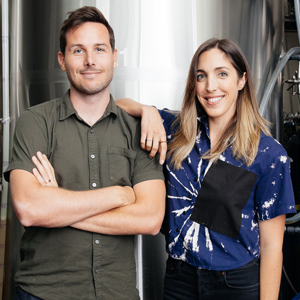
[00:16:49] Ray Latif: But Koe Kombucha was also represented Revive at the KDP booth, Revive being a part of the Pete's portfolio. But speaking Koe Kombucha, I hear that our featured interview for this episode is about Kombucha. So perhaps we should get to that interview. As I mentioned at the top of the show, Ashleigh and Trey Lockerbie are the co-founders of Better Booch, a Los Angeles of organic kombucha. In March, the company unveiled a brand revamp designed to broaden its appeal and express Better Booch as a more premium craft offering. It took nearly two years, and while there were many frustrating moments, the process shaped a brand strategy that will serve as the foundation for its future. BevNET CMO Mike Schneider sat down with Ashleigh and Trey in Los Angeles for a conversation about the decision and timing of the revamp, how the process revealed key brand elements that were incorporated into the new look, and how they worked with design partners to achieve their vision.
[00:17:46] Los Angeles: All right, this is Mike here in Santa Monica, and I'm with Trey Lockerbie and Trey Lockerbie. Ashley is the co-founder and CMO, and Trey's the co-founder and CEO of Better Booch. Welcome to Taste Radio Insider. Thanks for having us.
[00:17:58] The Facts: Thank you so much for having us.
[00:17:59] Los Angeles: I'm really excited to have you here today. We're going to talk about the story of Better Booch and about the good, bad, and ugly of rebranding. Yes. I'm pretty excited about this conversation. We've been talking about this for a while. So let's just jump right into it and talk a little bit about, I think what makes most sense is for you to introduce yourselves and just talk about how Better Booch got started in the first place. Well, yeah, Ashley and I were actually touring musicians prior to being in the old beverage business. And we got this great advantage in our early 20s where we were able to tour all over the world and make decent money and see for ourselves what that lifestyle really looks like long term and realize that it was somewhat unsustainable for us. So is this like a folk act or something? You played the guitar and you were clapping your hands? No, so Ashley was actually touring with Rihanna for many years as a background singer.
[00:18:51] The Facts: As a background singer.
[00:18:52] Los Angeles: And I was playing guitar for some folks, some people out of Nashville, some LA and Australia artists. We were both doing our own music as well, as you do.
[00:19:00] The Facts: We didn't know each other at the time.
[00:19:01] Los Angeles: Yeah, we actually met right about the time we were both pretty weary of traveling so much. Okay. And we started dating and about six months in, actually, as you do, we decided to start a business together. This is the typical classic playbook for a beverage company. You're a musician, you meet on the road, and then you start a beverage company. Of course.
[00:19:24] The Facts: Of course. It's the natural progression of things.
[00:19:26] Los Angeles: It's going to be so boring.
[00:19:30] The Facts: Yeah. So as you can imagine, life on the road, not the healthiest. A lot of late nights, constantly traveling, very hard to have roots in the ground anywhere, any kind of schedule and routine. So we kind of both arrived at the same conclusion apart from each other. And that was that it wasn't a long-term option for either of us. The things we wanted out of life didn't really align with that kind of lifestyle. And so we were both making moves to transition off the road. And we were looking for something that we could do that we were passionate about that would just make us a little money on the side so that we didn't have to take a tour.
[00:20:07] Los Angeles: Wait, so you started a beverage company.
[00:20:09] The Facts: Right.
[00:20:09] Los Angeles: Because that's going to make you a little money on the side.
[00:20:11] The Facts: Right, right.
[00:20:12] Los Angeles: Well, farmers markets is what we had in mind originally. We were strolling through a farmers market on a beautiful day here in L.A. and we thought, you know, this seems like a very pleasant way to spend a Saturday.
[00:20:24] The Facts: So yeah.
[00:20:24] Los Angeles: Over a scoby together.
[00:20:28] The Facts: So romantic. Just us and the scoby. But yeah, so we had both been drinking kombucha for a lot of years up until that point. Trey had been making it in Nashville when he, and kind of the thing that introduced him Koe Kombucha was his sister's battle with breast cancer. She was diagnosed with breast cancer at the age of 24, which is just incredibly young.
[00:20:49] Los Angeles: And we have no history of it in the family. Totally out of nowhere.
[00:20:52] The Facts: And Koe Kombucha at the time was really well known in that community for having anti-cancerous properties and probiotics and beneficial acids and all these things that improve overall health and also help to fight that disease. So he started brewing Kit Kat home, and that's how he was introduced to it. When he moved to LA and after we met, We started playing around with different tea combinations and making Kit Kat home because when I was in high school in Orange County, I actually worked for a tea house and that really got me. And I'm also a singer. Singers love tea.
[00:21:26] Los Angeles: That explains soundcheck when you were singing.
[00:21:29] The Facts: Right, exactly. So we started playing around with different tea combinations and finding out really how using different organic teas would affect the flavor profile. And what we came up with was really delicious. And we thought that, you know, because kombucha is so good for you, we would want as many people as possible to be able to enjoy it. At the time, there was really only one option on store shelves commercially. And there wasn't a lot of flavor innovation happening at the time that we started. And a lot Koe Kombucha had this stigma around it that was like, oh, no, no, no. That's for really healthy people. That's not for me. Or that's for people who love vinegar and all this kind of stuff. And we wanted it to be more accessible, a friendlier brew, we could say.
[00:22:15] Los Angeles: And we were calling it Booch at the time, and it's all in the name.
[00:22:19] The Facts: Because you were cool.
[00:22:19] Los Angeles: Well, I guess so.
[00:22:20] The Facts: That's what the cool kids do.
[00:22:22] Los Angeles: And Better Booch just was the first name. It's just the first name that popped in our heads. I first experienced Better Booch in Iteration 2, which I want to talk about in a second here. But what was the original delivery method? Was it a bottle or a can? It was a bottle. OK. So you were one of the first that I saw in a can. And that was the original way that I experienced Better Booch was, OK, there's an apothecary bottle on one side and cans on the other side. And I was like, this is brilliant. Kombucha belongs in a can. It's brewed. You know, light is the enemy of it. It's going to be fresher in a can. So, you know, I thought these guys are onto something here with this label, this, this illustration, it pops on the shelf. So how did you, how did you get there?
[00:23:08] The Facts: Yeah, so one thing that we noticed at that time when we were working on that iteration was that there was a lot of crowded color on Koe Kombucha shelf. All the other labels on the shelf had like tons of color and a lot of like small sections In March of the labels. So it just felt very busy. And so we wanted something that had a lot of white in it, namely, because we felt like that would stand out. And then we wanted to really do something fun with differentiating between the different flavors that we offer in a visual way as well as, you know, with words, with the names, because we thought that could be fun. Like people could go and grab the blue one or the green one, you know.
[00:23:52] Los Angeles: So you wanted to have flavor cues on your label, right?
[00:23:54] The Facts: Yes, exactly. So that's kind of how that second iteration came about. And then we wanted to maintain some of that original illustrative element. So John Setzen, actually, who designed that iteration of our label, worked directly with James Gulliver Hancock, our original illustrator friend, to create the mural, which wrapped around the bottle and the can.
[00:24:16] Los Angeles: At what point was it that you decided that you need version two? How many stores were you in? How much feedback were you getting about the label? And what was it about that first iteration that wasn't working or wasn't you? It was pretty early on after we started getting into stores and cafes. I remember walking into a coffee shop and our original bottle was on the shelf and I could hardly even read it. It worked really well in a farmer's market when you're handing it to somebody, but did not have shelf appeal. So the white space and the color blocking that we presented the second option, that really, it was very apparent, I think, as soon as we were starting to pop up more and more on shelf, that we needed to have something that spoke a little louder.
[00:25:00] The Facts: Yeah, the original branding was done on a clear label. And it was also digitally printed because we didn't even know about plate printing at that time. Couldn't afford it either. The colors weren't popping. It was just very hard to read. And it looked much more indie. Didn't really have like... commercial appeal, we thought.
[00:25:20] Los Angeles: How did you come up with the idea to can? I mean, you're already bottling, so... We actually wanted to can Koe Kombucha from day one. We just weren't sure that the consumer was ready for it. There's a lot of misinformation on the internet about aluminum and, well, I mean, I should say it'Koe Kombucha. Yeah, but that's all old school. We figured that out in beer.
[00:25:36] Better Booch: Right, exactly.
[00:25:36] Los Angeles: Everybody knows cans are superior now. Right.
[00:25:39] The Facts: Well, surprisingly enough, not everyone knows that. That's true. I was baiting you. I know, but you hear that a lot.
[00:25:48] Los Angeles: You're like, well, kombucha is acidic. You can't put it in a can. I'm like, have you heard of Coca-Cola?
[00:25:51] The Facts: Have you heard of cold brew coffee?
[00:25:53] Los Angeles: Much more acidic. Yeah, and cans are better in every way. I mean, it preserves the product, as you mentioned. They're also, you can ship a lot more at a time, so it's less of a carbon footprint. They're infinitely recyclable.
[00:26:05] The Facts: They don't shatter.
[00:26:06] Los Angeles: No shatter. Yeah.
[00:26:07] The Facts: Right. And now, you know, in the United States, it's very easy to find BPA-free lining. So whereas, you know, maybe five, 10 years ago, it was harder to find BPA-free lining for can in the U.S., you know, for cans in the U.S., you would have to go outside of the U.S. for that. So really just all the barriers kind of just went away. And so we moved on it.
[00:26:29] Los Angeles: To me, it looked like a very advanced brand, and yet it wasn't good enough for you. Well, I mean, I'd say the hierarchy was still an issue ultimately, and almost intentionally, because at the time we did that second iteration, kombucha was still fairly unknown, right? We listed it Koe Kombucha tea, but it was actually very small on the label. We focused majorly on the brand, but the biggest proponent of the label you read was actually our flavor name, you know? Okay, but those things are small. You can make tweaks to a brand. You see that happen all the time where you've got, okay, this is version two of the brand, and you don't even notice that there's version 2.01 or 2.02. Small things change. We added some effects to the barcode, or we moved the Koe Kombucha up, or we increased it by 20 percent, and things that are just very subtle to the eye. But you guys decided, no, we've got to go to version three.
[00:27:28] The Facts: we absolutely could have done a variation on that second iteration of the brand. But what we started to see after a while of being out there is that many of our competitors started adding a lot of white space to their labels and kind of doing the same thing that we were doing. And it went from really standing out on a shelf and being like kind of a standalone eye-catching thing to blending in again because now all of our, you know, a lot of the competition was doing a very similar thing with their label, like adding more white space to their label.
[00:28:02] Los Angeles: Okay, but imitation is the sincerest form of flattery. You are building a new category. And so some sameness in that category, not only flattering, but should, you know, rising tide lifting all boats. I think that there was another issue at hand, which was that we went for originally, but this really folksy appeal or aesthetic, but our, product itself is actually the most premium on shelf, and we didn't think that that was really coming through with our folksy packaging. It looked very casual, but at the end of the day, we really wanted the outside of the packaging to reflect what was inside the packaging, right? We decided that we needed something that was more iconic and more premium-looking to kind of best represent the actual product. So this one was to, what, bohemian, to indie, to hipster?
[00:28:46] The Facts: It was a bit hipster and it was a little too far on the playful side of the spectrum and not enough premium, hey, we're a serious brewer here, we know what we're doing. We wanted to add in a little bit more of that premium aspect.
[00:29:02] Los Angeles: What was it that was telling you that it was time to do this? Because this is not something you just wake up and say, hey, let's go build a new brand. Let's just rebrand everything now, especially when you're in, how many doors at this point?
[00:29:16] The Facts: At that point, gosh, we've been working on this rebrand for so long. So it was probably, I mean, by now it's probably two years ago. So I think at that point, what? 500 stores or so. And we were going after bigger grocery chains and we wanted something that had that more commercial appeal. When we went into markets where people weren't familiar, you know, maybe weren't as familiar as they were with Better Booch like they are in Southern California, that they would immediately know what it was and immediately be drawn to it.
[00:29:49] Los Angeles: We also didn't have a system, right? The illustration was great on the packaging, but we were having a hard time taking that and placing it on swag or anything that really could, even if we're sponsoring an event, our logo just, we weren't very happy with the whole system, I think, at that point. A system. A system is, you know, it's a visual system, but it's also, you're establishing the voice of the brand, and you hadn't done that before, right?
[00:30:19] The Facts: I think we had done that in a way on our own. You know, Trey and I knew what we wanted to do in this space.
[00:30:29] Los Angeles: But did you know the term brand pillar? I mean, were you thinking in terms of we have three or five brand pillars?
[00:30:35] The Facts: No, I think that actually when we did that iteration two was when we were introduced to that concept of brand pillars, but we didn't spend that much time thinking through it. And what was really fun about this third experience of rebranding was We worked with a company who took a lot of time on that with us and really guided that conversation in a way to where we really nailed down our four brand pillars and also our mission statement and, you know, really honed in our messaging and what we were about.
[00:31:08] Los Angeles: Okay, so for the three people in the audience who don't know, what is a brand pillar to you? Well, the brand pillar is what the entire brand stands on. It's like a chair, you know, it needs these legs to stand on. And our four that we developed are create, cultivate, cure, and educate. And we basically, you know, creation obviously coming from the background and being, you know, with the musical background and having that creativity aspect of that previous job, we really wanted to carry that into the beverage business. And so creativity has been and always will be one of our highest priority core values. Cultivate was also prioritize because we feel like beverage is the vehicle for us to create a community. And not only are we cultivating an actual product through fermentation, but we really want to cultivate the community around it. And beverage, especially, what better medium to share with somebody when you're trying to cultivate a community?
[00:32:06] The Facts: It's very social.
[00:32:07] Los Angeles: It's very central to that. And then Cure, because we actually donate a portion of proceeds from every bottle sold or can sold to a non-toxic cancer treatments at City of Hope. And that's, you know, given my history and family history with my sister, we're not only passionate about cancer treatments, but treatments that are non-toxic and non-invasive. A lot of the technology out there is 50 plus years old. And we feel like with the advancements in immunology breakthroughs in Eastern medicine that is slowly infiltrating the West, that we really wanted to support that progress as best as possible. And then educate.
[00:32:47] The Facts: Yeah, and educate is being an authority on the subject. So over the last, you know, over this journey of know, founding Better Booch and deepening our own learning about health and wellness and nutrition and whole life wellness. We really want to be a source of information for people who want to know more about that and openly share information and we are very passionate about label transparency. And so we have built up a lab in our brewery that we test every batch for yeast counts, bacteria counts, alcohol content, sugar content, and all of that. We know a lot about it. So we want to be able to share that knowledge with our community.
[00:33:31] Los Angeles: All right, well, so let's jump off the educate pillar here and talk about, you know, how you come up with these pillars. It was just like you're just drinking a booch one day together. You know, we should just we should just go with create, cultivate, cure and educate. Those are those are going to fit our brand really well.
[00:33:46] The Facts: Well, yeah, I think at first we, you know, when we started this third iteration of our rebrand, we were lucky enough to work with a design company that really helped us, well, helped pull out of us the message. And so when we were sitting down to... You will not get any kombucha until you tell us what we've been doing. Exactly, I mean, you know, I think it's it's so hard to write about yourself, right if you've ever tried to write your own bio It's so difficult. So it really helps to have someone there asking you the right questions. It's just like therapy
[00:34:24] Los Angeles: Apparently you two are not narcissists, so you don't know what it's like.
[00:34:30] The Facts: You know, so we were sitting down and we were thinking about why we're doing this and why we care about kombucha and why we care about the health and wellness community and the beverage industry. And we started just jotting down a bunch of those things. And I think we came up with about 15 to 20. And then we looked at this and we said, okay, this is way too many.
[00:34:50] Los Angeles: Yeah, that's way too many because you need to have your messaging filter through two, three, or even four of those pillars each time you say something. So now these are like, these are like your DNA now, you know, you have to have your message go through these pillars.
[00:35:04] The Facts: Yes, absolutely. So what we started to notice about those 20, let's say, things were that several of them could probably be combined into one overarching. And then some of them were like, Yeah, we care about that, but is it Better Booch? So we got very specific about, um, and ruthless with our editing and ruthless. I love it.
[00:35:25] Los Angeles: How many fights?
[00:35:28] The Facts: Kill your darlings. That's what they say in the literary world. So, um, so we really did. And we think that what we came up with, you know, those four really clearly identify what we're about.
[00:35:39] Los Angeles: And how often do you find yourself using some of the ones that you threw away underneath those pillars? Because, you know, a lot of times you'll find, okay, well, this is part of create, or this is part of cultivate, or this is part of educate, and we're going to use this word in our language actually to even describe the pillars of the brand.
[00:35:55] The Facts: Yeah, I'd say pretty often, although when you start to narrow down, you really start to think in terms of those four things and you're right. I think like part of the issue with branding and with art in general is that when you're, you know, from a creative standpoint is that there is limitless inspiration and there are so many options. And the art in being creative is eliminating and eliminating until you're you're and distilling down until what you have is something that is direct and clear.
[00:36:28] Los Angeles: Because blue sky is the enemy of creativity. The constraints will set you free. Of course. So speaking of that, now you've got these, you have these four constraints, create, cultivate, cure, and educate. Let's talk a little bit about how you manifest that visually because often that's even harder. Before that, how long did it take to come up with the brand pillars in the first place? A couple of months, honestly, like maybe a month. Was there any electric shocks or torture or anything?
[00:36:57] SPEAKER_??: No.
[00:36:58] The Facts: there were a lot of follow up emails from the from the branding company. Hey, did you guys did you guys go through those questions yet? Or, you know, there were a lot of follow up and a lot of like, gentle pushing, I'd say.
[00:37:12] Los Angeles: And when you're running your own business, it's hard to find these windows of opportunity where you can actually sit in quiet and and use that kind of second brain to think through the first principles of the brand and the company, and as Ashley said, distill down from all the noise and all the ideas you have into something that's very clear.
[00:37:31] The Facts: Yeah, because when you're a small business, a rebrand project might be 5% of what you're actually working on at the moment, and so really carving out time for that is tough.
[00:37:46] Los Angeles: but you've got this agency that you're working with and they're on a retainer and they wanna get this thing done too because it's really exciting for them to be able to, it's tough for a creative to start something and then wait, start and wait, start and wait. So you're probably feeling a little bit of pressure there and that's not a terrible thing to have a little bit of creative pressure. But so let's talk a little bit about how this thing, how this comes to life visually.
[00:38:10] The Facts: Okay, so after we went through this whole research portion and this self-reflection, I'll say, portion.
[00:38:19] Los Angeles: After they extracted your essence, like Skeksis.
[00:38:23] The Facts: Of the process, it was time to start looking at visuals, right? I had put together a Pinterest board of kind of directionally where I thought we might go, but of course I- But what's on that Pinterest board? What's on that Pinterest board? A lot of cool, in my mind, lifestyle brands. not many beverage brands actually.
[00:38:45] Los Angeles: There was a lot of art and landscapes too.
[00:38:47] The Facts: There was a lot of also artists that I like, a lot of modern artists whose work I really am drawn to. There was a lot of color inspiration and then also typography inspiration.
[00:39:00] Los Angeles: So you give them this mood board, they've created the perfect brand pillars by extracting your essence and they just go have at it, come back, one concept and it's done. What comes back from that?
[00:39:11] The Facts: Yeah, so they came back with three different kind of categories, and then within those categories, there were eight total directions that we could go. So the first category was like...
[00:39:26] Los Angeles: It was more attuned to being like a refresh of what we had, rather than like a full... And that's the layup, and they should do that. And you should pay for that. Because that's like the, okay, this is who you were and this is you like 10 years later. Right. Yeah.
[00:39:43] The Facts: Right.
[00:39:43] Los Angeles: Fast forward iteration.
[00:39:44] The Facts: Right. A fast forward iteration of the current branding. That was one of the three categories. And then there were maybe three in that. And then there was bold, which spoke to some of the color inspiration that was on the Pinterest board. So there was The Facts forward iteration of our current branding and probably two to three examples underneath that of directions that we could go. Then there was bold, which was drawing from the color and shape inspiration that was on my Pinterest board. And then there was abstract shapes, which was drawing a different sort of inspiration from what was on the board and incorporating more of those surrealist kind of shapes. So that was probably the furthest departure of what our you know, current branding was.
[00:40:27] Los Angeles: So there were two safe options that if you went with those, everybody'd be like, okay, yeah, those are pretty, those are pretty interesting. And then four options that were just far afield from what you had before. And what was your reaction to these?
[00:40:40] The Facts: we were blown away.
[00:40:41] Los Angeles: Yeah, we loved them. It was like Christmas morning, seeing just something new and fresh with your own brand. I mean, I remember every time they revealed the next slide, we were erupting in excitement. Wow. Oh my gosh. How was that reaction different from version 2.0, the first time you saw that?
[00:41:02] The Facts: Yeah. I think the first time we saw that, we were like, okay.
[00:41:07] Los Angeles: Well, that one was actually in my, the way I remember it is we were just working up until like we had this deadline where it was going on shelf, I think at Gelson's or something. And we, it was just sort of like tweaking, tweaking, adding this thing. And then it was like, okay, and then it's on shelf, you know, the next week, it was just very like, I don't even think we had that moment of like reflection at the time. And it was only one option. And it was like, oh, this is much better than what we had. And we got to go with this thing and we ran with it. Okay. So now you're seeing more options. Yes. How do you choose?
[00:41:37] The Facts: Or did you choose?
[00:41:40] Los Angeles: Or did you Frankenstein?
[00:41:42] The Facts: Well, good question. So we actually, we chose by eliminating categories. So we were able to eliminate pretty much right away The Facts forward iteration of the current branding because it didn't feel fresh enough.
[00:41:56] Los Angeles: That says you're ready to rebrand.
[00:41:57] The Facts: Yes.
[00:41:58] Los Angeles: Okay.
[00:41:58] The Facts: So then we were left with the last two categories, either very bold or abstract, surrealist, right? And, you know, I think ultimately we were able to eliminate the abstract surrealist because we felt like we still wanted people to recognize Better Booch. And we felt it was too far of a departure from what, it was totally different than what we were doing currently. And we still, you know, like even completely different color system. So we wanted people to still recognize it. And we felt that with the bold option, it felt really fresh, but also people would still recognize Better Booch.
[00:42:37] Los Angeles: So you've got this first brand expression. What comes next in terms of the components? What do they give you to look at?
[00:42:45] The Facts: So out of those eight options, we were able to pick one that we really loved. But one of our notes was that we want something more that feels a little more like it has a little more personality, because what it is right now is very bold and very clean and very beautiful, but it's lacking some emotion for us. they came back to us after that and pitched doing an illustration to differentiate each flavor that would live kind of on the back of the label, as well as an emblem, which is that circle that's on the top front of the label. And so doing that, we felt gave it a little more personality and a little more like softness to balance out the very like bold, clean lines that we had.
[00:43:36] Los Angeles: And then you have to actually roll this thing out, and that's just a matter of, you know, stop the presses, here's the new stuff, slap it on, and, you know, roll it out there, right?
[00:43:43] The Facts: Totally, yeah. Just as easy as that.
[00:43:45] Los Angeles: You know, because there's no website or social media. How extraordinary was the undertaking?
[00:43:50] The Facts: Oh, it's still going on. So yeah, of course, you have to change your website. You've got to change your social media. You've got to change all of your swag, your packaging, right? So the box that you package Koe Kombucha in and send it out to stores, that has to change.
[00:44:06] Los Angeles: All your sell sheets, all your marketing materials.
[00:44:09] The Facts: The only other thing I can relate it to is changing my name after I got married. Daunting.
[00:44:17] Los Angeles: And you're still finding that in other places too?
[00:44:19] The Facts: Oh, totally. Yeah.
[00:44:21] Los Angeles: What about the feedback? Inevitably, you know, you've put blood, sweat and tears into this new brand. It took you a very long time. You were very careful about it. Did you show it to important folks within your community before you launched it? And what kind of feedback did you get from them? What was the feedback like from the audience? Well, we did, and also the design firm did a few different focus groups with people they knew. We obviously showed it to our friends and family, people we could find, but it's almost impossible to find unbiased opinions, you know? And I felt like when we actually put it into the market, The best way I can explain it is like that moment of silence after a song ends and the audience erupts in applause. It was like we put it out there and then sales dipped, right, as they do. And then came a roaring back. You know, there was like this moment of like, do you guys like it? And then it just came back in the biggest way. And we didn't get a ton of, I mean, Ashley is a little close to the social media side of things, so she knows, but I don't believe we got too many people that were writing us saying, what did you guys do? But inevitably you do, because somebody falls in love with the brand. I know one person that gave you some feedback.
[00:45:36] Better Booch: That's true.
[00:45:37] Los Angeles: Who might be on this podcast right now and isn't one of you two. There had to be some others that said, hey, why'd you do this? And what happened?
[00:45:47] The Facts: I think the best way to handle those kinds of questions is with honesty, because people want to feel like they're in on it. And that's part of what we want to do, is we want everyone to be in on it, because we are creating a community here. So when people would ask, oh, why did you guys rebrand? I really liked your mural that was on the bottle before, or whatever. You know, we would just be like, oh, hey, well, here's why. And it was just a much shorter version of the conversation we're having right now. And I think they appreciated a thoughtful answer. And usually after that, they were like, oh, cool. Well, right on. I'll keep supporting you. Love your stuff, you know? And it was, like, pretty easy, as simple as that.
[00:46:28] Los Angeles: Any haters?
[00:46:30] The Facts: I mean, there's always haters, you know, but I think even the haters want to be, they just want to be listened to. You can turn them into lovers. Yeah, you can turn them into lovers. You know what I'm saying? And that's what we try to do. So even haters who are like, a couple of times we've had, Because of Koe Kombucha is alive and raw, so sometimes you have a bottle that fizzes over on you when you open it, and that's a bummer. That's the best for some of us. Or maybe somebody left it in the car or something, and it fizzed over, and now they're pissed.
[00:46:59] Los Angeles: We don't know anyone who would do that.
[00:47:00] The Facts: Yeah, I don't know anyone who would do that, myself included. Ashley did it. Usually I have these coupons that are like for a free can or a free bottle. And so even the haters, if they post on social media, oh, I can't believe this happened, Better Booch'll reach out to them and be like, hey, so sorry. That's crazy. Let me send you this thing. And like, you can give it another shot for free. And they generally, you know, nine times out of 10 are like, oh, awesome. I can't believe you responded. So cool. You know? So I think turning the haters into lovers is like the best approach. And I think you do that by being thoughtful and like listening to them and having conversation with them.
[00:47:38] Los Angeles: So since you did everything, you know, by the book and perfectly in this process, what advice would you give to another brand who's going to undertake this process? I would say, you know, we had some starts and stops early on with the process, especially finding the right partner to do it with because a couple of design firms we talked to maybe had the creative talent, but weren't so great with project management and weren't as proactive as we needed them to be. As Ashley kind of said earlier, it's 5% maybe of our daily bandwidth. So you need a partner who that is what they're, number one priority is, and they help push the project along. Yeah.
[00:48:24] The Facts: And if I could add to that, I mean, they say that the best time to do something is when you're going to do it. And so, you know, just being intentional, like saying, all right, I'm going to do this rebrand, and I'm going to carve out the needed time to make this happen. Because it does take a lot of time and a lot of energy and focus. Yeah, it sure does. Like so much more than you would probably think. And even when you're working with a design firm who's probably doing the heavy lifting, there is so much attention that is needed from you, the company. So making sure that you carve out an adequate amount of time in your schedule to devote to that is the only way to move it forward.
[00:49:06] Los Angeles: Yeah, you're the ones who are kinda, you know, standing on the stick of dynamite, that's your proverbial burn rate, right, as a startup, and here comes the, you know, here comes the wick, and they're kinda over in the foxhole throwing ideas at you. You know, they're never gonna be the ones who are standing right there next to you, because they can't, they're not there day to day, so you definitely have to pick that partner who's gonna understand that, but if you're not active, then that thing's gonna blow up on you.
[00:49:31] The Facts: Totally, and it has to be a priority for you.
[00:49:34] Los Angeles: What about who should be involved and who maybe shouldn't be involved? How many cooks should be in the kitchen? And then we can kind of wrap it up from there.
[00:49:41] The Facts: Yeah, I think something else to consider would be deciding who is going to be the project lead and identifying one person who will ultimately be the decision maker is really important because when you have too many cooks in the kitchen, it's very hard to go back and it's very easy to go back and forth on things and to kind of get stuck. Trey and I were the only people involved in this rebrand. And I think that was helpful, but I was ultimately the decision maker, like the final choice. And I think that was really helpful in keeping the vision focused and moving forward.
[00:50:17] Los Angeles: Yeah, if you want to crowdsource, you can just throw on 99designs and you'll get a great look. You might not. You might not.
[00:50:24] The Facts: Yeah. And I think to your point, crowdsourcing, sometimes crowdsourcing is really fun when you're, you've already come through the development process and you're just like maybe asking about flavors and that can be fun for your, for your community. But also Koe Kombucha space is really competitive. So we tried to keep this pretty much under wraps for the whole time until right before we were ready to release it.
[00:50:46] Los Angeles: Well, the new brand is beautiful. It's on the shelf. So for everybody who is listening, go check it out or go to Better Booch.com or the Better Booch Instagram and have a look. Ashley Trey. Thanks so much for being on Taste Radio. Thanks for having us, Mike.
[00:50:59] The Facts: Thank you so much for having us, Mike. It's been a pleasure.
[00:51:05] Ray Latif: That brings us to the end of episode 54 of Taste Radio Insider. Thank you so much for listening, and thanks to our guests, Ashleigh and Trey Lockerbie. Please subscribe to Taste Radio Insider on the Apple Podcasts app, Spotify, Stitcher, SoundCloud, or Google Play. As always, for questions, comments, ideas for future podcasts, please send us an email to ask at Taste Radio.com. On behalf of the entire Taste Radio team, thank you for listening, and we'll talk to you next time.
[00:51:33] SPEAKER_??: you