[00:00:04] Ray Latif: Hello, and thanks for tuning in to Taste Radio Insider Ep'm Ray Latif, the editor and producer of Taste Radio, and you're listening to episode 60 of the podcast. I'm with my BevNET and Nosh colleagues, John Craven, Mike Schneider, and Beth Kaiserman, and we're recording from the Taste Radio studio at BevNET headquarters in freezing Watertown, Mass. In this episode, we sit down with the leaders of four entrepreneurial brands who discuss the worst business advice they ever received. If you like what you hear on Taste Radio Insider, please share the podcast with friends and colleagues. Of course, we'd love it if you could review us on the Apple Podcasts app or your listening platform of choice. If we had a good marketing guy, we'd call this like the train wreck episode or something. I don't want to call it. I love talking about failure. Amazing. I'm just going to leave that alone for now. I did mention it's freezing outside. Was it like 10 degrees out here in Boston? It's the, we were, it's the polar vortex has hit us record low for today. It is. Is that why you're wearing like your Mr. Rogers sweater? And I wear my Mr. First of all, I take that as a compliment. It is a compliment. I love Mr. Rogers. Me too. Yeah, there's a chill movie coming out with Tom Hanks as mr. Rogers really yeah the documentary was enough They know they should just mic dropped right there.
[00:01:17] Shadi Bakour: Oh, okay fair enough apparently Tom Hanks never watched the show though. What's yeah? He was inspired by mr. Rogers because of his philanthropy and helping kids and stuff like that He looks a lot like mr. Rogers.
[00:01:30] Ray Latif: Yeah in the trailers that I've seen. Yeah, it's a pretty good job and I also wanted to mention your socks. Folks at home who might be watching our video of this, look at that. I don't know if you can see that. Nate, can you?
[00:01:40] Lumi Juice: You can.
[00:01:41] Ray Latif: I'm sure. Why do you have skull and crossbone socks on? Why not? I don't know. I found a brand that I like that has skull and crossbone socks. I fully was expecting Arsenal socks and this discussion to just veer off in a senselessness. Because they go with my Liquid Death. You know, if your socks don't match, you know, Mike Cesario is going to pull that and, uh, use that as an ad on Facebook. Did you see that? That was perfect. I'm feeling so sorry. I was the founder and CEO of Liquid Death. I feel so Billy Dee Williams right now. You're my fab five Freddie. I'm going to wear my Lando Calrissian cape. Next time we have Liquid Death.
[00:02:17] Lumi Juice: That'd be amazing.
[00:02:18] Ray Latif: All of it together was Billy Dee Williams, Lando Calrissian in the colt 45 ads. No, that'd be amazing. That would have been pretty cool. I think, yeah, George Lucas probably would have had a problem with that. We should make that happen. Yeah, I think so as well. In terms of things that we've got on our respective tables today, Beth, you've got some healthy snacks right in front of you. What's that? What's that say? Superfood bites? What is that?
[00:02:41] Shadi Bakour: Yeah, it says they're wrapped in dates. I actually should pop it open. I don't really know what that means.
[00:02:46] Ray Latif: It's superfood bites wrapped in dates.
[00:02:48] Shadi Bakour: Yeah, it's a lot of things going on, I think.
[00:02:50] Ray Latif: Does that mean it's a date that's stuffed? Perhaps? I don't know.
[00:02:54] Shadi Bakour: Looks like...
[00:02:56] Ray Latif: A little crushed maybe but it looks like it looks like a date heavy kind of energy bar. Oh, okay I don't know what the wrapped in is but there's definitely a lot of a lot of dates in there Is there cheese in the middle of that or if maybe the dates are like mixed with the other things? I don't think and sweeten it.
[00:03:14] Shadi Bakour: Is that Velveeta in there?
[00:03:16] Ray Latif: What's the name of the company?
[00:03:17] Shadi Bakour: There's a prize in there.
[00:03:19] Ray Latif: These are Native State foods, superfood bites. All right. Now we've got some chocolate pieces. These look like little M&Ms. This is from a company called Little Secrets. Chocolate pieces, peppermint and dark chocolate. This is a limited edition skew, I'm assuming, for the holiday season. I don't know if I'm in the mood for M&Ms, but if I were, these look pretty darn good. Yeah, these look pretty legit. Colors from natural sources, Fairtrade certified ingredients, non-GMO project verified. Good stuff. I just want to report back in on the Native State food superfood bites. It's not Velveeta. This one has goji berry and chia, and it's delicious.
[00:03:56] Shadi Bakour: Big surprise it wasn't Velveeta. I know. Big surprise. It's kind of dry inside, but it's good. It's just confusing. It's like, it should just say it's bites, but I guess it's trying to be different. So it says it's like Something something wrapped in dates.
[00:04:08] Ray Latif: I mean, I'm not against this word bites because they are bite sized. But like you said, it is more like a bar.
[00:04:15] Shadi Bakour: those Little Secrets too. I like those actually, but you know, it's like everyone's always comparing everything to M&M's with stuff like that. So it's like they're never, I don't know. I feel like a lot of times people are not satisfied with the like better for you versions of these candies because they're so used to the one flavor. But I think those are really good. I don't find them as like jarringly sweet as M&M's usually.
[00:04:36] Ray Latif: What's the name of the brand? Is it Unreal Candy that's based here in the Boston area?
[00:04:40] Shadi Bakour: Yeah.
[00:04:40] Ray Latif: They're making versions of popular snacks like M&Ms and whatnot, but with healthier or better for you ingredients. It's really nice to have all these snacks in the office. I used to be eating like a bag of gummy bears a day. I know, it's terrible. I'm sorry.
[00:04:53] Shadi Bakour: No one's judging.
[00:04:54] Ray Latif: Okay, thanks. Thanks, Beth. Clearly Mike and John Craven't judging. Beth, I appreciate you saying that. But what's interesting, I really enjoyed, and I didn't think I'd enjoy these as much as I did, the Grillo's slices that came to the office back in the day. We did a podcast interview with Travis Grillo, who's the founder of Grillo's Pickles, featured in episode 175 of Taste Radio. It's a dandy. If you haven't listened to that one, go ahead and do so. But speaking of those kinds of pickles, these new snackable options for pickles, Beth, you wrote a great story on Nosh about this sort of snackification of that food. I think it had the best lead I've ever seen in a Nosh story, which said, pickle producers want people to peek past picnics, parties and paper plates. Peter Piper interviewed.
[00:05:41] Shadi Bakour: I did. Thank you.
[00:05:43] Ray Latif: Good job, Beth. So what's going on there?
[00:05:46] Shadi Bakour: Lots going on with pickles. I love pickles. In fact, I'm way more excited to talk about that than any of these sweets that we've mentioned so far. Great job on the sweets, people who made them. Um, you know, pickles are just a thing that are kind of, they've always been like brushed to the side. They're like getting dusty on the shelf and sitting in the back of the fridge forever. And, um, now in the past couple of years, we see a lot of these sort of snacking pickles coming out. And I know you could argue the other way and say, you know, you could just put a pickle in a baggie and take it along with you, but it gets a little bit messy. And I think the key is having the smaller size of the actual pickle itself makes you want to just kind of pop it like it's a chip. So I'm super excited about all these innovations, especially because I think some of the packaging is really cool, especially the Rick's Picks packaging. I like a lot. I think it looks really cool.
[00:06:33] Ray Latif: We had the founder, Rick Field, featured in episode 42 of Taste Radio Insider. Also a really popular interview that we did. You're like a Taste Radio encyclopedia. I've got to be. It's my job. Episode 32. Oh, okay, I have a cheat sheet. It's called my iPhone. You're putting me on the spot, Mike. I wanna know how many minutes in. Yeah, I was just gonna say, do you know the minutes? 11 and 22. There you go.
[00:06:58] Shadi Bakour: Rick is a character. That was a fun episode. Yeah, Rick. I listened to that as I was writing the story to make sure we were writing something a little different. Well done. Which, you know, he's got a lot to say, so we definitely did end up with a different story, I think.
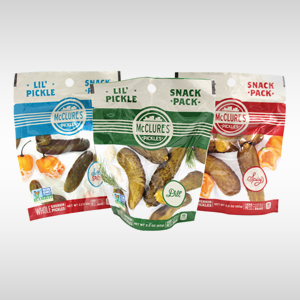
[00:07:09] Ray Latif: You also noted that McClure's Pickles, also one of my favorites, is launching a snacking SKU. Have you tried those yet? Those look amazing.
[00:07:16] Shadi Bakour: Yeah, they're really good. I think I had them either at NACS or Expo East. I forget what show it was at at this point. But anyway, yeah, those are really great. And I think they're calling them Little Pickle Snack Packs. I've loved that brand since I first moved to Brooklyn. It was really small back then, obviously, but I feel like that's one of the ones I saw at farmer's markets when those were starting to have packaged food more, and it's great to see that they're doing really well.
[00:07:42] Ray Latif: Totally. They had that little innovation center in Brooklyn and most of their stuff is produced in Detroit, right?
[00:07:47] Shadi Bakour: Yeah.
[00:07:48] Ray Latif: Yeah. Great Bloody Mary mix. I remember we went to a fancy food show, John Craven and I, what was that like five years ago? Something like that. And we tried their Bloody Mary mix for the first time. It's pretty, pretty good. I don't even like Bloody Marys. I wanted to just drink this stuff from the jar though. It's good. I have done that. It's good stuff. So McClure's, if you're listening, uh, more snacking pickles or what were they called again?
[00:08:09] Shadi Bakour: Little Pickle Snack Packs is that one. Yeah.
[00:08:11] Ray Latif: And, uh, and Bloody Mary Mix would be wonderful if you're listening. Do you think that the category should standardize? Should they just go with the term snacking pickles? Are there enough of them out there right now that this could become like a standard? I mean, what does the name really matter though, right? I mean, this seems more like about placement at retail and the package than, I don't know. I mean, you could say it's pickle slices and it's in a little bag. And I think you'd understand that that's for a snack and not to put on your, I don't know, your burger or something that you would probably want to buy the jar. Well, you're talking about pickles. Everybody knows what a pickle is. You're not talking about something like, say, hard-pressed juice that nobody knows what it is. Hard-pressed juice? Right. So this is hard-pressed juice. It's not really a category. This is the first one I've seen. You've got in your hand a can of hard-pressed juice.
[00:09:00] Lumi Juice: What's the name of the brand?
[00:09:01] Ray Latif: Pulp Culture. Pulp Culture, okay. Right. And this is 6.9% ABV, although it's really hard to find on the can. It's really just right here. And you find out when you taste it. We're not talking about pickles that don't need a lot of education. It's just a new form factor of pickles. No, that's like a product that I think is really complicated on top of just being different at its core.
[00:09:23] Hillary Murray: So instead of just being, you know, hard cold pressed juice or whatever they want to call it, they've added in, you know, all this valerian and reishi and whatnot. So it's just like, I don't know. I looked at that and it's pretty hard to understand what they're trying to do. You know, I think they're going to need to simplify. Guessing your margins? That's risky. Belay Financial gives CPG brands the clarity to scale smarter, faster, stronger. Get your free inventory ebook by texting TASTE to 55123 and start making data work for you.
[00:10:00] Brad Charron: Definitely. Tune in at the end of this episode for an exclusive interview with Matt Lynn of Belay Solutions. He sits down with Melissa Traverse to break down the biggest inventory and accounting mistakes CPG founders often make. You'll learn how to bring clarity to your numbers so you can scale with confidence.
[00:10:18] Ray Latif: Yeah, on the fringe, what's not on the fringe is plant based meat, alternative proteins on our table here, holding in my hands, a Cajun burger, it's made from tofu. It's from a brand called Hodo, 19 grams of protein plant based ready to eat. And then we've also got from Sweet Earth Enlightened Foods, the Awesome Burger. It's totally juicy, groovy for grilling. It's got an asterisk that Plant-Based Protein. It says Awesome Burger with an asterisk, and then the asterisk says Plant-Based Protein, I guess it's important for them to point out that it is plant-based and not meat because it does very much look like a burger. Well, it's interesting that most of these companies are really trying to sell you on how similar to a traditional burger it is down to, you know, sort of the the grill designs and the big picture of like, you know, the beefy looking burger, right?
[00:11:10] Shadi Bakour: Juiciness.
[00:11:11] Ray Latif: Yeah. The blood. Right. So it seems like there's a lot of noise kind of going after the same thing. I mean, I guess that's why two congressmen recently submitted a bill to distinguish plant-based meat from Plant-Based Protein. The bill is called the Real Marketing Edible Artificials Truthfully Act, also known as the Real Meat Act. I'm sure they're looking out for the interests of consumers, not their lobbying dollars, maybe?
[00:11:41] Shadi Bakour: I don't know. Sounds a little suspicious, but yeah.
[00:11:44] Ray Latif: Beth, you have some insight into this. You wrote a story about this on Nosh.com.
[00:11:48] Shadi Bakour: Yeah. I mean, you know, the claim there is that consumers are confused. Well, Most logical answer to that is that consumers aren't confused. I think Plant-Based Protein so ubiquitous. Look, even just this week at how much new stuff we've gotten in the plant-based meat category, it's not confusing to anybody what they're getting. If you look at that Awesome Burger, for example, you know, that does look like it's marketed to the meat crowd. I mean, I guess this is, you know, a Nestle-owned brand. That's probably who they're going after more. And their plant-based callout is until there's a little one at the top and then it isn't till the bottom here. I mean, I could see something like this potentially being slightly confusing, but I mean, let's just be honest. In reality, consumers aren't really confused about what's beef versus plant-based.
[00:12:33] Ray Latif: And when you see the price point of that, you're probably wondering why is this more expensive at this point, too. So it's not like someone might accidentally buy that.
[00:12:43] Shadi Bakour: Yeah, totally. I mean, I feel like anything even that's branded like that, if you are a meat eater, you'd probably be looking at closely because you're usually just buying ground beef.
[00:12:51] Hillary Murray: For the non-price-sensitive, non-reading consumer, they might be confused, I guess.
[00:12:55] Shadi Bakour: Yeah, there's a consumer somewhere that's confused. We could probably say that factually, but I think... That's true.
[00:13:00] Ray Latif: I mean, you know, in some ways we live in a bubble and assume that everyone knows what plant-based meat is. Totally. But I think, John Craven, to your point, you know, if this is four patties for eight bucks, You know, there's not gonna be a lot of, I guess, conventional consumers that are gonna look at this and say, hey, I expect this to be a meat-based burger. I'm sorry, an animal-based burger. Depending on what store you go into, it's probably an equal risk to you accidentally picking up, I don't know, bison burgers when you meant to buy beef, you know? That's true. I mean, there's plenty of confusion in like the meat department as it is anyway. This is going to be dairy all over again. They're going to do B-star-r-g-e-r-b-y-r-g-e-r. Oh.
[00:13:42] Shadi Bakour: B-e-r-g-e-r. Oh, I see. You know, the thing with that bill, too, is that they're trying to push forward the idea of plant-based all saying imitation on them. Well, imitation doesn't sound very appetizing to anybody. That would be a huge detriment to these brands that are really pushing forward with plant-based innovations. Imitation beef. Yeah, I would have to say like imitation burger. Nobody wants to hear the word imitation when they eat something.
[00:14:08] Ray Latif: It's definitely a throwback term. I think the last time I remember hearing about imitation something was imitation crab. You know, they'd always make crab out of it. I was gonna say, what about all those bacon bits you eat, Ray? I don't eat bacon bits anymore.
[00:14:20] Shadi Bakour: That's really bad.
[00:14:20] Ray Latif: We saw you eat garbage imitation. Chugging Bacos. Oh, God. Bacon gum. You chew. Bacon gum? Yeah. Gone off the rails for sure. Bacon toothpaste. We've definitely had that. If there are bacon gum entrepreneurs that are listening, perhaps Nosh Live is for you. Nosh Live Winter 2019 coming up December 4th and 5th. You know what I'm excited about? Beth does a really good job with her Livestream Studio at the event. The Livestream Studio is this informal talk show. It's running during the networking breaks, lunch hours of the show on both days of Notch Live. Also at BevNET Live and Brewbound Live. Brewbound Live being held on December 4th and 5th. BevNET Live on December 9th and 10th. But yeah, we talked to attendees, some speakers, some of the folks that will be participating in the Pitch Slam, some of the judges, perhaps. Are you excited for this, Beth?
[00:15:09] Shadi Bakour: Yeah, I am. I was just reviewing the list of some of the people we're going to interview yesterday for that. And that's going to be really great. It's always nice to just check in and catch up with some of the people I already know and then meet new ones and hear their responses to the event. And I also love hearing afterwards about who they've gotten to meet and network with at the events, too.
[00:15:26] Ray Latif: You never know who we're going to interview. Could be you. Sign up. Get your tickets. There you go. If you haven't registered, do it now. Space is filling up fast. Head to noshlive.com to register, get your tickets, and perhaps end up on the Livestream Studio. Yeah. Yeah. You know what else is fun about going to these shows? And I think we talked about this last week, all the great advice that you can get at Nosh Live, Rebound Live, and BevNET Live. Sometimes, however, and not at our events, you get bad advice. Time will tell, but that bad advice might be the worst advice you ever took. Hopefully the following interviews will help you avoid that scenario. At Expo East 2019, I sat down with Pathwater co-founder and CEO Shadi Bakour, LumiJuice founder and CEO Hillary Murray, Aloha CEO Brad Charron and Origin Almond founder and CEO Jake Deleon, who all shared with me stories about advice that in hindsight they should have avoided. I'm on the mics with Shadi Bakour, the co-founder and CEO of Pathwater. Shadi, thanks so much for being with me. Hey, it's a pleasure to be speaking with you. Yeah, so for folks at home who are not familiar with your company, what is Pathwater? So Pathwater is the first ever purified water that's packaged in a refillable aluminum bottle instead of single-use plastic. So we're on a mission to change the way that people drink bottled water from consuming it one time and tossing it, where it ends up in landfills and oceans for 700 years, to consuming it and then having the opportunity to refill and reuse and reduce the impacts that we're making as human beings on this planet. So in the four years that you guys have been around, I'm assuming that there's been some bumps and bruises. Absolutely. I wanted to talk to you about some of those and how you got past them. Let's start with advice. Yeah. This is a question that doesn't get asked enough, but I feel like it should be. What's the worst advice you ever got? That's a very good question. What I've found is that everyone has an opinion, right? Everyone wants to give their advice. But a lot of times when people, when you ask them to put their money where their mouth is, people back away or shy away. So essentially be wary of advice that doesn't come with a check? There's a lot of that in this industry. Yes, there is. And I'm not saying it's all bad. You know, there are people that they genuinely have good advice and you should listen to them. But also, there are people that, frankly, they just talk a lot. And those people, I usually steer away from at one point or another. How do you identify those people? It's tough to identify those people, right? Because you're going to put yourself out there and you're going to go and meet every single person that you can. Just be really careful about the partners that you bring in because a lot of times they'll stick with you in one way or another. You're talking about equity partners? Equity partners, yeah, absolutely. And one of the bigger lessons that I learned was always vest your equity. From the beginning, you know, everybody's excited. They want to get involved. You have different partners. Make sure that your equity is vested and earned over time. Don't just give anything up front. I'm on the mics with Hillary Murray, the founder and CEO of Lumi Juice. Hilary, good to see you.
[00:19:04] Lumi Juice: Hey, Ray. What's up? Good to see you.
[00:19:06] Ray Latif: For folks at home who are not familiar with Lumi Juice, what is it? What do you guys do?
[00:19:10] Lumi Juice: So Lumi makes organic juice and wellness shots, and we high-pressure process everything we make. So it's like you're drinking and eating real produce the way nature intended. No BS. We never freeze any of our ingredients. We don't use any additives. It's just real food the way nature intended.
[00:19:27] Ray Latif: Lumi, love you, mean it.
[00:19:28] Lumi Juice: Exactly, it stands for love you, mean it. Commitment to our customers.
[00:19:33] Ray Latif: I first met you on stage at BevNET Live back in 2013. You participated in the New Beverage Showdown.
[00:19:38] Lumi Juice: Yes.
[00:19:39] Ray Latif: The company mission, it seems like, has been pretty consistent. The category has been anything but consistent.
[00:19:48] Lumi Juice: For sure.
[00:19:48] Ray Latif: Before we get into some other topics, I gotta ask, how have you survived this long, and how have you survived when you've seen so many other brands fall by the wayside?
[00:19:57] Lumi Juice: I would say for any entrepreneur, survival is about resilience and the ability to stand up when you've been knocked down and not to be knocked out, right? And so, you know, I've had like tremendous up and downs. We were initially went into all the fresh markets. When Apollo bought the fresh markets, they shrunk the cold storage shelf space for juice pretty substantially and we had to pay to replay in that market. It was, you know, 70% of our business. It almost put us, you know, out.
[00:20:28] Ray Latif: For context, how many stores are you talking about?
[00:20:30] Lumi Juice: It was 172 stores.
[00:20:32] Ray Latif: And spread out across the country.
[00:20:34] Lumi Juice: Yes, exactly. And so, um, it's a lot of stores. And, uh, that was like a, an oh, S-H-I-T moment.
[00:20:42] Ray Latif: For folks at home who are listening, you know, you just kind of just, put her elbow on the table, put her head down, and it was just like, yeah, that was definitely one of those days, weeks, months.
[00:20:55] Lumi Juice: It's like, oh no, are we going to survive to make payroll to see tomorrow? Because we make all of our own products, soup to nuts. So it was very stressful and I was like 28 at the time. So I wasn't young, young, but I was definitely a young entrepreneur and business person and had to think on my feet and switch. So we started pursuing an alternative path to market and that was direct to consumers. through an online website, through Amazon, through coffee chains, through independent retailers, and then professional sports. And so within two months, we figured out a way to completely pivot and make up that revenue plus more in a short amount of time. So yeah, and then since then, we've consistently been able to build in the alternative market space.
[00:21:41] Ray Latif: That's amazing. You can get knocked down, but don't get knocked out.
[00:21:44] Lumi Juice: Yeah.
[00:21:44] Ray Latif: That's good advice. In this business, you get a lot of advice. Some of it good, some of it bad. Oh my goodness. I don't even have to ask the question yet. What's the worst advice you ever got?
[00:21:58] Lumi Juice: I've gotten a lot of bad advice, but maybe it wasn't bad depending on the context, but I viewed it as, you know, it wasn't great. So, you know, on the BevNET Showdown stage in December 2013, I'm presenting and I'm saying that, oh, I've built out my own integrated manufacturing facility complete with its own high-pressure processing. machine in Charlottesville, Virginia. And I have the judges there telling me and like staring at me that I'm insane, that you can't scale with your own facility, that that's like not a viable way to grow the business. And, you know, it wasn't the worst advice. I mean, a lot of businesses cannot scale because they're limited by their manufacturing constraints. But unfortunately, New Beverage with high pressure processing, a lot of the businesses that have failed is because of manufacturing constraints. It is expensive. And if you don't have the equipment yourself and the resources like To make a quality product, you have to compromise with frozen ingredients. And when you're pressing and freezing one place, defrosting it, mixing it with fresh-pressed stuff, and then transporting it from a juicing facility to a high-pressure processing facility to be, you know, treated, you are deteriorating through so many different iterations the product quality that it definitely hurts the flavor profile. Having our own integrated facility was our slam-dunk competitive advantage that allowed us to make product. You know, I sold my facility in November, and one of my biggest issues I've learned is that outsourcing my manufacturing and working with a co-packer has proven to be more difficult.
[00:23:33] Brad Charron: I am sitting with Brad Charron, the CEO Do you want more repeat buyers on Amazon? Well, this free resource in collaboration with Straight Up Growth will help your brand turn first-time buyers into long-term subscribers. Download Winning the Repeat Purchase Game on Amazon now at Taste Radio slash SUG. That's Taste Radio slash S-U-G to start building retention-driven growth for your brand on Amazon. Scaling New Beverage brand into major retail comes down to operational readiness. From packaging lead times to co-manufacturing strategy, the details can make or break a launch. In a new ebook in collaboration with Octopi and Asahi Beer USA, industry leaders share what they've learned in helping brands scale. Download it now at Taste Radio slash octopi. Do you need to scale your team faster without compromising on talent? Join Oceans for a Live Winter on April 20th and learn how leading companies are hiring top global professionals who are ready to grow with your business. Register for the webinar now at Taste Radio slash oceans. That's Taste Radio slash oceans.
[00:24:46] Ray Latif: Aloha. Brad, thanks so much for being with me. Hey, Ray. How are you? Good, man. Good to be back. Good to be back indeed. For folks who are not familiar with Aloha, what do you guys do?
[00:24:54] Origin Almond: We're an organic, clean, plant-based food company. We Hodo Foods New Beverage. Everything we do, the ingredients are carefully crafted and curated. The taste is outstanding. We're available in a lot of different places between Amazon and Thrive Market, our own website, Aloha.com, and then a lot of major retailers across the country because we believe that people should have the ability to have great plant-based food and not have to sacrifice anything in regards to that.
[00:25:17] Ray Latif: And that includes a new line of beverages that you launched six months ago at Natural Products Expo West 2019. I'm holding in my hand the coconut variety. This one is made with creamy coconut milk, 18 grams of protein, 5 grams of sugar, zero artificial ingredients. I love everything about this.
[00:25:32] Origin Almond: Look, and the mouthfeel is really important. It shouldn't feel like you're having to chalk it down or sacrifice through it just because you want protein or, you know, prebiotics, electrolytes, MCT oil, all the right kind of stuff. We're always innovating. I got more stuff coming out for Expo West. What's really interesting is we're starting to really expand distribution. Kroger goes nationally this week with our beverages. A big partnership with Thrive Market was just announced, and that will be available next month for a whole bunch of Aloha products.
[00:25:56] Ray Latif: Outstanding. So your background, you've been the CEO of Aloha for... Two years. Two years. But you've been in CPG for a long time. Everyone always asks, you know, what's the best advice you ever got? I want to take it a different way, and I want to ask you about the worst advice you ever got.
[00:26:14] Origin Almond: I think the worst advice I've had is when I've been asked to conform to someone other's norms, a company's norms, a corporate norms, and stop being yourself. That doesn't mean that all of a sudden you should be a renegade. You should go out of your way to be different and special at the sake of supporting others in the culture of which, where you live. But it also means that just because one company has a certain way that you lose your own personal identity. I think that's how people, become non-innovative in a world where consumers need and want and crave innovation from brands and products. I find that's a way that you lose your own personal worth and self, that you feel that at the end of the day, it's obviously a hard work day you've done, but you've added value to your company and to yourself. So staying even, staying level has been a real key for me that I've tried to master as honestly as I've gotten older, as I've had more experiences, and you've mentioned CPG, I don't use that term. I am a consumerist, and a lot of the experiences in the companies I've worked for, largely food and fashion companies, have been driven by a sense of purpose for the consumer and why we're different and special. Those are the kind of things that I hope to embody and share in my own very small lean organization.
[00:27:29] Ray Latif: You worked for a pretty big company called Chobani. Heard of it, yeah. Back in the day. I got to think that there's a Chobani way of doing things, right? Is there? And if there is, you know, how do you be an individual within a company that has a sort of set way of doing things?
[00:27:50] Origin Almond: Yeah, great question. And good example. You know, Chobani, you got to give props to Hamdi Ulukaya. You know, you got to respect- The founder and CEO. Founder and CEO of Chobani. Not saying that he or we have done everything correctly or right, but he led by example. He started a company with nothing. He built a product out of nothing. People said, you can't do this. And he said, watch me. And you have to respect that. It doesn't mean you have to agree with everything the company has done. In fact, there's a lot of people, like myself, I consider myself a proud Chobani alumnus. Honestly, the more I think about it, and I've never actually thought about this, is we were almost a band of misfits. There were people from Dannon, and there were people from other parts of the yogurt business. But, I mean, I was coming out of Under Armour. I was coming out of here in Baltimore as the head of men's marketing at Under Armour, where it's a whole different problem set. But somehow we were able to retain our individual identity and build on each other's strengths and support the mission.
[00:28:50] Ray Latif: I am here with Jake Deleon, the founder and CEO of Origin Almond. Jake, how are you? Hey, good morning, Ray. Thanks for having me. It's great to see you again. Now, this was the first time I met you was last year at BevNET Live Summer 2018. Yeah, oh my goodness. Jeez.
[00:29:08] Lumi Juice: Yeah.
[00:29:08] Ray Latif: You were up on stage at the New Beverage Showdown. You were semi-finalist number one. Yes, and I was gong number one that morning, if I remember. You did go slightly over the two minutes you were allotted. But for folks who are not at the show, who didn't get to watch the showdown, tell us a little bit about Origin Almond. What do you guys do? Yeah, so we make a weird product called almond juice. People heard of fruit juice Origin Almond milk. Ours is something in between. So it's made from almonds, but it tastes Lumi Juice. But unlike the sugar and carbs that everyone hates about fruit juice, we replace them with fiber, good fats, and protein. You know, it's interesting to hear the perspective of someone who's relatively new in the business, and the kind of advice you could share with other entrepreneurs that are in your situation, or at least will be in your situation over the next year or so. I'm sure you ask folks for their advice, and sometimes that advice works for you, and I'm assuming sometimes it doesn't. Yes. We always get the question, what's the best advice you ever heard? But I'll ask you, what's the worst advice you ever got? Yeah, it's a great question. Now, I wouldn't say it's the worst advice, but I would say it's an advice you should take with a grain of salt. And that is to trust your gut or trust your instinct. And let me give you some background. I think it's easy to fall into the trap of entrepreneurs that in the lack of having data around you, that you always rely on your pure guttural instincts. But the challenge with the kind of early stage entrepreneurs is that you kind of look at items around you or kind of experiences around you and you take them very emotionally. So I'll give you a quick little brief example. So if you're out in the shelves in a store and then someone doesn't like your product and they tell you because it has a certain ingredient in it, one entrepreneur might take that too literal and kind of change your formulation based on that one consumer experience or example. But the reality is that maybe the market has a larger trend that you might be not seeing unless you have the data available. Yes, it's good to trust your gut instincts, but it's even better to kind of look at more macro levels to see is something happening larger in the market that you could apply to the business directly. How do you trust the information that you're seeing? Yeah, I mean, so what we did is that in the area where we don't have all the paid data, you know, my team and I, we literally go in the stores and we do large scale qualitatives. So for example, when we demo, we demo for thousands of hours a year, we asked 30, 100 people who try our product, tell me something that you like, tell me something you didn't like about the product or taste experience. Over time, you tend to notice consistent feedback and you tend to notice trends and all the people that are telling you something. So it's not exactly the most specific data you can get. It gives you a really good idea of what's happening in a market and how they react to your product and you can apply against that. That brings us to the end of episode 60 of Taste Radio Insider. Thank you so much for listening, and thanks to our guests, Hillary Lewis, Shadi Bakour, Brad Charron, and Jake Deleon. Please subscribe to Taste Radio on the Apple Podcasts app, Spotify, Stitcher, SoundCloud, or Google Play. As always, for questions, comments, ideas for future podcasts, please send us an email to ask at Taste Radio. On behalf of the entire Taste Radio team, thank you for listening, and we'll talk to you next time.
[00:32:21] Shadi Bakour: you