[00:00:04] Ray Latif: Hello, and thanks for tuning in to episode 94 of Taste Radio Insider. I'm Ray Latif, the editor and producer of Taste Radio, and I'm with my BevNET and Nosh colleagues, Mike Schneider, Beth Kaiserman, and Jon Landis. In this episode, we're joined by Simon Sacal, the founder and CEO of innovative food platform, Soli. Just a reminder, if you like what you hear on Taste Radio, please share the podcast with friends and colleagues. And of course, we'd love it if you could review us on the Apple Podcasts app or your listening platform of choice. And if you do review us, let us know. send us an email with a copy of your review, your mailing address, and your t-shirt size, and we will send out a t-shirt that says Taste Radio on it. It is very nice, it's very soft, and I wear it every single day. Get that swag. Get that swag. Jon Landis, as I mentioned in the intro, is back, at least for this episode of Taste Radio Insider. Landis, how are you?
[00:00:58] Simon Sacal: I'm okay. Thanks for having me on. I moved out here to California, so I think that's probably why I originally stopped. joining you guys so often, but now that we're all working from home and this remote working thing is like, you know, rote for everyone, I can't stay off any longer, I guess.
[00:01:17] Ray Latif: Having you on the show, it feels like a great opportunity to talk about branding and brand pillars. One of the brand pillars of Jon Landis is touring with fish. And you haven't been able to do that with the pandemic. How are you holding up?
[00:01:32] Simon Sacal: You know, it's okay. They're doing dinner and a movie every Tuesday night. So last night they did, you know, three years ago, the Baker's Dozen show that we were at. So that, you know, it was nice to relive some of these. But, you know, Julie, my wife and I took a trip up Towards the Tahoe area went camping for a few nights. We rented this Jeep that had a Tent on the top of it. So you slept on top and it was really nice to just kind of get away from everything a little bit and Find a little solitude and not have to wear masks everywhere So yeah, we were we were enjoying, you know Just a little bit of fresh air for a little while there since we don't have fish to follow all summer long. I
[00:02:17] Ray Latif: Nice. Landis, it's interesting because we just had Greg Fleischman on. Greg Fleischman, the co-founder and CEO of a brand called Foodsters. We had him on the last episode of Taste Radio Insider. And I couldn't help but to notice that your cadence is very similar to his for some reason. And maybe it's because he lived in San Diego and now you're in San Diego, or if you always sounded like that. I'm not sure.
[00:02:40] Simon Sacal: I don't know. I mean, I guess, you know, I'm a San Diego now. It's official. Indie again.
[00:02:48] Ray Latif: Beth, how are you? Good to hear from you as well.
[00:02:51] Beth Kaiserman: Pretty good. Yeah. Good to fake. See you guys.
[00:02:54] Ray Latif: I don't think people realize that we can't see each other. We're doing this via a web app called Zencaster, not via zoom or something else like that. And so we're just chatting, but not really knowing what anyone's doing or looking like. So I see you in my mind's eye, right? Every day, every time I hear your voice, I said, there's Ray Latif. I'm actually sitting down in a tuxedo eating an anchovy pizza while doing this for podcast recording. I'm still swooning, Ray. I'm still swooning.
[00:03:21] Beth Kaiserman: That would not surprise me. I also like to picture that you're tidying up your office at all times, because that's the thing that's going on. I know you're not actually there all the time, but... If Ray is not tidying, he's hiding things. Yeah. Tidying is a queer quote.
[00:03:38] Ray Latif: Tidying or squirreling away. I do squirrel quite a bit. It's one of the hallmarks of me, if that's such a term, the hallmarks of me. Now with the pandemic, things are getting sent to my home instead of the office. I think I'm eating more than I am squirreling. I'm eating and drinking more, which is nice, because that's what we're supposed to be doing when samples come in, is eat and drink.
[00:04:02] Mike Schneider: You're supposed to try them and give feedback to the brands, Ray.
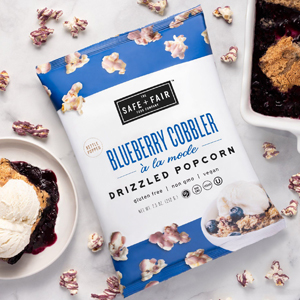
[00:04:06] Ray Latif: I do that. I do that. I just did that this past week with some brands that I post on Instagram. Actually, I'll mention it now. One of the brands was Fair Company called The Safe and Fair Food Company. We actually had the CEO of the company, Will Holdsworth, on Elevator Talk livestream a few weeks back. Really interesting brand that focuses on allergen friendly foods, and they recently launched this new line of popcorn, Drizzled Popcorn, that is. It is incredible. They have a birthday cake flavor, and they have a key lime pie flavor. They have And Blueberry cobbler flavor, which is the one that I posted on Instagram, and people lost their minds when they saw that. I probably got more messages about that product than I have about any other product over the past, well, few months. And it is really, really delicious. I mentioned that Will Holdsworth, who is the CEO of The Safe and Fair Food Company, joined us on Elevator Talk live stream, where we feature interesting brands and the entrepreneurs that represent those Brad Avery week, Wednesdays at 3 p.m. Eastern time. If you're interested in participating, go to BevNET.com slash Elevator Talk, and you can join us in a future episode. Have you guys been following along with the the Elevator Talk, Landis and Beth?
[00:05:20] Simon Sacal: Yeah, definitely. I mean, our team, the brand specialist team has been, you know, helping corral folks here and there behind the scenes. And, you know, we love watching it, of course, because we're just total geeks about this stuff. So it's great seeing, you know, being exposed to new brands and new products all day.
[00:05:42] Ray Latif: Totally, and it's fun to have our industry experts join us as co-hosts. We've had investors, other successful entrepreneurs join us to offer some feedback and advice. I'm really looking forward to our August episodes where we'll be featuring Patrick Schwarzenegger, Dinah Trout, who's the CEO and co-founder of HealthAid, Tom Spear from Boulder Food Group. It's going to be a fantastic month. So once again, if you're interested in participating, go to BevNET.com slash Elevator Talk and apply or just watch Wednesdays, 3 p.m. Eastern on BevNET and Notch.
[00:06:16] Beth Kaiserman: That sounds like a great crew for August. I like to tune in and find new brands to stock on Instagram and Twitter. So that's what I do while I listen to it.
[00:06:24] Ray Latif: Nice. Nice. Well, speaking of brands, as we mentioned in the last episode, we have a new feature on Bevan & Nosh called Brand Spotlight. Landis, you are also deeply involved in the Brand Spotlight program. Just to refresh folks, what is it?
[00:06:42] Simon Sacal: Brand Spotlight, we're going to be promoting your brand through our website, our email newsletter, and our podcast all week long. We found that brands needed an easy way that wasn't super difficult to, you know, creating assets and everything to promote their products. during this crazy time when there are no trade shows, there are no in-person meetings, everything is happening digitally and so the brands are reaching out to their partners in the industry via email, directly calling them. This is another way to communicate with your partners in the industry. They are reading BevNET and they are reading Nosh and they like seeing when the brands that they work with are promoted. So, you know, it's a really great way. It's really simple. We just created it because we needed to give brands an opportunity to get this awareness, regardless of who in our audience you're targeting, whether it's a website reader or a newsletter reader or a podcast listener, in this critical time when, you know, awareness is pretty much at an all-time low for most brands.
[00:07:50] Ray Latif: Landis and his team are constantly having conversations with brands and they have various needs, whether it's finding their next investor or next partner or getting into retail. And they're talking about, how do I get the industry to know who I am? and talk to them about building brand awareness. And, you know, sometimes it's hard to imagine for a new brand, just how does that work and how do each of these channels perform for me. So we created a very easy way to test into industry advertising for a whole week across channels.
[00:08:23] Simon Sacal: Yeah, like Mike was saying, you don't need to spend $10,000, $20,000 to gain awareness with an audience like this, especially if you're inexperienced in this type of advertising and marketing. So we're trying to make this a really accessible opportunity to speak to our audience. Nobody supports the emerging brands more than we do, but we wanted to find a way for everyone to participate through industry awareness on your schedule, which you get control of when you purchase it, essentially.
[00:08:53] Ray Latif: It's very easy to understand. Contact Landis, jlandis at BevNET.com, and he'll have the conversation with you, and you'll really like the price because it's entry-level, easy to bite off, easy to test, easy to get results. And I've seen the spotlights on DevNet and Nosh, and they look great. And, you know, I just saw one from Vive Organic. Never a better time to boost your immunity is the tagline, and I totally agree. And it's front and center right on the website. Just an easy way, as Landis mentioned, to gain awareness pretty quickly and with the right people in our industry. Yeah, and all you need is an image of your product and the ability to describe it. You don't even have to have a landing page. If you have one, great, use it. If you don't, we'll make one for you.
[00:09:34] Simon Sacal: Yeah, we're really trying to make this as simple and straightforward as possible and work with everybody to deliver the message that you want to deliver to our audience. So we're obviously really excited about this. That's why we're talking about it so much. So please do get in touch with us. Even if you're just curious and want to have a conversation, there's literally no pressure. That's what we do all day. Guessing your margins? That's risky. Belay Financial gives CPG brands the clarity to scale smarter, faster, stronger. Get your free inventory ebook by texting TASTE to 55123 and start making data work for you.
[00:10:17] Ray Latif: Tune in at the end of this episode for an exclusive interview with Matt Lin of Belay Solutions. He sits down with Melissa Traverse to break down the biggest inventory and accounting mistakes CPG founders often make. You'll learn how to bring clarity to your numbers so you can scale with confidence. Well, I'm excited about Brand Spotlight, and I know a lot of folks in our audience are excited about CBD. And CBD has been top of mind for our industry for going on two, maybe three years at this point. And Beth, you covered a recent study that was conducted by the FDA, the Food and Drug Administration, about CBD levels in food and beverage. Can you talk a bit about it? It was a great article.
[00:11:00] Beth Kaiserman: Thanks, Ray. Yeah, of course. So this is actually just sort of part of a series of studies that they've been doing over at the FDA since 2014. So it's been a while that they've been looking at CBD and, you know, testing it for levels of THC, testing for heavy metals. It's not brand new information.
[00:11:19] Ray Latif: Did they find Motorhead?
[00:11:21] Beth Kaiserman: It's part of an ongoing thing. And so it's, you know, it's part of their efforts to regulate, obviously, which is what everyone's really waiting for. Last week, there was actually an update that came out that they did actually submit their draft guidance, their draft enforcement policy to the White House. So I'm just waiting to be able to see what's in that and see what happens next there. But, you know, again, because they've been testing it since 2014 and, it's not like they're finding anything is hugely unsafe. That is the big takeaway, is that there's no real proof of what they found making it largely unsafe. Some of what they found has more CBD than what it says on the label. It just points back to there being no regulation over the industry. That's what everyone's on the edge of their seat for, and I'm really hoping that now in the next few weeks even, we might have some more clarity around that. That is super exciting.
[00:12:17] Ray Latif: It's interesting because you see a lot of marketing messages out there that talk about the purity of CBD, and I'm just glad that we're not finding uranium, plutonium, or lemmy in any of our CBD. Did you say lemmy? What's lemmy? Lemmy. What is that? Smaller head reference again, Ray. You don't have to explain the joke. It's not funny. Sorry.
[00:12:39] Simon Sacal: You should have just said, like, buckethead or something. Isn't there, like, a better, like, heavy metal reference? Uh, I said motorhead, though, so I had to keep going with it. Heavy metal.
[00:12:48] Ray Latif: Oh, for crying out loud.
[00:12:51] Beth Kaiserman: It definitely took me a second. The second time you mentioned it, I got it. I was like, wait.
[00:12:56] Ray Latif: Good times. That was the daddest of dad jokes that we use has ever been on this show. Oh, my goodness.
[00:13:02] Beth Kaiserman: That's a good t-shirt idea. The daddest of dads.
[00:13:05] Ray Latif: Yes. I'll take that t-shirt. I'll expect it next week. Well, I got to tell you, you know... Solid tasks abound. The mention that there were elevated levels of THC in some of these CBD products is not necessarily surprising to me because I am not a consumer of THC. Landis can attest to that.
[00:13:27] Simon Sacal: I am a consumer of THC. It's okay to say now because I'm a California resident.
[00:13:31] Beth Kaiserman: Speaking of brand pillars, following fish, consumer of THC. Shocking the crowds here.
[00:13:41] Ray Latif: I feel like I have been exposed to THC by consuming some CBD infused products. It's a feeling that I don't necessarily get with some products, but I definitely get with others. And it is concerning because like if you're If you're not interested in consuming THC, it's something there, you know, you just, you want to be sure. And I'm glad that this is happening.
[00:14:02] Mike Schneider: For those of us who are highly sensitive to THC, Ray, and we don't have to go there right now.
[00:14:07] Ray Latif: But yeah, I'm with you 100%. You know, it's like some of us a little bit of THC goes a really long way. And, and you want to know what you're putting into your body.
[00:14:15] Beth Kaiserman: I was just going to say, I've heard some brands in the industry say, you know, they never really clarified, do the products need to have under 0.3% THC or does just the hemp plant that you're extracting from need to have under 0.3% THC? So again, that regulation is really needed to set a baseline and say, this is exactly what's needed.
[00:14:37] Simon Sacal: And that's a huge, huge difference. I mean, you're talking about, are you only allowed to extract CBD, cannabidol, from industrial hemp, which is an extremely inefficient practice? Or can you extract it from the female cannabis plant? that is genetically grown to be a high CBD variant and then maybe even chemically strip out some of the THC, which can be a lot more efficient to do because the female plant has just much, much higher levels. Even if it is saturated with some THC, there are ways to remove that, but I think the gold standard that people are looking for is trying to find that female plant that has below 0.3% THC that you can just harvest and process right away. I believe Charlotte's Web has a patent on one strain like that, but there are not very many out there.
[00:15:33] Ray Latif: Damn, I've missed you, Landis. CBB side hustle consultant, I guess.
[00:15:40] Beth Kaiserman: 100%.
[00:15:40] Ray Latif: I could listen to this all day. You know, this very issue came up in episode 218 of Taste Radio when we spoke with the co-founders of Defy, who are NFL Hall of Famer Terrell Davis. and Megan Bushell, and they market a product, as I mentioned, called Defy, which is a CBD-infused zero-THC performance drink. And when they say zero-THC, they're standing by that. It's not 0.3 or less than 0.3. In the conversation that I had, they were very, very sensitive to the fact that people didn't want THC in their products, and they are guaranteeing that there won't be.
[00:16:16] Beth Kaiserman: That's awesome. And I agree with you, Ray, on that. I mean, that's how it should be. Like, again, this isn't it's a cannabis derived product, but it's not or it can be a cannabis derived product, let me say, but it's not what people are looking for, you know, to get high. It's not for that. It's supposed to be for other reasons. So. Again, it's about marketing what's there and not including other extraneous elements.
[00:16:41] Ray Latif: It gives an opportunity for competitors to come in and say that, hey, this CBD is less efficacious without the THC and ours is better.
[00:16:51] Simon Sacal: Competition is what makes the world go round. It's also interesting from the beverage side of things because we've seen some really specific You know milligram call-outs the one that comes to mind is obviously mood 33 with 33 milligrams But we've seen some that are like 7 milligrams 12 14 like just kind of seemingly arbitrary numbers and knowing that how many products are having difficulty coming within 20% of an arbitrary number like that and As a consumer, it raises a little bit of skepticism, especially since these are usually premium-priced products. I think that obviously everyone wants more regulation just so that we have more clarity. I wonder why the industry isn't doing more on its own to kind of make things more consistent without the FDA's oversight. I think that there are definitely opportunities for private institutions to step in here and say, hey, we can create a seal or we can create a testing standard. We don't really need the FDA to do that. I wonder what the future holds and how COVID and remote working will affect all this moving forward.
[00:18:04] Beth Kaiserman: It's interesting to our colleague Marty posted a video yesterday about a right field group report you know and it's talking about how consumers are increasingly using these products during the pandemic which of course 100 percent makes sense and as expected. But Again, it goes back to being consistent. I mean, if you're new to CBD and you're trying to figure out dosage, because, right, you're really using this as a type of medicine, for lack of a better word. I mean, it's for wellness. You know, it's difficult to do that when products are so inconsistent, even two of The Safe brand, you know, two things from The Safe brand in different batches may be inconsistent with each other. So how do you start?
[00:18:46] Mike Schneider: It's a really great question in CBD and in THC.
[00:18:51] Simon Sacal: Well, the interesting thing that I found in your report, Beth, was that all the products that the FDA recently reviewed were e-commerce products and that they're not really going out into brick and mortar just yet into maybe the market leaders, essentially. It seemed to hint that those market leaders weren't included with the testing. I'm not sure if that's exactly the case.
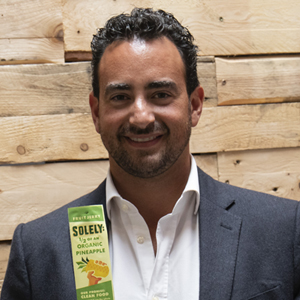
[00:19:15] Ray Latif: Fascinating stuff. Be sure to subscribe to BevNET and Nosh to read the whole story. That's a very good point. Easy way to do that, go to the upper right-hand corner of either site, BevNET or Nosh, look for the big subscribe button, and you'll be able to get started and get signed up probably in less than three minutes. Pretty easy stuff. All right, it's time to get to our featured interview for this episode. As I mentioned at the beginning of the show, Simon Sacal is the founder and CEO of Soli, a brand known for its innovative fruit jerky strips, which are sold at Whole Foods locations nationwide. Born out of Mexican-based food company FruitX, Soli launched with an ambitious mission to rethink how food is developed, grown, sourced, processed, and sold. The brand has invested heavily in agriculture and food technologies to create delicious, nutrient-dense, and differentiated products, including a new line of spaghetti squash, that can appeal to a broad spectrum of consumers. In the following interview, I spoke with Simon about his background as a food entrepreneur, beginning as a teenager, how his career culminated in the development of Soli. He also explained why the company's strategy and focus is, quote, exactly the opposite of the easy way, but the right way nonetheless, and why Soli doesn't launch a product unless it identifies a huge advantage over a competitor. Hey, folks, it's Ray with Taste Radio. I'm going to call right now is Simon Sacal, the co-founder and CEO of Soli. Simon, how are you?
[00:20:47] Mike Schneider: Hey, Ray. Thanks for having me.
[00:20:50] Ray Latif: Thank you so much for joining me today. You're based in San Diego, which is a city I love. It's also where our West Coast office is located. And just over the past four or five years, it's been really interesting to see the city become this hub for entrepreneurial and innovative food and beverage companies. What do you think has drawn entrepreneurs to the area or has spurred folks into launching their own businesses in San Diego?
[00:21:13] Mike Schneider: It's a very interesting question. I think the city the weather and the people just draw people here to live. It's a very inviting city and a very inviting place. So entrepreneurs and non-entrepreneurs are drawn here. And I've seen more and more people coming to San Diego. But I think also it's a very healthy place. The lifestyle is healthy. People exercise a lot. People are also opening to experimenting because there's people from all around the world here in terms of food. So I think it's a great place to be. We're very happy to be here.
[00:21:57] Ray Latif: You've been involved in food for quite some time. You launched your Fair Company when you were 19, is that right? Yeah, 18 still. 18! a line of fat free potato chips, which, uh, is pretty amazing. And it sounds like it was a brand that probably existed and did well about 20 years ago.
[00:22:16] Mike Schneider: Yeah, that was a very interesting story. It was 20 years ago and, uh, the inspiration of the business here was basically a market opportunity. I lived in Mexico city at the time. And, uh, there were very few alternatives, healthy alternatives for people at like malls and parks and places where people gather. So the inspiration was how do we make something here in front of people? That was the first development that's healthy and indulgent. and you remember 20 years ago healthy in a snack food was measured by the amount of fat and in most every food was either healthy or not healthy if it was fat-free, low fat, non-fat, etc. So we started trying to develop a product that was going to be made at a mall in front of people, a fat-free product, fat-free snacks, and with some years of technology development with labs in Mexico and all around the Well, and here in the US, we ended up developing a food technology to make fat free potato chips, which was the holy grail at the time, because it was the indulgent product that everyone wanted to eat, but was clearly linked to fat. So having a great tasting fat free potato chip was a huge idea. So that's how we started.
[00:24:01] Ray Latif: And you're not talking about fat-free as in frying the potato chips in an artificial kind of oil like we saw with Olestra. This is a different type of technology, right?
[00:24:13] Mike Schneider: Yeah, Ray, that's very, very important. Thank you for pointing that out. We've never believed in chemicals as a solution to food development. We have always been away from that. No, we developed a physical technology, it was a cold extrusion technology that allowed us to have these fat-free potato chips or corn snacks or even cereals with all the indulgence and without the fat. So that was it, no chemicals at all.
[00:24:49] Ray Latif: So being an entrepreneur when you were 18, I'm sure you soaked in quite a bit in terms of knowledge that you could apply for future projects and future brands. What was your biggest learning experience? What was your biggest lesson from your potato chip brand?
[00:25:04] Mike Schneider: The biggest lesson was to understand that the only important thing at the end of the day was the reality of how consumers react to the product. it's not about technology, it's not about distribution, it's about people buying the product and recognizing it as something they want. All the rest you can buy, it's a matter of time or money, distribution and even revenue. But velocity and having people buy and re-buy the product is the only important thing. So that was the biggest lesson.
[00:25:50] Ray Latif: Now, your current brand solely was born out of your family's business, which is called Fruit X. Can you talk a bit about the history of that company and its primary focus?
[00:26:00] Mike Schneider: Of course. So after the experience with the potato chip company, we started trying to solve a problem for the Mexico government because they wanted to give children fresh fruit in lunchbox programs. So it was a very difficult task because most of schools around Mexico that receive this social programs don't have a cold logistics chains or kitchens at the schools. So the program is made is in little lunch boxes that they distribute all around the country and there are a million of those per day. So When they started trying to include fresh fruit, they faced a big problem, right? They weren't able to distribute fresh fruit to all the schools. So we worked for a few years on trying to develop a way to basically make the fruit shelf stable without having to add anything and without losing nutrients. So we invented another technology and we patented it worldwide to make little bars out of fruit without losing the nutrients. That was a huge breakthrough and that was the founding stone of Fruitex. And we started basically with these government programs, which are huge, they distribute more than six million lunchboxes every day. So it was a big, big program and we started little by little and we really solved the problem. We have a very affordable product that's essentially fruit, nothing else added, doesn't lose nutrients and at a very competitive price. So after a few years working with the government, We kept on working on food technology development and we started working a lot with farmers because we started vertically integrated from farm to technology to manufacturing just to comply with all the government needs for those products. And we ended up developing a new technology that privileged the organoleptic qualities of the fruit. So we could work with tropical fruits like mango and pineapple with this new technology, right, and press it into bars that have the look and the smell of the actual fruit. So we developed that technology, we patented that technology, and at the time we were working also with a lot of tropical fruit farmers, helping them certify organic and helping them get better yields and helping them move their ugly fruit. So we added two and two together with this new technology and we knew that we had a winner. So the story starts with a bar, with developing a fruit bar. It wasn't a jerky and we developed a fruit bar with that technology and we tested it in Starbucks all around Mexico. And it was a very successful thing, but we knew it needed more work. So we redesigned the process and we rebranded the product as a fruit jerky. And that's how Soli Fruit Jerky started. And that's how we started with a brand.
[00:29:49] Ray Latif: I want to unpack a couple things there in terms of how you work with farmers to turn their misshapen or, as you called it, ugly fruit into a viable product and brand. I want to go back to fruit technology too because Food technology is a term that can sometimes be misunderstood as over-processed or using artificial methods to produce a product. Clearly, that's not the case with Fruitex or Soli, but how do you think about the term food technology? How do you define it? What does it mean to you?
[00:30:23] Mike Schneider: It's a great question, and it's such a broad word. It can go as you said in your example about Olestra, it can go from chemicals and additives and developing or genetically modifying food all the way to how to cook a bread loaf to make it crispier. It has a very broad spectrum, that's the food technology term. So, For us, what we do is we try to start with a blank page and try to get to a new product without being bounded by the actual technologies. So, for example, with the fruit jerky, instead of just doing a an extrusion of a dried fruit, as many people were doing at the time, we really went to the field, got the mango, understood how ripe it should be to process, etc. And then the food technology here is developing a product on how to press it to get to the final product, how to press it little by little to get to the fruit jerky. So in our mind, the food technology in our experience, every patent that we have gotten into the market is a physical process that we develop to get a new output.
[00:32:03] Simon Sacal: Do you want more repeat buyers on Amazon? Well, this free resource in collaboration with Straight Up Growth will help your brand turn first-time buyers into long-term subscribers. Download Winning the Repeat Purchase Game on Amazon now at Taste Radio slash SUG. That's Taste Radio slash S-U-G to start building retention-driven growth for your brand on Amazon.
[00:32:28] Ray Latif: Scaling a beverage brand into major retail comes down to operational readiness. From packaging lead times to co-manufacturing strategy, the details can make or break a launch. In a new e-book in collaboration with Octopi and Asahi Beer USA, industry leaders share what they've learned in helping brands scale. Download it now at Taste Radio slash octopi. Do you need to scale your team faster without compromising on talent? Join Oceans for a live webinar on April 20th and learn how leading companies are hiring top global professionals who are ready to grow with your business. Register for the webinar now at Taste Radio slash oceans. That's Taste Radio slash oceans. So I wonder which came first. Was it the technology? Was it the desire to work with farmers? Was it the brand solely itself? I guess did the technology spawn the idea or vice versa?
[00:33:27] Mike Schneider: So the consumer needs and my personal needs in my life and my family's and my children's spawned the idea. We believe that having additives in food is dangerous for us and for kids, and we really believe that. But we also believe that eating, and especially snacking, is an indulgent thing. It has to be pleasurable. So what we did is, and what we've been doing for these 20 years, is find a way to bring this solution as a platform, having indulgent and clean products available for everyone. So in order to do that, you have to develop technologies, you have to, we had to go the long way, Ray, and make a very Fair Company completely vertically integrated, because we couldn't go the easy way. So For example, we wanted to have a very indulgent fruit snack, and the way we developed it is we went to the fields, got the perfect mango, for example, and then developed the process to make it into a fruit jerky, and then developed the machines to industrially escalate it, and then brand it as Soli. So the idea is a platform. It's not about the fruit jerky product or fruit products. It's about a platform that brings these solutions to consumers.
[00:35:07] Ray Latif: The fruit jerky was your first product. It's a pretty innovative product. We've seen similar types of jerkies out there, but nothing quite like yours. When you are launching something that consumers and retailers haven't seen before, how do you assess their interest?
[00:35:27] Mike Schneider: I think, Ray, that if you cannot spark a great deal of interest from the start, then you have to question yourself initially about the product and the idea. Because from our perspective and answering your question, it was very easy to get a lot of interest on the product. We just had to open the product and give it to a buyer. or an investor and just have him try it and understand that it's one ingredient or two ingredients. And that was enough. It takes us one minute in a face-to-face meeting to get their interest because the value is so easy to get.
[00:36:17] Ray Latif: Now you landed a national distribution at Whole Foods when you launched Soli, which is something that I'm sure entrepreneurs listening to our podcast would love to do and love a partner like that for their first products. What were the key elements of that deal?
[00:36:33] Mike Schneider: The key elements were trying to bring something innovative and developing a win-win situation because Once they liked the product, we work with them on pricing, on distribution, on promos, just to make it happen. And then we let the product speak by itself and the numbers speak by themselves. Basically, that's what we did. We're very grateful for Whole Foods' interest and support and partnership. And we try to correspond to them and work with them to make it worthwhile for them and for us and making partnership. We don't try to just sell them once.
[00:37:24] Ray Latif: When you were having those meetings with Whole Foods, those initial meetings, what did they want to see most out of Soli? Was it, you know, a sort of consistency in what you were producing? You know, you mentioned the fact that you were creating a platform for other products to come out of the brand. I guess what really got their mouth watering, so to speak?
[00:37:50] Mike Schneider: from one day to the other. So just for you to get the process, we started with a soft launch in 365. Remember that Whole Foods had a chain called 365 by Whole Foods. That is now absorbed by Whole Foods. So that's where we started at the end of 2018. And it was just nine stores. And we presented to the buyer who is a very special person and he understood that we were bringing something new, unique and with value. And then once we presented the product and he liked it and we started, it was a low risk decision for him initially because it was a small test with nine stores and we weren't trying to do a national. thing and then a few months afterward it's when everything changed because the national buyer saw the numbers and saw the product and understood the potential and we had a meeting and that's when we planned for the national launch so it's never a one day to the other thing it's always a process and you have to go through the process you have to be successful at a small rate, little by little. And then once you're consistent, things start opening up.
[00:39:24] Ray Latif: Did merchandising play a role in the brand? Because it is a product where you can kind of put it anywhere on shelf. Ideally, it seems like by the cash register would be the best place for it.
[00:39:36] Mike Schneider: That's the right way to see this, because that's That's a question from someone who understands the market perfectly. So yes, the answer is yes, definitely. It plays a huge, huge role. But it's something that you cannot control as a brand. You can just suggest, most of the times you suggest to the buyers, you decide what buyer or what area of the stores you present to. but you don't control how they manage it and where they decide to put it and the execution. So we work a lot. We're a very data-driven company, right? And we get all the information and we understand where there is voids at the stores and we have brokers and call them and try to fill in voids and try to get nice merchandising spaces and working with the buyers, with the stores at every level. But, and it's a huge part of it, but you cannot control the first decision on where to put it. You can suggest and try it, but at the end of the day, it's not your decision as a brand.
[00:40:48] Ray Latif: How do you suggest in a way that's going to get you placement where you want?
[00:40:52] Mike Schneider: Well, first try to pitch to the buyer that you want. So our product does, as you said, Checklink is the best place. So talking to the check lane buyer would be a better first approach if that's where you think it should be, or a produce buyer if you think it should be in produce, or a jerky buyer, or a snack food buyer. And solely specifically, we have many categories with all the lines, and then each line can go in different categories. So it's tricky. So first of all, you have to talk to the right buyer, because if you want to be in checkout, you shouldn't talk to the produce buyer first. And it's also a matter of luck where you're situated. And then it's something that you have to manage every day, right? You have to go in the system, see where there's voids, talk to the broker, have merchandisers sometimes, do promos regularly so people start seeing the product more and more, and then the store managers are more comfortable to put it in a better position. It's a process.
[00:42:04] Ray Latif: One of the other things that you mentioned is that you don't launch a new product unless you have a huge advantage over a competitor. I wonder what creates that huge advantage for you, and what is it in the case of, say, your newest product, which is a line of shelf-stable spaghetti squash?
[00:42:22] Mike Schneider: So it's exactly the follow-up of your last question. The relationship between the three attributes, Indulgence, cleanness, and affordability is what makes the product unique. And I'll give an example of the spaghetti squash, which brings also convenience to the table. So consumers have had an alternative to buy pasta, dry pasta, on the shelf forever. And it's a great product and we all love it. But It has its downfalls. It's a gluten-based product. It's calorie-packed and it's pure carbs at the end of the day. And then there's a new alternative on the other side of the spectrum of spiralizing vegetables to make vegetable-based pasta. And then in the middle, you have like the lentil pastas and bean pasta and all those types of in the middle products that don't have the gluten but have the carbs and the calories or have a gluten and some additive like a seaweed or it's a combination. The problem with the vegetable alternatives, the all-vegetable alternatives up to now is that it's a fresh product. So you have three, four, five days of shelf life, you have to refrigerate, you have to buy it when you want to cook it. So the whole experience with a pasta market is that you want to have pasta on your pantry so you can cook it whenever you need it. It's a go-to product on any emergency. It's very easy. And you cook it in five minutes. So what we did is brought those two together, developing a one-ingredient spaghetti squash alternative, which is a A little box, you've seen it, Ray, a little box as a pasta box. It's very affordable. It's a little above $1 per portion. And you put it in boiling water five minutes and you have your pasta. It's 100% vegetable. You have 85% less carbs and calories than a regular pasta. So consumers get it all. They get the convenience. They get the experience. They get the pricing. That's what makes it unique. That's what's a huge advantage.
[00:45:04] Ray Latif: Earlier you had said that, you know, it's not easy to do what we do. You talked about having to lay out a significant investment to create the technology, to create the equipment that would produce the products that you want to deliver to the market. You had mentioned earlier that it's exactly the opposite of the easy way. Now, there's no real easy way. There's no path to easy success in our industry, but there are some ways to do things a little bit more simply than others. Why have you chosen this really difficult or seemingly really difficult path?
[00:45:39] Mike Schneider: It's exactly The Safe explanation as I did before. You want affordability. So you have to have The Safe and the verticality. Because if you have four intermediaries between you and the fruit, then it's impossible to get to a good price. If you manufacture very small volumes, it's impossible to get to a good price. So you need to build something scalable to do that. Then you want cleanness. So If you want something very, very clean, it's very hard to make because you cannot use preservatives. You cannot use colors. You cannot just add sugar. We never add sugar to anything. So you have to start with a perfect raw material. In the fruit jerky case, it's a perfect ripe fruit that looks great and tastes great and smells great. So sourcing that in huge quantities, that's difficult. And then there's no technology to do it because everyone on the food business is relying on preservatives or flavorings or colorings or even fillers to get to the price or the taste. So we went ahead and worked some years to develop and patent a food technology, a process to do it. And then we build a manufacturing facility to have it made in volume. So what I'm trying to say is, If you want to give it all to the consumers, you have to work on the whole background process and to bring the indulgence of affordability and the cleanness. So that's what I meant.
[00:47:29] Ray Latif: As I mentioned, capital has got to be a key component of all of this as well. You know, building out the machinery to produce these products sounds like it's pretty expensive. And you had mentioned that Soli is a long-term play. So how do you find investors that will believe in your vision and more importantly, are patient enough to follow it?
[00:47:51] Mike Schneider: You have to be very open and you have to be very transparent on what you're trying to do. there's a lot of money in the market. I think that whenever there's a good idea and a good management team and a good company, the company will be able to choose between many alternative investors, as investors can choose between many alternative companies. So I think you have to really be transparent to them and to yourself and just try to look for people that have The Safe set of values and alignment. And that's very, very important. It sounds trivial at the beginning because you only need the money to keep on going or to start. But in the long run, it really makes a huge, huge difference. So it's about first, you as an entrepreneur understanding what your end game is and how what's your long term plan and then looking for people that share those values and that you can work with for a long time in the future. It's it's a huge decision. You're marrying them in sort of way. So it's important to not just go with the first alternative and really think hard and through the decision.
[00:49:24] Ray Latif: Well, I have a feeling that your investors are probably happy with the start for Soli. It really is a great brand. I remember when I first encountered it at Whole Foods and I saw your fruit jerkies and was just amazed at how this two-ingredient product hadn't existed before. And it sounds like it's been a process. It's been a journey, but you've gotten there. And I assume there's a lot more to come. Simon, thank you so much for taking the time to speak with me. I really, really appreciate it. And please stay in touch.
[00:49:52] Mike Schneider: Thank you so much, Ray. It's a pleasure, as always. Thank you so much again.
[00:49:57] Ray Latif: Thank you. That brings us to the end of Episode 94 of Taste Radio Insider. Thank you so much for listening, and thanks to our guest, Simon Sacal. Please subscribe to Taste Radio on the Apple Podcasts app, Spotify, Stitcher, or Google Podcasts. As always, for questions, comments, ideas for future podcasts, please send us an email to ask at Taste Radio. On behalf of the entire Taste Radio team, thank you for listening. We'll talk to you next time.
[00:50:35] Jon Landis: Hello, I am Melissa Traverse here for the Taste Radio podcast, talking about some of the biggest tension points that CPG brands and founders face when they're scaling a brand, and those are financial accounting and inventory management. I am joined by Matt Lynn, inventory accounting guru from Belay Solutions, and he is going to shed some light on all of this that is going to help everybody out quite a bit. Matt, thank you so much for joining us today.
[00:51:06] Brand Spotlight: Thank you for having us, Melissa. It's great to be out here at Expo West and it's great to sit down and be able to chat this because it's kind of a passion project of ours, working mainly with CPG brands and hoping to help them scale.
[00:51:17] Jon Landis: It's been such a pleasure chatting with you and the team and learning all about what you do over there at Belay Solutions. Can you tell us a little bit about yourself and what your role is and the kinds of solutions that Belay gives to CPG brands and founders?
[00:51:33] Brand Spotlight: Yeah, absolutely. My role with Belay, I'm actually our inventory accounting manager. I run our inventory department, so we work with CPG brands, taking them from spreadsheets, putting them on inventory management systems, and really helping connect their tech stack between their sales online marketplaces to that inventory management system, even down to their financial systems like QuickBooks. Belay overall is kind of an outsourced accounting firm. And with that, we're helping teams. We have different levels with bookkeeping, controller level work, even high level into CFO type items. So we really help those brands in any way that they need financially. And then I just have a subset of a department where we're really just laser focused on inventory.
[00:52:16] Jon Landis: It's certainly a complex topic and there are plenty of places to go wrong. Let's start by going right and start super simple. Can you tell us what some of the biggest red flags are that would help a founder understand or, you know, the person running a brand understand that it really is time to get some help with some of these areas?
[00:52:36] Brand Spotlight: Yeah, absolutely. I think some of the early red flags is just everything is chaos. So when they're looking in their financial software, maybe they don't really have an accounting background, and they're kind of just piecing it together and doing their best. And what they'll see is that reconciliations take forever, if they even happen. They have a lot of transactions that don't get coded, or they just put them into placeholders to just get rid of it so it's not an eyesore. they'll notice they have revenue but no cash or they notice that they have a good amount of cash but their blind spot is really seeing the vendor invoices that are sitting there just needing to be paid and so they just lack that clarity that's going to really be around the corner.
[00:53:13] Jon Landis: You know, you were talking about one of the red flags that comes up that I think makes so much sense. When somebody asks you what your numbers are and you can't come up with the right number, that's a big problem because that's something that you really should be able to share with decision makers who, you know, you're ideally looking to do business with. What should you be able to call up at a moment's notice?
[00:53:38] Brand Spotlight: really at any time you should be able to know an accurate margin. It's amazing how many founders we end up talking to that they can tell you their revenue numbers, they can tell you their selling price, and then the minute you start talking about cost or their cost of goods sold, they just get a deer in headlights look. So really it's very hard to tell, am I even making money? Or if you don't know your entire landed cost. Maybe you know what the freight cost is, the duties separately, but you're not really getting that as part of your unit cost. So it's really hard to tell. Am I even making money or am I losing money from the very beginning?
[00:54:11] Jon Landis: And do you recommend that founders are able to call up a margin by channel?
[00:54:16] Brand Spotlight: Absolutely. And depending on the number of products and channels, you kind of want to know what are your best sellers, which ones are making the most and which ones maybe you're not making as much. But especially if you're branching out and you're doing D to C with B to B, absolutely want to know that.
[00:54:32] Jon Landis: Gotcha. You mentioned that when things feel really chaotic, that's probably a red flag. I would say that it probably almost always feels chaotic if you're running a CVG brand. And I know this may be hard to quantify, but is there a revenue number? Is there a number of doors number that would help a brand understand whether or not it makes sense to bring on a partner like Belay? Understanding that so many brands are bootstrapped or they might be tight for cash. What is that friction point?
[00:55:03] Brand Spotlight: 3 3 3 3 3 But as you're growing, as you're getting to those six-figure revenue numbers, and especially as you're approaching seven, you want to make sure you've got good financials. Because as you scale to that point, most likely you're going to be looking to raise capital. And investors, the first thing they're going to look at is your books. And are they clean? And do they show a clear picture of your business?
[00:55:35] Jon Landis: You know, another area that folks might look to to organize some of the chaos are their systems. So many folks stick with Excel spreadsheets for a good amount of time. How do you know that you need to outsource some of your accounting to an organization like Belay Solutions versus maybe signing on to a Synth7 or NetSuite or something like that?
[00:55:58] Brand Spotlight: Well, that's actually something we really help with. When it comes to that cost question, that's something that trips people up. And sometimes if you just have a turnkey business, you buy and sell a finished good, you can maintain with spreadsheets. And we've had clients with million dollar revenue that can do that. But we see so many brands nowadays are using contract manufacturers. and they're just sourcing certain parts of their product. So when you start talking cost, they have no idea exactly what their unit cost is. So that's where we come in and we kind of understand, we'll speak with the customers and the clients and get their needs. And then if we think they're ready for a system, then we'll help put them on that system so they can get some of that clarity. And it's not something we force on anybody. There are plenty of times where founders come to us and we'll tell them bluntly, you're not ready for it right now, but we'll let you know when we think you are.
[00:56:44] Jon Landis: That sounds like excellent advice. What should a founder or somebody running a brand look for in an outsourced accounting partner? Are there certain checklist items that they should make sure that their partner be able to execute or be able to help them understand?
[00:57:01] Brand Spotlight: Absolutely. I think one of the keys there's, there's a lot of outsourced accounting firms out there. Some focus on service-based SaaS companies, but if you're a CPG founder, you really want to make sure that your accounting firm has CPG experience. I would ask them, you know, what kind of brands have they worked with? And even beyond that industry specific, because there's so many subsets of CPG. And that's something that I think is great about what we do with Belay is that we kind of run the gamut. It's kind of like the insurance commercial. We know a thing or two because we've seen a thing or two across a broad spectrum.
[00:57:31] Jon Landis: Probably getting references is always helpful, right? Absolutely. All right. So this all sounds great. I think we have a really good understanding of would it make sense to hire an outsourced partner? You know, what some of the things you should be looking for are. What does offloading this kind of work mean for the brand? What can this do for lightening the load of a founder or lightening the load of a brand operator? Like, how does that help them in their everyday business?
[00:58:00] Brand Spotlight: It just tries to really help quiet the chaos. So what we're looking to do is just take some of the weight off that founder's shoulder, let them focus on building the brand, building the business, getting that exposure. If you don't have sales, you really don't have anything. So we want them to be able to focus on that while we take care of your back end office work. And we can just present that to you on a monthly basis, you can help make decisions, you can take that to investors. And really, you can just focus on growing your business.
[00:58:26] Jon Landis: I feel like I felt founders and the folks who are running brands collectively sigh. A breath of relief just hearing that. How can people learn more about Belay Solutions?
[00:58:37] Brand Spotlight: So people can text TASTE to 55123 for their free inventory guide to get started.
[00:58:42] Jon Landis: Matt Lynn, inventory accounting guru at Belay Solutions. Thank you so much for joining me here at Expo West. It's been such a pleasure to chat with you and learn about what you all do over there to help founders and brands with their financial accounting and inventory management. For everybody else out there, thank you for listening to the Taste Radio podcast. I am Melissa Traverse and we'll see you next time.