[00:00:10] Ray Latif: Hello, dear friends, and thanks for tuning into Taste Radio, the number one podcast for anyone building a business in food or beverage. I'm Ray Latif, the editor and producer of Taste Radio, and it was my co-host for this episode, John Craven, Jacqui Brugliera, and Mike Schneider. This episode features an interview with Trey Zoeller, the founder of pioneering whiskey brand Jefferson's Bourbon Ocean that changed our word in my head you did you called us dear friends dear friends dear friends, right? Well, I feel like our audience our community is made up of dear friends. Not just regular friends, but dear friend What about elk and moose who?
[00:00:49] John Craven: nothing
[00:00:50] Ray Latif: What does that mean? What's going on with Arsenal, by the way? They suck lately.
[00:00:55] John Craven: You just said your dear friends. You're going back on your word. Both your clubs suck. Don't we just agree on this? I guess we're not talking about Leandro Trotsard. He's not one of our dear friends at the moment.
[00:01:07] Ray Latif: It's been a tough six weeks or so for Arsenal, but they'll bounce back. They'll be fine. Still in what place?
[00:01:14] John Craven: Fourth. What place are you in? What place is United in?
[00:01:17] Ray Latif: Relegation?
[00:01:18] John Craven: No, no. What place?
[00:01:20] Ray Latif: Ray is always in first place. The team I support is unfortunately in 13th place right now.
[00:01:25] Jacqui Brugliera: Is that last place?
[00:01:27] Ray Latif: No, no, last place is 20th. That's pretty close. I think we're closer to fourth than we are to 20th at this point, which is fine. Something to look forward to. You know what else to look forward to? What's that? Live Nosh live brew down live it all happened very soon. Today's the 12th We're recording on November 12th, which means that Nosh live is if my math is correct 23 days away goodness That's three weeks and two days John Craven You're all packed up. You got your toothbrush Do you have a toothbrush container do you have one of those things where you or do you like a road case spray?
[00:02:05] Jacqui Brugliera: Full dental kit.
[00:02:06] Ray Latif: No can I can I go kind of ape shit for a second here.
[00:02:09] Mike Schneider: Yes.
[00:02:09] Ray Latif: I'm cursing so mad People pack yes, don't just jam your friggin toothbrush in your backpack. You got to have like a toothbrush holder Do not put your shoes in In your luggage or your purse or whatever it a Bag It is without a Bag It hold the shoes. Oh, that's everyone knows You're gonna smell like feet So I used to not but then I learned and I
[00:02:46] Jacqui Brugliera: No, I don't know people I said people I know still nowadays.
[00:02:49] John Craven: I just see them jamming their shoes in their bags Do you pull your roller Bag It the restroom? What? Okay, yeah, and then do you place it in the overhead?
[00:03:01] Ray Latif: Do I place it on my bed is the better question never never never? There's gonna be a new podcast next week called travel tips with Ray I just gave a bunch of travel tips for his travel tips podcast you need a toothbrush holder travel holder you need I didn't know you were traveling Yeah, the shoes issues anyway 23 days, Nosh Live begins. We have got a ridiculous lineup of speakers. I am just so excited to sit down with, well, hopefully sit down with at some point, if he gives me five minutes, John Foraker, who is appearing on stage with the co-founder, his co-founder of Once Upon a Farm, Jennifer Garner. You know, we talked about this a couple of weeks ago. The opportunity to sit down or meet these folks face-to-face is a completely different kind of interaction and way to communicate than if you were doing it on LinkedIn or via an email. Having that face-to-face interaction goes so much further, as it does with the retailers that we have at the show, retail buyers at the show. Jackie, again, the second question everyone always asks is, do you know any retail buyers? The first is obviously, do you know any investors? The second is, do you know any retail buyers? Guess what? We know retail buyers and we know that there can be at Nosh Live. We do.
[00:04:13] Jacqui Brugliera: Yeah. We will have Whole Foods taking one-to-one meetings.
[00:04:18] Ray Latif: Nobody wants to meet anyone from Whole Foods, right?
[00:04:20] Jacqui Brugliera: Nah. And then we also have some investors as well as investment bankers taking some meetings, talking about, you know, opportunities for brands.
[00:04:30] John Craven: Yeah, Jackie, we've got Rachel Hirsch from Wellness Growth Ventures and her team taking meetings and you know her portfolio. She invests in great brands like Cure Hydration, Partake, De Soi. Just go to her website so you can see like what she's invested in. And I can't wait to meet Rachel. It's going to be awesome. We've got her on stage as well.
[00:04:50] Ray Latif: Genevieve Gilbraith also will be on stage. She's the co-founder and general partner of Springdale Ventures. Wayne Wu, everyone knows Wayne. From VMG. From VMG will be there. Hey, look at this. I'm looking at the website right now. Monica Watrous. The managing editor of Nosh will also be in attendance. Thank goodness. Running all the content. Running all the content. Yes. This is the first time I've seen Lukas Southard also. He's like, who's that guy?
[00:05:17] John Craven: He's one of the co-hosts of the CPG Week podcast. An outstanding podcast that everyone should subscribe to for sure. Take a listen to that. 15 minutes, snackable news and insights from the team. Is that like a Geico reference? Yeah. 15 minutes will make you smarter.
[00:05:31] Ray Latif: 15 minutes make you smarter.
[00:05:32] John Craven: Something like that. It's not like Geico. No one wants to pay for insurance. Why would you compare our podcast to insurance company? Geez, why are you getting all agitated? Is this because I was getting agitated about the travel things? You might have mentioned Arsenal too.
[00:05:45] Ray Latif: Oh, that's true. I forgot all about that. That was like five minutes ago. That was like eons ago, Mike. Yeah, but it's still ruminating. Every moment of every day. Yeah, you're not wearing anything. Have you noticed this tangent? Mike hasn't been wearing a lot of Arsenal gear lately. It's cold in here. I mean, neither of you guys should. At all times come on one other name I want to mention who is coming to notch live and speaking at notch live Cameron Gould Saltman Who is the head of food and beverage? for tick-tock shop tick-tock shop learn how to sell better on Tick-tock sell more so you can actively you can shop on tick-tock You can shop on tick-tock I said one other person, I lied. I mean, I want to say one more person. This person's near and dear to your heart.
[00:06:34] John Craven: You're going to mention Jing Gao.
[00:06:35] Ray Latif: I'm going to mention Jing Gao, who was the founder and CEO of FlyByJing. I mean, talk about a spectacular entrepreneur and someone who, if you're looking to do a collaboration with FlyByJing, they've done a lot of really cool collaborations. Your chance to picture an idea.
[00:06:53] John Craven: Oh, that's a great idea. Yeah, I mean I don't know how the Daily Crunch collaboration came along But I can't wait to ask her about how that one came to be it's so great Yes, do you have like bags stored in your office?
[00:07:04] Ray Latif: Yeah, if you open up a cabinet literally hundreds of bags
[00:07:10] John Craven: coming out of Mike's. No, I'm not even sure how I got them because they, they came in when I was out of the office. Apparently there was a lot and it all went really fast and somehow someone saved one for me. Okay. I think it was Sample Captain Colin. He's a good man. He just showed up on my desk and I was like, huh?
[00:07:30] Ray Latif: I talked about the retail buyers at Nosh Live. We also have retail buyers at BevNET Live. We've talked about Whole Foods. We just announced that buyers from Pilot and Spex will also be in attendance, taking one-to-one meetings with attendees at the show. You could potentially get your products into all three retail chains. Now that, that would be a win.
[00:07:54] John Craven: Man, I love Pilot. It's one of those places that I used to, when I was driving across Ohio, I would always stop At Sea Pilot and be really happy that I did. Aren't you from Ohio? Yeah, originally. Okay.
[00:08:05] Jacqui Brugliera: Yeah, I think like every time I go on a road trip, you have to stop At Sea pilot. It's like the biggest travel center in the, I think North America. So it's pretty great chain to be in if you, you know, want to get in.
[00:08:17] John Craven: Yeah. It's a really great Face To stop because they have a little bit of everything that you want and it's, you know, it's better than the, you know, the rest stops on the highway.
[00:08:26] Jacqui Brugliera: Yeah and Spex too is a really unique, cool retailer in Texas and they're, you know, a retailer focused on gourmet food, alcohol, spirits, also I think a little bit of cannabis, and non-alcohol too. So they will be taking meetings with all of the above.
[00:08:43] Ray Latif: I like how you snuck that in there.
[00:08:45] John Craven: Also a little bit of cannabis. Cannabis is something that we take really seriously around here, right?
[00:08:50] Ray Latif: What's around here? You mean in Massachusetts?
[00:08:52] John Craven: Around here at BevNET.
[00:08:53] Ray Latif: Oh, at BevNET specifically.
[00:08:54] John Craven: Yes.
[00:08:55] Ray Latif: Okay. And just to be clear, Pilot is a pretty big chain. They are the largest operators of travel centers in North America. They have 800 retail and fueling locations across 44 states and four Canadian provinces. And the retail buyer from Pilot, a very nice person, Corey Nicely. She's the category manager for the Cooler set at Pilot. So definitely someone you want to meet. Friendly meeting. At BevNET Live, nearly 600 people are already signed up for the event. It is the best event. And I'm saying this without any bias, even though there's some inherent bias. is the best event if you are in any way connected to the beverage industry. Do you like that, John?
[00:09:41] Mike Schneider: That was great.
[00:09:43] Jacqui Brugliera: He's like, keep going, keep going. I'm over here shopping on TikTok.
[00:09:48] Ray Latif: Well done, well done. I'm registering for BevNET Live, right?
[00:09:53] John Craven: There you go.
[00:09:54] Ray Latif: They're filling up fast. They are filling up fast. But I mean like, I'm going to get my ticket. And for folks who are staying for another event after BevNET Live, that's of course Brewbound Live, our team is just the best. Justin, Jessica, Zoe are putting together or already have put together an agenda for the ages. I mean, you're going to ask yourself, who isn't? One of the big names is coming to Brewbound Live. I just want to hang out with Sam Calgione, the founder of Dogfish Head. He is one of the brightest minds in beer and can also talk to all the advances you're seeing in the beyond beer space, the blurring of the lines that's happening across the beverage spectrum. I mean, you know, if you're thinking about coming to Brewbound Live, he's a great reason to be there, but check out the agenda because it touches everything that's going on in the beer industry and beyond. Right, what size are you for a shirt? I'm a large kid. You're a medium extra medium. What is an extra medium? No, every time I get a medium is too small. So the large is large is appropriate. And then I just shrink it a little bit.
[00:11:01] Mike Schneider: I found what I'm gonna buy you clowns on TikTok shop. Oh, for Christ's sake.
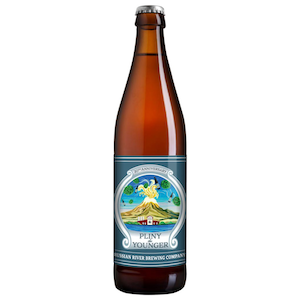
[00:11:07] Ray Latif: On John's phone is One of the most hated soccer jerseys in the world. It's that of Manchester City So I mean upgrade Ray come on. Yeah, I Are you uh, you excited for some Plenty of the Younger? That's at Brew Brown Live by the way.
[00:11:25] Mike Schneider: I mean first of all they only make that in February so we'd have super special status if they made some for us. I mean, you know. And also we'd probably be drunk, but anyway.
[00:11:35] Ray Latif: The founder of, the co-founder of Russian River Brewing, excuse me, which was originally based in Santa Rosa, where are they now? Uh, Windsor, Windsor, California.
[00:11:45] Mike Schneider: They're coming right next door to Santa Rosa. Yeah.
[00:11:47] Ray Latif: They're going to be talking about Pliny the Younger.
[00:11:48] Mike Schneider: I like the STS pills. That's my favorite. But anyway.
[00:11:51] John Craven: You're talking about Natalie Salerzo, right? Correct. Yeah. She's one of the greatest people in the industry. That brewery has such a great story, craft beer legends, Vinnie and Natalie, super kind people. And just, you know, it's just gonna be wonderful to have them in the room.
[00:12:07] Ray Latif: Are you going to break your silver curiosity, have some Pliny?
[00:12:10] John Craven: Yes, absolutely. No, I mean, that's, that's just, that's a no brainer. Very cool. I love Pliny. It's such a great beer. One of the first destination beers that you think about when you think about, Hey, I've got to go to someplace to have the beer. Pliny the Elder. There you go.
[00:12:27] Ray Latif: Well, if you have any questions about any of the events, please let us know. You can send us an email to ask at Taste Radio. Reach out to us on LinkedIn, DM us on Instagram. A bunch of people have done so. I'm getting messages on the LinkedIn and the Instagram. People are emailing me with some suggestions for speakers and wondering if they have a retail buyer that can come to the events. And I'm like, of course. So if you're a retail buyer listening to the show right now and you want to come to any of the events, let us know because we want you there. So make that short and sweet. Also very exciting, we have launched a new social series for Taste Radio. It's called the Maxi Minute. And for loyal listeners of the show, you're probably familiar with our series called the Maxi Minutes. And essentially the Maxi Minute is a spinoff of that series. It features investor Maxine Kozler-Koven, who is one of the co-managing directors and co-founders of LDR Ventures. We feature short clips of Maxine answering common questions about angel and seed stage investing. We already launched the first edition, which is how do I approach an investor? Now this is, I think question 1A, right? Okay. So how do I find an investor? Question one. Ask Ray. Ask Ray, okay.
[00:13:48] Jacqui Brugliera: Too much pressure.
[00:13:49] Ray Latif: Send an email to ask at Taste Radio.
[00:13:50] Jacqui Brugliera: Ray knows all.
[00:13:51] Ray Latif: Just ask Ray. So much pressure. So that's question one. So let's say you identify this investor, right? Well, how should you talk to them? How should you approach them? What should you say? How should you make a connection that is going to resonate with that person? Well, first of all... No, no, no. Don't, don't, don't... Don't say anything like just go Folks please go to Instagram or LinkedIn Taste Radio accounts in either case and check out the maximum likes account and ask me You can do that if you're to follow us and like all our posts and maybe leave a review on the iTunes Podcasts while you're at it.
[00:14:27] Mike Schneider: Yeah, or you're listening platform choice make all the asks
[00:14:33] Ray Latif: I got to talk about one thing real quick, which is this week on Taste Radio, we featured an interview with Ismail Salhi, who's one of the co-founders of a fantastic brand called Wild Grain, which is based here in the Boston area. Wild Grain is a subscription-based company that delivers par-baked frozen bakery items to consumers around the country. If you think about butcher box, it's like a butcher box, but for bakery items. And he brought up a really good point in the interview. He said that most people in this country eat cold bread. And I was just like, whoa, my mind was blown right there. It's so weird to think about. Because if you go to Europe, if you go to France in particular, people don't eat cold bread. They go to the bakery and they get warm bread. And they eat it, yeah. And they eat it, right.
[00:15:22] John Craven: And they buy it that day.
[00:15:23] Ray Latif: He talks about a delicious window. So the delicious window is like 30 to 40 minutes after the bread is baked or after the croissants or whatever pastries are baked. That's when you're supposed to eat it. You're not supposed to eat bread when it's room temperature or worse, cold.
[00:15:39] John Craven: I'm totally going to chat GPT to make a deliciousness window. Okay, do that.
[00:15:43] Ray Latif: That being said, when's the best time to have a bagel, right? When it's warm, right? When it's coming right off. Yeah, or toasted.
[00:15:51] John Craven: I like that too.
[00:15:52] Ray Latif: Well, not just toasted, but, you know, when you get a bagel for the- Just put your face then to that little conveyor they have. Exactly. They boil it, they bake it, right? Is that what they do? I mean, that's what you should do, right?
[00:16:02] Mike Schneider: Yes.
[00:16:02] Ray Latif: You boil it, you bake it. I know you get still really touchy about this, but yes.
[00:16:05] Mike Schneider: Well, I mean, you like bagels from Dunkin' Donuts, so I don't know. Oh my God. I've seen you out in the parking lot.
[00:16:13] Ray Latif: And crushing your dunks breakfast, you know, sorry to announce that I have resigned from that.
[00:16:20] John Craven: Ray Ray's Ray's crushing dunks, everything, bagel and acrylic.
[00:16:23] Ray Latif: No, don't forget the kid acrylic kid. But do you remember going to H&H when you were a kid?
[00:16:28] Mike Schneider: H&H in New York City? Um, no, because if you live in the New York area, there's like eight billion bagel places and you kind of have your favorite local one. I didn'The Liver near one of those. I didn't have that on Long Island, so... Okay, well, H&H... But yes, I have been to H&H.
[00:16:44] Ray Latif: I think folks might be confused that H&H actually exists and is doing well. What's The Liver? Why would you be confused? Well, because there was a time where H&H went bankrupt, and I thought that they were done.
[00:16:59] Mike Schneider: You can get them in the Moynihan train station or JFK airport.
[00:17:02] Ray Latif: Now you can. I think a few years back you couldn't. And so I was really excited to hear that H&H, not only are they doing quite well and they're expanding quite quickly and they have an amazing direct-to-consumer program. that they were willing to send us some bagels. And I have them here. Are they warm still? No, we're gonna warm these up. They couldn't get these warm. We have, this is like Oprah, this is the Oprah show. Everyone gets a bagel. You get a bagel. You got some everything? You got some everything bagels. My favorite kind of bagels. Jackie, you get some everything bagels. Okay, no, you got some sesame bagels, Jackie.
[00:17:35] Jacqui Brugliera: Okay, I'll take that too.
[00:17:36] Mike Schneider: Did they send some cream cheese and some lox in there too?
[00:17:38] John Craven: I believe they did.
[00:17:39] Mike Schneider: We have some plain bagels.
[00:17:39] John Craven: These are like, these are marble cinnamon raisin bagels, aren't they?
[00:17:45] Ray Latif: We're going to mange on these. Some bagels with schmears of cream cheese. And it's all really timely. You know why? Because I'm interviewing the CEO of H&H, Jay Ruchin, later this afternoon. So stay tuned.
[00:17:58] Jacqui Brugliera: Perfect timing.
[00:17:59] Ray Latif: Exactly. Stay tuned for that interview.
[00:18:00] Jacqui Brugliera: Are you going to be eating a bagel while you're interviewing?
[00:18:03] Ray Latif: You know, I want to, but I'm one of those people where you eat a bagel and then you take a nap. Wow.
[00:18:10] John Craven: It also makes it hard to ask the questions when your mouth's full of Bag It is true.
[00:18:14] Mike Schneider: It does smell like bagels in here now. I know, that's so good. Which is a lot better than the normal smell of being in a room with you two guys. Are you saying you're smelly? I think it's me. I mean, draw your own conclusions, Jackie. Let me tell you something. I'm just jealous that you're there.
[00:18:28] John Craven: Taste Radio, recording day is not my shower day. Oh, for crying out loud. Jesus.
[00:18:33] Ray Latif: I shower three times a day. You shower every other day? Shower three times a week.
[00:18:37] Mike Schneider: Oh, okay. Oh, wow.
[00:18:40] John Craven: Just kidding. It's a joke, guys. Fantastic. Guys, I'm an athlete. I have to shower a lot, all right? That's how you snuck that in there.
[00:18:47] Ray Latif: Do you want to talk about pickleball as well? Yeah, let's not talk about pickleball. Alright H&H. We're gonna be margin on these a little bit later on in the meantime. We have plenty to mange on That is not related to bagels or H&H mm-hmm. Yes, Jackie Yeah, please tell us what you got
[00:19:05] Jacqui Brugliera: So something I have, I wouldn't necessarily eat, but I'm a changed woman since going to London. Oh, wow. I have the Country Archer Ancestral Beef Blend, the spicy version. And this has grass-fed beef, beef liver and beef heart. So now that I am someone that has tried beef organs, which we had beef heart, right? That was what we ate in London. Yeah. Which I think is cool. Like organs aren't very sexy. And the fact that they include organs in this is smart and increases the nutritional like density of it. And my coworker said that it tastes good.
[00:19:50] Ray Latif: Less fat. Which coworker said that?
[00:19:54] Jacqui Brugliera: Ryan. Ryan Galang.
[00:19:56] Ray Latif: Have had those before yeah, does The Liver show through yes, I'll try it. They're very gamey, okay You know what would be cool actually if they have if they had beef sticks They had meat on a stick so instead of having to like touch The beef stick with your hand you just had it on a stick and they do it's called the turkey leg yeah, I guess that's true, but I'm talking about like you know a package of beef stick brand I say that because I saw this on our slack channel and It's a brand called Mac Pops, and they're macron cookies with flavorful buttercream dipped on a stick.
[00:20:27] John Craven: Macarons on a stick?
[00:20:29] Ray Latif: Yes. Mac Pops by a brand called Macarooz. M-A-C-A-R-O-O-Z. And they come in packs of, I believe, 10? Or is this 10? It says to keep refrigerated. Whoops. That'll be fine. They look amazing. They kind of look like those cookie pops or those cake pops you can see at Starbucks or elsewhere and I am so excited to eat these although I Don't know if I should because it says keep refrigerated and these were not refrigerated. How do you feel about this?
[00:20:59] Mike Schneider: You'll probably be okay. It's baked. It's just gonna shorten the shelf life not instantly kill you yeah, I
[00:21:05] Ray Latif: I was upstairs looking at our cooler, sample cooler that is, and I was kind of surprised to see Hint, the lightly flavored water brand, in cans. So they have these two sparkling water varieties, both made with electrolytes. They have, or I'm holding in my hand, a pink grapefruit variety and a tangerine variety. Oh, I love tangerine. Not enough tangerine flavors out there.
[00:21:33] John Craven: It looks great. Is there a sodium call out on that one? There is a, there is on a Kombucha Aid. Yes. Which is strange. What's Kombucha Aid? So I don't actually know. We just got this in and it's Kombucha Aid, but doesn't it look like two other brands just came together and had a child?
[00:21:53] Mike Schneider: Yeah. I'm like, is this a new company?
[00:21:55] John Craven: It looks like, yeah. It looks like our friends at LifeAid and our friends at HealthAid had a fun night. I don't know.
[00:22:03] Mike Schneider: Can you throw a can down here? Oh, gosh.
[00:22:06] John Craven: Yeah, we're not opening it, are we?
[00:22:07] Jacqui Brugliera: So it's a kombucha base and then they add additional functional elements to it.
[00:22:13] John Craven: Additional function and it has a hundred milligrams of sodium as a call-out quote sweet instead of electoral and it says electrolytes from the sea This is wild guava flavor John has what do you have mango mango turmeric?
[00:22:28] Mike Schneider: Yes, how's the taste it's pretty good. I mean, I don't really get the kombucha vibes.
[00:22:33] John Craven: Let's check other probiotics No, you can smell the kombucha immediately on the nose like you just this one it overtook me. I
[00:22:41] Ray Latif: Is it like a vinegary kombucha?
[00:22:43] John Craven: It's definitely You got some got some scoby.
[00:22:47] Mike Schneider: It just happened over there You know it's gone batter. There's scoby in here. There's probably scoby in it. I was unexpected scoby is not my Thing it's pretty tasty though.
[00:22:58] John Craven: It's just not very hard compared to most kombucha I got some scoby on my face
[00:23:09] Mike Schneider: Because we have no paper towels in here My face! Did I de-scobie myself? Yes, you're pretty much de-scobied. You're de-scobed on your face. All I was going to say for this, this is tasty, but it feels like given the state of kombucha right now, pairing it with an electrolyte drink is not totally going to keep the consumer engaged in kombucha? Is my gut reaction to this?
[00:23:40] Ray Latif: I mean, I think a hardcore kombucha consumer would probably not want to drink it because it's in a can.
[00:23:46] Mike Schneider: Well, it doesn't taste like the kombucha, a hardcore kombucha. Like they want the vinegar, you know, right?
[00:23:52] Jacqui Brugliera: They might like the SCOBY though.
[00:23:53] John Craven: So yours must taste different than mine because mine is pretty vinegar forward and also it tastes like a kombucha, but it tastes like first ferment of kombucha. I don't know if you've ever tasted that. It's before it gets bubbly in the second ferment. It tastes like this and it's tasty like you can drink kombucha in a first ferment, but most people don't did you get any scoby? I have not yet The call it's are interesting.
[00:24:20] Ray Latif: It's Bag It says it's a hundred percent raw and organic. What does it say internationally? sourced ingredients ingredients no no no Intentional oh intentionally. That's the original be strange to and then electrolytes from the sea. That's just salt I assume see so I would assume that's what it means yes
[00:24:37] Mike Schneider: Yeah, I mean, it's good. I feel like... It's a little confusing, but it tastes good. Yeah.
[00:24:41] John Craven: The branding is a strange... It looks like a strange amalgamation of others that we've seen before, but I mean, overall, I mean, it's a good-looking can. It says Kombucha. The call-outs are pretty good, and they're fairly well-placed, and the flavor cues aren't bad either, so... Where are they based? Chicago, Illinois. State of Illinois flag on the back there. Yeah.
[00:25:00] Ray Latif: Oh, wow. That was pretty good. Nice work.
[00:25:02] Mike Schneider: What else you got over there, John? Hopefully no SCOBY in this grounded protein drink here, which I guess this is a SIG container. I want to call it a Tetra Pak. This one's a mint chocolate chip milkshake flavor. Dairy-free, 20 grams of protein. Pretty darn tasty, but as a mint chip lover, I'd like just a little bit more mint. But it's solid. I would drink this. Did you shake it up?
[00:25:29] John Craven: Because I found it pretty minty. The other beef I have is that it's blue instead of, it's supposed to be green, but it's coming out blue on the SIGPAC apparently. So that's a UK product that has just recently launched in Whole Foods in the US. They're bringing it over here.
[00:25:45] Mike Schneider: This is like how hard I shake you when we have a marketing meeting.
[00:25:50] John Craven: It's not one serving is it I mean, it's a 16 ounces. I think so.
[00:25:53] Ray Latif: I think it's one serving. Oh, okay 20 grams protein
[00:26:00] John Craven: I was drinking it in London, I was having it before a run, and drinking half before and half after, and it's great.
[00:26:07] Ray Latif: I mean, it looks like an amazing product. We briefly chatted about this last week. I think it would be cool to see this in the United States. I think it is.
[00:26:13] Mike Schneider: It's in L.A. It's got a U.S. label on it. It's in L.A. and parts of New York. I guess my only question is... 16 ounces, they don't put that on U.K. packages, right? I get what the problem is.
[00:26:22] Ray Latif: This is true. Where it would fit on shelf, because it's a pretty wide package. be kind of hard to make that fit into a cooler set.
[00:26:29] John Craven: You should talk to Gabriel Bean, the co-founder. He's got all this info on this for you. It's a pretty fascinating story.
[00:26:35] Mike Schneider: Yeah, this is good.
[00:26:36] John Craven: I mean super good like the list of ingredients packaging definitely stands out and It like oddly feels good in your hand, too Yeah, it's a really cool package, and I was asking Gabriel where he where they think it fits on shelf They like the stacking they like how it fits on shelf Fun fact about his father is that he was involved in the original branding of the shoom.
[00:26:58] Ray Latif: What's the shoom? Oh the shoom excuse me?
[00:27:00] John Craven: Yes
[00:27:02] Ray Latif: Well, since we can never have enough protein, we recently got some samples from a brand called Love & Chew, which makes a protein cookie that's baked with upcycled oats. They just introduced a new peanut butter chip flavor, and they're going from, the brand that is, from 172 to over 500 Whole Foods locations. I love cookies. I like protein. I don't eat too many protein cookies. Do you, Mike?
[00:27:32] John Craven: I have eaten quite a few protein cookies. I haven't eaten them lately, but I'm always game to try one.
[00:27:40] Jacqui Brugliera: Yeah, I like protein cookies. Like the Lenny and Larry's, is that the main one?
[00:27:45] Ray Latif: That's the OG. Yes. Am I having peanut butter chips? You're welcome to. And I just want to be clear about one thing. The peanut butter chip one is the one that's made with upcycled oats. There are other varieties are not, but they are made with clean ingredients or at least have a clean ingredient label. All right, Mike is having some cookie. He seems to like it. All right, Mike, what's the verdict?
[00:28:10] John Craven: I think it's really tasty. It's not too sweet. You know, it's got 11 grams of sugar, 10 grams of protein, 15 grams of fat. I'm reading the ingredients right now. I don't really see too many things on here that I wouldn't, wouldn't like to see in a cookie.
[00:28:26] Mike Schneider: It's tasty. It is. The peanut butter flavor is a good way to mask the kind of protein content and whatnot.
[00:28:35] John Craven: So sure. Yeah.
[00:28:36] Mike Schneider: Tasty.
[00:28:37] John Craven: Yeah. Nice. Yeah. I'd eat another one.
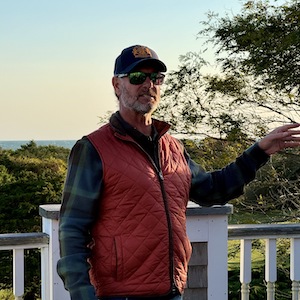
[00:28:42] Ray Latif: Alright, it's time to get to our featured interview for this episode. That's with Trey Zoeller, the founder of Jefferson's Bourbon Ocean brand recognized by and awarded for its ocean-aged-at-sea expression, a whiskey matured on ships that travel around the world. I met with Trey last month at the Winnetou Oceanside Resort on Martha's Vineyard, which held a three-day culinary experience called Ocean Aged Oysters. As you may have guessed, the event featured pairings of locally sourced oysters with Jefferson's Ocean Whiskey. Trey, who joined us for an interview on Taste Radio in 2020, talks about why the unusual combination of shellfish and spirits works, the origins of the ocean expression and why the product was initially disparaged by his industry colleagues, and how Jefferson's, which is known for its innovative approach to aging, maintains the cash-in image of being a renegade while simultaneously being a widely distributed and popular brand. Hey folks, it's Ray with Taste Radio. Right now I'm honored to be sitting down with Trey Zoeller, who is the founder of Jefferson's Bourbon. Trey, great to see you. Ray, it's a pleasure. Isn't it?
[00:29:53] Trey Zoeller: Yeah, it really is.
[00:29:54] Ray Latif: Absolutely. Yeah, it's good to see you in person. We spoke four years ago screen to screen, but now we're Face To face, which is much better. Thank God that's in the past. Indeed. Much better here in Martha's Vineyard on a beautiful day. Exactly. We are here in Martha's Vineyard at the Winnetou Resort in Edgartown. This is a beautiful property. Have you had a chance to walk around? I have.
[00:30:14] Trey Zoeller: I've been exploring it the last two days and for a Southern boy to come up here in the fall and have this beautiful view and have the wind coming off the ocean breeze. It's amazing.
[00:30:26] Ray Latif: It really is. Yeah. Katama, this area of the vineyard is spectacular. I walked at the beach earlier this morning and the waves were, they were pretty amazing. Yeah. Pretty amazing. And it's, it is beautiful. It's sunny. It's barely a cloud in the sky, which we lucked out.
[00:30:41] Trey Zoeller: We really did.
[00:30:41] Ray Latif: Absolutely.
[00:30:42] Trey Zoeller: We did. It is sunny, but the wind's definitely blowing. There's some whitecaps out there. I was out on the beach earlier as well. Yeah. Are you a surfer? I am a surfer about as good as a Kentucky boy can be surfing, but yes, I do love to surf.
[00:30:54] Ray Latif: Being here at the Winnetou is fantastic because they've brought together a number of great brands, including Jefferson's. And Jefferson's is being paired with, in this event, Oysters. This is an Ocean Aged Oysters event that we're celebrating and participating in. And I'm sure there are some listeners right now thinking, wait a minute, Oysters and bourbon. It's not the most obvious pairing. I'm sure there are some people who are a little turned off by it. I had some yesterday. They were fantastic. Why are they such a good pairing?
[00:31:26] Trey Zoeller: You know, it's the brininess. It's brine on brine from our Jefferson's Ocean, which we age in Kentucky first, and then we put barrels in containers and send them to 30 ports on five continents. So you're crossing the Pacific Ocean twice. You're crossing the Atlantic Ocean Aged couple of times. So when you're out in the middle of the ocean, that salt air is really able to permeate the barrels and give it that briny taste. And the brine on brine that you obviously have with the oysters is a great combination. So it was actually, I was in London, gosh, probably 10 years ago now, and we were introducing Jefferson's Ocean over there. And one of the restaurants that we went to, they said, this is a great pairing. Let's go ahead and do some Jefferson's Ocean oyster shooters. And that's what we started doing.
[00:32:13] Ray Latif: Tell us about or tell our audience about Ocean Aged At Sea and what makes it so special.
[00:32:20] Trey Zoeller: So I think going back to how this originated, it's really kind of part of the story. And it's really further back than that. It's really how whiskey turned into Bourbon Ocean the first place. And when people started distilling west of the Appalachian Mountains, and they did so after the whiskey tax, they had to get that product to market. And the only way to do that was to put it into the only container they had, which was a barrel. And at the time, that barrel was used for many other things. So typically they'd put a big flame through it to get the taste out of whatever else it was carrying, whether it's nails, soap, meat, what have you. And then they would float it down the Ohio River to the Mississippi River to New Orleans. They would offload some there, but the majority of it was put on ships, sailed around Florida, and back up the East Coast to where there were people—Philadelphia, Boston, New York. And by the time that it arrived there, You'd taken a spirit, a clear spirit, kind of like vodka or gin is today, and that's how most people were drinking whiskey at the time. But after it went on that voyage, it picked up a lot of color, a lot of flavor, and took away a lot of the astringency of the alcohol. And we recreated that about 10 years ago. It actually took me a year to the date that we took off to land in New York. And when I did, again, I took off with Newfield bourbon. We tapped into a barrel and it was as dark as a 16-year-old barrel that I'd been double barreling for five years. So knowing that past and knowing that that's really what made bourbon proliferate in Kentucky, I happened to be on a friendship down in Costa Rica. We were surfing, fishing, surfing, and really drinking a lot of Bourbon Ocean the bow of the ship. And as I sat on the bow of the ship, I saw the Bourbon Ocean back and forth within the bottle. I thought if that would happen in a bottle, it would certainly happen in a barrel. And that would change the maturation that you get from Kentucky. And talked to a friend of mine into putting barrels on his ship for three and a half years. He took off on this journey. When we tapped into him three and a half years later, that Newfield bourbon was, it was black in color. It was thick. It was delicious. It was very different than any other bourbon that I'd ever had. So that was the first voyage.
[00:34:38] Ray Latif: And to be clear, you have barrels that are already filled with bourbon that's been aged in Kentucky.
[00:34:45] Trey Zoeller: Correct. We typically age them about six years in Kentucky. Then we load them in shipping containers. where we cut sunroofs into the top of them. So that salt air is able to get into the containers, but also the sun's beating down on it. It's getting rained upon, getting snowed upon. We send them down to Savannah, Georgia, where they're contracted to be on The Liver top of the bow of the ship. So it gets as much pitch as possible. It's going down, passing the equator a couple of times. That heat caramelizes the sugars in the wood. And then again, you know, you've got constant liquid to wood contact, which is just picking up more and more flavor and also acting as a filter taking away from the astringency of the alcohol.
[00:35:28] Ray Latif: So your genius was not to just have the bourbon aged in the barrels, but to increase the contact with the wood through agitation and different climates. Correct.
[00:35:39] Trey Zoeller: You know, we go all the way down to the Tasmanian Sea underneath Australia and all the way up to the North Sea in Europe. So, you know, you're getting some really extremities in the temperature nonetheless, but, you know, that's obviously open and closing the pores of the barrel, but the rocking back and forth again, that agitation is, that's what you really want. That's what we're looking for in bourbon is that constant liquid to wood contact.
[00:36:04] Ray Latif: How long is it At Sea? It's At Sea for about six to eight months.
[00:36:08] Trey Zoeller: Okay.
[00:36:08] Ray Latif: And then it's brought back to Kentucky.
[00:36:10] Trey Zoeller: Brought back to Savannah and then up to Kentucky where we cut it. Typically we cut it. We do have a cash strength voyage as well once a year. But we cut it with the Kentucky water when we come back.
[00:36:20] Ray Latif: Back in 1997, I assume that if you told someone in Kentucky or a distiller, a brand owner in Kentucky that you were thinking about this process and that this would be a great whiskey, people would look at you cross-eyed. Someone might even smack you. I mean.
[00:36:35] Trey Zoeller: Well, when we did do it in 2008, they did say that. And they're like, this isn't Kentucky Bourbon Ocean again, we do Bag It for a number of years. That first voyage is the only one that we put Newthill on the boat. Today, again, we're aging about six, seven years before we take it out and send it on that voyage. But yes, when we first did that, we got a lot of pushback. A lot of people said, you know, this isn't Kentucky straight bourbon whiskey. A lot of people said it was gimmicky. And almost everybody that wrote about it said the same thing. And then they tried it. So today we're, again, on our 33rd, we've got our 34th voyage out on the water right now. It was the number one selling $75 and above bourbon. It's now number two after Blanton's took a price increase. And, you know, people really bought into, say, you know, a certain warehouse on a piece of property to produce better barrels. So if there's microclimate like that, that people have bought into, By now, they've certainly bought into the idea of taking it to different places and aging it to get different flavors coming from the environment and climate.
[00:37:44] Ray Latif: I left the title off your role when I introduced you. That's chief strategist. You are the chief strategist for Jefferson's Bourbon Ocean addition to being its founder. Jefferson's Bourbon is part of the Pernod Ricard portfolio. Correct. So that role of chief strategist, what does it entail? And what do you want to contribute in terms of how the brand continues to develop?
[00:38:10] Trey Zoeller: At the end of the day, what it is, is I'm protecting the integrity of the brand. So I touch all facets from production, sourcing, distribution, marketing, sales. It's a little bit of everything. So I'm involved with each different group that you have when you're part of a bigger company. And I'm always advocating to try to maintain as much, you know, the highest quality. And it's great to have a partner like Pernod Ricard. I say partner, they did purchase us, so we are part of the portfolio. But they have such a great commitment to quality and excellence, and they're following that up with the investment. We're building a $200 million facility that we, it's a little bit behind schedule, but we'll be in certainly by next July. We just put in our Vendome still a few weeks ago, so it's now everything's under roof, so we don't have any more weather delays. I think we'll definitely get there. With any luck, we'll get, we'll be ready by Derby. But to have that commitment from them, not only monetarily, but an emphasis in the portfolio and to quality. And this distillery will be the greenest distillery ever built. We will actually be net carbon negative as we'll be putting energy back into the grid is really exciting.
[00:39:39] Ray Latif: I talk to a lot of entrepreneurs who have investors. In this case, or in the case of Jefferson's, you have an owner in that Bernard Ricard owns the brand. But in essence, your role as a protector of the brand legacy and commitment to quality is such an important one. And I think some entrepreneurs who are building their businesses and talking to their investors about the direction of their company or business strategy can sometimes have opposing viewpoints. You know, the investor might say, hey, we need to go in this direction. And the entrepreneur is saying, no, I know my brand. I want to continue doing this. And there's a push and pull. And sometimes the entrepreneur doesn't win. Sometimes the entrepreneur gets kicked out of his own company. It's so great that you're still with Jefferson's and helping to lead it to its next stage of development. But what happens when you have a disagreement with Pernod about the direction of the brand or a particular product or marketing, perhaps what happens then?
[00:40:42] Trey Zoeller: So right now, I feel. better about our relationship than ever. Brno Rural Community is just committed to a new office in Louisville. We'll be bringing in roughly 30 people. We've already brought people in from Paris and Australia, but mainly hiring people out of Kentucky that have a lot of bourbon knowledge. So we're putting that office together right now. Hopefully by the beginning of November, we'll have our office secured and we'll have moved in there. So it's kind of a reinforcement of what we're doing in Kentucky and being true to the bourbon category. That being said, you know, there are a lot of... legal is my biggest. The legal department and I have lots of conversation. Okay.
[00:41:30] Ray Latif: I don't know if I'm going to be allowed to share this recording with them beforehand, just so you know.
[00:41:37] Trey Zoeller: You know, it's, it's something that they're very conscious of just protecting, making sure that the bigger brand is always protected. And the bigger brand being? Renault Ricard. Okay. So what might not always, seem obvious to me, there's a bigger thought process and a bigger picture that we have to worry about as well. So I'm reminded of that on occasion. As I say, I've got all the influence in the world, but no final decision capabilities. And we've been pretty parallel in our thought process and sight lines. I think the biggest thing that we've kind of butted heads over is I want an ever-expanding portfolio. We've bottled over 35 different expressions to date. Much more if you dig into like our presidential select line or Bourbon Ocean line where there's six or seven different one reiterations of those. And that's a lot for their sales team to put their arm around when they've had so many other products to sell. So a lot of products that we've had a lot of success with. can't continue to put out. And that's a little frustrating to me, but for the most part, everything from quality to, you know, some marketing things we, you know, we have different viewpoints on, but we work pretty well together.
[00:43:06] Ray Latif: The marketing I want to touch on for a sec. I think sometimes marketing for innovative products can be kitschy and can be detrimental to a premium product. I think with ocean, you can go in a lot of different directions. With tropics, you can go in a lot of different directions. And let's just talk quickly about tropics. What is that product?
[00:43:25] Trey Zoeller: So tropics is, for the last probably nine years, I've kind of spread some barrels out in different properties around the U.S., different climates, different environments. And I go back each year and taste how they've evolved over the year, how they've matured. And they're drastically different. Kentucky, you know, we say is the end all be all, the great Face To age. But it's really, And that's what became practical. After that journey that we talked about earlier was made obsolete by first the steamboat and then the railroad, where you could take whiskey and get it to New York in two weeks, that journey became obsolete. So how did they catch up to what that product tastes like after the maturation of the journey was practical. Building a warehouse right next to the distillery, building it high rather than wide because it's cheaper and aging it over year, over year, over year, trying to catch up with that. And Kentucky is a great Face To age. We've got a fluctuation of temperatures, but different environments really do different things to the whiskey and to the wood. And I found that some places in very hot, humid areas really situate kind of the sappiness of the wood, not the woodiness of the wood, and bring out some wonderful flavors. After the success of those products, aging in some places that are very hot and humid, say eight months out of the year, I decided if we could take it someplace that was always hot and humid, Singapore in this case, where it's 80 miles from the equator, then it's really going to age in a different manner. And what really happened, and we aged bourbon for five years in Kentucky and put it on ships in Savannah and sent it through the Panama Canal across the Pacific to Singapore and Aged At We had 10 containers, half of which we aged outside, half of which went into a non-climate-controlled warehouse and Aged At two of them there, or the two sets there, for 18 months. What really happened is that wood slow-cooked, the sugars in the wood slow-cooked over 18 months. sent it back to Kentucky and then cut it down to proof with Kentucky limestone water, which is super important because most hot, humid areas, the water is pretty much undrinkable. I lived in Louisiana, lived in New Orleans, I lived in Florida. You don't want to drink the water. So you've got the great combination of your being able to distill with great Kentucky limestone water, Bag It there to its mature, and then finish it in a place that has that influence. And it really brings in, to me, that's where terroir really comes from when you're aging. If 65% to 80% of what bourbon is comes from the maturation process, If you change where you're maturing it, that makes more of a difference than where you're growing the grains. Because when you distill it at 160 proof, those nuances are distilled out. But when you mature it in a different place and that environment brings different flavors, then that really comes through in the bottling.
[00:46:35] Ray Latif: So the last two and a half, say three minutes, that was a beautiful, very well detailed explanation of what tropics is and also included some context about how the maturation process is really important to making bourbon, making whiskey. But in marketing or on shelf, you don't have a lot of time. You might have a few seconds, even if somebody reads a magazine and sees an article about tropics, that's helpful and getting them to learn and understand more about it. But I can see some kitschy marketing being like, try the hottest new product, you know, from Jefferson's tropics, something like that. Something that's just awful. Obviously, you guys aren't doing that, but who knows? You know, maybe there's something in the marketing department at Pernod was like, this is the direction we're going and you're like, oh my gosh, why would we ever do that? How do you address that problem? Or how do you, how would you address it? I'm calling it a problem, but how would you address that?
[00:47:24] Trey Zoeller: No, we have, um, we have lots of conversations and I have come across things. Not that bad, but things that just don't align with the brand. And you gotta keep that in check. So that's one reason I'm very hands-on. People ask me, how hands-on are you? And I'd say probably too much, but yeah, it's my baby. I can't separate. So I do want to be involved with kind of all aspects without dominating it, letting these people do their jobs and they're experts in their different fields. So, you know, it's a balance and we've had some very intense conversations of why, I don't align with something and typically we either meet in the middle or their eyes are a little bit more open than they were previously. I don't know much, but I do know our bourbon consumer. I've been to every state in the country. I think I've been to every city over 500,000 people going out and peddling Jefferson's. So I know our consumer pretty well. I've been around the world with it as well. I know what they're looking for. And I'm a big believer in not looking at the data so much because that's looking in the past and let's look in the future. You know, anytime you're looking at what people's trends have been, that's what they've done up till now. Where do we go in the future? And that's, I think, very important.
[00:49:08] Ray Latif: You know the Jefferson's consumer, but do you know the future Jefferson's consumer? How do you get them interested, especially At Sea time when people are drinking less? Gen Z, it's out there. We've been talking about this on the podcast a lot. Gen Z consumers just don't drink as much as previous generations. So I'm sure the Perneau marketing team, the Perneau just hierarchy is looking at this and saying, okay, how do we make this attractive? How do we get, those consumers interested in Jeffersons so that we can start them off with training wheels and eventually get them to a point where they're buying Ocean Aged tropics and other expressions.
[00:49:42] Trey Zoeller: Well, it's certainly on our radar and that's Each generation is unique and different, and this one is certainly unique and different. I've got twins that are 19 years old, and so I look at their habits and what they're doing as well as their friends and just their network.
[00:49:58] Ray Latif: Be careful. The legal team is listening to this.
[00:50:00] Trey Zoeller: The 19-year-olds over here. I'm not saying they're drinking. I'm not saying they're drinking at all. I'm just saying I'm looking at what their habits are. Sure, sure. They don't watch TV. I don't think they've ever turned on the TV except for a game. Our next innovation, which I can't release what that is exactly, is an innovation that is very affordable, $35 to $40 range. So I think that is something that will resonate with them, but it's going to be also something that's affordable. There's been a lot of innovations for years. And I think this is something that we've done very well. We've kept our price points for a long time. We launched Jefferson's Reserve in 1997 for $50 a bottle. We're not much above that right now. Our innovations have typically been under the $100 mark, right around. It depends on what our costs are for that specific product. I always want to have a product that's affordable. I want people to be able to put their hands on it. And, you know, certainly as people are coming of age and getting into bourbon, they need to get something that's affordable that they can go ahead and purchase. And it's not just something that they hope to get someday. We'll still have that in the portfolio. I think that's important. But equally important is the marketing side where they can identify. It makes them feel a certain way when they order a Jefferson's product. And to me, I think that's a little bit of exploration and adventure. And You know, we all might be trapped in a cubicle at some point or in our house doing work, but we aspire to get out and experience things. And I think that's a lot what Jefferson's is all about. Our Jefferson's ocean, our Jefferson's tropics, that's being on the move. If you look at where all of our different products source from, from either finishing barrels or we're agitating or we're sourcing water to cut down to proof like we've done with New York water. It's all over the map. It's not just in Kentucky. So I think there's a spirit of adventure that people can resonate to and everybody wants to get out and see the world. And I think you can do that through the lens of Jefferson's.
[00:52:24] Ray Latif: Oh, there you go. There's your, there's your tagline right there. Everyone wants to see the world and you can do it through Jefferson's bourbon. Well done. You continue to innovate. You continue to work on new products and new product development. I'd love to hear your definition of innovation, but there's a caveat. You can't use the word whiskey or any industry terms associated with your answer.
[00:52:49] Trey Zoeller: With innovation as a whole? I think. For me, it's taking a tried and true industry, whether it's Bourbon Ocean anything else, and looking at it through a different lens. Actually, I did something with Barbara Cochran from Shark Tank last year. And as we were talking, she said, are you dyslexic? And I said, yeah, I am. She said, I am as well. How'd she know? She was able to pick up on it. And she said, she's written books about it. And she said, something like 33% of the world's billionaires are dyslexic. I forgot the stat exactly, but it's because we see things differently. We learn differently and we look at things differently. And I think innovation is just doing just that. taking things and looking at it through a different lens and applying it and seeing if it improves upon it. It's not accepting what has been done previously just for the fact that it's been done that way. So that's to me is looking at it differently. In the case of Jefferson's, what I've really done, and I've benefited from my dad being a Berman historian, is seeing how, when I started, everybody said the same thing. We do it this way because my daddy did it and his daddy did it. Okay, why? And I was able to look at it through my dad's writings and say, well, it was done because of practicality. Okay, well, what if we throw practicality out the door and say, what would enhance it? What would make it better? And as I said, we've got 35 different expressions of Jefferson's. You can't really say one's better than the other in all of these, but as I say, Baskin-Robbins has got 31 flavors. everybody likes the same flavor and not everybody wants to eat the same flavor all the time. You know you want to kind of pop around and taste different things at different times and people always ask me which one's the best. I don't know what your taste buds are like. I don't know what you think is good. So if I do a tasting with five of our expressions, and again, I use Jefferson's Reserve as our most quintessential right up the middle. At the end of the tasting, I ask everybody to raise their hand, which one did they like the most? And it's typically spread out almost evenly 20% across the board. What I love about that is 20% like Jefferson's Reserve. That's what most bourbons taste like. So if that's the case, 80% liked what we've done to push it outside of the traditional means. So it's just a matter of exposing people to these different flavors and let them find the ones that they like.
[00:55:38] Ray Latif: So that's the proof point is whether or not a consumer likes this. Improvement means results, right? If you think it tastes better, that's one thing, but if it succeeds on the market, that's the real proof point.
[00:55:50] Trey Zoeller: Correct. Okay. Correct. Yeah. I've been doing this 27 years. My taste buds have evolved. Everybody's evolved all the time. And so what I liked 27 years ago isn't necessarily what I like today. And it shouldn't. And what I like and you like, you know, everybody's on a different path. Any whiskey drinker, Nobody has neat cast strength bourbon for the first time and say, where the hell has that been my whole life? You don't do a double flip off the high dive the first time you get into a pool. You gotta evolve to it. So where are you on that journey? And what did different flavors mean to you based on your experiences of what you've tasted across the board, you know, food, drinks, what have you? We're all different. Now, there are some things that we can universally say, well, that's better than that one. But there are nuances within that.
[00:56:47] Ray Latif: You and I chatted briefly about this yesterday. In my experience over the last few years of following the industry, I've found that a lot of distilleries are employing folks who have their master's in chemistry or their PhD in chemistry, particularly when it comes to blending. You're not necessarily the biggest fan of that, if I'm not mistaken.
[00:57:09] Trey Zoeller: They're great for proof points, and they can break down and molecularly tell you exactly what's going on, and they're great for consistency as well. But having that degree doesn't necessarily mean you've got a great And that might be coming just from me because I don't have that training whatsoever and I don't have that background. To me, it's repetition is how I've honed my palate. So I think there can be a good marriage of the two. Again, I think you've got to be intuitive. What are you trying to get to? you might be able to direct somebody, okay, this is what we're looking for. Okay. Start bringing these together. I do it by trial and error and that's how I've always done it. And if I like a little bit, you know, I put a little bit, change the percentages, change the age, change different match bill. There's a lot of different components that you can bring together. And I think it's like making any other recipe. You play around with it until you find what you think is the best.
[00:58:21] Ray Latif: Yeah, I think that's true innovation is. you know, being in your own personal lab and working on things until you get to something that you feel is different and you want to bring to the market. I think right now I'm hearing also a bit about AI, artificial intelligence, as being a way to not only create consistency and quality, but perhaps to create new products that would fit in the market. What's your stance on AI at this point?
[00:58:49] Trey Zoeller: Well, I used it moments before you walked in here to send a letter. And I actually said, with the help of GPT, chat GPT, this is, they were asking for kind of a summary of what was going on, on something. And so I just put the facts in there and sent it and, you know, it eloquently, put something together for us. I don't know enough about the future of AI to know where it's going to go with creating new products. That being said, as it gets smarter and smarter and it's able to really think for itself, I don't see why it couldn't. Again, is it data in, data out? Can I have quality data in to get that? I don't know. Let's go back to me being dyslexic. Maybe I see it differently than an AI would because I'm dyslexic. So I don't know. I wouldn't discount it. I know that. I'm not going to discount it in anything else, in any other aspect of life.
[00:59:51] Ray Latif: Well, I'll say this, I would be shocked if an AI program thought of the idea or considered the idea of putting barrels on a boat and having them float out At Sea. I mean, that's, to me, where I think innovation in AI would not connect, would not meet.
[01:00:13] Trey Zoeller: And that's 2024. Yeah. 2028, who knows? That might be like, well, of course they would have thought of that. Sure. Who knows? I, you know, I can't look into the future and things are moving so fast right now. You never know what's going to happen with that. This is such an old industry, and I think this industry is all about connections. To me, that's what spirits are about. I'm not one of these people that pour a drink when I'm at home by myself, but as soon as I have people over, I want to pour them a drink and tell them a story about it. So at the end of the day, that will not be eradicated. But I think there will be innovations that are marketing or, you know, there'll certainly be efficiencies that come through AI. I don't have that crystal ball. That's for a younger generation to figure out, I think, than me.
[01:01:17] Ray Latif: Don't discount yourself. I think you're pretty young yourself, and you've got a long way to go with this brand and with the future of the industry. So thank you for your contributions. I almost forgot, but I'm not going to forget now, or I didn't forget at this point of the conversation yesterday. You had mentioned a city in Kentucky, and that city begins with an L and ends with Ville. And how you pronounce it as? I pronounce it as Louisville. Louisville. Okay. So I was in Louisville. I'm pronouncing it the way you're pronouncing it. I was in Louisville about three, four weeks ago. Came back and I told people, oh yeah, I was just in Kentucky. I was in Louisville. And audible gasps, people being like, what, what, what did you say? Where were you? Apparently everyone pronounces it Louisville, not Louisville. And I was so relieved when someone from Kentucky calls it Louisville. Who's right here?
[01:02:14] Trey Zoeller: So recently I thought about this because for whatever reason that conversation always just bothers me. You know, I don't know why people in Louisville want to say Louisville so badly, but they do. That being said, I lived in New Orleans and when people say New Orleans, That kind of cringe. Yeah, it kind of makes me cringe. So I don't know if I'm being too critical on, you know, the hometownness of Louisville. I think I say Louisville because I do travel quite a bit. And when I say Louisville, people probably go, where? So maybe I've adopted that over time. I'm not really sure, but I'm going to continue to say Louisville.
[01:03:00] Ray Latif: All right. I'm so happy. Now, I don't feel so bad. I got it bad when I came home to Boston, people were like, you must have been, you know, some people were looking at you with crazy eyes when you were down there for St. Louisville. But now I feel good about it.
[01:03:15] Trey Zoeller: You know, we're, A juxtaposition, Louisville is the northernmost southern city. So sometimes I go places and people think I've got the biggest southern accent in the world. Other times people say I've got no accent. So who knows? Louisville.
[01:03:30] Ray Latif: Louisville. Edgar Town, Massachusetts. Martha's Vineyard. You don't have to say Martha's Vineyard. You can just say Martha's Vineyard. Martha's Vineyard works? Yeah, Martha's Vineyard works. I know this is your second time to this beautiful island. I hope you can come back. I hope we can do this again, maybe next year at the Winter II, because this is a spectacular place. Oh, it's beautiful. share some bourbon, some Jefferson's bourbon with its founder is just on a beautiful day in particular is, I don't know, this is a dream come true for me. So thank you so much, Trey. Really appreciate the time. I know our audience is going to love this conversation.
[01:04:03] Trey Zoeller: Well, Ray, I hope this is the first of many annual trips up to the one and two and we'll continue to have this Ocean Aged oyster weekend and hopefully you'll come and join us. I am so in for this. Thank you so much. You got it. Thanks so much.
[01:04:20] Ray Latif: That brings us to the end of this episode of Taste Radio. Thank you so much for listening. Taste Radio is a production of BevNET.com, Incorporated. Our audio engineer for Taste Radio is Joe Cracci. Our technical director is Joshua Pratt, and our video editor is Ryan Galang. Our social marketing manager is Amanda Smerlinski, and our designer is Amanda Huang. Just a reminder, if you like what you hear on Taste Radio, please share the podcast with friends and colleagues. And of course, we would love it if you could review us on the Apple Podcasts app or your listening platform of choice. Check us out on Instagram. Our handle is BevNetTasteRadio. As always, for questions, comments, ideas for future podcasts, please send us an email to ask at Taste Radio. On behalf of the entire Taste Radio team, thank you for listening, and we'll talk to you next time.
[01:05:11] Ocean Aged: you