[00:00:00] Alix Peabody: BevNET Live, the premier event for beverage industry executives, is coming up fast on June 10th and 11th in New York City. Hundreds of beverage founders, investors, and retailers are already confirmed. Don't miss your chance to build momentum mid-year and set yourself up for a strong finish. Early registration pricing ends Friday, April 24th. Register now and save $100 at BevNetLive.com.
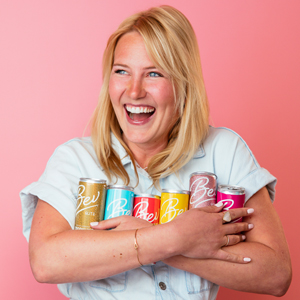
[00:00:39] Ray Latif: Hello friends, I'm Ray Latif and you're listening to the number one podcast for the food and beverage industry, Taste Radio. This episode features an interview with Alix Peabody, the founder of pioneering canned wine brand, Bev, which last year was acquired by global wine and spirits company, E&J Gallo. When an entrepreneur sells their company, it's usually a cause for celebration. But when Alix Peabody sold Bev to E&J Gallo, not everyone was cheering. Launched in 2017, Bev is a brand of canned wine and spritzers known for its chic package design, better-for-you positioning, and promotion of quote, empowerment and inclusivity in beverage and beyond. E&J Gallo obtained exclusive U.S. distribution rights for Bev in February of 2021 and acquired the company last June. At the time, Alix hailed Gallo's values and commitment to women and diversity in the industry as exemplary of the exact change we aimed to create. It seemed like an ideal partnership, but Alix quickly found herself isolated from many of her closest friends, co-workers, and advisors who were unhappy with her decision to sell Bev. In the following interview, Alix chronicles the three years leading up to Bev's acquisition, how she analyzed the timing and opportunity to sell the company, and a surprising fallout with Confidants. She also reflected on how taking a brief respite to focus on her mental health impacted perception of her as a leader and Bev's ability to land investment, and later talks about a potential return to entrepreneurship. Hey folks, it's Ray with Taste Radio. Right now, I'm honored to be sitting down with Alix Peabody, the founder of Bev. Alix, great to see you again.
[00:02:26] Alix Peabody: Thank you, Ray. Yes, nice to see you too. Thanks so much for having me back on.
[00:02:30] Ray Latif: This is four years since you've last been on the show. We last featured Alix on Taste Radio in December of 2019. Not much has really happened since then, not in your life or just in general, you know, in those last four years.
[00:02:45] Alix Peabody: Not at all, not at all. The world hasn't changed a bit.
[00:02:47] Ray Latif: It's not like you've sold your company or anything. No, no.
[00:02:52] Alix Peabody: I mean, what a crazy story that would be. What a crazy story that would be. But yeah, no, it's been a while, but there's a lot that's gone on. So I'm excited.
[00:03:02] Ray Latif: You recently took some time off when we spoke last year in Europe. How was that?
[00:03:07] Alix Peabody: Yes, I was. Oh, it was wonderful. I actually, not a lot of people know this. I actually grew up part of the time in Europe in high school. So I lived in France and in Italy. My mom's French, which is why my name is kind of funky, Alix. And so went back, visited some family and was there for a little bit. It was a really nice time. Nice to ground.
[00:03:28] Ray Latif: For sure. For sure. You're fluent in French?
[00:03:31] Alix Peabody: I am, yeah, and Italian, weirdly enough. Yeah, no one sees that one coming, but I was definitely a little rusty when I got there, but it was kind of meditative to have to be like, okay, I'm focused because I have to speak a language that I'm not used to speaking these days.
[00:03:46] Ray Latif: It's interesting because in Europe, I think most people speak English, but I think in France in particular, they ask you or they want you to speak French. If you go to Scandinavia, everyone speaks English and it's like, no one's going to give you or, No one's gonna give you a hard time for not speaking the country's official language, but it's interesting. I think in France, they're like, speak French.
[00:04:05] Alix Peabody: Yeah, they much prefer it, but they also don't love it if you're not perfect at it. It's kind of a funny mix. Funny you mentioned Scandinavia. I was actually there last week. So I've been popping around.
[00:04:17] Ray Latif: Whereabouts?
[00:04:18] Alix Peabody: I went to the Swedish Laplands to see the Northern Lights.
[00:04:22] Ray Latif: Wow.
[00:04:22] Alix Peabody: bucket list item. So that was it was pretty awesome. It's pretty cool. It's this year in particular is like one of the 10 year cycle things where they're bigger than, you know, then they will be in a long time. So if anyone gets a chance, highly recommend it.
[00:04:36] Ray Latif: Amazing. Amazing. Well, I'd say you deserve the time off.
[00:04:41] Alix Peabody: Thank you.
[00:04:42] Ray Latif: Post acquisition. And I was so happy to see when the news broke about Bev being acquired by Ian J. Gallo in June. What did it feel like when you first signed those papers and said, okay, I'm handing over the keys to my baby or to my car?
[00:05:01] Alix Peabody: I mean, what didn't it feel like is probably a better question, right? It is every single emotion under the sun. It's exciting. terrifying, it's, you know, all of the things. There is a sense of accomplishment there. There's also a huge sense of loss there. I imagine, I don't know, I'm not a mom, but I imagine it's not too dissimilar from like sending a kid to college or something like that, right? Where it's like, okay, I did everything I could do. We built it to where it needs to go. Now the brand really needs to stand on its own two legs and needs to be in the hands of, you know, of people who can take it to places that realistically, especially in this industry is just extremely difficult, capital-intensive, time-intensive to do. And when you have somebody like Iain J. Gallat that has the horsepower that they have, the execution power, the production power, at a certain point, you have to look at yourself and say, am I doing the brand a disservice by assuming that I'm still the best one to take it where it needs to go next? And that's a hard conversation to have with yourself, you know? But that's, I don't know, in a nutshell, that's kind of the mix of emotions that it felt like.
[00:06:08] Ray Latif: Is that the situation you were in? Because Ian J. Gallo became a distribution partner of Bev two years prior. And did they have an option to buy the company based on certain results?
[00:06:22] Alix Peabody: Yeah, no, so they did not own anything. They were truly a distribution partner. It was a very clear relationship. We produced the product, we did the branding, we did the marketing, and we worked with Gallo on an annual basis to set up what some of our targets are. stuff like that to get the brand out into the world, but they, it was not set up like that. Frankly, I didn't even know that that was a thing that people could do at the time. I mean, when we, gosh, when I started the company, I was 26 years old. So I knew a whole lot of nothing about anything. And then, you know, it kind of got to a point where It was an interesting time, right, because the markets were changing, consumer brands were starting to shift a little bit. Some of the VC excitement around consumer brands and investing in consumer brands at early stages started to get more complicated. And I think, you know, we exited at a great time. We've seen a lot of brands that have kind of taken a turn in the past six months, in part, I think, because of Remnant supply chain issues or a lot of there was a lot of messiness that went on when when Facebook kind of changed some of its privacy policy stuff that that affected a lot of brands that were heavily DTC. I would include us in that. Right. We we were heavily. DTC in terms of how we were getting customer acquisition and also just information about where to push the product and stuff like that. So it was the right time and it made sense. There was only really so much legwork we could do as a young company and a small-ish brand, relatively speaking, at that specific inflection point.
[00:08:16] Ray Latif: So Alix, you're still involved with Bev, in what capacity?
[00:08:20] Alix Peabody: I work with the Gallo teams on generally marketing plans, strategies, brand build-outs, innovation, sales. I'm doing the fun stuff that I loved to do before. As I mentioned before this call, the team over there has been amazing and it's just really helped make it very obvious that this was the right move all along in the moments when I wasn't so sure. I'm working with them on basically the heart and soul of the brand and bringing it to market.
[00:08:50] Ray Latif: Earlier, I had said that when people start a business, it seems like most of the time the end goal is to sell that business, to sell that brand. You had responded in the affirmative. I think that's something that a lot of people don't want to admit is that we're creating a company and hoping to sell it, but you sold the company in a relatively quick timeline. The timeline from when you created Bev, when you launched the brand to when you sold it was five years, right?
[00:09:20] Alix Peabody: Yeah, if that, I mean, I technically, technically founded the company in 2017. We got funded for the first time in 2019, like, so the degree that we could actually function as a as a business. So before that, it was my 401k. And that didn't get many of us very far, mostly me. And then yeah, and then we sold this year in 2023. So it was quick. And you know, I'm happy to dive into sort of some of the some of the things that I think were unique about that specific situation. And when you say a lot of founders go in thinking about what the ultimate goal of selling their brand, I think that that is something that both is and isn't true. I definitely didn't think that was my goal. And I actually remember having a conversation with Stephanie at Gallo as a mentor and a friend, and she's always been just the most amazing to me. You know, and she was like, well, at least, you know, you should at some point really be thinking about what your exit, what your exit plans are going to look like. And I was like, what do you mean? Like, is that something that people start with? I didn't even, you know, it didn't even dawn on me that, like, I should be thinking about, you know, an exit plan. She's like, well, you know, at some point or another, you're going to want to. maybe do something else, or the brand's going to get to a place where that's what you might want, or you might not. And just kind of help me think through how to even approach that as an entrepreneur.
[00:10:46] Ray Latif: At what stage did Stephanie mention this? Was it your second year in, third year in? I mean, was it?
[00:10:51] Alix Peabody: Oh, this was when we were just friends, like before we were even in a distribution. Involved with Gallo. Yeah, before we were even involved with Gallo, just as sort of like as a mentor. And it was kind of the first time that I was like, oh, right, that is something that's expected and, you know, not just not expected from Stephanie by any stretch of the imagination, but I mean, you know, from investors, from employees, from just like the life cycle of how these things tend to go and unless you want to make it, you know, unless you really want to double down and make it your life's work to be associated with one brand and one company, that's kind of where you end up. having to go at some point or another, right? And so for us, it was interesting because COVID did a bunch of interesting stuff for our brand specifically. And part of the reason that that was a canned wine to begin with was because of a lot of the legislation surrounding how alcohol can and cannot be sold in the United States. And I figured out that wine could be sold direct to consumer online very, very early when I was figuring out what product to make. And I knew, you know, even back then that as someone new to the industry, that I was going to have to be able to build a relationship directly with the consumer in order to build a brand at all, right? And so when COVID hit, We were already set up for what that meant on the DTC side we we were lucky in that way and we we made that a very very well oiled machine. And we were very lucky that we did because at the same time it pushed out our ability to get on shelves wholesale even things that were already planned right because. for those of you who might not be super familiar, the wholesale cycles are very long in terms of when a Target or a Walmart or whomever decides that they're going to put something on the shelf to when it actually gets to the shelf and you start to see that pull through. In March of 2020, when we were expected to hit all of these shelves, resets were just halted. Everything was kind of stopped. And so we were really lucky to have that direct-to-consumer you know, arm going on that was that was really holding up the company throughout that time when we, it was completely out of our control, whether we could actually have the opportunity to be on the shelf to grow during that period. So anyways, long winded way of saying, I think, from the outside, the brand was, you know, was and continues to do very well. But because we had that D2C arm, we didn't necessarily need as much wholesale horsepower to be as loud as we were at the time, if that makes sense.
[00:13:31] Ray Latif: How much of that D2C success continued through COVID and how much of it played into Gallo's interest in buying the brand?
[00:13:40] Alix Peabody: I mean, the D2C portion, I think it was many things, right? Like it was a great sales engine, but it was a great marketing engine and it was a communications tool really with our consumer where we could engage with them about what they liked, what they didn't like, what they wanted to see more of. We have a low ABV that Gallo just hit the shelves with called Bright that was really a consumer-driven product. And in our space where there is so much legislation, it's hard to do that in an effective way to really have that conversation with the consumers. So it was almost like a step change moment where the brand needed to go from being a digitally native brand to really being like a mainstay wholesale brand and Gallo were the people to do that.
[00:14:31] Ray Latif: When you think about that point of, okay, someone's interested in buying our company, you've got to really think about a lot of different things, and you've got to think about things for yourself, and you've got to think about things for your investors and for your brand. What really rose to the top for you? Was it the fact that you did have investment partners that you were beholden to? Was it, this is what's going to be best for the brand, or was it, this is what's going to be best for me personally?
[00:14:57] Alix Peabody: I think that those things kind of all become one big mess when you're in the middle of it and you're a founder, right? And for me, it was very, very clear that it was what was going to be best for the brand, first and foremost, and for the overall sort of like continued legacy of the brand. And obviously, as the founder of the brand, that also means a continued a continued presence for me and for what I built professionally, if we're going to be real about that. I think there were definitely moments where I was like, there's further that I want to go with this. I want to do more and I want to be involved more and see it to the next level. But when I looked at it, and this is another thing founders, I think, realize but don't realize. When you're at that point where you're like, okay, are we going to take on a series B round of financing? Or are we going to sell the brand? Or are we going to, you know, measurably slow our growth so that we can be self-sustaining and these are all valid and fair decisions. When you're looking at that series B option and you say, okay, if I bring in this much more capital, that's going to come with the expectation of XYZ additional return. That return is going to take me XYZ number of years to achieve. I learned the lesson very quickly and very early that there are so many external factors like pandemics that you may not see coming, for example. And then on top of that, you say, it's going to take me that long, then I'm going to sell. And then you also have to think about yourself as the founder personally and say, and then I in a great situation, you get to continue to be attached to that brand, but that also blocks off what you can do in the immediate term thereafter. So when you're deciding, do I sell? Do I take on a series B? You're not saying I'm going to keep doing this for a year, two years. Really you're saying, okay, this is a five to seven year commitment. And that was kind of one of the things that I had to really start thinking about was, okay, this isn't, if we take in the external capital, continue to grow, This is five to seven more years, realistically, of a lot of what I'm doing with these expectations and with so much unknown out there that you just have to make a judgment call. We were ultimately happy with how everything shook out, but it was definitely... I lost a lot of sleep over it, for sure. It was a hard decision and it was a difficult time to just sort of sort out what part of this is me, what part of this is my ego, what part of this is what's actually best for my people, my investors, the brand itself, which to me is almost like its own person. And I think that that's some of what you mentioned is interesting because there is like a big sort of ego element that comes along with it at a certain point where you're like, well, I could grow it to XYZ, you know, bazillion or whatever people think that they can do. And that is true for some people, but it's mostly not, right? And so having a moment where you step back and say, you know, do I feel like I did a really good job here? Do I feel like I did the best that I can do? And do I have the humility to say someone, you know, someone's gonna be able to continue this on in a way that's better than I will be able to? And that, you know, that's a tough moment, but it's one of the most important ones you'll make, I think, as someone exiting a business. Vibrant Ingredients is the natural ingredient partner powering food and beverage innovation, delivering flavor, function, and protection through a science-backed portfolio. Vibrant delivers purpose-driven solutions that help brands create extraordinary experiences. Discover what's possible with Vibrant today. Visit vibrantingredients.com.
[00:19:19] Ray Latif: As you've mentioned, the whole process seems like it was tough. And a week ago on Instagram, you published three posts in succession that talked a bit about the sale and how difficult it was. I DM'd you about four minutes later and was like, Leaks, can we have you on Taste Radio? And you're like, yeah, that'd be great. And you talk about gory details and you talk about, you know, things that were really, really tough for you personally. And I want to talk about something in your first post that you said, selling a company is hard. People I thought were ride or dies, part of my everyday life, fell off the face of the earth faster than I could say goodbye. I became isolated at a lightning rate, and all those people who once, quote, loved me, vanished in a nanosecond when I no longer served. I was devastated, heartbroken, feeling very alone, and utterly irrational about it. What happened?
[00:20:11] Alix Peabody: Oh, man. What didn't? So, first and foremost, none of that was related, like, specifically to, you know, like, the Galo team. They've been awesome. They've been, like, awesome all the way through. it's more some of, you know, like the early employees that you work with and the people who have been, you know, maybe who saw things going in a certain way or want, you know, wanted, wanted things to shake out a certain way. And I think that it becomes very clear. You know, I had, I mean, I had some very, very close friends that I worked with for a very long time that I'd known for 10, 15 years and that, that kind of thing. And, and I would say that when I was making the decision of, you know, what we were going to do with the company and I also worked with a lot of friends and family and family as well right when we were making that decision. It became very clear, very quickly, the difference in our responsibilities within the business too. And it became very apparent to me that there were things as the founder, as the head of the board, all of these things, responsibilities that I had that weren't necessarily going to translate through even to the early stage employee level. I had, I had a tough time when every single day of my life for like six to seven years I was surrounded by people you're kind of the core of the organization, and all of a sudden, you realize that. You're not necessarily going to be a main character and all of these people you care about life forever right you're for some people, you're a chapter. And that's a different outlook right and that's a different thing and I think a lot of founders find that. You know, you're when you're a founder of something and you're on all these lists and all of you get you're getting invited to this, that and the other thing. And people want to have you around because they want to talk to you about the founder stuff or they want insights or whatever. And all of a sudden that goes away overnight, you know, a lot of the time. And it was it was just very interesting for me and to see. Who stuck it out when, like, I was kind of struggling with, like, who am I now? You know, I don't I don't really know. I'm that's still something that I'm trying to figure out. And it wasn't the people I thought it was going to be. And that was the part that was kind of really, really difficult to rationalize to myself. And I think I spent a lot of time trying to explain it away or get angry or be like, where are you so-and-so? We were in this together, whatever. And realizing that, hey, they're going through their own story here. you know, and whatever that story happens to be, Bev is part of it. I am very tightly associated with Bev. I need to be okay with being that person's villain for a while if that's, you know, if things didn't go the way that they wanted to for their own story in the way that, you know, that life happens sometimes. And that's a very strange kind of thing where you're like, I am the trigger. right now for some people, and I need to just be okay isolating, stepping away, and really looking inside and deciding like, you know, who am I? Because I'm not all of these people. I'm not all of these things. I'm, you know, I'm a leeks. I'm not Bev. I'm not boss. I'm not whatever. I'm me. But it's easy to forget that when you're in it day in, day out for seven years. I don't know if that answered your question or just danced around it a lot.
[00:23:46] Ray Latif: No, it definitely answers part of the question about what happened and how these folks who are so important in your life have been distanced from your life. And I think one of the counterintuitive things about our is that people talk so much about food and beverage as being team-focused, culture-focused, you know, people who work for you are part of a family, but at the end of the day, the responsibilities typically end up with one person or two people if they're the co-founder. In this case, it ended up with you. You, at the end of the day, were solely responsible for so many things related to the brand and its success and its acquisition. And one of the things I keep hearing about consistently with entrepreneurs more than I actually ever had in the time that I've been involved in this industry is the loneliness that comes with being a founder and being an entrepreneur. I mean, how much did that factor into, you know, the grief that you felt or, you know, if not grief, the, I guess, hurt that you felt during this process?
[00:25:00] Alix Peabody: Yeah, I mean, it was huge. You know, it was huge. I'll be real. And I think it kind of felt like this when I've explained it to people. It felt like, you know, and part of our brand and the nature of the product is social, but, you know, by its very nature. Right. And so and and so so much of Bev and the office had its own heartbeat and its own culture, and I think that has been passed on through our consumers, but inside the company, I mean. And so it felt like I built this community, or I tried to, where nobody ever had to feel left out, right? Because that was something that really bothered me. And that was kind of part of our ethos, was that we're together, we're having fun, we're you know, fun environments that are also safe and we can all feel good. And then one day you kind of like look around or you're looking on Instagram as the founder, right? And everything's, dust is starting to settle. And you realize that party's still happening. You're just not invited. Right. And in some situations for me, that was quite literal right like there were couples that had met at my wedding, who were, you know, getting engaged and not inviting myself and my husband who I worked with or, you know, there were things like that and and not taking that personally was like. I didn't do it well at the beginning. I took it super personally, right? I was like, well, what, what the heck? Like, you know, but, but then realizing that the community has kind of, you know, people need, need the space from, and the distance from that chapter of their lives, the same way that you do and being okay with the fact that you are associated with that chapter, right? So you kind of have to almost look at yourself as like an, an object outside of yourself and say okay if there's a time in my life that's upsetting to me and there's someone that reminds me of that or and when i say upsetting you know i think i don't mean to make it sound like things were um like super dark or whatever i think i think in many ways like a lot of people were just bummed it was it was over right like a lot of people just like we're kind of like, well, why couldn't we figure this out? And it wasn't, you know, it wasn't like a, like an anger necessarily, but there was a grieving that other people had to go through. And there's only so many times I can say, you know, this is, this is what's best and whatever. And, you know, and this is what's going to make sense. And there are all these other factors until you're kind of talking into the void.
[00:27:30] Ray Latif: When you say, when you say, why couldn't we figure things out? Or why couldn't we do this differently? Do you mean that they were upset about selling the company or, you know, something that they didn't receive as a result of selling the company?
[00:27:44] Alix Peabody: No, not so much. I think it was like such a tight-knit group that people just didn't want it to change that much, you know? Like, it's like, well, why don't we have this series be and continue on and sort of that sort of option be? And I think there was so much love inside the organization that people really wanted the party to keep going in a way, right? And we're, You know, looking to me to figure out how to make that happen and it's not it. From their perspective, obviously they move on to new jobs and new companies, it is the parties quote unquote over from their perspective because, you know, they're not at that office and they're not with those coworkers and stuff like that. That's not necessarily true for the brand and the investors and whatever it is. And that's kind of a part of it that people don't have a day-to-day communication with when they're at the employee level. It's just different. So I think there was that. And then I will say, I think that, you know, it was it was hard for me to, to say, you know, it's time to move on and to be simultaneously, you know, excited, but confused. And I will be the first to say I was probably really hard to be around for a little bit, you know, and and so that probably didn't help things either. And, and being able to step away and say, Yeah, you know, I could there's some conversations I could have handled better. No matter how closely you work with someone for however long, sometimes like, well, you just don't get it and you don't understand the pressures. It's just like not a productive thing to say, right? Like at a certain point, that's a lesson that most people have to learn the hard way. And I definitely learned it the hard way, but I learned it. So there's that.
[00:29:33] Ray Latif: Yeah, you know, when people are under tremendous stress or under pressure, you say things and you do things that a lot of times you end up regretting. And a lot of times you don't have anyone else to talk to, but you're self in so many ways. You're looking in the mirror and you're like, nobody gets me. No one understands me and what I'm going through except for me. And you actually talked a bit about that in one of your posts. You had said that, you know, it's best to have your best friend on your side when it does and by it, these things happening. And that best friend you can always rely on should be no one but yourself. At the end of the day, that's the one person, God, that no one can take away.
[00:30:16] Alix Peabody: It sounds a lot. more brutal than it is. It's just these moments when you're in them can be, you know, can be very difficult. But I think there's a lot in terms of like really learning how to tame that voice in your head that's like, well, you could have done this better. You should have done that. You can play that game all day, every single day. And I had to learn how to talk to myself differently, like fundamentally change how I spoke to myself and say, okay, Alix, if you were your own best friend, which you should be, and you saw all of the things that you've done and you've worked on and all sort of Some of the hardships and the mental health stuff that you overcame throughout the entrepreneurial journey and all that stuff. Like, what would you say to you? Because it sure as hell isn't what you're saying to you right now. You would be a lot nicer. You would be a lot more compassionate. And you would be a lot... Prouder of yourself if it were someone outside of you. And so, like, when that voice starts to flare up where it's like, wow, you know, everybody's hanging out without me and all of these different things that are so human. And that just, you know, in my situation had a huge spotlight shown on them for for a little while. Just saying, okay, talk to yourself like the upset little kid that you are, not like the angry person that wants to beat yourself up all day, because that's just no way to live. It's not fun for anybody, least of all you.
[00:31:55] Ray Latif: It's a little strange to me to think about how mental health and a lot of discussion about vulnerability in entrepreneurship and in our industry was talked about so much. I feel like it was four years ago, and it really hasn't, strangely, been talked about enough in that time since. And people opening up, whether it's being honest with themselves or just trying to change the way they communicate with themselves in the same way that you did, Alix, It has to be such a priority, but I feel like it's been deprioritized in a weird way.
[00:32:28] Alix Peabody: Yeah, I have a lot of opinions about this and they might not be popular.
[00:32:32] Ray Latif: Please share.
[00:32:34] Alix Peabody: Um, yeah, so, so I mean I I struggled with with a lot of mental health stuff, just all the insert stuff here throughout the entrepreneurial journey at different points for different reasons. Um, you know, I think some of it was the stress and. And the pressure, the pressure I was, you know, putting on myself for sure. Just having to grow up really fast, you know, navigating a company through a global pandemic when people's jobs were to go in and out of grocery stores where everyone thought that's where you go to die. And, you know, and I'm like 29 being like, I don't like, I don't know how to tell you to do this. Like, um, you know, there was, there was a lot and there was a period of time that I actually have, have not yet spoken about publicly, but. but feel comfortable doing so now where I did take off a couple of months and was like, I need to get my head straight because I will do the brand and the people a disservice if I just try to power through this when I'm really not doing so great on the inside. And people applauded me for that. Internally, I told my investors, I told everyone what was going on, that I was really struggling with depression and anxiety. I couldn't really think clearly, I couldn't sleep at all for a while. And when I spoke about it, it was, you know, when I told people, they applauded me. And then there was a shift in how I was treated afterwards, you know, and I kind of came back. And I also had to realize at that point in time, and this was back in like 2021, a couple years ago, when I took a couple months off and I also came back feeling, you know, different and feeling like I could attack it all and then kind of realizing that everyone else is kind of right where I left them and they're still a little bit of, you know, walking on eggshells and is she okay? And did she, you know, did she get sleep? whatever, and especially when I was working with people close to me who knew me well enough to tell the difference, that was, I imagine, hard on them, right? And so I take responsibility for a lot of that. I do think that there was a huge call to it because there was a huge need for there to be a call to it. And then a few interesting things started happening. It was harder to raise money if you'd spoken about it. right? It was harder to get certain deals done or people kind of changed how they were talking to you or negotiating or whatever. I personally experienced them. There starts to be like a little backtalk here and there happening when you're the one that's saying like, hey, I'm suffering from some mental health stuff. And so I think people You know, generally and when I speak to other founders, I think that there's a there's a similar sentiment where. It needed to be spoken about, and then people started seeing the other side of the coin of what happens when you do talk about it. And it had to get backpedaled in order for the businesses to continue on, in my opinion, which, like I said, might not necessarily be a super popular one. But it's brave, but also there's people's capital at risk, stuff like that. Are you brave enough on the other side to be like, I'm still going to double down and back this person that has spoken out about having mental health issues in the past? That's a tough position for everybody involved, right? And so I think that a lot of people, I mean, I know that a lot of entrepreneurs are struggling with it and they kind of just learned that they have to be a bit more quiet about it. And I think that's a real shame.
[00:36:13] Ray Latif: In hindsight, would you do it again?
[00:36:15] Alix Peabody: Yeah. Hell yeah.
[00:36:18] Ray Latif: Yeah. I mean, I think that seems like the right answer. I think that is the right answer. You know, it becoming more challenging or it being an impediment to raising money or people talking behind your back is kind of ridiculous and not kind of ridiculous. It's just, it's ridiculous.
[00:36:37] Alix Peabody: It is what it is. You know, it's, I mean, it makes, there are parts of it that, that makes sense. Like you have to, But it's, yeah, but it sucks. And, and I do think that there was a huge kind of, I do, I did feel within the organization when I, when I, I literally had an all hands with, with the company at the time and told them, you know, I need, I need a break. I need, you know, I'm not, I'm not doing okay. And it almost felt like people just like, like side, you know, and then I got a couple of reach outs being like, you know, I haven't been doing so great myself. How are you handling this? How are you handling that? And, you know, from that perspective, I think internally it was really important for me to do that because, you know, because people needed permission to feel how they were feeling and be told that it was okay, especially after everything that the whole world went through. But it also showed me who those people are that, are the real ones, you know, on in, you know, in the industry side and the investor side and the team side, all of it, right. And, you know, and that's, that's a lesson that's tough to learn, but it's a really, really important one to learn. And I'd rather know it sooner rather than later, personally.
[00:37:53] Taste Radio: Do you want more repeat buyers on Amazon? Well, this free resource in collaboration with Straight Up Growth will help your brand turn first-time buyers into long-term subscribers. Download Winning the Repeat Purchase Game on Amazon now at Taste Radio slash SUG. That's Taste Radio slash S-U-G to start building retention-driven growth for your brand on Amazon. Scaling a beverage brand into major retail comes down to operational readiness. From packaging lead times to co-manufacturing strategy, the details can make or break a launch. In a new ebook in collaboration with Octopi and Asahi Beer USA, industry leaders share what they've learned in helping brands scale. Download it now at Taste Radio slash octopi.
[00:38:43] Ray Latif: The depression and anxiety that you felt for sure had to come from just the stress of running a business and building a business and being responsible for your team's, not just their livelihood, but their lives, as you mentioned, during the pandemic. I also think that, you know, when you look at Instagram or LinkedIn and you see, you know, brands and entrepreneurs that seem to be doing well, but may not be, but you have to project confidence, you have to project positivity, kind of muddies the waters about what is real and what's not. And, you know, on your Instagram account, there are a number of times where you've taken a break or talked about, you know, not feeling like, you know, what you're doing is helping you in so many ways. It's seeing this kind of stuff and being on social media is, in fact, actually hurting you. Have you been able to find a balance? I mean, do you just stay away from that kind of stuff nowadays?
[00:39:45] Alix Peabody: Yeah, it's a process. I definitely have taken times when I've taken breaks and they've been like real breaks and my mental health is always better. Like period, dead stop. When I do that, I have found now that my kind of general rule of thumb, oh, I mean, obviously I'm, I don't want to like live under a rock. So, you know, I look and see what, I check in on Taylor Swift obviously all the time. You know, just just making sure I know what she's wearing and who she's dating.
[00:40:18] Ray Latif: But anyway, she has a can of Bev in her hand. Yeah.
[00:40:21] Alix Peabody: You know, I thought I spotted that, but we can never be sure. But yeah, so I think for me now, I'm kind of like, is there something that I want to share? Do I is that thing true to me? Am I going to care? Like, is it true enough to me that I'm going to care if somebody says something nasty to me? for saying it or for posting it or for sharing about it. And it basically, I wanna use it right now as like an output, not an input, if that makes sense. So, yeah, it's nice to see what people are doing sometimes. Sometimes it sucks to see what people are doing and realizing you're not there, obviously. But right now for the time being, I've decided that if I really feel pulled to share something or say something about my life or you know, the brand or anything, really, then I will do that. But I'm not going to sit there and scroll.
[00:41:16] Ray Latif: In 2019, when we first spoke for that episode on Taste Radio, one of the first things we talked about was how you were attempting to overcome imposter syndrome. Now that you've sold the company, Alyx, have you overcome imposter syndrome?
[00:41:36] Alix Peabody: I would say that not necessarily. Any parts of it that I've overcome have not been because I sold the company. They have been because of all of the stuff that we're talking about right now, I think, where you really have to get rooted in saying, you know, I'm OK. I'm good. At the end of the day, I'm going to, everything's going to be fine. And realizing that, you know, nobody really knows what they're doing. And if you know, if you, if you know what you're doing, are you, are you growing? Like, probably not. So the best people are probably all just wondering how they got to where they got and if they're supposed to be there, but that's okay.
[00:42:18] Ray Latif: Are you talking about luck?
[00:42:21] Alix Peabody: Luck falls on the shoulders of those prepared to receive it. That is what my grandfather always used to say. So, Yeah, I don't know. Maybe. I don't know what I'm talking about, to be honest with you.
[00:42:38] Ray Latif: I think I have a sense of what you're talking about, which is that being an entrepreneur is one of those things that you can almost never be prepared for.
[00:42:48] Alix Peabody: And something that's entrepreneurial by its very nature is being done for the first time, right, even if it's not, at least for the first time in the way that you're doing it, you know, it's the first time the brand's been there or the first time, you know, a tech, a piece of technology has been developed or whatever. So of course, by definition, you're not necessarily going to know what you're doing. That's kind of the whole point. So I don't know that that ever really goes away, but I think that you can learn to be a lot more comfortable with your mistakes or perceived failings. And that's when it starts to subside a little bit where you're like, okay, that was a thing. It happened. What did I learn from it? Where am I going to take it from here?
[00:43:34] Ray Latif: All right, so then having said that, I'm going to ask a stock question with these kinds of interviews. What was the biggest mistake you ever made? And was there any way to have avoided it?
[00:43:44] Alix Peabody: Ever made?
[00:43:45] Ray Latif: As it relates to Bev.
[00:43:52] Alix Peabody: I think there were times when I should have trusted myself more. And I should have, you know, I should have trusted my intuition more when you're young and you're new to an industry and you're new to a space, it's easy for a lot of people to want to give you advice, tell you what to do. It's easy for you to want to listen to that. That's obviously very important to learning. But there are some things that you're just going to innately know are the right thing to do. And just learning to really get, I mean, I guess sort of the theme of this entire interview is like learn to get in touch with your intuition and like a really strong. way and that's going to save you from a whole lot of it's going to save you from yourself a lot right and so i think for me there were some times when i kind of knew we should go you know we should turn right but everyone was telling me to go left and i did and every time there was a moment like that and you know when that moment is i regretted it and i and i think I also just didn't learn fast enough from those mistakes at the time when I was so deep in it. I didn't step back enough to really kind of analyze what was going on and get in touch with myself. And if you're not anchored in that way, the wind's going to blow you every which direction. You're going to be miserable. And it's going to be really, really hard to build something. So that's something I just wish I learned faster, I would say.
[00:45:25] Ray Latif: Is your intuition telling you that you will one day be back in the beverage business as a second time founder?
[00:45:31] Alix Peabody: Oh, you know, I don't know. She's got a lot of other stuff going on right now in the intuition world, but you know, maybe, maybe, never say never. I do love, you know, I do love the industry and I've, you know, all in all, despite, you know, I really appreciate all the questions that you're asking, because I think they're hard and they're important. But it was a blast, man, you know, really. It was also really, really fun, or I wouldn't have stuck around.
[00:46:03] Ray Latif: Alix, this is one of the best parts of my job. Like I had a top three things of my job that I could really hang my hat on and say, this is why I do this. This would be one of them. And it's talking to a founder who I met many years ago and seeing them do amazing things with their brand, you know, really driving industry forward in a lot of ways. and come to a point where I see them and they're content and happy and a success. I mean, it's really hard to be successful in our industry and you know that. Everyone who's listening knows that. And to make it there and to talk to you about it is really rewarding for me personally. So thank you for taking the time to be with me.
[00:46:50] Alix Peabody: Thank you. Thank you so much. And I'm, I am definitely, definitely excited for what, um, you know, for what our acquisition means for other female founded brands that are out there that are doing really well and stuff like that. That's really, that's really great to see too. So, um, appreciate you. And I hope that you get a whole bunch more of these interviews.
[00:47:09] Ray Latif: Once again, thank you so much for the conversation and hope to see you again soon.
[00:47:13] Alix Peabody: Thank you. You will.
[00:47:17] Ray Latif: That brings us to the end of this episode of Taste Radio. Thank you so much for listening. Taste Radio is a production of BevNET.com, Incorporated. Our audio engineer for Taste Radio is Joe Cracci. Our technical director is Joshua Pratt, and our video editor is Ryan Galang. Our social marketing manager is Amanda Smerlinski, and our designer is Amanda Huang. Just a reminder, if you like what you hear on Taste Radio, please share the podcast with friends and colleagues. And of course, we would love it if you could review us on the Apple Podcasts app or your listening platform of choice. Check us out on Instagram. Our handle is BevNetTasteRadio. As always, for questions, comments, ideas for future podcasts, please send us an email to ask at Taste Radio. On behalf of the entire Taste Radio team, thank you for listening. And we'll talk to you next time.
[00:48:07] Alix Peabody: you