[00:00:02] Ad Read: Rather than say, hey, what's the next company we're going to start? We tried to step back and have the pattern recognition to say, OK, we feel like there's a lot of commonalities between these companies, a lot of data that isn't being shared. Is there a way to start a company for starting companies? I hate words like incubator and accelerator because I don't think they've really been done great. But let's say it's a twist on that. This week's episode of Taste Radio is sponsored by BevNET Events. Calling all better for you packaged food brands. Join us this June 4th and 5th for Nosh Live, a natural food industry conference gathering A-list speakers from top brands, investors, retailers, and more. We're going to navigate the food industry, discover what's next, and help you find your next critical partnership. And beverage brands don't feel left out. BevNET Live takes place on June 6th and 7th to analyze the current challenges and trends in the non-alcoholic, ready-to-drink beverage space. We know you guys spend a lot of money and time at the big trade shows, and those events do a fantastic job at connecting brands with retail buyers. But let's face it, there's a lot more to your business beyond retail relationships. BevNET events focus on the decisions you make every day. The quality of these decisions ultimately determine the success or failure of your business. We gather the community to provide you with forward thinking, case studies, lessons learned, and industry connections that enable your brand to make the best decisions. Want to learn more? Head over to bevnetlive.com and noshlive.com and feel free to reach out to us directly by emailing sales at BevNET.com if you have any questions. We hope to see you there. And now Taste Radio.
[00:01:42] Leo Latif: Hey everyone, thank you for listening to Bevanette's Taste Radio. I'm Leo Latif and with me are John Craven, Jon Landis, and Mike Schneider. We're reporting from our studio in Watertown, Mass. And in this week's episode, we're joined by entrepreneur, investor, and brand builder, Courtney Reum, who is the co-founder of Veve Spirits and investment and incubation firm, M13. We also sit down with Wing Lam, who is the co-founder of iconic restaurant chain and legendary surfer hangout, Wahoos. And in this week's edition of Elevator Talk, we hear from Simon Cheng, CEO and co-founder of Peak Tea, a brand of organic cold brew tea crystals. Just a reminder to our listeners for questions, comments, ideas for future podcasts, please send an email to ask at Taste Radio. Well, a couple of us were out last week, and that doesn't include Landis or me, so who does that leave? Mike and John Craven. Mike, you look like you got a little bit of a tan going, where were you? I went to Costa Rica, Ray. Costa Rica. Puerto Vida, baby. Nice, nice. Actually, I did know that from your Instagram account, BevNetMike.
[00:02:42] Ad Read: Yeah, BevNetMike was out there not messing up lattes. I had other people make them for me.
[00:02:47] Leo Latif: Oh, very nice, very nice. Were you making kombucha too? I saw some kombucha on your Instagram account.
[00:02:51] Ad Read: I did not make kombucha, but shout out to the Cafe Milagro gang who had some amazing kombucha on draft. And then I tried Pacific Kombucha and then one that was, I believe it is called My Kambucha is Awesome. My head exploded. It said kombucha on the label. K-A-M-B-U-C-H-A. Yes. Interesting.
[00:03:10] Leo Latif: Well, I mean, notable because so many people call it kambucha. Some people say kambucha, but it doesn't say kambucha. It says kombucha.
[00:03:19] Ad Read: It's mind-blowing stuff. I don't know where that word came from, but it's there. It's out there.
[00:03:23] Leo Latif: How does it compare to U.S. brands or how do they compare to U.S. brands?
[00:03:26] Ad Read: They were very well done. My kombucha is awesome. Had a lot of fruit in it. So it was very, very explosive, very effervescent.
[00:03:33] Leo Latif: It was good. Explosive out of the bottle.
[00:03:35] Ad Read: It exploded out of the bottle. I think I can probably reduce the fruit a little bit and get the same result. But it was good stuff. And they had interesting flavors like they've got different fruits down there. So they use those fruits like so we see a lot more passion fruit. You see like tamarind. Tamarind is amazing in kombucha. GT Dave, take notice.
[00:03:52] Leo Latif: I like this. You're going to be the new CIO for GTs over there.
[00:03:58] Ad Read: Man on the spot.
[00:03:59] Leo Latif: Well done. Chief spy. Nice, nice. No, it's good stuff. So yeah, shout out to those brands.
[00:04:04] Ad Read: And it's always good to get out of the country and try some other things, but they don't do a lot of sparkling water. They don't do any of that stuff yet. They're big on the aloe water down there.
[00:04:12] Leo Latif: Oh yeah? Still. Yep. Well, that's advice for a lifetime. Get out of the country and learn some new things or try some new things.
[00:04:17] Ad Read: Definitely learn new things when you leave the country.
[00:04:19] Leo Latif: Inside the country, though, there's some cool things happening Southern California. John Craven, you were out in Santa Monica last week. Any interesting things that you saw?
[00:04:27] Ad Read: Yeah, I was over at the good old Lowe's. Love that place. Home of BevNET Live. Home of many BevNET Lives. 2018. It was, I guess, not as exciting as a trip to Costa Rica. A little bit of a workation, if you want to call it that. But I don't know, you know, did the usual sort of tour of checking out various retail and, you know, visited some food and beverage companies out there. tried to relax a little, I guess, but lots of kombucha in Southern California course, it seemed like it was all about price right now, lots of discounts. And, you know, it's interesting just looking at even the difference of a year where now the, you know, as we've covered, like cold Pressed Juicery stuff has kind of really dried up from the landscape there. You know, you're just seeing some of these, again, I think we've talked about this before, but some of these concepts, kombucha being a great example, that are just making their way into the mainstream. You know, they're like everywhere. So I don't know if that's a real insightful takeaway, but, you know, that was kind of at least... The price war is a big thing. We haven't seen a lot of price wars yet in the kombucha space. Yeah. I mean, I think I saw one that was a two for $3, which was like, Whoa, a new in whole foods too. So I'm in what it, what, what, wait, what kind of was it? I'm not, I'm not going to say, cause I don't want to put anyone on the spot with pricing, but yeah, I mean, it definitely seemed like there was full on competition there. So drop a couple of Benjamins at moon juice. I literally, I went in there and I spent, I think I spent 20 bucks, which is like the lowest I've ever spent in there. Granted, I was being that guy buying two things of chia pudding for our kids, which is 20 bucks. They actually looked at me, gave me a really weird look when I said I did not want any juice or milk. And yeah, I had real restraint in there. It was pretty impressive. Pack of dust for later. It's a new dawn. I know, I know.
[00:06:31] Leo Latif: How many times did you go to Giusta?
[00:06:33] Ad Read: I love that place. At least 17. At least 17 according to Instagram.
[00:06:37] Leo Latif: You can become a regular in one day. Gusta. G-J-U-S-T-A in Venice. Cool place.
[00:06:44] Ad Read: They make a badass latte there.
[00:06:48] Leo Latif: It's so good.
[00:06:48] Ad Read: You gotta get two, though. They're too small. They are. They are tiny. Well, it's nice to know you guys are having fun. I was holding down the Fort here.
[00:06:54] Courtney Reum: There was a lot going on last week. Early registration was ending, but if my inbox is any tell here, a lot of people are pretty sour that they missed out on that. So we're extending early registration for Nosh live and Bev net live through the end of this week as well. get on that. And I talked to, so I talked to Bobby and Michael out in California. They're trying to launch a new brand and we're looking for a co-packer and reached out to us cause they're big fans of the podcast. And I connected him with some operational folks that can help them with their co-packer search. So Bobby, and you know, let us know how it's going and you know, we're looking forward to seeing what you put together.
[00:07:32] Ad Read: I love it. Bobby in California. It sounds like a real radio show. Shout out to Bobby and CA.
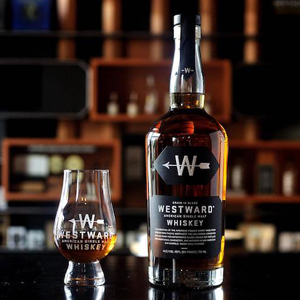
[00:07:38] Leo Latif: Nice, nice. You guys watch Westworld? You excited about the season premiere? Yeah, it's a good show. I didn't watch it yet, so don't ruin it. I will not ruin it. Season two started yesterday. I was lucky enough to go to a premiere event in Boston for the opener, and it was pretty cool. Great episode. I won't give it away, but as part of the premiere, they had a little bit of a cocktail hour afterwards. they were featuring Westward Single Malt Whiskey, which was pretty cool. Westward Single a Portland-based whiskey brand that's produced by this distillery called House Spirits, and it's described as this grain-to-glass celebration of the American pioneer spirit. What a perfect pairing for Westworld, wouldn't you say?
[00:08:15] Ad Read: That's on brand.
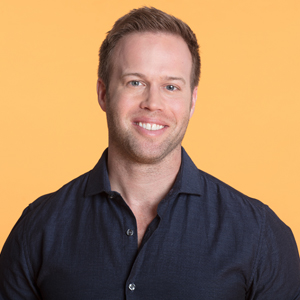
[00:08:17] Leo Latif: It definitely is. Malt Whiskey, great episode. I stamp it on brand. Yeah. Well done. Well done. Well, speaking of spirits, let's talk about Courtney Reum for a sec. Courtney and his brother Cartner are the founders of Veve, which is a maker of neutral grain spirits that are infused with organic acai. It was launched in 2007 and the two-man startup developed into one of the best-selling independent liquor brands in the U.S. and sold to spirits conglomerate Luxco in 2016. Shortly thereafter, the brothers Reem founded M13, which is a brand development investment company accelerating businesses at the nexus of consumer products, technology, and media. It has investments in many well-known brands, including Lyft, Pinterest, Blue Bottle, Pressed Juicery and Snap. And Ring. Indeed. We recently visited Courtney at the M13 offices in Beverly Hills and spoke about the path to success with Veeve, identifying white space in an ever-crowded marketplace for consumer products in the investment and incubation philosophy for M13. All right, we're at the offices of M13 and we're with Courtney Reum. Courtney, thanks so much for having us.
[00:09:23] Ad Read: Thanks so much for coming here, guys. Appreciate it.
[00:09:25] Leo Latif: We've got a bunch of things on the table in the wonderful conference room that you've got. It's got a real DIY vibe in here, by the way.
[00:09:31] Ad Read: Yeah, we want to kind of be like a cooler consumer tech focused WeWork. So yeah, it's our old VEVE office. So there is a bar in the middle, which doesn't go to as good a use as it should, but it's still a nice centerpiece.
[00:09:41] Leo Latif: I have a feeling we'll go to good use after this interview is over, right?
[00:09:44] Ad Read: Yes, no longer VEVE on tap, but lots of fun samples around still.
[00:09:47] Leo Latif: Good stuff. Did you, did you install any of this stuff?
[00:09:50] Ad Read: This was a raw space that we did ourselves. So, I mean, even just, you know, the way those cords come down from the top, Everything here is super eco. The floors, you know, reclaim cork. All the woods reclaim wood. So, yeah.
[00:10:00] Leo Latif: And you have mop sandals on to kind of clean up if you need to.
[00:10:02] Ad Read: Yeah, exactly. Do our part. This was a Costco hand-me-down from a roadshow as a reminder of how hard it is to sell your own product through Costco because we know that they, you either sell it or you go pick it up, but those are only two options. So, this was a souvenir of my first roadshow at Costco. The mop sandals? Yeah. are they like as seen on TV? Yeah. I mean, they really weren't. I was like, these are so dirty. I mean, I'm not sure what they're doing anymore, but it's a good, it's good for morale. People like to see me shuffle around and just clean up a little bit. I don't do any dishes around here.
[00:10:31] Leo Latif: Good thing. This is a podcast and not a video. We'll, we'll, we'll link a, a way to buy this on Amazon.
[00:10:36] Ad Read: If you want the mop sandals, buy a copy of shortcut, your startup, get a free pair of mops, 13.com. Yeah.
[00:10:44] Leo Latif: Well done. We also have on the, on the table, a few copies of your book, the one you wrote with your brother, Carter shortcut, your startup. And from everything that we've heard from folks on the podcast is that there's no shortcuts to success. So why do name the book shortcut, your startup?
[00:11:00] Ad Read: It's a great question. Shortcut's probably a bit of a misnomer. We actually call the chapters startup switch-ups, and that's meant to imply that it's a switch-up from the way things have traditionally been done, and our observations or pattern recognition as to how companies, especially ones that are techable, are being built today. So it should probably be called switch-up your startup, but I don't think Simon and Schuster and Derek Jeter, who co-financed the book, thought that was as catchy, but you're right. That's probably more apropos.
[00:11:27] Leo Latif: Fair enough. So, you know, speaking of your startup, you and your brother started Veev after a career at Goldman Sachs. Veev, for those of our listeners who aren't familiar, is...
[00:11:38] Ad Read: Vive, we like to consider in kind of lay terms, it wasn't exactly vodka, but kind of vodka-esque, one of the first organic products and then really, really sustainable as a company. Did a bunch of things around renewable energy with our distillery, members of 1% for the planet, and then the product itself was infused with acai, which at the time was nowhere, now is obviously everywhere, and some other better for you ingredients. So certainly didn't claim it was healthy alcohol, but healthier if you're going to drink, drink better was kind of the premise with Vive.
[00:12:05] Leo Latif: And so you sold the company Luxco, started M13. Your investment firm right now has got investments in a lot of different products, consumer products. Tell us a little bit about your strategy here.
[00:12:15] Ad Read: Yeah, sure. So when we sold Veve, which is actually two years ago this month, hard to believe it was two years, a few days ago, we, at the time it started Veve. We had also been on the boards or involved with a bunch of other companies, certainly some other beverage companies like was on the board of something like a Kavita almost since the jump was on the board for, I think almost six years. And then it had invested in, probably three dozen companies, everything from things like Pinterest and Lyft to Warby Parker, Bonobos. And so rather than say, hey, what's the next company we're going to start? We tried to step back and have the pattern recognition to say, OK, we feel like there's a lot of commonalities between these companies, a lot of data that isn't being shared, is there a way to start a company for, for starting companies? I hate words like incubator and accelerator because I don't think they've really been done great, but it's, let's say it's a twist on that and see, Hey, can we actually build a company for starting companies where we use like a playbook approach of repeatable behaviors to kind of capture this stuff in a repository and make it, you know, institutionable so that we can actually repeat this across a bunch of brands and hopefully demonstrate success across different brands and even categories. That's I mean the value added investment proposition. That's what's been thrown about a lot lately and a lot of firms are doing that where how much do you think the value is in the capital compared to what you're adding with all these services and data. Yeah, well, I think, you know, part of why we wrote shortcut your startup is because I think the things that used to matter, meaning capital, of course, capital is always capital, but there are a lot of places to get it now, whether it's crowdfunded things, or whether it's people throwing money at you, if you have a good idea. So capital is somewhat abundant, especially if you're second or third time entrepreneur, the real ingenuity of how to do it is still what's the trick. And so that's what we tried to write about. And that's where we believe we're different. I think to your point, It's hard to differentiate when you're having a cocktail party and you make a little chat. I think the proof will be in the brands, the Daily Harvest, the chomps, the other brands that we work on. We feel like we have a very unique perspective, having worn a couple hats in our careers, been investment bankers at Goldman Sachs, and then entrepreneurs and operators, and then investors, board members, and all that. I think that's a rare combination. We also are very long LA, although we spend tons of time in New York, San Fran, you name it. I really believe in the convergence of consumer brands and media and tech. Put another way, every consumer brand, when they're at Natural Products Expo, should be asking themselves, how can I be more of a media and tech company? And they don't. They're trying to go, where's the buyer for Trader Joe's? Where's the buyer for Whole Foods? And I look at that and go, of course that's important, but you really should be asking yourself how you're more techable. And I think that's how we really differentiate ourselves. A good way to start is by talking to us. I mean, honestly. Nice plug, Landis. Well done. I concur. So I guess there's kind of a segue there of why write a book. Yeah. So the honest answer to why write a book is that it kind of fell into our lap. As you guys may or may not know, we were on a TV show that was kind of like CBS's answer to Shark Tank for the last year called Hatched. Not totally my bag, as Austin Powers would say, but it was fun. It was interesting to experience that. And it led to a lot of great opportunities. I had never wanted to be on a TV show, but my brother and I had both always wanted to write a book. this came to us and it was a great opportunity. And we felt like we were at the point in our lives where we were just old enough to, you know, I guess have some wisdom through experience, yet just young enough to really get it. It meaning how companies are being built or how to still talk to millennials. And so we felt like we were at that great inflection point. Plus we felt like it's not being talked about enough, especially to the masses or the entrepreneurs, the people who are wanting to start something, but maybe never have how it's so much different to start a company now than 10 years ago. So I guess as you know, I've read most of the book at this point. Thank you for that. That's the biggest gift. You're like, my friend called me and was like, Hey man, I'm writing a book. I'm like, tell me I'll buy 20 books, 40 books, a hundred books. He's like, read it. I'm like, Oh, you out of your mind. I was like, I will definitely buy a hundred books. I'd rather buy a thousand books than read it. Cause that is the one gift that you actually spent your time reading it. So thank you. Well, I thought it was pretty interesting, just certainly some of the stuff that, you know, I guess maybe when you read it seems kind of obvious. And when you're someone who's been an entrepreneur, it's kind of obvious in retrospect. But I mean, it seems like a lot of kind of what I took away from it is almost like, you know, preaching sort of being self aware of what you have. both in your idea as well as kind of what your own personal desires and skills are. So I guess that's kind of a long-winded way of kind of asking how much of sort of this whole process of being an entrepreneur is simply just, you know, personal traits and kind of understanding what you're capable of. Yeah, we put something up front where the book kind of starts, as you might recall, with saying, oh, it's glamorous to be an entrepreneur. but here are all the hardships, here's why you shouldn't do it, here are the characteristics you need if you're not someone who's resilient and this and that and kind of almost try to talk people out of it and then say, okay, if you still want to do it, now let's do this, keep reading. I certainly believe, just speaking for me, that entrepreneurship is taught more than it is inherent, but that doesn't mean that some people's skill sets or disposition or genetics are not better predisposed. But I think to your point, there is a reason we reference tech a lot since we do a lot of tech. And I think in some ways, a lot of the VCs have been doing it a little bit longer. So there's a reason that something like a tech startup, like an incubator, like Y Combinator, doesn't let you apply unless you have a partner, I believe. You could have started $5 billion companies and you apply and they'd reject you because they believe you need a partner. I think part of having that partner is complementary skill sets, is self-awareness, is someone to bounce ideas off of. I can't imagine what it would be like to do without. my brother, although some days I imagine it would be like to do with someone else other than my brother. But the point is, is that I do think, I mean, nobody has it all figured out. And we used to live in this like, we like to joke KFC sort of world where it's like, well, I have the trade secret to Kentucky fried chicken when it was called that. Now we live in a very transparent, open source sort of world. So you don't protect your trade secret and your idea and coddle it. You open up and go be like, oh, my friend's great at this, and you're great at that, and who does the data analytics? And pull it all together and do what we like to call the Hollywood film production models. Pull together your dream team of people who have different competencies. Well, I think that was also you talk in the book about kind of trying to outsource everything, which I think is another thing that, you know, seems like a struggle with a lot of companies that are starting up. It's like they want to build all this infrastructure, be it in, I don't know, an office, a fully blown out team, or, you know, nowadays, maybe it's being vertically integrated in a sort of supply chain. I guess in the CPG space, How much of that do you think is possible? You know, I think some of the examples you gave were things like, you know, hiring coders on GitHub or whatever. But, you know, do you think that applies to the CPG space? Yeah, I do. And it always starts with what your goal is, right? Because if your goal is to build a 20 year enduring brand that you're bootstrapping, I would think about outsourcing differently than if I was raising a bunch of money and building for an exit and, you know, was kind of on that timeframe. The way I generally think about it is, you know, we tried to write a lot of the startup switch ups with catchy little phrases. So you remember? So I think that one's called do what you do best and outsource the rest. Point is, like, we even talk about it here. We need more back end help for our accounting. And the thought was, do we bring it in house? Or do we outsource it? And it's as simple as Whatever makes us good at M13, hopefully, it's not gonna be accounting. So I don't want the person sitting here, and I'll either pay a little more or do something to outsource it. So if it's not something that's a real brand differentiator, or if it really does, it's hard for a lot of brands to vertically integrate out of the gate, right? And so it's easier to subcontract until you get to that point. So unless it's what differentiates you, I usually tell people to hold off. The only argument I would maybe make against it, if I may, I feel like If you're an owner of a company, you really need to have a deep understanding of what each department should be responsible for, not only long term goals, but day to day. And, you know, if you just begin outsourcing that stuff immediately, you might not learn it very well.
[00:20:41] Courtney Reum: You know, at least in food and beverage, where we have people coming from remarkably different backgrounds that have no relevance to CPG.
[00:20:49] Ad Read: That taps into a lot of great points. One is, you know, you get people like me who are an investment banker go, Oh, well, it's gotta be easy to start like a food and beverage company. And you're like, it's not and it's very different, right? Just because you're a good banker or accountant doesn't mean you're gonna be a good entrepreneur or food executive. point taken, I'm saying something a little different, which is, I believe that when you start a company, you should be able to be the CEO down to the janitor, at least for a period, you should be able to do everyone's job or understand everyone's job. So outsourcing is different than taking your eye off it. Like, unfortunately, it's like, do I want to bring PR in house? Probably not doesn't mean I don't need someone to manage my PR firm. So that's probably the distinction. But I totally agree with you. I guess on that point, you might outsource accounting, but you probably know what it does, right? Right. Or I better be checking it when it comes back. And if it doesn't, uh, foot then, uh, don't turn a blind eye to your finances.
[00:21:37] Leo Latif: Well, for someone with a finance background, I mean, I think that's a little easier than maybe some of the other responsibilities that you have as a founder, as a CEO. And a lot of the entrepreneurs that we've met over the years, at least the ones that I deem to be successful are often really good salespeople. You know, how do you turn yourself into a good salesman? How do you, how do you understand how best to sell to retailers, to distributors, and then obviously to the end consumer?
[00:21:59] Ad Read: I believe more and more the more I wear my hat of being an entrepreneur and then stay on the other side as an investor. I believe that for the most part people invest in people, right? Like I come in this room and I'm selling you. You don't even know what's in this glass that I'm holding, but if I'm good at it, I will convince you to invest or whatever I'm trying to do. I think part of it's the mindset of we always try to associate with innovative products. So I'd rather have a product that is a little more say complex than something that's and requires a little more explanation because that way I feel like I'm sharing with you the story rather than trying to sell you something and I think that's a big distinction we always try and do with our salespeople or else it feels too much like hey, let's make a deal, do this, do that, really explaining. Even if you have something like the chomp stick that's sitting here, you know, yes, there's other people that are doing meat sticks or beef sticks, but I could give you reasons why this one is so much better, taste being one of them, but it's the paleo, it's the Whole30 approved, it's the less than four ingredients. So it's like, I'm not trying to sell you something, I'm trying to explain why it's different, and different usually means better. And then in terms of actual tactics, I think most people forget that when you're sharing a story, it's the old features versus benefits. If I just tell you about the product, you're like, Oh, okay, that sounds nice. If that's a feature, if I really help you understand the benefits of it, Hey, do you want to eat this chomp stack stick because it's paleo whole 30 and thus it will translate to this health wise or energy wise. I think that's what resonates with people and most people don't do that and bring the hook back to what can it do for me.
[00:23:28] Courtney Reum: It's more important to explain the why of the product than the what it is.
[00:23:33] Leo Latif: Do you believe in sort of replicating a blueprint when you are selling a product? I mean, do you make that same message to the same people or do you use a different message depending on, you know, who you're talking to?
[00:23:45] Ad Read: You're saying when you talk to like a, say a buyer?
[00:23:48] Leo Latif: Correct. Yep.
[00:23:50] Ad Read: You know, I think the core of your product when you're talking to someone like a buyer is always the core of your product. But I certainly believe that your pitch for conventional grocer versus small specialty versus a Whole Foods has to be different. And it's just amazing. People are just people, right? Like when someone comes to a meeting with me, if it's someone I'm like, God, this person get on my calendar. And like, I'm like, you have to go tell my assistant, like, how'd that person sneak on there? Oh, like us. You guys are a welcome addition. Let it be known that we set this up through many emails directly, not even through an assistant, but it's important when someone comes in and I'm like, I don't even know how this person got 30 minutes on my calendar, but good for them. And they come in and they just start saying things that clearly showed they've done. They've read your book. They've done research on who you are. They have a reason for being in that. And I think salespeople or someone receiving that, I just feel like you get so impressed when you go, wow, I looked at the spins data for this chain. I can tell you that you're only selling this many units of this. We're selling this may at this comparable chain. I mean, that's the stuff where you go, wow, I don't know how you wouldn't want to give it a try if, if it's compelling enough and they've done their research. So one of the other things that you talk about early on in the book is this whole concept of a business being a sailboat versus speedboat and that most companies are actually sailboats. So I guess when you, you know, sort of look at your own investment strategy here, you know, I'm assuming that most of what you're investing in is ultimately a sailboat, right? And I guess with that, you know, how do you spot things, again, in the CPG space, that are speedboats, just given how much I mean, it almost seems like every idea has been like, maybe made, you know, the ones that we know of. So do you still look for speedboats? Or how do you approach that? Yeah, I would say in CPG, to your point, when we talk about sailboat versus speedboats, we tell everyone the speedboats are what's in the headlines, right? An Uber or Lyft or an Airbnb, things that tend to be marketplaces, winner take all. If you're not sure what you are, you're a sailboat. It's not that I'm not looking for speedboats or looking for sailboats. I'm looking for someone that's aware of what they are and what they... Because the worst thing you can do is definitely be a sailboat, try to be a speedboat, and you raised $4 million or something, and you blow through it in a year with nothing to show for it because you had a... a speedboat strategy on a sailboat company. And the example we give in the book, since it's a good beverage, was Kavita, right? Because that's one where, when I joined, if they tried to be a speedboat, consumers weren't ready for it. They were like, oh, ProBalix, I've heard of that. I think it's in my gut. It's something I've tried in yogurt. But when it was time to continue the metaphor, take down the sail from the speedboat. And remember, most sailboats do have motors. So when you pull down that sail and you start to motor, you know, Kavita was able to double probably three years in a row because they had their speedboat moment after being very patient with their sailboat moment for many years.
[00:26:43] Leo Latif: You used a word I haven't heard before. I'm sure it's already out there in the, in the CPG world and beyond.
[00:26:48] Ad Read: I might've made it up.
[00:26:49] Leo Latif: You might've made it up just now, which is techable. And, uh, you're looking to work with brands to make them a little bit more techable. Can you expound on that and what you mean by that?
[00:26:57] Ad Read: Sure. I think, to me, techable, especially as it relates to food and beverage brands, is the fact that, you know, it used to be you tried to market your brand, you didn't really know who bought it, right? You didn't really know how they bought it, where they bought it. Now we're getting so much data where it's easier than ever to find your tribe, to get cohort data, all that stuff, that almost every brand is techable to some degree. And especially if you're direct selling, I mean, we tend to like brands that are pretty e commerce or direct to consumer. One of our big theses is I love companies that involve like daily rituals, whatever that is, because anything that could become part of your daily vernacular, without me having to beat you over the head with ads every day is great, right. And look at some of the other things like a dollar shave or things like that. Or I've seen a lot of skincare brands lately where if If I can work my way into your morning regime, I mean, you've really got something. And so, you know, we're looking at something like Daily Harvest sitting here. I call that techable, even though it's, quote unquote, just a frozen smoothie or soup or other things they do, but it's very techable because they have so much data. And they have so many ways to retarget you. And they know when you decided not to purchase it once you had it in the cart or where your pixels went. I mean, it's all those sort of things. And so to me, it's the tech really combined with the media as well, because you now have so many ways, whether it's self-published, other people's published, to be a mouthpiece for your brand and just find your tribe and connect much quicker. It sounds like product is lower on the list for you when it comes to investment. It sounds like you look at people, their backgrounds, their experience, their capabilities. You look at market opportunities. You look at expansion opportunities. Where's product? Where does that fall? I like that you're challenging me today. This is good. No, it doesn't. I'd again, reframe that a little bit and say, there's probably two types of products. There's a type of product that makes an existing category type of product better. It's an improvement or there's the super innovative. I've never seen anything like this before, right? Your Elon Musk at SpaceX or his boring company. Right. I don't claim for a minute to be smart enough to do much of the latter, more of the former. So I would consider a really good product to be like a greens fee. It's like, great, check the box. So what now? What are we gonna do next? But to spin it another way, I meet with so many people who have a great product and I meet with them and I leave the meeting and I go, That is a great product. I will start using that. Not a chance in heck I would invest in or get involved because they think the product is the end-all be-all and it's not. I see so many great products that I know have no chance based on the team, the founder, their go-to-market, all that stuff. Think about it this way. In the days product Product was king in the days where like when Malcolm Gladwell writes about it, like you go to the grocery store, you've already decided you're making spaghetti at night. You go there and there's three spaghetti sauces. Product was king and there was three choices, so you picked one. Then the days came of the long tail where there was 30 choice and it was the paradox of choice. Some choice is good, too much choice is bad. 30 something sauces, people had analysis paralysis. Product is still at the center of all of it. But given now we have data and all the things we were just talking about, things are techable, now consumers are getting smarter and savvier no matter what anyone says. So now the product is still at the center, but everything else that we do, the techable, the media is really important. But then the product, the consumer will decide if the product's good enough. And you'll know because a brand like Daily Harvest can't get to tens of millions of sales in two years unless somebody likes it. At least the right people like it.
[00:30:24] Leo Latif: Yeah, for sure. So in terms of M13's investment philosophy, you know, when do you invest in a product's lifecycle? When do you invest in a brand's lifecycle? And, you know, at what valuation?
[00:30:35] Ad Read: Sure. It's been, I think, part of what's hopefully made us successful is that we've been super opportunistic and flexible. So when people ask me that, they don't love the answer when I say I've written a check as small as $25K in the last year and as big as $2 million. And that's the honest truth. But I'd say the sweet spot is probably somewhere between a quarter million and a million dollars. And it really comes down to where the company's at, how much we're going to get involved. We're long on us and what we're doing differently. So actually, the bigger the check I write, the more likely we are to get involved and hopefully affect the outcome. And so we've also always used our own capital. And then we've had people we've gone out to. So we've invested just a little shy of 100 million in the last 18 months since we officially started M13, but that's without any kind of real fund. We are going to go out and raise some kind of form of captive capital. I'm not necessarily calling it a fund, but something. So we'll be doing, I think in the world we live in now, you have to write small checks to kind of get a foot in the door and get to know people and, and see what they're like and kind of lie next to them in bed. But then we're certainly gonna be writing much, much bigger checks. So I guess as far as flexibility, though, like our companies, are you investing in companies that are pre revenue far along all those things? Yeah, definitely anywhere from pre revenues fine, as long as your MVP minimum viable, as long as you have something that feels like it's not just an idea on a cocktail napkin. Like I think we're big on we like a product that's ready to go even if you haven't actually sold anything.
[00:32:01] Leo Latif: So of all the products on the table, there's one that kind of stands out for me and that's a brand called Rebloom, which is a natural sleep drink. And it's a shot. And we've seen similar products like this before. And I hope I'm not saying this in a bad way, but it feels like kind of a niche market. I mean, you know, how much of these types of brands that you invest in, you know, do you think have niche potential versus broad and scalable potential?
[00:32:25] Ad Read: Right. So I'm glad you asked about Rebloom because as opposed to brands that we've, you know, been early investors and are board members, Rebloom is actually one that we, we own all of it. We, we work on in conjunction with some friends of ours in New York called innovation department. And it depends on how you define niche. Cause you know, when I say to people, Hey, how many people have trouble sleeping? Sure. Pretty much everyone raises their hand. I believe in part of what our strategy is, is that other competitors in the space, I'll just say, have tried to go hard into retail. I believe this is a product that if people want it, it's better that they find it recurring, direct to consumer. And so I'm not saying Rebloom is meant to be a hundred million dollar brand, but if I can be your trusted sleep source, and now a lot of people who can't sleep maybe have anxiety and I have an anxiety supplement and oh, A couple other things that are tertiary, ancillary, but related. I think the kind of wellness company we can develop out of it is hardly niche. Plus, I think if you think of almost every great brand out there, it's better to just be known From One thing. Rebloom is a brand that we're just starting to spend more time on because we finally have cracked the code into finding the right, you know, customer acquisition costs and we're getting our lifetime value up. The reorder rates have been crazy the last 90 or 120 days. So we know the product works. We know people like it. Now it's just a matter of as soon as you figure out that secret sauce, pouring marketing on top of it.
[00:33:44] Leo Latif: And do you expect to invest in more of these direct-to-consumer type brands and products?
[00:33:49] Ad Read: Yeah, absolutely. I mean, I think we live in a world where, you know, we're, we're early investors in the glasses. I'm wearing Warby Parker without breaching anything confidential. They were originally all online. Right now there's like something, I don't want to get the number on, but it's like 50 plus stores. And I believe, let's just say almost half the revenue now comes from those. So whatever the number is, A brand like, even ones like that were digitally native like Warby Parker now have a huge offline, you know, retail presence. And so the point is you need both. And I think that they marry up in a great way. And that's, that's part of what we believe in. It's Mike hacking in here. I was running the board. So you mentioned direct-to-consumer and you guys have great experience in direct-to-consumer, but also in technology. So there's a, there's a marriage there. Talk to us about, you know, how you, how you take a beverage company or a food company into the direct-to-consumer world, because it's a whole different ball game there. You have to have this sort of user experience competency because now not only are you a, a business, you know, with goods who's, who's got a whole supply chain, but you're also doing this online and you have to, you have to have a user experience competency as well. It's hard to say exactly how you do it except for to say that most of the great tech companies of the last five or 10 years that we talk about, Uber, Airbnb, Lyft, Pinterest, they're actually built, if you really step back and think about it, on one or two key insights. And so being into the nuts and bolts of how you sell e-commerce, but I think especially in e-commerce, you're always looking direct to consumer. You're always looking for the one or two insights where you say, that's it. Now I can exploit that or, well, I'm looking for it. We always say test, iterate, move, test, iterate, move. there is, especially compared to retail in the direct to consumer world, the minute you sit on your hands and go, Oh, I figured out that this is what our customers want. Like it might be what they want today, but three months from now, it's totally different. And you just have to keep, keep iterating because I can't tell you how many times we move the dial one degree and you're like, well, that can't do anything. And all of a sudden you're like, wait, our customer acquisition costs came down by half. And sometimes it's explainable and sometimes it can't. But if there's one part of your business where you really just need like the curious mindset, it's really the direct-to-consumer piece. And I also think, you know, people sleep on, when I say tech, well, that doesn't always mean e-commerce or direct-to-consumer. It means we used to have incredible success going into retailers with Veve, like BevMo, or old, stodgy places, and explaining to them the technology we were trying to use to sell more, like, you know, beacon technology when it was new, or digital couponing things like an ibotta when that was new. There's enough stuff like that going on that I just had to be six months ahead of Diageo or Bacardi or Coke or Pepsi because it's always changing. And so that stuff is very powerful if you just stay ahead of it. You don't have to be the only one. You just have to be six months ahead of everyone else.
[00:36:35] Leo Latif: So before we wrap up, I'd love to hear your thoughts on emerging trends and products maybe that are really exciting in your purview at this point.
[00:36:45] Ad Read: I really, even though we've talked about nauseam, I think a trend of brands going, Hmm, I need to have a more holistic approach and be more well rounded, be more immediate tech company is going to be a real trend in terms of things. You know, obviously plant based is very hot, but I think there's going to be a lot of interesting meat substitute type things, which is a little different than plant based. I just joined the board of a company called Good Catch, which is kind of like Impossible Burger for seafood. So I wouldn't call that, I mean, it is plant based, but there's a different mindset that goes with and I think those sort of things are gonna be pretty different because I'm, I consider myself pretty healthy, but some days I'm just like, ugh, I want the hamburger, but it's got to really be like the hamburger. Like when you taste good catches crab cakes, it's as good as any crab cake I've ever had. And so I think the trend of like still feeling indulgent, but not feeling like you're giving up something is an important psychographic trend.
[00:37:40] Courtney Reum: The fish burgers.
[00:37:41] Leo Latif: Oh my God. I've heard that term, the backlash to the backlash. Everyone wants to eat healthy, but they don't want to lose that indulgence factor.
[00:37:46] Ad Read: Absolutely. I think a lot more people are kind of having the barbell approach right of I'm going to eat really healthy 80% of the time because I know 20% of the time I want my indulgent decadent foods that I know aren't aren't healthy.
[00:37:59] Leo Latif: Courtney, this has been really great. Thank you so much for taking the time to be with us. Good luck with your investment philosophy. Please keep us in the loop. We'd love to hear about what's next for m 13 and beyond.
[00:38:09] Ad Read: Thanks so much for having me. It was a lot of fun guys. Thanks.
[00:38:13] Leo Latif: So M13, interesting. Courtney called it a company for starting companies where we use a playbook approach of repeatable behaviors to capture this stuff in a repository and hopefully demonstrate success across different brands and categories.
[00:38:26] Ad Read: Yeah, well, one of their first repositories is in the form of their book, which I have to give those guys props for, you know, creating something that is broken down into nice chunks and is really, you know, approachable. And I think it makes a lot of the kind of counterintuitive points of these industries you know, at least something that are digestible for someone who's new to the industry.
[00:38:48] Leo Latif: Indeed, and one of the things that early stage brands or folks coming into this industry have a hard time with is infusing tech and trying to find ways to make their business a little bit more techable, to use Courtney's word. And he said that every brand at Expo West, we recorded this just before Expo West, should be asking themselves how to be more of a media and a tech company, and they don't. They're looking for the retail buyers for Whole Foods and for Trader Joe's. Well, they should be. I mean, that's what they go to Expo West for, right?
[00:39:14] Ad Read: I mean, that's a show to meet retailers. And I definitely understand his point, though. You can't take away from the fundamentals of running a CPG business. If you want to succeed in the data and metrics and lessons that tech has to offer, you still need to be able to sell your product through retailers. So you have to be able to understand how your business is going to function before any of that information is going to be, you know, relevant. so many channels to explore. Direct to Consumer is one of those channels. You know, I think that's the point here is that make sure you're exploring that channel, make sure you get an understanding of it. But I don't think Courtney's saying, you know, forget about retail. He's saying this is another opportunity, another avenue that you have to explore. And it's really just saying that the playbook is enormous for food and beverage. And I definitely understand where he's coming from because I know entrepreneurs who are just constantly obsessed with retailers and retail relationships. There's more to your business than that as a CEO, as a founder.
[00:40:12] Courtney Reum: your role is more than just relationships with retailers. So maybe that's a lesson there too.
[00:40:17] Leo Latif: And you can also get actionable data using tech. I mean, direct to consumer e-commerce, you learn a lot about your consumers in ways that you can't necessarily through old retail partnerships. And it's really expensive to get that data otherwise. And I mean, to be able to incubate using really on-the-ground kind of data is very, very valuable.
[00:40:34] Ad Read: It's true, but building that thing from the ground up is not an easy task, and there's a cost to getting that data as well. And this is Courtney's point, being techable, becoming a tech company means that you have to bring in competencies. We've talked about this before. User experience is a big competency here. You have to start thinking about CAC. You have to start thinking about, you know, the cost to get somebody to put another one of your products into their shopping cart and make that happen. Making that happen is a competency. It's a thing you have to obsess about.
[00:41:03] Courtney Reum: And if you think tech companies don't care about opportunity cost, you're sorely mistaken. So, you know, anything that you're spending in your time doing, the opportunity cost is what you could be doing with that time otherwise. So, you know, keep that in mind as well.
[00:41:15] Leo Latif: One of the other interesting things that Courtney brought up was when he said, I see so many great products that have no chance based on the team, the founder of the go to market strategy. They think that products is the end all be all and it's not. And I thought that was a pretty interesting point.
[00:41:30] Ad Read: Yeah, I think, you know, this is definitely not an industry where, you know, you're just out to build a better mousetrap. Now, that's not to say that you don't need a better mousetrap. But a lot of companies that are starting out in this business have said this many times before, like, they're just so focused on the product and its points of differentiation, and that isn't a guaranteed way to win in this business. You know, I think in a lot of cases, like you can look at companies that have been super successful by only having a tiny little bit of innovation above the competition. But what they have is, you know, the killer team and the killer strategy. And that at the end of the day is worth so much more. What he's saying here isn't that you can go out there and have a bad product and win. He's not saying you should have a shitty product. He's definitely saying that there's more to it than having a good product. I mean, these are points that we've covered a lot of times in this podcast, but at 108 episodes, I feel like they bear repeating, you know, and so you don't have to go through digging, you know, your, your product is going to change. I want people to dig, dig, dig, dig, dig, dig, dig, dig, dig, dig, dig, dig, dig, dig, dig, dig, dig, dig, dig, dig, dig, dig, dig, dig, dig, dig, dig, dig, dig, dig, dig, dig, dig, dig, dig, dig, dig, dig, dig, dig, dig, dig, dig, dig, dig, dig, dig, dig, dig, dig, dig, dig, dig, dig, dig, dig, dig, dig, dig, dig, dig, dig, dig, dig, dig, dig, dig, dig, dig, dig, dig, dig, dig, dig, dig, dig, dig, dig, dig, dig, dig, dig,
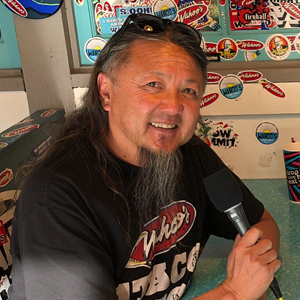
[00:42:49] Leo Latif: So if you spent any time in Southern California we were during this interview with Courtney Reum, and hankered for a Fish Taco, you've probably been to Wahoo's, the iconic restaurant chain which serves Mexican food tinged with Brazilian and Asian flavors, just celebrated its 30th anniversary. It's got 60 locations in the U.S. and one in Japan. And it was founded by Wing Lam and his two brothers who opened their first store in Costa Mesa in 1988. I had an opportunity to sit down with Wing for a conversation about how Wahoos has maintained and nurtured the spirit of its first location while continuing to expand beyond its roots and how the company, known for its partnerships with surfers and surf-focused brands, identifies authentic partnerships and how food trends have shaped its menu over the years. All right, I'm at the Wahoos Fish Taco location in Torrance, California, and in front of me is the co-founder of Wahoos, that's Wing Lam. Wing, thank you so much for being with me.
[00:43:43] Veve Spirits: Well, thanks for having me. It's going to be fun.
[00:43:45] Leo Latif: It is, it is. This is a momentous year for Wahoos. This is your 30th anniversary.
[00:43:48] Veve Spirits: Yes, we've been around since 1988, flipping tacos all over the country.
[00:43:52] Leo Latif: That's pretty amazing. I mean, when you first started out, did you think it could be this big?
[00:43:56] Veve Spirits: Nah, I figure, hey, we have a place where we all hang out after surfing, then skateboarding, then snowboarding, and the rest is history now.
[00:44:03] Leo Latif: It's pretty amazing, it really is. Speaking of surfing, I read that you surf every morning. Did you surf this morning?
[00:44:07] Veve Spirits: I didn't surf. There's no surf right now, you know, because, I mean, I go out every morning. If I can find some surf, I'm out there. It's way better to surf than to run six miles on the beach.
[00:44:17] Leo Latif: I think I can agree with that, but I don't know how to surf, so maybe I'll have to learn, and then I won't have to run the six miles. Well done. So when you started the company with your two brothers, one of the things that I read about is that you didn't find or you couldn't find the Fish Taco that really represent the high quality that you currently serve right now. Moreover, this notion of crossover cuisine didn't exist. You have basically a Chinese and Brazilian influenced restaurant. Was the timing right when you first launched or did it really take a lot of time for consumers to catch on to what you're doing in terms of cuisine and just who you were as a brand and as a restaurant.
[00:44:58] Veve Spirits: You know, it's funny is it took a couple of months to kind of get the ball rolling. It didn't help that we opened in November of 88. So of course, we're going into what I call the absolute slowest part of the year. But as we started a new year in 89, we started getting some traction with the surf companies. And that's really what, you know, in every business, you need that one little moment in time, either seize it or you lose it. So for us, it was like, hey, Have you ever done caterings? And we're like, of course, we do caterings all the time. We had been in business at the time for two months. So we had an opportunity in January of 89 to do our first partnership with Billabong USA, which at the time was the number two surf brand in the world. So we didn't start too far from the top. So being able to launch and execute at that level and showcase our cuisine to the best surfers in the world put us on the map.
[00:45:49] Leo Latif: It did, and was there like a big Fish Taco? I mean, you hear about Fish Taco and surfers that go hand in hand. Were Fish Taco, you know, a big part of the diet for surfers back in the day, or did Wahoos have a lot to do with sort of advancing that sort of culture?
[00:46:04] Veve Spirits: Well, it was kind of one of those, if you live in Southern California you learn to surf here, the first rite of passage road trip that anybody took on their first surf trip was across the border. And when you're surfing with no budget on your first road trip, the natural thing is, hey, what can we eat after surfing? And Fish Taco were really the only taco stands along the beach communities. So that was pretty much what you did. And the second part was when you had a little bit of money, you went to Hawaii. And those are the two first destinations for any surfer. Well, in Hawaii, without any budget, you ate lunch plates off the back of one of the trucks. So that kind of became basically the cornerstone of our menu. We would have Maui bowls, which was teriyaki beef with rice and beans. Again, the beans was Brazilian, not from Hawaii. And then we had Fish Taco from Mexico.
[00:46:54] Leo Latif: It's funny because you think about some of these food trucks and these stands that have been along the highway forever, and they've become really hot today, as trendy as it comes. How do you guys try to stay on top of trends while maintaining that authenticity that you really built and achieved over these last 30 years?
[00:47:10] Veve Spirits: Well, the first part is making sure that you still maintain the quality, right? A lot of restaurants have come and done all the things that they want to talk about, you know, fusions and all that. But at the end of the day, what are they really using as their main ingredient? You find out that a lot of them use pork as a main ingredient, because it turns out pork is probably the least expensive of all the proteins. And it's not that difficult to play with pork, because you can cook it until the cows come home, literally, and you can't ruin pork. Because the longer you stew it, the more tender it becomes. Where fish is at the other end of the spectrum. It's probably the most expensive protein of the choices. And at the same time, it's very delicate. So a lot of people say, hey, if I'm going to play with fish, I'll probably deep fry it. But if I'm going to do everything else, I'm going to steak with chicken, I'm going to steak with pork, the easier proteins to handle. So we basically have always stayed at the forefront because that is, quote unquote, the namesake of what our business is, Wahoo's Fish Taco. On the other side is, instead of trying to reinvent yourself all the time, why not partner with the best up-and-coming athletes? So what you just saw in the Winter Olympics, you got the oldest snowboarder there, Shawn White, and you have Chloe Kim. Well, both of them have become regulars, you know, part of our regimen because we've been supporting their sports. So it's the affiliation with all the up-and-comers that keeps you relevant in the marketplace.
[00:48:29] Leo Latif: That's really interesting. You mentioned a few folks and a few brands that Wahoos is aligned with. What are some of the considerations that you take into account when looking for brands to partner with, when looking for celebrities that you want as endorsers for the company?
[00:48:44] Veve Spirits: Well, the key thing in looking out for brands is brands that think like you. And it's not that difficult, because if you're into surf, skate, or snowboard, by definition, you're into action. It's a whole lifestyle brand, because literally, if you took their logo off any of their designs, that t-shirt is only worth about two bucks. So how is somebody selling a t-shirt for 30 bucks? It's a brand, it's a lifestyle. So being associated with what I call cool, Southern California is really the cornerstone of our success. And along the lines, athletes that are usually sponsored by these big brands, they've done a pretty good job of filtering them out already as good character, great brand ambassadors. So it's not that difficult for us. We don't have to look for this. We just talk to our friends that run the marketing teams you know, all the special events, and you naturally tend to find the best athletes because they're the ones winning all the events.
[00:49:37] Leo Latif: Do you think Wahoos represents a certain lifestyle?
[00:49:39] Veve Spirits: Yeah. Wow's is this super laid back brand. I mean, it's something you do. You don't have to get dressed up to come here, but you can always come on a date here, which is kind of like fun because not too many restaurants in our category, price point, is it okay for you to bring a date to? Because most people would assume that, hey, you're too cheap to take me to that really nice steakhouse. But coming here is kind of cool. It shows that, hey, you do appreciate, you know, good food and you appreciate great value.
[00:50:07] Leo Latif: And you're well known for your partnerships, you're well known for your relationships throughout California and beyond. So for example, like a Quicksilver, what was the moment that you realized that this was going to be a great partnership?
[00:50:20] Veve Spirits: Well, with Quicksilver, for instance, the very first video premiere that they did, that we did together, I remember was the El Mondo video. It turned out that the main surfer in this video was a kid named Kelly Slater. He had just turned pro at that time.
[00:50:35] Leo Latif: He's just a small guy.
[00:50:37] Veve Spirits: But he hadn't won any world titles yet. So here we are doing the world premiere, and I remember that in the video there's a really cool slow motion sequence that Kelly's paddling out. And I said, you know what? I would love to quote unquote borrow that footage to use in something that we wanted to back then in these local commercials. And people looked at me and said, you don't have the money to pay for that footage. Well, knowing the right guy at Quicksilver, we got the right permission. He says, Wayne, you can have two seconds at that. I said, all I really need is one second. Because in that one second, you can see his face. And being able to have, at the time, our association with Kelly Slater brought us instant credibility because he was the hottest up-and-coming surfer. And again, we bet on the right horse. He's just one of many that we had really great opportunities to work with. The biggest thing about it is, remember, when we started, we were the little guy, and the surf brands at the time, the Billabongs, the Quicksilvers, the O'Neals of the world were ginormous, right? So they helped us. Well, what happens is most of the guys that worked at some of those companies eventually left to start their new brands. So we did the reverse. Instead of the old brands helping us, we went and helped these guys. So one of the right of passages was, let us use our store for you to advertise your brands. The way we use the bigger brands to help us authenticate who we were. So all of a sudden, if you're a Ruka, and the kid sees a Ruka sticker in our store, like, whoa, it must be a real legit brand. So the legitimization of brands, part of it became having to have your POP, your brand, involved in the Wahoos story.
[00:52:23] Leo Latif: So it sounds like you sort of built a Wahoos community. Yes. And the community now is still encompassing of some of those big brands. How do you incorporate some of the small brands and some of the things that are up and coming and on the ground right now?
[00:52:36] Veve Spirits: Well, like I said, it's part of, like I said, finding a new axe, just like we're finding new athletes. Our job is to always look for the new brands, the up-and-comers, because we want to ride their wave, which helps us stay fresh and relevant to the new kids.
[00:52:49] Leo Latif: Outstanding. As I mentioned, you started Wahoos with your two brothers. Family, I've read, is such an important part and such an important foundation of this company. How have you been able to maintain that sense of togetherness without getting in your own way? I mean, family business can be kind of tough, right?
[00:53:09] Veve Spirits: family business is probably the hardest part about being in business as Businesses are tough already to run right but the key is is knowing that my brothers we always have each other's back and We're family first business second, so we respect each other's boundaries, but we're still brothers So we may fight in the office because we are brothers at the end of the day We know that hey it stays in the office We got our weekends to get together and we don't talk about business after work, right? So we just want to be able to hang out and run the business and everybody carry your own weight. That's really the end of the day. As long as everybody's carrying their own weight, it's pretty easy to run a business.
[00:53:46] Leo Latif: Every company has its ups and downs in the food and beverage industry. It can be on a daily basis. What was the toughest point over the last 30 years for Wahoos, and how did you guys find your way out of it and toward a successful future?
[00:54:01] Veve Spirits: You know, I think the last one, which hit everybody across the, you know, the forehead, you know, the major recession in 2007, and we tried for the longest time to just say, hey, let's not fire everybody, stay true to the mission. But in the end, you can't hold on to everything, right? So you gotta refocus, you know, basically, what is your core business? We're in the service, you know, food and all that. Let's refocus and make sure we're still putting out the best product, because the competition's not going away. And let's stay true to our authenticity. We're an action sports brand. Let's keep selling it. And guess what? The numbers have been great. And we're off to a great start in 2018.
[00:54:38] Leo Latif: You've referred to Wahoos as an action sports brand a couple of times now. Are you a restaurant chain? I thought that's what you were.
[00:54:45] Veve Spirits: But we're the place that you do before or after anything that you go and you get to enjoy Southern California, whether you're mountain biking, surfing, snowboarding. It's just part of the lifestyle.
[00:54:56] Leo Latif: Now you have almost 70 stores, most located in the United States. You have a couple overseas. I think you said about half of them are franchised. I'm sure there have been offers to buy Wahoos. What has kept you from selling?
[00:55:08] Veve Spirits: Well, it's one of those things where you look around and you get one chance. Most people, if you're lucky, once in a lifetime to do something right. And I look around, I'm like, you know, I really enjoy doing what we're doing. We're having fun. And let's try to keep the boat running. We've provided a lot of jobs for a lot of people. We've done a lot of work in the communities that we're in. And I'm not sure we'd be able to continue that if we ever got out. So it's one of those things where I'm like, you know what, it would be nice to get out. But sometimes getting the milk is way better than selling the cow.
[00:55:38] Leo Latif: This has been really great. Thank you for taking the time to speak with me. I really appreciate it. And good luck with everything you're doing going forward.
[00:55:44] Veve Spirits: Thank you.
[00:55:47] Leo Latif: This was an interesting interview because I was talking to a guy who founded a restaurant chain, but he calls his restaurant chain an action sports brand, which was kind of cool.
[00:55:56] Ad Read: I think that's amazing. They've got a great product, and there's only so far that a product message is going to take you. There's only so many parties you can run into and say, I sell golf clubs, or I sell Fish Taco, and have someone say, oh, well, I think with Fish Taco, everyone's at a party. Hey, I like a Fish Taco, especially if it's there, if it's Wahoos. The idea here is that they stand for something bigger than the product. And that gets you into additional conversations that you wouldn't otherwise be able to get yourself into if you just start talking about Fish Taco.
[00:56:26] Leo Latif: And it also gives you a real sense of authenticity when you work with other brands. It gives you permission to say we are authentic because you do stand for more than just the product. You have a community of folks and a community of partners that are aligned with your mission and your vision. And Wing talked about that when he was talking about a rite of passage for some of the brands that they work with, the younger brands. Let us use our stores to advertise your brands, helps legitimize what you're doing, and be part of the Wahoo story and community.
[00:56:54] Ad Read: I think it was also really neat just how he was talking about, you know, the actual atmosphere of the stores. I mean, it almost sounded like I was listening to a pitch for, you know, Starbucks or a coffee place where, you know, it's just like a vibe that you want to hang out in. And I think that's, you know, I can't really think of another sort of fast food, fast casual restaurant that, you know, focuses on creating something that you just want to like, you know, linger in and be in. I think that's pretty neat.
[00:57:21] Leo Latif: When I was there, it was just like that. It was a place where you felt comfortable. You wanted a chance to hang out there for a fish talk. Maybe you wanted to spend a couple hours there, and you could. They gave you permission to do that.
[00:57:30] Ad Read: Yeah, I can think of destination brands like In-N-Out, but you're not going to hang out there for 20 minutes. It was like there was a crying baby in the background, too, while you guys were... That was his son, actually. Was it?
[00:57:40] Leo Latif: Yes. I mean, there you go.
[00:57:42] Ad Read: He's practicing what he preaches. We see this in CPG too, you know, detaching a lifestyle to a product and just having a successful and engaging product isn't even enough anymore. You know, Red Bull is the obvious one to call out on this where, you know, it's part of who you are beyond what you consume. So with retail, it's easier with that experiential type of thing. Yeah, it's a distinct advantage of having buildings. Yeah, it is. But I would say, you know, your Red Bull analogy is sort of similar to Wahoo's and that, you know, the other point with it is that these are brands that have committed to it, you know, for the long haul. It's not like a thing that you can just do right out of the gate and have it resonate with consumers. I do think that, you know, having that history and continuing to do it like year in and year out. And, you know, one could argue now that, you know, does Wahoos need to continue to do that? Probably not. But, you know, it is something that's important to, you know, the brand. I guess, you know, point being, they probably just sell a lot of Fish Taco and If you think about it, maybe the reason that you don't see as many lifestyle restaurants, for instance, is that as the lifestyle changes, Wahoos has to stay updated as well. They have to keep up with that brand and that's costly. These guys are doing something that's very risky and also succeeding.
[00:58:57] Courtney Reum: And to John's point also, being in it for the long haul, these guys were way ahead of the curve, offering healthier options at a discounted price, with a fast kind of preparation and takeout mentality. that didn't really exist with consumers in the 80s and 90s as much. So attaching that kind of lifestyle gives them more of a reason for being.
[00:59:18] Leo Latif: Yeah, fast casual was not a healthy option back in the day. I'm hankering for a Fish Taco right now. I'm always hankering for a Fish Taco. Too bad we don't live Southern California.
[00:59:27] Ad Read: That was probably the one thing. There's no Fish Taco here in Watertown. That was the thing that was missing from my Costa Rica surfing experience. There was no, there was no Wahoos at the end. I mean, I sadly didn't go to Wahoos while I was in California and now I regret that.
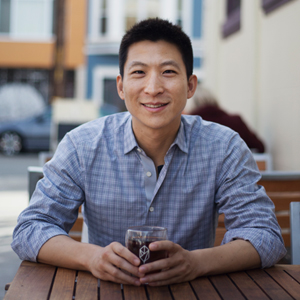
[00:59:43] Leo Latif: We'll be back there soon enough. However, What I'm feeling like right now is some Elevator Talk. How about you, Mike? I'm always up for Elevator Talk. All right, well, let's hear from Simon Cheng, who's the CEO and co-creator of Peak Tea, which, as I mentioned, is a maker of cold-brewed tea crystals that dissolve in water. We caught up with Simon at Expo West 2018 and connected for this edition of Elevator Talk.
[01:00:11] John Craven: It's time for our Elevator Talk, where we put a founder in an elevator with their dream investor. Let's hear what happens. What is your company's mission?
[01:00:20] Simon Cheng: So our mission is to help everyone unlock the benefits of tea so we can all unleash our inner potential.
[01:00:27] John Craven: What is your product and how is it different?
[01:00:29] Simon Cheng: Yeah, so we make the world's first cold brew tea crystal. It's a very, very high potency, whole food tea extract, and it has 12 times the antioxidants of other teas on the market. So you're able to experience the benefits of tea, such as improve gut health, sustain energy, and reduce stress instantaneously and effortlessly.
[01:00:51] John Craven: Who is your target audience, and how do you quantify the market opportunity?
[01:00:54] Simon Cheng: Yeah, so our target audience is everyone who likes tea or thinks that they'll benefit from the health properties of tea. And so this ranges anywhere from, you know, millennials who are the biggest tea drinking population in U.S. history to people that are slightly older in age who really, really seek the amazing health benefits of tea. What we provide them is an opportunity to drink a very highly potent tea that also has a very high level of purity. So we're one of the only tea brands that actually screens for heavy metals. Mycotoxins, which is toxic mold, as well as bacteria and pesticides. We have a very, very exhaustive level of safety test. And so what we provide is not only something that's potent, but also something that's very safe to drink every day. And finally, in a format that's extremely easy and convenient, so you can experience these benefits effortlessly.
[01:01:50] John Craven: What stage of growth is your company in?
[01:01:52] Simon Cheng: So we're two years in the market. We have grown very rapidly in retail. We're in 1,500 stores nationwide. And these are the best natural specialty retailers, Wegmans, Sprouts. We're in five Whole Foods regions. We're in H-E-B, as well as Meijer. And so, you know, we're really kind of just thrilled with the retail partners that we have. And, you know, we're also part of the Chobani Incubator and the Target Accelerator, which has opened the doors to more kind of conventional retailers.
[01:02:19] John Craven: What has been the biggest surprise since starting your company?
[01:02:22] Simon Cheng: The biggest surprise since we launched is probably how much people are switching from coffee to tea. You know, in the Bay Area where we were originally based, you know, the food service distributors that we work with told us that two cups of tea are sold to every cup of coffee. And when you think about it, it actually makes a lot of sense because of the amount of bottled teas and tea bags that people are embracing these days. You know, tea has always been a go-to in the afternoons after lunch as kind of an extra kind of boost of energy. But what we're seeing is that actually in the morning, a lot of people are starting to replace their coffee with tea.
[01:03:00] John Craven: What do you need from a partner or an investor to go next level?
[01:03:03] Simon Cheng: I think what we need the most, you know, at our stage is new ways of getting the word out to new demographics. So we certainly welcome partners and investors that have access to large communities of followers, of passionate followers, who would benefit from tea, you know, who could use the amazing polyphenols that help improve gut health. that could help use the L-theanine in tea to reduce their stress levels, or could use the caffeine in tea that's very unique and lasts four to six hours, but it doesn't, you know, lead to any jitters or anxiety or kind of stress. So anyone that has access to large communities of followers or even patients that could benefit from tea, you know, we'd love to work with. Why should I invest in you? Well, I mean, we're completely changing an industry, an industry that's exceptionally large. Tea is the second most ranked beverage in the world after water. At the same time as it being large, there's also been effectively no innovation since the teabag was invented. You know, we're pioneering that change and we're leading that change. And we've actually changed the way that people are drinking tea all over. And so I think that it's a very unique opportunity for any investor.
[01:04:21] Leo Latif: A lot dissolving in there. I feel like I'm really, everything's kind of coming together in that pitch. I like it. Pretty cool that he was talking about getting into the Chobani Incubator and Target Accelerator. Mike, what do you think that does for the brand?
[01:04:36] Ad Read: I think it does a lot for the brand. I think they're going to get some help that they need in terms of figuring out who their demographic is. They said basically everybody. Then later in the pitch, they said they were trying to get into new demographics. You want to get some agreement on that there and figure out who you're going after first and start that target a little smaller because you can actually, you know, it's something you can see, something you can hit versus throwing it at the bigger target there. I think there's another component that just is really missing that is important in tea, which is like fun and refreshment. And I would just caution this company that, you know, they're so far on the side of like, you know, this being about some, you know, health benefit, which still to this day, like consumers cannot Most consumers cannot quantify levels of antioxidants. So saying you have more or the most or it's better is really meaningless to the consumer. At the end of the day, if they don't like how it tastes, if it isn't convenient for them, then they're probably just not going to drink it. And I realize this is selling for a different use occasion, that too, I feel like, you know, this is something that is not for the immediate sort of use occasion. And that is still ultimately where, you know, a lot of tea sales happen. So I would just suggest kind of thinking about that and dialing down some of the rhetoric of it, you know, totally revolutionizing tea and upending, I mean, it's just, We're still going to drink tea from bottles. Let's let's be honest. Yeah, I agree with a lot of what you said there. I think that the functional benefits are interesting, but it was leading with and then continuing with all the functional benefits.
[01:06:17] Courtney Reum: And if you look at this product, to me, the clear value proposition it has is convenience. And it was barely mentioned in there. Also, I'm not really a huge fan of kind of bashing other brands and
[01:06:30] Ad Read: he was inferring that other brands aren't safe to consume, which I don't really know how many people would agree with that after consuming all these brands and not getting sick.
[01:06:39] Courtney Reum: So that kind of was off putting to me, but I do think, you know, it's a very attractive looking brand. And I would have wished to hear a little bit more about that and about the lifestyle that they're trying to propagate for people. Because that to me, when I look at the product, it's more about convenience and lifestyle than anything else.
[01:06:57] Ad Read: I think what we've seen here is an entrepreneur is very excited about a lot of different things and that's good. The question here is which ones of those are most important because we heard convenience, we heard innovation, we heard that there are functional benefits and also some kind of quality control advantage. Safety. safety advantage, which I would have liked to hear, you know, if there's a place where you could, if there's something patentable or something that's, you know, intellectual property driven there, maybe a little bit deeper into what that exactly is so that it has some, you know, relevance in the pitch. But without implying that every other tea brand on the market is unsafe.
[01:07:36] Leo Latif: Right. But which it's not true. Mike, you sound like you're, uh, you're, you're getting in gear right now for a new beverage showdown 15. You're almost, you're almost in full stride right now.
[01:07:47] Ad Read: I'm getting there. I feel like this is a good warmup. I feel like this is a good warmup and uh, you know, thanks peak T for, for being a good sport here and for putting yourself out there. Um, we're trying to help here obviously on with these Elevator Talk and with this, uh, with the feedback and um, you know, I know that at the Giovanni incubator, they work through these things together. So, and I do want to throw in there too, John Craven's point, I've had this product and I think it does taste great and there's probably a lot more opportunity to be telling that part of the story too. Yeah, well, and that's my point. I haven't had the product and what I heard, like I want it to inspire me to want to drink it.
[01:08:20] Leo Latif: Exactly.
[01:08:20] Ad Read: And we all know that's the most important thing. It's got to be a good product to start.
[01:08:24] Leo Latif: I mean, I think that's a really interesting point because, you know, Elevator Talk is sort of positioned as, what would you say to your dream investor? Well, your dream investor wants to taste the product to make sure he's investing or he or she is investing in something that tastes good. Yeah.
[01:08:36] Ad Read: So don't, don't forget in your pitch to talk about that. You know, it's not assumed, it's not assumed that your product is good. I just label it as the consumption experience. You just want an overall positive consumption experience. Jon Landis likes the product. The pitch for us was a little bit scattered, focus in a bit and, uh, you know, figure out what you think your competitive advantages and hone in on it.
[01:08:57] Leo Latif: Indeed. All right, that brings us to the end of episode 108. Thank you so much for listening, and thanks for our guests, Courtney Reum, Wing Lam, and Simon Cheng. Stay tuned for next week's episode, episode 109, where we feature Peter Rahal, who's the co-founder and CEO of RX Bar. You don't want to miss it. Once again, for questions, comments, ideas for future podcasts, please send us an email to askatasteradio.com. On behalf of John, Mike, and John, I'm Ray. We'll talk to you next time. Adios. Let's go find some pink tea.