[00:00:02] Ad Read: This week's episode of Taste Radio is sponsored by Project Nosh. The natural, organic, sustainable, and healthy foods community reads Project Nosh for product, innovation, and investment news. Project Nosh hosts the Nosh Live Conference twice a year in New York City and Los Angeles to gather the community to discuss moving the industry forward while finding partners to make it happen. To know what's happening in the industry, for advertising and lead generation opportunities, and to subscribe to the free daily newsletter, check out the recently redesigned projectnosh.com. And now, Taste Radio. Hey, thanks for listening to BevNET's Taste Radio. I'm Ray Latif, and with me are John Craven, Mike Schneider and Carol Ortenberg. We've also got with us Project Nosh editor, Carol Ortenberg. We're recording from BevNET headquarters in Watertown, Mass. This week's episode features interviews with Project 7 founder and CEO, Tyler Merrick, who discussed the brand's genesis, evolution, and cause-based focus, Helio promoter and founder The Civilized Caveman, George Bryant, and Genius Juice co-founder and CEO, Alex Bayer, who chats about his coconut smoothie company. In this week's edition of Elevator Talk, we hear from Laura Jakobsen, the founder of innovative tea brand, Tea Riot. Just a reminder to our listeners, for questions, comments, ideas for future podcasts, please send an email to ask at Taste Radio. This week was a bounty of interesting new products that came into the office. Some were new, some were just, you know, this is the first time we're seeing them here. And the soundboard is perilously close to mac and cheese, soda, protein drinks, non-alcoholic spirits. Ray, we did get a lot of great product in this week, and we also got a lot of great swag. I love it when people send us swag.
[00:01:51] Tyler Merrick: Swag is incredible.
[00:01:52] Ad Read: Did you see the tents in the kitchen? No tents, I didn't see any tents. You mean the double XL shirts? Oh, double XL, yeah, we got some triple XL shirts in there. I like the revived kombucha swag that we got today.
[00:02:01] Tyler Merrick: That was a big hit in the office.
[00:02:02] Ad Read: I don't know what people think of us, though, with the double XL shirts. I know, it's like they're sending us a tent or a parachute. Especially when some of these people have met us in person. They think we're Americans. Oh, okay. Fair enough. That explains the hashtags we've been getting recently. The hashtag fat bastard that I've been getting. I'm not happy about that. I'll stop putting that.
[00:02:22] Alex Bayer: Sorry, guys.
[00:02:25] Ad Read: I don't even know where to start with this cornucopia of interesting products. And I'm a little wary of eating say probiotic crisps with protein drinks, but hey, let's try it out.
[00:02:37] Taste Radio: We're getting ready for fancy foods. Yes, we are. Yes, we are.
[00:02:40] Ad Read: Landis, in front of you, you've got an interesting rooibos drink. What is this all about? Yeah, these guys, they've been around Boss.
[00:02:45] Taste Radio: They've been around in South Africa. B-O-S. Yeah, for a long time, at least several years now. They're pretty big down there and they're making a big push into the U.S.
[00:02:52] Ad Read: this year. This stuff is pretty good. Have you tried it? I have not, incredibly. I've tried it. Yeah.
[00:02:58] Tyler Merrick: Yeah. I posted about it.
[00:03:00] Ad Read: Do it while he's cracking it open. What are you eating, Mike? What is that? I got some mac and cheese here. I'm not sure what mac and cheese I'm eating. I think it's the Good Citizens mac and cheese. Good Citizens. Yeah. I made some, I made some mac and cheese for you guys. Prepared by John.
[00:03:12] Alex Bayer: He's taking care of us.
[00:03:13] Ad Read: I know how to provide food. Prepared by John Maxson, Bronson and Craven. This Good Citizens's mac and cheese is from some of the co-founders of New Barn. And it's a artisan pasta crafted from stone-milled organic wheat flour. I don't know, you know, it's not every day that we get boxes of mac and cheese in the office.
[00:03:30] Tyler Merrick: How is it?
[00:03:30] Ad Read: How does it taste? Uh, you know, it's pretty good. It's better than like the, uh, stuff I'd serve my kids. Well, that's good. Are you going to start serving this to your kids now that it's well, I don't know how much it costs, but I guess that's a key in all this that yes, totally. Ray, why don't you just sip some of this?
[00:03:45] Taste Radio: It's only got 15 grams of sugar in this 12, 12 ounce can. It's not terribly sweet and they have a ton of different flavors. And what's cool is, you know, their cans are very distinct because they, they put this bright background color on and leave a lot of space for it.
[00:04:01] Ad Read: So these cans are very bright and very noticeable. Yeah. Striking can for sure. Striking label, a lot of white space on the can and pretty well differentiated. Yeah. That's a peach tea is fantastic. It's a, it's really smooth. It has a little bit of a viscosity that you're not totally familiar with when it comes to ice tea, but it's delicious. Really great. I've made some questionable decisions in football team sponsorships though. I know they're linked with man United. So I questioned that decision. Europa League. And to think this stuff has been here for weeks and you haven't tried it, right? I know, it's embarrassing. I know, I know. Hey, John Craven just poured himself some seed lip. What the heck is this all about? Yeah, I'm on my second, I guess, fake gin and tonic. It's a seed lip and tonic, which... You know, it's dry January, something I'm not a fan of or participant in, but... Have you seen his Instagram account? We got this seed lip in not too long ago, and this stuff's been out for a little while. It's, I guess, probably about $40 US per bottle. But what is it? I mean, it's not... It's a non-alcoholic distilled spirit, I guess they call it. Is that what I'm drinking right here? That's what you're drinking right there. Mixed it up with some Jack Rudy Cocktail Company tonic water. It's not bad. I don't know if it's a substitute for the real thing. But then again, you know, we're recording this in the morning. So I'll say that it's pretty tasty stuff. You mix a good cocktail. It's almost like I don't know. It's like a Sprite meets a gin and tonic. I don't know if that's a good thing or a bad thing. I don't know.
[00:05:26] Taste Radio: I tried it straight and it's not doing it for me. I am wasted.
[00:05:31] Ad Read: It's got a minty herbal flavor that actually that phyllo shot, it kind of tastes a little bit like that thing. It doesn't not taste like that. Oh my God. It does kind of taste like a digestif sort of thing. Carol, you brought some choco mint hummus. Oh God. Lay that on me.
[00:05:52] Alex Bayer: What is that?
[00:05:52] Ad Read: I want that.
[00:05:53] Alex Bayer: It's a Dessert Hummus along with the like refrigerated cookie dough trend. Everybody's making these like sweet hummus flavors. I guess a great way to get your kids to eat chickpeas and vegetables.
[00:06:07] While Merrick: Is that a problem or a thing?
[00:06:10] Alex Bayer: I think kids don't like vegetables. That's what I'm told. I don't have any of myself. I'll let the parents in the room comment.
[00:06:16] Ad Read: Here's the reason kids don't like vegetables. It's because people don't make them eat the vegetables. If you give the kids an option, obviously they're not going to choose vegetables. They don't taste as good. But if you put them there enough times, kids will develop a taste for vegetables. You just can't make them something different every time they demand. You gotta be a parent. See, dad advice. You get dad advice here on Taste Radio. You can't get it anywhere else. This is like weird pudding.
[00:06:40] Alex Bayer: It's pretty good. I kind of like it.
[00:06:41] Ad Read: I would, uh, I would kill to see Landis dip a Kraut Krisps in that. This is true.
[00:06:47] Alex Bayer: It's like eating, it's kind of like eating chocolate frosting is like the, the feeling I get from this. It's not bad.
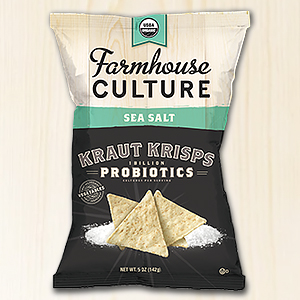
[00:06:53] Ad Read: I'm not sure what I do with this, but. DNS. Yeah. Put it on a cake. John Craven mentioned some Kraut Krisps. I have in my hand a bag. Farmhouse Culture puts this together. It's called Kraut Krisps. The first ingredient is sauerkraut. The second ingredient is corn flour. And it's basically a corn chip that is loaded with probiotics. One billion probiotics cultures per serving. It's pretty tasty stuff. I don't know how tasty it's going to be in chocolate hummus though. Let me try, I'll tell you. I'll tell you what it is tasty in. It's tasty in Kay's Past the Peas Maple Iconic Protein Snacks. I mean, that's what I'm dipping it in right now.
[00:07:35] Alex Bayer: Those things are addictive. I cannot, they have some crazy flavors, the bacon, the dill pickle. I cannot stop eating the dill pickle protein snacks.
[00:07:43] Ad Read: They're insanely good. Sauerkraut and chocolate mint, not recommended. Well done, Landon. Thanks for taking one for the team.
[00:07:52] Alex Bayer: That sounds like walking the aisles at fancy food. A little chocolate, a little cheese, some sauerkraut.
[00:07:57] Ad Read: Oh, confirmed. It's terrible. Confirmed. We've still got so many things on the table. We've got this great, you know what, I like this stuff a lot. Iconic Protein has a new flavor, a new matcha flavor. It's pretty fantastic. They have the Coconut Matcha that we have here and also the golden milk that's like a turmeric and ginger. That's great stuff.
[00:08:15] Taste Radio: And they're both fantastic formulations. Just really smooth. No, you really can't taste too much of the protein at all. And the flavors are really strong and bright and clear, and they taste really good.
[00:08:28] Ad Read: I am that guy who turns around the bottle, looks at the ingredient list, looks at the nutrition facts, and what do I see? 20 grams of protein, which I love. Three grams of sugar, which I love even more. This is sweetened also. There's only three grams of sugar? It's only three grams. This is sweetened with cane sugar, but it's also got a little bit of monk fruit juice in it as well, so that's giving it that little bit of a... a different sweetness than you're familiar with, or you're probably familiar with, but it's still great stuff. It's a pretty good implementation of monk fruit. Indeed. And the golden milk flavor that they have is reminiscent of that temple turmeric that came out a couple of years ago, but that was gritty and thicker. This is really nice consistency. Yeah. Different products, but I hear what you're saying. Carol, what do you got in your hand?
[00:09:08] Alex Bayer: Also on the coconut end of the spectrum, we have a not even launched product here with Sejoyia Coco-Thins. They are snackable cashew cookies. I have to tell you, The Paleo CrossFit crew in the office has been going crazy for these because they've got coconut, cashews, and cassava in them. They're kind of addictive.
[00:09:30] Ad Read: What the heck is cassava?
[00:09:31] Alex Bayer: Cassava, according to the back of the package, so I guess this is a question a lot of people have, is a root vegetable similar to a yam or plantain?
[00:09:42] Ad Read: Yam. You've definitely tasted cassava before in Siete Farm Snacks. Ah, well done, Mike. Are we going to try those Cocoa Thins or what? Yeah, let's try them.
[00:09:51] Alex Bayer: The coolest thing about this package that I love is that they actually put a cardboard sleeve inside so that the cookies don't get crushed. And that is such a little detail that is so smart because as a consumer, if you open up a bag and you just have shards of Cocoa Thins, that's like the biggest letdown of all time.
[00:10:08] Ad Read: Super Thins.
[00:10:09] Alex Bayer: Super Thins. They should just call them Super Cocoa Shards. I don't know. But give these, give these a whirl.
[00:10:16] Ad Read: Give these a whirl. Yeah, do share.
[00:10:30] Taste Radio: It just kind of melts in your mouth. It's really, it's still crunchy at the same time. So the texture of this product is really, really nice. The flavor, the coconut flavor is definitely there. I think I'm tasting that vanilla that has that kind of sweetness to it.
[00:10:45] Ad Read: The cassava.
[00:10:46] Alex Bayer: It does have a little bit of organic coconut sugar in there. No cane sugar, but there is a little added sweetness, six grams of sugar, but some of that's probably naturally coming from the coconut itself.
[00:10:58] Ad Read: That's probably what it is because the coconut sugar is more of a tang sweetness to it. Is the sugar in Big Red naturally occurring? I don't think it is. I'm holding in my hand a 20 ounce bottle of Big Red. For those of you who don't know, it's a red colored soda that's popular in the South.
[00:11:12] Alex Bayer: You wouldn't say.
[00:11:13] Ad Read: No.
[00:11:14] Alex Bayer: With a name like Big Red.
[00:11:15] Ad Read: Source of the Big Red River.
[00:11:17] Alex Bayer: The mouth of the Big Red River.
[00:11:19] Ad Read: It's got 250 calories in this bottle and 63 grams of added sugar. Does anyone want to try some warm Big Red right now? Sure, I'll try some. Okay, good. I think that's where I draw the line.
[00:11:30] Alex Bayer: I grew up with this stuff.
[00:11:31] Ad Read: I'm not ashamed to admit I definitely had warm Big Red as well as their blue variety at some point too. Oh my God. Big Blue?
[00:11:39] Alex Bayer: Red sodas seem to be a Southern thing, like red cream soda. Did anyone else grow up drinking this?
[00:11:43] Ad Read: I had that, of course, yeah. I like Cheerwine.
[00:11:45] Alex Bayer: Yeah, there we go. Red sodas all in the South.
[00:11:48] Ad Read: Well, you know what? It's liquid Swedish fish. It's pretty good, actually, and I can see why people like it. 63 grams of sugar, that's... Probably shouldn't have a lot of that. No.
[00:11:57] Alex Bayer: Ray, don't chug that bottle. We're just going to find you like bouncing off walls later.
[00:12:01] Ad Read: Ray, stop chugging. Just seriously, put it down. Well, that was great. Folks listening, you can hear and learn more about all these products that we talked about in the show notes. Check those out. We'll have some detailed information or at least links to the Brandt Gehrs and on their websites. You know what I could use right now? Some gum. And Tyler Merrick, he's one of those guys that he sells some gum and he's trying to save the world with gum, one piece at a time. He's a serial entrepreneur and sold his specialty pet food company to Nestle in 2015. He's now at the helm of Project 7, which is a gum and candy brand that has a cause-based focus. For example, buy the brand's gummy bears, help feed someone in need. In an interview recorded at Nosh Live Winter 2017, Tyler joined John Craven, Carol, and Mike for a discussion about Project 7 and the brand's genesis, early struggles, and relaunch, and how he attempts to align the brand's mission with current ingredient and marketing trends. All right, so we're here at Nosh Live Winter 2017 in Santa Monica, and we are joined by Tyler Merrick, the founder of Project 7. Tyler, thanks for joining us here on the podcast as well as at the conference.
[00:13:11] Taste Radio: Yeah, it's a treat to be here. I appreciate the community you guys have put together and it's great to be a part of it.
[00:13:16] Ad Read: So you're an entrepreneur that has been in this business for a long time, both, you know, from your family's roots in pet food to, I think when I first met you, you were starting a bottled water company.
[00:13:29] Taste Radio: Sure. Yeah.
[00:13:30] Ad Read: So what's the, what's the journey been like for you so far?
[00:13:33] Taste Radio: Oh, man. Yeah, I mean, growing up in an entrepreneurial home and my dad, we would stop at grocery stores and go in and look at aisles from, you know, products from 10 to 12 years of age. I can remember doing that. So I've just constantly been doing that since then and looking for little opportunities here and there. Maybe a new category that might be interesting and some work and some don't and some you close down and kind of pivot, but we've done a whole host of things. I mean, now Project 7 is focused on being a premium organic candy brand, but we've definitely had plenty of bodies on the side of the road from other things that we've tried along the way.
[00:14:12] Alex Bayer: So tell us more about, you know, you talked a little on stage about the evolution of the brand and how that came about. For our Taste Radio audience, can you walk us through a little bit of that?
[00:14:23] Taste Radio: When I started Project 7 nine years ago, the goal was to have this social entrepreneur cause brand where you had these basic products that you could buy, commodity type items in a lot of ways, bottled water being one, but gum, mints, coffee, that had a tangible give back to them. in kind of a Newman's Own 2.0 in the sense that you could see which one it was going to. Was it hunger, shelter, clean drinking water? But one of the things that we found out over time was that there really wasn't anything special about the product. And after it was, I call it the most expensive cause marketing campaign in America. Because it hurt a lot, you know, to do that and learn those hard lessons. But what we ended up doing was rebranding and refocusing after basically failing. I mean, it's not like it was, Hey, you know what? I think we should paint the room blue today. It was like, okay, this thing failed.
[00:15:16] Alex Bayer: There's no walls left anymore.
[00:15:18] Taste Radio: There's no walls left. Where are we going from here? And that's when it was, okay, we've got to get back to a core product. So we focused on gum and said, we've got to make it about a product first and foremost. So we did all these crazy flavors that were different than what was out there. And then we gave one more go at it. And the market responded in a positive way of, hey, this is fun. This is different. I kind of got bored with gum. You guys brought new ideas to it. And then we started kind of riffing on that and got into gummy bears and doing some fun things around that. And, you know, like we tried some old fashioned gummy bears we've got out right now and Cinnamon Apple Manhattan. And then just giving people new chances, new experiences they haven't had in candy. It's still something that's an indulgence, you know, and it's a treat. And so we want to make a clean version of it as much as we can and try to build, you know, a brand around that.
[00:16:06] Ad Read: So you talked a little bit about focus and, you know, the company's Project 7 and you're obviously focused on your products. But I question the focus on seven causes, feeding the hungry, healing the sick, hope for peace, housing the homeless. Are you a God-zillion-dollar company where you can do that?
[00:16:21] Taste Radio: No, I mean, that's one of the things that I made a huge mistake on early on was picking too many causes, you know. And I regret that for sure. Not that the charities that we've been able to help, but the focus in the sense of it not being clean of, okay, they're about hunger or they're about clean drinking water. So that was definitely one of our things that happened. It felt weird as we tried to re-engineer it when we started over to take it down to one and then spin a story around it. I mean, we tried it every other way. Like, I was just going to make it about hunger. You know, you're eating things, so we're going to do meals.
[00:16:58] Ad Read: What is it? No good deed goes unpunished?
[00:17:01] Taste Radio: And everything that we did, it just felt, you know, it wasn't like there was going to be this public outcry. It's not like we're this huge major company, but just to the soul of what I started it for, it just felt, it just didn't work. You know, it was like putting your pants on backwards. You're like, something's wrong. I mean, it's close, but it's not. And so we just said, you know what? We're going to stick with the seven, but we're going to make it the supporting actor. And it's going to be reinforcement to the brand. It's definitely what we're about, but it's going to be a quick 100 level report card. Hey, check it out. This is some cool stuff that's happened because you guys have bought this like a little community piggy bank and just keep it a very basic level because they are seven issues. It's too many.
[00:17:43] Alex Bayer: When you started the company, you know, now having a mission and giving back is almost like table stakes in the natural products world. But when you started the company, you know, we weren't there yet with consumers or as an industry. Do you think you were also just a little too far ahead of the curve in terms of focusing on mission? Could that work now?
[00:18:03] Taste Radio: Um, no, it's a very fair question. I mean, I think that it's a little cluttered now, you know, in the sense of back then you could, you could get a buyer's attention with a mission driven brand like this because they're in cubicle land. And, you know, you're coming in and saying, Hey, we've got this really cool way for you to help make an impact. And that was very refreshing to them, especially if they're a younger buyer, right? But the reality of that is now, if you come in with those kinds of things, it's like, yeah, yeah, yeah, you and everybody else, right? So it's not that unique and innovative. And too many times it's been propped up as the reason why you should buy this, you know, instead of, you need to grade us first and foremost on our product and the merits of it and the velocity and what we're doing. Instead of like, hey, if you guys will do this, we can do this much good in the world. They're kind of tired of that. So in some ways, we were early, but in other ways, it helped us.
[00:18:57] Ad Read: Well, what about the consumer? I mean, clearly, the sort of message that you're making here is it's got to be a great product first, like consumers not going to change long term just for supporting a cause. Where do you think the consumer's head is at though now versus nine years ago? I mean, is there still, does this stuff still matter just to be a devil's advocate?
[00:19:19] Taste Radio: I'm going to be really, this is going to probably upset some people, but there's fatigue out there. And I mean, it's what we do as a company. We're not changing that. But there is absolutely consumer fatigue around this. And nothing against, this is not me bagging on the big guys, but The big guys doing some cause marketing campaigns that weren't as genuine and like, Hey, if you put this code in here and unlock, we'll do up to a hundred thousand meals. And, but they cap it and there's an expiration date and it just feels clunky. And it's a way to move product and say, they're doing some cause thing. There's a lot of people that get turned off by that. So then the next one that they come across, they're judging kind of like the last used car salesman, you know, you're judging like, well, they're all like that.
[00:20:04] Ad Read: So what do you say to somebody who doesn't want to be the used car salesman? How do you come across authentically?
[00:20:10] Taste Radio: The thing that's really important there is it cannot be just a sticker that you're kind of putting on as a button that this checks off this, that we're supposed to have this today. So it's got to be authentic to what maybe the product's about. Meaning, if you're a plant protein smoothie drink, It's really strange for you to do like, let's see here. Human trafficking? Yeah. Yeah. Yeah. There's a perfect example. You know, there's just, there's a disconnect there. Right. Right. And sometimes there's those really cool founder stories that might have something with that, but it's still just, just kind of sounds like, well, womp womp in the background. So it needs to be intimate. It needs to be a pillar of your brand. It needs to be part of your DNA. Totally. And then the other thing is you better, this is what I tell entrepreneurs all the time, you know, everyone wants to swing for the fences and especially the ones that start brands like this and give this really big amount. I always tell them, whatever you were going to think you were going to do, cut it in half and then cut it in half again. because that's more sustainable and you can always go back up. Like if, you know what I'm saying? Like if you're like, we're going to give away 100% of our profits, you know, or whatever this is, start out with, we're going to give away 10% of our profits. And then if you make it as a business and you're proving that out and you're supporting the product that shelf and everything, you can always go, Hey, we had such a great year. The company's doing well, we're going to go up to 20. It's really weird when you have to go from a BOGO model to a BO, buy 30 to do one. You know, it feels kind of crummy to your shoppers, your brand loyalists. So do something that's a hurdle that you can clear. I mean, it needs to hurt a little bit, you know, like it hurts us every year. We look at the numbers to give, you know, like, Oh, we got a lot. It would have been project 28.
[00:21:49] Ad Read: Sure.
[00:21:51] Alex Bayer: But I just want to touch upon one thing. You said it has to be a brand pillar. It has to be intrinsic to the brand. But at the same time, you guys have moved your charity call-outs to the back. So where's that balance? Is that like it has to be intrinsic to who you are as a company, but maybe less so to the consumer? How do those two things fit together?
[00:22:12] Taste Radio: I really think it needs to be on the back, you know, and when I mean we're talking about a package, but yeah, it needs to be the secondary thing to the brand, you know, I want to buy a product first and foremost because it is meeting a need that I have whether I'm on a diet restriction or whether it's a flavor profile I'm wanting to hit, and I want it to be a great performing product by that. If you happen to have this really cool thing that you're about, that I get more into the brand, it's just gonna make me more of a fanatic, as this is the best plant protein smoothie I've ever had, and oh, did you know that they've saved one million acres of rainforest when I'm telling a friend? But if it's like, man, this stuff tastes like crap, and there's a rainforest story behind it, I'm gonna be like, man, Good luck. I mean, that's the reality of not making it too much about a cause in that sense.
[00:23:05] Ad Read: So let's shift gears a little bit to where Project 7 is at now, which obviously has evolved quite a bit over nine years. And, you know, now it seems like you're sitting in a spot where you're confident in sort of the direction and the approach as a candy and gum company. Now that you've settled on that and you've kind of developed all these, I guess I'd call them wild flavors, what does sort of the future hold for the company?
[00:23:33] Taste Radio: Well, first and foremost, it has to be about a really great product experience. And then on top of that, the premium ingredient deck that goes with that. You know, if you're going to be a clean candy alternative today, it needs to read where, all right, I'm going to indulge in this, but it's crafted in a clean way, right?
[00:23:54] Ad Read: Stuff I can understand, you mean?
[00:23:55] Taste Radio: Stuff I can understand. Then it's got to have the right texture and it's got to have the right experience for you as a user. The flavor part of what we do is then kind of the cherry on top. And so if we take care of those first two things, then we can continue to change flavors, come out, keep classics, you know, rotate in seasonal ones because We've got that equity with the customer and they trust that and they know that, oh, they did another crazy gummy bear flavor. I want to do that. Or they did a new version of a gummy bear. I want to try that. But it has to be about that first and foremost of product quality and the makeup of the product. then you do have to deliver on flavor, you know what I mean? And that's hard because we all have different taste buds. But you want to be pretty close where people go, wow, that was really good. It kind of tastes like a Moscow meal. Like if gummyware was a Moscow meal, that kind of tasted like it. You've still got people who are like, that was awful. It didn't taste like a Moscow meal at all. But that's just the reality of any product that you do. So for us, it's doing that, but then going after more of these organic candy forms that I shared, where we're cleaning up classic candies that we all liked and grew up and making them better that we want to use today, that we want to give, you know, when we're going to indulge or even, you know, our kids pass on, you know, those types of treats as well, a cleaner version of those.
[00:25:16] Alex Bayer: So you talked about what's coming out in the future. You did, we were just talking about before we started recording, you did release a Snack Square, I think it was last year, maybe?
[00:25:24] While Merrick: Yeah.
[00:25:25] Alex Bayer: So let's talk through that. Like what, why, why, why, what didn't work and how is that kind of, influence your product releases coming forward?
[00:25:34] Taste Radio: I think I love that question. And this is where, you know, you got to be honest with yourself as an entrepreneur. I touched on this on the stage when I was talking about a couple of years into doing the gum, I started to see some pushback from different retailers having concerns about what's going to go on with front ends. Are we going to start pulling gum candy off of them and do more better for you items? There were other retailers that even with really great velocity stories that we had that were, you know, risk averse to bringing in an outside gum brand. So there's a part of me that was getting a little bit nervous about, you know, everything that we'd kind of rebuilt and started over with gum. And so I started looking at what are we going to do in case gum doesn't work out down the road. So I kind of had two paths in that sense. I did the gummy bear thing, and then I tried the natural snack concept, the good squared. And they were basically side bets to see, just as kind of backup plans, if the gum thing, you know, continued. We saw that trend more that we had another ore in the water. What ended up happening was the gummy bears took off and excelled. The snack ones did not. And so then we said, all right, no more messing with that. We've got something with this organic premium candy brand. Let's focus on this. And here's the thing. If we're going to innovate, it's going to be inside of that vertical and do things there. So that was the backstory on that. That's the honest truth.
[00:27:00] Ad Read: Well, and speaking of innovation, you know, you touched on having Moscow mule-flavored gummy bears and you've shared a bunch of different alcohol-flavored ones. Not alcoholic, of course, but, you know, how do you decide that something like an alcohol-inspired gummy bear is the right thing for you to do? I mean, that seems pretty, like, outside the box, I guess.
[00:27:23] Taste Radio: We are constantly playing around with different flavor ideas, and we will look for a couple buckets. Things that are on trend, they may not be here in two years. Things that are nostalgic, that remind us of our childhood or some experience from a season, you know, a summer activity. and we'll try to riff on those kind of two places. And so in the trend one right now, yeah, there's a lot of mocktail flavors that's hot and people like that. So we're doing a lot of that, but it still has to have, you know, we joked around how I want to do a Negroni gummy bear for you.
[00:27:55] Ad Read: Yum. I don't think that was a joke. I didn't think it was a joke, so I hope you do it.
[00:28:01] Alex Bayer: He's like going to wait patiently at the mailbox every day now.
[00:28:04] Taste Radio: Can we call it the Craven? Totally. There you go. I like it.
[00:28:06] While Merrick: Thank you.
[00:28:08] Taste Radio: But the challenge with that is, like we talked, that's pretty far left or right of a lot of the general population that's buying, you know, so you've got to find even, to be honest, Cinnamon Apple Manhattan. It was a little outside of that world for the mainstream masses in that sense. So we try to do things that are really something that a customer, the general market's used to. Like I would love to do a pisco sour, you know, or something like that, but it's like, or a Paloma, but you're like, who, what is that for a lot of people, you know? Sure. So we try to do things more in that world of cocktail. And then we'll do stuff on trend, like we came out with a flavor called Fairytale Fruit. What the heck is Fairytale Fruit? Well, it can be whatever you want it to be. So we put a unicorn on the front and, you know, did all these fun fruit flavors with it. And it's, you know, our number one selling flavor now on the gum set.
[00:28:58] Ad Read: I don't see Mezcal on the roadmap right now. Sorry, man.
[00:29:01] Taste Radio: But in a couple, like in another year, it's kind of like fashion in this world. You're going to have your black dresses that stay, you know, and your core ones, but then you better have new silhouettes and stuff that's coming on to keep people into your brand. That fairytale fruit may be gone in a couple of years.
[00:29:17] While Merrick: Maybe replaced by a beef jerky gummy bear. Just a thought. Sure.
[00:29:21] Alex Bayer: Totally.
[00:29:21] While Merrick: Turkey bear.
[00:29:22] Alex Bayer: So one thing that I think is also interesting about you is that you are a natural foods brand. We see you at all the natural product shows, but you've really focused on different retailers, Target, Starbucks, you know, retailers and points of sale like that. And you're not in Whole Foods currently, you are entering. So what was the strategy behind your retail distribution?
[00:29:42] Taste Radio: Well, originally the gum, you know, it wasn't a one that could be a fully clean profile. And so to sell into Whole Foods, you know, it wasn't an option at that time. And to get the real scale and the volume to make gum work, you know, and these are packs of 75 cent packs of gum. I mean, it's, you gotta have a lot of velocity. You needed some of those larger scale retailers to make the economics work, especially in a comeback, you know, on the second round. So Target and, you know, HEB and Wegmans and things like that help add to that. Meijer in the Midwest. As we've started to pivot and be more clean, organic, you know, candy brand, then it's opened up more doors for us to have some of those conversations to build back into the natural channel that we've not been in before. So that's kind of the method behind the madness of why we had kind of a different stair-step approach.
[00:30:34] Alex Bayer: In our industry, there can sometimes be a pressure on young brands that they have to get into Whole Foods. And that's really like you've made it because you're in that retailer. So what's your advice to brands who maybe see a different path to retail success? How can they go about it without that key retail account?
[00:30:52] Taste Radio: Yeah, for sure. And I think it's going to get more challenging in the sense that you used to be able to go sell a region and that's getting to be more challenging as they move everything back to Austin and have less of that. So that's a challenge. What I would say is this, and you've heard it in your conference today too, is that if you can start a brand that like, if I could start over and do a brand that could be built through e-comm first, and then supplement it with brick and mortar, that's the future for an entrepreneur today. So, I mean, you look at the RX bar story, I know it's, everyone's talking about it now, it's deal porn. But, you know, the reality is, is that They've sold that online, CrossFit gyms, that sort of thing. And then they went to brick and mortar. So I would say I just would encourage to at least look at that option. I ran into some investors here at the show that saw my backpack and they were like, oh, we're an investor in that backpack group. And I said, well, here's a perfect story. This is the first time a real Instagram ad has worked on me. I saw this ad on Instagram. I liked it. I bought it. We had that, they had full margin on it, the whole thing. So you can be fishing both ponds, you know, like you need to be an omni-channel brand. You need to be thinking about that. But you don't want to be completely betting on getting this listing with this big retailer, having the slotting, the free fill, and not be working that e-comm channel at the same time. And I'm saying this only because we stink at this, because this category is not one that really works well. Gum is not something, you know, that you think of to buy online. It's just not a behavior. It's been groomed to be at the end of the checkout process. Gummy bears are getting better for us, occasional, you know, gifting, that kind of a thing. But it's still a category that's not like, I got to get my RX-Bar subscription in, keep in my backpack, whatever that kind of a deal, or a vitamin. So that's what I would say.
[00:32:42] Ad Read: All right, well, Tyler, thank you very much for your time, both here on the podcast and on stage today. Tremendous getting a chance to talk to you and hear your story again. So enjoy the rest of the event and talk to you soon.
[00:32:54] Taste Radio: Thank you guys for having me. We appreciate it. Thanks so much.
[00:32:57] Alex Bayer: Thank you.
[00:32:59] Ad Read: I really enjoyed this interview with Tyler. He's a very open and transparent and caring individual, and he seems to live to help people. Yeah, he's a good dude. Known him since he started with his water brand a while back. So great to see him kind of getting on this course that he's obviously having some success with.
[00:33:19] Alex Bayer: Yeah. John, he's been so open and honest and giving for so long. When I actually was not even in the food industry, I went to the fancy food show in New York and the one person I met and remembered meeting was Tyler. And that resonated with me years later. I remember him sitting down telling me about his company and I was a nobody and he took the time to do that. And I think that speaks volumes about who he is as an entrepreneur and just as a person in general.
[00:33:47] Ad Read: He's a good human, yeah. You'll never not see him smiling. I feel like every time I see him, he's beaming. It was interesting when he talked about Project 7 at its launch as being this Newman's 2.0 kind of brand. And he realized that that was not going to lead to the brand success. And he really scaled down, focused on a few different items, and is leading with now what appears to be a really good set of products that are resonating with a lot of consumers. And part of that was also when he talked about product quality as being critical, first and foremost. Yeah, I think one of the things there is that focus is a really important thing for an entrepreneur, especially when you're trying to prove out a concept. And he got himself into a situation where he went a mile wide and an inch deep, not only on product, but on causes. And he's learned to kind of come back around and say, yeah, I wish I'd only chosen one or two. You know, you can't go back and say, well, I'm not going to support this one anymore. So he's kind of in a spot right now. Totally.
[00:34:44] Alex Bayer: With product quality, though, he has these crazy flavors like Manhattan and champagne. And it's very easy, I think, for some brands to say, I'm going to make this wacky flavor that people are going to buy because it's a wacky flavor, but it's not really going to taste good. And he's so committed to not only it being exciting and innovative, but also tasting good.
[00:35:04] Ad Read: Yeah, Joan's Soda comes to mind where they're making like, you know, sweat and gravy and all sorts of weird soda flavors that don't taste good. They're just novelty. But the purpose of buying a product is not novelty. You know, that's not gonna be a repeat purchase. So if you are gonna go with some crazy new innovation in flavors, you know, you have to look at that product quality.
[00:35:26] Taste Radio: Yeah, that's your carrot top.
[00:35:27] Alex Bayer: Especially if that's gonna be the first product a consumer might try from your line. You want them to buy the rest of the products.
[00:35:33] Ad Read: All right. Hold the phone here, Lynn. Okay. I like the sweat-flavored Jones soda, okay?
[00:35:38] Alex Bayer: Why am I not surprised?
[00:35:40] Ad Read: Please don't be hating on the sweat flavor, all right? Ray uses it for cologne and mouthwash. Wow. For any of those of you... I can't even say it right now. For listeners at home or in their offices, you know I smell better than that. So while Tyler Merrick may want you to chew more gum, George Bryant would prefer a more paleo approach to your snacking habits. He's the founder The Civilized Caveman, which is a website and blog focused on The Paleo lifestyle and diet. He's also the author of the New York Times bestselling book, The Paleo Kitchen. Mike and Carol sat down with George Bryant BevNET Live Winter 2017, where he spoke about his advocacy for paleo eating and opened up about his journey from the military to his current role as an influential voice in the food world. It's Mike Schneider here with Carol Ortenberg from Project Nosh. Hi, Carol.
[00:36:33] Alex Bayer: Hi.
[00:36:33] Ad Read: And we're here with George Bryant, also known The Civilized Caveman at BevNET Live after the influence panel that we did. And so we're here to follow up with some additional questions and, you know, just really get to know you, George. Yeah, super excited to be here. So you're an influencer, right? Yes. First of all, for the listeners who might not know, what is influencer marketing and what does an influencer do? That's a great question. I don't do anything by the book, so I'm going to call influencer marketing the bridge between people and their lives and the companies that are there to serve them. It's like the middle road. I call them epiphany bridges for people, right? I create epiphany bridges for influencers as an influencer and epiphany bridge for brands to connect with people that should consume their product, but people to understand the brand's product, the brand's messaging or the brand's impact on their life. And you do that by what tweeting your ass off or?
[00:37:25] While Merrick: Yeah.
[00:37:26] Ad Read: Um, yeah. Twitter's not my preferred domain. I prefer live video, you know, in the world that we live in cell phones, iPhones, like everything's video content. I spent a lot of my time doing Instagram stories, Facebook Lives. I had one Facebook Live, five and a half million views. You can never predict that, but if you just consistently show up and you're committed to it, and you're committed to serving people, it happens. Before we talk about how brands work with influencers, let's talk about you. Are you okay with that? Yeah, I'm totally okay to talk about me. Tell us a little bit about your background, your story and how you got into being an influencer. Yeah, that's a great question, because most would never predict this road. So I was an active duty Marine for 12 years of my life. And at my 12 year mark, I was medically separated. I have post-traumatic stress disorder. I had seven concussions in three years and I almost lost both my legs from combat wounds in 2005, 2009, 2010. And so the Marine Corps said, we don't need you anymore. And I said, okay, I don't know what I'm going to do. And at the time I'd struggled with bulimia for 12 years. And so I was like, I'm going to teach myself how to cook because that's like a good transition. And I actually really wanted to overcome my bulimia. I read a book from my friend Rob Wolf now who's a friend. And I was like, this makes sense to me. I can do this. I'll teach myself how to cook. So I started teaching myself how to cook. I documented it all on Facebook. After four months, someone said, you should make a blog. I said, what's a blog? They sent me blogger.com. Big mistake, but we'll get into that some other time. Started a blog and just kept documenting everything I did through my entire journey of overcoming bulimia, losing a hundred pounds. and teaching myself how to cook all under the brand Civilized Caveman. And then once the Marine Corps was done with me, I just kept that going. I stayed committed. I ended up launching an e-book, which then we turned into a number one app in the entire app store, featured by Apple as one of the top 10 health apps of 2015. And then I wrote a book, which was a 22-week New York Times bestseller called The Paleo Kitchen. And then I just keep creating content and serving people on the internet. So you overcame bulimia. You talk about it like it's a switch you turned off. How was that part of the journey? So for me, when I started cooking and I started documenting everything, it was more of a mask to hide from people, right? Nobody in my life ever knew. And I have this like, I'm as stubborn as they come, basically. And so I want to do everything myself. And so I had it in my mind that if I created this platform where people followed me and they consumed my content that I would have to show up every day. And if I had to show up with healthy content and be authentic, that eventually I would break the pattern of behavior and I would be using my social reach and all the people that follow me as my accountability. And so I did it.
[00:40:07] Alex Bayer: One of the things I love about following you on Instagram is that you are so open and authentic with your followers. I mean, I watched you a couple of weeks ago, I think it was, talk about just every day, I'm going to walk a little bit with a weighted vest, and this is hard for me. How do you open yourself up that much and be that vulnerable and develop those connections?
[00:40:30] Ad Read: Yeah, that's a great question. And I typically answer the question, how can you afford not to? I've experienced too much loss in my life. I lost my dad to cancer. I've witnessed three suicides. I've lost 12 friends to suicide from PTSD. And it gets bad, right? I was suicidal for a long time. And I look at my life, I have a son, I have a wife, I have a family, and I talk about legacy. And I have a couple rules in my life that I live by, and one of them is being a heat-seeking missile for what I fear most. But I found that the biggest growth and the most, like, the truest, rawest, authentic forms of myself come from being wide open. and it's scary, I still sweat, I still get nervous, I still try to subconsciously avoid it except I said I'm stubborn. So I go to it as fast as possible because I know on the other side of it comes that freedom. So just to give an example, in my life, and this is all part of me being an influencer, this is what brands get when they work with me, I was sexually abused twice and no one knew. The only person who ever knew was my wife, and I was giving a keynote The Paleo FX. And I told my wife that I was struggling because I felt inauthentic. I felt like people knew about the bulimia, they knew about everything, but they didn't know why. And she's like, well, you know what to do. So I walked up on the stage in front of the entire audience, and I started a 60 second timer. I said, this is going to be my 60 seconds of vulnerability. And I stood there and said, hey, my name's George, active duty Marine for 12 years, New York Times bestseller. You guys know me because I was bulimia for 12 years. But what I didn't tell you is that I've been sexually abused twice. And the whole audience was just like, oh, everybody sat down, people started crying. But my biggest fears were that people were gonna get up and leave the room. They were gonna run out, they were gonna judge me. And I figured out that those fears are manifested by me. I create them to avoid. So if I run towards them, then I stand there in my truth and whatever happens. So let me get this straight. You're actually afraid to do this. It's not that you love yourself and you're out there as a narcissist. You are forcing yourself to get out in front of people and talk about these things so that you can deal with them. Yep, yep, and I mask it by saying it helps more people by creating possibility. So I put it- Because I thought maybe you read Jab, Jab, Left Hook, and Crush It, and you're like out there, the Gary Vaynerchuk. I mean, I love Gary. I love Gary's patience thing and everything, right? And we've had great conversations. But for me, it's really about just being authentic in the moment. And there's other people on the other side of this. Like, my responsibility as an influencer is not to project a mask of what my life is. It's to show people what's possible and that I'm relatable. and that I go through the same things that they go through. I spill coffee, my baby throws up on me, I'm late for my daughter's school, like, I miss all the same moments. And in those moments where I could go binge eat, or I could eat crap, or I could skip a workout, it's my choices that define my results. Let's talk about the playbook here. I wanna talk about how a brand should approach you, what kind of brand should approach you, what kind of brands do you work with, and then what is the model? Yeah, I've worked with a ton of brands, some really, really off the cuff ones. I've worked with businesses, I've worked with food brands, I've worked with KitchenAid, Blendtec, Rebel, Drink Maple, Vitaproteins, Onnit, all these different companies and brands. Driscoll's embarrassing. So thirsty. Right now. So thirsty. I've worked with a lot of them, and every relationship's been a little different, but they all start in the same way. We get on a phone call and we talk about values and mission. And what the end goal is, not like what's the right now goal, but what's the six-month goal, the nine-month goal.
[00:43:51] Tyler Merrick: What are some of those goals?
[00:43:51] Ad Read: That's what we want to know. Like brand awareness, like KPIs or like having someone really trust the brand because I create multiple pieces of content or I show the ways that I use this product in my life over and over again when I give it to my son or my daughter takes it in her lunch or I cook dinner for my family or even when I'm out working out and wearing a weight vest or the supplements I take post-workout, where people get multiple exposures to it over and over and over again. And they see that I actually use the product. I love the product. I care about the product. And I'll even do stories where I go in the store and buy the product because I still consume all of these things as a consumer. So it's really like ripping the veil off, being authentic, full disclosure across the board. and then making sure that our visions and values are aligned. Like, I want to help a billion people. If you don't want to help a billion people and you want to exit your company, I'm not going to work with you. Just not my thing. What doesn't work? I have brands approached you in the past. You don't have to name brands, but if you want to, we're okay with that. I have no problem naming anybody. A lot of them come and they're like, hey, listen, this is what we want. We want you to create this. And in doing so, in signing the contract, you agree to send 1500 clicks. And I'm like, you mean 15 amazing human beings, you want them to consume your content? Like a person isn't a click, there's a person behind it, right? So, the stuff that doesn't work is all the language and the lingo and the marketing stuff that the brands are disconnected from who's on the other side of what I'm doing, right? It's people first for me, it's value first for me, it's Gary Vee for me, right? Because Gary Vee, Chuck, bringing the thunder, right? It has the lasting impact. Like, that's what matters, right? And I understand, and I try to teach brands, too, because I try to use it as an education lesson when you come to me like that. George is very animated. You should see him.
[00:45:32] Alex Bayer: He's like, he can't sit still.
[00:45:33] Ad Read: There's a lot of hand gestures. I write back, and I'm like, well, listen, that was stupid, and let me tell you why, and let me tell you why that's going to hurt your business and what this should be, because... And are they open to that? Sometimes no, and sometimes yes. But it's authentic for me. It's like my truth. But when I, I feel like I'm a protective father of the people that follow me, like they give me their trust because it's their time and time is everything.
[00:45:56] While Merrick: Right.
[00:45:57] Ad Read: And if they're choosing to consume it, I have to make sure that it's safe for them. And so I look at it and I'm like, it's not about like this transaction or this sale. It's how they feel. And based on how somebody feels, they will take an action, but it dictates whether they take one action or 10 or 20 or 30 down the road. And so, It's a little different with every company, every brand, but it's all the same concept. You have to respect people's time, you got to give them value, and you got to be open and honest with everybody.
[00:46:22] Alex Bayer: I could see a lot of brands saying like, look, this guy has a lot going on. This is like scary for our brand to partner with him. Like, who knows what he's gonna say. How do you address that?
[00:46:32] Ad Read: I tell them that they need to like buck up. Like, it's time to be real. Because the truth is, and this is where I go, it's that The more dehumanized brands are, the less likely they are to survive. People don't buy from brands, they buy from people. You can have a brand with 50 attractive characters if you do it right, or you can have a brand that's hiding behind a brand that doesn't really add value to people's life. But I hate to tell you that the mom driving her car with her kids are just like the CEO of that company. So what is next for George Bryant? I mean, the Instagram wave, you're riding it right now. You, you wrote the blogger.com wave. You said before, not maybe, maybe not the best decision, but you, but you're always, I'm sure you're always watching the trends for what's, what's the next channel. Um, do you expect if the influencer, uh, well dries up, what's next? Yeah, that's amazing. And that's a great question. The influencer world has already started to dry up, because people are so used to the transactions now that they're blind to them. And so I have spent the last year changing my relationships with brands and changing what I do with them. I go visit brands, I go to brands factories, like, I build in relationships with brands that are all encompassing in my life. And then the brands do the same. So now I only work with brands where They get access to my social and I get access to theirs, but we get to share and it's about bringing them in. And it looks like we're building an empire because it's like, you know, the brand and Civilized Caveman aren't separate anymore. We're a team working towards the same goal, which is your overall health. You segment your audience. You have slides. Like, what do you mean? But do I, do I say, well, do you go through your followers and say, all right, I've got, I've got this many followers and I feel like it's, uh, and I've got, you know, this demographic and, and, um, who does follow you? Yeah, I know that demographic. Uh, I've 88% women. And then there are 35 to 47 typically is that the big range, it's like 60 to 70%. But I don't talk, post, or do social media or any of my posting based on demographics. I do it based on the fact that they're people. On the back end, when I email people, when I'm doing Facebook ads, when I'm doing Instagram ads, I segment them because I know that I want to deliver the right message, the right value, and the right content to the right person. But those people follow me because they trust me for who I am, and so I let that be the guiding factor.
[00:48:44] Alex Bayer: You work with tons of food New Beverage brands. Have you ever thought about starting your own food New Beverage product? Are you like, see all these founders and are like, Nope, that's it. Not for me. Never.
[00:48:54] Ad Read: Yeah, so that's a great question. And I love it because it couldn't have come at a more perfect time. I work on both the ambassador front and on digital marketing consulting for big companies. And I work with massive billion dollar brands. And I will say one of the best things about being in the space so long is that I've learned every mistake like I've seen behind the scenes of basically everything and there's one common theme that always wins and it's listening to the needs of your audience and then serving them first. And so. The Civilized Caveman, we're in the middle of a rebrand right now. Whenever you're listening to this, you might be on the new website. We went from just recipes. The new website is recipes, wellness, and fitness. And we're encompassing more. I'm opening up my platform to any ambassador, any influencer, any blogger that doesn't have an audience that wants a free million people a month in exchange for them adding value to people's lives. Because I want an empire of people committed to serving people. And then whatever comes out of that is the win for me. George Bryant, what's the best way for a brand to The Civilized Caveman.Civilized Caveman on Instagram, Civilized Caveman Facebook. I still Brad Avery single message. Thanks so much for being on Taste Radio. Thanks for having me.
[00:49:59] Alex Bayer: Thank you.
[00:50:00] Ad Read: Bye. That was kind of heavy, but I really enjoyed it. He didn't pull any punches. I mean, you know, talking about his eating disorder and sexual assault, you know, allows him to be more approachable. No topic with him is out of bounds and he's really, you know, he's a human's human. Tully opened himself, was very vulnerable. Carol, you know, what do you think about him opening himself up like that?
[00:50:25] Alex Bayer: A lot of brands worry about working with influencers because they say, oh, are they authentic? Are consumers going to buy into their message? You know, he's so vulnerable that when he speaks about a product or a brand, you're like, this guy is always straight with me. He's always authentic. He's who he is. If he says this, you know, vital proteins, collagen powder, which is one of his partners is worth investigating. I'm going to go check it out.
[00:50:54] Ad Read: Yeah, this brings us back to a previous episode where we talked to not only John Coogan, but Olivia Koo, who's an influencer, and she had somewhat of a similar model where she's very authentic and she only puts things into her body that she actually cares about, so she works with brands that she believes in, and it's a very authentic model. Totally. There was an interesting point that George made, you know, he said that the more dehumanized brands are, the less likely they are to survive. People don't buy from brands, they buy from people, which is kind of an interesting statement. Yeah, this one I didn't really agree with. I think that brands make a connection with people and they buy from brands. You know, the brand is what you're identifying with. You don't like, you don't know about, you know, the CEO of Soylent, you're not buying from him, you're buying Soylent. But at the same time, I mean, the influencers and the folks that are ambassadors for the brand, they're the ones that are convincing you to buy their products, right? They're helping to convey the core of the brand. And they're helping to connect the kind of people that have a similar lifestyle or similar philosophy to that brand. So I think that's why you work with an influencer who's in your audience to get people to use your product. It's a no brainer.
[00:52:03] Alex Bayer: It also depends on how niche your product is versus how much of a commodity product you are. Like do people buy Colgate toothpaste because they identify with Colgate? I'm not really sure, but if you're really catering to a specific diet or a specific lifestyle, then those consumers want to feel like that brand is part of their life.
[00:52:24] Ad Read: All right, great stuff. Great interview, guys. You know what I wish we had on the table right now is some Genius Juice. I really like that brand. That's tasty stuff. And we had an opportunity to sit down with the founder and CEO of the company, Alex Bayer. For those of you who don't know, Genius Juice is a brand of coconut-based smoothies. In our conversation recorded during our live events, I spoke with Alex about his journey as an entrepreneur and how he'd managed the brand's evolution and maintained focus amid constant challenges. All right, we're here in Santa Monica Watrous the West Coast Taste Rodeo Studio at the Lowe's Santa Monica Beach Hotel. I'm joined by Alex Bayer. Alex, thanks so much for being with me. Thanks for having me, Ray. Alex is the founder and CEO of Genius Juice, which is a brand of coconut-based smoothies. And we've known you for a long time. I mean, you've been to BevNET Live events. We've seen you at Expo West for years now. And I wanted to talk to you and sit down with you and kind of discuss your journey as an entrepreneur. So let's start from, you know, how you got into food New Beverage. How'd you cut your teeth in this business? Interestingly enough, I started in the insurance industry. So right out of college, I worked with Aflac for about nine years. We all joked that Aflac stood for alcoholics finally landing a career. Okay. And, you know, I just came from, it really came from a place of passion where I started making my own food. I started blending my own smoothies, and I realized that I felt so much better and had way more energy by taking full control of my diet. So it was really a personal passion and labor of love. And then eventually I left Aflac and I had no idea what to do. I was there for eight years and so I found this local organic honey company in Brentwood And they hired me for their director of marketing. And I started going to local stores like Air One, Rainbow Acres, you know, these are all on the other side of the country from where you guys are, but very iconic local retailers. And I just fell in love with the industry, you know, with the people. Everyone's really nice. And everyone's in a place where they want to better themselves and better people that are buying the products. So from working that, six-month gig there, I just fell in love with the industry. But I literally never thought I would be in the food New Beverage industry until I started getting into having it, you know, as a personal passion. I'm curious, how did you get the job coming from insurance and having no background in food New Beverage before that? Salesmanship. Salesmanship, okay. Selling myself, saying I will learn everything I need to learn. Okay. Yeah. So, what made you interested in starting a smoothie company? one of my vegan chef friends showed me this concept of a coconut smoothie. She was like, have you ever tried a real coconut smoothie? And so she actually scraped out the meat, poured out the water, blended it together. And I remember it was like a vibrant white, you know, in the blender. I'm like, this looks amazing. And it's creamy and there's no nothing else added, just coconut water, Coconut Matcha. And she gave me a sample and I tried it and the first words out of my mouth was, this is genius. And that's the concept of where Genius Coconut Smoothies came from. And from there I knew I was on a mission. How can I bring this really phenomenal product and concept to the market where it's a whole coconut smoothie with the meat and the water from the coconut? You've had various iterations of the brand and your product portfolio has changed significantly over the last three years. That's got to worry investors, it's got to worry some of your partners that you are making such dramatic changes in the brand and the product portfolio. How did you keep folks in line with your vision and keep the brand on track? Well, you know, it was definitely not an easy path with all the changes. And so were investors originally concerned? Of course, right, with all the changes that we made. So I think the important thing is to be transparent and genuine with them, not to BS them and tell them exactly what's going on. And really, the roadblock that we ran into was that once we started scaling into about 400 to 500 stores in 2016, We were having difficulty producing this product. It was a huge challenge. The sales were never the problem. The product sold fine. People loved it. It was unique, tasted great, great branding with the coconut head on the front. It was more about how does this scale and how can we find someone who will bring us in and make this product. So that, for about eight to 10 months, we were without a manufacturer trying to find someone to make this product. And in the interim, we were off the shelf, right? And we had a lot of issues just being able to fill orders. So we told the retailers, we are coming back. Just be patient. We're moving our facility. We're locking down our manufacturing practices. It is coming back. Give us time. and they believed us. How exactly did you tell retailers to hold your spot in line? All these retailers that brought it in, like the Whole Foods of the world and Natural Grocers and local and regional chains and, you know, North Atlantic, they were such big fans of the product that as long as I told them a story, which number one is true and accurate, and also the products coming back, they were able to at least tell us, well, once it's back, we will put it back in the store. And I think that's a huge testament to the just the following of the brand and the product. One of the other things that you've done is you've whittled it down to one SKU. You at one point had, you know, when you first launched Coconut Waters and smoothies, you had, I don't know, was it about 10 different SKUs or so? I forget.
[00:58:24] Tyler Merrick: It was a lot.
[00:58:25] Ad Read: I lost count. Yeah, it was a lot. And now you're down to this one. When crafting your innovation strategy, when looking at opportunities to extend your brand, how do you discern between trendy concepts and those that actually have legs? I think, like, I remember Jeff Church at one of the BevNET events, you know, had a really key line that has stuck with me, you know, two years later when he was person of the year. And it was, don't let great get in the way of good. So releasing SKUs that in my gut and also with focus groups were going to do well, we just put it on the market to see how it did. And we released, you know, I think seven flavors. And we found that the original was by far the biggest seller. So I think that's how we discovered what was really trend or just, you know, not going to really fly and what's going to be more of a long-term winner. that can carry this company to the next level. And we found that the original flavor, the original coconut smoothie, which is just pure coconut, exemplified what this product is all about, which is that we use whole coconut. The other flavors were getting in the way of that, right? We put in superfoods and chia and maca and it was too much going on. I think like for any entrepreneurs listening that are starting their New Beverage brand, Keep it really simple. Don't try to put too many different ingredients in and make it, you know, overwhelmingly too many benefits. Just stick to one concept that's disruptive and unique and run with that all the way up the mountain. And that's what we did with our coconut smoothie. Speaking of simple and lean, when it comes to your organization, you have a pretty streamlined company, which is like you and just a couple other folks. Originally, you did have a co-founder as well. And I wanted to ask you, what was it like having to take over the reins and separate yourself from your co-founder? It's never easy, you know, it's painful because the co-founder is also a good friend of mine, is a good friend of mine, and we started the company together, you know, as friends. And I think once the company starts to grow and it's always, you know, amorphous, it's always changing all the time, realizing that, hey, you know, you're a great friend of mine, but it may not be the best fit as far as a long-term business partnership and this happens like all the time and actually one of the key reasons that businesses Fail is number one. They run out of money number two. The partners just can't get along. So it wasn't a case You know, we got along great I think it was just a difference of opinion and creativity and also the direction of the company If you could do this whole thing all over again What's the one thing that you would have liked to have known or done differently in your career? I particularly as it relates to genius. Would I do it all over again? That's the first question. That's a fair question. I probably, I would, but just barely. Like it's a 50-50 shot. It's a very, very tough business and margins are not as high as other industries. And you gotta have, going back to it, something truly unique and disruptive. If that is not there, there's no point in getting into this business. If you're a Me Too product, you better have a lot of money behind you to compete with the Cokes and Pepsis of the world. But I think the biggest thing that I learned, which I alluded to earlier in the interview, is just about keeping it really simple and being on mission and on point to what the company is all about. In the beginning, we released too many flavors with too many ingredients, too many marketing points on what this brand is and product. So I think in the beginning, I wish I just came out with just the original and then skipped all the different flavors and built the company sustainably from the ground up. You know, he talks about, and what I've learned from that is don't try to go too far to too many regions across the country too soon. Get your process down, your marketing, your branding down, and do it in a padded room. Do it in your home region, your backyard, and dominate the backyard before you start reaching out to other regions. You want a strong proof of concept that this product will perform well, that there's velocity, right? There needs to be turnover at every store that you're in, and that people get it when they buy it or when they see it on the shelf. For sure. You mentioned staying in a padded room. This business might get you in a padded room for life if you're not careful. So Alex, thank you so much for joining me. This has been great. Thanks for bringing some product. I'm going to crush this Genius Juice before I leave the room. But I look forward to talking to you again soon and good luck with everything going on in 2018. Awesome. Thanks, Ray. And thanks for having me, man. Appreciate it. I mean, talk about a brand that's had to pivot a number of times. I think he's had about five or six different iterations of the brand, right, John Craven? Yeah, I think something like that. I mean, he launched at a time where it was like everyone chasing cold-pressed juice, HPP, had some issues with supply chain and all that. And I'll definitely give him credit for figuring out how to navigate through it and still being alive and kicking. He spoke about being off the shelf for a year and how difficult that was, but it speaks to him as an entrepreneur and his ability to sell, to keep retailers interested in his brand and to let him back in even though there are plenty of other brands and products that could have filled that shelf space. I think the other interesting thing about this interview was when he talked about parting ways with his co-founder, Keith, and how much of a difficult decision that was. I mean, Keith is a great friend of Alex's, as he mentioned, but at a certain point, you know, entrepreneurs need to make that call, which is, you know, if we can't agree on the same vision, then maybe it's best for the brand and for the company overall that, you know, we take one direction and not the other. I can't imagine that. I'd have a hard time saying goodbye to one of my best friends.
[01:04:36] Alex Bayer: It kind of almost goes back to what Tyler talked about, which is figuring out where your strengths are and where your weaknesses are. And that's a difficult thing to think about and really take a hard look at yourself and your company and address.
[01:04:49] Ad Read: It is, it is. Well, I like the current iteration of the product and brand, so good luck, Alex. Hope to see you doing well in the future. Hey, Ray, it's time to Riot. We first met Laura Jakobsen at BevNET Live Winter 2015. She's the founder and chief rioter of Tea Riot, an innovative brand of tea and juice blends. She took part in the event's New Beverage Showdown 10 competition. We caught up with Laura again at BevNET Live Winter 2017, where she discusses the genesis, growth, and wins for the brand in this edition of Elevator Talk.
[01:05:23] George Bryant: It's time for our Elevator Talk, where we put a founder in an elevator with their dream investor. Let's hear what happens. What is your company's mission?
[01:05:32] Tyler Merrick: Our mission is to really help people kick ass every day by uniting energy and wellness. So we've been committed to T because it helps people not only get physically charged, but also mentally charged to do more every day. What is your product and how is it different? Specifically, our product is fresh brewed tea, and then we flavor the tea with a pound of cold-pressed organic fruits and veggies. So if you look at the tea category today, a lot of the bottled ready-to-drink options are full of water and cane sugar, and very few brands have fresh brewed tea. So we're bringing together, we're the only ones to bring actual natural energy from tea and wellness together in one bottle to elevate the bottled tea experience to a fresh level.
[01:06:11] George Bryant: Who is your target audience, and how do you quantify the market opportunity?
[01:06:14] Tyler Merrick: Yeah, so our target market is millennials. We're a Venice-based brand, so we really take a lot of pride in having that mashup of energy and wellness. And so we've really captured that audience so far, got a lot of fanfare from them, people who are out in board sports, whether it's surfing or skating. But it's really just a mentality more than it is a specific person, people who get up to take charge of life every day. What stage of growth is your company in? Oh, a stage of growth. So we're 18 months old. We launched in Southern California, the Whole Foods region. So we're growing a lot of density in the Southern California region. And we just launched Rocky Mountains in Whole Foods. So we're still a relatively young brand, but we're prime for growth. And we're looking forward to hitting as many stores as we can in 2018. What has been the biggest surprise in starting your company? There's two surprises. One is that a lot of people don't understand that tea naturally has energy. So just being a brand that has a bold name like Tea Riot makes people stop and say, what's different about this? And we're not Zen and we're not serene, but we're really taking charge and being energetic with tea, which people appreciate. And then I think it's that we formed a culture around that mashup of energy and wellness and giving energy to people every day. And just really having an anchor in that culture in an early stage brand has been really phenomenal. And so I think those two things, like how positive spreading energy is, both from our name and then also in our culture. What do you need from a partner or an investor to go next level? I think the most important thing for us has been from day one, getting people who are mission aligned with what we're trying to do and getting patient capital that allows us to not only grow distribution, but grow the brand and the consumer fanfare all at the same time. Why should I invest in you? I think a couple of different reasons. One is just pure hustle and the value of the brand that we've created around being able to not only differentiate the product and the brand, but also the people who work for the brand and the relationships that we build in the store to help support the scale that we're going to achieve.
[01:08:14] Ad Read: Aside from having a good product, Laura is just a really great person, and she kind of lives that Tea Riot vibe. She's the chief riot officer. She's the chief rioter. All right, that brings us to the end of episode 93. Thank you so much for listening, and thanks to our guests, Tyler Merrick, George Bryant, Alex Bayer, and Laura Jakobsen. If you have questions, comments, ideas for future podcasts, please remember to send us an email. AskATasteRadio is the email address. On behalf of John, John, Mike, and Carol, I'm Ray Latif. We'll talk to you next time.