[00:00:05] John Craven: Top Health Ingredients is a trusted supplier of non-GMO, plant-based functional ingredients specializing in unique and innovative proteins for the beverage and meat analog markets. Their lines of soluble fibers, prebiotics, and proteins are found in Sports Nutrition's top 10 powders, bars, and ready-to-drink formulas. Want to give your next big thing a cutting edge in the marketplace? Try Top Health's amazing new 90% fava bean protein. It's completely soluble with a naturally savory flavor. You can sample it at Supply Side East, April 9th and 10th in Secaucus, New Jersey, or visit the Top Health website at tophealthingredients.com to learn more. And now, Taste Radio.
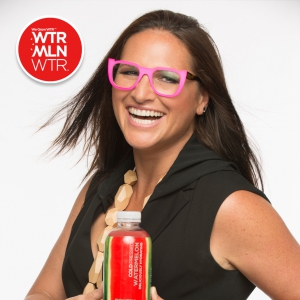
[00:00:55] Ray Latif: Hey everyone, I'm Ray Latif and you're listening to the Top Podcast for the food and beverage industry, Taste Radio. This is episode 155, which features an interview with Jody Levy, the co-founder of innovative brand Watermelon Water. Tune in on Friday, March 29th for episode 27 of our Taste Radio Insider Podcast, which profiles the entrepreneurial food and beverage community in Bend, Oregon. Just a reminder to our listeners, if you like what you hear, please share the podcast with friends and colleagues. And of course, we'd love it if you could rate Taste Radio on iTunes. As the saying goes, if life gives you lemons, make lemonade. But what if life gave you 800 million pounds of ugly but perfectly edible watermelons? Well, if you're Jody Levy, you make Watermelon Water, a brand of cold-pressed watermelon juice beverages. A serial entrepreneur and design expert, Jody co-founded Watermelon Water in 2013 and has overseen its evolution from a single product to a platform brand whose products are available at over 25,000 locations nationally. Leading with a mission of sustainability and natural hydration, Watermelon Water has attracted funding from prominent investors from within the beverage industry, as well as a number of celebrity investors, including music icon Beyonce, who praised the company's desire to quote, deliver accessible wellness to the world. In the following interview, I spoke with Jodi about her background in branding and design, and how it fueled the creation of Watermelon Water. She also discussed how ignorance can be an asset as a beverage entrepreneur, why it's important to admit what you're not good at and what you love to do, and why she describes her career as, quote, a journey of synchronicity. All right, folks, it's Ray from Taste Radio. I am at Natural Products Expo West 2019. I'm with Jody Levy, the founder of Watermelon Water. Jodi, thank you so much for being with me.
[00:02:45] Jody Levy: Hi, Ray. Thanks for having me today.
[00:02:47] Ray Latif: I want to talk to you about your last name because for many years I think people have butchered your last name saying Levy and it's Levy.
[00:02:58] Jody Levy: I really appreciate this conversation. My name is Jody Levy. and I'm a Detroit girl. And the difference between Detroit and the East Coast is Levy versus Levy. And it's just one of those things that it's like, you know, you pick your battles, right? So if somebody wants to call me Levy, it's fine. But the people who really know me, they know my name.
[00:03:21] Ray Latif: But as I mentioned, you know, if someone called you Judy, you'd correct them.
[00:03:25] Jody Levy: Yeah. It's a great point.
[00:03:27] Ray Latif: Yes.
[00:03:27] Jody Levy: It's a great point.
[00:03:28] Ray Latif: I'm full of them.
[00:03:30] Chris Paul: Now everybody knows the truth.
[00:03:32] Ray Latif: We've interacted, we've had so many interactions, we've talked so often, but I feel like when I was doing my research for this interview, it's like, wow, I really don't know a heck of a lot about Jodi. How'd you get into this business? What were you doing before Beverage?
[00:03:45] Jody Levy: Well, so many things. I most associate myself as an artist and when I was very young, like third grade, eight years old, had this experience that I talk about once in a while, where I was asked to copy a Georgia O'Keeffe painting, like this purple pastel flower. You've seen my brand, nothing about it's pastel, right? And I'm like using gouache paint, you know, the paint that smells like eggs. And I hit flow state for the first time.
[00:04:16] Ray Latif: What is flow state?
[00:04:17] Jody Levy: Like that sense of losing all time and space. That like complete suspension and all of a sudden it was as if I blinked or snapped and an hour went by and I recognized that something really special had happened.
[00:04:32] Ray Latif: You recall this? This happened to you when you were eight years old?
[00:04:35] Jody Levy: I recall it. And I recently saw the purple Georgia O'Keeffe flower that I was copying and it took me right back there. Like instant recall. And I went home that day and, you know, I was a little bit of a punk kid. Like, I was pretty determined and I didn't like the answer no, because it was just fueled me to, you know, push harder or figure out a different way to a yes. And I remember I came home and I told my mom and dad, I'm an artist. And I have felt very grateful ever since then because they snapped into this nurturing space of, She knows who she is. She's this weird, wild spirit, and she's an artist. Let's give her an artist, right? And so my whole life, every time that there was an opportunity that I created for myself, I was surrounded by a family that said yes. And I had to work hard, and I started working when I was a kid. and just started making, and I was kind of brought into this world as a maker. And so from there, to answer your question, I got into the design space. I actually went to art school. It was the only five years of my life that I wasn't actually making art. came out, started like creating built environments and telling stories.
[00:05:52] Ray Latif: They don't force you to make your own art in art school?
[00:05:57] Chris Paul: I was just always kind of rebellious about what was happening. So I was studying biomimicry in art school instead of painting.
[00:06:06] Ray Latif: That says a lot about you. I'm going to make art, but not on your terms.
[00:06:11] Jody Levy: So I started my design company and started working with big companies that were focused on environmental and ecological issues. When I was in art school, one of the things I was really fascinated by was all of these different movements around the globe where fine art was used as a mechanism to tell stories about the environment. and our society in America was kind of the last one to catch on. And there were a lot of artists around the world, especially in places where there were big events like the Olympics, as an example, that were doing large-scale sculptures in immersive environments that were connected to the negative effects of our built environment on our natural habitat and our planet. Some people call it climate change, right? It's evolved. And so because of that, when I was 21 and finished at the Art Institute of Chicago, I had an opportunity to go back to Detroit and be part of the first experiential design firm. And we worked with all of the automotive companies. And I was part of launching almost every, if not every, hybrid vehicle, fuel cell vehicle, hydrogen platform, like everything from Toyota, Lexus, Scion, GM, Ford, Tesla, et cetera. And I loved it because it was the forefront of the communication around how energy and alternative fuel was evolving. I did that for a long time, all over the globe. Loved every bit of it. Really focused on the intersection of all different disciplines from film and video to architecture, life, theater, and really the premise of when you immerse somebody in a story, they experience it and they walk away remembering it. And then in 2012, 2013, I met my co-founder in Watermelon Water. Very serendipitous happening. And he led with the fact that there were hundreds of millions of pounds of unused watermelons in America. And immediately, I had come from this world of alternative energy. So I was like, well, shouldn't we be able to make ethanol with that? And I tried to make ethanol, learned very quickly that watermelon isn't as sweet as corn.
[00:08:34] Ray Latif: This is the first time I've heard someone say, I'm going to start by making a fuel and end up with a beverage.
[00:08:43] Jody Levy: Right? And then I started to contemplate the situation that we would soon be in, having a hard time getting clean water. And when I learned more about the watermelon itself and how it is known as the cleanest water source on earth because it gets filtered at every node of the taproot on the vine and that you can grow 25 pounds of water with very little water because it grows in deserts, we started to pursue a path in the beverage industry.
[00:09:12] Ray Latif: How did you learn about the business early on? I'm curious about your mentors and how many of them said, don't do this.
[00:09:19] Jody Levy: So it's interesting. Food and beverage was the only industry I had never worked in. So I had all these amazing people in almost all walks of life and business, from automotive to hospitality to real estate, finance, et cetera, but nobody in food and beverage. And I honestly believe like my ignorance is why I'm here right now, why we're all on this crazy watermelon water journey. I have a really good friend. He's been like my best friend for 17 years. And he always said to me, his friend was one of the founders of a beverage company. and he used the analogy one day years ago, that running a beverage company was like getting hit in the face by a two-by-four every day. So he was the only person that was like, hey, listen, this is what I hear about this crazy industry you're going in. You're used to working with huge budgets and C-suite level executives. This doesn't sound so good. I was like, that won't be me. I can do everything. I can do anything. Every day, to this day, he calls me, has the two-by-four hit yet? And I'm like, 10 times over. This was an under-exaggeration, right? But I will say what I did was I set out to build a team of the best. on my board, as my investors, in my senior leadership. And so I quickly created a consortium of advisors that, you know, can help me walk through walls and understand the maze of the beverage industry that, you know, each step of the way, I have to learn.
[00:11:03] Ray Latif: Your product is marketed as a hydration beverage. You also market as a sports nutrition beverage in some ways. But to me, it feels like what you built is a brand, is a lifestyle brand, and something that is a platform for something that goes beyond beverages? First of all, thank you. You're welcome.
[00:11:26] Jody Levy: It takes a lot of work to not only create a brand, but maintain the consistency and keep things really tight, especially in an industry where everybody's going so fast and there's a lot of people executing on a vision. Yes, the intent was always to create a brand. Originally, it was to create a brand that uses environmentally friendly or otherwise known as waste ingredients and turn them into new products. And from the very beginning, when we started cold pressing watermelons, we were using seeds and we were making watermelon flour and we had dehydrated, you know, packs of product that goes in water, et cetera, et cetera. I mean, the idea is we grow water. That's the overall concept that we started with. It was this idea of using high water content fruits and vegetables to get the natural nutrients out of them and find new and different ways to create products. And that is very much still in our repertoire. We have a pipeline of innovation that is so good at a lot of levels. It's, you know, really thinking about what's relevant in the health and wellness trends and what people are looking for, asking for, high sugar, low sugar, things like this, convenience, lifestyle occasions, et cetera. And it's all about timing, right? So we started with watermelon because this was where, when Harlan said to me, there's hundreds and hundreds of millions of pounds of watermelons that are wasted. I mean, there's not that many fruits or vegetables that weigh 25 pounds. So when you have a field of melons that doesn't get rainfall and they're all sunburned, they don't make it to a truck that makes it to a store, right? They stay on the soil. they just get killed back into the ground correct but it's a lot of wasted energy and time and money So then we got the initial lab test back on our product and figured out that it's the single most hydrating product that you can find in nature. And the rind, the white part of the watermelon, there's actually an amino acid called L-citrulline that only exists in nature in the watermelon, in the rind of the watermelon. And so it's like the super high source of potassium. It has this amino acid called L-citrulline that's a vasodilator. So it's great pre and post workout. There's natural lycopene, which is what gives watermelon the pink color. It's also found in tomatoes. And we started looking at the science of nutrition, and there's something that happens called intracellular hydration. Watermelon water actually hydrates from the inside of the cell out. So when people, you know, crush a workout or play tennis for two hours in the hot sun, and you drink 16 ounces of water versus 16 ounces of watermelon water, you will feel hydrated faster and it will sustain you longer scientifically. So we figured this out and all of a sudden we realized that we were playing not just in the lifestyle beverage space with the best cocktail mixer and the best morning fixer and the best orange juice alternative, but we have this next chapter of the hydration universe. And that got us very focused. And that's why we've continued to innovate on both the watermelon platform and we have a bunch of other core fruits and vegetables that were yet to launch just because our core business is growing and we're putting the attention to it.
[00:15:00] John Craven: Why feel good when you can feel oh so good? Makers of ridiculously good superfoods, Oh So Good, just opened its first cafe in West Hollywood. Try their bone broth soups and bone broth waffles to see what all the rage is about. And let me tell you, they really are oh so good. Visit ohsogoodbones.com to learn more.
[00:15:21] Ray Latif: I asked you about mentors in the beverage industry, and you mentioned one person that said that it feels like you're going to get hit in the face with a two-by-four every day.
[00:15:30] Chris Paul: Every day.
[00:15:31] Ray Latif: Who are some of your mentors? Who are some of the folks that inspired you from a design perspective?
[00:15:36] Jody Levy: There's a lot of people that fall into that category. So I grew up outside of Detroit, and I was lucky enough to go to a school called Cranbrook. And there's an art academy there where a lot of the people that really shaped my creative and my design aesthetic, and more importantly, the process, the design process that I put everything through. whether I'm building a brand or I'm assembling a strategy for a company, it all kind of falls in a similar series of steps that starts with what is the core mission or the core communication, depending on if it's an endeavor or a product itself, and how does everything that we do connect to that. Growing up at Cranbrook, that's where Charles Eames and Ray Eames originally met and started designing furniture in the mid-century era. They were working in some of the manufacturing facilities in Detroit that had been used for aeronautics, but they were coming up with solutions for the military on how to have efficient stackable splints for soldiers. But when you look at these pieces, they look like design objects today that came from Europe. Eero Saarinen was designing chairs and furniture that was then winning awards that were at the World's Fair, and went on to design huge buildings like the airport at JFK, and in Washington DC, and buildings all over the world. There were a lot of thinkers from that era that Cranbrook represented that was filling the built environment, which was minimalistic but also industrial. using the industrial manufacturing processes that were all around the state of Michigan because of the evolution out of the war and creating a totally new nomenclature for design and the object and process of design. And so from that, I mean, you look at Charles and Raim, they were the first experiential designers. They were the ones working for IBM when the consumer computer was launching and finding ways to tell stories about the power of 10. right, and many other informational bits where nature and science come together. And so I think that that was like my first real inspiration as it relates to design thinking and minimalism and the aesthetic of, you know, how do you tell concise stories with action rather than too many words or too much busyness. And then from there, you know, I have been very inspired by people like Buckminster Fuller.
[00:18:13] Ray Latif: Who is Buckminster Fuller?
[00:18:15] Jody Levy: Buckminster Fuller is a thinker and a scientist and a strategist that came out of the South Side of Chicago. He was a teacher at University of Chicago. He was the person that kind of first gave wind to the Dymaxion grid and the geodesic dome and really looking at nontraditional societal order and collaboration and kind of how design thinking in society and in product development and the built environment could be considered differently, and was one of the, I think, first and one of the more well-known people for a collaborative society. There's a lot of artists that have made a lot of impressions on me as an artist and a kid that was like, I'm an artist, right? So I studied art and that's what I was studying, math and science and writing and all these things, but it all connected to this world of art and creativity. And I really believe that starting businesses and creating strategies for businesses is very similar to making something out of nothing. Whether it's a built environment, a designed object, a painting or a sculpture, it's all about that organism and what goes into it and what inspires it. So when we apply that to our world, You know, a concept is one thing. An entrepreneur with hustle is the thing that's gonna be the catalyst, but every single person, every employee of the business, every brand ambassador, every investor, every person that is an expression of that company infuses their energy into what that is and helps to direct its path and its course. And in that, to me, it's very much like art.
[00:20:06] Ray Latif: It feels like the package itself and in some ways the branding and the marketing hasn't pivoted or shifted too dramatically since you launched, which says a lot about your initial design and your initial branding. What's one thing that had to change? What's one thing that you have changed that really has made a difference in the company?
[00:20:26] Jody Levy: Well, there's a couple things. In some of the romance copy in the back, we can be like a little playful, a little sassy, a little provocative. And watermelon water happens to be a natural vasodilator, which is what Viagra is. And so, you know, like it used to say something cheeky, like between the sheets. And there have been some regions and some retailers and some partners that have, you know, cordially and gracefully said to us, cute, love it, our consumers don't. And things like that, as we grow and as we expand, which is I mean, my mission beyond using ugly waste watermelons has always been how do we take a notoriously non-accessible product in a cold-pressed, refrigerated beverage and make it accessible. How do we reduce the cost of goods and reduce the price point of this product so that it can be in every Safeway and every, you know, Target and Walmart and Whole Foods around the country so that whenever somebody goes to the store, they find that product there. And that's a big feat for a company that, you know, and a product that costs what it does. We're 100% watermelon. We're not water with red dye number five and, you know, high fructose corn syrup. So that was one change, which I was happy to make. And then, you know, as we've evolved to the same point, like when we started, we were really like launching in each city with Whole Foods and some of the natural channel stores. And my ambition has been to be everywhere. And so with that, the idea of cold pressed or cold pressured became a lot less important. And the communication that natural electrolytes come from watermelon has been way more important. So you'll notice on the bottle now, instead of where it used to say cold-pressed watermelon, now it says natural electrolytes from watermelon. So that's a functional change that came from a lot of talking to our consumers and understanding what people were getting from the package and needing to understand from the package. We recently launched a special edition of our product, which we call the Drink Clean Mission Bottle. And our partners at Publix came up with the idea. They saw a graphic of a background that Chris Paul is one of our, he's an NBA player, he's a great partner, and he and I did a little press moment at our store in SoHo, where he took the pledge to drink clean and was trying to share the story about why he drinks watermelon water pre and post game and for his health regimen. And we created this backdrop that had our mission on it, and our partners at Publix saw it, which was amazing, and they loved it, and they asked us to create a bottle for their consumers, and we actually formulated a watermelon-strawberry skew. And at the show this week, we're launching it to everybody. And it's our second best selling product that we've ever launched. And what we're doing is we're actually partnering with this group called FoodCorps. And their commitment is all about educating kids and providing clean meals to kids in American schools. So a percentage of the profits is going towards FoodCorps from the sale of watermelon strawberry in the mission bottle for this next year. Things like that, projects like that are really important to us. It's not changing the entire package, but it's having the flexibility as a small entrepreneurial company to do something like that. That's like our mission on the front, inspiring people to, you know, help their friends and be clean and eat healthy, nutritious food and beverages. And having that playfulness and that ability to do that is awesome.
[00:24:20] Ray Latif: Well, that's where good investors come into play, right? I mean, you've got to have people on your side that believe in your vision enough to invest in your company. You've had some pretty high profile investors within the beverage industry and then outside the beverage industry as well. Let's talk about Beyonce first.
[00:24:38] Jody Levy: Okay.
[00:24:38] Ray Latif: Beyonce came into the fold, what year was that?
[00:24:41] Jody Levy: Well, we really crossed paths the day that we launched our product to the world.
[00:24:46] Ray Latif: Everything goes back to 2013, right? Meeting Ray of the Teeth.
[00:24:50] Chris Paul: December 17th, 2013. We launched our product with Whole Foods and she dropped a track called Drunk in Love that ended with the lyrics, I've been drinking watermelon. So thank you, universe.
[00:25:04] Jody Levy: I mean, this whole journey is a journey of synchronicity. And I could tell you stories that, you know, seem out of this world over and over again with every single person that's along it. But so we founded the company in March 2013. By June, we were ready to go. I think around June, I learned about food safety.
[00:25:25] Chris Paul: So we were really ready to go in July.
[00:25:30] Ray Latif: Hey, we're good to go. Actually, this is going to make someone very, very sick. You're not good to go.
[00:25:36] Chris Paul: So remember that thing about ignorance?
[00:25:38] Jody Levy: Yeah. And I met Cara Rubin, who was the head of the Northeast Division of Whole Foods. And she loved the product and she gave me a lot of great wisdom. And I remember I showed her a rendering of like 200 facings of, you know, my hot pink watermelon water bottle. And I was like, how do I get this? And she laughed at me because she's like, you can't just get that.
[00:26:02] Chris Paul: Like, that doesn't work that way.
[00:26:04] Jody Levy: And I was like, what do you mean? I hate that answer. And we spent some time talking through it and she was like, well, why don't you just, if you can wait till September, we're gonna open our first store in Brooklyn and I can, you're new and you're local and I can't give you your 200 facings, but I might be able to give you a row or something like it. And my partners and I spoke and we're like, you know, launching with Whole Foods feels like a really great thing to have them and to use that as a really meaningful partner, which they have been. And it's been amazing how they've supported us in our innovation. So, lo and behold, the store didn't open in September. It didn't open in October. It didn't open in November. And at this point, I'm like, oh, my God, I don't even believe in mistakes. But like, this is not, I messed up here, right? Like we're burning capital, we're producing product, we have a 60 day shelf life. It's not like Natural Products sitting there ready to go. And the ribbon cutting was on December 17th, 2013. Blizzard, gnarly, freezing. And so we all, we go. And I remember like two hours later, my phone starts blowing up and everybody starts texting me. And I think that they're texting me to be like, congratulations, you're on shelf. Nobody knew we were on shelf. Like no one knew. I hadn't been under a rock for a year. It turns out that Beyonce had dropped this track, and I happen to come from the music industry. I've done a lot in hip-hop. I texted a friend of mine, and I was like, crazy, serendipitous moment, like, how cool is this? I'd love to send her some. The concept of drinking watermelon didn't exist before two hours ago, right? So she sent me this cell phone number of one of Beyonce's producers, and I texted her, and a couple hours later, we had product up there. And then later that afternoon, they announced a surprise show at the Barclays Center. Same thing, called a friend. He got me to the owner. Owner was like, so cute. Pepsi's got a contract, but of course, bring it in. We'll fill up the green room. And that's what we did. Like there was a year where we would send out like Mother's Day and Valentine's Day, we'd have cases with hot pink bows and I'd always send it up to Parkwood, which is Beyonce's production company. And then about a year later, they reached out and they had sort of been following along and loved the brand and the edge and the voice and our story with a woman at the helm of a company and supporting U.S. growers. And we started talking and getting a deal like that done is not easy and it takes a lot of time. And then she and I sat down and we spent a lot of time talking about how a voice like hers can amplify meaning and message and how the idea of helping to educate people about the importance of what we put in our bodies is one of the most important things that we need to do in our society because it's really a social justice issue. And with that, she really wanted to invest in the business and invest in the belief system that kind of encompasses everything that we do and our decision-making around it. And she did that. And she's been an amazing partner ever since.
[00:29:28] Ray Latif: So what's her role in the company now?
[00:29:30] Jody Levy: She's an active investor, I would say. You know, she has helped us throughout the past handful of years whenever we launch a product. You know, like, it's not the easiest thing to get people to write about a beverage or a food, you know, or a sneaker. And our mission kind of helps because we try instead of like price promoting a new product, we try to say, well, let's not discount it. Let's donate to somebody that's actually doing good in the world that's connected to why we're doing this, which is what we've done. And so oftentimes she'll provide a quote or her team will help lead the press. which helps get more eyeballs and more ears on the story. And when you're a small independent company that doesn't have a big strategic partner and you're like scrapping with marketing dollars that are small and tight, things like that really move the needle. So she tends to show up in moments where we have news that we believe we can package in a meaningful way. And a lot of times like our partnership with her and other people, It forces us to think about how we're going to do things in really meaningful ways. You know, it can never be trite or superficial or she won't support it, nor will any of the athletes or the other impactful people. But when we come to it with something that, you know, has meaning and is trying to do something good, then everybody wants to rally.
[00:31:04] Natural Products: BevNET Live is the place to be for beverage brands. Don't miss out. Join us in New York City on June 11th and 12th. Early registration discounts are available through mid-April. Tickets and more information are available at www.bevnetlive.com.
[00:31:20] Ray Latif: So as I mentioned, there were investors that are specific to the food and beverage industry as well. Cavu, one of the high profile investors in Watermelon Water. What did they bring to the table? How did you vet them? You know, was it the same sort of process as you engaging Beyonce?
[00:31:36] Jody Levy: So Rohan Oza, who's one of the partners in Cavu, was part of Watermelon Water prior to Cavu. So I have been super fortunate and I'm so grateful because I have all these amazing people in this company. And when I said earlier, it's like the little engine that could, right? It's like, we're all just rallying for this baby to succeed. And when I first got into this, I mentioned that I had never really been in food and beverage before. So of course I started talking to everybody that I knew. And it started off similarly to how you and I met, where I was like, hee hee, fat eyelashes, you know, I have an idea. Well, what is it?
[00:32:22] Chris Paul: You know, it wasn't the most like interactive social experience because I shut down basically around then. And I was like, I can't really tell you, but let me try to mine as much information as possible.
[00:32:33] Jody Levy: And along the way, just about every single person that I met, whether they were from the tech industry or from different friend groups or from food and beverage, every single person was like, well, have you met Rojanoza? Have you met Rojanoza? And I'm like, who is this cat, right? Like, I guess I have to find him. And everybody started introducing us. And so finally, you know, we probably had like 10 meetings on both of our books.
[00:33:04] Ray Latif: This is pre-Kavu.
[00:33:06] Jody Levy: Yep, two years before Kavu. And we, at some point, had a conference call. I think he was in a convertible driving up to PCH. And it kind of went like, hey, I need you to sign my NDA. And he was like, I don't do that. And I'm like, OK, cool. I'll call you sometime after I launch my product. And literally, we hung up the phone. And then, I don't know, fast forward, whatever. It's like a glitch in the matrix. But fast forward to us being in New York same day. And he ended up in my office. And at this point, we're both rolling our eyes. We're like, what is this company? Who is this guy? And he walks in in a amazing outfit. There were sunglasses and a floor length fur coat involved. And I really, really connect to that.
[00:33:52] Ray Latif: What color were his shoes? I'm guessing white.
[00:33:54] Jody Levy: I'm sure that they were white. They were great. And we just started laughing and it was like a brother walking into a room that we just, I think there was a knowingness and kind of a mutual respect for every single human being that tried to connect us to that point in time. And he sat down and right then and there, we sat for hours and we talked about what we were doing and why we're doing it and what our ambitions are. And I was very honest with him about, you know, my real estate co-founder and me coming from the design world. And, you know, Andre, our food scientist, what happened to be the seasoned one, right? He understood how to make the product and to continue to, you know, evolve the product and, I had, at the time, I had two people in sales. One was focused on yoga and fitness studios and the other on nightclubs. I kid you not.
[00:34:51] Chris Paul: That's what my sales strategy was.
[00:34:54] Jody Levy: And we laughed a lot and we talked a lot about, you know, our shared understanding of brand making and, you know, connecting and design. And it was very shortly after that, that we brought him in as our third partner. And he's been an incredibly instrumental voice and advocate and, you know, participant in this all the way through. I believe in both family and team in business. And the team very much applies to the day-to-day operations, right? If you've got somebody that's not a front-running player and needs to be on the bench, they don't need to be involved. But once somebody is in our world, they're family. And the guys at Kavu are very much family, and they are supportive in a bunch of different ways to me and to us, ongoing.
[00:35:44] Ray Latif: And you're the matriarch of that family, but you're not the CEO of that family.
[00:35:50] Jody Levy: So I happen to be somebody that really knows what I'm not good at and what I love to do. And I am a very free spirit. And I thrive when I can be free and like get into the details, but also see that big picture. Like that's my superpower, kind of that connection point between seeing how everything connects, but drilling into the minutiae, because I believe the details are what sets things apart and makes them really special. And I kind of knew early on that I didn't want to be stuck in a P&L. I didn't want to be stuck in gross margin improvements and managing people and teams and the intersection of finance and manufacturing and all of the parts and pieces, I really wanted to be able to be thinking about strategically what we grow water means and where the products are going and how we tell stories and how we connect and how we, you know, bring in the right partners and investors and big amplifying personalities and all of that takes a lot of energy. And so from the onset, I said to Harlan, I was like, we can build a category. We can create an amazing brand. Let's bring the best people in this. Let's prove that we can make clean food accessible to everybody. Let's have lofty missions and use a product as an interface to tell bigger stories. I want to do all that and hire somebody that's a beverage industry expert to really build this in a clean way and have the best infrastructure so that we're set up for whatever we're going to do. If we run this until our great-grandchildren are involved or if we exit and sell to a strategic partner, I'd prefer the latter. So I knew that from the beginning. And I think I was a little naive. to think that a seasoned beverage industry expert or chief executive officer would have the heart that what was required that a founder, you know, needs to have to kind of bust through walls and handle and deal with things. And so throughout the past few years, we did that. So about a year and a half ago, I actually jumped into the CEO role. And it was meant to be temporary for the first couple months as a bit of a bridge between my board and my partners and my senior leadership team. And I think that my attention to detail was something that everybody got excited about. And so I ended up staying in, and I was in the role for about a, I don't know, a year and a half. Kind of accidentally moved to Denver. Moved in next to my sister, who then got pregnant and just had twins.
[00:38:51] Ray Latif: Congratulations. Last week. Auntie Jodi.
[00:38:53] Jody Levy: Yeah, it's so fun. It's like an alternative reality. And so it has been, you know, a wild adventure where I was really in the minutia that you were asking me about before. We're like, I know my best self is not in managing the everyday day-to-day because then I can't be focused on our partnerships and I can't be focused on how we really can amplify the brand in this country and around the world. And so we're in the process of transition now where I can get a little bit more space and get my wings back so to speak and really focus on all of the new products that we have launching and the partners that are coming to the table and the stories that we're telling and how we're going to positively impact more and more people.
[00:39:42] Ray Latif: Jody, I've really enjoyed talking to you and I always enjoy talking to you. I feel like you're one of the few people, and this is going to sound so bad, but I feel like you're one of the few people that I met a while ago and you look younger and seem happier than when I originally met you. How is that possible? How do you stay happy? How do you get through every single day with a smile on your face?
[00:40:05] Jody Levy: Thank you, Ray. I appreciate that.
[00:40:08] Ray Latif: It's true. I'm not trying to flatter you. It's just it's I want to know. I want to know the secret because I want to feel younger and and be happier every day.
[00:40:15] Jody Levy: You know, I am super grateful. I actually I don't talk about it very often, but I went undiagnosed with Lyme's disease for 18 years. And when I met you had it and a couple of years ago figured it out and I healed myself. And there's a lot of people out there in the world that kind of have this experience where the world around them can't figure out what's going on with them, but they kind of know intuitively that something's not right. And the hustle in me, I think comes from that like warrior survivor nature. And so now that I have my health back and that my brain's clear, and that, like, I know I can overcome anything kind of keeps me in a space of humility and, you know, just gratitude. Like, I'm just, it's easy to get caught up in the drama of what goes on, especially when we're all involved in these tiny little companies that never have enough money and there's a lot of personalities and all of it that goes with it. But it's also, you know, when you're kind of the conductor and everything's flowing through you, if I don't stay optimistic and I can't find ways to like keep my joy, then nobody else is going to. And so in some ways, I think I learned it. And then when I finally figured out how to mend what was off balance, now I just work to stay in balance. So what that means, you know, I think practically is like, I do a lot for myself as much as I do for everybody else. I make sure I get my workouts in. I meditate as much as I can. I'm super, super clean with what I put in my body. I try to have as much fun as possible. We dance a lot. I just have a way of living where I try to optimize what's in front of me.
[00:42:11] Ray Latif: I really, sincerely appreciate you sharing that story with me and such great advice for me and I'm sure for our listeners as well. Thank you so much for taking the time. Thank you for having me. And I wish you all the luck in the world and I know there are great things to come for Watermelon Water and you personally.
[00:42:30] Jody Levy: Thanks. I really appreciate it.
[00:42:33] Ray Latif: Thanks for being with us on Taste Radio. That brings us to the end of episode 155. Thank you for listening, and thanks for our guest Jody Levy. You can catch both Taste Radio and Taste Radio Insider on Taste Radio.com, iTunes, Stitcher, Google Play, SoundCloud, and Spotify. As always, for questions, comments, ideas for future podcasts, please send us an email to ask at Taste Radio.com. On behalf of the entire Taste Radio team, thanks for listening, and we'll talk to you next time.