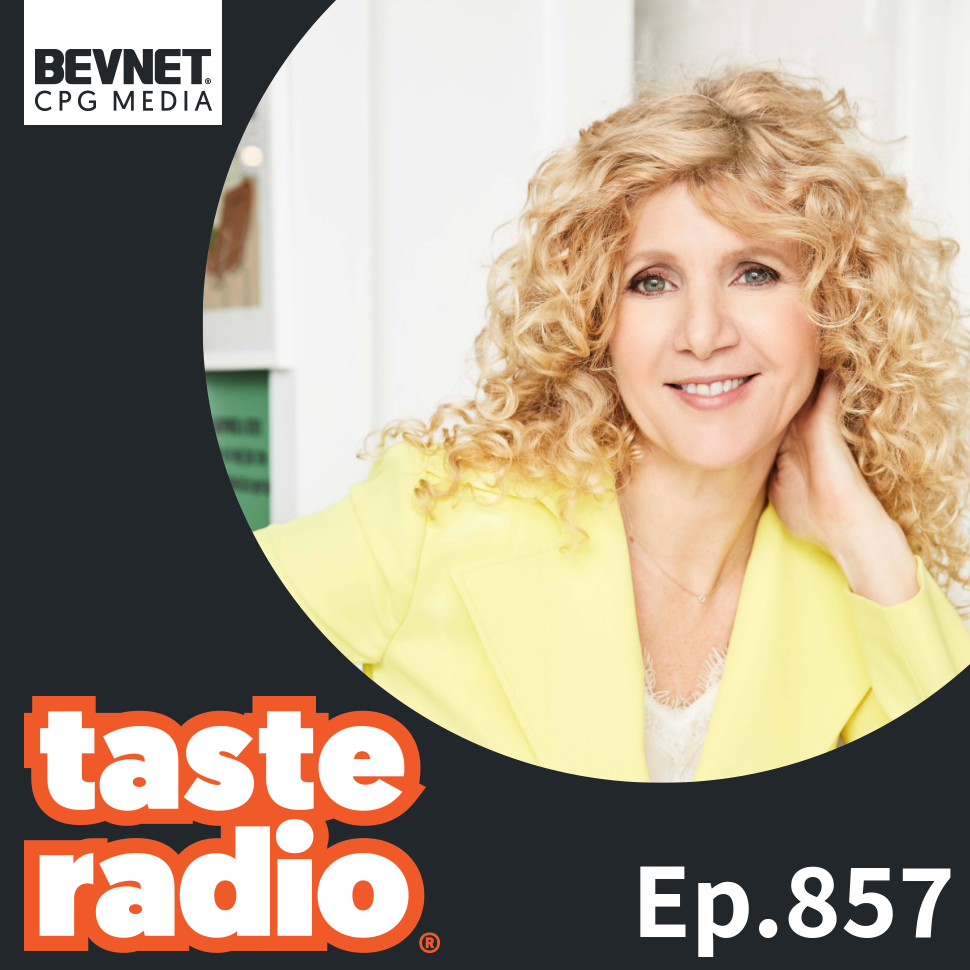
[00:00:10] Kelly Heaton: Hello and thanks for tuning into the Top Podcast for the food and beverage industry Taste Radio. I'm editor and producer Ray Latif, and you're listening to episode 186, which features an interview with Rachel Drori, the founder and CEO of popular direct-to-consumer food brand Daily Harvest, who pulls back the curtain on the company's disruptive business model and how it cultivates a powerful bond with its customers. Tune in on Friday, November 1st for episode 58 of our Taste Radio Insider Podcast, when we're joined by Kelly Heaton and Ben Schmidt, the co-founders of hydration brand Hoist, who discuss their strategy for mainstreaming a niche concept. Just a reminder, if you like what you hear on Taste Radio, please share the podcast with friends and colleagues. And of course, we'd love it if you could review us on the Apple Podcasts app or your listening platform of choice. Rachel Drori is big on co-creating, a word she repeats several times over the course of our interview. It's about listening to and learning from your customers, she says, and rapidly executing upon their ideas. That process is at the heart of Daily Harvest's innovation strategy and has been key to its rise as one of the fastest growing food companies in the U.S. Success has attracted investors like Goop founder and Oscar-winning actress Gwenth Paltrow and tennis icon Serena Williams. And in 2017, the company raised $43 million in a Series B round to help it scale its direct-to-consumer model. Nosh editor Carol Ortenberg spoke with Rachel about Daily Harvest's mission and rapid growth, a sophisticated way the company uses social media to dialogue with its customers, and why it, quote, celebrates failure.
[00:01:54] Ben Schmidt: Hi everyone, Carol here. I am on a call with Rachel Drori, who's the CEO and founder of Daily Harvest. Rachel, thanks so much for joining me today. Thanks for having me. So let's start by discussing what is Daily Harvest. Okay. So Daily Harvest makes all the food that you always want to eat, but never actually have the time to eat. And we deliver it directly to consumer stores. Now you didn't start off in the food industry. Talk a little bit about your background. So I started my career in marketing. I actually started in hospitality at Four Seasons Hotels and then moved to Amex also in marketing. So a lot of hospitality, a lot of services. And then before starting Daily Harvest, I actually worked at Guilt Group, which was more on the consumer side where I did everything in the marketing mix, business development, you know, traditional marketing, performance marketing, you name it, I did it. And how did Daily Harvest then come about? While hospitality, I see the connection, luxury goods, not necessarily always a straight line to food. Yeah, so for me, it actually had a lot to do with the pantry at guilt group. I like to say I walked around hangry half of the day where I had meetings back to back to back. And what would happen between meetings is I would run into the pantry and grab the closest thing to arm's length. And that was usually stale birthday cake or trail mix. And ultimately, that takes its toll. And I just wasn't feeling myself. So I always knew how I should have eaten. I was a rower growing up, very in tune with health and wellness and nutrition because of that. And the two worlds that I lived in, where I had my IRL life but also my digital life, where the demands of both kind of come together to cause this feeling of like, oh my gosh, I am malnourished. you know, really came to a head during that work experience. And that's why I started Daily Harvest. So starting a direct-to-consumer company that uses the frozen supply chain and fresh produce is a pretty daunting thing to just start right out of the gates. How did you go about that process of, you know, learning about the industry and then getting geared up to actually have a product? Yes. So for me, I think ignorance actually had a lot to do with early success. There were a lot of things that I wanted to do that had I had experience in the food world, I think I would have known better. But, you know, that ignorance kind of allowed me to reinvent a lot of things and create what hadn't been done before. When I started Daily Harvest, I got myself a commercial kitchen in Long Island City. I had no idea what I was doing. I got myself a food handler's license because that's really how clueless I was. I was like, I don't know, if I'm going to handle food, I should have a food handler's license. And just learned, read a lot, and really proved the concept in New York City. soon after you started the company, about a year, you raised a round of funding and you've brought on some amazing investors like VMG and Lightspeed as well as some celebrity partners. Talk to me about the fundraising process and what that was like and what you learned from that. Yeah, so fundraising at each stage has kind of been a beast of its own. You know, I bootstrapped the business for a number of months and after that raising the first round was, you know, I had numbers to prove which made it a little bit easier than, you know, I think it has been for some. It was more like, You don't have to believe me that this is an opportunity I can show you in black and white. But even to have this grandiose idea of what we're ultimately trying to create, our mission is to take care of food so that food can take care of you. And that is a big mission. And when you are making smoothies, which was our first collection, that's all somebody can see. So I think that that was a bit of a challenge where You know, I was pitching this bigger vision and it was hard for a lot of people early on to really understand it. Then in subsequent rounds, as we went into different collections, I think that people really started to see it crystallize. So, you know, while it was challenging for other reasons, because fundraising is always challenging for everyone, you know, it really comes down to just meeting the right people, finding partners that are value aligned and finding people that really believe in the mission. How did you get investors to buy in on the concept that you could be this larger platform? You know, you spoke to showing them the black and white numbers, but it's sort of hard to project that forward to all these new areas you've gone into. Yeah, so it was hard. And, you know, ultimately, I had to kiss a lot of frogs before I found the prince or princess, you know, that really believed in that vision. And that's why I say it comes down to like values and mission with partners, because, you know, you can put people around the table who see the beginning stages of something and they might want to veer right or left based on what's working and what might not be working as opposed to trekking straight into unknown territory with building the greater vision. And for me that was super important. Also notable to me is that when you started the company and when you raised funding, you know, direct to consumer was gaining attention, but I wouldn't say it's the beast of a channel that it is now. Yeah, for sure. I mean, for Daily Harvest, direct-to-consumer is the only channel that really made sense to launch in. I believe fundamentally that the freezer aisle is broken and our form factor is frozen. And we're frozen because it allows the food to be as nourishing as possible, but also as convenient as possible. So if I wanted to, you know, see our ultimate mission and vision, become a reality, I had to really figure out a way to make frozen work. And for us, the transparency that people want in their food today wasn't possible with the way that the frozen aisles are formatted. And we just had to go direct-to-consumer to create that transparency with our customers. Why not say, you know, okay, instead of going direct-to-consumer, I'm going to try to fix the freezer aisle. Did you think about that? And what made you figure out that wasn't the right way to go about it? I mean, when you just have a concept, go to a grocer and say, Hey, you know, those really expensive fixtures that you have in the center of the store, well, let's scrap those and throw them out and try something different. I just think, you know, brand equity is really a really important first step. At this point though, you certainly have brand equity and I'm sure you have a lot of retailers who approach you and are like, Hey, how do we get Daily Harvest into our retailers? So what's made you continue to stay direct to consumer? Yeah, I mean, it just really makes sense. It's for somebody to come on to our site and to be able to really personalize their experience and to be able to really have full transparency, understand what they're eating, what's going to work for them, what's not going to work for them. You know, the ease of our app to manage is just, it's so much better than going to the grocery store. Even if we were to figure out how to reinvent the freezer aisle, there are just fundamental challenges around frozen. Like you have to plan your whole day around buying something frozen. If you don't go home right after, whatever you purchased will melt. So for us, it's really about creating a relationship with the customer and making the freezer almost default on where it's just filled with all the food that you rely on as opposed to you having to think about it. How much have you had to retrain consumers in thinking about the freezer aisle? Because I think there are a lot more opportunities and emerging clean label brands in the freezer space, but for a while, it wasn't necessarily the most exciting part of the store to go to. So I'm not sure it's a preservation method that was necessarily top of mind for shoppers. Yeah I mean honestly you know I'm not super interested in the freezer aisle. I don't. We're not competing with frozen peas and we're not competing with the microwave dinner which is kind of what exists. There are derivations there of you know what we're really doing is solving for a need state. We're solving for people who live at the center of this Venn diagram of you know, an online life and an offline life and they're feeling stressed and instead of trying to like solve that problem for somebody who's already busy in the freezer aisle, which I just think there's like a mismatch to, you know, if we can make things just as easy as possible, lessen that cognitive load as much as possible, you know, that's where we think it's really powerful. So there has absolutely been education with telling people that what you think about the freezer aisle is not what the freezer aisle could be. People associate it with dinosaur-shaped chicken nuggets and frozen macaroni and cheese. And the reason why people think of that is because that's really where it started. It was the microwave dinner that started the frozen heyday. And what we've seen are, you know, as I said before, derivations thereof, as opposed to saying, okay, let's like step back. If we take out the preservatives, if we take out the, you know, the fillers, if we take out all this stuff that is synonymous with frozen food, and we just say, hey, you know, when you farm freeze fruits and vegetables, They are more nourishing the stuff that you're buying like quote-unquote fresh in the grocery store So let's focus on that and our goal is to get you to eat more fruits and vegetables. We make it really easy We make it really delicious you know, I think that it just makes sense as opposed to us trying to like lobby for frozen food because we don't see ourselves as in that business and And it is interesting because when we first started chatting, you know, you said, I don't even think of myself as a food company. And that's interesting for a brand that currently only sells food. So talk to us about how that philosophy kind of came about and how you instill that in employees, investors, consumers, you know, from the top down. Yeah, well, we do make food. We're really, as I said before, solving for this need state, right? So if you think about the people who are at the center of this Venn diagram that I keep talking about, it's people who are busy and hungry. And that's a lot of people. And we have more information about health and wellness than we've ever had before. But reality comes into play when it's like, OK, cool, on Instagram feed, I don't have time to eat like that. Like, sure, a blogger that had six hours to make something look delicious and then photoshopped that picture. Intellectually, we know this. But emotionally, we're still like, huh, I'm going to eat my sad salad at my desk. So I think that just thinking through the need and how we've evolved and how the demands of modern life are so different from how they were years ago, it's really a lifestyle that we're trying to solve for. And it's people who are just busy and there's no, like, there's no better way to say it. You know, we know what we should be eating, but our schedules get in the way of that. Do you think coming from a hospitality background helped shape how you think about, you know, engaging with consumers and solving these need states? Because in hospitality, you're kind of saying, okay, what does the person who's coming to my hotel or restaurant need and want? And how can I fill that need? Absolutely. We talk about customer centricity all the time at Daily Harvest. And you know for me it's more than than even customer centricity. It really is to your point hospitality. You know I started my career with with the best in hospitality which is four seasons hands down. And, you know, having that experience has informed a lot of how we aspire to run our business. So hospitality and customer centricity are very similar, but I do believe that hospitality goes one step further. And it's more about, you know, not just meeting needs, but actually anticipating them. So that is absolutely what we try to do at Daily Harvest every day with our customers and our devotees.
[00:14:15] Carol Ortenberg: Guessing your margins? That's risky. Belay Financial gives CPG brands the clarity to scale smarter, faster, stronger. Get your free inventory ebook by texting TASTE to 55123 and start making data work for you.
[00:14:35] Rachel Drori: Tune in at the end of this episode for an exclusive interview with Matt Lynn of Belay Solutions. He sits down with Melissa Traverse to break down the biggest inventory and accounting mistakes CPG founders often make. You'll learn how to bring clarity to your numbers so you can scale with confidence.
[00:14:53] Ben Schmidt: I imagine that customer centric focus also gives you an advantage when thinking about competition that's emerged in the market, whether it's just for mindshare or from direct competitors who are also offering other meal solutions or smoothie cups. Yeah, absolutely. So, you know, ultimately it is a relationship that you're forming with a customer and that is hard to repair once it's broken. So, you know, it is table stakes for us that the food is going to be amazing, that the quality is going to be incredible, that we're going to be as transparent as humanly possible, but where that human interaction and relationship building really comes in is, you know, with being hospitable and being customer centric. And that's really how you develop loyal customers and loyal relationships that, you know, when we go from lattes to bites, which we just launched, you know, customers are open to it and they're excited about what else you have to bring to market. You also heavily use social media as a means of communicating with your consumer and establishing that dialogue. Can you talk a little bit about that marketing strategy and channel? Yeah, of course. So we do co-create every single thing that we make with our customers, and social media plays a big role in that. We use it in multiple ways. One, just engaging with our audience and letting people know that we're people just like them. You know and I think that there's also a piece to fostering that relationship and just telling people that we are open to listening. So it's not just a one way relationship that it is. You know you tell us what you want and very quickly we will get it out to market. And you know and then when we do put something out in market we look for signals as to, you know, how you did and then we iterate on top of that. So what I think a lot of people miss in social is it feels like, you know, a scroll of pretty pictures that, you know, are gonna get people to react or, you know, a meme that's gonna get a quick, like, ha. But ultimately for us, it's so much bigger than that. And it's really about relationship building and co-creating. Now Daily Harvest does have some pretty pictures. I will admit that you guys put a heavy emphasis on the aesthetics and how everything looks and photographs and connects with the consumer visually though as well. Absolutely. I mean for us that's table stakes though. That's like the price you pay to be on Instagram. How do you figure out what to listen to from your consumers and what is noise that you need to filter out? Is that where having a strong leader at the top and a strong leadership team comes into play? So it actually comes down to our data team. We have incredible data algorithms that we've built that allow us to really understand when something is at a critical scale where we act on it. We have a ton of data coming in. We talk to our customers not only through social, but through thousands of different touch points. And we have customers in our office all the time. We call people all the time. We have just so many different ways that we co-create and create this two-way conversation. And then, you know, by having these proprietary algorithms that we've built to kind of aggregate that information and surface opportunities, that's how we know that we're making the right call and the right decision. Of course, data is just part of the story, though. You know, if you don't understand the emotional and motivational reasons behind a decision, then it doesn't go very far. And that's where our team really steps in to create that human touch. It feels like while data is important, though, you've also made your employees feel really empowered to be part of the process and that they can really impact what's happening at the company. Absolutely. So our team is actually very horizontal and structure. We work. on every single effort in the squad and every single person on each squad is actually held accountable equally for an outcome. So, you know, while we do have great leadership to the point that we were talking about before, our leadership doesn't make a lot of decisions. It really is the team that is involved in any initiative that comes together and makes decisions. Now, you mentioned outcomes and making decisions. What happens if you make the wrong decision as a team? Yeah, so we've made a lot of wrong decisions. But you know what's really powerful is that we respond really quickly. So I mean look we've launched things that did not hit on exactly what the community asked for. you know, we're able to iterate so quickly that, you know, we go back to the audience that originally, you know, asked for something and we'll just say, hey, you know, what did you think? What did we get right? What did we get wrong? And then we iterate and, you know, we go back at it. We very rarely launch something in its final state. Do you communicate with those consumers who tried the first product? Hey, we've changed things. Give it another shot. Absolutely. All the time. And because we're not in stores, we're actually able to iterate really quickly. What does that conversation look like? Because it can be hard to say, Hey, this wasn't perfect. We've made it better now. And I think that's sometimes a scary thing to admit. Yeah, so we don't find that to be the case at all. As we're co-creating with our customers, we say to them, you know, we are going to take your input and do the best we can to interpret this into something that, you know, is going to serve your needs. And then we put it back out there, not as like a, you know, we are perfect. We've hit this right on the head. We put it back out there as like, hey, this is V1. Can you help us iterate on this? And can you help us get it to that perfect state where you won't be able to live without it? And that's kind of the way that we come at it. And we find that it's really successful. Beyond looking at your community, how much are you looking at what else is going on in the industry and other categories that maybe are ripe for opportunity? We actually look very little at that. When we say that we're solving for a need state, we really mean it. You know, so we think through who our customer is and, you know, our customer is not one person. It is hundreds of thousands of people. And, you know, we really think about what needs they need met. There are a lot of trends that come and go in the food industry. There are a lot of diets that come and go. And we really like to stay away from all of those. We are really about making fruits and vegetables easy, right? Hippocrates said, let food be thy medicine. Fruits and vegetables are unchallenged as a good thing. We all need to be eating more of them. But fruits and vegetables are hard to eat. So where we really focus is on getting people to eat more fruits and vegetables. And when I say eating more fruits and vegetables, I don't mean the refined crap that you put out there and then bake into a baked good so nobody knows that it's there. I mean actually unrefined, unprocessed fruits and vegetables in the form that your body knows how to digest. So Rachel, there's a lot of noise that consumers are dealing with coming from all angles of their lives. And there's a lot of health claims being shouted at them. How do you go about educating them that they should just go back to basics and think about fruits and vegetables and maybe devote a little less attention to some of these health claims that are gaining a lot of prominence and attention right now? There's so much noise out there. One of the reasons we made our branding so clean is just to be the opposite of the noise. I feel like everyone's being shouted at all the time. Like, you need more of this. You need the other thing. You should have less of this. And it's actually crazy. And then, you know, half the claims out there are totally false. Like, the way that your body processes something doesn't always match what you're consuming. You think you're consuming something that is going to have x, y, z benefit, and it might have that in a laboratory, or some version of that food might have that benefit. But when you refine and process it and fit things into unnatural places, like when you put, I think I saw something that it was like zucchini flour into pasta. I'm like, you are not eating zucchini. Stop fooling yourself. Your body does not know what to do with that. you know, we're getting into a really dangerous territory. I just always think back to margarine, which I know sounds like a very weird thing to say, but margarine was really like the first plant-based food that years later we realized was terrible for us, you know, and it's really for me about like If it didn't come from the earth in the state that you're consuming it, if our grandparents or great-grandparents didn't consume it, it probably is not meant to be consumed by humans. Our bodies can only evolve so quickly to meet the Pressures that our society pushes on us and I just think it's it's really sad because I think people want to believe it so they think that they can get their servings of fruits and vegetables or they think that they can you know get their MCT hit by You know for brain clarity by having it in a marshmallow or something like that But you have to do to these things to make them not only shelf-stable but also like in formats that don't make any sense is really Terrible. And then your body seizes up and it has no idea what to do with it. So what we've done, if you ever open a cup of Daily Harvest, you see every single ingredient and it is so important. It is not only about differentiation, but it is about building trust. And it is about like, you know, we are not trying to fool you. We are literally saying that the earth has provided things that are really good for you. Our goal is to just make it easier for you to consume them. I want to switch gears a little bit from the ingredients to the products themselves. You mentioned that Daily Harvest started with smoothies. Now you have a variety of collections. How do you approach product development? How do you decide how fast you can expand and where you can go and what's too fast and when you need to really push yourself? For us, it really goes back to that co-creation. And when our community asks for something, we deliver. And then if we see an opportunity that is going to take a little longer to create, we are full steam ahead, figuring out how quickly we can get something to market. So when you are building trust and co-creating, speed really counts. So we don't walk, we run. And we have a team that, as I mentioned before, really holds themselves accountable and is cross-functional in nature. So decisions are made by stakeholders, cross-function, and that makes it really possible to move at the pace that we do. Why is speed important, particularly when you're co-creating? I mean, if you just think in contrast to the way that most CPGs innovate is they'll like buy an insight from a consulting firm six months after like early adopters have forsaken it, then they'll spend a year in R&D, you know, building inventory in stores. And by the time that they launch it, it's like, nobody cares. I mean, it's true. So, you know, if you want customers to co-create with you, if you want to create this constant dialogue, you have to respond to people in a really timely manner. And that's what builds trust. And that's what gets people coming back with more insights and more desires and more wants and more needs, which ultimately means that, you know, they transact more with you, but that's not what it's about for us. It's really about that relationship.
[00:27:11] Rachel Drori: Do you want more repeat buyers on Amazon? Well, this free resource in collaboration with Straight Up Growth will help your brand turn first-time buyers into long-term subscribers. Download Winning the Repeat Purchase Game on Amazon now at Taste Radio.com slash SUG. That's Taste Radio.com slash S-U-G to start building retention-driven growth for your brand on Amazon. Scaling a beverage brand into major retail comes down to operational readiness. From packaging lead times to co-manufacturing strategy, the details can make or break a launch. In a new ebook in collaboration with Octopi and Asahi Beer USA, industry leaders share what they've learned in helping brands scale. Download it now at Taste Radio.com slash octopi. Do you need to scale your team faster without compromising on talent? Join Oceans for a live webinar on April 20th and learn how leading companies are hiring top global professionals who are ready to grow with your business. Register for the webinar now at Taste Radio.com slash oceans. That's Taste Radio.com slash oceans.
[00:28:22] Ben Schmidt: So despite being a very digitally native brand, some of this co-creation process seems like it's happening in real life. Talk to me about how you've utilized pop-ups to interact with your consumers. Yeah, so I think a lot of people look at pop-ups and it feels like something that you have to do. For us, we never felt like it was something that we needed for our brand. We never felt like it was something that, you know, there was societal pressure to do. For us, it was really about creating those relationships and, you know, something that we lack so much today at the center of this Venn diagram, but also like as we're tied to our phones. is that human connection. So what better way to really form those bonds and build trust and community than, you know, human to human. At the Filling Station, as you referred to it, you did sell product, but it sounds like the focus wasn't on revenue creation necessarily. How do you figure out when to charge, when not to charge, and what kind of environment and conversation that creates with your consumers? Yeah, so, I mean, you're not going to be totally shocked to hear this, but it's really about co-creating with them. So we did one pop-up and people said that they wanted to buy Daily Harvest, you know, at the pop-up. So the next time we did it, we allowed people to buy it there. And it's a constant evolution, but for us, it's really about that responsiveness. And I just feel this way about everything, and the team feels this way about everything. Like, why should we determine what people really want or what people think that they want, as opposed to just asking people? And that's what we do with literally every decision. At the same time, though, you clearly have honed instincts on what is the right way to go about these things. Yeah, I mean, absolutely. We have a strong visual aesthetic and we have a strong brand voice and, you know, we do things in our way because I think if we didn't, we wouldn't be building brand equity. But a huge piece of that brand equity is that co-creation. So, you know, our visuals have evolved along with customer demands. Our voice has evolved with customer demand, literally everything. I mean, the way that our site works, the way that you filter on our site, like every single thing that we do is built on customer demand and everything is a work in progress always. How did you go about finding investors that not only could buy into the concept that this could be a larger platform, but would also support you and how you wanted to go about building that platform through co-creation and through engaging with the consumer so much? I mean that was always part of the vision. So for me when I was talking about that North Star vision like here is is what we're going after. This is what it's going to look like. All of these components were really part of that. So when we found value aligned like minded people who believed in the vision I think that they got excited about the disruption of food in particular because as I mentioned before, food as it exists today is like huge incumbent businesses that don't move very quickly. I think that from an investor perspective, people had kind of seen the value of, you know, really quick innovation and iteration and other categories and got really excited about it in the food category. We touched upon communication with investors and briefly sort of discussed communication with the team, but talk to me about how important company culture is at Daily Harvest because every time I look on Instagram, you guys are having guacamole parties and retreats and it really looks like you've built this collaborative environment for your employees. Yeah, I mean, look, it's so important. You spend more time with the people that you work with than your family or, you know, a significant other. So, you know, for us, it's really about creating an environment where people want to be, but it really goes beyond that. So what I mentioned earlier about how we really work horizontally and we work in this pod structure where people have equal accountability for an outcome. That doesn't work if people don't like each other. That doesn't work if people don't want to, you know, get into it, quote unquote, with each other, because sometimes it takes friction to polish stone. But if you don't like the people that you are, you know, polishing that stone with, it can get a little ugly. So for us, team building is incredibly important. But it's really about, you know, investing in the people that we spend the majority of our time with and just creating a lot of opportunities for us to get to know one another and to understand like where somebody is coming from. Because I think When you get into these situations where you're trying to make things move really quickly and you're working with people who don't always fully understand the implications of what they're working on, how they impact another organization or another function, I think that that's where knowing where someone's coming from and knowing people's backgrounds and knowing why they might feel the way that they feel or why they might be biased in one direction is really invaluable. when you have all these teams, how do you keep them operating in the same direction? Are you just communicating what everyone's working on, or does everyone kind of trust that, okay, my part's really valuable, and that's gonna impact somebody else, and that will impact somebody else? Yeah, so we have company-wide OKRs, and that's an objective matched with a key result. And every quarter, we present those OKRs, and then we kind of have these squads that go out, and they figure out the best way to achieve those key results. And we give them complete autonomy in the way that they are going to actually achieve those key results. And that's, again, how we get people to feel that accountability, to move quickly, and to not have a hierarchical siloed organization. But everything comes back to those key results, which the company as a whole is held accountable for. And what does hiring look like? How do you find someone who operates within this environment well? Because I'm sure it's not for everyone necessarily, which is okay. Absolutely. And hiring is just as much art as it is science. We really look for people with values that are similar to ours. We have core values that we have questions to really suss out how people fall on those points. But then what we do is we really look for what somebody can add to the team. So we look at our culture as ever-evolving and something that is also not fixed. And when somebody comes in, we want to know what they can bring to our team that is unique and different, different perspective, a different outlook. It's really like an amalgam of all those things. What's the balance though of sharing your values versus also pushing you? It's a little bit of we want someone who's like us, but also someone who's not like us and is going to make us think differently. Well, that's where I separate values and culture. So our values, we don't waver on. And that is like, are you a good person? Are you here for the team? Are you going to have your teams back? Those sort of things we don't waver on. But that's really where the culture piece looks into. And that's how we stretch ourselves. So we look for people specifically that are going to stretch the bounds of the team as it exists in any given moment. And you guys do social activities together. They are usually very centered around Daily Harvest activities such as avocados and watermelons and produce and fruits and veggies. What have you found these social activities bring to the company? Yeah, well, most people who work at Daily Harvest love food. It's not part of our interview process, but it just, you know, makes sense if you find people who are really passionate about what we're doing, they're going to like food. So, you know, a lot of those activities have kind of come from that place where, you know, who doesn't like watermelon? But, you know, the purpose of the activities is really about fostering those cross-functional connections, understanding how you get a level deeper with the people that you're kind of like in the trenches with, and how you create bonds that, you know, when things get tough or when things are moving quickly or, you know, in those times where that might be a little stressful, you have each other's backs and you are moving forward together. It seems like you have strong employee retention. And once folks join Daily Harvest, they really want to remain a part of the company. So how do you keep employees motivated and moving forward and make sure you also are avoiding complacency or just getting too comfortable with anything? Yeah, so one of the benefits of working in the squad model is that people can't be complacent because there are five to 10 people that are in that squad that are relying on them to do a piece of a larger project. So you know what happens is we create this self accountability but also team accountability. And you know having that accountability also allows people to to like kind of hold hands and go into uncharted territories because they have this group of people who are going to be there together and have their back. And I think that that's one of the ways that we've been able to be innovative. And one of the ways, obviously, that we've been able to move so quickly. So if somebody is complacent or somebody isn't pulling their weight, it is not me that they are putting down. It's not their boss that they are disappointing. It is their coworkers and their teammates and people who really count on them. And we've never seen anybody kind of fall behind because part of our values is that we bring people along with us. You mentioned that they certainly don't want to disappoint their team, but at the same time, it also feels like it might remove some of the pressure that might exist on someone in a fast moving startup entrepreneurial company because you know you have this team there behind you. Yeah, I mean, we celebrate failure here. When people take a big bet and, you know, a squad says, like, we're going to try X and X is a total flop, you know, we just move on. And that group then is so much stronger from having had that experience that then when they move on to Y, we know Y is going to be a success because they have that learning and they have that insight and they're able to pivot it and make sure that, you know, Y isn't only incrementally better, but it is like, the perfect solution or the perfect solution for that point in time. And that's really how we keep people, you know, motivated, but also looking out for the long-term good of Daily Harvest and not just for short-term wins. Well, I'm certainly excited to see where the long-term future of the company goes and continue to watch the growth. Thanks so much for chatting with me today, Rachel. Thanks so much for having me.
[00:39:43] Kelly Heaton: That brings us to the end of episode 186. Thank you for listening, and thanks to our guest, Rachel Drori. You can catch both Taste Radio and Taste Radio Insider on Taste Radio.com, the Apple podcast app, Stitcher, Google Play, SoundCloud, or Spotify. As always, for questions, comments, ideas for future podcasts, please send us an email to askatasteradio.com. On behalf of the entire Taste Radio team, thank you for listening, and we'll talk to you next time.
[00:40:23] Daily Harvest: Hello, I am Melissa Traverse here for the Taste Radio podcast, talking about some of the biggest tension points that CPG brands and founders face when they're scaling a brand, and those are financial accounting and inventory management. I am joined by Matt Lynn, inventory accounting guru from Belay Solutions, and he is going to shed some light on all of this that is going to help everybody out quite a bit. Matt, thank you so much for joining us today.
[00:40:53] Gwenth Paltrow: Thank you for having us, Melissa. It's great to be out here at Expo West and it's great to sit down and be able to chat this because it's kind of a passion project of ours, working mainly with CPG brands and hoping to help them scale.
[00:41:05] Daily Harvest: It's been such a pleasure chatting with you and the team and learning all about what you do over there at Belay Solutions. Can you tell us a little bit about yourself and what your role is and the kinds of solutions that Belay gives to CPG brands and founders?
[00:41:20] Gwenth Paltrow: Yeah, absolutely. My role with Belay, I'm actually our inventory accounting manager. I run our inventory department. So we work with CPG brands, taking them from spreadsheets, putting them on inventory management systems, and really helping connect their tech stack between their sales, online marketplaces to that inventory management system, even down to their financial systems like QuickBooks. But Lay overall is kind of an outsourced accounting firm. And with that, we're helping teams. We have different levels with bookkeeping, controller level work, even high level into CFO type items. So we really help those brands in any way that they need financially. And then I just have a subset of a department where we're really just laser focused on inventory.
[00:42:03] Daily Harvest: It's certainly a complex topic and there are plenty of places to go wrong. Let's start by going right and start super simple. Can you tell us what some of the biggest red flags are that would help a founder understand or, you know, the person running a brand understand that it really is time to get some help with some of these areas?
[00:42:24] Gwenth Paltrow: Yeah, absolutely. I think some of the early red flags is just everything is chaos. So when they're looking in their financial software, maybe they don't really have an accounting background, and they're kind of just piecing it together and doing their best. And what they'll see is that reconciliations take forever, if they even happen. They have a lot of transactions that don't get coded, or they just put them into placeholders to just get rid of it so it's not an eyesore. they'll notice they have revenue but no cash or they notice that they have a good amount of cash but their blind spot is really seeing the vendor invoices that are sitting there just needing to be paid and so they just lack that clarity that's going to really be around the corner.
[00:43:01] Daily Harvest: You know, you were talking about one of the red flags that comes up that I think makes so much sense. When somebody asks you what your numbers are and you can't come up with the right number, that's a big problem because that's something that you really should be able to share with decision makers who, you know, you're ideally looking to do business with. What should you be able to call up at a moment's notice?
[00:43:25] Gwenth Paltrow: really at any time, you should be able to know an accurate margin. It's amazing how many founders we end up talking to that they can tell you their revenue numbers, they can tell you their selling price, and then the minute you start talking about cost or their cost of goods sold, they just get a deer in headlights look. So really it's very hard to tell, am I even making money? Or if you don't know your entire landed cost. Maybe you know what the freight cost is, the duties separately, but you're not really getting that as part of your unit cost. So it's really hard to tell. Am I even making money or am I losing money from the very beginning?
[00:43:58] Daily Harvest: And do you recommend that founders are able to call up a margin by channel?
[00:44:03] Gwenth Paltrow: Absolutely. And depending on the number of products and channels, you kind of want to know what are your best sellers, which ones are making the most and which ones maybe you're not making as much. But especially if you're branching out and you're doing D to C with B to B, absolutely want to know that.
[00:44:20] Daily Harvest: Gotcha. You mentioned that when things feel really chaotic, that's probably a red flag. I would say that it probably almost always feels chaotic if you're running a CBD brand. And I know this may be hard to quantify, but is there a revenue number? Is there a number of doors number that would help a brand understand whether or not it makes sense to bring on a partner like Belay? Understanding that so many brands are bootstrapped or they might be tight for cash. What is that friction point?
[00:44:50] Gwenth Paltrow: 3 3 3 3 3 But as you're growing, as you're getting to those six-figure revenue numbers, and especially as you're approaching seven, you want to make sure you've got good financials. Because as you scale to that point, most likely you're going to be looking to raise capital. And investors, the first thing they're going to look at is your books. And are they clean? And do they show a clear picture of your business?
[00:45:23] Daily Harvest: You know, another area that folks might look to to organize some of the chaos are their systems. So many folks stick with Excel spreadsheets for a good amount of time. How do you know that you need to outsource some of your accounting to an organization like Belay Solutions versus maybe signing on to a Synth7 or a NetSuite or something like that?
[00:45:45] Gwenth Paltrow: Well, that's actually something we really help with when it comes to that cost question. That's something that trips people up. And sometimes if you just have a turnkey business, you buy and sell a finished good, you can maintain with spreadsheets. And we've had clients with million dollar revenue that can do that. But we see so many brands nowadays are using contract manufacturers. and they're just sourcing certain parts of their product. So when you start talking cost, they have no idea exactly what their unit cost is. So that's where we come in and we kind of understand, we'll speak with the customers and the clients and get their needs. And then if we think they're ready for a system, then we'll help put them on that system so they can get some of that clarity. And it's not something we force on anybody. There are plenty of times where founders come to us and we'll tell them bluntly, you're not ready for it right now, but we'll let you know when we think you are.
[00:46:32] Daily Harvest: That sounds like excellent advice. What should a founder or somebody running a brand look for in an outsourced accounting partner? Are there certain checklist items that they should make sure that their partner be able to execute or be able to help them understand?
[00:46:48] Gwenth Paltrow: Absolutely. I think one of the keys there's, there's a lot of outsourced accounting firms out there. Some focus on service-based SaaS companies, but if you're a CPG founder, you really want to make sure that your accounting firm has CPG experience. I would ask them, you know, what kind of brands have they worked with? And even beyond that industry specific, because there's so many subsets of CPG. And that's something that I think is great about what we do with Belay is that we kind of run the gamut. It's kind of like the insurance commercial. We know a thing or two because we've seen a thing or two across a broad spectrum.
[00:47:18] Daily Harvest: Probably getting references is always helpful, right? Absolutely. All right. So this all sounds great. I think we have a really good understanding of would it make sense to hire an outsourced partner? You know, what some of the things you should be looking for are. What does offloading this kind of work mean for the brand? What can this do for lightening the load of a founder or lightening the load of a brand operator? Like, how does that help them in their everyday business?
[00:47:48] Gwenth Paltrow: It just tries to really help quiet the chaos. So what we're looking to do is just take some of the weight off that founder's shoulder, let them focus on building the brand, building the business, getting that exposure. If you don't have sales, you really don't have anything. So we want them to be able to focus on that while we take care of your back end office work. And we can just present that to you on a monthly basis, you can help make decisions, you can take that to investors. And really, you can just focus on growing your business.
[00:48:13] Daily Harvest: I feel like I felt founders and the folks who are running brands collectively sigh. A breath of relief just hearing that. How can people learn more about Belay Solutions?
[00:48:24] Gwenth Paltrow: So people can text TASTE to 55123 for their free inventory guide to get started.
[00:48:30] Daily Harvest: Matlin, inventory accounting guru at Belay Solutions. Thank you so much for joining me here at Expo West. It's been such a pleasure to chat with you and learn about what you all do over there to help founders and brands with their financial accounting and inventory management. For everybody else out there, thank you for listening to the Taste Radio podcast. I am Melissa Traverse and we'll see you next time.