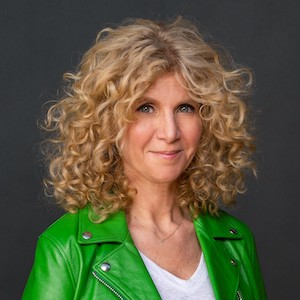
[00:00:10] Ray Latif: Hello, friends. I'm Ray Latif, and you're listening to the number one podcast for anyone building a business in food or beverage, Taste Radio. This is a special edition of the podcast, which highlights interviews with six founders, creators, and innovators who joined us on the show during the first half of 2025. Let's kick things off with Gail Becker, the founder of trailblazing frozen food brand, Caulipower. In a clip pulled from an episode featured on March 25th, Gail opens up about the guiding principles behind Kali Power's product development and highlights how hard work, energy, and sometimes unawareness of challenges fuel the brand's success. I think the point of reference is really important as well. And you've touched on this a number of times, which is you're not selling something that is really esoteric. You're not selling something that's difficult to understand or requires a high level of education. And I encounter entrepreneurs all the time who come out with really, really innovative products, but it's going to take them going over a mountain to get people to understand what they're doing. How do you advise and talk to early stage entrepreneurs about reducing the amount of education that it requires for someone to understand what they're selling?
[00:01:33] Gail Becker: Well, you know, look, we've all learned the hard way, right? And so a few things I like better than talking to entrepreneurs that are just starting out. I wish more had talked to me when I was just starting out. But money's tight when you're a small company. and you don't have the marketing budget that's necessary to educate consumers. What's interesting about Caulipower is the day I made my first and only cauliflower crust pizza from scratch, there were 569,000 recipes online. Right? 569,000 recipes. I picked one. I couldn't even tell you which one I picked. It was fine, by the way. It wasn't great. It wasn't horrible. It was fine. But that was 569,000 recipes hiding in plain sight for people who just wanted a better pizza crust. It's not rocket science and it shouldn't have to be. But that's not to say that we don't think the consumer is highly educated. We do. I think that there is a lot of like big food, I will say, who bets against the consumer, right? Who thinks the consumer isn't going to know any better. At Caulipower, we absolutely think the consumer knows better. In fact, we're betting on it.
[00:02:54] Ray Latif: When entrepreneurs hear this and they say, well, you know, Kali Power, they did everything right. They got lucky. I mean, but I think I think they didn't see the hard work behind it. I mean, how do you think about how do you advise people about hard work and entrepreneurship?
[00:03:07] Gail Becker: Yeah. You know, it's so funny because no one really warns you. And if they do warn you, you don't get it.
[00:03:16] Ray Latif: You're warning them right now though.
[00:03:17] Gail Becker: Yes. Believe me, I warn people all the time. But I cannot articulate, you can't really explain it unless you go through it. I think that's why the founder community is so close. because you can see it in our eyes. You know, we're all, we all speak this unspoken language of, you know, oh, you've been through it too. It's like, you know, you're closest to the people that you're in the trenches with, right? But I like to think a slightly different way in the sense that I think the beauty of entrepreneurialism is that you do enter with wide eyes. and super curious and boundless energy and a little ignorance. And I think it's all of that together, including the ignorance, that really can make you successful. I mean, think about it like this. You were talking about Big Food. These companies spend hundreds of millions of dollars on R&D every year. Why did I, this woman from California, come up with the cauliflower frozen pizza crust? That's crazy. And it's because they weren't consumers. They didn't have the frustration. And they thought, like all the people who told me, it couldn't be done. So, that's the beginning of the journey. And in many ways, that is the sweetest, greatest thing I have ever done in my life, other than my kids. As the journey continues, the company gets bigger, the journey changes. And that's okay, that's all par for the course. That's when it gets hard. You have a lot more rules to follow. It's not usually the reason why you did it. Would I do it over again? Sure I would. Would I do it more with my eyes wide open? Sure they would be. But I wouldn't have changed the ride and I wouldn't have changed the people I've done it with. And I certainly wouldn't change Kali Power's ability to help people.
[00:05:34] Ray Latif: The hard work was worth it, is what you're saying.
[00:05:36] Gail Becker: The hard work was worth it, but not for the reasons that, you know, people who are in the industry might think. It's not the monetary bit, right? Not even close. Because who knows how that story ends, right? But when I see how we have changed people's lives and made dinner easier and bring people joy and get people to hold our box and smile and all of the notes and emails and texts and direct messages that we get about how we've helped people, That's what has to satiate you. If that's not why you did it, then stay the hell out. Because otherwise it will never be, it will never be satisfying enough.
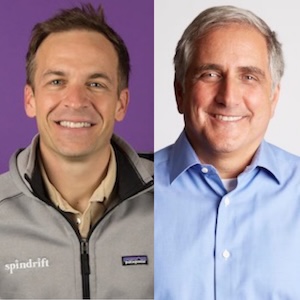
[00:06:33] Ray Latif: Next, we have Bill Creelman and Dave Burwick, the founder and CEO, respectively, of Spindrift, the beverage platform best known for its sparkling water made with real fruit juice and purees. In this clip, pulled from an episode published on April 8th, Bill and Dave talk about how the brand upholds its integrity and solidifies City Market position via a commitment to real ingredients and flavor innovation, and also explore how ambition, when guided by intentionality, leads to real, sustainable growth. Our position on, you know, real ingredients and then the kind of resulting calories or sugar really hasn't changed. I would say, I think what we would always say about our product, and especially now, I think this is true in the soda category, is that we're not relying on sweetness. We're really relying on dimension of flavor. What single strength ingredients give you uniquely is a little sweet, a little tart, a little body, some sweetness. You know, that's traditional soda intensity, but a lot more dimension of flavor. And that's why you don't miss the sugar. So I actually think now more than ever, we now know sugar can accelerate things in your body that you don't necessarily want. We know a lot more about the effects of sugar. So I think we're more, as Dave said, like we know ourselves so well now that it's much more about you know, kind of continuing to defend our proposition than necessarily kind of reinventing or reimagining it now as we expand. Dave, how does ambition fit into your strategy? On the one hand, you've got these great product lines and you want to be intentional about and specific about how you position them and where they're sold. On the other hand, I mean, I can see these and say, Hey, well, the sky's the limit for what you can do here. How do you think about and weigh ambition versus intentionality?
[00:08:43] Whole Foods: Well, I think if intentionality is followed correctly, then ambition is sort of achieved, if you will. So I think continue to do what we're doing. I think there's more categories to go into with real ingredients and real fruit that we could redefine, if you will. And I think we need to do that at the right pace and the right way. And ultimately, the ambition will be achieved. Personally, I mean, I think this is a billion dollar business and beyond. It is. Like I don't wake up in the morning, this is, it's only like week three, but I don't wake up in the morning and say, hey, how quickly can we become a billion dollar business? I think, hey, how, how successful can we make soda? And to your point, where does soda, where's it going to fit out a consumer's choices? Where, how are they going to consume it? What occasions? How do we do, how do we separate that from sparkling? How do we best reach that consumer? Should we be targeting modern soda drinkers or traditional soda drinkers or both? So I think it's great to have the ambition, but I think you get there by doing all the right, with not focusing on that every day, just focusing on what's right in front of you. And I think, again, this is a brand that is like, you know, it's from Bill and Dave team. It's like, it's, it's never wavered from its, its intentionality, if you will. And I think that's really, I think today's world, people see that they just understand it. And, um, I think that's a really powerful thing and I think we just got to keep following, you know, following that same path if we're going to get there. And actually I joined because I'm so excited about there's so few brands in any category that have that kind of sanctity to it that it's really super exciting to be a part of this and help the team achieve their ambitions. And again, I think this thing is, it's got a lot of runway ahead of it.
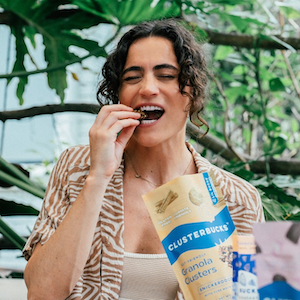
[00:10:22] Ray Latif: You've mentioned a number of times that Real Ingredients is a platform with which you can innovate into multiple different beverage categories. I think when you're considering new product developments, you don't want to over-innovate. You want to be very focused on what you have in front of you, but be cognizant about the potential for the brand. I don't know. I mean, I sometimes wonder about innovation as being a big trap for a lot of brands. Bill, how have you considered innovation over the years and timing in particular as it relates to the soda line? Yeah, we spend a lot of time on that, you know, and in general, if you think about, let's say we're in four to five product lines over 15 years, you know, it's about every two or three years that we feel like we're kind of ready to come out with something different and unique. I think that the difference is really, as I've mentioned already, like, It's about showing the versatility of real ingredients and trying to present in a unique way for consumers that may not yet have moved into spindrift. So, you know, we're about 5% household penetration today. We're, you know, 60 ACV, like we're, you know, we've been, pretty consistently and intentionally growing the brand. And that's always been a foundation really of the business from the beginning. And so I think we would love to continue to expand into lots of different occasions as long as we can bring something unique. That's the thing that to me is really important. I think our drifter community has come to expect that from us. You don't see all of the innovations we haven't done because they don't meet that criteria. I think as long as we continue to stay true to that, I think we'll be okay. Let's keep it going with Emily Griffith, the founder and CEO of Lil Bucks, a modern snack brand that champions buckwheat as its hero ingredient. In this clip from our episode published on February 18th, Emily talks about why getting into Whole Foods was a full-court press. She also emphasizes the importance of knowing your brand and processes inside and out when fundraising, and why she wasn't just selling her brand and vision, she was selling herself as a founder. You did raise some money last year and it was your Series A and raising your Series A can make you want to tear your hair out. From what I understand, I'm not an entrepreneur, but I hear from entrepreneurs about this. Talk about the timing and your thought process of when should I do this? How much should I be asking for? Who should I be talking to? Because all those things are so important when you are taking that first step, that big step.
[00:13:18] Bill Creelman: Right. Yeah. It is really a process that grinds you to a pulp, but you'll know your business inside now and 10 times over again, times a million. And as any founder, you're always fundraising, but especially through that, I mean that 2021 to to date is a very, very challenging environment in the post-pandemic world and a lot of shifts.
[00:13:44] Ray Latif: It's my first time hearing this, actually.
[00:13:45] Bill Creelman: Oh, yeah. Nobody's ever complained about it. Nobody's ever posting about LinkedIn on it. Yeah. But yeah, so always fundraising and Mostly from Angels because we would talk to all the big funds, but we're like, we see there is like the approach, like a magic spoon type of brand where you bring in big venture money early and, you know, big spend from the beginning. This is how we're going to do it. And I knew that wasn't what was happening here because of We really did have to prove like the consumers wanted Buckwheat and figure out fine tune our product offering and kind of the slow burn in that way. So we went the angel investor route for a while. And in 2023, we did in the middle of the year, we got confirmation that we were launching into Whole Foods. national, we were going from two SKUs in the Midwest to four to five SKUs nationally. And I was smart enough by that point to have learned that, you know, that doesn't mean it's just a big break or overnight success. Like the work has really just begun at that point. Like that, to me, it almost felt like last year was year one because we got to the point of achieving a baseline of distribution and awareness. Like now the fun begins. And so with that, it did. And, you know, we met Proterra Partners is the lead of the Series A. They're an agriculture focused PE firm based out of Minneapolis. And we met them at a sustainable food financing conference. And it's kind of weird, like, it's probably like dating, of course, too. It's like, when you know, you know, like, I wasn't specifically like, looking only at venture or for a Series A, but when we started talking and the types of investments they made, it was like, oh, actually this does seem like the right partner to do a Series A with. There was just a lot of alignment on the agriculture side and their expertise in sourcing and building supply chains too. And then their interest to get into emerging brands and a little bit of CPG. So yeah. And then, you know, there was like nine months of diligence between that.
[00:15:49] Ray Latif: How much do you feel like you were selling the brand, the business, the vision, as much as you were selling yourself as a founder?
[00:15:55] Bill Creelman: I mean, that's so funny you say that, because I feel like I was always selling the brand, the business and the vision. But really, I was selling myself as a founder and probably realized that later, that later on in the process, that is really something I should have been flexing more. I think especially women are probably a little more like, oh, I don't want to brag about myself for this or that, but just like laying it on the table. Like I'm so good at this. So like you need to unlock this so I can go run around and do what I'm amazing at, which is being the like evangelist for Buckwheat and for this brand. We all have seen it. I'm really good at it. Let's go.
[00:16:34] Ray Latif: So now I know a lot of folks listening are going to ask Ray, please ask Emily how she got into Whole Foods nationally, because it is a dream to and yes, there's a lot of work that happens after you get on shelf. But how do you get into Whole Foods nationally? I would assume it's an iterative process that you get into a few, you prove yourself out, you get into more, you prove yourself out. But I mean, is it that simple?
[00:16:57] Bill Creelman: Oh my gosh, you wish. Nothing is. But that's so funny you say that because even when I was selling in the farmers markets with my brown craft bag, I had a coffee date with Ricky from Think Jerky and I sat down with my like brown craft bag and was like, so how do we get these in Whole Foods? And he was like, very alarmed. You have a lot to learn before then. Like my packaging, all of that, you know. This was even before Clusterbuck, so we did have a lot to learn. But even at that time in 2021, I feel like there was, well, maybe not so much anymore because of the pandemic. There was that playbook of getting in a region, demoing the crap out of it, really crushing that region, going to another region. And obviously there's been like a lot of region shifts with Whole Foods and like everything's constantly changing. And for me, like I think at the start of 2023, I was like, Whole Foods is the absolute launch partner for us. That is our target consumer. We're launching buckwheat, this unfamiliar ingredient, into the U.S. It's going to start in Whole Foods. I've decided they're supporting regenerative agriculture, which is big for us. So it wasn't just you know, submitting to the reviews and following up and obsessing over your buyer. But it was like our buyer's boss and his boss and the marketing team, like what we could do together in marketing, keeping them appraised on like anything happening with the brand, the sustainability team. What are we doing at the farm? You want to come out to the farm, even though we only have two SKUs in the Midwest? Why don't you come? And then like going to Expo West and having a booth like for me, that show isn't about like direct sales, you're not writing orders there, but it is showing certain people in the industry, like you're here to play and you're a serious brand and having that home base. And so Expo West every year would really be where like, I was trying to weave all of that together. Like, look how aligned we are in region and marketing and brand and ingredients and this product. You have to give this a chance. And yeah, 2023, the start of the year, we all want to be in Whole Foods. But it became more than just like the submissions and following up and being a rock star with the buyer. It was like a full court press on the entire company. So not easy, but doable.
[00:19:10] Ray Latif: Not easy, but you did it. And I think if you said Whole Foods or Busts, that was the path.
[00:19:17] Bill Creelman: It is kind of crazy because that was the plan. And I was like, otherwise, I don't know if I've got it in me. Like we need a big partner like that to anchor our core product line. And it worked. So I'm glad.
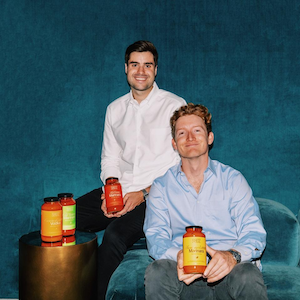
[00:19:31] Ray Latif: We continue with Troy Troy and Winston Alfieri, the co-founders of Saws, a bold, culture-forward pasta sauce brand. In this clip, pulled from an episode aired on April 22nd, Troy and Winston reveal how they convinced skeptical retail buyers that Saws could deliver true incremental value, and how saying, I don't know, has opened doors in unexpected ways.
[00:20:00] Whole Foods: But the problem that we saw with the category early on was that it felt commoditized, right?
[00:20:04] Ray Latif: It felt like there had just been this push to, you know, for a handful of brands. It didn't feel that way. It had become commoditized.
[00:20:11] Whole Foods: Exactly.
[00:20:11] Ray Latif: You know, exactly. And so, you know, being able to add real incremental experience and decommoditize this commoditized category is something that I think has struck a chord with a new generation of consumers. Yeah, I'm glad you used the word incremental because that was the word I was going to use. When I have sauce in my pantry, I think about it. Okay, this is an incremental value for me because I don't have to rely on whatever tomato sauce I have in there. If I want to make something that's a little different, spice things up, maybe mild things down, if that's a term, I can use sauce. When you talk about retailers, they're always looking for incremental value as well. But it's more, what are you bringing to our stores that are going to bring more customers into our stores, that's going to make our shelf, our tomato sauce shelf, better and more dynamic. Was that the simple pitch when you started out? I mean, because in, correct me if I'm wrong, Target was your first major retailer. Yeah, we'd launched in Whole Foods Sopac prior to Target, but our first national account was Target, chain-wide. And that was honestly exactly the pitch. We felt like we were And we still feel today that we are the most incremental brand that the category has ever seen, right? And I think, really, like Winston had touched on, having this blank slate of opportunity in marketing the brand in a fundamentally different way than anybody else, we feel, than really anybody else has permission to, gives us this opportunity to digitally engage a younger Gen Z millennial follower. And we think there's enough brand affinity that we can build to actually get that consumer into store. On the flip side, in thinking about the consumer that's actually in their habitual shopping routine in-store, the way the brand presents itself with bright, exciting colors on shelf and winning secondary display and off shelves, and then building that interest in a consumer reading Hot Honey Marinara and knowing what Hot Honey is and knowing what Marinara is, but never seeing the two together, is we even feel we can drive in-store incrementality with the existing shopper, right? I think to go off Troy's point, all the buyer meetings we do, when we're pitching retailers, they're so excited to be, and they really say, like, we've gotten this a few times, we hate reviewing the pasta sauce category because every single time we get a new brand in here and they say, we have the freshest Italian tomatoes. And we actually go against conventional wisdom and use California grown tomatoes, which is not like a big pitch for us, but it's just ironic how a lot of the buyers have been telling us that and they're excited when they leave our meetings. And I think it's, we want to really shift category dynamics and that for us, the category hasn't been this way in the past, but it should be a discovery category. The consumer should go walk to the pasta set and expect innovation, right? We want the consumer to be excited to shop the category, whether it's us or somebody else. But that was always confusing to us in a sense. It seemed so obvious for us as young consumers to crave excitement and innovation. And we just felt like there was nothing that was incremental enough to drive the discovery consumer to the category. As two young founders, when we think about building the team, we want to bring people in who we can really delegate a ton of responsibility to, and lean into to learn from, and to understand how they think about making decisions with all that they've learned in the past, right? I mean, we have a lot of young team members as well who we learn from too on the marketing side, but Ops comes to mind as one that daily, we learn something from our Ops team, and we owe them a ton of credit in being able to scale the way we have. I mean, we were really in 10 stores up until about January of last year. So to be able to maintain that scale with a lean team takes a lot of great talent. And I think we've been fortunate to have talented people who we can learn from. How do you walk the line between being humble and saying, I don't know, I'm willing to learn, and maintaining that leadership position, saying, we're the founders, we're the bosses, essentially? Yeah, it's not easy. We're still learning. Yeah, we're definitely still learning. I think it's a, you know, we've had times where we're just like, we have to figure this out. It's the figure it out mentality of like, yeah, we just got to figure it out or else we can't fail. I think that that is the ultimate role we play is like constant problem solving problems for our team and problems for the business as a whole. And this feeling of constant crisis management in many ways, right? We'll make a great PR team one day. No, I think it's more so building a team and understanding, you know, at the same time you're building culture that didn't exist a year ago that now has to exist in a way that keeps everybody motivated and happy and willing and bought in is something we're still learning, right? We're really still learning that. And I don't know the answer yet. Next up is Rosa Li, the founder and CEO of Wild Wonder, a fast-growing brand of sparkling beverages that are infused with probiotics and prebiotics. In this clip from our episode published on March 18th, Rosa talks about how its pricing and retail strategy are interwoven, how she met buyers from major retail chains, and how demand planning and listening to consumers has guided Wild Wonder's innovation and marketing efforts. You've grown, Wild Warner that is, pretty quickly, pretty fast in these last few years. And I wonder about your pricing strategy as it relates to distribution. When you're breaking into those new markets and new channels, how do you think about aligning pricing and distribution?
[00:26:04] Dave Burwick: Yeah, that's a great question because we are always looking at how much is the customer wanting to pay and like what are they saying to us in terms of what we can do better. We're always trying to be at least like 1% better every day. So price is something that we are thinking about as we expand to conventional retailers and mass retailers. I would say looking at our velocity today and we are top in terms of velocity performance, people are paying the premium. So we're not so worried about price today. Obviously, as we grow, you know, maybe we expand more with Walmart, we expand more with the conventional retailers, there's going to be some price compression. So we just think about, okay, well, Walmart usually looks for a certain discount to the rest of the market. Costco will want to offer a percent value to their customers. So we just want to make sure the math works while still maintaining a really solid margin so we can grow profitably, sustainably. But so far, we're not so worried about pricing. I would say to your point earlier, you know, if we were to position ourselves in the solar category, people are going to be expecting. $2, $2.50, that type of price range. Kombuchas are priced at anywhere between like $3 to $4. So when they first started, they were at $5. So for some of the premium products, they are priced higher. So we offer more benefits in each can, really unique flavors, staying true to our value and why people are buying us, we'll continue to command that solid velocity at a higher price.
[00:27:40] Ray Latif: You mentioned two very big retailers that a lot of folks would want their brands to be sold in. That's Walmart and Costco. Did they reach out to you or were you chasing those two retailers?
[00:27:52] Dave Burwick: You know, I actually met them at the show. Not this year, previous year. So this speaks to the value of being at Expo West. And this is truly the Super Bowl of natural products.
[00:28:02] Ray Latif: Did you have a booth?
[00:28:03] Dave Burwick: Yeah, we have a booth this year.
[00:28:05] Ray Latif: Did you have a booth when you met the buyers from Walmart?
[00:28:07] Dave Burwick: We had a booth when we met. I was not just walking around the show with a backpack, which also is a great strategy. So we started doing Expo. The very first year that was Expo, you know, was allowed post pandemic. So it's 2021. So this is our fourth year doing it. The company is five years old. Every show just gets better. So we actually met amazing retail partners at Expo West.
[00:28:31] Ray Latif: thinking about your production capacity and what you would need to be in those stores, that's a whole different story. How do you plan for something like that? How do you plan for that PO from Walmart? How do you make sure that Walmart has the confidence that you can fill those orders?
[00:28:46] Dave Burwick: Yeah, I mean, we take a lot of pride in our operations. We've been operating very efficiently, even at at a smaller scale than Olipop or Poppy. So in terms of production planning, we operate in different regions now. We have multiple co-packers that can help to support certain volumes. So if we don't plan exactly as demand, we can always fill a little bit of smaller volume to supplement with additional co-packers. I would say we generally do a pretty good job with inventory. I would say the planning part is we don't plan from a HR headcount perspective for Costco, because that's very risky. And those are rotations and volume that might not come through. But for other retailers, there's usually a reset schedule that's months in advance. You know, for Whole Foods, I would know, you know, six months in advance before it goes on the shelf. So all these retailers have their reset schedule. So we do actually have pretty good visibility in terms of, OK, what's next quarters? demand. Costco is probably the only one that's a little bit volatile, but we do actually, you know, we've been talking to buyers and we generally have a pretty good sense of when that next rotation is.
[00:29:59] Ray Latif: How many co-packers are part of your team or I guess you work with?
[00:30:02] Dave Burwick: Yeah, we have two and a half and one on the East Coast, one in the Midwest and a smaller co-packer on the West Coast in California. That's more used, you know, to supplement volume and for testing new products.
[00:30:16] Ray Latif: How do you have a good relationship with all three of them to make sure that they're swimming in the same direction as you guys are?
[00:30:21] Dave Burwick: It just takes time to build relationships. We are very good at communicating what we need.
[00:30:26] Ray Latif: What do you mean by that?
[00:30:28] Dave Burwick: Yeah, so anytime anything changes, anything that we have a shortage in terms of raw material, we will communicate as early as possible. These are, I mean obviously we do a lot of diligence in picking co-packers and making sure that they are quality co-packers. We do a lot of reference checks to make sure that they also communicate well. They have quality standards that fit our standards. So the co-packers, actually they all came by our booth as well at Expo, spoke very highly of us just in terms of the way we work. I think for startups, one of the hardest things to do is the balance between focus and innovation. A lot of people are attracted to shiny objects and we're forced to constantly generate buzz, especially given the noise on the market. I mean, have you seen the number of prebiotic sodas that's launched in the market in the last two weeks? So, I would say we use social listening to figure out what do they care about? What are they looking for? And how are they consuming our products? There's actually a framework called Jobs to be Done by Dan Olson, and it's really a matrix. Think about it as on the x-axis, there's the importance scale, and on the y-axis, there's the satisfaction scale. Satisfaction meaning how satisfied are people nowadays with everything that's offered on the market. And importance meaning how important are these product attributes to your customers. So we want to be focused on the important attributes that truly are driving buying decisions. Are people really value and pay money for. And on the satisfaction scale, we want to be on lower on the satisfaction scale. So it's not an oversaturated market. And there's not a lot of those. So the two things that we still, you know, again, two things we focus on are the unique flavor profiles and the benefits. Those are the things we continue to hear in social listening, in surveys everywhere, you know, post-purchase surveys. We do a lot for both online customers and retail customers to figure out why are they buying Wild Wonder? How are they consuming us?
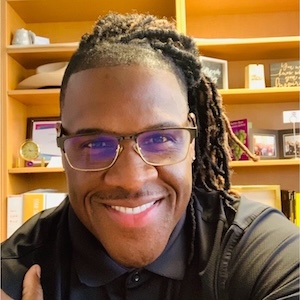
[00:32:33] Ray Latif: Finally, we hear from Todd Davis, the Category Manager for Natural, Local, and Multicultural Foods at Kroger-owned King and City Market Stores. In the following clip, pulled from an episode published on April 29th, Todd talks about how he evaluates emerging trends and new brands, the value of transparency, hot conversations, and emotional detachment when making buyer decisions. You reached out to us and I'm so happy that you did. I assume that you listen to Taste Radio and you consume BevNET and Nosh content on a pretty regular basis. How do you interpret, dissect, evaluate some of the industry news that you read and hear about?
[00:33:20] Emily Griffith: I just think that you have to go out there and get that information. Some of it's not going to go to you. I just do a lot of things to go out there and just capture what's the newest thing. What's the gap opportunities with our division? Is there something out there that I need to bring in that we don't have in? Or is there something out there I need to expand the SKUs on? There's a lot of different things that I identify when I'm out there looking for what can be a market disruptor or what can be something in the market that I need. And I digest all that information. But the most important thing I do is I go out there and make our competition as well. Have a conversation with the people within the store and just, hey, what's working for you? How's this brand working for you? And if it's something that's working well in their retail, and I don't currently have it in our retail, let's have some conversation with their brand and see, can we bring it in? I think that's real important to not get stagnant and stale, just continue to grow every single day. The 1% rule, you know, get 1% better every single day.
[00:34:14] Ray Latif: Yeah, I see a lot of brands here at Expo West and I love shopping at stores and finding something new. It's pretty rare when I go into a store and say, hey, I've never seen this brand before. And I'm interested and attracted to products for a variety of reasons, but I'm not a retail buyer. What motivates you to pick something off the shelf? learn more about it, taste it, and potentially put it on your store shelves?
[00:34:37] Emily Griffith: Yeah, there's a couple of things. First of all, it's people. I think that the brand, once I meet that brand and get to know the people, I think that's really important. Another thing too is that let's try something new. I think every single day we just got to go out there and get something new. And so when I look at those brands and I identify those brands that I want, what I want to bring in, I think what's really important is how can it make a difference? And here's the most important thing with the brands I bring in, because a lot of brands I bring in, they're not in line, they're not in the park, they're not down the aisles. I use a shipper program or NCAP, things like that. And so what that means is that a lot of those items are not on the shopping list. So how can I get this item that's not on the shopping list that's gonna be incremental impulse buy inside the shopping cart? And so what I do is that we have different ways and methods we do it. We do a lot of demos and sampling. We do any kind of thing that they can do from their side as far as email blast to their consumers, their DTC consumers. We just have a lot of things and avenues that we do to get their brand and some excitement about it. Some excitement more than anything is one of the key components of it.
[00:35:41] Ray Latif: I'm sure there's a lot of times when you've said no. I'm sure there's a lot of times when you say this is not the right fit. How do you determine, even if you like a brand, that it is not the right fit? Or how do you determine if a brand doesn't necessarily fit into your personal life, but is a good fit for King Soopers? How do you differentiate? How do you make that decision?
[00:36:00] Emily Griffith: So there's a few things. One of the things I do is that I take emotion out of promotion. There are some items that I just don't have a taste for. I don't like cold coffee. I can't drink cold coffee. It just upsets my stomach. But we've done some deals with some cold coffee brands, some super coffee, Rise Coffee, and those are successful brands that we partner with. But one of the things that I tell you that makes me go out there and select those brands, and sometimes you have to say no to them, is that It's a lot of things are data driven, you know, so we look at data and then also just I call it good analytics. Kind of like is this is this brand really going to work in our store in our region? And what I do is that go out there, talk to the brand, tell them what my expectations are. They tell me what they expect from us as the King's Super City Market. And then what we do is have a conversation and let's give it a try. because I think you miss 100% of the shots you don't take. So I think it's really critically important to just give it a try. Now, there are some times where it's not a no, but it's a not right now. There may be some things from a capacity standpoint you're not ready for. There could be a lot of different variables that make me say, not right now, not right now. Let's get some growth in you. Maybe you have to go to another retailer first. There are some other things that plays a part in that, but it's never really a no, it's more so like a not right now.
[00:37:19] Ray Latif: You mentioned Super Coffee. I spoke with their founders about three years ago and they said, getting on shelf is the easy part. That's true. That's the easy part. And people don't recognize that the hard work comes after. Correct. And the hard work comes after in maintaining and enhancing your relationship with your buyer, with that buyer relationship. And I'd love to just chat about a few things as it relates to best practices for maintaining and enhancing that relationship with your retail buyer. How do you say as a brand founder, how do you say no politely to a request that you may have of the brand and the founder?
[00:37:56] Emily Griffith: Well, if they can't say yes, what's the timeline? If you can't, if I say, hey, I need 300 shippers, and they say, well Todd, we can't produce that many. And so I give them a timeline, okay, I'll give you six months to produce that. And if they can't meet that timeline, then there's nothing I can do about that. But a lot of times I tell them why I'm saying no, because I think that's an important element of it, because that could go and course correct if needed to bring whatever that no was to life.
[00:38:22] Ray Latif: How about transparency? When there's something that they need to tell you and it may not be something you want to hear, is transparency always the best practice or is it, let me wait to give them bad news?
[00:38:34] Emily Griffith: No, I think transparency is always a good thing. I think it's a good thing, especially because the one thing you don't want to do as a brand is over-promise and under-deliver. I think that's the bad, bad way of thinking. And I know a lot of brands get excited, like, oh my God, I'm gonna be in King Soopers and City Market, but don't over-promise and under-deliver. Just tell me what you can do. Tell me if the things I'm asking for are attainable. And if they are attainable, let's work and let's do some business together. But the one thing I don't want you to do is say, yeah Todd, I can get those 300 shippers to you by next Monday. And then all of a sudden, me and my team is writing a sales plan together. And I reach out to them, I say, OK, they're going to be in the store. I need them in stores Wednesday. I need another month. That's not the right thing to do.
[00:39:16] Ray Latif: Yeah. And for you as the buyer, the last thing you want is empty shelves and you're going to have to fill those shelves with something else. And it may not be the brand that you were working with, but hey, it's, it's filling your shelves.
[00:39:30] Emily Griffith: And it's true because, you know, I have leadership that I'm responsible for. I have rules and, and P&L that I'm responsible for. And so the things about it is that if leadership, I'm telling them leadership, I'm getting excited about a brand I'm posting on LinkedIn, I'm doing all these different things to get excited about the brand. and then they can't fulfill that first order and I'm having empty shelves, leadership is going to look at me about that because that's my responsibility. So I tell the brands, I'm transparent. I like to call it hot topics, honest, open, and transparency. So whenever I talk to a brand, we say, let's have a hot discussion. And they tell them, I say, HOT is an acronym, Honest, Open, and Transparent. And so we talk about all those things. And a lot of times I've had brands say, I can't do that to HOT right now. Let's come back. And we have came back and cycled some brands and brought them back in when they were ready. So it has worked both ways.
[00:40:20] Ray Latif: That brings us to the end of this episode of Taste Radio. Thank you so much for listening. Taste Radio is a production of BevNET.com, Incorporated. Our audio engineer for Taste Radio is Joe Kratchy. Our technical director is Joshua Pratt, and our video editor is Ryan Galang. Our social marketing manager is Amanda Smerlinski, and our designer is Amanda Huang. Just a reminder, if you like what you hear on Taste Radio, please share the podcast with friends and colleagues. And of course, we would love it if you could review us on the Apple Podcasts app or your listening platform of choice. Check us out on Instagram. Our handle is bevnettasteradio. As always, for questions, comments, ideas for future podcasts, please send us an email to ask at Taste Radio.com. On behalf of the entire Taste Radio team, thank you for listening, and we'll talk to you next time.
[00:41:10] Emily Griffith: you