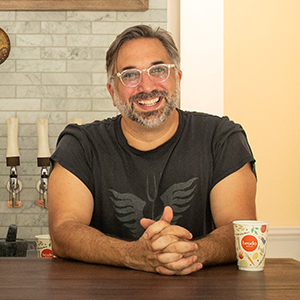
[00:00:18] Ray Latif: Hello, and thanks for tuning in to Taste Radio, the number one podcast for the food and beverage industry. I'm editor and producer Ray Latif, and you're listening to episode 202, which features an interview When Marco Canora and Andrew Garner, the Founder Andrew CEO, respectively, of pioneering bone broth company, Brodo. Just a reminder, if you like what you hear on Taste Radio, please share the podcast with friends and colleagues. And of course, we'd love it if you could review us on the Apple Podcasts app or your listening platform of choice. When Marco Canora opened the first Brodo location, a ticket window at his acclaimed New York City restaurant, Hearth, he believed he was starting a new category of sippable bone broth beverages. Little did he know at the time that Brodo would spark a national craze for bone broth, which consumers prize as a convenient source of nourishment. In the following months, dozens of bone broth cafes and brands popped up across the U.S. While emerging categories often benefit from an expanding shelf set, Marco, an award-winning chef who's helmed some of New York's most admired eateries, had some misgivings about product quality. There's a right way to make bone broth, he says, one that involves patience, care, and premium ingredients. It may cost more to produce at scale, but Brodo lives and dies by its standards, one of the reasons his beef broth was recently chosen as the best in America by popular food media site Epicurious. In the following interview, I spoke When Marco and Brodo CEO Andrew Garner about the company's development since it launched in 2014, how timing and location played into its early success, and the company's foray into packaged products. They also spoke about the company's consumer education strategy, and When Marco believes that the steepest part of the learning curve in CPG is also its most frustrating. Hey folks, it's Ray with Taste Radio. I'm here in New York City, and with me right now is the founder of Brodo, Marco Canora, and the CEO of the company, Andrew Garner. Gentlemen, thank you so much for being with me.
[00:02:14] Marco Canora: Very happy to be here, Ray. Yeah, thanks a lot, Ray.
[00:02:17] Ray Latif: You guys made my day, morning, month. You brought a whole bunch of Brodo broth, and I'm drinking right now some of the products. Marco, what'd you put in here?
[00:02:27] Marco Canora: That's the hearth broth. It's our signature broth. It's made with turkey, beef, and chicken. cooks for about 16 hours in a small open top kettle.
[00:02:36] Ray Latif: It's phenomenal. Thank you. And my first cup of brodo broth was at Expo East 2019. And I came and saw you guys and we were chatting and Marco, you were so kind to give me a full cup of the spicy Nona. Yeah. Can I talk about the spicy Nona for a second? Please.
[00:02:53] Andrew Garner: Yes.
[00:02:54] Ray Latif: If you ever are in need of a good feeling, you know, sometimes when you, when you eat something and you just, you're like, wow, that makes me feel so good. That's exactly what my reaction was to the spicy Nona. I just instantly felt better and felt good for the rest of the day. Yeah. I'd like to say it tastes like a hug. There you go.
[00:03:12] Marco Canora: It really does.
[00:03:13] Ray Latif: That's exactly what it was. It tastes like a hug and it just kept me going through the entire day. I'm like, what the heck are these guys doing? that no one else has figured out yet. And that's not to, you know, knock on any other broth company, but you guys make some pretty killer product. Yeah. Let's start from the beginning. Marco, you know, well-known chef in the industry, James Beard Award winning chef, the accolades, you know, we could go on and on, but tell our audience a little bit about yourself and how you came to be the founder of Brodo.
[00:03:42] Marco Canora: So I'm a restaurant guy. You know, I've been working as a cook or a chef in New York City for 20 odd years. Before that, I was super into food. I grew up in a, I was very fortunate to grow up in a household where cooking was very important. You know, we always gathered around a table, had a garden. So I've been very lucky to have food in my life. And it's like, it is the entirety of my life. Like I am feeding people, cooking food, making broth, and it's absolutely who I am. And I love it. I have a restaurant in the East Village called Hearth. And Brodo was founded out of the back door of Hearth. Literally out of the back door. Literally out of the back door, which oddly, our back door is on First Avenue and our front door is on 12th Street. So yeah, there's a little door on First Avenue. And in 2014, I kind of launched this concept, which was, you know, hot broth in coffee cups with a few different add-ins so you could have some customization. I printed a little sign on the back of my menu of Hearth and had a few little pump pots and, you know, open the business. Why broth? Why not like, say, croissants or something like that? So it's funny because I had looked at that window as an opportunity for, you know, we were at Hearth for 10 years before Brodo launched. And from moment one for the entirety of those 10 years, I kind of looked at that window as an opportunity because there's so many passersby. But not until I started consuming broth personally to help my own kind of health did I feel motivated enough to actually launch something out of that window. You know, after 15 years of grinding in New York City as a chef, you know, opening restaurants and working 80 hours a week, I kind of hit my 40s and felt pretty ill. I was like super overweight. I was like smoking a lot. I was drinking a lot. I wasn't managing people well.
[00:05:38] Ray Latif: You were a New York City chef.
[00:05:39] Marco Canora: I was a New York City chef, burnt out, very short fuse, kind of depressed and just not a functioning human. I wasn't, I wasn't proud of the way I was functioning as a human in the world. And I made a very conscious decision to kind of step back and look at what I was doing and how I got here. And I began to make very conscious changes. And one of those changes was subbing my five quart a day habit of coffee. I had coffee in the morning and then I transitioned to this hearth broth because it's the cooking broth I have in the restaurant. And it really had an amazing impact on my health and it really built a foundation to help me get better. And that's when I was kind of like, I felt very motivated to try to sell it in a cup as a beverage the way I had been drinking it. Let's share this with the world. Yeah, big time.
[00:06:33] Ray Latif: So Andrew, how did you come to Brodo and what's your role with the company today?
[00:06:38] Marco Canora: So I met Marco in 2016. I guess he was two years into it. I was a customer, I was friends with some of his founding partners and just loved what he was doing, loved talking about the business. We would get in, you know, some late night discussions about what he was up to because I was excited by how new it was and as a customer appreciated it. My background, I worked for Coca-Cola for about a decade, so I got the beverage angle, and in a wide variety of roles, including in Japan, which is a very progressive, innovative, you know, market for beverages. And then I worked in consulting in healthcare for about another decade. So this idea of bringing beverages, you know, at Coke we used to say within an arm's reach of desire, you know, together with a healthy, engaging product, I'm putting it in neighborhoods, which is what affects our health, was incredibly compelling to me. I think he had just let his CEO go or he had had already a CEO. He had just let his CEO go. So one thing led to another and he said, well, why don't you be the CEO? So I always say he's our best salesman. And he sold me on kind of leaving my day job and making this my day job. And it's been been over two years now, I guess, and it's been fantastic. So just getting started, I hope.
[00:07:56] Ray Latif: Well, your background kind of makes sense for what Brodo is all about healthcare and beverage. The interesting thing about broth, however, is that some people call it a soup. I don't want to get you angry, Marco, because I know you're touching about calling it a soup. Yeah. Why are you so adamant that it's a beverage?
[00:08:14] Marco Canora: It's a new category, and that's very exciting. I really love the convenience of it. The notion of people running around New York City with cups of broth in their hand instead of cups of coffee is something that I find incredibly exciting, and I think it's a really large opportunity for us. It pales in comparison to coffee from a nourishing standpoint. I mean, it's much more filling. It doesn't tweak you out, but it does energize you, kind of like an adaptogen would. And it's just very comforting and calming and nourishing and delicious. We have become very obsessed with function and we forgot that it should taste good too. So it's like either it's optimized for salt, sugar, and fat, and it's the best tasting thing ever, but you probably shouldn't eat it from a nourishing standpoint, or it's functional and it's really good for you, but you got to kind of close your nose. And I've always been really excited at the fact that Brodo is both at once, which is to say incredibly delicious, comforting, satisfying, and also incredibly good for you.
[00:09:17] Ray Latif: Sometimes the best things that are good for you are the most simple things, right? Yeah, like an apple. Like an apple, there you go. And when we were chatting at Expo East, one of the things that really stuck with me is how much care you take into producing the product, how much quality goes into every single cup. And there's this notion, I think you mentioned this in a prior article that I was reading about you, that simple ain't easy. Skipping a step, you know, cutting corners is just not part of your MO. And I wouldn't expect it to be for a restaurateur with your cachet, but it's expensive, right?
[00:09:56] Andrew Garner: Yes. Guessing your margins? That's risky. Belay Financial gives CPG brands the clarity to scale smarter, faster, stronger. Get your free inventory ebook by texting TASTE to 55123 and start making data work for you.
[00:10:18] When Marco: Tune in at the end of this episode for an exclusive interview with Matt Lynn of Belay Solutions. He sits down with Melissa Traverse to break down the biggest inventory and accounting mistakes CPG founders often make. You'll learn how to bring clarity to your numbers so you can scale with confidence. So, expensive ingredients.
[00:10:39] Ray Latif: Low yields.
[00:10:41] Marco Canora: Long cook times.
[00:10:42] Ray Latif: Not the most inexpensive product to buy on a consumer level. No. If you were an investor, you might say, this doesn't sound like the most sustainable business. So how do you make it work?
[00:10:53] Marco Canora: Well, first I want to just say on the idea of like making it the right way, like the long, hard, slow way, that was easy for me because look, before Brodo, I had no idea what it meant to commercialize a product or, you know, this is all new to me. I'm a restaurant guy, right? So I grew up with broth and I've made broth for 20 years professionally. So it was pretty easy for me because there was only one way I know how to make broth. And we've had plenty of conversations with plenty of people about all the ways that I've learned how broth has been made in the past. And frankly, like that's not broth. Broth is made by boiling bones at the right ratios with a lot of fresh vegetables, small pots, hand skimming. All of that stuff is incredibly important to me. I mean, it's like it's the foundation of my kitchen for 20 something years. So there's only one way to make it. I do believe that As consumers get more and more and more educated with the access to information that we have today that that's going to become our friend because People are learning more about what it means to get nourishment from your food and the value of food as an incredibly important thing that you put in your body on the daily. And the newer generations, I think, are in a position to really call bullshit on a lot of the bad things that are happening in the big food world. So I'd like to believe everyone is going to begin to eat less and they're going to begin to eat more higher quality. And I think we're really positioned to capitalize on that.
[00:12:33] Ray Latif: It certainly seems like we're in the midst of that evolution of consumer education and awareness. Early days. For sure. Yet at the same time, you currently run a business, a business where you're expected to turn a profit. You're expected to be scalable, especially in the CPG industry, especially in the beverage industry, where, you know, oftentimes volume is the name of the game. Andrew, you know that as well as anyone coming from Coke. So what is the communication strategy? You know, I saw a video of exactly what you're talking about, Marco, which is the process and the preparation of the broth. And it was absolutely stunning and beautiful. It was like watching a cooking show, right? Like, you know, I think that's, and that's why so many people watch cooking shows because of, you know, the beauty of preparing food. It's a wonderful process. How do you share that though on shelf? You know, how do you share that when your product, you know, is behind a glass door in a freezer. What's been the best way to communicate what Brodo is and what it's all about?
[00:13:32] Marco Canora: So out of necessity and love, we moved first, well, in late 2016, when I joined, we moved first to expand the shops. So why shops? You're talking about the retail stores, your storefronts. Yeah, thank you. So in late 2016, we opened our first freestanding proto shop in the West Village. And what did we love about it? First of all, it's a very small shop. And it's part of a neighborhood. And when you're part of a neighborhood in New York, people stumble in and they say, well, what's this cool place? And the biggest thing we need to do to answer your question is to get people to have the experience you had at Expo East and that, you know, people are having today. it. Because once you try it, you realize it's different. And by the way, our shops give us a great opportunity to communicate to people and tell them that, you know, in my opinion, big food and big companies don't make broth the way we do. And that's a real travesty because broth has been around for generations across the globe. And home chefs still know it and great chefs like Marco still know it. But we lost that. So we lost the flavor benefits. We lost the health benefits of it. So to answer your question, first step was to build out the shops. And we now have six shops in Manhattan. We've spread them out around this little island. We basically have a shop within a mile of everybody in Manhattan. And it's bringing a lot of people into the category, if you will. And a lot more people are talking about broth. And those shops can make money. They are capital intensive, of course, but we really weren't in a position to go after a broader play in grocery really until late last year. We were going after it kind of using the brute force method. Yeah, we were throwing frozen jars of broth through the windows. Just about. We were lucky enough to get into the Whole Foods in Williamsburg. So we were trucking broth out there, self-distributing that to one location. It was really popular there, partly because we didn't have any shops and it was, you know, that demographic out there, you know, embraces new things and embraces great food. So we did that for a long time, but we were kind of, you know, filling it. We were literally making it one place, taking it somewhere else, filling it, you know, getting it certified. And so for better or for worse, it was $20 on the shelf because we had no choice. We joked about hopefully history will validate that as a good thing because, you know, we had to premium price it, but people still bought it. And they saw that people were willing to buy quality. And they actually expanded us, you know, the brute force version of that we expanded to all of the Whole Foods in New York City. And then only late last year, did we really figure out a way to produce at some scale. And while we were at it, we basically reduced the package. We were in a 30 ounce package. We reduced it to 22 ounce to get the price point down from $20 to now in the $12 to $13 range. And we redesigned our package so it was a little more fun and playful. And we're really excited about it. That's the beginning, I think, of the, I hope, the next chapter for us. It's a rite of passage to have that first package just be a disaster, isn't it?
[00:16:40] New York: In the beverage industry?
[00:16:41] Marco Canora: For sure.
[00:16:42] New York: Exactly.
[00:16:43] Marco Canora: So we did it and now it's behind us. And we love our new package. We think it's like it finally looks as premium as the product that's inside of it. So that's a good thing.
[00:16:53] Ray Latif: The trial component, those retail storefronts are amazing because you get someone in to try the product, even if they're getting a sample. I mean, do you offer samples to anyone who wants a sample?
[00:17:02] Marco Canora: Yeah. Yes.
[00:17:03] Ray Latif: I mean, are the storefronts sort of like these 3D billboards for you guys in some ways to get people to buy the product? outside of the stores?
[00:17:10] Marco Canora: Well, it certainly drives engagement in the grocery stores and on e-commerce. But it's way more than just marketing because, you know, we're very focused on making sure that the shops are not just a marketing vehicle, but they're also a viable business. And so far they are. And they keep getting better.
[00:17:29] Ray Latif: As you mentioned, they're profitable. Yeah. Timing is really important in anything, particularly when it comes to food or beverage, though. When you launched BRODO It seemed like that sort of kickstarted a huge interest in broth across the country. You started seeing broth shops opening up in different parts of the U.S. and major cities. New broth companies, packaged broth companies opening up, seemed like every other month. How did you figure out that the timing was right for this concept?
[00:18:01] Marco Canora: You know, one of the things I pride myself on as a chef in this industry for a long time is like, I've never been one to chase fads, right? So in a lot of ways, I think it was luck that the timing was as good as it was. One of the things, you know, one of the early stories I love to tell is there, you know, there's this a woman named Sally Fallon who wrote a book called Nourishing Traditions like 20 years ago. And it's like the gold standard of like health and wellness way before it was like a thing. And I had launched my window and like five days after the launch of the window, I read an article online that she's coming out with a second book and everybody's been waiting for her second book. And her second book was called Nourishing Broth. And I was like, holy cow, I must be onto something with the timing. And you know, Paleo was kind of, coming into, you know, it had been around for a while, but not, it didn't get the traction that it was getting the whole health and wellness community thing was, you know, hockey sticking up. So the timing was great, but I'm very proud to say, like, it wasn't a driving factor behind why I did it. It was just like a bone and added bonus.
[00:19:09] Ray Latif: Well, when you were doing broth, you saw a lot of other chefs concept, say hamburger joints, that didn't seem to be or fit within your... Not at all.
[00:19:20] Marco Canora: I've always been a Whole Foods lover. I've been a nutrient, you know, trying to glom onto nutrient density is something I really love. So it's like, I really think people are starting to calibrate their food choices around the notion of nutrient density and also hopefully the notion of if your great-grandmother recognizes it as food, I'm a huge proponent of that because I think what's happening in the healthy snack space in a lot of areas is kind of criminal because a lot of these quote, healthy snacks are nothing more than highly processed foodstuffs that your great grandmother wouldn't recognize. Now that's not to say I don't want to paint with a broad brush, right? Like you had the rind guy on the other day, I think slicing whole fruit and then drying it out and not doing anything to it. Like that's truly a great healthy snack because it's a Whole Foods that's traditionally prepared through air drying. So we're trying to do that in the broth space, right? There's no standard of identity for broth out in the world. And it's kind of problematic, because as soon as bone broth came onto the scene, everybody just pasted bone broth on the cover of their broth. And it runs the gamut. And I would say the vast majority of them, it's not a traditional food. It's not traditionally prepared. It's not made with bones. And there isn't functional benefit. And to boot, it doesn't taste good either. So one of the things we're trying to mitigate against is people introduce themselves to bone broth and they get something that isn't really bone broth and they're like, oh, that's gross. I don't, you know, and they, it pushes them out of the category. So we're on a mission again, to do more trial, to get people to realize that traditionally made well-made broth out of great quality ingredients, the way a chef would make it or the way your great-grandmother would make it is actually an incredibly comforting food. And it's a incredibly delicious food.
[00:21:21] Ray Latif: Speak your mind, Marco. With each word, Marco is getting a little bit closer to me on the table. You know, I can feel your frustration sometimes with some of the stuff that is on the market right now and perhaps some of the broths, the broth companies that are out there promoting themselves as traditional broth. But some of that stuff is just it's more accessible because they are perhaps using less expensive ingredients. They're not going through the process of picking the finest bones and chicken feet that you could find and boiling them and skimming the fat right off the top of the pot like you guys do. But what can you do? I mean, how can you be an influential voice for the food and beverage community without criticizing the community as much as you might want to?
[00:22:07] Marco Canora: I mean, that's a great question. It's something we struggle with because it's like, I really do believe in the old fashioned way. And I believe that we give a lot up for convenience and sometimes we give up too much for convenience. So we haven't even talked about the world of bone broth powders, which is another area of you know, I have concern and frustration around because I find it disingenuous to have a narrative about this traditional, wonderful thing called broth and how it's been around every corner of the globe. And, you know, you could glom onto this narrative, which is really compelling and wonderful, But you can't then turn around and sell bone broth powder because it's just not the same thing, right? So I think we're going to try to do it one cup at a time kind of thing. I've always been the slow and steady wins the race kind of guy. you know, as long as I'm enjoying the process, and Andrew Garner I are enjoying the process, and our team is enjoying the process, I think that that's the most critical and most important thing about the path that we're on, is that we each pop out of bed every day, and we're excited about what we're making, and we're proud about what we're making, and I welcome the opportunity to hand people the broth that we're making. And I feel like if we keep doing that over and over and over again, we're going to build a wonderful real business that's going to help change people's, you know, health. And we see it every day in the shop. So it's very encouraging.
[00:23:38] Ray Latif: New York City is one thing. Storefronts in New York City, affluent community, educated about food. What happens when you decide that you want to expand beyond New York, beyond the tri-state area?
[00:23:50] Marco Canora: That's certainly part of the plan. You know, we're never going to compromise on quality, but I believe that there's going to be a premium part of the market that will always appreciate what we're doing. And I think that as we grow, we'll be able to bring the costs down. And, you know, we were we were talking the other day about HealthAid kombucha. I mean, they make their kombucha in 2.5 gallon jugs and they're doing it over and over and over and they're doing it at scale. And they figured out a way they're still you know, a high quality premium product, but they've figured out a way to make it a lot more accessible. And I think we're, you know, what you need to believe about the category. And I think other companies in the broth space are doing a terrific job of getting people engaged in their health and getting people to, you know, we're all going to win if more people move away from sugar and start moving towards savory and start making broth part of their regimen and part of their diets. I mean, that's the real game. And I think you need to believe that we're in the very, very early days of a big shift in the way people eat and drink. So When Marco said before, you need to believe that people are going to have a broth, maybe instead of a meal. I mean, one of the things we didn't talk about our shops is it gives us a window into what people are doing with our broth every day, how they're living their lives, and increasingly, You know, I do it myself. I have a broth instead of breakfast. It's way better than a bagel and, you know, a glass of orange juice or so many other things that, you know, constitute breakfast. Same thing for lunches and dinners, you know, I think that ultimately we win if. The whole market grows, you know, people appreciate broth for what it is, which is something that chefs never stop making. And by the way, most great chefs will tell you, you can't make, you know, it's the center of their kitchen. So we haven't even talked about cooking, you know, people buy broth all the time. and take it home and cook delicious things. So if you take a high quality broth, yeah, maybe you're spending $12 on your broth, but if you're combining that with a bunch of fresh vegetables and turning that into a meal at home, that's a super affordable, very healthy meal that you can make for your family. And by the way, I do it all the time because I have access to good broth and our customers are figuring that out more and more and more.
[00:26:10] Ray Latif: You're talking about broth, not just as a sippable beverage, but as an ingredient for home cooking.
[00:26:16] Marco Canora: Absolutely. On a pound for pound basis, you know, yeah, it might be expensive, but if you're turning that into a meal, on a beverage basis, by the way, you know, a large hearth broth is 20 grams of protein. It's under a hundred calories, but you're getting close to 20 grams of protein. So you're getting a big bang for your buck. That's why a lot of people think of it as a meal already, particularly When Marco starts taking that and adding in turmeric, ginger juice, you know, for the keto crowd, we put in butters and other high quality fats. So, you know, it can very quickly become, you know, a $7 lunch, even in New York is really cheap. You know, you go to Starbucks now, it's hard to get out of there for, you know, much under $5 if you're getting one of their, premium drinks. So we feel like we're pretty competitive. And then, yeah, to the point we started to talk about, I mean, the whole cooking with broth category, you know, high quality broth makes you look like a genius. And even me, Marco Canora make me look like a genius in the kitchen because you're starting with the hardest part. We already worked on it for 24 hours for you.
[00:27:19] Ray Latif: Yeah. I mean, I really wish people could see, do you have that on your website? Do you have, you know, you have photos of the bones you actually use in the process to actually produce the broth, which is a lot different than I thought it would look like because the bones you're using are quite meaty for one thing.
[00:27:35] Marco Canora: Yeah, for sure. We love necks. You know, we use whole turkey necks. We use drumsticks. We use chicken feet. We use beef neck. I really pride myself on coming up with that recipe for our broth. and we use a ton of fresh organic vegetables. And you know, the CPG space is weird because ingredient panels are kind of hard to decipher sometimes. You know, you could just write organic carrot on your ingredient panel and that organic carrot can be frozen, dehydrated, powdered. It could be all kinds of things, right? So again, it was one of those light bulb moments for me as a chef, I was like, Oh, I didn't realize it wasn't an organic fresh carrot. I've never made broth with powdered carrot in my life.
[00:28:22] When Marco: Do you want more repeat buyers on Amazon? Well, this free resource in collaboration with Straight Up Growth will help your brand turn first-time buyers into long-term subscribers. Download Winning the Repeat Purchase Game on Amazon now at Taste Radio slash SUG. That's Taste Radio slash S-U-G to start building retention-driven growth for your brand on Amazon. Scaling a beverage brand into major retail comes down to operational readiness. From packaging lead times to co-manufacturing strategy, the details can make or break a launch. In a new ebook in collaboration with Octopi and Asahi Beer USA, industry leaders share what they've learned in helping brands scale. Download it now at Taste Radio slash octopi. Do you need to scale your team faster without compromising on talent? Join Oceans for a live webinar on April 20th and learn how leading companies are hiring top global professionals who are ready to grow with your business. Register for the webinar now at Taste Radio slash oceans. That's Taste Radio slash oceans.
[00:29:33] Ray Latif: What size pots do you use to make the broth? Because I'm assuming it's still small batch production, right?
[00:29:38] Marco Canora: Yeah, they're like 250 gallons.
[00:29:41] Ray Latif: 250 gallons. What happens when you have to move up to, say, a thousand gallons? You don't. You don't.
[00:29:46] Marco Canora: You won't do that. Look, I am a big believer in the small pot. One of the things I'm super proud of with our line of broth is if you heat them all up and put them in a clear glass next to each other, they all have a different color, they all have a different flavor, and they all have a different aroma. And that is an incredibly exciting thing for us because you don't see that differentiation across SKUs in the commercialized broth market. So I just feel like, again, it's just one of these, like, get people to try it, get people to try it and see the difference.
[00:30:20] Ray Latif: Now the take home package, let's talk about that for a moment. It's a 10 ounce pint of, it looks like an ice cream pint essentially. And Marco, what you were talking about is, you know, is really amazing that you can see the differences between broths in say a glass jar. It's almost impossible to do that. It is impossible to do that with a frozen package. Have you thought about switching your package? I mean, why is it in there? Why is it in that ice cream pint?
[00:30:50] Marco Canora: Well, I give a lot of credit to our new design and ice cream pint to Andrew, because he's, you know, one of the things he always said was, why should ice cream have all the fun? And being that we really do believe that this is as comforting and as satisfying as ice cream can be. And I truly believe that. So we wanted to make it colorful. We wanted to make it fun. And that's how we fell upon this package. Frozen is something we believe very strongly in. It's nature's preservative, in my opinion. You don't have to add anything to it. We're super proud of our ingredient panel, but it certainly comes with its challenges, right? Like, I love the notion of glass so you could see it and see the different colors, but it doesn't work in Frozen. I also like Frozen because it mitigates against waste, so I don't have to make something shelf-stable. And sure, there's some complexity for the end user in Frozen, But we believe very strongly in frozen, and I think that's exactly where we should be. But again, it just adds on to the education. So now it's not intuitive for a customer walking the aisles of a Whole Foods to think about going to frozen for broth, because there's 30 feet of broth in the shelf-stable world.
[00:32:01] Ray Latif: Indeed. I mean, you know, when you think about shelf-stable broth, you think about the Tetra Pak, like a half liter, one liter, the Noors of the world, stuff like that. Sure. Definitely not what you guys are selling. But it is an easier step for someone to go to that shelf stable set, pick it up, heat it up. There is an extra step with frozen. So for anyone who's coming into your retail storefronts and says, oh, wow, I'm going to taste this hot, delicious cup of brodo. To do that at home, it's a little bit of a longer process. Is there any way to shrink that process? Has that affected how people consume and perceive brodo?
[00:32:39] Marco Canora: I'm not entirely sure, but I know that I use frozen broth at home all the time. You run it under hot water, it pops right out in an ice cube. You put it into a small pot with a lid and you put it on high and it's like ready to drink in under five minutes. It is a pretty quick process. You know, you could speed it up by putting it in a pot and putting it on your stove. You don't need to slack it overnight in the refrigerator.
[00:33:04] Ray Latif: Is there a way to defrost the products and, say, merchandise them in a different part of the store? I'm sure that might be a little bit of an easier sell for some consumers, no?
[00:33:14] Marco Canora: Absolutely. I mean, there are definitely products out there that are doing that now. It's a little bit more work for the retailer. We've done that in a few places. We've displayed in a few Whole Foods in the meat section, for example, where they can put them in the refrigerator. All they need to do is keep an eye on that, but you're still getting 10 days of shelf life. So as a consumer at home, I'll take it home frozen and then I'll put it in my fridge because I know I'm going to consume it within 10 days. So from that perspective, it's fairly equivalent. And then these are, if necessary, these are all microwavable. So at that point, heating is your friend, right? Because you're eating it anyway, so you might just have to heat it a little bit longer. But all of these are microwaveable if necessary. I'm obsessed with creating a vending machine, but it's like we're already doing too much. So it's like he's Andrew's good at being like, you know, how about we just like selling a few more supermarkets first before we create a vending machine or, you know, but I'm a more, I want to do more kind of guy. So it's like, I want to brodo vending machine in airports.
[00:34:16] Ray Latif: Well, it seems like coming from the restaurant world, it's easier to sort of choose your own adventure, I guess, in what you're going to do with your business. There are a lot more roadblocks doing that. There are a lot more walls in the CPG world. What's been the biggest part of the learning curve? What's been the most challenging part of getting into CPG? You know, particularly for you, Marco, who again is used to running your own shop the way you want to.
[00:34:43] Marco Canora: Yeah. There's been a lot of, a lot of learning and a lot of frustration in the channel that is grocery and like, we continue to learn every day. The thing that's most challenging for me personally is this idea of not owning that process and not owning that relationship because you sell it to your distributor and then it's kind of theirs now. I mean, we have a great high touch local distributor and we're working on that relationship. But at the end of the day, you sell it to them and then they sell it to somebody else. And like that third person they sell it to, which is, you know, whoever it is, whether it's Whole Foods or whatever, it's no longer mine. And they get to, in a lot of ways, price it wherever they want, put it wherever they want, restock it if they want or not decide what skews they want or not. And there's very long cycles in that world. And like, I come from a restaurant and it's like, I walk in the door in the morning and I'm like, order some of this for tomorrow because I want to run a special. And like, that takes sometimes 18 months in grocery. So the timing of that world and the so many steps in between of the end consumer and the guy who makes it, like, that's very hard for me.
[00:36:01] Ray Latif: Well, you know, there is a way to own the process from manufacturer to consumer. direct to consumer, e-commerce. And where does e-commerce fit into the future of Brodo?
[00:36:12] Marco Canora: So we really only started brodo.com because we were starting to get a lot of inquiries. So at the time we had the Hudson shop and we were getting a lot of inquiries from the West Coast. It's that, you know, New York, LA corridor, I guess. So we were getting a lot of requests. So we started fulfilling literally out of the basement of our Hudson shop, which is pretty laughable if you see it, cause it's a very small shop. You know, we love e-commerce, but we think, and it's the only way to get it outside of New York now. So it gives us a pretty good indicator of where there's pockets of demand. And I think, you know, ultimately shops, e-commerce and grocery, we see them as being very mutually reinforcing. And so we are big fans of multi-channel, and I think they're going to play out at different paces over time.
[00:36:59] Ray Latif: You can certainly get more product into more people's hands in different parts of the country via e-commerce. There's still, again, that marketing factor, that communication factor that you need to address is to teach people how to use the product, in what ways they can use the product, how it's made, et cetera. You know, Marco, given that you have, again, your known presence in the restaurant community, how does your story fit into that communication strategy?
[00:37:24] Marco Canora: I am really a proselytizer of broth and I'm visiting the shops and I'm talking to people and I'm constantly trying to move forward you know this narrative of health from traditionally made Whole Foods and that's kind of my mission. I'm also trying very hard to get a traditionally made broth back into the hospital system. I think there's a lot of people focusing on school lunch, and I think that that's awesome, because we all know the direction that went in. But I think there's an equal need in the food space for hospitals. And clear broth is something that hospitals need on the daily. And in most cases, I would say more than 99% of the cases, it's a bouillon cube with some hot water. And I really believe that we're getting closer and closer to an operating model and a cost point where we could really begin to try to push this in the hospital system. So that's another kind of big goal mission of mine as well.
[00:38:30] Ray Latif: The notion of plant-based has permeated nearly every aspect of the food and beverage industry in sometimes strange ways. Now, in the broth world, again, one would assume, how could you have a plant-based bone broth? But you guys do have one. It's not bone, obviously. What's been the demand? What's been the interest for those types of products for Brodo?
[00:38:55] Marco Canora: One of our four SKUs is vegan broth, and it's made with dried shiitake and kelp, and it's absolutely delicious. And I dream of a day where you walk into a broth shop and there's equal billing of both meat broth and vegetable broths. Vegetable broths don't have as much of the functional benefit from the amino acids and the collagen protein, but it still acts as a flavor enhancer. It still acts as a hack a time hack to create flavorful things at home. You can buzz a lot of things into it the way we do in our shops to create very delicious beverages. And, you know, the whole plant-based thing is kind of funny because it's like, it's like, sure, I love vegetables and I love fruits. And I think that there's a lot of confusion in the world because in my opinion, it's really about intact Whole Foods should be the conversation, not plant-based or meat-based, because there's plenty of highly processed plant-based foods that are not, in my opinion, good for you. So there's plenty of opportunity to widen our offerings into the plant-based world and almost every single one of the add-ins that exists on our shop menu is from a plant. So we use a lot of turmeric, garlic, ginger, rosemary, a lot of herbs. All of these things are plant-based and we use them in a very simple whole form.
[00:40:19] Ray Latif: Any concerns that the plant-based movement will affect your business as a bone broth company?
[00:40:24] Marco Canora: I would say, yes, we do think about it, but I think that When Marco was just saying is so important. Why is plant-based growing and traction? This is probably an entirely different episode, but there's an ethical side of it, there's a health side of it, and there's an environmental side of it. I would say that at a certain point, plant-based is going to get caught by the fact that a lot of people are consuming, quote, plant-based because they think it's good for them. And certainly in the case of, you know, plant-based whoppers, it's absolutely not. And so I guess I would say let's flip it around to us. If you think about the health benefits, you think about the environmental benefits, you think about the ethical benefits, if you will, or the ethical challenges of plant-based, You know, broth is a upcycled product. We're using something that otherwise might not be used. We're skimming off all of the fat. So there's a tremendous amount of protein and, you know, whether it's glycine, B12, other things that you literally cannot get from other sources. So I think it's actually something that, you know, flexitarians really value. So, you know, we come back to this notion of a traditional diet, this notion that we've been making broth. People talk about bone broth as a fad, which is kind of hilarious because obviously broth has been around for centuries. So we would say, look, traditional broth is coming back. It's not a fad. And by the way, it really makes plants as part of your diet really easy and delicious. The centuries old fad of broth. Sure. Danny Meyer has a great TED Talk where he talks about the original notion of a restaurant. The original notion of a restaurant was based on the French word restorative. Well, guess what the restorative was? It was broth. So he has this great TED talk. He starts out with that and he comes around to the end. It's a lot about hospitality. And he comes back to the end and he says, and guess where we are? We've come full circle. You know, we have these restaurants that are serving broth and we're very proud of that. And it's nice to have history on your side, I suppose.
[00:42:20] Ray Latif: I'm glad you brought up Danny Meyer because Danny Meyer is the Founder Andrew creator of Shake Shack. And he creates a higher quality burger at a premium price that people are willing to pay for, a lot of people. You see him popping up all over the country and people are very willing to hand over 40 bucks for two or three burgers, fries, and a shake. It's amazing. It's absolutely nuts, but it's amazing. Now I've heard Brodo in Starbucks mentioned in the same sentence more than a few times. And I don't know if this makes sense. I don't know if you guys think it makes sense, but do you envision a world where, say, you could be pouring a Brodo brown broth at a Starbucks? Do you envision a partnership like that? I mean, especially when, you know, Marco, you mentioned the difference between coffee and broth and one being much more nourishing than the other. But to get it into people's hands, to get it into people's mouths, I mean, hey, what would you do?
[00:43:16] Marco Canora: Believe me, I fantasize about that a lot. I think there's 15,000 Starbucks in the country right now. So like, you know, for every hundred, we'll do a shop, I think. I've often wondered about a store within a store with Brodo. Like, what store would Brodo exist inside of? And I'm not sure it's coffee because we're all fighting for that hot beverage. But do I think there could be a broth-specific shop proliferating throughout the country? I sure hope so. You know, again, as we become more interested in our health and as we become more focused on consuming foods that your great-grandmother would recognize as food, I think there's absolutely a place for broth shops to start proliferating this country. I don't think it'll be as quick as hamburgers and french fries and milkshakes. We've got a long way to go. But again, like Sloan said, he wins the race. I think we have a lot of very loyal customers in New York City today. And I'd like to believe that over time we can build it.
[00:44:25] Ray Latif: Could you envision a partnership with a fast casual restaurant, say, maybe not a Starbucks, but say an Ube Pen, a Le Pen quotidian, something like that, where they're pouring brodo out of a carafe. Again, that goes to this point of you're not the owner of the broth anymore, so you can't control what the end consumer actually drinks. So that might be an issue. But I mean, would you ever consider a partnership like that?
[00:44:50] Marco Canora: You know, because we have these shops and our shops are tiny, by the way, you know, we have everything, you know, our biggest shop is 700 square feet and our smallest one is in Esther Place. It's 180 square feet. So that's challenged us to do broth in a very efficient way. So yeah, I think we've made a lot of headway on how do you do that without going the shelf stable route, which would be very easy. We still use our traditional methods and we figured out some pretty smart ways to dispense broth. through our tap systems and that kind of thing. So already today, for example, we were just doing something today in a Whole Foods where we were dispensing, they're dispensing hot cups of broth for us in a Whole Foods. We have a couple of other grocery stores where they're dispensing hot cups of broth and we've got some other great partners. So we're already doing a little bit of that today. And yeah, I think we're learning a lot. And right now we're very careful about who we do that with. But I certainly think it's something that we could do more of over time.
[00:45:45] Ray Latif: So you're saying that it's possible that I could wake up one day in Boston and there might be a brodo shop or there might be brodo being poured at say a Whole Foods or a place like that in the near future? Maybe sooner than you think. Oh! Well, that makes me really happy. And this entire conversation has made me really happy. It's certainly partly because you brought your incredible broth with you. It's definitely because I've been so excited to talk to you guys for a long time and so happy to be able to share this with our audience. Thank you so much, sincerely, for being on Taste Radio. Please stay in touch and good luck with everything going forward.
[00:46:27] Marco Canora: We're real honored to be here as well. So thank you for having us. It's really quite exciting to be on Taste Radio, to be honest. I listen to you guys often and really appreciate the education you're spreading amongst all of us folks trying to, you know, move and shake in this space. And it's been a great education to listen to what you guys do, and it's really helped us grow. So thank you for doing what you do as well.
[00:46:53] Ray Latif: I sincerely appreciate that. Once again, thanks so much guys. And please don't be strangers. Thank you so much for having us. All right. That brings us to the end of episode 202. Thank you so much for listening, and thanks to our guests, Marco Canora and Andrew Garner. You can catch both Taste Radio and Taste Radio Insider on Taste Radio, the Apple podcast app, Stitcher, Google Play, and Spotify. As always, for questions, comments, ideas for future podcasts, please send us an email to ask at Taste Radio. On behalf of the entire Taste Radio team, thank you for listening, and we'll talk to you next time.
[00:47:42] New York: Hello, I am Melissa Traverse here for the Taste Radio podcast, talking about some of the biggest tension points that CPG brands and founders face when they're scaling a brand, and those are financial accounting and inventory management. I am joined by Matt Lynn, inventory accounting guru from Belay Solutions, and he is going to shed some light on all of this that is going to help everybody out quite a bit. Matt, thank you so much for joining us today.
[00:48:12] Top Chef: Thank you for having us, Melissa. It's great to be out here at Expo West and it's great to sit down and be able to chat this because it's kind of a passion project of ours, working mainly with CPG brands and hoping to help them scale.
[00:48:24] New York: It's been such a pleasure chatting with you and the team and learning all about what you do over there at Belay Solutions. Can you tell us a little bit about yourself and what your role is and the kinds of solutions that Belay gives to CPG brands and founders?
[00:48:39] Top Chef: Yeah, absolutely. My role with Belay, I'm actually our inventory accounting manager. I run our inventory department, so we work with CPG brands, taking them from spreadsheets, putting them on inventory management systems, and really helping connect their tech stack between their sales online marketplaces to that inventory management system, even down to their financial systems like QuickBooks. Belay overall is kind of an outsourced accounting firm. And with that, we're helping teams. We have different levels with bookkeeping, controller level work, even high level into CFO type items. So we really help those brands in any way that they need financially. And then I just have a subset of a department where we're really just laser focused on inventory.
[00:49:22] New York: It's certainly a complex topic and there are plenty of places to go wrong. Let's start by going right and start super simple. Can you tell us what some of the biggest red flags are that would help a founder understand or, you know, the person running a brand understand that it really is time to get some help with some of these areas?
[00:49:43] Top Chef: Yeah, absolutely. I think some of the early red flags is just everything is chaos. So when they're looking in their financial software, maybe they don't really have an accounting background, and they're kind of just piecing it together and doing their best. And what they'll see is that reconciliations take forever, if they even happen. They have a lot of transactions that don't get coded, or they just put them into placeholders to just get rid of it so it's not an eyesore. they'll notice they have revenue but no cash or they notice that they have a good amount of cash but their blind spot is really seeing the vendor invoices that are sitting there just needing to be paid and so they just lack that clarity that's going to really be around the corner.
[00:50:20] New York: You know, you were talking about one of the red flags that comes up that I think makes so much sense. When somebody asks you what your numbers are and you can't come up with the right number, that's a big problem because that's something that you really should be able to share with decision makers who, you know, you're ideally looking to do business with. What should you be able to call up at a moment's notice?
[00:50:44] Top Chef: really at any time, you should be able to know an accurate margin. It's amazing how many founders we end up talking to that they can tell you their revenue numbers, they can tell you their selling price, and then the minute you start talking about cost or their cost of goods sold, they just get a deer in headlights look. So really it's very hard to tell, am I even making money? Or if you don't know your entire landed cost. Maybe you know what the freight cost is, the duties separately, but you're not really getting that as part of your unit cost. So it's really hard to tell. Am I even making money or am I losing money from the very beginning?
[00:51:17] New York: And do you recommend that Founder Andrew able to call up a margin by channel?
[00:51:22] Top Chef: Absolutely. And depending on the number of products and channels, you kind of want to know what are your best sellers, which ones are making the most and which ones maybe you're not making as much. But especially if you're branching out and you're doing D to C with B to B, absolutely want to know that.
[00:51:39] New York: Gotcha. You mentioned that when things feel really chaotic, that's probably a red flag. I would say that it probably almost always feels chaotic if you're running a CVG brand. And I know this may be hard to quantify, but is there a revenue number? Is there a number of doors number that would help a brand understand whether or not it makes sense to bring on a partner like Belait? Understanding that so many brands are bootstrapped or they might be tight for cash. What is that friction point?
[00:52:09] Top Chef: 3 3 3 3 3 But as you're growing, as you're getting into those six-figure revenue numbers, and especially as you're approaching seven, you want to make sure you've got good financials. Because as you scale to that point, most likely you're going to be looking to raise capital. And investors, the first thing they're going to look at is your books. And are they clean? And do they show a clear picture of your business?
[00:52:42] New York: You know, another area that folks might look to to organize some of the chaos are their systems. So many folks stick with Excel spreadsheets for a good amount of time. How do you know that you need to outsource some of your accounting to an organization like Belay Solutions versus maybe signing on to a Synth7 or a NetSuite or something like that?
[00:53:04] Top Chef: Well, that's actually something we really help with when it comes to that cost question. That's something that trips people up. And sometimes if you just have a turnkey business, you buy and sell a finished good, you can maintain with spreadsheets. And we've had clients with million dollar revenue that can do that. But we see so many brands nowadays are using contract manufacturers. and they're just sourcing certain parts of their product. So when you start talking cost, they have no idea exactly what their unit cost is. So that's where we come in and we kind of understand, we'll speak with the customers and the clients and get their needs. And then if we think they're ready for a system, then we'll help put them on that system so they can get some of that clarity. And it's not something we force on anybody. There are plenty of times where founders come to us and we'll tell them bluntly, you're not ready for it right now, but we'll let you know when we think you are.
[00:53:51] New York: That sounds like excellent advice. What should a founder or somebody running a brand look for in an outsourced accounting partner? Are there certain checklist items that they should make sure that their partner be able to execute or be able to help them understand?
[00:54:07] Top Chef: Absolutely. I think one of the keys, there's, there's a lot of outsourced accounting firms out there. Some focus on service-based SaaS companies, but if you're a CPG founder, you really want to make sure that your accounting firm has CPG experience. I would ask them, you know, what kind of brands have they worked with and even beyond that industry specific, because there's so many subsets of CPG. And that's something that I think is great about what we do with Belay is that we kind of run the gamut. It's kind of like the insurance commercial. We know a thing or two because we've seen a thing or two across a broad spectrum.
[00:54:37] New York: Probably getting references is always helpful, right? Absolutely. All right, so this all sounds great. I think we have a really good understanding of would it make sense to hire an outsourced partner? You know, what some of the things you should be looking for are. What does offloading this kind of work mean for the brand? What can this do for lightening the load of a founder or lightening the load of a brand operator? Like, how does that help them in their everyday business?
[00:55:07] Top Chef: It just tries to really help quiet the chaos. So what we're looking to do is just take some of the weight off that founder's shoulder, let them focus on building the brand, building the business, getting that exposure. If you don't have sales, you really don't have anything. So we want them to be able to focus on that while we take care of your back end office work. And we can just present that to you on a monthly basis, you can help make decisions, you can take that to investors. And really, you can just focus on growing your business.
[00:55:32] New York: I feel like I felt Founder Andrew the folks who are running brands collectively sigh a breath of relief just hearing that. How can people learn more about Belay Solutions?
[00:55:43] Top Chef: So people can text TASTE to 55123 for their free inventory guide to get started.
[00:55:49] New York: Matt Lin, Inventory Accounting Guru at Belay Solutions. Thank you so much for joining me here at Expo West. It's been such a pleasure to chat with you and learn about what you all do over there to help Founder Andrew brands with their financial accounting and inventory management. For everybody else out there, thank you for listening to the Taste Radio podcast. I am Melissa Traverse and we'll see you next time.