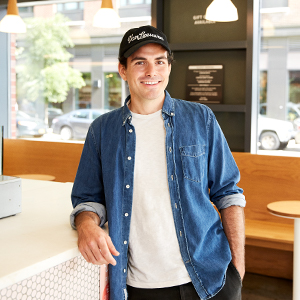
[00:00:10] Ray Latif: Hey, folks, thanks for tuning in to Taste Radio, the number one podcast for the food and beverage industry. I'm editor and producer Ray Latif, and you're listening to episode 203, which features an interview with Ben Van Leeuwen, the co-founder and CEO Ben Van Leeuwen Ice Cream. Just a reminder, if you like what you hear on Taste Radio, please share the podcast with friends and colleagues. And of course, we'd love it if you could review us on the Apple Podcasts app or your listening platform of choice. Twelve years ago, Ben Van Leeuwen launched his premium Ice Cream brand in the midst of a recession. An economic downturn is perhaps not the ideal time to start a company, yet the circumstances helped establish one of the core elements of his business strategy, a thorough examination of every expense. That principle has been essential to running a lean and profitable company, Ben said, and key to its growth. Since Ben Van Leeuwen Ice Cream has evolved into a sprawling brand with 22 Ice Cream shops in New York and California, and a wholesale pipe business with more than 1,500 accounts across the US. In the following interview, I spoke with Ben about why he started an Ice Cream brand alongside his brother and future wife, how New York City's culture impacted its development, and why the company didn't raise money for its first 11 years. He also shared his perspective on Ben Van Leeuwen has bucked the shift toward healthy eating, promoting brand pillars through packaging, the synergistic relationship between its stores and wholesale business, and why he's open to selling the company down the road. Hey folks, it's Ray with Taste Radio. I'm here in New York City, and sitting with me right now is Ben Van Leeuwen, the co-founder and CEO Ben Van Leeuwen Ice Cream. Ben, how are you? Pretty good, thanks for having me. You look very relaxed. Did you just go on vacation?
[00:01:55] Ben Van Leeuwen: I did yoga this morning. Okay, that's what it was. And I haven't done yoga for a long time, so I'm feeling extra relaxed. I saw you doing some stretching before we got out on the mics. Power pose. What's that? The power pose. What's the power pose? Arms up. And it is a way of telling your brain that something really good has just happened. So it boosts testosterone, reduces cortisol. Just lifting your arms? Yeah, you have to do it for like 90 seconds. So I don't know if I got it. But yeah, if you lift both arms. Like a V. Wow.
[00:02:24] Ray Latif: Okay. I'm going to start doing that.
[00:02:26] Ben Van Leeuwen: Yeah. So I think the idea is when we were hunter gatherers and something really good happened, we'd push our arms up and down.
[00:02:33] Ray Latif: Yeah.
[00:02:34] Ben Van Leeuwen: And now our brains think that if we do that for long enough, something really good has just happened. So if you're ever feeling like stressed out, you should do that.
[00:02:43] Ray Latif: It's so weird. Cause people, I talked to so many people who are obsessed with like biohacking and this doesn't require biohacking. It just requires you stretching.
[00:02:50] Ben Van Leeuwen: Right. Yeah. Yeah. Interesting. It's like fake it till you make it like act happy and you will become happy. Same with smiling. I think we've got a great podcast interviewer already and this is good stuff. But no, I mean working in the Ice Cream shops, I don't work in the Ice Cream shops as much as I used to, but when I used to work in the Ice Cream shops and the trucks a lot, if I was ever feeling lethargic or tired or hungover and had to go work, within minutes you're feeling amazing because in customer service you have to be really nice and smile. So you begin like acting really happy and energetic and then before you know it, you're not acting happy and energetic, you are happy and energetic.
[00:03:30] Ray Latif: You know, it actually, I have a similar story when I'm recording content for the podcast by myself in the studio. Sometimes I'm exhausted first thing in the morning, whatever it is, I make myself smile and chuckle because it leads to better sounding content. Yeah. Interesting stuff. So you're just coming from Brooklyn, from Greenpoint, where you founded the company with your brother and your ex-girlfriend? And my ex-wife.
[00:04:00] Ben Van Leeuwen: Your ex-wife. Or actually, where my wife and co-founder, but separated wife. Okay. And best friend.
[00:04:09] Ray Latif: It sounds like building this company has been a breeze. I mean, that just, it sounds like a sitcom actually.
[00:04:16] Ben Van Leeuwen: It has not been a breeze, but not for that reason. Okay. I think for the same reason that building any company is really hard.
[00:04:22] Ray Latif: Well, how do you make it work? I mean, because I have a lot of brothers and a lot of my brothers actually work together on their own business and we bought heads as brothers do. And, you know, as spouses do, uh, you know, what's the best way to make it work between the three, three co-founders?
[00:04:37] Ben Van Leeuwen: So working with family, which is what it is, Pete's my brother, Laura's my, you know, technically wife, but ex, there's no filter. So with our COO and CFO, like there is a filter and you measure yourself and with anyone who works for us, but with family, there's less of a filter there. So you kind of can get into more arguments because of that lack of filter. But the upside to it is that There's complete trust in sort of complete alignment. And more importantly than anything else, like it's the love, you know, like we love each other so much and care about each other so much that no matter what, we'll always do what it takes to be there for one another and to be there for the business because we never want to let each other down.
[00:05:27] Ray Latif: So Ben, you're the CEO of the company. Among the three co-founders, did you have a process of deciding who was going to handle that role?
[00:05:36] Ben Van Leeuwen: We actually didn't have a process. It happened organically. We unofficially are co-CEOs and all do whatever it takes to grow and optimize the business.
[00:05:47] Ray Latif: You just sign the checks?
[00:05:48] Ben Van Leeuwen: We can all sign the checks actually. So unofficially we are co-CEOs. I think we've officially made me the CEO because somebody needs to do it. And I'm most closely across the product development and production, which is the core part of the business.
[00:06:06] Ray Latif: That sounds like the really fun part too.
[00:06:08] Ben Van Leeuwen: It is the fun part, yeah. Making Ice Cream is the best. Making Ice Cream and serving Ice Cream are the two most fun parts of the business, and the core of the business. Everything else is business and exciting, but not as in-the-moment fun. When did you realize you wanted to start making and selling Ice Cream? I was a senior in high school and I needed a summer job. I saw an ad in the paper that said, drive a good humor Ice Cream truck, make 500 bucks a week. I answered the ad. I ended up driving a beat up old 1970s Ice Cream truck for two summers in Connecticut where I grew up during college. And I made a decent amount of money. actually quite a lot of money for a kid. I saved I think $40,000 in a summer. How old were you? I was 19. Oh my gosh. And I didn't want to go back to college. I took the money, traveled all over the world, Southeast Asia, Europe. And when I was traveling, I was most excited by the food and most excited by the fact that really good food in a lot of other countries wasn't special. It was just the standard and the norm. Because I grew up in America where Even in New York City, we have a lot of great food, but most food in America isn't as sort of carefully made and made with as much care and a focus on ingredients and a focus on nourishment. So I was so excited visiting Italy and Thailand and going to these places where, for very little money, you could eat really well. Ended up going back to college. did decent there, not that well in college. I think I had less than a 3.0 GPA. And I really looked up to my sister who had worked at Goldman Sachs, made a lot of money doing that, started her own company. And I thought, okay, you know, finance looks good. You can make a lot of money. And at that age, the idea of doing exactly what I wanted, which I think contemporary culture is pushing, 18 to 22 year old kids to do exactly what they want and try to make a living off it when I was that age I just anything that I could make a living off seemed attractive I didn't know that I could do something that I would also really love so I Asked my sister if she could get me a job in finance. I think she said Ben I don't think I can you don't have good grades and you never did an internship I was walking around one day in New York City. I saw mr. Softie truck and And it was an unseasonably warm day in April, and I thought, why is nobody doing really good Ice Cream off of a truck? I'd become really into food, learning about special ingredients, and in that moment, to me, it seemed like an awesome idea. I called Peter, my brother, I called Laura, who was at that time my girlfriend, and I said, do you guys want to start an Ice Cream truck? They both agreed immediately.
[00:08:55] Ray Latif: Really? They did, yeah. Didn't take much convincing.
[00:08:58] Ben Van Leeuwen: And this was April of 2007. That was the birth of the idea. We launched the company in June of 2008, so a little over a year later. But the idea was... Like, why did I want to do Ice Cream? I knew the trucks. It seemed to me like a super accessible model. And I was very excited by the idea of making great food accessible, both price-wise and just physically accessible, like a truck you don't even have to open a door to get to, you can walk right up to it. And the juxtaposition of a food truck, which traditionally isn't associated with high-quality food, now it is more, and doing really good ingredients off of that seemed really cool to me, it seemed exciting. So we had the idea, made some Ice Cream at home, learned how to make Ice Cream, got better at it, and bought a post office truck from the 1980s. retrofitted it into an Ice Cream truck and hit the road in summer of 2008.
[00:10:18] Ice Cream: Tune in at the end of this episode for an exclusive interview with Matt Lynn of Belay Solutions. He sits down with Melissa Traverse to break down the biggest inventory and accounting mistakes CPG founders often make. You'll learn how to bring clarity to your numbers so you can scale with confidence.
[00:10:36] Ray Latif: It's funny you mentioned food trucks because people forget that back in the day food trucks were essentially selling inexpensive food, like you see in every corner of Manhattan, gyros and chopped up meat and things like that. You mentioned that you launched in June of 2008. If I recall, that's when the recession was really coming into being, really coming into focus. People were starting to get really worried. Not the best time to open a business. How do you make it those first two years?
[00:11:09] Ben Van Leeuwen: Well, I mean, we didn't know any other climate because we hadn't run the business in any climate other than that. And so, you know, we were lucky we did well. But I think part of that too, is that launching an Ice Cream business during recession works because it's an affordable luxury. I think then we were charging like $350 for a cone. So that's something that especially if you're feeling really bad, you might even be more inclined to buy.
[00:11:33] Ray Latif: $350 a cone.
[00:11:35] Ben Van Leeuwen: Yeah, that was early on.
[00:11:39] Ray Latif: It felt like there was some growing interest in sort of handcrafted artisanal products at the time, even 10 years ago, 12 years ago. Did you see other brands popping up that you could take influence from? Were there other Ice Cream brands like yours?
[00:11:51] Ben Van Leeuwen: There actually weren't, one of the reasons we wanted to Ben Van Leeuwen is because there was nothing else in America like it. So there was no one else making Ice Cream using the best ingredients and using a really great base formula. So meaning lots of cream, lots of organic egg yolks, no stabilizers. So some people were doing some of those things, you know, a few good ingredients here, sometimes a good recipe here, but no one was doing everything. So we were inspired more by sort of ingredient producers and farmers and chocolate makers than we were other Ice Cream makers. We did have some really good Ice Cream in Italy that was made with pistachios from Sicily and, you know, chocolate from Domori, a really good chocolate maker. And that inspired us a little bit. But it was the ingredients that inspired us. Because the experiences that still move me a lot, and move me even more than when I didn't have the stress of running a business on my shoulders, were sort of tasting something that was incredible, that was made with a ton of care. And not necessarily something fancy, but sourdough bread that was fermented with a ton of care and time, and chocolate that was made with beans from farms that were carefully cultivated and responsibly managed, and there was a lot of attention on the fermentation of the beans and the roasting. So to us, it was really exciting learning about those processes that make great ingredients great, and then tasting those ingredients and saying, wow, that really is something. So early on, one of the One of the biggest tests we did when we were doing the product development Ben Van Leeuwen was chocolate. We love chocolate and there were a decent amount of choices for chocolates for us to use. We didn't want soy lecithin, we wanted it to be completely traceable. We ended up going with Michelle Cazal chocolate but they had like seven different single origin or single farm chocolates. And we tested I think 35 different batches of chocolate and tasted all of them. But before we tested them, we were talking to experts in Ice Cream production. And the advice from them was you don't need to use really good chocolate in Ice Cream. It's a waste. You're using cream and eggs and those are going to completely cover up the chocolate. So don't do it. So we did not heed their advice and we, well, we said, let's try it. We're just making samples at home. And we tasted it and we were like, oh my gosh, this is the best chocolate Ice Cream we've ever had. So a lot of these norms in manufacturing that you would normally apply to a consumer packaged good, we sort of veered away from and said, no, let's try using the best chocolate. Let's try bringing the butterfat up to 19% and the egg yolks up to 8% and see what happens. And still, nobody in Ice Cream does these things. Nobody on the scale that we're doing it, restaurants do, but no manufacturers do.
[00:15:04] Ray Latif: Did the fact that you were in New York City and selling to New York, did that help the business early on? Did that make it easier to grow early on? Because if you were, say, opening up a Van Leeuwen in, I don't know, Ohio, Cleveland, and I always pick on Ohio, I shouldn't, but anyway.
[00:15:21] Ben Van Leeuwen: It's always the go-to.
[00:15:22] Ray Latif: It is, it's always the go-to. But was New York a key factor in the fact that you were able to build a business in those early years?
[00:15:31] Ben Van Leeuwen: Yeah, absolutely. I mean, for for many reasons. One, you know, as you pointed out, just like the affluence and education level allows people to spend a little more on products that are better. But on the flip side, it's much more expensive to run a business in New York. So I think I think we could have been successful in any any city that had a decent economy, because if we were in Cleveland, Ohio or, you know, Phoenix cities that aren't quite as economically developed as New York. We also would have been able to charge less because the operating costs would have been so much lower. And I think there's the other thing like New York is awesome, but it's so competitive, even if you're doing something that there isn't much specific competition in, just because there's so much to do here. Whereas if you're opening in a smaller city, like the new Ice Cream shop opening might be like one of the only things to do at night in the summer. So yeah, New York is really challenging, but I mean, we love New York so much and are so happy that this is where we launched. Production in New York is a little hard because we're spending like 20 times the price per square foot.
[00:16:45] Ray Latif: Yeah, I mean, Greenpoint a few years ago was probably inexpensive real estate, and now it's probably very, very expensive real estate.
[00:16:52] Ben Van Leeuwen: Yeah, we're making Ice Cream in one of the most expensive neighborhoods on earth.
[00:16:57] Ray Latif: How many times has a real estate developer come up and been like, hey, we want to buy your factory?
[00:17:01] Ben Van Leeuwen: Well, we don't own it. Oh, okay.
[00:17:03] Ray Latif: Well, that makes it even more expensive.
[00:17:06] Ben Van Leeuwen: I wish we did.
[00:17:08] Ray Latif: Okay, well all this talk about money, let's talk even more about money. The first 10 years, I read that the first 10 years of your business, you didn't raise any money.
[00:17:15] Ben Van Leeuwen: Yeah, the first 11 years. So we started with $60,000 from friends and family, which was enough to buy the used post office truck on eBay for $5,000, cut some holes for windows, paint it, put a freezer in it, a sink.
[00:17:29] Ray Latif: Was the government selling the post office truck or was it already owned by somebody else?
[00:17:33] Ben Van Leeuwen: It had already been transferred to someone else. And they're the big box trucks. They sort of look like FedEx trucks. And we did not have enough money to build our own production. So we co-packed, co-manufactured for the first two years. And we were super lean the first couple of years. I mean, we remain super lean, but... We ran the business out of our apartment. The hallway to the apartment building was filled with boxes of dry goods. Our kitchen was the hot fudge, caramel, and candied nut production that was in operation every morning before we went out on the trucks. So we worked really hard and it was awesome. It's very different than like raising 10 million bucks and starting a business with a awesome org structure and corporate team. I think that's easier in many ways. I mean, harder in the sense that you need a lot more money to do it. But we learned a lot doing it this way. And after two years, we said, you know what, this co-manufacturing thing doesn't really work for us. It's hindering our innovation and innovation is important to any food business, and it's really like our core competency too. So with very little money, we just rode our bikes around Greenpoint where we lived, and we saw an old Polish restaurant that was up for rent, had been vacant for like two years, covered in grease. We were very excited because it had plumbing and electrical that would work for the Ice Cream, so we'd save some money there. We moved into the space with one batch freezer, a 15-gallon pasteurizer, and started making Ice Cream out of that space. And we actually were there for eight years making Ice Cream. So until like three years ago, we were making, I might be a year off. We were there for eight years making Ice Cream. So until three years ago, we were making all of the Ice Cream out of 800 square feet, supplying our retail stores in New York City, Los Angeles, Whole Foods on both coasts. It was really hard.
[00:19:38] Ray Latif: 800 square feet?
[00:19:39] Ben Van Leeuwen: 800 square feet, including storage. Were you running 24-7? Yes. Yeah. Yeah, absolutely. Cause we had like two, I think, I think by the end we had two batch freezers there. Yeah.
[00:19:49] Ray Latif: Not a lot of capacity.
[00:19:50] Ben Van Leeuwen: You can fit 800 square feet. And there was no co-packing. So it was really hard. And then we built a 5,000 square foot factory three years ago, which now we're operating out of, which is still very small. We're doing like almost a million gallons a year out of 5,000 square feet, which is really impressive. And also doing co-manufacturing.
[00:20:11] Ray Latif: Oh. Interesting. Yeah, that's the story for our Nosh vertical Did you guys take salaries? I mean, how did you pay yourselves early on?
[00:20:18] Ben Van Leeuwen: I mean that was it's all we were doing so until we did the series a we took Nominal salaries. I think it many years. We were paying ourselves like 30 35,000 bucks a year, but it was okay. We were having a lot of fun and
[00:20:33] Ray Latif: And if you just combine all the funds, you have almost $100,000 a year.
[00:20:37] Ben Van Leeuwen: Exactly.
[00:20:37] Ray Latif: There you go.
[00:20:38] Ben Van Leeuwen: And we lived together for the first few years, all of us two. There you go.
[00:20:41] Ray Latif: So it was very hard. The Series A, what went into that decision? How did you assess your financial needs at the time?
[00:20:47] Ben Van Leeuwen: We decided to raise capital because we felt like we were in a place where we had learned enough about running a business and learned enough about sort of our business and how we can optimize it. And we finally felt comfortable taking money because the growth path and the path to creating a lot more value in the business was clearer than it ever had been to us. Additionally, running a business starting with $60,000 and going 10 years on that is incredibly stressful. So to us, the dilution was kind of worth the peace of mind and a slightly less stressful existence.
[00:21:28] Ray Latif: It sounds like you've been running pretty lean over the years. Was that just intentional or? And I ask this because I read about an investor when you announced the Series A, one of your investors said, described you guys as incredibly profitable. And this is a well known investor, at least in the food and beverage industry. And when he says something like that, I mean, that says something. Was lean about turning a profit or was lean just the way you knew how to run the business?
[00:21:55] Ben Van Leeuwen: To us, running lean was just the default. You know, we were under the impression then that to grow a business, you wanted to try to spend as little as possible and make as much as possible. I think that's the basic economics of running a business. A lot of businesses aren't run like that anymore. So we, you know, it was very old, it shouldn't be old fashioned, but maybe I think it's coming back into fashion. But yeah, that's just how we could survive by doing it that way. And, you know, we were very, very thoughtful about everything. Oftentimes I think oversimplifying things, but saying, okay, if we hire this person, like, will they pay for themselves? someone, a hire that might take four years to pay for themselves, like we couldn't afford to do that hire then. A piece of equipment that would take, you know, six years to pay for itself, we couldn't do that. So we were just really, by default, we ran the business in a super lean way.
[00:22:52] Ray Latif: What's one way that entrepreneurs listening wouldn't necessarily think of that you guys did to help stay lean?
[00:23:01] Ben Van Leeuwen: When you look at our economics, one of the strongest aspects of them is how much we spend building our stores. So we spend oftentimes like half of what similar quick service retailers spend for the same amount of square feet. And our stores look pretty good. We're very happy with the design and aesthetic and the materials. And early on when we built our first store, I remember getting bids from three different contractors and they ranged from $80,000 to $700,000. And that was a moment where like, wow, you could, if you wanted to, you know, spend yourself into bankruptcy very quickly. So how are we lean? And you know, the advice I'd give to any entrepreneur is like, really dig into things, dig into every single expense, figure out why some things cost more, and if there's value in that, or if it's just a reality of a booming economy that there are businesses and folks that will sometimes charge you triple for the same thing and making sure you don't do that. And really with every expense too, asking like, is this serving our customer? Like that's the most important thing. If it's not serving the customer, then Don't do it. And is it serving us too? You know, the folks running the business, the folks working in the business, because serving them is as important as serving the customer. And to successfully serve the customer, we have to serve ourselves and our team. To be lean, you have to dig into everything, question everything, and really push.
[00:24:42] Ray Latif: You have new stores opening up, seems like, on a pretty regular basis. There's also a lot more competition than there had been when you first launched. There's a lot of artisanal small batch Ice Cream producers and brands out there. This is all occurring, though, amid this shift in, I guess, health and wellness. People thinking more about what they're eating, what they're putting into their bodies, eliminating or reducing the amount of sugar they're consuming. How does it work for you guys? I mean, you know, how do you communicate what you are, what you're about and get people to buy more of your product wherever else they seem to be doing the opposite?
[00:25:17] Ben Van Leeuwen: Eating a ton of sugar is bad for you. but feeling good is really good for you. So what we're selling is sort of like happiness and feeling happy and being happy in the moment, but eating a lot of Ice Cream every single day probably isn't gonna make you feel great. So our thing is like, because we know sugar isn't great for you, when you do it, let's make it as awesome as possible. Like let's go all the way. So to us, the taglines keep coming to me and I don't say it. So it's kind of a, you know, go all the way. If you're gonna do dessert, do it right. You know, with the low calorie Ice Cream that became really popular over the last five years, someone said to me, and I have nothing against them, I personally don't eat them, but someone said to me a few years ago, they were like, you know, do you like Halo Top? Like, is it BS or is it the real deal? And I was like, well, what do you like more, like Haagen-Dazs or Halo Top? And they're like, Haagen-Dazs, it's so much better. I was like, that's kind of your answer. Because to me, it's like, if you're going to do dessert, do it right. If you want to be healthy, like, there's a lot of healthy foods that are incredibly delicious, like lentil curry, you know, avocado toast. Those are really good and just by default, healthy foods that don't have a lot of sugar. So our thing is like, if you're going to do dessert, do it right. And that's also like a very, I see the low calorie, low sugar stuff as very American in the sense that we sadly don't have a deeply rooted, rich, nourishing food culture. And because of that, we've created so many foods with so much sugar. So now as a reaction, we're like, we can't do any sugar. We have to take sugar out of everything. Whereas I'd say definitely don't eat sugar in your bread, don't eat refined sugar in your drinks, but still do dessert sometimes. Because if you tried to explain a sort of low-calorie dessert that didn't taste as good to someone in Japan or France, you know, these countries with like incredibly rich and deeply rooted food cultures, I don't think they'd understand it. They'd say, wait, so you want me to eat dessert that's not very good? They'd be like, wait, what's the point? Why don't I just eat really good dessert, but eat it like twice a week.
[00:27:41] Ray Latif: It's so interesting to me that you say this because that's the thing for me is like moderation is fine. And with the low calorie Ice Cream, it was never about moderation. It was always, you can eat the whole pint. Who's going to eat an entire pint of Ice Cream? I don't know. Maybe some people would, but I'm not going to do that. I think most people wouldn't do it.
[00:27:59] Ben Van Leeuwen: Or eat an entire pint of Ice Cream once a month. There you go.
[00:28:03] Ray Latif: Just once a month over a period of time, whatever works, you know, but yeah.
[00:28:07] SPEAKER_??: We'll leave it at that.
[00:28:11] Ray Latif: There's also been a lot of vegan Ice Cream popping up left and right. Plant-based food is just one of the most impactful trends that we've seen in food in recent years. You guys make a vegan Ice Cream that is supposedly phenomenal. I haven't tasted it yet, I apologize. Some came into the office actually and it was gone in 60 seconds. So hopefully I can find some later on. How'd you come up with this recipe for an amazing tasting vegan Ice Cream?
[00:28:38] Ben Van Leeuwen: So the goal with the vegan Ice Cream was never to make good vegan Ice Cream, it was just to make great Ice Cream that happened to Ben Van. And we started making the vegan five years into the business, so eight years ago. And we'd already been making regular Ice Cream for five years, so our standard was super high. And how we did it mechanically was, we looked at the makeup of our classic Ice Cream, our dairy Ice Cream, and matched the vegan to that. So solids levels, fat levels, sugar levels, and then we tasted it and just tried to match the mouthfeel as much, match the... I mean, you're never going to get an exact flavor match because they're different ingredients, but texturally we matched it or maybe even made it better because it has a lot of raw extra virgin coconut oil and cocoa butter, fats that are just if not more luscious than butterfat, which is the fat we get from cream and dairy and cow's milk. So that was how the process started. The challenge for us was we wanted to make a very luxurious high-fat vegan Ice Cream. Because those fats are sort of so decadent and so rich, we were early on getting more of like a mousse Taste Radio the Ice Cream didn't taste cold enough to us. So the formulation was super challenging and took a lot of like trial and error. The ingredients are basic. It's cashews, coconuts, cocoa butter, cane sugar, and now we have an oat milk one that's oat milk, coconut, cocoa butter and raw coconut oil. So it was matching the formulation to classic, lots of fat, lots of solids. And the solids are important because that's what gives Ice Cream the chewiness. So in dairy Ice Cream, you're getting the solids from eggs and you're getting them from nonfat milk solids, which are in milk, cream and also condensed milk. In vegan, you're going to get the solids from cashews or oats. There's some solids in coconut, but that's a lot of fat. And many vegan Ice Cream that I try, particularly the brands that have been around for a while, will have a similar sounding base to us, you know, cashew, almond, coconut. But you taste them and they sort of dissipate. leave your palate very quickly. And it's because to me they're not using enough cashews, enough coconut fat, enough of the really good stuff, because it's less expensive to do that. If you can add more water and stabilizers, it's going to be less. So how do we make vegan Ice Cream that we think is great, just not compromising? You know, as cliche as that sounds, basically ignoring the costs and saying, this is really expensive. We're going to start making this. In the future, we'll figure out how to make it for less. But this is the only way to make great vegan Ice Cream. We're going to do it that way and continue using the Asconosi chocolate, the pistachios from Sicily, the strawberries from Oregon, the hazelnuts from Piedmont, and that kind of stuff.
[00:31:35] Ice Cream: Do you want more repeat buyers on Amazon? Well, this free resource in collaboration with Straight Up Growth will help your brand turn first-time buyers into long-term subscribers. Download Winning the Repeat Purchase Game on Amazon now at Taste Radio slash SUG. That's Taste Radio slash S-U-G to start building retention-driven growth for your brand on Amazon. Scaling a beverage brand into major retail comes down to operational readiness. From packaging lead times to co-manufacturing strategy, the details can make or break a launch. In a new ebook in collaboration with Octopi and Asahi Beer USA, industry leaders share what they've learned in helping brands scale. Download it now at Taste Radio slash octopi. Do you need to scale your team faster without compromising on talent? Join Oceans for a live webinar on April 20th and learn how leading companies are hiring top global professionals who are ready to grow with your business. Register for the webinar now at Taste Radio slash Oceans. That's Taste Radio slash Oceans.
[00:32:46] Ray Latif: There seems to be a theme here which is ultra high quality. It has to be the best of the best. But the best of the best costs money. It's expensive. Expensive to make and oftentimes expensive to buy. How much do your pints sell for?
[00:32:59] Ben Van Leeuwen: It depends on the market. Anywhere from five bucks to eight bucks.
[00:33:04] Ray Latif: Do you find yourself having to convince people about the price or are they ready and willing to just hand over the money?
[00:33:09] Ben Van Leeuwen: Well, in New York, we're such a well-known brand that a lot of people know us. They've tried it. We have a lot of customers who love the product and buy it at a slightly higher price than some of the other brands. But in new markets, we do have to convince people. When we go into a new market, people haven't heard of the brand, so we want them to taste the brand. And we do that with promotions and discounts and targeted social media.
[00:33:38] Ray Latif: One of the big changes that's happened in Ben Van Leeuwen business over the past, I want to say two years, has been that your focus has gone from the storefronts, from the retail storefronts, much more to the wholesale production, wholesale Ice Cream. And correct me if I'm wrong on any of that, but why have you looked at wholesale as a big opportunity for the future of the brand?
[00:34:00] Ben Van Leeuwen: The reason we're looking at wholesale that way is because there's so much empty space. Not empty space in the sense that there aren't a lot of brands, but to us, there's no one doing it even close to as good as we're doing it, both on the dairy Ice Cream or the vegan Ice Cream. And the most effective way for us to get the product to more people is through wholesale. I mean, I would love to open 2,000 Van Leeuwen shops, but we'd need hundreds of millions of dollars. 10 years, whereas we can, you know, this year we're going into almost 2,000 new wholesale doors and that happens in three months.
[00:34:38] Ray Latif: It's so expensive to launch wholesale and to operate wholesale and support the brand on shelf. So, I mean, what have you learned about this business, the wholesale CPG business that is a little bit more challenging than you thought?
[00:34:52] Ben Van Leeuwen: There's sort of three parts to the CPG business, if you look at it one way. One is selling in, which you could argue is the easiest part. So getting the supermarkets to take you, getting on shelf. So that's doable. We're a well-known brand. The product is really good. You do need a lot of money up front to get into a lot of stores on slotting fees. Number two is sell through, making sure it sells. So that's super challenging. It's a really competitive landscape. People who don't Ben Van Leeuwen and see it on the shelves might not know how differentiated the product is, so we need to somehow communicate that to them. Part three, which historically has been what's made expanding in wholesale most challenging to us, is actually dealing with chargebacks from distributors. So the big distributors constantly hit us with chargebacks, many of them we have to fight, and many of them are erroneous. But the chargebacks are huge. They could be 50% of your sales if you don't fight back on them.
[00:35:56] Ray Latif: I was just speaking with the founder and the CEO of Brodo, the broth company based here in New York City. They have a wholesale line as well. And one of the challenging things for them is selling their broth in the freezer aisle, which is where it has to be, merchandise, for the most part, because you get the longer shelf life and so on and so forth. But not many people are immediately looking for broth in the freezer aisle. Whereas for Ice Cream, of course you go to the freezer aisle for that. So how have you evaluated the front of the package so that it is a really desirable looking and impactful design?
[00:36:36] Ben Van Leeuwen: Well, yeah, I mean, packaging is so important, you know, at the zero moment of truth for the consumer when they're deciding what to buy.
[00:36:42] Ray Latif: At the zero moment of truth.
[00:36:43] Ben Van Leeuwen: Yeah. I mean, packaging is all you have right then. We redesigned our packaging four years ago. We engaged Pentagram, a really awesome design firm. They have an office in New York. And we looked at the arena we were playing in, which was the freezer aisle Ice Cream, and we saw so much communication. It was really loud. And we saw so much communication on quality, on sourcing and ingredients on the front of packaging, that it looked generic and conventional, and you couldn't even trust it. So our objective was to say quality and communicate quality, but do that in a way where we said very little, didn't do it in a very confident way. So what we came up with was a, was color block packaging with the logo and the flavor and nothing else. When you turn the package around, there's information on the specific ingredients, but we wanted to say very little because in the freezer aisle, there's just so much noise. We use very good ingredients and have a very clean label. But what we found was that by saying less, that was actually communicating that in a more powerful way.
[00:38:05] Ray Latif: minimalist in your ingredients and minimalist in your packaging. Sometimes clean represents clean, right? So with the rollout of the pints and the expansion in terms of availability of the pints, what role do the storefronts play? Are they still profit generators? Do you look at them as sort of, and I always use this word or this phrase, 3D billboards to support the wholesale line?
[00:38:46] Ben Van Leeuwen: a very effective innovation pipeline. So we push out, right now, four special flavors every two months. We're going to be increasing that to four special flavors every month soon. But the stores allow us to push those flavors in in a way that doesn't have as much weight as pushing it into the CPG channel, where you have to create new packaging, roll it out, sell in. The cadence on new flavors for CPG is a lot slower and less frequent. So stores are incredible for innovation and highly profitable.
[00:39:19] Ray Latif: I can imagine there's a focus group element of the stores as well. You hear feedback that you can incorporate into future innovation.
[00:39:28] Ben Van Leeuwen: Absolutely. So when we push the new flavors into the stores, those are always the flavors that may or may not become our new CPG flavors. Because you, yeah, we never know what's going to do really. Honeycomb, which is our best-selling flavor, went on our store menus as a special seven years ago, and it was so incredibly successful. It never came off.
[00:39:48] Ray Latif: What's a flavor that never really got off the ground?
[00:39:51] Ben Van Leeuwen: Passion fruit layer cake. So it was a passion fruit custard, so milk, or actually it was just cream, passion fruit, organic egg yolks, organic cane sugar, chunks of house-made salted caramel layer cake mixed in. Super passion fruity. It was like a third passion fruit puree, two thirds the other stuff. To me, it's the best flavor we've ever made, and it just didn't move.
[00:40:15] Ray Latif: Isn't that amazing? Sometimes, you know, the thing that you love the most is your customer's least favorite.
[00:40:21] Ben Van Leeuwen: And it was a very expensive one to make, so it was a great value. Another one was buttermilk yogurt, lemon meringue tart, which was a buttermilk yogurt base, super high in fat, not a low fat yogurt. a swirl of house-made Meyer lemon curd, house-made graham cracker crust with house-made graham crackers using only the best locally milled heirloom flours, and a swirl of house-made torched Swiss-style meringue. Incredibly complex to make, so expensive, so hard. And I was like, this is going to be the flavor that, you know, really makes this world famous. Like, it's just so special. Like, again, it didn't sell. The people who loved it absolutely loved it. We're thinking about putting flavors back into the CPG line that we sort of accept won't do well, but that we love so much and that a lot of people love sort of as a marketing strategy, but also because it's sort of true to the brand and true to what we are in the sense that they're very innovative flavors, they're very special flavors.
[00:41:27] Ray Latif: Well, the way you just communicated both of those flavors, the passion fruit and then the lemon meringue, were done with so much passion and so much specificity that I can imagine that if someone, a customer is talking about it with somebody else, they're like, Oh my God, I have to try this product. It's incredible. Cause I'm, I'm like, Oh, please tell me you're making like a one-off batch of some of this stuff. Ben, it's been fantastic talking to you. I can see how much you love the brand, how much you love Ice Cream, the business of Ice Cream and the production of Ice Cream. How is it that you're not 600 pounds? You're very lean and very in shape because sometimes... You would think the person who's the Ice Cream producer is a rotund sort of person, but you're definitely not that.
[00:42:11] Ben Van Leeuwen: I mean, I'm super conscious of like what I eat because I want to feel good and be healthy and have a healthy life. So I do eat a lot of Ice Cream, but I work out a lot to balance that out. And I don't eat like a crazy amount of Ice Cream. I mean, our Ice Cream is super rich, super high in fat, really densely flavored, so you don't have to eat as much because it's so satisfying. I think with any really, you know, delicious, well-made food, you don't need to sort of gorge and consume enough because it's so satisfying.
[00:42:42] Ray Latif: Mm-hmm. Well, we were joking before we hopped on the mics that your office and your manufacturing facility are five blocks apart, so. Constantly running between them. There you go. That'll do something for you for sure. What's next for the brand? Because you've already accomplished quite a bit. You know, we've talked about the pints and the distribution expansion there, but what do you envision as, say, the next 10 years, next 12 years Ben Van Leeuwen?
[00:43:04] Ben Van Leeuwen: So the goal is to continue expanding into wholesale. I mean, we want to be on every shelf in every supermarket in the country at as accessible a price as possible and continue opening new brick and mortar stores and bring that experience to more people and then also explore bringing the product international. The quality is so high and particularly on the vegan, the product is so, so differentiated that we think it'll work really, really well in other markets that have even higher standards for quality than the U.S. market.
[00:43:41] Ray Latif: Is there an endgame where you envision selling the brand at some point?
[00:43:44] Ben Van Leeuwen: Yeah, we'd consider it. I mean, we have a lot of work to do and there's a lot more we want to do before we are no longer involved.
[00:43:53] Ray Latif: Well, I hope that's a long way from now because I feel like the passion would be missing. I mean, I'm just getting it so much from you about, again, the love for the brand, the love for what you do. And it's amazing to see. Ben, thank you again for coming out and visiting with me. I need to go find Ben Van Leeuwen Ice Cream right now.
[00:44:13] Ben Van Leeuwen: Absolutely. Thanks, Ray.
[00:44:14] Ray Latif: All right. Talk to you soon. That brings us to the end of episode 203. Thank you so much for listening and thanks for our guest, Ben Van Leeuwen. You can catch both Taste Radio and Taste Radio Insider on Taste Radio, the Apple Podcasts app, Stitcher, Google Podcasts, and Spotify. As always, for questions, comments, ideas for future podcasts, please send us an email to ask at Taste Radio. On behalf of the entire Taste Radio team, thank you for listening and we'll talk to you next time.
[00:44:58] Van Leeuwen: Hello, I am Melissa Traverse here for the Taste Radio podcast, talking about some of the biggest tension points that CPG brands and founders face when they're scaling a brand, and those are financial accounting and inventory management. I am joined by Matt Lynn, inventory accounting guru from Belay Solutions, and he is going to shed some light on all of this that is going to help everybody out quite a bit. Matt, thank you so much for joining us today.
[00:45:28] Ben Van: Thank you for having us, Melissa. It's great to be out here at Expo West and it's great to sit down and be able to chat this because it's kind of a passion project of ours, working mainly with CPG brands and hoping to help them scale.
[00:45:39] Van Leeuwen: It's been such a pleasure chatting with you and the team and learning all about what you do over there at Belay Solutions. Can you tell us a little bit about yourself and what your role is and the kinds of solutions that Belay gives to CPG brands and founders?
[00:45:55] Ben Van: Yeah, absolutely. My role with Belay, I'm actually our inventory accounting manager. I run our inventory department, so we work with CPG brands, taking them from spreadsheets, putting them on inventory management systems, and really helping connect their tech stack between their sales online marketplaces to that inventory management system, even down to their financial systems like QuickBooks. Belay overall is kind of an outsourced accounting firm. And with that, we're helping teams. We have different levels with bookkeeping, controller level work, even high level into CFO type items. So we really help those brands in any way that they need financially. And then I just have a subset of a department where we're really just laser focused on inventory.
[00:46:38] Van Leeuwen: It's certainly a complex topic and there are plenty of places to go wrong. Let's start by going right and start super simple. Can you tell us what some of the biggest red flags are that would help a founder understand or, you know, the person running a brand understand that it really is time to get some help with some of these areas?
[00:46:59] Ben Van: Yeah, absolutely. I think some of the early red flags is just everything is chaos. So when they're looking in their financial software, maybe they don't really have an accounting background and they're kind of just piecing it together and doing their best. And what they'll see is that reconciliations take forever, if they even happen. they have a lot of transactions that don't get coded or they just put them into placeholders to just get rid of it so it's not an eyesore. They'll notice they have revenue but no cash or they notice that they have a good amount of cash but their blind spot is really seeing the vendor invoices that are sitting there just needing to be paid and so they just lack that clarity that's going to really be around the corner.
[00:47:36] Van Leeuwen: You know, you were talking about one of the red flags that comes up that I think makes so much sense. When somebody asks you what your numbers are and you can't come up with the right number, that's a big problem because that's something that you really should be able to share with decision makers who, you know, you're ideally looking to do business with. What should you be able to call up at a moment's notice?
[00:48:00] Ben Van: Really at any time, you should be able to know an accurate margin. It's amazing how many founders we end up talking to that they can tell you their revenue numbers, they can tell you their selling price, and then the minute you start talking about cost or their cost of goods sold, they just get a deer in headlights look. So really it's very hard to tell, am I even making money? or if you don't know your entire landed cost. Maybe you know what the freight cost is, the duties separately, but you're not really getting that as part of your unit cost. So it's really hard to tell. Am I even making money or am I losing money from the very beginning?
[00:48:33] Van Leeuwen: And do you recommend that founders are able to call up a margin by channel?
[00:48:38] Ben Van: Absolutely. And depending on the number of products and channels, you kind of want to know what are your best sellers, which ones are making the most and which ones maybe you're not making as much. But especially if you're branching out and you're doing D to C with B to B, absolutely want to know that.
[00:48:55] Van Leeuwen: Gotcha. You mentioned that when things feel really chaotic, that's probably a red flag. I would say that it probably almost always feels chaotic if you're running a CBD brand. And I know this may be hard to quantify, but is there a revenue number? Is there a number of doors number that would help a brand understand whether or not it makes sense to bring on a partner like Belay? Understanding that so many brands are bootstrapped or they might be tight for cash. What is that friction point?
[00:49:25] Ben Van: 3 3 3 3 3 But as you're growing, as you're getting into those six-figure revenue numbers, and especially as you're approaching seven, you want to make sure you've got good financials. Because as you scale to that point, most likely you're going to be looking to raise capital. And investors, the first thing they're going to look at is your books. And are they clean? And do they show a clear picture of your business?
[00:49:58] Van Leeuwen: You know, another area that folks might look to to organize some of the chaos are their systems. So many folks stick with Excel spreadsheets for a good amount of time. How do you know that you need to outsource some of your accounting to an organization like Belay Solutions versus maybe signing on to a Synth7 or NetSuite or something like that?
[00:50:20] Ben Van: Well, that's actually something we really help with when it comes to that cost question. That's something that trips people up. And sometimes if you just have a turnkey business, you buy and sell a finished good, you can maintain with spreadsheets. And we've had clients with million dollar revenue that can do that. But we see so many brands nowadays are using contract manufacturers. and they're just sourcing certain parts of their product. So when you start talking costs, they have no idea exactly what their unit cost is. So that's where we come in and we kind of understand, we'll speak with the customers and the clients and get their needs. And then if we think they're ready for a system, then we'll help put them on that system so they can get some of that clarity. And it's not something we force on anybody. There are plenty of times where founders come to us and we'll tell them bluntly, you're not ready for it right now, but we'll let you know when we think you are.
[00:51:06] Van Leeuwen: That sounds like excellent advice. What should a founder or somebody running a brand look for in an outsourced accounting partner? Are there certain checklist items that they should make sure that their partner be able to execute or be able to help them understand?
[00:51:23] Ben Van: Absolutely. I think one of the keys, there's a lot of outsourced accounting firms out there. Some focus on service-based SaaS companies. But if you're a CPG founder, you really want to make sure that your accounting firm has CPG experience. I would ask them, you know, what kind of brands have they worked with? And even beyond that, industry-specific, because there's so many subsets of CPG. And that's something that I think is great about what we do with Belay, is that we kind of run the gamut. It's kind of like the insurance commercial. We know a thing or two because we've seen a thing or two across a broad spectrum.
[00:51:53] Van Leeuwen: Probably getting references is always helpful, right? Absolutely. All right. So this all sounds great. I think we have a really good understanding of would it make sense to hire an outsourced partner? You know, what some of the things you should be looking for are. What does offloading this kind of work mean for the brand? What can this do for lightening the load of a founder or lightening the load of a brand operator? Like, how does that help them in their everyday business?
[00:52:22] Ben Van: It just tries to really help quiet the chaos. So what we're looking to do is just take some of the weight off that founder's shoulder, let them focus on building the brand, building the business, getting that exposure. If you don't have sales, you really don't have anything. So we want them to be able to focus on that while we take care of your back end office work. And we can just present that to you on a monthly basis, you can help make decisions, you can take that to investors. And really, you can just focus on growing your business.
[00:52:48] Van Leeuwen: I feel like I felt founders and the folks who are running brands collectively sigh. A breath of relief just hearing that. How can people learn more about Belay Solutions?
[00:52:59] Ben Van: So people can text TASTE to 55123 for their free inventory guide to get started.
[00:53:05] Van Leeuwen: Matt Lynn, inventory accounting guru at Belay Solutions. Thank you so much for joining me here at Expo West. It's been such a pleasure to chat with you and learn about what you all do over there to help founders and brands with their financial accounting and inventory management. For everybody else out there, thank you for listening to the Taste Radio podcast. I am Melissa Traverse and we'll see you next time.