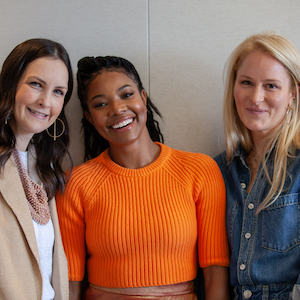
[00:00:10] Ray Latif: Hey, folks, I'm Ray Latif, and you're listening to the Top Podcast for the food and beverage industry, Taste Radio. This is episode 222, which features an interview with Hollywood actress and bestselling author Gabrielle Union, Maggie Patton and Buckley Buckley, the co-founders of Better For You kid's snack brand, Bitsy's. Just a reminder to our listeners, if you like what you hear on Taste Radio, please share the podcast with friends and colleagues. And of course, we'd love it if you could review us on the Apple Podcasts app or your listening platform of choice. They say necessity is the mother of invention. Sometimes, inventions are created by mothers who saw an unfilled necessity. That's the case with Bitsy's, a brand of organic, vegetable-infused kid snacks, including cookies and crackers. Launched by social entrepreneurs Maggie Patton and Buckley Buckley in 2012, the company's mission is to make healthy and nutritious snacks accessible and affordable to all families. In May, Bitsy's announced that actress Gabrielle Union, who has long been an admirer and customer of the brand, had joined the company as its third co-founder and will have an active role in sales, marketing, and product development. In the following interview, Nosh editor Carol Ortenberg spoke with the co-founders about the history and evolution of the brand, which recently picked up placement at 1,600 CVS stores nationwide. As part of their conversation, they discuss Gabrielle's interest in joining the company and alignment with Maggie and Alex, how they communicate the brand's healthy halo to kids and parents, why asking for help has to be a priority for entrepreneurs, and how the food industry can work together to mainstream healthy food for kids.
[00:01:49] Carol Ortenberg: Hi, guys. Carol here, I'm the editor of Nosh, and today we're going to chat with Alex Buckley, Maggie Patton, and Gabrielle Union, who are the co-founders of the fantastic snack brand Bitsies. Guys, thanks so much for chatting with me today. Thanks for having us. So I wanted to start by having you guys introduce what Bitsies is and your roles of the company. At Bitsies, our mission is to make products that create a healthier and more thoughtful and inclusive world for kids. So we're really focused on making healthy, allergen-free, affordable, and accessible food for kids. Amazing. And now you guys are all co-founders. How do you kind of divide things up? Do different folks focus on different aspects of the business? We're a small brand still, so everyone is very involved in lots of the different little aspects. We're all wearing many different hats at any given time. I would say we work very collaboratively on everything. It's probably apropos for the time that we're in right now, but FitzEase is a very in-it-together company. I think because we really started it out of a shared passion around children and around this need for really creating better products for them and putting kids first in the grocery aisle. So there's obviously a lot of different facets to running a food company. So we do divide and conquer where we can, but often find ourselves In May very collaborative setting. Kind of sounds like a family a little bit. Absolutely. So Maggie, Alex, you guys didn't start off as food entrepreneurs. What made you want to start a kids food brand? Where did you see the white space on the shelf? Well, Alex and I, as you know, we started our careers in nonprofit together working with children and. I think anyone that works on social issues can find after a period of time that sometimes you don't feel like you're making the full systemic impact and change that you want to. A lot of times you feel like you're putting a bandaid on a problem. And In May ways it feels like business is a different approach In May way that maybe you can change things for the long term. So that was really what inspired us, this desire of like, can we really tackle this problem around food? and a feeling that we could do that by building a business that was not just about profit, not just about putting the, you know, the band aid, but actually how can we really look at the issues, look at the need and opportunity and create products that solve that problem. That's amazing. And Gabrielle, you're a mom as well. You're a recent addition to the company. Was this a challenge you kind of face yourself as a mom and identify the need. Well, you know, we had I had sort of discovered, you know, bitsies organically a while back, and the kids loved it, and the adults really loved it. And so it had been in our in our pantry. And because bitsies, you know, on a mind level, we're, you know, super in sync, in that it the brand stands for something. And on a body level, it's a product you can feel good about feeding your family. But on a super personal level, being from North Omaha, where there is, you know, there are plenty of food deserts, just understanding how, while my own family, you know, due to geography and socioeconomics, we don't have trouble finding healthy snacks. But the rest of my family, the majority of whom live in food deserts, finding healthy snacks that are affordable is a huge challenge. And that's where I really wanted to jump in and work with the ladies and try to bring these amazing products that I can get super easy to as many people as possible. I love that and I definitely want to circle back around to the topic of food accessibility. But one of the things that I've always loved about the brand is that up front, you guys really talk about the vegetables and you're not hiding the fact that this is a healthy food with some secret ingredients. You're not really too coy about that. Why was that important to you to really clearly state that? That's a great question. I think that Maggie Patton I always felt, and Gabrielle shares this feeling that, you know, so often we market to kids as though they are not taking in everything that we say. So often we don't treat them as the really intelligent human beings that they are, and we kind of wonder why does every kid's product you know, have to be marketed as, you know, a double stuffed chocolate swirl when really, you know, kids are smart and they want to learn about healthy foods and they want to learn how to, how to nourish their, their bodies and minds. And so why, why aren't we kind of teaching them that and teaching them to embrace healthy foods from the start? You know, starting with Kavya James, my one and a half year old, she was like a bit of an experiment, if you will, in terms of trying to introduce different foods to her really, really early. And being very clear and cognizant, making really clear, cognizant, decisions about not demonizing vegetables and not demonizing healthy foods and not feeling like, you know, vegetables are something you have to hide and presenting vegetables as a treat. And, you know, from a very early age, the things that she craves and reaches for and looks at as like a special treat are all actually healthy for her. So we're trying to introduce, you know, vegetables very early In May positive way, sort of you know, how it seemed like kale hired a publicist. And it was like, how is kale everywhere? Like, everyone wants kale. That's how we really want to approach vegetables and healthier options and not demonize them and make kids and parents feel like vegetables are something that need to be hidden in order to be consumed. We want people, and especially young kids, the earlier the better, to crave vegetables and to look at vegetables as a fun treat. So why not make like a kale cracker then or, you know, dehydrated carrot sticks? Where's that balance between introducing kids to vegetables and still making something that's accessible? How did you guys approach product innovation? Well, we still might make that, Carol. I was going to say, I'm like, don't threaten us with a good time. Come on now. You might be joining our next innovation team meeting. So I think, you know, we've tried to be In May place of reality with what we're doing too. And we just know more than a quarter of kids' daily calories come from snacks. So looking at the snack category and saying, where can we do a bit better? I think sometimes, you know, it's not the journey to perfection. It's also a journey within where you are and just being honest about that, you know, and I mean, a lot of people are eating a lot of packaged snacks and a lot of kids are eating a lot of packaged snacks. So we've looked at where the opportunity is to really make improvements where we can still have a taste profile that is exciting for people and that the kids are familiar with and love eating and snackability is huge. So that's really how we've kind of chosen our product categories. Also, convenience. Again, we're all moms, so we got to be able to grab it and go with it.
[00:09:49] Maggie Patton: Guessing your margins? That's risky. Belay Financial gives CPG brands the clarity to scale smarter, faster, stronger. Get your free inventory e-book by texting TASTE to 55123 and start making data work for you.
[00:10:09] Alex Buckley: Tune in at the end of this episode for an exclusive interview with Matt Lynn of Belay Solutions. He sits down with Melissa Traverse to break down the biggest inventory and accounting mistakes CPG founders often make. You'll learn how to bring clarity to your numbers so you can scale with confidence.
[00:10:26] Carol Ortenberg: So when you brought this innovative product to buyers in the very beginning, what was the response to your marketing approach, your points of differentiation and your targeting of kids as a consumer. One one interesting thing and sort of the journey of the early conversations with retailers was they didn't even really know what to do with us when we said this is for kids and not for babies. And the whole conversation around actually focusing food on kids it's To us, it seemed so logical and obvious. And as you know, we were coming from nonprofits. So off we go to our first trade show and people come to the booth and we're like, it's kids. And everyone's like, there's no kids, you know, and that hadn't really even occurred to us. But when we were first starting the company, we were like, well, of course there needs to be kids, you know, but of course someone wants to have the conversation about kids. I think what's exciting right now is that we're at this point of inflection with our company and we and gab has come on board with us and people are actually excited to have the conversation about kids all of a sudden and I don't know you know exactly what sent everyone to that place of readiness for it. But there is an openness and a receptivity to this conversation. And it's obviously, I mean, long overdue. And kids are the worst indexing population in terms of health in America. And so it's kind of crazy that we haven't really had a collective focus in our food system on improving this for them to date. And when we're talking about kids and health outcomes, what age are you targeting and what age, you know, comprises this kid set in the grocery store? Well, a lot of times when we talk about it, we say kids from one to 101 because, you know, In May way we also feel like for our food, we're a family food brand. If you can't snack on it with your kid, it's going to be a problem. So it's really, I mean, our sweet spot, I would say is really like two to 12, you know, once a child can really eat independently. Yeah, I mean, usually you don't have the time or the shelf space to have 1000 different snacks. So it's ideal to have a snack that appeals to children as well as adults. And I think we've hit a really sweet spot in achieving that. And where we're planning to go with our innovation is really gonna sort of broaden that and be able to be really competitive with other nameless, less healthy snacks, while still delivering great taste, allergen-free, affordable, school-safe snacks. That's like the ultimate goal, right? When you guys are thinking about packaging or marketing, yes, you're targeting kids. But let's be honest, kids don't have the largest pocketbooks themselves necessarily. So you're also trying to talk to their parents as well or guardians. So how do you kind of divide your messaging and marketing to appeal to both? We do really try to speak to everyone on our packaging. And I won't say that that's just an easy thing to do. But I think because we're focused on honesty and transparency and really creating conversations while snacking, we always say like kind of cut out the mindless eating. We involve kids in the creation of our products. If you look at our good cookies, all of the sayings that are on each cookie, the positive messages actually came from children. So there's that piece. We also survey parents, talk to parents extensively. We really try to get equal input into the creation of our products and into the branding in terms of them resonating. And, you know, there's an ability to resonate with children and adults that you can capture. I even think about like how much my daughter loves gab, you know, just from having seen her finger and things. And when you ask her why, like when we were first starting this journey together, what she said to me really struck me and was like very meaningful to me, which she was like, she's just so real, you know, and I think that that is a perfect kind of compliment and explanation to, to what we're trying to do with bitsies is like bitsies is a brand where, I mean, but these is about love bitsies is like, we love you through this product. Like we love your family. We're going to do better by you than what others have done before. And we're going to put everything we can behind that. And we're going to be real and honest about it. And so that's kind of who we are. I love how you described that and it's great that you mentioned Gabrielle Union. Talk to me about that process and how you guys all came together and knew that this was the right addition to your little snacking family. Well, we really came together because of a shared heart. I mean, I feel like and just a shared total love of kids and wanting to do better and really throw ourselves into that. The kind of nitty gritty story, I guess, of how it actually happened is kind of a great story, too, because it's, you know, a friend from our nonprofit days who we she became one of my best friends. saw our stuff one day at a Wegmans and posted it on Instagram and next thing another mutual mom friend between Gab and us saw it, whose daughter was a huge fan of the brand and she was buying it often because her daughter had an anaphylactic nut allergy and she introduced us to Gab and the conversation started there and I'll let you jump in Gab. Yeah we were just really in sync in terms of our goals in life and our goals for how we want to create products that children are going to consume and really wanting to address childhood obesity. For me, it's like there's nothing I want to present on any of my platforms that feel elitist or exclusionary. There's nothing worse than seeing a comment where it's like, well, where can I get that? And it's like, nowhere where you live, or well, how much is that? And it's like, oh, that's really expensive. And just wanting to create. really, really healthy products that are accessible to everyone and affordable to the masses and to really sort of do some unlearning of some of the harmful marketing tactics that have been used to target black and brown children and marginalized communities and really pushing unhealthy snacks. you know, into the most vulnerable communities. And understanding that for marginalized communities and families of color, all of our goals are actually in line for what we want for our families. We want to raise, you know, the happiest, healthiest kids that we can. And a lot of times we just really lack access to those products. And I wanted to come on to really focus on inclusion and innovation, but really zero in on affordability and access. But there, I mean, how can you not love Maggie Patton Alice? So, so, you know, I just sort of fell in love with them. I love their background in nonprofit. I love, you know, sort of what they stand for and what Bitsy stands for. And it was, it was a really organic combining and melding of the minds. I'm just really excited about where it's all going to go and getting to talk to more people like you and, and, you know, go to those, well, whenever the world opens back up those trade shows and being on sales pitches and, and visiting production sites and, and just really opening up as many people, you know, that kind of tune in or check in on, on my various platforms and expose everything that we are doing with this brand and our movement really to as many people as possible. That really resonates with me. I grew up in New Orleans, which is a city that struggled with food accessibility for a long time now. So let's talk about that. I think a lot of brands in the industry want to make healthy products and their hearts are in the right place, but they aren't always able to get them into the hands of people that need it most. So what are you guys doing to try to improve the accessibility of Bitsie's? we worked really hard to lower the price. That was a major major focus point because there's there's no point in in getting the product in CVS which we were really you know which we were successful in doing getting that season to 1600 CVS is if it was just too expensive still. So you know kind of figuring out how to get it into more mainstream stores that are In May lot of communities and getting the price down so that people can actually afford to enjoy it. I love that you mentioned price, but for small brands that can be difficult at times, especially when you're starting out and having to buy smaller batches of ingredients. Do either of you have advice on how to balance mission and business at the same time? You know, how, how did you do this from the beginning and what can small emerging brands take away and maybe implement at their own company? So we come from nonprofit and we are not afraid to ask. You know, I will say that has been like the greatest skill that translated surprisingly into going into food is just fearlessly asking and being honest and asking for help. I mean, I think, you know, if you spend your career and in the not-for-profit sector you literally are a professional asker of help and resources and you do it unabashedly and like you said it is really hard to be a small brand and an innovator and trying to do these things and balancing mission and sourcing ingredients In May smaller batch can be expensive We are not going to solve these problems as individual brands. This really has to be retailers who come together with you and see what you're trying to do and see your authenticity and heart. The saying that we always said at our nonprofit was love is our strategy. Love is a strategy. And I have to say that is our biggest advice is like we really we ask and we try to get people to come together with us and do some things that can make it possible. So whether it's, you know, you hit a challenge In May roadblock with something, just not being afraid to say, look, like we can't pay that charge. We can't just, you know, we're a small woman owned brand. We are bringing these different things to you. How can you meet us halfway here? Look, it's the world too, like we've got to ask and we've got to listen and respond and find ways to problem solve together. You know, I don't know, very challenging for adults. We all need to like go back to kindergarten with the kids with our snacks, but I think it's problem solving together. I think asking for help can sometimes be scary though, and not something we're all familiar with. in this Instagram age where it's all about, look at me, look how great things are. So any tips on getting comfortable with asking for help? So I think asking for help, I mean, you know what, this is something I feel like we're all trying to teach our kids too. I just think you have to open your heart up and not be afraid of failure. I mean, maybe it's also that I think somehow, like starting a company, you sort of have to say failure is not an option. And if you are In May place where you're saying failure is not an option, it makes you willing to, you know, find a way where there's a will, there's a way I can go on with these things all day. But And now I'm rhyming. I don't know, Gab and Alex, how do you guys both ask for help? I just do it. I think I entered my 40s and I had to leave fear of judgment, of looking weak or not as smart as or not as savvy as the next person. I had to leave that behind. Now I'm just really transparent when I don't know something. and I humble myself. And part of asking for help is embracing humility. And I've found that I have raced ahead way farther than I ever thought I'd be by humbling myself and being transparent, painfully transparent at times, when I don't know something or I need help. And people, especially when you lead with humility and being transparent about where you're actually at, are more than happy to help. But I think sometimes we have to get out of our own way. I couldn't agree more. And you may end up cutting this, but I think there's something, too, about women, perhaps, that makes that act of being willing to be vulnerable. I think, perhaps, for some of us, it comes a little bit more naturally. Maybe that's the wrong way to frame it. But I do think there's so much power in vulnerability and humility. Luckily, I think that's something that we are really all on the same page. I completely agree with you and I think that's why we've seen a lot of discussion recently about why companies should strive to have a diverse set of employees because everyone brings different skills to the table, whether that's vulnerability or not. But it's interesting that you mentioned that with being a female-owned business, because I sometimes hear from some female-owned companies that it's even harder to express vulnerability because there are so few of them. They feel like they have to be tougher or, you know, appear a certain way. And that's an interesting balance to strike. I get that, too. I get that, too. I really do. But I think for us, for whatever reason, our power has always been in this sort of this ability to say, you know, can you help? How can we come together?
[00:25:26] Alex Buckley: Do you want more repeat buyers on Amazon? Well, this free resource in collaboration with Straight Up Growth will help your brand turn first-time buyers into long-term subscribers. Download Winning the Repeat Purchase Game on Amazon now at Taste Radio.com slash SUG. That's Taste Radio.com slash S-U-G to start building retention-driven growth for your brand on Amazon. Scaling a beverage brand into major retail comes down to operational readiness. From packaging lead times to co-manufacturing strategy, the details can make or break a launch. In May new ebook in collaboration with Octopi and Asahi Beer USA, industry leaders share what they've learned in helping brands scale. Download it now at Taste Radio.com slash octopi. Do you need to scale your team faster without compromising on talent? Join Oceans for a live webinar on April 20th and learn how leading companies are hiring top global professionals who are ready to grow with your business. Register for the webinar now at Taste Radio.com slash oceans. That's Taste Radio.com slash oceans.
[00:26:38] Carol Ortenberg: That asking for help and showing vulnerability coming from a place of love. Seems to have gotten you guys very far. You have some amazing distribution. Talk to me about how you got those accounts almost at the inception of Betsy. I think you were in Target already. What was kind of your channel strategy and how did you get into those retailers. I think with. sort of creating a new category with the kid conversation. It honestly has depended on who the buyer is and how into this idea they are. Do they get it? Do they get what we're trying to accomplish? And do they have this shared point of view and passion around children and wanting to do better? And I think that's one of the real challenges in this space is if your buyer really loves what you're about and you're part of their vision too with what they're trying to create within that set. I think that, you know, obviously the door is open and, you know, buyers change a lot. So I think there's a lot, there's a lot of ups and downs in the journey because of that, because there hasn't been an existing kids category. And this has been a relatively new conversation that we've been really trying to start. So it's been really important and really special when we've had those people that have championed our brand and have wanted to see something like this happen. And I think maybe that's one of the things about an idea is like, you know, often an idea is not just your own. It's something that other people are thinking about at the same time, especially if the need is real. And I think that has been kind of what has lent itself to our journey so far. And I believe very much that more people now than ever kind of have this idea around kids, but it's, it's percolating to the top. look, there's going to be some people who get it more than others and really get on board. And those are your champions. And you know, we all need those champions, whatever it is we're trying to tackle with whatever business or personal goals. There's really both sides in all of our journeys. It's no different in business than it is in life. You know, it just, you work, you work hard to win people over by really sharing your why and giving the data, the facts around why this is important and where it's going to make a difference. It's a long game, you know, I think changing children's wellness and health and getting people to a place where, you know, we're, we're mainstreaming healthier options, going up against a lot of other products that have a lot of power and a lot of money behind them. It's a journey and it, I mean, it takes continuous effort. Um, I think so. Like I said, I mean, it's, I think any startup has its ups and downs and you have your moments where someone really gets it and you're just like, yes, you know, and then you have your moments where you have to work a little harder, but you just keep going, you know, and those are, and then when you get that person on your side and they get it too, it's even better. What do we have to do as an industry, do you think, to help mainstream healthy foods? This is like a really has to be an all in full circle approach in partnership with retailers and partnership with distributors in partnership with brands. When we're designing our planograms, when an industry, when the industry is looking at planograms and looking at its store and looking at shelf space, saying, look, I'm going to designate this percentage of shelf space to products that meet these metrics and these mission driven goals. prioritizing that, you know, setting maybe some different hurdles and giving brands time to grow within those hurdles and to catch on in the story to be told and trial to take place. I mean, I think that's one of the challenging things in the food space is that there's always, you know, innovation and, you know, maybe one day kale has the publicist and the next day cauliflower has a publicist. And so sometimes it's like, okay, what is the hot new thing? And like, let's turn through different brands. I think that there really has to be a focus again, on sustained shelf space for mission driven brands that are trying to achieve shared goals that make an impact. whether that impact is around children's health or in other issue areas that we're looking at in food. But yeah, you really, you have to, I think it has to be a partnership where people and retailers specifically say, look, we're going to come together with you. We're going to give a focal area in our stores so that, you know, the first thing people see when they're walking down the aisle is not this giant snacktopia of unhealthy, but maybe it's the snacktopia of healthy instead. that normally would cost X amount from a big brand to invest in that across a retailer. Maybe looking at retailer X and they're giving away whatever money through their foundation that year towards children's wellness. Maybe look at putting it into sponsoring their own end cap around children's wellness or something like that. I mean, I think it's a space for collaborative and problem-solving thinking to come together. Yeah, we always say it's a perfect marriage between marketing availability and affordability, you know, to make anything mainstream In May industry. If it's not marketed to everyone, that target audience that you know you're missing, then you've failed, right? If you're not taking into account the people who've been historically, you know, and categorically not marketed to and you're not addressing that actively and consistently, then you're already failing. If you're trying to make something mainstream and the price is sort of being held up as, you know, health and wellness should never feel like a luxury item, right? So if the price isn't there, it's not going to be mainstream because the vast majority of your consumers are not super wealthy. And they live in areas where if these products aren't in your regular stores at a price point that's competitive with more unhealthy snacks, then you're not going to be mainstream that way either. And just trying to get these products into as many stores that are available in every community and really sort of de-stigmatizing healthy snacks as something that's only for a select few. Because I think a lot of people talk about wanting things to be mainstream. And if you were to ask, you know, if it was a question on family feud and you asked a hundred people on the street, people would be like, what, what is that? So then you, you know, okay, perhaps mainstream wasn't actually my goal. Maybe mainstream was just a talking point. So you're going to need name and message cohesion with your average person, where they recognize the Bitsie's logo, they recognize the Bitsie's packaging, they know what we stand for, and it's clear and obvious that we have put our mission statement and our goals are in alignment with marketing, affordability, and accessibility. That's really the only way you're going to make anything mainstream. I love that trio of targets that you're aiming for, but let's talk about marketing. It's a hard time to be a food brand right now because less people are shopping in stores. When they're kind of in stores, it's get in and get out as fast as possible. How are you trying to reach these new customers who maybe weren't aware of Bitsie's or couldn't afford it before you were able to lower your price? It was funny because, you know, I was watching the fruit snack challenge on social media, and I was like, well, Cobb doesn't, she doesn't really know what those are, but she knows what Bitsies are. And so let's, let's try to do the snack challenge with the snacks that Kavya James, who has 1.3 million Instagram followers, and I have 16.2 million Instagram followers. Let's post this snack challenge with Kav. And when we do the metrics for who's following me, I am reaching some communities that have traditionally not been marketed to. And it was a simple, fun social media challenge. And immediately, I think, you know, on one site, like Cobb's video had been watched 2 million times, and her page had been like hundreds of thousands of times. But it was an easy, organic way to get a message out about our products. And immediately you see the comments. Where do I get Bitsies and how many products are there and where can we find this? Is it really tasty? You have to sometimes think outside the box in these crazy times. It was something that was largely successful and picked up by every major media outlet. It was just my daughter eating the snacks that she loves. Sometimes you don't need a bazillion dollar marketing budget when the proof is actually in the, I was going to say the pudding, but in the Bitsies. Well, it helps when you have a star of the video who is quite adorable. I'll say that much. She loves her Bitsies. Well, I love all the goals you're trying to accomplish. Talk to us about what the future of Bitsies looks like. What is your goal and what would your dream be for the brand? I think the dream is to see Bitsies being offered in schools across the country, being available in stores across the country, in every community, and having that brand recognition in every home, and positioning Bitsies as thought leaders, innovators, and well ahead of the curve in terms of marrying our message to our mission. Well, Alex, Maggie, Gabrielle Union am so excited to see what the future holds for Bitsy and continue to help spreading the news about your goals to mainstream healthy eating. Thank you so much for joining us here today. Thank you so much for having us. Thank you, Carol. Thank you so much for having us.
[00:37:29] Ray Latif: That brings us to the end of episode 222. Thank you for listening, and thanks to our guests, Gabrielle Union, Maggie Patton and Buckley Buckley. As always, for questions, comments, ideas for future podcasts, please send us an email to askatasteradio.com. On behalf of the entire Taste Radio team, thank you for listening, and we'll talk to you next time.
[00:38:00] In May: Hello, I am Melissa Traverse here for the Taste Radio podcast, talking about some of the biggest tension points that CPG brands and founders face when they're scaling a brand, and those are financial accounting and inventory management. I am joined by Matt Lynn, inventory accounting guru from Belay Solutions, and he is going to shed some light on all of this that is going to help everybody out quite a bit. Matt, thank you so much for joining us today.
[00:38:31] Gabrielle Union: Thank you for having us, Melissa. It's great to be out here at Expo West and it's great to sit down and be able to chat this because it's kind of a passion project of ours, working mainly with CPG brands and hoping to help them scale.
[00:38:42] In May: It's been such a pleasure chatting with you and the team and learning all about what you do over there at Belay Solutions. Can you tell us a little bit about yourself and what your role is and the kinds of solutions that Belay gives to CPG brands and founders?
[00:38:58] Gabrielle Union: Yeah, absolutely. My role with Belay, I'm actually our inventory accounting manager. I run our inventory department, so we work with CPG brands, taking them from spreadsheets, putting them on inventory management systems, and really helping connect their tech stack between their sales online marketplaces to that inventory management system, even down to their financial systems like QuickBooks. Belay overall is kind of an outsourced accounting firm. And with that, we're helping teams. We have different levels with bookkeeping, controller level work, even high level into CFO type items. So we really help those brands In May way that they need financially. And then I just have a subset of a department where we're really just laser focused on inventory.
[00:39:41] In May: It's certainly a complex topic and there are plenty of places to go wrong. Let's start by going right and start super simple. Can you tell us what some of the biggest red flags are that would help a founder understand or, you know, the person running a brand understand that it really is time to get some help with some of these areas?
[00:40:01] Gabrielle Union: Yeah, absolutely. I think some of the early red flags is just everything is chaos. So when they're looking in their financial software, maybe they don't really have an accounting background and they're kind of just piecing it together and doing their best. And what they'll see is that reconciliations take forever, if they even happen. They have a lot of transactions that don't get coded or they just put them into placeholders to just get rid of it so it's not an eyesore. They'll notice they have revenue but no cash or they notice that they have a good amount of cash but their blind spot is really seeing the vendor invoices that are sitting there just needing to be paid and so they just lack that clarity that's going to really be around the corner.
[00:40:38] In May: You know, you were talking about one of the red flags that comes up that I think makes so much sense. When somebody asks you what your numbers are and you can't come up with the right number, that's a big problem because that's something that you really should be able to share with decision makers who, you know, you're ideally looking to do business with. What should you be able to call up at a moment's notice?
[00:41:03] Gabrielle Union: Really, at any time, you should be able to know an accurate margin. It's amazing how many founders we end up talking to that they can tell you their revenue numbers, they can tell you their selling price, and then the minute you start talking about cost or their cost of goods sold, they just get a deer in headlights look. So really, it's very hard to tell, am I even making money? or if you don't know your entire landed cost. Maybe you know what the freight cost is, the duties separately, but you're not really getting that as part of your unit cost. So it's really hard to tell. Am I even making money or am I losing money from the very beginning?
[00:41:36] In May: And do you recommend that founders are able to call up a margin by channel?
[00:41:40] Gabrielle Union: Absolutely. And depending on the number of products and channels, you kind of want to know what are your best sellers, which ones are making the most and which ones maybe you're not making as much. But especially if you're branching out and you're doing D to C with B to B, absolutely want to know that.
[00:41:57] In May: Gotcha. You mentioned that when things feel really chaotic, that's probably a red flag. I would say that it probably almost always feels chaotic if you're running a CBD brand. And I know this may be hard to quantify, but is there a revenue number? Is there a number of doors number that would help a brand understand whether or not it makes sense to bring on a partner like Belay? Understanding that so many brands are bootstrapped or they might be tight for cash. What is that friction point?
[00:42:28] Gabrielle Union: There's not really a set number. It's a little bit different for everybody depending on where you're at in your process and sometimes just your level of understanding of financial aspects. When you're first starting and you're really cash conscious and don't want to spend that much money, you may keep it on yourself. But as you're growing, as you're getting to those six-figure revenue numbers, and especially as you're approaching seven, you want to make sure you've got good financials. Because as you scale to that point, most likely you're going to be looking to raise capital. And investors, the first thing they're going to look at is your books. And are they clean? And do they show a clear picture of your business?
[00:43:00] In May: You know, another area that folks might look to to organize some of the chaos are their systems. So many folks stick with Excel spreadsheets for a good amount of time. How do you know that you need to outsource some of your accounting to an organization like Belay Solutions versus maybe signing on to a Synth7 or a NetSuite or something like that?
[00:43:23] Gabrielle Union: Well, that's actually something we really help with. When it comes to that cost question, that's something that trips people up. And sometimes if you just have a turnkey business, you buy and sell a finished good, you can maintain with spreadsheets. And we've had clients with million dollar revenue that can do that. But we see so many brands nowadays are using contract manufacturers. and they're just sourcing certain parts of their product. So when you start talking costs, they have no idea exactly what their unit cost is. So that's where we come in and we kind of understand, we'll speak with the customers and the clients and get their needs. And then if we think they're ready for a system, then we'll help put them on that system so they can get some of that clarity. And it's not something we force on anybody. There are plenty of times where founders come to us and we'll tell them bluntly, you're not ready for it right now, but we'll let you know when we think you are.
[00:44:09] In May: That sounds like excellent advice. What should a founder or somebody running a brand look for in an outsourced accounting partner? Are there certain checklist items that they should make sure that their partner be able to execute or be able to help them understand?
[00:44:26] Gabrielle Union: Absolutely. I think one of the keys, there's a lot of outsourced accounting firms out there. Some focus on service-based SaaS companies. But if you're a CPG founder, you really want to make sure that your accounting firm has CPG experience. I would ask them, you know, what kind of brands have they worked with? And even beyond that, industry specific, because there's so many subsets of CPG. And that's something that I think is great about what we do with Belay, is that we kind of run the gamut. It's kind of like the insurance commercial. We know a thing or two because we've seen a thing or two across a broad spectrum.
[00:44:56] In May: Probably getting references is always helpful, right? Absolutely. All right. So this all sounds great. I think we have a really good understanding of would it make sense to hire an outsourced partner? You know, what some of the things you should be looking for are. What does offloading this kind of work mean for the brand? What can this do for lightening the load of a founder or lightening the load of a brand operator? Like, how does that help them in their everyday business?
[00:45:25] Gabrielle Union: It just tries to really help quiet the chaos. So what we're looking to do is just take some of the weight off that founder's shoulder, let them focus on building the brand, building the business, getting that exposure. If you don't have sales, you really don't have anything. So we want them to be able to focus on that while we take care of your back end office work. And we can just present that to you on a monthly basis, you can help make decisions, you can take that to investors. And really, you can just focus on growing your business.
[00:45:50] In May: I feel like I felt founders and the folks who are running brands collectively sigh. Breath of relief just hearing that. How can people learn more about Belay Solutions?
[00:46:02] Gabrielle Union: So people can text TASTE to 55123 for their free inventory guide to get started.
[00:46:07] In May: Matt Lin, inventory accounting guru at Belay Solutions. Thank you so much for joining me here at Expo West. It's been such a pleasure to chat with you and learn about what you all do over there to help founders and brands with their financial accounting and inventory management. For everybody else out there, thank you for listening to the Taste Radio podcast. I am Melissa Traverse and we'll see you next time.