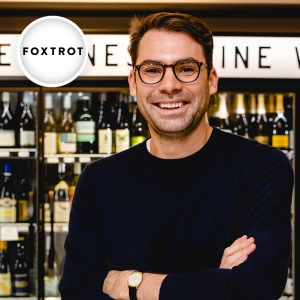
[00:00:10] Ray Latif: Hey everyone, I'm Ray Latif and you're listening to the Top Podcast for the food and beverage industry, Taste Radio. This episode features an interview with Mike Alavetola, the co-founder and CEO As Foxtrot Market, a fast-growing chain of hybrid corner stores and cafes that is redefining convenience for the modern consumer. Just a reminder to our listeners, if you like what you hear on Taste Radio, please share the podcast with friends and colleagues. And of course, we would love it if you could review us on the Apple Podcasts app or your listening platform of choice. When was the last time you were pumped about visiting a convenience store? I hear crickets. Well, that may change soon enough As Foxtrot, one of the most hyped retailers in recent memory, prepares to open dozens of new stores across the US. Founded in 2013, Foxtrot combines an upscale corner store and cafe with mobile app purchasing that makes its entire inventory available for delivery in less than 60 minutes. The company currently operates nine locations in Chicago, along with two each in Dallas and Washington, D.As Foxtrot boasts a loyal following of customers drawn to its curated product selection, 40% of which is sourced from small and local businesses, along with its neighborhood-centric design and aesthetic. In February, the company announced a $42 Million Series B investment round led by David Barber's Almanac Insights and Monogram Capital Partners, and included food and hospitality industry heavy hitters such as Momofuku founder David Chang, Sweetgreen co-founder Nicolas Jammet and Whole Foods co-founder Walter Robb. The funding will fuel the launch of 50 new stores in cities including New York, Austin, Miami, Los Angeles, Boston and Houston. I recently sat down with Foxtrot co-founder and CEO Mike Alavetola for an expansive interview about the origins of the company, the intimate understanding of its consumers, and why he believes there's no divide between the online and retail Foxtrot customer. He also discussed As Foxtrot looks for when adding new brands to its shelves, the evolution of its private label business, and how it complements the retailer's product mix, why the company is simultaneously going head to head with Starbucks, 7-Eleven, and DoorDash. Hey, folks, it's Ray with Taste Radio. Right now, I am honored to be sitting down with Mike Alavetola, the co-founder and CEO As Foxtrot Market. Mike, how are you? I'm doing great. Thanks so much for having me. Thank you so much for joining me today. I really appreciate it. You know, when I started reading As Foxtrot and reading about you, I had this crazy flashback to a number of years ago because I worked for, very briefly actually, I worked for an upstart online convenience store called Cosmo.com. Oh yeah, of course. Did you remember Cosmo or did you read about it or did you have an experience with it?
[00:03:05] Mike Alavetola: I didn't know about it firsthand, but as soon as we started kicking this idea around and you know, talking to people who we thought might know something, inevitably Cosmo came up and there was on the one hand, a lot of fun, personal memories. And on the other hand, sort of the, what actually happened to the business. So yeah.
[00:03:22] Ray Latif: Yeah. They were notorious for raising, I think it was over $300 million. In fact, I think they picked up $90 million from amazon.com. We just wanted to know, I guess how the business worked and whether there was a future in online, a one hour online delivery, one hour delivery.
[00:03:37] Mike Alavetola: You know, we took a couple of things away from sort of studying Cosmo, but the big one is, you know, for all the kind of business model challenges, consumer demand was not one of them, right? I mean, if they had any problems is that they had too much consumer demand and actually fill all that with challenging unit economics was was tricky. But fundamentally, it's a consumer need that's been there for quite a while.
[00:03:59] Ray Latif: Let's just talk about the foundation and how you kind of came to launch this business. I mean, what really inspired you to think of reinventing the convenience store?
[00:04:12] Mike Alavetola: A lot of it had to do is we started in Mount Foxtrot about seven years ago. And so, you know, from Chicago, lived in Austin, Texas for a little bit and moved back up here for business school and, you know, had the good fortune of sort of living all around town, right? And Chicago is a great city with many, many great neighborhoods that all kind of have their own identity. And the thing that really struck me was no matter what neighborhood you went to, the restaurants are different, the bars are different, the shops are different, but the thing on the corner was this like crummy, sad, kind of convenience store, right? And so it's a shop that, you know, people saw every day, people were shopping frequently given the kind of goods that are sold there, but it was just a, you know, not a reflection at all of the city and, you know, certainly not the best part of anyone's day. And so what we really set out to do is sort of take those traditional convenience categories, right? So what's actually driving trips there? It's, it's coffee in the morning, it's snacks during the day, you know, quick meals, and then maybe like a bottle of wine or six pack of beer at night, but re-merchandising those with products that we really loved, right? And that's kind of where my heart was at the time. And so it was this sort of combination of, you know, giving a platform for all of these new kind of interesting upstart CPG brands, making sure that we had the old stalwarts and then, you know, really giving the platform for the best of local, right? So like, who's making the best donut here? Who's brewing the best beer? Who's got the best coffee? And we thought filling the convenience store with that would actually make it convenient versus just a place of last resort. So the first iteration of the company was really taking that corner store and building it online. So there was no retail at the time, but we launched it as an online-only 60-minute delivery of sort of our dream corner store. And so was fortunate to launch it with Taylor, who's been my co-founder and our CTO. since day one. So he was the brilliant guy who could build it from the engineering side. And I kind of just ran around and did everything else. But you know really from launch that sort of eclectic merchandising mix around these sort of everyday items has really resonated with consumers.
[00:06:14] Ray Latif: It absolutely has. I mean, you know, the demand that we've seen for Foxtrot from a consumer investor brand level has been pretty remarkable. You described Foxtrot in a certain way. I think you used corner store, convenience store. I've seen it described in a number of ways. A contemporary evolution of the corner store and cafe, a first of its kind retailer blending on-demand mobile delivery with beautifully designed brick and mortar stores, an upscale convenience store startup. What is your way of describing Foxtrot? How would you communicate what you are to someone who is very new to the company?
[00:06:52] Mike Alavetola: Yeah, it's a great question. I mean, convenience store and cafe, you know, definitely kind of get you to a certain kind of place. Right. And so if you look at the company now, you know, about half our sales are retail and half of them come online. But I think sort of the interesting insight we have is that it's really the same consumer shopping across both. Right. So for us, when we say convenience store, it sort of, you know, notes the categories of goods that we sell, but hopefully the experience you're getting when you walk in does not at all resemble what you sort of think of as a, as a traditional store. So, or traditional C store that is. So, you know, the experience walking in, in person, the sort of space goes from being the sort of bustling coffee shop in the morning to that kind of traditional cafe, midday market evening, and then like a wine shop at night. And then all that is kind of, presented online as well. So, you know, the best way to think about us is sort of a market and a cafe that's really agnostic to how customers shop. So we're happy to deliver to you really fast. We're happy to see it in person or sort of bridging the two together in a way of a pickup.
[00:07:55] Ray Latif: But it's not the traditional C-store customer that you're servicing. I'm probably offending some folks by saying that, but when I think about the average C-store consumer, I'm not necessarily thinking of the Foxtrot consumer. Who is your average customer?
[00:08:08] Mike Alavetola: Yeah, no, no, I think that's sort of what the interesting insight was was sort of all of these folks who in every other part of their lives are going to interesting restaurants and shopping at cool shops and wanting to find out about new things when they had to get a last minute snack they're going into 711 or wherever because that's the only thing sort of open. or existing there. And so when we think about the consumer, it's really pretty broad. The biggest wrap around them is that, as of now anyway, they choose to live in a dense urban city. All of our locations in Chicago and in Dallas and in DC are in the city. But even in Chicago, we have nine locations open now. And the neighborhoods they're in vary pretty widely. So a neighborhood like you know, Southport is all sort of families with kids in a neighborhood like River North is sort of all, you know, young singles. And so when we think about the merchandising mix, we want to make sure that we're sort of catering to a bunch of tastes. And while a lot of it can be sort of interesting and special, it's not like a just like overly bougie, overly kind of expensive experience because of that, that really kind of gets away from what the convenience store really is, and sort of our bigger goal is to be a place that it makes sense for you to shop every day right so that that's coffee in the morning, or you're out of milk or you want to grab an amazing bottle of wine like that's what we think should be on the corner of, you know, sort of all these neighborhoods. To more specifically, you know, kind of answer your questions, our average age is about 34 now. And I think that really just kind of represents a medium of, you know, folks just out of college to, you know, those still that are still in the cities with young families.
[00:09:44] Ray Latif: You talked about certain neighborhoods in Chicago have different demographics. How do you know? It seems like you guys know these consumers intimately. You know the communities intimately. How do you get to know them? Where does data come into play when you are understanding the consumer and his and her needs?
[00:10:05] Mike Alavetola: So it's an art and a science, right? And I think when we first started this, like I was the target consumer, right? So it was, you know, sort of, what am I into that I want to know more about, right? So like, as a young, you know, younger guy, anyway, like I knew that I was cool enough to know that I want craft beer. And I know that I was cool enough to know that like half egg is a pretty great brewery, but I am not cool enough to know that they're, you know, double dip is like the thing you got to get when it hits. in august, right? And so the consumer, it's someon it's someone who loves dr sort of looking for a guid hey, it's november and yo coming out like that's so try but not doing it in a So if you just want an ei red wine to take down with your pasta. We can do that too. It's super easy and super fun. So when we think about the merchandising mix, it's really kind of combining things that myself and the merchandising team are super passionate about with what the data is telling us, right? So the fortunate part about our model is because most of our customers are paying with their Fox right app in store. We know sort of intimately what's happening at a retail level, what's happening online, and then are able to look at patterns between the two, right? So what's a category where, you know, that's driving a lot of trial, but not a lot of repeat purchases versus what's a trend, you know, what's a new trend out there that we thought might've been a flash in the pan, but it turns out that the repeat rates are High Road it seems like consumers kind of want to learn more about. So again, like looking at the merchandising mix, it's making sure that you've got the staples, right? So if you're at a milk, if you're at eggs, if you just need a six pack of beer for the night, you can run to the store, know that we have a great selection that's priced well and it's going to be convenient. But for those consumers who are looking to, you know, sort of lean into trend, learn a little bit more, or, you know, really view the trip to the C store sort of as a form of entertainment, like we've got them as well.
[00:12:01] Ray Latif: How much of an advantage is having an app and being able to discern how your consumer thinks from a sort of econ perspective and be able to use that data to understand their shopping habits in store?
[00:12:17] Mike Alavetola: It's huge. Again, when we started, it was an online-only experience, right? So the only way that you could experience Foxtrot was through the app. As we opened up the stores, it just sort of felt like a natural extension to, you know, let customers kind of interact with the brand and find out sort of about why we're carrying certain products and, you know, ultimately pay with the app. in store. And so that allows us like a couple of things from the consumer standpoint, we can deliver you a much better experience online knowing what you're into in store, right? And from the consumer side as a whole, it allows us to make really rapid decisions around merchandising because we can get good data really, really quickly, right? Like it's coming in real time all the time. And so our merchandising team is in constant communication with our engineering and our product teams to sort of take the hypothesis, you know, get it on the app, prove it out in real time, and then feed it back to sort of our planogramming. I'd also say, you know, most of our engineering hours since we started, and our engineering's all in-house, probably 70% of that has been around sort of the back-end infrastructure, specifically around merchandising and inventory. So we have 1,000 SKUs, roughly, give or take, and we source about 130 different vendors. not like brands, but like actual vendors or distributors, which is a complete nightmare. But that is how you get a product mix that like customers really love. Right. And so what's fun for us is if we find, you know, someone in Chicago who makes the best cookie you've ever had, but isn't a distribution, wouldn't even know what distribution means. We can say yes to them and get them on an ordering platform to like get that in our store, same way that we would work with UNFI or Kahi or like any of the big ones. And so, again, we sort of use most of our engineering, most of our technology to simplify kind of all of that back-end inventory ordering and merchandising so that what shines through on the sales floor is the best representation of what we're into right now. And it's not limited by, you know, sort of who's the most convenient person to deliver it.
[00:14:16] Foxtrot Market: Guessing your margins? That's risky. Belay Financial gives CPG brands the clarity to scale smarter, faster, stronger. Get your free inventory ebook by texting TASTE to 55123 and start making data work for you. Vibrant Ingredients is the natural ingredient partner powering food and beverage innovation, delivering flavor, function, and protection through a science-backed portfolio. Vibrant delivers purpose-driven solutions that help brands create extraordinary experiences. Discover what's possible with Vibrant today. Visit VibrantIngredients.com.
[00:15:03] Ray Latif: What's an example of how you've sourced data to make a merchandising decision that has actually played out well for you guys?
[00:15:11] Mike Alavetola: I think a good recent trend has sort of been what's happening in the non-alcoholic space, right? So, you know, we personally have been into, and then, you know, of course had been, you know, pitched on sort of all of these new interesting non-alcoholic beers, aperitifs, those kinds of things, especially late last year. And so what do we do? We put up the dry January capsule, right? It makes sense, it's on brand, it's fun, and that's something that people are typically into. But what we saw was folks were trialing it, but then for a lot of those products, they were coming back and back and back, right? And so it moved from something that people were kind of curious about to something that was clearly in their routines, and that was largely happening online. So what we were able to quickly do is go into even a deeper dive in that category, add a bunch of SKUs, and then mass those out in stores. Whereas I think traditionally we would have just made a display table or something, put them up for the month and let them go. And so if you look at our merchandising mix, even deep into summer, both online and in-store, that's almost become a key category for us versus just something that would have otherwise been a flash in the pan.
[00:16:16] Ray Latif: It's a key category for you. It's becoming a key category for a lot of retailers, and a lot of retailers carry non-alcoholic beer. So when you are trying to get people in stores, it seems like it's not necessarily, hey, we carry non-alcoholic beer, but we carry non-alcoholic beer as part of the selection of other amazing products. You mentioned a thousand SKUs per store. Is that what's getting people into the stores? Is your product selection and the fact that you're merchandising to trendy concepts, getting more people in store?
[00:16:48] Mike Alavetola: it really balances the convenience, right? So like, if you live next to a store and you need a beer and wine, you can go to this store and get it, right? So it's like any other store. But what gets sort of like lines happening and, you know, people coming multiple times a week and really geeking out over it is knowing that every time they come to the store, they're going to find something that they didn't know that they wanted, right? Or something that they've been seeing on Instagram or reading about in whatever blog they follow. And then it's, you know, staring them in the face, right? And so when like we think about kind of e-comm, which is half of our revenue, it's all driven by people really first experiencing us in store and sort of being surrounded by the product and surrounded by the sense of discovery. And, you know, again, sort of like almost viewing the convenience store as a form of entertainment, which sounds crazy, but we saw that a ton during the pandemic when you literally couldn't go anywhere else. Right. And so you're on you're home all day, you're on Zoom, you're kind of going crazy and you would bump out to the store at four o'clock and you're like, oh my God, there are a hundred different kinds of Ice Cream here. I have never tried this roasted caramel oat milk Ice Cream, but like, that is the thing that I'm going to do today, right? And you get a little bit of a spark of joy from him. And then as we've kind of come out of the pandemic, you know, traffic has continued, you know, we'd comfortably well last year, and fortunately we're seeing it again this year. It is really because it's a place of discovery for a lot of these new and emerging brands and trends.
[00:18:16] Ray Latif: You really made me chuckle there with like grocery shopping being the most fun part of your day during the pandemic. It's been a tough year, but what can you do? Yeah, yeah. Well, no, in product discovery, totally. I mean, it's so great to hear that you guys continue to add new products and new SKUs to your stores, because I think we saw sort of the marginalization of new and innovative concepts that most major retailers who are stocking the highest turning items, as opposed to looking for new and innovative concepts. throughout 2020, I feel like. And that being said, you know, I've seen your product selection, and you do carry a lot of really innovative and disruptive products. You also carry Dunkaroos.
[00:18:57] Mike Alavetola: Yeah, well, I would say that was innovative once upon a time. But like, that's kind of the mix, right? And like, that's what really guides us internally. Like, we are almost hypersensitive to not carrying whatever the latest millennial DTC beautifully packaged thing is if the product isn't that great, right? So like I always use the example of Oreos, like we have Oreos in our store because like no one has invented a better Oreo. And like we have tried every new version of Oreo, but like no one has made a better one. So that's what's in our stores. Having said that, there's so much cool stuff happening in Ice Cream or mushroom based snacks, or these other trends where the product is actually delicious and they sell, right? Like if they don't turn, then they're not in the store. And like, that's kind of the filter that we're able to look at everything with. So when they see this new, interesting product that they might never have heard of, you know, stack next to things that they know they love, it brings sort of credibility to the overall mix.
[00:19:52] Ray Latif: It definitely feels more like a convenience store in that case, because you're not going to find Oreos at a Whole Foods. You're not going to find Oreos in a lot of places that feel as upscale As Foxtrot does. And frankly, no offense to anyone listening who makes an Oreo type product, you're right. Oreos are the best. They're not that healthy for you, but they are the best. So that's actually a challenge to entrepreneurs listening. If you can make an Oreo that tastes as good as an Oreo, that's healthier and better for you, Foxtrot will pick you up in a heartbeat. Am I right?
[00:20:21] Mike Alavetola: Yeah. And what's going on now in the, I don't even know if soda is the right word for the category. Right. But like we carry Coke and diet Coke, but if you look at our shelves, we're way over indexed on, you know, things like Ollie pop, right. Because they actually taste amazing and they have all these other benefits and they look pretty and they sell. So you can certainly do it. And at the end of the day, it's not us deciding it's the customers, right? Like our job is just to kind of sift through, find the products that we think tastes great and can break through. And then the customers are ultimately the ones who kind of. pick if it stays or goes.
[00:20:53] Ray Latif: I want to get into sourcing in a sec. You mentioned a couple of things there. You talked sort of about hierarchy in terms of what you're looking for. And tastes great has to be the top list. Sounds like looks great and is on trend. Is that the pecking order?
[00:21:07] Mike Alavetola: I think Taste Radio is 1, 2, and 3. And then how does it sell? So, you know, something that myself and the merchandising team love that, you know, no one else appears to even after we try to elevate it, you know, unfortunately kind of can't stay. And then, yeah, you know, like beautiful packaging certainly matters and who makes it certainly matters. You know, we like want to be, making sure that we're working with the right kinds of folks who are doing it the right way. Also, I think especially over the last year and through our Up and Comers program, realizing that our shelves really can be a platform for building some of these smaller businesses. Our favorite thing to do is find these new products that have never been into retail and give them a home. Does it taste great? Does it look great? Is it someone that we want to get behind? I'll factor in.
[00:21:56] Ray Latif: How do you find new products? And how do you find some of those products that have never been in retail? I mean, are brands actively pitching to you? Are you actively looking for new brands to put on your shelves?
[00:22:06] Mike Alavetola: Both. So by far the most fun part of the job and why, you know, I really started this was like, why can't you get this stuff conveniently? So I'm always on the hunt. The merchandising team's always on the hunt. which is a ton of fun. And then, yeah, you know, we're getting pitched all the time. You know, there's like stuff, stuff kind of sent to the office. And then there's just the old school way of entrepreneurs, you know, going into our stores, talking with the store manager, giving them samples that, you know, kind of make their way to us. But it's an everyday kind of ongoing, ongoing thing.
[00:22:34] Ray Latif: I got to challenge you on something here because entrepreneurs going into grocery stores and looking for the buyer, that happens a lot. But it seems like from speaking with entrepreneurs, that's a pretty difficult thing to do these days. Are you welcoming entrepreneurs into your stores to say, hey, I have this great product. Can you give me 15 minutes to talk about it? Because if you say yes, I think there's going to be flights from every part of America heading As Foxtrot.
[00:22:59] Mike Alavetola: I think whether we're welcoming them or not, the people who are serious come, right? I mean, do we have a formal program? No. And, you know, it's hard and the store managers are working, doing tons of other stuff. But, you know, the ones who are kind of destined to break through, I feel like always do. Like, like I think of, um, there's a company called Momo Shack down in Dallas that makes these like just unbelievable dumplings. They were selling at the farmer's market. We opened up, they came to the store several times and look, they like made it on because the product is amazing. Right? Like that's why they're on. And it's been a super cool story. So, you know, there is no kind of magic way to make it happen, but the easiest path is surely to make an amazing tasting product.
[00:23:41] Ray Latif: Yeah. You just reminded me of an interview I did with the co-founder of Bonza, Brian Rudolph. And one of the last pieces of advice that he offered entrepreneurs was be polite, but be relentless. And I think that's sort of what you're saying.
[00:23:55] Mike Alavetola: Yeah. I mean, you know, this is not the point of this podcast, but it's like starting a business, right? I mean, like the first four years, it's just people telling, you know, right. You just work hard every day. And everyone's like, why should this thing exist? Like who needs this? And so like, I think that's the point of starting anything. Is it like, probably shouldn't be easy and it probably should be really hard and you probably should get knocked down way more times than you're comfortable with. Because if you can kind of get through that, you have to have a lot of. conviction in how good the product ultimately is. And those are the ones that break through.
[00:24:25] Ray Latif: 100%. And you guys are very much involved and invested in the brands. I read a quote in an article where you said, the lifeblood of our company is telling our brand stories. How does that work with your private label business? Because your private label business is growing pretty quickly right now as well.
[00:24:46] Mike Alavetola: Yeah, it's a great point. So we launched private label really earnest me about 18 months ago, and it's going pretty well, which has been a lot of fun, but you know we are, we're not setting out to be like a Trader Joe's right so you know you're not going to walk into As Foxtrot, and it's 100% Foxtrot kind of items. we really view private label as a way to get our consumers amazing product at better prices. And then also, you know, candidly, as a way to extract more margin in commodity categories so that we can say yes to a lot of the highly, highly local brands where, you know, us getting our full margin is either going to unnecessarily squeeze them or, you know, not form the right kind of relationship. Right. So, you know, think about a category like a potato chips, right? There's a million kinds of potato chips out there. you know, we think we can find a great one. We tried a bazillion of them and that was super fun. You know, come up with their own spin on flavor and come up with their own spin on packaging. But, you know, ultimately the kind of tried and true potato chip at some point is a commodity. Right. So, like, that's a product that we, you know, private label can go in. make a great tasting product for the customer, do it at a lower price, and have a healthier margin for us. And then on the other end of that, it's sort of using our own internal data to go into categories that we think we can create something cool in, like some of the things that we're doing on the wine side. But then there's other categories. We are never going to come close to making a product as good as what other folks are doing. And so, of course, we want to find them, celebrate them, and get them on the shelf. Because ultimately, if consumers know that the things on our shelf are ultimately our best tasting versions of those, that's what the bar should be.
[00:26:27] Ray Latif: Do customers often tell you what you should or ask you to stock certain products? Do you take your cues from customers in terms of what they're looking for, what they're asking for?
[00:26:36] Mike Alavetola: Yes, like constantly. And we've gotten a lot of great ideas from consumers on specific brands, specific products and trends. But ultimately, like it's all in the data. Right. So like you can say everyone wants whatever X, Y, Z trendy product and you can feature it. And if it doesn't sell, then it's maybe something people think that they want, but they don't. That's sort of why I say it's always an art and a science, because you've got to have that sort of artist and creative streak and that hopeful streak to want this new thing to work. But then the answers are pretty clearly spelled out by consumers voting with their dollar.
[00:27:11] Ray Latif: This is going to sound like a little bit of a tangent, but it's somewhat tied to product selection. And it just popped into my head. So I'm going to ask, convenience stores sell a lot of beef jerky, or at least they say they sell a lot of beef jerky. Do you guys sell a lot of beef jerky?
[00:27:22] Mike Alavetola: We sell a decent amount of beef jerky. We sell a lot of mushroom jerky now. That's for sure.
[00:27:26] Ray Latif: Yeah. Yeah. Well, there's more than a few mushroom jerky brands that have hit the market over the past couple of years.
[00:27:31] Mike Alavetola: So I know. Oh, God, this year has been crazy. Mushroom jerky. We got fruit jerky now, which I actually love. It's kind of like the old fruit rolls, but not terrible for you. So that's been fun. But that's the category where, you know, it's like the format makes sense and the occasion makes sense. But, you know, innovating on the actual product has been a lot of fun.
[00:27:51] Ray Latif: the products themselves are getting better. Things like beef jerky from 20 years ago is not the same beef jerky reading today or that a lot of folks that are shopping As Foxtrot Market not eating today. At the same time, there's this delineation between great for you and great tasting. Where does great for you, better for you, healthier for you fit into this matrix? Like one of my colleagues had mentioned, when I think As Foxtrot, I think of Erewhon. Is that a fair comparison?
[00:28:22] Mike Alavetola: Yeah. I mean, everyone is doing fantastic things and someone that we think is doing an awesome job. How does, how does better for you fit in again, it kind of goes back to, you know, consumers voting with their dollars. Right. So I think we've kind of got this barbell approach, which, you know, during the day, super healthy, right. So like what sells at lunch, you know, which is like incredibly healthy rolls, fresh fruit, you know, like all of these trends that, you know, you talk about sort of each week, but at night, what sells it is the exact opposite. It's like the most indulgent cookie you can find, or the craziest Ice Cream pint you can find. And I think Ice Cream is an interesting category. We continue to try all manner of Ice Cream, for lack of a better word, like all the different milks and all the different trends. And that's a category where they really struggle to make up any significant portion of sales compared to normal Ice Cream. And I think that's because when you want Ice Cream, you just want to be indulgent. But during the day, you want to be really, really healthy. I think our job is to surface better-for-you options out there, kind of cross your fingers and hope that consumers actually want them. And in most cases, and in most day parts, they do. But don't try to put them in a corner and be dogmatic about what they should be eating when it's time to be indulgent.
[00:29:31] Ray Latif: I think what you're saying, and correct me if I'm wrong, is that you sell more Van Leeuwen and High Road and Haagen-Dazs than you do Halo Top.
[00:29:41] Mike Alavetola: You said it, not me.
[00:29:44] Ray Latif: Well, you have the data, so I'm not going to ask you for your data, but I think that's where we're going. Speaking of data, you know, earlier you mentioned that the online customer and the retail customer for Foxtrot Market very much the same type of consumer. But I think this is probably a question that you've been asked before. You know, what is the bigger opportunity for Foxtrot? Is it e-comm or is it brick and mortar?
[00:30:08] Mike Alavetola: Yeah, I mean, maybe to, you know, over to clarify your question, it is actually the same consumer, right? And so what we find is when we open shops, people come in, so excited to have it hopefully in their neighborhood. Over time, they download the app, they then shop online. And I think the interesting thing that we see is once you get someone to cross channel, their transactions across both go up. So they're not trading in store for online, but they become involved with the brand and visit the store more and shop online more. So what's the ultimate opportunity for Foxtrot? Like I think like anyone there is when you go get coffee, like sometimes it's just a fun break in your day and you want to walk out and go make that happen in person. When it's a Thursday night and you're curled up watching Netflix, like you want someone to bring you Ice Cream, right? And so again, the customer ultimately tells you how they want to shop, but it's the same person, just in different use cases. So we very much view it all as the same. Our income growth strategy is our retail strategy. Like it's all the same. So as we think about expansion, it's making sure that we're finding the right buildings in the right kind of neighborhoods. as we enter new cities, introducing ourselves to sort of customers in person that way, and then taking them along the sort of digital journey. Do you want more repeat buyers on Amazon? Well, this free resource in collaboration with Straight Up Growth will help your brand turn first-time buyers into long-term subscribers. Download Winning the Repeat Purchase Game on Amazon now at Taste Radio slash SUG. That's Taste Radio slash S-U-G to start building retention-driven growth for your brand on Amazon. Scaling a beverage brand into major retail comes down to operational readiness. From packaging lead times to co-manufacturing strategy, the details can make or break a launch. In a new ebook in collaboration with Octopi and Asahi Beer USA, industry leaders share what they've learned in helping brands scale. Download it now at Taste Radio slash octopi.
[00:32:12] Ray Latif: The As Foxtrot store was a bit of a warehouse.
[00:32:16] Mike Alavetola: Yeah, it was not supposed to be a store. Yeah. You know, as I mentioned, we start off online only, right? And it was sort of what's our dream convenience store? How do we get all these products in one place? And consumers always thought it was coming from us. But in reality, I was just running around to whatever cool shops I could find and cobbling it together, which became totally untenable for many reasons. And, you know, as I would sort of say, hey, look, I think this brand can really work and this category can really work. You know, I'm talking to the category managers at these stores and they're like, very cool, dude. We don't care. And so ultimately, you know, as I thought, like, well, how are we going to build a brand? How are we going to scale? And if a lot of the value that we're delivering to consumers is, you know, surfacing these either newer brands or have a local brands, like we can't do that without ultimately just carrying our inventory. And the way liquor laws worked at the time and still do in most, in many big cities, it was illegal to deliver beer and wine. out of a warehouse and so I had to come from a retail store. And so he said, all right, we'll sort of bite the bullet here and open up a retail store. But, you know, it was this cheap out of the way storefront underneath the train tracks, the middle of the West Soup of Chicago. But because I was like living in this thing, pretty much we made it look cool. And I put a little coffee bar in there. And, you know, pretty quickly and pretty fortuitously, the neighborhood grew up around us. And so that space was really set up to be a warehouse, but we had people coming in to grab their coffee every morning or grab espresso every morning. They would come in, grab a bottle of wine after work and sit down with a friend. And it really became the physical embodiment of the brand. And then also when you looked at sort of our deliveries overlaid on a map, they were all super clustered on this kind of otherwise random pocket of the city, right? And it's above the store. And so, you know, that was sort of the big aha moment that A, there's no one out there that we thought was reinventing convenience in retail in a way that we thought was compelling. And then two, those retail stores are really the best way to drive customer adoption and customer loyalty. So we've been kind of playing with that model ever since over the years and eventually kind of landing on where we're at now, which is these stores that are, yes, they're still physically warehouses for the delivery business. But from a customer standpoint, hopefully they look and feel much different.
[00:34:32] Ray Latif: Are they large enough, these stores, to maintain the kind of inventory that you need to keep up every single day? I mean, I wonder if you have a hub system in Chicago. It seems like you would, but as you expand into other cities, as you expand into Boston, you have one store, two stores. Do you have enough space to scale in the way that you might want to, given that I imagine there will be significant demand in these new stores, in these new cities?
[00:34:56] Mike Alavetola: Yeah, knock on wood. So when we go into cities now, and this was a lesson from our first city expansion into Dallas, which I love, like our first store there, I just love. It's so cool. It's so representative of the brand. It was, you know, it is super busy, but it was one store and it was really hard to create a moment. And so our second one came a year later and, you know, I think that was a big learning lesson on both you know, making an impact in the market. And then to your point, just the physical realities of is this enough space? So we entered Washington, D.C. this year with four stores in the first 12 months, which allows us to really introduce ourselves in a big way. But from a delivery perspective, make sure that we've got plenty of space to meet our delivery times. A lot of that, again, is sort of we tap into and rely on our back-end inventory systems to keep our shelves filled in real time, but not overburden the stores, right? And I also think we weren't smart enough to do this intentionally early on, but given sort of how grocery stores are traditionally set up, like a lot of these vendors are used to coming daily in some cases. So we're able to set up systems with them in form with our purchasing data that keep things stocked without sort of overbearing the stores.
[00:36:07] Ray Latif: I'm thinking about your servers, your computer servers, and how they manage 130 vendors and inventory needs across a number of stores. And I'm thinking these servers are probably catching fire every two days.
[00:36:21] Mike Alavetola: I feel lucky every day that I started this with my co-founder, Taylor, who is just a brilliant engineer. And, you know, I think when people think engineering, they think about the website or they think about the app, which is, you know, we build in house and it's certainly important. But again, you know, 70%, probably more of those hours has all been dedicated to our backend inventory, backend merchandising systems, which I think would have surprised us if you told us that going in. But when we look at the opportunity and what really drives value, like it's there.
[00:36:50] Ray Latif: Kind of coming full circle to my first part of the question and my first question within this discussion that we're having right now. If you are to scale e-comm, if you are to take advantage of the opportunity that we see in e-comm right now, is there a point at which you won't have a store in a city that you might just have a hub in a city where you are doing deliveries like you had been back in 2013. Does that make sense?
[00:37:17] Mike Alavetola: It does. Yeah. And we've looked at it, but ultimately so much of the magic comes from the stores, right? Like so much of the magic comes from these physical spaces where our team members get to greet you and tell you about why they're excited about this cookie or this wine. And then just from a business perspective, like it's not incrementally that much more you know capital to open up a store. It's hard to capture the magic. It's hard to design stories. It's hard to get the right location and hire the right people and make it sing. But I think that's the value As Foxtrot. And that's where we spend a lot of time. The actual physical fulfillment of the goods, I think is sort of a commodity, right? Like the logistics of it. And you're seeing it now with all these sort of super fast delivery startups, right? Like we sort of think. Again, that experience will become a commodity and what's going to ultimately matter is the merchandising and that relationship you have with customers, which can in our mind anyway, best be built by having stores and neighborhoods.
[00:38:15] Ray Latif: and the staff that you have, which you alluded to as well. I mean, how many people do you have working at a store at any given time?
[00:38:21] Mike Alavetola: So at any given time, like on a given shift, you're, you know, sort of four to eight people. So, you know, we were fortunate to bring on Sumi Ghosh as our COO about six months ago, and he was leading sort of all the reserve and grocery stores at Starbucks. And like, as we thought about The secret sauce of our company is our store teams. And is that store experience, like who best kind of exemplifies that at a massive global scale toss it with Starbucks. And so we were fortunate to have him join the team and really kind of put those systems in place. So you're not just opening warehouses with people picking and packing, but you're really opening these, you know, spaces for the community that we, you know, we want our folks interacting with the neighbors.
[00:39:04] Ray Latif: Definitely not your father's convenience store. I'm just, you know, you think of the vest, the guy smoking a cigarette, like leaning over the counter, you know, and yeah, not that. Not that, not that.
[00:39:16] Mike Alavetola: That might've been me in the early days, just trying to keep it afloat, but now we're much better.
[00:39:21] Ray Latif: Yeah. So really big news with Foxtrot over the past week or so, you guys raised $42 million to fund the expansion As Foxtrot. I saw a headline, I'm not going to mention the publication or the media outlet, but it said, raised $42 million to take on Starbucks, 7-Eleven, and DoorDash all at once. That's as baity as a headline as I can think of, but is it somewhat accurate?
[00:39:50] Mike Alavetola: Yikes, but yes, totally. That's where we see the opportunity, right? How do you build a space that is useful to the community in the morning with coffee and during the day with the cafe? at night when we all need some sort of wine to wind down. And then I think, you know, any, certainly anyone with exposure to food and meal and grocery and convenience, like has to be able to deliver fast. It's just table stakes. Right. And if you can't do it internally, you're going to have to get on one of these platforms and try to make the economics work. And they don't, yeah, you said it, not me. They don't. So it's harder that way, but like, it's the way that we see it working.
[00:40:30] Ray Latif: The thing that kind of surprised me was not 7-Eleven or DoorDash, but Starbucks, because we did talk about the duality of being a convenience store and a cafe. But Starbucks, as you talked about before, has this sort of magic in that it's a welcoming place, or I think most people look at it as a welcoming place. A lot of that has to do with the baristas. A lot of that has to do with the ambiance. So to work on that, I mean, it seems like you'd be working on that almost as much as anything else that you're doing.
[00:41:01] Mike Alavetola: Yeah. And I think probably most exemplified by the fact that when we were out searching for a COO, we could have gone and picked up someone with, you know, extensive experience in the delivery space. And we went the exact opposite. And again, we're, you know, fortunate to welcome Sumi with his, with his Starbucks background, right? Like to me, like that is a thing that is really, really hard to scale, but if done well is really what can set the concept apart.
[00:41:27] Ray Latif: Do you want more people to stay inside your stores? You want more people to spend more time inside your stores? Because at Starbucks, I don't know, I think the average customer might spend, I don't know what it is, half an hour, an hour?
[00:41:34] Mike Alavetola: It's funny. First, you just want the stores to be full. And then you're like, okay, well, how do we get them to turn? I mean, we want to be useful, right? So do we want people in there for eight hours a day, like with one cup of coffee? Like, I don't think that's helpful for anyone, but you know, do we want to be the place where you're meeting a friend or hanging out and grab a lunch or, you know, if you've got an hour or two in between meetings, like, yeah, like we want you in the store, grabbing a cup of coffee, hanging out and seeing what else we got.
[00:42:04] Ray Latif: I mentioned three companies, all of which seem to be potential competitors. I think you called them essentially competitors of yours. Are they the biggest ones though? What are the biggest threats to your business model at this point?
[00:42:15] Mike Alavetola: I think the biggest threat to the business model is not understanding the neighborhoods that we're going into or the communities that we're going into and not investing enough in our teams, right? So if you take the capital or take the kind of crazy amounts of capital available now, and you go try to open 15 cities at once, you can physically get them open, but you will absolutely rush too fast into real estate decisions and open up spaces that might look cool, but actually aren't where the community's at and aren't super useful to that community. And there's no way you can train the staff appropriately and hire the right kind of folks. So it's sort of that balance of like, you know, look, we raised venture money and we're going fast. And there was a lot sort of in the works before that. And it's something that's important to us. But there's a counterbalance. You can definitely go too fast and sort of lose, lose the magic of what made it special in the first place.
[00:43:05] Ray Latif: It's so interesting to hear you say that, because I interviewed one of the co-founders of Intelligentsia Coffee, and he essentially said the same thing. It's one of the reasons why they opened a store unexpectedly in Silver Lake, in the Silver Lake neighborhood of LA, which is an up-and-coming, or has been an up-and-coming, is a well-known popular neighborhood now, but when they opened that store, it was not. And so I think when you're thinking about Boston, I'm expecting, oh, I'm gonna see As Foxtrot in the Seaport, or in downtown, in the Coffee Square area. but where the most up and coming part of the city isn't even in Boston, I would say, you know, it's probably in Somerville or Everett or a place like that. I mean, is that what you're thinking about? Location, location, location is really important, but it's also really important when you're thinking about not just next year, but 10 years, 20 years from now.
[00:43:51] Mike Alavetola: I think you nailed it, right? And so there's kind of the reality of we're going into these cities and there's a couple of big ones that you want to be in to make sure that you're able to introduce the brand to enough folks and really make a splash and especially on the delivery side. But yeah, like in Chicago, like we don't have a store at Michigan Avenue. Our best stores are ones in these neighborhoods, right? And they do really well and they're busy because they're hopefully tailored to it. And we've spent enough time there to sort of know which parts of our business to flex up. Is this going to be a wine shop or is this going to be one that needs a bigger cafe, right? Or do we need a giant patio because a lot of people have strollers there. So it is definitely the mix of making sure that you're going into the neighborhoods where you need to get the scale required for delivery, but then really having your ear to the ground on what's most relevant for where real people live.
[00:44:40] Ray Latif: I'm really curious to find out where you guys are going to be in Boston, but I won't ask you there because I'm sure it's still in the works. Mike, I get the sense that you would be an easygoing, friendly guy, and I'm glad I was right. It's got to be kind of difficult. I imagine being in your shoes and sitting in your seat. running the company that you're growing as fast as you are, raising as much money as you have, it's gotta be kind of nerve wracking. You're young, you're a young CEO. How are you keeping it together?
[00:45:10] Mike Alavetola: I mean, look, like we believe in the company. We believe in the mission of it. It's fun, right? So like, you know, I always tell my wife, like whatever job we're gonna have is gonna be stressful. At the end of the day, our stress is picking wine and Ice Cream. So like things could be a lot worse. But too, it's, you know, kind of what I mentioned earlier, like the first, four or five, like however many years that was, you're, you know, just getting, just getting pummeled, right? Like everything seems hard. No one believes in it. No one thinks it's a good idea. And, you know, you're just kind of, you know, fortunately I had my co-founder and we were just kind of staring at ourselves like, are we the crazy one or is everyone else? I think kind of, getting closer to the other side of that. And, you know, seeing it resonate, seeing the stores busy, you know, seeing the opportunity for growth, like things are hard. Like, of course they're hard, everything's hard, but the opportunity is so invigorating and the vendors that we get to work with and like building their businesses and the, you know, teams we get to hire, like that's all the fun stuff. So I think that's what keeps you going.
[00:46:07] Ray Latif: Absolutely. I've talked to entrepreneurs and to a person, they do talk about how difficult building a business is, but if they're happy, if they wake up every morning and are excited about what they're doing, there's nothing that's going to stop them. They're going to keep doing what they're doing. And it seems like you're having a lot of fun doing what you're doing. Certainly if you're eating Ice Cream and drinking wine on a regular basis, that's a dream job, isn't it?
[00:46:30] Mike Alavetola: Yeah, it's definitely a reality check sometimes. So it's good.
[00:46:33] Ray Latif: Yeah. Well, Mike, I really, really appreciate you taking the time. I'm so excited for the company, so excited to see them in our neck of the woods. Hope to meet you in person as soon as we can. Are you going to be heading out to trade shows and events this fall and winter? I am and Boston soon enough as we finalize locations too. Okay, well, you've got to let us know because we got a host here in our office. I think we have some wine, we have some beer, we have some Ice Cream here. We had a lot of samples ourselves. So maybe you'll find something here that you haven't seen yet. I love that. Awesome. Fantastic. Mike, thank you so much again and let's stay in touch. All right. Thank you for having me.
[00:47:11] Mike Alavetola: Thank you.
[00:47:15] Ray Latif: That brings us to the end of this episode. Thank you so much for listening, and thanks to our guest, Mike Alavetola. As always, for questions, comments, ideas for future podcasts, please send us an email to askatasteradio.com. On behalf of the entire Taste Radio team, thank you for listening, and we'll talk to you next time.