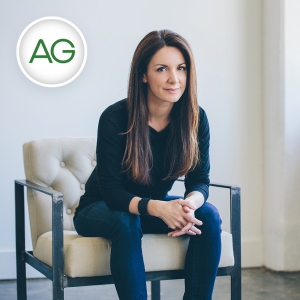
[00:00:10] Ray Latif: Hey folks, I'm Ray Latif and Cole're listening to the Top Podcast for the food and beverage industry, Taste Radio. This episode features an interview with Kat Cole, the President and Chief Operating Officer of rapidly growing wellness brand Athletic Greens, who spoke about how she's applying her extensive experience in branding, leadership, and community building to the recently minted Unicorn Company. Just a reminder to our listeners, if you like what you hear on Taste Radio, please share the podcast with friends and colleagues. And of course, we would love it if you could review us on the Apple Podcasts app or your listening platform of choice. When Kat Cole joined Athletic Greens in December, a lot was written about her role in reviving and in some ways revolutionizing Cinnabon. Yes, that's Cinnabon, which Kat Cole for several years before taking the reins of parent company Focus Brands, a multinational owner and operator of several fast-casual restaurant chains, including Auntie Anne's, Moe's Southwest Grill and Jamba Juice. On the surface, it might have been surprising to some that the former top executive of a company that sells cloying, indulgent, let's call it what it is, less than healthy food would be the right fit for Athletic Greens, which is known for its highly nutritious powdered beverages. However, in speaking with Kat, it becomes clear that her experience and business acumen, particularly in brand analysis and omni-channel strategy, could be applied to nearly any consumer industry. In the following interview, Kat spoke about her decade-long tenure at Focus Brands how she plans to support continued growth at Athletic Greens, which last month raised $115 million at a valuation of over $1 billion. As part of our conversation, Kat explained how she evaluated the potential for Cinnabon as a CPG brand, why she urges entrepreneurs to build a community around their brands, her personal investment philosophy, and why Athletic Greens is incorporating NFTs and Web3 into its next stage of development. Hey folks, it's Ray with Taste Radio. Right now I'm honored to be sitting down with Kat Cole, the president and COO of Athletic Greens. Kat, how are you? Great, how are you? I'm doing fantastic. It's a cold and dreary day in Boston. A lot of times I start these interviews talking about how the weather is cold and dreary, especially at this time of year. And I hope that you're enjoying warmer weather wherever you are.
[00:02:58] Kat Cole: It's in the 30s, but sunny and beautiful in Atlanta.
[00:03:02] Ray Latif: Atlanta is typically sunny and beautiful, but sorry to hear that it's in the 30s. I think most people wouldn't think that it ever got in the 30s in Atlanta. Oh, yes. There you go. Well, it's a lot hotter, I assume, in a place that's very familiar to you. That's Burning Man. This is a weird way to start an interview, I know. But Burning Man is so embedded in you and your life. So I got to ask you about this because I've never been to Burning Man. I don't know anything about it. I'm very curious about it. Please tell me and anyone in our audience who's never been what it's all about and why it's so awesome.
[00:03:38] Kat Cole: Burning Man is an annual festival in the desert where art, community, creativity all collide. Over 70,000 people attend. Literally, it becomes Nevada's third largest city. Overnight, there is no infrastructure. It is dusty desert land and infrastructure emerges from the Burning Man organization and with the fine folks in the city of Gerlach, the nearby city, and Black Rock. And it becomes this amazing event. People go to build camps to create, to discover. There is amazing art, like world class installations and art and events and music all throughout what is essentially a full week long festival that happens leading up to Labor Day. So the week prior to Labor Day every year, of course, with exceptions during the pandemic. I've been going for many years. My husband and I got married at Burning Man. There are many weddings. Children go. Yes, it's a party, but it's also an incredible place to go discover and create. And I encourage people to Google it, to look it up, as opposed to what it sounds like it is, to see what it actually is. And there are tenants and principles that those attending Burning Man adhere to, such as leave no trace, you know, leave things better than you found it. We are camping on sacred and protected land, no commerce, there's no money there. And so you are there to be radically self-sufficient, to radically participate in community. I mean, there are these really interesting principles that are easy to go discover that are not only beautiful for the experience at Burning Man, but have certainly become a part of my personal ethos, the way I think about companies and community and family and life in general.
[00:05:33] Ray Latif: The one thing you didn't say or the one word you didn't say is fire. And I think when people think about Burning Man, they think about these huge structures that are just caught on fire, smoke everywhere. Is that part of it, too? Is that a big part of it?
[00:05:47] Kat Cole: There is a day at the end of the event.
[00:05:50] Ray Latif: OK.
[00:05:51] Kat Cole: uh where things art installations and the man the giant wooden man gets burned and so the idea is impermanence right you put all this work into creating beautiful things and then they burn and so that's only true for the wood structures of course but there is a big party uh near the end where the giant multi-story wooden man structure gets burned and there's a big party around it celebrating the end of the the event but then the day after there is the burning of the temple a beautiful structure where people have weddings or they go to mourn or they go to pray or meditate or celebrate and it's quite stunning. And on the Sunday after the man burns, the man burned Saturday, the temple gets burned on Sunday. And it is quite emotional because people have gone there to have, you know, emotional moments, and then to stand around and see it burn is sort of seeing that either trauma or that moment, kind of go up in smoke. And the idea of, you know, good things come to an end, but tough things come to an end as well. And standing around the man Burning Man Saturday, it's this incredible party, lots of sounds and celebration, but the same people stand around the temple Burning Man it's silent. 10,000s of people watching the temple burn and it is silent. And it's incredibly moving. It really is an incredibly moving experience. So I encourage anyone to go bring your parents, bring your kids, a lot of kids go, I will be bringing my kids when they get a little bit older. They're just too young to follow instructions right now consistently. But it's like anything, there's much more to it than meets the eye. And I encourage people to do their own research.
[00:07:37] Ray Latif: Well, I appreciate you sharing that because I, again, didn't really have any concept of what Burning Man was all about. And it sounds like a really beautiful, wonderful experience, not similar to the images you typically see on the Internet of people dancing around a humongous bonfire. So, yeah, I definitely will check it out.
[00:07:58] Athletic Greens: We do dance around a humongous bonfire, so it is, it is and.
[00:08:04] Ray Latif: That's the last thing you do. It's not like the only thing you do. That's right. Okay. One more thing I want to get to before we get into everything that is cat coal and Athletic Greens. I guess this is part of cat coal is oregano sinus spray. This is really weird, I know. I saw this on Instagram or your Instagram where you created a travel kit for your husband who's going rowing around the world. Is that right? Yes. Okay. That's a whole nother story, but oregano sinus spray was a key part of his travel kit. Why? This sounds horrifying to me, but that's okay.
[00:08:46] Kat Cole: I always have to disclaim, not medical advice. Do your own research, but certainly it is well documented that oregano oil has a high degree of antiviral and antimicrobial properties. And so it is used by naturopaths and sort of east meets west functional doctors to address lots of ailments. And so I use this sinus spray that has oregano oil in it. And if anyone's ever used oregano oil as a drop, you know that it is such a world on fire, not pleasant, very strong, but I have found it to be helpful and useful in those I love. It gets included in a simple travel pack with AG1. as a nutritional foundation drink and then oregano, some type of sinus spray with oregano oil that is used both proactively and reactively. Like if I have a little sinus infection or seems like there's colds and flus going around, which feels like our permanent world these days. I certainly use it when I travel for just some extra support. So not medical advice, but one of the things that I use consistently.
[00:09:56] Ray Latif: Now all that dry air at Burning Man, you gotta bring some oregano sinus spray for sure, right? That's right. Did you ever think you'd be using oregano sinus spray 12 years ago when you joined Cinnabon? Because I think those two things are mutually exclusive. Anyone who eats Cinnabon, well typically I would think, anyone who eats Cinnabon on a regular basis isn't probably using oregano sinus spray.
[00:10:20] Kat Cole: I will say I love breaking molds and stereotypes because I have been using oregano sinus spray for 15 years. Okay. When I was working at Hooters because I was traveling around the world quite a bit. And certainly I was a big fan of naturopathic remedies and investing in a nutritional foundation, even as the president of Cinnabon.
[00:10:46] Ray Latif: All right, let's get into Cinnabon because this is an amazing story. When you joined the company back in 2010, it seemed like kind of a big project because we were on the cusp of some real changes in terms of health and wellness trends and how they were impacting how people ate and perceived places like Cinnabon. And you helped not only revive, but almost revolutionize what that brand became and what that brand is today. How did you evaluate the potential for Cinnabon as a brand when you joined the company?
[00:11:23] Kat Cole: I mean, at first, it didn't take a lot of work to appreciate that the business or the brand was still beloved. It was highly nostalgic. People had fond memories. Anytime you would say Cinnabon, people's eyes roll back in their head and they're like, oh, the, you know, the aroma, or they would share memories. Like I remember when my mom used to, or my friends and I in high school would go hang out at the mall and oh, it brings me so much joy to treat myself when I'm in the airport. It doesn't take a big body of research to realize and appreciate the power of the brand itself as an emotional connection and as a promise of an indulgent moment. So as I think about, you know, recognizing the power of the brand, it wasn't difficult. The part that required work was the gap between the love for the brand and the health of the business. And that took a little bit of research, spending time with customers, spending time with franchisees, really seeking to understand what were factors and dynamics beyond our control, such as the Great Recession, which is what was going on when I took over the business in 2010. and the natural dynamics of what happened when people have depressed discretionary income. When people have depressed discretionary income, there are two things at the top of the list that they stop doing. They stop traveling and they shop a lot less. In Cinnabon locations, we're in malls and airports. So you're just missing foot traffic. Like, what do you do? You know, you're missing a ton of humans that you had before and you have to do more with less while these dynamics are at play and find ways to not just settle for less, but find ways to capture more traffic with the fewer people that are coming into those venues. So at least for the core business, that was the work that was needed. And so a whole podcast worth of discussion around that. But then the question was, what else? Beyond, we are not confined to our existing venues. We are not confined to malls and airports. Where are the other places that the brand has permission to travel? We did that work. We did the research. We did deep brand architecture explorations. We did ethnographies where we go into people's homes. We did the work to understand where the brand had permission to travel. what type of a journey all the elements of the brand needed to be on to maintain its relevance, because it was very clear that out of the two things that define an enduring brand, relevance and differentiation, Cinnabon was insanely high on differentiation, like there's nothing like it. but faltering in relevance. Everything from consumer trends to the venues where it was located, it was harder to access. And this was at the beginning of the e-commerce boom and journey, right? This was not retail apocalypse stuff. This was depressed discretionary income stuff. This was recession stuff. And so that was just a, this sort of combination of informed intuition as a business person, as a consumer, as a fan of the brand, as well as deep academic work around brand and commerce and the marketplace and consumer trends and bringing those things together, as well as spending time in the trenches. I was working in the bakery, spending time with employees, spending time with customers. For the first 60 days, I didn't do much other than work in the bakeries, staying close to the customer, asking the same questions to everyone to get patterns that would help me, along with the other things I've already discussed, prioritize. with the team where we needed to spend our time, energy, and resources. And that led us to a series of operational initiatives, a series of brand initiatives, and then an overall plan to enter and accelerate alternative channels, strategic partnerships, putting our brand in food service and in other restaurants, really pushing on the gas and consumer packaged goods, and partnerships with everyone from Pillsbury and General Mills to Kellogg's to White Wave to Green Mountain and, and, and. And before you knew it, we had helped the base business turn around out of the recession, given the franchisees new life and profitability of their business and strengthening unit level economics. And we had also pioneered bringing a restaurant brand into channels in grocery and alternative channels, that was not the case previously. And certainly building omni-channel brands is the way the world works today, but it was novel at that point and led to unprecedented growth for the brand, brand awareness, for the business, for revenue, for profitability that allowed us to reinvest in the business over time. And it's still one of the world's largest omni-channel restaurant brands. today, which is, you know, 10, almost 11 years later after we started that journey.
[00:16:17] Ray Latif: It's such an amazing story. And when we spoke for our pre-interview, I asked you, and this is kind of funny, I asked you how long you've been in CPG, and it seems like it was a short amount of time because you'd only recently started working with Athletic Greens. You're like, I've been working in CPG for over a decade. And I think Cinnabon as a CPG brand, it doesn't instantly click, or it didn't with me. At the outset, I know you said you did a lot of work in terms of researching where the brand had permission to go. But at the outset, did you envision Cinnabon becoming a CPG brand or at least aligning with other CPG brands?
[00:16:58] Kat Cole: I mean, it wasn't difficult to envision because the business already had a small, not small, meaningful, but early stage CPG business in its partnership with Pillsbury. So years prior to me coming on board, Cinnabon had products with Pillsbury in grocery. It was Pillsbury Cinnabon cinnamon rolls, Pillsbury cinnamon rolls with Cinnabon cinnamon. That had begun with the previous owners of Cinnabon. But it was not a strategic approach to building and expanding the brand. It was a single, very strong and still early stage growing partnership with one partner in essentially one category, refrigerated dough. There had been some other experiments like lip balm and lotion and things that were more novelties. Lip balm?
[00:17:46] Ray Latif: I should have said lotion, Cinnabon lotion?
[00:17:50] Kat Cole: Lip balm, lotion.
[00:17:51] Ray Latif: Oh, wow.
[00:17:52] Kat Cole: Experiments, experiments. And those things just, of course, they're not, they're not enduring. And they're more like promotional items and ways to play on the love of the brand, but they're not enduring platforms. But the cinnamon roll business and grocery was in fact an enduring platform. And so I inherited the beginnings of this channel, but then saw it as an entire platform where we as a brand were not limited to like for like categories in grocery. The Cinnabon brand didn't only belong in cinnamon rolls. in grocery, it belonged in coffee creamer, it belonged in cereal, it belonged in other baked goods, right? There were so baking kits, there were so much opportunity for the brand to extend because people told us, I want a taste of cinnamon in other formats, in other moments in my life. I'm not going to the mall every day, but I love the aroma. I love the taste. I love the smell. Do I want to eat a giant pastry the size of my face every day? No. But would I love a Cinnabon flavored coffee? Absolutely every day. And so understanding and appreciating what the existing CPG business meant for the potential of a global CPG business was the work that I did with the team when I joined. And yes, it was crystal clear to me that the brand had potential to be a world-class consumer products and grocery brand.
[00:19:23] When Kat: Guessing your margins? That's risky. Belay Financial gives CPG brands the clarity to scale smarter, faster, stronger. Get your free inventory e-book by texting TASTE to 55123 and start making data work for you. Vibrant Ingredients is the natural ingredient partner powering food and beverage innovation, delivering flavor, function, and protection through a science-backed portfolio. Vibrant delivers purpose-driven solutions that help brands create extraordinary experiences. Discover what's possible with Vibrant today. Visit vibrantingredients.com.
[00:20:10] Ray Latif: As I mentioned, this was at the beginning or on the cusp of health and wellness trends starting to dominate everything in CPG. And Cinnabon just doesn't have that care about itself. It's just not. I mean, let's just call it what it is. That being said, I mean, how sustainable did you think this strategy was amid changing winds in CPG, particularly in food and beverage?
[00:20:38] Kat Cole: It was so clear that not only was this sustainable, that it would grow. And the reason why is when we are all on a health and wellness journey, We get more and more disciplined about what we put in our bodies, about clean label, about healthier choices, and we don't go backward. But we still, not everyone, but many of us, like to treat ourselves from time to time. And what those trends mean is when people take a moment to treat themselves, because they are on a healthier journey, whatever they treat themselves with has to be so worth being bad. And what is more delicious, given the calories, you know, when you're looking to be bad than Cinnabon? My line was, when you want to be bad, and let us be clear, this is being bad, it is an indulgence. When you want to be bad, it is so worth the discretionary income and the discretionary calories. Should you eat it every day? Definitely not, not the core sentiment role. But when you treat yourself, when we as consumers who are on a health journey, want to indulge, what starts to happen as those health trends increase is we demand more deliciousness from the few times we are bad. So actually, maybe counterintuitively to many people, I had more confidence in Cinnabon's potential to cut through the clutter because all the stuff in the middle, the snacks and the not so delicious things were actually going to be the first things we cut. Because why be bad if it's not absolutely amazing? I'd rather just have the most creative version of something healthy. And so it was clear, even in coffee, where I would tell people, look, if you want gluten-free from Cinnabon, we had a gluten-free baking kit, and you can drink the Cinnabon flavored coffee. That was a way to have a taste of the brand. And Cinnabon had a cereal that was far less sweet if you wanted to treat yourself once in a while. And so there were these many ways to still be honest about the fact that the brand is an indulgent brand and everywhere it shows up, the aromas and the flavors are about indulgence. The brand has no place trying to be healthy. But if you are going to treat yourself, we should protect the high quality ingredients and how amazing and delicious those moments of indulgence would be. And this has nothing to do with health or not health. This has to do with understanding how to build a consumer brand. And how to build a consumer brand is being honest about who you are and what you stand for, and then leaning into that in ways that you have permission from the consumer to lean into that and not try to be something that you're not. And so interestingly, the same philosophies that allowed me to lean into building Cinnabon as a world-class brand are incredibly consistent to what I used then with the Jamba Juice team at Focus Brands, or the Moe's Southwest Grill team at Focus Brands, or McAllister's, and then similarly what I used at Athletic Greens. This is understanding and appreciating the journey we're on as consumers, and then being clear about where each brand and its products have a place in core moments in someone's life.
[00:23:58] Ray Latif: Focus Brands, you mentioned, is the umbrella company that owns and operates all the quick service restaurant chains that you mentioned, including Cinnabon. As you might imagine, right now I'm thinking about a very indulgent snack, and the first thing that comes to mind is Cinnabon. So now I got to run out. after this interview and go pick up a cinnamon roll with all the nice frosting on top. Oh my gosh. If anyone's listening right now and is feeling the exact same way, I want you to email us at askattasteradio.com because the way you described it just gives me permission. I feel like I have to do it. I've been eating well all week and now I deserve this. It's my cheat meal. It's not really a cheat meal, but you know what it is. Do you indulge in cheat meals very often? You seem like a very healthy person, someone who always lives a very healthy lifestyle.
[00:24:44] Kat Cole: I love an occasional sweets. I mean, I am as clear as most people are on the harm that refined sugars over time can have on our bodies. And I still have ice cream sometimes, and I still have a cookie sometimes, and I still, I'm on the board of Milk Bar, and I have a slice of amazing Milk Bar cake sometimes. But the frequency at which I indulge, especially as I get older, is less and less, And it had better be worth it. And then I lean into being more and more healthy and disciplined in my day to day life so that I have a stronger health foundation on which I can occasionally indulge without sending my health, you know, off course. And when I do indulge, I indulge less, right? It's like delicious, but I might not eat the whole thing. I might have a smaller portion is something that I really appreciate from my indulgent brands so that I can just have that little moment and that taste. So it's like my indulging has become farther apart in frequency. I modify my portions, but I demand more deliciousness for when I'm bad and my baseline of investing in my health and wellness, not just eating healthily and clean throughout the day and some weird version of intermittent fasting that I do, but also AG1 from Athletic Greens, also supplementation to build the foundation of my nutrition. I've just gotten more serious about it as time's gone on, as I become more educated and informed, like you can't unlearn the research. And I'm a mom of two young kids that I had when I was First one I had when I was 39. The second one I had when I was 41. I want to live long and strong for myself, for my husband and for them. And so, yeah, I still indulge and have fun. And I put far more energy into building my nutritional foundation.
[00:26:39] Ray Latif: So Hooters chicken wings once a year, Cinnabon once a year, and that's good for you. I imagine you wouldn't be investing, let's say there was a Hooters startup or a new Cinnabon startup. I imagine that you wouldn't necessarily be investing, financially investing in those companies. You are an angel investor today, and you have made investments in a number of better for Focus Brands. Is your philosophy very much tied now to it has to be improving upon someone's lifestyle or health or lifestyle, or is it beyond that? Is it something different than sort of what we've been talking about over the last few minutes?
[00:27:18] Kat Cole: I angel invest along with my husband and we're invested in over 70 companies. So we would be considered super angel investors. And, you know, it's an even split of about a third consumer brands, most of which are health, wellness, or way better for you consumable brands. A third are technology and just pure tech plays. And then the other third is a bundle of things ranging from marketplaces to ed tech to other consumer products that are not necessarily consumables. But yeah, I mean, over the years, look like any investor I am investing, especially investing in early stage companies, I'm investing in where I believe the consumer will be in five years. because I'm getting in early, right? Early in the curve, early in the company. And certainly I believe in omni-channel retail, I believe, which extends far beyond food, you know, and health and wellness. I believe in better for body, better for planet trends that will continue, accelerate and endure. And so of course, when I'm putting my money to work, Where do I want to put it to work? I want to put it to work where I believe the customer is going. And I believe we are all on a journey of being more conscious about our purchases, whether consciousness around the planet. I'm an investor in a fund called Lower Carbon that focuses on planet improving initiatives, right? That would be considered like a an environmentally driven fund where I am an LP. And at the same time, I'm an investor in several companies that are better for you food, as well as, of course, Athletic Greens, which is literally working to make bodies and communities in the world healthier over time. And I've been on a journey of You know, as my interests evolve, as my education continues, as I learn more about what's important for our nutrition, for the world, I put my money where my mouth is and where my time is and where I think consumers will do the same. And certainly over the last, especially five years, that has included far more investments in the broader health and wellness category.
[00:29:30] Ray Latif: I want to get into Athletic Greens and how you met the founder of the company. Folks listening right now might be wondering, hey, I have a great consumer brand and I really think it's driving forward health and nutrition for human beings. Could you explain what you're looking for, like how you would initiate or how someone should initiate a conversation with you if they do believe they have that type of concept that you'd invest in? And can you name a couple of the companies that you're currently invested in on the CPG front?
[00:30:04] Kat Cole: You know, if someone's interested, I would say if you're doing anything that is in the zip code of Athletic Greens, don't call me. I am laser focused on building this amazing brand and company that literally pioneered the foundational nutrition movement. So sadly, I cannot be supportive to you because I'm focusing on making a real dent in the universe with this company. But separately, if it's not in that zip code, what I would just say to people is, this is true for any startup. You have to have a minimum. I heard Alexis Ohanian say this quite some time ago, the co-founder of Reddit and current founder of 776 Venture Fund. That you have to have a minimum viable community, many people think about minimum viable product. And it's really about community like can you delight 10 people or 100 people and have them reorder without you giving them incentives to do so. Quality, right? Just like quality of the product. It needs to be amazing. This space, especially health and wellness, is radically competitive. It is one of the hottest spaces in consumer products. There are a million people trying to launch products. There is seemingly unlimited capital flooding into the space. So you need to make sure that your idea when executed actually delivers for people and that they want more of it again without needing to be incentivized with discounts and promos and you know buying the customer at all costs. So that's advice for any high growth company any startup. And it certainly applies in the call it wellness space. In terms of brands, the list is long. So brands like Senzo, which is an incredible like clean label, sparkling water, Asian inspired flavors, incredible founding community. Imi, the healthier ramen company. House of Wise, the CBD brand that is bringing like functional CBD products focused on women to the marketplace. And the list goes on. on and on and on. Often I'm investing pre-revenue or just after revenue, so very early stage. I'm quite exposed to early stage consumer products. And so I'm doing less of that investing now. I'm doing more follow on to later stage investments. I'm invested in Therabody, you know, an incredible, call it wellness or recovery consumer product that has nothing to do with food and beverage. And so it's not just food and beverage. But more the broader landscape I'm invested in human co brands, a company where I am an advisor and I'm also on the board of human co the SPAC, which is human co brands is a portfolio of brands that has brands like coconut bliss and snow days and against the green pizza I mean they are literally. scaling, organic, clean label, radically better for Focus Brands and mostly frozen, but in the CPG and grocery space. So those are some other brands that I support and I'm involved in, in the CPG space across wellness.
[00:33:09] Ray Latif: I'd be remiss, and I think our audience would be as well, if I didn't ask, what's the best way to get in touch with you? And on LinkedIn seems kind of difficult because you have, what is it, like 350,000 followers on LinkedIn, is that right?
[00:33:23] Kat Cole: Yeah, I mean, I try to make sure there's no dm left behind that is increasingly difficult these days but Twitter Kat Cole atl dms are open can't see them as much as I used to but they're there certainly linkedin again it's a. It's crowded, but I do check in there. Instagram, I try to check, same thing, Kat Cole, ATL. I'm at Kat on Clubhouse, the social audio app. So I'm pretty accessible everywhere, but my ability to check in real time as the platforms have grown, as my presence has grown on platforms, and as my own focus has shifted to Athletic Greens is a little tougher, but I do really enjoy when people share thoughts or questions or ideas.
[00:34:09] Ray Latif: So you won't get back to people in 10 minutes. Give it a couple of days, folks. A couple of days. Did you know about Athletic Greens before you met Chris Ashenden, the founder?
[00:34:20] Kat Cole: I did. Yeah, my husband is an ultra endurance athlete and, you know, he runs Ironmans and triathlons and ultra marathons. Like, you know, you run 100 miles. without stopping in very difficult places. And so that's his side hustle. He's not a pro athlete. He does this as a side hustle. And so this world of call it runners or fitness enthusiasts not even professional athletes just fitness enthusiasts. This world knows Athletic Greens is a company and A.G. one as a product. They've been using it for years. It's been like the best kept secret in building a nutritional foundation and in aiding recovery of people who live active lifestyles and is just, it seems like all of a sudden coming on the scene for we mere mortals who are just trying to live longer and stronger, but who in our own way have active lifestyles. just the stress we put on ourselves with work and family and kind of living in this wide world certainly benefits from investing in a stronger nutritional foundation. No one has the perfect diet. No one has the perfect lifestyle. None of us, not even like professional athletes. And so the idea that supplementation and augmenting our nutrition with something like AG1 that is easy, takes 90 seconds, has a multivitamin, a pro and prebiotic, phyto and greens blend, adaptogens, mushroom blend, you know, I could go on and on. It's literally one scoop and 90 seconds and I start my day with investing for me in my moment in my nutritional foundation and athletes and people who are deep in the world of biohacking and longevity have used this product AG1 for years, but it is not only for them. And so I knew about it years prior. I was a customer. I actually got connected to the founder because he heard me on a podcast. and heard me talking about brand and leadership and growth, and appreciated that my perspective could be helpful to him given the growth of the company, and he reached out to some mutual friends and asked for an introduction. We got introduced. I just happened to be in a season of my life where I had left Focus Brands in January of 2021 with the goal to just focus on helping other people build their businesses, turning up the volume on angel investing, my board of directors work, and my advisory work. And after he and I had a conversation, it was clear it was a great fit for an advisory role. So I became a formal advisor to Chris Ashenden, the founder and CEO of Athletic Greens to help him think through leadership, scaling, growth, brand. And as the months went on and as our relationship grew, as I learned all the amazing things and all the work that needed to be done going on with the company, it was just too great of an opportunity to pass up. And so November, of 2021 after advising the company for eight months, I became president, COO, and board member of the company. And then a few months later, we closed a financing round of 115 million on a $1.3 billion post money valuation, which puts the company in rarefied air with the, you know, the unicorn label, a wellness unicorn, which is both a blessing and a curse because it means we have a ton to lean into and to live up to, but I would not have joined the company if it weren't an opportunity to literally change the world and change people's lives. Like the product is that good and I knew it before I became an advisor.
[00:37:58] Ray Latif: I read someone talking about you taking the role on at Athletic Greens as a bold move. They use the term bold move. Which, I don't know, I didn't really thoroughly get that. How would you describe you joining the company?
[00:38:14] Kat Cole: I can appreciate how someone, as you and I have discussed, seeing only pieces of my background from the outside might feel that it isn't intuitive. For me, it was obvious, you know, to the point of our earlier discussion, there are through lines that have led me here, my investing activity and wellness for almost a decade, my experience and love for consumer products that was long a part, it was even a part of Hooters. certainly was a core element of turning around and building Cinnabon and then building Focus Brands capabilities in CPG as a portfolio company. And so the road has evolved and led me here in very obvious ways to me. I think the thing that might not be connecting the dots for folks as I was running these big scaled multi-billion dollar commercial enterprises. And now I'm jumping into this high growth, not early stage, it's a 10 year old company, but it's founder led, it's very entrepreneurial. It's in the hundreds of millions in annual revenue versus the billions. And so, To people with a more traditional view of career arcs, it might seem to be odd. But as I've described, I think it's a boss-ass move to jump from commercial, large-scale brands to having the courage and the energy to join something that is actually earlier in the S-curve, where the winds are at its back. where part of your remit is to not only make the most of it, but not screw it up. Because there is so much energy and excitement and clear momentum in the category. So I would love to see more people going from commercial brands or larger businesses to help guide and bring their expertise to earlier stage companies. But it is not for the faint of heart. High growth is is a very different animal than what these big, big scaled enterprises are typically like because of just the speed of, you know, it's slower to turn a big ship and it's very fast to turn one of these speed boats. And it's a different muscle that you have to be prepared to build. But I think that what might be at work when someone says, oh, that was bold or, or it's earlier stage. So it's not as certain. I don't want certain. in my life. I want work, I want the upside opportunity to make an impact, and rarely does great upside come with great certainty. Rarely. And so the idea of This is a product I am such a fangirl of because of its effectiveness. I believe like, wow, what is it like to fully work in a company and help grow it when you are one of its biggest fans and your energy, your personal energy around the category and the quality of the product is lined up with the job to do in the company. I mean, it's this, mission alignment, vision alignment, values alignment between personal and professional that really unleashes and unlocks a professional's potential. And so to me, it doesn't feel bold at all. It feels pretty obvious. Like it was very organic as I've described of how it came to be. And I mean, I was advising the company for eight months. I mean, talk about de-risking a role, right? We had a Eight month long interview with each other if you think about it it's it was almost like the least risky thing I could possibly do but also incredibly exciting not easy a lot of hard work and incredible team and so much opportunity and I also remember that those big brands that I ran. At one point, they were at this point in their journey. You know, it took a team to grow them to scale. And then yes, I was a part of those teams that continued to scale. I have no interest in running a true startup, like zero to one, that's not my jam. I do understand scale and I see the opportunity to bring that to the stage where Athletic Greens is. But I do love the more entrepreneurial spirit, the ability to put my thumbprint on the business in a more meaningful way. And that is what you get when you join a growth stage business, these like hundreds of millions in revenue, but growing at 100, 150, 200, 250% year over year in various metrics. I mean, it's a pretty wild ride. And as people can tell, when I talk about it, it's insanely energizing.
[00:42:52] Focus Brands: Do you want more repeat buyers on Amazon? Well, this free resource in collaboration with Straight Up Growth will help your brand turn first-time buyers into long-term subscribers. Download Winning the Repeat Purchase Game on Amazon now at Taste Radio slash SUG. That's Taste Radio slash S-U-G to start building retention-driven growth for your brand on Amazon. Scaling a beverage brand into major retail comes down to operational readiness. From packaging lead times to co-manufacturing strategy, the details can make or break a launch. In a new e-book in collaboration with Octopi and Asahi Beer USA, industry leaders share what they've learned in helping brands scale. Download it now at Taste Radio slash octopi.
[00:43:42] Ray Latif: It's interesting to hear you call it a pretty wild ride, even though you've only been with the company for a short amount of time and advising the company for, well, so you started advising the company July last year, April last year. So we're not even a year in and it's already been a wild ride. It was already a wild ride for Athletic Greens even before we got there. I mean, they got to $160 million run rate without funding. That's right. And that's insane. I think people, When they hear that, they're like, well, how? I'm wondering how. And people point to, okay, well, they got lucky. Or they had a really incredible business strategy that works so specifically for the direct to consumer channel, because this was all DTC at this point. Still is all DTC. Can you point to one or two things that really helped get them there? I mean, is there something really specific that entrepreneurs listening can point to and say, that was such an important key to their development?
[00:44:34] Kat Cole: Yeah, and it goes back to our earlier conversation around why I'm such a fan and what I've observed. I cannot stress this enough. People find the product effective. they reorder on their own because they feel they are better with it than without it. And so my advice, when you asked to entrepreneurs or people in the early stage, I said, find a minimum viable community, a product and a set of people who are so delighted that they reorder on their own. That happens for various reasons, depending on the product. This is a nutritional product that helps people invest in their nutritional foundation. And the customers we survey, our own customers, tell us they feel more energy, their digestion improves. Over time, they feel that they can tell that their immunity improves. People don't reorder a premium price product over and over and over for years on their own unless they believe it does something positive for them. So my tip is there is no free lunch. You can market your way and build a beautiful brand, it's very easy to do that now, to early customers. But if you believe your own hype, and you don't actually get to the truth of do they find enough value to reorder on their own and tell their friends, eventually you'll be found out, right? Eventually kind of the tide recedes of energy or of hype or of market dynamics. And you're left with whether someone feels they need your product in their life, if it is worth the time, the energy, again, the discretionary income. And so what Chris and the experts he enrolled over 10 years ago created, it worked. And people who wanted to accelerate recovery, who wanted to invest in their digestion, who already were early in the awareness of the connection between gut health and other parts of our health, because of the pro and prebiotics in this product, were fans. And they reordered on their own, again, a premium price point. And then word of mouth helped grow the business because they certainly didn't have a marketing budget. Again, they're bootstrapping the business. And there is no version of the Athletic Greens story and the success of the founder bootstrapping the business that occurs without a product that is so effective that a large majority of customers subscribe and stay for years and years. And of course, when you have that model, there are compounding benefits. of the business over time. It's not like typical CPG where you've got to keep remarketing, reacquiring a customer every day to like beg them to buy your product off the shelf, competing with another new product that is also marketing, branding, begging us, you know, to pay attention to their product versus another. This is a very different game. Quality, consistency, effectiveness in people's lives. And then yes, Now that we recognize we have a once in a generation opportunity to literally almost in the way that Red Bull or Gatorade were beverages of a generation to be that, but like radically healthy for you, then yes, it made sense to raise outside funding to go tell the world the story of the product and invest heavily in infrastructure and global expansion and inventory ahead of our growing demand, but the secret sauce to getting to $160 million run rate was built on a foundation of a radically effective product. And then Chris, the founder CEO was, and is an incredibly precise capital allocator, right? He's like radically focused on appreciating the cash conversion cycle of this model, protecting direct to consumer. So he doesn't have these margin impact elements of wholesale or retail. Not that we won't go there. We will at some point, but in a uniquely AG way. But it was better for the consumer to have a direct relationship with the company, to pay the price that was what they could get directly from the company, as opposed to the many markups that would be involved in other channels and look, At least in this iteration of AG1, there's 75 of the highest quality ingredients. That is not cheap. getting them blended together with the highest quality effectiveness certifications is also not inexpensive. And in Chris's early days of founding the company, all his friends in retail said, go to retail, you don't need all these expensive ingredients, make it cheaper. Like take some of these out, get the price point lower, go to retail, go to GNC, go to Whole Foods, go to these places. And he said, no, because what our bodies need as a nutritional foundation is actually this comprehensive set of ingredients that are more powerful when you put them together. It's hard to remember to take pills. It's hard to remember to take them together. In some cases, it's not the best form. And so he, to his credit, built something that was built for the future by staying committed to what the research said was best for our bodies. even though it made it too expensive for retail. And that was why he was direct to consumer. The quality of ingredients led to it being too expensive for retail. And so D2C was the only path. And then word of mouth grew, and then he had the benefit of not having all the other elements. And now we're entering a very different phase, growing at just under 200% year over year, still on that big base. And in a very different world where a meaningful percentage of our business is in Europe, we have a small but growing business in China. North America is exploding. We ship to over 80 countries. I mean, really, wherever there are people, we get product. It's a global business. Now, it's not just a best kept athlete secret. And so the outside funding was a way to allow us to not miss this once in a generation opportunity to be the brand that people think of when they think of commitment to quality, effectiveness. And we only do a few things. And the few things we do are well worth that moment for yourself and that investment financially.
[00:50:56] Ray Latif: There are so many great things going for the brand, and there were even before you joined the company. When you did eventually join the company, I imagine you asked yourself, well, I can press my foot on the gas as hard as possible, but is that really going to help drive the company in the direction that it needs to go? How did you think about where the company should go next in terms of its growth and development?
[00:51:18] Kat Cole: It's a big partnership with Chris, the founder, CEO, the executive team. That's fantastic. Our new investors that come along for the ride. It's a team sport. And so part of it is this balance of don't screw up the magic and what's working. Acknowledge there are some things that got us here. that need to be tweaked to get us to the next point. And there are some things that need to completely change because we're just in a different world. And some of that is things like our messaging to consumers. We have a real opportunity to be more clear on what is in the product. many people because it's called the company is Athletic Greens, and it was part of the Genesis like driver for renaming the product to AG one so the company is the Athletic Greens like Athletic Greens as a company, but AG one is the product because it is so much more than greens. Greens, Athletic Greens blend is only 25 less than that actually percent of the product and the ingredients. Pro and prebiotics, multivitamin, multimineral, adaptogens, like these are bigger components than Athletic Greens. And so we actually have an interesting challenge in that the name of our company, Athletic Greens, can be a little limiting. We are neither exclusively for athletes, nor is this product exclusively greens as a blend. And so it is clear that we have an opportunity to communicate and educate what's in the product, how it works together, how high quality it is. So people understand, oh, much of what's in here is what I'm also taking in a multivitamin or, oh, I'm buying a probiotic and That's what's in Athletic Greens and that's what's in a G one and so I could just take a G one and of course it's not medical advice people need to do their own research and work, but very quickly when we do a better job storytelling. Many consumers shift from, oh, wow, that's expensive to, oh, wow, I'm actually going to save a little money because I'm not buying all these other supplements. And I'm going to remember to take it every day because it's one scoop. And I'm actually getting other things I wouldn't have otherwise invested in or taken that are good for me. So it was very clear that storytelling and education are a big part of what's going to help us accelerate. Certainly investing in our international markets in a thoughtful way because they're earlier in the curve than North America is, is a big body of work. And investing in R&D, we will be launching more products, only a few that matter the most to foundational nutrition. We are obviously not a company that just sells you more SKUs to build your transaction. I mean, we literally have one hero product right now, plus vitamin d3k as well as omegas but we will launch more products and so that given the quality thresholds that we have that takes a lot of research and development a ton of experts around the world on what is great for you for important bodily functions and health and wellness So there is a need to communicate now that will help drive the business now in the markets where we are. And there's also a need to invest for years to come, you know, growth and innovation, both geographically and in terms of categories. And then certainly sequencing the channels where we will show up is an exciting opportunity where the funding and what I see as nearing opportunities is made its way up the chain and priorities.
[00:54:49] Ray Latif: So it sounds like the when is really more important than the where at this point in terms of where you go next.
[00:54:56] Kat Cole: Yeah, that's right.
[00:54:58] Ray Latif: Yeah. Does the where also include, is Web3 aware? Is that a fair description of it?
[00:55:05] Kat Cole: Yes, Athletic Greens in the metaverse. Yeah, you know, Web3, the evolution to the ownership economy, decentralized, protocols and commerce and infrastructure has a real implication on Athletic Greens as a company and how we grow and scale. I mean, it's affecting the world, so it certainly affects our company, but uniquely because there is such community around health ownership and people who are building their nutritional foundation. And Web3 is in part the enablement of community to be owners of what they co-create. So a quick hit list of where Web3 is going to intersect with our company. One is we already have a company wallet. We are supporting, and people will see very soon, the NFT projects that we believe we want to put our money and brand behind, projects that already invest in mental health, physical health, nutrition, there are many Web3 projects, DAOs, NFT and art projects that are Web3 powered that are fueling these movements and communities. And that's exactly what our company is about. So first and foremost, we're just going to be a fan. We are in Web3. We are in the metaverse. We have a wallet. We are buying NFTs. We're supporting projects. We will also be supporting DAOs that are focused on health and wellness. And so more news to come. in future months. And so first, we're just going to enter as a fan. We're not going to try to show up and have all solutions for Web3 for our company or be one of those brands that does it in a cringy way that's not authentic to the Web3 community. So first, we're just going to be a fan and support projects in Web3 that make sense for our brand. Then if you think about the piece of Web3 that is simply the modernization of loyalty and memberships and rewards, there is a world in which we can digitally commemorate, many people call that an NFT, digitally commemorate loyalty, membership, or moments with our company. And that digital commemoration, let's just say we issued an NFT, also then could have future utility. It could unlock resources within the company, education, other product benefits, And so we're on a journey from being a fan and a supporter of other established Web3 projects to then building our own Web3 elements to then leading into much broader as the world matures in Web3, things like supply chain benefits. that are enabled by blockchain and the ability to unlock commerce, community, rewards, and loyalty with things that are coming to fruition with Web3. So consumer brands playing in Web3 right now is incredibly early in the curve. We are and will be playing there, but we're going to do so in a really thoughtful and brand aligned way.
[00:58:12] Ray Latif: Don't worry, folks, we'll have a glossary at the bottom. of our page here that explains exactly what Kat was talking about, so you can all follow along flawlessly. Kat, this has been such an incredible conversation. You know, I got to ask you one more thing. To oversimplify my thoughts here, you know a lot about a lot. Can you talk about how you consume media, whether it be via podcast, an article on a website, a conversation on social media, in an efficient way and one that's gonna benefit you over time?
[00:58:50] Kat Cole: I mean, I am constantly digesting, but I'm just, I think like many people, I'm deeply curious. And the way I experience, it's different than learning. I mean, related, but when I see something that piques my curiosity, I'll read a little, but very quickly I go deep in the community. I show up in the discord of the NFT project. I jump into the brand new app that's still clunky and weird and early stage to experience something like social audio and Clubhouse in its early days. or Discord as it was growing as the place for not just gamers, but now NFT projects and Web3 communities. I am just comfortable being the new kid in the room, not being the expert. I go deep, deep, deep in these communities and in these new platforms or categories. But then I pull myself out, right? I found a way to not get lost in the messiness of something that's early stage. I connect, I appreciate, I learn, I experience, I make my own mistakes so I can understand like where it is in its life cycle. And then I think about how does this apply to me, my business, my family, my life, and then use that to incorporate and weave it through my thinking as a leader. as a brand builder, as a consumer. And I keep doing that over and over. I did it with Omnichannel Retail. I did it with CPG. I did it with Angel Investing. I did it with Social Audio and now Web3, NFTs. And I'm starting to get involved in DAOs again, hopefully Glossary at the bottom. And it allows me to be educated when something is early and messy when people are typically hand waving it poo pooing it saying it's just a trend, because most trends, they don't remain what they are they turn into something that matters and endures. that go beyond being a trend, right? To becoming a movement and a shift in the way we live our lives and therefore commercial opportunities and brand building, et cetera. And so this weaving of these deep experiences and then I don't stay like I didn't become a professional gamer. I didn't become a full-time social audio creator. I didn't become a full-time NFT collector and trader, but I have deep knowledge and respect of these technologies and communities and shifts going on in the world so I can think about. How does this apply to us and what is worth investing time, money, energy, and resources? And so I can bridge these worlds of early stage and mass commercial or of entrepreneurial and something that's a bit more mature and accepted and enduring. And so the way I learn and absorb information is by experiencing it and going deep and not being scared by the messy stages and what I don't know and what I don't understand in the early stages. because making the mistakes is how I learn quickly by engaging in the communities.
[01:01:58] Ray Latif: You sound like an entrepreneur already When Kat, once again, this has been such a fantastic conversation. Again, I know how busy you are, so I really appreciate you taking the time to sit down with me today. I'd love to meet you in person at some point and shake your hand. Will you be at Expo West?
[01:02:17] Kat Cole: Not this year, but I typically do, and will definitely be there in future years. Just too much going on with the rocket ship that is the Athletic Greens company, and AG1 is a product, and so need to be where I need to be for the company's activities.
[01:02:34] Ray Latif: Gotcha, yeah, when you're on a rocket ship, not too easy to divert your path, yeah. All right. In the meantime, once again, so great speaking with you and good luck with everything going forward. Definitely want to stay tuned to what's happening with Athletic Greens in 2022 and beyond. Awesome.
[01:02:52] Kat Cole: Thanks.
[01:02:53] Ray Latif: Thank you. That brings us to the end of this episode of Taste Radio. Thank you so much for listening, and thanks to our guest, Kat Cole. As always, for questions, comments, ideas for future podcasts, please send us an email to ask at Taste Radio. On behalf of the entire Taste Radio team, thank you for listening, and we'll talk to you next time.