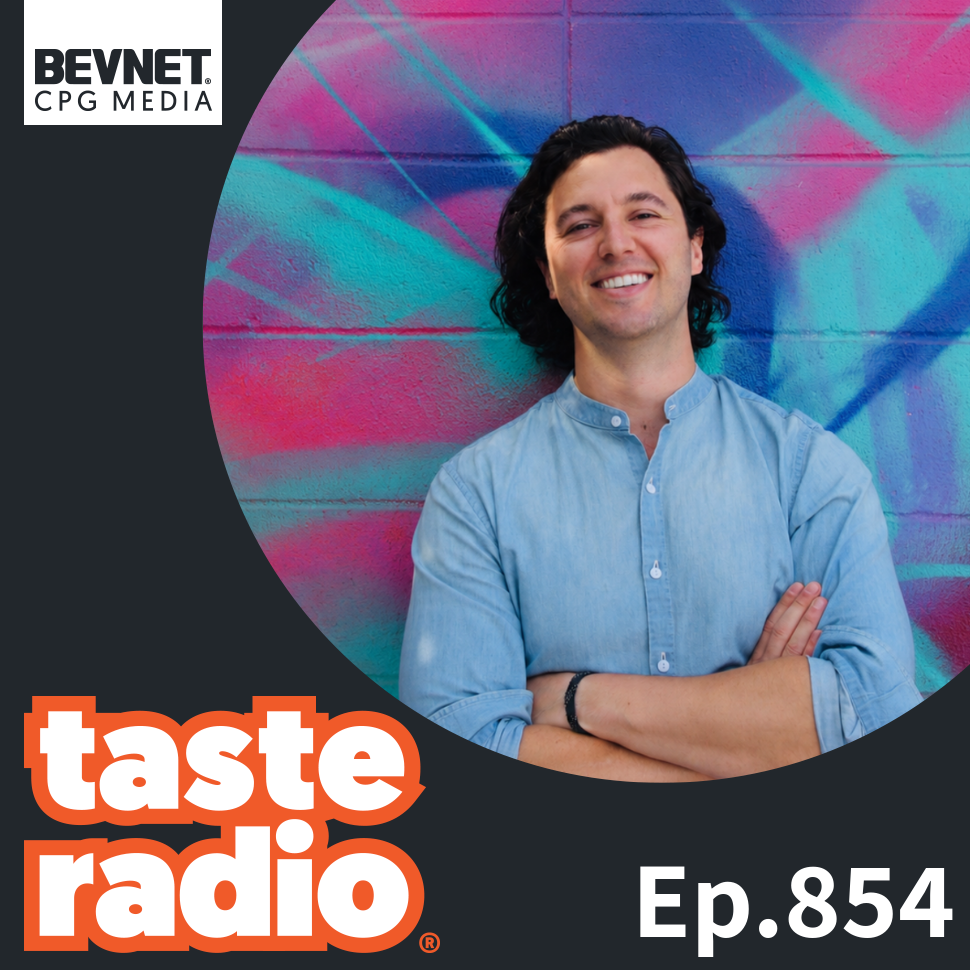
[00:00:10] Ray Latif: Hello, friends. I'm Ray Latif, and you're listening to the number one podcast for the food New Beverage industry, Taste Radio. This episode features an interview with Jake Bullock, the co-founder and CEO of Cannes, a pioneering brand of cannabis-infused beverages. Get access to limited swag and exclusive content by becoming a Taste Radio VIP. It's easy for you to join that group of very important people. Just head to Taste Radio slash VIP and take one minute to sign up. Jake Bullock saw entrepreneurship as a way to break free from the path dependency of corporate life, but more importantly, because he wanted, quote, to build something big. Cannes is on the cusp of meeting his ambition. Launched in 2019 by Jake and co-founder Luke Anderson, Cannes markets micro-dose social tonics that are infused with 2mg of THC and 4mg of CBD and marketed as delivering quote, a perfect uplifting buzz with a strength similar to a beer or glass of wine with no hangover. The brand, which also sells an unspiked line, is currently distributed in 33 states and throughout Canada. Cannes' rise has come amid growing consumer interest in cannacurious and sober-curious lifestyles, along with a gradual loosening of cannabis laws in the U.S. The brand's cultural relevance is also supported by an A-list roster of celebrity investors, including Gwyneth Paltrow, Kate Hudson, Rosario Dawson and Nina Dobrev, the latter of whom joined the company as a shareholder as part of its $27 million Series A round, which was announced in February of 2022. While Cann is the most visible and distributed cannabis-infused drink brand in the United States, it's still a long way from becoming a household name. What will it take for that to happen? And how does Cannes build upon its carefully planned foundation? We discuss those questions and much more about the brand's ascendancy in the following interview. Hey folks, it's Ray with Taste Radio right now. I'm in New York City and honored to be sitting down with Jake Bullock, the co-founder of Can. Jake, great to see you. Great to be here, Ray. Yeah, the last time you and I saw each other was in New York City about four years ago. Yes. For BevNET Live Summer 2019, you participated, you and your co-founder, Luke Anderson, participated in New Beverage Showdown 17. of which you were victorious. Congratulations again on that win.
[00:02:45] Jake Bullock: Yes. No, it's so funny to think back. I remember being very hot that summer, Luke and I running around in our pink t-shirts and not really sure what we should be there to do. Pink hair. Yeah. So, you know, there was a lot going on there. We were living the brand. Put it that way.
[00:02:59] Ray Latif: Yeah, very much so. The judges love your product. I think it was a surprise victory for so many people in that a THC New Beverage had never been on stage, period, and certainly never won the competition. So a little shocking for some folks.
[00:03:13] Jake Bullock: Yeah, it was shocking for us as well. I know Luke and I kept being like, Do they know we have THC in our products? Like, are they going to even allow us to win? Like, what's going on here? And so it was very surprising and also really sort of set the trajectory for the company.
[00:03:26] Ray Latif: But of course, what the judges tried and what we tried and as our staff tried was not THC infused. It was THC removed or at least made with no
[00:03:36] Jake Bullock: Yes, it was uninfused. Although the two products taste the same. It's something that people always ask us is, because we'll sample and demo the uninfused product, and it tastes just the same.
[00:03:45] Ray Latif: And the uninfused product, that line is called unspiked. Unspiked, yeah. Now not too long ago, as in within I think the past week or so, you and your co-founder Luke Anderson had a very, well I would think anyway, a very prestigious honor bestowed upon you. Food and Wine magazine named you as part of their 2023 drinks innovators of the year, which was pretty fantastic to see because they're recognizing not just typically what you see in alcoholic beverages, but the future of what are, I guess, social beverages in can.
[00:04:21] Jake Bullock: Yes, it was a huge honor for us, I think. for a number of reasons. One, like you point out, really thinking about the social beverage ecosystem as more than just alcohol, which is exciting to us, because that's what we've been fighting for for the last four years. There's this broader concept of really social buzz New Beverage that deliver on that. And so seeing them recognize Cannes, also the first cannabis brand that they've recognized on the list was really cool. And then also a sort of culinary source of knowledge and expertise, Food & Wine Magazine. So it was very, important to Luke and I to be appreciated for, you know, the quality of the product, the ingredients we choose, the flavor profiles, the balance of it, all the things that we worked so hard to bring into the liquid was really cool for us. And so it was a great honor.
[00:05:05] Ray Latif: Again, New York City is where we first met at BevNET Live. You are here now, before we got on the mics, you mentioned that you're here about half the year?
[00:05:15] Jake Bullock: Yeah, back and forth between the East Coast and the West Coast. We launched the brand in LA, sort of have expanded out West initially, and then over time have brought the product East. And because of the sort of features of our industry and where we're able to sell the product, We are often opening up new states by finding new manufacturers in that state, making the product in the state, selling through those states' dispensaries. And so it is a bigger lift than just sort of finding three co-backers or two or three co-backers across the country and shipping the product everywhere. We can't really do that as effectively given the regulatory environment that we have. As we've grown, we've moved folks from the team sort of towards the East Coast up in Canada now as well to really lay the foundations for those markets. And also it is a hard product to sell, right? We're talking about a real social change. Alcohol is very ingrained in our culture. There's a lot of fear around cannabis. People don't want to get too high. They don't know exactly what they should be taking or how much. And so the combination of those two factors are really scary for folks. And so we have to do a lot of on the ground community, based education to get folks to understand, well, what is the microdose cannabis beverage? How do I drink it? Is it the same as alcohol? Do I drink more or less of it than I should drink of an alcohol product? And so a lot of that we have to do really locally. And so I've been able to help lead that as we moved across the country into new state markets.
[00:06:28] Ray Latif: You're in one of the biggest markets in the world in New York City now. How is the process going in terms of introducing CAN to consumers and more importantly, to the retailers that are going to carry your product?
[00:06:41] Jake Bullock: Yeah, it's starting now. It's all happening in New York and there's a lot of energy. I think, you know, the cannabis industry has had a rollercoaster ride of sort of, you know, a number of things, a pandemic, things were going well. There was a political and regulatory upswings and downswings. And so I think a lot of fatigue has built, especially on the West coast in the industry. There's so much energy here in New York, which is exciting for us. And I think, you know, New York are drinkers and they're sort of in the core of hospitality and have been bleeding edge of, of leading hospitality, and so there's a real opportunity, we think, to introduce to the New York consumer an alternative. Just have it on the shelf. Why not? Maybe you end up drinking alcohol most of the nights, but if you even take a couple of days and instead of drinking a glass of wine or beer, you have a can, That's probably a healthy choice. And so we want to give that choice to New York. And we're seeing a lot of energy in the industry around New York City, upstate. There's a lot of potential opportunity. So we're excited about it. It's definitely early. There are sort of speed bumps, fits and starts. It's not always the easiest thing to get going, a new legal cannabis program. But we're excited about it.
[00:07:44] Ray Latif: To be clear, the product in New York can only be sold in certain stores, or are they able to be sold in bodegas?
[00:07:51] Jake Bullock: Yeah, so what's really interesting over the last eight months in the broader cannabis industry is there are sort of two regulatory frameworks that we operate under. The first is the licensed dispensaries in a given state. So this is the dispensaries we launched within California, like the MedMens of the world. are licensed by the state, and that product that's manufactured in the state, sold through those dispensaries, has to be made in the state. That cannabis is grown in the state. It's part of a very highly regulated channel that goes to dispensaries. Makes a lot of sense. These are some of the highest, strongest potency products that are sold through dispensaries. There is a growing segment of the industry that is all hemp derived. So you can get THC from hemp or from marijuana. They're both cannabis versions of the cannabis plant and they're biologically identical to THC that you would get from either. Five years ago, it would have been really, really challenging to economically extract THC from hemp. Now it's much easier. The technology's improved. And so we also sell a hemp drive THC product in New York. That is a product that is governed by the Farm Bill, can be moved across state lines and can be sold in grocery retail, liquor stores, bars and restaurants. It tends to be mostly independent. Convenience stores, like you mentioned, bodegas are very popular. independent liquor stores as well, versus the big chains. I think the big chains are still waiting for more direction from the federal government on cannabinoids and content and how much can go into products or how they should be sold. But New York has a really strong regulatory body around hemp. So we sort of comply with that law, which is a little bit more, it provides us more places to sell than just the licensed dispensaries.
[00:09:25] Ray Latif: The demand is out there. That's clear. And the demand specifically for can is out there. You shared some numbers with me earlier, and I don't know if we can share them now, but I mean, just out of this world, off the charts kind of data that you shared with me. Who, however, are these people who are buying the product? When we talk about the limited number of stores that you're in, the sales numbers that you've seen, I mean, it sounds like the people who are buying your product are buying a lot of it.
[00:09:53] Jake Bullock: Yeah, they are. It's interesting because we have four years of data now across a number of markets on who's buying this. And in the beginning, we sort of built the product and the brand for Luke and myself. It's like, Millennials getting older, hangovers are getting worse. You're not willing to give up being social, but at the same time cannot sustain the alcohol consumption that maybe we could have when we were in our twenties. And we created the product for us along those lines. And we found that there is an incredible connection between people like us that are worried about our hangovers and in our mid thirties to our parents. and our grandparents, everybody has this frustration. It's common that they drink too much alcohol, but so much of their social lives are built around alcohol. And so breaking free from that bind is a key part of how we think about like who is actually drinking this product. One of our best markets is in the spring, sort of February to April in Palm Desert. We just sold, I think over like 236 packs in a demo one day in a store in Palm Desert. And that type of velocity is incredible. And it's all being driven by snowbirds, like, you know, pretty old people, 70s, 80s, that are in Palm Desert for the winter, escaping the Midwest or the cold somewhere else. And also trying to escape this hold that wine has on them, right? Or whatever their alcoholic drink of choice might be. And so we see that type of consumer segment. We see young moms, young parents, especially if you have a two-year-old that wakes you up at 6 a.m., you probably can't have a few glasses of wine or a few beers the night before, right? You'll feel hungover. You won't feel like a good parent. Those are not great feelings. Can help people with those challenges as well. How can I unwind at the end of a long day and not feel terrible like a bad parent in the morning, at 6 a.m. the next morning, right? And so I think there are a lot of these really interesting customer segments that have appeared. Marketing 101 tells us we should segment our customer base and we shouldn't try to be everything to everyone and all these lessons, right, that kind of like are in the back of Luke and my brain. You probably would have lost the New Beverage Showdown if you had said we're New Beverage for everyone. Right. We're going to sell to everyone. Right. Exactly. It's sort of ingrained into us that it's not the right approach. And yet you have this amazing data, which I love from the alcohol industry, which is Why is it that I drink the same vodka brand that my mother drinks because her father drank it, right? Social beverage is different. It's playing on a different occasion and use case than a normal product. It's not uncool because an older person drinks it, right? That's just something unique about alcohol. It's a different kind of way of bringing people together. It brings people together across generations, across demographic characteristics. And so we're trying to tap into that a little bit as we grow and really understand what is it that makes us different?
[00:12:23] Ray Latif: What is it that makes you different? There's a lot of things I can think of. What is it that makes you attractive to consumers, especially new consumers, are some of the things that you talked about. You mentioned hangover, I think, about 10 times at this point. However, hangovers aren't the only reason that people are moving away from alcoholic beverages. I think it's just a lifestyle health decision. For one reason or another, you're seeing a lot more people, or at least maybe it's just on social media that you're seeing that people talk about it more often. that they are not consuming alcohol as much as they had or not at all. The idea of someone being canna-curious or sober-curious I would think are mutually exclusive, but are they the same consumer in so many ways? They intersect.
[00:13:07] Jake Bullock: We talk a lot about can sitting at that intersection point between the sober curious and the can of curious. In the beginning, we thought a lot about, you know, are we building a mainstream cannabis product? Is that the idea here, right? Some people will never smoke. We had the vaping crisis. People are afraid of vaping. We don't really know what's going on there. Edibles seem like a natural entry point, but are often way too potent, right? And so could we create a product that was a microdose beverage that keys off of the heuristics of alcohol that really would be the product that brings a mainstream consumer that's walking down the street today thinking about the glass of wine they're gonna have later tonight to flip the switch and think about a cannabis product, right? And we started down that track. As we got down it, we started realizing so much of what the sort of salient emotional touchpoint that our product solved didn't come from cannabis being unapproachable. It actually came from hangovers. It came from that physical pain of a hangover, the emotional regret of the choices that you made and then the consequences the next day. So we really thought about tapping into can as a social beverage company. Like that was our goal. It was how do we really make these products social? And if you're going to live in the world of social, you have to deal with alcohol. We try to deal with it in an inclusive way. Our view is that what might be right for one person is not necessarily right for another person. So Luke and I drink quite a bit of alcohol. Now we probably drink half as much. We've been given up entirely. We'll continue to drink it. But that 50% reduction in alcohol consumption for us is really healthy and really positive. For some people, it will be 10%, and that's also great. For others, they'll give it up entirely. And I think really seeing, especially the millennials and the Gen Zers, you can see this in the data now as well, looking at cannabis as an option to help them drink less alcohol. They definitely are drinking less alcohol. Now, are they mixing up with cannabis and other potential sources of buzz? It appears like they might be. And that may be healthy. I think there's a lot we still have to learn about these younger generations and particularly the Gen Zers that are old enough to consume our product, how they're really growing up into this industry. But we think that our product provides real opportunities there. And what's interesting is it doesn't shut off the opportunities of older generations, right? Because there are people that are still saying, your doctor is telling you, hey, for your health right now, you should really just cut back on the booze. And we help people do that as well.
[00:15:20] Ray Latif: So I think curious. is a parallel to choice in so many ways, right? Choice is the key here. You're not just giving someone an opportunity to try something, you're giving them choices. So they don't have to choose between vodka or nothing or wine or nothing. They have vodka and wine, can and nothing.
[00:15:42] Jake Bullock: Yeah, exactly. And I think one of the big differences, so there are a lot of products out there that are alcohol alternatives. most of them do not have a buzz source, right? No functional ingredient. There may be no functional ingredient. Or the functional ingredient is something like caffeine or taurine, some sort of stimulant, right? Which we've been, you know, we've got Red Bull behind bars for decades now. People drink espresso at night, you know, for various reasons for energy. So it's not necessarily new, the idea of having an alternative with a sort of caffeine-based type of stimulant. And a lot of them also are trying to mimic the flavor experience of alcohol. And so they add a lot of sugar, and they add a lot of sort of adaptogenic or sort of bitter type things. It's like, oh, let's make it taste like a cocktail. The problem is- Or cinnamon to make it, to get that heat. Yes, cinnamon, right. Which is not working. Exactly. It's always interesting to us, because you try some of these products, you're like, I get what they're trying to do. They're trying to make this taste like alcohol. The problem is, When you remove the alcohol taste, you actually free up an amazing potential set of opportunities. You don't have the sugar from the alcohol, so you have way more caloric space to create something that tastes delicious, but with less than 10 grams of sugar. Our products are 30, 35 calories. That's important to a lot of our consumers. You should drink a bunch of them and still be you're much, much lower from a caloric standpoint than alcohol, but you also don't have to mask the taste of alcohol. And so some of the stuff that we like associate with, ah, that's what I think of as a cocktail is actually a burn that comes from the alcohol. And so we pushed back a little bit on this idea that it is a real choice if it doesn't deliver the buzz. And if all it's really giving you is the same calories and a kind of unpleasant flavor experience, then maybe that's not actually what consumers want. Where a product like ours, and there's other examples I think of, of ways you can incorporate a functional ingredients effectively into beverages. But really having that buzz is what our consumers care the most about. And that that is the right sort of potency for them. We talk a lot about our product being the same strength as a beer or a glass of wine. It was intentionally designed that way. So we think about how long does it take the body to metabolize two milligrams of THC is roughly about the same time it takes the body to metabolize one beer or a glass of wine.
[00:17:47] Ray Latif: Without the hangover? Right. Yeah. I'm going to pull out one of the six packs that you so kindly brought over here. And this is the thing I think that really impressed our judges during the New Beverage Showdown is that when you came to the competition, you came with a strong package. You came with a strong business plan, a brand identity, and a positioning that seemed to be completely buttoned up. And that isn't just typically common for an early stage food New Beverage company. It's just not common for a consumer brand. You and Luke both went to business school. You went to Stanford, Luke to Harvard, both got your MBAs. And I ask this all the time of entrepreneurs, if they feel like business education or a business background would have been helpful for them to create a foundation for their brand, to set themselves up for success. Do you feel like your education gave you that sort of leg up, gave you an advantage to launch a brand like this, to come out of the gate strong?
[00:18:53] Jake Bullock: Yeah, it's interesting. I joke often that I have a very expensive education and it all started after school.
[00:19:01] Ray Latif: Don't feel like you need to praise Stanford because I went to BU and I always hate on the business school there. Even though I had a nice experience at BU, I just feel like getting an undergraduate business degree really didn't do a lot for me. Yeah.
[00:19:13] Jake Bullock: You know, it's interesting for me. It was really important, particularly the NBA because it helped me. It gave me the time and space to really reflect on what I wanted to do with my life. I had done, you know, done really sort of standard boring jobs up into that point and consulting and investing and banking, things like that. And this was an opportunity for me to sort of break free from the path dependency that is often surrounding those types of careers and really take the time and space to think about what do I want out of, out of my life and building something big was part of what kept coming to the top of my mind. I'd grown up in Colorado, so I was following the cannabis industry and that was like a bug that I couldn't get out of my brain either. And so I was sort of thinking about that every day and then California was legalizing while I was on campus. All of those things really came together in a unique way to encourage me to do it. I don't know if I would have done that straight out of investing and dropped everything and started a company. It might have been too much of a shock to take that jump at that stage. And so business school provided me that. It also provides you tons of resources. I think like they can be valuable. They're as valuable as you make them, I think. The biggest thing for me was the friendships. There aren't that many times in life where you get where the point is to make friends. I mean, you have it kind of in school. You have it. Maybe if you go to college, once you have children, you'll meet your children's friends, parents, right? But like outside of those opportunities in life, there aren't a ton of opportunities to make friends. And for me, business school was an opportunity to do that as well. I think a lot of people talk about. through the network and tapping into that. And it's true. It's not, I don't want to undervalue that, but it's, it's not really about the network. And in my experience, it was about the friendships that you meet, the people that will pick up the phone and talk to you for an hour and a half about whatever it is on your mind related to your business, because they happen to know about it and they're your friend. I think that's really important. And what helped me get to the point of being like, okay, I'm ready. I'm ready to do this. Let's graduate without a job. That's felt really scary. Let's go into the kitchen and try to make a liquid that we're excited about those types of things.
[00:21:03] While Cann: Vibrant Ingredients is the natural ingredient partner powering food New Beverage innovation, delivering flavor, function, and protection through a science-backed portfolio. Vibrant delivers purpose-driven solutions that help brands create extraordinary experiences. Discover what's possible with Vibrant today. Visit VibrantIngredients.com.
[00:21:31] Ray Latif: So brass tacks, when you think about the business plan, the first business plan for Cannes, when you think about the brand and positioning, was that all sort of post-Stanford kind of education?
[00:21:45] Jake Bullock: It was an integrated, I think like part of what you mentioned, kind of us coming to the BevNET competition with this all buttoned up. It was because we spent, you know, years on it weirdly. We started thinking about the business and the positioning. I did that when I got to business school on campus and I had hundreds of interviews with people in the cannabis industry. And I was like, let me figure this thing out.
[00:22:04] Ray Latif: So just for our audience. Again, the competition was in 2019 when you launched Can. How long had you been working on it prior to that point? Two years.
[00:22:12] Jake Bullock: Okay, two years. Really for a year, like focused New Beverage. The year before was really focused on understanding the cannabis industry and various ideas, right? Oh, do you build a co-packer? Because it was clear that there was not a infrastructure in place to really support any type of product development. And then thinking about, okay, well, there's all these technology opportunities in terms of backend or connecting dispensaries to and played around with ideas there, lab testing, like, can we actually learn something more from the data that exists in the world today about THC and CBD and how they work together and other cannabinoids? And is there some sort of connection? So it looked at like a lot of different pieces. I think I kept coming back to consumer brands because that was sort of where my background had been in various things and had a lot of passion in understanding the various micro choices that you make, which ladder up to the brand. It's not like you can kind of sit around and draw it out on a page. It's a product of all these choices. Luke and I had done a lot of the thinking on the brand first. What does it stand for? What do we want it to look like, feel like, mean, be, do? It was really important to us that we thought through what does this product say about somebody when they purchase it? Things like that. We did that before we even talked to a designer, before we even went into the kitchen to sort of do mad scientist lab. work on the liquid. And then once we got a sense of what we wanted that brand to be and what we were trying to do with it, that's when we started thinking about, well, how does it actually show up visually? And then what does it actually taste? And, and, and I think for the first two months of us working heads down, you know, by ourselves on this, we didn't know we had big questions. We were like, can you make the product? Can we create something that we both love and think tastes delicious? Can we raise the money? Those were the big three questions we had to answer. And we went into formulation exercises, not really knowing. We didn't have constraints. We sort of knew we didn't want to use fake sugar or natural sugar substitutes that left a bad aftertaste. And we care a lot about all natural ingredients. But beyond that, we didn't have any real constraints in the formulation exercise. We got lucky. The liquid that we came out of, that would have been September of 2019, a week in the lab, is the liquid that's in the product today.
[00:24:09] Ray Latif: What do you have to learn about New Beverage industry? What do you have to learn about starting a brand and putting liquid into cans? Because that is not something that, you know, you can do without a lot of help. Right.
[00:24:22] Jake Bullock: No, definitely. It's funny. Had we known what we didn't know, we probably wouldn't have started this company. I think that's the hundredth time I've heard that on the podcast. It's, it seems to be like that, that piece of information that, that everyone shares, but no one internalizes. I think for us, it'New Beverage, like you mentioned, it's just structurally more challenging, right? We're talking about something that's heavy, it's liquid, it's cannabis, which has its own unique regulatory constraints, but also just the transition that the industry is going through is creating all of this newness. And so the idea of like finding a co-packer is challenging, which would not be the case in traditional beverage. And then there's natural and all of those kind of intersect in making our request near impossible. And it forced us to have to really, like you say, learn a lot about New Beverage industry. We were lucky in that we kind of dovetailed with the boom and sort of decline of craft beer, regional craft beer. And so we had access to capital, which was basically like the equipment that would make these products was sort of perfect. leveraging craft beer equipment. We had tons of knowledge online. I mean, we were able to, Luke and I came into this knowing very little about food science, beverage science, cannabis science, manufacturing. You know, we had like sort of a cocktail party familiarity with how these things should work. And just spending time online with home brewers and blogs around home brewing, going to brewery supply stores, asking questions. We had like these little mini pony kegs that we got. CO2, the technology is kind of the same. Interestingly, when we did our early prototyping, and we did them in glass bottles initially, because it's so much easier to seam, and then we would test that on folks. But once we even switched to cans, we had this hand-crank seamer, which I think you had to crank 18 or something times to just seam one can. That's the exact same technology. The forced carbonation, the seaming technology is the same technology that's used on these massive lines today. It's obviously much faster, and there's a bunch of them and everything. But we learned all of that. We had a view from the very beginning that there are certain things that we didn't know anything. So we had to start there. Of the stuff we didn't know, there are going to be things that we wanted to learn. And if we wanted to learn them, then we would learn them. And we learned fast. That's one thing that we could do really well. If we didn't want to learn them, we would find somebody that already knows them and engage that person to help us. And so we also worked with a lot of really smart people, food scientists, master brewers that were able to help teach us these things. And then we hired really great people that already knew it as well, or, or similar to us would learn fast. And so we got up that curve fairly quickly, but we're, we're constantly dealing with, especially in the early days, science challenges, food science challenges, stability. I mean, these, these are products that not only do people consume them, they ingest them, but they change slightly the way that they perceive the world around them. So it was really important to us that we had the safety, the quality, like not want to give anybody botulism. And I also don't want to make anybody, you know, uncomfortable because they consume too much of a product that they weren't sure exactly what they were going to get. And so those were really important challenges. We learned them quickly. And because we were the first, first microdose cannabis beverage, first to sell in multipacks, we had to build a lot of this ourselves, helping specking out facilities, sourcing capital, running our supply chain in, in a world where maybe you would have gotten a lot of support from co-backing resources and companies in traditional beverage. So we had to do a lot of it ourselves. Looking back, I think it was really helpful because it taught us a ton about the industry and it also gave us a real perspective. I mean, we could move as fast as we could move, which was scary and but also exciting.
[00:27:38] Ray Latif: Sourcing capital, you've mentioned that a couple of times, and I don't even know how you start with an investment plan or strategy for a brand like this, at least early on. Data is possibly, I guess, one way to start, you know, just showing the potential for a brand like this. Was data as important as I think it might be when you're talking to an early stage investor?
[00:27:58] Jake Bullock: Yeah, it's interesting. So we think about it a lot as in the beginning, when you're pitching an investor, there's a couple of important things. The first is, is absolutely how can you use data to show the potential, right? Because they're, they're evaluating how big could this be possibly, like, if I believe you, and you're successful, like, what are we talking about here? And we, you know, investors, especially early stage investors need that number to be really big, because they're, you know, they're, they're gonna, most of these are gonna fail. And so that's important. The other thing is they're assessing you and sort of, are these the right folks to do this? You know, they could believe every single thing we have down on our slides and still say, I don't want to invest because I'm not sure you're the ones that should do this, right? Like what uniquely makes you capable of executing on the plan that you've created. Now, some of it is that you created and you know it, but a lot of it is sort of the second piece, which is how do you make it more than just a presentation, more than just a set of pages that you share, walk through. And for us, that was easy. I think a lot New Beverage companies have this weirdly, it's an advantage because we bring the product to the pitch. It's in the room. True. You know, we can make, we can build this because it's sitting in front of you. And now maybe we'll change the branding. We didn't have it right in the first, which we didn't, but smart investors get that. They'll say it like something to the effect in the room is like, well, we know you'll figure out the branding. That's, that's the easy part. You just need the money to do that. Right. But having the liquid, having them be able to crack open a can and taste it. Again, this is why we hand-seamed like 18 times every single can, which took hours and hours. But that experience helped investors understand that we actually are able to make this product because we did. We made it. How we did it was, you know, they didn't need to know at that point. But that really helped bringing it away from just a presentation that's on a set of pages and into the room in a real way.
[00:29:30] Ray Latif: Did you ever encounter an investor who said, I don't think you're the right guys to lead this brand, this company?
[00:29:35] Jake Bullock: They never said it in those exact words. I'm sure there were investors that thought that. We got a lot of no's and no's are never really no's. They're kind of like, yeah, let's keep chatting or like best of luck with things. You should meet this founder or whatever. Yeah. Everyone wants to be nice and play nice and they want to be helpful because ultimately they don't know either. Right. Like a lot of times people would in the very early days when we were fundraising, we would be sometimes halfway through a pitch and we'd realize, oh, they think we're a CBD company. Like they don't even realize that we have THC in here. Right. And that was like, Oh God. And we had a bunch of those. I mean, I would say maybe 20 pitches where Luke and I, we, you know, going back and forth between Bay area, New York, LA, and everyone was just kind of like either using us to get smart on the industry or thinking we were CBD when we weren't or trying to push us to become CBD when we didn't want to. And so we struggled a lot with that, but it only takes one. And once we had one, it was amazing how many other folks that we had talked to before came back being like, Oh, we want to get in. And so that's kind of the last piece of fundraising, right? There's a lemming mentality to it. You need to get one. Once you have one, it changes the conversation.
[00:30:34] Ray Latif: Once you have one, do you tell the other investors or does that one tell the other investors?
[00:30:38] Jake Bullock: You tell them. We did at least, right? We were, we were like, great. We've got somebody who wants to take the whole round and we think you'd be really strategic and helpful. Let us know if you're interested. We're going to close this out in a week. And then most of them come back saying, yeah, we're in. How much can you give me? So when do celebrity investors come into play? Yeah, so that was a whole nother phase of fundraising. And it didn't even really start as like a fundraising. It wasn't intentionally about fundraising. It started with us in the early days being pretty generous with product. So anybody that would follow us with a blue check on Instagram, we were like, oh my God, can we give you free product? And we started in LA and a lot of LA is built around this interesting sort of like media ecosystem where people leverage their proximity to famous people to get free things. And they do it really well. So good, good for that. And we kind of took advantage of that in the early days being like, Oh, I'm so-and-so's hairdresser, or I do, you know, styling for this person, that person. And we're like, great. And we'd love to give them camp and we give this person can to bring them. And you know, the reality is it's probably never getting to them, but we would always follow up and we'd say like, Hey, did, did they get it? Did they like it? What was the feedback, right? We did a lot of this in the early days around the guys, the feedback, because we really wanted to know, we're like, do we need to change the liquid? Like what's wrong? How do we do think about positioning? that was like a big part of the early celebrity strategy wasn't even intentional. It sort of emerged, kept getting these products in hands of people around LA and was mostly Luke and I driving them in cars, dropping them off and trying to tell the story to whoever would listen. Interestingly, most of them never heard from again, but a few would come back and say, this is amazing. So-and-so loves it. Can they get more? Or can I get more? Or then we'd start seeing more people follows. partly because it wasn't available in that many places because we only had a handful of bed men dispensaries were available on ease at the time. It became a running joke that like Ken was the hardest product to find. And so people would reach out to us trying to get it delivered or free product. And that was kind of the way we laid the groundwork. Then we started getting these conversations with celebrities, some early ones like Ruby Rose, Gwyneth Paltrow. And the way we had the conversation with them was really about telling them our story as if they were investors. So we didn't do the whole, let's have a big marketing services, commercial agreement, get your agent involved, get your business manager involved. You'll agree to do these things. We'll give you this like share of equity in the company. Like we didn't do any of that. We were basically like, we're raising around if you'd like to invest. And this was a big idea because celebrities are used to brands sending them checks, and we got them to do the opposite, which was send checks to us. The way we think we pulled that off was really getting them excited about the story. And it was the product. Like people ask me, Jake, how do I do the can strategy and get a bunch of celebrity investors on my cap table? And the answer is there is a strategy there. The good news is you can execute it. The bad news is it depends entirely on your product and how that resonates. And so for us, we had a product that was endemic to entertainment. People are already focused on what they put in their bodies. They can't be hung over if they're showing up for, you know, an early morning shoot. If they're touring, like there's all sorts of ways in which alcohol can really, really be bad. And then a lot of them have had, you know, ups and downs in terms of their relationship with alcohol. Some of them are sober, some of them are Cali sober, right? They've been stoners for 20 years. And so our products sat perfectly in that, that sort of intersection that folks in, in media and entertainment are so focused on. And so that helped us a lot. Once we got the early sort of investors from folks like Quanta, Paltrow, it was pretty easy because then others were like, Oh, we want to invest too. And then we sort of kept letting people in and it's been great because we treat them like investors because they are, they're smart business people. they like the product, they understand that they should be investing some of their wealth into early stage venture startups. It's not always easy to do that with big funds. And they love doing it with products where they identify with the actual product and also with the founders in the story. And they want to kind of be along for the ride.
[00:34:09] Ray Latif: Sometimes celebrity investors or partners don't necessarily want their name out there for one reason or another. How did you get your celebrity investors to give you permission to use their name?
[00:34:20] Jake Bullock: Yeah, not all of them have. So we have quite a few that we are public about. And that's also fine. Like in our mind, it's, this is a long process. We're building an army. And so we think that, you know, over time, maybe they will become more comfortable with it. Maybe it's cannabis. A lot of these folks have global brands. Cannabis is not global in any way. And so we think it will over time. And so we're really respectful of that. But for the ones that did come forward, I think one, it was, it was really cool for us because it was them sort of saying like, yeah, I'm comfortable doing this. Some of them have already had some public conversation about cannabis consumption. Most of them have not. Like we really didn't go after folks that had strong sort of legacy stoner cannabis brands in part because that's not really how our products positioned. And also because we are trying to send a message when it's. really difficult to do marketing in the space. There's tons of restrictions. And so building an army of investors, particularly ones with big megaphones like celebrities that haven't really been public about cannabis, for them to be public for the first time, that was really powerful. And so we had longer conversations with them about the brand and the story and what we were building. This is also a very different cannabis product than what most people think of when you're thinking of this industry. It's only two milligrams of THC. It's in New Beverage. You have to drink the whole eight ounces to get the two milligrams. If you drink both of these six packs here, you're not even getting that much cannabis. And so that helps. It would be really hard physically to drink both of them. So I think those things, being the safest product on the market, having the positioning be approachable, having the brand be, you know, kind of more on the nose and a little bit playful, I think helps a lot. with folks getting comfortable being public about it or even bringing it to a party, right? If you're just a random person on the street, it doesn't feel like you're doing something really bad. And part of that was our goal. It's like, how do we take can and cannabis, the industry from under the table and put it on top of the table?
[00:36:06] Luke Anderson: Do you want more repeat buyers on Amazon? Well, this free resource in collaboration with Straight Up Growth will help your brand turn first-time buyers into long-term subscribers. Download Winning the Repeat Purchase Game on Amazon now at Taste Radio slash SUG. That's Taste Radio slash S-U-G to start building retention-driven growth for your brand on Amazon. Scaling New Beverage brand into major retail comes down to operational readiness. From packaging lead times to co-manufacturing strategy, the details can make or break a launch. In a new ebook in collaboration with Octopi and Asahi Beer USA, industry leaders share what they've learned in helping brands scale. Download it now at Taste Radio slash octopi.
[00:36:56] Ray Latif: I think I read it in a past article where you had mentioned that the problem with cannabis is that everyone's had that really bad experience in college that has left us afraid. And I think that's true. I mean, before we started this conversation, I told you I'm not a cannabis consumer. I've never consumed cannabis in my life, as far as I know. And it's just something I think at this point in my life, it's weird because I, I always feel like there's no reason to start. I think the same thing with people who drink alcohol or have never consumed alcohol. They're just like, well, why, why would I start now? I don't really feel like the need for it. All that being said, how do you convince people that this is the safest product in the market? How do you convince people that they should try it if they are not necessarily, or they are hesitant about consuming cannabis?
[00:37:41] Jake Bullock: Yeah, it's a good question. And our goal is not necessarily to get folks that are sober to start consuming cannabis, right? Like I think we truly are positioned socially and as an alcohol alternative because the battles we wanna fight are helping people be a little bit healthier by choosing to drink can instead of booze or choosing to drink can instead of taking sleeping meds or something like that, some other prescription. And so for folks that are kind of wary about cannabis and they're thinking like, ah, maybe I had that really bad experience in college, you know, decades ago, I swore it off entirely, or I've recently had a bad experience, which many have as, as cannabis has become more common and states have legalized that people have gone into these dispensaries and taken products. They're often recommended products that are way stronger than they should, or they don't want to smoke or vape, which is totally understandable. And so they go to edible products that tend to be. the more intense experiences, just the way that the body processes them, the time that it takes for them to kick in, the potency often of these edible products. And so we start with potency. That's the most important thing. We talk about it being the same strength as a glass of wine or a beer. And it is. If you drink one can, it's gonna take about an hour for that to get out of your system or what it's doing in your system. You're not gonna really perceive. It's not affecting you as it was maybe at the peak, which you might feel at like 40 minutes or something. 35, 40 minutes, everyone's a little bit different. And so we also encourage folks to take it really, really slow. Just like, think about the first time you consumed alcohol and like the journey that folks go through to really understand what their alcohol tolerance is. You learn all these lessons about being hydrated or like eating those, those apply here as well. Right. then everyone's gonna be different. You know, cannabis is, the THC comes from an oil distillate, so it's fat soluble. We have to emulsify it in the liquid in order to get it to be homogenous. That means it interacts with the contents of your stomach as well, right? Just like, you know, alcohol would if you had a full stomach or didn't. And so we try to encourage folks to take it really slowly and learn about themselves and how it works in their own body. The last thing that I think is important here is it is an intoxicant. It's a very mild intoxicant. We think it's milder than even caffeine and alcohol in many ways. but it's not nothing. And so I think folks that are trying to be sober or don't want intoxicants, you know, shouldn't drink it.
[00:39:48] Ray Latif: When you are thinking about the next steps for scaling this brand, what is top of mind for you?
[00:39:53] Jake Bullock: We've invested a ton in the brand. Obviously, the product consumers love. From the very beginning, our view was that we wanted nines and tens. We wanted people that couldn't help but tell everyone about our product. That was more important to us than distributing really quickly, really far and fast into different places. That is still the case. We have such a strong loyal customer base that loves the product. Now, it's about how do you make that into a real business that can sustain itself? And so we're spending a lot of time thinking about how do we get the right cost structure in place? How do we get the right manufacturing infrastructure, the right distribution infrastructure? All of these pieces, which are harder because it'New Beverage, harder because it's cannabis, even harder because it's natural, layer on top of each other. And what we have to go prove to our investors, to ourselves, to the market more broadly, is that these can be real businesses. we're the biggest. And so if we can't do it, no one else can. And we've got really good line of sight to being able to do it. And so part of what we're focused on this year, in addition to expanding to places like New York, which we're really excited about is really taking the core of our business and making it more efficient, making it run a little bit more smoothly, a little bit more cleanly. We had a ton of products, a ton of skews, all sorts of flavors, seasonals, limited time, this and that different markets. And each market has its own requirements from a skew standpoint in terms of packaging and So that wasn't just like we could buy packaging across the country, right? There's not as much scale benefits in this space. We're paring that back. We're really focusing on what's driving the value. What do consumers love? Let's put our attention there as we really demonstrate that these can be real businesses. It's going to be hard. We're still subscale. Ultimately, what we need in the industry for that to happen is changing the regulatory environment. We need to be able to access the infrastructure that's already in the ground that's doing Bevalk. soft drinks, things like that, that would really be the key inflection point. Whether that requires federal legalization of cannabis or not is unclear, but it requires some changes in, in sort of the legal status and how, how we're either operating between states or, or federally. So that may take a While Cann that's also why it's really important for us to build a sustainable business. Now that doesn't require us to continue to rely on raising expensive equity capital from outside investors to fund the growth.
[00:41:56] Ray Latif: As you noted, it may require buy-in from politicians. A lot of politicians read the New York Times. There was an article last year, kind of a leading headline, I would say, Are We Drink Safe? And I think there was some controversy or at least there was some pushback from the cannabis community about some of the things that you read in the article or some of the things that were printed in the article. I mean, are you finding that politicians are sort of thinking about this in a different way? I mean, did an article like that hurt the movement, hurt the opportunity?
[00:42:29] Jake Bullock: Yeah, you know, I wrote a response to it, which is available online and on Medium that kind of went through point by point the article and pointed out some areas where I think, you know, there could have been some more research done or perspectives that weren't brought to bear. The thing that frustrated me, I think the most about the article is it was keying off of these past tropes around whether it was reefer madness, the sort of panic around these substances. We know cannabis is very, very mild and safe. You cannot overdose from it. That is not true of alcohol. The research into cannabis has been really limited because the federal government for decades has prevented any research or removing any funds for research into the benefits of cannabis, only into the harms. And so when you look at the body of research that's out there, it's obviously skewed based on that fact. I think what the article missed were sort of two key points. The first is the comparison here. Let's put these products in context. We're not talking about 100 milligram THC chocolate bars. Like that is obviously a different risk profile. than a two milligram drink where you've got to drink the whole thing in order to get the two milligrams. Those should be thought of differently. I don't think the article really differentiates between that. Of course, we would agree 100 milligrams of THC is a very risky product that should be highly controlled. I don't know if that's the case for a two milligram beverage. The second piece of context that the article misses is we're not comparing this to vitamins. We're not comparing this to doing nothing and being sober. We're comparing this to drinking alcohol. That's the most dangerous thing that everyone does to their bodies on a regular basis in this country. And so if you can pair that back, even just a little, 10, 20%, that has got to be more healthy than the current state. It's got to be better for public safety. It's got to be better for public health. Think about all of these challenges that we're facing in society. We're seeing it here in New York City. We're seeing it across the country. Alcohol is a huge problem. I don't even want to go into the opioid epidemic, but cannabis may provide an opportunity there to get folks off of many of these drugs. And so I think the relative context is the key piece here. We're not saying that Everyone should stop drinking sparkling water and start drinking canned. We're saying everyone should stop drinking alcohol and drink canned or should stop consuming, you know, hundreds of milligrams of these products. And so that context I think is the key piece when we think about what's actually going on in this industry. We drinks are safe. Most of them are two, five milligrams. And to answer your question about the regulatory environment and politicians, we are seeing real movement. So Minnesota last summer passed a law that allows cannabis beverages to be sold in grocery stores, liquor stores, bars and restaurants, as long as they have five milligrams of THC or less. We think that's a really smart policy. Cap the amount of THC. That ensures that these are the safest products that are being sold. Other states have done similar things. Virginia has a two milligram cap that they just passed. Kentucky just allowed Delta-8, which we don't use in our products, but is a hemp-derived THC cannabinoid. They are allowing those products to be sold in wider places of distribution than just dispensaries. Again, capping the amount that you can have in each. Other states are debating these numbers. Maybe it's three milligrams, maybe it's five, maybe it's two. But the reality is they're all sort of thinking along the same lines, which is what is the safe amount of THC that we're comfortable with? If you remember way back in the day, three, two beer was a thing you could sell in some grocery stores. We had to get the full strength stuff in liquor stores. That's not a bad model for this space. Let's think about the risk profiles, different cannabis products based on their potency. There's some stuff that should always be sold in a highly controlled dispensary environment. And that makes perfect sense. A hundred milligram THC products should be in a dispensary. A two milligram social beverage that actually might want to sit next to beer and non-alcoholic beer on the grocery store aisle, because it's going to encourage a consumer to potentially make a healthier choice for themselves.
[00:45:55] Ray Latif: You have strong and thoughtful, intelligent positions on where cannabis beverages should be sold, how they should be marketed, et cetera. And you seemingly have a great megaphone for that in the media arm of what you do. Can you use your expertise or can you leverage the success that you've had in communicating what can is and why you should drink it in a sort of educational way, getting people to understand You know, that this is a safe product in so many ways, because I think your marketing, you have to be really careful with that, right? Like Instagram will give you some problems if you say certain words. And I think safe might be one of them as it relates to cannabis.
[00:46:35] Jake Bullock: Yeah, we have to be very careful about the specifics. specific words that we use. Part of why our lives are a little bit easier in the social positioning is we don't make any health claims. This is not a product where we're saying it's going to cure you of this or it's going to make this bad thing better. It really doesn't do any of that. What it does do is it doesn't have alcohol. That's the best feature of our product, right? And so it's able to deliver on a buzz without all the negative effects of alcohol. And so we talk a lot about that. And in that way, we think it's relatively safer. safe is not really for us to determine right that's something where you know regulators and policymakers will really intervene to understand we've got a lot of thoughts on it i think five milligrams is a good place to draw that line three would also be fine but those questions of safety really do require like a lot more research and we don't know i mean part of what the article does which i criticized it for is is saying we don't know No, there's no data. We can't know for sure. And this is like a common thing that I think researchers and folks that are involved in sort of consumer protection will point to without actually asking the question of like, well, why is there no research? And also, don't we have hundreds and hundreds of years of cannabis consumption data? that have demonstrated the safety of this product? And the answer is yes, we have. I think often science researchers don't always pay attention to that. They maybe should. It's obviously not in controlled experiments, but these are, this is outside of the world of, of controlled experiments in some ways, because you can't really get consumers to describe to you what they're feeling. And it's obvious that they're feeling something. So they're more challenging in that way. But yeah, we would love to do more education. I think it's a balance in marketing. How do you establish the brand, talk to your consumer? We want to talk to them about this really fitting into their lifestyle in a certain way, that's a different audience than kind of what you're describing, which is how do you go over the top to policymakers, to decision makers in these various positions and regulatory bodies and talk to them about safety, talk to them about how would we even begin to estimate the impact to public health if people drank 20% less booze? Who knows what they're doing instead, but it doesn't even matter. What would that even look like? I think it would be pretty impactful.
[00:48:28] Ray Latif: Yeah, and I bring up the media part of what you do because, again, you've been really effective at it. It's beautiful. It's very well designed. It's pro. I mean, for a four-year-old company, it is absolutely better than 99% of the other content that we see out there. You've invested pretty heavily in media and content. Why, number one? And how have you gotten so good at it, number two?
[00:48:53] Jake Bullock: Yeah. So initially why is because we have so many restrictions in terms of what we can and can't do from a marketing standpoint. And in some ways it's good, right? So we were, we were not forced to go down the race to the bottom performance marketing, digital ads world because we couldn't Facebook. Instagram terms of service don't allow cannabis advertising. Now, maybe they should, that's a different conversation, but because they didn't, we weren't spending tons and tons of money on performance ads alongside a bunch of our peers, all trying to compete for our eyeballs. We had to do a different approach. We had to be more local. We had to be more community based, although then we had the pandemic. So we're like, okay, you can't even do events. So we were in this weird world of how do we tap into the story around the brand, do real culturally relevant, authentic narrative storytelling, which is like what is in Luke and Mai's DNA. and do it in a world where we can't really have live events. We're not really in person. We can't be digital. Like, how does this actually show up? And so the way we thought about that was we have this amazing cap table of celebrity investors that want to help us. They're also sitting around in the pandemic, kind of with nothing to do. How do we tap into that and tell stories, tell stories around holidays? tell stories around pride, which is really important to Luke and I being queer founded company and do it in an authentic way, right? Where there's real representation in front of and behind the camera, do it in a professional, like high production context. I think that was also important to us because this content was going to live sort of on its own on a streaming channel, right? Or in little video clips that we put on our own social media presence, it had to be really good. I think that's what drew people in. That's what really got the headlines and the earned media and the stories around it was the quality behind it. It's also what gets people like famous celebrities to show up, right? Because they're not going to come to a shoot that's being done with my iPhone, for example. And so there's a balance there. We got good at it by kind of trying it a bunch of different ways. We started out really small, it was like Luke and I doing video stuff, like what's behind the camera talking about how to make hands, growing up a little bit bigger, getting some of our talent partners involved, our celebrities involved. And then also really thinking about what is the message we're trying to get across, right? So the holiday campaign we did. two years ago was really about the combination of alcohol and cannabis, which is controversial, right? You know, most, most states in the regulatory regimes don't, don't allow those combinations. And so that was like a big idea that we had. Most of our consumers do mix them. You know, like I said, we're very inclusive. This is not like no alcohol and only can it's actually, these things can work together in healthy ways for people. Everyone's going to be different in what that wellness looks like. And so we did a campaign with Kate Hudson, Baron Davis, Darren Criss, all around sort of like a holiday experience with Cannes and King Street vodka, which was really fun and exciting.
[00:51:27] Ray Latif: Of which Kate Hudson is an investor, co-founder of King Street.
[00:51:31] Jake Bullock: A great, great vodka product. And then in the summer, we did a music video for Pride with a bunch of queer and queer allies. It was incredible. music videos. I'm wondering why more brands don't do music videos because people continue to watch this thing and will continue to watch it and will probably watch it again starting in the summer again. So unlike a commercial where you sort of see it once and you've seen it and this has a song, it brings people in. It has something at stake in the lyrics about can but also about life and how to live it up to the fullest. And so those were really kind of exciting examples of how we were able to take restrictions in the marketing world and use them to our advantage to create some sort of really high concept marketing that resonates with consumers. And that's what they love about the brand is our ability to tell these stories.
[00:52:11] Ray Latif: How do you think about your spend on media and content as it relates to the impact that you hope it will have?
[00:52:20] Jake Bullock: Yeah, we really had to figure out how to do this in a way that didn't break the bank. These things are expensive, generally. We were really fortunate early on to have an investor at London Alley in our earliest investment round, a video production firm based out of LA. really cut their teeth on music videos. So have a lot of experience working with talent on tight timelines, tight budgets. You got to do this shoot in a day. It's got to be perfect because it's going on MTV or wherever music videos go now and then grew into doing this work for brands. And so they have really strong commercial business as well. And we partnered with them to make all these videos and now are working with them more closely using our creative team and resources, their video production capabilities to really build out this new venture that helps brands tap into what can has done. We get people reaching out all the time to Luke and myself saying, Hey, we love your marketing. We were using what's your agency. And we say, well, we actually have a different approach. We do integrated creative and video production capabilities all under one roof. And we really want you to come to us to help think through that story and like what's relevant for your brand. We're not going to sort of just take a cookie cutter agency approach. Luke has been really leading that charge and working with the London Alley folks to build out a new business there.
[00:53:28] Ray Latif: Ken has been building out a platform. You have your two primary lines of products, your THC infused line, your unspiked line. You used to have a light line that was there around for a minute?
[00:53:38] Jake Bullock: Yeah, we had some limited and seasonal products around lights. We love the light products. They're kind of ones that maybe we will bring back over time, but the key innovation there was no added sugar. And so they were a little bit different in terms of flavor concentration, but also delicious.
[00:53:53] Ray Latif: Ken also acquired a CBD beverage called Sweet Reason last year, which was a pretty interesting move for the company. You don't typically see emerging brands buying other emerging brands. That was pretty interesting to see. Are you building out a THC CBD platform or is it a social beverage platform? And to what end? In our business, sometimes the ultimate goal means selling to a strategic or at least aligning with a strategic. But, you know, we've seen some brands do an IPO or just sustain as its own company. And I guess, how are you looking at Cannes as a platform independently or Cannes, you know, as a potential company that could be acquired by a strategic?
[00:54:35] Jake Bullock: Right. We really think about the company as a social beverage company, first and foremost. So we ask ourselves questions like, is it social? And for us, That can mean a number of things, but obviously Cannes is the first brand that we've brought out of the company, and we've got a few others that we're playing around with and are excited about. Being social is really important to us. Telling that story around social is what we think is going to really lock in the long-term value. And we see that as we look to alcohol, we look to other beverage brands that have been successful. Such a new category that we've also found over time, we have capabilities outside of just the Cannes brand, right? The supply chain we set up, the infrastructure, the creative and design capabilities. We're able to turn around new SKUs, new packaging, design work on really, really fast timelines. And so one of the amazing things about beverage, there's a lot we've talked about that are challenging, but one of the amazing things about it is once you have that infrastructure built, that supply chain and capabilities built out, it's really easy to plug in new products. It doesn't cost that much incrementally to change this label and change the liquid. The hard part is actually all the pieces that go around it. And so the opportunity to innovate and test around different flavors, different brands, that's something we've always had energy around from the beginning. Now we're getting careful about it more so now than maybe we would have been two years ago where it's just like, let's test it, let's try it. We're managing inventory more closely. We're trying to get to that next level of efficiency. So it may not be on the same timeline or frequency, but we are playing around with all sorts of different ideas. The CBD company sweet reason that we acquired, there's a lot of learnings from what CBD went through over the last four years for our business going forward. We think particularly the environments in which those products were sold.
[00:56:11] Ray Latif: You've mentioned a number of times that Cann is not anti-alcohol. However, I think a strategic might see some of your content and say, well, they are trying to tell people not to drink alcohol or at least reducing the opportunity for people to buy alcohol, my alcohol specifically. So why would I partner with a company like that? How would you address that kind of question?
[00:56:33] Jake Bullock: How do you address that topic? It's interesting. We get this occasionally from advisors and folks that, have a similar experience to you of seeing our marketing and saying, wow, you're really, you know, going hard up against alcohol. One, I think you need an enemy in all marketing and whether that, and our enemy can be shifting for us, often it is alcohol. And that doesn't necessarily mean that you don't also like it, right? Like in some ways, alcohol is our frenemy, but you need that. You need that sort of, what is the salient emotional piece that we're touching on? And it is hangovers and that is alcohol. And so we have to be honest about that. I would kind of throw it back to the strategic and say, how can you not partner with a company like us? Look at your own data. I don't know. Look at it in states where cannabis is legal. Look at it in states where we have our products on the market. What are you seeing in your data? And what are you seeing in the data of the millennials and the old enough Gen Zs? Are they consuming at the same rates or not? How can you not partner with a company that has an alternative, right? And I think that's really the right way to think about it. And these companies are doing it. I mean, look at all the beer companies having NA beer come out, right? I think that it would be really, really smart to have brands like Cannes that are tapping into the nerve around alcohol and doing it in a way that is still social, that is still playful, that doesn't take itself too seriously, that is about having amazing experiences with friends, amazing experiences with family. In some ways, our marketing is really, really aligned with alcohol. If you just take the social beverage perspective, where we differ is in the sort of side effects of the functional ingredients. And I think that it would make a lot of sense to me as a big strategic alcohol company, or even a big strategic tobacco company to think about what are those pieces of buzz that we want to own across the sort of overall spectrum of buzz sources and where should those show up in our end retail and what that conversation we want to have with consumers looks like. And I think both are really well positioned to take on the cannabis products, both because of where they sell their products today and where we think our products will ultimately be sold. And also because if I'm them, I want to own as much of the share of buzz as I can.
[00:58:32] Ray Latif: I asked you about business school and you said business school taught you a lot about what you didn't want to do. And you did realize that you wanted to build something big. Canada's on the cusp, I think. You guys are close. Getting bigger every day. Yeah, yeah. Do you feel like this is going the way you thought it would go?
[00:58:48] Jake Bullock: I mean, in so many ways, no. I think that part of what is equally frustrating, but also so energizing about starting a company in this space or in any space, I think, is I would do it all differently if given the chance, right? I think there's so many lessons and learnings coming out from every choice we made, and you just have more information after time passes. see the results of those decisions and you look back and saying, oh, we would have done it this way or that way. And so for me, I talk a lot about that expensive education that started after my expensive education. It's those things being like, oh, we would have done this differently, that differently. What's great about can today is we take all those learnings and we deploy them in our future strategy and future plans and growth. And so we continue to get better. We continue to learn. In some ways, being the first, we got a head start. It was the hardest. We plowed the way for so many of these products, which is exciting. Also frustrating because it was really expensive. But in doing that, we've learned so much. We've invested so much in the brand. And so we're only getting better. We feel like we continue to be on that bleeding edge of social change. And then how people think about the way in which they socialize is changing every day. And it's exciting to be a part of that. So the one regret is money, spending too much money. Money is how it shows up. It's right. It's, it's sort of like the record keeping of all of the mistakes. And so you can, I think sometimes get lost in that. But the way I like to think about it is we invested that in the brand, in the product. We've talked so much about how it shows up from a packaging standpoint, the liquid, what it says about people when they buy it, that is really hard to quantify. That's what we've invested in. We would love there to be more places for us to sell this product to really see that investment payoff. That's the missing piece. We don't have a product market fit challenge. We have a distribution channel challenge that may just take time.
[01:00:25] Ray Latif: Jake, we've been chatting for quite a bit of time here and it feels like it's flown by. I feel like I could sit here for another hour with you and talk about Ken and the future of the company and so many other things. But I know you're a busy person and I really appreciate the time you've given me today. Congratulations on what you've built. It's a trip for me because being on stage with you guys, you know, four years ago, I think there were some questions about, oh, is this a niche concept? Is it actually really going to succeed on the market? And you've definitely proven yourselves. And I guess you've given the showdown even more validation for why people should sign up for it and participate because you could be the next Ken if you get your act together.
[01:01:08] Jake Bullock: Yes, it really launched us. It's great to be here four years later talking about all the progress we've made over the last four years. Yeah, we should do it again soon. Let's do it.
[01:01:15] Ray Latif: Thank you so much again. Thanks, Ray. That brings us to the end of this episode of Taste Radio. Thank you so much for listening, and thanks to our guest, Jake Bullock. Taste Radio is a production of BevNET.com, Incorporated. Our audio engineer for Taste Radio is Joe Cracci, our technical director is Joshua Pratt, and our video editor is Ryan Galang. Our social marketing manager is Amanda Smerlinski, and our designer is Amanda Huang. Just a reminder, if you like what you hear on Taste Radio, please share the podcast with friends and colleagues. And of course, we would love it if you could review us on the Apple Podcasts app or your listening platform of choice. Check us out on Instagram. Our handle is BevNetTasteRadio. As always, for questions, comments, ideas for future podcasts, please send us an email to AskAtTasteRadio.com. On behalf of the entire Taste Radio team, thank you for listening, and we'll talk to you next time.