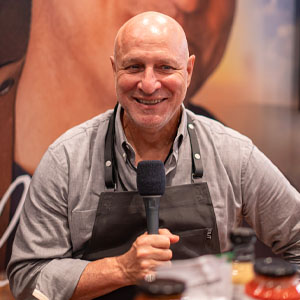
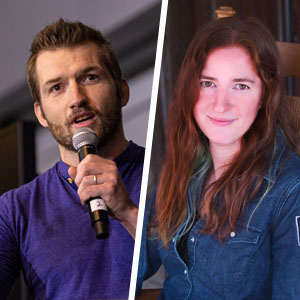
[00:00:10] Ray Latif: Hey folks, I'm Ray Latif and you're listening to the number one podcast for the food and beverage industry, Taste Radio. This episode features an interview with renowned chef, restaurateur, and Top Chef judge, Tom Colicchio, who spoke about the development and evolution of his namesake food brand, Colicchio Kitchen. We're also joined by Tom Macy, the co-founder of RTD cocktail brand Social Hour, and Nicole Austin, the General Manager and distiller of George Dickel Whiskey, who discussed the synergistic partnership between the two brands. Tom Colicchio is a gastronomic icon. He also likes tomato sauce out of a jar. The lead judge and an executive producer of acclaimed TV reality competition Top Chef and the owner of award-winning restaurant group Crafted Hospitality, Tom is also a partner Tom Colicchio Kitchen, a premium brand of sauces and condiments that are positioned as high-quality and convenient products for home chefs. Recently rebranded from New Jersey Tomato Company, Colicchio Kitchen debuted at the 2023 Summer Fancy Food Show, held from June 25th to 27th, and showcased a broad range of products, including Tom Colicchio Collection of ultra-premium cooking and pairing sauces. In the following interview, I spoke with Tom about his involvement in the brand and his role in the development of its products, how he defines quote, good food, his perspective on adding an ethnic themed line, and why he's less intimidating than you might think. Hey, folks, it's Ray with Taste Radio. I'm at the 2023 Summer Fancy Food Show, and sitting with me right now is the one and only Tom Colicchio. Tom, great to see you. Likewise, thank you. You said this is the second fancy Food Show you've ever been to?
[00:02:05] Tom Macy: Well, it could be my third. I think I was here probably 30 years ago, when it was much smaller. But I was here last year as well. Do you get to walk the floor, or is that too difficult for you? Yeah, I haven't. Last year, I kind of walked through a little bit. This year, I'm going to try to walk around, but I'm kind of stuck here for a while.
[00:02:23] Ray Latif: Yeah, you're here at Tom Colicchio Kitchen booth. Yes. At the Fancy Food Show. Recently renamed that from New Jersey Tomato Company.
[00:02:32] Tom Macy: Right, right. Yeah, so I was approached a couple years ago. It's really funny because, you know, prior to this, you know, I would make sauce at home. I would make it in a restaurant as well. And never even contemplated doing a packaged product. And I got a phone call, and they said, hey, we want to send you some sauce to try. I was like, yeah, OK, fine. Send it to my house. And it just so happened that the weekend it was sent, I had my entire family over. And they saw it sitting on the counter, and they said, what is this? I said, somebody sent me some tomato sauce. And they're like, open it up. Let's try it. And they all loved it. So it passed my family test. I figured it was OK. And then we modified the recipe a little bit. And that's how we started. And it New Jersey tomato. I'm from New Jersey. You know, I grew up, my grandfather would make, he had a small garden, and then he would jar all the tomatoes. And so the sauce really reminded me of that. It had a lot of texture to it. It wasn't overcooked. It wasn't like a long, simmered sauce. Didn't have a lot of aromatics in there. Just a little bit of onion, a little bit of garlic, no sugar, salt and pepper. That was it. Really, really clean. So I got involved. fiddle with the recipe a little bit. And then we moved into Tom Colicchio Collection line, which was all based on some regional Italian flavorings.
[00:03:43] Ray Latif: Well, I have to think, Tom, that you've been approached by a lot of brands and companies wanting to align with you and probably brands that make really good products. But what made this partnership right? What made this partnership the right decision for you personally?
[00:03:58] Tom Macy: I think New Jersey connection had a lot to do with it. You know, growing up in New Jersey, we're the garden state, although most people know of New Jersey on the 95 corridor, where it's all industrial. And we always like to say New Jersey, we have the best tomatoes. And so, yeah, there was that connection. And then it just tastes fantastic. If it wasn't a good sauce, I would have politely refused and walked away, but it was so delicious. I use it at home. I have jars of it. In fact, last night I made eggplant parmesan, and I used the arrabbiata sauce that we used to make. We don't make it anymore now. It's the Calabrian chili sauce. I made it. It's fantastic.
[00:04:33] Ray Latif: You recently expanded the line, too. You're into more than just pasta sauces. Talk about the expansion.
[00:04:38] Tom Macy: Right. We moved into dressings. We're also in the process of looking to do an olive oil, and then we'll start adding some additional products as well.
[00:04:47] Ray Latif: Who is the brand and the line for? Because there's a lot of premium products out there. There's a lot of premium tomato sauces, but yours is different. How?
[00:04:55] Tom Macy: Well, our basic sauce, I think, is, you know, the consumer that buys either Rayo's or Carbone's, those are the two big ones that we're up against right now, I'm partial to ours. So I think that's our comp set. And then from the flavoring sauces, I don't really know. I don't think we have one. I don't know of anybody else that has gone to do regional sauces that are more, we call them simmer sauces. So the idea creates a real shortcut. So if you're going to braise chicken legs, chicken thighs, You can just brown the chicken a little bit, add our sauce, put it in the oven, slow oven, let it cook, done. We've created all the flavors for you. So instead of making stocks and reductions and things like that, what I normally would do if I were braising meats or even fish, we have the flavor in here. So a simple fish stew, you can simply take any one of our sauces, maybe thin it out a little bit with some water, maybe some wine, add the seafood, let it simmer, done. all that labor of, you know, when I make a seafood stew, I start with fennel, onion, garlic, celery, cook it for two hours in a lot of olive oil. And when that's cooked down, then we add the tomato and then we add the seafood. So you can skip that whole process and just start with the sauce and the seafood.
[00:06:09] Ray Latif: It's interesting you say that because I was reading a feature about you recently where someone described you as intimidating. And I assume that this is something you want to be the least intimidating kind of food and sauce and brand to consumers.
[00:06:25] Tom Macy: Exactly, yeah. That article was interesting because it said I was intimidating, but it was nothing that I did. It's like, OK. So yeah, exactly. A lot of people are intimidated, especially when it comes to creating those layers and layers of flavor. And I think that's what a lot of home cooks miss out on. They don't know how to do that. So we've done it for you. We're trying to take the intimidation out of this type of cooking.
[00:06:48] Ray Latif: You're here at the Fancy Food Show, you're cooking up some food for attendees, and that's certainly one way to build interest and promote the brand. Another way is just to have your name on the label, and in some cases, your photo on the label as well. How do you make those decisions? Are you deeply involved with what the label is going to look like and how your name is involved?
[00:07:08] Tom Macy: Absolutely. In fact, this is an older label. We have a new label coming out for this as well, but this label, yeah, this label is new. So absolutely. In fact, this photo was taken from a photo shoot that we didn't even do for the sauce. It was another photo shoot, and I got the rights to that photo. I had to supply the picture of me when I was about 12, I think, right there. So absolutely, we're involved. In fact, that backdrop right there is my barn.
[00:07:32] Ray Latif: Wow.
[00:07:33] Tom Macy: There's a barn in the background there, so that's my barn. So absolutely, we're involved in every step of this.
[00:07:37] Ray Latif: You know, there's a wide variety of ways that people who are well known in the public promote and advertise. And some people are a little wary of using their name. Some people are wary of using their imagery. How do you think about that when you are promoting the brand and talking about Colicchio Kitchen?
[00:07:52] Tom Macy: Right. Well, for the most part, I haven't done it really anywhere with the exception of a few brands that I've actually invested money in that I'm not suggesting it's my food, but then, but I'm an investor. But this is something, this is the only product line that I've actually endorsed with my name. So yeah, over the years, I've been offered a lot of different things, but I just haven't found anything that I really wanted to do. In fact, You know, it's also a business that I don't know. Yes, it's food, but it's very different than the restaurant industry. And so I have great partners who really understand that. And I'm sort of getting me up to speed on it. But no, this was the first product that I really put my name on, with the exception of my restaurants. Well, that's not true. We did a very small line of a steak sauce that I did years ago, but it was a limited run. Okay.
[00:08:38] Ray Latif: Yeah. What have you learned about the CPG business from that steak sauce to now?
[00:08:43] Tom Macy: Well, you know, that was done with a retailer and it was only for the retail store. And so it wasn't that we had to go out and place it. In fact, we couldn't place it anywhere. Right. It was a Father's Day special for grilling. It was a very limited run. But this is different. I think it's really important to show up at events like this. And so people see that you are personally connected to it. You're not just slapping your name on it.
[00:09:02] Ray Latif: What's the steepest part of the learning curve for you in learning about how to sell a consumer brand, how to market a consumer brand?
[00:09:07] Tom Macy: You know, I'm still learning. For me, it's understanding that the buyers are the most important. So those are our customers, really. Yes, the customers are in the supermarket, but our first initial contact are the buyers that can get it into the supermarkets. And so that's just not something I'm used to. I'm used to, you know, your customer comes into the restaurant, you can interact with them directly. This is a little more arm's length. And so again, I think showing up at shows like this are really important that the consumer sees that you're involved.
[00:09:34] Ray Latif: Are you going out on retail visits as well? Are you meeting with some of the buyers?
[00:09:37] Tom Macy: I've done some retail, not on visits. I will, but I've done a lot of Zooms and things like that. Also, we launched, it was kind of the tail end of the pandemic. So I was doing some of that through Zoom.
[00:09:47] Ray Latif: Tom, I got to ask you, because you have been a chef, you have been part of Top Chef now for 20 years, you've seen a lot, you've tasted a lot. And I think in our business, sometimes great taste gets forgotten. And I don't know why. Great taste gets forgotten in lieu of functional ingredients and, you know, better for you ingredients and things like that. So in this day and age, in 2023, how do you define good food?
[00:10:13] Tom Macy: Well, I'm sure everyone here would say that their food tastes great. Sure. Yeah, I hope so. You know, good food, I think that If you look at what's gone on in the last 20 years in food, we've gone from farm to table exploding and people wanting to understand their ingredients, where they come from, who produces them, who's the people behind them. I think that's always important. We've also, at the same time, you saw the advent of molecular gastronomy. And at the same, you know, during this time, you see things that are a little more out there, people pushing the envelope, but also at the same time, people going back and doing more homey things. So there's room for everything. I think good taste starts with great ingredients, like New Jersey tomato, but then having an understanding of what you're going for. And my personal opinion is that I don't want food that is over-touched. I want the ingredients to speak for themselves. You still want a certain amount of craftsmanship that you see the chef's hand, but I think when you start torturing food to create shapes and to create an effect, for me, that goes too far. Now, other chefs that do that, do it really well, that's their signature, and I'm not saying that there's no place for that. There certainly is. It's just not something I'm comfortable doing. You know, my pet peeve is like risotto. The risotto should spread on a plate. It shouldn't be molded into a ring mold so you can put something on top of it. You're torturing the risotto to get that effect. Not the best thing for the risotto. So that's an example that I can provide. You really just want to let food really speak for itself. And I think you see a lot of people going back to that now. The home consumer, I think that's a whole completely different thing. The home cook, and there are a lot of really good home cooks, and I've run into some home cooks that have every gadget better equipped than most restaurants, and they're really into that side, especially people that are in the tech world. But there's a certain understanding, if I'm going to cook sous vide, why I'm doing it, how it actually works, and the advantages of sous vide cooking versus conventional cooking. I don't think there's a right or wrong. I mean, I know I'm going around in circles here.
[00:12:07] Nicole Austin: No, no.
[00:12:07] Tom Macy: But there's no right or wrong. There's a place for everything. And I don't think one is better than the other. A lot of it is personal preference. When I cook at home, it's very different than how I cook in restaurants. It's very simple, straightforward, you know, a protein and a couple sides. And that's how I eat at home. I mean, simple is usually the best. Simple is good. It's good. But, you know, if you go to a certain restaurant... You choose your restaurant based on what the expectations are. And so if you go into a restaurant and you're expecting a simple home meal, don't go into a restaurant where the chef is doing high-touch, avant-garde food. You're not going to get that. And so you have to understand where you're going and what you're really looking for. But the great thing is that you know, in a city like New York that we're in right now, you could find all of that. You know, going up to Queens, you could find probably within, you know, five blocks, probably, you know, a hundred different ethnic cuisines. And so that's what's great about food. It's, there's so much, there's so much to offer. There's so much to explore and it changes all the time.
[00:13:14] Ray Latif: You mentioned ethnic cuisine, and I feel like that is really the next evolution of American cooking, American food in general. When you're thinking about ethnic cuisines, do they fit into Tom Colicchio Kitchen? Do they fit into the future of what you're doing?
[00:13:28] Tom Macy: That's a good question. I mean, right now we're focused on Italian, but I could see us branching out. The problem is, though, that somehow may not be authentic to me. True. You certainly don't want to be accused of cultural appropriation. So be very careful. And I understand that, too. So I think we may stick to Italian, but we'll see. Outstanding. Well, the tagline is the taste of summer.
[00:13:50] Ray Latif: Taste of summer. Which seems quite appropriate for where we are now. And Tom, this has been such a great conversation. Thank you so, so much for taking the time.
[00:13:57] Nicole Austin: You're welcome.
[00:13:57] Ray Latif: Congratulations with the Colicchio Kitchen, and good luck with everything going forward. Thank you. Appreciate it. From tomato sauce in jars to cocktails in cans, our next interview highlights a remarkable partnership between an upstart beverage company and an iconic spirit brand. As mentioned at the top of the show, Tom Macy is the co-founder of Social Hour, which markets premium RTD craft cocktails. Developed based on his experience mixing libations at world-renowned bar The Clover Club, Social Hour cocktails are made with high-quality ingredients and include a gin and tonic, Whiskey Mule, and a Yuzu Sunset fizz. In 2021, Social Hour aligned with legacy whiskey brand George Dickel to launch the seasonally inspired Harvest Whiskey Sour, an expression made with Dickel's 13-year-old Tennessee whiskey, and re-released the following year. The companies teamed up once again in 2023 to create the summer-themed Social Hour Bourbon Smash, which is made with Dickel Bourbon and introduced in late June. In this interview, I spoke with Macy and Nicole Austin, the General Manager and distiller of George Dickel Whiskey, about the origins of the partnership, how the collaboration aligned the aims of both brands, and how their relationship may develop down the line. Hey folks, it's Ray with Taste Radio. Right now, I'm honored to be sitting down with Tom Macy of Social Hour and Nicole Austin of Dickel. Tom, great to see you. Likewise. Great to see Macy and Nicole, great to meet you.
[00:15:34] Nicole Austin: Happy to be here.
[00:15:35] Ray Latif: Outstanding. I say great to see you, Tom, because we first met in December 2021, when you participated in our second Cocktail Showdown competition, BevNET's Cocktail Showdown competition, that is, where you just had an amazing, amazing event. I think people were just blown away by the liquid, the positioning, the branding of what you brought. to the market, and I still am. I think Social Hour is right at the top of the list in terms of best RTD cocktail brands out there. What's been going on since 2021? Obviously, the brand has grown quite a bit since then, but talk a bit about its origins and where you are today.
[00:16:17] George Dickel: Sure. Yeah. Thank you. No, that was a, that was an amazing event. And I was really putting myself on a limb. I usually don't do things like that. And I think it was also, you know, we launched in the summer of 2020, great time to launch Tomato Company. Although for Kane Cocktails, actually, you know, it's kind of interesting. There still just was not a lot of in-person events, you know, at that point. So flying out to California and getting to present the brand, it still felt like it was very new, even though we'd been at it for a year and a half. At this point, I feel like I could already write a book about the can cocktail industry just because I've thought about it for so much for so long. And it's such an interesting moment just in this segment of beverage in particular. I think mostly Social Hour is we're still very much working towards defining what the true craft cocktail experience is anywhere that's not inside a bar. And what's been really interesting about that is how rapidly the category and everybody's understanding of it from the consumers to distributors to retailers, how rapidly that is changing and evolving and has been over the last two years. I've resisted taking things too big too fast. We've really been focused mostly in our hometown of New York which is still a very difficult market to participate in. And you know I've just focused on doing a lot of tastings and really deepening relationships with you know, I guess I'll say sort of high-value accounts. So one we've been working very closely with is Walt Disney World. You may have heard of it. You know, they reached out to us, I guess it was actually right before the BevNET event, and we're looking to elevate their RTD offerings. And so we've been working closely with them about how to slowly implement that and walk first before we can run. Because, you know, these ingredients and these cocktails, you have to go about the right way. I suppose mainly, yeah, it's that we've been trying to walk before we run and figure out how to really, given everyone's understanding, how to articulate our message for consumers and retailers and distributors as well. And that kind of keeps changing, as I said, month to month. And I think that's really what I've been able to learn so much from our collaboration with Nicole Austin George Dickel in that respect as well.
[00:18:35] Ray Latif: It's so interesting to hear you talk about the importance of being focused in a category where there is chaos. I mean, there are so many entrants into the space. There are so many variations of what is described as a canned cocktail. You know, some things are hard seltzers. Some things are actual cocktails like a Social Hour. Some things are not even close to being a cocktail, but being called a cocktail.
[00:19:04] George Dickel: It's like the matrix goes in like it's up down left right forward backwards. I mean is it malt based. Is it spirit based. Is it high BV is a low BV. Is there a fake sugar in there or is it full flavored. Then you get into terms of like complexity and serving size. And consumers, they don't understand. In my head, I have an idea of what a true cocktail is. But I was the beverage director at Clover Club, a well-known cocktail bar for eight years. And so I sort of had an epiphany only a few months ago, because I was trying to figure out, how do we communicate what's special about this to people and help them understand? This is like a cocktail you get in a bar. And I realized that my understanding of And you know why I feel like I am the right person to deliver them this product. I'm like well I'm I'm an expert in this. I've built my career on this. But I realize in my head you know I view myself as an expert from dealing with people who walked into Clever Club under their own free will over 10 years. That's the very narrow slice of the demographic. You know whereas people at a liquor store that shelf full of products like a high noon and a Social Hour to them could be the same product, you know, whereas like there's not going to be anything a million years close to a high noon at Clover Club because that's just not where you are. I think that it's, again, really interesting a moment of figuring out how people view these things, you know, as the liquor store democratizes everything. It's just sort of there on a shelf. And in some ways I'm well positioned to do this. But also you know I have a million ideas and it's it's required a lot of discipline to sort of try to stay focused and not do too much. And it's also at this moment where there's so much white space that hasn't been done. And you're like oh we could do this or we could do that.
[00:20:52] Ray Latif: It's the gift and the curse of being an entrepreneur, for sure. Well, you do have a stamp of validation in that Dickel Bourbon big fans, the company that is, or the brand that is, is a big fan of what you guys are doing. Nicole, I know you can talk about that. You have quite a bit of experience in this industry, which makes me think that the collaboration with Social Hour is pretty remarkable in that you see this as being a brand, not only that fits the ethos of what you're doing a dickle, but is first and foremost at the top of the list of what represents a canned cocktail.
[00:21:35] Nicole Austin: Yeah, I mean, you know, I came out of craft whiskey originally, right? That's actually how I met Tom years ago, when I was trying to, you know, pedal craft Brooklyn whiskey in these like really beautiful high end cocktail bars. And Tom and I had an incredibly, I would say memorable conversation about like, mezcal. Tom was one of the first, you know, folks who I really deeply respected in the cocktail industry who also sort of gave the time of day to some New York craft spirits producers. So I respected his work for a long time. And so that was kind of why he was like first on my mind. When I came to Dickel I felt like a lot of the work I had been doing was about getting people to see and appreciate the incredible high quality of the liquid that we had. And some of that was just, you know, kind of telling people about it. But a lot of that work was putting it in the right bottles at the right, you know, like a lot of work around blending to, you know, really highlight what was special about the whiskeys that we're making. And, you know, I drink Whiskey Mule. I love to drink Whiskey Mule. But it's also it's for cocktailing. You know, that's how most people drink whiskey. And that's how I think, even as a deep Whiskey Mule, I think it is kind of the best way to drink and enjoy whiskey. So I wanted people to see these like, beautiful whiskeys that I was making in the right context, was like a beautiful, well made cocktail. And you know, in that in those pandemic times, right, like people weren't going into high end cocktail bars. So you had to meet them where they were, which is at home. And, you know, I obviously like the RTD kind of can cocktail space was really obvious. I took one crack at a recipe by myself. And then I was like, Oh, that was really stupid. Like, this is really, really hard. Like, I am making just making a good cocktail in a bar is hard enough. But when you add the complexity of like, you know, putting in the can and trying to make it shelf stable and like all you What possessed me even for the briefest moment to think that I could do that myself? I have no idea. But I really quickly realized that I could not. And, you know, I think Tom in Social Hour, you know, what they're doing, it just fits so closely with the ethos of what I was trying to do with Tickle, which is like, show people something that they, they already know they love, you know, a beautiful whiskey, a great cocktail, and just in sort of a surprising way, you know, and maybe a place that they didn't expect or from, you know, from a context that they didn't expect. So it just, it fit really, really nicely. And I knew that, you know, he brought all the skills, because definitely Tom's being nice, and he maybe won't say this, but quality in the can of cocktails. It was like all over the map. And, you know, I tasted a bunch of them when I was doing research and like a lot of them were just not good, you know. And he said the stuff he was making, I just, I felt really, really confident that putting my whiskey into his hands, like he would make something really beautiful and you know, worthy of the s moves with a 13 year old cocktail, you know, so th
[00:24:59] Ray Latif: Well, that resulted in the Social Hour Harvest Whiskey Sour, which is made with George Jekyll whiskey. I'm curious, Nicole, did you reach out to Tom or was it?
[00:25:10] Nicole Austin: You know, we've been chatting anyways about Social Hour, right?
[00:25:16] George Dickel: I think, you know, back in our, like, fateful, you know, interactions, and I think it was like 2014, 2015. You were working in like the distilled spirits council, I think, and I just knew you knew things about legal things with alcohol. And so I started picking your brain that, because I had the idea for our, you know, I didn't know it was called an RTD, but I was like, can we put what I'm doing in a can?
[00:25:37] Nicole Austin: And you started, I remember, with glass bottles, right? And you were like hand tapping them.
[00:25:43] George Dickel: I was carbonating it at the bar and pouring into the bottle and capping it. And then you went to Ireland and we sort of lost touch. But you know I kept at it. And like six years later I think I reached out on LinkedIn and I was like hey look I finally did the thing you know that we talked about. I think I just sent you samples because I was reaching out. and you're like, this is you know, this is one of I've tried a lot of them.
[00:26:15] Ray Latif: That is really amazing. And, you know, Nicole, we were chatting about this before we hopped on the mics. You had said that there's no sort of official relationship between Social Hour and Dickle or Dickle's owned by Diageo beyond the collaboration itself, which is not common. in beverage alcohol. Was there a desire or was there a demand perhaps that sort of the legal teams get involved and, you know, how far this relationship should go or what it would entail? Or is, you know, is it just much more of an organic process?
[00:26:53] Nicole Austin: Well, Tom, I'll be curious to hear how it felt from your side because this is something I have kind of started doing with Diageo. My collaboration with Leopold Brothers was a big deal and it happened kind of around the same time. First, they're a small independent distillery in Colorado and kind of a similar situation. Yeah, he doesn't own them. We don't own a single share. It was truly like a collaborative relationship. And in the process of doing that, I, you know, I'm incredibly fortunate. I have a great boss and he gives me a lot of air cover, you know, inside this really big company to push things, you know, and do things that are pretty unusual. It's hard to do, you know, new and unusual things in Tomato Company this big. But I have a really kind of tight relationship with legal and, you know, to my boss to try and push this through and make things like this happen. And I think they're starting to see the benefit, you know, that to recognize certainly the small independent producers truly create something that I couldn't do, you know? I could never make a three-chamber ride like Todd Leopold can, and I can't make a cocktail like Tom Macy can, and, you know, I think they are starting to see that. I'm curious, Tom, what you think, because I know Todd has said about the collaboration that they were both like, this is never going to happen, you know? Like, when I raised the idea with them, they're like, yeah, right. Like, somewhere along the way, it's not going to work. It's never going to happen. And when the bottles actually made it on the shelf, they were like, whoa!
[00:28:25] George Dickel: When that happened, it was still within like seven or eight months since Social Hour had launched. And, you know, I still am an entrepreneur, but, you know, I was way just making it up as I went along. So I think I was a little bit like naive, like, sure, like, let's do it. Like, no problem. Like looking back when we got it released, which was its own like, you know, yeah. season, like full season of Social Hour that you could make a whole show out of, of just getting the Harvest Hour out the door. And then we, you know, we won some awards at the Ultimate Experience Challenge, we won like best in category for whiskey cocktails. And at some point, I looked back, I'm like, I cannot believe that's like, happened. Yeah. And you know, I mean, I think there's a lot to learn. And like I said, there's so much uncertainty in the category. But I think I can always lean on, you know, I've been obsessed with cocktails and how to make a perfect cocktail for a long, long, long, long time. And that that just always feels very safe. Like I always I know that I can do that. And if I just trust and I follow my instincts and what I feel is right all the way to the end, then I feel like I can't go wrong. Whether or not that's true, I don't know, but I believe it. So it's comforting.
[00:29:39] Ray Latif: Does it help validate what you're doing to the end consumer by having the Dickel logo on your cans? You know, there's a whole range of bottled cocktails out there, won't mention the name, but that use the brand name of the spirit within their cocktails. And I feel like to some consumers, that gives it some credibility. It says, hey, we're using a premium spirit and a premium spirit brand in our cocktails. Is that what it does for Social Hour as well?
[00:30:12] George Dickel: I think it definitely does. You know, there are, as we touched on, there's just so much going on and it's sort of chaos in the category. And I think the consumer feels that, you know, they don't, know exactly what things are. And as we said, sometimes they can taste so vastly different stylistically, quality wise. And, you know, a recognizable brand is one way you can get a foothold or get your arms around a product of like, OK, at least I know what that is. I know that brand or I like that brand or I've heard of that brand. That's the real thing. Because, you know, I think a lot of people, understandably, they still don't know the difference between malt base and spirit base, and then the quality of the actual spirit. I mean, you know, I work a lot on trying to find, you know, economics are a big part of this too, and finding affordable vendors for some of our spirits. And it's amazing the stuff that everyone else is, again, not to mention names, but some of the stuff that's going into canned cocktails, it's really not, I would not use it behind the bar, you know? And then obviously putting the age statement on there, that was our big, like, mic drop, I felt. And the Bourbon Smash, which you'll see, it's going to come out really soon. We leaned into that more. We've got a stamp on the side that's got the eight years on there. George Dickel, we've sort of stacked onto the label to really bring the collaboration front and center, which I'm excited to see if that helps even more. I think it will.
[00:31:38] Nicole Austin: I think it works both ways which is sort of interesting like you're right. Of course like having the brand helps people understand the cocktail. But I think something I've seen I think some brands that are starting to we're not the only ones are doing this right. But I think they're going to. maybe hurt themselves a little bit, because if you put your brand on a cocktail that's maybe not great, it's going to reflect back on you. You know, it's going to give people impressions and ideas about the quality of your spirit. So, you know, I think you've got to be really, really careful. Like that's something I've gotten the most proud of is that these cocktails, I think, really elevate both of our brands. Like they show my whiskey to its best potential. And this whiskey, I think, genuinely helps make the drink. So that's why it works, I think. And I have not tasted another one out there that I felt was doing both of those things in a positive way for both brands.
[00:32:34] Ray Latif: And with the launch of the Bourbon Smash, it seems like it's strengthening the relationship between the two companies, Social Hour and Dickel, and by extension, Diageo. Does it also lay down the foundation for a potential partnership, a more I guess, official financial partnership down the line, or is that not really part of the picture at this point?
[00:32:57] Nicole Austin: What's coming in our TVs? Who knows? Yeah, right.
[00:33:01] George Dickel: Totally. I mean, that's that's it. You know, like I said, it's like where I was thinking just today, my sort of to do list, I sort of feel like I'm perpetually like. just really trying to hit the tennis ball that's right in front of me, you know what I mean? Like not the 50 loaded in the launcher, you know, it's just like, there is so much to learn and figure out right now. You know, it took a fair amount of work to get us to this point. We've been wanting to do the Bourbon Smash for like a little over a year now, and we're really excited. I think it showcases things that haven't really been nailed in RTDs yet, like in a frill flavor profile, I feel like Again, you're never going to be like this cocktail has fresh mint flavor that's authentic. It's like not going to be on the billboard. But to me, that's just like the most exciting thing. It's just one of those flavor profiles. It's really, really difficult to get on a level that you get in a craft cocktail bar for various releases reasons related to chemistry and how those flavor compounds operate. You just can't get it. And the fact that I feel like, you know, the Bourbon Smash is one of my favorite cocktails. I served it at my wedding. I genuinely think it's, you know, without hyperbole, the best refreshing whiskey cocktail that exists, just the recipe itself. And so the fact that we've got it on a level that I feel like, yeah, this is exactly how I want it to be. I'm super excited about. A deeper partnership could open up a lot of other interesting things. Like I said, I've I've got way too many ideas, so there's always potential for other stuff.
[00:34:31] Nicole Austin: I think we're still in like a learning phase, you know, with this, like the first one was kind of a whim, you know, it was like, I want this to exist, we wanted it to exist, you know, so obviously, it's like, I want it to be in the world. So let's just make it happen. And whether people are going to see that respond to it, recognize it, it's so hard to predict in such a chaotic category, you know, so I hope they do. I think we're super ready to take advantage of it if they do. But also, just selfishly, like I lo we were just gonna do the tom to send me, oh hey, b been working on this. Any delicious Bourbon Smash. W all right, we need to do That was kind of how the I was like, what about th
[00:35:22] Ray Latif: Well, there's some seasonality to the two as well, right? So the harvest hour feels like a much more fall winter kind of cocktail, whereas the Bourbon Smash is very much for the summer. Perhaps we'll see something in the spring as well.
[00:35:34] George Dickel: Well, I mean, that was the whole idea. It was, I think our first call, we're like, all right, well, what should we do? Like we're going to collaborate. What should we make? And my first thought was I wanted to, I wanted to do something that wasn't carbonated and I wanted to do fall. was my first thought, just because, you know, in bartending, as I've said before, you know, once you get into October and the like, though, those fall vibes creep in, it's like, it's just people make a beeline to those maple, baking spice, whiskey, sours, they just fly for those three months. And at the time, this is early 2021, I felt like RTDs were so focused on Summer Fancy it was just this short, you know, season. And I'm like, people enjoy cocktails all year long, let's like stretch it out. And so that was sort of exploring that. And then this is exploring the seasonality of, you know, ultimately, and this is crystallized more over time for me, about what I want Social Hour to represent in the RTD marketplace is sort of, as I said at the top, bringing a craft cocktail bar experience anywhere that's not inside a bar. And part of that to me is seasonality. You know, the menus change. People don't order cinnamon maple whiskey sours in the spring. They order you know, whiskey sours with mint and lemon, and you can apply that to a lot of different cocktails. But that was something we were looking to capture that we didn't feel like was represented in the R&D market.
[00:36:52] Ray Latif: Well, I think you've captured it and you've captured the incredible beauty of a well-crafted cocktail in all of your products, Tom. And I'm so grateful to Nicole Austin well for injecting some dickle into what you're doing as well, because, you know, I always say this, I mean, I'm, I can't help, but be a fan of products that I really like. and brands that I really love. I should be more objective when it comes to these things. But, you know, I think this collaboration really represents the best of, you know, what the beverage alcohol industry can do when working together in a really positive way. And I thank you both for doing what you're doing and for joining me today on Taste Radio. It's exciting and hopefully we can connect again soon.
[00:37:36] George Dickel: I hope so. Thank you so much, Ray.
[00:37:39] Nicole Austin: Thank you so much for having us.
[00:37:40] George Dickel: Yeah. Awesome to chat.
[00:37:42] Ray Latif: Thank you. That brings us to the end of this episode of Taste Radio. Thank you so much for listening, and thanks to our guests, Tom Colicchio, Tom Macy and Nicole Austin. Taste Radio is a production of BevNET.com, Incorporated. Our audio engineer for Taste Radio is Joe Cracci, our technical director is Joshua Pratt, and our video editor is Ryan Galang. Our social marketing manager is Amanda Smerlinski, and our designer is Amanda Huang. Just a reminder, if you like what you hear on Taste Radio, please share the podcast with friends and colleagues. And of course, we would love it if you could review us on the Apple Podcasts app or your listening platform of choice. Check us out on Instagram, our handle is bevnettasteradio. As always, for questions, comments, ideas for future podcasts, please send us an email to askatasteradio.com. On behalf of the entire Taste Radio team, thank you for listening, and we'll talk to you next time.