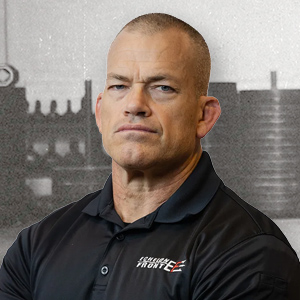
[00:00:10] Ray Latif: Hello, friends. I'm Ray Latif, and you're listening to the number one podcast for anyone building a business in food or beverage, Taste Radio. This episode features an interview with decorated soldier Jocko Willink, the founder of fast-growing brand, Jocko Fuel. Jocko Willink admits that he made mistakes during his time in the military. The retired Navy SEAL Lieutenant Commander, author, and entrepreneur says that in some cases, quote, things went terribly wrong. Certainly, it's difficult to compare the experiences of leading soldiers on the battlefield and running a CPG company. But Jocko, who is the founder of Better For You beverage and supplement brand Jocko Fuel, believes that in any situation when mistakes occur, it's important for the person in charge to take ownership, figure out a solution, and find a way to make sure the problem doesn't happen again. That perspective is a core tenet of Jocko's leadership style, which guides Jocko Fuel. Born as Jocko Tea in 2018, the brand has evolved into a CPG platform that markets several product lines, including energy drinks, protein shakes, powdered greens, and hydration beverages. Jocko Fuel has a nationwide retail footprint and is carried at grocery chains H-E-B, Meijer and Wegmans, along with GNC, The Vitamin Shoppe, and 7-Eleven. I sat down with Jocko for a conversation about the development of Jocko Fuel, including why having a, quote, military mindset means approaching things with an open mind and listening to feedback, and how his personality and beliefs are embedded into every aspect of the brand. He also talks about empowering his team to navigate the complexities of running a modern consumer brand and its alignment with private equity firm Goode Partners, which invested $30 million in Jocko Fuel in 2022. Hey folks, it's Ray with Taste Radio. Right now, I'm honored to be sitting down with Jocko Willink, the founder of Jocko Fuel. Jocko, great to see you. Thanks for having me, Ray. You have a lot of books behind you. How many books do you have back there?
[00:02:24] Jocko Willink: Oh, yeah, I don't know. I have a lot of books. I do a lot of reading. Yeah? Yeah. How often do you read during the day? I kind of have to Brad Avery day. Yeah, I have to read at least a little bit every day. So I actually have a podcast where I review a lot of books, a lot of them are archaic, out of print books, or old forgotten military history books, or first person accounts from military experiences. And so I'm kind of constantly reading those. Yeah.
[00:02:53] Ray Latif: I have read quite a bit about you. And one of the things that has consistently blew my mind or blown my mind is the fact that you get up quite early in the morning. I am not a morning person. I'm a night owl. Sorry. But what time do you get up in the morning?
[00:03:08] Jocko Willink: I get up around 4.30 in the morning. Yeah. So I was in the military for 20 years. And one of the things I realized in the military, and I found out the same for many people in the civilian sector as well, is when you get up and you go to work, the day is going to start to take advantage of you. And it's going to call on you, you're going to get emails, you're going to get phone calls, you're going to have emergencies and things unfold in your day that you didn't expect. So if you had a plan to work out during lunch, or you had a plan to work out after work, or you had a plan to work out when you got done with work, A lot of times those plans would get disrupted. Certainly in my old job in the military, any plan that you had once the workday started could kind of get thrown out the window. So I got in the habit of getting to work before work started and getting a workout done. And that's kind of the habit that I've stuck with. And it's proved to be pretty necessary, even in the civilian sector. I'll give you a couple examples. We had a couple vehicles transporting products. One of them got stolen, and we had to contact the police in Los Angeles, and the FBI helped us out. We were actually able to track down and recover some of that product. And the other one, another truck, got stopped by drug dogs. And they pulled the truck over and they had to do a full inspection because the dogs, for some reason, thought there was drugs in one of our trucks. So we had to get down there. The full inspection happened. Obviously, it was clear it was just an error on the dog's part. But, you know, we had to fly a couple of people emergency situation down there to see what was going on. And these are the kind of things in the beverage and what turns into the logistics industry that that happened to you.
[00:04:50] Ray Latif: being a civilian now, is it something where, you know, you think about the military discipline that has been a part of your life for so long and sticking to that discipline? Or is there something a little different about, you know, how you have to live your life outside of the military?
[00:05:09] Jocko Willink: Well, certainly I believe that discipline is a cornerstone of doing well in life and achieving the things that you want to achieve and accomplishing the goals that you want to accomplish. Certainly without discipline, none of that will happen. But I think really more important from the military mindset that I took was You know, really having an open mind and listening to what's happening, listening to feedback that you're getting, trying to understand what's happening in the market on the battlefield with consumers. It's all very similar. That's one of the sort of stereotypical images that people have of. military personnel, and that is that we've got this rigid kind of structure in our minds, and we don't want to deviate from that. Obviously, in the military, there is an aspect of that, you know, you wear a uniform, everyone looks the same, you live in barracks, and everyone makes their bed. And so there's a lot of regimented things inside the military. But that really takes place in what we call garrison situations. In other words, peacetime situations. But once you get out on the battlefield, what you really need is you need to have an open mind and you need to have a creative mind to be able to overcome the obstacles that are put in front of you. And so that's probably the most important thing that I've found taking from my military career where I had to be flexible. I had to come up with contingencies. I had to deal with things that I didn't expect to happen. And I had to come up with a new plan or move in a new direction. So I think that was the most important aspect that I took, that I brought into my various businesses once I got into the civilian sector.
[00:06:51] Ray Latif: How much of you, how much of your personality and persona are part of the brands and companies that you operate? And how do you authentically incorporate what you believe and how you live your life into those brands and companies?
[00:07:09] Jocko Willink: Yeah, I think that there's a lot of a lot of my personality, a lot of my belief systems that goes right into the various businesses that I have, whether it's echelon front, which is a leadership consulting company. And that is certainly the principles that we teach. And there are principles that we learned on the battlefield and that I ended up teaching to the young military leaders that were coming up and getting ready to go on deployment. So that company certainly has a lot of my principles embedded in it. Same thing with Origin USA, which is a clothing company, and it's all American made. And certainly the patriotic aspect of my personality is deeply embedded in that. But not only that, the leadership, the work ethic, that's all in there. And then finally, Jocko Fuel. Yeah, absolutely. My personality is very deeply embedded in Jocko Fuel, right down to the fact that it's interesting when we started making products, you know, we didn't get into drinks until a little bit later, but when we first started making products, the products that we were making were based on what I actually used and wanted to make. I had used energy drinks overseas on deployment, and they definitely give you energy. You know, with 150, 200 milligrams of caffeine, they definitely give you energy. They also give you a crash, and they're also not healthy. They also have a bunch of sugar, a bunch of chemicals in them. And so when we just started to make our energy drink, one of the first things we talked about was how much caffeine to put in. And I really wanted to stick to what would be the equivalent of a strong cup of coffee, because people have been drinking coffee forever. So that was, you know, 95 to 100 milligrams of caffeine. And I definitely, you know, as we discussed with other people, other people said, no, you got to add twice as much, you know, maybe even in some cases, people said three times as much caffeine in a single beverage, you know, getting up to 300 milligrams of caffeine. And I just didn't. I just didn't agree with that. It's not healthy. And so I held the line. I got the team on board. They ended up seeing, you know, as I explained it to him, explained them the why this was important to me and everyone understood it. And so that's what we did. We rolled out on the market with an energy drink that only had, you know, only had 95 milligrams of caffeine, like a cup of coffee. Now, what we did do was we enhanced it with other ingredients like alpha GPC and bacopa and theanine that give you more sustained energy. But that's what we stuck with. And what we've seen over time is there's now developing a market for lower caffeine energy drinks. So I feel like when you know something is right and you're doing the right thing for the right reasons, you're going to win. But that doesn't mean you can ignore the consumer and do whatever you want, because they're going to tell you what it is that they want, what is it they need. So we need to educate in some cases. Hey, you don't need that much caffeine. In other cases, we need to listen. Hey, you need to make this taste better. Yep, got it. So really it is being humble about what you're putting out there and still having your core beliefs and moving forward with those core beliefs, but from a mindset of humility where you don't think you know everything. Just because you like the taste of your lemon lime doesn't mean everyone's going to like it. And so you better make some adjustments.
[00:10:22] Ray Latif: You have a beverage platform where you're selling hydration drinks, energy drinks, protein drinks. A lot of your business, I talked to one of your colleagues, a lot of your business is still online, but how are you managing and navigating the process of expanding into retail?
[00:10:35] Jocko Willink: Well, I can tell you right now, I wrote a book called extreme ownership. And in that book, I talked about the four laws of combat leadership and the fourth law of combat leadership is called decentralized command. And that is you have people on your team that are going to go out and make things happen. And in my case, when you say Ray, when you say to me, Hey, Jocko, how do you handle this stuff? I can tell you right now, I do not handle that stuff. I've got an outstanding team on the sales side, on the supply side that came from all different companies, but with the background that they have the knowledge, the connections, the relationships, the know-how to make these things happen. So, you know, when we started the company, sure, it was really just myself, Brian Littlefield, and Pete Roberts. We were the original founders of Jocko Fuel. And, you know, we did an all right job. Brian did a great job with formulation. Brian had come from a supplement background, so he kind of understood that. Pete's a brand guy, and he knows about manufacturing, knows about logistics, and we were able to get the thing moving. But very quickly, when we saw the demand signal very quickly, we realized we were going to need some people that were professionals in these various aspects. Everything that you just talked about, people that really, truly understood how these companies grow and scale, because we did not have that knowledge. So we, we assembled a great team over time. You know, our, our president, our current president right now came from this background and he worked in some of the biggest companies in the world. He knows how to make it happen. I already mentioned our COO. She came from this background and really understands logistics, really understands food and logistics. So she's just outstanding. Some of our salespeople were actually buyers for some of these big retail places that we're now in, but they have that experience. So what we did, Ray, or what I did, is I assembled a team of great people that really know and understand this industry infinitely better than I do, and they've taken this and run with it. And as they ran with it, we came together with a good strategy that made sense in a way to make this happen, where one of the problems that we had to watch out for was actually growing too fast. So we had to be careful. We wanted to make sure that we never let our retail partners down. We said no to quite a few retailers early on just because we didn't have the capacity on the logistics side to get there yet. And we didn't want to be, you know, an organization that told someone we were going to be in their stores and then couldn't provide them with what they needed. So we grew at a. cautious. It was an aggressive but still a cautious pace. And we did that by bringing in experts to this company that have a ton of experience. We all work together extremely well. We have frank discussions and that's how we've been able to do it.
[00:13:34] Ray Latif: How do you manage the inevitable mistakes and pitfalls that come with building a beverage business? You know, in the military, you make a mistake, it could be a life and death mistake. In the beverage business or consumer products in general, you make a mistake, it costs you a lot of money. It's not life or death, but it could also cost someone their job. How do you talk to your team about how to manage mistakes?
[00:13:56] Jocko Willink: Again, I wrote a book called Extreme Ownership, and that book is about what you do when you make mistakes, or that's at least one of the key components. And look, there was times in the military where I made mistakes, and things went wrong. Things went terribly wrong in some situations. And what I did in those situations is took ownership because I'm the person in charge. So when something goes wrong But Jocko Fuel, when we make a mistake, when I make a mistake, when we don't get something out the door when we're supposed to, we take ownership of that problem, we figure out a solution to that problem, and then we figure out a way to implement a solution so that that problem doesn't occur again. So yes, during the growth, have there been some hiccups along the way? There absolutely has. And what do we do when we make those mistakes, when we have those hiccups? What we do is we talk to our partners, whether it's a logistics partner, whether it's a retailer partner. Whether it's an online partner, we talk to them, we explain to them what happened, what mistake we made, and what we're gonna do to fix it and make sure it doesn't happen again. So when we make mistakes, we're gonna take ownership, we're gonna get those solved, and we're gonna move on with putting something in place where it's gonna mitigate that from happening again.
[00:15:06] Ray Latif: Are you the one who's breaking down the reasons why it happened, or is the person who owns that mistake, are they the one most responsible for fixing it and making sure it doesn't happen again?
[00:15:17] Jocko Willink: hey, if something goes wrong But Jocko Fuel, that's my fault. That's my fault. So whether it's a driver that was driving too fast and crashes a vehicle, that's on me, because I clearly didn't explain how important it was that the product is carried in a safe way and that it gets there, it's more important getting there fast, and I'm gonna take ownership of that. And we're gonna implement, hey, let's put some rules around this to make sure we don't make these mistakes again. So up and down across the chain of command, that's the attitude. I can tell you when I say, hey, driver, this is my fault because I should have explained to you how important it was that you drive at a safe speed. That driver is going to look back at me and say, actually, Jocko, it's my fault. I should have known better. It was raining out. I was driving too fast. I won't make that mistake again. So we're going to see people taking ownership. up, down, and across the chain of command. And what you end up with then is everyone on the team trying to figure out if there's a problem, if there's a mistake, everyone on the team is taking ownership of that mistake and trying to get it fixed. As opposed to if one of my drivers crashes a truck and I say, you were driving too fast, what's wrong with you? Well, he's probably getting defensive and say, well, you didn't give me enough time to drive out there. And I was trying to rush to get the job done. So now each of us are just pointing our fingers at each other. No, one's taking ownership of the problem. The problem is not going to get solved. So what do we do? We take ownership. I take ownership and that attitude spreads up, down and across the chain of command. So that's what we do when we make mistakes. We take ownership. We get them solved.
[00:16:49] Ray Latif: I want to talk about competition for a second. Competition is inherent in consumer products. To get on shelf, typically another brand has to come off shelf. Other products have to come off shelf. It's just the way, the nature of the business. In the military, I don't know if competition is the right word for your enemy. Your enemy is your enemy. But how do you talk to, or how do you think about competition? How do you talk to your team about competition?
[00:17:15] Jocko Willink: I think just like in war, you have to do the right things for the right reasons. And if you do the right things for the right reasons, you're going to win in the end. So could we cut corners on our ingredients? Yeah, we could. Could we try and charge an exorbitant amount of money for our products? Yeah, we could. Could we minimize the amount of human interaction that we have because it might make things a little bit cheaper? Yeah, we could do that. But I don't believe that any of those things would be the right thing to do. And I think that eventually you will get caught up by those things that you are doing. So when we do what we're doing But Jocko Fuel and we're making decisions, we're making decisions based on what is gonna be good for the consumer. What is gonna be good for the person that is out there trying to get some clean fuel to put into their body. And if we're making the right decisions and we're trying to support that, ultimately, I think we'll win in the end. you realize really quickly that we truly are different from the other products that are out there. So I feel like we kind of have a monopoly on the markets that we're in because we're making a product that is truly different and truly good for you. Whereas a lot of products that are out there, they're not the same thing. So we're not too worried about our competition because there's not much of it. What we're focused on is doing the right things for the right reasons. And the reasons for us is getting a good product to the consumer.
[00:19:01] Ray Latif: Occasionally investors might think that the reasons for doing something are one thing and you might have a different opinion. I wonder, you know, given that Jocko Fuel brought in $30 million two years ago, how influential, how impactful your investors are in the decisions that you have as a, as a leader in the company and whether or not you have to go to the mat to defend what you believe is the right thing to do for the company.
[00:19:33] Jocko Willink: Well, one of the most important things when we brought in investor grouping, it's they're called Goode Partners out of New York. And we had meetings with scores of impossible investors. And the most important thing that we were looking for was an actual partner. And the most important thing for me, and for us as a leadership team, in that investment was getting someone that was aligned with our vision. And our vision was very clear, and it is very clear. We believe that we are different from other products, and we believe that that's why we will win in the end. And our partners, Goode Partners, they absolutely recognized, they saw when we explained to them the hole in the market that we were going to fill. They understood it. And so we are all aligned in the vision of the company, doing the right things for the right reasons, making the best possible product, keeping it clean. We know that that is the pathway that we're on and we're all aligned behind that. We know that there might be, you know, some higher costs involved now, but in the long run, when we get more market share and we, when we actually develop consumers that truly care about what they're putting into their bodies, we know we're going to win. We know we're going to have an edge. And we've actually—this isn't just theory anymore. We know this to be true. We see it in our numbers. We see it in the subscriptions that we have. We see it in the feedback that we get from consumers. So it was theoretical a few years ago, but it's not theoretical anymore. People, consumers want good, high quality, clean fuel for their lives. And that's what we're bringing to them. And so we don't really get any pressure from our investors to cut corners on ingredients and try and save money. We just don't get that. It doesn't exist. So we've been pretty lucky with that. But the reason we're lucky is because we aligned with an investment group that had the same vision that we have.
[00:21:27] Ray Latif: Jaco, just one more thing, you know, again, you're a very well-known person. You have a great personality. You have a great perspective on life. And I think your energy is infectious. Do you go out into, are you out there in retailers? Are you meeting with distributors? Are you, you know, really putting yourself out there to align yourself with the brand? Because I think it's a huge asset. I mean, how much of that do you do?
[00:21:51] Jocko Willink: Yeah, I do a ton. First of all, I do a fair amount of sales calls when we're getting introduced to a partner. I'll want to meet them and they'll want to meet me and we kind of figure out if we're the right partnership. But yeah, we've done that across the board and we have great relationships. I think maybe regional food is a great place to look. So we're in H-E-B, Meijer, Wegmans, Hannaford, and we're just, we're doing great in those stores. I mean, they've got huge end caps for us. We became number one new brand in nutrition in Meijer. H-E-B, if you go to an H-E-B, you will see Jocko Fuel prominently displayed. Same thing with Wegmans and Hannaford just ordered even more of our SKUs. And that's because of the relationships that we built. And I've, you know, I've gone to talk to H-E-B, I've gone into Meijer and Wegmans. It's like, we go into these stores and meet with them and we try and figure out what can we do for them. You know, how can we help you promote what you're doing? You know, can I post something that shows that you have a special inside your store? Can I go down there and meet with some of your leadership team and talk to them about leadership? These are the kind of things that we've done that's really helped us grow inside. And again, that's one example sort of from the prominent regional food retailers. We've just formed great partnerships with them, and it's working out great for us and for them as well.
[00:23:14] Ray Latif: That's great to hear. And I'm so glad you pointed out that retailers want to hear what your brand can do for their stores, the incremental value that you're bringing into their locations, because they get pitched a hundred times daily and they have a lot of decisions to make. And at the end of the day, they're going to make the ones that really help their businesses first and foremost.
[00:23:36] Jocko Willink: Yeah, we've had multiple retailers place us at like over 65% incremental to their category. So we've got incredible feedback that we're bringing people into their stores. And that's great to hear because it's a partnership. Anytime we go into a store, we view it as a partnership. It's not just a transaction for us. We want to go in, we want to help out. and get people into their stores. And it's to say, you know, we, we, we're starting to expand into convenience, you know, where we got our, our protein shake and Wawa, we're in MapCo and Stinkers and Royal Farm. So we're getting into, into more and more convenience. And we try and do that same partnership and build them up as well. That's what we're trying to make happen for anyone that wants to work with us. We're trying to work with them so that we help them as much as they're helping us. And in doing that, again, our primary goal. is to help out the consumer, help out the American people that are out there. They had a hard day's work, whether they're a firefighter, a plumber or an insurance agent or a financial person, it doesn't matter what they're doing. They have a hard day at work. They're coming home. It's easy to try and grab some energy for the, for, for when you get home to the wife and kids, it's, it's easy to grab something that's not good for you. So we're trying to help everybody by getting them products that are actually good for them.
[00:24:53] Ray Latif: Just to quickly follow up on that, getting them something that's good for them. We live in a time where inflation has really affected how people spend their money and how much money they can spend on household groceries. How much do you think about price when you're considering this opportunity to give people better food, give people better nutrition?
[00:25:16] Jocko Willink: Look, we absolutely pay attention to price and we know that we have to be competitive We also know this, there's nothing more important than your health. And so to provide people with something, look, are we gonna be the cheapest on the shelf? We're not gonna be the cheapest on the shelf. We just can't. We can't spend the amount of money on our ingredients and production and be the cheapest on the shelf. But for that little bit more that you might spend, you are getting an infinitely better product. And I think that's one thing that's interesting is, As odd as it might sound, I think COVID really, in many ways, helped us because people started getting more concerned about their health and paying more attention to health and actually paying attention to what they're consuming. And so as people read ingredients more and more and understand more and more about what they're putting into their bodies, we're going to do better and better because, look, is our product a little bit more expensive? Yes, it is. But is there anything that is worth more than your health? So even though we might be a little bit more expensive, again, we're doing the right things for the right reason. And I think in the long run, we will win.
[00:26:25] Ray Latif: We will win. Jocko, it's been so great speaking with you. Thank you so much for taking the time. I don't know if you're going to be at the NAC show, the National Association of Convenience Store Show in a few months, but if you are, it'd be great to meet in person. And I'm sure there's a lot of our listeners who would like to meet you in person as well.
[00:26:43] Jocko Willink: Well, I can't guarantee, I don't control much of my calendar at all. It's pretty much getting filled up by other people, but they may have it on there already. They may not have something else on there, but if I'm there, I look forward to meeting you and the rest of the people that are out there trying to get people good products.
[00:26:58] Ray Latif: Fantastic. All right. Once again, thank you so much and look forward to catching up again soon.
[00:27:04] Jocko Willink: Thanks for having me. I appreciate it.
[00:27:08] Ray Latif: That brings us to the end of this episode of Taste Radio. Thank you so much for listening. Taste Radio is a production of BevNET.com, Incorporated. Our audio engineer for Taste Radio is Joe Cracci. Our technical director is Joshua Pratt, and our video editor is Ryan Galang. Our social marketing manager is Amanda Smerlinski, and our designer is Amanda Huang. Just a reminder, if you like what you hear on Taste Radio, please share the podcast with friends and colleagues. And of course, we would love it if you could review us on the Apple Podcasts app or your listening platform of choice. Check us out on Instagram. Our handle is bevnettasteradio. As always, for questions, comments, ideas for future podcasts, please send us an email to ask at Taste Radio.com. On behalf of the entire Taste Radio team, thank you for listening, and we'll talk to you next time.
[00:27:58] Jocko Willink: you