[00:00:00] Ad Read: This episode is sponsored by PacTec, delivering beverage multi-packing you can trust. PacTec's handles are made from 100% recycled plastic and are fully recyclable, helping beverage brands reduce waste and support a circular economy. With a minimalist design, durable performance that prevents product loss, waterproof functionality, and custom color options, PacTec keeps products secure while letting your brand shine on shelf. Trusted by leading beverage brands globally. Learn more at Taste Radio.com forward slash PACKTECH.
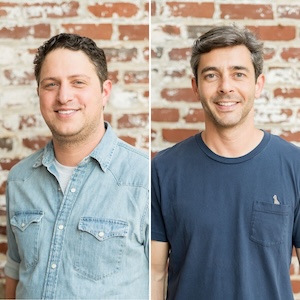
[00:00:52] Ray Latif: Hello friends, I'm Ray Latif and you're tuned in to Taste Radio, the leading podcast for entrepreneurs and innovators in the food and beverage industry. In this episode, we sit down with Neal Cohen and Yoni Reisman, co-founders of the trailblazing, ready to drink cocktail brand, Tip Tip Tip Top Cocktails. Convenience and quality don't always go hand-in-hand, but Tip Tip Tip Top Cocktails is changing that perception one perfectly crafted drink at a time. Founded in 2019, Tip Top is an Atlanta-based brand known for its spirit-forward, bar-quality offerings. Childhood friends Yoni Reisman and Neal Cohen launched the company with a simple mission, to make Tip Tip Top Cocktails more accessible, no bartender required. Tip Top's lineup includes time-honored classics like Old Fashioned Negroni and Margarita, as well as modern favorites such as the Paper Plane, Penicillin, and Naked and Famous. Each cocktail is precisely mixed and served in a sleek 100ml lowball-style can. Now available in over 25 U.S. states and Washington, D.C., Tip Top products are carried by national retailers such as Trader Joe's, Whole Foods, Gelson's Markets, and Total Wine & More. The brand has earned praise from The New York Times, Food & Wine, and others, and to date hasn't taken a dime of institutional funding. In the following interview, Yoni and Neal share how an idea sparked on the music festival circuit evolved into a fast-growing brand with national reach. Their journey is a case study in bootstrapping, brand discipline, and building loyalty through an unwavering commitment to quality and customer experience. Hey, folks, it's Ray with Taste Radio. Right now, I am supremely honored to be sitting down with Neal Cohen and Yoni Reisman, who are the co-founders of Tip Tip Tip Top Cocktails. Neal, it's great to see you. Yeah, great to see you, too. Thanks for having us, Ray. Yoni, I think this is the first time we've met. Is this correct?
[00:02:59] Ad Read: It is, indeed.
[00:03:00] Ray Latif: It's nice to finally meet you after listening to your voice for all these years. I appreciate you listening. Our marketing team appreciates you listening. And I hope you've gotten some good tidbits out of our podcast that have helped you scale. OK, good. Good to hear. You know, I've been fans of Tip Top for a long time. We've talked about the brand on our podcast for, I don't know, years now. And I think when you guys came out. It felt to me like this was the shift. This was the game changer that the industry needed because it solved a problem. And we talked about this before we hopped on the mics. People have been looking for ways to create a convenient, affordable, and easy option to have cocktails consumed at home. I assume this is basically how the company started. Neal, was this just something that you needed in your life and Yoni you needed in your life and you said, let's make this happen? Yeah. I mean, the spark really happened with Yoni in the festival industry. Yeah. Working in music festivals, we always wanted to serve really Tip Tip Top Cocktails. And that's sort of where the idea came from. It was hard to do. I mean, for the festival, we would batch them in advance, put them in kegs, but we didn't have to worry about shelf stability or anything like that because the festival was over in three days. What kind Tip Tip Top Cocktails were you making? Honestly, it was probably like vodka lemonades. OK. So they weren't super high end, but it's what the people wanted in that environment. So that was really the spark. Both Neal and Yoni were in the music festival game. After leaving the festival game, we thought about what to do next, and we've always Tip Tip Top Cocktails. I lived in New York going to bars like Milk and Honey and Little Branch, and just had some mind-blowing cocktails there. And the combo of that and I guess this idea after the festival world is what sparked Tip Top. And so we sought out some help, some people who really know what they're doing. This guy Miles Macquarrie in Atlanta at the Kimbell House is a recipe developer, and he helped us develop our first three, which was the Old Fashioned, Manhattan, and Negroni. What was the initial reaction that you heard? I think we were looking across the shelf at what the category offered. This, remember, is 2017-2018. There were some brands at the market, but not the tidal wave that we've seen since then. And what we saw is there wasn't any brand that really spoke to people who spent time in great cocktail bars. And thus... People looked at the category if they were discerning consumers Tip Tip Top Cocktails and said, there's nothing there for me. And that's precisely why we started with old-fashioned Manhattan and Negroni, in order to really send a signal. to those people, hey, this is a brand that's making Negronis in a can. This is a brand that's making the trifecta of bitter, stirred, classic cocktails. And really, we were trying to appeal to that crowd. We also knew that that would be shelf-stable and not coming from the industry. We felt safer about starting with those Tip Tip Top Cocktails. And soon, as we learned more, we felt more confident going out and expanding to a margarita and a bee's knees, juice-based cocktails. But I think had we started with a margarita, people would have said, eh, I've had a margarita in a can. I know what that experience is, and no thank you. But having a great old-fashioned Manhattan or Negroni out of can, we're able to really convince a lot of people that this was worth revisiting the category. I mean, I think that's brilliant because when I started to see cocktails in a can, you know, there's a brand out there that we all know that has sold for quite a bit of money. And it was a 12 ounce wide can. When you were reaching out to your initial retailers, your initial customers, how did you get people to buy into your vision? It's taste. The very common reaction when people first taste Tip Top is, oh, it's a real cocktail. And so that really is almost everything. I mean, of course, we got to make sure that the brand looks the part. So we went and we looked at Tip Tip Top Cocktails recipe books and, you know, kind of played with some like 1960s jazz vinyl kind of looking design and put that there so that it really, you know, integrated that into the visuals of the brand so that those cues really indicated that this is, more sophisticated, I mean, Tip Tip Top Cocktails, you know, that's a piece that you put into The New. Yeah, that's right. And we learned pretty quickly the term liquid to lips. That's something people repeat quite often in this industry and for good reason, especially if you are something a little different. People can come up to your booth at some tasting event and say, oh, OK, Old Fashioned can. That's my favorite part. Personally, I love people walking up real skeptical and then watching their eyes as they take the first step. And as Neal said, they're like, oh, Oh, this is a real cocktail. That's the best part. So Liquid Deluxe is really it. And that's kind of the main focus. Miles Macquarrie, our recipe developer, we, at least for me, I knew that that would help our story and credibility. In reality, it really shaped the product in a way that I think continues to be the differentiator for us. Because when we start Tip Tip Top Cocktails, he crafts his gold standard of what that classic should taste like off of his bar at Kimball House in Decatur in Atlanta. We'll taste that, we'll say, okay, that's right, that's what we're aiming for. And then as we work with beverage companies to scale that recipe, we're going back and we're tasting that alongside his original gold standard. And he has the terminology, he has the capability. You could say back to one of those companies, hey, just make this old-fashioned better. But he can actually say, OK, we need to adjust the acid. We need to adjust the sugar. We need to adjust this botanical element in order to get it really right. That's been really meaningful, but additionally, the community around the Kimbell House and so many bartenders and restaurants that have come out of that in the Southeast, we felt in the first couple of months that there was a big rallying around the brand due to that affiliation. And I think that's continued to really fuel a lot of our growth. Part of our story is that we launched in September 2019, which is only a few months before everything shut down in 2020. And at the time, the more reputable food publications had written off the category and didn't really want to cover it. But all of a sudden, we get an email to our email account from Robert Simonson of The New York Times saying it's April 2020. we're going out and we're starting to cover RTD as The New York Times. We never thought we'd do Ready to Drink, but we want to know how the change in consumer habits has impacted a growing RTD brand. And we were only available in Georgia at the time, yet I think he was looking across the offerings in the category and trying to find one that would really be able to connect to that more sophisticated audience. So it actually helped really elevate our brand in that moment. Well, I would say so because The New York Times has been one of your biggest cheerleaders. Their Wirecutter unit, which reviews categories and products within those categories, has consistently rated Tip Top as the best in the RTD category and in a pretty lay down the gauntlet kind of way. Like if you want a really great cocktail, Tip Top is the brand. There are other great brands in this category. Absolutely. And some good things that I think they're happening to create more momentum. And, you know, the old saying, rising tide lifts all boats, et cetera, et cetera. But one of the things that I think TipTop has done really, really well is make it clear that sophistication can be convenient, right? That just even in The New TipTop, you think, okay, well, I'm expecting to get something great and here it is. But how do you sell that? How do you sell sophisticated convenience, Yoni? Yeah, I mean, we talk about the concept of highbrow, lowbrow all the time. Highbrow in that we want to make the best cocktail we absolutely can, but lowbrow in that, like, we're not taking ourselves too seriously. It's in a can. Relax. Pour it over ice. Enjoy it. Make sure you pour it over ice. Yeah, I mean, if you're in a pinch, if you're in a pinch, like, you can drink it out of the can, but it... has been formulated for some extra dilution, and so over ice will certainly be better. But yeah, that's something we talk about often, high brow, low brow. Because cocktails can be a little intimidating, which is partly why we put the simple list of ingredients on the back of the can too. If you don't know what a Manhattan is, you don't have to feel like, that's a dumb question I don't want to ask. You just look. So there's an education piece there too. Tip Tip Top Cocktails that you make in particular are classic and I think also on trend. You have a Paper Plane right next to you, Neal, and certainly the Paper Plane has been one of the most Tip Tip Top Cocktails of the last few years. Your innovation strategy, new product development, how do you go about determining what people want and what people may want? The New year? Well, first off, the can, right? 3.4 ounces. I think that in and of itself has given us some parameters to work with. The beauty of this can is that we are doing true to form recipes. These are loyal to the proportions that Tip Tip Top Cocktails have taken on since their inception. And it's not going to be carbonated in this can either. So immediately we said, OK, any cocktail that we do has to fit into this size and format. We've also stuck to classic cocktails. Yeah. So we are looking at the lists of the most frequently ordered classic cocktails. Last year in the innovation process, we released some modern classic cocktails, cocktails that have been invented in the last 20 years that you can still find on a hotel bar menu in Orlando or, you know, outside of the country, like Naked and Famous, Paper Plane, Penicillin. And so that was really a decision that we made, that we wanted to include modern classics in the portfolio. And as part of that, reach out to the bartenders behind those classics as they're still active out there. Miles was really intent on us doing that because these are people that he's looked up to. And so having Sam Ross, the originator of the penicillin and Paper Plane, be a part of the process of putting out those Tip Tip Top Cocktails, having Joaquín Simó be a part of the Naked and Famous was really vital to us. It's also education. I mean, as you were saying, Yoni, like we want this to be about approachability Tip Tip Top Cocktails. So really teaching people where did these come from? Who, what was the inspiration? That's part of it too. Introducing words like shaken and stirred onto the can so that people know, hey, I like a shaken cocktail. I like that aspect of it. So yeah, I mean, as far as innovation strategy, though, I mean, you've driven a lot of that, Yoni. Yeah, I mean, quite honestly, I would say it's been more art than science. Yeah, we do look at lists of Tip Tip Top Cocktails, but it's also what do we like and what would be really difficult to make at home, right? Like juicing ginger at home. You can do that, but it's quite the task. I've done it before. I don't particularly want to do it again. I don't think people know that you juice ginger, which is, I mean, like, how else would you get the juice of ginger? But I guess, yeah, that's right.
[00:15:25] Ad Read: You're not going to do that at home. That's exactly right.
[00:15:27] Ray Latif: So like cocktails that you may want to have, but you're just not going to make for yourself at home. That's that's also a thought. Don't underestimate how much people appreciate convenience, for sure. That's that's been part of the process. But as far as education goes, you're making me think of when we released the Jungle Bird. Yeah. You know, like we know that's not Tip Tip Top Cocktails most people know. That one wasn't really on a list. That was one we just kind of, quite honestly, looking in the Reddit cocktail community, we just kept seeing pop up. It was Tip Tip Top Cocktails we personally loved. It feels really industry, like Jungle Bird. Yeah. That's exactly right. It's got a super fun name. I mean, even Bee's Knees. A big reason we chose Bee's Knees, besides that it's a delicious cocktail, is that it's a really catchy, fun name. That's important. Quite honestly, the reason we're no longer making the Boulevardier is because I don't think people know how to say that word. That's been a learning too. It's approachability. It's the same thing. I think in your case, I think in the case of Tip Top and the RTD category, and in particular, the size can that you offer and others offer, it's really, really important to get that in front of people's eyes. Anytime I do that, anytime I bring a Tip Top to a party or show my family or show friends, they're like, what is this? This is incredible. I love this. It's so cute. I get that from a lot, but it's so cute. I get that from the TSA agents who stop me when I have a Tip Top in my bag and they're like, okay, what the heck is going on here? That is a good note, actually. We should remind people when the TSA agents stop you, remind them that it's 100 milliliters. You're allowed to take it through. You are allowed to take it through.
[00:17:10] Ad Read: You are allowed. Don't let them take it away.
[00:17:11] Ray Latif: What's really great is that they're so impressed by what it is. Yeah. They're like, oh, keep on moving. They'll call over other TSA agents. Have you seen this? Yeah, yes, exactly. Like I'm trying to make a flight. No, exactly. And I want to give them a can sometimes. I'm like, hey, you should try this. But then I'm going to be considered bribing the TA. I don't want to get involved in that. But anyway. So I feel like just getting your product in front of people, like you did just now, Neal, with the bartender here at Standard. Standard Wyrmwood, that is. I'm sure he looked at that and was like, whoa, this is cool. What is this? This is awesome. It's difficult, though, because you got to pick your spots. So, A, how do you think about getting just in general more awareness for the brand and B, doing it in a way that doesn't break the bank, that makes sense for your retail strategy as a whole? I don't know that we fully appreciated this when we started, but I think one of the real sort of secret sauce things for us is the dispenser that we created to sit at the counter. And whenever we're opening a new account, I mean, that's number one priority is to get that on the counter, have that disruptive moment where someone's going through their buying process and they see this tiny can right there. It's in a cute dispenser. They want to pull it out and interact with that dispenser. And then they've got it in their hand. It's kind of hard to pass up at that point. They just put it down and they're able to purchase that for, you know, five, six bucks. They get to try our product. It's a five hour Tip Tip Top Cocktails, really, you know.
[00:18:39] Ad Read: And so.
[00:18:43] Ray Latif: That has really been meaningful. Now, as we get into more chains, it's really more about the four-pack and the volume that that can do on the shelf. But that ability to just prial a single can has worked wonders for us. As far as accounts that we target, I mean, really in-town, cocktail-educated audiences, Like New York City, we're here in New York, right? We started in Atlanta. You start to get out to the suburbs of Atlanta where there's not a lot of great cocktail bars and education happening, it's harder to sell a Negroni. Here in New York City where every other block that you're on is a great cocktail bar, people understand it and they see Tip Tip Top Cocktails, they see the format. And they just get it, right? So getting into a lot of those independents that are kind of early adopter, trendsetter type of accounts was really important for us. to start with. Now, as we're scaling, that's beginning to even out a little bit more with chains. But the independent presence for us has been really important. On premise, though, Yoni mentioned that this started in the music festival world. It really hasn't been a huge focus for us. We do great in hotels for grab-and-go service, satellite bars. fast casual, but as you stated before, there's been statistics that have come out, some data around RTD, and 75-80% of RTDs are being consumed at home, not on the go. And that's really where we understand our audience to be more so, is crack this can, pour it over ice, and have yourself a little affordable luxury at home.
[00:20:30] Neal Cohen: Do you want more repeat buyers on Amazon? Well, this free resource in collaboration with Straight Up Growth will help your brand turn first-time buyers into long-term subscribers. Download Winning the Repeat Purchase Game on Amazon now at Taste Radio.com slash SUG. That's Taste Radio.com slash S-U-G to start building retention-driven growth for your brand on Amazon. Scaling a beverage brand into major retail comes down to operational readiness. From packaging lead times to co-manufacturing strategy, the details can make or break a launch. In a new e-book in collaboration with Octopi and Asahi Beer USA, industry leaders share what they've learned in helping brands scale. Download it now at Taste Radio.com slash octopi. If you're developing a cannabis beverage, formulation choices matter, especially early on. Source Technology's free guide shares practical insights on stability, dosing, and scale-ready development. Download the ins and outs of creating a cannabis beverage today at Taste Radio.com slash cannabis.
[00:21:40] Ray Latif: From a production standpoint, it's really important to make sure that you're creating products in a consistent level, consistent way. And you've talked about working with co-packers and beverage formulators and making sure that these are the products that you tried when you were sampling them and that these are the products that your customers are going to get. Has there ever been a moment where you tried something that wasn't up to par and how did you talk to your team, your production team about getting it right? Oh yeah, for sure. We've, we taste every batch that goes through. We taste with miles still till this day. And there's definitely been a few where we're like, this is trash. Trash! Meaning not good enough. Yeah. Not good enough to get into the market. In your eyes, even if it's 98%, it's still not so good. Well, 98%, what does that mean exactly? But the point is, we very much understand that most people have never heard of Tip Top, right? And every day, hopefully, someone's walking into a liquor store, they see the cool dispenser, they see the cute little can, they're like, I'll give that a go. And if they try it, and it'Sam Ross, that's it. In their mind, Tip Top is gross. Why would they ever try it again? We don't necessarily deserve a second chance. So it's pretty important that we get it as close to 100% as we can. So yeah, for sure. We've definitely had to trash some batches. And we continue to work on the recipes, on the formulations. I mean, we don't rest on our laurels. The margarita, I think we've like three different times we've updated that formulation and it's It really has made a huge difference. It's the highest rated margarita on the market by wine enthusiasts at a 95 score. Yeah, that is a good point. You know, it got a double gold at San Francisco. And before that, I mean, it got a silver, you know, or whatever. But we're fine tuning. We're not just resting and saying, oh, that's done. Send it. And there's some risk in that because you do have consumers who've gotten used to it a certain way.
[00:23:42] Ad Read: Yeah.
[00:23:42] Ray Latif: But we're never going to reformulate and put that out there unless it's at least as good or significantly better than what we've had prior. Neal, you mentioned the hospitality industry earlier, and that what you do benefits hospitality in general, because you're introducing more consumers to better cocktails. But does the hospitality industry love you guys? I would think it's kind of a love-hate relationship in some ways. And I don't mean hate, but like a love... left-like kind of relationship? It's a good question. When we've been at Tails or when we're here at BCB, which is very industry, I'd say the brand resonates more strongly with this audience than any other. Interesting. Because we put a jungle bird in a can. Yeah. We work with Sam Ross and Joaquín to put their modern classics in the can. I think they for the most part, respect that when we do get pushback, well, one, we don't belong in these people's bars. So we're not here with a stand trying to convince beverage buyers of bars to bring us in. We don't belong at a bar where they're making handcrafted cocktails. And we know our place. I would say I think the industry knows we're not intending to replace bartenders, right? Right. When you can, you should go to a wonderful cocktail bar and have a wonderful cocktail. You're not going to rename TipTap as Tip Tip Top Cocktails? No. Maybe that might help with investors one day. I don't know. Tech investors maybe. I've heard that's a good trick. But if you're going, we talked about this earlier, but if you are going on a camping trip, you're not going to bring three bottles to make a Negroni. You're just not going to do it. So there's a time and place. for Tip Top or even if you're going to like going out of town, staying at an Airbnb, you know, it's like have a Tip Top if there's no good cocktail bar around. So I think most people get that that's what we're here for and versus sort of replacing Tip Tip Top Cocktails bar experience. When we get pushback from bartenders, oftentimes I find it's a younger bartender who still has something to prove. Where they're like, I don't need this pre-made cocktail, no thank you. The New who are really established and super confident that they know what they're doing and they don't feel threatened by it. They're like, yeah, what you're doing is different than what we're doing and it can be a means of education and respect. nitpicking a canned cocktail when overall, when you drink it, it drinks like the real cocktail. Yeah. That's not recognizing that each of them have their own lane. And I think that's the point, right? There's a place and time for all this. And I know investors are looking at Tip Tip Top Cocktails brands with a little bit more. interest in saying, hey, we want to get involved in this space. And I know some brands have taken some money, strategic money and otherwise. But you guys at this point, to this point, have avoided doing that. Why? I mean, for a couple of reasons, I suppose we're in a lucky enough position to where we had a group of family and friends that could help get us to this point. But also, quite honestly, we have reached out to a number of strategic investors and we could never come to terms on anything. So it wasn't that they weren't interested. It was that the terms that you wanted were not met. Sure. I mean, that's implied. I don't even know that we particularly got that far. Well, if they want half your company. That's exactly right. Yeah. That's exactly right. So there's there is a price for everything, really. But yeah, we've avoided raising from any institutional investors to date. And that may be something we look to do in the future as we continue to grow. Turns out building a brand takes a lot of time and requires a lot of capital. And so. The way you said that, you're like, it turns out. Yeah. Well, I mean, it was one thing to say it's a whole nother thing to be in it. I mean, we've lived this for seven years now. Look, we, I mean, we talk about this on Taste Radio all the time and people who are brand new to the industry and they're like, Hey, I'm going to be The New vitamin water or vitamin water. It's like, I'm now I'm dating myself. I'll be The New. Poppy, you know, that's a much more current example, but chances are you're not even going to come close. I don't want to say that, you know, but it's really, really, really hard to scale. It's really hard to scale with that money. I mean, this is a volume game and you need lots and lots of money to get your product made, distributed, sold, marketed. I guess that this is a good segue to probably my last question, which is, what do you guys want, right? I mean, at the end of the day, you've proven that you have a product and a brand that people want. You've proven that there will be people that give you money, maybe not at the terms that you want. You've proven that there's a big market, a bigger market down The New for this. So when you are raising money and you're saying, what do we want? Do we want Tiptop to be everywhere and we'll give half the company to make that happen? Do you want Tiptop to be known for the highest quality cocktails on the market? Do we want to be rich? I guess, what do you guys want? Yeah. I mean, this isn't a nonprofit endeavor. This is not an NGO. You're not doing this for the benefit of the world. But I'd say, ultimately, the answer is we want to build a brand that people would sincerely miss if it disappeared. Oh, I like that. I've never heard that. I love that. Yeah. That's great. Glad you like that. Yeah. I'm going to write that down. We've talked about that a bunch, you know. That's ultimately the goal. And so, yeah, we do want to be known as the best ready-to-drink cocktail, and more availability and distribution is also important, too, because then we get to more people who can enjoy Tip Tip Top Cocktails. But yeah, that's how I'd answer that. Yeah. This started with solving a problem and that is wanting to have a good cocktail whenever that's what you want in that moment and being able to access it. So as we grow, being able to fill those occasions and those opportunities more and more, if it's a wedding or it's at home or it's on the go, it's travel, as you mentioned, like, Reaching for the comfort of a good cocktail is something that we're really intent on allowing more people to do. The education piece is super exciting. There's one thing that I think about often is A bourbon brand can run a campaign around, this is the best bourbon for Old Fashioned. A rum brand can run a campaign around, this is the best rum for a Mai Tai. What we have the opportunity to do as Tip Top is take these 200 years Tip Tip Top Cocktails culture and encapsulate it into one brand. And so people who Tip Tip Top Cocktails don't have to just go to a bourbon brand and say, oh, this is my I love Old Fashioned. This is my bourbon brand and I'll wear it on a T-shirt. It's, you know, Tip Top. can be the expression of whatever your cocktail preferences are that we're making. And so the education piece, the enthusiasm piece, that's really an opportunity that we have as a brand. I would certainly miss Tip Top if it left the market. Happy to hear that. Getting awful clumped here. Don't do this to me. Don't do this to me. Don't even say that. I've talked to you guys about this before we hopped on the mic. I barely make cocktails at home anymore. You know, Tip Top and, you know, a few other brands that you guys know of and that I've talked about in the podcast before. And so it's really an honor for me to be able to sit down with you and take this time. I shouldn't say this, but I love trying new products. I love The New products come to the office and we always, we have these products samples that come into our fridges, into our pantries. It's not often, not as often as it should be that I buy those products. I buy Tip Top. Love that. That's meaningful. Yeah, it means a lot. Yeah. That's what was going through my head as you were talking is you see such a wide array of products out there. And I know when you say something like what you just said, you're not just blowing smoke. Like, you know, you really. Yeah. So we're in this every day. We don't have enough context. Of course, we feel like what we're doing is great. Otherwise, we wouldn't be able to do it day in, day out. But yeah, I really appreciate your perspective on it, Ray. I'm not the only one. Food and Wine just said this about you guys, too. Well, yes. I mean, that too, right? We kind of have to pinch ourselves. Like, of all of the kind of canned cocktail RTD movement that's happened since we launched in 2019, that food and wine would look out there, and for their innovation issue, they're choosing 15 game changers that have changed the way that people eat and drink for the better, and they've decided that Tip Top's worthy of that recognition. That's wild. Yoni and Neal have known each other since elementary school, and to think that we've been able to put something out into the public that can make an impact like that is really, I don't know, it's really exciting. And the affirmation is super helpful, too, because it's a long, hard slog. So getting the little bits from people and the affirmation from publications is helpful. Neal Yoney, thank you so, so much for being with me today. I really appreciate it. And I'm just happy we had this opportunity to sit down. Thank you so much. Yeah, thank you. Really appreciate this. That brings us to the end of this episode of Taste Radio. Thank you so much for listening. Taste Radio is a production of BevNET.com, Incorporated. Our audio engineer for Taste Radio is Joe Cracci. Our technical director is Joshua Pratt, and our video editor is Ryan Galang. Our social marketing manager is Amanda Smerlinski, and our designer is Amanda Huang. Just a reminder, if you like what you hear on Taste Radio, please share the podcast with friends and colleagues. And of course, we would love it if you could review us on the Apple Podcasts app or your listening platform of choice. Check us out on Instagram. Our handle is bevnettasteradio. As always, for questions, comments, ideas for future podcasts, please send us an email to ask at Taste Radio.com. On behalf of the entire Taste Radio team, thank you for listening. And we'll talk to you next time.
[00:34:36] Yoni Reisman: you