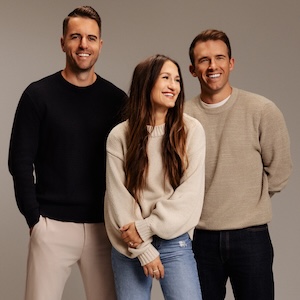
[00:00:10] Ray Latif: Hello dear friends, I'm Ray Latif and you're tuned in to Taste Radio, the leading podcast for entrepreneurs, makers and innovators in the food and beverage industry. HiYo's founders turned a personal wake-up call into one of the fastest-growing adult non-alcoholic beverage brands in the country. Built on sharp strategy, standout design, and disciplined execution, HiYo is now scaling nationally, including a newly-inked Live Nation partnership, placing the brand in major venues across the U.S. In this episode, we sit down with Hayo's three co-founders, Evan Quinn, Cygne Cooper, and George Yeomans, who discuss how this SoCal-born social tonic is redefining moderation, unlocking category white space, and proving that thoughtful focus can outpace flashy niche plays. Hey folks, it's Ray with Taste Radio. Right now, I am supremely honored to be sitting down with the co-founders of HIYO, Evan Quinn, Cygne Cooper, and George Yeomans. Evan, how are you?
[00:01:19] Evan Quinn: I'm doing well. Thank you so much for having us and great to see you guys.
[00:01:21] Ray Latif: Great to see you as well. Signe, how are you?
[00:01:23] Cygne Cooper: I'm doing well, you know, just enjoying this nice California day and enjoying a little bit of the no rain in the past couple of weeks. So feeling good.
[00:01:33] Ray Latif: I heard about that rain. I kind of wish I was in Southern California right now, but I'm in a basement in Newton, Massachusetts recording this interview, but anywho, I'll be there soon enough. George, good to see you. Great to see you, Raph. Yeah, it's been a while since all four of us were together. I believe the last time was in 2021. We were all on stage together after you guys won the New Beverage Showdown. Congratulations again on winning that. At the time, I recall Hayo is being really buttoned up, having a really good business plan, a beautiful package, great tasting liquid, and a category that seemed to be of interest to a lot of folks, that category being adult non-alcoholic beverages. Talk a bit about the origins of the company and your respective personal stories as it relates to its development.
[00:02:24] George Youmans: Yeah, everything that you see about HIYO, it's this, you know, sun-drenched, aspirational, positive, trying to be uplifting brand. But the inspiration came out of one of the worst moments in mine and Evan's lives, where we both had family members hospitalized with alcohol-related issues back in April 2019. So it was this, like, coincidental and pretty traumatic experience that caused us both to cut back our drinking kind of out of solidarity with those family members. And as we did, we saw, you know, 20-somethings on the West side of LA, you know, pretty social guys try to go out and just saw how difficult it was to be social and not drink. And we thought, you know, I think that a lot of people want to drink less. Let's try to make it easier for people to do that. Right? Look, we're not a brand that demonizes alcohol. We're not trying to yuck. Anybody's young like that's not where we're coming from. But the concept of giving people optionality and making it. a more enjoyable and more rewarding experience to maybe moderate or drink a little bit less for a night, the weekend, maybe you're not drinking at all. Trying to support people making those healthy choices, that was definitely something that really inspired us. Good news story, both of those family members are happy, healthy, sober, so I do want to include that. Now we have the sweet brand out of it. But that's really what motivates us and I think that At the time, like we were coming out of the back half of COVID where maybe people drank a little bit more than they wanted to. So a lot of people were reexamining their relationship with alcohol. And I think we were well positioned to answer a need of a growing or even surging demand around these non-alcoholic options that at that time really had a lagging supply. There wasn't a whole lot of non-alcoholic options and certainly not in terms of the functional adult beverage and social tonics like us.
[00:04:23] Ray Latif: Yeah. One of the most intriguing brands of the last seven years or so has been Liquid Death, right? And a lot of people will point to the genius of Liquid Death as being a branding that could resemble an alcoholic beverage, a beer more specifically. And it gave people permission to drink something that didn't have any alcohol in it, even though it certainly looked like it did. And I think some of the most beautiful packaging that I've seen in a long time, at least from the jump, has been HIOS. I think when people first saw this at our event in 2021, they were like, wow, what is that? That's really cool. I want to learn more about it. And Signe, I think you had a pretty big hand, if not the only hand in its package design. Talk a bit about how you designed a brand and a package that could not only interest people in picking it up, but just give them a sense of what they were getting into.
[00:05:25] Cygne Cooper: Yeah. I think early on, especially when I was working with Evan and George during the early days of, you know, concepting the brand and the beverage, we were thinking a lot about what we wanted people to feel from having an experience with our beverage and what we wanted the brand to communicate through its packaging, its messaging, its voice. And for me particularly, you know, I was thinking a lot about the experiences that we, you know, wanted to have with a drink like this in places that we personally appreciated and felt, you know, happy and joyful and included. And being from Southern California and being a group of friends that met here at college, you know, one thing I was noticing in kind of the branding process just looking for inspiration was that, you know, I wanted it to feel modern. I wanted it to feel Southern California inspired. But in that search, one thing I was noticing and one thing that's pretty incredible about California is the sunsets. And it's an occasion, a time of day that we also really connected to as part of, you know, when we wanted people to enjoy these beverage that transition from day to night. And I was just looking at all this beautiful imagery and noticing the vibrancy of color and, you know, how how captivating a sunset could be. And so I started playing around with different designs and really found that, you know, it's something that kind of everyone can recognize in a specific sort of way, even when it's not, you know, just a photo of a sunset. And so I wanted to tie that into the branding somehow and wanted to have the product, you know, be visually captivating, just you know, like a sunset would be. And so began building the packaging around really rich, deep color and, you know, a kind of visual that could not only stand out on shelf, but could draw people in, you know, whether they're at a party or they're at home and it's just in their fridge. And I really think You know, from that, it's something that connects with people. It's something that nowadays you see so much different design and different kind of aesthetic direction used across packaging. And I've always wanted ours to be consistent and cohesive. And so with that, you know, I've just worked to kind of build a brand that emulates that same feeling and, you know, base the voice and base all of the things that we do, whether it's experiential or related to marketing or advertising off of what, you know, a sunset can do for people, what that relaxation feeling is, and just really making people feel comfortable, you know, in themselves. And then also, I think for the positioning of the product, you mentioned a good point, you know, about liquid death, about, you know, making it feel like a drink that resembles alcohol, even when it's not. And I think early on, we were also really intentional about how we chose to package the product. We noticed at the time that, you know, not only was seltzer and hard seltzer very popular, but the 12-ounce sleek can was really, you know, what was booming in the industry at that point. And so we really wanted something that if people were to bring it to a party or bring it out to a social occasion or have it at home, that it still made them feel included. It still made them feel like they were enjoying something that was, that belonged in that occasion, but it was just a healthy, good choice.
[00:08:46] Ray Latif: And it is. It's organic. It's relatively low calorie. The one I have in my hand right here, the pineapple coconut variety is 30 calories and contains five grams of total sugar, which makes it I think a beverage for many different occasions. It also includes functional ingredients, adaptogens, nootropics, botanicals, as I mentioned. When you're talking about a non-alcoholic option or an alternative to alcohol, Evan, I think it doesn't necessarily mean that it has to be functional in any kind of particular way, but this is a functional beverage. Why did you feel like it was important to include those ingredients? And how much does it matter to your consumers?
[00:09:25] Evan Quinn: Yeah, I mean, early on, when we were creating HIYO, you know, and George and I were going through our respective, you know, journeys of sober curiosity, we really learned that, you know, when people are drinking less, that feeling inside is a bit of like you're taking something out. and you naturally need to put something back. And I feel as though when you do that with the drink that maybe doesn't have functionals, or maybe doesn't hit that same sophisticated flavor profile, or things that feel like it's elevated, you again get that feeling I said before, which is like a lesser than feeling, right? When we were concepting Hyo, I was getting my MBA at UCLA, and we were doing a lot of primary research about why people consume alcohol. and the number one reason was to relieve stress and so for us it was important to give people this option that tasted great and was organic and had beautiful branding but at the same time helped relieve stress but instead of that coming from alcohol it came from healthy functional ingredients that you could feel good about in the moment as well as the next day. So for us crafting it with popular adaptogens and eutropics and botanicals was incredibly important because it gave people that mood boost, that stress relief, while being able to feel good about that decision and not having a hangover the next day that can help get in the way of them trying to better themselves. Again, this category is chock full of different companies that have taken different approaches from non-alcohol beer to spirits to RTDs, from functional to non-functional, to cocktail-inspired flavors, to fruit forward, or earthy, or bitter, or what have you. So there's a lot of different ways to cut it. And I think for us, everything about the brand was meant to lower the barrier, to allow people to drink less, whatever that means to you. So beautiful branding, accessible price point, functionals that made you feel good, flavor profiles that worked on the coast, but also at your Kansas City Costco. everything about us supporting people on their individual mission to drink less. So it was incredibly important for us to kind of make a product for the masses.
[00:11:32] Ray Latif: Sometimes in our industry, we see concepts that are, I don't know, I'm going to invent a term here, excessively niche. They're for a very, very specific consumer base who will probably not drink the products at a very high velocity or not buy them at a particular velocity that's in line with what you need to succeed in the beverage industry. How do you pick your spots? I'm going to go back to Liquid Death for a sec, because that brand was born out of the hardcore scene. I don't know, sometimes I associate the old days of Liquid Death with like Mosh Pits and whatnot, maybe I'm way off, but it seemed appropriate. It seemed appropriate for those types of music concerts and venues. And when I think about Hayo, just as I'm looking at the can, I see a really sophisticated SoCal vibe, lifestyle brand that has permission to go into a bunch of places, but maybe is a stretch for others. Liquid Death, as it is now, billion dollar brand can go anywhere. They've got all different kinds of product lines, but How do you decide where this is the right fit? This can, this brand, especially when you do want to be a brand that can be attractive and interesting and consumed by a lot of different people.
[00:12:48] Evan Quinn: Yeah, I mean, I think the answer to your question is usually a bit of like, it's a good question because you could kind of spread yourself thin. And I think 1 thing we've done really well at Ohio is stay pretty focused, right? Especially within marketing. You do want to test and learn, but before you can be everything to everyone, you need to be something to someone. And we kind of joke in our marketing department all the time that like, a lot of our marketing budget is spoken for where we still have a very healthy online community and a lot of our spend does go to performance marketing. And then we do have strategic partnerships in music with Breakaway, Festivals, Insomniac, and then I'm sure we'll talk about it a little bit, but a recent deal that we did with Live Nation. And so there's a lot of spend that goes towards our activation, the support, sampling, brand materials, merch, soft goods, things of that nature. And then the rest of our marketing obviously goes towards brand building moments where we're not only supporting shopper marketing, but also kind of doing our own brand awareness plays, whether that's out of home that we're stretching into. for more experiential and community events in Southern California and hot markets for us. But you're right, you do have to pick your battle, right? You do have to lean into what is the backbone of your business. And again, for us, it's performance marketing to support our Amazon e-commerce channels. And then it's shopper marketing's increased demos as wholesale has taken over, frankly, the lion's share of our business over the past 18 months or so. I think HYO is one that it is pretty versatile, where it can play in a lot of different places. anything from health and wellness like health seeking hedonist yoga instructors to ravers right it to george said earlier like the moderation movement it spans generations it spans spans the whole country really the whole world and so where we pick and choose to play our battles from a marketing department it's about focus it's about what is What is driving this company to be a category leader? And for us, it's really meeting people in the moment in experiential. It's supporting shopper because the lion's share of the business is becoming wholesale, while at the same time, trying to lean into creative marketing strategies that not only grow our company brand awareness, but category awareness as well.
[00:14:56] Ray Latif: Well, I would love to see Ohio at some of the waterfront bars in Boston, well, especially during the summertime when it's lively and fun and everyone's enjoying themselves and most people are drinking alcoholic beverages, but Ohio would fit into a lot of people's hands, I'm sure. Hopefully we get that in the near future. In the meantime, folks can find HIYO at a lot of different grocery stores in the Boston area. I mentioned before we hopped on the mics, Wegmans is one of my favorite grocery stores and I see HIYO in their aisles. You have a national deal with Whole Foods, H-E-B, a number of different grocery chains. And Evan, as you mentioned, you started out D2C, which It has a short shelf life, I think, for beverages. You can't really scale the way you need to from D to C. But George, when did you make that decision? When did you feel like Hayo was able to crack that wholesale opportunity? And how have you navigated, how have you managed that opportunity?
[00:15:55] George Youmans: I think that part of it was when we got our operations in order. At the beginning of the story of Hayo, it was like we were direct to consumer, right? So we were still getting our feet under us from an operational perspective. If you mess up with DTC consumers, you can apologize. And frankly, a lot of those times that almost, if you do a good job and show that, you know, you're, you're working to make it right. It almost ingratiates you more with those customers. If you mess up in retail, like you don't really get a second chance. So we didn't want to get. ahead of our skis and try to get into all these different places in retail right away. So once we felt like our operations were in a good place, and we just had a lot of requests for it, again, because direct consumer was giving us this direct feedback loop with our customers, we knew, hey, we have a large group in the Northeast requesting us to be in Wegmans. Those types of things started to happen. And that's where we said, Okay, let's try to not get everywhere all at once. Let's try to get into more of the healthier, natural chains and see what's working, what's not. From there, grow and expand and make sure that we have the appropriate amount of team members, the appropriate external partners, the operations to support that growth and to deliver in full and on time and to have the demand. Because all of those things have to grow at the same clip. If you have massive demand, but you're lagging operationally, you're going to have a lot of angry customers. If you have crazy distribution, but not enough demand, then you're not going to be in that distribution for very long. So I think it's a disciplined approach of trying to lean forward, but not fall and not get over your skis. And I think the way that we looked at it was direct to consumer first, then start testing into natural and specialty, then it was get really good at natural and specialty and then get into a little bit more conventional, then it was growing to more mass and it's like. framing things in chapters almost. And once you feel like you, I don't want to say mastered because we're always trying to get better, but once you feel like you've got a good hand on this chapter, continuing to expand and hopefully reach more customers and more places. So that's been the approach that we've taken. And It sometimes means that we're saying no to things that are pretty difficult to say no to, and definitely some shiny objects. But I think that discipline approach has really served us well, that we've been proud of.
[00:18:35] Ray Latif: You sound like a grizzled veteran, George, of the beverage industry. Someone who's seen a lot, experienced a lot, and talked to a lot of folks who have been where you are currently.
[00:18:46] George Youmans: We've been very lucky to have a lot of grizzled veterans around us. We're first time founders and. I think what we lack in experience, we try to make up for and in grit, but realistically, we've been lucky to have a lot of really intelligent, hardworking people around us that have helped guide us and inform those decisions. Definitely not a grizzled veteran, although some days I definitely feel like I've been in this industry for much longer than I have just from levels of exhaustion and the challenges that we've faced. But it's been an awesome ride and we're really lucky to have a lot of great people around us.
[00:19:23] Ray Latif: And you're doing something that you believe in, which is really important. I think sometimes that shiny object is money, right? I mean, you know, people think about the poppy deal where, you know, the founders and the investors had a great exit. I'm going to call it what it is, $1.95 billion. It doesn't happen very often. It doesn't even happen once a year. It happens once every three, four, even five years. But, you know, it is a big part of the potential for different brands. People were always looking for that next great beverage brand, the next category creator. And I think a lot of times people find them at an Expo West, right? I mean, I've talked about Expo West on this podcast a number of times. I have mixed feelings about the show. People know that. But when I came across the HYO booth at this year's edition, it was buzzing. You guys had a beautiful booth and it just felt like people were just clamoring to get a piece of what you were doing. What made HYO so exciting at Expo West?
[00:20:21] Cygne Cooper: I would say this past year, you know, we put more into our booth than we had in years previous. We really wanted to create a space that was not only inviting, but also exciting as part of, you know, a traditional trade show. I think that's something that we've carried into kind of our approach with, you know, marketing at Expo West each year is to make the experience fun and enjoyable for the consumers and the retailers and buyers that are there. I think, you know, we had a new product launch that happened right around the time that Expo West was going on, and we really wanted to feature that and play it up in a big way. And so, you know, it was planning things around that. We had a mocktail hour that we did, inviting people to our booth to try the new product. You know, we were playing live music. We had a whole host of servers who were out, you know, helping serve our beverages and get them out into hands. And I think it's also something where when you lean into a booth space like that and you lean into really just creating, you know, an enjoyable environment for people, it draws people in and they want to know more. And so, you know, the presentation and having the booth look on brand and, you know, professional and clean and fun, you know, was a huge focus. But at the same time, we have to bring that through in the energy that we give off and the things that we do and how we speak to people and sell the beverage. And so I think with that, it was just the accumulation of our different efforts in those different areas that really helped, you know, us have a larger presence than we ever have before at Expo.
[00:21:55] Ray Latif: How do you speak consistently about the brand and the product? When you're, when you have a 10 second pitch to give and you need to give it to say a Costco buyer, are you all speaking in the same language or is it, is that message curated for different people, whether they're retailers, investors, what have you?
[00:22:13] George Youmans: The quick one is just we're a stress relieving, mood boosting, social tonic made with adaptogens, nootropics, and botanicals to give you a stress relieving feeling we call the flow.
[00:22:22] Ray Latif: Okay. I think that was eight seconds. Well done, George. And then at the end he goes, it tastes great.
[00:22:27] George Youmans: Yeah. Hopefully they're trying it. So they have hands in hand and they can make that decision themselves. But yeah.
[00:22:32] Ray Latif: Sometimes when I go into a grocery store, you know, I'll pass by an aisle and I'm like, oh wow, that's Hiyo right there. It's in a place that I didn't necessarily expect, or perhaps maybe feel like it was the obvious spot for a product like yours. When it comes to merchandising, and again, we touched on this before we hopped in the mics, how do you help those merchandisers understand where the best place for your products are? How do you help them understand that the incremental value that you're bringing to their stores exists only if people can see and consistently buy your product?
[00:23:06] George Youmans: Yeah. So I think that. The interesting question in that is that it's so important for us to figure out with these retailers where to find the perfect place for a brand like Hya. When you look at non-alcoholic beer, that lives in one place. That is going to be right next to the alcohol aisle or in the alcohol aisle. We're a functional beverage that is targeting the social occasion. In terms of if we are going proximity to the occasion, it's next to alcohol. If you strip back exactly what our brand is, we are a functional beverage. So it can kind of live in these different places in the store. And that changes from retailer to retailer. Certain retailers are leaning in and creating this category, creating these four foot sets in the functional aisle. And if this is I think generally that's happening in more like health-focused, more natural stores because the consumers who are going in there know about these products and know to look for them in that section. I think in the more conventional or in mass, generally that set is being created right next to the alcohol aisle, sometimes taking over mixer sets, sometimes going straight into the cold box. It really changes retailer to retailer. When trying to inform that, I think in the early days, it was a lot more challenging because You know, you're just, you're kind of asking them to create these sets in different sections and you don't have a lot of proof or data to back it. Now we're four and a half years in and we can show, Hey, this is how the product performs when we're next to alcohol. This is how the product performs when we're in the functional aisle. This is how our product performs when you merchandise singles in four packs. This is how it, you know, like you can say what your best practice is and you have data to back it up. So I think that's generally what I try to do when talking with retailers, but it's also understanding their vision and understanding how they are trying to create the flow in their stores. And again, working through it as a partner saying, okay, I understand that this is how I would want to support if we're in this section or in that section. It's a case-by-case basis that's continuing to develop and become a bit more concrete, I would say.
[00:25:21] Ray Latif: I imagine there'll be a lot of information you're able to share once the Live Nation deal gets moving. Congratulations on that deal, a huge win for the brand. I think just adult non-alcoholic beverages in general. George, when you talk about preparation and making sure that you were buttoned up when it came to a demand standpoint and operational standpoint, how do you prepare for something like Live Nation?
[00:25:42] George Youmans: Yeah, I mean, launching with the largest on-premise live entertainment provider in the world is something that is a daunting task, and it's going to require support and great work from the entire team, whether that's the operations team and delivering product in full and on time, in a new method that we're not necessarily used to, that we're going direct into all of these venues across the country. It requires a support in person to these venues, making sure that bartenders have an education around social tonics and HIYO and what we stand for and what we're all about, making sure that they feel the love. right, because this industry is a relationships business and making sure that they understand, hey, this is Hayo, they care, they're gonna show up, they're gonna support. I think it's tapping Sydney and making sure that we have beautiful design and for the out of home, for the menu placements, for the way that we're gonna announce it on socials and shouting this from the proverbial mountaintops because we're so damn excited about this partnership of having Hayo, watching your favorite artist in venues across the country, like that's a dream come true. We want to make sure that we're getting the word out around that as well. So it's really like a full team effort that takes a lot of focus, takes a lot of time, takes a lot of prep. It's not perfect, but it's something that is a very inspiring moment for the team. It's been awesome seeing how the entire HIYO squad has really rallied around it.
[00:27:11] Ray Latif: Did you ever think when you were on stage December, 2021, that you guys were Ohio would be nationwide at all Live Nation venues? I mean, it's pretty nuts.
[00:27:22] Evan Quinn: It's been a dream of ours. I mean, I think when anyone gets into beverage or entrepreneurship in general, like The first thing you have to have is self-belief, right? And I think you said it before, like when we walked on stage, you remember us being pretty buttoned up. It's because we take what we do incredibly seriously. Like you said, we're very passionate about what we do. And so we have large aspirational goals for the company. And we were even just reminiscing last night in preparation for this interview that how far we've come, right? Celebrating those moments. It's really been a dream come true. We've really enjoyed our journey, and I'm grateful that I've been able to do it with these two lovely folks, as well as the awesome team that we've created here at HYO and the culture we've built and community we've built. But no, partnership with Live Nation, investment from Constellation Brands, continued success in wholesale. We don't take those wins lightly. We're very grateful for the journey that we're on and try to remain humble first-time founders that are just really trying to build a category around something good, right? Drinking less, that's a good thing. So we're just trying to do our best day in, day out to kind of help that dream continue to come true.
[00:28:24] Ray Latif: Well, I am just, as I mentioned, I've just been so elated to have this opportunity to sit down with you guys. The best part of my job is meeting entrepreneurs who are brand new, bright-eyed, bushy-tailed, don't necessarily know what they're about to get into. Then they get into it for a year and a lot of them don't make it, which is unfortunate, but that's the nature of this business. The ones who do make it and the ones who are true category creators, I always feel like I was there, I was there early on. It was so great. Thank you all so much for taking the time and for building an amazing brand like Hayo. It feels like the sky's the limit. And I'm excited to see where you guys go next year in the five years and 10 years beyond that, because this is a brand that'll be around for a long, long time.
[00:29:11] George Youmans: Well, Ray, you and the BevNET team were, we're not just there, but we're instrumental in that recognition. That was for the BevNET showdown four years ago. That was one of those moments that inspired a lot of confidence in ourselves. And that was because of you guys and the recognition. So incredibly appreciative of that acknowledgement and the support for the last four years and really enjoyed this conversation. So thank you.
[00:29:36] Ray Latif: That brings us to the end of this episode of Taste Radio. Thank you so much for listening. Taste Radio is a production of BevNET.com, Incorporated. Our audio engineer for Taste Radio is Joe Cracci. Our technical director is Joshua Pratt, and our video editor is Ryan Galang. Our social marketing manager is Amanda Smerlinski, and our designer is Amanda Huang. Just a reminder, if you like what you hear on Taste Radio, please share the podcast with friends and colleagues. And of course, we would love it if you could review us on the Apple Podcasts app or your listening platform of choice. Check us out on Instagram. Our handle is BevNetTasteRadio. As always, for questions, comments, ideas for future podcasts, please send us an email to ask at Taste Radio.com. On behalf of the entire Taste Radio team, thank you for listening, and we'll talk to you next time.
[00:30:26] Evan Quinn: you