[00:00:04] Ray Latif: Hello, and thanks for tuning in to episode 93 of Taste Radio Insider. I'm Ray Latif, the editor and producer of Taste Radio, and with my BevNET and Nosh colleagues, John Craven, Mike Schneider, and Melissa Traverse. In this episode, we're joined by Greg Fleishman, the co-founder and CEO of Foodstirs, who discusses brand strategy during and post-pandemic. Just a reminder, if you like what you hear on Taste Radio, please share the podcast with friends and colleagues. And of course, we'd love it if you could review us on the Apple Podcasts app or your listening platform of choice. Big news in the business of BevNET and Nosh, we've launched a new product called Brand Spotlight. If you've been on the site recently, you've probably seen what we're talking about. But for some more details and an in-depth conversation about what we're doing here, Mike, what is Brand Spotlight? Yeah, right. Brand Spotlight's a new product on BevNET and Nosh where, just as you said, your brand is put in the spotlight on our homepage. We have spots for up to 10 brands a week on BevNET and Nosh, and you get to test into multiple channels in an awareness campaign for one week at a smart price. So which brands would benefit the most from Brand Spotlight?
[00:01:19] Greg Fleishman: I think the question is which brands wouldn't benefit from Brand Spotlight. I mean, I know that sounds ridiculous, but what we've done here is created a space for all of the industry influencers and decision makers in our audience to stay on top of what's new and noteworthy in food and beverage. So any brand that's looking for awareness and exposure in the food and beverage industry would be perfect for this. Right now on Nosh, we're running Savorly and Cleveland Kitchens Brand Spotlight. And then on BevNET, we're running Moment, Rise, and Nexus. And it's just a really great brand-specific way to get exposure and awareness with industry influencers and decision makers.
[00:02:08] Ray Latif: It's the kind of package that can be placed into any brand awareness campaign or a brand can use it to test into industry awareness. So how does one get their brand in the spotlight?
[00:02:18] Greg Fleishman: Right, any brand who is interested in participating can email Melissa Traverse at BevNET.com or sales at BevNET.com to get in touch with any one of our brand specialists.
[00:02:32] Ray Latif: Very, very cool. Well, I'm looking forward to seeing which brands are participating in the amazing program that is Brand Spotlight. In the meantime, I'd like to talk about an interesting brand that I came across this past week, which is called Avo Crazy, which is a brand of avocado puffs. Those are puffs that are made with avocados, if that wasn't clear enough. It's from a company called The Naked Market. They're packaged in these small 100-calorie bags, totally vegan and gluten-free. I guess the only thing I wish is that they were packaged in bigger bags or they came in bigger sizes, because I think I ate the one that I had, this vegan ranch flavor, in about nine seconds is what I think I timed myself. Nine seconds, yeah. Have you guys had these? I had a dream that John Craven and I met this brand at this thing called Expo East that we went to. Oh wait, no, we did. We did meet this brand and we did go, we did meet them at Expo East.
[00:03:27] Time To: Man, we went to trade shows? I know.
[00:03:30] Ray Latif: Trade shows. I miss trade shows so much. I do too. Who knew? Ray, these are tasty. They're amazingly tasty. And I mean, I think, you know, snacking is like the best thing ever these days. And if you can eat, I mean, isn't it?
[00:03:50] Greg Fleishman: It's always been great when you're snacking, not been great.
[00:03:54] Ray Latif: Yes, it's true. But I will say that, you know, I've always wanted to snack on avocado. It's kind of hard to do so because of the messiness of the fruit. But this gives me a really good way to do exactly that. So I'm really happy.
[00:04:07] Greg Fleishman: Ray, I'm glad that you called out avocado as a fruit.
[00:04:10] Ray Latif: Yeah, it definitely doesn't feel like a vegetable. Like the texture of it doesn't feel like a vegetable at all. It feels, I don't know what, like a melon? A slime mold maybe? Or a melon? Is it from the melon family? I don't know.
[00:04:23] Greg Fleishman: Tomatoes and avocados. They're fruits and vegetable clothing.
[00:04:27] Ray Latif: I think it's from the slug and snail family. Ah, I like that. Although I don't like that actually. Melissa, we had a brand on Elevator Talk livestream last week called Mezcla, a new line of snack bars. And it's pretty difficult to stand out in the snack bar category, but I know you like this brand and what they're doing.
[00:04:51] Greg Fleishman: I am super excited about Mezcla. I've got a lot to say about them. So Mezcla is a vegan protein bar. They are launching their three SKUs in over 600 Walmarts this week. And their deal is that they source ingredients from all over the world. So they have a Japanese matcha bar and they source the matcha from Japan. They have a Mexican Chipotle chocolate bar. they get the Chipotle from Mexico, and then they have an artist from each country who's provided the artwork on the packaging. But then they also have a QR code on each of the SKUs wrappers so that consumers can scan the QR code and be taken to a virtual art gallery, which is a really cool way of combining food and art. As you mentioned, I think Griffin, their co-founder was on Elevator Talks this past week, He started Mezclo with a woman named Coco Sotelo, who's an immigrant from Mexico. She was actually a guest speaker in an entrepreneurship class that he was taking, and he was really inspired by her. They formed a friendship, spent a bunch of time in the kitchen together, and their mission is to use food and art to foster a sense of community across cultures and the bars are delicious as well. I tried the Japanese matcha flavor and it has this like layer of white chocolate and to me it's kind of the perfect balance between a treat and a snack. I'm super excited about them and the product tastes great as well.
[00:06:25] Ray Latif: I have a lot of questions about the branding here because it conjures up some of my favorite and then questionable references like mezcal, of course, one of my favorite drinks, but mescaline as well. What's the branding supposed to represent here?
[00:06:41] Greg Fleishman: Sure, so mezcla means mixture in Spanish, and that ties back to wanting to combine different cultures in food to bring everybody together.
[00:06:53] Ray Latif: Of course, I'm all for that. I think there's going to be some education around that, but hopefully it's enough to intrigue somebody to want to try the bar.
[00:07:01] Greg Fleishman: Absolutely. And with the artwork on the packaging, I think that may not be so hard for them.
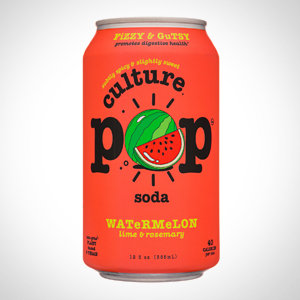
[00:07:06] Ray Latif: On the beverage side of things, great to see Tom Furst, known as one of the co-founders of Nantucket Nectars and an active investor in food and beverage companies these days, get back into the game, so to speak, with a new probiotic soda called Culture Pop. John Craven, you've had a chance to try this, right?
[00:07:24] Time To: I have. It's pretty tasty.
[00:07:26] Ray Latif: This is one of a bunch of new products coming to market that are positioned as better-for-you sodas with a pro or prebiotic benefit. We've seen HealthAid's Booch Pop come to market. Obviously, Olipop has been available for a while. And then Poppy, which was originally known as Mother Beverage. You know, given the amount of interest, I wonder how much upside these brands have as alternatives to mainstream sodas, mainstream carbonated soft drinks?
[00:07:58] Time To: Yeah, that's a great question. I mean, it's interesting to see a word like pop come back into use. You know, it's kind of a classic and sometimes regional way to describe soda. And I think, you know, all of these brands have been kind of just looking for a way to call attention to the fact that they're doing something that's innovative. you know, without having to say things like low calorie or low sugar or something like that. And in some cases, they're not using the word soda. It's a word that they're trying to use to just again, present a modern take on a carbonated soft drink. And, you know, I think, uh, we've seen a couple of entries into the space, as you pointed out, most of them are kind of coming at it with probiotic or prebiotic content. And, you know, I think it's one of those things that having a couple of brands doing that same thing will help this whole concept gain traction and ultimately become a category. So kind of exciting to see that.
[00:09:06] Ray Latif: Now, we can't not discuss an alcoholic beverage product in the podcast as we have since pretty much March. Il Specialino is a product that, Melissa, you introduced Time To the other day, which looks pretty darn amazing. I would love to get my hands on this stuff. Have you already?
[00:09:26] Greg Fleishman: Yes, it is very delicious. I was looking to dial back some of the alcohol in the cocktails that we're drinking at home. So looking for a nice cocktail without it being super high octane. So, you know, obviously, aperitivos are a great choice. I found this in a local store. It's an Italian bitter. It's not as sweet as Aperol. it to me has a more nuanced flavor than Campari. They still use carmine, which is the ingredient that's made from beetles, I believe, to give it a red color and flavor. But John Craven, I had a question for you. The bottle is really gorgeous. It has kind of like a really blender top. Is there a functional purpose for that? Is it just for show? What's the deal with these gorgeously shaped bottles?
[00:10:18] Time To: Just for show, but yeah, that's a pretty cool looking bottle for sure. And I think one that stands out a little bit.
[00:10:27] Greg Fleishman: And besides mixing it with soda water and maybe some orange bitters, is there anything else that you think Italian red bitters go super well with besides like a classic Negroni?
[00:10:40] Time To: Well, I guess anything that you could use Campari in for sure would be interesting to try with that. I don't think the flavors of the two are that dissimilar, maybe a little less bitter, but yeah, there's tons of stuff you could try. I'm not really sure that will achieve your, uh, lower alcohol desire to try all that stuff.
[00:11:04] Greg Fleishman: That's also up for debate.
[00:11:06] Time To: Yeah, I mean, I think products like that are generally good with some sort of higher proof based spirit, but yeah, to each their own. You could mix that with wine or soda water or make an Americano. Lots of stuff you could do with that.
[00:11:22] Greg Fleishman: I am looking forward to experimenting.
[00:11:25] Ray Latif: If you're looking for nuanced flavor with a lot less alcohol, Melissa, I suggest trying Ouroboros sparkling water. They've got these herbal sparkling waters that they've sent to the office with some pretty interesting flavors like lavender cucumber and cactus rose, basil berry. One that I've really been enjoying is lemongrass coconut. And then their final flavor is peppermint watermelon. So it's sparkling water, but there are flavors I haven't tried before that I'm very much enjoying.
[00:11:54] Greg Fleishman: Very exciting. I wrote that down. I think they'd also go well with a little mezcal, Melissa, in case you want to kick up the octane. Maybe I'll dial up the octane on that one.
[00:12:08] Step Into: guessing your margins, that's risky. Belay Financial gives CPG brands the clarity to scale smarter, faster, stronger. Get your free inventory ebook by texting TASTE to 55123 and start making data work for you.
[00:12:28] Brand Spotlight: Tune in at the end of this episode for an exclusive interview with Matt Lin of Belay Solutions. He sits down with Melissa Traverse to break down the biggest inventory and accounting mistakes CPG founders often make. You'll learn how to bring clarity to your numbers so you can scale with confidence.
[00:12:46] Ray Latif: All right, I think it's Time To get to our featured interview for this episode. That's with Greg Fleishman, who, as I mentioned earlier, is the co-founder and CEO of junk-free baking mix and snack company Foodsters. A veteran marketing executive with over two decades of experience working with startup brands, including Kashi, Suja and Sambazon, Greg is no stranger to the peaks and valleys that are inherent to entrepreneurship. And having to face the daily and constant challenges of running a business is why he believes that entrepreneurs are best suited to navigate the current circumstances we're facing today amid the COVID crisis. In the following interview, Greg discusses how he's applied lessons learned from his career into Foodstirs, which like many companies, had to rethink its entire business strategy and adapt to a new consumer environment within a matter of weeks. As part of our conversation, he explains how to manage and enhance relationships with retail buyers, why it's critical to leverage every resource at your disposal, why communicating properly is the one thing that keeps them up at night. Hey, folks, it's Ray with Taste Radio. I'm on a call right now with Greg Fleishman, co-founder and CEO of Foodstirs. Greg, how are you?
[00:13:54] Taste Radio: Hi, Ray. Great. Thanks for having me.
[00:13:57] Ray Latif: Thank you so much for being with me. This is your third time joining us in an episode of Taste Radio. You also joined us in Taste Radio episodes 69 and 110. This is Taste Radio Insider, so this is a first for you, but you are still joining a very short list of folks that have been on the podcast with us, including Bill Creelman and GT Dave. I'm sure you're totally, totally psyched about this.
[00:14:20] Taste Radio: I am psyched, I'm honored, and I'm wearing the coat that you sent me. The coat? Yeah, that commemorates being on for the third time.
[00:14:30] Ray Latif: That's right, like they give the one on SNL and things like that for hosts who have been on multiple times. Exactly. Yeah. As I mentioned, the co-founder and CEO of Foodsters, you've had an entrepreneurial streak going on since 2013, starting with your consultancy, Purely Righteous Brands, and then you joined Foodsters. Was that in 2016 or was that in 2017? 2016. 2016. Okay. You know, back when we had you on in episode 69, you stated that successful entrepreneurs always have quote, a hunger and humility to learn. I'm curious about what you've learned about owning a business.
[00:15:14] Taste Radio: That's probably one of the most important questions to ask yourself daily, if not hourly, and make sure you have clarity on why you start a business, why you own a business. I think there's a few top reasons why anybody would start a business and own a business, and it's money-related, ego-related, and wanting to legitimately change the world. I found that what pulls you through and you have the greatest chance for success is when you do it to change the world. When it's just all about making a positive difference and in solving a fundamental problem. That's what pulls you through the dark days when you're working 18 hours and things aren't going to plan. And then also just when you actually win and you succeed. on a daily, weekly, monthly, yearly basis, it feels so much sweeter, so much more fulfilling when you're doing it for almost that altruistic purpose. So I would say that's what I've learned about it. And certainly in these times right now, we need something that will pull us through. And if I've found, I've talked to so many entrepreneurs, I've talked to people that work in strategics, Over the last several months, I found the ones that are struggling the most are the ones that got into it for the money, or they got into it as a vanity exercise. They want to see themselves on the cover of a magazine or other media. And the ones that are thriving are the ones that just keep focused. They're obsessed. about changing the world. And I've really learned that more concretely in the last few months, because that's where you draw the most strength, is from that being a purpose-driven individual. That's how you get through certainly the times that we're in right now.
[00:17:09] Ray Latif: For sure. Obsessed about changing the world, that's a pretty lofty mission. You know, in terms of foodsters, for folks who aren't familiar with the brand, can you share a brief history about the company, how you got involved with it, and how it relates to that ambitious mission that you just talked about?
[00:17:27] Taste Radio: Yeah. which all emerging brands and even large, it doesn't matter if you work on Special K or whether you work on an emerging brand, you should have that big lofty goal, that real big problem you're trying to solve. So with Foodsters, it was started by myself, Galit Lebo, and Sarah Michelle Geller. Galit came up with the idea for recreating the Nestle Toll House home and hearth moment, where you'd come home from school and there'd be a plate of cookies on the table. We wanted to recreate that in an overconnected world in wanting to make those connections with loved ones through the power of a sweet baked goods experience and then wanting to modernize that for today's times. So that was the inspiration, that's the problem to solve, and even more so now, because we've just realized in the last couple of months, is the need for making a home sweet again. And that was the fundamental problem that Foodsters was trying to solve. And I got involved in it after Galit came up with the idea that she brought on Sarah Michelle. And they wanted somebody with some industry experience. And we all connected and we vibed out. And then for me personally, I'd been working on all these different businesses, whether it was Coke and Kashi and Suja and Sambazon and a bunch of other brands and Purely Righteous. And I'd never worked on a brand that I could call my own that was so exciting for my daughters. When we all have daughters, all of the founders have daughters, our kids under 10. And I know for me, that's what did it for me was that my two daughters, who are under 10 at the time, were like, this seems like a really fun gig. And we can personally get involved in it and be excited by it. And that's what kind of put me over the edge on it. I was like, finally, I waited all of my career to do something that my, my children could be personally involved in. And that kind of put me over the edge. And plus that idea of that we all need to come together in some way. We all need to recreate those deep, emotional, connected experiences that we had with our loved ones, including our parents, and that being a part of a mission-based brand that was going to try and solve and modernize that was very exciting to me.
[00:19:37] Ray Latif: Started out as a baking mix company, has since evolved and grown into another line of products, ready-to-eat products. Can you talk about those and why you decided to add or focus on that ready-to-eat line?
[00:19:51] Taste Radio: Yeah, it's a natural extension for us is to go into something that was ready-made. We offer junk-free baked goods experience, whether we make it for you, make it yourself. We took our top items that we sell, so we have a donut kit, we've got brownies, and then we've got a muffin kit, and we just turned those into ready-made. They were our most popular items. There was another part of the store we were going to try and clean up. and are trying to clean up, where we can offer something that is ready-made, does build on our core competency as a company, and would serve some white space. So the first organic, lower sugar, ultimate clean label line of ready-made mini donuts, muffins, and brownie bites, all using recipes that we've been pioneering over the last few years. And then it solves for the lunchbox or healthy immediate consumption around healthy sweet baked goods. And the consumption is daily. Before COVID, the average purchase cycle on baking was once every 60 days for the category. And for us, we do what any other brand does, where you take your equity and you extend it in a category where you've got more frequent, nearly daily consumption. which is what we did from a business perspective. So we're leveraging the equity, we're going to some white space, and we get more frequent consumption that can really drive sale as a business. That was pre-COVID.
[00:21:21] Ray Latif: That was pre-COVID. Just staying with the donuts, muffins, and brownies for a sec, a different part of the store could even be a different consumer. How did you weigh, I guess, the challenges that you'd be facing in, you know, having to talk to different buyers, having to, you know, potentially work with other brokers? to get those products on shelf and have them sell the way that you want them to?
[00:21:45] Taste Radio: We did, I mean, like with anything, like, so we looked at the upside and the scale opportunity, you know, how many, how much revenue would it bring in and what would be the cost of that revenue? And then how can we leverage our competency structurally as an organization to get after that? Because it was across the board going to be something new. So new category with new buyers, and then you have a new co-packer. And then operationally, then you have other things that you need to consider, too. And then even from a marketing standpoint, how do we let consumers know that we've got this new line? So like with anything, we contemplated all of that. How would we handle it structurally? How would we handle it financially? And then weighed that against the upside opportunity. And we're a very data-driven company, just as much as we are about our guts and the opportunity just looked too big out there. I mean, there really isn't any other mini donuts as an example that are an alternative, a junk free alternative to the legacy brands that are in that part of the store. So from a business perspective, from an opportunity size perspective, it was just too good to pass up. And plus from just an obsession standpoint for us and selfishly for us, We get to solve for the lunchbox issues and we know that people love doughnuts and we've been told so many times about people who haven't been able to consume doughnuts for 20 years since they were kids because they're so filled with junk. So all of that stuff goes together into the mix master you come out with a business plan. on the other side, and it tends to be worth it if it's checking all those boxes, right? You can drive your top-line revenue, that you can get it to work economically on the margin side, and that you know there's enough scale, and then that it will be worth it to add in all those new competencies that you'll need. Like I said, in terms of new buyer system, no new distributors, Thankfully no new brokers. And then but operationally that's where it becomes the biggest time suck. And that's you know becomes worth it when you start to scale behind it. And that also proves you know that you have something that is transformative to the category so that it can be all worth it.
[00:23:57] Ray Latif: Well, it sounds like you saw a big opportunity, big potential for this new line to represent the future of foodstores. Was that the case? Were you kind of putting a lot of your eggs into that basket or was it just supposed to be complementary to the baking mix line?
[00:24:13] Taste Radio: It was meant to be complementary. It was going to be a significant part of our growth over the next couple of years. For sure. Just because the frequency of consumption on that category is so great. And it's not that dissimilar to Andy's when you think about it. So Andy started out if you look at pure and he started out as Mac and cheese once every two weeks had the users maybe once a month. And then they went into Cheddar Bunnies, which people eat by the handfuls on the daily. So it's taking a page out of other successful brands have built out an equity, stood for something, and then extended to a category that had more frequent consumption. So it was natural that for us, that our scale was going to be driven by this extension once you establish the equity in another part of the store. We've seen that movie so many times before with prior brands. I think Annie's is the easiest one to kind of look at, but there are certainly others.
[00:25:12] Ray Latif: Those mini donuts, and I'm a big fan of mini donuts, definitely a great snacking occasion, convenient snacking. And when you add the health component to it, it sounds like a great product. You did mention, you know, for your lunchboxes, but if people aren't bringing lunchboxes to school anymore, to work anymore, or, you know, haven't for the last few months, I assume that there had to be some sort of rethinking of what the future of that line would hold. How did the current circumstances shift your overall strategy?
[00:25:40] Taste Radio: Yeah for me it happened in March so it feels like a lifetime ago. You know I think one is emerging brands. One of the key characteristics is that you're already highly agile and adaptive. You know every every day is a crisis to some degree or another when you're an emerging brand. So you kind of get used to it. You're like you know. throw a worsening economy, throw a global pandemic, civil unrest, bring it on, bring on the supervolcanoes and the asteroids and the alien invasions. We're totally equipped for all of that. So, this one in particular required some tectonic shifting in how you think and rising to the occasion. So, here we were plodding along. We were you know, baking mix, we had a role for it within our portfolio, and we were going hard after ready to eat. And then you have this US stay at home order, put people back in their homes, couldn't go out. And next thing you know, baking mix becomes the fastest growing category. And it's the only one that's really sustained even after all of the panic buying and the surges. And so we could have been like, ah, forget that we're only going to go after ready to eat. Or we could go after baking mix, which has been our core competency. And we had something that we had built that company on. And now all of a sudden, there's this huge wave of interest and demand out there. And we could shift gears. And I hate the word pivot. It's more about adapting. to the situation, rising the occasion, not throwing the baby out with the bathwater. It's just you're constantly in planning mode. So when an opportunity arises, you leverage your agility and your ability to adapt to kind of go after it hardcore. And I remember talking that some of the stakeholders around the business were like, no, we have this plan. We have to stick with it. We've got to really push the ready to eat line. And that's going to be it. And I was like, wait a second. Look at the category. It is exploding. Like I said, the average purchase cycle is once every 60 days. It's now going weekly as people are baking up a storm. And we went after it. It makes sense when you think of it. You've probably seen some of the articles that are out there. Baking is really one of these great activities you can do that relieves anxiety. It's about working both sides of your brain. It's about creative. It's about math and science and measuring and things like that. And from a practical standpoint, if you're working from home and you've got kids, it's a great activity for them. And then all of it is bringing people together around something that you made yourself. that is sweet and that in and of itself is making us feel better and getting more usage out of the kitchen and things like that. So these new habits behind this ideal of creating home and modernizing home in our moments really came to fruition during these stay-at-home orders and it impacted the category. It's still impacting the category. Don't see it slowing up because people have gotten so into it now. It really isn't something that's temporary. They're liking it. They picked up a new activity that they get great enjoyment from and they're fulfilling it. And I would say it's all under this idea of home sweet home. I mean, you might've heard people are upgrading their coffee makers, they're upgrading their furniture, they're buying that new set of steak knives, because they're doing more in the home and they need to make it special. And we're a part of that experience right now. And we don't see it ending anytime soon. Look what's coming down the pike. You still have the pandemic itself but then you also still have a worsening economy whose full impact has not come home to roost. But we know in economic downturns people like to make their own food more to save money. And you combine that with, well now they feel like maybe in 2009 they were forced to do that, but now they actually got some joy from it, because the world has changed so much. So I don't see, we don't see it slowing down, and certainly the data isn't showing us that it's gonna slow down anytime soon. So we started out as a baking mix company, and now we are a sweet baked goods company. Our emphasis is gonna be on the mixes for the foreseeable future, and then we get to incubate the ready to eat line.
[00:29:53] Ray Latif: One of the other things that's occurred during the pandemic is consumers turning to legacy brands as a way to, I guess, feel comfortable. There's comfort and predictability and familiarity that's led to people going back to brands that folks thought they'd never go back to. I mean, Betty Crocker or Duncan Hines. Given that, how have you been able to maintain shelf presence? Have you been able to talk to buyers about why foodstores should remain on shelf? And in some cases, I'm sure you've asked for more space on shelf. What's that conversation been like?
[00:30:32] Taste Radio: Yeah, I think there are two ways in on that. And one is like, we have this country with 340 million people on it, and the category is big, so it can hold different offerings. But there are two major points that we discuss with buyers, which everybody should learn from, too, is that one, we have a highly differentiated item. You want to be able to say that you're the only brand, you're the first brand. that is playing in a particular segment within the category. So we get to do that with foods for junk-free bakery, because we are the only one that is in our space across the categories of playing ultra clean label. Meaning we're using identity preserved flour, single origin. We're using biodynamic cane sugar, the most fairly trade cocoa you can find. And then we're glyphosate-free. So you get to really support that notion of junk-free. as a highly differentiated brand within the category, and then we can coexist because we are incremental to the legacy brands that are out there. They certainly don't come close to the attributes and the main offering that we have, which is helpful, right? So it could send a classic brand positioning. If you're Me Too, that ain't going to fly right now. If your attributes are copied by others and they're not meaningful to consumers, I don't think that flies with buyers these days, certainly. And then the second point is just performance. So when you look at the data around food stores, it's pretty solid. And that proves and supports that we've got a highly differentiated item that consumers want. And that's exactly the position that brands will want to be in. So yes, you can go to legacy brands. because they do harken back to a time before the world went completely bonkers and that sort of emotional comfort and connection works and that there's going to be consumers that want that and we won't we won't compete with them on it we still have other consumers out there that really prioritize a chemical-free baking experience, and we get to offer that to them like no other brand in the category. When you looked at the retail environment before COVID, it was, let's have 12 different coconut waters, 12 different kombuchas. You could have 12 of the same thing, and there'd be quite a bit of attribute overlap and very minimal differentiation between brands. And now, given the world that we're in right now, that's not going to happen. In economic downturns, you're only going to have three of something now, and they're going to prioritize value. And then also you have these brands that were backing up bank trucks, paying for ad fees and slotting, and other things prop up. and helping retailers deliver against their quotas. And that's not going to happen anymore. Companies have run out of money. Being a camel versus a unicorn is what's being prioritized. I think all the venture private equity groups or any of the investment that's going into brands are prioritizing slow and steady versus land grabbing. And so that that those are all things that are changing. And if I was going to sum it up I would say when you're talking to a buyer you have to continue to have a brand that is classically positioned in a way where it is can own a space that nobody else can own. And it's something that consumer needs more.
[00:33:46] Brand Spotlight: Do you want more repeat buyers on Amazon? Well, this free resource in collaboration with Straight Up Growth will help your brand turn first-time buyers into long-term subscribers. Download Winning the Repeat Purchase Game on Amazon now at Taste Radio slash SUG. That's Taste Radio slash S-U-G to start building retention-driven growth for your brand on Amazon. Scaling a beverage brand into major retail comes down to operational readiness. From packaging lead Time To co-manufacturing strategy, the details can make or break a launch. In a new e-book in collaboration with Octopi and Asahi Beer USA, industry leaders share what they've learned in helping brands scale. Download it now at Taste Radio slash octopi. Do you need to scale your team faster without compromising on talent? Join Oceans for a live webinar on April 20th and learn how leading companies are hiring top global professionals who are ready to grow with your business. Register for the webinar now at Taste Radio slash oceans. That's Taste Radio slash oceans.
[00:34:58] Ray Latif: I assume, you know, like any company that Foodstirs has an innovation pipeline that, you know, they've been working on and thinking about for some time, you know, how has that been affected by the pandemic? And, you know, is it something where buyers just aren't really looking at innovation at this point? They're not thinking about what's coming down the line because they're just trying to stock what's going to sell best on shelves?
[00:35:24] Taste Radio: A couple of points there. Let's unpack that for a second, because I think being a buyer has got to be one of the most challenging roles in the industry. Can you imagine like during COVID, when there was all the panic buying, they basically had to do a reset. So if you talk to a Whole Foods buyer, you talk to, you know, a Kroger buyer, they're essentially having to do on the fly resetting, and they're going to what they were classifying right as essential goods within their category and making sure they're well stocked up and then they were eliminating or pausing on certain brands to something that was new that was coming in that wasn't classified as essential item, they had to halt that. Then they had to order more and buy more and stock up on the things that were classified as essential item. And so that happened during the panic buying as really there was this, I don't think people totally get that there was such an apocalyptic nature going on there because they were carrying on average two to four weeks of supply and the demand was about 12 weeks. So it was just utter chaos as they were trying to fill the shelves and do something that isn't typical, which is basically a reset. a category reset. So now they're getting back to normal and now they're looking at well what is the new normal. What is the consumer demand out there. What is the white space in that category. Where do I need to plug in holes. Where do I need to discontinue. And I don't think anybody really right now has a grip. We know we have a challenged economy. You know that they're looking for value plays right now. So which brands are going to be things that consumers bump and make sure that they're offering value whether it's price promotion or whatnot. So I think there are a couple of things right now to trends that we're seeing that you can bank on right now. And then I'll add a couple more. So one is value. So when it comes to innovation they are looking at items that are giving you more for less. So you know family size packs or you know by four get one free kind of thing so that You'll see innovation around pack sizes and delivering value. And then I don't know if you've been tracking this but there's certainly that. I think it's kind of funny about that Covid-19 thing that the majority of people who have been stuck at home have been packing it on the way they've been dealing with the stress and strain. where rad is by overeating, and then they haven't been able to work out as much because there's so much disruption to your daily routine, certainly when it comes to exercising, that's the majority of people. So weight management is a trend that is going to be building. It looks like keto has gotten another two years of life on it as a result of this. Value will be important. The other is this self-care. So are you offering comfort that will help with stress management and helping people just generally relax? And then certainly something related to immunity and health. So those four major trends Generally most buyers are rallying around and now they're looking at brands that are going to innovate into those four spaces. So if you're not a brand right now that isn't already adapting your innovation pipeline against those four trends then get on it because that's what buyers are looking for right now from least what I have seen out there for right now. So and you know in Uncertain times when there is no new normal yet established innovation plays a very key role in solving problems. It will. It can either make or break brands right now to just shut it off and not come up with those ideas. I think that's definitely not the right approach. And certainly when you talk to buyers they're very free in telling you what they need. And I actually see more collaboration on the buyer side right now saying this is what I need. Can you deliver it. Can you help us out. Can you innovate around it.
[00:39:18] Ray Latif: And are they asking for speedy innovation or are they thinking about down the line too? Because as you mentioned, you know, nothing's normal right now and nothing is guaranteed for tomorrow or perhaps even a year from now. So, you know, when they are, when you are collaborating, is it something where they're asking for something for now or are they talking about, you know, a future product that could live on their shelves?
[00:39:41] Taste Radio: It's both. You know you think about it during the surge that caused a lot of fatigue. And there are certainly some customers that don't want to look at innovation for a year. There are others that have gotten their second wind and they know they need to adapt their categories. And it's a perfect opportunity for them as retailers to differentiate from other retailers. They know innovation that is serving the needs of consumers is going to help with that. So it's all over. You know some don't want to see for a year. Others want to see fast tracked innovation. That's that's bright spot is some I would say retail customers during this period during certainly the surge have realized that they're not in aircraft care and that they can be swift and adapt to the changing times and make stuff happen faster. then then was typical. So those ones are like bring on the innovation. We're ready to go and we can put it into our system and we can get it out to the stores within a six month period. And others are still back on. It's going to take a year but we want to still want to see the innovation but it's going to take a year. We're thinking ahead. There is no rules right now. Everything is all over the map. There is no new normal just yet said. So if you take a look at your business plan and what you're trying to accomplish if you're really sensitive and empathetic to what the market dynamics are if you're connected to the retail environment whether it's the distributors retail customers themselves. then you can start to build out your own new normal and work the system that way. I think data helps. Can you gather? Are you gathering the right data? Are you interpreting it correctly? And are you doing that quickly? And then all that anecdotal feedback, talking to the brokers, talking to distributor reps, talking to retail buyers and getting all of that you know, together and helps you formulate and light your own path. But I would think that's the biggest learning from all this is you can't wait for the world to establish the new normal. You have to establish it yourself.
[00:41:42] Ray Latif: How has your e-commerce strategy evolved or have you adapted e-commerce to, you know, your current strategy?
[00:41:50] Taste Radio: I would say that's the biggest thing that we're working on right now. You know, we've been doing a lot of evaluation on direct-to-consumer. It's what started it and kicked off foodstirs as a whole. But we've learned a lot certainly coming out of this whole world craziness, new world order as a new approach. And now DTC is in its own, it's not its own island right now. It's all part of home delivery. So how do we get our products into the home through services in a way where we can make the most money? And I think everybody's having the frank discussions with themselves, including foodsters, that direct-to-consumer, although can scale, it can be profit-challenged once you get beneath the numbers. And ultimately, it can be the world's greatest trial vehicle, but it can't. As it scales up, when you get beneath the numbers, it can certainly be profit-dilutive. So we've taken a look at it ourselves and said, you know what? It's going to be a part of a bigger strategy. And we want to cover everything from Walmart.com, Instacart, the regional players like Good Eggs, Fresh Direct, and Amazon, of course. So how do we leverage home delivery? Because we know, and even Postmates, by the way, has opened up their limited assortment grocery stores, if you will, where they're carrying one or two different baking mixes and things like that. It's important that we're addressing what consumers want right now, which is home delivery, and then making sure that we have the right assortment and it's getting out to the consumers in a way where we can still make money the most. And then we'll have roles for each one of those, Instacart, Amazon, and then direct to consumer, which is really the heritage of the brand. That's how we started. We still can use it as our own learning lab. We can still test out new products through foodsters dot com. We can still offer limited edition kits and things you can't get anywhere else. So we can offer the purest expression the deepest possible. This is just junk free baking experience. But we'll be doing that in a way where we are very clear on what the margins are and where we can make money on it. And that's important. It won't be its own island. Like I said I'll be part of our larger home delivery strategy. You know I think one factoid by the way. I just love all the tectonic shifting that's come out of this. They predicted that 25% of the US population will, quote, try home delivery by 2025. Well, nearly 40% of the US commerce market tried home delivery during this period. Can you imagine that? Five years ahead of schedule, and it was bigger than what they predicted. And, you know, so 340 million Americans and a good share of them tried home delivery. So some of them won't go back to it because the cost, they don't like the experience, whatever. But there are going to be a good chunk where they're going to want to continue to get stuff through walmart.com and whatnot. And I don't know if you saw, Walmart is launching Walmart Plus, which is going to compete with Amazon Fresh. And I mean, they've got the scale. Just imagine, they've been in the game for a while now. They bought Jet.com, and now they're gonna go in and compete on Fresh. So it is absolutely the best time in the world to be a consumer right now, because you're gonna get everything you want ahead of schedule. I mean, you're gonna get home delivery. And I think the one thing that I'm excited about Walmart Plus is that it offers home delivery to the entire country and not just high income zip codes. So they really are going to purely democratize home delivery so everybody will have access to it. And that's what everybody should be thinking about. Don't like, oh my God, I'm going to get everybody to my website. If I don't get everybody to my website, I'm not a healthy brand. I'm not building enterprise value. That's not it. I think at the end of the day, people will prioritize the bottom line on every revenue stream.
[00:45:49] Ray Latif: For sure. I mean, I love the idea of accessible, better for you foods, you know, to every American. I think the one thing that we are still lacking and lacking, I guess, a good strategy for is sampling. You know, I think going into a supermarket and being able to try, say, you know, a Foodstirs donut, that option just isn't available right now and not for the foreseeable future. When you're thinking about sampling opportunities, what is the best way to get product in people's hands and people's mouths in a way that's going to convert them into long-term consumers?
[00:46:27] Taste Radio: Hopefully everybody's thinking about that. So, I mean, there's studies out there, right? checkpoints to get people to try something new. One is offering them some kind of discount to reduce the risk and commitment to trying something for the first time. The other is food in mouth or liquid to lips. And the last is some kind of endorsement. So somebody you know and trust recommends a product to you. So there's still ways to get somebody to try your product. I think it's going to be the first and the last right. You'll offer deeper. It's certainly in an economic challenge times. I want to get somebody to try my product for the first Time To has to be first highly differentiated and fill that need that everybody has right now. So that's kind of the foundation that greens if you will. The other is offering some kind of entry point pricing on it. And the other is you have to build an army of ambassadors that can endorse the brand credibly to your target consumer so that there's less reliance on the classic trial. You know, there was a time before where people were trying products without having to demo them first. I think at Kashi, by the way, so I started Kashi when it was very, very small. Our scale driver was partnering with Weight Watchers and having Weight Watcher meeting room leaders endorse our product out to a highly motivated audience. And we did not do any demos. We didn't do any product sampling. It was that endorsement that led the way there. And although that was quite a bit of Time To, I think we've come full circle. And that will be the name of the game. I mean, can you imagine? I mean, I would not want to have the words handmade on my product right now. It's certainly the next six months. So food safety is important. People aren't going to be demoing. I think you have to lean more on endorsements, and then some kind of entry point pricing to get people over the hump. I think that's easier said than done. So how really obsessed are you? How knowledgeable are you about who your consumer is? And how do you connect with them outside of any real major competition? which is why I stay up till three o'clock in the morning studying every TikTok creator there is out there to find the ones that are breaking out and get them to do fun things with baking mix. Then that'll help it go viral and that'll help be the first part of building out an army of influencers that will get people really trying our products. Like I said, it's much easier said than done. The one thing that we're exploring, by the way, is doing trial size packs. You can do trial size on just about anything. And there's a couple of companies out there that are now gearing up to take any brand and make it trial size. They have their own manufacturing equipment, they have their own kitchen, they can just do anything. And that might be, or you're using your own facilities, but doing trial size seems to be good. And the Instacart has a great program too. So let's say we have our mini donut, we can do a single mini donut. as a trial size in a pouch and then chuck that into the grocery bags for people ordering through Instacart. So I'm just saying there are certainly alternatives to demoing and liquid ellipse or food in mouth that you can get around. But I would find the most impactful, scalable, affordable is going to be building an army of influencers. And the word influencer, by the way, that word has been getting trashed right now. It's almost like there's this new don't use words moving forward. One is pivot and the other is influencer. They're more ambassadors now because it implies a depth and appreciation of brand not being a mercenary just kind of getting paid out and certainly coming out of COVID. There are some influencers that really tarnished the whole notion of influencing. So that is getting reinvented. I mean there's all these great things that are coming out of this experience and brands can really benefit from them. So the whole idea of ambassadors and building out a new line of ambassadors that and there's a highly motivated audience that has credibility with consumers. And again easier said than done. It takes a lot of work a lot of labor to get after it and to build out your own program.
[00:50:48] Ray Latif: I totally agree that, you know, having the right ambassador associated with your brand can make a huge difference. There's still a question about tone. And, you know, as you mentioned, the country is facing and the world is facing some very uncertain times and the traditional ways of grabbing a consumer's attention via, you know, happiness or laughter, it could be construed as inappropriate. How do you think about tone? How do you think about the themes when you are crafting your marketing promotion strategy?
[00:51:20] Taste Radio: It's something that we're spending a lot of time right now actually trying to establish that very thing. And certainly for smaller brands, a brand's personality is a reflection of the people that work on them. So it's much easier to communicate with your consumer as you naturally would because you're you know the real people behind the brand and you know it's such a great try. You know like leverage an ad agency to manufacture your brand personality. Certainly during this period is likely not the best step. I think knowing who you are and then partnering with communications firms, agencies, whoever, is good. So then that way you can get to an authentic self. You know, certainly right now consumers just, they can sniff out when you're not being real. I would say right now our guiding light is this, and you can look at it, there are only a couple of brands people actually love out there. You know, they don't have much in common except this axiom, you know, the brands we like. act like people we like, you know, they're warm, friendly, intelligent, useful, occasionally funny and reliable. And that's our guiding light right now. So that's what you will see from foodsters going forward that, you know, we are, we're real people, and it's kind of who we are. And if brands can act like, you know, think of themselves as people, then that can guide the communication out to consumers and you feel less worried about whether you'll offend somebody or alienate anyone when you start to think of your brand as a person that people want to hang out with. So I think that inside Fixtures we've got some really cool people and they're the ones that are crafting our messaging and that will communicate that out to people. And then I don't think our strategy is to be We're a family brand that's meant to bring people together, if anything, we're motherly in that regard. And that will drop out the occasional joke. That's who Foodsters is. And that's what we're meant to be, you know, like a motherly home and earth brand. That's how we'll come through to a certain degree. I know I say motherly, it's really more parental than anything. But I was thinking that there are other brands out there that just don't have, they don't They have no fear. They know who they are. They know who they're going after. And they're acting accordingly. And then when they do press the funny bone, they really thread the needle. And I don't think any, just any old brand can do that. And I brought up that one example before, the Wiener Circle. I mean, Google that ad. So Wiener Circle did an ad that is so empathetic and so right for the time. They were kind of calling BS on how everybody's thinking and feeling, right? I mean, they were recognizing that people were feeling a certain way, but nobody was talking about it openly. And then so they kind of did that They talked about it openly. And they were kind of like, you know, we know you don't want to come to the Wiener Circle right now because you don't want to talk to people one-on-one. You certainly don't want somebody handing you a hot dog one-on-one. So we have all these home delivery services that you can use. So they had this practical solution that people were looking for. And then the raw and varnished way in which they communicated was so spot on. So that's one way to kind of be very raw and unvarnished, tell it like it is, speak the truth, and then do it in a way that kind of has a dark humor to it that resonates with everyone. I think P&G was another good example where they kind of Time To replicate the 1970s Coke, liked by the World of Coke campaign. It was very soft. It was very emotional. It was not at all funny or anything. It was more about like, let's all come together and we can do it. And it's important that we do it. And when you're a part of the P&G world, everything just feels okay. So right now, It is really you know I think most brands are relying on others to communicate what they're all about as they connect with consumers. They're leveraging their ambassador network or anybody else other than them having to speak directly to consumers because they're so freaked out. They're going to offend someone. And I think that's a real valid concern. And so I just think I go back to the fundamentals. Who are you as a company. Who's inside the company. Because it'll be difficult to manufacture that brand personality as it translates into copy and then leverage all the stakeholders you have around the business to make sure that you're. that you are speaking the truth in a way that resonates with your target consumer and that you know you're listening and you're evaluating you're leveraging all your resources. I think there are other people that are like forget all that. I know what's best. I'm going to communicate any way I want. And I always worry about those types of people because there's never been a greater Time To be a good listener, to internalize, to translate that into a proper brain strategy with proper brain communication. And nearly every company has all these stakeholders and resources around it, where you can vet stuff and float stuff by. And I mean, I would say at Foodstrips, we have that. I mean, I've never relied more on my network, my stakeholders than I have in the last couple of months. I'm just so thankful for it. And I talk to people on a daily, but what do you think of this? What do you think of that? And it's not to second guess myself. It's like, that's just proper, you know, ways in which you product business. And you don't want to spend all this time creating something special that you know is going to make a positive difference in the world, and then losing because you haven't been able to get the communication right. And you can, you can be misunderstood, you can be all those things right now. So, you know, it's smart to, to talk to experts. to float stuff by, to try stuff out before you roll it out to the world. You know, I think about all the things that keep me up at night, whether it's supply chain, making sure we have enough cash on hand, making sure the team is properly motivated and they know what they're supposed to do. They're inspired and energized by the mission as much as I am, you know. But the one thing that keeps me up you know, knowing that people are so motivated right now about creating, you know, a home sweet home is that we are communicating effectively. And so I spent quite a bit of time over the last couple weeks trying to figure out what that looks like, which my heritage as a marketer, you think I would know that front to back? We're in a whole new world right now. There's never been a greater need right now for marketing expertise. And because we're kind of writing the playbook as life is unfolding, you've got to leverage all the resources that you have at your disposal, particularly when it comes to communication. I would say, forget about the trial and all that, new items, do you have enough supply chain? It's going to come down to how well you can communicate with consumers at the right time, in the right way, in the right setting to really make an impact the way you want.
[00:58:30] Ray Latif: I would 100% agree, and I think that's the big reason why I wanted to talk to you for the show, because you are one of those experts, without saying so. And I really, really appreciate you sharing your expertise with our audience today. Greg, you know, it's been way too long since we last caught up, and I'm so happy that we had a chance to speak. Thank you so much for everything you do. And it looks like Foodsters has done a great path forward. So congratulations on that. And let's make sure that it's not this long before we talk again.
[00:59:02] Taste Radio: Well, likewise. And thanks for having me. I appreciate it. Thank you.
[00:59:08] Ray Latif: That brings us to the end of Episode 93 of Taste Radio Insider. Thank you so much for listening. And thanks to our guest, Greg Fleishman. Please subscribe to Taste Radio on the Apple Podcasts app, Spotify, Stitcher, or Google Podcasts. As always, for questions, comments, ideas for future podcasts, please send us an email to ask at Taste Radio. On behalf of the entire Taste Radio team, thank you for listening, and we'll talk to you next time.