[00:00:10] Ray Latif: You're listening to the number one podcast for the food and beverage industry, Taste Radio. I'm Ray Latif, the editor and producer of Taste Radio, and with my co-hosts for this episode, John Craven, Jacqui Brugliera, and Mike Schneider. We're recording from BevNET headquarters in Newton, Massachusetts. And in this episode, we feature a trio of interviews from last month's USBG Presents World Class U.S. Bartender Of The Year competition, including those with past champions Jessi Pollak and Adam Fournier, along James Beard-honored mixologist and author Kim Hassarud. Well, it is the final countdown, so to speak, until BevNET Live Summer 2023. Now there are people who are going to be like, Oh, I should have gone. You know, how come I didn't go? There were so many amazing things that happened. I could have seen this person. I could have seen that person. Why do you want FOMO in your life? You don't want FOMO in your life. You want to be in New York City with everyone else in the beverage industry at BevNET Live Summer 2023.
[00:01:12] John Craven: You've got a really strong kickoff for BevNET Live. It's just like Man City scoring a goal in 13 seconds. It's like you've got Mike Curban on stage talking about innovation at any size company. Who's better to talk about that?
[00:01:26] Ray Latif: I know that Manchester United had a better season than Arsenal, all things considered. How so? Well, we're in the Champions League for next season, and we won a trophy. You're in the Champions League for next season, yet you didn't win a trophy.
[00:01:36] John Craven: You want oh you guys won. Oh you want a league? It's like a little league trophy It's a it's a league Trophy.
[00:01:47] Ray Latif: Yeah, that's what it is We also got to we also got to the FA Cup final which you guys didn't get to any finals so true say you know all things considered United had a better season than our so you can hate all you want and but both weren't great and Compromiser here, you know all in all it was the second comes before a third I'm just saying well trophy comes before no no no trophy is not I mean Anywho you want to be a tin cup you know we should do we should actually have in our community slack channel a section for our soccer fans. For the football? No. I think we should do that.
[00:02:30] Jacqui Brugliera: I will just be you and Mike going back and forth.
[00:02:33] Ray Latif: There are a lot of soccer fans. I often text with a lot of folks in there in the industry who are United fans, including the world famous, at least in the food and beverage industry, Justin Prochnow from Greenberg Trorig. He's a huge United fan. I was going to say Kenny S. Kenny S. Ken Sadowski is a big United fan too as well. He actually went to college with one of the owner's wives, the owner of Manchester United. Did you know that? I did know that. Or actually, it might be the son of the owner.
[00:03:01] John Craven: I knew that he was connected. And I mean, I guess I love Kenny S, but nobody's perfect. All right. Well, you guys can have your Slack channel, but we got to call it like Ray and Mike's Football Clown Show.
[00:03:13] Ray Latif: Okay. Well, I mentioned BevNET and Nausha's Community Select Channel because it's brand new. We just launched this thing and it's a way for us to interact with the community and vice versa. Chatting about anything from recent wins that your company wanted to announce to just general discussion about the food and beverage industry, whether you're looking for, say, a new supplier company, an introduction to a retailer or investor. connecting with each other about general topics affecting early stage and emerging food and beverage companies. It's just a great resource and a great way to continue that discussion that's ongoing always, but in a really concentrated and focused form. Do you know what else we're talking about in there? What?
[00:03:52] John Craven: Suggestions for community call because Melissa Traverse obviously the director of community She's in the community in that community and that's like community all the time and she's looking for ideas, too So if you have ideas for community call She's taking taking ideas. Absolutely or Taste Radio. You can talk to us
[00:04:09] Jacqui Brugliera: Yeah, I mean, our whole team is in there. So if you want to reach us, if you have a suggestion, if you have a question, that's honestly the best way to reach us now. We're on there all the time.
[00:04:19] Ray Latif: There's an easy way to sign up for our new Slack community. Go to slack.BevNET.com. That's Slack, S-L-A-C-K, for those who can't spell, dot BevNET.com. Now, if BevNET ever launched a brand, I think Bev would be an appropriate name. Wouldn't you say so, John Craven? I mean, it would have been.
[00:04:40] John Craven: It would have been taken. It got taken.
[00:04:42] Ray Latif: I mean, I'm still holding out for swill, but swill beverage is right. I love it. So there is a brand called Bev out there. It's a canned wine brand. It was launched by Alix Peabody, who we featured in an episode back in 2019. And congrats to Alix and her team because Bev was acquired last week, or at least it was announced last week, that E&J Gallo Winery, the winemaker's conglomerate, acquired Bev. And you might know them from High Noon.
[00:05:13] Jacqui Brugliera: Yeah, they also just acquired Fishers Island Lemonade as well.
[00:05:18] Ray Latif: Specific financial details about the deal were not disclosed, but it is a really amazing deal in that Bev was founded in 2017 and six years later is now part of one of the largest wine companies in the world. Bev Markets, canned wine varietals that are about 11% alcohol. They also have lower ABV spritzes and yeah, amazing stuff.
[00:05:44] John Craven: They were one of the brands that early in the pandemic was leaning in with great content. They'd have singalongs and you could just really connect with their entire team. They'd have so many people on their Instagram live. And I think they were just super authentic and they'd, they'd had, they were one of the brands that had just a lot of people who would tune in for, to see what they were going to do next.
[00:06:07] Jacqui Brugliera: Yeah, and I love the mission of Bev. They're trying to make alcohol and wine more approachable to more consumers, whereas wine has been a very pretentious, maybe, you know, older demographic.
[00:06:23] John Craven: So that's why Ray likes wine, obviously. You know, I, my middle name is- Come on, that was like, that was just like a slow, slow all of you. Wow. Jackie's like, come on, come on.
[00:06:32] Ray Latif: He slammed that one home. Well, people always ask me, you know, what the P stands for my middle name. It is pretentious, actually. Raymond Pretentious Latif. It's not Pino? My parents were- What's that? Oh, Pino. Pino. Well, anyway, congratulations to Alyx and her team. Great stuff. Also, congratulations to devoted Taste Radio listener Kiva Dickinson and his team at Selva Ventures, which raised $34 million for its second fund. They are going to be investing in a lot more Better For You brands. They're already invested in Mudwater, Mid-Day Squares Three Wishes. But yeah, I mean, at a time when it seems like a lot of brands are scrounging for cash, it's good to hear that a fund like Selva has been able to increase the amount of cash they'll be able to give out, or at least invest.
[00:07:27] John Craven: Free cash, free cash.
[00:07:29] Ray Latif: They're not giving out cash.
[00:07:30] John Craven: He's going to be harder to reach now. Yeah. Taking a lot of meetings. He's going to need to get a new phone number.
[00:07:38] Ray Latif: Speaking of investment and financing deals, the topic will be top of mind at BevNET Live via two panels that'll be featured at the event. Jackie, you're always good at explaining exactly what people will see and hear at BevNET Live. What's going to be happening with these two panels?
[00:07:55] Jacqui Brugliera: Yeah, so on day one, we are focused on the market. So what does it look like as far as the landscape? How should you be altering your operations, how you look for funding, and really just giving you a good sense of what it looks like in the short term, and the long term for investment. And then on day two, we will be hearing from investors to hear about what they're looking For Wine a founder, in a business model, in a brand, and what they're also expecting for the marketplace both now and in the future.
[00:08:32] Ray Latif: I love this because again, and we've talked about this all year, it seems like a tough environment to raise money for food and beverage brands. And here we're going to have two very important and insightful panels about exactly what's going on and how to better position your brand to raise money. And we also have investors there to speak with as well.
[00:08:56] John Craven: And you'll have a chance to ask them questions when they jump off the stage. There you go. And look, it's never easy to raise money, right? So, I mean, I think these topics are kind of evergreen and things that are relevant for any brand, especially since many beverage brands continue to raise money for a long time. So always good to have that as part of the program. Market factor is always huge in this as well. I mean, you can learn how to raise money in an up market, you can learn how to raise money in a down market, and it's different depending on what those market factors are. So, come and find out the latest.
[00:09:34] Ray Latif: Well, in addition to the folks that will be on those two panels, over 500 people have already registered for BevNET Live, including, hint, hint, guess, guess, can anyone guess? I mean, there's 500 people, so.
[00:09:47] Jacqui Brugliera: I mean, we know all the people, but which one are you going to pick?
[00:09:50] Ray Latif: Who are you going to pick? I don't know. I'm going to talk about Brian and Jackson Zeff of Applied Food Sciences.
[00:09:56] John Craven: Of course you are.
[00:09:57] Ray Latif: You really got us there. AFS, it stands for Applied Food Sciences. and they are the leader in innovation for functional organic ingredients in the natural products industry and are built on the belief that quality is transparent from seed to label through organic farming, ethical sourcing, and sustainability. You can learn more at AppliedFoods.com. Thank you as always to Applied Food Sciences for being the presenting sponsor of this episode of Taste Radio. Okay, while I don't consume blue beverages, I also don't consume weed, but we do have... Blue beverage. Wait, what's that? It's called anti or anti. I was trying to make a segue to weed. I know, but we... We'll get to weed, don't worry. Okay, fine. This is a blue beverage. We're not going to cut this, but let's pretend like that didn't happen. Okay. I don't drink blue beverages, but I also don't necessarily drink hangover drinks. Is that what I'm supposed to say? Here's a blue hangover drink.
[00:10:49] John Craven: I think this is, well, it's supposed to be, quote, the first beverage designed to reduce the impact of alcohol. That's what it says on their website, but it doesn't say it really on the can. It just says, have a great night and a good morning. Okay. Mike, what are the first three ingredients in that product? The first three ingredients are carbonated water, High fructose corn syrup. And how many grams of sugar?
[00:11:13] Mike Schneider: Citric acid.
[00:11:14] John Craven: And 38 grams of sugar. I don't know. That's the line of the day. And that's supposed to make you feel better.
[00:11:22] Jacqui Brugliera: How's that curing a hangover?
[00:11:23] John Craven: I'm not sure.
[00:11:24] Jacqui Brugliera: That's adding to the hangover.
[00:11:26] John Craven: I would definitely rethink that sugar strategy, sweetener strategy. 100%. It's also
[00:11:34] Ray Latif: Blue and it's called anti. It's called anti or anti. Yeah a NTI. What's that? It has a blue. Is that a bowtie? Looks like two cricket bats What's a cricket bat?
[00:11:47] Jacqui Brugliera: So confused
[00:11:56] Ray Latif: It could be cricket wings. We've established that lots of sugar in a beverage is probably not good. We've established that blue beverage is also not good. How about weed, Jackie? Is weed good?
[00:12:08] Jacqui Brugliera: For some people, not for Mike, but he melts. He'd probably melt if he drank this.
[00:12:15] John Craven: Only if I have that much.
[00:12:16] SPEAKER_??: Oh my God.
[00:12:17] Jacqui Brugliera: This is, uh, called Legally Highest Ground it has 30 milligrams of THC. It's a lime THC seltzer. And, uh, this is also a Delta eight product Delta eight or Delta nine. It says Delta-8.
[00:12:34] John Craven: Okay. Delta-8. Yeah.
[00:12:35] Jacqui Brugliera: Yeah. Delta-8. Very simple ingredients. Makes it Legally Highest. Yeah. Legally Highest. Just a seltzer. It's kind of high for me, 30 milligrams of THC. I probably wouldn't drink the whole thing, which makes it hard for me because this isn't a resealable beverage, which other THC beverages are, which helps with the dosage, but interesting.
[00:12:56] John Craven: You got to share with friends.
[00:12:57] Jacqui Brugliera: Yeah, I'll definitely have to pour one out for a couple of friends to get this down.
[00:13:02] John Craven: It does taste pretty good.
[00:13:03] Jacqui Brugliera: Yeah? So you've tried it.
[00:13:04] John Craven: I tried a splash. Just like a splash, yeah. Landis, whoa, here she goes. I'm going to try a splash.
[00:13:09] Jacqui Brugliera: Jackie's going for it, wow. If you try to splash John. In one sip, how many milligrams of THC?
[00:13:13] John Craven: Yeah, yeah, exactly.
[00:13:14] Ray Latif: Where was that? I spit it out. There goes Jackie. You spit it out.
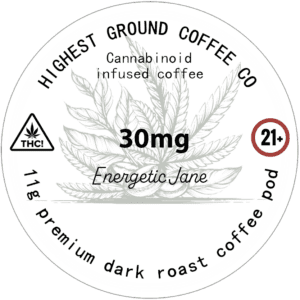
[00:13:16] Jacqui Brugliera: I need a spit bucket for all the THC over here. Just bring Landis in, he'll help you. It does taste good. But as from Craven's suggestion, I should pour this through what I have here, which is Highest Ground Coffee Co. These are Coffee Co, and they have 30 milligrams of THC in this as well. So if I brewed this with this, maybe I'd get to 60 milligrams of THC.
[00:13:39] John Craven: That is a strong-ass cup of coffee.
[00:13:41] Jacqui Brugliera: Very, very strong coffee. I wonder how the THC and the caffeine would work together. Only one way to find out.
[00:13:48] John Craven: I hope it doesn't end like the Pocky chips.
[00:13:53] Jacqui Brugliera: I would definitely end up on the floor. I mean, this is literally called no pain, Jane, but I think it would just turn into pain, Jane.
[00:14:02] Ray Latif: I think that's a TikTok video waiting to happen. Imagine you swap out your parents' Coffee Co with that and just like film the reaction over the course of like the next hour or two.
[00:14:13] Jacqui Brugliera: That would be hilarious.
[00:14:15] Ray Latif: Condense it into 10 seconds, 60 seconds.
[00:14:17] John Craven: I mean, no pain for your parents. There you go.
[00:14:19] Jacqui Brugliera: That's what they want. They'll be happy.
[00:14:22] Ray Latif: So, Ray, what do you need after you have a bunch of weed? What do I need after a bunch of weed? Snacks, obviously. Obviously, snacks. Can we talk about snacks? See, if I'm out of town next, you can be the host. No, I'm just coming for your job, Ray. Watch out.
[00:14:40] John Craven: I got these rivals. Oh, yeah Great munchies are stuffed snacks. This one's a late-night pizza flavor.
[00:14:48] Ray Latif: I'm gonna open this up, and you're gonna try Okay, so rivals is spelled R IV a LZ It looks like combos or they are they they are like combos.
[00:14:56] John Craven: Yeah, it's kind of like fancy healthy combos. They've got this late-night pizza extra cheddar Mac and Spicy street taco their plant-based which this one I don't know this package to people who are into plant-based food really want like close-up shots of meat I'll say probably not but I'll open these ones up. They're really good if you pass on the taco ones those are insane these have eight grams of plant protein and a bunch of fiber, and they taste pretty awesome and It's a really hefty bag this little bag is like six ounces The portions are surprisingly big and like in terms of what's in the bag because they stuff the whole bag full It's like stuff snacks stuff bag. Don't stop doing that rivals.
[00:15:47] Jacqui Brugliera: I mean, that's just I know I always get disappointed when I open a chip bag and like you will not be disappointed with these Jackie first of all raise
[00:15:55] John Craven: The comparison to combos is perfect. The pizza flavor is huge. And so is the taco flavor. I had that. Can I try the cheddar, Matt? Because I haven't tried those yet.
[00:16:04] Jacqui Brugliera: I used to love pizza combos. So this would be these will not disappoint.
[00:16:09] John Craven: These will not disappoint. Plus, so the ingredient panel is not bad. And one ounce, 28 grams, only 140 calories. So not bad.
[00:16:19] Jacqui Brugliera: Yeah, not bad at all.
[00:16:20] John Craven: And you're getting protein, eight grams of protein, too. probably feel better after eating that than eating some combos too oh wow this might be my new favorite this tastes just like crunchy mac and cheese this rules
[00:16:37] Jacqui Brugliera: Talking about healthy snacking and simple ingredients, I have another snack over here called Moku. It's plant-based jerky. And this is the Hawaiian teriyaki variety. I ate this in a matter of like 10 seconds. Really delicious. It's made out of king oyster mushrooms and really simple ingredients, really tasty. The cool thing is that it has the texture of a meat jerky. So for people that are used to that, this won't disappoint. It has a great texture, really great flavor profile. And I think they're distributed in California on the West Coast right now, based in LA, and looking to expand. And the name Moku is derived from a Hawaiian word, which I believe is like land divided. So their whole mission is to just be better for the planet. So really tasty plant-based jerky with simple ingredients, which is sometimes hard to find. This one has no allergens, which in a lot of plant-based jerky, there's like soy or gluten. So I felt really good after eating it.
[00:17:47] Ray Latif: Alright, it's time to get to our featured interviews for this episode. As mentioned in last Friday's show, I recently visited Austin, Texas to attend a thrilling event whereby the best Bartender Of America vied for the title of 2023 U.S. Bartender Of The Year. Organized by the United States Bartenders Guild, or USBG for short, and sponsored by beverage alcohol giant Diageo, the two-day competition featured 30 of the nation's top mixologists, each of whom were asked to put their skills, senses, and agility to the ultimate test with a series of intense challenges inspired by current spirit and cocktail trends. In this second series of interviews from the event, I spoke with three of the competition's judges, including past winners Jessi Pollak and Adam Fournier, along with cocktail guru and innovator Kim Hassarud, each of whom shared their perspective on the business of bartending, current trends in mixology, and what flavors, textures, and formulations are resonating with modern consumers. All right, folks, back here in Austin, Texas, and sitting with me now is Kim Hassarud, who is one of the world-class judges for the World Class Bartender Of The Year 2023 competition. Kim, great to see you. Hey, thanks for having me on. Good to see you too. I'm actually honored to be sitting down with you because you are an OG, so to speak, when it comes to Coxiel culture. You've also been on the board of the USBG for some time. You were most recently a president before you stepped down. And I'd love to hear from you, you know, what you think, given the resources that the USBG has, given the influence that it has, where you think its time and effort would be best spent in supporting the next generation of Bartender Of America.
[00:19:42] World Class: You know, when I first started bartending in the 90s, you know, getting into craft cocktails, what's a craft cocktail, you know, and I always say we're, we had been moving forward by taking a step back because we are getting back to the place where cocktails were like 200 years ago. You know, we call the golden age of the cocktail. So we're really moving forward to getting back to that place. And, you know, trends come and go and they change and the pendulum at one point swung in the direction where it was this uber craft cocktail, you know, the bartender with the twirly mustache and the suspenders and the speakeasy. And they actually had a very narrow view of what mixology was and craft cocktails. And, you know, if it didn't fit within this box, you were kind of shamed for it. You know, I saw a lot of kind of shame in this egocentric aspect into bartending. But now I think the pendulum has now swung back the other way. So I think it has become more inclusive of bartending. And I would say, you know, back to your original question about the USBG, I think, you know, the USBG, when we experienced this huge amount of growth, in like The Year 2000s, 2010s, it really was in that craft cocktail bubble. But I think moving forward, the organization is definitely looking to be more inclusive to appeal to all Bartender Of whether you work at a dive bar, event Bartender Of a music festival, your local VFW, age, race, region, all of that, you know, they want to be the organization for all bartenders.
[00:21:23] Ray Latif: How do you advise and educate Bartender Of how would you advocate about communication and education among Bartender Of sort of making it easier for the general public to appreciate and understand cocktails in a relatively easy way?
[00:21:38] World Class: I think now more than ever, the guest is much more educated on spirits and cocktails than they were even just 10 years ago. And so when they go in and they ask for a bourbon, they know what bourbon is. You know, they know how it's made and they know what they like to drink. So I think that's been a big shift over the past 10 years is just how educated the guest is himself. But my advice to... Bartender Of, you know, educate yourself. There are so many amazing resources out there that you can easily educate yourself and do things at a really low cost. You know, when I was bartending in the 90s, there was the bartending school and they still have those bartending schools. Many of them are not that great. They teach you how to be a club bartender. They teach you speed. They do not teach you like historical references or recipes or craft or, you know, the history of distillation or the different categories of gin. But now there are a lot of resources out there. So the USBG has a master's accreditation program. There is Bar Smarts. There's Beverage Alcohol Resource in New York City. And there's just tons of online books and resources that are free that you can easily educate yourself. So, you know, my advice to any young Bartender Of If you really want to enhance that guest experience, you need to be knowledgeable. You need to be able to have like an effective conversation because that's going to actually, you know, that's going to put more money in your pocket. You're going to be able to engage that guest in a much more educational way. So educate yourself, be open-minded, be open to looking at how things are done in different countries, in different cultures, different bartending techniques. There is no, there is no right answer. You know, there is no one way to serve this cocktail. The best way to serve a cocktail or the best cocktail you can serve a guest is the one that they want and kind of just embrace that.
[00:23:33] Ray Latif: That's a good way of putting it. The best cocktail you can serve to a customer is the one that they want. I like that a lot.
[00:23:38] World Class: Yeah.
[00:23:38] Ray Latif: It's so simple, but so true. Yeah. You've worked with a lot of spirit brands in your career, and we've definitely seen an evolution in terms of what kind of spirits are marketed, what kind of spirits are embraced by particular generations. What trends have you seen over the last, say, 20 years within the spirits category, and what surprised you the most?
[00:23:59] World Class: Well, there's been a lot of good trends and not so great trends. You know, the one that I find a little cringy is probably like the flavored whiskey. You know, I mean, sometimes that's kind of gone off the rails, like in some of the flavored vodkas. I get it. But there's a lot of other more authentic ways to incorporate flavor into drinks than, you know, than a strawberry whipped cream flavor. So as far as kind of going through a few trends that I think are great, you know, I love that the explosion of the gin category is amazing. You know, when I was bartending, there was three gins behind The Year. Now there are hundreds of gins out there. And I love all the subcategories and the botanicals. And I consider gin to be, you know, Bartender Of's spirit because there's just so much you can do with it. There's also the explosive growth of the non-alcoholic category. Which is amazing, and it's really interesting to see how people's drinking habits have changed. A lot of people love the experience of a cocktail, but maybe they just don't want the alcohol, at least at that moment. We're finding guests, even at our bar, that come in and drink alcohol, but maybe they want to slow that down. So maybe they'll have a cocktail, and then maybe they'll go with a non-alcoholic, and then maybe they'll go back to a cocktail. Or people, for whatever reason, maybe a medication, Pregnancy, whatever, they just don't want to drink at that moment. And so you want to be able to offer experiences to people. So I've just seen that, I mean, just over the past year, there's been, you know, dozens and dozens of more NA spirits that have hit the market. You know, Seedlip being one of the first that started off in London. And they're great, they're fantastic. And I would also encourage Bartender Of really explore that category. You know, on menus, you know, 10 years ago, you might have, you know, your Virgin Mary or your Virgin... Nicolada. Yeah, Nicolada, right, right. Or it was some kind of mixture of juices. Now they can be much more complex and nuanced and give someone the same experience just without the alcohol.
[00:26:05] Ray Latif: That's true. And other folks I've interviewed here at the event have talked about Seedlip and it being the leader or at least the leading spirit within the non-alcoholic spirit category. But I look at Seedlip, and this might be controversial, as sort of a one of like five. There's maybe five great non-alcoholic spirit brands that I can think of and that I've appreciated drinking. How do non-alcoholic spirit producers, how do they get better? How do they get to the point where there is just that tiny, tiny margin between, you know, what is quote unquote, the real thing and, you know, the analog?
[00:26:42] World Class: You know, I think there's been a lot of pushback from people saying, oh, well, this doesn't taste like a non-alcoholic whiskey or this doesn't taste like a non-alcoholic gin. And it's not supposed to. You know, a good analogy I would give would be like Coke and Diet Coke. Is Diet Coke ever, even when it first came out, did it ever really even get close to Coke? No. But it was a good substitute and people adapted and they liked it. And I think that's just going to take some getting used to. So it's not going to be, you know, you're never going to get a non-alcoholic bourbon that tastes like bourbon, but you can kind of get close. And what I've seen and what I appreciate is a lot of non-alcoholic spirit brands are using botanicals that have the same kind of warmth or same kind of, you know, mouth feel that. So when you have a non-alcoholic old fashioned, you know, it feels substantial on the glass.
[00:27:31] Ray Latif: Yes. The one thing I would push back on is if you're going to call yourself a non-alc bourbon or whiskey, perhaps it's better just to call yourself a non-alc spirit or compare its use to a spirit that you'd make in an old fashion or use in an old fashion. Just because like seedlip is a good example, right? Seedlip doesn't call itself a djinn, but it is a djinn adjacent type of spirit, I guess I would say. So that's the thing. I think people are getting thrown off because they think they're going to get that experience when they're not getting it.
[00:28:04] World Class: And I think it kind of depends on how you're going to buy it and how you're going to use it. I think for bartenders, C-Lip was definitely an exception because it was one of the first. But a lot of even kind of new bartenders and especially now with, you know, the pandemic and there's many new, new, new, new, new bartenders that don't really have a whole lot of experience. And sometimes when they get these non-alcoholic spirits, they don't really have a direction of how to use it. So even by calling it a non-alcoholic whiskey, Bartender Of might think to himself, oh, or herself, hey, you know, I can use that in an old-fashioned or I can use that in a whiskey sour variation. Just the mindset alone, I think is enough to give them some cues on just how to use it and how to sell it. But you're right, you know, I think like the Seedlip Grove is great. You know, it has more citrus elements and you can use that and, you know, gin based cocktails or even whiskey based cocktails. But I think it is maybe a little bit more advanced for bartenders that know how to use it. But I think for, you know, even the consumer that wants to go to the store and buy something non-alcoholic, they do need a little bit more direction on how best to use it.
[00:29:20] Ray Latif: Along those same lines, low alcohol cocktails has been a growing trend that we've seen as well. Here at the event, you know, you would never think, or I think there's a lot of people who wouldn't think that you could make a refreshing drink using Johnny Black. And Johnnie Walker Black has some fantastic, refreshing cocktails that you can have in the blazing hot sun here in Austin.
[00:29:42] World Class: I see just huge explosive growth. And to be honest, I think it was spritzers and like the Aperol spritz that really kind of exploded that low ABV. I mean, Aperol spritz has been around for forever, decades. But, you know, people want something kind of light and refreshing, but that's just not really heavy with alcohol. And, you know, seedlip, to be honest, I think is also a great modifier. You know, I use it along with spirits too. Or if I want to have a gin and tonic, but I want to, you know, I don't want a full ounce and a half of gin, I might do a split base of like seedlip, garden, and gin. So I get a little hint of something, but I also am not sacrificing the flavor.
[00:30:23] Ray Latif: Do bar guests and customers, are they thrown off though when they do see a legacy brand, a bourbon, a scotch brand in something that's a spritz based cocktail or spritz cocktail? Because they would typically, or I would typically say, oh, that's not going to be refreshing. I mean, how much education has to go into getting people to see the versatility of some of these products?
[00:30:46] World Class: I think people are really excited by it. To give you another example, at our bar we do a lot of really atypical frozen drinks. We might do a frozen penicillin with Talisker and Johnnie Walker Black, and it's something that you wouldn't expect. that would go over well, but people love it. So I think being able to do some atypical things, I think is great. And scotch is a great ingredient to incorporate with tropical ingredients. So that's another great way to introduce something that is maybe typically associated with heavier cocktails in a really light and fun way. So I think those are some great ways to introduce that spirit in very fun and atypical ways. I mean, I find that people love to experiment. People love to try new things that are maybe some familiar flavors, but just presented in a different way.
[00:31:42] Ray Latif: This is a tough competition, the world-class competition. And you've been here for a couple of days and you've been judging. You've judged a lot of competition.
[00:31:49] World Class: How many competitions would you say you've judged in your life? You know, probably maybe close to 50 or 60. Wow. Yeah. That's a lot.
[00:31:58] Ray Latif: Wait, how do you maintain? I know it's just small steps you're taking.
[00:32:02] World Class: I do. You know, you have to spit everything out. Yeah.
[00:32:05] Ray Latif: Yeah.
[00:32:05] World Class: Maybe the last one I can have, but.
[00:32:07] Ray Latif: But it's a very serious competition. And like, you know, we talked about this before we got on the mics. person that is awarded Bartender Of The Year, the person that's named Bartender Of The Year, it's a life-changing thing for them. So it makes your job very, very important and impactful. When you are evaluating these 30 contestants and then eventually the five finalists, you know, what are you seeing in the ones that really stand out? What are the ones, what are you seeing in the winner themselves?
[00:32:36] World Class: Personality is also a huge piece of it, because to be a good Bartender Of's not necessarily about how well you can hold your bar tools, how much history you know, how many recipes you know. It is how you connect with a guest. You know, that is a huge part of hospitality. And so even evaluating how someone interacts with the judges speaks volumes. So I think that's something that is also incorporated into the judging process, how well they can connect with the judges and how well they can tell a story. Because again, that all translates to how they can interact with their guests and hospitality.
[00:33:15] Ray Latif: It also helps them to be able to communicate what they're using in their cocktails and the spirits that they work with.
[00:33:22] World Class: I'll give you a great example. So I was one of the judges for the Ketel One Garnished with Good. And it's so funny, every year there's usually one ingredient and they're not working with each other but there's one ingredient that everybody is using and The Year it was honey. So much honey. I mean a good majority of the participants were using honey. But using honey... does a lot of good for the local community. And there was really only one bartender that really explained why that's important. Because when you use this honey and you are supporting your local beekeepers, you are also supporting your local agriculture. And they kind of being, you know, just being able to communicate that and make that tie and that loop. I think is really important because when you are able to share that with your guests, I mean, those small little things, those small little details can be very impactful. So to your point of being a really good communicator and being a really good storyteller has the power to evoke change.
[00:34:26] Ray Latif: There are so many spirits out there, so many spirit brands, and it feels like Bartender Of of have their pick of what they can use and what they may not want to use. But it feels like there's a lot of creativity and a lot of versatility, as I mentioned earlier, with spirit brands. But how do you generate that creativity? How do you generate inspiration for a particular spirit brand when it isn't necessarily something that you might use on a regular basis?
[00:34:51] World Class: I think the best way for Bartender Of use spirit brands that they may not be familiar with is to taste a lot of food. Go out there and be very familiar with and start paying attention to what's going on in your mouth. So even biting an apple, you know, you can say, oh, this is an apple. It tastes like an apple. But if you really start paying attention to what you are tasting, You know, an apple, for example, oh, I get a lot of like, sometimes I might get a little lemon, I might get a little lime, I might get some more acidity. Oh, I'm getting some other kind of orchard fruits. Just start paying attention to what is going on in your mouth and being able to recall some of those flavors. So start paying attention, I would say first of all, because when you start paying attention to the things that you are eating, in how your salivary glands are going on, you'll be able to recall some of those flavors. So when you start using spirits or start tasting spirits, you become more familiar with those aromatics or those flavors. Oh, you know what? Now I'm tasting this scotch, which I don't really taste that often. And oh, you know what? I'm getting a little bit of peach. Right there, I'm getting a little bit of raisin, I'm getting a little bit of... And you can start to recall and then you can start to make some flavor bridges. Oh, you know what? This scotch or the spirit that I haven't tried before, you know, now I'm tasting it and now I get these herbs, you know, maybe I'm getting some red fruit, maybe I'm getting some... banana, I'm getting a little tropical fruit. And then you can start to create those flavor bridges. You know what? I'm getting a little bit of pineapple. I'm going to throw, I want to use some pineapple in that. Oh, I'm getting a little bit of sage. Okay. Oh yeah. I'm going to put some sage in there. So I think the more that you Taste Radio the more that you start to pay attention, it becomes really easy. So you could give me a spirit that I've never tried before. I want to taste it and I want to find some of those flavor bridges. So I think the more that you just start paying attention and the more that you start tasting and training your palate, it becomes really easy.
[00:36:47] Ray Latif: Kim, I got to ask you one more question and it's another top of mind trend for the industry and that's ready to drink cocktails. And it feels like that to me has a ton of potential as long as the cocktail is good. Like it has to be great. Some products I've seen out there have been great. Others, not so much. Is consistency though the biggest problem with this category or is it just, it's going to take time to sort of weed out the ones that work and the ones that don't?
[00:37:14] World Class: So within the RTD category, I am already seeing the weeding out happen. I judge a couple of different spirit competitions and a few years ago, oh my God, they were horrible. They were so bad. The disgust. Oh my gosh. There were a few that rose the cream of the crop. But now, I just judged a spirit competition a few weeks ago, and there were some amazing RTDs, both alcoholic and non-alcoholic RTDs, that I was like, I would drink that all day long. I mean, if you want to give me a canned gin and tonic, it better taste just as good as I go to a bar. That's kind of my... barrier. Even the canned vodka and soda, which is pretty neutral, but it needs to be as good as if you go to a bar and get it. That's kind of like my bar. But I think I'm so impressed with the number of NA RTDs and alcoholic RTDs that are hitting the market and the quality level. And I think that's going to continue to increase. And for the guest, you know, I think it's a great entree maybe into spirits that they've never had before. You know, what I found is there's a lot of people that are kind of like, no, I'm my vodka soda drinker. I don't want to change. But then they might go to the grocery store and they see some pretty packaging and they'll say, you know what, it's a little couple of steps away that I'm comfortable with. But you know what, it's a few bucks. It's not a big investment. I want to try it. So it's a great way to get people to also try new spirits and try new flavors. And it's a great way to get them to try cocktails too. And I think if they can kind of get out of what they're used to, they actually might be even more open-minded to trying other things at a bar.
[00:38:57] Ray Latif: Kim, this has been a fabulous conversation. I really appreciate you taking the time. Thank you so much. Thank you so much for what you do for the bartending industry, for the cocktail community. It's very much appreciated as a consumer to see better products and to see better service across America. And again, you were one of the people that helped make it the way it is today. So thank you.
[00:39:16] World Class: Well, thanks. It's been such a wonderful privilege to be a part of this industry and just really see just the dramatic change that's happened over the past 20 years. And it's going to continue to evolve just like all industries do. But I'm happy to be a little small part of that.
[00:39:31] Ray Latif: Yeah. And I'm happy you're here with me or took the time to sit with me today. Thank you again. Thanks. Hey folks, it's Ray with Taste Radio back on the mics, this time with Andrew Fournier, who is the World Class.S. Bartender Of The Year for 2021. Adam, great to see you. Thanks for having me here. It's lovely to be back. It definitely is. Well, actually back, you know, in 2021, this event, this competition was held virtually.
[00:39:56] Mike Schneider: Absolutely. It was held virtually The Year, which was a different challenge. But that was actually my fifth year entering World Class. So World Class for me was the very first bartending competition I ever entered. I did relatively well my first time around, and then I actually didn't make it in for two years, which just made me hungrier and hungrier. I entered in 2019, made it to the national finals, entered in 2020, and We all know how The Year went. So what ended up happening for 2021, when it became clear that things weren't really going to be letting up for a while, they reached out to all of us who had made the top 50 for 2020 and said, would you like to participate in a virtual version of this program? And to a person. Every single person said yes, which I think is an amazing testament to the power of this community, but also of this program and this competition that everyone went, yeah, you know what? My life is crazy right now. I absolutely want to learn how to edit myself on video, record a five minute single take of me making this cocktail and do this competition. So even though we weren't in the same room with each other, there were absolutely group chats, there were virtual meetings, all of that extra little stress that comes along with it. And we actually did the global version of the competition digitally The Year as well. So what's been really, really great this past year is getting to actually be in person with everyone and meeting so many people that I only ever saw virtually. I actually got to mentor last year'Bartender Of Jessi Pollak. We went down to Sydney for the global finals and it was like a two year reunion for everyone because not only was it The Year's competitors, it was so many people from 2021 as well. So many hugs, so many late nights, and just a really wonderful experience to see that kind of camaraderie spill over from a screen into real life.
[00:41:47] Ray Latif: Yeah, it sounds like an amazing experience, you know, having been sitting in front of your computer or sitting in front of a camera for two years to finally see those people IRL.
[00:42:00] Mike Schneider: There's nothing like being able to sit across The Year from someone and make them a drink. That's really what it comes down to. And it's what I try to tell every competitor and every person I've got a chance to mentor or talk to since then, it's really, that's what it comes down to. No matter all the bells and whistles that go on today, no matter how many extra challenges or things we throw at you to try and trip you up, all to the end of the day, it's what you do every single day at work. It's making a drink for a person and trying to connect with them and give them an experience that they can't get at home, that they can't get making a drink for themselves. It's about elevating that moment in time. How has winning the competition impacted your career? Winning the competition really helped launch me to the next step of where I was going, just faster, I think. After winning, I got a position as a bar director for what became a Michelin-recognized space in Brentwood. That did not last too long for various reasons. Money is always an issue these days. But those experiences led me to what right now is an incredibly unique opportunity. A few months ago, took on a position as the first ever bar director for Wolfgang Puck's Spago in Beverly Hills. Now I get to steer a cruise ship that is a beast of a place and try to turn that bar into something that matches his legacy and everything. So it's one of those things where it definitely put me in touch with the right people to be able to showcase what I can do and have a wonderful collection of materials. No, this is what I can do. This is the creativity that I have on offer, essentially almost like a pitch deck of what you can do if given the right tools. And when you get that information to the right people, the people who get excited about that are like, yes, I want to do this. But more than just putting in a position of a job, it's one of those things where it's put me in touch with people that I love to be creative with and work with. And I always say it's insane that being a Bartender Of flown me around the world. Making a really good martini has gotten me to Sydney, Australia. It's gotten me to France. It's gotten me to Mexico. It's gotten me to like every, almost everything that I've gotten to do over the past 10 years is in some way, shape or form linked to that creativity. And so much of it is linked to the world-class program and the USBG and the community that they build for all of that, because it is not just a local space. It is a truly global connection. And it's really interesting to see how small that community really is once you start actually talking with everyone.
[00:44:25] Ray Latif: I imagine some of our listeners will be hearing you say this and be like, you know what? I think a career change into bartending might be the right thing for me.
[00:44:32] Mike Schneider: It's also so fascinating with the competitors The Year. Every year we always have these conversations with people like, well, what did you used to do? Or what do you do now? And like one of the competitors The Year, was telling us in his story that he, on the same day, started a master's degree in teaching, a job as a bar back, and guess which one stuck around? Another one of our competitors, she used to be a theoretical mathematician. Wow. It is one of those things that there is this stereotype that bartenders and servers and hospitality workers are unskilled work sometimes, but The amount of education and the amount of passion that comes into the people in this industry is really inspiring. And it is one of those things that creates some of those unique experiences that gets to make going out for a drink or dinner or gathering at a bar such a unique experience.
[00:45:21] Ray Latif: You're exposed to new ingredients, you're exposed to all kinds of spirits and spirit brands from all over the world. What's really interesting to you these days in terms of formulations, new products coming to market, ingredients that are relatively novel to the industry?
[00:45:38] Mike Schneider: What's really been... Interesting and amazing to me is the explosion of non-alcoholic or lower ABV options out there on the market, which is absolutely amazing. I've been very fortunate that for most of my career, I've worked in restaurant bars, and I've been very fortunate to be working in very high-end places. So I have a lot of great food to pair along with it, and you see a lot of people who really want that dining experience. But especially in Los Angeles, we're a city of cars. You come out, like, it's not necessarily that you might not want another drink, but it's, hey, I'm the one driving home tonight, or I've got an hour and a half back on the road, but you don't want to miss out on that experience for it. And these tools like Seedlip and some of these lower ABV modifiers, Cherries, things like that, that are starting to get a resurgence, allow you to craft an experience that allows those guests to feel like they're still part of it. One of the things I do with my non-alcoholic program is it's not about trying to recreate the specific flavor of a cocktail, because let's be honest, you're never going to create a non-alcoholic margarita that tastes like a margarita. You can't make that tequila taste. But you can create something that replaces the experience of a margarita. If you take, say, like The Year Lip Garden and get that kind of green, earthy notes to it, and you get that drink that looks beautiful that someone can raise up in cheers for their social medias, for their TikToks, for their Instagrams. they get to feel like a part of that moment or they get to have their ritual at the end of a meal with maybe a stirred style of cocktail. Those are really cool to see coming out right now. There's also a wonderful explosion of agave products and appreciation for those and not just tequilas, but getting more into those mezcals, but also some of more of the off the beam pass, like your Riceas, your Bacanoras, Sotols. That might be partially because I'm in Southern California, so we get a little bit of that influx before other places, but that's really where I think a lot of the exciting stuff is going on right now is figuring out how to take everything that we've learned or relearned over the past 15, 20 years of the cocktail resurgence and applying that to flavors and taking all those techniques to create, again, that experience.
[00:47:43] Ray Latif: You know, you've been judging this competition now we're on day two and you're exposed to a lot of Bartender Of all over the country. Is there anything that you're seeing that is kind of surprising you or interesting you in terms of how they are formulating their cocktails? Is there anything that's sort of a bleeding edge trend that you're like, wow, that's really interesting. I wonder if that could pick up in Los Angeles.
[00:48:08] Mike Schneider: Yeah, it's always interesting coming to get judges and seeing the Bartender Of across the country because even without them talking to each other and from all over the country, you start seeing patterns and trends emerge. And a lot of what we're seeing is sort of a lower ABV flavor layered cocktails. A lot of split bases using, for instance, I was judging the Johnnie Walker storytelling competition for the past two days, saw a lot of split bases taking the wonderful Johnnie Walker scotch and blending that with, say, sea lip or sherry or a vermouth, not just for a stirred cocktail, but to create a layered sour or a fizz, and also just a lot of culinary creativity. This is a generation, generation, I make myself sound so old when I say it. This round of Bartender Of think that we've put out so much interesting information on how to use the culinary techniques that are so often just associated with chefs and kitchens. And there has been a wonderful dissemination of not only that information, but those tools now, like people are getting more interested in doing a nicer bar at a restaurant. and being able to use a lot of those things. And seeing so many Bartender Of take some of that stuff from the kitchen and learn with it and work with it and apply that into creating a syrup or an infusion or things like that, it's always been something that's been kind of on that cutting edge, but to be able to see it being utilized, not just by Bartender Of New York or LA or big markets, but to look at the competitor from Columbus, Ohio and say, wow, That's really impressive what you were able to do in that kitchen. That's, I think, really, really great to see that spreading across, because at the end of the day, that's also spreading into how we think about how we layer these flavors. And along with that lower ABV conscientious drinking, you're also seeing a lot of trends towards that sustainability initiative. How do you think conscientiously about what you're putting together with it. I think that's something that world-class, especially the Ketel One and the Nolet families do a very good job of helping to educate and spread with this program, with the Garnish with Good challenges and the Hive Collective, a lot of the initiatives that they do to try to raise awareness of that and to really get these Bartender Of think about where's your ingredient coming from? Not just, hey, is this local, but what is the reason for wanting to use local? What does this do for it? And how do you apply that into your cocktail and your storytelling? Because even outside of the competition, when you're designing a cocktail, when you're designing a program, you're doing any of this stuff, you're ultimately telling a story. You don't need everyone to know that story right away. In fact, I'm a big believer that they shouldn't know it. I'm so happy that we're past the phase where we were all like, hey, look at my 15 ingredient cocktail. Let me tell you about it for 15 minutes before you get a chance to take a sip. And now we're into this place like, hey, here's a really good cocktail. And my philosophy has always been, I want you to come back Three Wishes. First time I want you to come in, I want you to order a drink. Then I want you to go away, have a good time, and go, man, the drinks at that place were better than where we went that night. Next time around, let's go there. Second time you come in, you're like, yeah, it's just as good as I remember. And then the third time, you're like, why? Why is this better than what I'm getting where? And now we can start talking about what we're doing, what the program is, why we're sourcing what we're doing, what we're going on with it. And I love that approach because, A, as a business model, it gets me a regular. It gets someone who's been in Three Wishes, helping me keep the lights on, pay those rents. And second, we're engaging in making someone interested rather than forcing it down someone's throat. They want to engage on it. And now they trust us, which now means that we get to start talking about all the really nerdy things that we like. We're like, hey, this bottle that no one likes to drink except for me, I can now tell you about this and the process. of what goes into it. And it's just like that wonderful back and forth, those connections that you start finding. And that, I think, is where you start seeing that organic growth of these trends and these brands. And I think that's one of the wonderful things you see about this Diageo Reserve portfolio is it's really easy sometimes, I think, to forget because they are such large brands. But they are still at the cutting edge of a lot of the sustainability movements, a lot of those techniques, and in really engaging with the community. I think it's just a nice confluence of a lot of things when you get down to those points.
[00:52:22] Ray Latif: Adam, I'm going to ask you about one aspect of low and no elk cocktails. And this is more related to the no elk versions. You know, you see more cocktail lists that are including four or five non elk cocktails. And typically the price point is a little lower. It's a little less than the full APV or high APV cocktails. Even so, I think some customers might be like, well, why am I paying, you know, $10 or $11 for a cocktail that has no spirit component to it or has a spirit alternative component to it? Is that question coming up among consumers or is that a bit of an issue with, I guess, explaining and communicating the value that you're getting, even though it doesn't have a spirit component?
[00:53:08] Mike Schneider: I think it's a very interesting inflection point of the no alcohol, the spirit-free cocktails at the moment. Much in the same way, I think there was a really interesting inflection point, I wanna say like maybe 10, 15 years ago with the craft cocktail movement, where people were like, why am I paying 12 to $15 for a cocktail when I can get a $2 margarita at my local chain? And part of that's education, part of that's quality, and part of that is just, understanding your tools and being able to express that to your guests. There is some questions sometimes. I'm very fortunate, like I said, because I think is an easier conversation in a dining environment. It fits a little bit like, okay, how we do this. That may be a full-time bar, but I think part of that is going back to what I was saying about If you approach it from a thoughtful manner, instead of just saying, I made a non-alcoholic margarita, give me money and saying, I'm replacing the experience that you would get from having a margarita without that alcohol. What you're now paying for is not necessarily the alcohol content, you're paying for the experience. And that goes back to what we were just talking about with that whole dining thing. We were going out for experiences and memories. So, if you can craft something that is a complement to creating that experience to that environment, you're going to be able to bypass a lot of those conversations of what is the value. So, it comes back to taste is king. It doesn't matter how nice your place is or anything like that. Even for full spirit cocktails, if it doesn't taste good, People don't like the value, they're upset, they're gonna send it back, they're not gonna come back. Same thing's gotta go with your non-alcoholic. So you have to approach it differently. You have to think about what is the weight of this drink? Where's the balance coming from? What are we doing with this? But then also what fun things can we do to recreate? Like for instance, I make a non-alcoholic sparkling rosé that we fully carbonate. That's a technique I learned from Diageo Bar Academy and from World Class family and people like teaching me how to like use these tools. So great. So what it would take was essentially what is like a really, really, really fancy tea and fully carbonate and put it in a bottle and come tableside and pop it for you and pour it. It's like having a glass of champagne, and that's a really great experience. So you have those moments, you can really recreate something. But what I'll say as well, and this was amazing to me, I was fortunate enough to be in Dublin a year, year and a half ago. And there's a bar there called the Virgin Mary Bar, which was a fully non-alcoholic bar, no hard alcohol at all. if you can make a non-alcoholic bar work in Ireland, I think we can get that message. But talking with the owners there was a really great kind of eye-opener as well, where there is also slightly a generational shift, where the younger people who are coming to The Year pretty much understood it. They're like, oh, I get what's going on here. some of the older clientele, not as much, like, what's going on a little bit? But then again, it is also, because I always have to kind of bring it back to this, because this is the point where I'm at, where I think we're like, at the end of the day, we are a business, we're trying to keep lights on, things like that. It is something about how do you pair and add to that experience as well. We're talking about, you know, usually you've got about maybe two to three drinks from someone if they are fully non-alcoholic space, because you're not getting that extra high volume. So what do you add into that? What is your decor? What are your games? Where's the environment? I think the thing that keeps circling around this interview, we keep talking about is what is the comeback to that experience? Ultimately, at the end of the day, that's what we're trading money for. As much as we try to talk about like, yes, it's drinking this glass and all these things, it's how are we adding to the experience and getting to have these tools like Seedlib now as part of the reserve portfolio is just another ingredient and tool to help craft those experiences to bring in the next person. Because I can tell you the number of people, it's like, here's a group of six people. One of them is a decadent driver, one's not drinking for whatever reason. We want to keep them involved. That's if you don't have something for that one person, you're missing out on experience and a sale and all those little things that go along with it. The other thing that goes along with it, I think that's starting to happen is de-stigmatizing, not drinking. I remember when I first started, it was like if someone snuck up to The Year, like, hey, I need a non-alcoholic drink, but don't tell anyone. I see people come up and say, yeah, I'm going to get three old fashions, a martini, and hey, that non-alcoholic margarita. And no one bats an eye. And just like, you're all on board with that. Great. That's just a normal drink order. And I think that's really, really great to start seeing.
[00:57:39] Ray Latif: Yeah, absolutely. And, you know, speaking of experience, this has been a great experience speaking with you, Adam. Thank you so much for taking the time. Thank you for having me. It's been a really fun week and we still have more to come. Absolutely. Looking forward to it. Hey, folks, it's Ray with Taste Radio right now. I'm honored to be sitting in front of and speaking with Jessi Pollak, who is the 2022 U.S. Bartender Of The Year and back in the lines then, so to speak, as a judge. Jessie, great to see you.
[00:58:08] Year Jessi: Hi, Ray. I'm so happy to get to have a moment to speak with you. It's a busy couple of days. I'm glad we found a chance to talk.
[00:58:14] Ray Latif: Absolutely. And it's a busy couple of days and we're in this cavernous ballroom where there's a little bit of an echo. Listeners will probably be able to hear that. And outside, it's a beautiful day in Austin. Have you been able to soak up any of the sun?
[00:58:26] Year Jessi: Not too much. We've been inside judging the competition, but we've gotten a chance to check out a couple of places in the evening, check out some bars. And I definitely want to come back to Austin sometime.
[00:58:36] Ray Latif: This is your first time?
[00:58:37] Year Jessi: It is.
[00:58:37] Ray Latif: Wow. Okay. It's a fun city for sure.
[00:58:40] Year Jessi: You know, so far so good.
[00:58:43] Ray Latif: As I mentioned, the 2022 U.S. Bartender Of The Year, an accolade that about 30 folks, well, exactly 30 folks are trying to achieve The Year in 2023. You know, going through that process of being judged on your cocktails and your ability to mix alcohol and mixers and things like that. It's not the easiest thing to do. And when I was taking a look at some of the competitions yesterday, it felt very nerve wracking. It felt exciting, but also very challenging in so many ways. Was it like that for you? I mean, when you were in the competition last year, what was the experience like?
[00:59:18] Year Jessi: Absolutely. It is very challenging. This is something that can really change the trajectory of a competitor's career. It can really, you know, change your life if you become the winner. So people put a lot of passion and work into this. And the whole idea behind World Class that it's really meant to challenge every part of what it means to be a great Bartender Of you might be really fast or you might be able to tell a great story, but if you can't do all of it, then you're not going to be successful in this competition.
[00:59:46] Ray Latif: How has winning the competition affected your career? I know it's only been a year, but what's happened since?
[00:59:50] Year Jessi: It has been a whirlwind. There have been ups and downs, mostly ups I would say. I got to compete in Sydney, Australia last September in the global finals. So I competed against over 50 other Bartender Of around the world, each representing one country. And I made it into the top 10, which I felt great about. And since then I've been able to offer some mentorship to the competitors The Year, to be a judge and to travel the United States a little bit. get to present on topics that I love like sustainability and making low and no-proof cocktails.
[01:00:24] Ray Latif: With all the traveling and mentoring and everything else you're doing, do you still find time to bartend?
[01:00:29] Year Jessi: I do. I actually run a bar program in Minneapolis, Minnesota, and I spend a couple nights a week behind The Year as well.
[01:00:35] Ray Latif: Very cool. It's interesting you bring up low and no proof alcohol cocktails because it feels like that is a bleeding edge trend that is becoming really relevant in our community, in the cocktail community and beyond. What are some of your favorite ways of preparing said cocktails?
[01:00:52] Year Jessi: You know, I'm so excited about this movement. It feels so accessible to me. I think it's amazing that we are working toward making bars a place where more people feel comfortable and they feel welcomed and they feel like they're being taken care of because that's the whole point of bars is to offer hospitality. So here at World Class, we're using specifically some non-alcoholic distilled spirits called seed lip. We've challenged the competitors to use seed lip in many of their cocktails and we've seen some amazing either no proof or low proof cocktails in the last two days.
[01:01:25] Ray Latif: Yeah, it's exciting and it feels like there is a turning point that's happening where people are going to bars and restaurants and expecting great tasting low and no proof alcohol. You know, I agree with you that bars are intended to be a place of hospitality and a welcoming place for a lot of folks, but teaching hospitality is tough and understanding what it takes to be successful in your craft is also tough. How would you advise newcomers to The Year industry about how to be successful and also how to manage the craziness of being behind The Year and also your own personal life?
[01:02:05] Year Jessi: I love this question. I love this question because it's something that I think about a lot, especially now that I am in a leadership and mentorship role. And I see the same mistakes happen again and again in, you know, newer hospitality professionals careers, so newer bartenders, servers, what have you, where You get really excited about it and get into it and start to believe that it's about you and you're putting on a show for the guests. And the people who are successful get past that and they realize that it's not actually about us, it's about the guests. So we are here to make our guests feel welcome and cared For Wine can't do that unless we know who we are as well. So I think being really comfortable in your own skin and making sure that you're taking time to know who you want to be and who you are is the first step. And then from there, make those guests feel welcome. Make them feel like they're being cared for and like they're really being heard.
[01:03:01] Ray Latif: You know, you can be a great Bartender Of can be a great mixologist, but is hospitality really the key factor in being successful?
[01:03:09] Year Jessi: I think the key factor in being successful is kindness. So being kind to yourself, being kind to your colleagues, and being kind to your guests is going to get you much further than anything else, in my opinion.
[01:03:21] Ray Latif: Have your guests advised you about new ways to prepare cocktails? And if so, what are some of the spirits and ingredients that are most interesting to you today?
[01:03:31] Year Jessi: Well, we've seen in the last couple of years that agave spirits are really blowing up in the United States. Of course, people are more adventurous than they were even a few years ago. I've been excited to see that my guests are much more willing at this point to really put trust in Bartender Of make something for them and maybe go a little bit outside of their comfort zone. So moving into things like mezcal or sotol, and we've really seen the palate of at least the Midwest consumer really change and move toward more bitter sort of elements. So, you know, Negronis used to be a very like hit or miss thing for our guests. And now I find a lot of my guests are really seeking out more bitter tastes and more complex sort of flavor profiles.
[01:04:15] Ray Latif: Why is that? Is it just because they're more willing to try new things or is it because the pandemic in so many ways encouraged experimentation in what you eat and drink?
[01:04:27] Year Jessi: I think definitely that point that the pandemic, you know, affected people's palates and affected their interest in cuisine, their interest in cocktails and what they were trying out at home. But also these are trends that we see throughout time. You know, I think it's partially a demographic shift as we're seeing, you know, younger consumers. So I have more millennials and fewer boomers. my bar at this point in time. And they are looking for things that are a little more bitter, a little less sweet. And they're also more focused on, you know, health in that they're looking for things that are made with real ingredients and natural or organic products.
[01:05:02] Ray Latif: Interesting. So organic is becoming a real, I guess, point of interest among your guests?
[01:05:09] Year Jessi: less so in the cocktail scene, I would say, but they are looking for things that are not, you know, using artificial sweeteners or just things that are made, you know, with real ingredients. I would say organic is definitely more on the cuisine side of things at this point.
[01:05:22] Ray Latif: When you're mixing cocktails these days, I always think about the brands that are adjacent to the spirit companies, sort of the, the mixers and the tonics and all these other things. And it feels like there are so many out there and there's just so much, I guess, utility for all these different kinds of mixers and tonics. But do they really come into play behind The Year? I mean, is it something where you're more interested in using these types of branded products in a way that you hadn't in the past?
[01:05:50] Year Jessi: They don't come into play in my bar, per se, because I focus on a bar program that is really making everything from scratch. So, for example, I have a gin and tonic on my menu, but it is a seasonally made tonic that we make in-house with, you know, fresh ingredients and seasonal flavors. That said, this movement's kind of cool in that there are things like ready-to-drink cocktails so that folks can enjoy a cocktail and not just a glass For Wine or a beer if they're at home or, you know, on the boat or wherever they may be. And it's also allowing bars that don't really have everything they need to make great cocktails, now they can offer a wider variety of products to their guests.
[01:06:30] Ray Latif: Would you ever serve a ready-to-drink cocktail on your menu? I mean, a can or bottles?
[01:06:35] Year Jessi: If it were the right one and I were excited about it, absolutely. It's not like an absolute dogma sort of thing where I would never.
[01:06:42] Ray Latif: Now, if you were advising an entrepreneur that's in the RTD cocktail space or thinking about getting into it, how would you talk to them about what they need to be successful, what they need to create a great tasting liquid, not just for, you know, the hardcore cocktail consumer, but to make it a little bit more of a mainstream type of product?
[01:07:02] Year Jessi: Well, what I can say is as a bar manager who purchases products and also as someone who, you know, imbibes at home and purchases products, what I'm really looking for is transparency. And I think a lot of consumers are where the key to being successful is we need to be able to see exactly what is in the product that you're selling us. You know, alcohol laws in the United States are confounding to me. There are so many things that can be added to products without actually being disclosed. Of course, you know, a bottle of liquor doesn't have like nutritional facts on it. So in many ways, it comes down to the producer to offer up that information so that the guests feel informed and then you're building trust with that consumer.
[01:07:46] Ray Latif: Do you ever advise spirit companies on future formulations when they are introducing new expressions or new flavors of their branded products? Are you talking to them about, you know, what might come next or what you would want to see on your bar back? And if so, like, what are some of the things that you would be thinking about for, you know, next year and The Year beyond that?
[01:08:05] Year Jessi: Yeah, I've had the good fortune of being able to advise or consult on some products, working on some ready to drink cocktails and then also helping with some local products out of Minneapolis. And it's been exciting to help shape that and just offer what I see as Bartender Of.
[01:08:25] Ray Latif: Jesse, I really appreciate you taking the time to sit down with me. I can feel how important this business is to you and how serious you take it, but also how much passion you bring to the industry. So thanks so much for doing what you do and let's stay in touch.
[01:08:40] Year Jessi: Thank you so much. It was such a pleasure to talk to you. And now we have one more day of judging this competition to go. Here we go.
[01:08:47] Ray Latif: And more cocktails to drink.
[01:08:48] Year Jessi: Always.
[01:08:53] Ray Latif: That brings us to the end of this episode of Taste Radio. Thank you so much for listening. Taste Radio is a production of BevNET.com, Incorporated. Our audio engineer for Taste Radio is Joe Cracci. Our technical director is Joshua Pratt, and our video editor is Ryan Galang. Our social marketing manager is Amanda Smerlinski, and our designer is Amanda Huang. Just a reminder, if you like what you hear on Taste Radio, please share the podcast with friends and colleagues. And of course, we would love it if you could review us on the Apple Podcasts app or your listening platform of choice. Check us out on Instagram. Our handle is bevnettasteradio. As always, for questions, comments, ideas for future podcasts, please send us an email to ask at Taste Radio. On behalf of the entire Taste Radio team, thank you for listening, and we'll talk to you next time.
[01:09:43] John Craven: you