[00:00:02] Ad Read: This week's episode of Taste Radio is sponsored by BevNET Events. Not to be outdone, the following Monday and Tuesday, December 3rd and 4th, BevNET Live returns to the fabulous Lowe's Santa Monica Beach Hotel for the 8th straight year. DevNet events are designed for founders, owners, CEOs, and decision makers of breweries and food and beverage brands to immerse themselves in two days of industry strategy and learning. We pace the events to allow time for important discussions. The content sets the stage for networking opportunities with investors, suppliers, service providers, and other experienced, connected industry experts. These are the partnerships and the knowledge your business needs to get to that next level. Yeah, it's still a few months away, but you save money by registering early, and why not start budgeting and planning right now? Actually, Mike, I'm talking to quite a few people every single day. Of course you are. Trying to plan ahead. These events are fully immersive and have a lot going on, so it's okay if you have questions. Just shoot an email to sales at BevNET.com and we'll get a dialogue going right away. Visit brewboundlive.com, noshlive.com, and bevnetlive.com for details on each individual event. You can also subscribe to our free daily newsletters and be the first to hear updates and program announcements. We hope to see you there!
[00:01:32] John Craven: The room block for BevNetLive and NoshLive Winter 2018 about the famous Lowe's Santa Monica Hotel is now open to anyone holding a ticket. Register today at bevnetlive.com and noshlive.com to reserve your room.
[00:01:47] Ad Read: And now, Taste Radio.
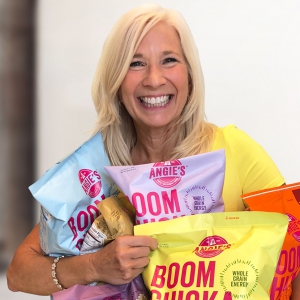
[00:02:02] Ray Latif: Hey everyone, thanks for listening to BevNET's Taste Radio. I'm Ray Latif and you're tuning into episode 126 of the podcast. This week we hear from Angie Bastian, the founder of groundbreaking popcorn brand Angie's Boom Chicka Pop, which last year was acquired by ConAgra Brands for $250 million. We also speak with Tom First, the co-founder of Nantucket Nectars, and an Operating Partner at Castanea Partners, about business habits that have supported his career as an entrepreneur and investor. Joining me later in the show are my Taste Radio co-hosts, John Craven and Jon Landis, along with Project Nosh editor, Carol Ortenburg. Just a reminder to our listeners, for questions, comments, ideas for future podcasts, please send an email to ask at Taste Radio. Take a stroll down the snack aisle of most grocery stores in America, and chances are that you'll see a swath of pastel bags amid the popcorn set. On each bag, in large hot pink font are the words Boom Chicka Pop. You could read the label from across the room, and that's the point. The brand demands attention, and it's gotten it. Angie Bastian and her husband Dan launched Angie's Boom Chicka Pop in 2001, and it has since evolved from a tiny operation selling kettle corn at farmers' markets and fairs, to an iconic retail brand with an estimated $100 million in sales in 2017. Success often yields suitors, and as I mentioned about the top of the show, ConAgra Foods bought Angie's Boom Chicka Pop in 2017 for a quarter of a billion dollars. In the following interview, Project Nosh editor Carol Ortenburg spoke with Angie about the development of the brand, including its foray into retail stores, how femininity and fun were incorporated into a game-changing package revamp, and the company's process for choosing the right financial partners at different stages of growth.
[00:03:44] Jon Landis: Hi, everyone. I'm here in lovely Minneapolis, and I'm joined by Angie Bastian, who is the founder of Angie's Boom Chicka Pop, a popcorn brand we know and love at Project Nosh. Angie, thanks so much for being with us today. Thank you, Carol. Thanks for having me. So to start, I'm sure everyone has seen your gorgeous pastel bags on store shelves. How did the company come about? Did you just have a passion for popcorn? Well, thank you for calling the bags gorgeous, because that's like their clothes. So that's very sweet of you. How did the company come about? My husband, Dan, and I had two young children, three and five, about the time, and I was a nurse, and he was a schoolteacher, and we didn't have any money for our kids' college funds, so we decided to buy a kettle and start popping popcorn at farmers' markets. in front of grocery stores and fairs and festivals in 2001 and out of our garage. And so we started popping and selling popcorn, kettle corn actually about the time, wherever anyone would let us sell or pop. And for the first three years, we were like this mobile food unit. It was even like before food trucks, we'd set up our tent and, you know, we'd hit every place they would let us. let us sell popcorn. And that's how we started. And then, you know, it developed over time. And in 2004, we entered into grocery stores at Lund's & Byerly's here in Minneapolis. And in three, Lund's & Byerly's and one food co-op store. And that's how we got it started. How did you pick popcorn of all the products and all the food? What inspired you to go with that item? Well, I'm going to say it's like maybe three-dimensional why we picked popcorn. One, I grew up on a farm. We had popcorn every Sunday night while we watched Disney. for dinner and I like to cook. Popcorn is simple. I'm like, well, we're not gonna mess up popcorn. And then my husband, when he was on line one night and he went to this, this was back in 2001, went to this website that said make thousands of dollars every weekend selling kettle corn. And we were like, that's our place. We can put some money away for the kids' college fund by doing that, and we can drag the kids along. They can learn how to do it. It's simple, right? Like, we thought it was that. That would be simple. And we could do it together as a family, and the kids could contribute and help with the little family business because, you know, it wasn't, it was popcorn. And, you know, then I guess, you know, I am a popcorn fan. And, um, it's a great sort of snack that I felt really good about for my kids, pretty simple food, pretty close to, close to the garden, you know, not processed, not too far away from real food. And, um, we were like, this meets all our criteria. Let's do it. So that's how we got started. How did you decide that you wanted to enter retail? Do you remember what made you feel like, okay, we're going to take that next step. Well, we had gotten the opportunity to sell in front of the Minnesota Vikings home games, you know, in Minnesota. So in November, December, you know, it's maybe 10 below and we're out there popping popcorn and selling outside, you know, and that gets kind of old, right? Like, how long are we going to do this? And so we had a friend who said, I know someone at Lunds and Bireleys, I can set you up with a meeting. So we met with them, he said, we like the product, we like to support local. He gave us an opportunity, about the said, you know, you can't pop it in your garage. So we said, OK, let's figure this out. So the opportunity came to us because we had built sort of a broader audience because of the Vikings. You know, we started in our hometown of Mankato, Minnesota, which is about 50,000 people. And so we had a much bigger audience here in Minneapolis. And the opportunity presented itself. And we said, let's do it. Let's figure it out. Let's go for it. And that's when we started saying, hey, this would be a lot better than popping popcorn in 10 degrees below zero. I'm sure the kids appreciated that too. Yes, they did. But we didn't drag them along when it was so cold. We left them with grandma and grandpa. What did you learn in Tom First few years in retail? I have to imagine it's, you know, for two folks who don't necessarily come from the food industry, that's like a crash course in running a business. Crash course. Yes. We had consultants that helped us understand, never leave the shelf empty, you know, co-date, helped us with scan information, like we didn't even understand that there was data out there. You know, The Cup code, like we just sort of scrambled to learn what we needed to learn for packaging. We did everything by hand at that point. You know, I was a nurse, so I had familiarity with the health department. And so, you know, we just made phone calls. The state of Minnesota at that time had a book that told you how to start a food business and they sent it to you in the mail and I read it and, you know, I just followed directions and that helped us, helped us learn how to, you know, get licensed and adhere to our commercial kitchen and, you know, and then it was all about just reaching out and what we learned from really directly selling to our consumers, like in farmers markets, we got direct feedback. And so we tried to respond always to that direct feedback. And so then it was understanding our customers, which were now the grocery stores, how to respond to their direct feedback. And we learned. We were always like, we're learning, we're learning, we're open. And we always felt like we were partners with whoever our customers were, and they appreciated that. And you guys kept that sort of authentic, transparent bag, very homemade looking packaging for a long time. But at a certain point you said, okay, you know, we need to take this packaging to the next level. When was that? How did you kind of come to that realization? Because making those packaging changes can be kind of scary for a brand. Yeah, it is frightening, but it's also functional, and for us, it was practical. When they were in the cellophane bags, we were placing the labels on ourselves. Actually, our kids were doing that, and then we had to pay somebody to do it, and then, you know, it just... We could only make, and we were making it all by hand and packaging it all by hand, and we could do a maximum of 300 bags in a five-hour time period. We were growing too fast. We needed to find a solution, and so our solution was another kettle, and then the other solution was hiring more people, and the third solution was consider a hasten bagger, and that hasten bagger, the practicality of that is you know, they can create 50,000 bags an hour instead of, you know, 300 bags. It's a big jump from 300 bags to 500 bags. And that's a long trajectory of progress. But, you know, one bagger at a time and one kettle at a time. And so we were able to just to produce a lot more. And then, you know, we didn't know anything about marketing or graphic design. We just tried to hire someone that helped us create our initial bag. And then we launched it and just kept going with it. And we got customer feedback all the time. And we'd say, oh, it's not a good bag. We got to change it. So we just kept listening, I would say, to the people that were buying our product and trying to sort of respond to their feedback. And how did you decide the name Angie's Boom Chicka Pop? Cause that's a really fun name, but it has a lot of presence in it. That's a big shift from Angie's Kettle Corn. Yeah. Well, you know, we were Angie's Kettle Corn because we were producing kettle corn and flavors of kettle corn. And I wanted to do more than that. I wanted to do a savory. I wanted to do popcorn without sugar. So we knew we needed to be more than a kettle corn company. And, you know, about the time this would have been 2011 when we looked at rebranding and maybe creating a different presence, we went to store shelves. And this is a recommendation I would give any entrepreneur is understand where your product lives, the context, the community. And for me, it was really about how do we do it differently? And what I saw about the time was a very serious looking snack shelf, a very sort of pretentious snack shelf. And when it wasn't that, then it was sort of diet food aimed generally at women, you know, And so I said, you know what, it's our job as a food company to deliver good food, but let's do something more than that. Let's just celebrate who we are. Let's deliver the food. Let's do it in a way that isn't, and I've used this word before, pedantic, that doesn't preach to consumers, that reflects the simplicity and the fun of the food. And let's do it in a way that, you know, captures the essence of popcorn and maybe a fun approach to food that isn't quite as serious and doesn't take itself so seriously. Angie's has been incredibly successful. How much do you attribute to just looking so different on the shelf? It made all the difference in the world for us. Like this is what I would say, I mean, for people, for my children, for every, I'm like, Be different, be yourself, be like whatever, like when you capture that sort of emotion of what you want and you know it's the right thing instinctually, you don't know if it's going to work. In fact, we had people say, oh, don't name it that, like, oh, don't do this. And yet somewhere deep inside of ourselves, we knew we needed to be different. We wanted to be different. In fact, I wanted someone to stop on the shelf and go, what is that? And behind that, what I wanted was to elicit curiosity. I felt like our customers were readers, like they can read the bag, right? They could pick up the bag. They could touch it. They could feel it. They could read it. They could look at it. And it triggered something like curiosity about the food. And that's a value that we tried to teach our children. And with form comes function. And so that's the other sort of part of like being creative and different on shelf. And it, you know, it captured a lot of attention.
[00:13:53] Ray Latif: We'll be right back with Angie Bastian after this short break.
[00:13:56] John Craven: Nosh Live is a two-day business and networking event for the natural foods industry. Held this winter in Santa Monica on November 29th and 30th. Learn more at noshlive.com.
[00:14:09] Jon Landis: I think you also really made an impact because you spoke to female shoppers so well and you connected with them. How did you decide to go that route? kind of adopt that language and messaging and persona that really resonated with that shopper. Yeah. And this speaks to, let's just say, the women's experience in business. So my husband and I were together in this, leading together, but that also meant that at practically every meeting, there was one or two women in the whole room with me. Because I came from the profession of nursing, where there were women everywhere. They ran the profession. And I was now in this business world where I might be the only person about the table. And I just felt compelled. And Dan and I talked about the, to celebrate the feminine. And not preach to the feminine, but to reflect and celebrate the feminine with food. Because I always felt like women weren't really supposed to eat. Or if they were supposed to eat, people were watching them so they didn't, you know, I don't know. It was so weird the way things- It can be judgy. Yes, it can be really judgy. And I, you know, I want to be as healthy as everybody else, but I also want, you know, I want to eat what I want to eat. I want my red wine and I want my chocolate when I want it. And, you know, guys don't seem to get that same sort of judgment directed towards them. And advertising doesn't sort of lay it out for women how they're supposed to eat. When I started noticing, it was like food was either a moment of conflict in advertising for women or a sexualized behavior, and that was really advertising directed at men. And I just said, we are not going to do that. That is not what I want. I want to celebrate. I want the packaging to celebrate real women, because it's real food, like to connect everything, and not be apologetic about the. Just show up loud and proud and be who you are. Just be who you are. And that's what we did with the packaging. And that's why we didn't shy away from the multicolors, the sort of feminine-looking packaging and language, because I just didn't see it on shelf. And when I did see it on shelf, it really wasn't about celebration of the feminine. And it's funny to think of your packaging as, you know, so feminine because now everyone's adopting these bright colors and color blocking and it's just gender neutral. So it kind of speaks to how far design has evolved over the years. That's right. And all we were doing was really capturing the essence of what, I mean, it's not that, it's not that pink is just owned by feminine, but I'm like, if the NFL can wear pink, so can popcorn. So, we were like, let's do something fun, you know, let's just take the position of joy and amplify it. And I love that other companies are doing that too. Continuing with the idea of opportunity and just seeing success and your partners along the way, you've had a lot of different financial partners who have helped you grow the brand and with the packaging. I want to shift direction a little bit, but stick with the idea of opportunity and partners. As your company grew, you took on several different financial partners along the way. You had private equity firm Sherbrooke Capital. They took a minority stake in 2011. And then TPG Growth bought about the company in 2014. And most recently you were acquired by ConAgra. Now each of those partners seems like they brought something different to you. They absolutely did. At a different stage of your growth. So what did that process look like, you know, throughout the company's development? And how did you kind of figure out who was the right fit for you at those times? Right. Good question. Well, I mean, we bootstrapped the company for a long time and didn't pay ourselves, put everything that we made back into the company. And then we had a conventional loan early on in the business. Well, I won't say early on. It was five, six years into the business. We took out a conventional loan to build out our plant. And, you know, that, you know, it was all on Dan and my shoulders, plus personal guarantees. You know, there were times during that phase where if the company didn't succeed, we probably would have lost the house. And, you know, we would have had our minivan left. And I guess we could have lived in that or moved in with grandma, grandpa or something. But, you know, that leverage that you put on your personal life is what exhausts entrepreneurs. And because we weren't business people, we didn't understand the private equity world or the investor world. So we never went out and looked for private equity. But we had results in the marketplace where they came to us. And we had a number of private equity companies solicit some attention from us when we started showing up in Spin's data and Nielsen data. And we chose Sherbrooke. Corey Comstock was one of their managing partners. He took an approach that taught us what they could help us do. And when they approached us, we were profitable, but we were at a stage And I would say we were profitable and probably didn't need their money right then. But what we felt like we needed was their network, their help building a professional sales staff, their help in understanding what we needed in marketing. You know, we needed all the intangible things that wasn't concrete money energy. And that's what private equity, what we were hoping for from private equity. my brother-in-law, who is the CFO, said, you know, you might not need the money now, but you know, if we're going to grow, we're going to need money because money's the fuel, right? So we're going to need it down the road. And now's a good time to negotiate that when you're in a position of strength. And so we said, okay, we get it. We understand it. What we didn't know up until that point is when you enter into an agreement with private equity, and this is where the education came through, is that you're looking then to turn the company, to sell it, to flip it. And then I, for the first time in my life, I realized what private equity was. You know, so I was like, oh, they flip houses. That's what they do. They add value to the house and they sell it. I was like, okay, I get that. I understand that. Let's do it. Let's go. You know, so that's what Sherbrooke helped us do. They had an investment thesis with a timeline and, you know, those years we grew so fast and they came to the point where they felt like they could realize their, you know, their investment and a gain on that. And that's when we then entered into the agreement with TPG. And they brought a whole new level of professionalism and assets and ability to build a team and operational expertise. And it was, you know, that relationship was awesome too. From that second relationship. Yeah. You then sold the company to ConAgra. Yes. Yeah. So what motivated you to do that and kind of how did you decide ConAgra was the right partner for you? Yeah. You know, TPG had a full buyout, and Dan and I reinvested in the company, so we were the second largest shareholder. And we all understood that the intent was to build again and to professionalize internally. And we felt like we had done, we had built a plant, opened a plant in Reno, Nevada. We had done the analysis on the business to make sure that we understood it better. We put business systems in place that we didn't have before. We just felt like the business was in a really good position with a lot of growth and we had just brought some large accounts on board and just, you know, like when you're still growing after 17 years and that year we grew 26%, I think, in year 16, you know, it's a good time to Consider and we had incoming offers. And so we said, you know macroeconomically the situation looks good to sell and so we hired an investment banker to kind of help guide us and understand if we should consider offers and then spent some time as a leadership group and the board and we move forward and ConAgra we met a lot of people and I just felt like Sean Conley is a new leader there. He's dynamite He's shifting the system there. He wants to modernize. They were really genuinely sincere people. We liked everybody we met. And they had a lot of expertise in popcorn. It made sense to us. And we just thought they could help make us better even to that next level and help us scale in a way that, you know, even at our stage, we, you know, we could have done, it might take us longer, but let's go. Now seemed like the right time. And right around the time you sold to ConAgra, you also started to diversify the line a bit more and expand out of the popcorn aisle and launched Popcorn Trail Mix and Popcorn Bars. How did you decide you wanted to become more of a snacking platform? Well, when we removed like kettle corn or the descriptor from the brand, we realized that Angie's Boom Chicka Pop could actually broaden itself. We did some research. Consumers supported that. We did direct consumer research on what they were interested in seeing Angie's do. And then we, you know, these were not things that we were able to do or understand maybe 10 years ago. So we took that information, again, listening to consumers about what they wanted. And one of the things that we thought might be interesting is, through the brainstorming, is what else could we link popcorn to in a familiar kind of food and in a familiar way? But do it in a way that nobody's done it before. And do it in a way that might be a little interesting. And that's what led us to the bars and to trail mix with the enrobed chocolate popcorn instead of the piece of candy. So you get a whole grain in there instead of, you know, a colored piece of chocolate candy. What did you learn through the process of expanding to these new products? You know, it's hard to launch new product lines. It really is. It takes a lot of effort. It takes a lot. The horizon and timeline is a lot longer than you think. We've been working on these for years, especially the bar popcorn. We feel like we're experts in popcorn. We know what happens to popcorn. We know what in terms of operationally, you know, a lot of learning there for us. It's funny, it almost seems like a double-edged sword because on one hand, you know, you're this great company that has all this experience, but about the other, you know, do consumers just think of you as a bagged popcorn? So it's, there's a benefit to being big and known in your category, but I imagine it's also hard to say to consumers, hey, like we're over here now. Yeah, absolutely. I mean, and this is where I think ConAgra can be, you know, extremely helpful for the brand and they have an extraordinary R&D facility and lots of resources that can go into exploring what else is possible with the brand. Well, we're excited to watch the brand continue to grow, and thank you so much for being with us today. Thanks, Carol. I loved talking about Angie's Boom Chicka Pop. It's so fun that you're interested. Thank you. Thank you.
[00:25:49] Ray Latif: About a dozen years before the launch of Angie's Boom Chicka Pop, a couple of Brown University graduates moved to Nantucket and started a business selling juice blends and recycled wine bottles. Their tiny operation was the forerunner of Nantucket Nectars, an iconic brand in its own right, and one that's now part of the Keurig Dr. Pepper portfolio. Tom First was one of those co-founders, and he's since become a respected investor and advisor in the food and beverage industry. He's currently an Operating Partner with Massachusetts-based private equity firm Castanea Partners. And in the following interview, I spoke with Tom about positive business habits that he's adopted during his career, along with those that he's identified in entrepreneurs that he's worked with. We also explore negative habits that he picked up along the way and how he overcame them. All right, it's Ray, and I'm here on the mics about the Taste Radio Studio. I'm with Tom First, an Operating Partner with Castanea Partners, and most famously, a co-founder of Nantucket Nectars. Tom, thanks so much for being with me. Thanks, good to be here. So you're back on the mics a second time, the first time it was called the BevNET Podcast. You guys are evolving and growing. We are. You're evolving and growing too. The last time we talked to you, you were with First Beverage, now you're with Castaneda. What are you doing over at Castaneda?
[00:27:01] Carol Ortenburg: I'm working on all their food and beverage stuff. The family that founded Castanea has a deep history in the beverage industry. They were the largest independent Pepsi distributors at one point in their history and did fuse early on. And now we've got a bunch of great brands like Jenny's Ice Cream and Essentia and Brew Doctor and Yasso and a lot of great products.
[00:27:27] Ray Latif: Those are some pretty big brands. We've had Brew Doctor and Yasso here on the Taste Radio podcast. We haven't gotten Essentia yet. I think we need to talk to Ken Uptain and the guys over there.
[00:27:38] Carol Ortenburg: Ken loves to be behind the mic. Okay, great.
[00:27:43] Ray Latif: So the first time we talked to you, I think the title of the podcast was, what are the next billion dollar brands? And I think the subtitle was Tom First Tells. But to get to a billion dollar brand, you have to have some pretty good business habits. And you know a thing or two about building great business, building a great company. And you've worked with plenty of entrepreneurs that have built pretty successful brands to this point. And I wanted to talk to you about some of the business habits that you've instituted in your career that you feel have advanced the opportunity for success in a relevant and meaningful way. And let's go back in time to Nantucket Nectars. You're a young, scrappy entrepreneur looking for ways to stand out at a time when innovation wasn't necessarily the hallmark of the beverage industry. Tell me about some of the things, the early business habits that you latched onto that you felt like really helped you early on.
[00:28:45] Carol Ortenburg: You know, in the early days when we were building Nectar's, I think a lot of it was about honesty and being truthful with myself and, you know, Tom and me being truthful with each other about the we actually were.
[00:29:03] Ray Latif: Tom, your other co-founder.
[00:29:04] Carol Ortenburg: Yeah, Tom Scott, and how good our product actually was. or how good we were at selling or marketing or communicating. We were optimists, but we were also very critical of our product and ourselves, and we took criticism seriously. We listened to other people, and we did desire through that to get better. Now, I'm not going to say, like, We were, you know, complete pansies where no matter what people said to us, we did. But we didn't think that where we were at that point in our in our existence with the product or our branding or selling strategy was the be all end all. And we were willing to and had a desire to change and get better. So, you know, I always think about the as one of the first things. It's like, remember, people saying things sometimes about certain flavors that they weren't quite great. And our reaction was it wasn't like, oh, they don't know what they're talking about. Our reaction was like, we should check into that or find out or see if we can get better. Because I think you do have a have a sense as a product builder and a brand builder of being defensive. For whatever reason, we were lucky that we weren't that way. you know, if you looked at our original product, we had a lot of room for improvement. So, and we went through many generations to get better. And so that's one thing I think that truthfulness about what the product was, and being honest with ourselves about the was a very important trait. I mean, obviously, something that everyone will tell you is just drive. I remember early on, we started selling in Boston and I was up here and we didn't have internet or cell phones or barely had computers back then, but it kind of dates me.
[00:31:01] Ray Latif: So that's just like the early 90s, right? It wasn't that long ago.
[00:31:04] Carol Ortenburg: Early 90s, but like, I don't know, we didn't have cell phones. I probably got Tom First cell phone in maybe 92-ish, somewhere around then. I probably got it like the same time Craven did. We probably got the same phone. I John Craven got a Blackberry when I got one, after I did. I think that was the only technology thing I ever led him on. But I wanted so badly to get nectars into every important place in Boston. And I remember I had like a three ring binder and I made a page for it was like the top 50 places I wanted to get into. And I had the front section were the pages that I had succeeded in. I had a little, I remember this, I had a little like paperclip holding those together and all the other ones were the ones that I hadn't gotten into yet. And I would carry that thing around with me. every day of the week that I worked. And every time I would drive the people crazy who weren't taking the anticonnectors in, I would write notes about what had happened at that place and what I needed to do next, and then I would go on to the next place. And it was, you know, it was like, we had Store 24 and Christie's Markets and finagle a bagel, like all these places. You know, we got into Obonpan early on, like one by one, I knocked down every single place. And I wasn't going to stop until I was done with that notebook. And I think you see that in a lot of entrepreneurs or founders, where there's a level of desire and drive that is, you know, maybe competitiveness. A lot of a lot of these people that have built companies, certainly around the time I did, are very competitive people. I mean, you know some of them and who they are. They're all pretty competitive people.
[00:32:59] Ray Latif: For sure. Now, we had on the podcast a few episodes ago a young entrepreneur named Brian Rudolph, who's the co-founder and CEO of the chickpea pasta brand Bonza.
[00:33:11] Carol Ortenburg: Yeah.
[00:33:11] Ray Latif: Great brand. Yeah, for sure. And one of the quotes that really stuck with me is he said that entrepreneurs should always be polite, but be relentless in their desire to achieve what they're trying to achieve, particularly when it comes to landing retail accounts. How polite do you have to be and how relentless do you have to be to get what you want though? I mean, is there a limit? Do you feel like, at some point you have to sort of count the chips you have and walk away?
[00:33:43] Carol Ortenburg: I wasn't very good at that, but I think it's probably true. Yeah. I mean, you have to realize that sometimes it's a process that you leave and you find a better moment or time or a better argument to walk back in that door. I mean, I've had I've come at it from both ways, frankly. I mean, there are times when I have chosen to be really patient where it's worked out, and there are times where I was so aggressive that I actually got into an account. I mean, I remember one day I went into this bagel shop on Long Island, and this guy, I walked in, and the minute I walked in, the owner was so mean and rude to me. Like, I hadn't even said anything, and he attacked me. And I was standing there, I was like, God. I mean, I'm just trying to do my job. I'm the salesman. So I walked over to him and I was like, I'm in Long Island. I'm never going to see this guy again. And I walked over, I said, you know, I'm just another guy trying to do my job and make a buck and work hard. And there's no reason for you to be so rude. And I was like, I'll bet you're a Yankees fan. And the guy like stared at me without saying a word. And then he had like a little bit of a grin on his face. He said, where are you from? And I said, I'm from Boston. And I said, look, I'm just trying to sell something. I work hard. You don't have to treat salespeople that way. I said, you know, in some respects, you're a salesperson too. You're trying to sell people products when they walk in the store. So I think that you'd respect other people who walk in here. And he like came up from behind the counter and he and I like argued for about five minutes. I ended up with a full door of nectars in that store about an hour later, because he and I were laughing so hard. And he was a New Yorker, so he respected someone being aggressive. And so in that case, it was like that, you know, drive and aggressiveness that got me in, and there's other times where it was just slow persistence. I mean, Christie's Markets in the old days was a chain around here that I think ultimately got bought by Store 24, and Linda Brown was the name of the buyer. She was really tough. And I mean, she was just an expert at saying no. And I probably went in to try to meet with her 30 times. I used to sit in their waiting room without a meeting and just hope that she would like go out to lunch or something. And then finally one time I just went up the stairs and walked into her office and sat down and shut the door. And she just stared at me with a complete blank stare. Like, what are you doing in my office? And I said, well, you know, I've tried to meet with you. I've sent you like a million messages. I've called you and you don't call me back. So this is the only way to speak to you. And she looked at me and she said, October 23rd, 9 a.m. And I said, meeting? And she said, yes. I said, I'll see you then. And I walked about the door.
[00:36:44] Ray Latif: And how'd it go?
[00:36:45] Carol Ortenburg: We got in.
[00:36:46] Ray Latif: Right on.
[00:36:49] John Craven: We'll be back with Tom First after this short break.
[00:37:04] Ray Latif: One thing that I haven't heard, and we've talked about habits with a few leaders on the podcast to this point, and one thing that I haven't heard is patience. And patience seems to be one of the things that you hear about the a bit when it comes to building a brand. It takes time, but patience hasn't really come to the forefront from what I've heard as an important habit. What do you think about patience?
[00:37:30] Carol Ortenburg: I don't know anything about patients. Just ask my wife. I'll put it this way. I think that in one respect, I'd say that I'm an impatient person in certain areas. I'm always driven to figure out a way to solve a problem. Quickly. Yeah, I probably am like that. I'm quick at communicating and everything, and it's something I've worked at. I've become more patient over the years, and I think some of that is just experience and age. I will say that in terms of my work life, I thought Tommy and I were pretty patient. It wasn't driven by being patient people. It was driven by fear of doing irreparable harm to our business or our work. You know, while we might have been impatient in certain ways, we weren't impatient enough to take undue risk or do shoddy work so that, you know, speed was about the expense of success. And frankly, like, we stayed in the Boston market and the D.C. market for almost six years. before we expanded the product, probably five, a little bit more than five years. We were in a couple other little scant markets, and we constantly got calls to bring the product here and there and move faster. And our fear was that it was almost like a balance sheet to us, that where we were doing well was such an asset that if we added all these liabilities all over the place that our work would be net negative. And so we didn't do it for a long time. It's an element of patience. It was driven by our own sense of doing things the right way. So I guess we found a little patience in our desire to be quick to change and fix things and navigate. And I think you do find a lot of entrepreneurs that are willing to move pretty quickly. They're not going to do all sorts of data gathering and consumer testing to decide we need to change our labels or we need to redo the formula for peach orange. They know it and they feel like, you know, we're not doing an eight week study to figure out we're changing it now and we need to and that's survival. But it's funny, I think that even a lot of impatient entrepreneurs find some sort of practical cadence to drive them to success in other areas of their work life. And that's, I think, how we were.
[00:40:08] Ray Latif: I like that phrase, practical cadence. Seeing some of the brands that you've worked with, you mentioned Ascension, Brew Doctor, what have you seen in folks like Ken Optane or Matt Thomas, who runs Brew Doctor, the CEO and founder of Brew Doctor, what have you seen in those folks in their day-to-day work life that you would advise other entrepreneurs to adopt, particularly when it comes to their habits?
[00:40:36] Carol Ortenburg: When you mention Matt and Ken, the first thing that comes to mind, and mostly because it's so common with the two of them, is their ability to build great teams and to trust other people to do their jobs. They're both great at that. They have great instincts with people. They put a lot of trust in their people. and they give them the freedom to do their jobs. And it's not without accountability. There's accountability, about the trust is returned. And it's ironic that you bring up those two people, because I've thought about the a bunch of times, like sitting in board meetings, how well they've done finding great people, creating great culture, and like more than anything else, I think really trusting people and standing back and allowing them to do their jobs. And I think that's a great thing. for a leader, and I know personally that it's not always easy to do, especially when you've spent years doing things on your own. You know, at some point you're running production yourself, you're setting up the trucks, you're doing everything, and all of a sudden you start to build a team. and you're handing stuff off and you know generally how it's done and you may have a strong opinion of how it should be done. And a lot of times as you build teams, those processes change a lot. And having that trust, but I mean, it does start with great instincts in hiring people, having good feel. It's a unique trait.
[00:42:22] Ray Latif: What if you don't have that unique trait? You know, how do you develop and refine that ability to make good staffing decisions?
[00:42:29] Carol Ortenburg: You better find someone that does. Bring someone in who has got good instincts, because if you have bad instincts, you're going to have a fun HR world. I mean, you know, look, you see, I talk to a lot of friends and founders and CEOs that I work with who, you know, as their businesses get bigger, it's a huge challenge having lots of people. all sorts of different personalities. And in HR, it is a tough world with all the dynamics of human beings. And you're a leader for many people. So, you know, to that point, having those instincts and having that leadership ability is incredibly valuable as you build a team.
[00:43:17] Ray Latif: We've talked about the good. Can we talk a little bit about the bad? Sure. So are there times in your career when you have made a few mistakes and then look back and said, this is the cause and I need to stop doing this. This is something that's been a bad habit in my career.
[00:43:33] Carol Ortenburg: I mean, early on, I would say. I was overly emotional when I was in my 20s, probably driven by being very competitive and it's anxiety ridden when you're building a business. And I can, you know, it would lead to me being a quick to judge. quick to respond, and sometimes without thinking about what I should say or really wanted to say, I would respond quickly, getting back to the impatience part. And so, you know, I remember my grandfather once said to me, you are the master of what you don't say and the slave of what you do. And I love that saying because whatever you don't say, you still own. Whatever you do say is out there. So make sure that what you do say is thoughtful and productive. I learned probably in my mid twenties, it would almost recognize signals where I was getting upset about something and I might say something I wish I had not, were not going to say. And I would walk into my office at Nantucket Nectars's, shut the door and sit there alone for 15 minutes.
[00:44:55] Ray Latif: It almost looked like you were called a very specific instance because I almost saw you grinding your teeth there.
[00:45:00] Carol Ortenburg: Well, no, I was picturing my office as I would walk in and shut the door. And in 100% of the circumstances, the way I would ultimately deal with the issue was entirely different than how I would have dealt with it if I had just walked up and handled it at that moment. So you learn, no one taught me to run a company or to hire people or to lead people or I learned on the job and there were certainly things that I was naturally good at and there were things that I needed to work on and that was definitely one of them.
[00:45:38] Ray Latif: Feels like road rage to me when you're in the moment and you just want to, you know, race the sky or come up onto his side of the window and just say what you want to say. And then it goes away and you never think about the again versus the time when you actually do start yelling at someone that sticks with you for the rest of your life.
[00:45:54] Carol Ortenburg: Or my example would be that in the old days when I was like that, when I would travel and like the flight would get delayed, I would like lose my mind. I'd be so upset and then I'd be like searching for every other possible way to get home like 10 minutes earlier than the delayed flight and I'd go crazy. And now, honestly, I see that the flight's delayed. I, you know, like an old man, I go and like sit down in my seat and start reading and I wait for whatever, like what can I do? I'll get home when I get home for sure.
[00:46:24] Ray Latif: Do you think some of that's because you're not an entrepreneur anymore? I mean, you're certainly an investor and you have a vested interest in some of these brands, but do you think you've been able to sort of change your approach to some of these things because you're not, you know, in the thick of it on a day-to-day basis?
[00:46:40] Carol Ortenburg: I think it's more just maturity. And I think it's reps. I mean, look, you see the benefit or the lack of benefit of things that happen over and over again, and eventually you get to the point where you say, you know, walking up and responding quickly and thoughtlessly about the hasn't earned me anything for the last seven years. So I'm just not going to do that anymore. So I think you learn over time and people develop and the first couple of times something happens, you freak out. And there's a little bit of pattern recognition, which I think strengthens people over time. I think you also lose from pattern recognition because as you get to be older and you start to do the same thing, you lose that ability to have a very fresh, clean perspective where you might do something different from, you know, other people or the way you might have done it when you were younger.
[00:47:39] Ray Latif: Do you see similar bad habits in some of the younger entrepreneurs that you've worked with? And if not, sort of that emotional anger or frustration that you were talking about, if you don't see that, what do you see that folks need to improve upon?
[00:47:56] Carol Ortenburg: I mean, I see it a little bit here and there. I mean, I'm not, I generally don't look at situations with our partners in judgment. I mean, I'm thinking about how we can be helpful and how we can sort of get on the same side of the table and work with people. So I don't necessarily think of it that way. I think one challenge today is that I see a lot is just around communication. I almost think it was easier in the days when you only had a couple of choices, either see someone in person and, you know, really to get things done, you had to go talk to people. And today there's a lot of very rapid, impersonal, and potentially ambiguous forms of communication. So sometimes tone or even actual intent is confused by the medium in which people are communicating. And it's one thing I do see in a lot of entrepreneurs is challenges in communicating, because it's not just with customers or vendors, but it's, you know, it's your team and your investors. And face-to-face communication is so powerful. and finding ways to work together and to get better is so important that, you know, I think email and text messaging can sometimes be, as much as it's an advantage in keeping in contact, it can be just as much of a disadvantage in terms of the sort of depth and strength of the communication. And it's used because it's frankly a lot easier.
[00:49:47] Ray Latif: It's a lot easier. It's also, I guess, recordable. So a lot of people want to say, well, this person actually said this versus saying it in face-to-face.
[00:49:56] Carol Ortenburg: Absolutely. And I think one thing that's really interesting is someone said to me recently that they are very concerned about how young people, kids, and I'm talking about someone talking about, you know, my kid's generation, being able to resolve conflict with other people, because they have so few face-to-face reps at it. So kids that are growing up on Snapchat and Instagram and iMessage, don't spend a lot of time resolving conflict face-to-face. And the person was saying, like, they don't get into a lot of situations where there's conflict so that when they do, they're not very good at resolving it. And so the answer is yes. Like, I think that being in front of people and having to face difficult discussions and solve hard problems face-to-face is a process of learning and that you get better at it and you learn to resolve problems. You learn to be upfront and transparent in sometimes a very painful way, which is really healthy. And it's a growth mechanism for how you're dealing with other problems in your business and with your team or with your customers. And I can think of you know, getting back to me being an emotional guy, I can remember, and I'm sure if any of my old distributors are listening to this, they can remember times where You know, I got into conflicts in meetings with distributors to the point where, like, I remember one where I literally picked up all my stuff and walked out of the room and left the meeting. And the other Nantucket Nectars guys that I was with in the meeting didn't leave the room. And so I left the room, walked, I was like walking down the hall and then I realized I was alone. And I turned around, went back in the room and looked at Mike, the rest of my team. I was like, what are you doing? We're out of here. I made him all leave the room. And then like the distributor came and like he like wrapped his arms around me and like pulled me back into the room to continue the conversation.
[00:52:11] Ray Latif: Again, this is the second time we've had you on the mics and both times I feel like personally I've gotten a lot out of it. So thank you so much, Tom. Good luck with Castanea. Stay in touch. You're only in Newton, just a couple of miles away. So come to the office whenever you can. Absolutely. Good to be here. Good to see you. You too. Thanks. Now on to another good habit, hearing from my Taste Radio co-hosts, John Craven and Jon Landis. And as I mentioned about the top of the show, we're also joined by Project Nosh editor, Carol Ortenburg. Just a quick note to our listeners, if you like what you hear on Taste Radio, please share the podcast with friends and colleagues. And of course, we'd love it if you'd rate us on iTunes. Carol, you recently returned from Minneapolis. What were you doing out there?
[00:52:51] Jon Landis: Yeah, I was in Minneapolis, which fell in love with the city, had never been there before. It's kind of awesome for a food nerd like me because everywhere you go, everyone works for like a food company or Target and they're all kind of excited by the same things.
[00:53:08] Ad Read: There's a lot of like ingredients and flavor companies there too.
[00:53:11] Jon Landis: Exactly. It's perfect. And there's just this really exciting, wonderful community there. Even when I was talking to Angie about Angie's Boom Chicka Pop, you know, I think the fact that she was based in this state where everyone was excited about the industry and working together really helps that company shine. With the idea of community, I was there for the Minnesota Cups Food, Agriculture and Beverage Pitch Slam, which was hosted by our good friends at General Mills and 301. I also got to visit the General Mills office, very cool place to visit. Everyone is so passionate about the work that they're doing and they have this really amazing wall that has kind of General Mills through the years. It's super cool to see brands like Cheerios and how they have evolved over time. If you're a packaging geek like me, there's a lot to see there.
[00:54:04] Ad Read: I'm a geek for startups, Carol. Who is there?
[00:54:07] Jon Landis: So about the event there were some really innovative food companies that frankly I hadn't gotten to meet before so that was exciting. One of the brands I thought was really exciting was a company called Mostly Made. I think they're taking a note out of the meal kit playbook focusing on convenience and how do you get dinner to the table. quickly, they make the hard part of certain dishes. So, for example, lasagna filling or enchilada filling. All you have to do is kind of add in the cheese and the noodles and you've got dinner on the table quickly. I also learned that there is apparently a Minnesota tradition of Pickle Dip and got to try Darling Pickle Dip.
[00:54:49] Ad Read: Is that like dip for pickles or is it dip of pickles?
[00:54:53] Jon Landis: It is dip of Pickle Dip'm kind of a fermented foods pickle nerd. I could eat it with a spoon though someone told me they do like dip dill Pickle Dip in the Pickle Dip to get double pickleage.
[00:55:06] about the: Wash it down with pickle juice too.
[00:55:08] Jon Landis: There we go.
[00:55:09] about the: Picklebacks.
[00:55:10] Jon Landis: Picklebacks. And then some other brands that were great were Punk Rock Labs had their line of really richly flavored vegan cheese. Something I was super impressed by is it's vegan cheese I could eat raw. It doesn't have to be melted and I could put it on like a charcuterie board and it would pair really nicely with everything else on there.
[00:55:32] Ad Read: I think I've tried their stuff before at a trade show. I definitely remember the name and remember thinking, this is what vegan cheese should be. Yeah.
[00:55:41] Jon Landis: It's a great name, it stands out, it has fun packaging, kind of has that idea of being a little rebellious in there. And then I also got to see our friends at North Mallow, who make Artists and Marshmallows, really hot category right now, with Smashmallow also coming on the scene. And North Mallow has a great redesign coming to shelves soon, so stay tuned for that.
[00:56:03] Ray Latif: Very cool, very cool. Well, to wash down that cheese and meat, you might need some sparkling water, right? And well, PepsiCo made a really big investment in a sparkling water company, an at-home sparkling water company that is called SodaStream. I think many of our listeners are familiar with it. The deal was announced last week and PepsiCo will acquire SodaStream for $3.2 billion. It gives PepsiCo another iron in the raging fire that is sparkling water. John Craven, I know you polled folks about the on LinkedIn. What did you hear back and what do you think of this deal?
[00:56:36] about the: Well, of course, when you poll people on the Internet, you get some pretty extreme things. You know, I think the natural response to that is, of course, on the price tag, which is, you know, a significant price tag, you know, especially for PepsiCo that hasn't done a lot of acquisitions lately. It's interesting. I mean, it's one of those things that probably would have been better if it happened a couple of years ago when those, you know, machines were sort Tom First gaining traction. I don't know. I mean, it'll be interesting to see if Pepsi can kind of give SodaStream, you know, a new life. You know, not that it's a bad business in any way, but, you know, is there something that it would gain from, you know, being under the Pepsi banner? You know, I think in terms of sparkling water, I mean, obviously the brands that are, selling ready-to-drink, you know, the ones that are doing it really successfully are much larger than SodaStream and its entire business. So it's kind of hard to really understand how that will give, you know, Pepsi this large desirable foothold in that category. You know, I kind of have to imagine that there's more to it than that for Pepsi to be willing to pay that price tag. So I guess only time will tell, right?
[00:57:51] Ray Latif: Well, it also makes PepsiCo a manufacturer of countertop machines, which is a business they're not familiar with.
[00:57:58] about the: Right. And it kind of goes against their whole, you know, system of bottlers and such. So I don't know. I mean, it's just a different, again, a very different business than PepsiCo. how they're selling beverages today. So, you know, for me, it's pretty intriguing. I think anytime there's a big acquisition in our space, be it this or, you know, even the sort of two-step deal that, you know, Body Armor did that we talked about a few weeks back, you know, it's certainly good for everyone in the industry. The more that big, you know, strategics or writing checks, the more, you know, excitement there is from investors in the space and entrepreneurs. So it's in the end, it'll only be good for everyone, you know, out there listening in the beverage space. What was the reaction on LinkedIn? Was it 50-50 on positive negative? Well, I think most of the positive responses came from people that work at Pepsi. Obviously. Not going to lie. And nothing wrong with that. I mean, I think it would be exciting for, you know, anyone who works for that company. And, you know, again, I think most of the criticism really came from sort of the two obvious things, the price tag and, you know, hey, it's a big company that doesn't know what they're doing, sort of feedback that you get on any big acquisition.
[00:59:10] Ray Latif: That brings us to the end of episode 126. Thanks for our guests, Angie Bastian and Tom First. Tune in next week when we're joined by the globe-trotting, bizarre food-eating television host, Andrew Zimmern. Once again, for questions, comments, ideas for future podcasts, please send us an email to ask at Taste Radio. On behalf of John, John, and Carol, we'll talk to you next time.