[00:00:00] Ad Read: This week's episode of Taste Radio is sponsored by BevNET Industry Job Boards.
[00:00:14] John Craven: BevNET, Brewbound, and Project Nosh are visited by beverage, beer, and food professionals every single day to stay in the know as to what's going on. A lot of what's going on is hiring, and our job boards are filled with activity.
[00:00:26] Ad Read: With over 300 active job listings every month and growing, it's a place for emerging and large companies alike to find qualified applicants. Our audience of industry professionals are combing the listings in search of their next move.
[00:00:38] John Craven: Don't waste your time weeding through unqualified resumes. Cast the right net and receive applicants that know the food and beverage business. Our job boards reach thousands of qualified industry professionals every month. Post your opening on BevNET, Brewbound, or Project Nosh to let the industry know you're in search for your next great hire.
[00:00:57] Ad Read: To post a beverage job, visit BevNET.com slash jobs. For a food job, Project Nosh.com slash jobs. And for beer, Brewbound.com slash jobs.
[00:01:06] John Craven: And now, Taste Radio.
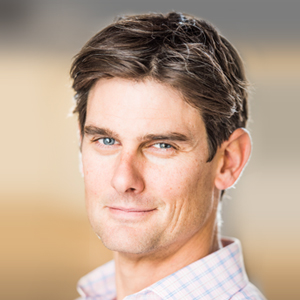
[00:01:22] Ray Latif: Hey everyone, I'm BevNET Managing Editor Ray Latif and you're listening to the top podcast for the food and beverage industry, Taste Radio. This is episode 140, which features an interview with Adam Lowry, the co-founder of Method Products and Ripple Foods. Tune in on Friday, December 7th for episode 11 of Taste Radio Insider, which features a recap of BevNET Live Winter 2018 and interviews with the founders of UK-based brands, Jara Kombucha and Moju Drinks. Just a reminder to our listeners, if you like what you hear on Taste Radio, please share the podcast with friends and colleagues. And of course, we'd love it if you would rate us on iTunes. In co-founding Method, known for its ultra-stylish packaging and environmentally-friendly cleaning products, Adam Lowry helped create one of the world's most iconic consumer brands, one that's found in millions of homes around the world. Yet after selling the company in 2015, Lowry wasn't content to simply sail off into the sunset. In his next act, he's trying to revolutionize the way that people think about dairy alternatives with Ripple Foods, a maker of pea-based protein beverages and foods. Ripple has gotten off to a fast start, having captured the attention of investors—the company's pulled in $110 million in capital since 2014—retailers and consumers, and its pedal-to-the-metal focus keeps Lowry extremely busy, so much so that we had to reschedule our interview a couple times. In our conversation, we explore the development of both Method and Ripple, and how lessons from the former factored into the foundation for the latter. Lowry also discusses his perspective on how the funding environment has changed for CPG brands, why it was important to hire a CEO early into Method's lifecycle, and how the company attracts a world-class designer to its team, and how he manages work-life balance. Here's a hint, it's not easy. Hey everyone, it's Ray Latif from Taste Radio, and I'm on a call with Adam Lowry, the co-founder and co-CEO of Ripple Foods. Adam, thank you so much for being with me.
[00:03:21] Adam Lowry: Well, thanks for having me, Ray. It's my pleasure to be here.
[00:03:24] Ray Latif: Thank you. So I'm going to call with you. I don't know where you are right now. Where are you calling from?
[00:03:28] Adam Lowry: Well, as luck would have it, I'm actually sitting in my old office at Method Products. I needed to be in the city of San Francisco today, and I'm based in the East Bay with Ripple Foods, and they still let me come around here every once in a while. So I booked a conference room, and I'm talking to you from a conference room at my old place.
[00:03:48] Ray Latif: Fantastic. They still have a little space for you, even though you left the company.
[00:03:53] Adam Lowry: That's nice. That's right. They still let me come around. They even asked my advice on a few things from now on.
[00:03:58] Ray Latif: When did you leave the company?
[00:04:00] Adam Lowry: I left in 2015 and I stepped down to start Ripple Foods.
[00:04:05] Ray Latif: So I read that you're from Grosse Pointe, Michigan, which is a suburb of Detroit. That's correct. And did you ever think about getting into the car business?
[00:04:15] Adam Lowry: Oh, yeah, definitely. My parents were in the car business, as are a lot of people in their broader Detroit area. And I'm a big car enthusiast, actually. I love automotive design. I kind of grew up with that stuff and very much thought about being in the automotive industry and actually did a little, actually my first job out of college, I was working in the automotive industry. It's sort of the plastics side of things. But I didn't want to live in Michigan for the rest of my life. So I did go to college on the West Coast and kind of fell in love with the West Coast and wanted to be back out here. Yeah, that's how I ended up in other lines of work.
[00:04:58] Ray Latif: You went to school for engineering, correct? That's right. So how does an engineer become the founder of a, in essence, soap company in Method?
[00:05:09] Adam Lowry: Yeah, it's a little bit of a leap there, but I'll try to make the connections for you. You know, my passion is the environment. I studied chemical engineering at Stanford, and after that brief stint in Michigan, I was working as a climate scientist at the Carnegie Institution for Science. And that's one of the leading agencies that does work, does climate science work. And the work we were doing there was really important. This was in the mid to late 90s. But I got really frustrated with two things. The first was that I was preaching to the converted. I was writing, helping people write articles in scientific journals showing what would happen as we put more CO2 in the atmosphere, for example. And it wasn't leading to policy change. I worked on the Kyoto Protocol in 1997, and we all know where that didn't go. And that was one frustration. And then the second frustration was that as a consumer at the time, I was trying to live what we would now call a greener, more sustainable lifestyle. And every product that I was buying was, frankly, a terrible product. you know, it's ugly, it smelled bad, it didn't taste good, it cost too much, you know, whatever. That was when the initial spark came of like, hey, what if we use business as a way to try to create social environmental change by attacking really big consumer categories that are really ugly and really toxic? And that's what led us, my co-founder and I, a guy named Eric Ryan, to start Method back in late 99.
[00:06:45] Ray Latif: One of the things that really stood out to me was the fact that you guys brought in a CEO so early into the company's lifecycle. And nowadays, you know, we hear so much talk and so much conversation around the idea that founders may not be the best CEOs. You know, what was your thinking? Why did you really feel like having somebody else other than you lead the day-to-day operations was a good idea?
[00:07:13] Adam Lowry: Well when we started Method I was 25 and Eric was 26. So if you're 25 or 26 and think you can be a really great CEO you know there might be a few of those out there but you know I might question your judgment if you think that you have it all figured out in your career you know three or four years in. And so we knew we were going to be going up against the biggest of the big in the consumer products world. And we knew that we were going to have to raise some venture capital which is something that neither Eric nor I had done before. And it is really our philosophy that if you surround yourself with people that are really capable and talented and experienced in the places where you are not, that's a much better way to build a large enduring business that can kind of innovate sustainably over time. And so it really wasn't really a thought for us. We knew we were going to need to get some, you know, some senior leadership. And that was the first person we went out and got.
[00:08:13] Ray Latif: How did you go about identifying what you needed out of a CEO? And then, you know, what was that search process like?
[00:08:20] Adam Lowry: Yeah, I mean, for us, it was really about somebody who had been in the trenches before and tried to build a business him or herself from the ground up, including acquiring the capital that was required to do that, which I can't express how different it was to try to do that in the year 2000 than it is today, the acquiring capital part. But also somebody that was a roll your sleeves up, you know, in the stores, blocking and tackling type of person that could help us do the things and learn the things that we needed to in order to first of all get the business off the ground and then secondly start to scale the business from there. And ultimately we were able to find some an individual that neither of us had worked with before but but Eric was familiar with actually had been turned down for a job at this person's old company, which was a startup in the food space. It was a brand called Covent Garden. It was making fresh refrigerated soups back in the late 90s, so well ahead of its time. One thing led to another and we eventually were able to recruit that person, a man named Alistair Dorward. And then in terms of getting together the resources to be able to hire Alistair, I mean, that was a whole trick in and of itself that required a lot of sacrifices on Eric and I's part and a bunch of other things, too. We were able to make sacrifices as 25-year-olds that you wouldn't be able to make as a 40-year-old. But you can overcome those things. It's not required. to have to make those sacrifices. It was required for Method because we didn't have the access to capital that Ripple Foods does or most businesses do today because just the capital markets have changed. But at that time, for two guys that were in their mid-20s that had no experience in consumer products and were starting a cleaning products company of all things, It wasn't exactly a lightning rod for venture capital investment. And so those sacrifices were required to get the business off the ground.
[00:10:26] Ray Latif: It wouldn't seem to be a lightning rod for a world class designers that either, but you were still able to recruit Karim Rashid. Tell me how you brought him on and what he's done for the company.
[00:10:39] Adam Lowry: Yeah, Karim was the first celebrity designer, if you want to call it that, that we brought on with Method. And the process of getting him to come on board was actually relatively simple. Eric and I were sort of fans of Karim's work, and we had seen him talk a couple of times and introduced ourselves after a lecture, that sort of thing. It was ultimately Eric that got in touch with his studio and Basically his pitch was like listen you design really beautiful stuff and it's you design amazing couches for hotels in Tel Aviv and that's amazing. But what about designing something like an icon that sits on the countertop of every sink in America that cost three bucks. And that was a pretty attractive proposition for somebody like Karim, who really at the time, and I'm sure still is, is really focused around how do we democratize really good design? And what better way to democratize design than to reinvent something that's already in everybody's home and is basically cheap enough that anybody can buy. And so that was the initial entree and what led us into developing the relationship with Karim.
[00:11:51] Ray Latif: How did it work from a salary perspective? I mean, how are you able to pay the guy?
[00:11:56] Adam Lowry: Yeah, as you can imagine, Karim Rashid, he is worth a good amount of money to have you do work for him. We paid him in equity primarily, and we did have a little bit of cash that we paid him, but the majority of it was in options and saying, hey, if you're able to help us be really successful here, the value of what we're giving you here can be much larger than paying you your normal six-figure retainer or whatever it might be.
[00:12:25] Ray Latif: Do you think that's a realistic option for food and beverage entrepreneurs today if they're looking to partner with a designer who might be coming from outside the industry? And if so, you know, does that same pitch apply?
[00:12:38] Adam Lowry: I think there are some parallels. There are pluses and minuses of the current venture market and the current venture market. There's a lot of money out there. Valuations have generally gone up for companies that are private companies that are raising money. And so one of the plus sides of that is that can be used by entrepreneurs to try to attract a talent of any kind, you know, whether that's talent employees or whether it's fancy designers that can help them move the needle on their business. So, yeah, I think that's absolutely there. I think it does depend on the person that you're recruiting whether or not they're motivated by and excited by the idea of having skin in the game. And that's something that's important. If they're not excited by the skin in the game, then it's probably not the right way to compensate them for their work. But you certainly can look for people that are excited by that.
[00:13:33] Ray Latif: So at that point, you know, you had the CEO, you had the awesome designer, you had this visionary product and brand, you know, scaling is the next step. And, you know, taking method from the tiny brand that it was to the just iconic brand that it is today, what were some of the key takeaways throughout that process?
[00:13:54] Adam Lowry: Yeah, actually, I want to, before we move on to the scaling phase, I want to just share that each and every step of the way, there were, you know, incredible challenges. And even when we were able to sign up Karim Rashid, who's this fancy designer and all this, and we brought him to Minneapolis to pitch to Target, who we thought was just going to be like all over this idea of having a designer product in a frequency home care space and you know this sort of space age product that we designed. You know the first reaction we got from from the target buyer was a snowball's chance in hell. That's a direct quote, verbatim. In the interest of time here, we can't go through all of the chapters, but speaking of chapters, Eric and I did actually write a book about the experience and all of the fumbles along the way, and there are hundreds of them. It's just important to point those out that it certainly wasn't a smooth journey from hiring a CEO, raising some money, getting a fancy designer, and shooting to the moon. a million failures in between.
[00:15:04] Ray Latif: It wasn't an overnight success.
[00:15:07] Adam Lowry: I've heard Gary Hirshberg say something like a 27 year overnight success. And it was kind of like that.
[00:15:13] Ray Latif: Yeah, indeed. I mean, you know, when it comes to building any business, there are going to be a lot of challenges. And it sounds like there were, well, quite a few in your case as well, when it came to method, you know, on the on the highest of high levels, I think, what were some of the things that really allowed you to scale in a way that you can still apply to, say, a company like Ripple Foods?
[00:15:35] Adam Lowry: Yeah, I think number one was that philosophy around talent, which is let's focus on what we're really good at and find people that are experts at the things that we're not good at and then put them in a position to be successful. And that's almost cliche in business now. I mean, I don't know who I'm quoting by saying that, but I'm sure that there are 10 business books that say that exact same thing. But I guess sometimes there's reasons why cliches exist, you know, and in this case, I think it's because they're true. And so, for us, what we wanted to do there more specifically was to try to find a mix of talent of people that were really classically trained in the consumer products world, that had come from some of the big businesses, but were maybe not so satisfied with working in a big business and the slowness and the bureaucracy that can kind of come from that. And to try to mix those people with a bunch of complete outsiders. you know, and maybe some of our design team would be maybe more be these the prototype for these types of people, people that have no experience in consumer whatsoever, but you know, we're really talented. And so part of the strategy was really to mix these types of people together and then create a culture and a set of values as a company that would allow these very different people to work together in a way that could produce innovative stuff year in and year out that, you know, ultimately delighted people. And it was that delighting of people that allowed the business to grow.
[00:17:06] Ray Latif: From a funding perspective, you know, what was the approach to attracting new investment and the right investment?
[00:17:14] Adam Lowry: Get it wherever you could. I mean, I can't I can't stress how different it was then, you know, our first round we raised a million dollars the legal bills were a Hundred and ten thousand dollars that we had to pay my right off the bat. It was two tranches So we only got two hundred ninety thousand of that up front. We had four hundred thousand in payables when we got that money so we immediately went from no money in the bank to no money in the bank and And then we had to get in like 800 stores over Christmas back in, I think this was 2001. Yeah, it was 2001. And that's like, it was the tiniest of tiny deals. And we only raised four rounds of capital and we only raised about 20 million bucks in total. It got progressively easier to raise money over time because you were demonstrating a track record, you were having successes and so forth. You know, things are very, very different today in terms of financing businesses like this. And in the early days of Method, it was just, how do we get somebody to write us a check and believe in us? And fortunately, we were able to do that with a fantastic investor that I'm proud to call a friend these days that did take that chance on us in late 2001.
[00:18:32] Ray Latif: It certainly sounds like the funding environment has changed because your current company, Ripple Foods, since 2014, has brought in about $110 million. Is that correct?
[00:18:41] Adam Lowry: Yeah.
[00:18:42] Ray Latif: That's impressive. Earlier in the conversation, we were talking about the automotive industry, the car business. And when I think about Ripple Foods and when I think about Method, I think about a renegade car company like Tesla. You know, all three companies have really... Well, that's an awfully nice compliment. Well, they're all attempting to challenge the status quo when it comes to their respective industries. Do you see it that way? For sure.
[00:19:08] Adam Lowry: For sure. I do appreciate and I'm flattered by the comparison to Tesla, but the aspect of being a challenger brand and trying to challenge the industry to do a lot better on multiple dimensions, whether that's design, nutrition in the case of Ripple Foods, the sustainability in the case of all of those businesses, that's exactly the point. you've got to challenge the status quo to be able, as a smaller business, to show people why you're different and why people should care.
[00:19:39] Ray Latif: So when it comes to Ripple Foods listeners who are not necessarily familiar with the brand, what makes Ripple different? What do you guys do?
[00:19:48] Adam Lowry: Yeah, so our products are dairy substitutes. So we started with a line of non-dairy milks. We make ours from legumes, specifically peas. And the big differentiation is two things, nutrition and taste. So right now, about 90% of the dairy alternatives in the U.S. market have little or no protein. In other words, they lack the number one nutritional benefit of the thing they're replacing. And everybody knows that these products are sort of thin and watery and chalky. And so we think dairy alternatives should be good alternatives to dairy that your milk should have protein in it. Our products has the same amount of protein as the dairy products they replace and they're rich and creamy. the way that milk is and should be. So the sort of organizing idea or the brand promise behind Ripple is dairy-free as it should be. And that just means high in protein, lower in sugar, really delicious. It's a pretty simple proposition, but the key to creating that is actually technology that allows us to get really pure protein so we can make a milk with a lot of protein in it that doesn't taste planty or gross.
[00:20:56] Ray Latif: Yeah, I mean, it's certainly a simple proposition. But as you mentioned, the technology is pretty complex. And there, it sounds like there was a lot of money that had to go into that technology. What was that process like? You know, were you funded before this technology was proven? Or did you provide the technology and then you got funding? How did that work?
[00:21:17] Adam Lowry: They sort of went together. So first of all, yeah, we have raised a lot of money. I'm the first to point out that raising money is not an indicator of success. And so, you know, with large checks comes large expectations. And that's what I think about every day. Most of that money, yeah, we have used to develop a technology. That technology is very simply, we make the purest plant protein anywhere in the world. And what's key about that is all proteins are flavorless. They're really big molecules. You can't taste them, regardless of whether they come from plant or animal. So if you get pure protein, it has no flavor at all. But most plant-based foods taste really planty. And the reason for that is there's a bunch of junk that kind of comes along for the ride. It's kind of stuck to the protein. And so my co-founder, Neil Renninger, developed a process to be able to get all of that junk off of the protein, essentially to wash and clean plant proteins so that they're really pure. And when you do that, you can make plant-based foods with tons of protein in them that taste really, really delicious. And so, to your question about how did that coincide with timing, both Neil and I, Neil had a business before called the Amaris. It's a renewable fuels and chemicals company. And so, he's got some credibility in the scientific space. He did the initial prototyping work on the technology and it showed some promise. That's when we got an initial investment from Coastal Adventures. And that was what we used to do the initial sort of proof of concept on the technology.
[00:22:49] Ripple Foods: And from there, then we started to do the funding rounds to start building the business.
[00:23:11] Ray Latif: And Ripple isn't the only business to invest heavily in technology that's replacing animal-based products. I'm thinking of Impossible Foods and Just, a company that is famous for their mayo and recently launched an egg product as well. Convincing consumers as to the benefits and what this technology delivers is really the name of the game. What's been Ripple's most effective approach to getting people to try the product and then to buy it again?
[00:23:43] Adam Lowry: Well, first of all, for getting trial, nothing works better than sampling. So we do a ton of just getting out at events, running races, mom and baby events, things like that, and just giving the product away. The moment of truth is when somebody tastes the product and has that reaction like, oh my goodness, I thought this was dairy when I first had it. It's rich, it's creamy, all that kind of stuff. That's number one. And then in terms of other ways that we create trial, of course, it's storytelling, it's retail, it's demos, it's all of the things that are quite frankly not the most new media, new world kind of ways, but they are the effective ways of getting people to just you know, take a flyer the first time and give it a try because we are in the fortunate position where we know that when people try Ripple, they generally stick with it. So it makes our marketing strategy really simple. If we can get it in their mouths, then we generally have a customer. And so that's what we focus on.
[00:24:46] Ray Latif: Part of that marketing strategy is making no bones about the fact that you feel strongly about Ripple's nutritional benefits and the lack of nutritional benefits in traditional plant-based milks. You've had some pretty, I guess, edgy advertising to make that point. What are some of the, I'll let you speak on that. What are some of the ways, what's the strategy there in really hammering home that point?
[00:25:12] Adam Lowry: Yeah, well, we think that most of the dairy alternatives that are on the market today are just they're terrible alternatives to dairy. So, you know, take almond milk, for example, which is 70 percent of the dairy alternative market. Milk has eight grams of protein per serving. Almond milk has one. Almond milk is thin and watery and chalky. Dairy milk is really creamy and delicious. Then along comes, in this market, cashew milk and coconut milk. Well, cashew and coconut milk don't have any protein at all in them. And then you start looking into the environmental profile. So it's no secret that almonds use a tremendous amount of water. It takes over a gallon of water to grow one single almond. And that 99% of the world's almonds, or excuse me, the country's almonds, are grown in the Central Valley of California, where drought is an issue. And so there's a huge carbon footprint with moving all the water into the Central Valley to grow the almonds, where almonds shouldn't grow, right? And so this industry has sort of built up on a false perception of healthfulness of Method Products in the dairy alternative space, as well as a false perception of their environmental profile. And so with us, we're changing that just by building our products differently and building the quality in. So we make our product from a legume, a yellow pea. Those are nitrogen fixers, so they generally don't require fertilizer. They're rotational crops that grow in places where it rains, so you don't have to irrigate them. And the carbon and the water benefits are orders of magnitude lower than things like cashew, coconut, or almond milk. And so what we're really trying to do is just try to build a better product. Better product first and foremost from a taste standpoint. Food's got to be Method and Ripple tastes great. It's rich and it's creamy. And it doesn't have a planty flavor the way that many of them do. Number two, from a nutrition standpoint, if it's going to replace your milk, it better be as healthy as milk or more, and our product is, not just on the protein side, but healthier fats, no cholesterol, more calcium and vitamin D and so forth. And then it should also be environmentally friendly and socially conscious, which our product is very much so against both dairy and the other dairy alternatives. And so to the point of the edgy marketing, we have done a number of things to try to wake people up to the fact that hey, you've got choices and you don't need to sacrifice when you're thinking about trying to have a plant-based alternative to dairy. You can have something that meets your nutritional needs and your taste needs and your environmental desires. But what it requires is just being aware of the fact that not everything out there is really that great.
[00:27:58] Ray Latif: We've talked about sampling, we've talked about marketing, retail and distribution also, all very expensive. And I'm curious about one thing. The technology that you have is the heart of the brand. So did you ever think about selling the technology to a big food company, to a conglomerate that might have more resources, that might have more of a reach, that already has a built-in marketing department, that already has a built-in sales department? Was that ever a thought instead of actually creating a brand?
[00:28:31] Adam Lowry: Well, let me say it this way. In short, the answer is yes. And the reason why is if you think about the worldwide potential for really pure, low-cost protein, that's way bigger than any non-dairy brand in the North American market or you know, any amount of business that we will be able to execute by building our own teams and doing it ourselves, right? The potential for the technology is way bigger than us. So, yeah, I am motivated by how do we create impact through this technology. And one of the best ways to do that is to partner with somebody that has global scale and has global reach. So, yeah, that's something that we have considered, something that we continually explore. And, you know, we continually talk to a number of large companies about, is this something that both parties want to do and how would that potentially happen? We don't have any partnerships like that right now, but we certainly hear from large companies all the time. And if it's a way to help us grow our business and grow our impact, then it's, of course, it's something that we'd be naive to say, no, we shouldn't look at that.
[00:29:45] Ray Latif: I mean, you launched in the beverage category with the milks. You launched a kids line, a half and half line, recently got into yogurts. What are some of the other applications that you're looking at for the technology?
[00:29:58] Adam Lowry: Man, you should taste our ice cream. That stuff is the best non-dairy ice cream out there. And that's just something that we've been toying with in the lab. You know, for us, the Ripple brand is dairy-free as it should be. So we're building Ripple into a master brand across the kitchen, anywhere where products are typically dairy-based. So another example of that that you didn't mention is we just launched nationally a line of nutritionals products, nutritional protein shakes, protein powders for the sports nutrition area. And so that's a product that's normally whey-based or dairy-based, and we're providing a plant-based alternative there that's really tasty. And I'm not sure how familiar you are with this category, but plant-based, high-protein nutrition products are generally terrible. They taste like you're chewing the plant in the field. And our technology showcases itself really well in that category. So, every good brand has edges, even a lifestyle brand. For us, the Ripple brand is really about that dairy regimen and everywhere that you can go there. So, you can imagine anything that milk, yogurt, cheese, ice cream, those are all places we can play.
[00:31:11] Ray Latif: You mentioned lifestyle. I mean, do you see Ripple as a lifestyle brand?
[00:31:15] Adam Lowry: Yeah, very much so. I mean, the Ripple brand is based on, it's a playoff of the Ripple effect. And really what we're trying to do with the brand is, I believe that food is a world that has way too many rules. Food is all about rules. It's eat this, don't eat that. That's good for you, that's bad for you. Oh, wait a second, now that's good for you, and what was bad for you is now good for you, and what's good for you, you know. And it's exhausting and it's confusing. and it's full of guilt. And so what we're trying to do with the ripple effect is we're trying to just celebrate those little things that you do every day to make yourself a little healthier and the world a little bit better. And if that's, you know, you buy a ripple milk instead of a dairy milk or an almond milk that uses a lot of water, good on you. You should feel good about that and be celebrated for that rather than, you know, feeling guilty for the fact that you did one thing or another. We think that Most people live their life through debits and credits. It's like, yeah, I had meatless Monday and you know what, on Friday I had a burger with my friends. And we feel like you should be celebrated for the meatless Monday rather than chastised for the burger on Friday. And that the ripple effect and doing those little things every day is the way that people make themselves better. And that's really what the ripple lifestyle is. It's getting a little bit better every day.
[00:32:35] Ray Latif: What does it say about a consumer that buys and consumes Ripple products? Because, and I ask that, you know, if you have a Method Products in your home, for example, it says something about you. It says that you're a stylish person. It says that you maybe you're committed to the environment. But what does it say about a consumer that buys Ripple?
[00:32:53] Adam Lowry: Well what I hope it says over time is hey I'm somebody that's doing a little bit better every day just like I kind of said with the brand lifestyle. It's somebody that knows that they're making a plant based choice and that they don't want to have to sacrifice in making that choice. You've got a situation now in America where plant based eating is going very very mainstream. And what that means is that people that don't have to eat plant-based are choosing to eat plant-based. And what that means is people are no longer going to be willing to sacrifice on things like the taste and the nutrition and the experience of the product. So, for example, 86% of people that buy non-dairy milks are not lactose intolerant. In other words, these are people that can buy milk and are choosing not to. So those are people that aren't going to want to sacrifice in their experience. And so if we want plant-based foods to go really mainstream, which is good environmentally, socially, obviously good from a business growth standpoint as well, then we need the food to be really great. And hopefully having Ripple in your fridge says, I get that.
[00:33:59] Ray Latif: You know, I'm listening to you and we're having this conversation and it's so amazing to me to think that you had an incredible success with Method and could have walked away. And this idea of ripple, just the overarching mission is what our CMO Mike Schneider would call a BHAG, a big, hairy, audacious goal. And I often ask this of entrepreneurs who get back into the game, so to speak. I know you're an avid sailor. Why not just, you know, start sailing the world? And there you go. I mean, you know, why go back into this and why put yourself through this? Which sounds like a very challenging goal.
[00:34:41] Adam Lowry: Yeah, I'm asking myself that same question sometimes. Yeah, no, I joke sometimes that I went into the only category lower margin than cleaning products, which is milk. And so maybe I'm just a glutton for punishment. No, you know, listen, I think I, like a lot of people, I want to align my work with meaning. You spend a lot of time working and If you can align what you're gutting it out every day doing with your purpose and your passion as an individual, that's sort of as good as I think it gets. And my career goal is really to do as much good environmentally and socially as I can through business before I retire, which will probably be, you know, when I fall over. I would, just for the record, love to do a little bit more sailing, but my passion is trying to use business to try to create some positive outcomes. The opportunity with Ripple Foods in clean protein and the potential that that holds is really tremendous. We're actually, I can only sort of talk about this in veiled terms, but we've recently received some grants from some very high profile nonprofits working in the hunger alleviation space, right, to develop our protein technology for places in the developing world. to bring protein at a very low cost to people that need protein. You know, Americans generally get enough protein. And so that's the type of stuff that's really motivating for us and for me personally, and I guess that's what makes the gutting it out worth it.
[00:36:19] Ray Latif: You mentioned you have two kids, you're married. Family is an important part of many people's lives. You know, what does family mean to you? And how do you balance, you know, your personal obligations with your professional ones?
[00:36:33] Adam Lowry: Yeah, you know, for me, I'm much more of a work-life integration guy. Work-life balance has never really worked for me. I can't turn on and off work. But at the same time, you can't be working all the time and stay married and have a healthy relationship with your kids. So for me, what that looks like is when there's something I need to do and I need to be with my family, I go and do that thing. And when there's something that I need to do that is work-related, I'll try to carve that out if it requires doing it on a weekend. you know, late at night or something, I'll try to carve that out. But I then try to preserve moments with my family so that, you know, when I try to leave the office around five and go home and be with my kids until they go to bed and, you know, I'll pick up the work after that, I try to create habits that allow me to integrate well, because my brain doesn't really ever turn off of work or off of family and my personal interests.
[00:37:41] Ray Latif: Hamdi Ulukaya, the founder and CEO of Chobani. I read once that he was giving a talk to entrepreneurs and he said, never turn off your cell phone because you might get that late night call that's so important to the future and success of your company. Do you ever turn off your cell phone?
[00:38:00] Adam Lowry: No, but sometimes I don't answer it.
[00:38:04] Ray Latif: Okay, fair enough.
[00:38:07] Adam Lowry: You know, my reaction to that is yes, and that could be construed in a really bad way, where you always have to be on, right? And I don't think you always have to be on. And personally, for me, I can't always be on. I need to go recharge my batteries. Exercise is a big part of that for me. And I have to do that stuff, or I go nuts. And so I think yes, but with a little bit of grain of salt, I guess.
[00:38:36] Ray Latif: This has been so great, Adam. I really appreciate you taking the time. I do want to ask you about working with a co-founder. This is your second company and both times you've had a co-founder, a co-pilot. How important has that been to each company? How important has that been to both Method and Ripple?
[00:38:53] Adam Lowry: Yeah, I think both Method and Ripple Foods, their strategies have been a reflection of the skills of the founders. And so it's sort of inextricable for me, this link between the business and the success that we have had with Method and that we're trying to create with Ripple Foods, and the skills that the founders bring to those two things. With Method, it was really this combination of bringing like great design with deep sustainability together in an everyday mundane sort of product category like cleaning. And that was very much sort of the skill set of Eric, my co-founder and myself. With Ripple Foods, it's very much this idea of how do we build both a consumer brand in that sort of traditional way, sense that you're building a consumer brand and business, while also building technological capability. And that is also very much a reflection of sort of Neil and myself in terms of our areas of expertise. What I think having a co-founder does is it forces you to always challenge your thinking, and justify your thinking and it makes you smarter. It also is another person that has a skill set that you don't have that can add more dimension and strategic differentiation to your business than you could just all by yourself. Obviously, working in the trenches with one other person is intense. It is definitely like a marriage. I mean, you are with Eric, with Neil, and my wife, Mara. I'm closer with Mara, but maybe not by much. in terms of like, you know, the depths of conversations and kind of the types of stuff that you got to work out between, you know, just the way different working styles, different goals and objectives, things like that. So it definitely requires being immensely self-aware, being able to put your ego aside and focus on what's best for the business using all the skill sets that are available.
[00:41:01] Ray Latif: I really can't imagine what it's like to, you know, have a couple different marriages. I'm married and one's enough and trying to be married to your wife and your co-founder is that's going to be pretty difficult.
[00:41:14] Adam Lowry: Does that make me a polygamist? I'm not sure.
[00:41:19] Ray Latif: One of the things that you mentioned earlier was this notion of career goals. And I haven't really heard that term very often. Are career goals something that you've considered, you know, for a long time, or is it just something that, you know, is relatively new?
[00:41:32] Adam Lowry: It's always been central for me. Always. So the first, the very first job I took out of school at the plastics company in Michigan was pioneering the use of recycled plastics, you know, over 20 years ago before that was like even a thing. I'm doing patented science work on that. Working at the Carnegie Institution on Climate Science was my way of saying, how am I going to contribute to making the world a better place from an environmental standpoint? And then, as we've talked about, both Method and Ripple Foods were born out of that. So to me, it's kind of who I am. And I want there to be purpose in whatever work it is that I'm doing.
[00:42:13] Ray Latif: Adam, this has been such a great conversation. I really appreciate you taking the time. Good luck with everything going forward with Ripple. I can't wait to hear more about the company's future and perhaps try that ice cream someday.
[00:42:27] Adam Lowry: All right. My pleasure. Well, thank you for having me, Ray. It's always fun to tell the stories about the old days, and it's good to look back on the hard work that you're doing right now and remind yourself why you're doing it.
[00:42:37] Ray Latif: For sure. Thanks so much again. Thank you. That brings us to the end of episode 140. Thank you for listening, and thanks to our guest, Adam Lowry. You can catch both Taste Radio and Taste Radio Insider on Taste Radio.com, iTunes, Stitcher, Google Play, SoundCloud, and Spotify. As always, for questions, comments, ideas for future podcasts, please send us an email to askatasteradio.com. On behalf of the entire Taste Radio team, thank you for listening, and we'll talk to you next time.