[00:00:00] SPEAKER_??: you
[00:00:10] Ad Read: This week's episode is brought to you by Oracle NetSuite. For more than 20 years, Oracle NetSuite has helped organizations grow, scale, and adapt to change. Used by 16,000 customers in 203 countries and dependent territories, NetSuite is a global leader of cloud-based applications. NetSuite's Cloud ERP for the food and beverage industry can help you with inventory, order management, e-commerce, financials, and CRM. With many customers throughout the industry, NetSuite has experience supporting businesses like yours. For more information on how NetSuite can bring your food and beverage brand to the next level, visit netsuite.com slash taste. And now, Taste Radio.
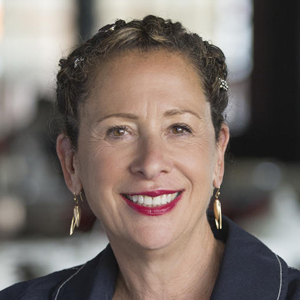
[00:01:01] Ray Latif: Hey everyone, I'm Ray Latif, and you're listening to Taste Radio, the top podcast for the food and beverage industry. This is episode 148, which features an interview with James Beard Award winning chef, entrepreneur, and author, Nancy Silverton, who discussed her remarkable journey as a food innovator and icon. Tune in on Friday, February 8th, for episode 20 of our Taste Radio Insider podcast, which includes conversations with Cara Golden, the founder and CEO of flavored water company Hint, and James LeCompte, the CEO of luxury brand Toac Chocolate. Just a reminder to our listeners, if you like what you hear, please share the podcast with friends and colleagues. And of course, we'd love it if you could rate both Taste Radio and Taste Radio Insider on iTunes. When considering the breadth of her career as a chef and restaurateur, one might ask, what hasn't Nancy Silverton accomplished? Having cut her teeth in the restaurant business nearly 40 years ago, Silverton has consistently been lauded as one of the greatest chefs of our time. Honored twice by the James Beard Foundation, first in 1991 as the Outstanding Pastry Chef in America, and in 2014 as the recipient of its Outstanding Chef Award, her contributions to American cuisine are legendary. As the founder of La Brea Bakery, she helped redefine how bread was prepared and presented in restaurants and eventually on dinner tables across the US. She went on to co-found the influential Mozza Restaurant Group, which operates pizzerias and fine dining establishments in Southern California. Silverton is also the founder of Nancy's Fancy, a luxury brand of gelatos and sorbetos, which she launched in 2015 and has appeared as a guest judge on the popular television show Top Chef. In an interview recorded at the 2019 Winter Fancy Food Show, Silverson spoke with Nosh editor Carol Ortenberg about her approach to cooking and food innovation and discussed the development and emergence of La Brea, which was sold in 2001 for over $55 million. She also explained why, quote, having a business is not a hobby, why she's always trying to create food that is craveable, and how she navigates the challenges of modern marketing, aka making your restaurant bathroom Instagramable.
[00:03:21] Carol Ortenberg: Hi, everyone. Carol Ortenberg, editor of Nosh here. I'm with Nancy Silverton, who is the co-owner of the Mozza Group and also founder of Nancy's Fancies. Thank you so much for being with us.
[00:03:33] Nancy Silverton: A pleasure to be with you.
[00:03:34] Carol Ortenberg: So we're here at the Winter Fancy Food Show. How many times, how many of these shows have you been to so far now?
[00:03:40] Nancy Silverton: Well, with the Nancy Fancy brand, this is my third, fourth, something like that. But you know, back in the day, I used to be an exhibitor here with La Brea Bakery when I owned La Brea Bakery. And so you would have found me, as opposed to scooping spoonfuls of gelato, you would have found me making grilled cheese sandwiches using all the different varieties of breads from La Brea Bakery.
[00:04:11] Carol Ortenberg: Well, you are an icon of the food industry, specialty food industry. And I guess to start, I'd love by introducing our audience to what Nancy's Fancy is. What is the mission of this gelato company and how did it come about?
[00:04:29] Nancy Silverton: Well, the mission, of course, is to sell one pint of gelato to every family or every household across the United States. I haven't quite completed that mission, but that is the mission.
[00:04:44] Carol Ortenberg: You're well on your way.
[00:04:45] Nancy Silverton: Yeah, but I'm well on my way. One pint at a time. You know, actually, I have to say that it was not my entrepreneurship that got me to make gelato. It was more so that A company, L.A. Creamery was the name of the company, came to me and asked if I would supplement their ice cream brand, the ice cream leg of their business with a gelato addition. And so I provide the recipes. I do all of the approvals, everything like that. But they really do a lot of the work, which is the marketing and the production of my gelatos.
[00:05:34] Carol Ortenberg: But that speaks to something that I think every good food entrepreneur has to realize. What's your strength? Yeah. And how do you find those people that complement where you have less interest or less strength in that area?
[00:05:49] Nancy Silverton: My weakness is the business aspect. I like the fun and the creativity. So it's a perfect relationship.
[00:05:56] Carol Ortenberg: But how do you balance that? How do you come up with ideas for products that, you know, then can be taken into marketplace and appeal to every consumer in America and get them to put your product into their cart and then their homes?
[00:06:11] Nancy Silverton: You know, there's certain... Well, let me just backtrack for a second, let you know that the reason that L.A. Creamery came to me is that we have a very strong gelati and sorbetti component to the restaurants that I have. Right. And so with that, they came to me and thought that it would be a great addition to their line. However, there's certain flavors, say, or certain combinations that we make that just wouldn't work in the marketplace for various reasons. Some are that it wouldn't be cost-effective. Some are that they are just very difficult to make. Others are very seasonal. You know, when you're in a manufacturing business, you have to have the vision to think, you know, close to a year ahead. So some are very, very seasonal. So you can't do everything that you do sort of on premise like we do at our restaurants. You just have to be very realistic.
[00:07:16] Carol Ortenberg: And as you sort of referenced, this is not your first rodeo with launching a food product. You started La Brea Bakery, which is one of the most iconic bakeries in the US, award winning, and introduced the concept of fresh baked bread to millions of consumers. For our listeners, can you talk about the history of that company and what the business was?
[00:07:42] Nancy Silverton: Yes, so we're talking back in 1989. Okay, that was quite a long time ago. That's when La Brea Bakery opened. But the previous years, I and my then husband were looking for a location for Mozza Restaurant. So what we were looking to to do was to open Mozza Restaurant. And through looking at various locations, it also kind of dawned on me as we were looking to try to find a location where we could also have a bakery so that we could make bread and serve great bread at Mozza Restaurant. At that time in Los Angeles, there really wasn't good bread to find. And I knew intuitively that the importance of good bread at a meal, you know, and at that time, it sounds like ancient history, but it was only 1989, but it was sort of ancient history, that bread was always the free product that you offered in Mozza Restaurant, you want to pay very much money for it, and it wasn't very good. But I really recognized the importance of of having good bread as part of having a great meal. I was lucky enough to find a building that had enough space that I would be able to open this restaurant, but also open a bakery. It started out as a very small bakery. I taught myself how to make the type of bread that I had eaten in France that I wanted to make. And that's really how La Brea Bakery started. Little did I know that it would be such a huge success so early on. And with myself and the help of our manager, we were able to turn it into what is right now an international product. And just to make sure our listeners understand, it's a product that is baked 80% and then it's frozen. And so yes, it is fresh bread when it is baked off at store level Mozza Restaurant level. And what is so wonderful about it is that it is able to reach all the people out there that may not have a local or a good bakery that they can buy from.
[00:10:11] Carol Ortenberg: Now, it might have started off as a small bakery, but as you alluded to, it really continued to grow.
[00:10:16] Nancy Silverton: Yeah, it continued to grow and we didn't have the resources, i.e. the money, to grow it. in-house. And so our first step was that we found a group of investment bankers that gave us a lot of money that we were able to build this large bakery. that we were able to do this par-baked bread that we sort of envisioned would be what would make La Brea Bakery a international available bread, which it became. And so that was the first step. A year or two after that investment, we were bought out by an Irish company. that was actually a company that was traded on the stock market in Ireland. It was a big company. I mean, here all of a sudden I was with a corporation that I never thought I would have to, not have to, but that I would actually be living That life, you know, I was just really, you know.
[00:11:28] Carol Ortenberg: That's a bit of culture shock, I imagine.
[00:11:31] Nancy Silverton: Very bit of culture shock when you have to answer to people that are responsible to stockholders. And they operated it for at least 10, maybe 15 years. And then it was bought out from them, from an even larger company that was based out of, I think it is, I think it might be Swissy and I'm not positive, but it's a company called Arista that has many different companies, all food related.
[00:12:01] Carol Ortenberg: Talking about that culture shock and dealing with all different types of people and seeing a company grow, are there some key takeaways you learned through that process that resonated with you as you then opened Mozza Restaurant and thought about in your own businesses as well as Nancy's Fancy?
[00:12:20] Nancy Silverton: I think the one that really I learned was that having a business is not a hobby, that there's responsibilities.
[00:12:28] Carol Ortenberg: What do you mean exactly by that? Like, did that change how you approached future endeavors?
[00:12:34] Nancy Silverton: No, just that there are, and I don't necessarily mean in a negative way, but there are compromises that a business is a business and it has to be run like a business. And so everything that you thought you wanted to do when you were very young and naive and just starting out in the business, you needed to take or one needs to take a second look at, if that makes any sense.
[00:13:00] Carol Ortenberg: No, I think that's another lesson that entrepreneurs have to learn over time is you can have these grand aspirations, but when it comes to the practicality of running a business, sometimes that's compromises in who you partner with and realizing you need people to help you along that journey. Sometimes that means ingredients or sourcing. Compromise doesn't have to be a bad thing either.
[00:13:22] Nancy Silverton: No, it doesn't have to be a bad thing, but sometimes compromise keeps you in business.
[00:13:26] Carol Ortenberg: That is a fair point. When you talk about bread, it evokes the idea of breaking bread around a table with family. And that concept of accessibility and sort of appreciating food for what it is, that's a theme that's run through a lot of your businesses, your restaurants. It's not molecular gastronomy. It's things that people feel deeply connected to, like a great loaf of bread. How have you kind of kept that as a note throughout your whole career and kept that as a focus?
[00:13:59] Nancy Silverton: You know, as being a restaurateur, I want to attract as many people as possible. And I want to make sure that people want to come back. And I think very early on, I recognized the value of trying to create dishes or loaves of bread that are craveable. That a person wakes up in the morning and the first thing they think about is, I want to go to, say, Mozza. Or I want to go to the store and I need to buy another pint of Nancy's Fancy. because I am craving that flavor. And then in the restaurant, being able to also deliver the experience, it's a win-win. And I think what happens so much in food that lacks that crave-ability, and usually it happens when food is over-manipulated, that you might eat the food, and you may have left that restaurant with feeling that that was something delicious, but would you ever want to eat it again? And oftentimes, the answer is no. So I think that when you hit that note, you usually hit that note with flavors that are familiar, because that's what brings people back.
[00:15:28] Carol Ortenberg: I almost feel like social media has made that a little worse, because now it's about also taking a picture of the restaurant. Yeah, no, it definitely is. And doesn't it look pretty? And is it Instagrammable?
[00:15:38] Nancy Silverton: Yeah. It's interesting, because I don't Instagram myself. I do have, there are people that are involved.
[00:15:45] Carol Ortenberg: in the restaurant.
[00:15:47] Nancy Silverton: Yeah, I know, but I do not Instagram myself, nor do I have an account, so I don't get to look at other people's Instagram. But it's just so interesting when people talk about that. And I never would have thought that that was a reason to create a dish, was because it was Instagrammable. You know that people are saying now, when you're designing Mozza Restaurant, you have to make sure that the bathrooms that you design are Instagrammable because I guess that's like the new thing people love.
[00:16:19] Carol Ortenberg: Bathroom selfies. Yes, it is.
[00:16:21] Nancy Silverton: It's a big thing. So I have to go redesign Mozza Restaurant.
[00:16:24] Carol Ortenberg: I took an elevator selfie today. It was really good wallpaper in our elevator. I'm not an Instagram person myself, but there is something to that like really attractive decor or things like that. But it's easy to get caught up in snapping pictures and not just be part of the experience of the meal you're eating.
[00:16:41] Nancy Silverton: Yeah. It is, but you know what? I think it's here to stay.
[00:16:45] Carol Ortenberg: So are these things that you keep in mind at the restaurant? You know what?
[00:16:50] Nancy Silverton: I don't because I look at a plate anyway. But my, what I look at is like what I find is beautiful on a plate would not necessarily be what somebody that wants to Instagram it is. But I do look at what I put on a plate. and the aesthetics around that.
[00:17:14] Carol Ortenberg: Well, part of Cravability is visual appeal. Yes. That you see it and you just want to consume it.
[00:17:19] SPEAKER_??: Yeah.
[00:17:20] Carol Ortenberg: And have you carried that sort of craveability factor into designing the flavors for Nancy's Fancy and how you think about that product?
[00:17:28] Nancy Silverton: Absolutely, you know, and without speaking down on, not necessarily my competitors, but a lot of other gelato and ice cream companies' labels that are out there, I find if I had to say what I didn't find to be craveable, is oftentimes the written combination of what is on the label sounds sort of exciting and maybe craveable, and then you go to taste it, and it just doesn't deliver. So I try in my designing of the various flavors to stick with ingredients that are very, very prominent. Because once you freeze an ingredient, you freeze a lot of the flavor out of there. So I want people to know what they're eating. So if they're eating something that is a passion fruit, then it tastes like passion fruit. If it's coffee, it tastes like coffee. Something that you don't need your eyes. to know what you're eating that, you know, you would know it by just spooning into your mouth. The other thing is, is that I find some of the very kind of esoteric and not necessarily dessert-friendly ingredients that people add to their ice creams and their gelato can be very, for me, very off-putting.
[00:18:51] Carol Ortenberg: I will say, though, you still have pretty bold flavors in here that are...
[00:18:56] Nancy Silverton: Bold but not weird. How about that? Okay. Like, there is a gelato or an ice cream company that does a seasonal flavor that's supposed to taste like a Thanksgiving dinner. Like, who wants turkey in their ice cream, right?
[00:19:13] Carol Ortenberg: Not me personally, but do you have to do education to explain to consumers what these ingredients are? How do you sort of take them on that journey and help them understand what these flavors are? Because in, you know, LA, San Francisco, urban centers,
[00:19:31] Nancy Silverton: These might be known, but in other parts of the country they might be seen as slightly more adventurous still. that understands chocolate and knows what the bean is, and they know that that's what the, you know, the cocoa nib is before it's processed into chocolate. So flavors like that, but I really wouldn't say that that many. Possibly passion fruit, right, could be a fruit that not Maybe not everybody, you know, across the country would maybe be exposed to. So you're right, it probably does need some sort of education and that's what's great about shows like these is that you are able to, you know, sort of have a conversation with the people that would be purchasing your product.
[00:20:24] Carol Ortenberg: Now, speaking of ice cream, it says this right on the side of your packaging and is very notable that you're the only chef in the US to receive the James Beard Award for Outstanding Chef in America and Outstanding Pastry Chef in America. You don't see many chefs who go back and forth. Seems like left brain, right brain a little bit. I imagine that ability to be creative yet very precise plays out in other aspects of your business as well. Well, in the kitchen it does.
[00:20:57] Nancy Silverton: But I'm lost once I step out of that kitchen, believe me.
[00:21:03] Carol Ortenberg: How was that switching back and forth between the two? You know, was that a journey that taught you anything about yourself along the way?
[00:21:11] Nancy Silverton: So my initial training, when I first started cooking, I went to school in London at the Cordon Bleu. And there, not only did I have an overview of all parts of the kitchen, my least favorite at that time was pastry. It was very intimidating to me. My first job outside of the Cordon Bleu was Mozza Restaurant that I wanted to work at. It was on Michaels in Santa Monica. And the only opening was in the pastry department. So I took it just to get my foot in the door, and I ended up loving it. That is where I stuck for, well, most of my career. It wasn't until I opened Mozza that I took on the, really, the responsibility of not necessarily the cooking of all the dishes, but of writing the menus and creating the dish, yes. But I had always had a big interest, and even when I was at Campanile and the roles of my then husband and myself were sort of divided, I was pastry, he was savory, I still spent a lot of time in the savory kitchen. And it's definitely, I felt very comfortable there.
[00:22:26] Carol Ortenberg: A lot of our listeners range from first-time entrepreneurs to seasoned veterans. You have had such an amazing career. What is your piece of advice to them as they think about their businesses? You know, what keeps you motivated as an entrepreneur? What should they always think about? You know what I think? Just a small question. Right.
[00:22:49] Nancy Silverton: Just a small little question with a small little answer. This is all for people that, when you say like entrepreneurs, you don't mean people that are opening Mozza Restaurant and stuff, but people that want to have a product out there.
[00:23:02] Carol Ortenberg: Everyone in this space. So like ice cream.
[00:23:05] Nancy Silverton: Yeah. I think it's just making sure that what you're creating is something that's marketable. What do you mean by that? Tell us more. Well, I mean a product that people want. So obviously when you do the show and you walk by the cheese and the sliced meats and the olive oils, right? But then there's a lot of people that have these niche kind of businesses that they're trying to promote. Some of them are a little bit austere where I feel like the market for them is so limited, you know? And it's a big task to go into some sort of a production of a product, you know? So I guess I would say doing some test marketing before, maybe see how people react to whatever this product is that you might be making and giving to your neighbors who love it and say you should sell it, right? Because not everything is sellable.
[00:24:07] Carol Ortenberg: That is a great point. You have created some very sellable gelato and Brad Avery the years. So thank you so much for taking time out of the show and being with us.
[00:24:15] Ray Latif: Thank you.
[00:24:15] Carol Ortenberg: What a pleasure talking to you.
[00:24:19] Ray Latif: That brings us to the end of episode 148. Thank you for listening, and thanks to our guest, Nancy Silverton. You can catch both Taste Radio and Taste Radio Insider on Taste Radio.com, iTunes, Stitcher, Google Play, SoundCloud, and Spotify. As always, for questions, comments, ideas for future podcasts, please send us an email to askatasteradio.com. On behalf of the entire Taste Radio team, thank you for listening, and we'll talk to you next time.