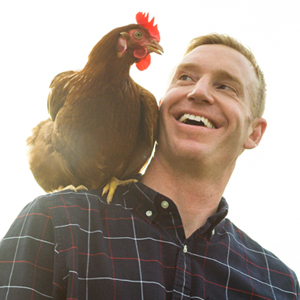
[00:00:10] Ray Latif: Hey folks, thanks for tuning into the Top Podcast for the food and beverage industry, Taste Radio. I'm Ray Latif, and you're listening to episode 160, which features an interview with Jesse Laflamme, the CEO of organic egg brand Pete & Jerry's, which recently crossed $200 million in annual sales. Tune in on Friday, May 3rd for episode 32 of our Taste Radio Insider podcast, which includes an interview with a trio of leaders from First Beverage Group, an investment and advisory firm that holds stakes in a number of fast-growing beverage brands, including Sencha and HealthAid Kombucha. Just a reminder to our listeners, if you like what you hear on Taste Radio, please share the podcast with friends and colleagues. And of course, we'd love it if you could rate us on iTunes or your listening platform of choice. So Jesse Laflamme arrived for his interview in a sharp outfit. Blazers, pressed shirt, and slacks. Some real GQ sensibilities there. It was only one issue. He was soaked. The weather that Monday was downright nasty, with cold rain covering everything in its wake. And despite a short walk from our parking lot to the front door, Jesse got drenched. Nevertheless, he seemed to be in good spirits, and as we started talking, I got the sense that Jesse had been exposed to more than a few raw, wet days during his many years in the family business, that of egg farming. Yet early into his career at Pete and Gerry's, rain was the least of his worries. The company was in turmoil and on the verge of bankruptcy. Although his parents urged him to consider another profession, he stayed on, and over the past 20 years, Jesse's shepherded a remarkable turnaround. As I mentioned earlier, Pete and Gerry's has become one of the country's leading egg brands, pulling in over $200 million in sales in 2018. In the following interview, I spoke with Jesse about how the company not only got back on its feet, but excelled far beyond anyone's expectations. Hey folks, this is Ray with Taste Radio. I'm at BevNET headquarters inside the Taste Radio studio, and sitting with me is Jesse Laflamme, the CEO of Pete and Gerry's. Jesse, thanks so much for being with us. Thank you for having me. So I'm sure there's a question on everyone's mind at this point. Maybe just me, because I'm kind of weird. I got to know, how many eggs do you think you've eaten in your life? Oh, God.
[00:02:28] Jesse Laflamme: I have no idea, but I did recently have 15 eggs in one day. Yeah, that was a little excessive. I forgot lunch, forgot to bring lunch and hard-boiled eggs mostly. But yeah, it was a full day.
[00:02:43] Ray Latif: I was feeling it. 15 eggs? I know that's not like Joey Chestnut level, That's still a lot.
[00:02:50] Jesse Laflamme: Yeah, but I'll typically have three to eight eggs a day. All hard-boiled? No, usually three fried in the morning and the rest hard-boiled.
[00:03:01] Ray Latif: Wow, I'm still blown away by those 15 eggs. So these are good eggs that you're eating though. So like, let's be clear. Exactly. These are very high quality eggs. That's the difference. That's how you can do it. So what differentiates Pete and Gerry's from any other egg?
[00:03:14] Jesse Laflamme: Yeah, there's a significant difference just in how we produce the eggs. I mean, that's the start. Our egg industry that we occupy is really one of the most consolidated and vertically integrated agribusinesses out there. 30 years ago, there were thousands of egg farms across the country, thousands of egg businesses. And that's been consolidated down to less than 200 in recent years. And these are really massive-scale conventional egg farms. They'll have anywhere from 1 million to 5 million hens in one single place. that intensity of production, factory farming really.
[00:03:51] Ray Latif: Did you say 5 million to 1 million? Yeah. Did you mean 500,000 to 1 million?
[00:03:56] Jesse Laflamme: Or 1 million to 5? A million to 5 million. A typical farm would be a million hens in one place in battery cages. And to even go farther on this, a barn will have 500,000 hens in it now. That's not exceptional at all. And then battery cages, They're just sort of these rows and stacks of wire cages where up to nine hens will spend their entire life in about the volume of an average microwave oven. It's a tiny little space, all wire. So, it's really an inhumane environment, not a pleasant environment. And the hens, it's a commodity. So the producers of these eggs are trying to minimize cost, which includes labor and overhead and everything else, but also includes the quality of the grains and the feed that they're putting into the hen. So as empty as they can make the feed of nutrients and other beneficial elements and still get an egg, they're winning and that's what we have with conventional eggs today. Our model and our farms, it's a stark contrast. It started with our family farm in New Hampshire, but it's grown to a network of over 130 family farms in about a dozen states. These are family run farms, family scale, and the hens are outside of cages. They're actually certified humane free range, which is a third party auditor. The hens are able to Act like hens, that's the start. They wander around the hen house, they lay their eggs in nests, they have perching, scratching, roosting, all their natural behaviors can be exercised inside that hen house. But then when it's warmer and nice out, they can go outside and be in pasture and grass and free range. In addition, our organic eggs, the hens are actually fed certified organic grains and that means that the grains are grown without pesticides, herbicides. Hens can't be given any antibiotics or any medications throughout their life. So, you know, very different models, supply chain intensive in terms of all the, you know, the network and moving eggs around and processing and getting them back out to market. Very, very different from how 90% of eggs reach the market.
[00:06:01] Ray Latif: You went to school, you went to college, actually with a colleague of mine here at BevNET, Adam Stern, you guys went to Bates together. But I can only assume that when you were 18, you weren't thinking about, well, being the CEO of an egg company.
[00:06:15] Jesse Laflamme: Exactly. Yeah, it was really the last thing on my mind. And truthfully, my parents never encouraged myself or my brother to come back into the family business, the family farm. They were really just encouraging us to get away. So egg farming was the last thing I was thinking of at Bates, other than I really like where I grew up and it's beautiful. So I was drawn to figuring out how I could possibly get back there, but we didn't think there was a future in the family farm, essentially. My parents, Jerry, Pete and Gerry's, actually took it over from my grandfather. He married the farmer's daughter and began egg farming for the first time in his life. We became quite good at it, but we didn't scale the way the rest of our competitors did and the way the rest of the industry did. During the time that I was growing up as a kid on the farm, they found themselves competing with these very large agribusinesses. In fact, one in Maine that supplied most of New England did have close to 5 million hens in one place and was a really sort of unethical character.
[00:07:14] Ray Latif: I'm still trying to wrap my head around this. Five million hens. What does that look like?
[00:07:19] Jesse Laflamme: It's got to be scary to see. Oh, it's crazy. Yeah. A lot of chicken manure.
[00:07:23] Ray Latif: It's a mess.
[00:07:23] Jesse Laflamme: It's really dark. No natural sunlight in these buildings. It's probably one of the more unpleasant agricultural environments that you can imagine. And so far from what people picture as a farm, that's the big thing. And the truth, the reality is that most people, there's only 2% of people involved in agriculture today. and most people's idea of what farming should look like is sort of pre-World War II. However, you know, commodity caged egg farms are just this really horrendous example of animal welfare abuse and even labor abuse in this case in Maine where they were... found to be described as one of the worst sweatshops in America for how they were treating their workers in the mid-90s. That's another part of our story and how we re-emerged as an organic and free-range farm and that created an opportunity for us. But getting back to my own family farm, Yeah, there just wasn't a future. They were really, my parents were very, very good farmers. But they were content, you know, at the scale, at a family farm scale essentially, and they were content supplying the local New Hampshire and Vermont market. But as we know, both agriculture and the retailing industry changed at the same time in a lot of ways during the 90s. Consolidation happened at both. So where they were supplying, you know, small retail chains that might have three or four stores, those were all of a sudden either being put out of business or being acquired by, you know, larger retail chains. And that's really emerged as the as the model, the mom and pop grocery stores. really disappeared for the most part. So they were losing their opportunity to get eggs to market. They didn't have the scale to be as competitive as they needed to be as the margin was driven out of the commodity conventional business. They didn't have as much of the modern caged equipment and things that they needed to be competitive as well.
[00:09:17] Ray Latif: They were just raising chickens. They were just raising chickens.
[00:09:19] Jesse Laflamme: Yeah, exactly. So they really discouraged me to find another career. But time was running out while I was in college for their conventional business, and they had the foresight to Really a Hail Mary pass to experiment with organic egg production at the very end. I knew they were struggling a little bit, but I had no real sense of how bad things were, how they were losing their markets. My dad was considering all different types, he was going to be a woodworker, he was going to run a machine shop or do anything other than farming. It was at that point that close in consideration that the farm was going to shut down. He was either going to shut it down, it might go bankrupt, it might just end. And that was all going on while I was in college. And so that the switch to organic, the conversion for them was really a last ditch effort to save the farm.
[00:10:13] Ray Latif: What year was that when they switched to organic? I was right around 97, 98 when they switched. What was the market like at the time for organic products? I feel like that was right around when I was in college too. And I used to think organic was like vegan today, you know, for some people where it's like, Oh, that's kind of crazy out there. And it's weird that even say vegan, because like, you know, in our industry, we think about vegan and plant based, and it's just like, Oh, yeah, so commonplace. But I think for the larger, population out there, you know, vegan is still a very kind of out there concept. It's just, oh, those people are all the hippies, you know, they're all dancing in the fields and so on and so forth. And it was the same thing with organic, it was just like it was a different kind of consumer.
[00:10:55] Jesse Laflamme: Yeah, that's exactly it. And my parents were always, you know, I kind of described them as old hippies because they were. I grew up, you know, my mom would grow ingredients for baby food in our garden, organic, you know, baby food, make her own baby food. We'd get whole milk from a farmer, you know, a farmer nearby, it was actually a cousin, of course, raw milk. And, you know, so that's how I was raised. They were very, very much into that. So my parents were, they were oriented towards organic to begin with. They were into it, they understood it. You know, they were the early adopters. It's funny, one of my earliest memories is before going to school at all, was going with my mom to the local health food store, it was called. What was the local health food store called? I can't even remember what it was, but it was the place where you reach into the barrels and scoop out your own organic rice and it smelled like patchouli and one of those places, like pan flute music playing and all things. I remember doing that with my mom, I remember that well. They were into it, they knew, they appreciated what organic was probably before the vast majority of people. It wasn't necessarily a huge leap for them to want to do that and understand it, but for the market it was certainly early. They were ahead of their time in making that conversion. But one of the strokes of genius in my mind for them, what they did, was they approached mainstream retailers first. And of course everybody at that time, if you were organic, you were going to Whole Foods, Bread and Circuses of the world... Wild Oats. Wild Oats back in the day, yeah, exactly. They didn't even bother to go that route, they went right to mainstream retailers. landed a couple early on and that opportunity really saved the business. And I remember one of my earliest jobs, the summer before I graduated from college, with the business was in merchandising to go around to the stores. I'd go out and check on the shelves. And it's funny, I started to understand at that time what was on the line and what was going on with my family's business. To this day, I still go to the egg set in any grocery store and I have this sort of pit in my stomach. And it's from 22 years ago.
[00:13:08] Ray Latif: Listeners, he really had a pit in his, Jesse really had a pit in his stomach.
[00:13:11] Jesse Laflamme: He grabbed his stomach like when he just said that, so. Oh, it kills me every time to walk up to the egg set because it was so heart-wrenching to go up and not see our eggs on the shelf when they should have been. And at that point, you know, the turns, it was such a novelty, the turns were so low that we might not sell 15 dozen in the 40 days of expiration that we had on our product. And I talked to the dairy manager about it and what happened and I said, hey, sorry kid, you know, they just... They didn't sell, okay, you know, maybe I'll bring in another case, I'll try it out. And we just always having that sense that, you know, this was on the edge, we're hanging in the balance, we're going to make it, we're going to not. So they were really very, very early into the market. But that's, you know, that's been a real sort of first mover advantage for us as well as to get out there in mainstream retail. But at the same time, all these buyers, retail buyers, they're looking for innovation. They're constantly looking for innovation. Even back then they were looking for different kinds of products. And organic was a little bit of a stretch, but the category was so sleepy at that time. There was almost no branding. It's like, you know, how many facings of store brand large can you have? So even though it's a relatively small space, uh, in the retailer with high turns back then, there was, you know, there was a, I would say just opportunity for them to experiment without a lot of risk, uh, early on, you know, now it's a lot more crowded with brands than it used to be, but yeah, it was definitely, there's definitely a risk back then. And then of course, slotting came into the picture probably, probably about five years after I came back to the business.
[00:14:47] Ray Latif: Now, I know most of our listeners are familiar with slotting fees, but for those very few who may not be, what is a slotting fee, Jesse?
[00:14:54] Jesse Laflamme: Yeah, so it's basically a charge that retailers ask of manufacturers when they accept a new item. And it can be as much as $100 per store. And it used to be in free product. I think that's where it started. But now it's cut me a check. It can be a high bar to entry, especially for smaller manufacturers. To be fair, retailers will sometimes waive or reduce their book slotting fee for small manufacturers or new manufacturers. But it's an interesting element to our business overall. But I will say because of the nature of our category, it's really quite static relative to other categories like yogurt. There's just not a lot of changes that are made. I am always more than willing to write a slotting check because we're confident that we're going to succeed and it's just sort of the price of entry to get us on the shelf.
[00:15:51] New Hampshire: Guessing your margins? That's risky. Belay Financial gives CPG brands the clarity to scale smarter, faster, stronger. Get your free inventory ebook by texting TASTE to 55123 and start making data work for you.
[00:16:11] Hail Mary: Tune in at the end of this episode for an exclusive interview with Matt Lin of Belay Solutions. He sits down with Melissa Traverse to break down the biggest inventory and accounting mistakes CPG founders often make. You'll learn how to bring clarity to your numbers so you can scale with confidence.
[00:16:29] Ray Latif: When did you take the reins? When did you take over sort of on a day-to-day operations level?
[00:16:34] Jesse Laflamme: It was probably about five years after I came back that my parents really started to step back. And by that I mean they weren't around during the winter as things had sort of stabilized a little bit where they could take off and retire a bit in Florida. Prior to that, it was just an all-hands-on-deck. Very early on, I took over the accounting. We needed to know where we were going, not just at the end of the year. Once I had my hands in that, certainly a lot more control. My dad and I, family business is tough, but we worked well together generally. One thing I'll always say, he's very much a farmer, very hands-on and very inventive. But he had this confidence and ambition in me that I really appreciate. I would always want to push things ahead, which might mean investing money that we didn't have or close to have, build a new barn or new egg packaging equipment. And he always encouraged that. He never actually pushed back once on investing in the business, which was really cool.
[00:17:34] Ray Latif: Well, you had to invest to grow. And, you know, one of the things that you did after converting to organic was reducing what you were doing on a farming level, right? I mean, part of the big success, or at least the turning point for Pete and Gerry seemed to be doing less of what you were originally good at.
[00:17:53] Jesse Laflamme: Exactly. And that was a, that was a major shift. And also, you know, kind of our evolution you know, those first five years or so is just, you know, white-knuckle survival, waiting for checks to come in and waiting as long as we possibly could to send checks out, you know, that type of thing.
[00:18:09] Ray Latif: Eating everything, all the eggs.
[00:18:10] Jesse Laflamme: Eggs for breakfast, eggs for lunch, eggs for dinner. We're going to save money here, guys. So, you know, those white knuckle years. But things, you know, at a certain point after five years of just growing, growing in the home farm, you know, adding barns, we kind of came to a real inflection point where I realized that we were succeeding because we were telling a story about who we are, you know, being authentic and transparent, talking about the family farm. But if we kept growing and we knew we needed to, we'd learned a hard lesson. In my mind, I'd learned a hard lesson from my parents that you can't be content as a business. You have to keep growing. And it's the case that they nearly went out for that reason. So we knew we had to keep growing. I had the ambition to keep growing. But if we continued to build out our farm and make a factory farm, quote-unquote, even if it was organic, it was still going to be a factory farm. And that just wasn't a model that we wanted to pursue. So, you know, we really kind of drew a line in the sand and decided that we would stop growing our farm and in fact try to make it smaller ultimately and source eggs for our supply chain through other family farms. And we ended up finding quite a few who... were very much like my parents. They just wanted to take care of their hens, produce eggs, and they didn't want to worry about marketing and scaling and processing eggs and getting them out there. They just wanted a good partner that they could sell their eggs to every day and run a family farm. So in that respect, it was a really nice way to grow the business and it gave For me, the business shifted from survival to purpose at that point when I sort of realized that we were making a difference for these small family farms out there and that we were this opportunity for them to get to market.
[00:19:53] Ray Latif: And so now you have a network of family farms that you work with. How many do you work with at this point?
[00:19:57] Jesse Laflamme: There's a little over 130 out there now.
[00:20:00] Ray Latif: And all concentrated in the Northeast or is it all over the country?
[00:20:03] Jesse Laflamme: All over, about 12 states. So there's a pretty high concentration in Pennsylvania and Ohio as well as New England here. But we do have some in the Midwest and actually as we expand or we're expanding to the West Coast, We ultimately hope to have farms in California, Oregon in the next couple of years.
[00:20:21] Ray Latif: Because the brand is national, it seems like it would be easier to transport eggs from California to California grocery stores, right?
[00:20:29] Jesse Laflamme: Exactly, and they're loyal. You can understand that you want to support local agriculture and that's certainly part of our mission and what we want to do.
[00:20:36] Ray Latif: I got to think that some of the farms that you wanted to work with or have worked with, you've had to help convert to organic standards, to certified humane standards. What's that process like and, you know, how do you convince farmers and folks in general that a conversion is to their benefit and that, you know, they may experience a lower yield, but at the end of the day, it's going to be better for everyone.
[00:21:00] Jesse Laflamme: Building out that supply chain, even though we have a waiting list at this point of farmers that are interested, has been a big challenge. And it's significantly different than the dairy industry, organic milk, as most people are familiar with. Particularly in New England, organic milk saved a lot of small-scale family farms, particularly in Vermont, upstate New York, and certainly some in Massachusetts. The truth is Organic arrived too late for that. A lot of the small family farms had been put out of business. And case in point, my family is one of the last really small family farms that didn't get put out of business. So as we started looking for farmers, they were hard to come by initially, family farms. And building out that network has actually been, it's been less about converting existing farmers to bringing on new farmers and it's often younger farmers. I should say bring on egg farmers because a lot of these families that we're working with, they are farm families, but it, you know, The mom and dad may have had a dairy farm that was too small to be conventional and the kids didn't want to be dairy farmers, but they still wanted to be on the land and they still wanted to farm, so they end up shutting down the dairy and building a barn with us. There is a huge amount of hand-holding, for lack of a better word on that, because it's... It's new construction on a agricultural building that needs to be done a certain way for the hens to be happy and productive. You know, space outside, free range area needs to be certified organic and that whole process and what they can't use on the farm is really extensive and involved. So we're, you know, we're right there with them and, you know, technical support is a huge part of what we do with our own teams and with outsourced, believe it or not, poultry technicians that we contract with. There are consultants for every industry.
[00:22:47] Ray Latif: This is very true. So true. One of the other things that you do that seems so striking is the detail on your website and the detail on some of your marketing. You're very, very specific about a lot. If you go to the FAQs on your website, I mean, there's some stuff that I didn't even think about. You know, these questions that you get for consumers, you're just trying to be proactive about, you know, who you're talking to and who your customers are and who they potentially could be.
[00:23:15] Jesse Laflamme: Yeah, that's exactly, you know, everything we have on there in terms of questions that we answer have been driven by consumers in the past. And going back to, you know, our desire to be authentic and transparent, we want to answer all their questions before they have them and we want to answer them truthfully, which is a little bit novel in our industry as a whole where, you know, ag gag laws, laws prohibiting people from going into farms and, you know, so forth. are trying to make headway. They're trying to hide everything behind a curtain. So we want to be honest about it. And, you know, I think our consumers generally really appreciate that. They've come to our segments and they've come to explore the category because they, you know, they have concerns and they're curious. So somebody that can answer them with a lot of, you know, authority but authenticity at the same time, I think it's quite meaningful to them.
[00:24:01] Ray Latif: How do you toe that line between scaring the consumer? I mean, some of the stories you were telling about some of these industrial farms are quite scary. Right. And, you know, educating them about the difference between your products and others.
[00:24:13] Jesse Laflamme: That's a tough thing to do for sure. It is, as you put it, you know, you're towing a line and it's just not good form to ourselves or to consumer to really disparage. the industry as a whole. Don't hate? Don't be a hater? Don't be a hater. So we try to avoid that. But you can talk about it in general terms and in interviews like this I'll be more explicit about how horrific the conditions are on a battery cage farm. But consumers that have arrived in our space, they tend to be more curious anyway. So they're doing a little bit of their own homework and those images are out there and groups like the Humane Society that are working to have, you know, retailers convert to cage-free, which is a step up over battery cages for sure. You know, they've done a lot of that work educating consumers already. You know, we can kind of steer clear of that generally, and in our marketing, really focus on our relationship with the consumer, and even away from, I wouldn't say away from, but less focus on what we call the functional benefits or functional attributes of the product and not even focus so much on organic or free-range because it's not necessarily something that we can own. We have organic competitors and we have free-range competitors. But what we can own is who we are and our story and these family farms that we work with and how we have this supply chain and this network working together to provide good eggs. I mean really for the first 10 years I was in my mind how great would it be to be a national brand to expand across the country.
[00:25:44] Ray Latif: Which is a thought that a lot of brand owners have. We want everyone to try to have our product, to buy our product.
[00:25:49] Jesse Laflamme: And even though we were a brand at that point, we were communicating to the best of our abilities, I didn't feel like we didn't have the right to win at that point. We had a nice story, but it just... there wasn't enough there in how we were communicating it. And the real inflection point was probably about eight years ago, eight or nine years ago, and really bringing in a knowledgeable marketing person and transforming the look of the brand and telling that story better than we ever have before. And I remember looking at our new label and new carton and thinking, this is it, we're ready, we can start to run with this. But at the same time, we had to build out infrastructure and I was really naive in what would happen to stressing our systems as a business when we started to reach a certain scale. When you have more and more employees and turnover and all those challenges and the machinery needs to run longer shifts and I didn't really account for how challenging that would be, but fortunately I had an operations person that came in right at that time to help bring us up to a level. So it was really, it was both this combination of having the right formula in terms of marketing, pricing, promotion. At the same time, we were able to build out our systems and our structure and that included finding this network of family farms and recruiting properly and auditing them. Fortunately for me, it's really a lot of luck. I mean, it just, those two primary elements came together at just the right time when we were able to explode and run across the country.
[00:27:19] Ray Latif: I hear that word luck a lot. People say, you know, luck is the intersection of preparation and timing. I think that's what it is. Something along those lines. But, you know, for luck to exist in doing what you're doing, there's got to be focus as well. And maintaining that focus and having a mission, you know, we hear that all the time. I mean, what's the mission? What drove the mission of Pete and Gerry's? And is it the same mission that you guys started with or has it evolved over time?
[00:27:48] Jesse Laflamme: It's evolved because the mission to start with, honestly, was survival. Just can we make it another year? Can we keep up with this growth that's happening, but we're still not really banking any money because we're growing? That shifted to this family farm focus and realizing It was a major change for me when I met a couple of young family farmers who were actually younger than me. It was the first farmers we were working with when we were working with a handful who were younger than me. They had little kids running around the farm and all I could think of was, you know, this is my parents, you know, 30 years ago, whatever. So, you know, it kind of moved me how... appreciative they were of the opportunity that they had to be back on the family farm. It was a dairy farm that had gone out of business, but they had built this egg-laying barn and they wanted to be farmers. But you know as young people it's hard to get into farming these days unless you have scale. So that, you know, that point really kind of changed our business and what I knew we wanted to be. Gave it purpose and gave it mission. So it shifted from, okay, you know, I think we're going to survive to, I think we're doing something really good, you know, for farmers and for the consumers. You know, it's bringing that together. Consumers are willing to support this model and support these people. you know, support the rural America and jobs and, you know, a farm that looks like a farm, hens that are being taken care of, food that's healthier and better for you. I think this has real purpose, we're doing something right.
[00:29:16] Ray Latif: And was that just a gut feeling or is that just sort of looking at general trends in terms of health and wellness and how people are consuming?
[00:29:24] Jesse Laflamme: That was a gut, for me it was a gut feeling. You know, certainly awareness of momentum, but it just felt... It felt like we couldn't do anything else. It felt like we shouldn't be doing anything else. And we've certainly been at those intersections where you can cut costs or scale in a way that diverges from your principles and going to other businesses that aren't in our industry that wouldn't fit our model. And it just doesn't feel right. It's very much a gut sense of what we should be and what we should look like. Sounds like it worked. So far, so good.
[00:29:58] Hail Mary: Do you want more repeat buyers on Amazon? Well, this free resource in collaboration with Straight Up Growth will help your brand turn first-time buyers into long-term subscribers. Download Winning the Repeat Purchase Game on Amazon now at Taste Radio.com slash SUG. That's Taste Radio.com slash S-U-G to start building retention-driven growth for your brand on Amazon. Scaling a beverage brand into major retail comes down to operational readiness. From packaging lead times to co-manufacturing strategy, the details can make or break a launch. In a new ebook in collaboration with Octopi and Asahi Beer USA, industry leaders share what they've learned in helping brands scale. Download it now at Taste Radio.com slash octopi. Do you need to scale your team faster without compromising on talent? Join Oceans for a live webinar on April 20th and learn how leading companies are hiring top global professionals who are ready to grow with your business. Register for the webinar now at Taste Radio.com slash Oceans. That's Taste Radio.com slash Oceans.
[00:31:09] Ray Latif: I think you're kind of getting to that question about what you can say about your product. And you've already said a lot in terms of the standards and certifications that you have. Again, organic, free range, certified humane. One of the things that egg producers haven't been able to say is that the products are quote unquote healthy. Is that accurate?
[00:31:29] Jesse Laflamme: Yeah, that's been a fun one for us actually in the last year and a half or so. Cringe fun. Yeah, it's almost comical at this point because the government is so far behind. It's really the FDA at this point that they will not allow us or any egg producer to put the term healthy on the carton or actually describe eggs as healthy in any way. It's this antiquated standard that they have Eggs are ostensibly high in cholesterol, which we know now isn't correlated to cholesterol in our bloodstream, cholesterol that causes heart disease. So that's really been disproven, that connection. But they're clinging on to this idea that if a food has too much cholesterol, then it can't be called healthy. The other challenge is the level of fat, even though it's good fat, they see all fat as bad. but what makes this even more ridiculous is what they will allow to be called healthy and really kind of bears out how far behind they are in their standards. And an example of this is Pop-Tarts, toaster pastries. It's battered with whatever chocolate coating maybe, but because the flour is enriched... Chocolate in quotes, by the way. Yeah, the pink strawberry stuff they put on there, they can label that healthy. Another one is like jello pudding, that can be called healthy. You know, if you want to take it to a ridiculous level, if you've fortified cotton candy with vitamin C, it's conceivable that it could be described as healthy in the FDA's eyes. They're so far behind and we ended up in the last year and a half filing a citizen's petition with the FDA and then having some PR hay around challenging them on the standard that they need to change. They actually need to catch up to their other hand, which is the USDA, which is now describing eggs and things like avocados and salmon as nutrient-dense foods. So they're ahead, FDA is behind. We're having fun with it, sort of.
[00:33:27] Ray Latif: Well, I mean, this plays into exactly what you've been doing and you're, you're just, it seems like anyway, your general marketing strategy, which is to be a thought leader, to be ahead of the game, to be an industry trailblazer in so many ways. It feels like that could be kind of risky though. So how do you weigh risk as a, as a CEO? How do you weigh risk as a company?
[00:33:48] Jesse Laflamme: It's a real thing with us, and particularly, you know, the risk taking on the FDA, you know, spending money on advertising in the ad category at all is a relatively novel idea. So it's, you know, advertising in any product is a risk in and of itself, and, you know, one of my favorite adages is, you know, the brand manager or the chief marketing officer goes, you know, I know I'm wasting half of my advertising budget, I just don't know which half. It's so true. So you hope you're reaching your consumers, you hope you're moving the needle and we're measuring with panel data and brand health and so forth. But you still wonder at the end of the day, is it making enough of a difference and an impact in brand building? And of course we are swimming upstream against the industry. We don't have a lot of friends in the egg industry is the truth and I'm very okay with that. We're not cut from the same cloth generally and we're a nuisance at best to them, but again we're growing, they're staying stagnant typically. You've been CEO for about 15 years or so? Yeah, yeah, about that long.
[00:34:58] Ray Latif: As you admitted to, you know, you didn't know everything at first. And one of the things you and I talked about earlier was sort of knowing your limits as a leader and knowing when to delegate and when to say, hey, I should just let somebody else do this. How did you approach that process? How did you feel comfortable with saying, I don't know. Sure.
[00:35:18] Jesse Laflamme: Yeah. When people ask me how long I've been CEO, I always chuckle because it seems like it hasn't been that long that we've actually been to the scale where we could have a CEO and starting with four, you know, three, four employees and two to four employees at that point. It's like, you know, how many employees do you actually need? At one point, was it not ridiculous to call myself a CEO? So I don't know where that happened. And I used to have in my cars, it would say CEO as a joke. It actually turned into a real CEO role. But back to your question about key people and those inflection points. And the truth, I mean, it came out of, I guess the formula has been having a general sense of what I needed to have happen, but maybe not knowing how to do it. being way over my head, you know, completely overwhelmed. And I mean, there's a point not even that long ago in the business where, you know, I was still taking care of the hands, fixing, you know, literally wrench in my hand, fixing a packaging equipment. And then, you know, meeting with the bank the next day and meeting with supermarket buyers the day after and trying to do our brand architecture, you know, at the same time, just completely overwhelmed, knowing that I wasn't doing anything well, particularly. but that these things needed to be done. So just a general sense of that. And then beyond that it was, you know, I was getting really lucky to find great people, a handful of really transformative people in the industry. And there's one in particular in their specialty that I was able to hire unexpectedly. Hired him as sort of a, you know, a CFO role, but he actually, his background had been in cost accounting and he was really oriented towards in a Toyota manufacturing continuous improvement. So he went from being in the office crunching numbers on spreadsheets, which we desperately needed, to wandering out onto the processing floor and measuring things and looking at the management. Before I knew it, we'd talk about it and realized that he was going to do a better job than I could ever possibly do and had a little more time to. So it was actually a really For me, it was a really easy process to hand over that responsibility because it was a relief as well. And, you know, just knowing I knew what I wanted it to look like, I just didn't know how to make it happen. And, you know, these folks that I brought on did. Another key person who's unfortunately no longer with the company, but he was somebody that came from Unilever Ben and Jerry's actually, and he was transformative in, you know, how our in our branding essentially, everything, every element from our websites to how the egg cartons looked on shelf, our pricing and how we promoted and so forth, all those trial driving and promotions that I talked about. He introduced us to the idea of consumer packaged goods. you know, prior to that, I didn't really have a firm handle around what, you know, what is a consumer, fast moving consumer package.
[00:38:12] Ray Latif: You were looking up CPG in the glossary, Fred, Bebnett's glossary. Yeah, it literally was.
[00:38:17] Jesse Laflamme: And I'll never forget, he's telling me about Unilever and, you know, the other companies, like, wait, they have how much gross margin? Like, wait, what? So that was one of the early things that he helped fix, because we were emerging from a commodity market where essentially the reality in a commodity product, commodity agriculture, is that gross profit is about as close to net profit as you can imagine, and they're both small. So you need somewhat of a gross margin, you need a substantial gross margin to be able to advertise and market appropriately and hire people to develop your brand properly. So we were introduced to that concept with him.
[00:38:55] Ray Latif: Did you ever think about hiring a CEO? Someone who had, you know, been at a Unilever in the past?
[00:39:01] Jesse Laflamme: You know, it is something that I continue to think about, although now I have a great number two COO who he was with Stonyfield for a number of years and then late July chips here in Boston. So he has a great handle on working with entrepreneur CEOs and who, you know, run on their own schedule. and sort of managing the relationship. So I think that's really bought a lot of time for us. But it's been, for me personally, I mean, going from taking care of hands, fixing equipment, building barns, to figuring out what a CEO does in my world has been a huge evolution. And I'm now realizing I'm looking down the road more deliberately, more than I ever did in the past, in strategy and rallying people around changes in direction that we need to make.
[00:39:54] Ray Latif: What are some of those things that you need to do? Because I know you've stated publicly that you want to be a $500 million brand in the near future, more than doubling your business. So how do you get there? And is that part of your daily thought process?
[00:40:11] Jesse Laflamme: Yeah, it really is. I mean, we're looking at adjacencies for the brands. And we're even working with companies like Epic Bar. We have a partnership with them where we're supplying organic yolks for a new bar that they introduced called Rise and Grind.
[00:40:26] Ray Latif: Would that be a co-branded thing?
[00:40:27] Jesse Laflamme: It's not co-branded at this point, but we're sort of heavily featured, if you will, in all the media and everything that they're putting out about the product as a partnership. And they could buy eggs that suit their need from a lot of suppliers, but it's an ethical business alignment in a lot of ways. So that's one aspect, but beyond that for brand adjacencies, We've been involved with hard-cooked, pre-peeled hard-cooked eggs. We're looking at other product lines, whether it's butter or even ice cream or other products that we might be able to innovate and apply the brand to, even frozen quiche, things like that that are really adjacent. There's a component of that that's going to need to drive growth in the future. Beyond that, it's continuing to expand our distribution because we're only at about 55 ACV nationally with Pete and Gerry's Organic Eggs and Nelly's is close to 33%. So we have some good runway there. The category as a whole is still growing, or I should say segments, organic and free range are growing 10 to 12% a year, and they have year after year. Our brands are growing faster than that. So that'll make a lot of the growth happen in the coming years.
[00:41:39] Ray Latif: One of the dangers of getting big, though, is that people are have a target on your back sometimes. And unfortunately, there was a recent lawsuit involving Pete and Gerry's. Can you talk a little bit about what that is? And I know you're pretty fired up about it, or at least fired up about what they're accusing you guys of.
[00:41:56] Jesse Laflamme: Yeah, it's incredibly frustrating, just amazing. So it's a, well, it's organized by PETA, which is People for the Ethical Treatment of Animals, to try to organize a class action lawsuit. It hasn't been approved or moved forward at any of this point. that we're misrepresenting our product or misleading consumers with our marketing. That's specific to our Nelly's free-range brand, which is where we're putting a lot of our advertising behind. It's just remarkable that an organization like that has decided to completely ignore the battery-caged industry with their 300 million hens or so in horrific conditions and they decided to attack us. But if you step back or as I step back for a minute, it makes some sense in their world, because they don't want to see any animal agriculture of any kind. Even more humanely produced food with animals is the enemy to them and in fact they don't even want people to have pets. They had to settle their own lawsuit where a PETA member, part of the organization, stole somebody's dog and had it euthanized, believe it or not. So they're really, really out there. We're seen as a greater threat to their agenda their agenda is perpetuated by these horrific conditions in animal agriculture. Somebody like us has far more humane conditions and family farms as an alternative, that's a threat to veganism, which is what they're trying to push. So that's made us a target for this. It's unfortunate, it's a little bit of a distraction, but it's more of a nuisance than anything. And it's something I feel confident about because going back to the authenticity, they have some footage from a farm that they actually took on a public farm tour that we held and we ran with our consumers and advertised. So they brought in one of their members with a hidden camera that we didn't see and edited the footage and did all the wonderful things that they do. To the point of authenticity, you know, the images on our cartons and on our website, they're actually family farmers. I mean, a couple of the images that we've had are my kids on our farm. We've always been very cognizant of, you know, wanting, as a brand, just wanting to be authentic and transparent and answer questions truthfully. So it's, you know, it's one of those things where you just have to go through the motion and the fight. You know, we'll look back on one of these days and say, yeah, I remember when data tried to organize a lawsuit against us.
[00:44:29] Ray Latif: Well, Jesse, once again, thank you so much for making the trip down here. This has been a fantastic conversation. I really appreciate your time, your candidness and your eggs. So thanks for all of that. And I hope to catch up with you again really soon. Absolutely. Thank you for the opportunity. Great talking to you. Right on. That brings us to the end of episode 160. Thank you for listening. And thanks for our guest, Jesse Laflamme. You can catch both Taste Radio and Taste Radio Insider on Taste Radio.com, iTunes, Stitcher, Google Play, SoundCloud, and Spotify. As always, for questions, comments, ideas for future podcasts, please send us an email to ask at Taste Radio.com. On behalf of the entire Taste Radio team, thank you for listening. And we'll talk to you next time.
[00:45:24] Pete and Gerry: Hello, I am Melissa Traverse here for the Taste Radio podcast, talking about some of the biggest tension points that CPG brands and founders face when they're scaling a brand, and those are financial accounting and inventory management. I am joined by Matt Lynn, inventory accounting guru from Belay Solutions, and he is going to shed some light on all of this that is going to help everybody out quite a bit. Matt, thank you so much for joining us today.
[00:45:54] SPEAKER_00: Thank you for having us, Melissa. It's great to be out here at Expo West and it's great to sit down and be able to chat this because it's kind of a passion project of ours, working mainly with CPG brands and hoping to help them scale.
[00:46:06] Pete and Gerry: It's been such a pleasure chatting with you and the team and learning all about what you do over there at Belay Solutions. Can you tell us a little bit about yourself and what your role is and the kinds of solutions that Belay gives to CPG brands and founders?
[00:46:22] SPEAKER_00: Yeah, absolutely. My role with Belay, I'm actually our inventory accounting manager. I run our inventory department, so we work with CPG brands, taking them from spreadsheets, putting them on inventory management systems, and really helping connect their tech stack between their sales online marketplaces to that inventory management system, even down to their financial systems like QuickBooks. Belay overall is kind of an outsourced accounting firm. And with that, we're helping teams. We have different levels with bookkeeping, controller level work, even high level into CFO type items. So we really help those brands in any way that they need financially. And then I just have a subset of a department where we're really just laser focused on inventory.
[00:47:04] Pete and Gerry: It's certainly a complex topic and there are plenty of places to go wrong. Let's start by going right and start super simple. Can you tell us what some of the biggest red flags are that would help a founder understand or, you know, the person running a brand understand that it really is time to get some help with some of these areas?
[00:47:25] SPEAKER_00: Yeah, absolutely. I think some of the early red flags is just everything is chaos. So when they're looking in their financial software, maybe they don't really have an accounting background and they're kind of just piecing it together and doing their best. And what they'll see is that reconciliations take forever if they even happen. They have a lot of transactions that don't get coded or they just put them into placeholders to just get rid of it so it's not an eyesore. they'll notice they have revenue but no cash or they notice that they have a good amount of cash but their blind spot is really seeing the vendor invoices that are sitting there just needing to be paid and so they just lack that clarity that's going to really be around the corner.
[00:48:02] Pete and Gerry: You know, you were talking about one of the red flags that comes up that I think makes so much sense. When somebody asks you what your numbers are and you can't come up with the right number, that's a big problem because that's something that you really should be able to share with decision makers who, you know, you're ideally looking to do business with. What should you be able to call up at a moment's notice?
[00:48:26] SPEAKER_00: really at any time, you should be able to know an accurate margin. It's amazing how many founders we end up talking to that they can tell you their revenue numbers, they can tell you their selling price, and then the minute you start talking about cost or their cost of goods sold, they just get a deer in headlights look. So really it's very hard to tell, am I even making money? or if you don't know your entire landed cost. Maybe you know what the freight cost is, the duties separately, but you're not really getting that as part of your unit cost. So it's really hard to tell. Am I even making money or am I losing money from the very beginning?
[00:49:00] Pete and Gerry: And do you recommend that founders are able to call up a margin by channel?
[00:49:04] SPEAKER_00: Absolutely. And depending on the number of products and channels, you kind of want to know what are your best sellers, which ones are making the most and which ones maybe you're not making as much. But especially if you're branching out and you're doing D to C with B to B, absolutely want to know that.
[00:49:21] Pete and Gerry: Gotcha. You mentioned that when things feel really chaotic, that's probably a red flag. I would say that it probably almost always feels chaotic if you're running a CVG brand. And I know this may be hard to quantify, but is there a revenue number? Is there a number of doors number that would help a brand understand whether or not it makes sense to bring on a partner like Belait? Understanding that so many brands are bootstrapped or they might be tight for cash. What is that friction point?
[00:49:51] SPEAKER_00: 3 3 3 3 3 But as you're growing, as you're getting to those six-figure revenue numbers, and especially as you're approaching seven, you want to make sure you've got good financials. Because as you scale to that point, most likely you're going to be looking to raise capital. And investors, the first thing they're going to look at is your books. And are they clean? And do they show a clear picture of your business?
[00:50:24] Pete and Gerry: You know, another area that folks might look to to organize some of the chaos are their systems. So many folks stick with Excel spreadsheets for a good amount of time. How do you know that you need to outsource some of your accounting to an organization like Belay Solutions versus maybe signing on to a Synth7 or NetSuite or something like that?
[00:50:47] SPEAKER_00: Well, that's actually something we really help with when it comes to that cost question. That's something that trips people up. And sometimes if you just have a turnkey business, you buy and sell a finished good, you can maintain with spreadsheets. And we've had clients with million dollar revenue that can do that. But we see so many brands nowadays are using contract manufacturers. and they're just sourcing certain parts of their product. So when you start talking costs, they have no idea exactly what their unit cost is. So that's where we come in and we kind of understand, we'll speak with the customers and the clients and get their needs. And then if we think they're ready for a system, then we'll help put them on that system so they can get some of that clarity. And it's not something we force on anybody. There are plenty of times where founders come to us and we'll tell them bluntly, you're not ready for it right now, but we'll let you know when we think you are.
[00:51:33] Pete and Gerry: That sounds like excellent advice. What should a founder or somebody running a brand look for in an outsourced accounting partner? Are there certain checklist items that they should make sure that their partner be able to execute or be able to help them understand?
[00:51:50] SPEAKER_00: Absolutely. I think one of the keys, there's, there's a lot of outsourced accounting firms out there. Some focus on service-based SaaS companies, but if you're a CPG founder, you really want to make sure that your accounting firm has CPG experience. I would ask them, you know, what kind of brands have they worked with? And even beyond that industry specific, because there's so many subsets of CPG. And that's something that I think is great about what we do with Belay is that we kind of run the gamut. It's kind of like the insurance commercial. We know a thing or two because we've seen a thing or two across a broad spectrum.
[00:52:19] Pete and Gerry: Probably getting references is always helpful, right? Absolutely. All right. So this all sounds great. I think we have a really good understanding of would it make sense to hire an outsourced partner? You know, what some of the things you should be looking for are. What does offloading this kind of work mean for the brand? What can this do for lightening the load of a founder or lightening the load of a brand operator? Like, how does that help them in their everyday business?
[00:52:49] SPEAKER_00: It just tries to really help quiet the chaos. So what we're looking to do is just take some of the weight off that founder's shoulder. Let them focus on building the brand, building the business, getting that exposure. If you don't have sales, you really don't have anything. So we want them to be able to focus on that while we take care of your back-end office work. And we can just present that to you on a monthly basis. You can help make decisions. You can take that to investors. And really, you can just focus on growing your business.
[00:53:14] Pete and Gerry: I feel like I felt founders and the folks who are running brands collectively sigh. A breath of relief just hearing that. How can people learn more about Belay Solutions?
[00:53:25] SPEAKER_00: So people can text TASTE to 55123 for their free inventory guide to get started.
[00:53:31] Pete and Gerry: Matlin, inventory accounting guru at Belay Solutions. Thank you so much for joining me here at Expo West. It's been such a pleasure to chat with you and learn about what you all do over there to help founders and brands with their financial accounting and inventory management. For everybody else out there, thank you for listening to the Taste Radio podcast. I am Melissa Traverse and we'll see you next time.