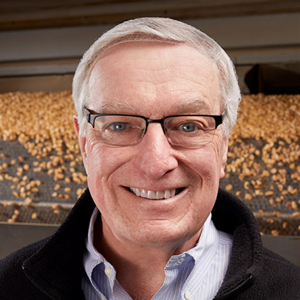
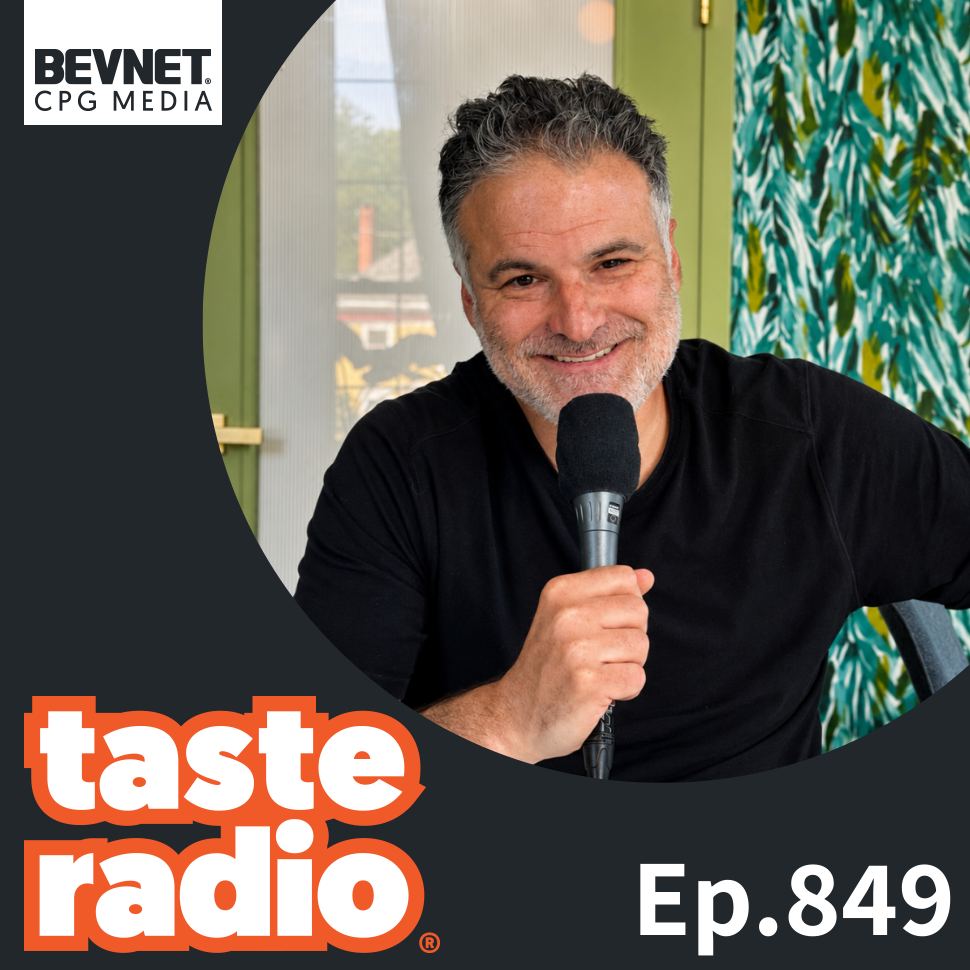
[00:00:10] Ray Latif: Hello again, and thanks for tuning in to the number one podcast for the food and beverage industry, Taste Radio. I'm Ray Latif, and you're listening to episode 176, which features an interview with Mark Hintlian, the president and CEO of pioneering brand Teddie Natural Peanut Butter, who explained how a focus on exceptional quality has guided Teddy's growth and success for over 90 years. Tune in on Friday, August 23rd for episode 48 of our Taste Radio Insider Podcast, when we're joined by Beryl Stafford and TJ McIntyre, the founder and CEO respectively of Bobo's, a fast-growing brand of premium oat bars. Our interview explores their alignment and shared vision of success. Just a reminder, if you like what you hear on Taste Radio, please share the podcast with friends and colleagues. Of course, we'd love it if you could review us on the Apple Podcasts app or your listening platform of choice. If you've spent any time in New England, you're probably familiar with Teddie Natural Peanut Butter, a cupboard staple in homes across the region. The brand's flagship product is made with just two ingredients, roasted peanuts and salt, a recipe that's remained unchanged for decades. Mark Hintlian, Teddy's president, CEO, and third-generation owner, told me there's a secret process to making the Peanut Butter, and while he didn't reveal any details, he was quite forthcoming about two key aspects of the business and their roles in the company's success. In the following interview, Mark spoke about how Teddy's obsessive commitment to quality and food safety, and an unwavering dedication to his employees, have guided the company's focus and supported its growth as it expands into new markets. He also discussed how Teddy communicates the nutritional benefits of its products, and why he believes that some competing brands that market natural Peanut Butter are misleading consumers. Hey folks, it's Ray with Taste Radio. I'm in Everett, Massachusetts at the Teddy Peanut Butter Facility, and I'm sitting with the President and CEO of Teddie Natural Peanut Butter, that's Mark Hintlian. Mark, thanks so much for having me. Thank you for being here today, Ray. Really an honor to be here. I've passed by this manufacturing facility, oh, I don't know, a few dozen times, and it hit me the other day. I was like, how come we've never talked to Teddy Peanut Butter artisanal giant in our backyard of Boston? Everett is only, what, about five miles from city center or so? That's right. How long have you guys been here?
[00:02:31] Beryl Stafford: We've been in this facility since 1960, but our roots go back to Boston. on State Street starting in 1925.
[00:02:42] Ray Latif: Wow. I can't imagine thinking about State Street now with all the financial institutions and all the buildings over there that there was actually a manufacturing facility making Peanut Butter. That's really interesting. And it's funny because you don't see many food manufacturers still in the Boston area. You know, yours is one of them. There's a chocolate maker called Tazza in Somerville. Why have you stayed here? Why haven't you gone further out?
[00:03:05] Beryl Stafford: Well, Boston is our home. I mean, it's our roots started here by my grandfather, as I earlier said, in 1925. And we've become an iconic New England brand, a household name, so to speak, Teddy Peanut Butter. Everybody knows Teddy. Everybody loves Teddy. And we're now branching out into new markets. And we feel that Everett, Massachusetts, the Boston area, is our home from which we can grow domestically and also globally.
[00:03:39] Ray Latif: It's interesting because your Peanut Butter is different in that it's not the Jif or Skippy that a lot of people grew up with or are familiar with. It's Teddie Natural Peanut Butter where the oil is separated from the nuts. You have to mix it up.
[00:03:59] Beryl Stafford: Well, I mean, that's just it. We don't put in a lot of the other stuff in our Peanut Butter that the national brands Skippy and Jif add. We don't add any sugar or sugars. We don't add any stabilizers or additives. It's just peanuts and salt, just a touch of salt. And if you buy our unsalted natural Peanut Butter, it's just fresh ground roasted peanuts. The other key is, is that we're using fresh ground USA sourced grown and harvested peanuts, the best grades available. We use them consistently. And so we make to a set product quality standard and specification, which is superior to anyone else on the market.
[00:04:49] Ray Latif: If you look at the ingredient panel on Teddy's Natural Peanut Butter and this jar that I'm looking at, there are literally two ingredients, dry roasted peanuts and salt. Has that been the same recipe since you launched this product?
[00:05:01] Beryl Stafford: It has been. It goes back to when we first introduced Peanut Butter in the 30s during the Depression. It was just peanuts and salt. It was an all-natural product. It wasn't known as being natural. It was just that's the way Peanut Butter is. And then after World War II, there was a movement towards homogenized, stabilized Peanut Butter, which contains peanuts, sweeteners and sugars, a stabilizer, and salt. So it was no longer natural. And we made that type of product. We made the homogenized. But we've always stuck to our roots with the all-natural Peanut Butter. That's what we're known for. We do it better than anybody else. It's just a fantastic product. It's the type of product that once people try it, that's it. They're not going to buy any other Peanut Butter. They're not going to buy any other natural Peanut Butter. They're not going to buy any Skippy or Jif. They just can't go back. So it's like we've developed a cult following for Teddie Natural Peanut Butter.
[00:06:05] Ray Latif: Do you feel like though there is an acquired taste for some consumers because there are no sweeteners, your product doesn't have any added sugar to it, and it's not going to taste like the toothpaste-y kind of spread that you get from other brands?
[00:06:22] Beryl Stafford: I don't think it's an acquired taste. I think once people try it, they're like, why haven't I tried this before? I mean, this is real Peanut Butter. I've got that full peanut flavor and taste. And it's really just a fantastic product. And it is so much better than the other Peanut Butter that contain sugars in it. So if you eat Teddie Natural Peanut Butter, and then you attempt to go back to Skippy or Jif, It's like this, this is like eating candy. There's way too much sugar in it. It's not Peanut Butter. This sets the standard very high for what true natural Peanut Butter is all about and what consumers expect and like.
[00:07:02] Ray Latif: So I almost forgot, this is your 40th anniversary here at Teddy Peanut Butter to the day we're recording this podcast interview on August 13th, 2019. And your first day was August 13th, 1979.
[00:07:18] Beryl Stafford: That's right. My 40 years here have just been really wonderful. I can't believe 40 years have gone by. One day leads into the next, and no one day is the same as the one before. There are a lot of challenges in this business, but if we stick to quality and our high product quality standards, people like and appreciate that, and that has had staying power for us. I had the opportunity to work for my father for 30 years, which was a real honor, and we had a lot of fun together. And so he established a family atmosphere here, where all the employees were part of the Teddy family, and he was very proud of the Teddy family. The Teddy family extends over generations with jobs being passed down from generation to generation. Individuals working here for 20, 30, 40, 50, 60 years.
[00:08:18] Ray Latif: You've had employees work here for 60 years?
[00:08:19] Beryl Stafford: We have. Wow. 60 plus years. Two years ago we had Governor Charlie Baker come here because he's a big Teddy Peanut Butter fan himself. Geez, this great company is right in the state of Massachusetts. I never knew that. And he came here to honor Teddy and to honor two employees, one who was with the company for 66 years and another one that was with the company for 55 years with state proclamations for them. So we were kind of honored with that. And he's a genuine Teddy fan. And it was kind of neat that he took the time to come here and visit us and recognize the Teddy family. And the Teddy family, everybody here is treated with dignity and respect, and they're part of our success. They're part of our story. They're part of how we go to market with passion in producing the very best Teddie Natural Peanut Butter out there. and it's a big part of who we are.
[00:09:21] Ray Latif: How many people work for the company?
[00:09:22] Beryl Stafford: We have just about 100 employees with the company.
[00:09:27] Ray Latif: That doesn't sound like a very large number of folks given your size and distribution.
[00:09:33] Beryl Stafford: It's people that we feel responsible for their livelihoods, responsible for their safety, responsible for their happiness and well-being. And so it's an awesome responsibility. And they're a big part of our success. So we honor and appreciate and value all of their efforts and hard work. And it's a collective effort here with the Teddy family. We have a company bonus program. If the company does well, everybody gets a bonus. Every employee gets a bonus, not just a few people at the top, because everybody's part of the success of the company. We've got a very generous health insurance plan, health and dental, and we think that that's important as well. And we pay hourly wages well above industry standard, well above minimum wage. Everybody comes in the door with a good wage package.
[00:10:35] Ray Latif: We'll be right back with more from Mark Hintlian after this quick word from our sponsor.
[00:10:39] New England: This is the sound of Rise Nitro Cold Brew. It's the sound of cold brewed awesomeness. The sound of freshness. The sound of organic. It's the sound that says, hey world, I'm ready for you. Bring it on.
[00:10:55] Ray Latif: If you really believe in what you're making every day, it makes your job a lot easier. And one of the things that seems to differentiate your brand more than others is your commitment to food safety. I looked at your website and it said that Teddy is, quote, obsessed with food quality and safety. And the average consumer would assume that that's an expectation for packaged food. But it sounds like you go well above and beyond that. So how so?
[00:11:20] Beryl Stafford: Well, we have intensive food safety and product quality systems and food safety process management systems in place that we embrace. Quality is number one, food safety is number one, and this goes back to my father's leadership. Back to the 1950s where he insisted upon quality controls and having a quality control laboratory on site with quality control lab technicians monitoring all phases of incoming raw materials, processing, and making sure that we're producing the best finished product that ends up on supermarket shelves that are going to be wholesome, healthy, and safe. So over the years, we have maintained as a company a leadership position in the area of food safety. And food safety goes hand in hand with product quality and product quality standards. So it defines us as a company. It defines us as we go to market. It's our reputation. We're known for quality and by all our customers and by consumers. More importantly, consumers trust Teddy to be high quality and food safe. We have a commitment that involves specific individuals and departments and their sole purpose and job here is food safety protocols and standards that are followed strictly every day. Nobody wants a recall and fortunately we have never had a recall in our entire company history going back to 1925. And we ensure and work hard to make sure that never occurs.
[00:13:03] Ray Latif: In recent years, we've seen not only more natural Peanut Butter come to market, but more private label natural Peanut Butter come to market. So how do you address that changing dynamic? How do you protect the brand when you've seen growth in the interest and the quality of private label products?
[00:13:19] Beryl Stafford: You know, it's interesting and you are correct that store brands are growing in popularity and many of them do offer pretty good price value relationships for consumers. We've always been faced with competition. We're in the competitive food industry. So our commitment is if we walk the straight and narrow with the highest quality product and if we do that day in and day out, Quality is going to win out. Our business continues to grow. We're seeing amazing growth and acceptance of our products in spite of store brands or even national branded competitors. There's kind of a secret process to making our product. where the texture and the grind and the roast characteristics of Teddy is far superior to anybody else out there.
[00:14:12] Ray Latif: I'm smiling because it's right beyond your door here in your office, and now you piqued my interest. I want to go back there and see what the secret is to making Teddy Peanut Butter, but hey, that's for another time. Yeah, exactly. Exactly. So Mark, we talked about private label as offering consumers a price value benefit, and you're competing with store brands on that level. You're also competing with new products coming to market that are positioned as super premium or positioned as natural. And I wonder where you see Teddy is fitting into that category dynamic and whether or not a rising tide lifts all boats in that they're positioning their products as natural just as you are.
[00:14:55] Beryl Stafford: Well, we compete directly with the national brands, and some of the national brands' version of natural is far different than ours. We're an all-natural product. Teddy contains only peanuts and a touch of salt, or in the unsalted version, just roasted Peanut Butter some of the national brands are adding sugars and palm oils and other additives in their Peanut Butter spreads. We just don't go down that road. Our product is truly all natural. And so we compete very favorably against those national brand offerings that have all those other ingredients in their products.
[00:15:36] Ray Latif: And when you say Peanut Butter spreads, a Peanut Butter spread, by your definition, is not Peanut Butter.
[00:15:42] Beryl Stafford: That is correct and it's defined by the FDA because a lot of these ingredients that the national brands are using are not approved by the FDA for Peanut Butter. So they must be called Peanut Butter spreads.
[00:15:59] Ray Latif: So how do you address that? Do you do it via consumer marketing? Do you petition the FDA?
[00:16:04] Beryl Stafford: We just stay focused on what we do and doing it well and producing the best natural Peanut Butter there is on the market. And FDA has mentioned that at some point they are going to focus on defining what natural means and what should be called natural and what shouldn't be called natural. And to the extent that they've even identified some of these national branded natural spread offerings is not really being natural. Where Teddy is just peanuts and salt, it doesn't get any more natural than that. We just keep doing what we're doing. We're known for quality. We have consumers who are involved with active lifestyles and health and wellness, and they're reading labels. And that's all we need is the health and wellness consumer market segments who sign on with less is more, less ingredients are better, and that's where Teddy fits in. And we just continue to outsell all of those other brands in a very big way wherever we go to market and compete against them.
[00:17:14] Teddie Natural: We'll be back in a moment after this word from our sponsor. Everyone should be able to experience the joy of ice cream, even if you're lactose intolerant. Beckin Ice Cream makes the first and only real premium ice cream made without lactose. It's made with clean, simple ingredients, including fresh milk and cream, without the use of gums, stabilizers, or additives. Beckin is a certified woman-owned business and their pints are available at retailers nationwide. Be among the first to try Beckin's newest flavors at Expo East, booth 8172.
[00:17:45] Ray Latif: Yeah, let's stay on the nutrition angle. I mean, you have just two grams of sugar per serving, which again is a lot lower than some of the competitors that you see on shelf, the competing brands that you see on shelf. How do you talk to consumers about sugar? Because it is so top of mind with Americans today, are you pointing out that you have a low sugar product?
[00:18:07] Beryl Stafford: Well, the fact that we're not adding any sugars, and the fact that consumers are now very intelligent, and especially consumers in Teddie Natural space buying Teddy Peanut Butter or buying natural Peanut Butter, they're reading labels. They're identifying the exact thing that you just identified, that there's no added sugar in Teddy, and where our competitors are adding sugar, and palm oil, and saturated fats, and among other things, and we're not.
[00:18:37] Ray Latif: It's so interesting to hear you talk about this, because I can tell how passionate you are about additives in Peanut Butter and how it feels like every time you say palm oil, you're gritting your teeth. Because it's something that you feel is so, it bastardizes Peanut Butter. It feels like it's almost the way you're approaching it.
[00:18:56] Beryl Stafford: Well, palm oil is in a lot of Teddie Natural spreads. And it's a known unhealthy fat, saturated fat. That's their prerogative.
[00:19:09] Ray Latif: Indeed. Peanut Butter itself, some people look at it as an indulgent product. When you have a Peanut Butter sandwich, it can feel so wonderful. It's a good, you know, afternoon snack. On the other hand, there's a health aspect to it, as you pointed out, you know, during the depression, a great source of protein. So between the two sort of descriptors, health and indulgence, You know, how do you tow that line? How do you communicate the two in a way that is balanced? People love Peanut Butter.
[00:19:41] Beryl Stafford: Peanut Butter is a consumer staple for many years. And now there's a whole movement and all the growth in the category is towards health and wellness and natural Peanut Butter, true natural Peanut Butter. And it's kind of a win-win for consumers and for somebody like me personally. I love Peanut Butter, but I also am concerned about my health and wellness and nutrition. So when you eat Teddy Peanut Butter, it tastes great and it's the healthiest Peanut Butter for you on the market.
[00:20:11] Ray Latif: Do you promote it as healthy?
[00:20:13] Beryl Stafford: Yes, we do.
[00:20:15] Ray Latif: Have you run into any problems with people saying, oh, well, there's saturated fat and, you know, there's fat associated with Peanut Butter. I mean, how do you... Well, there's good fats. Right.
[00:20:25] Beryl Stafford: And that's where Peanut Butter falls into. It's plant-based and it's just peanuts and a touch of salt. doesn't get any healthier than that.
[00:20:34] Ray Latif: You're so on trend. You're natural, you're plant-based, you're low sugar. I mean, checking off all these boxes and yet you introduced the product in the 70s. Now it's finally catching up to trends today. Speaking of trends, you know, what do you see as the biggest opportunity for the next evolution of Teddy Peanut Butter?
[00:20:52] Beryl Stafford: Interestingly, we're in process of developing what we call the Teddy on the go program, which is going to be Peanut Butter in pouches. 3.2-ounce sized pouches. We'll sell four pouches to the box. And this will be marketed to the health and wellness consumer market segments, lifestyle market segments, people who want to go to the beach, want to go for a hike, want to go for a bike ride, or want to fuel their workouts. And they're looking for a quick source of protein on the go.
[00:21:25] Ray Latif: Do you have to mix it? I mean, do you have to squeeze the squeeze pack?
[00:21:28] Beryl Stafford: You'll need before opening.
[00:21:30] Ray Latif: OK. It feels like there's so much opportunity for Teddy given your positioning and given current food trends. What are some of the challenges you see? What are some of the pitfalls that are in front of the brand and the company?
[00:21:46] Beryl Stafford: Our biggest challenge is our growth initiatives and our growth efforts as we expand into new markets. We think that this Teddie Natural Peanut Butter is so good that we can achieve success in new markets, but the challenge is brand awareness and creating brand awareness. We secured distribution in the entire public supermarket chain based in Florida. So that's the entire Southeast region. They have 1,150 stores in Florida, Alabama, the Carolinas, Georgia. So we're new. And we're gaining traction, sales are building, but it's been an uphill battle for us to get people to try it and take it off the shelf and bring it home. But once they do, that's it. And it's really, we've been in there for three years. We're really excited. Now it's beginning to take off. And it's been three years of hard work and effort to make that happen, but it's nice to see. And I think if they ever discontinued Teddy, there would be a consumer backlash saying, we want our Teddy in Publix. But that's our challenge.
[00:23:01] Ray Latif: What caused the tipping point? What effort did you make that really got consumer awareness to where it needed to be so that you did get that pull through and that velocity?
[00:23:10] Beryl Stafford: Well, a lot of it was a social media campaign, a targeted social media campaign, boosted posts. A lot of it has been just partnering with our customers in promotions and demos at store level, just kind of a grassroots campaign to get people to try it. We put everything into the product quality, and so we don't have a lot of marketing dollars that we can invest back into the market. with consumer trade advertising like the big national brands do. But we think by sticking to that formula with a great product quality and a grassroots campaign, people will try it. So it's a slow build, but once the sales start to build, it's pretty exciting to see the growth.
[00:23:59] New England: We'll be back with more from Arkhentlian after this short word from our sponsor. At Rise, we know the passion it takes to create something different. So we created an all-organic nitro coffee to fuel that journey and to make you roar. Every time you open a Rise Nitro, you'll hear that roar. Rise Brewing Co. Nitro Coffee. Release your roar.
[00:24:24] Ray Latif: You know, once people try it, I mean... I've said that a lot. Well, yes. Once people try it, they will become believers in the brand. But what if they don't believe it the first time? You know, how do you get them to try it the second time? I mean, I feel like that's the challenge with a lot of brands, a lot of products where, I mean, kombucha comes to mind. Kombucha, fermented tea. You try it for the first time, a lot of times it's, oh my gosh, this vinegar, the smell, et cetera. And kombucha companies are really having a hard time getting people to try it a second time. So in your case with Teddy Peanut Butter again, the separation, the fact that there's no added sugar, it might take a couple times. I remember it took me a couple times to really appreciate natural Peanut Butter.
[00:25:07] Beryl Stafford: That's a good question, Ray. And consumers are passionate about their Peanut Butter. And we have a passionate following. It's like a cult following. They love their Teddy and nothing else. And I just got this. We have a celebrity who loves Teddie Natural Peanut Butter. And apparently Joan Baez, the folk singer, was touring in the Northeast and she got some Teddy Peanut Butter and now she buys Teddy from us exclusively. She lives out in California. So recently she sent us this little
[00:25:50] Ray Latif: That's this note.
[00:25:51] Beryl Stafford: There's a little note saying.
[00:25:52] Ray Latif: It says, thank you again. Never take you for granted, Teddy. Joan Baez. Look at that. And it's got a picture of your brand and then a bear print or a bear prop print, I'm assuming is what it is. Well, that's pretty amazing. I feel like, you know, those kinds of influencers are important because, again, if you try it the first time, and you don't like it and you say, okay, well, maybe Joan Baez or somebody else like that really likes it, so maybe I'll give it another shot.
[00:26:20] Beryl Stafford: Well, this is genuine and for real. We didn't ask Joan Baez to buy Teddy and we didn't ask her to thank us with a handwritten note, but I mean, over time, it's the type of product that people will buy and buy again and become loyal to. I mean, I can talk about brand loyalty. And the brand loyalty for Teddie Natural Peanut Butter, it's fierce, it's intense. We see the comments on Amazon, for example. The reviews are just awesome. And social media, the comments, if we put something out there on Facebook or Instagram, you know, people are commenting on Teddie Natural Peanut Butter. And you feel like saying, don't you have anything better to do? But we love to see it, and it validates what we're doing with our premium quality product. It makes us feel good that all the passion that everybody in this facility puts into making Peanut Butter, a premium quality Peanut Butter, that there's an appreciation for what we're doing.
[00:27:29] Ray Latif: Mark, I've really enjoyed talking to you. And I got to ask you, I mean, you've been doing this for 40 years. You've been the president and CEO for how long? 10 years. For 10 years. I assume that given that family is so important and the fact that Teddy Beanaputter has been consistent through family, that one day you'll hand off the reins to somebody else. So what's your best advice when they come and sit down in your chair, in your desk? What's the advice that you could give them as the next leader of the company?
[00:28:00] Beryl Stafford: Well, I'm going to say that my family, all generations, are incredibly proud of what we've achieved. My brother Jamie and I, we're the proud stewards of what my father worked hard for in his leadership, and his father worked hard for before him, which has its roots and foundation in producing the highest quality, most nutritious product available in the market, and to take the time to have core values around producing this highly nutritious, good product. Core values include giving back to the community, whether it be our support, participation, and efforts with the Greater Boston Food Bank, or whether it be support and efforts with Best Buddies International, where we are the official Peanut Butter of Best Buddies International, where every jar of Teddie Natural Peanut Butter purchased helps support people with special abilities. So there's an awesome responsibility we have to produce this wonderful product and to give back to the community and to provide jobs and to provide value to so many lives on so many levels.
[00:29:18] Ray Latif: It's a wonderful thing you're doing here. And as I mentioned at the top of the show, I'm honored to be here and talk to you. Teddy is really an incredible brand and I look forward to seeing future growth and good luck with everything going forward with the new line and hope to catch up again really soon.
[00:29:34] Beryl Stafford: I'm honored to share our story and thank you so much for giving this opportunity.
[00:29:39] Ray Latif: Outstanding. Thank you. That brings us to the end of episode 176. Thank you so much for listening, and thanks to our guest, Mark Hintlian. You can catch both Taste Radio and Taste Radio Insider on Taste Radio, the Apple Podcasts app, Stitcher, Google Play, SoundCloud, and Spotify. As always, for questions, comments, ideas for future podcasts, please send us an email to askattasteradio.com. On behalf of the entire Taste Radio team, thank you for listening, and we'll talk to you next time.
[00:30:20] Peanut Butter: Hello, I am Melissa Traverse here for the Taste Radio podcast, talking about some of the biggest tension points that CPG brands and founders face when they're scaling a brand, and those are financial accounting and inventory management. I am joined by Matt Lynn, inventory accounting guru from Belay Solutions, and he is going to shed some light on all of this that is going to help everybody out quite a bit. Matt, thank you so much for joining us today.
[00:30:50] Mark Hintlian: Thank you for having us, Melissa. It's great to be out here at Expo West and it's great to sit down and be able to chat this because it's kind of a passion project of ours, working mainly with CPG brands and hoping to help them scale.
[00:31:02] Peanut Butter: It's been such a pleasure chatting with you and the team and learning all about what you do over there at Belay Solutions. Can you tell us a little bit about yourself and what your role is and the kinds of solutions that Belay gives to CPG brands and founders?
[00:31:17] Mark Hintlian: Yeah, absolutely. My role with Belay, I'm actually our inventory accounting manager. I run our inventory department, so we work with CPG brands, taking them from spreadsheets, putting them on inventory management systems, and really helping connect their tech stack between their sales online marketplaces to that inventory management system, even down to their financial systems like QuickBooks. Belay overall is kind of an outsourced accounting firm. And with that, we're helping teams. We have different levels with bookkeeping, controller level work, even high level into CFO type items. So we really help those brands in any way that they need financially. And then I just have a subset of a department where we're really just laser focused on inventory.
[00:32:00] Peanut Butter: It's certainly a complex topic and there are plenty of places to go wrong. Let's start by going right and start super simple. Can you tell us what some of the biggest red flags are that would help a founder understand or, you know, the person running a brand understand that it really is time to get some help with some of these areas?
[00:32:21] Mark Hintlian: Yeah, absolutely. I think some of the early red flags is just everything is chaos. So when they're looking in their financial software, maybe they don't really have an accounting background, and they're kind of just piecing it together and doing their best. And what they'll see is that reconciliations take forever, if they even happen. They have a lot of transactions that don't get coded, or they just put them into placeholders to just get rid of it so it's not an eyesore. they'll notice they have revenue but no cash or they notice that they have a good amount of cash but their blind spot is really seeing the vendor invoices that are sitting there just needing to be paid and so they just lack that clarity that's going to really be around the corner.
[00:32:58] Peanut Butter: You know, you were talking about one of the red flags that comes up that I think makes so much sense. When somebody asks you what your numbers are and you can't come up with the right number, that's a big problem because that's something that you really should be able to share with decision makers who, you know, you're ideally looking to do business with. What should you be able to call up at a moment's notice?
[00:33:22] Mark Hintlian: really at any time, you should be able to know an accurate margin. It's amazing how many founders we end up talking to that they can tell you their revenue numbers, they can tell you their selling price, and then the minute you start talking about cost or their cost of goods sold, they just get a deer in headlights look. So really it's very hard to tell, am I even making money? Or if you don't know your entire landed cost. Maybe you know what the freight cost is, the duties separately, but you're not really getting that as part of your unit cost. So it's really hard to tell. Am I even making money or am I losing money from the very beginning?
[00:33:55] Peanut Butter: And do you recommend that founders are able to call up a margin by channel?
[00:34:00] Mark Hintlian: Absolutely. And depending on the number of products and channels, you kind of want to know what are your best sellers, which ones are making the most and which ones maybe you're not making as much. But especially if you're branching out and you're doing D to C with B to B, absolutely want to know that.
[00:34:17] Peanut Butter: Gotcha. You mentioned that when things feel really chaotic, that's probably a red flag. I would say that it probably almost always feels chaotic if you're running a CBD brand. And I know this may be hard to quantify, but is there a revenue number? Is there a number of doors number that would help a brand understand whether or not it makes sense to bring on a partner like Belay? Understanding that so many brands are bootstrapped or they might be tight for cash. What is that friction point?
[00:34:47] Mark Hintlian: 3 3 3 3 3 But as you're growing, as you're getting to those six-figure revenue numbers, and especially as you're approaching seven, you want to make sure you've got good financials. Because as you scale to that point, most likely you're going to be looking to raise capital. And investors, the first thing they're going to look at is your books. And are they clean? And do they show a clear picture of your business?
[00:35:20] Peanut Butter: You know, another area that folks might look to to organize some of the chaos are their systems. So many folks stick with Excel spreadsheets for a good amount of time. How do you know that you need to outsource some of your accounting to an organization like Belay Solutions versus maybe signing on to a Synth7 or NetSuite or something like that?
[00:35:42] Mark Hintlian: Well, that's actually something we really help with when it comes to that cost question. That's something that trips people up. And sometimes if you just have a turnkey business, you buy and sell a finished good, you can maintain with spreadsheets. And we've had clients with million dollar revenue that can do that. But we see so many brands nowadays are using contract manufacturers. and they're just sourcing certain parts of their product. So when you start talking cost, they have no idea exactly what their unit cost is. So that's where we come in and we kind of understand, we'll speak with the customers and the clients and get their needs. And then if we think they're ready for a system, then we'll help put them on that system so they can get some of that clarity. And it's not something we force on anybody. There are plenty of times where founders come to us and we'll tell them bluntly, you're not ready for it right now, but we'll let you know when we think you are.
[00:36:29] Peanut Butter: That sounds like excellent advice. What should a founder or somebody running a brand look for in an outsourced accounting partner? Are there certain checklist items that they should make sure that their partner be able to execute or be able to help them understand?
[00:36:46] Mark Hintlian: Absolutely. I think one of the keys, there's, there's a lot of outsourced accounting firms out there. Some focus on service-based SaaS companies, but if you're a CPG founder, you really want to make sure that your accounting firm has CPG experience. I would ask them, you know, what kind of brands have they worked with and even beyond that industry specific, because there's so many subsets of CPG. And that's something that I think is great about what we do with Belay is that we kind of run the gamut. It's kind of like the insurance commercial. We know a thing or two because we've seen a thing or two across a broad spectrum.
[00:37:15] Peanut Butter: Probably getting references is always helpful, right? Absolutely. All right. So this all sounds great. I think we have a really good understanding of would it make sense to hire an outsourced partner? You know, what some of the things you should be looking for are. What does offloading this kind of work mean for the brand? What can this do for lightening the load of a founder or lightening the load of a brand operator? Like, how does that help them in their everyday business?
[00:37:45] Mark Hintlian: It just tries to really help quiet the chaos. So what we're looking to do is just take some of the weight off that founder's shoulder. Let them focus on building the brand, building the business, getting that exposure. If you don't have sales, you really don't have anything. So we want them to be able to focus on that while we take care of your back-end office work. And we can just present that to you on a monthly basis. You can help make decisions. You can take that to investors. And really, you can just focus on growing your business.
[00:38:10] Peanut Butter: I feel like I felt founders and the folks who are running brands collectively sigh a breath of relief just hearing that. How can people learn more about Belay Solutions?
[00:38:21] Mark Hintlian: So people can text TASTE to 55123 for their free inventory guide to get started.
[00:38:27] Peanut Butter: Matt Lin, Inventory Accounting Guru at Belay Solutions. Thank you so much for joining me here at Expo West. It's been such a pleasure to chat with you and learn about what you all do over there to help founders and brands with their financial accounting and inventory management. For everybody else out there, thank you for listening to the Taste Radio podcast. I am Melissa Traverse and we'll see you next time.