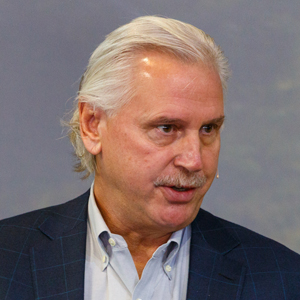
[00:00:10] Grant Gajewski: Hello, and thanks for tuning into the Top Podcast for the food and beverage industry Taste Radio. I'm editor and producer Ray Latif and you're listening to episode 180, which features an interview with Steve Hughes, the founder of natural food platform, Boulder Brands, and co founder of investment firm and brand accelerator, Sunrise Strategic Partners. Tune in on Friday, September 20 for episode 52 of our Taste Radio Insider podcast, when we're joined by Grant Gajewski, the co-founder and CEO of fast-growing nitro cold brew coffee brand Rise Brewing Company. Just a reminder, if you like what you hear on Taste Radio, please share the podcast with friends and colleagues. And of course, we'd love it if you could review us on the Apple Podcasts app or your listening platform of choice. Steve Hughes' influence on the development of the natural food industry is impressive to say the least. As the founder and former CEO of Boulder Brands, he helped develop and nurture a range of next-generation natural brands, including Udi's, Glutino, Evol, and Earth Balance. Following the sale of Boulder Brands to Pinnacle Foods in 2015, Steve co-founded Sunrise Strategic Partners, a private equity firm that has invested in several fast-growing brands, such as Kodiak Cakes, Cauliflower, Coolhaus and Maple Hill Creamery. In an interview with Nosh editor Carol Ortenberg, Steve reflected upon his career and how he and others helped shape the current market Frontier Natural food brands. He also discussed Sunrise's investment philosophy, why he described the funding environment Frontier Natural CPG brands as, quote, capitalism at its absolute best, and what he sees as the most exciting development for the food industry.
[00:01:58] Rise Brewing: Hi, everyone. Carol from Nosh here. I am in lovely Denver, Colorado, and joined by Steve Hughes, who is the CEO and co-founder of Sunrise Strategic. Steve, thanks so much for being with me today.
[00:02:11] Steve Hughes: Thanks, Carol. Great to be with you.
[00:02:13] Rise Brewing: You've had an amazing career in this industry. I always love chatting with you because I hear about a different part of the industry that I didn't even know about. Let's start off by talking about, you know, how you got involved in this crazy natural products industry.
[00:02:27] Steve Hughes: Well, back when I got out of business school, I actually was in retail sales for McCormick Spices in Western Georgia and Eastern Alabama, packing out spices. And I spent 10 years with McCormick. I was director of new products with them. And then in 1988, I got a call from a company I never heard of called ConAgra. And they were looking for somebody to run new products. As luck would have it, I ended up leading the team that launched Healthy Choice in 1988. And over the next four years, that business went from zero to a billion dollars and was just a wild, incredible ride. And I had really, at that point, the whole idea of being involved in the next new thing kind of grabbed me. And so I took six people from Healthy Choice, went down, and we took over Tropicana's North American business. And over the next four years there, we went from a billion to $2 billion. Had a great run there, but I'd been on large cap in the large cap world for 20 years, and I was recruited to come in to be CEO of Celestial Seasonings. So for the last 22 years, I've been very fortunate to be kind of in the front row of the natural foods explosion. It's Celestial. We were there for, you know, I was there for three years, and we had a great run. The stock was at seven, and we sold to Hain for $34 a share. And then I was offered a job back east, and Grace and I are both from Baltimore. I came back, you know, like the proud hunter with this job offer, and Grace goes, you know, what part of we aren't moving didn't you hear? And so I've been chained to the zip code for the last 20 years. And it's been the best thing ever happened to me because I have had a chance to work with Steve Demos on Silk between 2002 and 2004 when that business went from $150 to $400 million. I worked on Frontier Natural Products where I had a chance to work with Terry Tierney and T.J. McIntyre and between our Acacia and launching Simply Organic, really two great brands. It was a lot of fun. And then I wanted to get back and become a CEO again. Went out in 2005 with my resume and went to Wall Street and raised $100 million in what's called a special purpose acquisition corporation. We had no company, but I had two years to go find one. And so that led to Boulder Brands. And from 2005 to 2015, we built that to about $500 million. And for a period of time, that was probably one of the most special spots in the industry. This office we had down on 16 R Pearl Street had this huge deck and we had great young talent there. And I think one of the things I take the most joy out of is just seeing what all those people from Boulder Brands are doing today, whether or not it's TJ at Bobo's or Dwayne and Carol at Bigger or a lot of the younger folks that are moving on into like the VP of marketing jobs. It's just really one of the neat things in life. So in 2015, I left Boulder Brands and very quickly partnered up with Triatlantic. They committed $200 million and Over the last three years, we've put that to work. We've got, right now, Sunrise Strategic Partners has 10 companies, and they're all, you know, in different stages. Some of them are very developed, like Vital Flour and Kodiak. Some of them are just kind of getting into second gear, like Little Secrets. But it's a lot of fun, always looking for the next new thing, always looking for that founder, that idea that we can kind of bring our experience to. Because Sunrise really isn't private equity. I mean, we have money, but we are really looking for that founder who's looking for the coaching staff and the playbook that we've developed over the last 40 years.
[00:06:07] Rise Brewing: You've been involved with a lot of brands that in their heyday were the height of sort of healthy and natural, right? Healthy Choice, Tropicana, you know, Orange Juice was a part of everyone's breakfast, Boulder Brands with Udis and Glutino. How have you seen the concept of healthy or better for you evolve over the last decades?
[00:06:28] Steve Hughes: It's getting much more specific. You know, Healthy Choice was low fat when the world was all talking about low calorie, but that's like a 50,000 foot benefit. Now you're talking about, you know, ingredients, you're talking about probiotics, you're talking about each individual is kind of figuring out what they need and what they want. And so you're getting kind of these micro groups. And, you know, you get a micro group behind you, you don't need, I mean, create a big brand, you don't need a lot of people. I mean, Udi's was a $200 million business with 2 million households buying it. And the reason was, you know, as soon as a gluten sensitive celiac household discovered Udi's bread, they never bought another bread. They had 100% of the share of requirements. So you're seeing a lot of brands scaling with not having to appeal to 10% of the U.S. households. You can get, you know, you get 1% of U.S. households and you really dial into their needs. Off you go, like we just invested in cauliflower. And Amy Lacey, who is like a true force of nature. I mean, she is one of the most dynamic people I've ever met. You know, she has autoimmune issues and as does her partner, Jimmy. And they, they basically couldn't eat anything else. So she developed from fresh cauliflower, a product that by leveraging really what cauliflower is all about is, you know, a perfect fit, not only for autoimmune, but it's also remarkably low carb. So she is, you know, you find that niche and now this woman was selling over $20 million on e-commerce on pizza crust because people who really, you know, had those needs simply couldn't find a product anyplace else. So they went online to buy it from her. So we really feel that, um, The consumers get much more sophisticated. I mean, they have all the information they could possibly ever want in the palm of their hand. And they're kind of, over time, shaping their diet for their specific needs. And it's, you know, much different than when I grew up. And there were three brands in every category. And they all had the same nutritional profile, similar taste profile. It was like one size fits all. This is now a very customized world.
[00:08:38] Rise Brewing: So when you're evaluating a brand to invest in it, what is most important to you? That they have this loyal customer base or that you see that it could scale further? How do you balance those two and how do you figure out what that then means for the deal?
[00:08:52] Steve Hughes: Well, we really right now we're looking at that 10 to 20 million dollar business. So we're looking for it to have the DNA, the scale. You're obviously looking first and foremost for It's one compelling category and it has an appeal to millennials that if it's done right and scaled right, it'll be a market share leader with millennials for the next 25 years. When I first met Joel Clark from Kodiak, he showed me his first page was his market share target. And he was doing 15 share of target. And I said, well, that's looking at the market share horizontally. If you look at it vertically, my hunch is, Joel, you've got 80% of millennial market share at Target. And lo and behold, when you look at Kodiak, 88% of the consumers buying Kodiak at Target are new to the category. people that weren't buying Angiomima. So we're looking for that brand that really connects. And so you want to have all the attributes that a millennial is going to value, whether it's milk and how they treat the animal, whether or not it's protein, whether or not it's cauliflower, low carb. The other thing you're looking for, obviously, is spontaneous combustion. Because when we look at a company, they might be in 1,000, 2,000 stores. But you want to see that they're really performing well on velocity versus the competitive set. If you have that, You know, there's a lot that you can do. If you don't have that, there's no amount of money that's going to get that, no amount of spending you're going to get that. So we try to be, you know, find those companies that are under the radar a bit and, you know, have, for example, in Cauliflower, we were talking to Amy and putting together a deal and I went to Expo West and Cauliflower's everywhere. And so they came back and the team was all kind of nervous about cauliflower. I said, well, yeah, but everybody that's doing cauliflower products today, it's a faux benefit. They have enough cauliflower in the product to put it on the front label, but their pizza crust, the competitive pizza crust are like 20 grams of net carbs. Amy's one because she's making it for fresh cauliflower. So you go, you know, she's the only one that's doing it right. And so we can figure out how to harness that and take that from pizza crust, the top pizzas, the enchiladas, the lasagna, to all kinds of entrees, we can create a below 10 carbs, as Amy says, gonna be below 10 carbs, and we wanna be under $10. So like, you know, her pizza's not gonna be cheap, right? But you cannot get that pizza anyplace else. So I think it's one of those things you're really trying to dial into a set of benefits that really connects with the consumer. Ideally, you have a founder like Joel Clark on Kodiak, or Amy on Cauliflower. or Natasha on Cool House, or Tim on Maple Hill that is like a walking, talking expression of the brand.
[00:11:36] Rise Brewing: I think what you've just spoken to also really addresses the need to find the right investor for you. You mentioned the part about Kodiak Cakes, and Target, slightly different investing model, but I remember when they were on Shark Tank, the feedback they got was that this is never gonna work in Target, that Aunt Jemima's gonna crush you, and you're just not gonna see the turns, and they're gonna pull you off the shelf. And talking about Amy and how do you harness this, it really speaks to how important is it to find an investor that understands what you're trying to do and can also find your winning points of differentiation.
[00:12:14] Steve Hughes: Yeah, I mean, it's really, we're very different. I mean, we're looking to make a return for our investors, but I do this because I love to do this. I mean, I love big ideas. I love coaching teams. I love winning. I'm very competitive. And so, you know, we've had a couple of our investments that quite honestly, after we invested, the wheels fell off, right? And we still saw the big idea. And once we see the big idea, we're like a dog with a bone. I mean, we're not letting go. And I think a number of our companies may not have made it, and they could end up being some of our biggest outcomes in our portfolio. Because yeah, these are fragile companies. $10 to $20 million companies are incredibly fragile. Typically, they're burning cash, so they've got to scale quickly. They've got to be disciplined in how they spend money. And they have to have an investor who is going to be there on the bad days. And we've tried to be that for all of our companies. I mean, it's an interesting world because every founder is different. Every company's different. Every company hits speed bumps, you know, and the thing is interesting since I've been doing this for so long, you know, I always tell the founders that between $10 and $100 million, there are a lot of speed bumps and a lot of rakes to step on. And I've stepped on every one of them. And I can't say we're going to miss them all. But when we hit one of them, you know, we kind of know what to do. And we don't look to place blame. We look to understand what the hell happened and how we fix it and hopefully help make sure it doesn't happen again. So we try to be really, you know, constructive partners. Grace and I personally invest in every company, which I think is unique. And, you know, we're in it, we're in it to win with the founder. And we want the founder and the CEO to be successful. You know, sit back and look at your career. There are about 40 people that have worked with me that have gone on to become CEO. I mean, Brian Cornell, the CEO of Target. worked with me back at Tropicana. You know, Peter Burns worked with me at Celestial. So I love the coaching aspect of the job. And that's really, I think, probably the biggest value we bring to these companies is we've got a playbook. We've been there. We've done it. We've made all the mistakes. We'll try to help you not make as many as we made. And in the very tough days, you know, help be there to help the founders through it and the CEOs through it.
[00:14:24] Rise Brewing: But a big idea is not enough, right? You need more than just a big idea.
[00:14:27] Steve Hughes: Yeah, absolutely. I mean, we have a formula. We have a playbook called the Sunrise Playbook. And it's not formulaic, but it's getting pretty close to being formulaic. Because over the last, since I left McCormick, over the last 30 years, I've probably been involved in launching $3 to $4 billion in new products. And every business I've ever been involved in, you know, you've got your current business today, but what are you doing next year and the next year and the next year to keep, you know, kind of delaying your current consumers, keep surprising them, keep improving your products. But at the same time, you know, make sure that whoever's chasing you is four years behind you. And that's really one of the big, the big key things once you have a big idea is how to really power through and maximize it. Because in the food industry, everybody follows. So the best ideas are the ones that are really differentiated, that really resonate, that are hard to do. Like Maple Hill is really hard to do. Vital Farms is really hard to do. Teton's really hard to do. But when you don't have that kind of level of competitive insulation, how do you get big enough so the brand resonates in and of itself? So Kodiak is in that zone. I mean, people probably could match the Kodiak formula. But Kodiak now has got a following and a brand identity that as soon as it goes on the shelf, I mean, it's spontaneous combustion every time they go into, you know, frozen waffles. And within the first three months, they had the number two item in the category.
[00:15:51] Rise Brewing: I don't know if you ever follow Costco does it again on Instagram, but I feel like Kodiak Cakes is like, one of the top things you see Instagram over and over again. It's a, it's an Instagram feed of top Costco products that consumers just post and this owner re-shares and it's just every time there's Kodiak, it's, Oh my God, I got Kodiak on shelf in my store.
[00:16:11] Steve Hughes: I tell you, Kodiak Cakes been probably one of my most enjoyable experiences in all my career. You meet Joel Clark. I mean, this guy is the neatest guy. The culture he's created with Cam and Darla and Darren and Nate, it's a family. But he wants to be coached. He's a very smart guy. You know, he wants to learn what he doesn't know. and one's advice. And so it has been one of those classic 1 plus 1 equals 10 relationships. And he's had phenomenal success. I mean, three years ago, we invested he's at $15 million. This year, he'll be at $150 million. And he's just getting started. I mean, he's just getting started. I mean, anything that has flour in it, Kodiak Cakes permission to go into that category. And it's just been, I think, one of those situations where he had the right brand. And he also is one of those rare founders who might be a better CEO of $150 million business than he was at 15.
[00:17:11] Rise Brewing: What does that mean? What makes a CEO better?
[00:17:14] Steve Hughes: Well, it's really tough. I mean, being a founder is a certain, it's a certain makeup. You gotta be pretty manic. You gotta be pretty passionate. And it's all on you. You're maybe not taking a salary. You're taking in friends and family money. There's real kind of a manic energy to getting the business to the point that it's attractive for other people to come in and invest in it, institutional money. A CEO has got the, you know, you got to be able to set a big time strategy for three to five years. You have to be able to put the team in place. You have to put all the processes in place. And if you've never done that before, you're probably not going to be successful figuring it out by yourself. If you're all about me all the time and I'm the smartest person in the room. Joel has taken the approach of, you know, tell me what I don't know. He'll call me up and say, what would you do in this situation? He may not do what I tell him. I mean, you know, he's CEO, he's founder, he can do whatever he thinks is best. But he's always looking for advice. And that's not necessarily how most founders are wired.
[00:18:10] Rise Brewing: How do you think entrepreneurs should think about, am I a founder or am I a CEO? Because that's a hard conversation to have. And when I interview folks about hiring a CEO, you know, it sounds like this takes a lot of self-reflection.
[00:18:24] Steve Hughes: It's challenging. I mean, I've worked with two of the iconic founders. I worked with Mo Segal at Celestial and Steve DeMose at White Wave. And it was a bit of a dance because, you know, I was hired to help them go places they hadn't gotten to before and helping them understand why we had to do things differently. You know, we had to work on that relationship. They're both really dynamic founders and we were able to find the best of both worlds. Most founders just have always made all the decisions and will always want to make all the decisions. And they really, that's not, that's not a great formula because you really need, as you get more scale, you need some been there, done that talent so you don't have to reinvent the wheel. The food industry is going through such a revolution. There's so much capital coming into this industry that there isn't a new idea. I mean, you know, again, cauliflower, you know, it was a whisper a year ago. There were 50 brands at Expo West. premium jerky was an idea of three years ago. The next expo, there were a hundred brands. I mean, there is so much capital enabling people to launch brands. And so if you've got a good idea and you've got a good brand and you've gotten a 10 to $20 million, you cannot waste any time. You cannot waste any money. You cannot waste any, you know, any moves. You've got to be as, as tight and aggressive in building that business because there are three or three, five, 10 people following you. And you know, the capitalism first mover, you've got to move fast.
[00:19:50] Rise Brewing: How do you feel about all the capital that's come into the industry? In some ways, it's enabled great new brands that maybe would have toiled away regionally for a lot longer to scale faster. But at the same time, it has enabled, at times, a lot of Me Too brands as well.
[00:20:04] Steve Hughes: Yeah, but it's capitalism at its best. I mean, it really is. I mean, you know, it just blows my mind when I walk through Expert West. I mean, how people have come up with each individual idea. And they all put their heart and souls into it. I think it's capitalism at its absolute best, and I think it is Darwinian, as capitalism is. I mean, people, you know, there are a lot of great ideas that fail. There aren't too many marginal ideas that succeed. And it's all being fed by the consumer demand. I mean, the millennials simply want different things. I mean, I've said long ago that the large cap companies are in big trouble because we had the situation at Boulder Brands. We had Earth Balance, and then we had all these millennial targeted brands, Earth Balance, Evil, Udi's, Coltino. Well, you know, 3% of our consumers on Earth Balance died every year. I mean, indexed over 165, over 65, and indexed under 40, under 40. What happens is, you know, our consumers are dying and the millennials are never gonna buy it. Earth Balance, on the other hand, indexed at 250, below 40. The world is churning, and I think the echo of the millennials, I mean, I used to love my Blackberry, loved it. My kids shamed me into an iPhone, right? You know, the echo going up is pretty pronounced, and I think the large caps are in a pretty tough situation because all their cash flow is generated by brands that are like Earth Balance that the Millennials are never going to buy and need to be replaced by brands that resonate with Millennials. And so that's kind of where Sunrise Strategic Partners is trying to play. We want to help create those next enduring brands that for the next 25 years will be market share leaders with Millennials.
[00:21:44] Rise Brewing: But how do you wind up not chasing after a consumer group, right? Because millennials will get Boulder Brands there'll be another group that comes in.
[00:21:49] Steve Hughes: Oh, there will, there will. But the millennials right now are just really, they're kind of the peak of forming families and they're shifting their purchasing pattern that's influencing everything in the household, everything in the restaurant community, everything in travel. I mean, you know, millennials are never going to use a BlackBerry. They're never going to stay in a hotel and they're never going to call a cab, right? That is reflected in all the food categories as well. I mean, they're never gonna, I hate to say it, never gonna buy in the Cheerios. Never gonna buy in the Tropicana. Never gonna buy, my kids, Healthy Choice put my kids through college. They'll never gonna buy Healthy Choice. And so the capital is enabling a lot of experimentation. And it's all being driven about coming up with that right formula for each of these companies that connects with the millennials in a big enough way with enough staying power that these will be enduring brands. The unfortunate thing is we've looked at about 450 companies since we started Sunrise. And a lot of them are great ideas that may never make it, because by the time they figure out their idea, they've burned so much capital that they can't get there. But there are so many dynamic folks out there trying to solve their piece of the puzzle with that next generation. And again, you're right, five, 10 years from now, it'll all be about the Generation Z, because they're going to be moving into that prime earning phase where they're forming families, and they're going to drive a lot of behavior.
[00:23:11] Rise Brewing: Speaking of how things have evolved, what about direct-to-consumer? What is kind of your insight on that and how it's changed the industry, especially with food? It has been slightly harder for some of these food brands to crack that.
[00:23:22] Steve Hughes: I think it's the most exciting development. I mean, you think about the biggest challenge. You have a really great idea 10 years ago. Okay, I'm going to go put it on the shelf in 30 Whole Foods stores and hopefully it works well enough I can get into 100 Whole Foods stores. That's expensive. You're going through UNFI. You've got to do trade promotion. It's a long, slow build. A long, slow build. And I've been through that for 40 years. E-commerce. You have 100% distribution of all your products the day you launch them. So give me an example on cauliflower. Amy, you know, came up with this idea. She had no idea how to sell it into a retail. So she started on direct-to-consumer and she went from zero to $20 million selling pizza crust online. She's in the process now, they're going to be launching a Top Pizza. Well, she's going to start building that distribution and retail on Top Pizza, but the day they launch Top Pizza, she's going to be able to go out to her 500,000 followers, many of whom bought their pizza crust, and hit them and say, you can now buy my Top Pizza. I mean, I think you're going to see more and more brands happen online and actually do it profitably because the first outside money Amy brought in was this year. I mean, she built that business really by herself with friends and family money. because it's more efficient. You've got full margin, you gotta figure out the shipping, you gotta figure out all the things. So I think the formula of incubating and launching online five years from now is gonna be how many brands start.
[00:24:57] Rise Brewing: Do you think you can do the reverse? Can you start in retail and then build a robust direct-to-consumer?
[00:25:03] Steve Hughes: Yeah, I think definitely. I think definitely. Because, I mean, going to retail, I mean, let's face it, there are 30,000 grocery stores. There are 15,000 grocery stores that really appeal to—I mean, grocery stores as in Target, Kroger, Whole Foods. There are 15,000 stores that really target this consumer who's really looking for the next new thing and ready to pay a bit of a premium to get it. To go, even if you've got the best idea and the best sales force, it's gonna take you three to four years to get to 15,000 stores. So even if you have a new idea that's got pretty good retail distribution, you're probably talking 10, 15% of the coverage. I mean, we were talking, we had the folks from Amazon in to talk to our portfolio companies, but they're merging Amazon Fresh with Amazon Now. Their objective in the next 12 to 18 months is to be able to reach like 75% of the households in the country in an hour. Well, if you can get an Amazon Fresh, whatever they're going to call that, Amazon Prime or whatever it is, I mean, you're going to be able to reach, I mean, instantly reach 75% of the consumers with social targeted marketing, reach your target much more efficiently. Where in the past, I've spent billions of dollars, I hate to imagine how much we've spent on advertising, but when you were doing an advertising plan, the most robust advertising plan, was, you know, you would cover 40% of the population. Well, Tropicana made all of its money on 3% of the households. So we were wasting 37, we were covering 37% of the population that weren't going to buy Tropicana, but that, that was the tool we had. Today, you have a tool that's much more cost effective that you can target that 3% directly.
[00:26:42] Rise Brewing: So Steve, we've talked a lot about your career and what you've seen over the past decades. What are you excited about looking forward, looking to the future? What should the industry be paying attention to?
[00:26:53] Steve Hughes: Well, it's so dynamic. I mean, for my first 30 years in the industry, it was kind of in status quo. You had three large brands in every category. Slotting was a big barrier, so small brands couldn't get in. You had to have a $20 million advertising budget to get broad distribution. Over the last 10, 15 years, that's changed. It's like a Rubik's cube. On one side, it's the brands people are buying is changing. Another side is where they're getting the information to buy it. It's coming online. And the third is where they're buying it. And I think the direct model is going to be very powerful, whether it's through Amazon or it's through your own platform. So what I'm excited about is just that spinning Rubik's cube and being in a position now where I can spend 95% of my time trying to figure out a way we can kind of play in that, create value for our investors, but also find great founders to partner with.
[00:27:51] Rise Brewing: It seems like also another thing that's changing is who's starting food companies. There's so much more diversity and breadth and unique stories that you hear coming from these founders as more small companies come about. And it's not just, you know, big food brands.
[00:28:05] Steve Hughes: No, it's, I mean, the resumes are shockingly different. I mean, when I got into the industry, I had the real privilege. This is when all the companies were still independent. So you had Mo Siegel, you had Steve Demos, you had, from Silk, you had Mark Retzlaff from Horizon, and, you know, Drake Sadler from Traditional Medicinal. I mean, these are real characters. I mean, these guys got in the industry because they ended up at a place like Boulder or Burlington, Vermont, and it was kind of their passion. Now you have a lot of folks are looking at this as, you know, their number of folks we've met that are investment bankers who've crossed over. So you're getting a lot different range of folks. But at the end of the day, unless you've got real passion for it, I mean, this is hard. This is heavy lifting. I mean, these founders, this is a heavy lift where particularly, you know, they're all doing it for the first time. And that's what we're trying to kind of come into the mix and say, hey, listen, you don't have to do it alone. We've already done it for the last 30, 40 years. We can help you navigate this. I think it's very exciting because I think it's going to mean better options for the consumer, things that really do meet their needs. And it's neat for me at the end of my career to see the industry at its most dynamic point. It keeps me really charged up and still jump out of bed in the morning and love to get to work.
[00:29:23] Rise Brewing: Well, thank you for sharing about your career and now what you're doing with this next generation of food brands. I'm excited to see where you continuing to move the needle in the industry and see what Sunrise does over the next 10 years, 20 years.
[00:29:39] Steve Hughes: Well, thanks a lot, Carol. We enjoyed it.
[00:29:43] Grant Gajewski: That brings us to the end of episode 180. Thank you for listening and thanks to our guest, Steve Hughes. You can catch both Taste Radio and Taste Radio Insider on Taste Radio.com, the Apple Podcasts app, Stitcher, Google Play, SoundCloud, and Spotify. As always, for questions, comments, ideas for future podcasts, please send us an email to ask at Taste Radio.com. On behalf of the entire Taste Radio team, thank you for listening, and we'll talk to you next time.