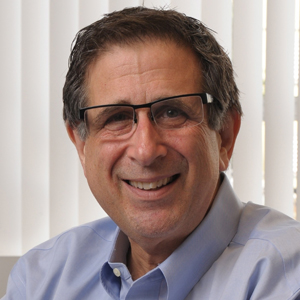
[00:00:10] Susie Walker: Hello, and thanks for tuning in to the Top Podcast for the food and beverage industry Taste Radio. I'm editor and producer Ray Latif and you're listening to episode 190, which features an interview with Joel Warady, the General Manager and Chief Sales Marketing Officer of Enjoy selling allergen friendly snack brand Enjoy Life Foods. Tune in on Friday, November 29th for Episode 62 of our Taste Radio Insider Podcast, when we're joined by Susie Walker, the founder of paleo-inspired snack brand Primal Pantry, and Dan Brayton, the co-founder of Dahlstins, a brand of better-for-you craft sodas. Just a reminder, if you like what you hear on Taste Radio, please share the podcast with friends and colleagues. And of course, we'd love it if you could review us on the Apple Podcasts app or your listening platform of choice. For a company that's been around for nearly two decades, it's remarkable to see the sustained and upward trajectory for Enjoy Life Foods. The leading brand in the fast-growing allergen-friendly segment, Enjoy Life markets a range of sweet and savory snacks that are free from the eight most common food allergens. Joel Warady has played an integral role in the brand's development, having been with Enjoy Life since its launch in 2001. Joel started out as a board member and served as board chairman for three years, and has overseen the company's marketing strategy since 2011. In his current role, he's responsible for the development and execution of the brand's Sales and Marketing strategies, and holds the unofficial title of Chief Storyteller. In the following interview, Joel speaks with Nosh editor Carol Ortenberg about the genesis and evolution of Enjoy Life, which was acquired by snack giant Mondelez International in 2015. As part of the conversation, Joel discussed his mantra of quote, think digital, act analog, why great taste is paramount to the success of any food brand, and why standards matter at every stage of growth.
[00:01:59] Primal Pantry: Hi, everyone. Carol here. I am at the Mobile Innovation Summit in Denver, and I'm joined by Joel Warady, who's the General Manager and Chief Sales and Marketing Officer of Enjoy Life Foods. Joel, thanks so much for chatting with me today.
[00:02:14] Dan Brayton: Thank you, Carol.
[00:02:15] Primal Pantry: Let's start by talking about Enjoy Life. What is Enjoy Life, and what has the history of the company kind of looked at? Just a small question to start off. Sure.
[00:02:25] Dan Brayton: So Enjoy Life Foods has been around for 18 years. And 18 years ago, when the company was started by the two co-founders, who were Burt Cohn and Scott Mandel, the idea was to create a gluten-free company that was also free of the top eight allergens. And interestingly enough, no one had done that before. And Scott and Bert were working on their MBAs at Kellogg School of Management in Chicago. And this was actually a school project when they first came up with it. They were both bankers and one of them was my banker, which is how I got involved with it from the very beginning.
[00:03:07] Primal Pantry: So what was your role at the company in the beginning and how did that evolve over time?
[00:03:11] Dan Brayton: So in the very early days, before it was ever called Enjoy Life Foods, my role was that as an advisor, I was advising both Scott and Bert. And then when the company was first formed, I became a member of the advisory board, and then subsequently a member of the board, and then chairman of the board. And then in 2011, I joined the company full-time, first as the Chief Marketing Officer, and then as the Chief Sales and Marketing Officer.
[00:03:40] Primal Pantry: I sort of think of Enjoy Life as pre-acquisition and post-acquisition, though a lot else has changed during that time period as well. Talk about the first 14 years of the business. What were some challenges you faced, and how did the business kind of really develop from an idea to a category leader?
[00:04:01] Dan Brayton: So initially, as I mentioned, we were focused on food allergies. Yes, we were gluten free, but we really thought the big differentiator was the fact that we were free from the top eight allergens. And during the first dozen years, when we would go to retailers and tell them this story about food allergies, they had no idea what we were talking about. I mean, food allergies was not on the radar screen of retailers. Where we were fortunate was that we were gluten-free. Everyone remembers that the gluten-free craze took off. And so what we would say, well, yes, we are gluten-free, but we're gluten-free plus. So if you have to have a gluten-free product, why not have a gluten-free product that is also free from the top eight allergens? That is how we really started to gain traction. And then the second part of it was when I joined the company in 2011 as the chief Marketing Officer, what I realized was that the conventional supermarkets wanted in on this gluten-free growth as well as food allergies. And so we positioned our product to be right for the conventional market as well as the natural market.
[00:05:18] Primal Pantry: that's a hard line to straddle at that time. I think the gap between conventional and natural was a lot bigger than it is today.
[00:05:26] Dan Brayton: Yeah, absolutely. At the time, we were fortunate if there was a four foot set in the conventional store and they were only going to take two or three brands. So we had to make sure that we were one of those brands. And the way we did that, we looked at what everyone was doing in the natural space with the natural packaging and a lot of brown tones. And we went exactly
[00:05:47] Primal Pantry: One is always so appetizing too.
[00:05:49] Dan Brayton: Always appetizing. We went the opposite. We went very conventional packaging so that we could get on shelf in the conventional stores. And then the second part of it was we put a marketing plan together that would help drive traffic into the conventional stores. So away from a lot of the natural channel.
[00:06:08] Primal Pantry: It's a great point you make about the four-foot set. At that time, these natural or special diet sets weren't integrated in. They were a separate aisle or part of the store that only like certain consumers wandered into.
[00:06:24] Dan Brayton: Yes, and we had data. So we couldn't afford a lot of syndicated data at the time. I remember the first time we wrote a check to spends for $25,000, I thought it was our budget that was going to last forever. But what we did, we found that our consumers would fill out survey monkeys and respond via MailChimp. So we started to get data that showed that our consumers who were shopping natural stores wanted to buy their product in conventional retailers where they bought the rest of their products for the rest of their family. And we would take that data into the retailers and convince them that they had to have our product on shelf. And then the second part of it was convincing them they had to have a variety as opposed to just one or two SKUs.
[00:07:12] Primal Pantry: I mean, if they were willing to take in your product, why did it matter if they had a variety too?
[00:07:17] Dan Brayton: Well, A, we wanted them to have a variety of our product, but we also wanted them to have our competitors. So we like to say when it comes to food allergies, we were the number one brand in a category that didn't exist. There was no category for food allergies. So for us, it really served us well to help prop up some of our competitors to show that it truly is a category. And today it's become a real category.
[00:07:45] Primal Pantry: So I do want to fast forward to the future a little bit, but let's talk about what happened in 2015. So walk us through that.
[00:07:54] Dan Brayton: So when I joined the company in 2011, the company was doing well, but we thought that the company could really do a lot better. And at that time, we had a lot of shareholders, not too many institutional shareholders, but there were quite a few shareholders who had been with the company for 10 years. And they wanted to potentially exit. So the board suggested to me that we need to grow the business and then potentially bring some additional equity in. So starting in 2012, we had three consecutive years of 40% growth. We had 40%, then 41%, and then 40%. So we had this great run. And we decided to bring more capital into the business. At the time, we really thought that we would bring private equity money in. What we found is that all the strategic companies were really circling around the business. And while we had conversations with many private equity groups, the strategics were telling us they really wanted to get in. We thought it was too early. They thought differently.
[00:09:03] Primal Pantry: So what convinced you otherwise?
[00:09:05] Dan Brayton: Well, it was a combination of expertise. So when we were talking to the strategics, everyone thinks it all has to do with money. You can get money from a bank. So when you're looking to be acquired or bring capital in, you also want expertise. And with the strategic companies that we were talking to, they were bringing different expertise, some center of the plate, some snacking, and it was expertise on manufacturing, expertise on marketing, and that really started to change the way we were looking at it. We saw this real opportunity to grow the brand through this acquired expertise.
[00:09:46] Primal Pantry: And in 2015, Mondelēz acquired the company. It's somewhat unusual to get to talk to someone who was with the company so far before it was acquired and has remained on for a period of time afterwards. What has kind of evolved since 2015?
[00:10:05] Dan Brayton: Well, it's been a great run. What's interesting is my career, I've always been an entrepreneur prior to being involved with Enjoy Life. I was involved with another company that I had started. So Mondelēz was the first large company that I had ever worked with. And I always say, I give them a lot of credit. Normally, as you pointed out, the founder or someone who's been with the company for a long time usually is kept on for a year, and then they part ways. To Mondely's credit, what they saw was we have a unique consumer base, and we really have a unique go-to-market strategy. And they asked me if I would continue to stay on in the role, ultimately becoming General Manager, which is a story in itself. And that allowed me to continue the role for the last four and a half years.
[00:10:55] Primal Pantry: Well, tell us that story. What has it been like becoming the General Manager? You don't always see the CMO to General Manager shift. So how has your role changed and how did that come about?
[00:11:08] Dan Brayton: Yeah, so when we were acquired, part of the requirement, if you will, is that Scott Mandel, the remaining co-founder, and myself had to make the jump to Mondelēz. I mean, that was part of what Mondelēz had asked, and we both agreed. After a year, Scott decided he wanted to do other things, and to his credit, he had made money off of the sale, so he left. And then Mondelēz decided to put in one of their people as the General Manager. So they brought in a seasoned veteran, 17 years, Kraft Mondelēz, and that person took over the role as General Manager and Chief asked me to stay on as CMO and, in essence, teach him about the brand. which we did, but the company didn't grow a lot. The brand didn't grow a lot during that period. And after about nine months, he decided to leave the business. And so they asked me if I would remain on as interim GM until they found the right person. And I said, yes. And during that period, we grew 21%. And they said, what'd you do? And I said, I ran the business. And they said, well, why don't you stay on as GM? So it wasn't in their strategic decision to decide to move me up to General Manager. It was something that happened, and it's been that way for about two years now.
[00:12:33] Primal Pantry: Well, you have to tell us, what's the secret? How did you grow the business 20%? And how do you continue to grow the business?
[00:12:39] Dan Brayton: I think the first secret is we really understand our consumer. We talk to our consumer all the time. I still go to a lot of consumer events. I'm engaging with our consumers face-to-face. I'm engaging with our consumers digitally. And we know our consumers and we listen to our consumers. I challenge companies a lot when I do industry speaking to have a chief listening officer. No one has done that. But what a great role to just listen to consumers. So by listening to consumers, we develop products that our consumers tell us that they need. And I listen to our customers as well. Our customers will tell us different things that we need to do that will help improve the placement on shelf. A great example of that, we made the mistake when we went through a recent packaging change to make one of our SKUs horizontal instead of vertical. And the retailers told us all the reasons why it was taking up too much space horizontal and can we make it vertical. And it sounds simple but we listened and we changed it and that product is now growing at triple digits. So I think that's what we do is we're really good at listening and we're really good at selling product.
[00:13:55] Joel Warady: Guessing your margins? That's risky. Belay Financial gives CPG brands the clarity to scale smarter, faster, stronger. Get your free inventory ebook by texting TASTE to 55123 and start making data work for you.
[00:14:15] General Manager: Tune in at the end of this episode for an exclusive interview with Matt Lin of Belay Solutions. He sits down with Melissa Traverse to break down the biggest inventory and accounting mistakes CPG founders often make. You'll learn how to bring clarity to your numbers so you can scale with confidence.
[00:14:33] Primal Pantry: Now, you referenced this a little bit in that, you know, this used to be sort of a smaller segment of the population. It really was special diets. There's a lot more attention devoted to free from foods. How do you know who to listen to anymore?
[00:14:51] Dan Brayton: That's a great question. And I'll parenthetically mention that the term free from foods in the United States, we brought that term over from the UK. In the UK, free from just meant free from some allergens. And when we brought it to the US, we wanted it to mean more. So it was really more all encompassing. I think it's a great question. How do you know who to listen to? It goes back to the fact that living your life with food allergies, that is not a choice. And therefore, this isn't a diet that people go on. This is real. Now, you might ask, well, why do so many people seem to have food allergies today? What has changed? And there's a lot of different theories. But the fact of the matter is that food allergies, the incidence of food allergies is growing exponentially. In 1990, it was one out of 50 children. A couple of years ago, it was one out of 12. It's going to be one out of 10 in the next two years. So more and more people live their daily lives with food allergies. And it is why it's growing so much in the retail stores. It's still a special diet, but it's not as small a category as it was 15 years ago.
[00:16:06] Primal Pantry: There are still some consumers who think about it as a lifestyle choice and maybe choose to avoid certain ingredients versus, you know, they medically just are forced to avoid certain ingredients.
[00:16:18] Dan Brayton: I think you're right. I mean, some people will decide to alleviate certain ingredients in their diet because they may have read something. For example, they may have read that if you eat too much soy, your hair might become brittle. Or if you eat cow's milk, drink cow's milk, you might become bloated. So they don't have an allergy. They don't have an intolerance. They have chosen to remove a certain ingredient. And yes, those are many of our consumers. We segment those consumers. We call those consumers the wonderers. The wonderers are wondering, if I do this, will my life be better? As opposed to the worriers, the worriers are those people who will get sick if they eat a certain ingredient. But we embrace both. We love the worriers and we certainly embrace the wonderers.
[00:17:09] Primal Pantry: Do you talk to the Wanderers through your marketing? Because some of these things can be very hard to concretely prove. If you avoid this, you will be less bloated.
[00:17:21] Dan Brayton: We do talk to our Wanderers, but it's less about giving medical advice, and it's more about hearing why they're making certain choices. So for instance, our number one category that we're in is baking chocolate, chocolate morsels. And so many of our consumers who buy our chocolate morsels are doing so because they're vegan and our morsels are vegan. So again, it has nothing to do with the fact that they have allergies or intolerances. It is a lifestyle choice that they became vegan and they see our products as part of their solution.
[00:17:55] Primal Pantry: Going back to that idea of listening, does one group hold more power when you're listening to them that you say, you know, we have to pay attention to this?
[00:18:06] Dan Brayton: Well, our foundation is people with food allergies. So for 18 years, we've been creating products for people with food allergies. And knock on wood, if you can hear me knocking, we've never lost a child. And I say that because if you look at the statistics, There is about one child every five to six weeks that is dying because they've eaten an incorrect product because they have food allergies. And so we take food allergies extremely serious. It is the foundation of our brand. But we listen to everybody. So a good example is we started listening to people who have IBS, irritable bowel syndrome. And we didn't realize how big of an issue it is, but it's actually 15% of Americans. And there's a new protocol called low FODMAP, which was started in Australia. And we started to hear about low FODMAP and we decided to have all of our products tested. And what we found was that 26 of our SKUs meet the requirements of the low FODMAP diet. So that's a group that we listened to. We're now creating new products for the low FODMAP group and it's small today. We don't know what it will be like in the future.
[00:19:30] Primal Pantry: How do you figure out where to devote your focus? Because for some brands, you know, you can be trying to hit one consumer segment and then realize maybe you should hit another. Is there another, especially when you're starting out? How do you decide where to invest that time and that certification and dollars and everything that goes along with it?
[00:19:48] Dan Brayton: It's not easy, especially for brands that are starting out, is that trying to really keep focus, I think is difficult. Over the years, we looked at doing center of the plate, and we weren't great at it. We tried to create macaroni and cheese. Today, we're a snack food company. Again, what's been helpful to us is the market changed. More people are snacking. I think everyone's heard the stat that people are snacking five times a day. And the definition of snacking has changed. So we are a snack food company that is certified gluten-free and today free of top 14 allergens, or free of the 14 allergens as designated by the EU. And then all the other things that we are, halal, certified, vegan, some of our products are paleo-friendly. We're not focused on those areas, but we pay attention to those areas.
[00:20:44] Primal Pantry: Now, at the same time, you still have 86 SKUs, which is quite a big base. How big can you continue to grow while staying focused on snacking?
[00:20:55] Dan Brayton: Well, again, partly due to the fact that the definition of snacking continues to evolve, I think we can continue to focus on snacking. If you would have asked me five years ago, would we have 86 SKUs, I would have said, that's pretty difficult to get to. We keep creating SKUs because people ask for them. So one of our most recent product line introductions were our breakfast ovals. We didn't have anything for breakfast, and so we created a soft-baked breakfast oval that has great whole grains and a lot of attributes. And that was a new time of day that we introduced our product. So I think we can continue to grow our SKU base. That being said, We discontinue SKUs all the time. And the hardest thing for any entrepreneur is to discontinue a SKU. They fall in love with the SKUs as if they're their own children. And a really good business person will understand you have to get rid of those SKUs that just aren't performing well.
[00:21:59] Primal Pantry: You have some very passionate consumers as well, though. How do you talk to them when you discontinue a SKU?
[00:22:05] Dan Brayton: You know, when we discontinue a SKU, we have people who all the time will tell us, that was the only SKU my child would eat, or the only product my child would eat. Why are you discontinuing? You don't care. And our answer always is, there weren't enough people like you. I mean, that is the problem. Now sometimes, one of the things that we've developed over the last few years is a very robust direct-to-consumer business. So one of the things that we're looking at is, as opposed to just discontinuing SKUs, do we take them out of the brick and mortar venues and just have them on our D to C site? So, you know, we're looking at, can we continue to produce them efficiently at a much smaller scale?
[00:22:49] Primal Pantry: How do you figure out when a SKU should be discontinued versus, you know, we just didn't get taste right, or the price is too high, or there's other levers we can pull before that?
[00:22:58] Dan Brayton: It goes back to listening. So one of the things we do listen to is taste and texture. Those are the two most important things. Here's what I think is really interesting, and obviously I've been in this industry a long time. There are a lot of products that are introduced today at Expo East and Expo West. And someone asked me a question not too long ago, why are 95% of the products failing that are introduced? Taste them. That's the problem. You know, you go to Expo East and Expo West, and it sounds great, but then you taste it. And if you taste it and you have to convince yourself, well, that's not bad, that product's not going to succeed. So taste and texture are so important. Sometimes we just can't get it right. And so when we can't get it right, we do make that decision. We're never going to be able to fix this taste. But a good example is our Protein Bites. So right now, our Protein Bites, it is our hottest product. It's available, for example, at Trader Joe's as a branded item, and we can't keep them on shelf. They're in the protein bar set. What's interesting about our Protein Bites is this is the third iteration. And we stuck to it even though they didn't taste great. We felt that they had a real future, and so we kept going back to the drawing board and working on the R&D on it.
[00:24:25] Primal Pantry: You were a first mover in the free-from space. How much more important has taste become? Because it seems like it's gotten a lot more competitive. If I look at some of these categories where there used to not be a lot of allergen-free options, now there are a lot more. Did you used to have more leeway on that?
[00:24:44] Dan Brayton: Sure. I like to say when we started the business, our product at best was sweet cardboard. They didn't taste great. And people were just so thankful that they were safe. They gave us a lot of leeway. That has changed today. And it's not just because we have competition. People's expectations are significantly greater. The good news is there are a lot of new ingredients and there's a lot of new technology that has allowed us to create some really great tasting products that are free from 14 allergens. Although, you know, when you say you're free from 14 allergens, what you're really saying is you're free from 14 ingredients. And think how difficult it is to make a great tasting cookie without eggs, without milk, without butter. I mean, it's just hard to do. We've been successful for the last 18 years doing so.
[00:25:38] General Manager: Do you want more repeat buyers on Amazon? Well, this free resource in collaboration with Straight Up Growth will help your brand turn first-time buyers into long-term subscribers. Download Winning the Repeat Purchase Game on Amazon now at Taste Radio.com slash SUG. That's Taste Radio.com slash S-U-G to start building retention-driven growth for your brand on Amazon. Scaling a beverage brand into major retail comes down to operational readiness. From packaging lead times to co-manufacturing strategy, the details can make or break a launch. In a new e-book in collaboration with Octopi and Asahi Beer USA, industry leaders share what they've learned in helping brands scale. Download it now at Taste Radio.com slash octopi. Do you need to scale your team faster without compromising on talent? Join Oceans for a live webinar on April 20th and learn how leading companies are hiring top global professionals who are ready to grow with your business. Register for the webinar now at Taste Radio.com slash oceans. That's Taste Radio.com slash oceans.
[00:26:49] Primal Pantry: We've also seen the rise of clean ingredient labels and transparency. So when you're avoiding all these ingredients and you have to sub in other things that are maybe not as well known, how do you still achieve that clean ingredient label or convey to consumers succinctly what is in your products?
[00:27:06] Dan Brayton: So that has always been a very big challenge of ours, because our ingredients are clean. We only use natural ingredients. However, our ingredient deck is long. And people assume if it's a long ingredient deck, it must not be clean. But the reality is, what we're trying to do is to mimic flavors and textures. So we use a lot of different ingredients to get there, but they're all clean ingredients. But you're correct. that we have to communicate this to consumers. So when you go to the Enjoy Life Foods website, we're very transparent. We list every ingredient that we use and why we use it, and we put that out to the public so everyone can see it.
[00:27:51] Primal Pantry: How do you convey that on shelf? Because if it's a new consumer picking up the product, they flip it over, they see this long ingredient deck. Do you have any tips or suggestions for that quick three second window you have with a shopper?
[00:28:06] Dan Brayton: If you look at our packaging on the front of our packaging, we are always highlighting certain ingredients that are in the product. And we have some romance language that talks about those ingredients. So that we want that to be the primary. Then the secondary is talking about the things that we aren't, which we don't put on the front of package. We put that on the side of the package because we want people to buy us for taste, not because of things that we don't have. And then on the back of the package, today what we point out is, well, we've been around for 18 years and millions of consumers are enjoying our product. And so really what we're saying to the consumer who's maybe never seen our brand before, if millions have been buying this for 18 years, why don't you give it a try?
[00:28:56] Primal Pantry: Talking about marketing, on stage today, you were talking about how Enjoy Life thinks digital but acts analog. What does that mean exactly?
[00:29:04] Dan Brayton: So it goes back to this idea of listening to consumers and connecting with consumers. You know, I think marketers tend to use phrases like household penetration and share of market. That's really important. But what's extremely important to us is not share of market, but Does Billy like our product or does Mary love our snickerdoodles? So we want to talk to our consumers and we put ourselves in a position to connect one-on-one with our consumers as often as possible. We go to these gluten-free, allergy-friendly events that are held around the country, also in Canada, and we are meeting one-to-one with our consumers and asking them, their opinions of our products, what they'd like to see us produce, and we're constantly engaging. And what we say is we're engaging on an analog basis, on this one-to-one basis.
[00:30:04] Primal Pantry: Now, a lot of brands tell me that, yes, field marketing is important, but influencers are the new way to do field marketing. How do you guys approach the idea of digital marketing and influencers?
[00:30:17] Dan Brayton: So we love influencers if they're genuine. It concerns me when influencers, that this is how they make their living. Because how much can you really be consuming the product on your own as an influencer? So we love influencers, but we want influencers to be genuine. We want influencers to be people who have been using our product on a regular basis. because they've made a choice to do so or they have to do so because of food allergies and intolerances, and then we'll engage with them as influencers. One of the things that I always say is the chances of you finding Kim Kardashian holding a box of Enjoy Life snickerdoodles, it's slim because we couldn't afford it, nor would we, but if she chooses to eat it on her own, great.
[00:31:06] Primal Pantry: Now, you are owned by a big corporation, so that certainly helps with marketing dollars. But it sounds like it's where you choose to spend those dollars.
[00:31:15] Dan Brayton: Yes, and we're very efficient. I mean, we have our own budget. We operate as an autonomous organization. have to be profitable. So yes, we're very careful about how we spend our money. We want great ROI. We will test a lot of different things, but we're nimble enough that if we test it and it doesn't work, and we've had things that haven't worked, then we shut that program down. We don't make any real long-term commitments to any marketing initiative.
[00:31:43] Primal Pantry: It's interesting you talk about testing things in marketing, testing things in SKUs. How do you keep employees motivated when you're killing something that maybe they worked really hard on, be it a product or marketing? How do you make failure okay at the company?
[00:32:00] Dan Brayton: Well, that last point is a really important point. No one gets fired for failing. And what we say to people, and it is somewhat cliche, it's OK to fail, but fail fast. Don't fall in love with a project because you think it's the right project for you. That being said, the way we keep everyone engaged, so on a regular basis, we share stories. We share stories of our consumers. Our consumers tell us everything. And our consumers will write these fantastic testimonial letters. And we're constantly sharing that with our team, not only our marketing team, but with the entire team in Chicago, which is where our corporate offices are, or our production team down in Jeffersonville, Indiana. We're constantly making sure people understand the families that they serve.
[00:32:55] Primal Pantry: The idea of being really nimble and feeling fast is not something you always hear associated with large CPG brands, but it does sound like it's a spirit you guys embody and have continued at the company. What other influences have you maybe had on Mondelēz and how do you share your learnings and your entrepreneurial spirit with the larger company?
[00:33:20] Dan Brayton: I think it's a great question. You know, what a lot of people don't realize is Mondelēz came about splitting off from Kraft back in 2012. And we were the very first acquisition that Mondelēz ever made. So they were a little bit gun-shy. Back in the days of Kraft, they had acquired Boca Burger, Balance Bar, and Back to Nature. None of them worked really well for Kraft, so when they acquired us, they made this decision to allow us to operate autonomously. Irene Rosenfeld, who was the then CEO, before we got acquired, she went to dinner with us, and she said to me, Joel, what is it that you want to achieve once you're acquired? And I said, well, I would love to see Mondelēz in the United States be non-GMO. And she said, good luck. Today, Triscuits is non-GMO. So I think what we were able to do early on was to raise this awareness of consumer demand for things such as non-GMO and other certifications. And we see this more and more. We see this throughout a lot of Mondelez's innovation. Gut health was another thing. I can remember the meeting when we were talking about putting probiotics in some of our products. And at the time, the Mondelēz R&D team was not thinking of probiotics. And today, it is absolutely on their radar. So I think it's just helped them become more aware of what the consumers, and in a lot of cases, the natural consumers looking for.
[00:35:00] Primal Pantry: Now you referenced some acquisitions they had made earlier when they were the larger corporation. What is important to keep in mind as a brand when you maybe are developing a partnership with a strategic or selling to a strategic in order to make the partnership successful?
[00:35:17] Dan Brayton: I think to entrepreneurs, remember why you developed the brand. If you think back to what the motivation was, hopefully the motivation wasn't to grow a brand so you can sell it and make a lot of money. The motivation should be, it should be mission driven. So I think when you get acquired, or when you're negotiating to get acquired, never forget that initial mission. And that was one of the things with Mondelēz, as well as the other strategics who were looking at us, we kept talking about the mission and the mission of people with food allergies. We had one strategic who said, what if you were only free of seven of the top eight, because it would make your products taste better.
[00:36:02] Primal Pantry: Which one did they want to put back in?
[00:36:03] Dan Brayton: They wanted to put Darien. And we knew right away that that strategic was not a good fit for us. You have to stay true to your mission. So that's what I would say is no matter who the acquisition partner is, stay true to what you believe.
[00:36:20] Primal Pantry: It is important to stay true to who you are, but can your mission or your goals evolve over time?
[00:36:28] Dan Brayton: Yes, your mission and goals can evolve, but your standards shouldn't. So, you know, I think acquiring companies, they're always going to look to reduce costs. I mean, that's part of what they bring to the partnership. I always recommend to entrepreneurs, don't cheapen your ingredients. Remember what brought you here. And you have to convince the acquiring company why it would be a bad idea to change the formulation. Without naming names, I think we all know companies, after acquisition, formulations have changed, or the ingredients have changed, or they immediately have a recall for a reason. That's not just by chance. That is what a lot of acquiring companies tend to do. And again, to Mondelez's credit, they have let us continue to run the business the way we want to run the business.
[00:37:24] Primal Pantry: Well, you've certainly done an amazing job running that business. I'm excited to see where Enjoy Life continues to go. And thank you so much for chatting with me today.
[00:37:33] Dan Brayton: Thanks, Carol. I appreciate you having me on.
[00:37:38] Susie Walker: That brings us to the end of episode 190. Thank you for listening, and thanks for our guest, Joel Warady. You can catch both Taste Radio and Taste Radio Insider on Taste Radio.com, the Apple Podcasts app, Stitcher, Google Play, SoundCloud, and Spotify. As always, for questions, comments, ideas for future podcasts, please send us an email to ask at Taste Radio.com. On behalf of the entire Taste Radio team, thank you for listening, and we'll talk to you next time.
[00:38:15] General Manager: Hello, I am Melissa Traverse here for the Taste Radio podcast, talking about some of the biggest tension points that CPG brands and founders face when they're scaling a brand, and those are financial accounting and inventory management. I am joined by Matt Lynn, inventory accounting guru from Belay Solutions, and he is going to shed some light on all of this that is going to help everybody out quite a bit. Matt, thank you so much for joining us today.
[00:38:45] Chief Sales: Thank you for having us, Melissa. It's great to be out here at Expo West and it's great to sit down and be able to chat this because it's kind of a passion project of ours, working mainly with CPG brands and hoping to help them scale.
[00:38:57] General Manager: It's been such a pleasure chatting with you and the team and learning all about what you do over there at Belay Solutions. Can you tell us a little bit about yourself and what your role is and the kinds of solutions that Belay gives to CPG brands and founders?
[00:39:13] Chief Sales: Yeah, absolutely. My role with Belay, I'm actually our inventory accounting manager. I run our inventory department, so we work with CPG brands, taking them from spreadsheets, putting them on inventory management systems, and really helping connect their tech stack between their sales online marketplaces to that inventory management system, even down to their financial systems like QuickBooks. But Lay overall is kind of an outsourced accounting firm. And with that, we're helping teams. We have different levels with bookkeeping, controller level work, even high level into CFO type items. So we really help those brands in any way that they need financially. And then I just have a subset of a department where we're really just laser focused on inventory.
[00:39:55] General Manager: It's certainly a complex topic and there are plenty of places to go wrong. Let's start by going right and start super simple. Can you tell us what some of the biggest red flags are that would help a founder understand or, you know, the person running a brand understand that it really is time to get some help with some of these areas?
[00:40:16] Chief Sales: Yeah, absolutely. I think some of the early red flags is just everything is chaos. So when they're looking in their financial software, maybe they don't really have an accounting background, and they're kind of just piecing it together and doing their best. And what they'll see is that reconciliations take forever, if they even happen. They have a lot of transactions that don't get coded, or they just put them into placeholders to just get rid of it so it's not an eyesore. they'll notice they have revenue but no cash or they notice that they have a good amount of cash but their blind spot is really seeing the vendor invoices that are sitting there just needing to be paid and so they just lack that clarity that's going to really be around the corner.
[00:40:53] General Manager: You know, you were talking about one of the red flags that comes up that I think makes so much sense. When somebody asks you what your numbers are and you can't come up with the right number, that's a big problem because that's something that you really should be able to share with decision makers who, you know, you're ideally looking to do business with. What should you be able to call up at a moment's notice?
[00:41:18] Chief Sales: really at any time, you should be able to know an accurate margin. It's amazing how many founders we end up talking to that they can tell you their revenue numbers, they can tell you their selling price, and then the minute you start talking about cost or their cost of goods sold, they just get a deer in headlights look. So really it's very hard to tell, am I even making money? Or if you don't know your entire landed cost. Maybe you know what the freight cost is, the duties separately, but you're not really getting that as part of your unit cost. So it's really hard to tell. Am I even making money or am I losing money from the very beginning?
[00:41:51] General Manager: And do you recommend that founders are able to call up a margin by channel?
[00:41:55] Chief Sales: Absolutely. And depending on the number of products and channels, you kind of want to know what are your best sellers, which ones are making the most and which ones maybe you're not making as much. But especially if you're branching out and you're doing D to C with B to B, absolutely want to know that.
[00:42:12] General Manager: Gotcha. You mentioned that when things feel really chaotic, that's probably a red flag. I would say that it probably almost always feels chaotic if you're running a CVG brand. And I know this may be hard to quantify, but is there a revenue number? Is there a number of doors number that would help a brand understand whether or not it makes sense to bring on a partner like Belait? Understanding that so many brands are bootstrapped or they might be tight for cash. What is that friction point?
[00:42:42] Chief Sales: 3 3 3 3 3 But as you're growing, as you're getting into those six-figure revenue numbers, and especially as you're approaching seven, you want to make sure you've got good financials. Because as you scale to that point, most likely you're going to be looking to raise capital. And investors, the first thing they're going to look at is your books. And are they clean? And do they show a clear picture of your business?
[00:43:15] General Manager: You know, another area that folks might look to to organize some of the chaos are their systems. So many folks stick with Excel spreadsheets for a good amount of time. How do you know that you need to outsource some of your accounting to an organization like Belay Solutions versus maybe signing on to a Synth7 or NetSuite or something like that?
[00:43:38] Chief Sales: Well, that's actually something we really help with when it comes to that cost question. That's something that trips people up. And sometimes if you just have a turnkey business, you buy and sell a finished good, you can maintain with spreadsheets. And we've had clients with million dollar revenue that can do that. But we see so many brands nowadays are using contract manufacturers. and they're just sourcing certain parts of their product. So when you start talking cost, they have no idea exactly what their unit cost is. So that's where we come in and we kind of understand, we'll speak with the customers and the clients and get their needs. And then if we think they're ready for a system, then we'll help put them on that system so they can get some of that clarity. And it's not something we force on anybody. There are plenty of times where founders come to us and we'll tell them bluntly, you're not ready for it right now, but we'll let you know when we think you are.
[00:44:24] General Manager: That sounds like excellent advice. What should a founder or somebody running a brand look for in an outsourced accounting partner? Are there certain checklist items that they should make sure that their partner be able to execute or be able to help them understand?
[00:44:41] Chief Sales: Absolutely. I think one of the keys there's, there's a lot of outsourced accounting firms out there. Some focus on service-based SaaS companies, but if you're a CPG founder, you really want to make sure that your accounting firm has CPG experience. I would ask them, you know, what kind of brands have they worked with and even beyond that industry specific, because there's so many subsets of CPG. And that's something that I think is great about what we do with Belay is that we kind of run the gamut. It's kind of like the insurance commercial. We know a thing or two because we've seen a thing or two across a broad spectrum.
[00:45:10] General Manager: Probably getting references is always helpful, right? Absolutely. All right. So this all sounds great. I think we have a really good understanding of would it make sense to hire an outsourced partner? You know, what some of the things you should be looking for are. What does offloading this kind of work mean for the brand? What can this do for lightening the load of a founder or lightening the load of a brand operator? Like, how does that help them in their everyday business?
[00:45:40] Chief Sales: It just tries to really help quiet the chaos. So what we're looking to do is just take some of the weight off that founder's shoulder. Let them focus on building the brand, building the business, getting that exposure. If you don't have sales, you really don't have anything. So we want them to be able to focus on that while we take care of your back-end office work. And we can just present that to you on a monthly basis. You can help make decisions. You can take that to investors. And really, you can just focus on growing your business.
[00:46:05] General Manager: I feel like I felt founders and the folks who are running brands collectively sigh a breath of relief just hearing that. How can people learn more about Belay Solutions?
[00:46:16] Chief Sales: So people can text TASTE to 55123 for their free inventory guide to get started.
[00:46:22] General Manager: Matt Lynn, inventory accounting guru at Belay Solutions. Thank you so much for joining me here at Expo West. It's been such a pleasure to chat with you and learn about what you all do over there to help founders and brands with their financial accounting and inventory management. For everybody else out there, thank you for listening to the Taste Radio podcast. I am Melissa Traverse and we'll see you next time.