[00:00:00] SPEAKER_??: you
[00:00:05] Jon Landis: Hey Mike, you know we've been talking about the Chobani Incubator a lot recently.
[00:00:12] Mike: Yep, awesome program. Apply today at chobaniincubator.com. Applications are open until January 31st. Don't procrastinate.
[00:00:18] Jon Landis: Right, and we've shared how they want passionate founders who are democratizing better-for-you food and beverages, how they provide equity-free capital, along with guidance and expertise in a three-month program. So what's your question, Landis? So does it actually work?
[00:00:31] Mike: Aha! Yes, so to date, Chobani Incubator alumni have experienced on average 250% growth in distribution, 150% increase in quarterly revenue, picked up major retail accounts, and raised millions of dollars.
[00:00:44] Jon Landis: So this program's the real deal, huh?
[00:00:47] Mike: It sure is. ChobaniIncubator.com has the application and more details. Again, the application deadline is January 31st.
[00:00:54] Jon Landis: Good luck to everyone who applies. And now, Taste Radio.
[00:01:11] Ray Latif: Hey everyone, I'm Ray Latif, and you're listening to the Top Podcast for the food and beverage industry, Taste Radio. This is episode 146, which features an interview with Jamie Athos, the president and CEO of Tofurky, who discusses how the plant-based meat brand has endured, evolved, and grown in its nearly four decades in business. Tune in on Friday, January 25 for episode 18 of Taste Radio Insider, which features interviews with Pete Maldonado, the co-founder of fast-growing meat stick brand Chomps, along with Paul Evers and Steve Barham, the co-founders of innovative coffee brand Riff Cold Brewed. Just a reminder to our listeners, if you like what you hear on Taste Radio, please share the podcast with friends and colleagues. And of course, we'd love it if you could rate both Taste Radio and Taste Radio Insider on iTunes. I'll be honest, I've always been wary of Tofurky. The brand name is a little weird for me, but I'm increasingly in the minority. Tofurky, which makes plant-based meat products and has been around since 1980, is the OG of animal protein alternatives. The brand has always had a loyal following, but with consumer interest in plant-based meat surging in recent years, sales of Tofurky products, which are distributed on six continents, reached $40 million in 2018. Nosh editor Carol Ortenberg recently sat down with the company's president and CEO, Jamie Athos, who joined us for a wide-ranging interview that includes the origins of Tofurky. Athos also discussed current challenges for plant-based meat companies executing and learning from a recent brand revamp, the reason that Tofurky has resisted acquisition offers, and why he believes that food has to taste great, but plant-based ham doesn't exactly have to taste like ham.
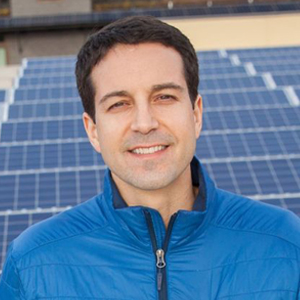
[00:02:57] Carol Ortenberg: Hi everyone, Carol Ortenberg, editor of Nosh here. I am at the Alternative Protein Summit in San Francisco, and I'm joined by Jamie Athos, who's the president and CEO of Tofurky. Thanks so much for being with us today.
[00:03:12] Jamie Athos: Thanks for having me.
[00:03:13] Carol Ortenberg: So let's start by talking about the history of Tofurky, because I don't know if everyone realizes like you're the OG kind of a plant-based meat. So how old is the company and how did it get its start?
[00:03:26] Jamie Athos: Yeah, so we're getting really close to 40 years now in business. My stepfather, Seth Tibbitt, started it in 1980. And the brand Tofurky wasn't around, the product Tofurky wasn't around then. We were called Turtle Island Foods. And what we made at that point was a traditional Indonesian soy food called tempeh. And this kind of business idea came out of Seth's own experience. He was sort of a brand new vegan, brand new vegetarian, I think at that point. And as many people, you know, kind of enter into this new dietary reality, they don't know how to meet their nutritional needs. And his mom in particular was really concerned about his protein. How are you going to get your protein? Well, he found an article about tempeh and sent away for the starter for tempeh. And before he knew it, he's making tempeh and enjoying it. And his friends were enjoying it too. And they started asking him to make it for them. And he just saw an opportunity. I think he's one of those natural entrepreneurs. He just, you know, saw a business opportunity and he started making it and selling it. And it really was a pretty small company for the first 10 or 15 years, doing well and growing kind of organically, but nothing like the success that was to come later. So 1995 is when he launched the first Tofurky item. So that was a holiday kit. It cost, I think, $30 at the time. And this is 1995 dollars, too, back when money was worth something.
[00:04:46] Carol Ortenberg: And I want to say... And there was no e-commerce that you could have a $30 item and sell to a very targeted audience.
[00:04:52] Jamie Athos: And it wasn't like it is now, too. Like, plant-based was not a term then. Vegan was, but only very few people even knew what that meant. So he had to find some progressive visionary retail partners to even consider taking a product like this on. And thankfully, we have PCC Markets up in the Northwest. It's a co-op. It's a really cool kind of a unique retail model in the sense that, well, I think it is kind of a platform for a lot of kind of outside the box thinking and progressive ideals and whatnot. And they saw that there would be maybe some demand amongst their customers for something like this. And so they said yes, he made 500 of them and sold them out. It was a surprise to him, it was a surprise to them. But it was sort of, that was the early indication of the potential success of, you know, products that were intended to be like, you know, the taste, texture and whatnot of real meat. I mean, there really weren't things like that out there at that point. So the next year he made more and after a while, you know, the holiday products were really successful, but there was, I mean, that was, the whole company kind of rose and fell on a holiday seasonal basis. How do you make that a year-round business? And he kind of followed the same model. you know, the traditional turkey manufacturers. He made deli slices and then he further added sausages to that. And, you know, now we've got 40 plus products, but those are the things that really launched the brand and kind of, you know, got it off the ground. The Tofurky meal kit made it a year round phenomenon with those kind of year round products. And then, you know, I'd say in the last few years, the whole world has caught up to us too. Like, five years ago, maybe even less. I mean, it just seems like the growth rate, the interest in plant-based foods is only accelerating. I mean, we're on this kind of exponential growth curve right now. And Teferki was there when it was difficult, and now we're here when it's much, I'd say the challenges are different. Now our challenges are, how do you keep growing your capacity to keep up with this massive upswell in demand? So that's sort of our day-to-day challenges now. It's not convincing people that they should try this crazy product or try, you know, not eating meat for once. It's how do we get more of it out there into a willing market? And the retailers see the potential, the consumers want to try these products. I mean, it's a whole new world out there.
[00:07:07] Carol Ortenberg: In addition to growing the company and the product line, you've increased your capacity as well because you produce your own products.
[00:07:15] Jamie Athos: We do. We do a tiny bit of contract manufacture. We have manufacturing partners that help us with a few components, but 90 something percent of our products are produced by us. And this has been a few years ago now, but we opened a new plant, it was probably three years ago. We built it to a lead platinum standard. I mean, this is another kind of representation of our values, both, you know, as a family, we're a family owned company, but also sort of the brand promise of Tofurky. People expect us to make the right decisions, to make them for virtuous reasons. And that applies to everything that we do. We have to be, you know, good employers and treat our employees well and take good care of them. We have to, you know, I mean, the downside of any sort of manufacturing is there is a kind of sustainability cost. It takes energy, it's disruptive to the environment, all that kind of thing. So we wanted to mitigate that as much as possible. And so we built this plant to a LEED Platinum standard. It's got 400 solar panels on the roof, making 130 megawatt hours of power per year. We've got an electric car charging station out front. And so I'd say manufacturing is sort of an ugly business, but we've tried to make it as pretty and as sustainable and as virtuous as possible.
[00:08:22] Carol Ortenberg: It's interesting you bring up the virtuous as possible because we've seen some exits in this business or investments where it's hard for the consumer to reconcile the company with the business actions they have to take or chose to take.
[00:08:38] Jamie Athos: Yeah, I'm a consumer of those products too, and I have the same kind of head-scratching moments when I see some of the decisions that people make. I get it. I mean, they're entrepreneurs like us, and it takes over your life, I think, to be an entrepreneur, especially in those earlier stages of your company. And I'm imagining, you know, some of these people have grown these companies for many, many years. If you don't have an obvious sort of succession plan, if you don't have another generation of your family to pass it down to, what do you do? I think you find the best home for it as possible. I mean, that's what I would do, I guess, if I'm in their situation. It's hard to walk away from really big numbers too, like really big dollar signs. And this is a great time to get out because there's a ton of mergers and acquisitions activity in our space as well. And if people don't want to keep fighting the fight, then they should get out and they should be well compensated for it if they've grown a good brand. And hopefully the new stewards of that brand will do good things with it. I mean, I think that's the hope.
[00:09:32] Carol Ortenberg: What about the argument, though, that by partnering with a large brand through investment or exit, you know, you'll be able to amplify your message even further? Because we do hear that a lot, that, you know, this is about making our product even more accessible.
[00:09:45] Jamie Athos: Yeah, I am an optimist and I would like to believe that that is true and that that is truly people's motivations. You hear that story enough and you see the outcome five years later and it's hard to maintain that optimism because I think that that's a way that people rationalize to themselves and to others some decisions they've made that maybe are not, you know, the ideal ones, not the perfect ones that they'd make. But yeah, I think ideally, the reason that these companies are being acquired is because they have something that this bigger parent company doesn't. It's probably innovation, passion, mission. And the hope would be that when that company is subsumed into this larger entity, that the larger entity takes on some of those values too. It's pretty asymmetrical though. And it's probably hard for a small company to become part of a multi-billion dollar mega business and actually have influence. And I think that's where the hard reality sets in. these acquired companies are probably on a path to becoming more like the parent companies rather than vice versa.
[00:10:41] Carol Ortenberg: I imagine with the business, you've had folks approach you about investing, about acquiring. And, you know, these are tough conversations to have internally.
[00:10:50] Jamie Athos: Yes, absolutely. With all the interest in plant-based businesses and acquiring them and merging and whatnot, all this activity that we've seen, Tofurky is definitely a prominent brand in the space and we get inquiries constantly. It's definitely a weekly phenomenon that we get somebody interested in. some level of partnership, and partnership is really acquisition of some form or another, investment of some form or another, and you give up equity, you give up some measure of control in that process. What we had to do as a family is sort of a gut check. Why are we doing this in the first place? And what would we do if we were to sell our company? And I can't think of a better way to have a positive impact on the world than doing a good job of running Tofurky. One might say, well, with a lot of money, you could do a lot of good also. I think that's true. But still, I think the upside for the world is greater if Tofurky is in the hands of people who understand its place in the ecosystem too. Tofurky is important to our industry. I think that we provide leadership in sort of a moral and ethical way also. I think we're trying to define kind of best practices for companies, taking the right stands on issues. being willing to take up the fight when our industry is threatened also. The example I bring up is our lawsuit against the state of Missouri right now regarding labeling issues around plant-based foods.
[00:12:11] Carol Ortenberg: Touching upon that lawsuit, for our listeners that don't know sort of what's happening in the regulatory space, maybe they're not in the plant-based meat industry, what happened and prompted you to take action and what action did you take?
[00:12:23] Jamie Athos: Yeah, so the state legislature in Missouri passed a law that basically says, it's sort of ambiguously worded, and I think that's one of the threats that we see with a law like this. It basically says that you can't market products that are not meat in a misleading way. Well, nobody was doing that anyway. So what is the need for this law in the first place? So given the uncertainty that that gave to us, like by making our products taste like meat, is that misleading? By using meat terminology, if we say it tastes like ham, for example, is that misrepresenting it? That kind of uncertainty just is not conducive to doing business. There's always this risk, this legal risk. Missouri also, I'm not sure if this is true in other states, but in their state they have 114 counties, 115 county prosecutors. Each one of them is able to interpret and enforce the law as they see fit. So that's a lot of different opinions potentially coming to bear looking at our products and saying, is this misleading or not? That's potentially very stifling for the industry, I think, to have that kind of sort of Damocles hanging over our head. Like, somebody just has to decide, one of 115 people has to decide that they feel like it's misleading and suddenly, you know, I don't know what the consequences are. It's a criminal law, though, and it has...
[00:13:38] Carol Ortenberg: You could go to jail.
[00:13:39] Jamie Athos: I could go to jail. Yeah, I'm really curious about that for my own purposes. Like who goes to jail? Is this me, Jamie, the CEO that goes to jail? I don't like that potential consequence. And also I think it's $1,000 fine per iteration. Well, if you add up the tens of thousands of individual packages of products that we're selling in the state of Missouri, that's tens of millions of dollars we're talking about. So somebody goes to jail for God knows how long and pays God knows how much money out. And that's a lot of, risk, I think, not just for Tofurky, but for our whole industry. So, I mean, we're involved in this lawsuit because we have risk, but I think our entire industry has risk, too. And we're kind of fighting on behalf of the whole industry, not just ourselves.
[00:14:19] Carol Ortenberg: But not everyone in the industry is joining you, right, in this lawsuit. You are sort of sticking your neck out there, calling attention to you and saying, we have to go fight this fight.
[00:14:28] Jamie Athos: Yeah, that's true. I think that there are a lot of impacted companies, other impacted companies that might have joined in the lawsuit and they haven't. And then, you know, I understand like our business, our primary business is to make good products and sell good products. And this is a little bit of a distraction, but I think this is why Tofurkey is important in our industry too. we're taking the long view. We've seen kind of the arc of history in terms of our industry, and I feel like things are going so well right now. I see actions like this one by the Missouri legislature as indicative of maybe a new trend. We're seeing other states are considering similar bills too, and they're at the behest of the Cattlemen's Association, the meat industry basically. So I think we're at that turning point where suddenly, Some meat companies are investing in plant-based brands. Others are seeing the threat of them. And they're engaging with this kind of evolving kind of food system that we have or eating preferences that we have here in the US in different ways. And this is an aggressive kind of legal approach. And, you know, some of these laws even have mandatory nomenclature, like using the word imitation. And I don't think any consumer is going to like read the word imitation and think that that sounds palatable. At the heart of this also is these laws are purporting to protect consumers, but as far as we know, there's no record of any consumer confusion. We don't have confused consumers contacting us. As far as we know, nobody has contacted, you know, any powers that be within Missouri either. So this is a solution to a problem that doesn't exist, and I think the law itself is very problematic too. It's constraining speech. I mean, we already have laws on the book that protect people from fraud. And, you know, there are lots of consumer protection laws out there. I don't understand why there's a special need in the case of plant-based meats for this special law. Well, I mean, actually, I do know why, because I think it's strictly a protectionist effort rather than a consumer protection effort. They're trying to protect their industry.
[00:16:27] Carol Ortenberg: You acknowledge it could be a distraction and you have a food company to run at the same time, so how do you avoid it being a distraction from the day-to-day of Tofurky?
[00:16:37] Jamie Athos: That's a great question. I mean, you end up just doing it all and just adding more to your plate. But I think, again, the reason that my family still owns and controls Tofurky is because we want to do good in the world. I see this as an opportunity to do good in the world and use this company to do good. We also distract ourselves with being heavily involved in the Plant-Based Foods Association, which is our industry trade group. I see that as, you know, time well spent. And likewise with the Missouri law. And if we have to be a plaintiff in future actions against other states, I'm willing to do that also. Because again, it's not about making profit, it's about making change, making change for good.
[00:17:14] Carol Ortenberg: At the same time, a lot of brands would then use their involvement as a marketing tool and say, hey, consumers, you know, who like plant-based, support Tofurky because we're fighting the good fight. And while there have been stories about this, namely from reporters who pick up on what's going on, it's not like you're really out there proclaiming it and using it for marketing.
[00:17:38] Jamie Athos: Yeah, I think that's true. We probably don't market as heavily as some other companies out there. And I think that, to me, it goes back to our authenticity as a brand. We could make this into a big media moment or try to, this lawsuit. But to me, that undercuts why we're actually engaging in it. We're not hoping to just get our names in newspapers or, you know, whatever, social media. We actually want to win this legal fight and do it on behalf of ourselves and our whole industry. To me, I don't know, this is a personal thing too. It just feels like over-marketing it starts to dilute your real intentions, I guess. I don't want to be halfway thinking about this as just creating good press and halfway actually engaging in it honestly and authentically. I want to fully invest myself in the authentic version of it.
[00:18:28] Carol Ortenberg: It's interesting you mentioned media moments because right now in plant-based, there's a lot of media moments. You have celebrities investing. You have some companies, you know, putting out a lot of press releases. You have IPOs and there's a lot of hype in the industry right now. Yeah. someone who's been around for almost 40 years, how do you say, hey guys, we're still here. We're still making great products and fight back against the hype, I guess.
[00:19:00] Jamie Athos: Yeah, that's a great question. I mean, you're right. There's definitely a lot of hype out there. We're seeing a lot of old technologies being repackaged and marketed as new technologies. It doesn't actually bother me or I think ultimately that's for the greater good also. They're getting plant-based ideals out there, I guess, into the public conversation. I think that's helpful to all of us, including Tofurky. You're right, we really don't lean heavily on technology in our marketing or in our product development. We kind of strive to make foods that are familiar to people, that use ingredients that they can not just pronounce, but that they maybe have used themselves. Literally, you could make any of our products in a well-stocked home kitchen. To me, that feels right. I feel like not everybody wants to eat technology. They want to eat food. And we've all grown up with, you know, wheat as an ingredient in our bread and tofu as an ingredient in our stir fries and whatnot. And ultimately, you take some of those ingredients, you put them together and you, you know, use your KitchenAid mixer and you can make tofurkey out of those things too. And to me, that gives me comfort. It feels right. It resonates with me as like a human being, I guess. The stuff grows out of the earth and we turn it into food and we eat it. Technology is a little step further than that. It's a brave new world, I guess.
[00:20:19] Carol Ortenberg: Making decisions as a human being, it's not something we always hear, that being the driving force behind entrepreneurs and executives.
[00:20:30] Jamie Athos: Yeah, I think we're supposed to package this in like some hip lingo and talk about, you know, verticals and synergies and all that kind of stuff. But you know, that's another privilege of being in a kind of family owned company is we get to be real people. And I think that that resonates with our consumers. We have a really great relationship with our consumers. I think the love and loyalty goes both directions. I think part of why we're able to have that rich kind of relationship is because we're authentic and we relate to people as people and we try to sell our products as if we're selling them to our neighbor that we've got to run into at the grocery store all the time, which is literally true in our little town of Hood River.
[00:21:07] Carol Ortenberg: But it's not just about, you know, mission and values. You guys taste great too. And you've continued to improve, I think, the taste and texture and iterate on those things over the years. I'm sure the product 40 years ago is not the same product from now.
[00:21:23] Jamie Athos: You're very correct about that. Yeah, kind of quietly behind the scenes, we're always trying to make better products. Ultimately, nobody's going to suffer to be a vegan or a flexitarian or whatever. They want to have good food. They deserve to have good food. And it's our job to continue to make our products better so that they fit into people's, you know, dietary habits.
[00:21:43] Carol Ortenberg: I mean, you also have now the interesting fact that some of the people buying your products are not vegans. They're not vegetarians. They're eating meat and they just want Alternative Protein. And I imagine that consumer, you know, it's less of a captive audience. So taste becomes even more important because they have an even wider selection of products they could choose from.
[00:22:04] Jamie Athos: Yeah, absolutely. I think it's raised the bar. I think this kind of mainstreaming of plant-based foods has now, you know, we've got your omnivorous consumers. They don't have to reach back five years ago and try to remember what ham tastes like. They probably had it for lunch yesterday. So you have to do a good job. And it doesn't have to taste exactly like ham, I don't think. It has to, you know, hit some of those important notes though. It's got to have that kind of smokiness, that savoriness, that saltiness. But beyond that, I think that we all just want to eat good food. We don't necessarily want to eat ham.
[00:22:36] Jon Landis: It doesn't have to be exactly like ham for us to be satisfied with our sandwich, I think.
[00:22:57] Carol Ortenberg: How do you convey, though, to consumers who maybe tried the product years ago and said, you know, it's not for me. But then in the meantime, it's continued to get better. And it's not the product they didn't like necessarily anymore.
[00:23:09] Jamie Athos: Yeah, I think, you know, for me, that's where a lot of the hype and the attention that's being brought to plant-based foods has been helpful because It feels like everything as old as new again. So Tofurky, I feel like people, once they start trying plant-based products, they're going to try Tofurky. We're a pretty ubiquitous brand. And they're going to like what they try, I think. So ultimately, just reminding people that plant-based foods are out there, that plant-based foods are getting better and better all the time. I think that that carries over. I think that people realize that Tofurky is also getting better and better over time.
[00:23:42] Carol Ortenberg: You did do a rebrand three years ago, and I have to tell you, it's pretty funny. It's these cartoon characters, for those of you that haven't seen it. It's a little tongue-in-cheek, it's very witty, and it's very contemporary. What'd you think about as you went through that process? How did you undertake that? Because it's sometimes hard to rebrand a brand that's been around for so long.
[00:24:03] Jamie Athos: You're absolutely right. I'd say the most interesting part of that whole process was realizing that we didn't necessarily know who we are, you know, and you have to really understand who you are so that you can represent that to the public at large. I think what our brand look was previously was a lot of individual decisions. It wasn't a cohesive effort. And I think, you know, the elements that you've described, like the little cartoon characters and stuff, they capture some of the whimsy of the Tofurky brand. If you've ever met Seth or even seen him in any sort of like appearance, he's a quirky dude. He's a funny guy. Tofurky is a funny brand also that kind of emerged at a time when it wasn't called natural foods. I think it was still called health food and health food felt like serious business, but Tofurky is not serious. Tofurky is approachable. It doesn't take itself very seriously. And I think that, Those nuances are carried through in the brand dress now, like how it looks on the shelf, and those little quirky characters are just reinforcing the quirkiness of Tofurky.
[00:24:57] Carol Ortenberg: When you think about rebranding a company, yes, who you are is important, but there's also who the consumer thinks you are and also what the consumer wants. And merging all those things together can be hard sometimes because what the consumer wants and how they see you is not how you see yourself. Did you learn anything about your consumers through that process?
[00:25:23] Jamie Athos: That was definitely a big part of it also. I think we all made presumptions about who our core consumers were. And as we've all seen, there's so much focus now on millennials as this important demographic. Even kind of prior to that, though, I'd say like we weren't absolutely accurate with who we thought were really our core consumers. They weren't crunchy granola hippie types. There were more mainstream people, a lot of Whole Foods types of shoppers. And that was a few years ago. And I think that's evolving also. Now our core consumers are just Americans, just everybody. And not even just Americans, I guess, we're international as well.
[00:25:56] Carol Ortenberg: I think I read you're in six out of seven continents.
[00:25:58] Jamie Athos: Yes. I always like to ask people what they think the one that we're not on or selling in is because they always say Antarctica and they're wrong. We actually sell in Antarctica, but not in Africa.
[00:26:07] Carol Ortenberg: That is amazing. I will tell you before this interview, I mentioned that factoid to several people and they said, Oh yeah, that makes sense. They're not selling in Antarctica.
[00:26:15] Jamie Athos: Yeah, no, we are actually, we have burgers in some of the research stations there than the commissary. So yeah, I, I feel like I could probably win some free beers at bars by asking that, you know, having bets on that question.
[00:26:28] Carol Ortenberg: You do have 40 SKUs. In addition to the brand, in addition to the taste, you have a lot of different ways to offer consumers your product. Everything from maybe more on the prepared side, like a sausage where you're going to heat it up and maybe eat it more straightforward, all the way through to ground beef. How has the product portfolio evolved over time? Are there SKUs that don't work out that you disco? Do you just keep adding more and more on? I mean, how many SKUs can one company really handle?
[00:27:00] Jamie Athos: Well, we aim to find out. So I think, again, it's been a very subjective process, but sort of seeing where the gaps are in the marketplace that kind of informs our effort to create new products. Being vegans ourselves makes it really easy to know what's lacking for vegans out there in the grocery store shelves because you're looking for it and you can't find it. Well, I guess you have to make it yourself. But you're right. You've sort of described what would have been kind of our prior product launch strategy, I guess, was launch three to five and expect that a few of those are going to be weak performers and they're going to go away. Innovation and everything looks more deliberate now. I think in the past, we weren't great at doing strategic planning and we didn't have processes necessarily that built up to the best decision making. And so that's been a huge effort of mine is kind of throughout the company is making sure that we have a robust processes so that we can do our jobs effectively. There's no room for failure anymore, I don't think. I think it's a competitive marketplace out there. And I think going back to the mission also, failure of any one product for us or for anybody is bad for plant-based foods as a brand. We want everybody to have great experiences. I feel responsibility with Tofurky being a prominent brand that whenever somebody decides, hey, I'm gonna try this plant-based stuff, and oh, I've heard of this Tofurky brand, I want them to have a great experience. If our products turn people off to plant-based foods, then that's the opposite of what our mission is. Like, we should just not be in business if we can't make good foods for people. That's our job.
[00:28:26] Carol Ortenberg: The company's evolved, but it sounds like you've also evolved as a leader in how you approach the company. That personal journey can be tricky, but it sounds like you've invested a lot into that.
[00:28:37] Jamie Athos: Yeah, I never thought that I'd be the CEO of this company or any company. My background is I'm a scientist, and scientists don't have to have all the skills that CEOs have. They have different skills, but not the same skill set. The great thing, though, is we're in a world that science nerds like me can be CEOs.
[00:28:57] Carol Ortenberg: For all you young science nerds listening out there, you too can be CEO.
[00:29:01] Jamie Athos: Yeah, wrap up that PhD and go start a company, make plant-based foods. But yeah, I definitely, I feel a great responsibility to my family and to our consumers and ultimately, you know, to this company and to make it a success. And I do put a lot of thought and intention into how best to lead our company. I mean, we all want to have predictable work lives. And, you know, I think the outcome, you've got to put a lot of work in planning and whatnot. And maybe that work could be going into more of a triage system, which we operated in a lot of chaos, and we were very good at it. And when you realize that you're good at workarounds and like, dealing with downtime of equipment and stuff, that you're really good at it is actually a bad sign. And seeing that, that we were so good at it, told me that we needed to focus that attention elsewhere. We needed to put the effort into making sure that we didn't have that chaos, that we had more of an orderly, predictable set of things going on in our company. It's definitely something that I needed to have comfort with my job, and I think the company needed it to scale also. You can take the chaos to a certain point, but it just doesn't scale beyond the stage that we were at at that moment.
[00:30:11] Carol Ortenberg: Thinking about scaling, the company has had some really fast growth, especially over the last couple of years. Can you talk a little bit about what that growth has looked like?
[00:30:20] Jamie Athos: Well, I can say, We're in the enviable position of being limited by capacity, not by sales opportunity. And I think that's true of a lot of us in the plant-based space right now. We've all been surprised by how quickly the uptake of plant-based foods has been in our culture and lots of cultures. For us, we've gone through some hardships also. Last year was a particularly hard one. Lots of major equipment downtime. We had natural disasters. We had a wildfire that was like basically knocking on our plant door. So, you know, we've kind of gone through, I'd say, a couple of years of stabilization. because you go through spurts of growth and then you need to kind of restabilize. And I think we've kind of gone through that. We're ready for another growth moment though. And when I say stabilizing, we're still growing by 20 plus percent when I'm saying stabilizing, as opposed to 50 plus percent or maybe a hundred percent, which I think the opportunity is there for us. If we could grow our infrastructure, our capacity quickly enough, we could double in a year. I think that's absolutely possible for us.
[00:31:23] Carol Ortenberg: In those periods where you're stabilizing, are you also planning for that next growth spurt at the same time?
[00:31:28] Jamie Athos: We are, we are definitely. And again, this is not brand new to us, but all the strategic effort that we're putting in now and all this planning that we're doing now, it's a cultural shift for us too. So every iteration of planning and implementation and all that, we've gotten better and better at it. So I feel like we're poised even more than ever for greater success. We've got an amazing team too. I think, you know, most of the success of Tofurky comes back to having the right people. And we have gone from being mostly family members running this company and You know, maybe the nicest thing I could say about us is we were talented generalists, but we were not experts in anything. And that makes things happen slowly, and that makes them happen with lots of mistakes being made along the way. And then at some point, we realized we can just bring in talent, people who had faced these same challenges before, and that's what we've done. We've got an amazing executive management team at this point, the best in the industry.
[00:32:27] Carol Ortenberg: How are those conversations among family like, hey, you know, we need to bring in someone else. That can be tough when you're not family members.
[00:32:36] Jamie Athos: Yeah, it's interesting. I think it's great to have your whole family being involved in some way or another with this, you know, enterprise of ours too. But yeah, there were definitely moments where, like my mom was the CFO at one point. She couldn't imagine somebody else taking financial control of the company. And then my then wife actually took over for her. She had a finance undergrad degree, but she was not like a CFO. And thankfully we didn't have really, you know, difficult technical types of CFO challenges at that time. But then really one of the first people that I hired who was, you know, one of these experts from the outside was our CFO. And then once we got comfort with that, hey, this was a position that our family was worried about bringing somebody, a stranger in from the outside into, and he was fantastic. And more and more people just naturally were brought in in different roles.
[00:33:29] Carol Ortenberg: When you're bringing all those people in though, how do you maintain the culture that made the company so great?
[00:33:34] Jamie Athos: Right. So not only are we bringing in new people and they bring their own personalities and change the chemistry, but we're also growing fast. And so the rest of the company is also going from, you know, in my time with Tofurky, we've gone from maybe 20 to 25 employees to we're up to about 190 right now. Maintaining culture just with the growth and headcount, I think would be challenging. But I think like everything else I keep coming back to is being deliberate and strategic. I think that process of figuring out who we are as a company, as a brand, wasn't just for consumers. It was also for me and for us to understand, I feel like Tofurky is a special company. What was it that made it special? Part of that is that culture. So we're doing our utmost to maintain that in spite of the scaling and the new personalities coming in and whatnot. And it's probably okay to let culture shift a little bit, too. People have something to add. You can't just plug them into a system and not allow for them to change you in hopefully good ways. And our culture is only getting better, I think, especially at this moment in time.
[00:34:41] Carol Ortenberg: It's funny, though, to hear the words deliberate and culture, because a lot of entrepreneurs think, well, culture is just organic. It just happens. It's there. And then you try to preserve it and keep it there. And you can't really be deliberate about it.
[00:34:55] Jamie Athos: Yeah, I would challenge that, I guess. I mean, I think what they're saying is basically, I don't see that all of these different decisions I make as a CEO actually sum up to culture. I think there are lots of deliberate things that we're all doing that really are creating that culture or influencing it or maybe even destroying it if you make the wrong decisions.
[00:35:13] Carol Ortenberg: Let's go from culture to another C word, competition. There's a lot of different directions that people are trying to go in terms of offering alternatives to conventional meat. There is plant-based meat that looks just like or similar to its traditional meat analogues. Then you've got cellular meat, then you have all sorts of other new technologies, whether that's just like drinkable shakes that are plant-based that replace food entirely, or a whole new categories. How do you view competition as CEO of one of the major players in the industry?
[00:35:50] Jamie Athos: That's a great question. I think it's one of the things that I see that's different about our industry than maybe some others. It's always been very collaborative. There are a lot of new players, too, and that's maybe not as obvious as it once was. But the great thing is I can assume without asking that everybody's on the same mission, at least their company mission. Maybe not their personal mission, but their company mission is very much like my own. So we're kind of all striving for the same goal. And to me, it's not competition. We're just... We're fellow travelers, I guess, is how I might put it. And I want them to succeed. Hopefully they have the same kind of optimistic view of Tofurky. And I think our role as sort of the OG brand and the, you know, I see us as stewards of our industry is to be helpful. I want them to succeed because I want vegan to be the new normal. That's really what it comes down to for me and for Tofurky.
[00:36:43] Carol Ortenberg: But right now, look, a lot of these have to be refrigerated or frozen. And those are spaces that have a limited amount of space in the store. There is totally e-commerce. There's a lot of brands here at the event who are focused on e-commerce and not in retail at all. But for every SKU they take in of a competitor, they might bump a Tofurky SKU or not be able to take a new product from Tofurky.
[00:37:08] Jamie Athos: There is that risk. What I see happening, and hopefully more and more though, is we shouldn't make those store chains, or they shouldn't be in a position of deciding which products to get rid of. There's massive demand for products like ours. How about if they take Tofurky and those other products? And I think that that's what we're seeing is stores are beginning to expand their plant-based sets. They're starting to think more deliberately about how to merchandise better to the customers that are coming in every day. And to me, The recognition that plant-based is one of the fastest areas of growth in the grocery industry, like massively so, is powerful and it's being noticed by retailers and they're changing the way that they do business. I don't think that we have to worry about there being a dogfight between brands as long as we can convince the retailers to just open up their shelves to more products.
[00:37:55] Carol Ortenberg: There's a lot of discussion right now about sustainability, about climate change, about being just simply better stewards for the earth. Are there still consumers that don't realize that, you know, eating plants can have an effect in one way or the other? What's holding them back from making these choices? Is it taste? Is it not being aware of the options?
[00:38:17] Jamie Athos: Yeah, I think it's all of the above. I mean, we're all kind of creatures of habit, and we are raised with certain food traditions, and it's hard to shake those. And that's true of everybody. It doesn't mean that people are ignorant. It's that they do what they know. And you eat a lot too. Like you eat three times a day, maybe a lot more than that even. And so that's a lot of individual decisions. What if you went vegan tomorrow, completely vegan, and you're an omnivore, we're probably three out of three meals a day was containing meat or some other animal product, you would be absolutely... I wouldn't know where to begin if I was that person. So in spite of those of us in the industry knowing that plant-based foods are on the rise and we hear about it all the time because we read trade publications and we see it hit the popular press also, we're in a bubble. And I think the average American is not necessarily in that bubble. So yeah, it's ignorance, but it's the kind of ignorance that I wouldn't judge people for. They just don't know.
[00:39:12] Carol Ortenberg: And it's hard to have a conversation about that, right? To say, hey, I know you love burgers, but you're doing it wrong. You shouldn't be eating that burger. You should be eating this burger. Like you mentioned, food is an important part of our life. And we all have dishes that are part of our family heritage or evoke memories for us. And we don't necessarily want to hear that. That was the wrong dish to be eating at that time.
[00:39:37] Jamie Athos: Absolutely. I think a lot about how we message as a brand, but also as an industry. There are lots of reasons people might want to eat plant-based foods. You mentioned sustainability, like environmentalists, they should be eating plant-based because it's lowering their environmental impact. Maybe it's their own personal health. Maybe it's because they're worried about the ethics of animal exploitation. Those are all good reasons. And I'd say for me, it's all of the above. But turn that around and use those three reasons to compel people to buy your foods. Some of those are pretty challenging to people's value systems. If you tell somebody that it's unethical to exploit animals this way, well, you're telling them that they're unethical because they're exploiting animals by virtue of their consumer decisions. Likewise, if you tell them, if you point out, hey, you're an environmentalist, you should be eating plant-based instead. It's a challenge to their ethical system. You're pointing out how they're failing. And I think that that inherently just makes people's defenses come up. And that's not the kind of frame of mind that you want people in to open themselves up to changing their dietary habits. So I think you need to have an approachable message, one that doesn't shame. You're not going to shame people into being more virtuous. I just don't think that that works.
[00:40:47] Carol Ortenberg: Do you still educate them?
[00:40:49] Jamie Athos: I think you do, but you have to be cautious about it. And, you know, definitely make sure that you're able to imagine what it's like to hear that message from their perspective. I don't blame people for being omnivores, for eating meat. I mean, that's the nature of our culture. That's the dominant, you know, the dominant eating style that we have in our culture is very much meat center of plate. It's nobody's fault that they were born into that culture. We all have a chance to change. We all have a chance to influence each other, but we have to be smart about how we do it and understand that they're not bad people. They were just born into a bad system.
[00:41:23] Carol Ortenberg: The way you think about this is clearly part of the reason why Tofurky has had such a lasting impact. I just thank you for sharing your message and sharing how you think about the company with our listeners today.
[00:41:35] Jamie Athos: Yeah. Thanks so much for having me. It was a great conversation.
[00:41:42] Ray Latif: That brings us to the end of episode 146. Thank you for listening, and thanks for our guest, Jamie Athos. You can catch both Taste Radio and Taste Radio Insider on Taste Radio.com, iTunes, Stitcher, Google Play, SoundCloud, and Spotify. As always, for questions, comments, ideas for future podcasts, please send us an email to ask at Taste Radio.com. On behalf of the entire Taste Radio team, thank you for listening, and we'll talk to you next time.