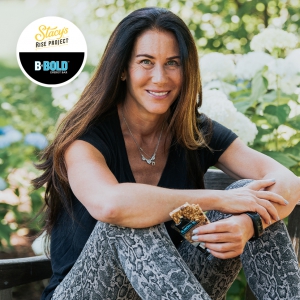
[00:00:10] Ray Latif: Hey, folks, I'm Ray Latif, and you're listening to the top podcast for the food and beverage industry, Taste Radio. This is episode 225, which features an interview with Stacy Madison, founder of Stacy's Pita Chips and upstart refrigerated bar brand Be Bold. Just a reminder to our listeners, if you like what you hear on Taste Radio, please share the podcast with friends and colleagues. And of course, we'd love it if you could review us on the Apple Podcasts app or your listening platform of choice. A few months before launching Stacy's Pita Chips, founder Stacy Madison was struggling to find quarters to pay for her laundry. That became less of an issue a few years later when she sold her company to PepsiCo for a reported $250 million. A social worker by training, Stacy founded Stacy's Pita Chips with ex-husband Marc Andrus in 1997. By the time it was acquired in 2006, the brand was generating $65 million in revenue. Stacey admits that the story of how her namesake chips became a grocery staple has little to do with a sophisticated business strategy, and it was instead driven by a determination to never again scrounge for laundry quarters. As part of her recent interview, however, she shared several essential lessons gained from building her company, including those that she's applying to her latest venture, Be Bold, a brand of nut-based refrigerated energy bars. She's also tapping into her experience as an advisor for Stacey's Rise Project, a grant and mentorship program focused on early-stage female entrepreneurs. Here are Stacey's thoughts on the definition of success, why she credits a nothing-to-lose attitude as a key asset during her early days as an entrepreneur, what she views as the most significant mistake in building Stacey's Pita Chips, and the altruistic reason that she decided to get back into the packaged food industry. Hey folks, it's Ray with Taste Radio. I'm going to call right now with Stacy Madison, the co-founder of Stacey's Pita Chips and founder of Be Bold. Stacey, how are you?
[00:02:09] Stacy Madison: I'm good. How are you, Ray?
[00:02:11] Ray Latif: I'm doing terrific. I didn't get to take my morning walk this morning, did you? Because I know you like to take some morning walks.
[00:02:17] Stacy Madison: Oh my God, I did not. This call was a little too early.
[00:02:23] Ray Latif: I'm sorry about that. Morning walks are so important to me. We talked about this last week. Is that a regular routine of yours?
[00:02:32] Stacy Madison: It is. And it's funny when you called me, I was on my morning walk and it is, it's a regular routine, especially since the pandemic. It's an everyday thing. I think when, when the pandemic hit and we didn't know how long it was going to last, I kind of made a mental commitment in my mind that, okay, I am going to do this every single day until this is over. And I did not think it would last as long, but I'm still going.
[00:02:59] Ray Latif: Yeah, I don't think anyone thought it would last this long based on what we heard in March. But hey, six months in, we're all hanging in there as best we can. And, you know, morning walks are so important. Actually, I think the walks are the most important part of my day. It's either I can clear my head if I need to, or I can fill it up, you know, depending on the circumstances in the day.
[00:03:19] Stacy Madison: Yeah, me too. And so since before the pandemic, I mean, I was I am walking just about every day. But before that, I would do more, more gym time. And you know, walking, walk even still walking in between because it is so therapeutic.
[00:03:35] Ray Latif: Yeah, are you based in New Hampshire?
[00:03:38] Stacy Madison: I was in a cabin in New Hampshire last time I spoke to you, but I'm back down in Massachusetts at my home.
[00:03:43] Ray Latif: Your first company, Stacy's Pita Chips, also based in Massachusetts. You launched that, how many years ago now?
[00:03:51] Stacy Madison: 97.
[00:03:53] Ray Latif: 1997. 1997. An iconic brand at this point. You know, you see it everywhere. I think most people, if I asked them if they thought the co-founder of Stacy's Pita Chips was successful, I'm guessing they'd say yes. But I'd say that it's much more important for you to establish the parameters for any definition of that term. So, you know, how would you define and evaluate success?
[00:04:19] Stacy Madison: So I think my definition has changed over the years. I mean, initially, I would say financial, because when we first started the company, we were digging through a basket of quarters in order to do laundry. And so for us, certainly making a living, more importantly, to have a career and make a living doing what you love to do every day, I'd say that's success. But I also, you know, as the years kind of progressed, I would say that figuring out what you want and then getting it. So whether it's personal or relationship, you know, personal or relationship that works, having kids, you know, those are all things that your measure of success kind of changes as you go through the years.
[00:05:08] Ray Latif: You were really digging through quarters or digging through your laundry to find quarters to do your laundries?
[00:05:13] Stacy Madison: Yeah. We had this little basket on our, on our bureau that we just, you know, you always throw your change in there and you dig through the change to find the quarters in order to go to the laundromat and do your laundry. And, you know, it's silly because in the beginning, you know, certain little things were my measures of success. I think as a woman where I bought my shoes, whether I bought the plastic shoes that hurt or whether I bought the leather shoes that made a difference, my brand of toilet paper, silly little things like that, I think just as a woman, made a difference. When we first started the company, we'd gone through years of having different jobs or school, education, and I think the biggest feeling of success is really just figuring out what it is that you want to do and then make a living doing that. And there was no huge goal of, I want a big house or I want a sports car or things like that. None of that was even in our mind. It was just being able to support yourself doing what it is that you wanted to do every day. And then it's not work. Then it's really, you're just living life and you're enjoying life and you're making a living doing it.
[00:06:41] Ray Latif: You could have done a lot of things to earn a living. You know, just reading about your work, residence history, you have a little bit of a Forrest Gumpian kind of life when I think about all the things that you've done. It seems like I said, you know, your life could have gone in a bunch of different directions. Stacey's was born out of a food cart that you launched in downtown Boston. which doesn't necessarily sound like the kind of thing that someone with a master's degree in social work and someone who lived in Hawaii would go and do. I mean, first of all, how did you not stay in Hawaii? And why would you move to Boston of all places? But you know, how did timing and opportunity factor into your decision to launch this food cart?
[00:07:22] Stacy Madison: Well, I mean, first of all, thank you for saying that I could have done anything or gone in multiple directions because I did not feel that way at all. I felt like I was floundering a bit. You know, it was kind of where I was living just was based on who I was going out with. And then I'd find a job there. So, you know, I didn't at the time see my own recognize my own skills. You know I landed in Boston. Hawaii was a great experience. I got experience opening up a startup operation working in the restaurant industry. So it was great experience. But you know Hawaii is a beautiful place but it's the kind of place where you have to work two jobs. just to afford to pay your rent and you don't get anywhere. You know, there's a very big divide in the living situation there. So, you know, we ended up doing, doing some traveling and then coming back, you know, before coming back from Hawaii, we went to Thailand because when you don't know what you want to do and you don't have any money, there's no nothing better to do than to get on a plane and go to a poverty stricken nation because You can travel for like $10 a day and do all the soul searching you want. But yeah, coming back, came back to Boston. You know, Boston is my home and where my family is. And we started with a food cart in downtown Boston and it was making sandwiches rolled in pita bread. And at the end of the day, you always wanted to have fresh bread. So you would bake it off into, we would bake it off into different flavor Pita Chips and then hand them out for free to people standing in line. then you order new fresh bread for the next day. We always had this over-inventory of bread, you might say. I think that when I was in Hawaii and some of these other jobs, I realized that I could work so hard. If I could work so hard and be successful for someone else, that I should at least try to do something for myself. And I would probably be remiss if I didn't try.
[00:09:36] Ray Latif: I mean, did you feel like, you know, the service industry, the food industry was something that you could excel at, or was it just, as you mentioned earlier, you know, something where you were looking for, you know, some stability in terms of, you know, your life when it came to your finances and just, I guess, general being?
[00:09:55] Stacy Madison: I think I was attracted to the food industry just because I knew it. You know, I worked my way through college, either waitressing or cocktailing or whatever. And it was what I knew. It was a very social atmosphere. I loved food. I still love food. So I think that I would always, no matter where I was, I would always migrate toward that.
[00:10:23] Pita Chips: Guessing your margins? That's risky. Belay Financial gives CPG brands the clarity to scale smarter, faster, stronger. Get your free inventory ebook by texting TASTE to 55123 and start making data work for you.
[00:10:43] Marc Andrus: Tune in at the end of this episode for an exclusive interview with Matt Lynn of Belay Solutions. He sits down with Melissa Traverse to break down the biggest inventory and accounting mistakes CPG founders often make. You'll learn how to bring clarity to your numbers so you can scale with confidence.
[00:11:01] Ray Latif: As you mentioned, the cart spurred the launch of Stacy's Pita Chips. And we chatted last week, you'd mentioned that part of the reason for the brand's success was that you had no obligations in terms of a family, a mortgage, et cetera, until well into the company's development. Can you elaborate on that?
[00:11:23] Stacy Madison: So I would say two things. First, there is definitely an advantage to not having kids, a mortgage, things like that. It allows you the time to just dive in day and night and day and night and you're not having those other obligations. It removes one more challenge that other people might be facing when they're starting their companies and they have family to feed and a house to keep over their heads and things like that. The second thing is there's a certain advantage to having nothing to lose. If you are already in debt and your hole is so deep that your student loans are over six figures and you figure, well, you know what, a little more is just not going to make a difference. So I don't know if that's the healthiest way to think about it, but that's where we were when we started.
[00:12:20] Ray Latif: You were six figures deep into student loan debt?
[00:12:23] Stacy Madison: Yeah, well, I mean, Mark and I, we started it together and we agreed that between his loans and any of my loans or car payments or anything like that, that we would just pool the debt. And then when the company, you know, we didn't do it on paper, you know, this is just our agreement. But then when, you know, if the company's if. not and when the company started making any money, the first thing that we would do would be to start paying off those loans because they weren't going to go away for either one of us. I had my graduate degree, but my master's level, but Mark went all the way to getting his doctorate and then had a whole year of residency and all of that. So, you know, the loans really add up. I mean, it's expensive to get that far with your education. So it was a really, it was a hard leap to make. And so, you know, as soon as we started making money, we were like, okay, the first thing we have to do is not be so deep in the hole.
[00:13:23] Ray Latif: Do you regret your education? Do you regret getting it or do you feel like it's helped you, you know, build the businesses that you've built?
[00:13:30] Stacy Madison: you know, hey, you can always look back and say, Oh, well, if I were to go back, I would have done this. I would have done this. I don't, I don't think it's helpful, but for me, I think I can just draw from my, my experience in social work and apply it to what I'm doing now. So no, I mean, I don't regret it. It's just, you know, it's just a time factor. It takes a lot of time to get there, but I do think that it, it helped with building our team. I mean, I did my thesis on job satisfaction and so, you know, those kinds of things, even though I might not be using my social work degree, I still used a lot of the education that I got to get to where I am today. I hope, I think.
[00:14:18] Ray Latif: I had to chuckle when you said you did your thesis on job satisfaction, because if anyone knew what it was to be unsatisfied with their job, it seemed like it was you.
[00:14:26] Stacy Madison: Yeah, I mean, I did my thesis on job satisfaction and what that told me is I should quit.
[00:14:35] Ray Latif: Well, that's an interesting question. I mean, you know, going back to this question of obligations, you know, let's say you do have kids. Let's say you do have a mortgage. So you do have, you know, obligations to extended family, but you hate your job. What would be your advice, you know, to someone who hated their job and said, Hey, I just want to start my own business. I want to do something that, you know, like Stacy Madison did where I was just like, look, I can't work for anyone else anymore. You know, what would you be your advice to them?
[00:15:00] Stacy Madison: Well, just because you hate your job doesn't mean that you don't have to work that, you know, you shouldn't work it. I mean, if you are going to start your own business and you have all of those other responsibilities, then you have to obviously don't quit your day job, but you may go at go. toward your goals differently. You might decide to go into business with a partner, or maybe it's something that you do part-time, or maybe there's some way, depending on how old your kids are, to get them to help. Things like that. So I would say that it's not impossible, that there may be a different way to go about it. Lots of people with families have started multiple businesses. So, you know, it's not impossible, but I'm just saying that for us, with having so much debt and not having those other responsibilities, it certainly did help us out.
[00:15:56] Ray Latif: Now, building a brand, as we know, and as the food industry has taught us, if there's one thing the food industry has taught us, it's that building a brand, a packaged food brand, is challenging. And when you start out, you might have some early wins, get into some key retailers and find some traction, but that doesn't necessarily mean that your brand is on the fast track to success or even has a trajectory to be successful. When did you realize that Stacy's Pita Chips had the potential to grow beyond the home market, your home market of Boston? And how did you start preparing for that growth?
[00:16:33] Stacy Madison: I can honestly say we weren't prepared. We went from not being prepared for the growth to our entire job was managing growth. Initially, when we first launched, you know, we thought that, oh, if we just get into Whole Foods, then that means that we're successful. Oh, if we just get into this account, then that means we're successful. Oh, if we just, you know, and it doesn't, that's not the way the game is played. You have that belief that that's gonna be your potential for growth, but it doesn't necessarily happen that way. We thought we would start by being a regional brand and grow Massachusetts and then New England and then New York and kind of expand from there. doesn't happen. We were a natural product. We are a natural product. We've always been. And what happens we didn't we didn't even know that we that that was going to be a market for us when we first started. That's just how we made the chips so good. So we might have landed an account in Atlanta, and then, you know, Natural Foods was kind of growing, and Colorado was big out in Colorado. So we then got an account out in Colorado. And so we were very spotty in the beginning, even though our goal was to just do New England. But when an account approaches you and you're not going to say no. I mean, at that point in the inception of the company, you just don't say no. So we grew along with the natural food industry as well, and that somewhat determined our direction. So, like I said, it's managing that growth, making those decisions that, oh, we're just going to be regional brand. Well, that's not, you know, when somebody approaches you from the West Coast or something, then you figure out a way to make it work or you decide if you're going to say yes or no. And that's how you get to where you're going to go. As strategic as we wanted to be, some of that is just dictated by we need the money.
[00:18:40] Ray Latif: Indeed. I hope this doesn't come across as too negative, but some investors or, you know, industry quote unquote experts might say, well, that strategy or that approach is a little undisciplined. Did you see it that way? Or again, was it just a matter of, look, we have to take the opportunities that are in front of us. Cause if we don't, we'll go out of business.
[00:19:02] Stacy Madison: That is exactly the reality of the situation and you can have the best laid plans and You have to make sure that you don't have tunnel vision. Sometimes if that's the way that you think, then you may miss, you may not see other opportunities. You might miss out on those.
[00:19:25] Ray Latif: Yeah, when we talked last week, you said something interesting. You said sometimes people with big business plans get in the way of themselves. And it seems like all these days, especially if you're trying to woo investors, you know, a business plan and a well thought out business plan is really important. But from what it sounds like, you're saying that's not necessarily going to indicate, it's not necessarily a great indicator of success.
[00:19:51] Stacy Madison: Look, a business plan is a plan. and it shouldn't be set in stone. And a lot of times when you're investing in companies first and foremost you have to have an excellent product and you have to have an excellent team and you have to have people that will recognize opportunity. And you could have the best laid plans, but if they don't have that skill set that you need to be flexible and nimble and open to opportunities that might cross your path and require a change, then it's not gonna be a good investment.
[00:20:34] Ray Latif: So you've done some investing post-Stacy's. When you are pitched, Do you really pay much attention to the business plan or are you just focusing on the person who's talking and trying to get a read on who they are?
[00:20:49] Stacy Madison: Product and people first. And I would say the plan is secondary. You can look at the market, you can say, oh, this is the industry, this is growing by such and such percent, and this and this, and then you can start playing the calculator game, where if we get into 100 stores, and this is our margin, and then you multiply that out times 1,000 of those stores, and then you multiply it out, and that's all just a calculator game. There is a lot that comes into play between start and finish.
[00:21:18] Ray Latif: And it's the person that defines how you get to that finish, is what you're saying?
[00:21:22] Stacy Madison: Yeah, and I've learned this from not all the things that I've invested in have been successful. And, you know, a lot of times it's amazing products. I mean, there were two companies that we invested in that amazing products. I still have them and own them today, but it was the people behind it that just weren't able to execute on things that needed to be executed on, or they were dishonest, or you just got ripped off or something like that, you know? So that stuff does, that does happen, but you know, so I think it's really important to have both the product and the team.
[00:22:06] Ray Latif: Do you look for similarities in yourself and your personality when you are thinking about that person that's sitting across from you? You know, do they have to have the same, do you have to have a vibe with them?
[00:22:19] Stacy Madison: I think whether it's investment or whether it's building out your team, I mean certainly when you build out the team, I don't know if this, I never really thought about it applying to investing, but certainly when you build out the team, I always used to say you have to click and tick, meaning you have to click with the person. not just you as the founder, but your entire team. Everybody has to be able to work together. When we were growing the Pita Chips Company, we had a very diverse team. We had people from India, Lebanon, China, anything from graduate degree education to GEDs and everybody had value in their own space. It's important when somebody is coming into a team like that, that where do they fit in and that they get along with everybody. That's why I always recommend that trying to work together for a short period of time first before you actually hire the person on. And then the other thing is you really have to discover what makes them tick and what's important to people. And that's really critical. So for example, we hired a woman, she was working for a large phone company and she wanted to quit because they would not allow her to teach her Tuesday afternoon at 1 p.m. yoga. And for us, I mean, we're working all the time around the clock. So for her to not work Tuesday afternoon, that was no big deal. But we were getting an employee that was so much more value to us. And she was willing to work for so much less, just so that she could have her Tuesday afternoons to herself.
[00:24:11] Ray Latif: When you were building at your team, how did you think about your needs? Working 24-7 as a team can be challenging. Did you have enough people early on? I mean, how do you think about that team when you're thinking about, you know, sales projections and whatnot, or not thinking about sales projections?
[00:24:28] Stacy Madison: Yeah, we did not. That was one significant mistake that we made. And, you know, why did we wait so long? You know, you go back and you ask yourself that question, particularly after hiring a really great person. And when they do a really great job and it just takes so much off your plate and you're like, Oh my God, why did we wait so long to do this? And thinking about it now, I, you know, I think that there was some sense of ignorance. I think it's a common mistake for all startup operations feeling like, you know, cause you start off doing everything yourself. And so it's a common mistake to just kind of have that ignorance of, Oh, I can do this. I can do this. And, and, you know, doing everything and not handing it off. And the other thing is just simply being afraid because every time you hire someone, you have to give up a little control. And you are now accepting that there's other people in the company that are really there depending on you. So your responsibility gets greater and greater as you build out the team.
[00:25:51] Ray Latif: Your responsibility as in your responsibility to the individual and by extension their families is what you're saying.
[00:25:57] Stacy Madison: Correct.
[00:25:57] Ray Latif: You could potentially be giving up a lot of control if you're taking outside capital, if you're taking investment. You said you never took outside capital, which is amazing to me. Did that hinder the company's development? Was that one of the reasons that you didn't hire people early on?
[00:26:14] Stacy Madison: I would say, of course, no, it didn't hinder us. But who knows. Who knows. I mean maybe if we took on a boatload of money we could have been 10 times the size of what we were when we sold. You just don't know. But. I can say that I think that we did really well in the path that we chose. Part of not taking on the capital was that we didn't have time to do what was necessary in order to fundraise. We were at an inception point that we were growing so fast and we did have some cash flow constraints. And that was when we landed the trader Joe's account. And they were really good at paying really very very much on time. They were wonderful to do business with. And we would get paid right away. And that really helped dig us out of a place where we would have had to give up equity. So even though we were kind of right at that point, we never ended up doing it because we got a good account that really just helped us keep moving forward.
[00:27:30] Ray Latif: How far along were you in the process of fundraising to that point? And was the Trader Joe's account just something where you were just like, okay, we can pull the plug on this right now?
[00:27:42] Stacy Madison: We were at the point of just discussing it. Mark and I and my brother, we kind of just kind of bounced it around like what would we do if we had more money and what would we use it for and what would we... So we were kind of at that point, but we had not started talking to anybody.
[00:28:00] Ray Latif: I would have thought that investors would be knocking at your door to invest, but perhaps they were, perhaps they weren't. One of the reasons they might not have is because you're a manufacturer. Seems like some investors are kind of scared of that part of the business. It's, you know, I think some of them say, okay, either be a brand or be a manufacturer, but don't be both. Being able to directly manage production though, did you feel like that was an added layer of control for you? Was that the case?
[00:28:27] Stacy Madison: Definitely. When it comes to manufacturing and co-packing there's certainly advantages and disadvantages. You know the upside of manufacturing yourself is that you have the control over your product. The downside is that you are now running two businesses. You have the business side to run and you have a manufacturing company To run and for Stacy's we invented the process and so for us it really gave us a competitive advantage So did that end up becoming attractive to investors?
[00:29:02] Ray Latif: I mean did they say Hey, we love the fact that you are a manufacturing business that you do have this I'm not gonna call it patented because I don't know if it's patented but this sort of formal process for creating these chips and
[00:29:14] Stacy Madison: Yeah, I mean, while we did have that advantage, there were multiple things that I think attracted us to investors. Another thing was that we were selling our chips outside of the chip aisle. So if you think of the store as real estate, we were real estate that was on the perimeter. So that was attractive to people. We were also a bread-based snack and you know, there was a lot of corn as in tortilla, there was a lot of potato as in chips, but you know, we were really the first bread based snack. And, you know, with doing our own manufacturing, I mean, we did have, we did build the largest pita bread manufacturing facility definitely in the United States, if not in the world. I mean, it was really, really high volume. And we chipped everything we didn't sell one bag of bread. So, you know, by the time we got to the point of selling the company, it was big. And I think some of the some of the people who are interested in the acquisition could recognize the benefit of that. And they could also recognize the benefit that hey we are not you know our backgrounds are in social work and psychology. And when it comes to manufacturing yes we did it. Yes we're smart. Yes we were able to build this factory. But when you bring in a team of 30 engineers and you know they see chips flying left and right and in the air I mean that's all money. Those may as well be nickels, right? Flying out of the bag that, you know, we're sweeping up from the floor, you know, with the proper engineering and team, you know, that can all be fixed. So I think that was kind of a, that kind of helped us too.
[00:31:12] Ray Latif: So what you're saying is when the strategics came to visit the factory, they were like, wow, efficiency.
[00:31:18] Stacy Madison: Yeah, it wasn't perfect.
[00:31:19] Ray Latif: It's a little bit of an issue here.
[00:31:21] Stacy Madison: Yeah, it was not, it was not perfect.
[00:31:24] Marc Andrus: Do you want more repeat buyers on Amazon? Well, this free resource in collaboration with Straight Up Growth will help your brand turn first-time buyers into long-term subscribers. Download Winning the Repeat Purchase Game on Amazon now at Taste Radio slash SUG. That's Taste Radio slash S-U-G to start building retention-driven growth for your brand on Amazon. Scaling a beverage brand into major retail comes down to operational readiness. From packaging lead times to co-manufacturing strategy, the details can make or break a launch. In a new e-book in collaboration with Octopi and Asahi Beer USA, industry leaders share what they've learned in helping brands scale. Download it now at Taste Radio slash octopi. Do you need to scale your team faster without compromising on talent? Join Oceans for a live webinar on April 20th and learn how leading companies are hiring top global professionals who are ready to grow with your business. Register for the webinar now at Taste Radio slash Oceans. That's Taste Radio slash Oceans.
[00:32:36] Ray Latif: Well, you know, I assume, though, you could have kept going. You have the largest pita bread manufacturing company, you said, in the United States, right? For sure. You could build from there. You could hire a few engineers to make your company a little bit more efficient. And who knows? You know, maybe Stasis could have stayed independent. like a kind or a Chobani. But a lot of it depends on ambition. And, you know, when I think about a Chobani or, you know, the founder of Chobani or the founder of a kind, you know, a lot of them will say, okay, this is about changing the world. This is about changing eating habits. Or, you know, I really wanted to build an iconic brand and, you know, something that would have lasting power for generations. Less commonly we hear, you know, I just wanted to make a lot of money. What was your motivation as you were building the company, as you saw that this could be, you know, an iconic brand?
[00:33:27] Stacy Madison: I know you mentioned what happens when your name is on the bag. And I remember, I looked at one of your podcasts with Jason Cohen, right? And one of the things that he said is, don't get attached to the brand. And here I am, my name is on the bag. And yeah, I mean, look, it's so many years later, I'm still attached to the brand. I sold in 2006. I'm still very much attached to the brand. When he said that, you know, don't get attached to the brand. I'm like, oh boy, I am definitely attached to the brand. And that was one of the reasons why it was so hard to sell was because of all of the people. And really when you're building it, you're building a family and an atmosphere.
[00:34:14] Ray Latif: And selling, though, I'm sure helped a lot of folks. It seems like you were able to support those folks based on the sale. Was that the case? You know, and at the end of the day, when you make that decision, is it as much about sort of the relief of being able to kind of walk away and say, you know, I can take some time to myself as much as it is otherwise?
[00:34:38] Stacy Madison: I have to say that was the most rewarding part of the sale of the company was when a 60-year-old woman comes walking into my office who worked in the finance department and says, this is the first time in my life that I have paid off my credit cards and I am living debt-free. And I'm 60 years old with a tear kind of coming down her face. And I'm like, Oh my God. And then another person who came in and said, I'm, you know, we just put a down payment on a house. And, you know, my family, we will always have a place to stay and to live. And I mean, just one thing after another, after another. That is really the most satisfying part, I think, because this family that you've been with for a decade, you know, all of the people who work around you, really, you can make such a big difference. And it's really life-changing differences, not just for yourself, but for a lot of people.
[00:35:40] Ray Latif: Did you take some time off? Did you take a vacation? Did you do something, I guess, for yourself?
[00:35:44] Stacy Madison: I did. Initially, I went to Europe for five months. My kids at the time were three. And then I came back, I did some work with some investing, some work with Fireman Capital Partners, Private Equity Group, got some more industry experience. It was a way of staying in touch with the industry. And then I ended up wanting to open my juice bar, which I still have today. And we're going through a little bit of a transition. We're not making some, we're actually not making juice anymore just because of the whole pandemic. everything that's happening with all small businesses. But yeah, we've got, we're doing more smoothies. Stacy's juice bar is now smoothies and acai bowls and more lunch. We stuck more lunch, but Stacy's bar, Stacy's place, right? You just go there and you get something good. Just don't know what it's going to be, but, but you're going to like it.
[00:36:45] Ray Latif: Well, your current brand was born out of Stacy's Juice Bar, that's Be Bold. Now, when I think about getting back into the packaged food business, that had to be a very serious decision on your part. I would think anyway, because of how challenging the business is, how challenging you've seen it firsthand. It's not an easy thing to develop and grow a brand. Why'd you get back into it?
[00:37:11] Stacy Madison: Well I think first and foremost is like I said you have to have a great product and that's what it starts with. And with Be Bold Bars. These started organically, right? In a place where, you know, they're at the juice bar, they're a number one selling item. We sell them out of the refrigerator and we had for seven years. And at the same time, now going into your grocery store and watching the evolution of the refrigerated bar section, when here I am with my little juice bar and what I know is a winning product. And yet now I'm just standing on the sidelines. So I think just the fact that just the same as the Pita Chips where the Pita Chips started organically it started from a place where we had a great product. And that's the beginning. It's the same thing with people bars rather than trying to invent something. And then the other part of it, you know, as, as you start, you know, you're building again, you're building a family, you're building an atmosphere. And, you know, the reward in that as well. But I think first and foremost is just the fact that we had a great product. I'd say second, as far as the brand's Genesis, right. Seeing what's going on in the world. as a female entrepreneur, a successful female entrepreneur, and being dysfunctionally upset with things that are happening all around, you know, with the country dividing and just all these things that you thought in your lifespan have been solved for and it's just what we're just what we're living through right now. I felt that it is time to step up and it's time for me, you know, I need to do what I know how to do and I know how to build this company and I know I have a great product and I know that just being another woman in business is in some small way going to help.
[00:39:33] Ray Latif: So Be Bold is a refrigerated energy bar and we're seeing a lot more interest in that particular segment in grocery and natural stores, etc. When you're building a brand like that in a growing category, how do you see it as improving upon existing products in this space?
[00:39:54] Stacy Madison: Well I've I have the experience of having sold the bars within my own juice bar so. And then I also am a shopper, right? And I see what's out there. And with side-by-side taste tests and trying it, it's just, it's kind of doing what others aren't doing. Our process is we take the ingredients, we mix it, we press it, and we package it. And that's it. And people said with the Pita Chips company, Oh, this is great. It's a great, you know, small brand and it tastes like it's home cooked, but you'll never be able to grow that on a larger scale. And we did. And I think it's the same thing with the bars that, you know, we just take these ingredients and that's why they're in the refrigerator because we just mix and press them. package them. Nut butters. We use Brazil nuts, which is unheard of. We're going to come out with one with cashews and macadamia nuts. Those are expensive items, but they really make a difference in the bar.
[00:41:00] Ray Latif: And, you know, you mentioned your experience. Is your experience making the launch of this brand or did your experience make the launch of this brand a little bit easier than when you first launched Stacey's? And do you feel like your experience is going to be a key asset to you going forward? Or, I mean, is the industry significantly different to the point where your experience won't really make that much of a factor, won't have that much of a factor in the potential success of this brand?
[00:41:29] Stacy Madison: Well, I think in some ways it is easier because I have contacts and I do have a track record now where I didn't before. But it is a category that I'm not familiar with. So it's a start over. I'm new to it. Another thing that makes it a little harder is because I do have a good track record that people really have high expectations. They expect more support from the stores and all of that. So there's a little bit of a balance that you have to get in going to market. And right now with the pandemic, the stores, nobody knows what consumer behavior is. So we've certainly pivoted and we're doing a lot more online. We've got the website, BeBoldBars.com. We've got our Instagram at Be Bold Bars and my own personal one at Stacey Be Bold, which is kind of funny because I really don't know what I'm doing.
[00:42:27] Ray Latif: Well, as you note on your Instagram page, it feels good to do good. And I'd say you're doing a pretty good job with your Instagram account, by the way. So I think you're doing a right thing.
[00:42:36] Stacy Madison: But I love that line. It feels good to do good. It really does, especially now more than ever. You have to try it. We were in this in the beginning, just kind of isolated and feeling isolated and helpless and all of that. And when we started stickering bars where they're available and sending 30,000 of them down to the hospitals in Florida, it was like all of a sudden we felt good about what we were doing and we were on a mission. And yeah, everything got canceled in the stores and all of that. And maybe 2020 is just a year where we just keep our head above water. That's it. But you know what? It feels good to do good. So that was a big turnaround where we said, okay, we got our drive back.
[00:43:26] Ray Latif: The Stacey's Rise Project, which is a project that was launched by PepsiCo, but that you're very much involved in. Can you talk a bit about that project and how you are supporting female entrepreneurs grow their businesses?
[00:43:41] Stacy Madison: Sure. And, you know, with Stacey's, there's times when, you know, times when I'm more involved and times when I'm less involved. I mean, everything that I do, I do volunteer or otherwise it wouldn't be genuine, I feel like. So, you know, I'm not a spokesperson. I'm, you know, it's just, I speak when it's something that I believe in. And the Stacey's Rise Project is a project, the grant and mentor, it's like a grant and mentorship program. And it's created by Stacey's Petership Company to advance female founders. And, you know, it's helping women rise in more ways than ever. You know, they give $10,000 business grants to help advance their business. They have 15 winners that get all get professional access to professional advertising services and media space if they get one on one mentorship for four months from Frito and Pepsi leaders. So they have all of the things in place that are needed. to advance them forward. And I just think it's wonderful. I mean, it's helped that I didn't, I certainly didn't have along the way or if I did, I had to go out and find it myself. So this was, this is a, it's a wonderful program.
[00:45:00] Ray Latif: When you're looking at these entrepreneurs and their products, do you have to kind of adjust your mindset when you're thinking about how you support them? Because again, you know, we talked about the product and the person as being the most important attributes of a brand for you. When you're thinking about these entrepreneurs, do you have to, I guess, adjust your mindset in terms of how you're trying to support them?
[00:45:26] Stacy Madison: Right. One of the benefits of the program is that they have, you know, I mean, Pepsi and Stacy's and Frito. I mean, it's just a huge pool of people. And some of the winners, some of these companies, are things that, you know, items that I know nothing about, you know, they may or may not be a snack food. And, you know, so I am definitely not the right person for them, but the beauty of it is that they can have the right fit for them to help grow their business. And, you know, they have access to that.
[00:46:05] Ray Latif: The hashtag is share4her, and that is representative of Rise Project. And I think it's representative of everything that you've done, you know, and just our conversation now, it just seems like so much of your life, you know, during and since the launch of Stacey's has been about giving. So thanks so much for what you're doing for our industry. And thank you so much for this great conversation. I really appreciate it and really appreciate the time.
[00:46:31] Stacy Madison: Thank you, Ray. It was really a lot of fun. It was really nice to do this, and thank you so much for having me on.
[00:46:41] Ray Latif: That brings us to the end of episode 225. Thank you for listening, and thanks to our guest, Stacy Madison. As always, for questions, comments, ideas for future podcasts, please send us an email to askatasteradio.com. On behalf of the entire Taste Radio team, thank you for listening, and we'll talk to you next time.
[00:47:11] Rise Project: Hello, I am Melissa Traverse here for the Taste Radio podcast, talking about some of the biggest tension points that CPG brands and founders face when they're scaling a brand, and those are financial accounting and inventory management. I am joined by Matt Lynn, inventory accounting guru from Belay Solutions, and he is going to shed some light on all of this that is going to help everybody out quite a bit. Matt, thank you so much for joining us today.
[00:47:41] Taste Radio: Thank you for having us, Melissa. It's great to be out here at Expo West and it's great to sit down and be able to chat this because it's kind of a passion project of ours, working mainly with CPG brands and hoping to help them scale.
[00:47:53] Rise Project: It's been such a pleasure chatting with you and the team and learning all about what you do over there at Belay Solutions. Can you tell us a little bit about yourself and what your role is and the kinds of solutions that Belay gives to CPG brands and founders?
[00:48:08] Taste Radio: Yeah, absolutely. My role with Belay, I'm actually our inventory accounting manager. I run our inventory department. So we work with CPG brands, taking them from spreadsheets, putting them on inventory management systems, and really helping connect their tech stack between their sales, online marketplaces to that inventory management system, even down to their financial systems like QuickBooks. Belay overall is kind of an outsourced accounting firm. And with that, we're helping teams. We have different levels with bookkeeping, controller level work, even high level into CFO type items. So we really help those brands in any way that they need financially. And then I just have a subset of a department where we're really just laser focused on inventory.
[00:48:51] Rise Project: It's certainly a complex topic and there are plenty of places to go wrong. Let's start by going right and start super simple. Can you tell us what some of the biggest red flags are that would help a founder understand or, you know, the person running a brand understand that it really is time to get some help with some of these areas?
[00:49:12] Taste Radio: Yeah, absolutely. I think some of the early red flags is just everything is chaos. So when they're looking in their financial software, maybe they don't really have an accounting background and they're kind of just piecing it together and doing their best. And what they'll see is that reconciliations take forever, if they even happen. They have a lot of transactions that don't get coded or they just put them into placeholders to just get rid of it so it's not an eyesore. they'll notice they have revenue but no cash or they notice that they have a good amount of cash but their blind spot is really seeing the vendor invoices that are sitting there just needing to be paid and so they just lack that clarity that's gonna really be around the corner.
[00:49:49] Rise Project: You know, you were talking about one of the red flags that comes up that I think makes so much sense. When somebody asks you what your numbers are and you can't come up with the right number, that's a big problem because that's something that you really should be able to share with decision makers who you're ideally looking to do business with. What should you be able to call up at a moment's notice?
[00:50:13] Taste Radio: Really, at any time, you should be able to know an accurate margin. It's amazing how many founders we end up talking to that they can tell you their revenue numbers, they can tell you their selling price, and then the minute you start talking about cost or their cost of goods sold, they just get a deer in headlights look. So really, it's very hard to tell, am I even making money? or if you don't know your entire landed cost. Maybe you know what the freight cost is, the duties separately, but you're not really getting that as part of your unit cost. So it's really hard to tell. Am I even making money or am I losing money from the very beginning?
[00:50:46] Rise Project: And do you recommend that founders are able to call up a margin by channel?
[00:50:51] Taste Radio: Absolutely. And depending on the number of products and channels, you kind of want to know what are your best sellers, which ones are making the most and which ones maybe you're not making as much. But especially if you're branching out and you're doing D to C with B to B, absolutely want to know that.
[00:51:08] Rise Project: Gotcha. You mentioned that when things feel really chaotic, that's probably a red flag. I would say that it probably almost always feels chaotic if you're running a CBD brand. And I know this may be hard to quantify, but is there a revenue number? Is there a number of doors number that would help a brand understand whether or not it makes sense to bring on a partner like Belay? Understanding that so many brands are bootstrapped or they might be tight for cash. What is that friction point?
[00:51:38] Taste Radio: 3 3 3 3 3 But as you're growing, as you're getting into those six-figure revenue numbers, and especially as you're approaching seven, you want to make sure you've got good financials. Because as you scale to that point, most likely you're going to be looking to raise capital. And investors, the first thing they're going to look at is your books. And are they clean? And do they show a clear picture of your business?
[00:52:11] Rise Project: You know, another area that folks might look to to organize some of the chaos are their systems. So many folks stick with Excel spreadsheets for a good amount of time. How do you know that you need to outsource some of your accounting to an organization like Belay Solutions versus maybe signing on to a Synth7 or NetSuite or something like that?
[00:52:33] Taste Radio: Well, that's actually something we really help with. When it comes to that cost question, that's something that trips people up. And sometimes if you just have a turnkey business, you buy and sell a finished good, you can maintain with spreadsheets. And we've had clients with million dollar revenue that can do that. But we see so many brands nowadays are using contract manufacturers. and they're just sourcing certain parts of their product. So when you start talking cost, they have no idea exactly what their unit cost is. So that's where we come in and we kind of understand, we'll speak with the customers and the clients and get their needs. And then if we think they're ready for a system, then we'll help put them on that system so they can get some of that clarity. And it's not something we force on anybody. There are plenty of times where founders come to us and we'll tell them bluntly, you're not ready for it right now, but we'll let you know when we think you are.
[00:53:19] Rise Project: That sounds like excellent advice. What should a founder or somebody running a brand look for in an outsourced accounting partner? Are there certain checklist items that they should make sure that their partner be able to execute or be able to help them understand?
[00:53:36] Taste Radio: Absolutely. I think one of the keys, there's, there's a lot of outsourced accounting firms out there. Some focus on service-based SaaS companies, but if you're a CPG founder, you really want to make sure that your accounting firm has CPG experience. I would ask them, you know, what kind of brands have they worked with? And even beyond that industry specific, because there's so many subsets of CPG. And that's something that I think is great about what we do with Belay is that we kind of run the gamut. It's kind of like the insurance commercial. We know a thing or two because we've seen a thing or two across a broad spectrum.
[00:54:06] Rise Project: Probably getting references is always helpful, right? Absolutely. All right. So this all sounds great. I think we have a really good understanding of would it make sense to hire an outsourced partner? You know, what some of the things you should be looking for are. What does offloading this kind of work mean for the brand? What can this do for lightening the load of a founder or lightening the load of a brand operator? Like, how does that help them in their everyday business?
[00:54:36] Taste Radio: It just tries to really help quiet the chaos. So what we're looking to do is just take some of the weight off that founder's shoulder, let them focus on building the brand, building the business, getting that exposure. If you don't have sales, you really don't have anything. So we want them to be able to focus on that while we take care of your back end office work. And we can just present that to you on a monthly basis, you can help make decisions, you can take that to investors. And really, you can just focus on growing your business.
[00:55:01] Rise Project: I feel like I felt founders and the folks who are running brands collectively sigh. Breath of relief just hearing that. How can people learn more about Belay Solutions?
[00:55:12] Taste Radio: So people can text TASTE to 55123 for their free inventory guide to get started.
[00:55:18] Rise Project: Matt Lin, inventory accounting guru at Belay Solutions. Thank you so much for joining me here at Expo West. It's been such a pleasure to chat with you and learn about what you all do over there to help founders and brands with their financial accounting and inventory management. For everybody else out there, thank you for listening to the Taste Radio podcast. I am Melissa Traverse and we'll see you next time.