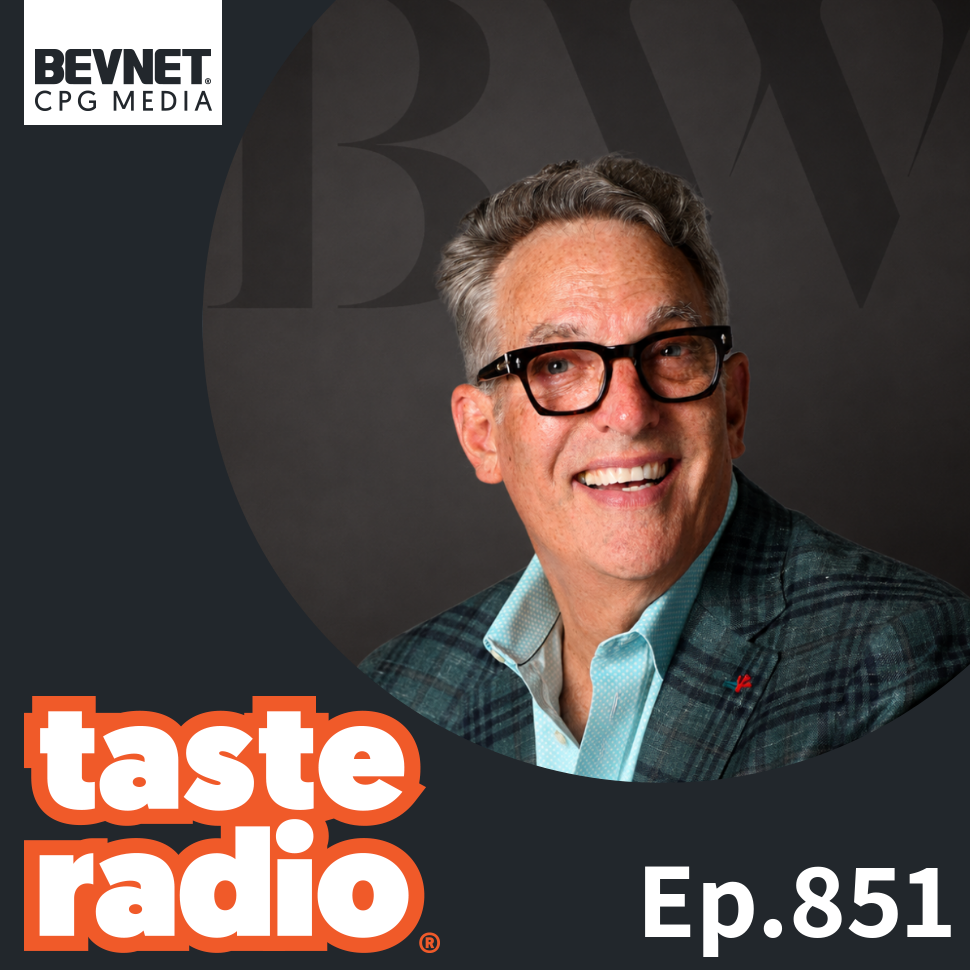
[00:00:04] Ray Latif: Hello, and thanks for tuning in to episode 90 of Taste Radio Insider. I'm Ray Latif, the editor and producer of Taste Radio, and I'm with my BevNET and Nosh colleagues, John Craven, Mike Schneider, and Melissa Traverse. In this episode, we're joined by Chuck Casano, the founder of Greenshoots Distribution, a Southern California-based distributor focused on healthy, refrigerated brands, and Pitaya Foods, a brand of superfruit-based snacks and frozen smoothie packs. Just a reminder, if you like what you hear on Taste Radio, please share the podcast with friends and colleagues. And of course, we'd love it if you could review us on the Apple Podcasts app or your listening platform of choice. In addition to being our featured guest for this episode, Chuck Casano was also a judge in last week's New Beverage Showdown 19 competition, which was presented by the Coca-Cola Company's Venturing and Emerging Brands Unit. The winner of the brand competition was Moment, a line of relaxation drinks founded by Fahim Khaji and Aisha Chotani. Meanwhile, Savorly, a brand of gourmet frozen cocktail appetizers founded by Ethan Dabush and David Gottlieb, triumphed in Nosh's Pitch Slam 8, sponsored by 301, Inc. Congratulations to all the brands that participated in the competitions. Everyone did remarkably well.
[00:01:20] Chuck Casano: Everyone did such a good job, and the judges for Pitch Slam and New Beverage Showdown seemed to have just as hard of a time selecting the winners as we had selecting the contestants, so nice job, everybody.
[00:01:34] Ray Latif: Indeed, and John Craven, I think you mentioned last week in last week's episode that you were hoping that people would enjoy your performance. I think they did. I think you did a good job.
[00:01:44] High Touch: As always. I mean, I just brought my A-game that day. No, but seriously, I think all the presenters brought their a game. I mean, it was interesting. The couple that I've talked to after, and, you know, we've done a lot of these on stage and, you know, these are brands that haven't done that. And it just was interesting to see how the dynamic changed without knowing who is kind of looking back at you. Right. I give extra props to these brands who went into this not knowing or being able to interact with that audience, but I think they all did a great job.
[00:02:22] Ray Latif: Yeah, incredibly polished presentations, really well thought out. One of the things that struck me most about everything was how seemingly every presentation included a slide about the brand's target consumer, which is something that every judge wants to know about. And this is something that judges in the past have asked about when it wasn't included. it seemed like everyone kind of nailed that part of their presentation. The one thing I think judges were kind of confused about in both competitions was price point. I think some of the entrepreneurs were criticized in a constructive way about price points that didn't seem to fit with the audience that they were targeting.
[00:03:11] Chuck Casano: That's always an important factor, but especially now, it's something that consumers are going to be especially focused on with what's going on in the economy.
[00:03:22] High Touch: The pandemic certainly was a factor in pricing as well, and I think in some cases that seemed to throw the judges because they were looking at price points and then it was like, oh yeah, oh yeah, direct-to-consumer. You know, you haven't seen, especially on New Beverage side where direct-to-consumer is much harder. Well, it's also, I think, really interesting in that, and this is, I suppose, an obvious statement about direct to consumer, but, you know, where these brands, rather than going into retail and pricing their product at a level that really kind of erodes or in some cases eliminates their gross margin, Most of these brands are launching DTC and they're pricing in a way that's comfortable to them right now, which they're all small brands, their costs are higher. So I think it's pretty neat to see companies going out there and just... Again, they have to price it this way. That's their cost. And that's how they make margin to operate their company. So it's just different. That's my main observation. And I think those of us who've been around in the industry for a while are still trying to wrap our heads around how that works.
[00:04:35] Ray Latif: Falling up on that, if you're in New Beverage business, so much of it is about scale and volume. And if you're a 12-New Beverage at a $5 price point, it's pretty difficult to scale in a really meaningful way. But I think the point was made, and I think a lot of people took it. And hopefully, we'll see all the semi-finalists thrive and grow in the years to come. So once again, congratulations to everyone who participated, and looking forward to the next one. competition, which will happen in just about six months. Now, you don't have to wait six months for our next edition of BevNET and Nosh Virtually Live. That's happening next week. For folks listening to Taste Radio or listening on a regular basis, you've heard us talk about the show quite a bit, but even more news to announce, including our brand showcase, which will be a big part of the show. Melissa, do you want to talk about what that entails?
[00:05:30] Chuck Casano: Absolutely, we are going to have virtual brand booths set up expo style, and the brands will have some really interesting opportunities for exposure. So they'll be able to show a video, have sell sheets available, offer samples. One of the things that I think is so cool about a virtual booth is that every brand and partner who has a booth will have almost a virtual breadcrumb trail. So they can see every single person who's checked out the booth, And as everybody knows, at an in-person show, that's impossible. So I think that's a really nice component of this.
[00:06:09] Ray Latif: And if brands want to participate in the showcase, how do they do so?
[00:06:14] Chuck Casano: Well, they should email sales at BevNET.com, but they should do it basically as soon as they listen to this on Friday, because our event is on the 23rd and 24th next week, so it's coming right up.
[00:06:27] Ray Latif: I mean, if you can, Brands, listen to this episode right now, as we're recording, and call us.
[00:06:35] Chuck Casano: Right, right, right. That's what you'll need to do.
[00:06:37] Ray Latif: Talk to Melissa. Get us your assets. We want you in our showcase.
[00:06:43] Chuck Casano: They're going to be so cool.
[00:06:45] Ray Latif: Also big news about Bebnett & Nosh Virtually Live. Tom Colicchio, the restaurateur and judge on Top Chef, the TV show Top Chef, will be speaking, will be closing out the show on Wednesday, June 24th. Really looking forward to his presentation, details of which will be shared on Nosh.com very soon. If you haven't yet registered for the event, now's the time to do so. As always, the easiest way to register for BevNET and Nosh Virtually Live is to become a subscriber of our sites. Go to the upper right-hand corner of Nosh.com or BevNET.com to do so, and we'll get you registered for the event. Also, big news on the BevNET front. BevNET is now reviewing ready-to-drink cocktail products. Very cool stuff. John Craven, can you explain why we're doing this?
[00:07:36] High Touch: Yeah, for sure. It's a category that's got a ton of innovation in it. Brad Avery, one of our reporters, wrote a story about it back in January and just all the growth and excitement that's happening in that category. Honestly, for us, it's another place where there's a lot of crossover between entrepreneurs that are starting these companies, the investors that are investing in them. And it seemed like a good time to support a new category. So the first two products that we are featuring is our Drinksmith, which is a ready-to-pour Twist and Pour brand and Tip Top Proper, which is a can-based brand that produces spirit forward cocktails like Manhattan and the Negroni. So yeah, we're pretty excited about it.
[00:08:33] Chuck Casano: John Craven, you're doing a breakout session at BevNET and Nosh Virtually Live on Ready To Drink Cocktails, right?
[00:08:40] High Touch: Indeed. And those two brands that I just mentioned are going to be participating as well as some others. But yeah, we're just looking at this category, especially during the pandemic, where You know, you've had on premise, uh, shut down. It's, you know, basically been impossible to go somewhere and have another human make you a cocktail. So certainly, uh, many of us have been doing it at home, but, um, some of these Ready To drink brands have, you know, found some pretty interesting opportunity as a result of the on premise shutdown. So, you know, we're going to be talking about that as well as just sort of the long-term outlook. And, you know, it'd be great to hear from some entrepreneurs that are in the trenches of it.
[00:09:25] Chuck Casano: Very exciting.
[00:09:26] Ray Latif: Yeah, I'm very excited as well. And I'm excited to sample some of these products that are coming into the office.
[00:09:32] High Touch: I'm not, I'm not good at sharing. No, there's a... No, that is actually true. That's true.
[00:09:39] Ray Latif: He's like, hey, Mike, you should try this drinksmith. And it just vaporized.
[00:09:45] High Touch: Limited sharing was was done as it was necessary. But yeah, I took plenty of leftovers from that. But I don't know, I kind of like those products just as a like grab and go if you're going out somewhere, meeting in a small socially distanced gathering, let's say, kind of handy to have. So definitely worth a try.
[00:10:08] Southern California-based: guessing your margins, that's risky. Belay Financial gives CPG brands the clarity to scale smarter, faster, stronger. Get your free inventory ebook by texting TASTE to 55123 and start making data work for you.
[00:10:28] Pitaya Foods: Tune in at the end of this episode for an exclusive interview with Matt Lynn of Belay Solutions. He sits down with Melissa Traverse to break down the biggest inventory and accounting mistakes CPG founders often make. You'll learn how to bring clarity to your numbers so you can scale with confidence.
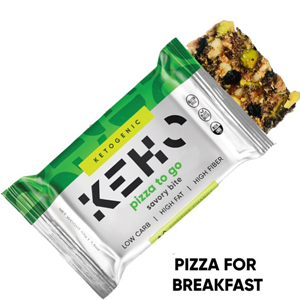
[00:10:46] Ray Latif: Now, if you are a maker of ready-to-drink cocktails and want to send product for review on BevNET, there's an easy way to do so. Go to BevNET.com forward slash submit forward slash product, and you will have all the details on how to do so. Now, you can also do that for any non-alcoholic beverage, which many folks have done. Thank you so much. Same goes for Nosh.com. If you want to send us food samples, go to Nosh.com forward slash submit forward slash products. Love to receive those samples as well. Speaking of samples, I have in my hand a brand of ketogenic bars. This one's called Keho. Founder is a woman named Tekla Back. And I was really interested to hear more about these after Tekla participated in our Elevator Talk livestream a few weeks ago. These are really interesting products. that are positioned as the first plant-powered ketogenic snack bites. She has a variety called Pizza to Go, which, man, I've never seen a pizza-flavored snack bar before, but it really, really got me interested. Also, thanks so much to Brad Parks, who is the founder of a brand called Maskfusions, that's M-A-S-Q. He's a maker of hard tea products that are made with adaptogenic ingredients. The one I have in my hand right now is a lemon ginger variety made with organic yerba mate. Great stuff, Brad, well done.
[00:12:16] Chuck Casano: I also have had the opportunity to try a couple of exciting things. Ray, you just mentioned a keto bar. I had the opportunity to try Orja Bars, O-O-R-J-A. They have six grams of sugar. It's a whey protein-based bar. The thing that I liked about it is that they have a really simple ingredient panel, and after I eat it, I don't feel like I've eaten a brick and I'll be hungry again in three to four hours. I think they have a consistency of like maybe like a nut butter taffy or like a taffy-like consistency. I also had a chance to try Yolele's line of fonio pilafs. Fonio is an ancient West African grain and I think it's similar to couscous. But couscous, of course, is a wheat flour pasta. This is gluten-free. It has more protein, iron, and fiber than couscous. And I tried their Dakar curry flavor, which was great. And then tonight, I think I'm going to try their Afro Funk flavor. Their Afro Funk has the fonio, of course, but it also incorporates an ingredient called dawa-dawa. Dawa-dawa is fermented locust bean, and they described it as having a vegan umami flavor. So anytime you can get umami with a non-meat-based substance, I get pretty excited about it. And then one last thing about Yolele that I think is exciting is that they're building the supply chain with farmers in rural West Africa, and they're helping them build processing capacity to help improve yields and connecting them to local and export markets. So good stuff.
[00:13:53] Ray Latif: All right. It's time to get to our interview with Chuck Casano, who, as I mentioned at the top of the show, is the founder of Pitaya Foods and Greenshoots Distribution. Our conversation is focused on how Chuck has navigated the food industry on two fronts, first on the brand side and later as a distributor. Within the discussion, he discussed how his social mission guided his foray into the food New Beverage industry, the evolution of Pitaya Foods from a brand of dragon fruit-based beverages into a superfruit platform, and how the failure of a key distribution partner propelled his decision to launch HiTouch. Chuck Casano spoke about how he evaluates new and disruptive concepts, the elements of successful brand relationships, and what it's like to be on the front lines of food distribution during the pandemic. Hey folks, it's Ray with Taste Radio. I'm going to call right now with Chuck Casano, who is the founder and CEO of Pitaya Foods and Greenshoots Distribution. Chuck, how are you? I'm doing great today. Great to have you on the show. You and I go way back, back to 2011 when I joined BevNET and you were a contestant in the very first edition of the New Beverage Showdown, which is BevNET's signature beverage brand competition. And it's amazing how things come full circle because you're a judge in our most recent edition of the competition, which was edition number 19. I'm curious, what's it like to be on both sides of the stage? It was a little bit easier judging than presenting. It was, yes, definitely crazy to become full circle. I don't know if you remember, but that first, when I was presenting, I even had my mom and dad show up. It was in New York. I had a lot of family support in the audience, so it was a crushing blow to come and run her up. added some fuel to the fire. We're still here today, and I don't know how many of those other contestants are still in business. I'd rather be in business today than have won the contest. Judging was a great experience, great to see some innovation still coming out. Just meeting all those contestants, there was a really solid field. Yeah, I would say so. I think the quality of brands and pitch is a little bit better than in years past, although that doesn't include you. I thought your pitch in the very first edition was fantastic. And I think when the announcement was made about the winner, and this is no knock on the winner, people were like, huh, I thought, you know, Pattaya Plus, which it was known as Pattaya Plus back then, deserved to win, as did I. I really thought you guys were shooing, but anyway. Let's go back. Let's keep going back beyond 2011. You had a pretty varied work experience prior to the launch of Pattaya Plus. Again, it was known as Pattaya Plus before Pitaya Foods. How did you identify your passion for food? And more importantly, what motivated you to start the company? Well, I think if you go back a little bit of my varied work career, I was living in Manhattan, working for IBM and tech for about six or seven years with a 300,000 person company. And I knew that wasn't going to be my life's calling. So I actually thought I was going to be in finance. So I went and did an MBA over in Spain. And it was a wonderful program. And my timing was pretty horrible when I graduated because I graduated Right in 2008 during the credit crisis. So, you know, I was supposed to get a job at Bear Stearns I was supposed to start that week and then they went down and then that whole team from Bear Stearns went over to Lehman Brothers and they're like You know what? Well, let us get our feet under us and then we'll bring you over to Lehman and then when Lehman went down I I said, okay, the world is telling me I've got to get out of New York and got to do something different. I connected with one of my MBA classmates who was working at a nonprofit down in Nicaragua, and there was a grant available. applied to the grant, got it, and I was on the next flight down to Nicaragua. And so growing up on Long Island and growing up in New York, I didn't really have any agriculture background. And this nonprofit was consulting to mostly agriculture companies to help expand their markets and increase yields and bring new crops. And I spent a year in Nicaragua traveling all around the country, meeting with farmers, understanding farming capacities, and how to increase their yields and increase their earnings to create new jobs. And so that was a really eye-opening experience, because what I found in Nicaragua, it's the second poorest country in the Western Hemisphere. So one silver lining to that is a lot of these farmers can't afford pesticides. So I saw this huge untapped resource for organic raw material down in Nicaragua, my time with that company ended. I went back to New York City. The jobs were still few and far between in banks, and all around me, I'm looking at coconut water blow up, acai blow up, and I look for my dragon fruit smoothie that I was accustomed to every day in Nicaragua, and it just wasn't there. I couldn't figure it out. I took some time off, did a little research, and there were some good reasons why this this fruit wasn't readily available, flew back to Nicaragua to get some more information, and then fast-forwarding, put a little business plan together, raised some capital, and started exporting the fruit from Nicaragua back in 2010 or 11, I think was our first year. So the motivation, to answer your question, was just to get into natural foods. I felt like if we brought this, we opened up this U.S. market to these dragon fruit farmers, it could be a huge win for them, because before I came along, everything was consumed locally, and the local market was only so big. So we're expanding it to 300 million people in the U.S. by starting to import it, and we've grown it pretty substantially since then. I'd say so. You made it sound so easy. You wrote a business plan and started exporting. I mean, if it only were so easy. I'm curious about what was inside that business plan because for a fruit that I bet a lot of Americans were unfamiliar with at the time, I bet investors were just as clueless. So, you know, what were the key selling points of your business plan? I'm not really proud of that original business plan because I think I would have done better as an MBA. I was so nervous. I literally almost mapped out everything that I was going to do for the first 90 days. I remember writing down the names of all the yoga studios that I was going to go to. I think my business plan was so long-winded that my first investor would rather give me the money than read the business plans. Hey, that's that's one way for it to work, I guess, right? One approach. It worked out well. But yeah, it was it was just a long business plan. And I really didn't have any idea of the market, or the industry or any background in the industry. So I just wanted to make it as detailed as possible. And it was a good guide. We still have it kicking around the office somewhere. But it was it was important just to understand and it was it was a research report to me for me. The business plan was Ready To convince me that I wanted to invest all this energy in my life into this more than the investors. So I think my tip for writing a business plan is make sure that you're convinced that this is what you want to do before you show it to anybody else. That's a really good point. If you're not willing to put in the time and effort to write a business plan, how are you going to run the business itself? Exactly. You touched on this. You know, there's a key social component to the company, to Pitaya Foods. And it's interesting because we hear a lot about social mission and how brands are incorporating a charitable component to their businesses. And in your case, the social mission is as much about the business or it feels like it's just as much about the business as anything. I would say it's the foundation, right? And so we knew we wanted to add a social aspect to this. And I have a wonderful partner down in Nicaragua, Will Burke, who runs Soul Simple. And we've been partnered since day one when I wanted to start exporting the frozen fruit. He was already doing it for a couple of months of dehydrated fruits. And we kind of built this supply chain, the frozen supply chain together. And I was gravitated towards Will because he was working directly with these organic farmers and helping them get certified. And so I saw that as our foundation. The original plan was We were going to be the first fruit processing facility to offer daycare to some of the workers, and that was going to be the social mission. But the Nicaraguan government wouldn't let that fly, and we couldn't have children near the factory, so we kind of had to readjust. grew into our social mission. And there's two different elements of it. One, we really want to promote organic farming from our communities. So we help the farmers get USDA certified organic. And what motivates them is that we buy 100% of the crop that they're able to produce USDA certified organic. And we did that for 10 years. This year, due to COVID, we're going to miss that metric. But you know, what started with 10 small family-owned farms, we've now grown out to over 600 farms getting USDA certified organic. And with that, that impacts literally thousands of people because all, you know, there's 600 farms, so there's probably 10 people living on every farm. So, it has that impact, and when you walk in the communities of where we started this dragon fruit project from 10 years ago to where it is now, what's good about organic farming is a lot of the protocols. You have to really clean up all the community. You have to pick up all the plastic and all the garbage that's strewn, and you have to maintain this criteria all year long. So, we took a pretty green space and made it amazingly green. That impact in that community is probably one of the things that I'm most proud of. One thing that I've always said with this company is like, I need to make sure that I leave Nicaragua in a better place than I found it. And I think with that program, we're able to keep that. promise. And then the second part of our mission, when the daycare didn't work out, we just realized there was a huge population of single mothers in Nicaragua. Just due to cultural and due to the Civil War in the 80s, it's all kind of bubbled up. And And a lot of these women don't have jobs or the jobs are very limited, usually working in like a textile mill or something like that. So there weren't a lot of like job creation specifically for single moms down there. And so we made a goal at our food processing facility to say, hey, let's do anything possible to support these single moms throughout the community. And a lot of the research that we read is the best way to support a community is to support the single moms. Because if you give a mom money, she's going to spend it on her children, or she's going to spend it on food for her children, education for her children. So moms and women seem to be the best one at handling and spending money where it should be. So as of last year, the first year, 10 single moms in this little facility, you know, hand filling smoothie packs. And last year, we created over 200 new jobs for super moms, single moms, we like to call our super moms last year. And that's something you know, we're all just really incredibly proud of. And that continues to grow and we continue to invest in down there. That's absolutely amazing and you should be commended for everything you're doing. It's been 11 years since you launched the company, which is pretty remarkable in itself. Not a lot of brands exist for 11 years. I can imagine that at the outset, as I sort of talked about before, it was difficult to explain to folks what it is that you are doing, what it is that you are selling. And this is something that comes up in our food New Beverage industry all the time. Folks that are using esoteric ingredients in their products and have to communicate and educate to consumers. what those ingredients are and what the benefits of those ingredients are. What was your initial communication strategy for talking to gatekeepers like retailers and distributors and then obviously the end consumer as well? Yeah, so we were pretty fortunate that, you know, when we first went to market, we did like a little juice. And the same social mission that I told you about, like Whole Foods was really on board and really supportive of us. So they gave us some activations in a couple of regions. And our strategy was just to demo, demo and more demo. My business partner, Ben Hiddlestone and I, and my girlfriend now, wife and mother of two children, literally packed up our Prius and we drove to every single Whole Foods in the NorCal region, Rocky Mountain region, and SOPAC and demoed every single one of them. And so, you know, that was just a huge learning experience. And, you know, it was, we were literally explaining person by person what this was. And that product was not actually the best thing to do, because it was just, the formulation wasn't right. It wasn't delivering on this fresh, juicy fruit that I'm used to in Nicaragua. And this was like a pasteurized, burnt out juice mixed with lemon and mango. It just wasn't representative of the fruit. But doing all those demos were so valuable, just getting feedback directly there and tweaking it and realizing what we should do. We Need up discontinuing the juice and kind of shifting into a frozen food model. And that's been an incredible path for us. I'm sure it didn't feel incredible when you did discontinue New Beverage line. What went into that decision? How did you, I guess, know that you had to read your last rights to Pattaya Plus New Beverage? Well, it was pretty sad because we were able to get it into 600 points of distribution, which was way ahead of any of our dreams. Our first customer was Whole Foods. We thought we were done. We got it to Whole Foods, it's only up from here, and then the velocities off the shelf were just not there. We did this major production run and we literally sold every bottle one-on-one through demos. until it was done. And we were fortunate that we just brought up smoothie packs. We brought up a couple hundred cases in our first container, and we literally sold them to a couple of juice bars in San Diego. And then we're looking at the Whole Foods portal and like, oh, wow, we sold two bottles this week in La Jolla Whole Foods. And then we go to the Juice Caboose in downtown La Jolla, and they sold 50 units in a day. So it was like the data was just staring at us like, there's no velocity here. And the people love just the pure fruit. And that's what I loved about the smoothie packs. It was really just the fruit is one ingredient, nothing added, like the purest form. And so that is what really resonated with people. And when people tried that for the first time, that's when it really started to snowball.
[00:29:42] Pitaya Foods: Do you want more repeat buyers on Amazon? Well, this free resource in collaboration with Straight Up Growth will help your brand turn first-time buyers into long-term subscribers. Download Winning the Repeat Purchase Game on Amazon now at Taste Radio slash SUG. That's Taste Radio slash S-U-G to start building retention-driven growth for your brand on Amazon. Scaling New Beverage brand into major retail comes down to operational readiness. From packaging lead times to co-manufacturing strategy, the details can make or break a launch. In a new e-book in collaboration with Octopi and Asahi Beer USA, industry leaders share what they've learned in helping brands scale. Download it now at Taste Radio slash octopi. Do you need to scale your team faster without compromising on talent? Join Oceans for a live webinar on April 20th and learn how leading companies are hiring top global professionals who are Ready To grow with your business. Register for the webinar now at Taste Radio slash oceans. That's Taste Radio slash oceans.
[00:30:53] Ray Latif: I remember when I got that email from you when you announced the discontinuation of the juice line. And I'm actually pulling up the email right now. This is from March 6th of 2013, 1.22 in the PM. And I wrote this story when I was at Expo West. I remember this is so, it was like it was yesterday. I was in my hotel room at Expo West. And I'm writing the story and I was so sad to hear it. But you were pretty upbeat. And one of the things in the email said, our frozen smoothie packs are doing better than we ever imagined and we want to focus on that. And you have, and it has really blossomed since then. The one thing that I constantly think about when I think about single ingredient focus brands is supply chain. How have you managed to maintain that consistent supply chain of dragon fruit? building that foundation in Nicaragua. And with our partner, we've invested in getting all those organic certifications. So we try and control Vive Organic market. We've built the largest USDA certified organic supply of red dragon fruit down in Nicaragua, and we protect that through owning Vive Organic certs. And so that's how we protect it. There's a lot of red dragon fruit that comes from Vietnam that is super cheap, but the quality is not the same as Nicaragua. And I think one thing that we've been really blessed with and helped us make this transition is how beautiful this fruit is when you put it in a smoothie or a bowl. And so really people are just so there's it's such a visual fruit. And so when Vive Organic is like head and shoulders above the conventional, like you blend up our organic red dragon fruit smoothies versus the conventional, the conventional just looks like blended dull strawberries, whereas our organic is like this electric, electric pink. And that's what people want to do. And the biggest blessing has been social media for our company because people Everybody wants to take a picture of their best lunch that they've had or the best breakfast that they've had. So our stuff has just gone viral on social media. And that's allowed us to really connect with our fans and bring in new product launches and keep that little community that we have going. Indeed, you do have a pretty fantastic following on Instagram, 48.6 thousand followers at the time of this interview. The pictures really do pop off the page. And I kind of misspoke when I said a single ingredient focused brand, because you do sell other frozen smoothie products, including ones made with passion fruit and jackfruit, watermelon, coconut, etc. That came from building this brand off one ingredient for eight years, right? We hustled this into every juice bar, every retailer. And then two years ago, we looked at our company and we're like, where's the value in Pattaya Plus? And the value was our points of distribution. And we're selling one SKU. It was crazy. So we're like, Let's go back to the drawing board. Let's rebrand this whole thing and let's bring other products to our retailers and so, you know building supply chain on all these different fruits is no easy task and we've We've got a lot of great people in quality assurance. We've got business development. We're a much stronger team to build this we went through an incredible rebranding process with Greg Fleischman and purely righteous brands and And they just delivered on it. And we had all this excitement. We were excited about the new launch, but it wasn't until we presented this for the first time to Whole Foods, probably about eight months ago now. And within 15 minutes of it, they're like, we love this. This is going to look amazing in the frozen set. We want the whole line. And so that just has us off to the races. Thank God we got everything launched in February of this year before COVID hit. So we were able to get the tags up on the shelf. And right now Frozen is, the category is up all across the board. We're way ahead of expectations in this because people can load up on Frozen in their freezers. We were talking about the variety of products that you sell and I'm on your website right now. And like a lot of brands, you sell direct to consumer. And I don't know how much of your direct to consumer business represents your overall business, but how do you balance your direct to consumer business with that important retail business as well? Well, there's a lot of variables here and that are kind of inherent to Pattaya. First of all, we're frozen. And so frozen econ fulfillment is a very expensive endeavor. When you look at our, you know, our e-commerce business is probably about 10% of our total sales. And when you look at that 10%, when you break it down, it's actually more like 30% B2C and 70% B2B. So the good thing about where we're at right now is we've got, you know, we're closing in probably on 20,000 points of distribution with, you know, being full scale with Kroger, Whole Foods, Publix, you know, the availability of our product line is growing every day, which negatively impacts our DTC because it's a lot cheaper to buy our product at retailers than it is through our website, unless you want to buy a significant volume. But I will say that our B2B business through e-comm has been an incredible tool. And anyone starting out, especially for food service, this has been really key. So we've got three distribution centers set up all over the country, and a juice bar was opening up on every corner. And so we set this up because we just didn't want to say no to anyone and we couldn't be FedExing dry ice across the country. And so people, you know, these juice bars were like, we don't care how much it is, just send it to us. So we set up this e-comm all across the country. And so it's still really, you know, $85 for a case where they could buy that from a distributor for like $65. So what was really cool was, we would start with this business and then we'd look at all these our B2B customers in like a Texas or like a Virginia or something like that. And like, Oh my God. All right. Now we've got like 10, 15 juice bars buying from our B2B website in Virginia. Let's try and find a distributor to service this business because we're going to make our more margin once we're shipping palace to this distributor. The customer is going to get a lower price from this distributor and this distributor is going to be happy with us because we're bringing them 10 customers. They're buying a couple hundred dollars a week. And so now we've got this distributor partner, local food service, who's got another 10 accounts that we didn't even know about, telling them, hey, we're selling this dragon fruit to these 10 accounts, it's going so well, you've got to try it. So we've leveraged this e-commerce B2B platform as like a farming tool for customers and distributors. So, you know, we love Getting people off our b2b and into a distributor so they can get better pricing and increased volume So and it's it's opened up. I can't even tell you how many distributor doors for us Including your own. Yeah Good segue, Chuck, well done. You know, it's funny, we've been talking for almost a half an hour. You know, we could just end this right now and we could do part two another time, but let's keep going. Sure. High Touch distribution, haven't even touched on this yet. You know, I can imagine that launching a food New Beverage company is a really complicated thing to do. And yet you're going from a complicated business to one that's seemingly even more complicated. in refrigerated distribution, not just distribution, refrigerated distribution. Okay. So what drove you mad? No, what drove you to launch HiTouch? So we got to take a step back to when we launched the Pitaya Juice. We launched it through Green Greenshoots Distribution, which was the dream of a national DSD network. And so when they launched, I was launching my juice and I became friends with the founders. And I actually invested in Green Shoots as a hedge against Pattaya. I was looking at how quickly that company was growing new to the industry. And I'm like, you know what? I think either Green Shoots is going to make it or Pattaya is going to make it. So let me just hedge this out. And so That investment early on in Green Shoots let me get a real understanding of the distribution business, look at the P&Ls, see what's going on, what the day-to-day challenges are, and more importantly, got me to work with now my partner, Czar Danny Olko, who's my partner High Touch. And so, when Green Shoots was going down in 2000, end of 2014, you know, I was losing my investment, I'm looking at everything, and I'm looking at all the P&Ls for Green Shoots, And what was pretty glaring was that the Southern California-based as a standalone was a profitable business. But they were launching in like Virginia and Boston and the Mid-Atlantic and all these other regions. They were so undercapitalized that they were just hemorrhaging cash. And so when green shoots went down, probably in like December 2014, I was talking to Czar, who, if you don't know, if you're in New Beverage industry and you don't know Czar Daniilko, you're missing out on our great service. He, you know, former Ardoala guy, knows DSD better than anybody in the country. And he was running this whole hub with zero support. And my early time at Pattaya, Him and I became friends. I flew him to Nicaragua so he could see the farms. We really built a friendship. When he was going to lose his job, he was going to lose Green Shoots, I pulled him aside and I'm like, well, what if we just do a DSD in Southern California-based just go really, really deep here? He said, yeah, let's do it. So he was on board. And he also has great relationships with Whole Foods. And at the same time, Whole Foods was saying, hey, wait a minute. Green Juice is managing all these brands for us. We don't want to see this service go away. We don't want to just have one option of UNFI. Give us something else. you know, czar was able to have talks with them to, hey, if we relaunch into this brand, will you support us? And they have been really supportive from the beginning of us. And, you know, it's a really good relationship that we enjoy, because we both adding value on both sides, you know, there's no, there's no handouts, it's we help them with things, and they help us with things. And we're both stronger because of it. Totally. And just to follow up on knowing Czar, I think regardless of whether you're in New Beverage industry or not, you should get to know Czar. He's an amazing guy. He's a lot of fun. Always got a smile on his face. You picked a fantastic partner. And he, you. You know, you talked about Greenshoots and the unfortunate end to that company. The distribution model between theirs and yours, you know, how would you describe the differences and how would you describe the differences between your company and other DSD distributors, you know, in your area and then nationally as well? We really came through on a lot of the promises that Green Shoots said they were going to do. They always touted that they were an employee-owned company and blah, blah, blah, but that really wasn't the case, and they really didn't take care of their employees from the ground up. One of the huge differences from that transition is, Zahar and I were barely making any money in the first two years, and all the money that the company was generating was going into the ground-level field reps. So that was just a huge difference. And everyone's promising equity, blah, blah, blah. On day one, we showed up and gave equity to every single founding team member, from the route drivers, to the guys in the warehouse, to the accountants, from day one. So if you were on that original team, and you were at the first meeting, and you were Ready To take another swing at this, you were part of that company, of our company now. And so that's something I'm also really proud of. And that I'm proud of, but it's self-serving because when you make people equity owners, they take a real pride of ownership. And I think that's part of our success. What differentiates us from other distribution models or DSD is, I can't really speak for a lot of them, but one of the biggest thing is that our guys in the field are commission-based. So when you sign up with High Touch you're one of our brand partners, our guys in the field, you just inherited like 15 new sales reps going to battle for you every day because they're not getting paid if your bottle's not on the shelf. So, you know, if you're dealing with like a DSD that's just getting hourly wages, like they don't really care about your brand. So I think that's how we treat our employees and how we incentivize our employees is really one of the big differentiators between us. Is that something you learned from working with other distributors back in the early Pattaya days, you know, seeing distributor reps hustle harder if they were just commission based? Yes, definitely. And I think starting in Pattaya and setting up our item with 50 different food service and DSD and retail distributors has enabled me to just understand all those different processes and take best practices from each one of those distributors and cherry pick some things on their contracts and build that into what we are High Touch. And I think that really resonates when we sit down with brand partners. You have Czar who has all this DST experience and me who has all this brand experience. And so when you're negotiating with it, it's not really a negotiation. We're just, this is how it is. And I know how the other distributor, you're going to get treated at another distributor. So if that's what you want, go ahead. And so we stand by what we put up and we're pretty transparent and we know what the competitor's situation is like. Let's talk about your portfolio for a bit. You have a pretty broad range of products, a mix of food New Beverage, probably more beverages than food, but a pretty remarkable list of emerging concepts and fast-growing brands. I could spout off a bunch, but I'll let you speak on some of those. When you're thinking about adding brands to that portfolio, what are you looking for? How do you evaluate new concepts? How do you evaluate the entrepreneurs behind those new concepts? It's a good question because we don't really force business. We really like to organically grow and find business, and we're fortunate that we think we're at ground zero of innovation. If it's fresh, cool, and healthy, they're going to call Whole Foods and they're going to call High Touch talk about it. We're blessed with this never-ending pipeline of innovation and brands that want to come to Southern California-based what do we look for? We, you know, we look for something that's going to sell, right? You know, our relationship with Whole Foods works because our incentives are in line, right? And so it doesn't do us any good for us to go to Whole Foods with a brand that we don't think is going to sell because it's going to die on the shelf. It's going to take up space. So, you know, A, is it going to sell? Does it have some some community background. Does anyone care about this brand? Myself and probably every buyer out there right now is when they're looking at your brand, they want to see a social media presence. If I see that three people liked your beverage, nobody cares about your brand. Like if nobody cares about an Instagram, nobody's going to care about it on the store. So those are new things that are coming up that we're looking at and just founders that really have like a good genuine motivation to be in this industry. you got to feel it with the entrepreneur. This is who you're going to battle with. And so we try to align ourselves with like cool, fun people that you want to work with. Everyone's cool when times are good. When times are bad, and things are blowing up, you want them to be cool too. So those are some of the criteria that we're looking for. You want them to be cool, and you want them to pay their bills too, right? Well, no, we pay their bills, so I don't care. Okay. You know, we talked about products. We talked about entrepreneurs. Let's talk about trends. You know, we see a new trend ingredient formulation or otherwise every single day. How much do trends impact your decision to distribute a brand? Well, I think what What's good about us is that we can react to trends way quicker than any of the bigger distributors, right? Literally, if there's something hot and popping up in Southern California-based our buyer reaches out to us and, hey, this is kind of cool. Can we get this set up? We can deliver that next day or next week. There's no like huge approval process where this. So, you know, even if we're not exceptionally good at spotting the trends, we're really good at reacting to the trends. And so that's how we kind of fall in line. And the other thing is, you know, maybe going back to your brand decision is, our field reps, they're in the stores, you know, they're spending two to three hours per stop merchandising all our brands in these stores. And, you know, they're seeing brands that are blowing up, right? And so they, we sometimes farm out or find brands in the field from, Hey, dude, this brand is blowing up. They can't be kept on shelf. It's selling out too much. You should talk to them. So we are like always have our ear to the street and we have the people coming to our door. And like I said, I feel like we're just, ground zero of innovation. Like we just see it all a lot sooner than anyone else. I just wish we'd be able to open up a distribution center here in the East Coast because I'm looking at your brand list and man, there are some tasty looking products. The one that really stood out for me was Sun Noodle. Oh my goodness, that looks like a really interesting product. Are those ramen noodles that are fresh or are they dried? So they arrive frozen, and then we slack them out refrigerated. But yeah, they're great. Nice. I'm sure you've had better relationships with some brands than others. What are the elements of successful relationships with brands? And what are the elements of an unsuccessful relationship? Or I guess, what are some of the issues that came up with the products and the brands that didn't work out? Okay. I mean, we'll, we'll start from the top. One of my favorite brands to work with is Vive Organic Shots. And there's such a good synergy between their team and our team. So they came to us before they were on shelf anywhere. You know, they're trying to get into Whole Foods. This is happening. It's this little shot category. Like how is this shot going to, you know, core was really out there. They were dominating. Vive was really nobody. And then they finally got authorized. And since day one, just communicating with their field team and execution has just been a great experience. And the numbers really show it. When those guys go on promo, I think We've raised their sales way more than any other region because of how coordinated we are and the communication that's opening. OK We Need to grab an end cap here. OK. They know who will be there the next day. And then not only is it the execution you know from the promo and and that shelf But it's also like the feedback after like the vibe guys coming back to our office and saying, hey, we brought everybody breakfast burritos at four o'clock in the morning because of how hard you're working and like relationships like that. I absolutely love to see a brand come from like nowhere have a new little category and now see them blowing up all over the country is like if I could work with 100 vibes, it would be amazing. And then, you know, on the other opposite side of the spectrum, you have brands that just don't understand. You're like slow moving brands, right? Slow moving brands where you give them a shot, like, I'll bet anything if you're launching a brand and it's fresh and it's powerful and you come through us, we are going to put you in the best spot to succeed, right? We are going to get you, we're going to work hard to get the facings that you deserve. We don't dictate the shelves. It's space to sales, right? So if it's selling well, you're going to see your set increase. When it's not selling well, some entrepreneurs that are green start blaming it on the distributor. And like that just creates, you know, instead of like trying to fix something or if it is in the formulation and the packaging, like you're on the shelf, how is this our problem? And, you know, and those, those relationships tend not to end well and, and just, Yeah, thankfully, we don't really have a lot of those. And Darwinism really plays along well with distribution. Those brands tend not to make it and fall by the wayside anyway. But a lot of the times, we're the first distributor that any of these people are working with. And so their expectations versus reality are just totally crazy. And we're like, OK, call the big guy. Go call somebody in Providence to fix your problem in Venice Beach. Be our guest. The other thing is we don't lock anybody in. Anyone is welcome to leave whenever they need to. Like I said, Darwinism plays a role. Those people tend to get weeded out. You want a partner who's a good partner in good times and a good partner in bad times as well. I'm picking up what you're putting down there, Chuck. I think a lot of people can read between the lines as well. What's funny is when these people Savor These brands finally graduate to a UNFI, and they're like growing in other regions, they never call us again, right? They're like, oh my god, we've got so many bigger problems in dealing with High Touch right now, like, let me figure this out. And so, yeah, we're, and we love to see it, and it happens, but I remember When Pattaya got picked up at Green Shoots, I was the happiest person. I couldn't care what they did. Them getting us to shelf was all I could ever imagine, and I never asked them for anything. So when new brands who have been in this industry for a week start yelling at us, we're like, that's the crazy meter going off, and it's no fun. Well, how do you set expectations right up front for what you guys do? Because I bet there's some misconceptions about what a DSD distributor does. Like I said, I think we're going to give you the best chance to succeed and setting expectations always depends on the brand, right? And so I think the brands that value from us the most are on both ends of the spectrum. On one side, you've got these large national brands like GTs, Rebel, Koya. They can't afford to be out of stock. These are guys with really well-established sales team. So they know where to go, and they know that DSD is going to give them the best chance in these markets. And so when they go on promo, yeah, we get a little more margin than UNFI, but they make it all back in sales. And that validation from these large players The people behind those brands are not new to this industry. They know the strategy that works in key markets. And so those guys see a ton of value from us, and we keep cranking with them. And then the other smaller guys, the little brands, we're starting them off at 10 stores at a time. We have much better expectations talks than we did in the beginning when we were scrambling for brands. Thankfully, we're fortunate enough to have a strong portfolio where we're not begging for brands like maybe we were in the first six to 18 months of High Touch. So the expectation settings comes just from our first meeting. We would never pick up a brand without meeting with the founders for an hour or two to really understand who they are. Chuck, you've mentioned COVID a few times now. It's hard to get around it, especially in your position. You guys are right on the front lines of food distribution and have been since the outbreak. What's that been like? So Friday the 13th is when everything went crazy. March, Friday the 13th is when everything went crazy, right? And so that's when supermarkets started really getting looted in Southern California-based we were just looking at this craziness and I did not sleep at all that weekend. I remember on Monday morning, I drove up to our Huntington Beach warehouse at two o'clock in the morning, was helping load guys' trucks up, and then jumped on route. I just felt that I could not put my team in any position that I would never put myself in. I really wanted to see what was going on out there. And it was like the apocalypse. We arrived at our first store and every shelf was just totally decimated. The capacity of the other distributors were totally broken down and we were showing up with truckfuls of products and the buyers, the receivers were saying just, hey, empty out that truck here. And we're like, no, we got two more stops. They're like, I don't care, give us everything. And so us managing that and getting everything to shelf, was really, really crazy. For the first two weeks, we were up 100% in sales. I was so proud of my team that we did not buckle under that pressure. Even up 100%, we didn't miss any stops. You look at our brand partners, you would go into some of these retailers, and the only brands on the shelf were high-touch brands because the other guys just couldn't make the deliveries. you're getting one 18-wheeler a day to some of these other retailers, but everything had been looted, and they probably needed 10 18-wheelers just to get back to normal levels. I'm not saying it was a competency issue. It was just a capacity issue, and we had the capacity. We've seen that. Then after that happened, you just saw it totally nosedive. And we went down, we were down like 30, 40% pre-COVID sales. And now we're starting, you know, every week since we bottomed out in April, we've been slowly ticking back up, ticking back up. If you would have asked me towards the end of March where I would be sitting on June 17th, I would have thought that half of my team would have been on ventilators and we would not have been in the position we are today. I think we're really grateful we live in Southern California-based we're not jumping in a subway to go to work every day, so transmission has been low. But we've only had one guy contracted. He took a 14-day leave absence, and he was back in the field. He never really had really bad symptoms. He was asymptomatic, but he tested positive, so we took him out of the rotation. I talked to my peers on the East Coast. Some of the guys on the East Coast, they had half their warehouse teams go down. So, geography, we were protected. And then we just took as many safety protocols as possible because we don't manufacture a product. Our product is our people and our service. So if we don't have that, we don't have a business. And we worked with Whole Foods to implement some protocols to limit exposure, and they were a huge help to us through this process. I can't, I'm speechless that, you know, how you've described all this and I can't imagine, you know, one sleepless night, one sleepless weekend. I don't know if I slept ever. But, you know, kudos to you and your team for stay in the course. You know, there's been so many changes in such a short amount of time in terms of, you know, how consumers think about the shopping experience, you know, the impact of delivery services like Instacart, Amazon Fresh have really changed the dynamic, changed the conversation for how people buy food. What's been that impact on your business and, you know, the in-store shopping experience? High Touch, the Instacart and Amazon Fresh has been a boon for us because those are fulfilled through Whole Foods, right? So when we put a bottle of Rebel on the shelf and somebody orders it through Amazon Fresh or Prime, it's getting pulled off that shelf. So we're still benefiting from that sale. If you really think about it, all these retailers are just distribution hubs at this point, and they can't really go away anytime soon because you can't really have in Southern California-based through LA traffic if you just have one mega huge warehouse in the Inland Empire. You would never be able to distribute or get it to that last mile going through Riverside or Corona. These retailers and retail locations, they're distribution hubs now, 50% of them. We're getting product to these shelves to continually fill these hubs. It's been a benefit. When Instacart went down for when Instacart left Whole Foods, we saw a little bit of dip in sales. But I think all that has been erased by everybody adapting to Amazon Prime and Whole Foods again. You know, one other big shift that we've seen, and you mentioned this earlier in our conversation, has been consumers shopping the frozen aisle more than they ever have in the past. You know, do you think that's something that will continue going forward beyond COVID? And if so, you know, how do you see this frozen aisle evolving? I mean, do we see, you know, a doubling of shelf space? Is it, you know, will we see 50% more? I mean, what have you been hearing? I mean, for me, frozen is the future, right? Like we pick our fruit at the peak of ripeness with all the nutrients, flash freeze it and let you eat it, you know, 12 to 24 months from then. The best thing that I love about frozen is that there's zero food waste. everything that I produce and harvest, for the most part, 99% of it gets eaten. There's not this fresh produce loss to the size of the aisle. So I see the frozen aisle growing pretty significantly. All of our sales are up. The center of the store is back, especially in fresh frozen. So people are starting to realize you can get really high quality with frozen items. And so, yeah, I see it expanding. One thing about this COVID is we launched our whole new line before this happened, and every single item that we had on the shelf at Whole Foods was purchased. So we got a trial on steroids. Every single person tried our product. The thing about us is we're a very habitual brand. Once we get in your blender, we tend to stay in your blender. People have their routines, they get their fruits, and we're really blessed by being part of people's habits. Well, in crisis there is opportunity and it sounds like there was some good things to come out of it for your brand. And there were a lot of good things to come out of this conversation. You know, everything that you're doing with Pitaya Foods and with High Touch always been so interesting to me. And I wish you all the best going forward. Please continue to stay in touch and good luck with everything going forward. Can I just add one piece? Absolutely. As fantastic as all this sounds, none of this would be possible without the two best business partners in the world. Ben Hiddlestone from Pitaya Foods and Czar Danny Olko from High Touch's those guys and us together make this all possible. You know, it says a lot when you have partners that you can rely on, trust upon and love. And it sounds like it's all of the above, checks every box for you guys.
[01:03:14] Southern California-based: Yeah.
[01:03:14] Ray Latif: Outstanding. Well, Chuck, once again, thank you so much, and I really appreciate you being on Taste Radio. Awesome. You're the man, Ray. Thank you so much. Have a good one. You too. That brings us to the end of Episode 90 of Taste Radio. Insiders, thank you so much for listening, and thanks to our guest, Chuck Casano. Please subscribe to Taste Radio on the Apple Podcasts app, Spotify, Stitcher, and Google Podcasts. As always, for questions, comments, ideas for future podcasts, please send us an email to ask at Taste Radio. On behalf of the entire Taste Radio team, thank you for listening, and we'll talk to you next time.
[01:04:02] Chuck Casano: Hello, I am Melissa Traverse here for the Taste Radio podcast, talking about some of the biggest tension points that CPG brands and founders face when they're scaling a brand, and those are financial accounting and inventory management. I am joined by Matt Lynn, inventory accounting guru from Belay Solutions, and he is going to shed some light on all of this that is going to help everybody out quite a bit. Matt, thank you so much for joining us today.
[01:04:32] John Craven: Thank you for having us, Melissa. It's great to be out here at Expo West and it's great to sit down and be able to chat this because it's kind of a passion project of ours, working mainly with CPG brands and hoping to help them scale.
[01:04:43] Chuck Casano: It's been such a pleasure chatting with you and the team and learning all about what you do over there at Belay Solutions. Can you tell us a little bit about yourself and what your role is and the kinds of solutions that Belay gives to CPG brands and founders?
[01:04:59] John Craven: Yeah, absolutely. My role with Belay, I'm actually our inventory accounting manager. I run our inventory department. So we work with CPG brands, taking them from spreadsheets, putting them on inventory management systems, and really helping connect their tech stack between their sales, online marketplaces to that inventory management system, even down to their financial systems like QuickBooks. But Lay overall is kind of an outsourced accounting firm. And with that, we're helping teams. We have different levels with bookkeeping, controller level work, even high level into CFO type items. So we really help those brands in any way that they need financially. And then I just have a subset of a department where we're really just laser focused on inventory.
[01:05:42] Chuck Casano: It's certainly a complex topic and there are plenty of places to go wrong. Let's start by going right and start super simple. Can you tell us what some of the biggest red flags are that would help a founder understand or, you know, the person running a brand understand that it really is time to get some help with some of these areas?
[01:06:02] John Craven: Yeah, absolutely. I think some of the early red flags is just everything is chaos. So when they're looking in their financial software, maybe they don't really have an accounting background, and they're kind of just piecing it together and doing their best. And what they'll see is that reconciliations take forever, if they even happen. They have a lot of transactions that don't get coded, or they just put them into placeholders to just get rid of it so it's not an eyesore. they'll notice they have revenue but no cash or they notice that they have a good amount of cash but their blind spot is really seeing the vendor invoices that are sitting there just needing to be paid and so they just lack that clarity that's going to really be around the corner.
[01:06:40] Chuck Casano: You know, you were talking about one of the red flags that comes up that I think makes so much sense. When somebody asks you what your numbers are and you can't come up with the right number, that's a big problem because that's something that you really should be able to share with decision makers who you're ideally looking to do business with. What should you be able to call up at a moment's notice?
[01:07:04] John Craven: Really at any time, you should be able to know an accurate margin. It's amazing how many founders we end up talking to that they can tell you their revenue numbers, they can tell you their selling price, and then the minute you start talking about cost or their cost of goods sold, they just get a deer in headlights look. So really it's very hard to tell, am I even making money? Or if you don't know your entire landed cost. Maybe you know what the freight cost is, the duties separately, but you're not really getting that as part of your unit cost. So it's really hard to tell. Am I even making money or am I losing money from the very beginning?
[01:07:37] Chuck Casano: And do you recommend that founders are able to call up a margin by channel?
[01:07:42] John Craven: Absolutely. And depending on the number of products and channels, you kind of want to know what are your best sellers, which ones are making the most and which ones maybe you're not making as much. But especially if you're branching out and you're doing D to C with B to B, absolutely want to know that.
[01:07:58] Chuck Casano: Gotcha. You mentioned that when things feel really chaotic, that's probably a red flag. I would say that it probably almost always feels chaotic if you're running a CBD brand. And I know this may be hard to quantify, but is there a revenue number? Is there a number of doors number that would help a brand understand whether or not it makes sense to bring on a partner like Belay? Understanding that so many brands are bootstrapped or they might be tight for cash. What is that friction point?
[01:08:31] John Craven: a little bit different for everybody depending on where you're at in your process and sometimes just your level of understanding of financial aspects. You know, when you're first starting and you really cash conscious and don't want to spend that much money, you may keep it on yourself. But as you're growing, as you're getting to those six-figure revenue numbers, and especially as you're approaching seven, you want to make sure you've got good financials. Because as you scale to that point, most likely you're going to be looking to raise capital. And investors, the first thing they're going to look at is your books. And are they clean? And do they show a clear picture of your business?
[01:09:02] Chuck Casano: You know, another area that folks might look to to organize some of the chaos are their systems. So many folks stick with Excel spreadsheets for a good amount of time. How do you know that you need to outsource some of your accounting to an organization like Belay Solutions versus maybe signing on to a SYN7 or a NetSuite or something like that?
[01:09:24] John Craven: Well, that's actually something we really help with. When it comes to that cost question, that's something that trips people up. And sometimes if you just have a turnkey business, you buy and sell a finished good, you can maintain with spreadsheets. And we've had clients with million dollar revenue that can do that. But we see so many brands nowadays are using contract manufacturers. and they're just sourcing certain parts of their product. So when you start talking cost, they have no idea exactly what their unit cost is. So that's where we come in and we kind of understand, we'll speak with the customers and the clients and get their needs. And then if we think they're Ready To a system, then we'll help put them on that system so they can get some of that clarity. And it's not something we force on anybody. There are plenty of times where founders come to us and we'll tell them bluntly, you're not Ready To it right now, but we'll let you know when we think you are.
[01:10:10] Chuck Casano: That sounds like excellent advice. What should a founder or somebody running a brand look for in an outsourced accounting partner? Are there certain checklist items that they should make sure that their partner be able to execute or be able to help them understand?
[01:10:27] John Craven: Absolutely. I think one of the keys there's, there's a lot of outsourced accounting firms out there. Some focus on service-based SaaS companies, but if you're a CPG founder, you really want to make sure that your accounting firm has CPG experience. I would ask them, you know, what kind of brands have they worked with? And even beyond that industry specific, because there's so many subsets of CPG. And that's something that I think is great about what we do with Belay is that we kind of run the gamut. It's kind of like the insurance commercial. We know a thing or two because we've seen a thing or two across a broad spectrum.
[01:10:57] Chuck Casano: Probably getting references is always helpful, right? Absolutely. All right. So this all sounds great. I think we have a really good understanding of would it make sense to hire an outsourced partner? You know, what some of the things you should be looking for are. What does offloading this kind of work mean for the brand? What can this do for lightening the load of a founder or lightening the load of a brand operator? Like, how does that help them in their everyday business?
[01:11:26] John Craven: It just tries to really help quiet the chaos. So what we're looking to do is just take some of the weight off that founder's shoulder. Let them focus on building the brand, building the business, getting that exposure. If you don't have sales, you really don't have anything. So we want them to be able to focus on that while we take care of your back-end office work. And we can just present that to you on a monthly basis. You can help make decisions. You can take that to investors. And really, you can just focus on growing your business.
[01:11:52] Chuck Casano: I feel like I felt founders and the folks who are running brands collectively sigh. A breath of relief just hearing that. How can people learn more about Belay Solutions?
[01:12:03] John Craven: So people can text TASTE to 55123 for their free inventory guide to get started.
[01:12:08] Chuck Casano: Matt Lynn, inventory accounting guru at Belay Solutions. Thank you so much for joining me here at Expo West. It's been such a pleasure to chat with you and learn about what you all do over there to help founders and brands with their financial accounting and inventory management. For everybody else out there, thank you for listening to the Taste Radio podcast. I am Melissa Traverse and we'll see you next time.