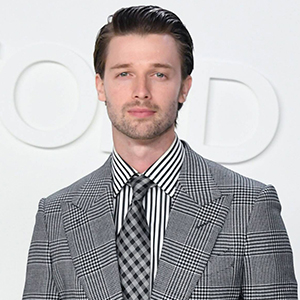
[00:00:10] Ray Latif: Hey, everyone, I'm Ray Latif, and you're listening to the number one podcast for the food and beverage industry, Taste Radio. This episode features an interview with Patrick Schwarzenegger, the actor, investor, and entrepreneur behind upstart brain health brand, MOSH. Just a reminder to our listeners, if you like what you hear on Taste Radio, please share the podcast with friends and colleagues. And of course, we would love it if you could review us on the Apple Podcasts app or your listening platform of choice. Between filming a new HBO miniseries and simultaneously overseeing the launch of a CPG brand, Patrick Schwarzenegger has a lot on his mind. It's fitting that the latter is intended to support an enhanced brain function. An assiduous film actor and active investor in several high-profile brands, including Super Coffee, Nugs, and Blaze Pizza, Patrick recently added the title of entrepreneur to his resume as the co-founder and CEO of Mosh, which promotes itself as The Brain Brand. Co-developed with his mother Maria Shriver, who was the founder of non-profit advocacy group Women's Alzheimer's Movement, MOSH was introduced in August. Envisioned as a platform brand of food and beverages, MOSH launched with a direct consumer line of protein bars that are formulated with ingredients, including lion's mane, ashwagandha, and omega-3s that, when consumed on a regular basis, are said to promote long-term brain health. In a remarkable debut, Mosh sold out of its entire inventory, which was expected to last until January, in one week. The experience left Patrick, who has co-hosted several episodes of BevNET and Nosh's Elevator Talk series, with feelings of astonishment and exasperation that are likely familiar to many of the entrepreneurs he has advised over the years. In the following interview, Patrick spoke about how he's managing an extremely busy work schedule, why, despite his extensive experience investing and advising early-stage entrepreneurs, Mosh broke every traditional rule for developing and launching a CPG brand, and what initially drew him to the food and beverage space. He also discussed his investment thesis, the value of company management when making funding decisions, and the content tool that has been a game changer for sourcing partners, suppliers, and information. Hey folks, it's Ray with Taste Radio. Right now, I am honored and excited to be sitting down with the one and only Patrick Schwarzenegger. Patrick, how are you?
[00:02:45] Patrick Schwarzenegger: I'm doing great, buddy, how you doing?
[00:02:47] Ray Latif: I'm doing well, I'm doing well. It's been a while since we've been on the Zoom together. You've joined us for many an episode of our Elevator Talk series as an incredible co-host offering lots of feedback, advice, insights to our early stage entrepreneurs. It's pretty cool to be doing this now because you are essentially in the seat that they have all been in, that of an early stage entrepreneur as the co-founder and CEO of Mosh.
[00:03:13] Patrick Schwarzenegger: Yes, I wouldn't it be interesting for me to come on and pitch mosh on one of those Elevator Talk or something that would be. That'd be a good change of roles for me.
[00:03:24] Ray Latif: You know we can make that happen if you want to make that happen.
[00:03:27] Patrick Schwarzenegger: We should we should do it. It'd be fun.
[00:03:30] Ray Latif: So when I was introducing you as the co-host of these episodes, I would always introduce you as Patrick Schwarzenegger, an actor, model, investor, entrepreneur, where that sort of, out of those four descriptors, which order they all kind of fit in. Like, how do you define yourself in terms of your career and what you do in terms of, I guess, all the different things that you do?
[00:03:59] Patrick Schwarzenegger: right? Well, first off, I of people, one of the thi of advice from a random p you know, Patrick, if I could be to, you know, I don't really do the business a thing and then, you know, going on, they don't have it. But I'm a huge believ need to really kind of fi and I'm also a big believ in different verticals. and life, as long as it's your overall, you know, v and destination of where to go. So for me, film a have anything to do with go perfectly hand in han everything I do with my f continues to build momentum for me in my career and grows my platform and my identity and my brand presence. That all correlates with the ability that I can help advise other companies, allows for better deal flow, allows me to use my platform as a medium to get out a certain company or product. So I think they actually go quite hand in hand. Modeling I have no interest in. I don't enjoy that. Don't want to go into that. I stopped that years ago. So I don't you can you can leave that one off of the introduction. But I think mostly for me it's I would say entrepreneur is kind of the first thing that I would like to be known for.
[00:05:23] Ray Latif: Well, there's a lot of overlapping that goes on. You are in the midst of filming a movie. You launched MOSH about two weeks ago, as of this recording. even though you say you're not a model, you did appear in Vanity Fair a couple months ago. Yeah, we saw that.
[00:05:40] Patrick Schwarzenegger: That was a 20-year Patrick Bateman reenactment. When they offered that to me, I was like, heck yes, I'm doing it. I love American Psycho. So I did that one real quick.
[00:05:53] Ray Latif: And then as an investor, I mean, you're still making early stage investments in a lot of different brands. I have one on the table, I mean, that you've been involved with for some time, that's Super Coffee. So there's a lot of overlapping going on in your life. But I gotta wonder, I mean, how are you managing it all?
[00:06:11] Patrick Schwarzenegger: Yeah, that's a great question. I mean, look, I think the last decade of my life, I've always, since I was a quote-unquote customer and someone that was really passionate about the healthier food and bed space, the healthier alternative, that's what kind of started my career path of wanting to go and find and seek out these younger entrepreneurs and these products that were offering Americans a healthier alternative to what was out there. And with my first investment in Blaze Pizza, which was pitched as the Chipotle of pizza and the healthier Domino's, that's kind of where it started. And it's continued to evolve year over year as technologies change, as more entrepreneurs have entered the game, as Americans have demanded healthier alternatives, and as the health and wellness spaces continue to rise and grow year over year. The past decade, it's been me helping other entrepreneurs. I've been helping them, whether that's raising funds, whether that's branding, whether that's marketing, whether that's coming up with different influencer campaigns, whether that's bringing on different, you know, strategic capital or celebrity endorsements or whatever that might be. This with Mosh is one of the first times that I've taken an idea from my mom and brought that into reality. And so the amount of work needed to do that is a totally different game than me helping different entrepreneurs. Because in those respective companies before, there's always been a workhorse that's doing everything day in and day night. Super Coffee, for example, there's three brothers running the show. So for me to talk to them every week and helping from 10,000 feet up is great, but there needs to be someone there that's running every day. For Mosh, that person is me. And it's been an extreme challenge for me during COVID, especially dealing with the craziness of the supply chain and operations and your co-man kitchens and not being able to go there and be on the line when you're producing and having to trust someone through Zoom while being in Atlanta and filming night shoots and everything like that. But at the same time, it's like it's this craving of this, that I've always kind of wanted and loved. You know, it's like I was that weird kid that loved finals week. I always complained about having to study and cram and staying up all night and doing all nighters. But at the same time, I like loved it. And I just think that's kind of like in my blood and in my passion for this industry that it is a lot of work. There have been plenty of recent nights where I've barely slept and had to not go out on weekends and stay alone in my my kitchen and just work and and everything like that. But but it's it's a lot of fun and I'm learning so much so.
[00:08:47] Ray Latif: You were the only weird kid that I've ever heard of that loved finals week. I've never heard of anyone that loved those days.
[00:08:52] Patrick Schwarzenegger: My sister claims she does too, so I don't know. Maybe we have a bunch of weird people in our family.
[00:08:57] Ray Latif: Maybe it runs in the family, I don't know. You shared with me a story earlier about a supply chain issue that I bet a lot of people listening are facing in terms of how they formulate their products. It may not be the exact same issue, but it's probably a pretty similar story. Can you share that with our audience?
[00:09:17] Patrick Schwarzenegger: Yeah, I mean, first off t that is not sure that it rolling or is about to st going through production d through supply chain delay like that, you know, first right now. I mean, in eve that's, you're building a the lumber prices skyrocketed or it's taking a lot longer, or if you're in the food and beverage space, we're seeing unprecedented times when it comes to lead times, to lead times on ingredients, on production timelines, on just getting your film wrappers. I mean, that box that's right in front of you, Ray, that we customize for our sample packs, you know, those before an of covid were in 8 to 10 d know, now we're talking a which is, I mean, if you' that's, you know, thinkin in two or three weeks an screwed. So it's been something that I think everybody's having to manage and I've personally had to manage. And it's been a tremendous learning experience for myself. But yeah, I mean, on the first days that we were producing this product, and we had spent 18 months in R&D, perfecting this formula, working on every single aspect of how do we make this bar taste delicious, but also be extremely nutritious and include all these different functional mushrooms and but how do we mask that t And I was so excited to g we had done test trials w and the bar was testing o I mean it was just perform And we produced, we finally got our production date, we got it in the film wrappers, and there was a chocolate liqueur shortage. And the specific chocolate we were using in this liqueur was something that was masking a lot of the different herbs and vitamins. And some of our bars got produced without that agent. And you could tell which ones were, which ones weren't, because there's an aftertaste on the ones that weren't. And I remember just getting those products and it was my birthday. I had gotten home at three or four a.m. in the morning. We were doing night shoots.
[00:11:38] Ray Latif: Yeah, night shoots. I was gonna say some people might think you were out drinking and partying, but no, no, I wasn't.
[00:11:43] Patrick Schwarzenegger: I wish I was. No, I was I was coming back home from from set. And I just remember this awful feeling in my gut. of just pure panic. And I don't get kind of anxiety attacks and stuff like that. And this time I did. And I just remember calling my girlfriend and having a full blown panic attack about it. And it was just an awful feeling. And then knowing that, you know, I had to put in another production order right away, but that would take eight to 10 weeks from the time that I cut the check. You know, so all this to say is that nothing is is perfect in the entrepreneurial life and any sort of life. But, you know, it's always always ways to to improve and to get the product out there and to work with your customers and customer support and make sure you're listening to your customers and hearing what are the reviews, how can you tweak, how can you change so that you're continuously improving and getting better? We had a very similar problem with Super Coffee years ago. I mean, four years ago or something like that, when we were 100 percent stevia based. In fact, the day that I had my first meeting with the three brothers, I tried the product and I couldn't swallow it. It was this extreme stevia aftertaste. And I told them that and they were like, I know we're working on it. It's this, this batch of stevia is this. And then they switched to a Monkfruit Nautilus blend eventually. But all that to say is, you know, it's never perfect, you know, but getting out there is the important part, really launching, getting customer feedback. But yeah, there's, everyone's dealing with these supply and production issues.
[00:13:12] Ray Latif: Did you feel really alone? I mean, did you feel a sense of loneliness? I hear that from some entrepreneurs, even if they do have co-founders, when things go wrong, it's tough to manage it because you feel so responsible for whatever's happening.
[00:13:27] Patrick Schwarzenegger: It was, I can't even explain it. It was honestly one of the worst, whatever hours of my life. Like it was just, I felt gut wrenched and it was the middle of the night. So I couldn't call anybody or talk to anybody. My girlfriend was working in Europe, so I could talk to her, but everybody else was, was either asleep or, you know, you can't call the, uh, like the kitchen on, on it. on a Saturday at four a.m. or something like that. But it definitely was. And my co-founder is my mom. So I wasn't going to call and wake her up in the middle of the night. But all that to say was the thing that you need to realize is, OK, you're here right now. If you really believe in that and want to be in the present moment, then you have to understand there's nothing you can do about the past. You can't fix that particular product or whatever that is. And how do you go forward? So That's what we really had to focus on. And that's where I needed to put my own personal Patrick Schwarzenegger attention was, OK, this is where we are. We can't do anything about yesterday or the past. How do we fix tomorrow and this week and when customers get a product or when they're not loving it or anything like that so that we're set up the best for the future? And that's what I did. And that kind of turned maybe my anxiety into more of an excitement to how do I deliver the best possible thing for my customers? And again, you know, you're always going to go through these little hiccups when you have a company. I mean, it would be extremely unusual to not go through problems. But, you know, I deal with different entrepreneurs every single day. And I've every single person that I've talked to has had some sort of problem on their first production runs on their rappers and film and, you know, delays and everything. So I think it's quite normal.
[00:15:13] Ray Latif: I want to get into MOSH and talk about the positioning of The Brain and why you launched it. Let's back up at just a second in terms of your investments and your focus as an entrepreneur, as an investor. Food has been the sort of through line in almost everything that you do. Why food and why beverage?
[00:15:32] Patrick Schwarzenegger: Well, specifically, I think that I was a struggling customer when I was growing up. My dad was a former bodybuilding champion, actor, obsessive over what we ate, obsessive over his body, sugar, etc. So I was the lamest household pantry that you could find probably in America. We had chicken and broccoli and eggs and protein smoothies, right? and when I would go over and see these things call and cocoa puffs and and etcetera. It was like, o are delicious. But as I certainly ingredients such as other gums and other, you know, other ingredients that were in all that are healthier alternat price, flavor and taste. it my mission to as a cust and foremost, how can I g to try to bring these prod And uh that was my goal a my goal and to provide he a healthier America and t that's that's going on in to continue to grow and c So it's always just kind of been a mission of mine to utilize my platform to do that. And food and beverage are the perfect kind of ways to do that. And I think as time has evolved customers have no longer looked for OK what's delicious OK what's delicious but also has some good macros. But now they're really demanding what is this product going to do for me. and for other parts of my to always just be the cal it got into the high leve it's the low levels of su are like, well, is this gut? Is this going to hel going to help me perform My mom has spent the last 10, 20 years dedicating her life towards Alzheimer's and specifically towards the female brain and brain research around a female after she lost her father to Alzheimer's just over 10 years ago and found out that all The Brain research was done on the male brain. And through her research and through the Cleveland Clinic, et cetera, they found that that women are actually two thirds of the cases of Alzheimer's or dementia are two thirds more likely to get brain related diseases. And now the next step is trying to fund that research to figure out why. And one of the biggest parts is is food, right, and diet and sleep and exercise and socializing. and we kind of came toget to try to fund that issue consumers that they are i are things that they can impact The Brain health
[00:18:29] Ray Latif: And nutrition bars are the gateway to MOSH as a platform brand. Exactly. Why start with bars? Why start with nutrition bars, especially nowadays? I mean, I'm sure like during COVID, I think you pointed this out. Nutrition bars, protein bars, all those grab and go items didn't have such a good year last year.
[00:18:51] Patrick Schwarzenegger: the investor patrick shor this is, you know, the pr is down double digits yea grabbing things on the go anywhere. And I tried to p but she was very adamant true to her story and bei to talk about mosh in an what was pertinent to her with bars. I mean she's a for breakfast and so much And so she was extremely adamant about creating a bar that was including of The Brain vitamins and functional mushrooms, et cetera, that were in her morning routine and her diet. And that followed a brain healthy lifestyle and diet without sugar, without any added sugars, with high amounts of healthy fats from almonds and chia seeds and flax seeds, et cetera. So I I said, all right, let's was very adamant that, y going to slow down at som going to increase and peop So that's what we started with. And of course, if we weren't self-funded and had raised a bunch of money, I'm sure we could have started with a bunch of different product lines. But we really wanted to go out there and start small and learn from our customers. Are they responding to this messaging? Are they responding to this type of a product? And what do we need to tweak and do? And what are the other product lines that these types of customers are demanding and build from there? That's what we do. We had an extremely successful launch. We didn't spend a dollar on any advertisements. We sold out in under six days. We had hundreds of thousands of unique visitors to our site just through our email list that we compiled, our text message group that we compiled, and then my mom and myself's audience on socials and whatnot.
[00:20:51] Ray Latif: It's remarkable. You don't hear about brands selling out of their entire inventory six days into their launch. So congratulations on that.
[00:21:00] Patrick Schwarzenegger: It's a blessing and a curse, right? I mean, it's like, you know, I think day one, day two, I kind of looked to my mom and I was like, holy she, like, this is insane. We did not expect this. But I also said to her, holy she, because I can't get any inventory for eight weeks. And that's one of the problems that you're dealing with today during these times. It's so hard for a new company to do kind of supply and demand forecasting, because if you make too much and you have a lot of inventory that goes to waste, you do too little, then you have weeks and weeks and weeks of downtime. So it was, yes, we went through products that we thought were going to last through the Christmas holidays. So that was insane. The bad side is that we don't have products. So now our goal is how do we keep customers engaged and really interested in the next batch?
[00:21:57] Ray Latif: Yeah, I don't know if they covered that at USA Business School is what happens when you have no product and how do you keep people engaged? But the cool thing is you have academic experience, but you also have real world experience in the number of brands that you've worked with and the experience that they've had. I got to ask you, you know, when you are drawing upon the experience of others. How did that impact how you thought about the most important elements of MOSH? When you're talking about brand name, positioning, ingredients, you know, social marketing, all these things that are so important to modern brands. Was there an order of importance in terms of getting out of the gate and what consumers would latch onto as being the reason they're buying your product?
[00:22:46] Patrick Schwarzenegger: Right, we did everything against The Brain. We did everything that you probably are not supposed to do. And I'll explain that.
[00:22:55] Ray Latif: So like it's the opposite of Elevator Talk. It's like you're giving advice.
[00:22:58] Patrick Schwarzenegger: Literally, I really do think so. And that had a lot to do with my mom, not blaming her, but just saying that this is, in the end of the day, this was her dream that I was responsible of trying to bring into reality. And we've had the best time doing it together and spent so much time on this. And I'm so happy we've we've done everything the way we have. But first off and foremost, we did not start by creating a product. We started by having a mission. Right. My mom's mission has stayed the same from 20 years ago to 10 years ago to today. Just how she's getting through that mission to that end destination has changed. whether that's the medium that's films, whether tha that's a product or a co to educate consumers that driver's seat with their I think we started off on road by being a mission dr stand very proud with tha we give 5% of all of our the women's Alzheimer's m we do is not in the best but towards expanding our that's how we started. Num you would go to name a p when you were trying to b category. And that's what 99% of people would say, okay, try to try to create a name that's going to speak towards the feeling that a customer is going to get or towards brain health or anything like that. So we had a laundry list of names from just plain old mind, to Meinstein, to cerebellum, to all these different names. And my mom just kept saying, I don't like, it's not resonating me, it's not resonating me. And then we did the company called MOS, that was our name, MOS. And we started to do some trials with individuals with the bars and testing, and they were like, oh, wow, these MOS bars are good. And my mom was like, no, no, no, it's not called MOS, it's MOS.
[00:24:54] Ray Latif: And they were like MOS stands for those are your mom's initials, right?
[00:24:57] Patrick Schwarzenegger: Maria Owing Shriver. And they were like, well, I read it as Moss. And my mom was like pulling her hair out and she was like, I cannot let this happen. And she was like, maybe we're just MOS Health. And we were like, okay, l then she wrote it out. M. health and then she was l I'm just going to call it that's where we came up w it means Maria owing stri meanings behind the name as well. It's very close to Nosh, as you know, but that's where we came up with the name. So those are kind of the two things right away that were that kind of stood out as being different. The last one, and I won't bore you with more of this, but the last one is, is The Brain. A lot of people wanted us to go really funky and unique to stand out on the shelf. And we had a lot of problems with our branding of what were the colors going to be. Purple is very kind of hand in hand with Alzheimer's, the color. And we kept going and we have over like 100 iterations of different colors and different branding. And finally, my mom kind of was like, let's go back to our mission. And that's kind of brain health and everything. Why don't we take a female brain scan colors and put that across our b the inside of our packagi So if you open up that bo us, the colors on the ins and stuff is actually ste scan. And then what they it out and kind of made the gradiation of it. But so it was cool. I mean everything it was really interesting to hear her point of view on everything and always going back towards the mission. And you know every little attention to detail has been really going back to that mission. But yeah we definitely didn't follow probably the investor guide.
[00:26:49] Ray Latif: Well, I assume as an investor, you're also looking for mainstream opportunities, things that can resonate with many, many consumers. And I think in some ways, Mosh feels very targeted in who it is going after. So is there a mainstream opportunity for Mosh? Do you see this as being a brand for all people, or is that sort of niche play still scalable?
[00:27:17] Patrick Schwarzenegger: I really, truly do believe that this is something that could be very large and to the masses. And I'll tell you why. The thing we always want to do with every product we want to create, again, against the investor guidelines, everyone said the bar category is declining, there's so much competition, you'll never make it or break it out of that segment. And we always wanted to see how can we impact the most amount of people. And the bar category is still massive. Sure, it's growing 1% to 2.8% a year now before COVID, and now it's bouncing back. But how can we go and capture these people that were eating bars and on the go, which is predominantly women? How can we get them to not only start thinking about their biceps, their triceps, or their thighs, but now how can we start to get them to think about all of that plus The Brain? So let's start to create a brain plus body health. And I truly believe that people will start to be like, okay, if this does taste really good, if this does check the boxes of the three top things that Americans are looking for, which is less sugar, more protein, and something that is price affordable, how can I go with those things and now start to think about brain plus body health? This is doing everything another bar is doing, plus adding The Brain element. And I think that cognitive function, cognitive decline was, I think this last year, number four fastest growing CPG trend just behind keto hydration and functional beverages. So I think it's going to continue to grow. And the beautiful thing is it's not only growing amongst my mom's age range. There are people my age that are really interested in how do I continue to build my performance when it comes to my brain? How do I become more productive at work, at my desk? And I think that's significantly changed post-COVID. I mean, quote unquote, post-COVID, however you want to call that. And so I really do think that we can create a plethora of product lines that speak The Brain plus body health.
[00:29:13] Ray Latif: Well, I mean, it seems like you're on the right track. If you're selling out of all your bars in the first six days, it seems like there is a lot of interest in not only the function, but the form as well. That being said, you've mentioned a couple of times it goes against The Brain in terms of investor guidelines. And by investor guidelines, I assume you're talking about your personal investor guidelines. And I do want to get into the thought process of, okay, Blaze, let's start with Blaze in terms of why you saw this as an investable opportunity, what you learned from that experience and how you applied it to future investments as well, in particular, a brand like Super Coffee, because I mean, Blaze and Super Coffee are remarkable brands and remarkably fast-growing brands. How did you identify that they could scale and grow in the way that they have?
[00:30:03] Patrick Schwarzenegger: Yeah, Blaze, Super Coffee and Liquid IV as well, which actually was the largest of the revenues. You know, those three companies grew from, well, Liquid IV, it took a little bit longer, but then they had massive hyper growth the last three or four years from going from 20 to 50, 100, 200 million plus of revenue. But It really goes back to just my overall, I don't, I'm not the most sophisticated, educated investor and doing all these different graphs and comparing X, Y, and Z. I really go back to my core thesis of, is this a product that is providing a healthier alternative to the American? that's going into a growin that is quite large at th pizza, pizza was a massiv in the U. S. Continues t you bought domino stock r pizza, it's outperformed It's an insane stock and pizza continues to grow. So that's one of the things that was the interesting part. And then the other massive opportunity was customers no longer wanted to just buy their pizza or their burritos or whatever. They wanted to watch their product get made. They wanted to have a personalized say in how their product was being made and they wanted to watch it. So that's all Blaze was was we're going to give the customer what they want. We're going to allow them to customize it. We're going to allow them to watch and be customized. And we're going to have them go down the aisle. So the perception of time waiting for their pizza is way less. And we're going to do that all under $10. So that was Blaze Pizza. And Chipotle was already growing massive share. Subway was already dominating. Jersey Mike's was on the come up. And so it was just a very clear investment for me. And it was started by Rick Wetzel who started Wetzel's Pretzels. He had operational success. So it was a no brainer for me. Super Coffee was okay. Coffee is continuously the fastest growing drink segment at that time. Cold brew in that specific year was a new phenomenon that no one had never heard of or tried that was supposed to be less acidic, easier on the gut and boom, it hits you like a truck with the amount of caffeine. Perfect. And Bulletproof had just started. They were growing tremendously, but they were high in calories, weren't really applicable towards the female audience. And so these three brothers in their college dorm room said, we're going to make something that's not only for the college athlete, but also for the female that wants something that's below 100 calories, that has some protein. And at the same time, breakfast on the go, RTDs were the two fastest growing segments on Amazon Health and on Google Trends for CPG. So combined with all those things, I bet on Super Coffee. And it was just positioned as the healthier Starbucks Frappuccino. These three brothers had no idea how to run a business, didn't know anything about entrepreneurialism, but they were workhorses and would do anything possible to bring this mission out to the world of less sugar and spreading positivity. So I bet on them. Same thing with Liquid IB. It was just Gatorade was a tremendous sports drink started to inch in engine was starting to talk abou sugar, but electrolytes f and healthier sugars. And was like, I'm gonna make half the amount of sugar make it on the go so that it's super cheap and in are in the seventies and And it was the same thing there. So really, I just always focus on where the customers are and providing that healthier alternative.
[00:33:39] Ray Latif: The three brands that you talked about, you gave reasons for your investment in each of them. For Blaze, it was trend and management. For Liquid IV, it was velocity and innovation to a certain extent. For Super Coffee, it was innovation, trend, but not so much management because these were unproven entrepreneurs. Is there an order of importance in terms of your investment strategy? Is it management? Is it innovation? Is it velocity?
[00:34:08] Patrick Schwarzenegger: Yes, so I think that when I first made my Blaze Pizza investment 10 years ago, you didn't have these Taste Radio elevator pitches with a bunch of 22-year-old, 25-year-old, 27-year-old people that are dropping out of college that aren't going to college because they want to start a product. That wasn't really happening back then. Of course, it was to a certain degree. But today, you're finding any single company and every single company that's being started by people of all different age ranges. in experience levels. One of our company's nugs that I invested in a year and a half or two ago was started at the time by a 16-year-old kid from Australia. I mean, are you kidding me? You couldn't stack the cards against him more. He had no experience, didn't have any college experience, didn't have a business school, you know, regimen, didn't have any of that stuff. And now he just raised at, what, $255 million and is having tremendous success in the retail push and has had amazing direct consumer success. For me, I'm less worried about the entrepreneur's past or record or what college do they go to or what's their resume or degree rather than what is their determination and willingness to go through hardship and learn and really push out the mission of what they truly believe in, which is that product and using that product as a medium. Because no matter how experienced you are, you're going to go through bumps during this entrepreneurial grind. And do you have what it takes to continuously shift and move and adapt to the times? And I love to bet on people that will and that I think will. So that's a huge part of my investing, is betting on the jockey. Next is really the product, right? Do I believe that there's a product market fit? Do I think that there's a mass appeal for this type of product and other customers out there? And is it a product that I believe in and would use as a customer myself? That's huge. And then process is probably the least of it, the operational side of things, because I would say I've continued to learn and grow in that field myself. And I would be lying to you if I said I made a bet on the operations of Super Coffee or Blaze Pizza back then, because I didn't know what the hell I was doing.
[00:36:25] Ray Latif: How many investments in the food and beverage space have you made to date? Oh, maybe 15 to 20. And I'm sure some have worked out better than others, but given your answer about betting on the individual, betting on the founder, have there been any mistakes that you've made? I guess, have you been outside of the food space?
[00:36:49] Patrick Schwarzenegger: Yes. There's been two examples. My worst investment and my could end up being actually my best investment have happened outside the food space. And one was a the wrong bet on judgment of character by my side. And the other one was a I had no idea about this space or this field is an outdoor furniture company called outer. I know nothing about furniture or those operations or anything like that. But this one guy, Jake, just kept coming after me, kept coming after me saying why they wanted me as an investor. kept writing me letters and emails, just being so determined. And at some point, I was like, you know what, man, just meet me at this place for coffee so I can just listen to you. And he was so convincing and just so pushing on how hard of a worker and how determined he was to make this successful and all these different things. I wrote him a check. And that company was last year, was the fastest growing direct-to-consumer company in all of, period, Outer. I mean, obviously they benefited from COVID being an outdoor company, but they just raised that hundreds of millions, and I bet on him pre-revenue, could end up being my best investment ever. And then the other side of it was, will be my worst investment ever.
[00:38:07] Ray Latif: What was it about the guy that you made the mistake on? What was it about his character that you believed in and then realized was not the case?
[00:38:15] Patrick Schwarzenegger: I was in love with their product. more than I was with them. And I think I just convinced myself that they were smarter or hardworking than I thought. And it was just the entrepreneurial raising of monies and these valuations and stuff got really caught up with them and living lavishly and living outside their means and stuff like that. And I won't say the company or the people obviously, but it just caught up to them and it just ended up spiraling out of control. And when there was severe hardship at the company, they bailed to another place. So it was just all too telling at that point.
[00:38:56] Ray Latif: That's unfortunate to hear. And I think, you know, when you start to see founders that haven't made a dime yet are driving Ferraris, it's definitely a telltale sign that something's not right. Something's off with the company.
[00:39:13] Patrick Schwarzenegger: That's literally what happened, except it was a port. But he had a nicer car than me. I remember we were in a plane and I wasn't in first class and he was. And I was like, what the hell is going on here? And yeah.
[00:39:26] Ray Latif: You've made some good bets. You've made some intelligent decisions when it comes to, you know, how you spend your time and your money. At the same time, I feel like there's a lot of brands that are going to come knocking on your door. And even though you are actively involved in the food and beverage space, I'm sure you don't want, you know, the kind of persistence or you just couldn't, I guess, manage the kind of persistence that some people are going to take, that some people are going to be sending you LinkedIn messages two or three times a day to get your attention. So what really does get your attention? What's that first email, phone call, LinkedIn message look like? You know, what are the ones that really stood out to you said, you know what, I have to follow up on this?
[00:40:11] Patrick Schwarzenegger: Yeah, well, I think in the case of outer, it was kind of maybe before I had some multiple successes in the investment in CPG field. So maybe I had a little more, didn't have as much influx into my inbox. So it made me more willing to respond to him. Today, it's a lot different and not to toot my own horn, but I get a lot of messages and LinkedIn particularly where it's like, I can't go through all of them. I mean, it's just loads of messages and people pitching me on companies and everything like that. I will never be able to get to everybody. I won't be able to invest in everybody. However, it's more of me now actively seeking out I mean, I'm obsessed with going to the grocery store. I'm obsessed with trying new products. My kitchen looks like a, my pantry looks like Air One 2.0. I mean, it's insane. But that's part of the thing. I love going to the grocery store and talking to the managers or the people working there, stocking the shelves, asking them what kind of products are moving, what aren't, you know, what kind of stuff are customers saying? What's new? Can I try it? All those different things. I just, it's like an obsession with me. But it's going to be interesting to see where this kind of CPG space goes, because there's a lot more competition today than there was even a few years ago, just with the ability for people to kind of start a new company. And there's a lot of money flowing into companies, right? I mean, we're seeing valuation skyrocketed. We're seeing investment skyrocketing. But the next plan like the stage two of my career is has started this year with Mosh. I've always wanted to kind of prove out my concept of investing in these better for your health and wellness companies showing that there was a tremendous growth in this space by American consumers. And now how can I take what I've learned and what I know to go and create products myself in these spaces. And that's kind of where I've started now with Mosh and want to continue to go and partner up with some of my other founders that once they exit and build this kind of new Kellogg, new General Mills kind of a thing, like kind of what Human Co and Jason's doing, you know, something like that is the next step for me.
[00:42:30] Ray Latif: What about the next steps for Mosh's go-to-market strategy? You started out as a direct-to-consumer brand. You currently are a direct-to-consumer brand. Eventually to be a player in the bar space, you got to be at retail. What does that story look like? How are you going to talk to buyers about what you're doing and how are you going to make them care? Because again, you know, there's a lot of competition out there as you referenced and Getting the buyer to say yes seems like it's becoming even more challenging for any brand.
[00:43:03] Patrick Schwarzenegger: So three kind of parts to your question. Number one is yes, we are a direct-to-consumer brand. I plan on being a direct-to-consumer brand for the foreseeable future. Two, you need to be a successful bar company. You have to go to retail. We're not gonna be a successful bar company. We're gonna be a successful brain health company. We aren't calling this company a bar company because we want to create other products under our MOSH platform. And you can stay direct to consumer and be extremely successful without taking one step into a retail store by creating different product lines and increasing your average order value, your lifetime value of a customer, as long as they're coming back and want to dictate what other product lines they want to see that pertain The Brain health. And that's what I'm really planning on doing. That's not to say I won't go towards retail. I think that this product could be successful in retail, but I would partner with someone in retail that is mission driven, mission focused, and that will partner with us to market the customer and utilize displays, utilize other ways to really educate the consumer about this product and its benefits than just placing it on the shelf next to 500 other bars. That won't work. But there are places like CVS now that have built out a The Brain health section of their stores. You know these spaces continue to grow and I think that there'll be more opportunities in The Brain the years coming to do unique things with stores. But I'm not in a rush.
[00:44:38] Ray Latif: So direct-to-consumer, as you said, you know, it has a lot of potential and you can scale businesses direct-to-consumer. Getting people to know about your brand, I think is the big question. How do you get people to find out about your brand online or otherwise? Short-term, long-term, is there a social strategy that you've seen that has really worked for the food and beverage industry for a particular brand? And how do you apply those lessons? How do you apply that strategy to MOSH?
[00:45:06] Patrick Schwarzenegger: In what sense?
[00:45:08] Ray Latif: So, direct-to-consumer brands often rely on social marketing versus offline marketing to get people aware of their brands, to get trials, to get interest, etc. Are there examples that you've seen out there, whether it be an Instagram presence, paid advertising, etc. ?
[00:45:27] Patrick Schwarzenegger: you have to be unique. An can go out there and spen on on instagram ads and h I'm not a true believer i at the at the ad cycle. Un metrics and your tack is and your LTV is extremely high, and there's a, you know, customers are on subscription and staying on there, sure, that works. But otherwise, I don't really believe in that. I think, you know, with Mosh, for example, we didn't spend anything on ads. We did this all organically and built up a really large email base and communicated with our customers for the last month before we launched and telling them updates and things that were going on behind the scenes. So we got them really excited. So that when we did open and we did launch, they were right there ready to buy. But I think you have to be extremely unique with what you're doing in the marketing side. Five years ago, yes, just spending money on Instagram and Facebook worked. And it works to an extent today. But you have to think of unique ways. And whether that's partnering with a specific influencer, whether that is doing unique things on TikTok, whether that is utilizing media and creating your own podcast or your own show on LinkedIn or whatever you're doing, I'm seeing some really cool founders do interesting things with their brands without pushing the product. LinkedIn is unreal. I think it's extremely underutilized by a lot of people. It's one of my more powerful platforms. Of course, on Instagram, I have one and a half million followers, but they don't care as much about when I'm starting a new brain health wellness product versus on LinkedIn. I get more reaction on LinkedIn, more focused comments, more focused potential customers than if I were to just post something on Twitter or Facebook or Instagram. So I think it's extremely helpful. I've made investments in companies off LinkedIn. I guess we met off LinkedIn. I've done people's podcasts off LinkedIn. So LinkedIn has been a really powerful tool for me. And I love it. you know, for example, with Mosh, with our PR, with Nikki, who communicated with you, we weren't doing any PR, we weren't doing any spending a dollar on a publicist or anything like that. And Nikki had followed me on LinkedIn from my for my CPG posts and the companies I was involved in. She messaged me after reading one of my mom's Sunday papers and the header of my mom's Sunday paper was betting on yourself and why my mom had learned this past year to bet on herself and what that meant for her and investing in herself. Nikki sent me an email saying, hey, this is me betting on myself. I know you don't know me, we've never met, you don't know my work, but I truly believe that I could help Mosh and do all these different things. The fact that she bet on herself, I decided to work with her. I still have never met her, but it all happened through LinkedIn.
[00:48:27] Ray Latif: LinkedIn is also good about, you know, when you're trying to find new products. I would hope that most people are finding new products via BevNET and Nosh and Taste Radio. And I think, you know, you have seen your fair share of brands on all those platforms that we mentioned. The question I have though, is how have you not invested in an ice cream brand yet?
[00:48:48] Patrick Schwarzenegger: Because- I know, I think that's part of- Mr. Ice Cream himself. I know, I think it's part of my stage too, where I might just create my own brand one day, but that's more of a passion project down the road, I'm sure. But, As an investor, I'm sure you know ice cream's tough. I mean, I mean, the frozen section is mafia-esque. It's, you know, extremely hard to ship and to keep things cold and frozen and to wait. And you can't really do it as a direct-to-consumer company. And it's been really kind of up and down of what customers are looking for. Are they really wanting that healthier alternative Halo top type of a thing? Or are they just wanting the full-blown, indulgent, full-fat, cool brands? It's been going up and down. I don't know, one day maybe, but it would be more of like I'll open like a local parlor on the corner of where I live.
[00:49:40] Ray Latif: Well, if your track record is any indication, it sounds like you're on your way to another success in your life. And I'm wishing you all the luck. And I think, you know, Mosh is off to a great start, as I mentioned. And I'm looking forward to seeing how this all plays out, you know, beyond. What's that?
[00:49:59] Patrick Schwarzenegger: I said me too.
[00:50:03] Ray Latif: Well, know that you will always have a special place in our hearts, you know, for all the work that you've done as a co-host for Elevator Talk, for joining us today on Taste Radio, and for generally being an awesome guy. I think, you know, one of your greatest qualities, Patrick, is that you are through and through, you know, an honest and decent guy. And I think, you know, I've known that and I've felt that from day one. So I really appreciate you taking the time to sit down with me before, now, and hopefully into the future.
[00:50:33] Patrick Schwarzenegger: Of course. Well, thank you. I really appreciate those words. And I'm sure my mom will like to hear that when she listens. She'll probably just fast forward to hear that. But thank you. Thank you. I appreciate it. And anytime you want to talk, I'm always game and always game to host and everything else. So just let me know.
[00:50:51] Ray Latif: Fantastic. Once again, Patrick, really appreciate everything that you've done and hope to catch up again really soon. Thank you, man. That brings us to the end of this episode of Taste Radio. Thank you so much for listening, and thanks to our guest, Patrick Schwarzenegger. As always, for questions, comments, ideas for future podcasts, please send us an email to askattasteradio.com. On behalf of the entire Taste Radio team, thank you for listening, and we'll talk to you next time.