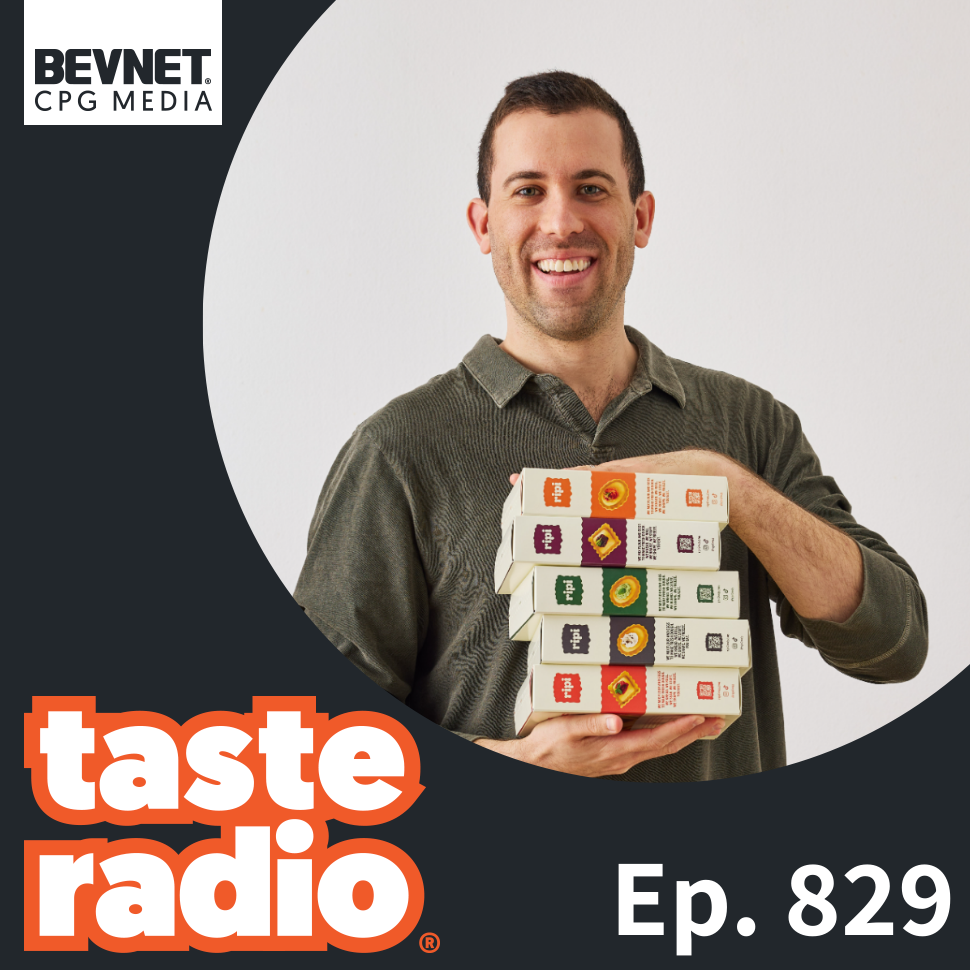
[00:00:10] Ray Latif: Hello, and thanks for tuning into Taste Radio, the number one podcast for the food and beverage industry. I'm Ray Latif, the editor and producer of Taste Radio, and I'm with my BevNET and Nosh colleagues, John Craven, Jacqui Brugliera and Mike Schneider. In this episode, we feature an interview with Kyle Peters, who recently Dew The gut-wrenching decision to shut down his high-protein ice cream brand, Carter and Oak. Kyle discussed learning lessons from his journey as an entrepreneur, reflected on stumbling blocks and pitfalls, including ones that may have been avoidable. Just a reminder, if you like what you hear on Taste Radio, please share the podcast with friends and colleagues. And of course, we would love it if you could review us on the Apple Podcasts app or your listening platform of choice. We are just three weeks away from Nosh Live and less than four weeks away from BevNET Live. Tons of excitement about the two shows. Tons of excitement here in the office at BevNET headquarters. It is palpable. I am psyched to head out to Santa Monica.
[00:01:11] Jacqui Brugliera: I can't wait to be back at the Lowe's. It feels like how many years has it been? Two. Two long years. Two years. I don't know if I remember how to, you know, talk to people face to face.
[00:01:22] John Craven: I hope you do, Jackie. Let's just start by that. You don't have to carry a phone or a screen in front of you when you're talking to people. You just walk up to someone, ask them your hardest questions, and they're going to help you solve all your problems.
[00:01:36] Jacqui Brugliera: Yeah. And I mean, I feel like there's been so many virtual communities and Slack channels and LinkedIn messages, and there's been a lot of new brands that have popped up and I haven't meet the founder. And you get to come to the event, sample products, meet the founders, re-engage and connect with the communities that we've been trying to connect through different channels online. So exciting.
[00:02:00] Mike Schneider: And don't forget about all those investors that we've got coming to both the events, as well as the large strategics and plenty of great stuff there, no matter what role you serve in the industry.
[00:02:13] John Craven: It's gonna be three great events. We're starting off with Brewbound Live. We've got Nosh Live. We've got BevNET Live. Brewbound Live kicks off with a party at Juneshine. We've got a great party at Firestone Walker. There's gonna be great opportunities to network for anybody in the beer industry and beyond. I mean, I'm pretty psyched about that event to kick things off. We also have the Cocktail Showdown, Jackie.
[00:02:36] Jacqui Brugliera: Yeah, we have the Cocktail Showdown, which will be on the Sunday before BevNET Live on December 5th. So it'll be the afternoon on Sunday. Excited to see that. I know we launched the Cocktail Showdown this summer virtually, so now we'll actually have an in-person competition to kick off kind of BevNET Live.
[00:02:56] John Craven: The Cocktail Showdown is ending just as the welcome reception for BevNET Live is beginning. And if you have a ticket to any of the three events, come to the Cocktail Showdown. It's going to be awesome.
[00:03:06] Ray Latif: Yeah, if you like cocktails in any way, shape or form, definitely be at the event because there'll be sampling opportunities for all the 10 participants as part of that competition. And you're going to try some really, really tasty stuff.
[00:03:19] Jacqui Brugliera: And you can go to our website, go to BevNET.com backslash events. You will find all of the three events and all of the competitions listed, and you'll be able to find out more information regarding the agendas, registered attendees, and anything else as far as Dumplings And the room block. So go to BevNET.com backslash events to learn more and register.
[00:03:41] John Craven: And don't wait, the events are right around the corner.
[00:03:45] Ray Latif: Now, for folks watching the video of this podcast, you'll notice that I am not in my typical setting. Normally, I'm in my sunroom at home in Brookline with my radiator behind me, a nice bookshelf to my left, but You know, John Craven and Mike Schneider and the team here at BevNET were so kind to set up a brand new room, which slightly resembles a lounge in which I'm able to record. It's very dark in here, with the exception of the beautiful light shining on my face. It might be too well lit, given that, you know, I'm very vain about my appearance. But no, in all honesty, this is one of the new highlights and bonuses of working here at BevNET headquarters is this beautiful studio that I'm now in. And yeah, I feel like it looks nice. I feel like I'm comfortable.
[00:04:37] John Craven: We thought you should, you know, as the host, you should be the one who at least, you know, we strive to have you look the best. And Jackie was just out doing you week after week.
[00:04:44] Jacqui Brugliera: I set up my own studio.
[00:04:49] Ray Latif: Well, we're all recording from BedNet studios at this point. Although I think my studio is more of a studio. You guys are still recording from your offices, with the exception of Jackie. Jackie's in... What is your office? This is my office. Yeah, that's her desk.
[00:05:02] Jacqui Brugliera: Yeah.
[00:05:03] John Craven: I mean, everybody who records has a studio office now.
[00:05:08] Jacqui Brugliera: Yeah.
[00:05:10] Ray Latif: Yeah, no. You know what else this room would be great for? Sipping Negronis. And there is a picture, there's a poster of Campari cocktail on the wall. So I feel like it's perfect for that kind of setting. I guess it's perfect for drinking anything in here. It's just a nice kind of like loungy area to just relax and sip on a beverage. Perhaps body armor. Perhaps you could sip on a nice cold sports drink. Now it's timely talking about body armor, given that Coca-Cola recently announced the complete acquisition of the brand for $5.6 billion. Billion? Billion with a B, yes. Mike Schneider doing the Billions Do Austin Powers, the Dr. Evil billion. the largest beverage deal in recent memory? I think the largest bottled beverage deal that I can think of. John Craven, am I wrong?
[00:05:59] Mike Schneider: I don't think you're wrong. Certainly the biggest deal for Coca-Cola. So yeah, pretty big stuff.
[00:06:06] Ray Latif: Yeah. Incredible. Now, of course we had Mike Rapoli, the co-founder and chairman of body armor on the podcast way back in the day. And I recall him saying that we're not here for bronze medals. It's gold or nothing as it relates to the sports drink category. Now they're not there at the gold level yet. That's still owned by, or that metal is still owned by Gatorade. However, I'm sure that Mike and his team are pretty happy with $5.6 billion. Congratulations to that team. I have a feeling that much like the vitamin water deal of which Mike was also a part of, Mike Rapoli, not Mike Schneider. Mike Schneider would not be here if he was part of that deal. I might still come in. I like you guys. Lots of millionaires made in this deal with Body Armor and Coke. So just an incredible story. And I wonder, you know, on the heels of the Vitamin Water deal, we saw a bunch of new folks want to enter that space of enhanced water, getting into the beverage game, looking for that next big win, looking for that next big brand. Vitamin Water 2.0 was the catchy term that people used to describe these Well, new age is such a dated term for these new age beverages. I wonder if we're going to see a run on new sports drink brands and whether or not entrepreneurs see an opportunity to innovate in the space in the same way that body armor did.
[00:07:33] Mike Schneider: It for sure is going to have an impact, whether it will be in the form of. companies that are literally trying to chase what body armor created, or more indirectly, where I think anytime you have an acquisition like that, and vitamin water certainly was the gold standard until now, and it created exactly what I'm going to talk about for almost a decade, which is an influx of new money. I think anytime something like that shows to investors that there's a potential for a mega exit, it gets other investors and entrepreneurs excited. Now, I think comparing it to the vitamin water days and people who chased vitamin water 2.0, nobody ever created a literal vitamin water 2.0. The smartest innovations to come out of it were people who saw kind of what vitamin water stood for and applied it in other places, be it from a functional perspective or marketing perspective, or I guess execution perspective, which is sort of what I would say Mike Rapoli built on with body armor. It kind of was a lot of those lessons that were learned from building that brand that were applied to make body armor a success. But for sure, this will have a positive impact on the entire beverage space. So I don't think anyone who's a beverage company listening to this should be upset by it.
[00:08:57] Ray Latif: What was most interesting about the deal is that over the past few months, we've seen Coke shedding and divesting brands or shedding and divesting from brands. And now you see this mega deal in which they're looking for a humongous return on their investment. And it seems like it's moving in that direction. I mean, body armor is already doing over a billion dollars in annual revenue and has already become one of Coke's vaunted or part of Coke's vaunted portfolio of Billions Do brands. So it seems like, you know, they are paying a lot more attention to that volume opportunity versus the innovation opportunity that we had seen with some of their other brands.
[00:09:37] Mike Schneider: Well, I think there's also another difference, which is that this brand plays in a category that Coca-Cola clearly needs products in because of Gatorade, right? And anything that gives Coke a better position against Gatorade with both Powerade and Body Armor, that's something they're going to want to continue with. I think that's different than some of the other brands that they shed that were in categories that were either really fragmented or unproven. Again, this Body Armor story, they did something that no one really has done, which is an upstart brand that's even Dew The tiniest of dents in what Gatorade has. So no way they're going to back off of it, especially after having spent this kind of money.
[00:10:26] Ray Latif: No, I can't imagine any company would back up a Baltimore at this point. Once again, just an incredible brand. I'm excited to see where they go from here. I mean, because I think under Koch's ownership, the opportunities are endless, it seems like, particularly as it relates to distribution and international distribution as well. So fun stuff. We'll keep an eye on it, even though the acquisition happened. This is, I think, just the beginning for a brand that is one of the most remarkable we've seen in many years.
[00:10:52] John Craven: There's also an exclamation point to put on this, Ray, which is that Body Armor didn't come into the market going, hey, we're the first, best and only sports drink. They came into a market that already existed. They did something a little bit better than what was already there. And that's their story. And we advise brands all the time to come in and try to make a mark in a brand new market with you know, a new ingredient and just way too many variables for, you know, consumers to sort of understand, um, to not do that. And body armor is a great example of not doing that. They're just, they, they built a great brand. It's easy to understand some better for you ingredients. And they won. And you said, you know, Mike's not accepting, uh, anything less than a gold medal here, right? This is the largest acquisition we've seen. So he'll take that as his gold.
[00:11:41] Mike Schneider: I think he got a diamond medal, but you know, He got the diamond metal. Isn't it platinum? Isn't it platinum after gold? Or just a big like 30 carat diamond, whatever.
[00:11:53] Ray Latif: Yeah. Well, Mike, you bring up a good point because the next brand I'm thinking of is a brand called Rise Brewing Company, and they made their mark with nitro infused coffee at a time when there weren't a lot of them on the market. I mean, we see more than a few these days, but Rise Brewing came out with that product and have really built a great platform around it. We recently had a visit. from Jarrett McGovern, who's the co-founder and chief creative officer of Rise Brewing, to the office at BevNET headquarters, dropped by to showcase some new products, of which Mike and John got to try some. I wasn't in the office at the time. Jackie, did you get any in San Diego?
[00:12:33] Jacqui Brugliera: Yeah, we got samples. I've been sipping on it all week.
[00:12:36] Ray Latif: Nice, nice. So what are these new products?
[00:12:40] John Craven: Well, the interesting thing about these new products, Ray, is that they're multi-serve packs and they don't have nitro. So like you said before, Rise came on the market with a couple of different variables. So they came on with cold brew and nitro. So those are two things that a consumer has to unpack when they see it on the shelf. They're like, do I want nitro? Do I want cold brew? Do I know what cold brew is? Do I know what nitro is? And these multi-serve packs are non-nitro. So again, another sort of change to their messaging, but one that consumers are going to like. I mean, this is really tasty stuff we get to try. The ones I have in my hand right now are vanilla and mocha, but there's also straight cold brew in a multi-serve pack. And I think the other one is their original flavor oat milk.
[00:13:29] Mike Schneider: these products have been out for a little while. I think the latest update was changing the packaging to make it clear that the oat milks and the lattes were two different products, which I guess once, uh, yeah, thinking about it, that's probably a good thing, but, uh, yeah, it was pretty easy to confuse them because they were, you know, using the same, the same colors and the same color coding, and it would be so easy to just pick up.
[00:13:53] John Craven: It's the same package too. So it'd be really easy to just pick this up and make a latte with it and go, Oh, it already has coffee. That'd be a super latte.
[00:14:03] Ray Latif: Well, clarity in branding and packaging is critical. And there was recently some confusion between a PepsiCo-owned product and that of Rye'Rise Brewing Company. PepsiCo had a product or a line of products called Mountain Dew Rye's, which apparently caused some confusion among retailers and consumers as to whether or not Rye'Rise Brewing Company was in the energy business or PepsiCo-owned Rye'Rise Brewing Company. And Rye'Rise Brewing Company filed an injunction. to stop PepsiCo from using Rise in any of their products, and they were awarded that injunction. PepsiCo had a number of days to stop using that trademarked term, that trademarked name. You can read all about it on BevNET.com, the article in full. really interesting story, and I'm really surprised. It is surprising, especially when you read through the article, that PepsiCo did something like this because, I mean, it's pretty obvious that Rise has been around for some time, that they do sell highly caffeinated beverages, and the fact that Rise and PepsiCo had discussions about partnerships or potential partnerships, it's just all very strange that this went down this way.
[00:15:17] John Craven: They also have armies of attorneys at PepsiCo too that, you know, are looking at these kinds of things all the time. And I mean, it's probably just, they assess the risk and ask themselves whether a company the size of Rise is going to have enough, as I say, bologna sandwiches in the refrigerator to fight that sort of thing. I mean, because there's always a danger that when you file a trademark, you stop being a product company and you start being a litigating company. We've seen it in the past from companies and it can be a big distraction for your business.
[00:15:51] Mike Schneider: Well, it also generally hasn't worked out so well in the favor of entrepreneurial brands who've been the David against the Goliath, you know, either from a victory perspective or, you know, I mean, obviously these things are really costly. To me, it's just interesting. Like I look at, I look at the Pepsi Mountain Dew Rise and I'm just kind of like, what the heck is this? And I know it's got, you know, campaigns behind it and all that, but it just, it's. I don't know. I grew up as a kid when like Mountain Dew was like this, you know, kind of alternative sports, uh, you know, drink and this derivative brand that they've created. I'm like, not sure what that is and what it has to do with the original brand. So I guess, you know, where I'm going with that is it's interesting that like Pepsi chose that word as opposed to just something else that was, you know, maybe a little more in the, uh, clear, if you will, but. Hopefully this works out okay for Rise too in the long run. You know, it certainly has drawn a lot more attention to the word right now. So we'll see what happens.
[00:16:57] Ray Latif: Well, PepsiCo is going to have to change something pretty soon. I assume they're gonna have to throw away a lot of cans, which is unfortunate, but hey, that's what happens when you use someone else's trademark. Now, one place you may see Rise Brewing Company products and probably not Mountain Dew Rise products is Earth Fare. And I'm excited because we have one of the high-ranking executives from Earth Fare joining us at Notch Live. Jackie, who is this person?
[00:17:24] Jacqui Brugliera: Yeah, so Gavin Conkle he is the VP of center store merchandising of Earth Fair, so if you haven't heard of Earth Fair it's a 23 store chain grocery store chain and mainly southeast United States. I've frequented Earth Fare a bunch because my parents live in Virginia, so it's always my favorite spot to shop. But Gavin, he oversees all of merchandising and he will be at Nosh Live speaking, and he will also be a judge of the Pitch Slam. So the emerging brands participating will be able to get some feedback from Gavin and pitch their products. So we're excited to have him join the lineup and talk about his strategy for the retailer.
[00:18:06] SPEAKER_??: Awesome.
[00:18:07] Ray Latif: Very exciting stuff. And you know, he's gonna be speaking on stage. He's going to be judging the pitch slam, but he'll also be on the floor for brands to talk to. How do I get an airfare? What are your, what is it retail are looking for a new brands? You know, how do I succeed in the natural channel? So I think he's just as much a resource for folks who are attending as a speaker on stage and a judge for the pitch slam. So very excited to have him join us. Now, one other thing that I'm really excited about Nosh Live, and I've mentioned this before, are the samples. Food samples are going to be plentiful, and I'm excited to try some of the innovative products that are being released by the entrepreneurs attending the events. It's a great way to build awareness for your brand, for new products that are going to be released in 2022. And, you know, it's a great way to just share food, sharing food. just on its own, it's just like a great tradition. You know, being able to break bread with people, especially if it's your product, especially if you Dew The product. So I feel like that's, uh, it's just, it's just a good way to connect with folks.
[00:19:08] John Craven: Right. It doesn't have to be bread.
[00:19:12] Jacqui Brugliera: And we have a long list of food brands that are registered for Nosh Live, including Harmless Harvest, Honey Mama, Hershey, Yum Earth, Nature's Bakery, talking about bread. So you can come to the event, sample products from these brands and connect with the founders.
[00:19:30] Ray Latif: Yeah, I also expect that we'll be having some trough hot sauce at the event as well, given that Nick Gageloonie and Nick Guillen will be joining us on stage. Yes, for sure. So psyched for that. Absolutely, absolutely. Well, I am absolutely psyched to break into the latest offerings from Fly By Jing, released this week. This past Tuesday, Fly By Jing has broken into the frozen aisle with Dumplings And'm holding in my hand one of three new varieties of Dumplings And Pai Bai Jing has launched. This one is the pork, shrimp, and scallop dumpling. They also have, if I can pull it out of my bag, pork, shrimp, and mushroom Dumplings And I'm sure Mike's favorite is going to be the new pork soup Dumplings And well.
[00:20:16] John Craven: Oh my God, the xiao long bao are incredible. I've actually tried them. I got them a tad early. Wait, you got them too? Yeah.
[00:20:24] Mike Schneider: Oh, nice. Good for you. Secret vial of dumplings?
[00:20:28] John Craven: Basically, secret vial of Dumplings And, they sent them, asked me to try them, and they are extraordinary. I mean, the mushrooms are snappy, the meat tastes like it's really high quality stuff, and they taste, you know, mad authentic too. Obviously, that's what you'd expect from Fly By Jing, but super high quality dumplings.
[00:20:50] Ray Latif: Yeah, it's interesting the timing of this release because it reminds me of something that I spoke to Vanessa Pham, who's one of the co-founders of AumSum about. And I asked her in our interview for Taste Radio why she launched with these starter kits, why she and her sister launched with these starter kits. instead of a ready to eat meal or a frozen product or something like that. And she said, you know, we wanted to prove out the concept. We wanted to prove out the brand and do it in a way where you could sell everything direct to consumer, learn from that consumer, and then possibly get into other food products. And I think that's kind of what Flybudging is doing here. They started out with their chili crisp, proved that that's something that does have traction that they could build upon. And now they're moving into these frozen products, which according to Mike are as good as anything that you could taste. And once again, Jing Gao, a really amazing entrepreneur. In fact, her name came up as well in my recent interview with Andrew Zimmer, who has known her for some time and really praised everything she's doing in terms of reclaiming that narrative on Chinese cuisine.
[00:21:51] John Craven: In my interview with Jing Gao, we talked a little bit about some of her ambition. And, you know, she wants to be the next big Chinese food brand. And much like the Pham sisters is looking to just take the attitude about Asian food to a new level of it can be better for you.
[00:22:09] Ray Latif: Yes, well, John Craven is literally watering at the mouth. So as soon as we're done with this recording, we're going to heat some of these up. Jackie, they all have pork in them. So I don't know if you're going to be able to try these. Can you like remove the pork from the dumplings?
[00:22:21] Jacqui Brugliera: Is there a shrimp one? Did you say there's a shrimp one?
[00:22:24] Ray Latif: There is. There's a shrimp, scallop and pork one. There's a pork, shrimp and mushroom one. There's no more pescatarian option.
[00:22:31] Jacqui Brugliera: I know. There'll probably be one Dew The road.
[00:22:34] John Craven: I mean, those are the most successful when you go eat dim sum, the xiao long bao, the soup dumpling is like a favorite. And the other two are super popular varieties of dumplings. So I think the vegetable ones have to be coming soon to a theater near you, Jackie. So just keep your bananas peeled for that. Fingers crossed. Yeah, fingers crossed. Because you deserve to have them too. They're so good.
[00:23:03] Ray Latif: and what to watch down these dumplings with, of course, some Amerino Spritz. It's a new product from the folks behind Ramona. a brand of canned wine spritzers. Jordan Salcedo is the founder and CEO of the brand. We sat down with Jordan for an interview in episode 80 of Taste Radio Insider. We had an insider show. It's called Why These Two Things Matter the Most When Building a Disruptive Brand. A disruptive brand describes Ramona pretty perfectly. As far as wine spritzers go, there's always been this sort of stigma of, oh, this is a lame product. This is a, you know, a lesser than product. And she's really elevated the idea of wine spritzes and wine in a can in particular. So great job, Jordan, once again, coming out with this Amarino spritz. John Craven, I have one with your name on it as well.
[00:23:56] Mike Schneider: Thanks, Ray. We also have some alcohol-free spritz up here. Yes You can. Yes You can.
[00:24:02] Ray Latif: Is that what it's called? Oh, look, Jackie. Yes You can. Except for you, Ray. No sharing with Ray. It's called, yes, the brand is called Yes You Can. Yes You can.
[00:24:12] Mike Schneider: Yes You can.
[00:24:12] John Craven: It comes from Australia.
[00:24:14] Mike Schneider: Yeah. Alcohol-free dark and stormy and alcohol-free spritz. How about that? I haven't tried it yet, but I kind of like the packaging.
[00:24:24] Ray Latif: Yeah, I mean, it's pretty standout packaging. Yes You can right on the front of the can one word on top of the other. That'll definitely stand out on shelf. I have more alcoholic ready drink cocktails though, so we're going to go back and forth here. Russian Standard, the latest legacy alcohol brand to get into the RTD business. They have a new Moscow Mule. It's a made with vodka, ginger, lime and mint. I have not cracked one of these open, but it looks pretty good and I feel like a Moscow Mule. really fits well into the RTD segment because you are expecting a little bit of a sweeter kind of cocktail. And I think that's been the knock on a lot of these products is that they are sweet, they're cloying, they're too much. But again, I think a Moscow Mule, you're kind of expecting something that's going to be a little bit sweeter. So I'm excited to try that product as well.
[00:25:13] Mike Schneider: Yeah, I think any of those just side note, I mean, any of these products where the experience from the original is the same when you go RTD seems like it has a better, at least immediate chance than the ones that are kind of like a re-imagined version of some other drink that doesn't normally have bubbles in it, for example. So I totally agree. The Moscow Mule, Dark and Stormy, all those types of drinks should translate really well to RTD and already are.
[00:25:40] Jacqui Brugliera: Yeah, I think another one is a hard tea. So this is a nitro hard tea from Vital Sign. And this one's blood orange yuzu with hibiscus rooibos tea. So I know that everyone knows, you know, twisted tea and some other hard teas, but we're seeing more and more kind of craft. hard teas. And I think the nitro aspect of it is also something new and interesting that I haven't seen with a bunch of canned tea.
[00:26:09] John Craven: I like the look of the, of the can of the logo as well.
[00:26:14] Jacqui Brugliera: It looks pretty cool, but I, it's really, really pretty. It kind of reminds me a little bit of, um, Novo Brazil brewing their packaging with the right colors and kind of like, um, a little bit of a collage going on on the front.
[00:26:26] John Craven: Now, how evident is it that that's alcohol? Because when I first saw it, I wasn't sure.
[00:26:32] Jacqui Brugliera: Yeah, it's not. And it's pretty small on the front. Um, it does say in small letters, nitro hard tea, but outside of that, it looks like a normal, you know, just canned tea.
[00:26:43] John Craven: It has a bit of a rise vibe to it too. Yeah.
[00:26:46] Jacqui Brugliera: Yeah.
[00:26:47] John Craven: Cause it's the nitro. And again, when you have nitro in your, in your package and you want to be associated with, or look somewhat similar to the category, that's kind of what, what you do, you know, it happens. And speaking of coffee, I got some new stuff in from Lottie Da. This one's the lavender oat milk latte with hemp extract. And we also got a matcha and coffee, as well as golden turmeric. So I Instagrammed about these guys on a recent trip to Erewhon and they sent some samples to the office. and Biotic did the same. And this is a bubbly probiotic cold-pressed ginger beverage. A lot going on in this thing. It's kind of, if I had to compare it to something else that I've had before, it's like a super light kombucha, almost.
[00:27:39] Ray Latif: Interesting. It definitely looks like an Erewhon product. And if you're not sure what that means, listen to our episode with the chief growth officer of Erewhon, Kabir Jain, published this past week. It's called Nowhere Is There A Place Like Erewhon? An insider explains why. And it's chock full of great information about why they choose certain brands to be on their shelves, the importance of product discovery, how their cafes fit into their business, and what the long-term growth strategy is for the retailers. It's, I hate to pay. Cause I always say, I sound like I'm patting myself on the back when I say these things, but it really is a great interview. It's a great episode.
[00:28:19] Jacqui Brugliera: I was actually just in Erewhon over the weekend because I was in LA and I found an interesting product. So I love, like, I think my two favorite functional ingredients right now are mushrooms and seaweed. And I found this product. So have you guys heard of sea moss gel? Because it was the first time I had heard of it. And I found a brand called Akasha, A-K-A-S-H-A, and they make a sea moss gel. And I guess when I was researching it, what was that?
[00:28:49] Mike Schneider: So what do you do with it?
[00:28:50] Jacqui Brugliera: So you can either put it on your skin if you have like eczema or like a rash, but you can also ingest it. And it's really good because it has live bacteria, minerals, and fiber. And as soon as I posted on my Instagram, I got a lot of feedback from people saying, Oh yeah, I've heard about this or I've seen this and I've heard about all the health benefits, but I haven't been able to try it yet. So something interesting and new that I hadn't seen before.
[00:29:14] Ray Latif: So first of all, I've heard of something like that. It's like, well, I guess like aloe drinks, they had the same kind of thing back in the day, or maybe you could shower and aloe drinks. Yeah.
[00:29:22] John Craven: When I saw it on your Instagram, Jackie, I was like, what did she find a new sustainable hair product or what's going on there, Jackie? Yeah.
[00:29:32] Jacqui Brugliera: A lot of people put it in like chia seed puddings or they put it in, um, like if they make a shake or something like that, that's kind of how they're using the product or eyebrow wax.
[00:29:43] Ray Latif: Just kidding. Well, I think the Wrong Thing, it sounds interesting. I guess the Wrong Thing I would say is that it doesn't sound very indulgent. It doesn't sound like an indulgent type of eating experience.
[00:29:55] Jacqui Brugliera: It's like pure function.
[00:29:56] Ray Latif: Okay. Well, for pure indulgence, we've got Eastern Standard Provisions new Belgian waffles, these gourmet waffles. Gourmet Lige Belgian waffles is actually how they are marketed. They were recently named as part of Oprah's favorite things list of twenty twenty one that's an impressive list to be on our Eastern Standard provisions being a boston-based company based on the restaurant that used to be in kenmore square and force a close during the pandemic but these these products are killer i mean everyone knows we love bilging waffles your Taste Radio The only thing that I would say is you got to eat them fast because they're not meant to be sitting around for much longer. They ask you to eat it quick or freeze it. I have no problem with eating it fast, though, because these things are pretty darn good. I almost cursed, but they're great.
[00:30:43] John Craven: Are you going to be able to pull an Oprah here and be like to everyone in the office? You get waffles. You get waffles. You get waffles. You get waffles. Is that happening? I have two, so I don't think so.
[00:30:53] Ray Latif: Break them up. There we go. Exactly. Exactly. Alright, it's time to get to our featured interview for this episode. As I mentioned at the top of the show, Kyle Peters is the founder of Carter and Oak, a once-promising and innovative ice cream brand that recently closed its doors. Launched in 2016 and originally called Six Pack Creamery, Carter and Oak was positioned as a better-for-you, high-protein ice cream brand made with no added sugar. Despite a pandemic-induced pivot, one that significantly altered the company's business strategy, Carter and Oak made strides in the retail and distribution of its products over the past year. Nevertheless, Kyle had come to a crossroads, one in which he saw no other option than to shut Dew The business. In the following interview, I spoke with Kyle about his decision and the reasons behind it, why he urges entrepreneurs to focus on improving their margins, why aggressive patience is a virtue, and why he's comfortable with the F word. It may not be the one you're thinking of, though. Hey folks, it's Ray with Taste Radio. Right now I am sitting down with Kyle Peters, who's the founder of Carter and Oak. Kyle, how are you?
[00:32:10] Taste Radio: Good, Ray. How are you?
[00:32:12] Ray Latif: I'm doing pretty well. Thank you so much for joining me today. I know you have been quite busy over the past two, three weeks. rollercoaster of emotions. I'm sure you penned a really compelling LinkedIn post a few weeks back. It was about, actually, as of this recording, it was only about two or three weeks ago. And a lot of reaction to it. I assume some listeners right now know what I'm talking about. But for folks who don't, what was that piece all about?
[00:32:40] Taste Radio: Yeah. So a few weeks ago, Dew The tough decision to announce that I was closing down Carter and Oak after five years. And really, you know, I felt that I know I'm going to end up stepping into another role in food and in the food and beverage industry. And I didn't want people on LinkedIn or any really anywhere to kind of all of a sudden see me going from being an ice cream man the way that I was for the last five years to now talking about something else and everybody kind of being like, oof, you know, I guess that, you know, I guess that didn't really go well for him. maybe come up with their own narrative, their own ideas, and this and that. So my thought was just like, I'll make this post, can wrap it up myself. Maybe it'll be cathartic, help me through the process and everything else, and maybe I'll get a couple of referrals from it. So who knows? Put out the post on a Monday, and next thing I know, it was getting far more interaction and traction than I ever expected. It's been great. I've connected with a lot of people who are going through the same thing as myself. considering it or, you know, have just done it as well and having the same emotions. And, you know, I'm also getting some great opportunity to meet with other founders that are early on in the process and either looking for co-founders or just consulting advisory work, whatever it might be, and then also getting some really great new career opportunities. So it's, it's been a mix and, uh, it's definitely making a tough situation and process a little bit easier.
[00:34:00] Ray Latif: There was so much passion in that post. Definitely hard on the sleeve, open book. And I think a lot of people felt that I felt that. And it's one of the reasons I wanted to speak with you today. Obviously, you know, nobody really wants to talk about how their brand didn't work out, but I'm really glad that you're sitting down with us. Cause I think it's really beneficial for folks listening for entrepreneurs who are in similar situations as you to hear about, you know, how you're making your way through this process. Let's start from the inspiration behind Carter Note, because that is a story of passion as well. It's a very personal story. Can you talk a bit about that?
[00:34:36] Taste Radio: Yeah. So five years ago, a little over five years ago, my mom passed after a seven-year battle with stage four colon cancer. It was August 1st, 2016. And during that time, I saw that after her treatments, she would have a sore throat, lack of appetite, you know, sensitive to smell. And so cooking like a meal and, you know, eating real food is very difficult for her. That's something that would happen very often. And so after her treatments to soothe her sore throat, she would be eating ice cream and ice pops and different products like that, but always high in sugar, high in fat, made with artificial ingredients and different things that weren't really helping her body nutritionally and weren't helping her recover from the rigorous treatment that she was going through. And on top of that, she was losing weight pretty rapidly. And so oftentimes, it wasn't getting the nutrition that she really needed. And so I wanted to make a product that blended the comfort and indulgence of ice cream with the nutrition that she really needed. And it should be recommended protein shakes and different drinks. they just weren't appetizing to her, wasn't appealing, not something that she really wanted to dive into. And so, you know, ice cream was always the go-to and wanted to make a product that could really serve people like my mom and kind of bridge that gap.
[00:35:48] Ray Latif: You started the company five years ago. It started out with a different name, similar positioning to what CardioNote became, though. What was the name and what was the original positioning for the brand? Because it felt very masculine.
[00:36:01] Taste Radio: When I started in 2016, I was 23, never started a food brand before, never went through the exercises of figuring out branding and just all that type of stuff, went into a totally blind, and originally started and branded the company as Six Pack Creamery. I thought it was funny, cute, made sense. Enough people I felt were telling me that they liked it and it made sense. And so that's like, that's kind of where it started. I felt like, oh, this is cool. Very different. It's fun. Our logo is like a funny kind of like flexing cow. And as time was going on, I kind of was realizing that it's not really aligning perfectly with, with the market I wanted to serve of healthcare and everything else. But at the time and being early on and so inexperienced, I was like, oh, it's doing good enough, right? We had initially a launch in the second largest franchisee owner of GNC. So we were in a handful of GNCs in PA and New Jersey and got some great opportunity in local retailers and grocery stores and stuff like that. But ultimately, when 2020 came and everything got shut down, we were starting to really pick up after a previous pivot of switching over to focusing on a soft-serve mix and really diving into food service. Once everything got shut down, I had to take a step back and look at like, you know, this branding and the messaging and everything else isn't, isn't really speaking to the community and the market that we want to serve. Um, it doesn't speak to the premium nature of the product that we're selling. And so after having learned so much over the previous three, four years, it was kind of like, all right, I need to take everything that I've learned now and really actually do this. Right. And so, you know, ultimately that's, that's what we went into.
[00:37:37] Ray Latif: And to be clear, the move to Carter Oak or the rebrand to Carter Oak came with this return to pints are our focus, packaged ice cream is our focus.
[00:37:45] Taste Radio: Yeah, yeah. So half pints. We did eight ounce, half pints of ice cream. And that was, you know, like I said, because of COVID, you know, we were originally going to be serving NFL teams and Sodexo universities with our soft serve products. You know, once COVID hit, I started getting inbound messages about single serve options and kind of to go options that were going to be more COVID friendly. Yeah, I heard that. And like, as I was making the change to Carter and Oak, I also had to make a change to a different product, right? Because we couldn't sell soft serve anymore. So it was like, I felt like I was starting completely from scratch. And so yeah, I made that change, developed the 8-ounce half pints. Again, the product had gone through a lot of iteration at this point. So it was significantly softer out of the freezer, a lot more friendly to the consumer. And as soon as we made that switch to the 8-ounce half pints, We started selling to the Baltimore Ravens. We started selling to the Washington football team, started working with a local DSD in Philadelphia, got into a luxury retirement community in the area and started actually serving health care like we wanted to. And Velocity was great in all those places that we were at. So it was definitely the right move and maybe should have made it sooner. But I think that kind of things happened the way that they were supposed to.
[00:38:51] Ray Latif: There was an entrepreneur that I spoke with for the podcast a few years back, and he said, young companies often live at the edge of success and extinction. And I think that's something that a lot of entrepreneurs can relate to. But how do you know when you're closer to extinction than success?
[00:39:08] Taste Radio: I mean, that's a great quote. I think it's, it's pretty true. But I think that as a young company, you can't, you need to have a healthy dose of understanding that you can go out of business for a multitude of reasons. But I think you also have to have the confidence and almost, you almost have to be like naive enough to like ignore it. Right. Cause if you just are constantly focused on like, Hey, we can go out of business any day now, like just, you know, Wrong Thing that changes and we're done, you're not gonna be able to focus on the things that need to get done. I think that ultimately when it is time and when you have to make the tough call, you know. It's different for everybody. For me, my reasoning was, we were actually selling really well in the stores that we were in. We were moving great in the food service locations that we were in. It really came down to a margins issue. depending on what your reason for possible extinction could be, it's going to be different for everybody. But I think that you have to have a healthy dose of being naive and not focusing on the extinction part too much, or Yes You're never going to make it to success. Like I said, you worry too much. You're not going to be able to focus on what needs to get done. You can see the writing on the wall when something starts to inch you a little bit closer to extinction than what might be traditionally comfortable for an entrepreneur that's OK with risk. It's tough for sure.
[00:40:25] Ray Latif: When did you really start to get concerned? When did you really start to get worried? And what steps did you try to take to fend off this extinction?
[00:40:33] Taste Radio: Yeah. So, you know, it kind of came about in a really interesting way. Since I started the company, I was very focused on understanding how we could operate at scale. You know, from day one, I was, you know, I sourced all the ingredients, found backup suppliers, multiple backup suppliers, so that I would have a good idea of what my cost of goods would be. And then I was even thinking ahead to, you know, very far ahead from where I was and being like, you know, how much is the price I'm going to be for these ingredients at half truckloads, at truckloads? And then I was always making calls to co-packers to try to figure out, hey, if we were producing this in a year, what do we think that the cost could be? What's the tolling fee? What kind of factors do I need to account for to roughly get a cost of goods? Because if you can't hit the margins you need to hit, if you can't have healthy margins, you're likely not going to be successful. I mean, a lot of companies won't focus on margins and won't focus on profitability, will really drive top line and their goal is to get acquired. I don't think that's wrong, I think that that just wasn't the setup and path that I was necessarily trying to take. Maybe I will in the future, but with Carter and Oak, that just wasn't the goal. And so I think that for me, in doing that, I started to really hammer down on what my margins were going to be as we grow over the last three months. we had opportunity for a multi-unit rollout with a large hotel chain. We had onboarding in process for Sodexo and Aramark to get into higher education and hospitals and healthcare. In doing that, we were going to scale up. I was going to have to move to a co-packer because I was still in my own smaller facility. I started getting the numbers back and seeing, hey, this doesn't look great. It looks like we're actually going to have to We're going to be losing margin from scaling up to a co-packer and moving it out of house, which is less than ideal. Ideally, you're moving to a co-packer and saving a little bit of money, and that wasn't the case. Even when I spoke to a couple other co-packers, it wasn't looking great. The numbers have to be at a specific point in healthcare to even be considered to be brought in. They're very sensitive to pricing and we're willing to pay a little bit of a premium, but not as much as we were actually going to be. And then actually, you know, something I'm not going to get too deep into, but one of my best friends actually passed away a little bit before I announced my decision to close Carter and Oak. And that week after was kind of the first week I'd really taken like a full week away from the business. This year was the first year that I'd been to the beach. I went for one day, first time going to the beach in like probably two or three years. And so I took that full week away. And when I came back, I just remember I was laying in bed, opened up my laptop and started reading an email, thinking about the numbers and all that type of stuff, and I just started crying. It was really because my body knew what had to happen before my brain really did. I just felt that this was going to be the end. We were fundraising at the time and I had some commitments and stuff. I was thinking through and I was just like, I can't take these people's money if I know that these margins are going to be trash. I can't passion and will my way to better unit economics. I just can't. This supply chain is a supply chain. I'm not blaming it on the COVID factors of making the supply chain so volatile and everything else. I think that with COVID, without COVID, this can happen. And it does happen. But I just think that I wasn't comfortable raising the money from people, knowing that I was going to be setting them up for a less than ideal business situation, financially. I wasn't able to sleep at night, you know, knowing that I'd be doing that. So I didn't want to compromise my integrity or my values for that.
[00:44:16] Ray Latif: Well, hindsight's 20-20, and it's obvious you can look back and say, well, if we had the margins right from the beginning, things might've been different. Or you might've said, we'll never get the margins right. I'm just not going to get into this business. You know, either way, you don't know because You can't go back in time. But in your LinkedIn post, you mentioned something that I thought was really intelligent and really important for entrepreneurs to hear, which is you've got to get margins right, quote, from the jump. Easier said than done, but what could you have done differently to have gotten margins right from the outset?
[00:44:56] Taste Radio: It was a mix of things. A lot of it is not understanding where margin is going throughout the entire process of you making your product and getting it on shelf to sell to consumers. I was poisoning the entire pricing architecture based off the ideal setting. A grocery store is taking 40%, distributors only taking 25%. If those are locked in, then we're pretty much good to go as long as we scale up and we can save a few bucks on this ingredient and that ingredient and increase our margin a little bit, then we're good. I think I leaned on that a little bit too hard, because the reality is, Sure, it's likely 25-ish percent for a distributor and grocery stores are generally looking at 40%, give or take. But at the end of the day, you have to do promos. And if you can't operate efficiently and be successful on your promo price, you're not going to be successful. most likely, right? I'm sure there's going to be brands that can totally prove that statement wrong, and I applaud them. But I think for a general rule of thumb, if you can't be successful your promo price, you're probably not going to be successful long term, because you have to have that insulation of margin, right? And you're not going to be able to make it at a perfect price right from the beginning. But I think that you can think through the process. And like I said, call those suppliers, call those co-packers, do as much possible as you can and learn where the potential risks of chargebacks and understanding those different types of things. And in food service, understanding rebates and that whole world of economics that you just have to understand to be able to price realistically and just have the understanding. And I didn't have that in the beginning. It's tough. It's like, you don't know what you don't know. And you can try and learn as much as possible. But I think it's those people that are kind of OK with not knowing those things. I feel like people say it all the time. If I knew everything I know now, would I have ended up and started this business? I don't know. I'd like to say yes. I really don't regret a single thing. And I'm Us Happy that I did what I did and had this experience and learned what I learned. But I think that some people might go through that type of stuff and be like, no, no way. Way too tough. It's not for me. So I think you have to be a little bit naive to it and just take a chance. And sometimes things just do work out. Yeah, I think having a better understanding of chargebacks, rebates, and understanding the promo structure at grocery stores and retailers and stuff, having a better understanding of that would have positioned me to price appropriately and maybe see like, hey, this product with the ingredients that I want to make it with, we just might not be able to get to a realistic price point that works. But I was incredibly stubborn when I started. So I could have heard a million recommendations in that sense and probably would have ignored them all and still started anyway.
[00:47:39] Ray Latif: So there might be some folks listening right now who are like, okay, I'm not familiar with chargebacks. I'm not familiar with promo pricing. I'm not familiar with rebates or any of that stuff. Not having that information, could you suggest or what would be your suggestion for a reasonable margin for you to operate effectively? And I know categories are, you know, obviously you have different margins for different categories, but in general, what would you have set out as a goal for margins from the outset?
[00:48:06] Taste Radio: I mean, for me, it was always with a distributor involved, I was looking for 40%. And I had some really great mentors in my life and some that have run very successful brands that are nationwide that a lot of people would probably recognize. And he was always telling me like, if you can't get 60% margin while delivering direct to a store, you're going to have a really tough time. And that's obviously off promo, but his whole thing was like, make 60% margin if you're delivering directly to a store, not including promos or anything else, and you're in a good place, right? Because then that 60% can be absorbed. And maybe when you're on promo, you're making like 35% or 32%. So you're getting to low 30s and below 30, that's kind of like a danger zone. And that's what I've just kind of learned and picked up from my mentors and from my experience and everything else. And so maybe you do have to be below that for the time being. And every business is different and everybody's situation is different. So it's tough for me to give a hard rule on that. But I think a general rule of thumb, 40% with a distributor is great. And if you're delivering direct to a place, you want to shoot for about 60.
[00:49:13] Ray Latif: Yeah, I've always heard that 40% is sort of the baseline for where you want to be. But you have to be patient, too. I mean, it's not going to happen overnight if you're not meeting that 40% threshold. And that's also something you brought up in the LinkedIn post, which is patience. The quote was, have aggressive patience. Aggressive patience is not a term I've heard before. What do you mean by that?
[00:49:36] Taste Radio: Yeah, I think it's funny. I was just talking to my friend about this yesterday, but it's understanding the task that needs to be done. And sometimes, especially in this business, things just take time, whether it's sales, whether it's hiring, whether it's finding the right supplier, the right co-packer. You have to be patient and understand, hey, this takes time. And I think framing that and framing different tasks with that, hey, this is going to take a little while, and you just have to be OK with that. It'll make the process a little bit easier. Things are not going to happen tomorrow. And as a founder, people don't work on your schedule, right? You're willing to take a call at 11 PM at night sometimes. You'll make phone calls on the weekend, do whatever it takes. And the world does not operate on an entrepreneur's schedule. And the aggressive part is you have to stay on top of it, right? Be organized, have your priorities in check, and don't let things go. You'll constantly be checking that, hey, I made a follow-up with this person a week ago. What's a realistic time where I'm not annoying, but I'm still being proactive and keeping on top of things? That's the aggressive part, right? It's the way that you organize, the way that you think through things, and the structure you're giving yourself. But then the patience is, Everybody on the outside should see as if you're calm, cool, and collected, right? You shouldn't seem scattered. You shouldn't seem antsy and scattered and everything else. It's focused. It's being proactive on your follow-ups and everything else that you need to do, but just having the understanding that this is going to take time. It took me seven months to get into Mom's Organic Market from the first email to the time I got the okay that we were going to get a test. It was two years of Sodexo before things ended up really working out. Sometimes it just takes that long, right? Timing is a huge factor in this industry. And sometimes you have to be okay just waiting for that right time.
[00:51:18] Ray Latif: How does Patience work with negotiations? Because I think going back to working with co-mans, co-manufacturers and, you know, sourcing ingredients and things like that and trying to find better pricing, you're not in a great position because you're a young entrepreneur, you're a young company, you're, you know, relatively unproven. So how do you, I guess, where does Patience come into play when you are negotiating with the different service suppliers, retailers, distributors that are such an important part of your business?
[00:51:45] Taste Radio: Yeah, I think that it's definitely a mix of things to be able to negotiate with a co-packer effectively. I think honesty definitely helps, letting them know where you're at, what the reality is, and that, hey, if you're trying to learn something, I think that depending on the vibe you're getting from the co-packer, it's okay to let them know that you're learning. But also at the same time, reach out to people that have done what you're trying to do. I was speaking with a lot of other people in frozen desserts and getting feedback and their recommendations on like, what's a fair tolling fee? How much are you paying for packaging? People are generally okay with helping you out with those types of things. That doesn't give me a competitive edge, so to say, especially if we're not direct competitors in the category. So it's trying to get as much knowledge as you can so that when you go and do have those conversations with, you know, co-mans, that you sound a little bit more buttoned up than maybe you actually are, right? I think all of us have, you know, at least a bit of imposter syndrome, and I have it constantly. And I think that you have to be able to go into those calls and those meetings and stuff with bravado and with confidence that, you know, maybe, you know, that you can put off that you're a little bit, you know, more put together than maybe you actually are. And that can go a long way. And I think that I did a pretty good job of doing that. And it's not lying by any means. It's just having confidence, knowing that you need certain things to be able to operate your business. And some things you're not going to be willing to budge on. And you have to get to certain prices. You have to get certain information from them. And I was fortunately able to find a way to do that. And I think that with the confidence and with that knowledge of talking to other founders and everything else that, you know, you can feel pretty good about going into a negotiation like that, you know, cause you don't want to be unreasonable. That's the biggest thing, right? You know, a co-pack will write you off immediately if they hear something that just is a massive red flag. So it's having the understanding first to know like, okay, if he's giving me this number, but I'm being told by founders and other people in this industry that like, this is the reality and what the numbers should be. Be confident in the information you've been given. And you can negotiate down, right? Because it's not like you're asking something unreasonable. Everything you'Rise Brewing told is that that's a reasonable number that you need to hit for the industry. And if the co-packer is trying to make you pay 25%, 30% more than that, be confident in trying to bring that down. The DSD that I went to for the first time was originally offered 35%, that they need to make 35%. And I was like, who can operate off paying a distributor 35%? I was like, I certainly can't, right? So I ended up getting them down to 25, which I felt was a much more comfortable number. And from the people I was talking to, it was much more reasonable. So get the information. You can't go in blind and have a little bravado and confidence in what you're trying to do. And you can't wait forever for them. I had a co-packer that one time that just stopped responding to my emails, and they had all my ingredients and all my packaging very early on. They kept pushing my production date further back and further back and further back because I was the little guy. And then I kept staying on them. I was like, Hey, we need a new production date. We need a new production date. And eventually they just stopped. So I drove up to Connecticut from Pennsylvania to just go and speak to them face to face to be like, What's going on? Why don't we have a date?" And they just kept apologizing to me. And so I packed everything up in my car and I left. It was like, you know, maybe sometime in the future, we can work together. But right now, obviously, it's not the right time for either of us. You can't just let the co-packer dictate everything for you, especially before you're even producing with them, right? You know, if you're already in production and signed contracts, things are kind of the way that they are. But don't get pushed around just because you're a new guy.
[00:55:12] Ray Latif: that seems very level headed of you to have gone up there and just been like, okay, well, I'm taking myself back. I think, um, I might've had a different response. I think there are other folks who might've had a different response.
[00:55:21] Taste Radio: Maybe you had a different response and you're just like, sort of what genuinely it's like, listen, I thought about this too. I had a long drive to Connecticut to try to think through it all. And it's like, my dad always told me from a very, very early age, like don't burn bridges. And I also had to understand too, I was the little guy. I was the smallest producer that they were going to be working with. And they had very large contracts that they were doing truckloads with. If a refrigeration system on a truckload goes out and they lose a full truckload of product, they're probably going to prioritize that over me. And I had to put myself in their position thinking, if I was running that business, I would prioritize them over me as well. I always try to put myself in the other person's shoes that's making a decision like that, that maybe impacts me and makes me feel a certain way to try to think like it might not necessarily be their fault. And at the end of the day, they handled it poorly, but it is what it is. Me whining, complaining, screaming at them, whatever else, and causing a scene doesn't help me, doesn't help them. And guess what? They're probably going to tell other people in the industry like, Hey, you know, Kyle from Carter and Oak, I wouldn't go and work with him. He's a nut job. You don't want that. You want to be known as a good guy that people like and, you know, that people want to work with. People want to work with their friends. So, you know, always try to be friendly and honest. And if things don't work out, things don't work out, you know, wash your hands and move on.
[00:56:33] Ray Latif: Yeah, that's a really good way of looking at it. Before I forget, I definitely want to go back to a point you made earlier about getting a distributor down from 35% to 25% margin. Entrepreneurs in the industry are like, how did he do that? I can't believe it. I've been trying to do that forever. How did you get them down to 25?
[00:56:53] Taste Radio: I honestly wish I had a really fun, heroic story of big negotiation and everything else, but it happened in one conversation. I had calculated that I'd be able to offer... I worked backwards. I was like, I want to be able to sell this product for $4.99 on shelf. So I worked backwards to figure out what margin does that leave me with and what can I realistically give a distributor? It was $25 and I spoke with other people and everybody else said, yeah, $25 is reasonable for a DSD. And when I spoke to him, he was like, our margin is 35%. Does that work for you? And I was just kind of like, no, not at all. I was like, I've really had been budgeting to be able to give a distributor 25%. And if that's something that you can work with, then I think we have a future of working together. And he was like, yeah, no, sure, that should be totally fine. And that helps reiterate the point that I made before about negotiating with the co-packers, where it's like, other people might hear, oh, they want 35%, OK, I'm done. But I already knew that it wasn't unreasonable to ask or talk about a distributor getting 25%. So because I had that confidence and that knowledge, I was able to literally just say like, Oh, sorry, I only budgeted for 25%. I won't be able to work with you otherwise. And they were like, okay, cool. Like we want to work with you. So, you know, we'll take 25%. That works for us. It was really that simple. I wish I could make it a bigger thing than it was, but it was a fairly smooth process of negotiation. If you can even call it that.
[00:58:17] Ray Latif: Well, it's the power of asking, right? You never know if you don't ask.
[00:58:21] Taste Radio: And I know other people that spoke with that distributor in the past and said, oh, we couldn't work with them because their ask for margin was just way too much. We couldn't do 35%. And I would tell them, I was like, oh, I just asked if they could do 25. And they said it was totally fine. And they were like stunned. So you're right. It's the power of asking. You're totally right.
[00:58:37] Ray Latif: Yeah. There was one comment on that LinkedIn post that kind of threw me. And it's when someone said, you shouldn't call yourself a failure or at least call the business a failure. And you said, no, Cardinal did fail. That's a word that a lot of people aren't comfortable with. Why are you comfortable with it?
[00:58:58] Taste Radio: I think it's something more people should be comfortable with. I think that too often people are like, well, you learned something, so it's not a failure. But my goal wasn't to just learn something. My goal from the start was to build a successful business that can employ me full-time, that can employ a large team full-time, and they can provide to their family. My goal was to be able to give back to the cancer community, provide a product that really helps them live a better life and brings them comfort, to be able to make a product that that really fills a gap and then have a successful business for years to come. And I didn't accomplish those things. So if I had a goal and I didn't reach it, that's a failure to me. It has to be black and white. I don't think you can just be like, oh, well, I learned something. So it's not a big deal. You have to recognize things for what they are. And I don't think that's a bad thing. I don't think I'm wrong for thinking that. My goal was to accomplish all those things that I just mentioned, and I didn't hit it. So that's a failure. And I think you have to recognize failures when they happen. But also, like I said, I don't hang my head about it. I can sleep well at night knowing that I literally put... And anybody that knows me knows this too. I put everything I have into it, financially, emotionally, physically with my work, overnight production, all that type of stuff. I gave it everything I could. And at the end of the day, it wasn't lack of velocity that that killed the business. It was economics and my threshold for, you know, keeping the integrity of the product the way it was and having integrity with the people that were going to become investors. It was my decision to close up and ultimately make this failure. You know, I think more people should be open to recognizing failure, because I think it's a strength. I don't think you're weak for failing. I don't think you're weak for recognizing it's a failure. I think you're strong for recognizing that you have to move on. And I know how much passion, emotion and effort and ability that I have. And at this time, it's better being placed somewhere else. So failing isn't wrong. You do learn a ton from it, but you have to recognize it for what it is.
[01:00:56] Ray Latif: And you have to get back up, which is what you're doing.
[01:00:58] Taste Radio: Yeah. You know, you can't sulk, can't keep your head down. You know, I did that for a little bit. I've cried a lot. I'll probably still cry. You know, when I think about different things here and there, but again, I think that recognition is good and it's healthy, you know, and it's going to help me be better in the future. Um, I'm not saying, you know, call something a failure and then think of yourself as a failure. The business was a failure. I failed it, you know, accomplishing a goal, but. I'm not personally a failure. That decision will be made on my last day. Hopefully, we have a very long time until that point. When all is said and done is when you can make that decision. It was made for this business, but not for me as a person. I think that there's a lot more for me to do and accomplish and learn. I don't think people should shy away from recognizing failure.
[01:01:44] Ray Latif: Well, Kyle, this has been a conversation that is everything that I hoped it would be, which is, you know, speaking with someone who could articulate exactly why they started their business, the things that went Wrong Thing vulnerable and admitting mistakes, being vulnerable and admitting that. things just weren't going to work out. And I think there's a lot of truth that's missing in conversations like this. I think there's a lot of truth that's missing in the industry, period. And I really commend you and thank you for bringing that truth and that honesty and that vulnerability to this interview today. I know there's great things ahead for you. I can feel it. And just based on the reaction from the LinkedIn community, it feels like you've got a lot of friends who are with you on your next stage of your journey. Once again, thank you so much for being with me today, and congratulations on the success that I know you'll achieve soon.
[01:02:40] Taste Radio: Thank you, Ray. I appreciate it. It's been great being on. It was a goal of mine to be on this podcast someday. I'm not on it in the circumstances that I was originally hoping, but it's just all the more reason for me to bust my butt and give us a more positive podcast to record Dew The line. Until next time then, thank you again, Kyle.
[01:02:58] Ray Latif: Thank you so much. That brings us to the end of this episode of Taste Radio. Thank you so much for listening and thanks to our guest, Kyle Peters. As always, for questions, comments, ideas for future podcasts, please send us an email to ask at Taste Radio. On behalf of the entire Taste Radio team, thank you for listening and we'll talk to you next time.