[00:00:10] Ray Latif: Hey folks, I'm Ray Latif and you're listening to the number one podcast for the food and beverage industry, Taste Radio. This episode features an interview with La Colombe co-founder Todd Carmichael, who's turned his attention from coffee to sparkling water with his latest venture, Lofty Water. Just a reminder to our listeners, if you like what you hear on Taste Radio, please share the podcast with friends and colleagues. And of course, we would love it if you could review us on the Apple Podcasts app or your listening platform of choice. Todd Carmichael was ready for a change. The co-founder of pioneering third-wave coffee brand La Colombe, Todd stepped away from his role as CEO of the company last year. In the months that followed his departure, Todd, a serial innovator, spent hundreds of hours in his basement tinkering with the idea that sparkling water could be, in short, better. The result of his time and experimentations was Lofty Water, a new beverage brand positioned as, quote, shimmering water. Unlike traditional sparkling water, Lofty Water is not carbonated. Instead, the company uses a blend of gases to create what it describes as a galaxy of sweet, velvety microbubbles. Packaged in 14-ounce plastic bottles and available in six flavors, the drinks contain no calories, sugar, or preservatives, yet are surprisingly sweet. In the following interview, I spoke with Todd about the reasons behind his decision to leave La Colombe, how the pandemic influenced his mindset and inspired a fresh start, his ambitious vision for Lofty Water as The Third option for restaurant diners, and why the brand's launch included a chartered plane to Venezuela. Hey folks, it's Ray with Taste Radio. Right now, I'm honored to be on a call with the one and only Todd Carmichael, the co-founder of La Colombe and Lofty Water. Todd, how are you? I'm great. I'm great. Nice to see you, Ray. It's so great to see you as well, Todd. 2021, been a very memorable year. We're recording this interview on December 31st, 2021. How would you describe the year for yourself?
[00:02:26] Todd Carmichael: I just realized literally this moment that this is the last day of the year. That's how scrambly 2021 has been. It's been a ride. You know, I can't put it in any other terms. It's been a real roller coaster ride, but exciting, you know, as roller coasters are.
[00:02:40] Ray Latif: One of the funniest things about this year has been the fact that nothing, not a single thing, nothing has been predictable about this year.
[00:02:50] Todd Carmichael: Yeah, exactly. That's, that's the word.
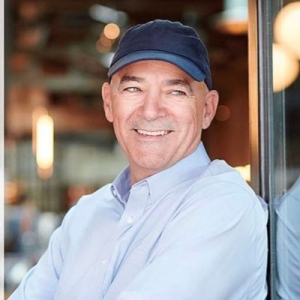
[00:02:52] Ray Latif: Yeah. Except for the fact that you're wearing your La Colombe hat. Uh, that, that is predictable because I think from the day I met you, that was a standard part of your attire and you're currently wearing it as well. I wonder, I got to think that there's a lofty cap, lofty water cap in the works. Is there?
[00:03:09] Todd Carmichael: Well, you know, there's been a lot of talk, but first we have to have this surgically removed from my head and then the other one, you know, sewn back on. But yeah, I mean, you know, in a, in a way you're addressing an issue, which is, is La Colombe. I mean, it's, you know, your first child is always your first child, you know, and I think that you'll be able to see me in this hat a lot in the future, but you will also see Lofty Water because that's the second born.
[00:03:35] Ray Latif: Yeah, well, the other thing about your attire that I always enjoyed to see was your blue shirt, your blue button down Oxford, which I am a huge fan as you can see as well. Is that still in The Matrix or is the black zip up? Is that the new?
[00:03:48] Todd Carmichael: No, you know, I stood in my dressing closet and I was looking at one of those shirts and I thought I should wear that, but I know Ray is going to be wearing it. So I thought I would. I would throw in this huge mix and put in a dad sweater. You know, I just yeah, it would have been a little too themey.
[00:04:05] Ray Latif: You know, a lot of times when I'm doing these interviews, I'm wearing a blazer as well. But I feel like our conversations have always been great when we're a little bit more relaxed, you know, and a little bit more casual in terms of the conversation. And not that the other ones haven't haven't been good. In fact, they've been great. But I was like, you know what, I'm not gonna I'm not gonna wear the blazer for this because I just, you know, let's have a let's just have a conversation where it's a little less formal, but still kind of formal.
[00:04:32] Todd Carmichael: Does that make sense? In a way, you're kind of touching on something that that GP and I talk a lot about, which is, you know, creativity comes in, you know, in environments that aren't always strict and organized. It comes from an environment where you can express yourself, where you don't have a lot of limitations. And you find that even the way you're dressing and the way you're behaving can affect the kind of things that you're creating at the same time. I like the dress-down nature of business. I don't like to get formal, and we don't like too much structure. Because the beautiful ideas and the beautiful conversations, like you're saying, come from just chilling out, man, and trying to find the truth. Absolutely.
[00:05:14] Ray Latif: You said the truth, which sparked a word in my mind, that word is The Matrix. Do you watch a lot of movies?
[00:05:22] Todd Carmichael: I would say The Matrix is one of the greatest films ever made by man. Yeah. There you go. How did I know you were a fan of The Matrix? I guess I felt it. I kind of just knew that about you without knowing it about you. And I know the lines out of it and I make my children watch it with me like multiple times, you know, because yeah, creativity and even making a product is about finding the truth in that product. It's that voyage that you go on in trying to find the impossible and finding what lies below the surface and going in places that other people aren't always willing to go. We're up to the races here, aren't we?
[00:06:00] Ray Latif: We certainly are. One more thing on The Matrix before we move on. Have you seen the newest one? I haven't yet. Okay. I have seen it. It's on HBO Max, so I've seen it. It's great. You should definitely see it. Okay. That's all I'll say. I won't give away too much, but it's a great movie. There's some very unexpected, I guess it's unexpected in terms of what you might expect from the movie, if that makes any sense. I don't know. It's The Matrix, so what I'm saying makes no sense anyway.
[00:06:28] Todd Carmichael: Well, that's the beauty of it, right? Yeah.
[00:06:31] Ray Latif: You're wearing the famous Locke Cologne baseball cap, but you're no longer with the company on an operational level. This is the first time in 30 years that you don't have a quote unquote job with Locke Cologne. You know, obviously you've launched Lofty Water now, but the timing and the decision to walk away, I'm sure was something that you really, really had to struggle with and wrestle with. Talk about that decision and why 2021 was the right time to step aside.
[00:07:02] Todd Carmichael: Well, I mean, at first I think it's, it's a difficult thing for any founder that's like JP and I, I mean, it's, it's such an emotional thing. And, you know, prior to COVID, it's not what I was thinking at all. You know, I think it was really when COVID hit, it kind of stopped time for me for a bit, the carousel stopped, the music stopped, everything stopped and mostly because I lost my mother. And what that did, is it made me take stock of what I was doing with my life and look at myself critically. And I believe that I've been put here, if that even exists, you know, because I'm not really a religious guy, but my role in life is to create. And, you know, we created, we, you know, JP and I recorded four beautiful albums. And the fourth one is just, it was playing hard. You know, it's like the draft latte was kind of a, was a big hit for us. And on that album were different songs that, you know, we were playing over and over. And, you know, I realized at one point that we weren't in the studio anymore. We weren't creating anymore. We were just kind of playing Stairway to Heaven again and again and again. Right. And it's exciting because, you know, the crowd is all yelling and it's just, you're a bit of a rock star for a second. But you've kind of lost your way, and you're not creating anymore. So it was time for me to look at that and say, okay, I've got 20 creative years left. Am I gonna spend it playing Stairway to Heaven? Or am I gonna go out and try to create something even bigger than the last album I made, right? You know, coffee is the second most consumed beverage on the planet, more than all other beverages combined, except one, water. So you turn and you say, well, let's try to take on the big one. I mean, let's, let's see what we can do. And, you know, it's hard to modify water. It really is because it's such a beautiful solvent to begin with, but we looked at it critically and I just went to work in the lab and we created what we think is the next album. And we, uh, we're loving how it, how it behaves, how it sounds. And now it's up to us to build the platform and to bring it to people.
[00:09:17] Ray Latif: Well, what you've created is something very, very special. And I want to get into lofty water and talk all about it. Todd, you talked about your mom passing and sincere condolences to you and your family. You know, mortality is something that I think a lot of people thought about or have been thinking about over the last two years. And it's scary to think about it sometimes. And I think, you know, the fear that comes from this idea that you are going to die or that You know, other people close to you have died. Motivate some people to do different things with their lives, whether it be launching a new business or spending more time with their family. But is fear a good motivator? Are you motivated by that kind of fear?
[00:10:02] Todd Carmichael: I think I'm more driven by obsession. The fear comes into the equation. I mean, it's there. It's a part of the mosaic. Yeah. But it's just this idea that, you know, I have a certain amount of time on the planet. What am I going to do with it? Right. And so I know at the end of my life, I'm going to look at this painting that I made and I want it to have as many colors as possible. And I want it to have bold, courageous things in it. You know, I admire courage. I admire courage. And courage means overcoming fear. And it also means leaving things behind. I know that there's a band now covering our old album, and that's great. And, you know, they're talented people. And for us, it's really about Making that big courageous move to say, OK, all right, guys, we're going to step down from this and start all over. I know we have we have a plant we just finished about two weeks ago, and we're going to fire it up and we're going to see if this music is understood by enough people to have it make sense.
[00:11:09] Ray Latif: Well, I'm understanding it more and more as I sip on your Lofty Water, and let's talk about the brand, let's talk about the bubbles, let's talk about everything related to what you've created here. First of all, why is it called Lofty Water?
[00:11:24] Todd Carmichael: Well, Lofty because it has higher ideals. I mean, we want the brand, the company, and a lot of its aspirations to really be something that's, it's a super high aspiration. both product and the direction of the company. We were taking 20% of all the profits from the company and we're driving it into projects that we think are important. We want it to have high ideals and the personality of the company. We want it to be someone that has high ideals, that it not just be about the bottom line, that it'd be about doing good and not in that fake way, in the real way. And you know, it's really that. It's about the aspiration of higher ideals, lofty water. How do you define fake and real? Well, I think that there's a lot of words to accept, like, I don't know, like brotherhood. You have people who say, hey brother, hey brother, that's fake. You don't fucking know what brotherhood is. I know what brotherhood is. Brotherhood is me and JP. You know, that's real when it's deep inside your soul. And I think there's a lot of words used out there that, that aren't like genius as genius. Like, no, it's not like, you know, there are a few geniuses. I'm not one. You're not one. I mean, a genius is like way up there. So we use these words and they don't really have meaning. So I, that's the way I separate them saying, well, no, that's fake. And that one is a real, you know, JP and I are true brotherhood, but we're not geniuses.
[00:12:54] La Colombe: not. We're just two normal dudes that work really hard.
[00:12:59] Ray Latif: I'm glad you mentioned that you work really hard because I think you know there are some geniuses who for whom you know things come very easy. But for most people the struggle The Third work is how you get to. You know, you get to achieve the things that geniuses achieve. And one thing that you mentioned the last time we spoke that really stuck with me is that the struggle of creation, that struggle is where you're using your time most wisely. And it's, it's interesting because another entrepreneur who recently left his own company, his own sparkling water company, ironically enough, not to call lofty water, sparkling water, but we'll get to that in a second, but who left his own water company recently talks about how the obstacle is the way. And it kind of reminded me of your comment of the struggle of creation and the obstacle is the way. How do you, how do you think about hard work? and struggling as it relates to, you know, an end goal. I mean, is it always hard? Is it always that obstacle? Is that the journey that you thrive upon?
[00:14:04] Todd Carmichael: Yeah, I mean, I like the way he says that, and in a lot of ways, I think they're very similar. You know, for me, it's like, if it's easy to climb a mountain, you shouldn't be climbing it. You know, it's when, I mean, particularly in the creative space, it's so much doubt, and it's just so, I mean, it's traumatic. You're chasing at whispers, at ghosts, at things that don't exist. You're looking for black holes, man. And that is, it's this whole traumatic experience that's popping around in your head and you're trying to solve a puzzle that's never been solved. In that space is where I think I belong. It's torture the entire time, but it's where I belong. And when you crack it, I mean, you crack it. I'm in my lab downstairs in my house, and I'm holding the Stanley freaking cop, man, because I know I've just cracked it. And tears are coming down my face because the months and months and months that led up to that moment were just constant self-doubt, constant trial and error. How many failures? You know, is this going to be the last failure before you pack it up? Are you just going to keep going at it and keep going and keep going? And I just kept going. And in that space, that's where I call the struggle, is I think where I belong. You know, you've known the things I've done physically, like walking across big expanses. It's the same deal. Just step after step after step after step. I think that's kind of my strength. You know, if you, if you tell me, give me a choice between genius or drive, I pick drive, drive, we'll get you there. You know, genius watches a lot of Netflix too. Huh? They do, you know, goofs off drive gets her done with drive hurts.
[00:15:51] Ray Latif: Drive can certainly hurt, but it's worth it if you achieve your goal. Although I wonder, once you get to your goal, what then? Do you have goals, I guess, or is everything always a goal to the next one?
[00:16:06] Todd Carmichael: Now this is a big problem I have, right? So I've achieved certain goals, both in business and outside of business, and the moment I do, I become really depressed. That's just... a part of the journey, because you've killed your dreams now, haven't you? You know, once you've achieved it, once you've topped out on a mountain, or you've touched a pole, or you've made it across the desert, now your life doesn't have a lot of challenge to it. And you've killed it. I had a dog who was obsessed with this squirrel that lived in the back of the house. And every morning he was jacked to get out there and chase that squirrel. And he could never catch it until one day he did. And that dog was so depressed for weeks until eventually, you know, another squirrel moved in, but he didn't have his squirrel anymore. And I, I understand that. I mean, at the same time, you're driven to, you know, biologically driven the dog in that case to, to achieve a certain goal. And then when you do, oh shit, now what do you do? Now, for a creative like me, it means I just move on to the next album. I get to write the next song. You can continue to go to the next thing. What becomes difficult is that if you have a major success, it can become crippling. It can take all that away, and it's really hard to walk away from, and it's just tough. Dude, I mean, JP and I walked away from million-dollar salaries and all the luxury of the whole, because we needed to find that next thing to do. And if it weren't for COVID, I would still be there. I mean, it was just it took that for me to look at and go, OK, Christ, dude, you're a singer songwriter. Go back in the studio and write some songs. You need to keep writing when it's all said and done. I want to have 10 albums, not just four.
[00:17:50] Ray Latif: But don't you want to be comfortable while you're doing it or is comfort the the enemy of progress?
[00:17:55] Todd Carmichael: Well, comfort is what you get when you're with your family. And I'm a hockey dad, which means I do a lot of driving with my little guy. And I make space for my family. It's really important. But work, if I'm going to take time away from my family, I've got to go out and I've got to be a Viking. I have to have it make sense to the whole picture. the, you know, and the financial thing has been off the table forever. I mean, GP and I kind of got over our number years ago. Now it's about something different. It's about fulfilling my purpose in the business world. And then relaxation and comfort comes like, you know, when we're done with this interview, I'm going to go watch cartoons with my little guy. And he wants to make fresh pasta today. So we're going to do that. Right. So that is where the beauty is found.
[00:18:47] Ray Latif: Outstanding. I've never made fresh pasta. You've just inspired me to make some with my daughter today or at least some point this weekend. Just YouTube it, man. Get a bunch of eggs and flour and go for it. It's fun. There you go. Creation is definitely in your blood, whether it be pasta or beverages. As you mentioned, water was the opportunity you saw to create a new brand in the beverage industry. Lofty water is the result. The bottle I'm holding in my hand is your Black Cherry variety. It's called Shimmering, it's described as Shimmering Bubbles. Now, when you were tinkering around in your basement, were you thinking about a bubbly water or was it just water that you could create that was different? I mean, what was your inspiration to get into this sparkling, carbonated, shimmering space?
[00:19:36] Todd Carmichael: Yeah. You know, first, I think any kind of innovation starts just with thought. You just spend a lot of time in your own mind. And you spend time, I walk aisles and I walk in the stores, I'm looking for spaces that are void. You're looking for black holes among stars, right? And it dawned on me that when you go to a restaurant, they only give you this binary option, which is still or sparkling. And it felt very black and white. And particularly when it comes to mouthfeel, when you look across the table or you look at the menu, you have thousands of mouthfeels, but in water, you got two, really? Is that all you got? So you look up carbon and you realize that was invented in 1807. And you go, I mean, 1807, I mean, come on. They were putting leeches on people. I mean, so it's the truth. You see, I mean, they had large animals pooping in the streets. I mean, this is where we were. So you got to say to yourself, the technology can't be that extraordinary. And you there has to be it can't just be black and white. It has to be a spectrum there somehow. And so you obviously you do all your research and you recognize that it's super easy to drive carbon into water. and it wants to hold on because of a chemical bond, and it's very difficult to use any other kind of gas. I mean, it's just really the existing filling systems that have created this binary situation that, you know, they're all designed to only dissolve carbon into water. Not hydrogen, not oxygen, not argon, not any of the gas. You're breathing 14 gases right now. None of those, except for the carbon that you're breathing, can be injected in water. No, they all can. It's just really fucking hard. Sorry, I should have said that. OK, it's just really hard. So I needed to figure out how to do that. And then so I did. And once I did that, I then tasted all the gases that were consumable by people. And you find they all have different like behavior and have different bubbles, have different flavors. They bring out different sides of essences that can be sweet. And so you realize that it hasn't been binary the whole time, that there's an entire spectrum of bubbles between flat and sparkling. I think that there's a whole platform there. And I think the industry could really use an injection of new gases.
[00:22:04] Ray Latif: You know, this reminds me of when we first spoke about six years ago, I think it was in February or so 2016. And you had talked about Lockholm's draft latte in a can. And you were like, this is a game changer. This is going to change the coffee business or the ready to drink coffee business. And I said, what makes you think that? And you said, Ray just taste it. I was like, really? I was like, okay. So I went to Expo West and I tried it and I'm like, oh my gosh, this is a revelation. This is unlike any other coffee beverage I've had or beverage period. And I think in so many ways it's true with lofty water. That statement is true with lofty water. I've already had one of your bottles. I forget what variety it was. So I have the grapefruit, the black cherry and the lemon. Which one am I missing? Oh, there's three more, and there's strawberry, and there's grapefruit. Which one did you try? I think the strawberry. I'm missing the strawberry. But the mouthfeel, as you described, is unlike any other mouthfeel you would have for a carbonated beverage. And I'm going to open this up now, see if I can get some. You'd think that the bottle would explode when you open this, because it's very bubbly. And as I drink it, You know, the bubbles are so soft on your palate and there's just like an incredible amount of flavor behind it. And then you turn the bottle around and there's zero calories, zero sugars, zero anything. It's just bubbly water. Shimmering water, that is. How? You know, what's the secret behind lofty water? I mean, how did you get to, how did you achieve what you've achieved here?
[00:23:50] Todd Carmichael: First, we have to talk a little nerdy science. When you inject CO2 into water, this beautiful solvent, you're creating another complex chemical called carbonic acid, and it bites. That's that burn flavor, but it also mutes the shit out of flavors. I mean, it mutes flavors. So by eliminating that pounding, you can experience all of the spectrum of flavor of essence. So that's number one. And then number two is I blended the gases to bring more out. So because just carbon is salty. There are other gases that are sweet. So you go, all right, let's bring some sweetness in. And then there's that buttery kind of flavor to it, that buttery cream feeling. That's argon. I bring that in. So we're just blending the gases to create an effect that matches that flavor. And that's it. And you don't need sweeteners. You don't need sugars. You don't need those things if you blend right.
[00:24:47] Ray Latif: Yeah, the tagline of no burn, no bite, deceptively sweet. Shimmering bubbles is the phrase on top of that at the top of the label. And the way you described it last time we spoke was effervescent, but not carbonated. The question here is why should consumers care about, why should consumers care about a different kind of bubbles? I mean, I know because I've tried this, but for folks who haven't tried this, you know, how do you get them to care about, you know, the differences in what you're doing versus other carbonated water or sparkling water brands?
[00:25:20] Todd Carmichael: I don't know if you're asking the question about marketing across the platform of the United States and getting people to early adopters and blah, blah, all the mechanics of that, or just in general. Why would anyone care about lofty water? First, I can tell you that one third of the United States of America find carbon repulsive. It's like cilantro to some people. Now, there's a biological reason for this, and it's really interesting. And it's just how it attacks this trigonal area of the brain and how you perceive the carbonic acid in your mouth. It's the same area that regurgitates food, and you feel mouth pain. So a third of folks just hate carbon, hate it, can't drink it. I got three in my family. It's just like, they can't. There are those people, right? So they're left to consume just still, and still is nice, but still isn't a celebration, isn't it? It's kind of boring. It really is. I mean, even these, you know, you add a little essence, it's still kind of in the mouthfeel isn't there. So you have those folks, right? But you also have this middle third that aren't really turned on by carbon, but still kind of fancy it once in a while at restaurants, and then you have The Third which charges carbon finance. I mean, that drink like 12 to 15 a day. And that's great. You know, I think it's fine. It's like spicy food, right? It's like those people who like really spicy food, that's what they're going to like. They don't eat spicy food for breakfast and lunch and dinner every day. So they're going to mix it up a little bit. So I think at the beginning, I'm looking at bringing people on who have been shut out of the effervescent space because of a biological propensity, and those people who aren't turned on completely by carbon. And I think that's enough people to stage a little mini revolution. So would you describe this as non-carbonated? It's non-carbonated. I mean, for so long, we thought you could not change the bubble, right? We've innovated everything, but everyone looked over the bubble. Just this crazy little fucking Philadelphia said, you got to look at the bubble. That we equated carbon with effervescence. It's not true. Effervescence is a giant envelope that includes carbon. but should include others too, just no one's bothered to work at it. And I did during COVID.
[00:27:43] Ray Latif: I mean, that's what I did. Would you describe Lofty Water as creating a new category or is it playing within the space of Bubbly Water?
[00:27:52] Todd Carmichael: I look at it in two ways because, you know, it depends how egotistical and big-headed I am. I have a little cough so I don't feel huge. If I'm right about certain things, I believe that over time you're going to have still, sparkling, and shimmering. And everything on those platforms that you have in still and sparkling, you'll have in shimmering. So it should have things like energy drinks, I mean like Red Bulls, slightly carbonated, you could have all the different drinks that are hanging below carbon, hang below shimmering. It should be its own platform. And that before I die, I wanna hear one time at a table, I wanna hear, would you like to have still sparkling or shimmering water tonight? That would be beautiful. That would be my hit album.
[00:28:38] Ray Latif: Yeah, but then that would be almost as if like you're creating a generic It would almost make shimmering a generic term, right, though? I mean, is that what you're going for, is creating something that is, that can be ubiquitous and doesn't necessarily need to be branded?
[00:28:55] Todd Carmichael: If you're an explorer and you get to find an entire continent and it's its own continent, like you show up and on that continent, you're going to have different companies and different, you know, in the future, you'll have different things that sprout on that continent. That's the biggest thing you can do. I mean, from Champlain to Cook to all of them. I mean, and I'm kind of thinking sometimes that Shimmering is that. It's an undiscovered area where we can grow lots of things. And it's a place. It's like the land of still, the land of sparkling, and the land of shimmering. It's an entirely new launch platform that could hold lots of different categories and different products.
[00:29:39] Ray Latif: I'm trying to think of other comparisons to what you're doing in the food and beverage world. I'm having a hard time doing it. I guess I'm probably one example, but it's not a great example is like, okay, you could have your beverage hot, cold, or lukewarm. I mean, that's again, not a great example, but I mean, are there any other food and, you know, examples in food and beverage that sort of inspired the idea of shimmering?
[00:30:02] Todd Carmichael: The one that I really looked at is Lord Stanley in 1807. He was a chemist of acclaim at the time. I mean, nowadays we wouldn't consider him that, but he invented the process of injecting carbon into water and creating effervescence. Then three years later, a guy named Mr. Schweppes took it and started making products out of it. Now, I look at that, and I look at what carbon has created, that injection of carbon into water, the trillions of dollars of wealth that it has created, the empires that have been built on that 1807 and that man, I look and say, wow, that would be stunning if Shimmering could find that kind of purchase. But first what you got to do is you got to be Mr. Schweppes. You got to go out and you got to really start, you know, bringing this to people and seeing if they react to it. And eventually that brought on soda and that brought on the rest of the, you know, huge piece of the beverage world. Ironically, this is coming at a time that a lot of folks are leaving those kinds of classic drinks and they're looking curiously for other things. It's a big jump to leave soda and go to just carbonated water. It's a huge leap. Not everyone can make it. Right. And so but I see you next to this and I know you do the I know the whole industry does. So where are they. They're going to and are they perfectly satisfied. Would they like to have a sweet that's not chemical or sugar. Would they like a bubble that doesn't rip at their throat and burn their stomachs and give them what's called acid reflux? Do you know that one third of America has acid reflux? One third. Dude, that's crazy. I'm luckily not one of them, but it's like, and I think to myself, you know, it's, this carbonated water isn't making that better. So what do you do? You create an effervescence that's less acidic. I mean, that seems logical to me.
[00:31:51] Ray Latif: Yeah, seems logical to me as well. And it seems like there are some parallels between what you're talking about. And when you created La Colombe, you were giving people an option for a better cup of coffee, trying to create a special experience for folks. And in some ways, actually, there's a even more striking parallel in calling The Third wave coffee. You know, you had coffee and then, yeah, I guess Starbucks is second wave. We can call Starbucks second wave. And then We had brands like and companies like La Colombe coming and creating this whole new experience. People, I think, instantly recognized how special La Colombe was. Do you think people recognize very quickly how special Lofty Water is? If not, how do you describe it when you're not there? When you're not at the grocery store, next to the shelf of Lofty Water, explaining how special this product is. How do you do it in a way that will induce trial?
[00:32:47] Todd Carmichael: Yeah. I mean, that's the old drive trial, you know, I'm going to back up a second though, because JP and I are calling this The Third water. This is how we describe it. And it just is ironic because of The Third wave deal. And at this time, and we started in La Colombe in 94, you know, and then everyone was telling us that was smart, that coffee was done, you know, it's just done and no one would understand. And we came to the conclusion that people do understand that people are smart. And just like you, I said, just try it. I mean, you have a mouth. It is connected to your brain. And there you go. It's like, what else do I need? I mean, do I need to give you a deck? You know, it's like, no, it should be obvious. Anything good should be obvious. Now, driving trial in a very crowded area is a big challenge, right? And what you have to do is focus really hard at experiential marketing and really, really commit to that. Not by doing it through third party, but by getting your people in the street and giving away as many, like with the draft latte in the first six months, we gave over a million cans away. Wow. And this is, boom, boom, boom. We weren't doing it cutesy, cutesy, you know, Twitter and all that stuff. Uh-uh. We were finding people and handing them product and then watching them react like you did. Now, we'd like to do the same thing with Lofty Water, and we're going to do it really in the Northeast to begin with and just give people a drink. That's it. And it's, it switches something off or not to go back. And the reason why I'm, I'm, you know, I pretend to be a CEO. I pretend to know what I'm talking about here. It's all really bullshit. Okay. Because what's true is this. I just make shit that makes me happy. That's pretty much what I do. I keep going until I go, Oh God, fuck it. And then I give it to JP goes, dude. Then we go, yeah. And then we tweak and tweak and we continue tweaking and we get happy about something. We go, that is amazing. We should share these with people. And then we go, oh yeah. What's the bullshit we say in the CEO? Oh yeah. We're going to try a trial and we're going to do this dude. No one knows what they're doing. Really. All we, all you can do is just make something that's amazing. and then work your ass off and getting it on the shelves. So that's really, that's the truth. It doesn't matter if you've had a million hits or you're a billion dollar company or you're just starting out, you're 24 years old with a startup. That's all it is. Make something that really makes you happy. Forget the focus groups, forget all the people, just forget everything. If it makes you jacked, it's got to make other people jacked too. At least some, enough. And then what we do is we just give millions of them away until there's enough that it rises. And then you let the marketing people take over.
[00:35:32] Ray Latif: That's as honest as I can be. I mean, I think that has been proven true. If you just look at draft latte, that process and that approach seem to work. Although I don't think you have a production facility as large as that of La Colombe to produce a million bottles of lofty water. You do have a production facility, as you mentioned.
[00:35:51] Todd Carmichael: I said I'm close. I gotta do the math, but I'm close. We're only at about 36,000 cases a week with this factory. but we're gonna be hitting it in overdrive and making sure that lots of people get it. And that's the idea. I think at the end of the day, no one really knows what people are gonna react to. And you just have to make yourself happy and make something that's beautiful and that's good for people. I mean, I would never drink a coffee out of a can until I made the one I made. And then I went, oh, I like that one. Okay, all right, let's go. And for the water, it was the same.
[00:36:31] Ray Latif: Quick tangent on the coffee. I started seeing Locke Holmes draft latte on shelves without the little cap that you had created to enhance the mouthfeel. It was just like a little ring that was right on top of the can and it would allow you to drink the coffee so that the coffee would land on a certain part of your palate a la certain wine glasses. And Locke Holmes has since removed those caps. Is that something that bothers you or is that something that you're okay with nowadays?
[00:37:03] Todd Carmichael: I think any founder, when they leave, there's a huge amount of different emotions that happen. And one of them is this profound belief that no one can do it as good as you. And that could be true or not. And it's probably not, right? But it's maybe. And so, you know, if someone modifies one of your songs that you made, it kind of stings. But at the same time, it's their song now. And I still think, I mean, obviously the product inside of it is beautiful, still amazing. I mean, come on. And the guys over there that are making this, they know what they're doing. And JP and I have put certain algorithms inside that company to keep it in motion for years to come. And a decision like that I think ultimately I think was for the environment. I mean there were so many fans that loved it and there were so many people who hated it because of the environmental issues. And they came on the side of the environmental issues. And so I respect that decision. But still I mean you're always going to be You know, it's just weird. It's just a weird situation. And the reason why I bring it up, because I know that there are going to be lots of founders that are listening to this that are eventually going to be in the same seat I am. And, you know, it's such a weird thing to experience all these emotions of seeing, you know, your company being run without you. It's just a hard thing to do. I'm lucky in this case because the folks who are running it are really amazing. They really are. I mean, that crew over there is stunning. So anyway, the lip guard, I think, was that, was an environmental question. And they felt that they wanted to fall on that side of defense.
[00:38:41] Ray Latif: I'm glad to hear that you're still on good terms with everyone at La Colombe. You know, when you were having that conversation with Hamdi Ulukaya, who's the founder of Chobani and the majority owner of La Colombe, I recall you always talked about such a great friendship with him and such a great relationship with him, and in some ways it feels like that friendship has been altered, has it? Or am I making that up?
[00:39:06] Todd Carmichael: Not really, no. You know, his company is Chobani, and Laklom is an investment. I mean, and he is really, really, really busy. And he's a father, you know, and he's like me. Fathers get busy, man, you know. So it's like, I don't know if you have any friends that don't have children. You're probably not, you know, they're calling you all the time. Are you calling them right? Because, you know, you're running a massive company and he's going public and he's got he's got his family and I'm doing this, which is I don't know if you know, but a startup takes a lot of your time. So I know that at the end of this thing, we'll meet back up, hopefully on a sailboat somewhere. But it's just really a question of just being overloaded.
[00:39:50] Ray Latif: It's one thing to launch an IPO as Chobani is doing. It's another thing to launch a production facility as you are doing. It's another thing to launch a production facility that may have no comparison. I'm not sure, was there no co-packer? Was there no co-manufacturer that could produce what you wanted to produce? Did you have to sort of rewrite production for Lofty Water? I mean, is that the reason you created your own factory?
[00:40:17] Todd Carmichael: This is an interesting area to talk about. So I believe that if you can make your product on standard equipment, it's not innovation in my terms. I mean, in your terms, that's great. I mean, but in the way I define it. So it's almost as if I start out with the understanding that my area of expertise is those areas that can't be made in co-packing facilities. It can't be. You cannot make a draft latte in any COPAC facility. It can't be done. It's physically impossible. Now, I did go to the FDA years ago and we went out to Kabul and I showed them how I would have to redesign their plant. And they were like, you're out of your mind. I mean, that's going to cost us $20 million. You know, it was just like they said, go away, you crazy person. So it was clear that now if I went to let's say a counterpressure filler and I said OK here you know with basically those who create carbon I would have to completely alter their plant in significant ways. I cut half of the line out, remove and put in a whole new piece, remove their fillers. And you go, okay, well, it just, no one's going to have that. I mean, no one's going to have it. So you have to go and create your own. That's it. I mean, it's, you know, part of it is too, I feel there's a lot of benefit because when you make your own stuff, you learn more. You learn, and you learn, and you're constantly learning. And you can modify, and modify, and modify, and make it better over time. And that's hard to do with a co-packer, because they want to crank out 30,000 cases of each flavor, and then wait for the next cycle, and that's it. Where I like to drop the line for 48 hours, modify it completely, fire it back up, and then run it for 24 straight. No one's going to put up with that. So yeah, one, it's the physical nature of it. I mean, particularly this way of creating effervescence, it's radically different than any line you'll ever see. I mean, the engineers that I have that came in over the last couple of weeks, they couldn't figure out what it was. These are beverage guys. I was like, what the fuck is this thing? How does it even work? I mean, you go, okay, yeah, all right. That's how far off go packing we are.
[00:42:38] Ray Latif: It sounds all very expensive, if you don't mind me saying. Did you have a budget for all this? Or is this just like, I'm going with my passion and my passion is what's going to lead us to success?
[00:42:50] Todd Carmichael: Yeah, I mean, I guess there's a budget. Yeah. I mean, I kind of. I should responsibly tell you there's a budget. No, but you get in the creative process, you know, and you just, the areas that are easy, the part of the line, I, then I would go, all right, bring me used equipment and I'm going to recondition it. You know, I'll save money there. And you know, there's the classic pieces like the reverse osmosis and your tags and your crap like that, right? Filtration, blah, blah. So you go, okay. But then when it comes to the cherry pieces, the issue is you, there is no budget because there is no machine to buy. I mean, every single piece and part brand new. I mean, CAD designed by myself and then freaking run it and then assembled. And it's like, you know, we take a chassis from another industry and then we build upon it. And yeah, sometimes you can go over budget. And that's why GP and I, we've always liked to do that seed capital and first round ourselves. We didn't take money from anyone for 20 years, 20 fucking years, man. We'd always did it ourselves. We just plow it back in, plow it back in because we wanted the freedom to create the way we create. And once you kind of do, it's tough to create again. just go on and ruin a bunch of canvases just because you had an idea. It's hard for other people. So that's kind of what we're doing here. And then when it settles down, it's all predictable, then I think at that time we might bring someone in.
[00:44:22] Ray Latif: Well, sometimes it can be kind of difficult to scale if you're only putting your own money into the company. And you talked about how you're currently limited at production. And that impacted your launch of Lofty Water. Now it was a soft launch, but you did sell out really, really quickly. Crazy. Yeah. Getting to scale, I wonder... You know, how much more you can really put into a company when scaling requires you to replicate the kind of equipment that you're using on a much larger basis? I guess what I'm asking for, you know, there are a lot of entrepreneurs I speak with who are at an early stage who have, you know, just gotten into this business and they're like, I have a really innovative idea. This has never been done before. It's going to cost a ton of money. You know who can i talk to where the investors i can talk to about this and the investors will always come back and be like this is not a skill proposition what do you say to folks like that.
[00:45:16] Todd Carmichael: Ultimately i mean i think that's part of the whole challenge of being a creator entrepreneur you know. For me I look at it and say I know how to get to a certain amount of cases a week without anyone on the outside coming in. I want to be able to provide solid hard numbers to people as investors too. I don't want anyone to just bet on my dreams. So, you know, we're already designing our second plan and, you know, with volumes that make a great deal of sense across the country. And I'd like to see a big part of that sold and committed to by the time I look over to someone and say, okay, are you ready to follow? Because the investor has to follow, not lead. They have to follow. And I have to make sure that I'm way out ahead before I ask them to follow me. You know, the scalable thing, it depends on the idea. some mountains are just easier to scale. Some products are just easier to scale, I mean, than others.
[00:46:16] Ray Latif: Yeah, I think that's true. Although, at the outset, when you are building a brand, sometimes there are things that you have to do that may not ever be part of your scaling process, such as getting your bottles from Venezuela, which I think... Can you believe it? Now, just for context for folks listening, when Todd and I spoke a few weeks back, he was like, somehow I got Venezuela involved in lofty water. And I said, really? Okay, talk about that.
[00:46:52] Todd Carmichael: So yeah, why? So I'm fascinated by preforms, you know, those little, you know, they look like little test tubes that you blow to create your bottle and all preforms aren't created equal. I mean, obviously there's a different gram weight and the rest of it, but they can be processed differently that allows gases to be held in the bottle longer. So if you look at This is a PET bottle, right? It's just standard PET bottle with carbon in it.
[00:47:20] Ray Latif: For folks who aren't watching the video, you're holding a bottle of Coca-Cola, or at least it looks like.
[00:47:24] Todd Carmichael: Yeah, Diet Coke. Why is this on my desk? This can only hold that carbon for 17 weeks. And if you're a startup, 17 weeks isn't enough time. You need to extend that beyond 17 weeks, right? And there's ways of processing the PET in that preform to allow for a lot longer. Now, I fell in love with one. I wasn't really paying attention to where they were coming from, and apparently they're being done in Venezuela, which you know is a super stable country. and fell in love with the bottle. Man, the shelf life was coming off like I liked it. And then we had, I don't know, maybe a couple, maybe 20,000 bottles or so that we run, and we're expecting the rest of the pre-farms to come in. But at a time that, you know, once we launched, real easy on the website, you know, we were thinking, it's gonna be kind of quiet, and this is enough bottles to carry us to when the pre-farms come in. No, it didn't happen that way. We got hammered. I mean, hammered. I mean, in three days we had to shut the site down because the preforms hadn't arrived and we just got absolutely crushed. And we have 500 followers on the freaking Instagram account and we didn't say much. I know why. It's because of you, Ray. You're the one who screwed the whole thing.
[00:48:48] Ray Latif: Taste Radio, is that popular? No, I don't know about that. And we did mention Lofty Water. We talked about it on the show a few weeks back. I mean, how could we not?
[00:48:58] Todd Carmichael: And you're right. And you're right. And I think we're going to fumble along just like we always have. I know I'm supposed to pretend to be this really smart CEO. We'll fumble along, but I have a feeling that we'll get there because we know how to climb. and we know how to bear down on something, and we have loads of really very, very talented people who are interested in working with us, which is very important. I mean, your team is key, and there are some very talented people who've come to us, and we'd like to bring them on, but we'd like to go as far as we can without taking anyone else's cash. That's the idea, just trying to hold your breath as long as you can, and then open up. when you can really make sure. Now, I want to be that entrepreneur that makes people money, guaranteed, because when you're that guy, your life isn't really nice. no one bothers you, no one calls you on the weekend, right? It's just like, everything's cool. And they leave you alone when it's time to create and in your lab. This is what I dream to have. And I hope to put together some partners in the future and then really ramp and we'll go crazy and it'll be fun. But I want to make sure that everyone does well when they bet on JPNI.
[00:50:14] Ray Latif: Well, as you know, and as countless other food and beverage entrepreneurs know, that phone call from the investor is going to come from time to time. And sometimes it's an unhappy call. Sometimes it's a very happy call. And I think one of those things, the unhappy part of it, is what keeps people from loving the business that they're in. you know, you clearly love the beverage industry. Although getting out of it and getting back into the space is not something we see very often. There's a handful of folks that I can think of that have done it. Mike Rapoli with Vitamin Water and Body Armor, Bill Creelman with Stirrings and Spindrift, Lance Collins, he's had countless numbers of beverage brands out there. Were you ever thinking about something other than beverage when you were getting into this sort of second stage or second stage of entrepreneurship?
[00:51:07] Todd Carmichael: No, I wasn't. This is the road that, you know, I keep discovering, you know, as I, as I make a corner, I just see this other like path. I go, man, I want to see what's down there. And you know, what I do know is that I'd love to create new things. And I love to wow people. I love when people go, holy shit. And I like making things that make you go, holy shit. And I love watching it. And I just, so I just, I'm kind of addicted to that. And, you know, it reminds me of being in the kitchens back in the day with the great, I mean, literally the greatest chefs in the country we were doing coffee for. And we would sit in the kitchen and I'd watch guys like Danny Meyer, even Jean Joao. So all these guys, they'd look through a little window and they were looking at the people eating their dish. because they wanted to see their face. They want to see that reaction. And that's why they're doing it. And I have that same disease. I love it. And to live without that, it wouldn't be a life as interesting as this one. And then ultimately, I just want to see where this road goes. Can I create something? Lord Stanley, dude, I know the guy's name after 200 years. Can I create something like that? Can I create something like that? You know, can I create something that when I'm gone, that my kids see and go, my dad did that. And their kids go, my grandfather did that. Like that, he invented that in his basement. What can be more exciting than that? I mean, how can you not get addicted to that? It's the same as I always say about music. My wife is a singer-songwriter and I watch her. She loves to see the emotions that some of her music can create. It's just that pure creative joy of seeing the reaction of someone else and touching someone. I have that disease too. And it's just hard because why? Because of share value or some stupid, you know, no, you don't get over that. And so you do when you climb a really high mountain, when you get home and you recover, the next thing you do is you say, well, I got to climb a higher one. That's just literally what happens. And I climbed coffee and I'm down and I want to climb another one and I can't stop. I just can't. It's about that journey and about that struggle, right? Absolutely.
[00:53:41] Ray Latif: It's never a struggle speaking with you, Todd. I feel like we could go on for hours and hours talking about all kinds of different things, beverage industry or otherwise, but I really appreciate the time that you've given me today. Thank you so much once again. I know our audience is going to love this and be reaching out to you for more advice and insights into how to play this game, so to speak. But in the meantime, just wishing you and your family a very happy new year, a very healthy and safe new year, and to all our listeners as well. I can't wait to see you in person, though. It's been a while. I know. It's been too long. Yeah.
[00:54:17] Todd Carmichael: I'll probably see you in March, though, right? Yeah, let's make sure that both of us are well and we're not like with cold freaking colds.
[00:54:27] Ray Latif: OK, that's it's that's an inside joke for folks. Yeah, typically when Todd and I meet up in person, one of us is is ill. I think I've been more ill than you have, or I've had more times that have been ill seeing you, but absolutely lots of juice shots, lots of lofty water going to be healthy and strong for Expo West. Yeah, Expo West, can't wait. Yeah, for sure. Once again, Todd, awesome talking to you. Thank you so much. You're the man. I appreciate it. God bless.
[00:54:54] Todd Carmichael: You too.
[00:54:55] Ray Latif: Thank you. That brings us to the end of this episode of Taste Radio. Thank you so much for listening. And thanks to our guest, Todd Carmichael. As always, for questions, comments, ideas for future podcasts, please send us an email to askatasteradio.com. On behalf of the entire Taste Radio team, thank you for listening, and we'll talk to you next time.