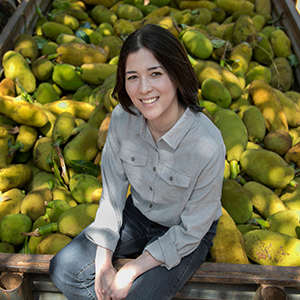
[00:00:10] Ray Latif: Hey folks, I'm Ray Latif and you're listening to the number one podcast for the food and beverage industry, Taste Radio. This episode features an interview with Annie Ryu, the founder and CEO of plant-based meat brand Jack & Annie's, who's on a mission to bring jackfruit to the masses. Just a reminder to our listeners, if you like what you hear on Taste Radio, please share the podcast with friends and colleagues. And of course, we would love it if you could review us on the Apple Podcasts app or your listening platform of choice. Most Americans don't know Jack & Annie is aiming to change that. The founder and CEO of The Jackfruit Company, Annie has spent the last decade building the world's largest supply chain for jackfruit, a green oblong fruit with a thick, bumpy exterior whose pale yellow flesh has a sinuous texture similar to that of meat. A high-yield yet underutilized crop, jackfruit, which is also known as jack, grows in warm and tropical climates and has long been consumed in India and other parts of the world. The Jackfruit is still relatively unknown in the U.S., it has gradually appeared in natural and conventional grocery stores, where brands like The Jackfruit Company package and sell it as a plant-based alternative to chicken, pork, and beef. Launched in 2015, The Jackfruit company markets jackfruit-based ready-to-eat meals and ingredients that are sold in approximately 6,200 stores across the U.S. In 2020, the company introduced a spin-off brand aimed at mainstream consumers called Jack & Annie's. The brand sells plant-based nuggets, wings, meatballs, and sausages that are available at 1,500 stores, including those of Whole Foods, Sprouts, Wegmans, and Target. Last month, the company announced a $23 million Series B round, which will be deployed to help expand distribution and build awareness of jackanannies. In the following interview, I spoke with Annie about her initial vision to support farming communities in India and incentivize jackfruit production, how she began building the company while still an undergraduate student at Harvard, how Jack & Annie's is positioned within a competitive set for plant-based meat, and what she's learned about entrepreneurship and the value of persistence. Hey folks, it's Ray with Taste Radio. Right now I'm on a call with Annie Ryu, the founder and CEO of The Jackfruit Company and Jack & Annie's. Annie, how are you?
[00:02:48] Annie Ryu: I'm doing great, Ray. Thanks so much for having me.
[00:02:51] Ray Latif: And thank you so much for joining me today. I'm holding in my hand, for folks who are not watching the video, a box of Jack & Annie's Maple Breakfast Jack Sausage. This is made entirely from plants. It's plant-based. Jackfruit, water, soy flour, et cetera, et cetera. This is the product, and you sell several different types of plant-based meat alternatives. But the sausage is something where I'm like, if they get this right, then they're set. Because it's really hard to make a good plant-based sausage. And you did, you guys nailed it. So congratulations on that.
[00:03:24] Annie Ryu: Thank you. Yeah, I've been eating loads of them myself.
[00:03:27] Ray Latif: Oh, there it is. You have the patty.
[00:03:29] Annie Ryu: Big box from my freezer.
[00:03:32] Ray Latif: Yeah, life saving. Have you ever I mean, did you grow up eating meat?
[00:03:38] Annie Ryu: I did. I did. Yeah, I grew up in Rochester, Minnesota. Yeah, vegetarian was a foreign concept out there. There was a lot of meat kind of, you know, typical Midwest diet, meat, breakfast, lunch and dinner sometimes.
[00:03:55] Ray Latif: Well, I think that's pretty common for the United States and for most of the world as well. Trying to change that for sure. When did you stop eating meat? Are you completely vegetarian now?
[00:04:04] Annie Ryu: I'm completely vegetarian. Yeah, I stopped in college. College really opened my eyes to the world of alternatives to meat. Also going to India where so much of the population is vegetarian and there's so many different varieties of delicious vegetarian food. So both at college and in India, I was told that there was so much more to vegetarian than just salads, which was more so what I thought growing up.
[00:04:35] Ray Latif: Yeah, and you went to school in the Boston area. I was about to say in Boston, but Harvard is not in Boston. That's a very, something that a lot of people get confused about. It's in Cambridge, Massachusetts. We have a lot of plant-based options in terms of restaurants and availability of plant-based foods in this area. So I assume that was not too difficult to transition to get into that space or get into that lifestyle. When you went to Harvard, it sounds like you had quite the experience, at least academically, you were the valedictorian of your class. Yeah, I couldn't have done that. What do you have to do to be the valedictorian of your class at Harvard?
[00:05:16] Annie Ryu: Well, I was really, really ready for a challenge when I went to undergrad. I took on a lot of courses, but also a ton of extracurriculars. Growing up in a small town, 100,000 people, went to public school, I was just immersed in so many opportunities. I just really wanted to make the most of it. Honestly, my first semester, I wasn't sure if I was going to be able to get an A, I wasn't sure if I was going to be able to get into any of the music ensembles, but I was going to give it my best shot.
[00:05:55] Ray Latif: Give it your best shot, you did. Also a violinist from what I read in your LinkedIn profile?
[00:05:59] Annie Ryu: I was, yes. It's been a little while now, but I played throughout college. I'd consider becoming a professional musician at one time. It's very close to my heart.
[00:06:09] Ray Latif: That's interesting because the last time we spoke and from what I've read about you, it feels like medicine was the path that you were planning to take in terms of a career. Weren't you pre-med at Harvard? I was. Yeah, I was pre-med.
[00:06:24] Annie Ryu: Yeah, there was a brief time in my upbringing where I looked to be a professional musician before going back on the medical path, pretty hardcore. My upbringing was in Rochester, Minnesota, so Mayo Clinic, hometown. It's a very unique medical bubble. One third of the whole town is employed by the world's top-rated medical facility. And that was very much the path I was on. And when I got to Harvard, I took this class on global health my freshman fall and learned that there are millions of people dying every year from things that we have cures for. And that was just, you know, such a far cry from everything that I'd been immersed in up until that point, you know, Rochester, very low poverty rates, you know, Mayo Clinic physicians are tending to the homeless without charge. And, you know, there was a place I volunteered at it was kind of just so safe and protected. Going to Harvard and learning about global health, I really wanted to do everything that I could to help people who don't have access to appropriate health care today get that access. And that was what led me to start the health tech company. I started with my brother that took me to India, where I met Jack and Jackfruit. You know, jackfruit is this amazing plant, highest yielding tree crop in the world, drought resistant, thriving all over Southern India, and could transform farmers' lives for the better by being a tremendous amount of added income for them if we could pioneer the supply chains and Whole Foods to be able to get this to market. Jackfruit has this amazing meaty nature, just the way it grows. And that's why it has this very special and unique place in this huge plant-based meat arena, because it's naturally similar to meat. So you're not starting with water and a protein powder, protein isolate to get to something that has a meaty texture. You're really starting with a plant that grows with a meaty texture. And that enables us to give consumers foods that are more similar to meat, less processed, and more plant, which is really... People are looking for plant-based foods. They're looking to get more plants in their diet. So usually not just looking for something that's vegan, they're looking really for more plants. And so that's part of what we're really looking to provide to people with jacanannies. But it's also about, you know, providing Whole Foods in a way that's not a sacrifice on taste, because if it's a sacrifice on taste, you're going to eat it a small fraction of the time as you would eat it if you really, really loved that food as food.
[00:09:14] Ray Latif: There's so much that's brilliant and beautiful about what you're creating and what you have created. The big question I think that a lot of people would have is, well, how do you get people to understand The Jackfruit is all about? Because it is still a very esoteric fruit, an esoteric plant for so many people. Is it really important to educate people about The Jackfruit as much as it is to educate people about plant-based eating?
[00:09:44] Annie Ryu: I think that for the time that we're in, we as a company are fortunate because when I started this company, plant-based meat didn't nearly have the name recognition. It wasn't nearly a movement as it is today. a word when I got started. And so it's now this huge arena, which really gives a foundation and a platform for jackfruit because jackfruit is the meatiest plant out there. There really isn't anything else like it. And so we don't have to do the education about what is plant-based meat and why you should eat it. We can, well, of course, you know, support that, but we can talk about, you know, what Jack & Annie's is and The Jackfruit is in this space that already exists.
[00:10:42] The Jackfruit: Guessing your margins? That's risky. Belay Financial gives CPG brands the clarity to scale smarter, faster, stronger. Get your free inventory ebook by texting TASTE to 55123 and start making data work for you. Vibrant Ingredients is the natural ingredient partner powering food and beverage innovation, delivering flavor, function, and protection through a science-backed portfolio. Vibrant delivers purpose-driven solutions that help brands create extraordinary experiences. Discover what's possible with Vibrant today. Visit VibrantIngredients.com
[00:11:28] Ray Latif: Plant-based meat was brought to the forefront by a lot of money, frankly. A lot of very well-funded companies that are now very well-known brands on the market. Impossible Foods, obviously, Beyond Meat. In what you're doing with Jack & Annie's, do you look at it as sort of following the lead that these brands have created, or is it more we're doing something that's similar but better? I guess, how do you keep from throwing other brands under the bus while saying that we offer a superior product?
[00:12:06] Annie Ryu: So first of all, we're very grateful for all the work that's been done by brands in this space to create the space to what it is today, to create the awareness among consumers about things that they should know about the positive impacts, the environment, the ways that cutting back on meat consumption is better for you. For us, it's really about, in terms of how we communicate, talking about our point of difference and that this meatiest plant out there is always the number one ingredient and the core of all of our foods. And so for us, we like to talk about whole plants as opposed to plant-based. We're using the plants and it's not a far cry from the original plant, it's the plant. And we're making our foods really with that at the core. And you're going to add the seasonings and add in some fat because it wouldn't be a sausage if you didn't have that. But I think for us, it's talking about the food that makes us so different from everybody else out there. We don't really have to talk about what they're not, we just talk about what we are.
[00:13:16] Ray Latif: We already talked about how important it was to you to address public health from an eating perspective, from a diet perspective. there might be other ways to do it in creating a company as big as or creating a supply chain for jackfruit. What was your motivation at the outset?
[00:13:34] Annie Ryu: Totally. I just saw this as a company that needed to exist so that we could have a huge positive impact for the world, for consumers' health, for farmers' livelihoods, and for the planet, if we could make this happen. And so to me, that was, you know, well, then this needs to happen and whatever it's going to take to make it happen will be worth it. If I were less idealistic, I would have thought, well, it's too much. It's overwhelming. But it certainly has been a tremendous amount of work on every front, pioneering the supply chain. And we're vertically integrated down to partnering with thousands of farming families in India directly. We have a fully owned subsidiary in India. And I've been to India 35 times to be able to set all that up before we had a full-time team based out there. And the product development, but also building the awareness The Jackfruit from the very, very beginning stages where going to a top chef, you needed to introduce him or her The Jackfruit, going to a top retailer, and he did introduce the retailer The Jackfruit. No one from consumers to the leaders of the industry was very familiar, if familiar at all, with this fruit. So as I mentioned to you, in the first couple of years, we were taking a The Jackfruit with us to every single sales appointment, which of course created a lot of conversations, interesting conversations with airport security. bringing this huge green spiky thing in your suitcase. But it has been a labor of love for the vision of what we could do.
[00:15:32] Ray Latif: Vision is the word I was thinking of because the vision is what you're selling. How did you get people to see your vision? How did you get people to believe in this idealistic goal that you had for yourself and for the company and for the world, frankly?
[00:15:47] Annie Ryu: There's so many layers to the story. Our impact is on these three levels, for consumers' health, for farmers' livelihoods, for the planet. And then you're also trying to introduce this crop that no one's ever heard of. How much are you trying to say at once? And what kind of message is gonna resonate the most? Because we, as a social enterprise, the impact that we have is tied to our scale. So the more we can sell, the more farmers we can partner with. So we're always looking to grow. So basically, what's the message that will best allow consumers and buyers to understand everything about us? From the beginning, Whole Foods was our first customer. They understood the vision, the mission that we had, and put us on shelves when I was still running the company, basically out of my dorm. I remember getting the acceptance message sitting in one of the dining halls at Harvard. So it was some real leaders and visionaries in the industry who could see this vision as well and stepped up and put it on shelves. And I think that when you can build those kind of partnerships, That's where the magic happens in the food industry, and you can really start making something change together, because then a consumer sees our product on shelves at Whole Foods, and because it's on shelves at Whole Foods, they know, oh, this is the future that's starting to arrive. This is the kind of food that I've been looking for, looking for less processed plant-based foods, and now it's here. Finding those customer partners who have similar values is a huge part of how you get that acceptance over time and how you really get that going.
[00:17:40] Ray Latif: Certainly Whole Foods is the type of retailer that a lot of brands that have a similar ethos and vision that yours does. That's the place you want to be. They are always looking for interesting and new brands that are pushing the envelope in terms of healthier eating. Yet, they do turn down a lot of brands and a lot of brands that probably looked and sounded and felt like yours early on. But how much of you, how much of your, I guess, personality and your education and your interest in this space were they moved by? I guess, was it as much you as it was the vision and the product that they were interested in?
[00:18:25] Annie Ryu: Yeah, it's an interesting question. I think back then I would say I was, you know, less articulate. I was kind of a nerd, you know? So I think I was significantly less persuasive. I think that, you know, they really loved the vision and being able to be, you know, partnered in creating the future of food. And I think, My background would not really mean anything if it weren't for what we've been able to build together as a team and as a company and with partners who have been great retailers. So I think it was mostly the shared vision of what we could do together, really bring this amazing plant to consumers and change the world because of it.
[00:19:21] Ray Latif: How about investors? You recently raised quite a bit of money and congratulations on that. Early on, just to get a product to market, just to get enough product to supply Whole Foods with enough product, it costs a lot of money, no matter what it is, no matter what the product is. How did you initially fund the company and how did you get subsequent investments into the company?
[00:19:48] Annie Ryu: Yeah, initial funding for the company was business plan competitions from college. And then your family, friends, myself, we're talking like, you know, the very small amounts of money you need to cobble together to like get your first product shipment across the globe. And then started raising... And I also did a Kickstarter super early on, which was going around to everybody I know talking The Jackfruit and raising $5,000 in $25 increments. And then I raised money from angel investors who I networked to through my college network and all the people I'd met from doing this Kickstarter. And then, you know, started raising from investment firms once we had launched nationally in retail with our first brand, The Jackfruit Company brand.
[00:20:47] Ray Latif: So the initial brand was called The Jackfruit Company? Yes. What were your initial products?
[00:20:54] Annie Ryu: The Jackfruit company is distributed today in 6,000 retail stores. It's in the refrigerated meat alternative category. But the two top items, barbecue jackfruit and The Jackfruit, is basically jackfruit that's been cut into pieces, marinated in sauce, and cooked to the right texture to be able to use in sandwiches and tacos.
[00:21:22] Ray Latif: Now, when it comes to Jack & Annie's, the idea for the brand, I assume, is to make it a lot easier for people to understand The Jackfruit is all about. make it a little bit more palatable in terms of The Jackfruit could be or how you could manipulate or The Jackfruit for everyday items, everyday foods. That being said, the branding that you created is fantastic in my opinion. It looks very approachable, it looks kind, it looks friendly, it looks age-friendly. This could be for anyone who's a kid to an older adult as well. How did you think about the branding for an item like this? I mean, how do you think about the approachability The Jackfruit in terms of educating consumers?
[00:22:07] Annie Ryu: Well, the the branding is so funny. And, you know, we we looked at a lot of different concepts. And, you know, this was the the only one that really had, you know, this Annie character. And I initially was like, no, we can't, we can't have my name in the brand. That's, that's, we can't do that. And everybody's like, yes, we should do this. So yeah. And then I think, you know, the character is, is always kind of, you know, lifting a heavy load to make things happen. You know, so I have like Annie here is like, you know, pushing the, uh, this huge sandwich into this, you know, the center.
[00:22:52] Ray Latif: That's your savory breakfast sandwich that you're holding up, which looks delicious. It's so good.
[00:22:59] Annie Ryu: And then stacking the nuggets together in one place. So I think it was... When we were putting it together, the brand wanted to really be, yes, approachable, and also to just be authentic and really bring those two pieces together. So Jack The Jackfruit, and I'm Annie. But I think as you mentioned with Whole Foods, conveying how delicious they are was also part of the approach that we have with the packaging. The fact that Whole Foods are also simpler, fewer ingredients. And so having a package that really focuses on just a few things and the most important things was part of getting it all right for us.
[00:23:53] Jack & Annie: Do you want more repeat buyers on Amazon? Well, this free resource in collaboration with Straight Up Growth will help your brand turn first-time buyers into long-term subscribers. Download Winning the Repeat Purchase Game on Amazon now at Taste Radio slash SUG. That's Taste Radio slash S-U-G to start building retention-driven growth for your brand on Amazon. Scaling a beverage brand into major retail comes down to operational readiness. From packaging lead times to co-manufacturing strategy, the details can make or break a launch. In a new e-book in collaboration with Octopi and Asahi Beer USA, industry leaders share what they've learned in helping brands scale. Download it now at Taste Radio slash octopi.
[00:24:42] Ray Latif: You know, when you're building The Jackfruit company, I think it might be easy to think, OK, well, we're building a supply chain. You know, this could be a product that we could use in food service. As you mentioned, chefs earlier introducing jackfruit on that level sort of trickle down way to get into onto people's plates at home, get into people's refrigerators at home. When you were thinking about the initial vision, was this part of the long term vision or has it all just kind of happened organically?
[00:25:09] Annie Ryu: It has happened organically. I still remember, you know, even the conversation when I was at, you know, Harvard Science Center about changing the company name at the time to The Jackfruit Company, you know, because no one knew The Jackfruit was, we had been really hesitant to The Jackfruit in our name. we were going by fruition at the time, which people tended to look at and call fruity on, which was certainly not the intent. So yeah, it's, it's happened. It's happened organically over time. I think, you know, the evolution of plant-based meat to what it is today has been, uh, very fast and, and huge, just monumental. And I don't think that it was, It was quite predictable that it would happen this way. For a company like ours, it's how do you grow as quickly as you aim to while the landscape is also evolving so quickly. With that, you have to change and evolve your plans with time as well.
[00:26:18] Ray Latif: While you're running as fast as you can, the industry is changing very, very quickly as well. That sounds like a very challenging, everything about the company sounds really challenging, and it's amazing that you've gotten to this point, because I think if someone looked at the business plan right now, they might be like, wow, I just, even in this era of plant-based eating, this sounds like an idea that's gonna be really, really difficult, and it's gonna be really, really tough to make work, whether it be in one year or 10 years. racing and running and working really, really quickly to achieve what you intended to achieve, you're still not even there. I know that there's a much, much bigger goal here for The Jackfruit Company and for Jack & Annie's. Does that ever discourage you when you are pushing so hard and you are running so fast that you aren't getting to where you need to be or you want to be as quickly as you want to?
[00:27:11] Annie Ryu: No, because All of this was at one point just a vision. And when you can see with the work of our incredible team that every single day we're converting ideas and visions to reality. And when you look back on what we've been able to build and how much easier everything that used to be so hard has become. we can do whatever we set our minds to. And I think that going from raising $100,000 round on a convertible note to raising $23 million in 2021, investors know that they can believe in us as well, that we've been able to pull off what looked Impossible Foods create something that is extremely difficult if not Impossible Foods replicate that is scalable and that we are in the process of scaling.
[00:28:17] Ray Latif: That's an interesting point that you bring up, that you guys are essentially The Jackfruit company. It's not just the name of the company, it is you guys are the supply lines, you guys are the supply chain for jackfruit. Was that a huge factor, was that a really big factor in this recent raise of $23 million, the fact that you guys do essentially own the supply chain?
[00:28:42] Annie Ryu: It was definitely a significant piece of the picture. If we have a chain tomorrow that's looking to do 10 million pounds of volume with us on a six-month lead time, we can do that. there isn't anyone else in the world who could pull that off from a supply chain perspective. And there's not a reason for someone else to get set up to do that because we're already positioned to capture that demand. So yeah, it's a solid position for us to be in as we look forward to having pioneered all of this. It was a huge, huge lift to get here, but at this point in the right place at the right time.
[00:29:33] Ray Latif: The chaos of building a consumer brand and building a food company can come with a lot of, I guess, doubts, I would assume. Well, I'm not going to assume. I know this because I've spoken with so many entrepreneurs who who end up doubting themselves and wonder if this is going to work, yet they're always pushed and they're always driven by something. In your case, you talked about vision. But the last time we chatted, you also spoke about the importance of education, teaching yourself and learning along the way. What have you learned about being an entrepreneur? What have you learned about persisting amid very, very challenging times and a very, very challenging environment for an early stage food brand?
[00:30:20] Annie Ryu: I would say that I have overall learned so, so much from the people I've surrounded myself with. So I've learned it's just extremely critical to bring the right people around you. And that's people on my team, that's advisors, that's board members, investors, that's advisors who have a consulting role with the company advisors who are just, you know, personal friends and mentors. That has been, you know, so important. Sometimes it's this idea of like, well, they've done it before once 10 times. And sometimes it's just having a sounding board because Again, having done something in the past, our situation is very unique. There are not very many companies that have all the same types of complexities that we have or all the same opportunities that we have. Really looking for people who have a personal investment in what we're doing so that they can be a thought partner in regards to what we should do next.
[00:31:33] Ray Latif: You've mentioned your team a number of times. It's one thing to say surround yourself with great people. It's another thing to find those people and recruit them to join your team, whether they be a board member, an advisor, a staff person. How do you find these folks? What are you looking for in terms of their personality, work ethic, experience, et cetera?
[00:31:57] Annie Ryu: Yeah, I am looking for experience but also looking for personality traits and you know somebody is really passionate about what we can build together because this is a it's a very unique opportunity to be working in a company that could double or more every year That comes with so much excitement, so many challenges. And so you're looking for somebody who really wants to shoulder all of that good and the bad. I think so much of those values of the brand that you see reflected on the package and the tone of voice, they're also just values for how we work with each other. It's authentic. approachable and you know as simple as possible so how do we be direct with each other and you know communicate about what we need to communicate about and have a lot of fun while we're doing that.
[00:32:57] Ray Latif: People try to find folks for their team on LinkedIn. LinkedIn has been a great benefit to a lot of folks that I've spoken with recently. And then, you know, since they've got into the business, you know, it's interesting, you're not very active on LinkedIn, surprisingly. I think your last post was, I'm seeing it about three years ago. It's when you were hiring, you were hiring an accounting and operations coordinator. I hope you found the right person. A lot of times when people are in the space that you're in, they do have a megaphone that they'll use and use quite frequently, whether it be on Instagram, Twitter, LinkedIn, what have you. I get the sense that you're not like that. How do you, I guess, preach the gospel of The Jackfruit company and Jack & Annie's in a way that's going to resonate with the industry and move the needle for jackfruit in general?
[00:33:50] Annie Ryu: Yeah, you know, expect us to use the megaphone more. And, you know, we've had some conversation about it internally, but it's just that, you know, we, we always want to over deliver. And so, you know, we, we want to be in a position where, as I mentioned, we can deliver that for that 10 million pound order on the lead time that that customer wants before we're going out and saying, Hey, we want your orders. So I think we've been building everything so fast. Jack & Annie's, we just launched late 2020 during the pandemic. It's now the third largest brand for all of frozen plant-based. But we also We didn't want to be marketing it too loudly if consumers wouldn't be able to find it at their stores. So now we're getting enough national placement that it makes sense to talk a lot more loudly. And it's also from the perspective of what we're equipped to do as a product development partner with national restaurant chains, what we could do as a supply partner with the largest jackfruit supply chain in the world. We're going to be marketing more loudly and that's really... just the beginning, uh, with this, the press release we did for this Capitol race.
[00:35:15] Ray Latif: Are you comfortable leading the charge? You know, you, you've, you've got your caricature on the, on the front of every package of Jack & Annie's is again, the one I'm holding my hand. Is that something you have to learn to be comfortable with?
[00:35:30] Annie Ryu: I'm comfortable with it. I've learned to be comfortable with it. It's not my natural nature, but I've learned to be comfortable with it.
[00:35:40] Ray Latif: Annie, it's been so great speaking with you and so great learning about Jack & Annie's and The Jackfruit Company. Thank you so much for taking the time to be with me today. And congratulations on everything that you've created at this point. It sounds like your first 10 years have been pretty remarkable in terms of how you built the company. I imagine the next 10 years are going to be even more remarkable in terms of how you scale. So excited to see this development and excited for you personally. Congratulations again on what you've done.
[00:36:10] Annie Ryu: Thank you so much.
[00:36:14] Ray Latif: That brings us to the end of this episode of Taste Radio. Thank you so much for listening, and thanks to our guest, Annie Ryu. As always, for questions, comments, ideas for future podcasts, please send us an email to ask at Taste Radio. On behalf of the entire Taste Radio team, thank you for listening, and we'll talk to you next time.