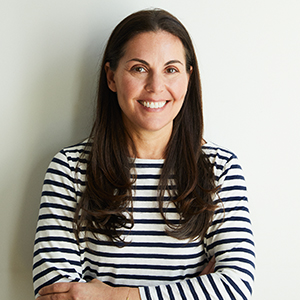
[00:00:10] Ray Latif: Hello folks, I'm Ray Latif and you're listening to the number one podcast for the food and beverage industry, Taste Radio. This episode features an interview with Alison Cayne, the founder and CEO of Haven's Kitchen, an innovative and fast-growing brand of refrigerated sauces, marinades, and dressings. Just a reminder to our listeners, if you like what you hear on Taste Radio, please share the podcast with friends and colleagues. And of course, we would love it if you could review us on the Apple Podcasts app or your listening platform of choice. In 2012, Alison Cayne opened a cooking school in New York City called Haven's Kitchen. The goal was simple, help local residents learn how to make better food at home and enjoy doing it. Although the pandemic forced the school to shut its doors after eight years, the mission of Haven's Kitchen lives on in the form of an eponymous consumer brand of refrigerated sauces. Available in eight globally-inspired flavors, including Golden Turmeric Tahini, Edamame Green Goddess and Herby Chimichurri, the sauces are packaged in transparent, squeezable, eco-friendly pouches. The products debuted in 2018 and are now available in over 2,000 locations, including those of Whole Foods, Target, Sprouts, Giant and Foxtrot. Much of the retail growth has come over the past two years and reflects the brand's surging sales, a 500% year-over-year increase in 2020 and 80% in 2021. In the following interview, I spoke with Allison about the origins of Haven's Kitchen, the impact of the brand's innovative packaging and striking label design on trial, why emphasizing use case and occasion is critical for consumer adoption and repurchase, and how effective merchandising of the products has enabled it to become the ultimate basket builder. She also explained how to use anecdotal data effectively when pitching to retail buyers, navigating the challenge of uneven retail pricing, and how she found a co-packer that would invest in the brand's future. Hey folks, it's Ray with Taste Radio. Right now I am in Soho in New York City at the headquarters of Haven's Kitchen and sitting in front of me right now is the founder and CEO of Haven's Kitchen, Allie Cayne. Allie, thank you so much for having me here.
[00:02:41] Alison Cayne: Yeah, no, I'm so psyched that you got to come see our test kitchen. This is fun.
[00:02:46] Ray Latif: This is your test kitchen, but essentially it is your office, right? Yeah. I mean, it's incredible. I walked in here and the first thing you see is this beautiful kitchen. It's a quasi, it's like a commercial slash residential kitchen. There's a beautiful stove. There's a huge cooking counter. The only thing that threw me off was the bag of Ruffles potato chips.
[00:03:08] Alison Cayne: Yeah. We had a party the other night. People like potato chips.
[00:03:11] Ray Latif: Yeah. It's cool. Potato chips with Haven's kitchen.
[00:03:15] Alison Cayne: Sauce on them. Yeah, of course. It's perfect. Sounds perfect. Yeah. I mean, high-low, all that.
[00:03:20] Ray Latif: Well, how do you mean high-low?
[00:03:21] Alison Cayne: You know, you have sort of like the elegant sauce with like the very sort of like basic old school ruffle potato chip. It's like a good thing. A little tension.
[00:03:32] Ray Latif: You know, I used to, since, I don't know, maybe since we started Nosh, I don't know how to say this. I guess I've been kind of a hater about basic stuff. Like basic stuff, like ruffles, potato chips, they taste really, really good.
[00:03:44] Alison Cayne: I gotta tell you, every once in a while, a bowl of Lucky Charms just like gives me just joy. There's nostalgia to Whole Foods. That's, you know, it's like Proust, right? It triggers something in you that is very hard to get with the better for you stuff. And I'm all about eating well, but I don't hate anything.
[00:04:03] Ray Latif: I don't know if I'd go to a bowl of Lucky Charms. No offense.
[00:04:06] Alison Cayne: Yeah, that's fine.
[00:04:07] Ray Latif: But a Snickers bar.
[00:04:07] Alison Cayne: Yeah. Snickers bar for me. Whatever it is for you that like, scratches that little itch of 11 year old you needing a little bit of something. And you got it. But I mean, going back to the kitchen, it's nice that you said that. And that is, you know, I had this cooking school for eight years. And people used to walk into the cooking school and say, you know, I don't feel like I'm in New York City anymore. I don't know where I am. But I'm in a place that feels really safe and calm and happy. And when we closed the school, I was always Like I wanted to get back to something that had that feeling. I'm a real physical space kind of gal and we make so much cooking content and you know, we weren't going to be doing that in our houses or apartments or whatever. So I was early out, you know, looking for a new office, looking for a new space front and it needed to be live work because in New York, If you have a office space, you can't really put in a hood and build a kitchen. If you have a residential space, the neighbors aren't necessarily thrilled that you're using it for an office and for, you know, events and parties and things like that. So we feel really, really lucky. I found this beautiful, happy, bright corner. And we put in a great kitchen and we have room for everyone and lots of circulation. So it's great being back.
[00:05:32] Ray Latif: It is amazing being back in New York City. I haven't been here for work. Well, I mean, I've been here for work, but like very, very quickly. I haven't been here, you know, to experience the city in a long time.
[00:05:44] Alison Cayne: Lots of dogs now. Have you noticed the increase? Everyone got a dog.
[00:05:48] Ray Latif: Everyone got a dog. Everyone's big, these big dogs too, like where do you put these dogs?
[00:05:53] Alison Cayne: It's like a dog party. Remember Go Dog Go? Speaking of nostalgia? No. It's like my favorite Dr. Seuss book and they're all these different dogs. They're like tall dogs, little dogs, fluffy dogs, skinny dogs. It's really, and they have a dog party and I just, I walk down the street these days and I'm like, it's like a dog party. Yeah.
[00:06:09] Ray Latif: You don't have a dog in here though, no.
[00:06:10] Alison Cayne: And not in the office, but I do have a dog. I have the best dog.
[00:06:14] Ray Latif: like in the world. Really? Yeah. Sarah's nodding at me too.
[00:06:18] Alison Cayne: Yeah. Her name's Ivy. She's a mini golden doodle. She's 12. She can't really hear much anymore, but she's like a goddess. It's true.
[00:06:29] Ray Latif: I've never heard a dog referred to as a Goddess and Herby's a good thing.
[00:06:31] Alison Cayne: You have to meet her. Yeah.
[00:06:33] Ray Latif: Okay. Yeah. I've been here all week in New York City and speaking with folks that I've been interacting with, a lot of them have talked about how their teams are now all working remotely and there's no real urgency to get back into the office. But again, walking in here, I felt like there was a liveliness, there's an energy here among you and your co-workers. I was going to call them employees, but I feel like you prefer co-workers. Your team.
[00:06:56] Alison Cayne: Yeah.
[00:06:57] Ray Latif: And, you know, you don't get that obviously from Zoom calls. No. You don't cook together on Zoom calls. Did you feel that urgency pretty quickly to get the team back in the office as soon as possible?
[00:07:09] Alison Cayne: The team wanted to get back in the office. There's push and there's pull, right? You know, you can like force something down people's throats or you can make it really appealing and wonderful. then they want to be a part of it. I'm never going to make people come in if they don't want to. What I do hope to create is an atmosphere and environment where people want to be together and want to be with me. I'm here every day because I like going to an office. I'm older. You know, and as wonderful as my dog is, she barks and she, you know, she's scampering around. And so it's a little hard to concentrate at home. But I would say, you know, most of the team is here. You know, the marketing team for sure is here because we're doing content three days a week and we just like being together. And then, you know, we have an ops person who lives in Hawaii, another one who lives in Florida. Sometimes they come in once a month, sometimes once a quarter. I just, you know, I think whether it's, making food or returning to the office, if you make it a should or a have to, you're just naturally going to get resistance. If you make it something that people are excited about, you're going to get more buy-in and buy-in is everything.
[00:08:27] Ray Latif: Well, I'm really happy to be here. And I think it's fun to get guests coming into the office and folks like seeing what you've created here and interacting with the team as well. And I think you referenced that earlier when you're talking about your cooking school. It was a place where people could come and feel happy and feel excited to cook. Let's talk about the origins of Haven's Kitchen from that cooking school. First of all, why did you start one?
[00:08:49] Alison Cayne: So, good question. Everyone at the time asked me, why are you doing this? I was a stay-at-home mom for 16 years. I went back to get a master's in, you know, food policy, sustainability, food studies. And as a part of that master's program, had to get an internship, which is funny when you have five kids under 12. And my job was the head of the education station at the Union Square Green Market. So I'd been teaching cooking really since college, always, just always teaching cooking because I loved it and I didn't understand why people didn't love it. And then I had this layer of policy and food systems and an understanding about farm labor practices and sustainable farming, et cetera. And so I wanted to connect those two things. So I opened this cooking school on 17th Street, really not knowing what I was doing at all, but just thought if I build a place where I can take people to the market and I can show people how to roast a chicken, They will want to do this more because they'll feel good and confident and happy doing it. And that is ultimately good for them, their communities, their families, and really the environment at large. And it just grew. It was profitable year one. It was this incredible space that had classes and event space. We did weddings. We did, you know, lots of brand activations, which was something I had never heard of, nor knew what, I mean, I don't even still know exactly what that is. Experiential, whatever. But we also had people get married there and meet there and start campaigns there and start businesses there. And it was just this humming little beautiful slice of New York, you know, from 2012 till 2020. In 2018, we went to the Fancy Food Show with three of our sauces in pouches. We had some interest from Whole Foods and Fresh Direct. They asked us a lot of questions. We had no idea how to answer any of them. But basically our students were saying, you know, We are joining these meal kits, we're subscribing to these things. They're not giving us that confidence and that joy, but we don't really have time or the wherewithal to mince garlic and oregano and roast peppers and take out a blender and it's cleanup, it's work, it's ingredients. And the sauce is really the thing that makes the meal. You know, you can have chicken and rice 17 nights in a row, but you have a different sauce and you have a totally different meal. So they asked us to put these in packages. We tried them in the little fridge in front of the cooking school. They seemed to go well. And we were like, hmm, maybe we've got something here. So when we closed the cooking school, that is exactly when we went global with Whole Foods and launched in Target and, you know, grew 500 and whatever percent.
[00:11:44] Ray Latif: And what year was that?
[00:11:45] Alison Cayne: 2020.
[00:11:45] Ray Latif: 2020.
[00:11:47] Alison Cayne: Our first big PO for global Whole Foods was the first week of April in 2020, which was literally like precisely when the world shut down.
[00:11:58] Ray Latif: It really was. But it was great that you were on shelves. And it was great for people to, you know, product discovery was really difficult at the time. Yeah. And I think people were looking for customers were looking for cool things and new things to try, but there weren't a lot of them. So it seems like the timing was perfect, even though the world was
[00:12:14] Alison Cayne: I honestly, I look back and I'm like, we've never done a demo since 2019. And how on earth? I mean, we were looking at our Charleston, South Carolina Velocity. It's like one of our top 10 stores. And we have no idea why. I mean, we've never been there. There's so much to dig into, but somehow something stuck, you know, and I'm still kind of flummoxed. I mean, yeah, people were looking for new things to cook with, but they weren't really going into stores. So how did they find us? And how did they discover us? And why did they keep using us? I'm still sort of like, I feel like we have this whole like unchartered discovery in front of us. You know, we know it's working. We now, I think, have to really dig into why.
[00:13:03] Ray Latif: Yeah, I definitely want to get into the why. And I think there's reasons related to the packaging, reasons related to your social media, reasons related to ease of use, things like that. I don't want to skip over the name, though, because this is a great story. And I think when you tell it, people will be like, ah, that makes a lot of sense.
[00:13:22] Alison Cayne: Yeah, it's funny. You know, Haven's Kitchen sounds to me like a brand that might have been on shelf in 1955, 1985, 2045. So it's not necessarily like a cool name in a way. I'm also not that cool, to be clear. I think you're cool, Allie. Thanks. That wasn't a fishing, but maybe it was. You know, I think if I was coming to the world with a CPG product, maybe I would call it Blimsey, you know, like whatever, you know, they all, you know, there's a lot of names that sound relatively similar and they're catchy and they're cute and they're quirky and they don't mean anything except that they kind of do. And they, you know, I was opening a cooking school, I was opening a brick and mortar physical location where I wanted people to come in and drop the stress of the world around them and learn how to feel comfortable and happy making a meal. And, you know, I wanted it to feel like a safe haven. I wanted it to feel like a happy place. And the word haven always felt really good to me. And there is a Hell's Kitchen, obviously, neighborhood in New York. And so it felt cute, I guess, to call it Haven's Kitchen, because your kitchen should be a haven. And people think I'm Haven, you know, or they're like, hey, Haven. I'm like, nope, didn't name it after myself, not Allie's Kitchen. And then when we launched the sauces, it's not like we were going to change the name of the, of the company to be smaller and fit on a package better and look sort of punchier. So now I'm, I'm kind of into the fact that there's a little bit of a Luddite vibe to it, or maybe just to, it feels established in a way, or it feels, it feels to me like it has weight.
[00:15:14] Ray Latif: to it. It feels approachable to me and I think that speaks to why customers at Whole Foods were so willing to give it a shot. When you see the packaging for the first time, it feels like this could fit into my life. It's also really beautiful and I think I mentioned that the last time we spoke. The way you thought about the label and how you wanted it to speak to customers.
[00:15:34] Alison Cayne: Yeah.
[00:15:35] Ray Latif: Can you talk about that?
[00:15:36] Alison Cayne: Yeah. I mean, this is one of those situations where I didn't, I mean, I was going to the fancy food show. We had a logo that was, you know, the logo from the cooking school that someone at the stationery store literally made in 2011 when I wanted to make an awning with a logo on it. I'm not kidding. And, you know, we were like, OK, well, it looks a little fuddy-duddy and, you know, like a little like old New York because it had like a wrought iron kind of like swirl in it. So I was like, we've got to clean it up a little bit to put on this like pouch that's a little bit more sort of like future of food looking. One of my favorite people in the world is a guy named Miguel Leal, who, you know, was the CMO at Kind Bar and then Cholula and now has a brand called Somos. And he said, you know, you broke rule number one of, you know, packaging. Your flavors are bigger than your brand name on your product. And that's just like a big, juicy no-no. So clearly I didn't know what I was doing and I didn't consult, I guess, the right people, but it felt good. It looked good to me. It was something that our students thought was cool. We did a lot of sort of like, would you buy this? Do you like this? You know, just with the people that were already in the cooking school. You know, the pouches for me were dual purpose. One is they just are the most sustainable form of packaging that there is at the moment. Not perfect. And obviously anything that's packaged is fundamentally adding something to the planet that we don't necessarily want to add. But just from an input perspective and a fuel and an emissions and all of that, you know, much better than certainly hard plastic or glass. But also, my mom, I think I told you, is a painter. And she has just this little room that she's made into her studio. And she has these pouches of paint. And every time I would go visit her, I just wanted to squeeze them and play with them. And it would make me feel that feeling like kindergarten. I'm going to just have this canvas in front of me. And maybe I'm an artist. And I don't even know that I'm an artist. I'm not, but the feeling, that feeling of, I can be creative here and I can trust my instincts and I can feel a little bit of that like spark of joy. That's exactly what I want people to feel when they're cooking. Not dread, not, ugh, I'm going to take four hours to make this. They're going to eat it in 40 seconds and then I'm going to spend another four hours cleaning up. So I thought maybe it was this perfect sort of like, bring back the joy, bring back the creativity. Obviously, the sauces themselves are beautiful. So as much of those sauces that can shine through. Yeah, the sauces themselves, they don't need to be covered up by a box or by a jar, you know, a big label. You know, I'm always confused when people say like, put the product on the label, like, or just have the product there, you know? In our case, we have this beautiful product, so don't cover it up.
[00:18:44] Ray Latif: The pouch really is an amazing package. You know, I think when I first saw Haven's Kitchen, I was like, this is brilliant. How come more people aren't doing this? And for a lot of the reasons that you mentioned, I mean, it's a clear pouch. You can fit a bunch of them in your refrigerator without a lot of headache. But on the retail front, were there a lot of questions about, well, how does this fit on shelf? You know, does a standup pouch, is it going to fall down a lot? I mean, I guess, how did you work that out with your retailers?
[00:19:08] Alison Cayne: I mean, it happened at the Fancy Foods show. John Lawson, who is, you know, the Northeast grocery buyer, came over and he was like... For Whole Foods? Yeah, for Whole Foods. He was like, these are great, love them. And then he took his, you know, pointer finger and just touched the standing pouch and it like, boop, like a little domino just like tipped right over. And he's like, what are you going to do about that? And that's when I learned about ShelfReady Corrugate and, you know, the rip-off top. And that actually gives you an opportunity to do some branding on the box and took us a while. But yeah, I mean, people still have questions and not every, you know, not every retail shelf has the height for the corrugate. So they take them out of our things and then they're, you know, just sort of you're hoping that someone doesn't knock down the whole slew of pouches and they're just kind of lying there flat on the shelf. It's challenging. You know, I have five kids and I've always said like their assets are their liabilities and their liabilities are their assets. You as a human, the things that make you great are probably the things that you struggle with, just different side of the same coin. And it's the same with the product. Everything that makes it amazing are the actual things that make it challenging. And that's the fun part, mostly.
[00:20:28] Ray Latif: Well, I think one of the biggest assets for the package is that it's almost like Haven's Kitchen is the pouch and the pouch is Haven's Kitchen in so many ways. Identifying via a package is great until someone else does it.
[00:20:45] Alison Cayne: You know, I read a book by Debbie Millman years ago called Brand Thinking. And, you know, one of the things that really stuck with me is if you're walking by, if you've seen Haven's Kitchen anywhere in your comings and goings, and you walk by a grocery store shelf and you see a pouch with some black and white writing on it, you're kind of at this point, if you've seen it again, and this is a tiny percentage of the population, you know that's us. That's really, really cool. That's a great association that we're making and we're building. It's not a proprietary package in like a Palm Wonderful bottle, but we are, you know, very, very active with our trademark and our copywriting and everything because it will happen. And I'm going to try to protect myself and my company as much as possible. I think, you know, when we talked about it, the idea of it happening with a company like an emerging brand, it's very hard to make our actual product. We're the only people in the country with our supply chain. So they could put something in a pouch. It's going to be hard to get it just like ours. I'm sure that there will be more things in pouches. And candidly, there should be from an environmental perspective, right? There's tons of stuff in pouches in Europe. But I think ours has a unique look. The side spout, the font, you know, the whole look of it, I think is protected-ish.
[00:22:13] Ray Latif: I mean, it is, again, if you walk into a grocery store, if you walk into Whole Foods and you see your package, I think it's pretty identifiable for me anyway, that it's Haven's Kitchen. I was speaking with Ibrahim Basir, who's the founder of A Dozen Cousins, and he told me a pretty amazing thing. He said that there's a six and six rule. I think he said, you have to be able to identify the product from six feet away and make sure that people understand it in six seconds. And I think that's, exactly what you guys evoke with your packaging. The sauces, on the other hand, I think I love all of them. Some of them might be, I guess, how approachable did you want the flavors to be, the sauces to be, so that anyone could understand how to use them relatively easily. And even if they didn't and weren't sure some of the ingredients or weren't, I guess, aware that these ingredients existed in some cases.
[00:23:08] Alison Cayne: Yeah, of course.
[00:23:09] Ray Latif: How did you make them feel comfortable with using anything in your portfolio?
[00:23:14] Alison Cayne: Yeah. I mean, still working on that. You know, when we were in the Chobani incubator at the end of 2018, the head of innovation at the time met with each of the companies in the incubator. And, you know, he had like a half an hour meeting and he looked at me and he's like, stop innovating. That's it. Stop. You know, I was like, you're the head of innovation, you know? And he was like, you, you have only flavors that maybe 30% of Americans, maybe at this point, 50 or 60% of Americans know Herby Chimichurri is. 30% of Americans know what tahini is. What percentage of Americans know what romesco sauce is? He's like enough. Simplify. Again, it's the asset and the challenge for us because you don't have a favorite chimichurri yet. We are going to be your favorite chimichurri. I think, again, I was coming from a New York City cooking school with a particular type of consumer. And it's been interesting getting the humility, I think, kicked into us a little bit. That to us, of course, you squeeze chimichurri on anything, your leftovers, chicken, rice, salad, anything. But people want to know, what am I supposed to do with it? you know, whether it's like a flavor that they haven't heard of, or just the fact that it's in a pouch and in the fridge. And, you know, there's a lot of consumer education, and we know that that is 100% on us. And that's why everything we do, we make so much content, we have so many recipes, we have so many just images of squeezing this on things, because we can't expect that people are going to know what to do with it. pretty arrogant, if you think about it, and naive in a way to just sort of assume that everyone will just know you just squeeze it on things. That's not consumer behavior. And it's been a really interesting learning time for me. How do I get someone when they're at the store to look at that product and say, I know what to do with that. I know how it's going to make my life easier. I've seen this. I get it. Because unless they come to the store predisposed with that, my entire job is going to be like bow going and yellow tagging. And that's not the job I want.
[00:25:37] Ray Latif: And it devalues your brand.
[00:25:38] Alison Cayne: 100%. Yeah.
[00:25:41] Ray Latif: I think use case is so important and understanding the use case, but your products have a versatility to them that makes the use case, I guess, I would think easier.
[00:25:49] Alison Cayne: And more challenging.
[00:25:50] Ray Latif: Exactly.
[00:25:51] Alison Cayne: Right.
[00:25:51] Ray Latif: So, I mean, well, how do you deal with that when you're like, oh, there are so many things you can do with this.
[00:25:57] Alison Cayne: Yeah.
[00:25:58] Ray Latif: That it almost becomes choice paralysis for the consumer.
[00:26:01] Alison Cayne: Yeah. I mean, that's a very good lesson for me. I did a lot of research on Sabra in 2009. They had a similar sort of issue, right? You know, you have this brown tub, literally. Buyers had no idea where to put it. Consumers really didn't know what to do with it. And it took them a while to figure out, okay, we have to train people to use this as a dip. Right? And that takes a while. For us, we're not quite choosing a lane. But for a while, we were like, you can use this as a simmer sauce, you can use it to, you know, flavor a curry or start a soup, you know, we've backed off of that a little bit. And we're like, just put it on top, just put it on top of anything that you have and that you like, and it will make it better. And it will add that flavor. And it will give you a little bit of like, Oh, look, I just made that. I think we're refining and refining and refining, but you know, these things take a long time. I was talking to someone who worked with Perfect Bar. Same thing, like why is chocolate in the refrigerator? Consumers had no clue why or what or what the value was and what is this doing for me? And if you're a buyer, where on earth does this go? I mean, it needs to be refrigerated, what? And it took a long time for them to build that trust and to explain it and to keep teaching and keep showing. And they did a pretty good job.
[00:27:27] Ray Latif: Yeah, I would say so. I think just keeping up with the merchandising of your brand in store, working with your retail buyers, working with whomever is merchandising your products is really important. When I see your products in my local Whole Foods, they're in the refrigerator set next to produce with marinades and dressings, refrigerated marinades and dressings. They're not with the other typical or traditional sauces that you might see where people know immediately, okay, because this sauce is in this section of the store, I know how to use it in my dinner or in whatever I'm cooking. Does it help to be where you are right now? Do you feel like you'd be better off in a different part of the store? Because I can't, I mean, would you be better off with, say, poultry or?
[00:28:10] Alison Cayne: Yeah, I mean, I think that's the gazillion dollar question, right? And we are in different parts of different stores. And that, again, is a little scary. but also pretty cool because we get to test out. So, you know, we know that when we're in produce, in the middle of the veggies, next to the stir-fry kits and the zoodles, we're cranking. You know, we sell a ton of chimichurri, we sell a ton of ginger and miso. And by the way, we can also say to our buyer, we also sell a ton of stir-fry kits and zoodles. But on the other hand, you know, and if you put our ginger and miso next to salmon, we sell more ginger and miso, we sell more salmon. So we are the ultimate quote unquote basket builder. That said, do we wanna be in meat or fish alone? And you know, probably not because we are a plant-based product where, you know, people are trying to eat more vegetables, make them the center of the plate. There's nothing better than sweet potatoes Shauna Golden tahini, period, maybe Lucky Charms, you But, you know, so as a secondary placement, yes. And to go back to what you said before, when you are starting off and you have something new and you are given the chance because you're innovative and you're in that place where you're moving from innovation into margin accretive for these retailers, you need to babysit the heck out of these products. And so we've learned we need people in the store. We need them making them look good. We need them, you know, putting them on the shelves in the right way. We need people trying to get us those secondary placements. And it's just, it's boots on the ground, hard work, hard work, hard work. The asset, you know, going back to everything's a liability and an asset, the asset is, is that people are looking for fresh food and they're going into stores to buy fresh food because they can get shelf-stable food online. So we are in a part of the store where there is foot traffic of people who are looking for premium products to make their lives better and easier, who care about what they're buying. And that consumer tends to be a more desirable consumer, not only for us as the brand, but for the retailer. And we bring those people in. So it's both. And there's, there's for sure, I mean, produce gets really good foot traffic. So, you know, our velocities are really, really strong. And when you have a premium price point and a high velocity, you're doing well for the retailer.
[00:30:38] Ray Latif: I do want to talk about price point. Going back to what you mentioned about, we know that people are buying other products. They're buying more salmon. The retailer is selling more salmon when it's your gingery miso is sitting next to that fish. Is that anecdotal data?
[00:30:59] Alison Cayne: It's funny about anecdotal data. You can make it sound very, very analytical. You know, we have some anecdotes. We have some stories. We have some stores where we had merchandisers and we did little experiments. Is it the kind of thing where we can say, we did this 52-week trial and... No, but we know it. And one of the things that we're doing, you know, with sprouts, for example, is we said to them, instead of couponing, like putting sticky coupons on our gingery miso, what we'd like to do with you guys is put the sticky coupon on the salmon. with a little picture of our pouch and a QR code that shows you a recipe of what to do with the salmon and the gingery miso. Because we can't in any way expect people on the ground at the grocery store to do anything other than just keep the shelves stocked at this point. So we're going to do that work. But rather than asking you to put them in a bucket with ice somewhere in the middle and hoping that someone actually does that, we're going to do it this way. And those stories, those numbers, those are very helpful. And we're just building the case over and over and over again. And it takes a while.
[00:32:07] Ray Latif: It does. I mean, you're only two years in, really, essentially, at Global at Whole Foods. You've added a lot more retailers since. Yeah. You're in Sprouts. You're in Target. Mm-hmm.
[00:32:17] Alison Cayne: We're in Vons Pavilion. Vons Pavilion.
[00:32:19] Ray Latif: Are you guys in Irwon?
[00:32:20] Alison Cayne: No.
[00:32:21] Ray Latif: Well, I'll go. I asked about there.
[00:32:23] Alison Cayne: They said no.
[00:32:24] Ray Latif: Oh, bummer. I asked about Erewhon because I was speaking with their chief operating officer and he had talked about this amazing program they have where they can get analytical data about which customers are buying which products together. Yeah.
[00:32:38] Alison Cayne: Maybe you'll call him for me.
[00:32:40] Ray Latif: Yeah, sure. Yeah. After this, I'm like, you should listen to this interview I did with Allie.
[00:32:44] Alison Cayne: Yeah. I mean, I, you know, not everyone says yes at the beginning and that's okay.
[00:32:50] Ray Latif: of all the brands not to be in heroin. It's kind of strange, right? Sprouts, Whole Foods, Target. One of the challenges of being in all those places is that your price point is different in all those places.
[00:33:01] Alison Cayne: Totally. Yeah.
[00:33:02] Ray Latif: I mean, I think you told me at Whole Foods it's $5.99.
[00:33:06] Alison Cayne: Well, it's funny. So Whole Foods Mid-Atlantic is $5.99. Whole Foods Everywhere Else is $6.99 and Whole Foods Northeast is $7.99. And that's partially because of price matching in Mid-Atlantic, and it's partially because of the DSD, sort of that different distributor network in the Northeast. Yeah. I mean, we, we can control what we can control. We can control our price to the distributor. Sometimes we can do an EDLP with a retailer, but for the most part, Target, for example, they have a whole group of people in a room somewhere doing pricing that has nothing to do with the brand or even our buyer. So we are $6.99 in a lot of places. And unfortunately we're like $8.49 in a couple of places. And it works for them. They've figured out the math on their end, you know, dollars per slot versus velocity. It's challenging on the brand, right? Because A, we get these DMs from people who are like, I really wanted to try it, but it's $8. Who do, you know, who do you think you are? There's only so much we can be like, you know, call target. So we, we send things and we, we try to make nice, but it's hard. Yeah. And of course your velocity is going to take a hit, but there are some things that you can control in this business and most of it you can't.
[00:34:25] Ray Latif: You know, if Target's charging $8.50 or $8.99 for a pouch and you want the price point to be closer to $6, why be in Target?
[00:34:35] Alison Cayne: I love this question because I think that it pertains to basically everything, right? Every channel, whether it's a marketing channel or a sales channel, an event, who you're pitching, everything in almost life, right? There's a reason for it. You have to know what you're going into that channel for. And the success of that depends on what you have established as the goal of it. Target is one of those accounts that is a halo. It's incredible awareness. It has a ton of people who love Target. You know, there are Target people that are just like crazy Target people.
[00:35:15] Ray Latif: I know those people.
[00:35:16] Alison Cayne: Yeah.
[00:35:17] Ray Latif: And it's like that and Bed Bath and Beyond.
[00:35:18] Alison Cayne: Yeah. I mean, I mean, Trader Joe's too, right? Like we're never going to be in Trader Joe's and they will likely copy us, but I'll sue them. Just matter of fact. I'm just like ready. I'm like, come at me TJ or Aldi or whatever. But you know, for Target, like, you know what you're in there for. You're not in there. You know, you might be in there for a good top line. You might be in there for like really good awareness. You're probably not in there for a great margin. And that's okay. And knowing that ahead of time frees you up because it means, okay, I know what my goal is for this channel. So I know where my boundaries are for this channel and what I'm willing to do for it. You know, there are other channels that are much more margin accretive. And when they start imposing things, that's when you're like, this is not that channel. That's over here. And just knowing what the goal is for each thing. And I would say the same thing with a partnership, but you know, anything, any marketing channel, you know, some of them are for awareness. Some of them are for repeats. Some of them are for testing to see, does this work with this particular group of people? And every time you launch something new, knowing what the kind of what you're trying to get out of it is just very helpful because it keeps you from making decisions that are reactive. You know, every decision, I mean, I try to make responsive decisions, but not reactive. Because you're, you end up being just the tail being wagged by the dog. And there's just tons of dogs. And you're just always the tail. There's a lot of dogs in New York City. So many dogs. There you go. Full circle. Back to the dog.
[00:36:58] Ray Latif: Yes. I want to talk about margin for a second, because that's all I hear about from investors.
[00:37:06] Alison Cayne: Now.
[00:37:06] Ray Latif: Yeah. Profitability is coming up in all those kinds of positions now. Five years ago, don't worry about being profitable. It's fine. It'll come with scale.
[00:37:14] Alison Cayne: Kind of a setup.
[00:37:15] Ray Latif: It very much was. But every investor I talked to, they're like, entrepreneurs have got to get their margin right. That's the only way. That's the first thing we talk about when we sit down with an entrepreneur, almost. How did you learn about what margins you needed to make this a sustainable and ultimately, hopefully, profitable business? I don't know. Are you guys profitable yet?
[00:37:35] Alison Cayne: No.
[00:37:36] Ray Latif: No, I wouldn't think so.
[00:37:37] Alison Cayne: But we have a really good gross margin.
[00:37:38] Ray Latif: And you have a path to profitability.
[00:37:40] Alison Cayne: Yeah.
[00:37:41] Ray Latif: So how did you educate yourself about what you needed to do because of those high quality ingredients that you use and the price point that you hope to get? It seems like it would be a little challenging for your brand and your products.
[00:37:52] Alison Cayne: Yeah, I mean, I would love to say that I was just really smart. I am privileged to have a romantic partner who is a private equity investor. And one night he said to me, you know, this really isn't worth doing if you can't get your gross margin to 40% or above. And I immediately burst into tears and we got into a pretty big fight. And then the next day, I sort of brushed myself off, said thank you for the advice, and went and found a co-packer who could make my sauce and invest in the company and give me a break on the toll. So I got lucky that that was who I was sleeping with at the moment. That's the honest answer, right? I mean, I, you know, it's, I think that since then, obviously, I've become sort of like the margin freak. It makes me sound a little old and outdated and a little bit like a killjoy.
[00:38:51] Ray Latif: I don't think so. It makes it sound like an intelligent entrepreneur, really.
[00:38:55] Alison Cayne: Yeah, but you know, also, sometimes I'm like, There's a lot of killing it and crushing it and loud stuff going on. And I'm here like, well, what are we, you know, how are we reformulating to like make that, you know? And so sometimes I feel a little bit like that, but yeah, I mean, I think number one, I mean, do you want to be continually fundraising? Because it is exhausting and as confident as a human and as in love with your product as you might be, I don't believe it if people say that it doesn't personally hurt them every time they get a no or I'm not interested or this isn't for us or we don't think it's a fit. So if you want to be on that train and constantly trying to bring in people and convince them that the business is worth it, then have a product that just needs to just be continually fed by other people's money. On the other hand, building a food company that is, you know, as you said, high quality ingredients, cold supply chain, HPP, which is expensive, you know, a category disruptor, that's very, very unlikely to be profitable for the first several years. So that balance between that growth and that profitability is where, again, you're trying to like, sail the boat so it doesn't tip over, but you move along in the water. And I think we're there and we're getting better and stronger. And, you know, again, I come from a profitable brick and mortar, so I'm not inclined to spend the way I think that some entrepreneurs have been lulled into spending in the last couple of years. And I'm grateful for that because I think it's going to be a rude awakening.
[00:40:34] Ray Latif: Yeah, unfortunately, there are going to be a lot of brands that just don't make it because I think, you know, you said to start a food company, you have to have a certain gross margin. I think it's just to start any business, really. I think business fundamentals are pretty standard across a lot of industries. And it's like, look, you have to control your costs. to get to profitability at some point. You have to control your costs to get to a price point that you want to offer that's actually going to work on the market. So, yeah.
[00:41:03] Alison Cayne: That's true. And somehow consumer food and beverage seem to kind of bracket itself out and move over to the left, right? Those business fundamentals, yes, they apply if you are opening a dry cleaner. They even apply if you're doing maybe, you know, beauty, but not if you're trying to scale a brand quickly enough to get that ACV, to get that brand awareness, to get acquired. And that model of scale it quickly, grow, grow, grow, that is fundamentally at odds with profitability. Those two things are almost impossible to mutually coexist until there's an inflection point at which they do. And sometimes the companies that are getting acquired aren't even profitable, right? I'm coming from this in a very particular angle from this like brick and mortar founder who, you know, when we were buying a new hand dryer for the bathroom, we waited until the month after we had wedding season. That's my mentality, right? Not we're going to go spend $100,000 on a thing because it will build some awareness that hopefully will then lead to sales. And so I've had to adjust a little bit on that end to, you know, take some of those risks and to build that marketing effort. It's a little bit hard to watch it because I think people put a lot on the founder as if like the founder created this system. Whereas I hate to say it, but I think the investors created the system.
[00:42:36] Ray Latif: You said earlier, and I didn't know this, that your co-packer is an investor in the brand. I've talked to a few different entrepreneurs who have had a similar situation and they all seem to be on a great path to success. Yeah. Ithaca Hummus. Yeah. Spudsy. Yep. How do you get a co-packer to invest in you? Cause that's, most co-packers don't want anything to do with any brands in some cases. How do you get them to like you enough so they invest in your brand?
[00:43:02] Alison Cayne: Well, let's back up for one second because the reason why we're on a different path and hopefully a more successful one has shifted a little bit, right? At the beginning, it was about that tolling cost. It was about innovation time. It was about giving us space on a line where maybe we would otherwise have been too small. Now, it's about not getting kicked off of that line. Now, it's about not having your prices raised four times in three months like some of my friends at Copackers. It becomes this moat around you. At the beginning, it was like a great thing. Now, it's almost an imperative thing. So that sort of gives the context. But you know, with me, A lot of it was I knew I needed to do HPP, which is this high-pressure pasteurization. I knew I needed pouch filling. There was no co-packer in America who did both. So forget about the cost of each thing. The freight in between either HPPing it and then putting it into pouches or putting it into pouches and then getting it to a facility to HPP it was basically going to kill the business. There was no business there. Way too expensive of a supply chain. So I needed a place that had both. So my proposition to Copackers wasn't just invest in us because you have something already, but it was even more, build me a proprietary line and then have some of this business and watch it grow. Fortunately for me, I'm pretty good at reverse engineering stuff. So I went to the number one, I guess, manufacturer of the HPP machine because that's the more expensive. out of the two. Pouch filling is less expensive than HPP. They faxed me a list of everyone in America who owned an HPP machine.
[00:44:50] Ray Latif: Now that dates you.
[00:44:52] Alison Cayne: Shows my age.
[00:44:53] Ray Latif: Well, faxing anything is really what it is.
[00:44:57] Alison Cayne: To be fair, I was like, can you email it? And they're like, we'll fax it. So I actually was like a little on the youthful side of that interaction. But And I started at A. And it was, you know, who's got an HPP machine? And fortunately for me, the stars aligned at that time. I was working, you know, someone who had worked at Sir Kensington's was advising me, a really wonderful guy who's, you know, still advising me. He was like, you know, one of the co-packers that we worked at, this might be interesting to them. They had invested in another company. They had a really good exit. If you're a co-packer and you're innovative and you're forward thinking, you're looking at the industry. You're looking at who's bringing new and interesting things. And it worked out, you know, I met the family. I presented, I wooed them. And thank goodness, because I don't think I'd have a business without them.
[00:45:51] Ray Latif: In terms of investment, and I mean, we talked about this, it's a weird time to look for money. It's always a weird time to look for money. It's particularly weird right now. Are you currently looking for investment? Because I think from when we spoke last, it seemed like you were already kind of in a good place.
[00:46:10] Alison Cayne: Yeah, I mean, we are in a good place. Fortunately, there's no, you know, fire. But I think it would be doing other founders a disservice to say that, yeah, we're good. Everything's great. Like, I think everyone is looking for money. Even if you don't think you're looking for money, you should be looking for money. And, you know, obviously that impacts valuation and that impacts your time and all of that. But the reality is, is that what used to take a few months now takes several months. And, you know, we really need to have cash. We are good for now, but that doesn't mean that if someone came to me tomorrow and was like, hey, I like your company, I'd like to invest, I wouldn't necessarily be like, no, no, go away. So I, you know, I think, I don't know, there's a little fronting that goes on. The reality is, is that very few companies are struggling to find a way to fit investors into the round, right? They create that FOMO, you know, there is that in some cases. But if we're being honest, like, if you're not profitable from sales, you should probably be looking for some cash.
[00:47:19] Ray Latif: I mentioned this the last time we spoke. I feel like you have a really sophisticated understanding of the food business and making your way through this crazy industry in a way that I feel like a lot of other early stage entrepreneurs don't. Thank you.
[00:47:35] Alison Cayne: You're very welcome. That was nice the first time you said it and it's still nice the second time.
[00:47:39] Ray Latif: And your answer to why the reason is pretty remarkable as well. And I see other founders doing what you did, but let's talk about what do you attribute to that sophisticated understanding of this business?
[00:47:51] Alison Cayne: Well, first off, again, thank you. I'm just a student at the end of the day, and I have this podcast, as you know, and I've interviewed 160, not just founders, but lawyers and marketers and co-packers and retailers and distributors, everyone in the ecosystem. I've learned so much just from asking questions, constantly asking questions, and Every time I think I know something or I have my arms wrapped around it, turns out that I was playing a completely different game than what I'm about to be playing. And I think, again, I don't know if it's so much a sophistication. I think that it is an openness. to being schooled. And partially that's my age. I think partially it's because I am, you know, kind of academic in the way that I process information. And, you know, you write a term paper, you're just gathering all of this information and then you start to put it into buckets. And then these seeds start to emerge. And then you have these outlier things and you're like, oh, okay, well, that's an interesting data point, but it doesn't actually fit the norm. So I'm going to take that with a grain of salt. It's interesting. What can I learn from it? But it's probably not my path. The willingness to just learn is something that any founder has to balance with this unhealthy, usually, obsession with our own product and company and brand. Because the reality is that this is a very hard business, and if we aren't almost irrational and in love with it, It's going to be very hard to survive it. Again, it's that push and pull of having conviction, knowing that you're on a path, knowing what you're building is great and it's making people's lives better and you are building a great organization with having enough sort of common sense and humility to know that you probably know very little and being open to just learning. Is that an answer to the question?
[00:50:02] Ray Latif: It's a great answer to the question. I think a willingness to be humble and say, I don't know the answer. I need help. I'm going to listen to different viewpoints and hopefully make a good decision based on what I've learned, I think is part of those business fundamentals that I was talking about. Being willing to learn and being willing to be flexible. in how you learn as well, I think.
[00:50:25] Alison Cayne: Yeah, and to your point, you know, there's, I think of it like a house. You can try to build a house without a foundation. It's probably not gonna stand up, right? But once you're past the foundation, then you get to decide what color do I want my kitchen and do I want a hard couch or a soft couch? All of that stuff is variable. But there are a few things that are really fixed. And they're fixed, like you said, across industry, no matter if it's now or 50 years ago or 100 years from now. There are certain fundamentals that if you don't get them into place, or at least get them into a place where they can get into place when the wind comes or it rains or the big bad wolf or whatever it is, which is inevitable. You know, we've lived in a long stretch of sunshine. It's not always going to go up. It's not always going to be sunny and knowing that that is inevitable and preparing yourself and building a strong foundation. I mean, I talk to my team about this all the time. We have primary suppliers, secondary suppliers, tertiary suppliers for everything, everything, because we assume we're going to have to go there. That's a different mentality. It's not fun. It's frustrating. You know, it feels like kind of grouchy almost, but it's critical because I mean, how many people do you know right now that can't get fill in the blank? And it really hurts their businesses.
[00:52:01] Ray Latif: Yeah. You and I both know Zoe Feldman.
[00:52:03] Alison Cayne: Yeah.
[00:52:03] Ray Latif: She's the GM for Momofuku Goods. And I interviewed her about a month or so ago. And she talked about the importance of contingency planning right now.
[00:52:11] Alison Cayne: She's the ultimate contingency planner.
[00:52:13] Ray Latif: Yeah. Yeah. She doesn't sleep a lot, but you know, she's doing a great job.
[00:52:17] Alison Cayne: Amazing. I mean, she's, you know, one of my favorite people literally in the world.
[00:52:20] Ray Latif: Yeah. Yeah. She's incredible. This has been an incredible conversation, Allie. Thank you so much for taking the time.
[00:52:25] Alison Cayne: Thank you so much.
[00:52:26] Ray Latif: Thank you for inviting me to your home. It feels like, it feels like a home here.
[00:52:29] Alison Cayne: Well, I figured if all hell broke loose, I could live here. You know, if everything, everything went in the wrong direction, I could just put a bed in this room and there's a shower. Did you see that?
[00:52:41] Ray Latif: I didn't see that, but like, I would love to live here. I think anyone would. No, in all seriousness, Allie, thank you so much again. I'm so glad we made this happen, and I think our audience is going to love it.
[00:52:53] Alison Cayne: I'm really appreciative. Thanks for having me.
[00:52:55] Ray Latif: Thank you again.
[00:52:55] Alison Cayne: Take care.
[00:52:59] Ray Latif: That brings us to the end of this episode of Taste Radio. Thank you so much for listening. And thanks to our guest, Alison Cayne. As always, for questions, comments, ideas for future podcasts, please send us an email to ask at Taste Radio. On behalf of the entire Taste Radio team, thank you for listening, and we'll talk to you next time.