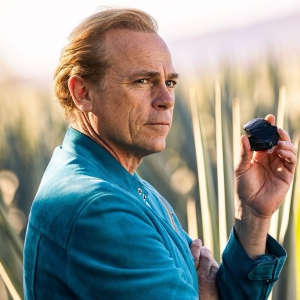
[00:00:10] Ray Latif: Hello friends, I'm Ray Latif and you're listening to the number one podcast for anyone building a business in food or beverage, Taste Radio. This episode features an interview Jean-Charles Boisset, the proprietor of globally renowned wine company, Boisset Collection, and the co-founder of luxury tequila brand, Casa Obsidiana. Forbes once Jean-Charles Boisset as The James Bond of Wine, a befitting title for the Frenchman who, as you'll soon hear, oozes elegance and sophistication. But at his core, Jean-Charles Boisset nourisher and flavor savant who loves to share his passion for high-quality beverage and food with anyone he encounters. He and his sister lead the current generation of his family's business, Boisset Collection, a global company that owns dozens of wineries across the world, including those based in California, France, England and India. According to Forbes, Boisset'Boisset Collection generates annual sales of around $200 million and has an estimated value of $400 million. While his primary business is wine, Jean-Charles Boisset a spirits enthusiast and entrepreneur whose latest venture in the space has reunited him with Beckmann Gonzalez family, known for their extensive history in the tequila industry, and in particular as the creators of Jose Cuervo. The partnership yielded Casa Obsidiana, an ultra-premium tequila brand that unites the collective expertise of its founding team. Created using estate-grown 100% Blue Weber agave, the tequila is aged in French Oak wine barrels that once contained chardonnay from a Boisset Collection winery in Napa Valley. Available in Blanco, Reposado, and Añejo expressions, the tequilas are bottled in Mexican-made, handcrafted ceramic bottles and feature the brand's namesake obsidian stone. In the following conversation, I spoke with Jean-Charles Boisset how he identifies opportunities to innovate and why he emphasizes taste, not trends, when planning new business ventures and developing new products. He also discusses lessons from prior experience in the spirits industry and how efficient utilization of its resources is at the heart of the company's communication strategy. Hey folks, it's Ray with Taste Radio. Right now, I am supremely honored to be sitting down Jean-Charles Boisset, the co-founder of Casa Obsidiana. Jean-Charles, great to see you.
[00:02:45] Jean-Charles Boisset: Great to see you, Ray. Bonjour and buenos dias.
[00:02:49] Ray Latif: Bonjour indeed. I'm a little rough around the edges right now. I played soccer last night. I play in an adult league in my town. My ankles just took a beating. I understand that you play a little soccer yourself.
[00:03:02] Jean-Charles Boisset: Absolutely. I'd love to play with you next time you come to France. I have a great team over here for you to hit with and the Napa Valley as well. So I love soccer. Even though we're getting a little older than 20 years old when we used to play at top level, it's still fun to play soccer with friends, isn't it? And to drink tequila in between, of course.
[00:03:26] Ray Latif: I understand that you were quite good, and probably still quite good, but quite good enough to play professionally back in the day.
[00:03:33] Jean-Charles Boisset: Back in the day. Well, Ray, dear friends, I have a pleasure to be able to see Ray as well on this interview. So I can tell you, he's very tall, well built, and very powerful. I can tell you, if he works in defense, you would have a hard time going through that wall. Are you in defense, Ray?
[00:03:51] Ray Latif: You nailed it, John Charles. That's impressive.
[00:03:54] Jean-Charles Boisset: Well, I'm a striker, so my position is center forward or center left, center right. So yeah, I was playing a lot of soccer when I was 12, 13, 14, 15, 16. And in fact, just before this interview where I sit, I'm a mile away where I started playing soccer when I was six years old. So I was having a little emotional moment looking at the soccer field saying this is where it all started.
[00:04:24] Ray Latif: The amazing thing I think about soccer is it's such a passion. And once you get on that field, there's the adrenaline, there's the love of The James. There's just so much going on that, you know, to be able to do that for a living, to be able to do that professionally is a gift. I also think winemaking and tequila production is also a gift, but I'd read an article actually about you and In it, you had said, quote, I had dreams of playing professional soccer. I was conditioned, however, by my environment to go the safe route, the safe road, that is, which I did. And I believe it was a major mistake. Now for someone who's as successful as you are, particularly in the wine business and now in the tequila business as well, actually, you've been quite successful in spirits as well. But I'm curious as to why you think after everything you've done professionally in this business, why it was a mistake.
[00:05:19] Jean-Charles Boisset: Soccer really prepared me for what I'm doing today. But what I would say, Ray, is I didn't push it. I listened to the environment I was living in. I bet you I would have been born in a very poor place in South America, like Bel-Air, and I would have nothing. I would have played and gone professional. So I was in an environment where I was having the option to choose. My parents said, you know, why don't you go for your studies instead of soccer? You never know what could happen. So I played it very safe. And what I reproach, I'm a very curious person. I feel I have audacity. I feel I love to take risks. But in this case, with my own life and my own gift, which was really a gift given by God or whoever are the gods, I was able to really play well at the time and to have really that gift of life to actually play soccer and to be good at it. And I didn't push it to the ultimate level. So in a way, my encouragement to all of us is to push your talent to any limit without limits. And I felt that there was a ceiling that I couldn't go beyond because, because, because. So I always encourage my children, 13 years old daughters, whatever they want to do, they should do. But that's a good advice to everyone. I kind of did the obvious because my parents started to make wine, you know, literally a few hundred feet from where I am right now. That's where I started, that's where I made wine, that's still where I make wine. So I kind of done what was maybe somehow organized for me. Soccer would have been a little bit of outside of the norm and the success would have been even greater, I feel, and I didn't do it. So I would always live with this chip on my shoulder saying I could have done it, but I didn't go the whole way. And in life, I feel living with that chip is always difficult, right? And I'm sure when we spend more time together, you'll tell me a lot of personal things that you say, oh, I could have done this. And I think it's always important to give it a shot. So to all the listeners, if you have a doubt, go beyond. If you feel you cannot do it, I'm sure you can. And give it a chance, because afterwards, you live like me, always with that little voice. you know, Ray, in the back of my mind saying, oh, all my friends ended up in the French team. You know, all the top players in France went to the World Cup. They won it in 1998. I was playing with some of those boys and I could have been there. And I was not because I obviously stupidly stopped. So I don't want you to think that I live in regret, but it's always something that hits my mind.
[00:08:16] Ray Latif: Fair enough. And thank you so much for sharing that advice and words of wisdom with our audience. I will say, however, I would rather be Jean-Charles Boisset Olivier Giroud. So there's that.
[00:08:28] Jean-Charles Boisset: Thank you. Thank you. I love it. Well, thank you so much. At least we can drink better wines together.
[00:08:37] Casa Obsidiana: Exactly. Exactly. Vibrant Ingredients is the natural ingredient partner powering food and beverage innovation, delivering flavor, function, and protection through a science-backed portfolio. Vibrant delivers purpose-driven solutions that help brands create extraordinary experiences. Discover what's possible with Vibrant today. Visit vibrantingredients.com.
[00:09:08] Ray Latif: Even though your primary business is wine, you're also involved in spirits, obviously, as one of the co-founders of Casa Obsidiana.
[00:09:15] Casa Obsidiana: Yes.
[00:09:16] Ray Latif: I would think that you have a good sense of the beverage alcohol industry as a whole. What are your general thoughts on where it is currently in terms of growth and opportunities and where do you think it's going?
[00:09:32] Jean-Charles Boisset: So I think it's always a cycle. It's like fashion. It always reinvents itself. Today's spirits is very trendy. Maybe wine is a little less, but I think it's always trendy. Alcoholic beverage are fantastic because they taste great. That's why we have alcohol. Why do we have alcohol in beverage? It's the fundamental question of why you need to ask it. You know, we have alcohol because it help reserve and enhance flavor. That's the foundation of why alcohol is helping taste. It's helping taste. You make a wine with the alcohol and you remove the alcohol, it's great. Alcohol keeps it together. I don't want to necessarily stick within trends. The trend is what we like. The trend is what we believe. And the trend is what you like. Ray, I'm looking at all your beautiful things around you. is beautiful products. It could be beer, it could be port, it could be Madeira, it could be obviously champagne and wine, it could be whiskeys and bourbon and slow gin and gin. The whole full gamut will always be there as long as they taste great.
[00:10:52] Ray Latif: The way you're describing drinking culture and your own personal habits feels very sophisticated. And I think that there's a lot of consumers out there now who are looking for premium options, particularly in beverage alcohol. How does this premiumization affect how you think about new product development, innovation, addressing consumer demand for beverage alcohol?
[00:11:18] Jean-Charles Boisset: Great, very well addressed. And thank you for this question because You know, for me, I don't think of what I do as a business. I don't think about it as a marketing strategy and plan and mapping the world and saying, okay, I'm missing a product here, so I should be in it, or we should do this because the market is going this way. And I know it sounds very archaic, Ray, but I really believe in making products that I adore, in crafting, creating what I love and what I believe in and the world I come from. I really feel it's very important. You make extraordinary products. If you love making them, if you love crafting them, if you believe in the raw materials, it could be great. It could be corn. It could be wheat. It could be agave, Weber agave. It could be anything you could think of, as long as you're passionate about it. I'm very democratic in my approach because I want everybody to have access to what we do. So I don't believe in just making products over two or three hundred dollars a bottle. So we as a company have been very focused into having an approach where people can have access to our world. at an affordable price, at that $20, $25, $30, $40, $50. And where the wine by the glass, the champagne by the glass, or the cocktail, or the spirit is not crazily priced. So I really believe in that. It's like going to a beautiful shop like Cartier or Hermes or Tiffany, and you only look at $40,000 piece of beautiful jewelry. That would be crazy. What is cool with those brands is they give you access to their world by being able to purchase something at $150 to $250 to $300, like a tie, like a little scarf, like, you know, twilly, or like a little wallet, if you wish. So you get into that beautiful t-shirt maybe. So I feel what is important is to give access to the people in wine, beer, spirits and the world we live in. So to make sure that they're not feeling, you know, external to that world. They're not feeling expelled because it's the happy few of the black card. I don't believe in that philosophy. I want to make sure that people really have access to the beauty of our products, to the taste of them, can taste them at affordable prices. Even if our margin rate is not as handsome, at least they have access to it. And I feel it's critical. I'm excited when someone says, wow, It was a special occasion, and I bought a bottle of the Reposado from Casa Obsidiana. The bottle was $2.50. But remember, in a bottle of $2.50, there's 20 servings. So when you divide 250 by 20 servings of two ounces, it's not that bad, right? You know, when a bottle of wine is even $50 and there's five glasses, it's only $10 a glass cost. So it's not that crazy. You know, we want to make sure that we are culturally engaged into the liquid we have. to think about the culture, the sense of place, the people who've touched them, the people who cultivate in the actual estate, et cetera, et cetera. So accessible, but still with a way to make people think about where it comes from. How many hands have touched it? How many hands have been able to, you know, impact it? And how many hands have been great at making it so beautiful, whatever the price point is?
[00:15:03] Ray Latif: There's a bit of education that has to happen there. You have to talk to a customer about why this would be the better option.
[00:15:11] Jean-Charles Boisset: Ray, as you know, we very focused ourselves in everything we do through history. What is history? Education. Understanding the past. Let me give you an example. Casa Obsidiana. Our friends and partner, The Beckmann, founded Tequila in 1795. They're the founder of Tequila, of Jalisco. They're the one who brought the blue rubber. Our other products, which we do, is Calistoga Distillery in Calistoga, Napa Valley. We have the oldest distillery in Napa Valley, 1868, Ray. 1868, we founded distilling in the heart of Napa Valley, where wine was prominent and majestic at the time. And, you know, whiskey, bourbon, cognac at the time, and obviously brandy today, slow gin, gin, vodka is being distilled again in the heart of Northern California, which is a very big deal. Wine, we own the oldest winery in California, Buena Vista, 1857. So Ray, we've never had so many young people coming to the Calistoga Distillery, which is an amazing place where you can enjoy cocktails and drinks and food and wine and beer and have a great time. We've never had, Ray, so many people in America enjoying the history of Buena Vista. Because you know, Ray, the people coming to Buena Vista are not necessarily just older people. A lot of younger people wanting to learn history. So I think all the younger generation you're referring to, the evolution of wine drinkers, spirits drinkers, are drinking better, higher quality, and a product with a true story. 2001, I got to meet The Beckmann in Mexico and I walked their field of agave and I thought, God, this is so cool, so good. I tasted tequila and I said, this is going to be the next big thing. And I loved it, so I said, we got to do it. So we teamed up back then, it was 21 years ago, and we created, as you said kindly, Lunasul, which has become one of the biggest brands. At the time, we had to educate people. They were thinking Tex-Mex, they were thinking blue, yellow and green, Mexico with a sombrero. That was the idea of Mexico, and you do a shot at the bar at university, but there's so much better. More than that, it's about art. It's about culture. It's about beautiful food. It's about this amazing historical Aztec and Mayan culture. It's all about what we don't really speak about as much. So that's what 20 years ago we wanted to put forward. So we were really visionaries at the time. We were pioneers. We were one of the first ones. At the time, a $25 bottle was expensive. Remember, 2002, 2003, we did it, we built it, we sold it. And now it was the time to start again, because I couldn't stay out of it. I enjoyed it. drink it, and I was really passionate to make it again on the top end level. So what we've done here is we've added our know-how here in Burgundy, actually The James wood as my library behind me, oak, beautiful oak from France, and we use our barrel that makes our wonderful wines, our delicious wines here in Burgundy, and we age the tequila into the wine barrel. that has that crystallization, that beautiful depot within the wine that allows us to make this unbelievable tequila that you've tasted. So it's exciting because with The Beckmann who have that beautiful land and incredible agave source, with them who know how to distill with us. So we partner a little bit on the distillation. They have a proprietary yeast, which is incredible. And us adding the barrel, which is the adolescence of the tequila. That's the key, is the aging. It's like a child. It's not to give birth to it. That's easy. It's how you're going to guide the child to become someone of a unique individual. Same thing here. So we guide the tequila over 16 days for the Blanco, over four months for the Reposado, and over 14 months for the Añejo. And now we're working on the Extra Añejo. So it's to giving that phenomenal flavor profile that comes from French Oak, not bourbon barrel, forget it. We make bourbon, but our bourbon as well enjoys wine barrels, which is so exciting. So it gives that very sophisticated flavor profile that I assume you really liked, right?
[00:19:56] Ray Latif: Absolutely. And, you know, I would probably be able to describe my perspective on the flavor, but you have a, I'm sure, more nuanced perspective. What should people be expecting to taste? What are the flavor notes? What is imparted by using, what is imparted in terms of flavor by using Chardonnay barrels, yours in particular?
[00:20:20] Jean-Charles Boisset: Yes, so the crystallization of the barrel is inside, which is a deposit of crystal that happens over four or five years as you make wine, which is beautiful. So by not removing it, you basically get some of the flavors that the crystal have captured from the grapes and the secondary fermentation. of chardonnay in this instance. So it gives that beautiful notes of vanilla, the beautiful undertone of honey, that very nice green apple, evolved pear, maybe dried apricots, maybe a touch of white rose, and finally that very seductive pear that you love. So All those flavors are captured within the barrel and the crystal that then gives that energy, really energy, into the tequila. So when you taste it, before and after, it's enormous the difference. And you may say, Jean-Charles, why just 15 days does it have time to have an impact? It's enormous. We tried 20, 30, it was way too much. We went 8 to 9 to 10, it was not enough. And we're going to have to do that every year because it's like making wine. The impact of the barrel every vintage will have an impact on the tequila. So we've got to be careful that we taste every day how it tastes in order not to go too far. So I'm actually bullish, right? I need to tell you, I was a little skeptical at first. So I want to be very honest with you. I was thinking, really, is it really going to add? Is the alcohol not going to eat the flavor profile of it? And so forth. So you ask a perfect question. I'm blown away. Actually, the power of nature, the power of wood, the power of crystal, the power of flavor remains. And it's being enhanced thanks to the agave. So the two together is the magical product you have. No one can do it the way we do because I make wine. We own all the barrels. We are here in Burgundy barrels that we ship to the U.S., make wine in Napa Valley on top of it. So it's a double whammy. That's why it's so unique.
[00:22:29] Ray Latif: What's inside the bottle is beautiful. What's outside the bottle itself is pretty spectacular as well. This is, as you pointed out, a ceramic bottle that looks like a work of art. And I asked your colleague, Patrick Egan, about this bottle and why you chose to put the tequila in it. And there's three different, there's three different bottles. Not everything looks like this Blanco if you're watching the video. And I asked him, you know, Do you know if people would expect that there's tequila in here?" And he said, that was a difficult process. That was a difficult question for us. And what we thought was, and I'm quoting him here, we thought it was going to be a wild success or an abject failure. So not much gray area there. There was either one or the other.
[00:23:17] Jean-Charles Boisset: What happened, Ray, Patrick Egan, The Beckmann family, and a few others of us, we're all walking on the estate in that beautiful, breathtaking view that you've seen, that 7,000 hectares, including the volcano, and we're walking around nonstop between agave plant with a glass of tequila. And we look at that soil and we say, wow, this is beautiful. What about if we made something from that soil? And then we picked up the obsidian and we said, well, we might as well use it. It's here. Casa Obsidiana reflects your personality, turns really negative energy into positive energy. So powerful. So we said, let's work from the land and the earth. So this is what clay is, basically. That's the ceramic. It's from the land. And we work with an amazing artist to create three different shapes that we work with him on to really create three distinct beautiful proportion and expression that are pieces of art. So you look at them in your back bar, it's actually unbelievable. So we really wanted to promote the land of Mexico, highlight obviously that beautiful terroir that we love as a word from France. That is what it is. You know, the soil and the obsidian together are creating the bottle. Then obviously the liquid and the agave soap. I mean, we cannot be more Mexican than that. It's crazy. We've done everything from the terroir, the bottle, the obsidian, the liquid. And what is so cool is we've added to that is this incredible and outstanding barrel from Burgundy that is adding again that other dimension that we've talked so much about.
[00:25:09] Ray Latif: When you are communicating that story to your target audience, where do you start? Where do you begin with that story? What is most important to start with? And how do you explain it in a way that is going to capture their attention, their imagination, and hopefully lead to trial of this product?
[00:25:30] Jean-Charles Boisset: So where I love to start myself is by the beauty of the aesthetic. The aesthetic is exceptional and tempt you by the visual or the artistic expression of the bottle. From there, you say, would you like a tequila? If the person tells you, no, I'd like a bourbon, you know, we say, maybe you want to taste it because you will never forget the taste you're about to taste. Then we lead with the taste. And then we explain the process. and the origin of it, how we make it, and eventually the partners. But I think first, it has to be a visual impact. It has to be, wow, what is that series of artistic bottle that I'm looking at that are so fantastic? I want to be able to look at them, touch them, taste them, and see what it is. And the beauty of it is we have three distinct bottles. because we wanted to make sure that people understood the sequence. The white bottle for the Blanco, the Reposado, which is the color of the agave, that beautiful green-blue, and then the Añejo, which is the color of that volcanic soil, that deep red, and the evolution, obviously, of the tequila as you age it in barrels.
[00:26:46] Ray Latif: John Charles, it's been so wonderful speaking with you. Thank you so much for taking the time. I really appreciate it. And hopefully we can connect in person at some point in the future.
[00:26:54] Jean-Charles Boisset: I would love it. Ray, you seem to be an incredible person. All the research is phenomenal. What you've done to prepare for this is marvelous. I really thank you for being so respectful of who we are, our background, our story. I'm really grateful and I'd love for you to be part of our circle of friends. So make sure you let me know whenever you come on either sides of the world, Europe or California or Mexico, we wanna see you and play soccer.
[00:27:27] Ray Latif: I am excited to sip some wine and play some soccer with you for sure. I love it. Thank you so much again and let's stay in touch.
[00:27:36] Jean-Charles Boisset: Thank you, Ray. Thanks so much. Really appreciate it.
[00:27:38] Ray Latif: Thank you. That brings us to the end of this episode of Taste Radio. Thank you so much for listening. Taste Radio is a production of BevNET.com, Incorporated. Our audio engineer for Taste Radio is Joe Cracci. Our technical director is Joshua Pratt, and our video editor is Ryan Galang. Our social marketing manager is Amanda Smerlinski, and our designer is Amanda Huang. Just a reminder, if you like what you hear on Taste Radio, please share the podcast with friends and colleagues. And of course, we would love it if you could review us on the Apple Podcasts app or your listening platform of choice. Check us out on Instagram. Our handle is bevnettasteradio. As always, for questions, comments, ideas for future podcasts, please send us an email to ask at Taste Radio.com. On behalf of the entire Taste Radio team, thank you for listening, and we'll talk to you next time.
[00:28:32] The James: you