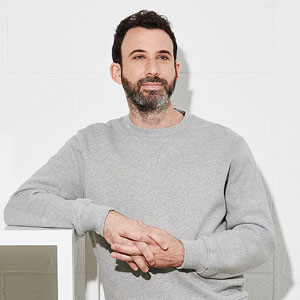
[00:00:10] Ray Latif: Hello friends, I'm Ray Latif, and you're listening to the number one podcast for anyone building a business in food or beverage, Taste Radio. This episode features an interview with Michael Preysman, the founder of trailblazing fashion company Everlane and Magna, an upstart brand of wellness powders. Michael Preysman turned heads in 2011 when he launched sustainability-focused direct-to-consumer apparel brand Everlane. With his latest venture, Magna, a brand of sports wellness powders infused with magnesium, he has once again captured the attention of many, particularly those in the beverage industry. In 2022, Michael stepped down as Everlane's CEO and took a new role as the company's executive chair and climate lead. Unburdened by the day-to-day responsibilities of running Everlane, whose 2023 revenues are pegged to be north of $200 million, Michael focused on Magna, which debuted last month. leading with a tagline for those who play the long game, MagnaMarket's hydration powders that are made with three forms of magnesium along with electrolytes. The products were developed in partnership with doctors and athletes and described as providing consumers with greater focus, energy, and recovery. Magna comes in four flavors, Lemon Lime, Tea Lemonade, Watermelon Lime, and Peach Mango, and are sold direct to consumer via its website, where a box of 30 sachets sells for $55 or $45 by subscription. In the following interview, I spoke with Michael about how his personal interest in magnesium spurred the development of Magna, how he leaned into his skill set to create the brand, lessons from building Everlane that he's applying to the new company, and the surprises and challenges that have come during his second stint at entrepreneurship. Hey folks, it's Ray with Taste Radio. Right now, I'm honored to be sitting down with Michael Preysman, the founder Everlane and Magna Magna. Michael, great to see you.
[00:02:25] Michael Preysman: Great to see you too.
[00:02:26] Ray Latif: No, I always have a beard. I haven't shaved to the skin since 2011. I expected to see you with a beard too, because your LinkedIn profile has you as having one. And when did you start shaving?
[00:02:35] Michael Preysman: Well, if you work in apparel for 10 years, your hair automatically turns gray, at least the beard part. So if I were to grow this all out, I'm 39, but I would look a solid 59. And so I decided to keep it trim. And then actually just the other day, I was with a friend at Gold's Gym in Venice, and He took a picture with me and he's 50. And my parents said, wow, he looks younger than you. And so I started shaving a little bit more.
[00:03:03] Ray Latif: OK, as soon as your parents start telling you you're old, I guess that can be a problem for you. But 39 is absolutely not old. You look quite youthful. You survived 10 plus years of the apparel business. Actually, what is it now, 14 years since Everlane was launched?
[00:03:17] Michael Preysman: You know, funniest story, I didn't realize until actually just a couple of months ago that we launched on 11-1-11. So one, one, one, one, one. Okay. November 1st, 2011.
[00:03:28] Ray Latif: One would think that's probably a lucky number to launch a company.
[00:03:31] Michael Preysman: I guess it was pretty lucky. Yeah, we had a good run.
[00:03:33] Ray Latif: We have a good run. Exactly. You still have a good run. If I had an apparel brand, if I had a fashion brand, I expect that I'd be wearing my clothes all the time. Do you always wear Everlane?
[00:03:43] Michael Preysman: Thankfully, I'm wearing Everlane right now, yeah.
[00:03:45] Ray Latif: Thankfully, so not exactly a yes, but today.
[00:03:48] Michael Preysman: You got to test, you got to try the competition, right? If you're in the beverage industry, you don't just drink your own beverage every day. You got to always be comparing and testing the competition.
[00:03:56] Ray Latif: That's a very good point. So Michael, I am so excited that you are now in the beverage industry. It's very exciting. It'll drive you crazy. And hopefully there'll be some good rewards at the end. Magna is a really interesting brand. Tell us about the origins of Magna and how long you've been working on it.
[00:04:14] Michael Preysman: Yeah, I'm excited to be in the industry as well. I was on a walk about two years ago when I stepped out of the CEO seat with a friend over at one of the famed investor groups, VMG Capital and VMG Partners. And he said, man, if you made it through the apparel industry and were able to build something so successfully, I'm excited to see what you do in our industry, which is the world of wellness. And of course, I picked the more complicated one in the world of beverage, but still excited to be in it because it's just a totally different lens and different way of building. The move to this industry really started because I, after apparel, decided that what interests me and what has always interested me is the intersection of cultural conversations and building products people love. And cultural conversation has really shifted away from material goods to how do you feel physical and longevity and life. And that's really a post-COVID mentality of people start to look inwards and say, how am I living my life and is it worth it? And how do I live longer, healthier, happier? And that was the big shift that I saw happening. And within that, what we see a big opportunity is to build at this intersection of nutrition and wellness, as well as building emotional brands. So many of the brands built in that world of nutrition, wellness and beverage are just very clinical brands. And so we started playing around with what's a way to both inspire people to move their bodies more, because if you want to be on a health journey, you want to live till you're 80, you want to live till you're 100, number one thing you can do is move your body more. You move your body more, you sleep better, you live longer, the muscle that you have will allow you to stay mobile and active into your old, old age. And granted, I'm only 39, but I think we all start to think about how do we live not just to Make it to 80, but make it to 80 and thriving. And so that was, that was one piece of it is let's build a brand that inspires movement. And then the other piece of it was really geared on how do we create a product that helps with that? And the second largest deficiency in human nutrition is magnesium. And so we thought, how do we build around magnesium into a product that can really become enjoyable and become part of the diet and nutrition every day? And so with that, Magna was born. And it took us about, I don't know, a year to bring it to life in full across all the design, product, development and flavor. And if you haven't tasted it, the flavor is just really killer. We spent a lot of time on flavor because at the end of the day, that's what matters. That's what keeps people coming back.
[00:06:52] Ray Latif: For sure. Taste is king, always has been, always will be. But magnesium is a very trendy ingredient. It is something that people are becoming much more educated about. And you talked about coming out with a powder versus an RTD. Was there a time when you thought you could launch a liquid beverage or is that in the pipeline? It's not in the pipeline.
[00:07:17] Michael Preysman: And no, I have always known what my core skill set is. And when building any brand or product or business, I think leaning into what your skill set is, is really critical. Reinventing the wheel is, it's possible, but it's not for the faint of heart. So I know D2C, I know digital really well. And so we thought about what's the platform that allows us to build digitally first. Retail will of course be a part of it in a big way. And we have great advisors and great relationships there that we're building, but it's not the out of the gate solution because we want to win on digital first.
[00:07:51] Ray Latif: Yeah, that's a good segue to my next question, which is about D2C. Are there learnings that you can take from Everlane Magna apply them to Magna or are they two completely different categories, product types?
[00:08:05] Michael Preysman: They are, in some ways, infrastructure-wise, very similar. In branding, very similar, but in ways that you have to get in front of the customer, completely different. So pulling that apart, it's so much easier to start a brand today, which is why there's so much more competition, why creators can launch brands. It's why if you wanted to launch a brand tomorrow, I think I might be drinking your beverage. and you could do it very successfully. And that's Shopify, Klaviyo, all the different stacks on digital that you can go, then the integration with retail. Everything's out there, lots of great readings. Then it comes to the branding. There's a lot to learn from Everlane. We really leaned into the idea of radical transparency and ideology that was borrowing from the food industry at the time because it was about how to bring transparency to the industry. And that's what the food industry had done through sourcing, through local organic. And we brought that mentality to apparel. What we have with Magna is a different ideology that sits around what I was just talking about around the longevity we call play the long game. And it's a, I would say, post-COVID, post-Nike ideology, where everything was win at all costs, just do it, and is it in you, to a live for it, don't die for it, that we're here to play the long game, that we got to improve each and every day, but it's not about being the best, it's about being your best. And that's a really critical part of the brand that we're building out. But then the way you get in front of customers, man, that's so different. I was surprised because in our world, we launch new product every week, sometimes multiple times a week. And the product was the content because you could say, Hey, check out this new sweater, check out this new shirt. In the world of beverage. In the world of a lot of CPG, you're not introducing new product every week, every month. Sometimes, if you're Coca-Cola, you don't even introduce new product every year. And so the way you're staying top of mind is through content and connection. It's about building relationships with people and fostering those relationships, and at the same time, building content that resonates and engages the consumer. And that's a very different strategy of how to do it, even though at the end, we needed to do that in apparel. It was always done through new product innovation. And that's very different here.
[00:10:28] Ray Latif: And you built great relationships with your consumers at Everlane. We did. And I think that building relationships, a deep relationship with your customers is such a critical part of retention, getting them to come back to your website, getting them to tell their friends about your products. But it's not as easy as it sounds. How do you build a relationship such that the customer stays with you for a long period of time, if not the lifetime of your brand?
[00:10:57] Michael Preysman: It's a great question. I think ultimately, first and foremost, is you have to have great product that people love. And I have seen, candidly with Everlane, we've had periods where we had okay product when we launched, and the brand carried all the weight. Then we had great products, and we had really high engagement. The number of people that said, They would be devastated if the brand didn't exist tomorrow, which is a measure of sort of brand love was very high. And then we had that wane during COVID and now it's coming back. But the loyalty really starts with product and it ends with. individual connections, and in between, there's that content and conversation and community that you can build. So that content, community, and connection are sort of, to me, the three pillars of it. Content gets you out there, oh, that's a brand I can associate with. I like that. Then community allows you to foster the conversation amongst the group, and connection is that one-to-one. And I think of it right now when we're starting, it's hard to foster community and content all out of the gate, so we're really focused on connection. One-on-one, individual, block-by-block, how do we build individual relationships where they know who I am and they know who the rest of the team is? And that's the work we're doing right now. Within that, then, what you'll see us doing next is how do we build community, and you'll see us show up in Los Angeles in a big way, in San Francisco, and then we'll shift to new communities within New York, D.C., etc. So community will be a big part of it, and then you'll layer on the content after that.
[00:12:27] Everlane Magna: Vibrant Ingredients is the natural ingredient partner powering food and beverage innovation, delivering flavor, function, and protection through a science-backed portfolio. Vibrant delivers purpose-driven solutions that help brands create extraordinary experiences. Discover what's possible with Vibrant today. Visit VibrantIngredients.com.
[00:12:54] Ray Latif: I think because Everlane came out of the gate with this radically different approach to apparel and fashion, it helps people understand that this brand is different. And there was an authentic story behind that marketing or that positioning. Can you do the same, or is there a similar kind of story you can tell with Magna in that this is a product that is very differentiated from other powders or other products that use magnesium as their key ingredient?
[00:13:23] Michael Preysman: So it's interesting because what you just said is Everlane came out as a different brand, but the product actually was entirely generic. We started with a t-shirt. It was about as basic as you can get. And then we were in sweaters and sweatshirts and Oxford. Everything was basic to the bone. And yet we were able to build differentiation here. The product is actually more differentiated than what's out there relative to the market, but there are way more upstarts. And so the brand feels a little bit like it has to do the work to feel more unique. What's going to resonate long-term is this content piece, and that's going to take time. It's not going to be like the days of Everlane where you could just come out of the gate. with something that feels completely different because I'm sure you know it more than anyone. It's a much busier world today. You go onto the shelves and you see how many different new beverages there are on RTD every month. It's just insane. You go to Erewhon and it's a wall full of beverages. And then even if you look at Olipop, there's, I think it's Olipop, has 17 different flavors. I mean, they're trying to claim shelf space wherever they go. So it is very fierce. And the moats that exist in this industry are shallower and shallower.
[00:14:42] Ray Latif: Well, Erewhon is an amazing place to shop. And I've spoken with their COO here on Taste Radio about their strategy, their selection, particularly of beverages. And he made it clear, you know, Erewhon is a place for discovery. People want to go there and find different things. And they're changing up their sets almost every two weeks. And a lot of what people will see is based on the packaging, obviously, the packaging and the branding. And you, Magna that is, have great packaging. Your branding is fantastic.
[00:15:15] Michael Preysman: Thank you.
[00:15:16] Ray Latif: It stands out that yellow and black color palette just really looks different than a lot of things I've seen in the past. How did you think about going about package design? What were the most essential elements of that design?
[00:15:31] Michael Preysman: Yeah, it's interesting. You know, obviously so much of building a brand is the aesthetic and feel of the people who build it. And when people think of Everlane, they think of minimalist and white and gray as the original sort of base. But I've always sort of believed in this very minimal undertone with pops of color to grab attention. And so in that way, Magna sits as the pop of color in someone's life, where if I look back at your shelves behind you, that yellow would really pop on the shelves behind you and stand out to your point. And so we wanted something that felt quite electric. that felt inspiring and motivating, but also stood out. And so color was a huge role in that. And there's a lot more to the color palette than just the yellow. We've used a little bit of it, but there's this crazy purple and really vibrant green as well. So those will all come to life. And from a logo perspective, I mean, the logo and the colors were reinvested quite a bit. There's also a mark that is based off of the magnesium molecule. And so you'll see quite a bit come to life from that perspective. The Magna logo itself is something that felt almost game-like, bold, heavy. and could stand on its own on a sheet, but also stand on top of a photo and feel very retro at the same time. And so that was a lot of what we played with was how do we both play in the world of nostalgia, which is so critical to sport and to beverage, as well as play into modernity and get something that pops forward. From a packaging perspective, it was similar. And we were, while it's not healthy for you, we very much always loved the Marlboro box. and just how iconic it was. And so there was definitely that reference that we pulled from, with that Marlboro at the top, and just that very killer vibrancy of that package. So we played with that as well. We tried to design the box originally like the Marlboro box, but still haven't landed the plane on that. We'll get there eventually.
[00:17:24] Ray Latif: Well, for someone who has a creative streak as much as you do, were you relying on a branding agency, on a package design agency as much as some other entrepreneurs do? Or were you leading the strategy when it came to designing the package?
[00:17:38] Michael Preysman: Strategically, we did everything internally. We work with a whole host of freelancers and work with different partners and firms to help us out. So we've got probably two or three different firms. I mean, the world of creative has changed so much in the sense that 10, 15 years ago, there weren't the tools for creatives to be able to connect with companies directly. and have a beautiful site, have an Instagram and have a network of people that introduce them. And so over the past 10 years, what I've seen is that so many creatives want to be freelance and some of the best creatives have just the two person shop. The original Everlane logo was actually done by a husband and wife team that worked in Brooklyn that still I consider some of the best designers out there. And while we didn't work with them here, it's just very similar to find these groups of one or two folks that work really well with you and that you then end up maybe retaining or not to continue to work together.
[00:18:35] Ray Latif: Going back to telling the content story or telling the story about Magna through content, you know, with Everlane, the clothes always looked better on someone, on a model. With Magna, I wonder, does the marketing, does the advertising of the brand, for lack of a better word, work better, in your opinion, with people? Or can it stand out on its own?
[00:19:01] Michael Preysman: That's a great question. Out of the gate, one of our core truths is that people love the branding and the packaging. We've gotten that consistently. So that's great. The piece about it that I do believe is I believe people matter. And so we haven't figured that out yet, but we will be investing quite a bit into making sure that we can get the getting that come to come to life and that people will be a very core part when we go back to content community connection. the middle of that that connects everything as people.
[00:19:32] Ray Latif: Well, you already have a great team of people of endorsers. I don't know if they're equity partners in the brand or not, but people like Christian Press from Angel City FC and Jackie Bunton, who is, I believe, an MMA fighter. These are folks who may not be household names, but are up and coming athletes. who seem to have an authentic connection to the brand. Talk about that ambassador strategy or that athlete partner strategy when coming out of the gate and why it's so important for Magna.
[00:20:06] Michael Preysman: Yeah, I mean, Jackie's a kickboxer, Kristen, who's over at AFC. You know, for us, what we wanted to find is, and even Baron, who's a surfer, who's up in Hawaii, and what we wanted to find was these individual sports that people can tap into. You know, you and I tomorrow can go and kickbox. Are we gonna be Jackie? No way. But at least there's an entry point into those sports. And they're very much sports that are cross-functional where you have to have so much endurance and you have to have strength and you have to also you can with biking you can go bike five miles or you can go bike 600 miles you can run for a couple miles or you can go run an ultra i mean we're not going to run an ultra but many people do and so there's this beauty of these sports that are sports you can do your entire life and you can start small and go big. And I think obviously nothing captures that more than someone winning an Olympic gold medal in cycling that had just started seven years ago and then was in finance and then dropped out. And she did an amazing job and won the Olympic gold yesterday. I love stories like that.
[00:21:14] Ray Latif: For sure. For sure. I also love stories. Clearly, I love telling stories about entrepreneurship and folks who have quote unquote made it. And, you know, you having been an entrepreneur since 2011 with Everlane and Magna back in the game, so to speak, with Magna, is it harder now? I mean, is it, do you feel like you're in a better place? Do you feel like you're kind of in the same place as you were in 2011?
[00:21:41] Michael Preysman: It's much calmer the second time around, which is good and bad. But the first time around, there's no playbook. And I look back at it. I spent some time looking back, spent a few hours at all of the original work we did the first month. And it was wild because there was no program for email marketing. There were no tools for email marketing. We built our own shopping platform because Shopify wasn't really a thing. Stripe didn't really exist. And so there were so many ways that we had to do this. that were completely unwritten rules. And in that way, the rules are much more written. But by the rules being written, it means there's more competition, because when the rules are written, other people can follow them. It's a totally different type of game to play now, where it's the same as Olympics or any sport. World records are broken. every year because the level of competition is rising, the level of knowledge in how you play the game rises, and it makes the sport stronger and more competitive. And that's true of entrepreneurship. The sport of entrepreneurship is more competitive and stronger. And what's even more interesting is that in a post venture world where people were raising tons of money for anything, you really have to focus down to the scent on the unit economics. And that's much more critical. And that's actually very similar to the way it was when I built Everlane. It's just the world changed for a bit, and now it's back to that. So that's good to see, because I think that discipline is critical and helpful.
[00:23:13] Ray Latif: I think unit economics are extremely important. I also think going back to this notion of a great relationship with your customers, with your consumers is so important as well. And customer service is a key part of that. Having a direct to consumer business with Everlane, I got to think you learned quite a bit about. how to interact with customers to keep them happy and, you know, to keep that relationship going, even if something goes wrong. How do you carry that into that great customer service? How do you carry that into Magna?
[00:23:44] Michael Preysman: Yeah, it's interesting because in apparel, there's a lot more touch points of customer satisfaction or dissatisfaction. Moreover, because the product can come, it doesn't meet your expectations because what you saw and what you got look different, feel different, most importantly, fit different. And by the way, it might not look the same as new as it does on a model on the screen. And so there was always a opportunity to engage with the customer on that level. And, oh, one more, how do I style this? So tons of ways to address that. With our product, I'm still looking for a bit of that because the connection point is the product is so much more consistent. and clear and it has less variables, which makes it all easier. But at the same time, what was actually interesting is that by having all those other variables and apparel, you had more touch points into the consumer to create a narrative and a story and a connection point. It's like, you know, a drink of water is less interesting than a 10 course meal at a restaurant. So how we find ways to engage with the customer is really critical and build connection points. And it's still early days on that and have work to do. But the more we can integrate into their life and build an ambassador network, the better.
[00:25:02] Ray Latif: You know, Michael, I talked to a lot of entrepreneurs, both early stage and established, and you're both. You're an established entrepreneur with Everlane. You're an early stage entrepreneur with Magna. And the folks that I talk to who are two weeks in, a month in, in the beverage industry, really don't have any idea what they're in for. And sometimes that's a good thing. I hear naivete is something that helps entrepreneurs. And they always say, I never would have done this if I had known how hard this is going to be. But for you, having the perspective of having built Everlane, what's been most surprising to you as an entrepreneur in the beverage industry? What's been hardest for you? What's something that you didn't expect once you entered this business?
[00:25:44] Michael Preysman: Two realities have been surprising. The first is on the background. We worked with 20 different factories Everlane and Magna more at certain points. And you would think manufacturing for apparel is complex, but it was, in the end, we had very few issues. Even though we would source fabric, buttons, zippers, all kinds of accoutrements, we had fit issues. We had to stretch the fit across, you know, extra small to double XL or double zero to 20. And yet we had very few issues. With our product, there's just been a ton of complexity in terms of the co-man and getting that right. and we're working through it and building a strong partnership. But I was surprised at how challenging that was, because in apparel, people work 24-7 and things work out generally well on the manufacturing side. So that was definitely one surprise. The other reality that was a surprise was, even though it's the second time and I should know better, You always wanna believe you have lightning in a bottle. Oh, if you build it, they will come. And I am the number one believer in having a distribution strategy out of the gate and knowing what your distribution strategy is. But it was surprising how much work it took and how much noisier the market is today than it was probably even five years ago, but definitely 10 plus years ago. And I'm all up for the challenge, just like any other moment. You say, oh shit, and then you rally the team and everybody says, let's do this. And so it's been, I think, quite bonding. And every day we're seeing actually pretty incredible improvements and growth. So not just week over week, but day over day, which is awesome.
[00:27:43] Ray Latif: When you talk about the team, are they folks that have experience in this industry or are they folks that you just trust?
[00:27:51] Michael Preysman: On the creative and marketing side, it's a whole host of people from the days of Everlane, some freelance, some full-time. And then on the operations, it's a very small team. There's full-time, we're keeping it very below sub-10. I believe in this new model, which is, can you build businesses to nine digits with a low double-digit team? What does that take? How do you do it? And in that way, yeah, the other part of it is operationally driven. And those are folks from the industry.
[00:28:23] Ray Latif: You know, I always advocate for mentors in this industry or I always advocate that people have mentors in this industry because it can be lonely. It can be tough. You can be misled. And having people who know the business or at least can listen is so important. But how do you find good mentors? How do you find people that can give you good advice?
[00:28:52] Michael Preysman: Fortunately, I think in the position of being a founder and a CEO and having a lot of camaraderie. So I have the fortune of in the past having, you know, a wonderful mentor in the apparel world, Betsy McLaughlin, who built Hot Topic and then went on to sit on a number of boards and she's been a great mentor. And in this case, you know, a good friend, Eric Ryan, who's been really helpful and thoughtful in terms of how to build this out. He's built out Ollie Wellie method all at Target. So he's quite versed in the space. And then, you know, it goes back to one of the first people I ever met on my founder journey was someone who was the president of Red Bull North America for 10 years. So I take the time to meet with any CEO founder that I can and try to do likewise for others, because I agree that shared knowledge goes a long way.
[00:29:38] Ray Latif: Well, you got to be a little careful about that because people are going to hear this and hit you up on LinkedIn all the time. I don't really check LinkedIn, so they'll have to find another way in. Oh, you rarely check LinkedIn.
[00:29:49] Michael Preysman: Yeah, I rarely do.
[00:29:50] Ray Latif: Okay.
[00:29:51] Michael Preysman: It's so noisy. So if they find another way in, great.
[00:29:54] Ray Latif: Fair enough. Fair enough. Well, I think listening to this interview has been hugely helpful for some folks. Michael, it's been such an honor speaking with you. Thank you so much for taking the time and good luck going forward with Magna.
[00:30:05] Michael Preysman: Thank you very much. And likewise, and I hope you have a great day and huge fan. And thanks for doing this.
[00:30:10] Ray Latif: Appreciate you saying that. Thanks again. That brings us to the end of this episode of Taste Radio. Thank you so much for listening. Taste Radio is a production of BevNET.com, Incorporated. Our audio engineer for Taste Radio is Joe Cracci. Our technical director is Joshua Pratt, and our video editor is Ryan Galang. Our social marketing manager is Amanda Smerlinski, and our designer is Amanda Huang. Just a reminder, if you like what you hear on Taste Radio, please share the podcast with friends and colleagues. And of course, we would love it if you could review us on the Apple Podcasts app or your listening platform of choice. Check us out on Instagram. Our handle is bevnettasteradio. As always, for questions, comments, ideas for future podcasts, please send us an email to ask at Taste Radio. On behalf of the entire Taste Radio team, thank you for listening, and we'll talk to you next time.
[00:31:05] Michael Preysman: you