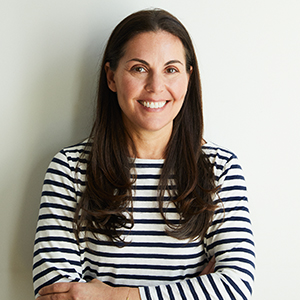
[00:00:10] Ray Latif: Hey folks, I'm Ray Latif and you're listening to the Top Podcast for the food and beverage industry, Taste Radio. This is a special edition of the podcast, which highlights interviews with six founders, creators, and innovators who joined us on the show during the second half of 2022. Just a reminder to our listeners, if you like what you hear on Taste Radio, please share the podcast with friends and colleagues. And of course, we would love it if you could review us on the Apple Podcasts app or your listening platform of choice. Let's kick things off with Alison Cayne, the founder and CEO of fast-growing refrigerated sauce brand Haven's Kitchen. In this clip, pulled from an episode published on July 12th, Alison spoke about how she created an office environment in which her team wanted to return to an IRL work setting, why the brand's innovative package design is both an asset and a limitation, and navigating the challenge of uneven retail pricing. I've been here all week in New York City and speaking with folks that I've been interacting with, a lot of them have talked about how their teams are now all working remotely and there's no real urgency to get back into the office. But again, walking in here, I felt like there was a liveliness. There's an energy here among you and your coworkers. I was going to call them employees, but I feel like you'd prefer coworkers. Your team. And you know, you don't get that obviously from Zoom calls. You don't cook together on Zoom calls. Did you feel that urgency pretty quickly to get the team back in the office as soon as possible?
[00:01:55] Alison Cayne: The team wanted to get back in the office. There's push and there's pull, right? You know, you can like force something down people's throats or you can make it really appealing and wonderful. then they want to be a part of it. I'm never going to make people come in if they don't want to. What I do hope to create is an atmosphere and environment where people want to be together and want to be with me. I think whether it's Making food or returning to the office, if you make it a should or a have to, you're just naturally going to get resistance. If you make it something that people are excited about, you're going to get more buy-in and buy-in is everything.
[00:02:40] Ray Latif: The pouch really is an amazing package. You know, I think when I first saw Haven's Kitchen, I was like, this is brilliant. How come more people aren't doing this? And for a lot of the reasons that you mentioned, I mean, it's a clear pouch. You can fit a bunch of them in your refrigerator without a lot of headache. But on the retail front, were there a lot of questions about, well, how does this fit on shelf? You know, does a standup pouch, is it going to fall down a lot? I mean, I guess, how did you work that out with your retailers?
[00:03:04] Alison Cayne: I mean, it happened at the Fancy Foods show. John Lawson, who is, you know, the Northeast grocery buyer, came over and he was like... For Whole Foods? Yeah, for Whole Foods. He was like, these are great, love them. And then he took his, you know, pointer finger and just touched the standing pouch and it like, boop, like a little domino just like tipped right over. And he's like, what are you going to do about that? And that's when I learned about Shelf Ready Corrugate and, you know, the rip off top. And that actually gives you an opportunity to do some branding on the box and took us a while. But yeah, I mean, people still have questions and not every, you know, not every retail shelf has the height for the corrugate. So they take them out of our things and then they're, you know, just sort of you're hoping that someone doesn't knock down the whole slew of pouches and they're just kind of lying there flat on the shelf. It's challenging. You know, I have five kids and I've always said like their assets are their liabilities and their liabilities are their assets. You as a human, the things that make you great are probably the things that you struggle with, just different side of the same coin. And it's the same with the product. Everything that makes it amazing are the actual things that make it challenging. And that's the fun part, mostly.
[00:04:24] Ray Latif: Sprouts, Whole Foods, Target, one of the challenges of being in all those places is that your price point is different in all those places. I mean, I think you told me at Whole Foods it's $5.99?
[00:04:35] Alison Cayne: Well, it's funny. So Whole Foods Mid-Atlantic is $5.99. Whole Foods everywhere else is $6.99 and Whole Foods Northeast is $7.99. And that's partially because of price matching in Mid-Atlantic. And it's partially because of like the DSD, sort of that like different distributor network in the Northeast. Yeah. I mean, we, we can control what we can control. We can control our price to the distributor. Sometimes we can do an EDLP with a retailer, but for the most part, Target, for example, they have a whole group of people in a room somewhere doing pricing that has nothing to do with the brand or even our buyer. So we are $6.99 in a lot of places. And unfortunately we're like $8.49 in a couple of places. And it works for them. They've figured out the math on their end, you know, dollars per slot versus velocity. It's challenging on the brand, right? Because A, we get these DMs from people who were like, I really wanted to try it, but it's $8. Who do, you know, who do you think you are? There's only so much we can be like, you know, call target. So we, we send things and we, we try to make nice, but it's hard. Yeah. And of course your velocity is going to take a hit, but there are some things that you can control in this business and most of it you can't.
[00:05:55] Ray Latif: You know, if Target's charging $8.50 or $8.99 for a pouch and you want the price point to be closer to $6, why be in Target?
[00:06:05] Alison Cayne: I love this question because I think that it pertains to basically everything, right? Every channel, whether it's a marketing channel or sales channel, an event, who you're pitching, everything in almost life, right? There's a reason for it. You have to know what you're going into that channel for. And the success of that depends on what you have established as the goal of it. Target is one of those accounts that is a halo. It's incredible awareness. It has a ton of people who love Target. There are Target people that are just like crazy Target people.
[00:06:45] Ray Latif: I know those people.
[00:06:46] Alison Cayne: Yeah.
[00:06:46] Ray Latif: And it's like that in Bed Bath & Beyond.
[00:06:48] Alison Cayne: Yeah. I mean, I mean, Trader Joe's too, right? Like we're never going to be in Trader Joe's and they will likely copy us, but I'll sue them. Just matter of fact. I'm just like ready. I'm like, come at me, TJ or Aldi or whatever. But you know, for Target, like, you know what you're in there for. You're not in there. You know, you might be in there for a good top line. You might be in there for like really good awareness. You're probably not in there for a great margin. And that's okay. And knowing that ahead of time frees you up because it means, okay, I know what my goal is for this channel. So I know where my boundaries are for this channel and what I'm willing to do for it. You know, there are other channels that are much more margin accretive and when they start imposing things, that's when you're like, this is not that channel. That's over here. And just knowing what the goal is for each thing. And I would say the same thing with a partnership, but you know, anything, any marketing channel, you know, some of them are for awareness. Some of them are for repeats. Some of them are for testing to see, does this work with this particular group of people? And every time you launch something new, knowing what the kind of, what you're trying to get out of it is just very helpful because it keeps you from making decisions that are reactive. You know, every decision, I mean, I try to make responsive decisions but not reactive because you end up being just the tail being wagged by the dog and there's just tons of dogs and you're just always the tail. There's a lot of dogs in New York City. So many dogs.
[00:08:25] Ray Latif: There you go.
[00:08:26] Alison Cayne: Full circle here. It goes all back to the dog.
[00:08:27] Ray Latif: Yes. I want to talk about margin for a second because that's all I hear about from investors.
[00:08:34] Alison Cayne: Now.
[00:08:35] Ray Latif: Yeah. Profitability is coming up in a lot of those conversations now. Five years ago, don't worry about being profitable. It's fine. It'll come with scale.
[00:08:42] Alison Cayne: Kind of a setup.
[00:08:43] Ray Latif: It very much was. But every investor I talked to, They're like, entrepreneurs have got to get their margin right. That's the only way. That's the first thing we talk about when we sit down with an entrepreneur, almost. How did you learn about what margins you needed to make this a sustainable and ultimately, hopefully, profitable business? I don't know. Are you guys profitable yet?
[00:09:04] Alison Cayne: No.
[00:09:04] Ray Latif: No, I wouldn't think so.
[00:09:05] Alison Cayne: But we have a really good gross margin.
[00:09:07] Ray Latif: And you have a path to profitability.
[00:09:08] Alison Cayne: Yeah.
[00:09:09] Ray Latif: So how did you educate yourself about what you needed to do because of those high quality ingredients that you use and the price point that you hope to get? It seems like it would be a little challenging for your brand and your products.
[00:09:20] Alison Cayne: Yeah, I mean, I would love to say that I was just really smart. I am privileged to have a romantic partner who is a private equity investor. And one night he said to me, you know, this really isn't worth doing if you can't get your gross margin to 40% or above. And I immediately burst into tears and we got into a pretty big fight. And then the next day, I sort of brushed myself off, said thank you for the advice, and went and found a co-packer who could make my sauce and invest in the company and give me a break on the toll. So I got lucky that that was who I was sleeping with at the moment. That's the honest answer, right? I mean, I, you know, it's, I think that since then, obviously, I've become sort of like the margin freak. It makes me sound a little old and outdated and a little bit like a killjoy.
[00:10:20] Ray Latif: I don't think so. It makes it sound like an intelligent entrepreneur, really.
[00:10:23] Alison Cayne: Yeah, but you know, also, sometimes I'm like, There's a lot of killing it and crushing it and loud stuff going on. And I'm here like, what are we, you know, how are we reformulating to like, you know, and so sometimes I feel a little bit like that. But yeah, I mean, I think number one, I mean, do you want to be continually fundraising? Because it is exhausting and as confident as a human and as in love with your product as you might be, I don't believe it if people say that it doesn't personally hurt them every time they get a no or I'm not interested or this isn't for us or we don't think it's a fit. So if you want to be on that train and constantly trying to bring in people and convince them that the business is worth it, than have a product that just needs to just be continually fed by other people's money. On the other hand, building a food company that is, you know, as you said, high quality ingredients, cold supply chain, HPP, which is expensive, you know, a category disruptor, that's very, very unlikely to be profitable for the first several years. So that balance between that growth and that profitability is where again, you're trying to like, sail the boat so it doesn't tip over, but you move along in the water. And I think we're there and we're getting better and stronger. And, you know, again, I come from a profitable brick and mortar, so I'm not inclined to spend the way I think that some entrepreneurs have been lulled into spending in the last couple of years. And I'm grateful for that because I think it's going to be a rude awakening.
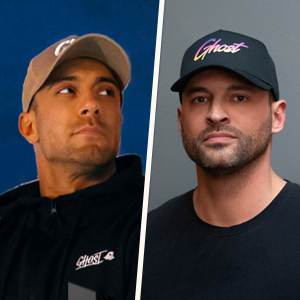
[00:12:05] Ray Latif: Next up, we have Dan Lawrence Sue and Ryan Hughes, the co-founders of sports nutrition and energy Brandt Gehrs. In a clip pulled from an episode featured on October 25th, Dan and Ryan spoke about why generating revenue is not at the top of the list of company priorities, why entrepreneurs have to go all-in to be successful, why they believe you can't create a lifestyle brand, and why Ghost has never used social media as a marketing tool. We prioritize people, we prioritize products, we prioritize brand, you know, all with the goal of making an impact, not making a buck. And I think it's, it's amazing. And we're smart enough guys, you know, if you do those things and you execute well, the dollars are going to be there. The sales are going to be there, but yeah, it's been an amazing ride so far. Dan, you said something interesting that I just want to touch on. You said that you'd started other businesses and Ryan mentioned this as well, but they didn't work because you guys weren't all in. What does that mean to go all in on something? I think there's only really one way to go all in. And I think it's fully to invest 100% of your time, your attention, your dollars to an idea. It could be a service, could be a brand, could be a product, could be anything, right? An entrepreneur goes in headfirst and doesn't lift their head for air until, you know, there's an opportunity to, whether it's through the business being successful or, you know, a monumental moment to step back and appreciate what you've done. But I think the two of us, and obviously having full-time gigs prior. We were really starting side hustles. It was something that we committed some attention to. I think a lot of people do this. They say, hey, I'm going to start this business, and they give it 50% of their time. They say, if that business is successful, I'll leave my gig. It's not surprising that a lot of those people never build a successful business, because you're never giving it the attention that it deserves. You know, for us, it's been a 24 seven project since the moment we, we came up with the idea long before we even launched. Right. So, and that comes with a lot of stress, a lot of challenges and, you know, a lot of moments where you feel like you've lost or going to lose everything. And I think those moments are ultimately what would give you, you know, the feeling today where you're like so proud and excited about what you've built. I think it's illogical, if not a little cocky to think that you're 50% can beat somebody else's 100%. So I think that that was the moment for us that we have to go 100% in as Ryan said, in every which way, you know, again, you know, here we are. Ryan, in addition to the word fun, the word that I often hear associated with Ghost Ghost Lifestyle. You guys set out to create a lifestyle sports nutrition brand. However, the last time we chatted, you made it clear that you can't create a lifestyle brand, it has to be one from day one. So what does that entail? Because I know a lot of listeners think, oh, yeah, I want to start something that's novel, unique, that's associated with a lifestyle, not necessarily associated with a product or commodity. So what does that entail? I mean, I think from for day one from us, like it entailed everything that we loved and we were passionate about the kit, you know, from obviously the gym and working out to sneakers and you know, travel and music and a lot of these things. And for us, we, we did, you know, kind of inject pieces of all of those things into everything that you see today from ghost, whether it's in the products themselves or the creative or the content, Ghost Lifestyle brand for us was a collection of everything that we were super passionate about. And it was authentic, right? I think the authenticity piece to that is why I said, you can't necessarily create a lifestyle brand and you have to bleed it. And for us from day one, I think Ghost was a collection of everything that I think at first it was what we were passionate about, but what we quickly realized is that a lot of people are passionate about the same things. You realize that through sharing these values, this authentic approach to a category, to a business via social. And I see you guys are so interconnected with partners, your customers. Your customers are very, very tied to social in a way that some of the other legacy brands never could be. Is that really where you saw the opening to connect with folks? I mean, is that the path? Is that the medium that you found was most impactful when you launched the brand and as it developed? I mean, something that I think is really important to us, we've never really used social media as a marketing tool. We've used it as a communication and connecting tool. And that's a really important kind of like nuanced way of way of thinking we're really again like these are social shareable products, and we wanted to build a brand and build a community around that brand that that kind of spoke to that. So, so I think that's just it's just a different way of maybe maybe thinking. And look, social media has enabled ghosts and all entrepreneurs today to be able to connect with audiences and find like audiences in a way that years ago didn't really exist. And with that comes kind of this mindset of like, we own the company, but we don't own our brand. The ownership of the brand exists in the hearts and minds of everybody involved, fans, customers, partners included. And I think rather than running from that, like some people do, we celebrate it. You used a word earlier when we were kind of talking on a similar subject and we've said it numerous times since, but I think especially now more than ever, people crave connection and they crave connection in relationships. They crave connection in the products that they buy, the things they consume. And I think social media obviously gives us a medium and a platform to connect with our audience. But the way that we've attacked it has actually created that genuine or authentic connection with that community that makes them feel like you mentioned earlier that they're a part of this. And, you know, while Dan and I might have started it, as he just mentioned, Ghost is far bigger than the two of us now. It's a collection of everybody, both internally and externally, that's connected in this passion about the same things that we are. And that's what makes Ghost special. Social media is a really great tool to connect with, to communicate with your consumers, with your fans. In many ways, consistency is the key because one post or another is pretty fleeting. Someone will look at an Instagram post or a Reel, 10 seconds later, they'll forget about it. That being said, when you're talking about playing the long game, which I know is something that's really important to you guys, thinking about that from the outset, knowing that this is gonna be a grind, knowing that you're gonna have to put the work in for a number of years, is something that I think a lot of entrepreneurs, it's hard for them to understand, it's hard for them to appreciate. How did you guys, Dan, how did you guys think about playing this long game and preparing for it? It's a great question. I think part of the way we attacked it is there'has never really been, I think, a specific goal or a master plan. The hypothesis that we wanted to test with Ghost from day one is always, how big can we take this? How big can we build this brand and our products? How far can we go? How far can we reach without ever sacrificing for even a second on any of that initial vision and the ideals that we started this, the commitment to authenticity, the commitment to transparency, community, connecting people. How far can we go? You asked a question earlier about ROI. How far can we go before there's inherent pressure to focus on ROI instead of brand building or community building? And look, I think for us, that's still a journey that we're on, and I don't really know how high it's high. And I think that that's one way we focused on it. If you start a business with a specific, I want to exit at this time, I want to exit at this dollar, it's just a much different experience and one that I don't know that Ryan and I can relate to. In the easiest way possible, we're super passionate about what we're doing. So for us, the long game was the only option. We're in no rush to not be doing exactly what we're doing right now. And I think in today's entrepreneurial climate, I would challenge a lot of entrepreneurs on whether or not they are that passionate about what it is they're building, regardless of what it is. It's a product, a brand, service, whatever. If you're truly passionate about it, the thought of exiting it is the scariest thing you've ever talked about. Vibrant Ingredients is the natural ingredient partner powering food and beverage innovation, delivering flavor, function, and protection through a science-backed portfolio. Vibrant delivers purpose-driven solutions that help brands create extraordinary experiences. Discover what's possible with Vibrant today. Visit VibrantIngredients.com. Let's keep it going Anna-Lena Kamenetzky, the founder and CEO of growth-stage venture capital Touch Capital. In this clip from our episode published on October 4th, Annalena discussed the value of entrepreneurs with prior industry experience, why an A idea doesn't work with a C team, how she evaluates innovative brands and their scaling potential, and the best ways to implement investor feedback and input. I wanna ask our audience here, for entrepreneurs in the room, can you please raise your hand if you had prior experience in CPG before you launched your company? I see three hands for listeners. That's not a lot. Do you put any emphasis, do you put any value or at least additional value on prior experience in CPG when you're considering investment in a brand, in a founder?
[00:22:10] has never: Let's put it this way, it doesn't necessarily need to be with the founder. I do look for experience in the team, but it doesn't have to be the founder. And that goes to the heart of what I think anyway is the case that great founders need to have the confidence to hire people who are at least as good as they are.
[00:22:31] Ray Latif: I want to come back to that point in a second, but I'm just looking across the room and I see so many amazing brands. And thank you all to folks who brought samples. And I see a lot of innovation on these tables. And innovation is an interesting concept. It's an interesting thing to talk about. Just because your product has something different, it doesn't necessarily mean that it's going to be successful. That's me talking. But how do you evaluate innovation?
[00:22:58] has never: It's very right what you say, and I think that's something that I would always tell founders, make sure that before you kind of put everything in and give it your best, that it's really a product that's enough differentiated to really make a difference that's sufficient for a consumer to pick your product versus somebody else's. And also sufficiently different for distribution channels to really say, OK, we are we're taking a bet on this one because it really is a completely new and beneficial approach to an existing category. And I think much of the innovation, especially in beverage, doesn't necessarily pass that smell test. So what I really look for is, A, is the addressable market big enough that this can actually become a really interesting scale brand? Because sometimes brands are just kind of in such a small category that I'm like, at least as an investor, even if it's a blowout success, it's not going to be a very big outcome. Secondly, I think in CBG in particular, relatively early on, you can see if you get with your product to a margin structure that's going to long-term support a profitable business. Yeah, and Jim mentioned it earlier that, you know, that's maybe a viewpoint that for some investors comes new to the table, so to say, over the last year and a half. You know, I would say I've always been more old-fashioned in that sense and thought, you know, if you have to pay customers to buy your product, that's not something that's going to be long-term a viable business. And so I think in consumer where even with scale, you're only going to get so much more of scale benefits because different from tech, you still have to actually produce your product and distribute it. I mean, these costs don't go away. They may get a little bit lower with scale, but they don't go away. So I think you can relatively early on see if this is a business that has legs or not.
[00:24:56] Ray Latif: Can you do that when you're walking through the aisles of Whole Foods?
[00:24:59] has never: I wish. No, no, I can't. I mean, I think what the walk through in a Whole Foods aisle can better achieve is to see the gaps. And we just invested in a company, an instant ramen business, better for you. And, you know, when you walk through that aisle, you can see that the companies that have been in there, haven't done anything innovative for the last 40 years. And the contents, the nutritional value is awful. And so there, I think you can easily see the gap. And then you can look for who is filling that gap and invest in it. But I think going through the aisles and saying, this is a product that's going to definitely break through. Again, I wish I could do it, but that's a hard one.
[00:25:40] Ray Latif: when we chatted prior to our conversation right now, you told me something interesting about innovation and team, the dynamics between innovation and team. And I'm gonna have to read it here. You said that an A idea, and it's like a great idea, doesn't work with a C team, as in an average team, but a B idea can work with an A team. Can you elaborate?
[00:26:04] has never: Yeah, I mean, I think a great team can really pull things off and make ideas work that aren't necessarily at first sight fantastic. But the best idea, if you don't have the right team, it's just not going to work. So for me, going back to also what Jordan and Jim and Jake said earlier, really investing in your culture and in your people is really core. And it also goes back to what I just said. I think great leadership for me is really also to have the confidence to hire fantastic people. And I think that's where many companies fall short that, you know, there's a lack of confidence in the leadership team and they hire people that, you know, don't get dangerous, so to say, because they're not as good. And I think you should always try to hire people that are better than you. If you met my partner, Grace, you know what I'm talking about.
[00:26:52] Ray Latif: That's a very nice thing to say. You know, I think when people are looking for investment, they're also looking for value added investment. They're looking for people who have the kind of operational expertise that you have. That being said, they don't necessarily, from what I've heard from entrepreneurs, they don't necessarily want investors to be, I'm going to use the word meddling, so to speak, in the day-to-day operations. But when you have that experience, when you have that insight that you want to share with the portfolio companies, how do you incorporate that experience when you are offering advice, when you are evaluating their progress?
[00:27:30] has never: Yeah, I mean, first of all, to say having been on the receiving end of this as an operator as well, I think I has never met an investor who didn't think that their value added. So, you know, that's kind of as a starter. I think personally that that value added always has to be a pull. If you have to push your opinion and advice on somebody, that to me means this is not going to work. Because either you invest in somebody who really actually values input or you don't. Or you don't have anything valuable to say and then there's also no point in saying it. And I think within our portfolio companies, there are companies that I'm involved with a lot. And then there are others where I'm not involved with a lot. And they, you know, only come when something is like totally on fire and a big crisis. And then, of course, I sometimes say, well, you know, maybe you should have come a little bit earlier because we could have avoided that pretty easily. And now it's more difficult to solve it than earlier. But I'm not a believer in kind of calling up people constantly and offering advice that's not wanted.
[00:28:35] Ray Latif: Every investor thinks they add value, or they have a value-added aspect to what they're doing. Every entrepreneur, I hope, thinks that they can pull off their vision, thinks that they can do what they're setting out to do. But how do you know that they can pull it off?
[00:28:49] has never: You know, you obviously never know exactly, but I think there are pretty good data points around if people can pull something off or not. I mean, one is, you know, how committed are they actually to their business? I mean, you heard the three of the Super Coffee team here earlier that in April, they went out to Publix and stocked the shelves. I mean, that's a commitment, I don't know, like, but you need that sort of commitment to your brand to really just do what it takes. So I think that's something you can see relatively quickly if people are really into it and really want to build something or if they just think, oh, this is an easy way to make money, which it clearly isn't. But I think there's this misperception sometimes. I think what you can also see relatively quickly is how thoughtful people actually go about building their business and building their teams and building their systems and really thinking about how they do this. And they're huge ranges. huge. I mean, I saw businesses that are literally in the exact same product that raised $17 million to come to $700,000 of sales. And the same business with the same product raised less than a million to come to $2 million of sales. And that just kind of shows you how capital efficient people are, how they really kind of think about what's the right expense and the right investment at what stage of the business. And I think these are things that you can see relatively early. For us, we invest in Series A and up. So I think a lot of kind of the, you know, a lot of the things have already been weeded out until then. But again, I think there are definitely some points that you can identify pretty early.
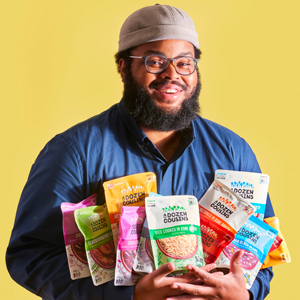
[00:30:31] Ray Latif: Next, we have Ibraheem Basir, the founder and CEO of A Dozen Cousins, a brand of side dishes and sauces inspired by traditional Creole, Caribbean and Latino recipes. In this clip, both from an episode published on June 28th, Ibrahim discussed how the company's initial focus has evolved, working with co-manufacturing partners to ensure quality standards, and why keeping a foot in the familiar is a key tenant of its innovation strategy. Accessibility is an important part of any brand that is trying to scale. And I think at the outset, were you thinking about accessibility as much as you were about the mission of representation and reaching black and Latino communities?
[00:31:16] Dan Lourenco: Whenever you have a brand that goes out into the world that those early days are like, it's a formative process, right? So I had this kind of pristine image of a Dozen Cousins and then it has to be created and brought into the world. And I would say, in the early days, some of the most formative conversations we had around the brand was like, who is your consumer target? How do you actually reach them? What does the product need to look like? in order to be useful to them, right? And so, you know, when I first started, I was very laser focused on Black and Latino consumers, people who grew up eating these foods, people who are from the same community as myself, and they still remain kind of the heart and soul of the brand. What I'll say is, one of the things we realized is like we needed to have a go-to-market strategy that actually reached those consumers. And we also needed to recognize that the market was much bigger than them, right? And so for us, that came to life by way of like, OK, what's our channel strategy, right? We were in Walmart within our second year of launching. We were in Costco in our second year of launching. So trying to get into retailers that enabled better price points, that enabled accessibility for the communities that we really cared about. And then on the flip side, we also kind of opened up our mind a little bit to say like, OK, your typical whole food shopper, right, might not necessarily be from these communities, but they're still going to appreciate the flavor, the convenience. And so the brand, I think, has become a lot more open and inclusive over the years. So we still have this, you know, core consumer that grew up with our foods and that, you know, like I said, it's kind of the heart and soul of the brand. And then we also have this much broader consumer base that, you know, loves the product for, for many other reasons.
[00:32:46] Ray Latif: When did you realize you were starting to get traction with mainstream consumers and how did it impact the business strategy?
[00:32:53] Dan Lourenco: One of the big touchstone moments for us was launching nationally at Whole Foods that happened about six months into market, right? I was like June of 2019. And that was just a big moment for the brand because you're now in, you know, most of the states in the country, hundreds of thousands of people are seeing the product, buying the product every week. That for us was just a signal that, okay, obviously there's, this is working, right? There's people who care beyond it. We started to get that feedback. in terms of comments on social media, seeing how people were cooking the food, seeing people post food imagery online. So you started to see in a really visceral way, like, okay, these are the people who the product is resonating with. And like I said, I think the tweaks to our business strategy at that time were pretty subtle. It was just like, Okay, how do we think about marketing? How do we think about our brand voice tone? While basically just straddling that line, right? Being true to the communities that our foods and flavors come from, which is still always a priority for us. But making sure that we were positioning ourselves and our product in a way that other people felt welcome. And it wasn't like, we don't care about you or we don't want you here, right? It was more like, hey, you can come grab a seat, you can take part as well.
[00:33:59] Ray Latif: I want to talk about your beans because the beans are the flagship products. The process though, let's talk about that process of how you get to that final product because it's not inexpensive and it's something that has to be right. How do you get your manufacturers, how do you get your co-packers to make a high quality product right every single time?
[00:34:19] Dan Lourenco: That's a great question. I think, you know, first and foremost, it starts with a really clear gold standard of what you want the product to be. Right. And so before I get into the co-packer question, it's just like, you know, we spend a lot of time on just the question of what should the bean texture be like? What should this product look like when you open up the pouch? What should the pouch smell like? Right. Like we take a full kind of 360 very multi sensorial approach to product development and trying to understand, okay, what is the full experience we want someone to have both as they're preparing eating and just talking about the product afterwards, right? You know, once you align on that, then it's just a question of like, iteration and discipline, you know, like, okay, sample one comes back. It's not quite where we want it. You have to be willing to push. I think sometimes it's easy, particularly when you're working with any party, right, of like, they have their vested interest, which might be, hey, let's make this as easy as possible, as quickly as possible. You have a different interest, right, which is how do I make the best product possible? And I think you have to be willing to kind of work that tension a little bit. So in our case, it took, you know, I won't share a number, but many, many rounds of iteration to get the products to where they are right now. And I think we have, you know, humbly, I think we have the best product in our segment, right. In terms of the texture, the appearance, the taste. So that'll be the first thing. And then, you know, beyond that, it's just, like I said, having good systems in place to, you know, we taste every batch of product that comes off the line, you know what I mean? Like literally. And so that allows us again, to have just really high quality control.
[00:35:45] Ray Latif: That's such a great idea and something that I think a lot of entrepreneurs should ask of their co-packers is to taste the product every single time before it goes out. Because that one time that it doesn't taste great is that one time that you lose the customer or potentially lose the customer. When you are presenting to buyers and when you didn't present to buyers, when you were talking about the potential for a premium bean set, what really moved the needle for them? What really got them excited about this idea and your brand in particular.
[00:36:16] Dan Lourenco: you know, we didn't have a ton of data, right? Like it wasn't like, obviously that very first buyer, we had no data, right? Where it was like, we weren't in physical retail at all. And so, you know, some of it is just telling the story and painting a picture for the future, right? And so I think about our first kind of 12 months of selling, I can see the slide in my head right now. Like there wasn't a data point on there. It was just, you know, it was a very qualitative statement about how our product was different than what was on the shelf, right? So it was like, Dry beans take two hours. Our product takes 60 seconds, right? Canned beans require additional ingredients. Ours do not. Refried beans are using lard and all kinds of, you know, processed ingredients. We're using avocado oil and real vegetables, right? And so like that was it, right? It was just, we're going to tell you a story about why we think this product is different than what's on the shelf. And I think that's, you know, that would be my number one piece of advice, you know, on that topic of how do you break through with buyers? You have to be willing to embrace and have a story around why you're different and better. I think sometimes people are very obsessed with like, I'm going to steal a slice of this other brand's thing just because like, okay, our marketing might be better or our packaging is nicer. And that's cool, but like really you want some nuts and bolts points of difference that you can hang your hat on. And I think that that has made us successful. You know, in terms of your second question around like building buyer relationships, in my experience, it has come with time, right? So the buyers that we have the best relationship with, the people who took an early bet on the brand, It's done well in their stores. We've come back and supported them. We've shown gratitude for the early bet they took on our brand, and we've been able to kind of build like that over time, right? Like any other relationship, good communication is key, right? Like, we're not leaving people in the dark if, you know, or jerking people around or saying one, you know, making a deal and then going back when you think you have a little bit of leverage, right? Like, and this is true of any business relationship. I think it's a lot of the same building blocks, right? Is there trust? Is there honesty? Is there good communication?
[00:38:12] Ray Latif: You used the word bet a couple times. Is there a way to mitigate the risk for that buyer in that they shouldn't be thinking about taking your brand on as a bet?
[00:38:25] Dan Lourenco: I mean, the most obvious thing is just thinking about your footprint and how you launch, right? And we've taken a different approach with different retailers, right? In some cases, we've launched very small and, you know, small footprint. We'll test it out and kind of scale with time. And then there's been other times where we felt like, look, we believe, right? And like, we want to, you know, We want to go bigger than that. And so I think, you know, that's the number one risk mitigation factor from my perspective of like, if you're dealing with a retail launch, thinking through how many stores do you want to be in? How much money do you want to put behind it to ensure that it's successful? And then you kind of triangulate on the right plan with that buyer.
[00:38:55] Ray Latif: So do you tell the buyer, look, if the buyer offers you 100 stores and you're like, I can't do 100 stores, but I can do 20. I mean, is that a conversation you've had in the past?
[00:39:03] Dan Lourenco: I've had that. I've had conversations where we've asked down and I've had conversations where we've asked up, right? Because there's also a risk in going too small or not having enough data or having a really long time between resets, right? And so it's not always the case that you want to go small, but I have been in that situation where a buyer wanted to do a little more than we were comfortable with at the time or that we, you know, we wanted to ease our way into it. And then there's been times where it's been the reverse.
[00:39:30] Ray Latif: when you're thinking about innovation and when you're thinking about extending the brand and becoming more of that platform brand that A Dozen Cousins has evolved into, how do you continue to find things that people are familiar with while being as innovative as you wanna be? Because again, going back to retail buyers, retail buyers in a lot of cases are looking for things that are a little bit more dynamic, are different, are exciting to put on shelf so that their customers can be like, oh, wow, you know, this retailer carries interesting, unique, different products. But how do you stay familiar while being innovative? How do you do both at the same time?
[00:40:03] Dan Lourenco: Yeah, I think, you know, there's a spectrum, first of all, and every brand doesn't need to play at the same spot on it, right? Like, I think there's products that I enjoy that are pretty, you know, pretty left field in terms of just, they're very different, right? They're very different than what's out today, and some of them work, right? And then you have brands that are, super traditional, right? Where it's like, I don't think it's innovative at all, right? And like, you know, we want to be kind of in the middle of the spectrum. At the end of the day, our brand is rooted in tradition, is rooted in foods that have been around for hundreds of years. And so we're automatically starting with a little bit of an anchor point around, look, if we're going to deliver Cuban black beans, it needs to feel like a Cuban black bean, right? And we can play with the oils that we use or the packaging format, but we want that core product experience to be familiar to what people would have experienced. And so, you know, what we do is we look at categories, we look at products and we just, we kind of poke and prod and we're, you know, we're, we're, we're modern consumers ourselves as, as employees of the business. We're consuming food content all the time. We're looking to see what's interesting and new in terms of ingredients or cooking methods or formats. And then we try to apply it to the foods and the categories that we already love. So I don't know if that answers your question, but like my goal is to be kind of in the middle, right? Like we want to have a really clear anchor point in something that feels timeless and traditional. And then we want to try to upgrade it where we can with ingredients and formats.
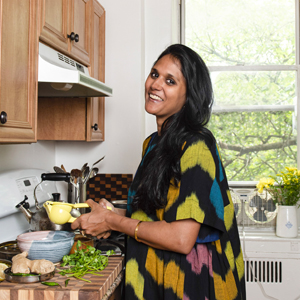
[00:41:22] Ray Latif: Do you want more repeat buyers on Amazon? Well, this free resource in collaboration with Straight Up Growth will help your brand turn first-time buyers into long-term subscribers. Download Winning the Repeat Purchase Game on Amazon now at Taste Radio.com slash SUG. That's Taste Radio.com slash S-U-G to start building retention-driven growth for your brand on Amazon. Scaling a beverage brand into major retail comes down to operational readiness. From packaging lead times to co-manufacturing strategy, the details can make or break a launch. In a new ebook in collaboration with Octopi and Asahi Beer USA, industry leaders share what they've learned in helping brands scale. Download it now at Taste Radio.com slash octopi. We continue with Chitra Agrawal, the founder and CEO of Brooklyn Delhi, a brand of Indian-inspired pantry staples crafted for modern kitchens. In this clip pulled from an episode aired on September 13th, Chitra discussed why she didn't pay herself a salary for the first four years of the business, why the company has no outside investors, how she created favorable contracts with Komi manufacturers, and how an omnichannel sales strategy has benefited the company. You didn't pay yourself for a long time though. The first four years, you didn't pay yourself a salary. How did that work out? And how did you fund the business early on?
[00:42:53] Ryan Hughes: So at the same time that I started Brooklyn Delhi, I also had gotten a cookbook deal. And so I had used the advance also to help support myself and the business, but I also was working freelance in marketing. I, I guess, you know, for me, I just wanted to be able to get the business on the ground to show that it was viable. Before I thought about even, you know, getting outside funding in a sense I wanted to show that this business could stand on its own. Um, and, uh, we, it was a long four years. I mean, it's like, um, having to balance, um, figuring out how to even make this product, put it on the shelf and everything that goes along with it. Um, but also writing a cookbook and, um all managing a freelance um job, but uh, we we made it through and I definitely I mean I I say this it's like I basically ate a lot of beads and lentils during that time period and I did not buy Clothes for those whole four like new clothes for the four years, but I didn't care because I loved what I was doing And it's weird because this mental shift happened, I felt like, when I started Brooklyn Delhi, because I was working a regular day job where, you know, I would look forward to the weekends and, you know, going shopping and doing all these things that were very much, you know, materially focused. And a lot of that stuff kind of didn't interest me as much when I found what I was doing at Brooklyn Delhi.
[00:44:38] Ray Latif: Still no outside investors, right?
[00:44:40] Ryan Hughes: No outside investors, no.
[00:44:42] Ray Latif: That is amazing. How have you managed the growth that you've had over the past eight years with no outside funding?
[00:44:51] Ryan Hughes: Well, I think it has a lot to do with planning. So we're definitely still a small batch company in that I'm not doing huge runs because we can't really support that from a financial point of view. So there's definitely a lot of timing that we're aware of as far as cash flow goes. And it's a lot more work to do, but at the end of the day, you know, I own it all. And I am kind of dictating how fast this business grows. And the other piece about retailers too, you know, we have, you know, made a conscious effort to not go too wide, but to kind of be very specific about the retailers that we are targeting and then to really drill down once we get into those retailers to help support the business instead of kind of going wide. Because when you go wide in grocery, there's a lot of other expenses that go with it, which is, you know, there's free fills and then there's added promotions. So I think for us, we've been concentrating on the retailers we're in and making sure we win there.
[00:46:05] Ray Latif: What's been the impact of being this sort of omnichannel brand and that you do have, you know, a Blue Apron deal, you do have traditional retail with Whole Foods. I think you guys do food service as well. I mean, has that helped with sort of maintaining this consistent cash flow and revenue and hopefully profitability?
[00:46:26] Ryan Hughes: Yeah, no, it's definitely I think that the diversification of our revenue streams has never much helped us because, I mean, depending so like for Blue Apron it's like we get that money cash to hand I know that I'm not going to get any more any chargebacks or there's no promotions that happened there. as well as the business that we have online. So all of our direct-to-consumer sales, that's all cash in our pocket. So all of these channels or the different ways that we think about kind of going about our sales strategy definitely has helped us as far as cash flow goes.
[00:47:07] Ray Latif: Early on, Brooklyn Delhi, I think you told me that it was all self-production for some time, which I'm sure was a lot of fun. But managing your relationships with co-packers is also a key part of the puzzle here. And if you have a good relationship, it can be the most important part of your business. How have you navigated co-manufacturing and working with co-packers?
[00:47:34] Ryan Hughes: Yeah, so yeah, so I did I hand-packed Brooklyn Delhi for the first four years of our business and it was not until we scaled up and got the Whole Foods and Blue Apron opportunities that we found a co-packer and I think that for me and I'm different from I'm sure a lot of other food business owners, but I felt like my strengths lie in the recipe development and other areas but not really in the running of a factory, in a sense. So, but where we kind of have a hybrid model here is that we actually still source all of our ingredients. I think that that piece is also because I'm a little bit of a control freak, but Brooklyn Delhi has always been focused on flavor. If I have a co-manufacturer, I need to have control over the ingredients that are going into our products. I don't think a lot of people realize this, but a lot of co-manufacturers will not allow their customers to source ingredients. And so for us, that's a key differentiator and something that we had to negotiate with the co-manufacturers that we use.
[00:48:53] Ray Latif: How do you negotiate something like that? Typically, co-mans have the upper hand when it comes to contracts. So, I mean, how do you get what you want out of that deal?
[00:49:05] Ryan Hughes: I think that we, I mean, we definitely went through a lot of research when it came to the co-packers. And because we had that specific need, we were able to find a co-packer that was aligned with us. And I think also that we had POs in our hand at the time. So, it was kind of like, you know, we have this business, we can give it to you, but these are kind of the non-negotiables for us.
[00:49:37] Ray Latif: So when you have leverage, that's the best way to go to a co-backer?
[00:49:43] Ryan Hughes: I would say so. I'm a risk-averse person, so I definitely was waiting for a PO in order to hit the go button on the Go manufacturer. I feel like we come from a food artisan background in a sense, right? Because I was hand-making it, and I'm from this Brooklyn food community that I feel like That's what I knew, really. And so for me, going to a co-manufacturer was kind of like this huge step. And being able to own that piece of sourcing made it a lot easier for me to make that step, though.
[00:50:30] Ray Latif: Finally, we hear from Maxime Pouvreau, the founder of premium pudding brand Petit Pot. In the following clip pulled from an episode published on September 27th, Maxim explained why he has stressed frugality and cautious spending since the beginning, and explained how the hire of an experienced operations executive and planning strategy has helped the company scale production and achieve profitability. How many people have invested based on the product itself, the quality of the product? I would say zero. Based on 100% of the product, I don't think there is any. I figured that was going to be the answer because I think there's a lot of people who just believe if their product is so great, everyone's going to want a piece of it. But that's not the case. It's about business at the end of the day.
[00:51:19] Anna-Lena Kamenetzky: Absolutely. And the people that are going to actually do the plan as you're presenting it to the investors. You know, like most investors, when you show them a plan, they don't really believe in that plan, but they believe in the team to really actually do the plan as best as possible. Because, you know, it's really hard to predict a three-year plan. But if you have a team behind it that has a strong track record and that is driven to do the right thing, I think that's what's going to help.
[00:51:50] Ray Latif: I spoke to an investor once and he said that when you speak to an entrepreneur and they tell you they're going to do a thing, and then they actually do that thing, that's how you know they're ready for investment. Yes. Because they actually walk the walk.
[00:52:03] Anna-Lena Kamenetzky: Exactly. And I am proud to say that throughout the years, we always met our budget numbers. Except for this year. It's a hard year. Disclaimer. But up until 2021, we've always done what we were going to do.
[00:52:21] Ray Latif: I'm proud of that. And you always had a path to profitability, which somehow in 2022 was really important. And I want to talk to you about this because I think you're one of the few founders that I've spoken with that has always been laser focused. Look, profitability has to be a very, very important part of anything that we're considering. Yeah. Again, I'm sure I've mentioned this on the podcast. This is going to sound like a stupid question. Why were you so interested in being a profitable company?
[00:52:49] Anna-Lena Kamenetzky: I don't, I mean, I think it's cultural as well. In my upbringing, the idea that you can just burn money throughout the years is not something that I'm comfortable with. And so I've always focused on gross margin. I've always, I didn't want to just like focus on growth at the expense of the gross margin. I've always made sure that we're pricing the product with the right price structure in order to break even and, if possible, make money. It's definitely in the essence of the company to watch every dime and to be really careful on how you spend the money. And so, for example, when investing in marketing, we really watch all the KPIs to make sure that what we're investing in is going to actually give us a return. And so always focusing on that and making sure that whatever you spend has an impact and you're not just spending money for the sake of spending money. And so just, it's like part of the DNA of Petipo to be careful on how you spend your budget. And I think that really reflects to be able for us to turn a profit, even though we're still an early stage company.
[00:54:00] Ray Latif: It can be hard to measure return on investment when you are spending money on marketing. What's your process?
[00:54:06] Anna-Lena Kamenetzky: Yeah, so what's important is that we, when we test in marketing, we do at a small scale to make sure that we see the results right away. And if we see a good result, then we invest more heavily into it, depending on the platforms. Can you show an example? So for example, if you're going to spend some ads on Google or on Amazon, so you do it on a small level and see, okay, are we getting the ROIs on this? And if so, then yes, you can invest more heavily.
[00:54:37] Ray Latif: When it comes to the folks that you hire to help you get to where you are, you have to pay them well, but at the same time, you've got to be frugal because you are watching every dime. Yes. Talk about that dynamic.
[00:54:51] Anna-Lena Kamenetzky: That's a tricky part, I have to say, where, you know, it's hard to, especially we're in the Bay Area, so paying market level in the Bay Area is, I mean, when you have Google and Tesla competing with the marketplace, it's difficult. But I think what we have to offer at Petit Pot is the authenticity and also every employees that join us get stock options. And I think that's how you're able to compensate for not being able to pay what is market in the Bay Area. And believe in the mission, believe in the vision. Yeah. I mean, of course, it's, you know, what we do is very authentic and people can feel that. And we try to have this fun and welcoming environment where you work hard, but you have a good time. And we have a good culture at the company. And that really reflects on why people want to stay with us.
[00:55:45] Ray Latif: some of the most important roles that you've hired for have been in operations. And I was speaking with someone today who mentioned that, you know, hiring an operations director early on may not be the best idea. And I'm thinking, I don't know if that's such a great advice. You know, I think operations, given its importance in scaling is really critical to the growth strategy for any brand. There's pros and cons for sure, but in your case, it really helped out a lot.
[00:56:12] Anna-Lena Kamenetzky: Absolutely. I mean, first of all, you know, we are a manufacturer, so it's important that the operations are taken care of. There's an added layer of complexity. But from day one, having someone in operation that can also manage the finances at the beginning was key to the success of Petitpo. And then in 2019, we actually hired Eric Lallard. He is a CEO who now is our CEO since a few months ago. He comes from a bigger corporation and he has this big co-experience. And that really was helpful to the success of Petitpo. And he really flipped the business around the past couple of years. But I think what's important is that when you hire people that have this big co-experience, that they also understand how it works in a startup and that they're willing to roll up their sleeve. So every C-level executive that we have at Petipo, even if they have big co-experience, they're willing to roll up their sleeve and get the job done. They understand that you don't have this huge team to do the job for you. And so it's been great to see the team grow and have this type of personalities that are willing to do that as well.
[00:57:23] Ray Latif: It's surprising to hear, though, that finding big company expertise or finding big company experience has been beneficial to an entrepreneurial brand. And I think, you know, it's a fair assumption that there's a big gap in between, you know, what they and how they operate and say, like a big company like General Mills versus a company like Patipa. You know, how did you recruit for that position of COO and was that an issue or did you think that was going to be an issue early on?
[00:57:53] Anna-Lena Kamenetzky: I knew I needed some help at this point. In 2019, we just moved to this big manufacturing plant and I was a little bit over my head to be fully transparent. And I didn't like go through a full recruitment process. I actually met Eric at Expo West. And then he came to the booth and we started talking and it just kind of happened naturally. And that was like the best decision I've made for sure. He just came to your booth to try your product and started talking? Totally. And then maybe a year later, he was hired. So you didn't know at the time that you were going to hire a COO. It was just sort of happenstance. Exactly. He, you know, he, we started talking and then he looked at the business and then he said, Max, you've got a fantastic business and I'd love to join you. And, and it's just, we started to, we kept chatting and he almost put like a little business plan on the back of the napkin and was like, here, this is what we should be doing. And then he joined us. Yeah.
[00:58:52] Ray Latif: That brings us to the end of this episode of Taste Radio. Thank you so much for listening, and thanks to our guests, Alison Cayne, Dan Lourenco, Ryan Hughes, Anna-Lena Kamenetzky, Ibraheem Basir, Chitra Agrawal, and Maxime Pouvreau. Our audio engineer for Taste Radio is Joe Kratchy, our technical director is Joshua Pratt, and our video editor is Ryan Galang. As always, for questions, comments, ideas for future podcasts, please send us an email to askatasteradio.com. On behalf of the entire Taste Radio team, thank you for listening, and we'll talk to you next time.