[00:00:02] Taste Radio: You know, we live and breathe with each other. As a company, we're together so much. And to have that alignment as to how we are as human beings, to me, is the most important thing we can have. We can have all the smarts, but if we're just passing each other like chips in the night in terms of how we believe people, humans, should be treated, the whole thing falls apart.
[00:00:28] Josh Tetrick: Looking for talent in beer, beverages, or natural foods? The leaders of the industry grow their teams with the BevNET, Brewbound, and Project Nosh job boards. Post your job listing to the BevNET job board today. Go to BevNET.com slash jobs to get started. Hey, Mike, one last quick note before the episode gets underway. What is it, Landis? We got swag! As soon as this hit the office, we thought, who should be the first to get their hands on this stuff? And the obvious answer is our amazing podcast audience. We've been raving about the content, sharing with friends and colleagues, helping us grow this thing from a grassroots level. Thank you so much. Yeah, so we don't want this swag sitting in boxes around our office. We want to get it out the door. So you're asking yourself, how do you get your hands on this stuff? Mike, tell them how. Yeah, to start, we're going to be selecting a few folks a week who sign up for the new Taste Radio newsletter. Yeah, so just head on over to Taste Radio slash subscribe. There's a short form there. Fill it out, cross your fingers, and look for a box. And you know, we're going to have more fun ways to win swag in the future, too. This is just the beginning. Right now, we're just really excited to get this stuff out the door into your hands. Thank you, guys. And now, Taste Radio.
[00:01:42] Ray Latif: Hey everyone, thanks so much for listening to BevNET's Taste Radio. I'm Ray Latif and with me are John Craven, Jon Landis, and Mike Schneider. In this week's episode, we feature insights and business lessons from four remarkable leaders who joined us on the podcast in the first half of 2018, including Just Founder Josh Tetrick, Rebel CEO Sherlo Lockland, RxBar co-founder Peter Rahal, and Jägermeister CEO Jeff Popkin. As always, for questions, comments, ideas for future podcasts, please send us an email to askattasteradio.com. the sound of one person clapping and that's for Jon Landis who got married. Congratulations. Yeah. Well, by the time you listening to this, I'll be married. You're not supposed to give that away. These are our trade secrets here. All right. Technically you didn't get married yet because we're recording this before your wedding, but congratulations nonetheless.
[00:02:31] Josh Tetrick: Thank you very much. I'm actually relaxing on a beach in the Dominican Republic right now.
[00:02:36] Ray Latif: Listening to Taste Radio. Sure you are. Awkward. Good stuff. That's all we have.
[00:02:47] Josh Tetrick: See you next time on Taste Radio.
[00:02:50] Ray Latif: Well, I always mention if you have questions or comments or ideas for future podcasts, I say that I think twice every episode, correct? Now I said, you know, this is gonna be a third time.
[00:03:00] Josh Tetrick: in your sleep at this point.
[00:03:01] Ray Latif: Yes, I do sit in my sleep at this point. Well, people actually send us emails and we get questions and we get comments and we get ideas for future podcasts. And I like that. And we can talk about some of those questions that people have been sending us, including one about food waste and using food by-products to create new products. We received a few emails about whether or not entrepreneurs should look to food waste as a new and interesting source for innovative products and line extensions. And well, what do you guys think?
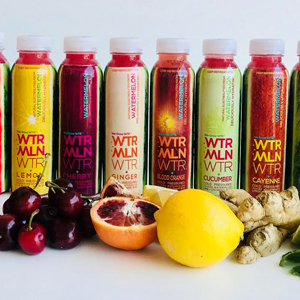
[00:03:31] Josh Tetrick: Well, first of all, it's pretty interesting that we ask for questions and people are asking us about waste. I'm not really sure what to take from that. So, I mean, Ray, we have seen a number of brands like Watermelon Water that uses irregularly shaped watermelons, like Faba Butter that's using the byproducts from hummus manufacturing. Chickpea manufacturing. Chickpea manufacturing. The re-grained guys are using spent barley. Yeah, and we even had Melissa from Madey in here trying to make whey a commercialized beverage. Personally, I think that these are very admirable goals that people have. But I think that there are ways that you don't have to have it as a cornerstone of your brand. And it's not just food waste. sustainability in general, we're seeing brands that have it as a cornerstone talking about the risks that they've been taking, the costs that are associated with it up front, and over time, how it actually does impact their bottom line and generate more revenue for the company as a whole. If it's a longer term strategy, but there is a lot of discussion I hear about sustainability, growing your revenue after the initial investments that it requires. So I would encourage, I mean, listen, nowadays, food and beverage entrepreneurs are out there with a mission to do something beyond just making a profit. So, you know, if you're looking for more ways to create a social enterprise, sustainability can be a very core value to your brand, no matter who you are and what you sell. Well, and this is, you know, something that is definitely a big challenge in the sense that obviously with food production, beverage production, there's all sorts of different waste, you know, even water waste that are issues. And kind of similar to what Landis is saying, I mean, I think, you know, these things can be a cornerstone of people's companies and products. at the end of the day, you still need to produce a good tasting quality product. And, you know, I look at like something like re-grained as Mike mentioned that, you know, I think that's like a pretty darn tasty product in its own right. Super tasty. And, you know, I think that's the big challenge with it is if you're going to go down these paths, like how do you still produce a product that can hold its own? I mean, I think the use of food waste and sustainability is almost gravy to the consumer, right? You're not going to come back if the product itself isn't good. And I think that's really, So, for me, the biggest kind of roadblock to companies doing this is just being able to create good products out of it.
[00:05:56] Ray Latif: And long-term sourcing, I think, too. I mean, the Misfit Juicery folks out of Washington, D.C., they made food waste a cornerstone of their business. But they said, you know, they'll have some supply issues sometimes, like they'll have to freeze a boatload of strawberries at one point because they know they won't be able to get them at a different time, or at least ends of strawberries and whatnot. So, I mean, it's interesting.
[00:06:14] Josh Tetrick: Pictures of banana guys going out into banana plantation and beating up a bunch of bananas.
[00:06:19] Ray Latif: Maybe, maybe indeed. All right. I hope that answers your question. And listeners, thank you so much for sending that question.
[00:06:24] Josh Tetrick: It was an answer, that's for sure.
[00:06:25] Ray Latif: Yes. All right. One other question that I thought we could talk about was about finding the right manufacturer or co-packing partner. This has definitely come up a few times in emails sent to us. Other than going to the BevNET supplier finder database, I think that's a very good first step for folks looking for a quality partner. But what else do you guys got?
[00:06:45] Josh Tetrick: I mean my biggest suggestion is just talking to other people too who are you know maybe making a similar product depending on your category even you know some of your competitors might share tips with you but at the end of the day you do have to get out there and you know go meet people and you know a lot of this stuff is going to see a facility and meeting the people there and seeing who they work with and, you know, how knowledgeable they are, et cetera, et cetera. And, you know, there just are a lot of different options out there depending on the type of product. And, you know, it's one of those things that I feel like entrepreneurs really at first expect will be easy, then realize it's super difficult. And then, you know, once you get the hang of it, you know, it seems like second nature for a lot of these companies once they're a few years in. That may seem counterintuitive to speak to competitors, John. Well, I think, you know, in some cases, depending on, again, what type of product we're talking about here, you know, I have heard cases where a competitor actually would be advantageous for you going to the same co-packer because that'll get the co-packer to put in some new filling line or buy some new piece of equipment that they can't justify with only a small number of clients. You know, it really depends, but I think, you know, look, at the end of the day, there's no harm in asking, right? Right. And particularly for new categories, when you're thinking about how to, you know, how to message across a new category, it's important to talk to your competitors. We saw this at BevNetLive. We saw the Cascara brands, Coffee Fruit brands getting together to talk about, you know, how do we elevate this category together? And you're right, Ray, we do get this question very, very frequently. And to me personally, it's almost one of the more frustrating questions that I receive because I don't have a database of every co-packer out there and all their capabilities. You know, there's a lot of different variables that go into who's going to be the right partner for you to co-manufacture your product. And what I usually do is refer people to an operational consultant, someone who has done this before. And it doesn't need to be a professional like John said. It can just be another entrepreneur, another brand owner who may be a little bit further along than you that can get you a couple conversations, get your foot in the door. You really do need to be careful when you try to find these partners though because They're a very, very vital partner to you and you can't make too many concessions out of the gate. You got to find someone who's willing to work with you.
[00:09:11] Ray Latif: Well, as I mentioned at the top of the show, this episode features highlights from interviews with a quartet of industry leaders who joined us on Taste Radio earlier this year. We start with Josh Tetrick, who's the founder and CEO of Just, which is formerly known as Hampton Creek. The company merges biotechnology and plant-based ingredients to create environmentally friendly foods and is best known for its vegan mayo and cookie dough. The company recently introduced a vegan scrambled egg product and is currently working on lab-grown and plant-based meat. In the following clip, Josh offers his take on the systemic problems with the current food system and the singular operating principle that drives Just's mission.
[00:09:50] Jeff Popkin: The food system is pretty screwed up. Most people around the world are not eating well. They're eating food that degrades their body, eating food that degrades the planet. But a lot of that food tastes good, and a lot of that food they can afford. And I think we just wanted to figure out a way to create food that tastes really good, that people can afford, but food that's not causing all that harm. It's a simple idea, it ends up being pretty hard to accomplish because the current way that we make food is from soy, it's from corn, from conventional animal protein, from processed sugar. Think of these as the tools of the current food system. And the tools of the current food system have gotten us here, but I don't think they're sufficient to get us where we need to go tomorrow. It means that we can make food, but it means a lot of the food just isn't the best. So the question is, how do we find these new tools? And for us, we look at plants. We've also figured out a way to look at cells from animals. And we make really good food. We put Just on it. And then we work big companies under something we call Made Just. It's our way of licensing our technology to them. And we try to do it as fast as we can.
[00:10:51] Josh Tetrick: Taking what you just said, what's so wrong with the tools that are out there right now?
[00:10:56] Jeff Popkin: What's wrong with it? Well, I think a good place to start is from a product perspective. Think of a chocolate chip cookie. Most people enjoy chocolate chip cookies. We enjoy it because it has a certain texture, a certain mouthfeel. And we might eat it for lunch, we might eat it in our school cafe, might be in our daughter's lunchbox. And the tools used to make that chocolate chip cookie include soy, corn often, and some conventional animal protein, dairy and eggs. Now, that cookie, unbeknownst to most people, is using a lot of land, it's using a lot of water, it's causing a lot of animals to be kept in cages unnecessarily, has some cholesterol, probably has too much sodium, and is probably in some way contributing to the spiking of diabetes, type 2 diabetes. That's a lot to think of when you're eating a chocolate chip cookie, which is why most people don't think of all that when they're eating a chocolate chip cookie. Sure. So if we were trying to think about how to do it differently, how would we make an even better cookie? We might say, well, can you make the flavor and the Taste Radio the mouthfeel and all the goodness that makes us love a cookie without all the harm? And I think to do that you need new tools. You can't just use soy corn and eggs and dairy. Maybe a mung bean would help there. Maybe a grain called sorghum would be helpful. Maybe other plants we haven't even discovered would be helpful to put all that together to hopefully make a cookie that tastes better than the current ones we eat, but just a little bit better when it comes to sustainability and health.
[00:12:28] Josh Tetrick: And you've talked about kind of the food system being broken. So I guess this is maybe a slightly leading question, but why don't all the big companies out there that, you know, have these massive resources and money and all the products that are already doing this stuff, like, why aren't they figuring this out?
[00:12:46] Jeff Popkin: I think there are two big reasons. I think one is, I'm, and we're lucky that, you know, five and a half years ago, my company was a couch in my ex-girlfriend's apartment. So I didn't have a billion dollar supply chain. I didn't have all of the knowledge, some of it that can be good and some of it can be limiting. I truly was a beginner, you know, person who knew nothing. and starting over is really powerful. And when you have billion-dollar supply chains, when you have tens of millions of dollars invested in a certain way of doing things, when you've been doing that certain thing for 10, 20, 30 years ago, that's hard to break from. Mentally, it's hard to break from. Financially, it's hard to break from. And it's a big risk to break from it. So I think those things prevent often good people at the biggest companies of doing something, anything different. And when I first started, I actually thought all the big companies were complete garbage. I thought they were full of evil people that didn't give a fuck. And I was like, I'm going to go after them. I'm going to steal their market share. I'm going to show them. Something I've learned along the way is, of course, everyone's not perfect who works for a big company. But I've met so many people at big food service companies, at large food manufacturers, at some of the biggest meat companies in the world. who acknowledge the problem, who want a different approach to solve the problem. They just want to do it in a way where they can still be a viable business. And I think it's kind of exciting to show them that path because they want it.
[00:14:18] Josh Tetrick: So one of the other things that I think is really interesting about the experience you've had so far is the amount of, you know, I guess sort of, I'd call it spotlight and maybe sort of being under the microscope here in a way that for a company that's only a couple of years old, at least on the food end of things is, really pretty unique. Maybe it's not on, you know, the tech end of things, but it's been really wild to see the amount of coverage for some of the things when you've, you know, restaged your board and whatnot. What's that like as an entrepreneur having, you know, so much focus on, you know, from the outside on just the workings of the company here?
[00:14:57] Jeff Popkin: I think we always try to keep in mind that, you know, always through everything, the main point is the point that really matters. And the main point for us is, Are we making better food for more people? If the answer is yes, we feel good. If the answer is no, then we don't feel good. And moms that are buying what we're doing at Beckley, West Virginia, Walmarts, or my buddies at Texas A&M buying our chocolate chip cookies, they're not reading all that stuff. It's just not what they're paying attention to, right? They just, they want to eat better food. So the first part of the, the answer to the question is we try to stay very ground on all what is, are we making more food for more people? So it's kind of just, you gotta take that stuff out, I guess. And then the second, and the second thing is, I think I, I love the idea that, you know, a company, even though we're relatively small, that people are paying attention to what we're doing. The more it's about, People seeing what we're doing and trying to copy what we're doing, the better. Probably the less of the Silicon Valley stuff, the better. But you know what? I think, to a large extent, it kind of comes with the territory and it's okay. I usually don't read good stuff or bad stuff. I just try to put my head down and do a better job. And if I'm doing that, then we feel good. And again, if I'm not, then shame on me and I got to get better.
[00:16:25] Peter Rahal: How do you also keep employees motivated, especially when, you know, you have something that maybe they're working on that's like, you know, it's not going to come out next week, might not even come out next year, it might come out in two years or three years? How do you keep everyone excited while still pushing them forward?
[00:16:43] Jeff Popkin: Well, you know, one of the things we've tried to do is I've tried to, before I hire anyone. So if I was interviewing you right now for a job and I said, and we completed the interview, I would say, all right, we're going to consider you, but you got to consider us and please do not work here. If you cannot take the following, and then I'll say, if you do not feel really connected to this mission, please don't accept the job if we offer it to you. Because I promise you, you will get burnout quick. You will get annoyed quick. You'll get frustrated. You'll get angry. It won't work. You have to feel connected. Not in a bullshit way. Everyone can say they believe in a mission in a bullshit way. Like, enough. Put yourself under a fucking lie detector test. Do you feel connected to this? Do you feel connected to alleviating suffering? Do you feel connected to feeding people better? Do you feel connected to building this better food system? That is really, that's an enduring thing. The second thing I say is, if you feel like you're a builder, like you can deal with uncertainty and you can build stuff from scratch, you're probably gonna work here. And if you just don't feel comfortable with that, it's probably not gonna work either. And only you can really tell me that. I can ask you a thousand questions, but only you can really sort that out. And third, you've got to know that if you gave me a 100% chance right now to get acquired for $3.5 billion by Unilever, 100% chance right now, and everyone would think that's some grand success, or a 30% chance to do something more long-lasting, more transformative, that would hopefully do even more good, I would prefer the 30% shot. And very few people would agree with that, but that's okay. If it doesn't feel like you, please don't work here. So, we've tried to recruit, retain those kind of people. And I find that when you push those people that feel that, they look at it less as work, although it's still work, and more as maybe a more important part of their life. But it's still hard to find the right balance. What I just described there, I didn't appreciate when I first started. I knew I felt that way, but I didn't know it was important to make that really clear to people. You know, you learn along the way and also find that I end up, when I work with people who feel connected to what we're doing in a deeper way, I'm so much more likely to trust them because I feel like I feel like it can cut through a lot of stuff and we can have like a singular operating principle. Does this decision increase the probability that we'll achieve the mission? If yes, let's do. If not, let's not. And it just simplifies like a very complicated world sometimes.
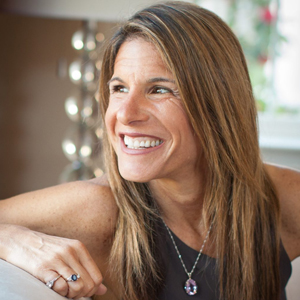
[00:19:47] Ray Latif: Throughout her 25-year career as an entrepreneur and executive, Cheryl has been known as a passionate leader with a deep commitment to social responsibility. Prior to joining Rebel, she led Clif Bar as CEO for nearly 10 years, and later co-founded and helmed organic baby food company Plum Organics. In this clip from episode 97 of Taste Radio, Cheryl shares her perspective that successful teams and relationships are built on empathy and compassion, and why expressing vulnerability is a critical component of leadership.
[00:20:18] Taste Radio: You know, we live and breathe with each other. As a company, we're together so much. And to have that alignment as to how we are as human beings, to me, is the most important thing we can have. We can have all the smarts, but if we're just passing each other like ships in the night in terms of how we believe people, humans, should be treated, the whole thing falls apart. We're all human beings at the end of the day.
[00:20:45] Ray Latif: It sounds like you're talking about family. Do you have to be family with the folks that you work with?
[00:20:50] Taste Radio: Well, you know, that's actually a very, very good question. And it's funny because I've gone back and forth on even using the word family with the company, and we talk about it more as a tribe. And the reason why I say that is because we have no less love in terms of how close you see yourselves as family, but at the same time, as leaders throughout the organization, we also need to be able to be sure that we're not blinded and that we're being very, to the extent possible, objective about what's working and what's not working and we're helping people to grow and that we have the confidence in ourselves to be able to help our people to grow. And, you know, hopefully it rarely happens, but sometimes it doesn't work. And to me, if you're family, there is never a split. You're family forever. But there are times where it's just not working with someone. And both that person as well as the company would be better off in the long run if they took the growth that they had developed at Rebel to another place where they feel like they can add even more value. So I think the challenge when you use the word family is that you need to be able to take that step back and have the perspective on what is good for the company. It affects other people, and that's what we need to understand. It ripples throughout the company. It's just not between you and that one teammate. So just being more objective is something we have to think about as leaders.
[00:22:26] Ray Latif: Being more objective, and you've written quite a bit about vulnerability. You can be quite vulnerable with your family. It's a little bit more difficult in an office setting, in a business setting. But you've talked about it as a key component of your approach to leadership and personal awareness. Can you share with our listeners why being vulnerable has had a positive impact on your career?
[00:22:47] Taste Radio: Yeah, to me, it's really important. I mean, I wrote my book to be able to share with people a new way of thinking about entrepreneurship, because a lot of times as entrepreneurs, what happens is that we think, and it's true with people that are around us, whether it be potential investors, potential teammates, potential suppliers, we've got to sell all the time how great things are going, the company's doing awesome, the future is perfect. But you know what, at the end of the day, that's not the real deal. It's going to be hard. It's going to hurt. And many entrepreneurs are suffering through things like drug abuse and divorce and even suicide because they're afraid to say what's real. And I wrote my book, having spent time running the Center for Entrepreneurial Studies over at the Stanford Graduate School of Business, and realizing that no one talked about the hard stuff. And all these people are suffering where we could be holding hands together and saying, how can we help each other? So to me, the role of vulnerability is to make sure that You know, again, we're helping each other as human beings through the things that are happening as a company. And if I, as a leader, am not willing to say something is really hard, people won't believe me. It's hard to get people to follow someone who says everything is perfect because people don't believe you. So let me just give you a quick example. When I was at Clif Bar long ago, I had a teammate in my, I was running marketing at the time, a teammate in my marketing department, and I was going on waxing poetic about how perfect things were, and it was, really pretty obvious that we were going through a hard time as a company, growing pains. And this woman, Kate, finally looked at me and said, Cheryl, this is bullshit. If you think everything is that perfect right now, I don't believe you're even seeing what's happening in the company. And it just knocked me on my ass. And I was like, wow, she is absolutely right. And I've changed my whole stance since that to say, I'm not going to go around and say, no, I don't know what I'm doing all day long, even though sometimes I might feel that way. But it is to say that I share openly what I know people can know from even looking at my body language, that, hey guys, we're going through a hard time, and then sometimes I'm not even sure of the exact approach to do next, so I need your help, I need your thoughts, need your input, you know, so I can process all that and seeing all sides of an issue, because you help me see all the sides, to take us forward. So to put on this veneer that nothing is wrong ever and that we're perfect and everything is perfect, I think comes to a detriment to a company.
[00:25:39] Ray Latif: You've mentioned being mindful, though, about picking your spots, when to be vulnerable, in front of whom to be vulnerable. Can you expand on that?
[00:25:48] Taste Radio: Yeah, I think there's so many different levels and it really depends on, you know, what the level of vulnerability that you're feeling at the time. So, in other words, when I'm with a prospective investor, I mean, I'm not gonna go and share, you know, my life is falling apart right now. I'm really pissed off at my husband at this moment, and I feel like I'm going to scream at the top of my lungs. Obviously, that's not gonna work.
[00:26:18] Ray Latif: Not really, because he's upstairs.
[00:26:20] Taste Radio: Yeah, that's true, he's upstairs. Oh, sorry, Patrick. No, he's a pretty special guy. I'm pretty lucky on that front. So that's a very hypothetical example. So, you know, there's those obvious things that you don't do. At the same time, to me, it's really blurring in terms of where to be vulnerable and how to be vulnerable. Let me give you an example. As I was finishing writing this book, it was last year, and I was publishing it, and I was still fairly new with this board. I just had brought on two institutional investors, and we had never had institutional investors before. And it just happened to be coinciding with around the time that my book was getting published. And I said to my husband, Patrick, I'm like, shit, what do I do? I have these new investors coming into the company. And here, quite frankly, in this book, I'm telling people how I had developed anorexia because of a bunch of issues that was going on with the family business. And everything felt so out of control at the time. And I said, what are they going to think? Are they going to end up thinking that I'm not going to be able to lead this company going forward? So I went to each and every one of my four board members and I said, hey, I want to tell you what's happening. This book's coming out. Here's what I'm going to talk about. I'm going to be really, really vulnerable there. How does that sit with you? Are you okay? And I was amazed that every single solitary one of them was not like, eh, I'm not sure. They weren't like, yeah, that's okay. I think we'll get through it. They said, you know what? You sharing that story is going to make us that much stronger as a company because it's going to set a standard of how we hold hands together and we go forward. And they were, beyond supportive of that. And it's taken it way a step further where Dwayne, one of my board members and my lead investor for my last round, he and I talk every week, not because I have to, because I want to. And one of the practices that we are in right now is to share each other a vulnerability. And I told him the other day, I said, you know, Dwayne, it's so great that things are going so well, but I wake up some mornings and I feel scared. Because I'm like, oh my god, what's going to happen when things turn? Because they're going to take some inevitable bump in the road. And what's going to happen then? And how do we get through that together? And he didn't look at me and say, oh gosh, that's really worrying me. And what he did is he went into himself and he said, let me share with you, Cheryl, what I'm afraid about. I started a brand new fund. I don't know, when I'm giving you advice, is it really even helping you? And so it just opens up this dialogue together that allows you to come out and be that much stronger. And I don't know if he'd even addressed your question directly in front of where are the places where you don't do that. But I think it's just knowing what the appropriate level of depth is to get into it and with whom. So with my people, I'm going to share if I had a shitty day, but I'm going to tell them the next day we're going to get up and we're going to go for it and we're going to figure it out. Am I going to tell them for a year that I'm falling apart? Well, you know, then I need to take a look at myself and say, you know, it's time that I'm not part of this anymore. So I really think it's just really understanding where you are in the relationship with people and how you're best supporting them in their roles.
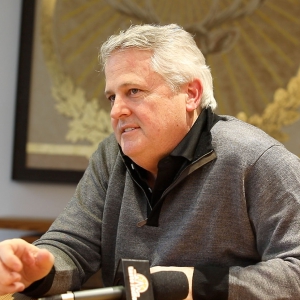
[00:30:00] Ray Latif: From one influential leader to another, next up is Jeff Popkin. With over two decades of experience in the beverage business, Jeff has been at the forefront of several emerging drink trends, having held key leadership roles at Red Bull and Vita. He's currently the CEO of Mass Jägermeister US. In the following clip from episode 102 of Taste Radio, Jeff discusses the importance of an authentic brand story and being transparent with consumers.
[00:30:25] Got Mail: I've honestly been very fortunate to be able to go to work for brands that I'm really emotionally engaged into. So if you look at Red Bull, I mean, it's not hard to be in love with that brand. And you look Vita Coco, the same story. Vita Coco actually met Mike Curban when I was at Red Bull. He was seeking to get on the Red Bull distribution trucks way back in the day. What a great guy, super savvy, super charismatic guy.
[00:30:46] Ray Latif: Founder and CEO Vita Coco.
[00:30:48] Got Mail: Yes, CEO, founder Vita Coco. So, and that brand to me is a beautiful brand. It's the brand of all the brands that were in the space at the time that I met Mike, which was in 2010, and I joined him in 2011. A brand that's just a beautiful brand that is in the coconut water space is the most indicative of what a consumer, I think, wants to drink when they drink a coconut water. It's a vacation in a bottle. And then coming into Jägermeister, it's the same story. What a story behind everything from the trademark and the logo on Jägermeister to the liquid has a story. And it's an authentic story that is authentic as the Jägermeister brand. And it's really the reason we're telling the story is it's authentic. It's the story. It's actually what Jägermeister is. So hence, you know, there's no white knuckles to get this story out there and to change it. It's all going to happen within the natural footprint of Jägermeister. In other words, there's nothing. We want to tell the story and we want to provide education for people to discover the story, but we're not going to put it in your face, you know, and blow you away with it.
[00:31:48] Ray Latif: Can you do that while maintaining the identity of Jägermeister as it is today with the iconic green bottle, the logo that comes to represent what we just talked about and that sort of partying mentality? Or do you really need to kind of go back in time and re-examine how this brand has been presented from a packaging perspective?
[00:32:09] Got Mail: Well, we did actually came out with a new bottle in 2017. So in the spring of 2017 with 56 on the label, you can see it on the background. We kind of went with a new cap, a much more premium cap. Uh, we went with more of a green background behind the stag. It is a much, it's a, it's a striking difference. If you look at the bottle side by side, definitely a much more premium look, the iconic green bottle. I mean, we have people that do art with that bottle that as you walk into our office, you may have noticed the sled that's above the elevator and you get off and it's, Basically, our light that has through the green hue of the bottle when you get off on our floor, man, you know it's something special. It's not the bright fluorescent, you know, you're getting off at an attorney's floor. You're getting off where Jägermeister lives. So it's a little different. We get people stumbling in here all the time saying, what's going on in here with that green light? So, you know, we encourage people to do really creative things with the bottle. So, we updated the bottle this year, highlighting the 56 natural ingredients that we use in Jägermeister. And to me, telling the story, as long as you're authentic, I guess some people ask me of, you know, well, is it possible to be, you know, an after-dinner Digestif and a cool shot brand? First and foremost, you know, we want to be an authentic shot brand. So, a brand, that's our positioning. We're an authentic shot brand. that's made from high-quality ingredients sourced all over the globe. 56 ingredients that truly come together to make a pretty beautiful liquid. Now, can you be a cool shop brand and live in clubs and live in the on-premise at night and still be a digestif? Absolutely, if that's what your DNA is. And so that's kind of our story and we own it. slowly and casually telling that story and reintroducing this brand to a whole new generation of consumers in the way that we would ideally introduce this brand.
[00:33:55] Josh Tetrick: Are there at all parallels between Red Bull and Jägermeister? Red Bull being, you know, a company that had basically a single product that
[00:34:04] Got Mail: was really diverse and who consumed it, and this, which is also a single product? I think so. They're both from, you know, Red Bull's Austrian and Jägermeister's German. I think so, as single brands. I mean, nobody, Red Bull right now, in terms of marketing and with their marks, They protect their marks. It's incredible. They've built the Bull & Son mark and the brand flawlessly as it is today. Still today in the on-premise, Red Bull is the only energy drink you can get unless you're somewhere where you have a gun. I'm saying a gun to pour like a roaring line or something like that. I mean, you don't see other brands. You guys kind of got startled for a second.
[00:34:41] Josh Tetrick: It's like a place where you have a firearm.
[00:34:45] Got Mail: But I think Red Bull, honestly, Red Bull is a functional beverage. We're a functional beverage. So if you look at beverages in the space today, it's the functional beverages, spirits is truly a functional beverage, energy drinks. So they're premium liquids that people drink to enjoy life. So, you know, whether it's Red Bull gives you wings or it's Jagermeister, be the Meister, which is a positioning of kind of whatever you do in life, be passionate about it, be engaged with it and drink Jagermeister to celebrate being the Meister of whatever you are and whatever you do. So it's similar, very similar, but both emotionally-led brands.
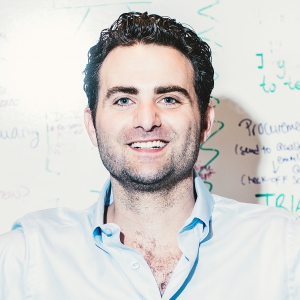
[00:35:19] Ray Latif: Finally, we have Peter Rahal, the co-founder and CEO of RxBar, which was famously acquired last year by the Kellogg Co for $600 million. Launched in 2013, RxBar quickly became one of the fastest-growing nutrition bar brands in the U.S., with net sales of approximately $120 million in 2017. In this clip, Peter discusses the steps leading up to a major turning point for the brand, one that is often credited for its remarkable success, and how the company decided on Kellogg Co the right partner and steward for the brand.
[00:35:52] Josh Tetrick: In the early, early days, we had no resources. My dad was super influential and, like, where we went with this was, like, if you're starting, if you have an idea, it's like, you need to make the food and you need to get packaging for that. And so your train of thought quickly goes, well, I need a designer. And then like, I need to raise money to go get a designer to like, go launch this thing. And my old man was like, you need to shut up and like, just design it yourself and sell 1000 bars. So from day one, we like holistically really just did everything because we didn't have any resources. So Jared and I designed the first package on PowerPoint, I didn't know how to do Photoshop. So we just chose PowerPoint, which we were more familiar with. So basically, we didn't make any excuses like, oh, I'm not a designer. We just designed it, figured it out. We didn't want any excuses to not take action. And then went to FedEx Kinko's and printed 100 labels and sold those bars, and printed 200, sold those, then eventually went to a different printer for better cost and hand-applied more labels. And our goal there was just really prove the concept, mitigate some of your risk, like financial exposure, and prove that those are product-market fit. Eventually, the goal was like manufacture ourselves and get it to a certain point where we can eventually commercialize it. So that took about two years or a year and a half. And then once we commercialized it, we kind of, you know, we were able to elevate and then we had just a very self aware moment, you know, like, when you make a design a product, you make it, it's like your baby, right? Like you birth this thing, you're super proud. And as a company, one of our values is humility and it's like freedom from your own pride and arrogance. And so Jared and I are both, humility is probably one of our core values as human beings. And we knew that this thing we designed was ugly. And we enabled ourselves to like be vulnerable and be like, yeah, we're not designers. We knew we needed to make it better. So we just sought out partners to help bring it to life. And then through that process, we had done $2 million our first full year. So a lot of people and we're just, you know, we're pretty curious. So we just talked to a lot of people and a lot of people were like, you know, what are you doing? Like, don't change your packaging. It's working. Everything's working. But we, you know, we knew our customers, we knew the marketplace. And so something we just talked about was like, everyone in the marketplace is doing the same thing. It's very much the same design architecture of like a big logo, your claims, you know, appetite appeal, like the same hierarchy or architecture of design. And so we knew like, all right, well, we need to do something different. And like, the reason why people buy the product is really because this value proposition, like, and that's the context, like the way we would pitch the product. It's like an RX buyer, people be like, well, what is it? And we'd simply be like, it's like eating three egg whites, two dates, six almonds, four cashews, et cetera. And that would resonate. And so we knew we couldn't play the same game from a design perspective as everyone else. We needed to take a risk here to stand out. And so we took that risk. And context is like a lot of people are like, what are you doing? I can't emphasize enough. And to this day, that was the biggest risk in the company's history of really rebranding because we had traction and success. No one in retail wanted to take us at the time because we just looked like everyone else, but we online and with our early adopters or who the product was designed for, we had success. I mean, it made the brand come to life. It made our position and what we're about come to life. So it was everything. I mean, it was how we stood out and like to think of how we're elevating how others market and make food.
[00:39:28] Peter Rahal: Last year, you guys had some major news in that you sold to Kellogg Co $600 million. I'd love to talk through the process of how you decided that Kellogg's was the right partner for you. Was that similar to figuring out who's the right co-founder for you?
[00:39:46] Josh Tetrick: Yeah, I think the underlying principles are quite similar, like alignment, values, etc. So Jared and I, back to the decision making in terms of like selling, and it's funny, there's like a status quo that like, if you have a consumer food product It's like the assumptions you're going to sell to, which is funny. And like Jared and I never like, we never envisioned this type of outcome just candidly. But anyway, we, Jared and I were sitting down and we've been approached in general, like there's a lot of chatter, like, when do you guys get like expectations? And then we just talked and we always felt there's like kind of two paths for the company in terms of the shareholder perspective. Like, One is a private company, generational family and just keeping it private. And the other one was really going public or joining a greater company and really scaling it to the next level. And both Jerry and I were on the same page that we didn't want this to be a generational family business or a private business. We really wanted like Maximize the opportunity and join something greater. So that early on we like chose that path and that's when we First went down like started the process I would say and then if I were going to reflection what it was like Prior to like we always call it like going on dates with some strategics. It's funny. We found that there's a massive misconception me particular like I used to think that like, all the big strategics wanted to like fire the founders or like, take over and like, they're like evil or something, which is I don't know where I got that from. But as soon as we as soon as we went on like first dates, you know, and we use the analogy of like, selling your company, at least in the food is very much like the Bachelorette with like, first dates, hometown dates and like the road, you know, there's like one rose to give or, you know, it's, are you a secret bachelor fan? No, but everyone in the office is. And I, yeah, I didn't, and I didn't come up with that analogy, but it's very much. So anyway, there's a misconception that like all their big bad, they're going to fire us. And so like we went on a first date just to get a feel for it. And like after those first dates, we realized, wait, like these companies are actually all amazing and values based as well. And so that's when we decided to move forward. And then We're a very people-centric company. We feel it's a responsibility of the company to develop people, have people flourish, achieve goals, and to deliver against that. As soon as we really knew that we were going to sell, quickly after, we aligned the whole company and announced to the company that we were selling and brought the whole company along, in the process, within reason, of course. Which is quite contrary to what the marketplace normally does. And that's where we brought people along the process. We'd have monthly team meetings updating everyone. And of course, it was confidential. That's when someone was like, wait, this is just like The Bachelorette. You know what I mean? But anyway, yeah, we went down the process and again, these big food companies are amazing. They're not like evil machines. And we quickly discovered with Kellogg that they wanted us to stay. They wanted us to be standalone and keep doing what we're doing. They actually just wanted to give us resources to help achieve our goals and real alignment in terms of how we work. from a values perspective, totally aligned. So all our goals could be achieved with Kellogg and fast forward six months from the deal, like couldn't be more true in terms of how we're operating today. So yeah, it's been good.
[00:43:21] Ray Latif: That brings us to the end of episode 118. Thank you for listening, and thanks to our guests, Josh Tetrick, Cheryl O'Loughlin, Peter Rahal, and Jeff Popkin. Tune in next week for episode 119, when we're joined by the co-founder of Samuel Adams, Rhonda Kahlman. Once again, for questions, comments, ideas for future podcasts, please send us an email to askattasteradio.com. On behalf of John, Mike, and John, I'm Ray, and we'll talk to you next time.