[00:00:10] Ray Latif: Hello, friends. I'm Ray Latif, and you're listening to the number one podcast for anyone building a business in food or beverage, Taste Radio. In this special edition of the podcast, we revisit three notable conversations featured in episodes during the second half of 2024. We begin with one of the most celebrated deals of the year, PepsiCo's $1.2 billion acquisition of modern Mexican-American food brand, Siete. In this clip pulled from an episode published on October 3rd, the hosts discuss Siete's rise in the context of emerging food and beverage trends and how investors and strategic companies evaluate better-for-you brands. Ciete, the Mexican-American brand of snacks and foods is being acquired by PepsiCo for 1.2, Mike is going to do it, billion dollars. Amazing stuff. Congratulations. to the Ciete family who have built an incredible brand that's really focused on authentic ingredients and really honing in on this idea of being a traditional yet modern Mexican-American food brand. It was founded in 2014. Here we are 10 years later, a billion dollar, over billion dollar acquisition. As you might know, Ciete produces Tortillas, salsas, seasonings, sauces, cookies, snacks. You can find their products pretty much everywhere in the United States. I'm going to read from the press release. Ramon Lagarta, the chairman and CEO of PepsiCo, said that PepsiCo believes in the spirit and authenticity of the Siete brand. We're excited to carry on the legacy created by the Garza family. And yeah, once again, I got to say, I think we had a hand in this, John Craven, because Do you remember, this was in March of this year, and I stood up my soapbox and I was yelling and screaming and kicking. Again, this was in an episode titled, Why Isn't Big CPG Acquiring More Better For You Brands? PepsiCo was listening, and they did it, damn it. They did it. Here we go. Yes. I am sure there's going to be folks in this business, the food and beverage business, that is, who are going to look at this deal with a little bit of a side eye. I don't know if that's the right thing. A side eye? Yeah, they're like, you know, is PepsiCo going to change the formulation? Is it going to make it use cheaper ingredients? Are they going to take the beauty and the charm and all the great things that C&A was founded on and make it very corporate? I don't know.
[00:02:51] SPEAKER_??: Yeah.
[00:02:51] Jacqui Brugliera: I feel like that's what always happens when a emerging Brandt Gehrs acquired. That's always the fear. That's always, you know, something that people are keeping an eye on as that happens, but it's, it is a natural evolution, I guess, of a brand. Once you get to that size, it's like, where do you go from here? And hopefully they still have some sort of hand and advisory role, or I don't know. We will see what kind of, how this plays out.
[00:03:19] John Craven: Well, look, I mean, any brand from when it starts to scaling to that size and beyond for sure probably has to make some evolution of the product, you know, really to make it be able to do that. You know, I mean, I think we a lot of times see entrepreneurs who are starting out and it's like, oh, I made this in my kitchen. And yeah, it's awesome because you made it in your kitchen and it's not scalable in any way. And I think with this, I don't know. I mean, I think there's a lot in the Siete brand that I feel like they've already gone through that. I mean, I think they're, You know, certainly like their chip products, like, I don't know, what are they going to do to that? I mean, it seems like pretty good, just give it more points of distribution, you know, put some money behind it. And there's probably economies of scale that PepsiCo is going after with that. But no matter what they do, I still, you know, going back to your point about the podcast back in March, I think it was. I mean, you know, there's been a lot of people who are like, big M&A and CPGs like over. And, you know, I think what we talked about back then is this stuff, it just is a cycle. And it'd be great if they're back in buy mode, because I think there are some brands out there that fill the need or void that exists within these big CPG companies' portfolios. And, you know, they don't want to miss out on that. So, I mean, it's, you know, congrats to Siete for what they built and for that awesome exit. And I think anyone out there who's got a CPG brand that's listening, you are going to benefit from this. Like, this has a renewed, like, wow, gee whiz, there is a big financial upside. for the top of CPG M&A. So I think this gives some confidence there and should be that, you know, grease on the investment wheels at all levels. Probably won't happen like, you know, totally overnight, but I suspect this is not the last big deal we're going to see in the coming months.
[00:05:20] Taste Radio: There might be some consolidation of the brand or as John, you know, as John was saying, uh, you know, increased distribution means maybe more focus on certain Siete product lines that are more profitable or better loved. I think, you know, hopefully this is more like a perfect snack style acquisition where the product stays largely what it was and they have, you know, new interesting SKUs that, that they try or they, you know, they try a bit of innovation here and a bit of innovation there and they don't, you know, DFIU.
[00:05:49] John Craven: I mean, I think to be honest, the thing that they should do with it is take a good hard look at the stagnant brands that are in their existing portfolio and let those sort of go off to the sunset and take Siete, which is modern It's a really well branded product, like it's got momentum, just give it a push, you know, build off of that rather than I think, you know, to what Jackie was saying, I think a lot of times it's almost just maybe easier to keep sticking with the legacy brands, you know, they already have like established teams and, you know, so on and so forth within these big companies. And this is, this is going to be different.
[00:06:32] Taste Radio: They're widely distributed and pulling legacy brands off the shelf is pretty difficult.
[00:06:38] John Craven: And this feels like, I mean, the Siete brand, I mean, it looks timeless. It looks evergreen. Like there's nothing about it where you're like, I don't know, this is just, some hype that'll be gone, like it looks like a staple product.
[00:06:50] Taste Radio: And you get inside what you're looking at on the outside too, which is really important. Like the quality is unmistakable for Siete.
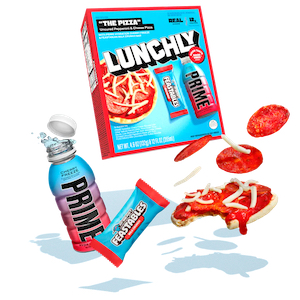
[00:07:00] Ray Latif: Does the world need a new Lunchables? In September, a trio of high profile influencers debuted Lunchly, a brand that is similar to Lunchables food and format, but positioned as a better for you alternative. In an episode published In September 20th, the host weighed in on the new brand and whether it represents significant differentiation from its legacy competitor. John slacked this to the company yesterday, and this is, it kind of blew some minds. I'm not too, too surprised that influencer worlds are colliding. Now, some of the biggest influencers in the world are involved in what I'm about to talk about, namely Logan Paul, Mr. Beast and KSI. Mr. Beast, obviously known for his Feastables chocolate and his, what? 100 million subscribers on YouTube, KSI and Logan Paul, also very popular on the socials and the founders of Prime. They have collaborated on a Lunchables type brand called Lunchly. And as Austin Reif tweeted, each box will contain Prime and Feastables. Austin also noted, this is going to crush it. Okay. Oh, all right. That's a good take on this new product. I don't know. I mean, do we need a new Lunchables? We might. Do we need a new Lunchables? Oh man. We definitely need one that's better for you. I don't know if we do.
[00:08:31] John Craven: This is like a weird sort of concept, The Launch kit things that feels very, uh, I don't know, American, I guess, but you know, hey, pay extra money for the convenience of having a lot of processed food in a little box, kit, whatever. I don't know. The reactions to this were pretty interesting. I mean, definitely a lot of people who just want to dunk on, uh, Prime and Logan Paul right now. You know, I think certainly the timing of this, if they did this, you know, a year ago, it probably would have had, you know, much more, uh, this is going to crush kind of responses than it did. But you know, the reactions again, were kind of surprising. It's like, we've seen plenty of celebrity products that are truly without, you know, merit or reason for being, and this one seems like, all right, you can kind of get it, but I don't know.
[00:09:18] Buys Siete: I would say the art on those boxes isn't the most appetizing. I want to go to Jackie on this, because I feel like Jackie may have at one point in her life consumed some Lunchables.
[00:09:27] Ray Latif: And I don't say that. I say that only because you say you had Funyuns back in the day and stuff like that. You look a little messed up.
[00:09:33] Jacqui Brugliera: I'll take it. I'll take it.
[00:09:37] John Craven: That eye in the back is beating around the bush. I'm like, we don't have time for this. It's that third eye in the back of your head, Jackie.
[00:09:42] Jacqui Brugliera: Yeah, I'm like growing an extra limb. I don't know. I mean, you're right. You're right. I did consume a lot of Lunchables growing up. It definitely wasn't the best for me. It was super convenient and it tasted good. I think it like Craven was saying, this makes sense, the collaboration, but I don't know. I think they're targeting kids and they're not really giving them a better option. That's the thing that I am hung up on. It's like just rebranding and making Lunchables cool again with some influencers, but they're not better products. So that's kind of the struggle.
[00:10:17] Ray Latif: Was that you talking or was that me? It was my voice coming out of Jackie's mouth. Yeah. I mean, I'll just talk about the three varieties here and then John, you can follow up. There's a fiesta nachos, nachos with queso blanco and salsa. There is a the pizza, the pizza being in quotes, because clearly it's not pizza, uncured pepperoni and cheese pizza. Apparently you just have a cracker, put some pepperoni and put some, I don't know, shredded cheese on it. I'm going to vomit. You have some turkey stackems, turkey cheddar cheese, and crackers. And these are the three varieties they're coming out with.
[00:10:51] John Craven: I think the one thing that seems very different about this than like what Lunchables brought to the table back in the day is that this kind of is including two packaged products, Feastables and Prime, that are like super widely available. So in essence, there's no real value in putting those inside of a box, right? And, you know, I guess you kind of have to not be tired of either of those products, which have been really in our face for the past year or so to pay money for them to get whatever the actual food item is, which we haven't tried it. So, you know, I don't know. I'll reserve judgment.
[00:11:28] Jacqui Brugliera: Maybe those nachos are like the most mind blowing nachos ever or something, but I feel like that's probably an afterthought though, you know, and just like a vehicle for these two brands.
[00:11:38] Taste Radio: What does this do for companies like Sunny who are trying to bring a better for you snacking option in that similar sort of format?
[00:11:46] John Craven: I mean, I think it's probably irrelevant to Sunny. It's more like, you know, I think the biggest risk probably is to someone like the Lunchables brand where it's just a brand that's been around for forever and it probably will siphon some consumers off of that at least for a little while to try it. But it's hard to look at this and think it's necessarily going to be some lasting like seismic shift that you're going to see there. I think the consumers who were onto a Sunny were into better for you and maybe things that are a little more, I don't know, carefully curated in flavor. Allergen friendly. Yeah, the allergen friendly like
[00:12:26] Buys Siete: You know, again, I feel like it's a different consumer base.
[00:12:28] Ray Latif: Although they make two big call-outs on the upper right-hand part of the front label. They call out the protein in the case of the pizza, the quote-unquote pizza. It's 12 grams of protein per package. And they also note it's made with real cheese and real is a big font here.
[00:12:47] Buys Siete: Yes.
[00:12:47] Ray Latif: As opposed to, I don't know. Cheese whiz?
[00:12:50] John Craven: I guess. Or Velveeta?
[00:12:51] Ray Latif: Yeah.
[00:12:53] John Craven: I am pretty sure that the Lunchables products also now call out protein on the front of the box. I don't know what their other claims are, but the Lunchables of, you know, Jackie's era, I think, have been evolved.
[00:13:06] Jacqui Brugliera: Yeah, I wasn't looking for claims or function.
[00:13:09] John Craven: Yeah, you are. You are correct. I think it doesn't come with like a little Halloween size candy bar to like, do we get a full size feastable and a lunchly and a full size prime?
[00:13:18] Taste Radio: That would be a big box for a full size prime and a full size feastable.
[00:13:22] Ray Latif: Yeah. Yeah. I mean, this is the thing, like this is a convenient thing for parents who don't have a lot of time. I just, I feel bad because this is just, as you mentioned, John, the most American lunch that you could possibly give a kid. You have an artificially sweetened sports drink, you have a chocolate bar, and then you have just processed food on top of processed food. So this is not solving a problem in my opinion. This is just adding to the problem. That's my hot take. A popular LinkedIn post about how Big CPG impacts routes to market for small brands was the basis for a conversation featured in an episode published on August 30th. The host, joined by BevNET's Director of Community Melissa Traverse, discussed the scribe, which was penned by an executive at online distribution platform Podfoods, and why UNFI and competitors may be unfairly cast as the villains.
[00:14:23] Jacqui Brugliera: Looking at the food and beverage community at large on LinkedIn, there's been a lot of eyeballs on a specific post by Peter Jelancis, the chief merchandising officer Pod Foods. And he leads off with just saying, Unify isn't the problem and Podfoods isn't the solution. And then dives into a lot of stats talking about profit margins specifically for big CPG, then for retailers, and also distributors, talking about the impacts of larger CPG. Did both of you read this?
[00:14:56] The Launch: What are your takes? I did. And actually, I worked with Peter Geolancis. He was one of the first people I worked with at Whole Foods Market. Super smart. I thought it was a smart post. He points out, Jackie, you just called this out, but he pointed out that Pepsi's Ibita is three times what Kroger's is. It's $14 billion more than UNFI's. So certainly he's pointing out that the bigger brands are taking up so much of the market share that it's really difficult for emerging brands to fit in. It's just so hard for emerging brands to win for so many reasons. You know, marketing is more expensive than it's been before, whether it's social media marketing or, you know, a lot of retailers are applying fees to running promos and setting up end caps where they may not have before the price of ingredients and packaging and freight. have gone up and then after the pandemic and due to inflation, consumers are heading more towards private label brands and towards bigger CPG brands. It's really difficult for emerging brands to win for all the reasons he called out and those as well.
[00:16:09] John Craven: Well, I think, you know, it was interesting also as he started talking about how we just need the pendulum to swing a little bit. And, you know, I took that and, you know, I really, I do think the pendulum has been swinging a little bit. It just takes a really long time. And probably over the past 20 years, there's just so much more opportunity now for emerging CPG than there was again, 20 years ago, where. you know, these big conglomerates had even more share. And to some extent, we're comparing PepsiCo that's a global business to like UNFI that's not. So, of course, the revenue is going to be way more massive. But, you know, I mean, big CBG is the Goliath and everyone else is the David, right? You know, they're kind of the... the market juggernauts and everyone else is the challenger. And I think they also are the reason that there's opportunity out there. Their businesses are so big and complex that at any one point in time, there are brands in those massive portfolios and categories that are more at risk, you know, for them and more, I don't know, have more entry points or white space for emerging CPG. I do think that chart that he posted, which sort of showed, you know, all the brands and subsidiaries and all that. And I mean, that's been floating around social media, I think for a couple of years. You know, it is really an interesting thing for an entrepreneur and CPG to think about, which is, you know, that one of the things I would really stress with that is that the rising tide of emerging CPG sort of floating the boat where, you know, you shouldn't think about whatever company maybe feels like your direct competitor is like your enemy, like these big massive companies are more like the real enemy and there's kind of enough dollars to go around from those big conglomerates. You know, again, you don't need to steal share from whoever your emerging competitor is. But, you know, very interesting comments in there too. You know, definitely worth a read if you haven't seen the thread.
[00:18:11] Jacqui Brugliera: Yeah, I feel like we hear from a lot of like manufacturers that there's a lot of hands in the pie. And I think the people that are closely involved in the production of their product and, you know, the distributors, they're looking at how they're taking, I guess, profits away from them, but they're not looking at like the larger market and how, like he was stating in his post, how big CPG is actually the one influencing a lot of this with their control over shelf space and within a retailer.
[00:18:43] John Craven: Well, I think also, you know, PepsiCo is much more vertically integrated than your typical CPG brand. And, you know, I mean, this is just like the way of the world now. Like people complain about UNFI, but like if there was no UNFI, We'd be back in the old days where it would be really hard to get your product into certain retailers. Like, are you going to be your own distributor? Like, what are you going to do? You know, the other options that were there before that weren't exactly, like, super friendly to emerging CPG. You know, I think otherwise, like, there just are a lot of hands in the pie or pot or whatever nowadays. I mean, I say that, like, even, you know, a company like ours, I don't know, I got the, like, quarterly thing from our accounting department that was like, here's all the things we're subscribed to. It's like, do we need these, right? Yeah. And yeah, I guess, you know, there's all the cool, like, platforms that people use, the Asanas, the Slacks. Do we need those? I don't know. It'd be pretty darn hard to work without those or to build our own. And, you know, I think that's just the way that it works. I mean, there's a lot of corners that can be cut because these things are in place. And again, I mean, if UNFI and KE and, I don't know, Kroger didn't exist, it'd be a pretty tough world out there. So nothing's perfect, obviously.
[00:20:06] Jacqui Brugliera: And another thing that I feel like people often ask is, is there still room for innovation? Is there still room for new brands? And I think this kind of points out that again, if we just take 1% of revenue from, you know, larger CPG, then there's a whole big opportunity for a bunch of new brands to enter. And he pointed out in his post that even product innovation sections like in Sprouts is a great place for retailers with like kind of a low risk. to introduce new products and get them onto shelf and get trial in a fast way, rather than dedicating, you know, entire shelves.
[00:20:46] Ray Latif: That brings us to the end of this episode of Taste Radio. Thank you so much for listening. Taste Radio is a production of BevNET.com Incorporated. Our audio engineer for Taste Radio is Joe Cracci. Our technical director is Joshua Pratt, and our video editor is Ryan Galang. Our social marketing manager is Amanda Smerlinski, and our designer is Amanda Huang. Just a reminder, if you like what you hear on Taste Radio, please share the podcast with friends and colleagues. And of course, we would love it if you could review us on the Apple Podcasts app or your listening platform of choice. Check us out on Instagram. Our handle is bevnettasteradio. As always, for questions, comments, ideas for future podcasts, please send us an email to ask at Taste Radio. On behalf of the entire Taste Radio team, thank you for listening, and we'll talk to you next time.
[00:21:36] Buys Siete: you