[00:00:02] Ad Read: This week's episode of Taste Radio is brought to you by Sovereign Flavors. Sovereign Flavors boasts an innovative team of flavor experts who have created over 10,000 beverages. Sovereign Flavors is the leader in building premium products customized to your needs. With thousands of flavors in their library, Sovereign Flavors offers an extensive selection of organic and non-GMO flavors. Sovereign Flavors wants to invite you to visit their on-site tasting lab for one-on-one development services. Whether you're looking to create a vitamin-enhanced water, energy drink, or flavored spirit, their team will cultivate your ideas so you can bring a high-quality, imaginative product to market.
[00:00:35] Carol Ortenberg: To learn more about Sovereign Flavors and their capabilities, Sovereign Flavors.com. That's Sovereign Flavors with an S, dot com.
[00:00:45] Ad Read: Now, Taste Radio.
[00:00:55] Ray Latif: Hey everyone, thanks for listening to BevNET's Taste Radio. I'm Ray Latif. With me are John Craven, Mike Schneider, and Jon Landis. We're recording at BevNET HQ in Watertown, Mass. This is episode 85, which features an interview with Honest Tea co-founder Barry Nalebuff. We also speak with Will Willis, who is the co-founder of Bully Boy Distillers. And in this week's edition of Elevator Talk, we chatted up with Ryan Close, the co-founder of Bartesian. Gents, when are you guys getting your hair cut before the big BevNET Live events? Not. You're not? Done. Already done. You already did yours and you're just not going to cut your hair?
[00:01:26] Ad Read: The last time I cut my hair was the day before BevNET Live Winter 2015. Okay.
[00:01:33] Ray Latif: All good for you. Lost for words. John Craven, you getting your haircut this weekend? Probably. Probably. I think I need to as well.
[00:01:42] Ad Read: I got the messadizzle.
[00:01:43] Ray Latif: Yeah. I went for it. Chill dude. Chill dude. I didn't like the haircut I got in Santa Monica. So I just. You just stopped doing it after that. Yeah. Yeah. Okay. Makes total sense. Man bun. Yeah. I mean, I definitely need to get my haircut before. I was talking about you, Ray. As I was saying, I need to get my hair cut before I get in that plane. And we're all going to get on that plane in a few days. And as soon as we get off the plane, I know most of us are going to go directly to the In-N-Out by LAX and do some garbage mouthing because that's what we do.
[00:02:12] Ad Read: We're going to garbage mouth those In-N-Out burgers. I prefer Air One.
[00:02:15] Ray Latif: Didn't you listen to that episode? I think I did. I do remember that. But while we're on the plane, how are we going to nourish ourselves? The first world problems right here. How are we going to be able to sustain our energy, our mental acuity while on that plane? And I want to talk for a sec about some of the snacks and beverages that we bring on the plane, that we eat on the plane, that we eat maybe before. There's a lot to offer these days, a lot more than there used to be, that's for sure.
[00:02:41] Ad Read: I'm pretty much going to forget everything. All my snacks at some point, or my kids are going to steal them from me or something like that's going to happen. And I'm, I'm looking forward to going to Hudson news because at Hudson news, there will be my favorite plane snack, which is bar Nana, bar Nana, bar Nana, bar none. I'm so happy to see them in the airport these days. So great.
[00:02:59] Ray Latif: It is pretty funny how the snack selection has changed so dramatically at, at Hudson news. I mean, there's still, you know, the starbursts in the guns, net snickers and stuff like that part is I'll be sitting on the plane next to some chill dude.
[00:03:10] Ad Read: Who's who's garbage mouthing Terra Blues, but I got my Barnett and they're just like, Oh, Don't hate on the Terriblews.
[00:03:15] Ray Latif: I like that stuff.
[00:03:16] Ad Read: But you can share. You can share. No, they're not terrible.
[00:03:18] Barry Nalebuff: The new OTC ones at Newark Airport and some of the new ones that are like self-service have tons of really smaller local brands too. But Hudson News in particular is in like every airport and I'm always thirsty and just filling up a water bottle because I don't like any of the beverage options that are in airports.
[00:03:35] Ray Latif: It's woefully behind where the status quo is in terms of what we need.
[00:03:39] Ad Read: How are you getting them through security? I mean, it's an empty water bottle and you fill it up and they got the little filtered water and it shows you how many, you know, plastic bottles for the plane. It's that guy that when you're in the TSA line, it's like they're just unloading his bag with like a case of a bottle of water. Have you flown in the past 15 years?
[00:03:59] Ray Latif: You can't bring V8 with you on the plane, sir. You have to buy it at Hudson news.
[00:04:04] Ad Read: You can bring our X bars though. Those things travel really nicely. I do. I love that for the plane.
[00:04:09] Ray Latif: Yeah. John Craven.
[00:04:11] Ad Read: I mean, I try not to eat a lot of crap when I'm flying.
[00:04:14] Ray Latif: We weren't talking about crap. We were talking about healthy snacks.
[00:04:16] Ad Read: Well, I was going to say the stuff they have on the plane is generally like sugary, salty, that sort of thing, which if you eat a lot of that, you won't feel so good. You like the Biena Snacks though, don't you? I thought, yeah, I was going to say the Biena Snacks. I like to buy those now that they're in the airport. That's kind of 80. Otherwise I'm, I'm usually buying something pretty boring, like a bag of like unsalted cashews. He's, he's, he's taking the cake pops down at Starbucks. Unsalted cashews. Yeah. I get a PSL at Starbucks, you know, Vente size, full tray of those, one for Mike.
[00:04:49] Ray Latif: I did steal an idea from you because I think you were the originator of bringing juice shots with you in your medicine bag.
[00:04:56] Ad Read: I've done that a couple of times, have not done that in a long time though. Success every time?
[00:05:01] Ray Latif: Sure, they're all around three ounces. The juice shots are usually under two ounces and you can bring up to three ounces of liquid.
[00:05:06] Ad Read: You can take whatever liquid you want.
[00:05:07] Ray Latif: You just split it up in a little teeny tiny bottles.
[00:05:10] Ad Read: On FIFA, if you're listening.
[00:05:12] Ray Latif: used to bring a lot of Temple Turmeric shots with, and then if we were lucky enough to have some delivered to the office, talk about a PSA, please do shots so we can bring them on the plane and be healthy, especially turmeric. Turmeric is always key. You bring that stuff on all the germs and nastiness on the plane. You feel really good after having one of those shots.
[00:05:30] Barry Nalebuff: I was on a few United flights in September and they had this in their hemispheres thing, they were advertising a pretzel covered hot dog, like a hot dog inside a pretzel with a Sam Adams Oktoberfest.
[00:05:44] Ad Read: Was it from Ohio? And I tried to get it on every single flight and none of them actually had it, which was so disappointing because they're advertising this complete trash that looks really attractive. If you fly to Ohio or Chicago or anywhere in the Midwest, you can get the pretzel bread Yeah, I got it.
[00:06:00] Ray Latif: It's a thing. And if you order just hot water while on the plane. Yeah, there's a copper cow coffee. I'm going to hook you up, Mike.
[00:06:09] Ad Read: She sent us some samples and I know you. I'm bringing it on the plane. You're not a huge, like, uh, I don't mean the Dunkin' Donuts on the plane is like, you know, so this is a nice little Vietnamese pour over on your tray. I'm picturing Mike with like one of those little, like a little teeny tiny, like child size Chemex with one of those little gooseneck pictures that he's dumping water into.
[00:06:33] Ray Latif: We need to see that, of course. Please, please Instagram that. Please put that on the Internet if you actually do that, because I can see you doing that, too. I don't love coffee or anything. Your latte art will suck so much less on a plane. Well done. Well done.
[00:06:48] Ad Read: It'll suck smaller.
[00:06:50] Ray Latif: One brand we often see at airports is Honest Tea, and we had an opportunity to sit down with one of the co-founders of Honest Tea, that's Barry Nalebuff, who joined John Craven and Project Nosh editor Carol Ortenberg for a wide-ranging conversation about his career as an entrepreneur and investor. Here at Bevernet HQ, they sat down and talked about the early days of Honest Tea and his current work with Maker Oats, which is a new brand of organic overnight oats that he developed in partnership with, who else, Maker Oats.
[00:07:19] Ad Read: All right, so we are here in our headquarters office in Watertown, Massachusetts. Carol and I are joined by Barry Nalebuff. Barry Nathanson for joining us here.
[00:07:28] Carol Ortenberg: My pleasure.
[00:07:30] Ad Read: You have a lot of stuff on your resume. You're a professor at Yale. Geez, I don't even know where to begin. You've written books, I guess probably in this industry, most famously were the co-founder of Honest Tea back in 1998. So lots of food and beverage history here. Why don't we start there, just kind of going back to the early days here. You know, you got started with Seth Goldman.
[00:07:57] Carol Ortenberg: My former student.
[00:07:57] Ad Read: Who was a student. And, you know, you collaborated with him and launched a company that at the time no one obviously knew what it was going to go on and become. What do you mean no one? The two of us. Well, the two of you did, but I would say no one else gave you guys credit for that. Some of our investors believed. Early days. I've read the book that you guys did. It's great. And obviously knowing you both for a long time. But looking back, you know, how did that whole thing come about? I mean, was that sort of, I don't know, luck?
[00:08:25] Carol Ortenberg: There was luck in the sense that timing is everything. And I'd say that if we had waited five years, we might have been too late. And if we had done it five years earlier, we would have been way too early. As it was, we were probably three years too early. But that was good because it allowed us to toil in obscurity for a couple of years and figure out what we were doing before anybody actually noticed. It was luck in the sense that Seth was anxious to try something different. He had been working at Calvert Fund and thought that he wanted to let his entrepreneurial side come out. And it was luck in the sense that I had recently been part of an IPO. and had some funds that I could use to help start this venture. And then one more stroke of luck was I had a chance to meet with senior management at Tata Tea, and they were talking about how to export more of their teas to countries like the United States rather than Kyrgyzstan. And at the time, now we all know of Tata, Tata Consulting, Tata Steel, Land Rover, Jaguar. then nobody knew who Tata was. And I said, well, you know, call yourself what you stand for. And in India, people trust the company, it's reliability, it's integrity, call yourself honesty. And the response came back, well, I like the Tata name. Yes, Mr. Tata, I understand that. In case, we'll keep the name. I'll take the name, thank you very much. So I almost gave away the name. And so now we had the product, the name, the partner, the funding. And so the stars got aligned.
[00:10:02] Ad Read: And I guess you guys were also bringing to market a tea in the U.S. at a time where most tea was very sweet. And there also wasn't a thing called organic, well, certification.
[00:10:16] Carol Ortenberg: By the way, our teas, there was no USDA organic. Our original teas were not organic. One of the things that we firmly believed is that taste matters and that we couldn't find great tasting organic tea. It took about two or three years before we found the product that we thought and so we then had one organic tea. I think it was actually First Nation Peppermint was our first organic one, and then from there I think it was Moroccan Mint, and next thing you know the whole line became organic. Snapple was viewed as the healthy alternative. to the carbonated soft drinks. And then some of you may even remember Clearly Canadian, which was essentially- It's back again. It's back again, which is essentially soda without caramel coloring. And so there were these things that posed as really healthy alternatives, but had every bit as much sugar. And nobody made a drink with one or two teaspoons of sugar.
[00:11:08] Honest Tea: That's a lot about the business side of the company. What about the mission and the heart behind it?
[00:11:15] Carol Ortenberg: So there's two parts to the mission in the heart. One is we say mission in the bottle, which is essentially because it's using organic ingredients, because it's less sweet, because it's helping improve the American diet, the more product we sell, the more we achieve our mission. And so it's not like Ben and Jerry's in the sense that you buy the ice cream, which doesn't improve your health, but we give money to Africa. It's the product itself is actually changing the American lifestyle. And the United States is number one in income and number 44 in longevity. And there's issues of income inequality and access to health care, but our diet is part of that. And for a long time, the biggest part of our mission in the sense of changing health was that we showed others what they could do. So we launched Honest Kids, and it had 40 calories at a time when Capri Sun had 110. And that allowed Capri Sun to lower their calorie count to 80, because they saw that people would go for that. And so we didn't sell that much. Let's say we sold a couple million dollars of Honest Kids. Capri Sun sold a couple hundred million of their product, and cutting their calories from 110 to 80 ended up having a big impact compared to what we were doing. But we showed that you didn't have to candify everything in order to make something sell. And then the other part of the mission is simply demonstrating fair trade, organics, treating your customers with intelligence, appealing to label readers, and that's something that we've done really, I think, all along.
[00:12:54] Ad Read: So, the company eventually got investment from Coca-Cola, of course, which also eventually acquired it. You know, as you kind of look back on Honesty and, you know, really, I guess, what is now almost 20 years. It is 20 years. Oh, geez, I guess, yeah, time flies. I'm like, wow, it really is. You know, as you look back, what were sort of like the key learnings from it and takeaways just through that, you know, experience? I mean, that's a pretty long and, you know, certainly, an entrepreneurial experience with a positive exit too, which of course is always fun to talk about.
[00:13:26] Carol Ortenberg: I think one is understanding what your brand stands for. And we misunderstood that initially. We thought the most important word in our brand was tea. And it was obviously honest. And so our first product line extension were teabags. And that didn't do so well. And ultimately, when we realized that we were about being Honest Tea said, oh, what else can we honestify or make honest? And that led us to think about initially kids drinks, now sports drinks. And I will say that in spite of the fact that we saw that, we still didn't see it big enough. Because, of course, if we'd even gone one step bigger, we could have thought about The Honest Company, Jessica Alba and fans. And so we could have been making diapers and sunscreen and everything else. So the idea of a company whose products you can trust is a pretty simple idea, but very powerful. And we got that for food and beverage, but could have gone even bigger.
[00:14:22] Ad Read: Well, I guess as someone who's also a professor at a business school, you know, how much faith do you put in Honest Tea trust for, I mean, is that something that every company should think about, or is that just unique to the Honest Tea store?
[00:14:36] Carol Ortenberg: We wish every company would do that. But the reality is, you know, it's not what we'd like it to be. And I was just reading in the New Yorker this week about the story of the Sackler family and Purdue Pharmaceuticals and Oxycontin. And they were basically telling docs, don't worry about addiction. It's not like the time release thing will solve that problem for you. And well, apparently not. And if you think about what people have put in our foods, Do we think they've actually made us healthier? To me, yeah, I'd like to be able to trust in my food companies. I want to make things that you can trust. I want to appeal to people who read the labels. But if you read a lot of those labels out there and you can't pronounce half the things, you got to worry about it.
[00:15:25] Honest Tea: Do you think consumers are more wary now than they were when you started Honesty? And that word is more loaded a bit?
[00:15:34] Carol Ortenberg: Well, actually, that's an interesting thing about the honest name. It was a little bit of a red flag that we waved in front of consumers. And so people would constantly challenge us, like, OK, what makes you so honest? And in fact, one person wrote to us and says, you know, you write on your label that there's 30 calories a serving, but there's two servings, and nobody just drinks one bottle. And one of the things we did, by the way, that again, few companies do, is we read and answered every email, Seth and I. Now I'm not sure Seth answers them all, but I'm sure he reads them. So we wrote back saying, we completely agree with you. The food and drug basically requires you to list serving sizes. If it's a 16-ounce bottle, they say a serving size is 8 ounces. And therefore we don't have a choice, even though we believe 16 ounces is correct. But what we do and we did, we changed our labels to put on there an extra line calories per bottle. And now the whole industry has moved that way to calories per bottle, not just sort of fake serving sizes, which are so small. I mean, the worst offender there I think is Pam, the oil spray.
[00:16:52] Honest Tea: It's like a two second spray or something.
[00:16:53] Carol Ortenberg: They claim there's zero calories, but it's nothing but oil. And so how can oil have no calories? Well, the answer is, is 150 sprays and it's not air. So we didn't, we had an opportunity in one case to round down to zero and we didn't do it because we didn't think that was the correct solution. So yes, I think you're saying you're strutting effectively when you call yourself Honest Tea you had better deliver.
[00:17:19] Ad Read: So going, you know, past Honest Tea, you afterwards got back in the beverage game with. Kombucha. Kombucha. And you're also involved with Q and Callicraft, a brewery. Right. Q is one of my students, Jordan Silbert. And I think Blaine from Callicraft was an Honest Tea alumni, right?
[00:17:36] Carol Ortenberg: He was a star salesman in the West Coast.
[00:17:39] Ad Read: So when you, you know, kind of look at those different projects and kind of what they bring to the table compared to Honest Tea, you know, what attracted you to each one of those? What's the line from The Godfather? I thought I was out, but then they pulled me back.
[00:17:53] Carol Ortenberg: That's the beverage world for you, right? So one, I mean, in terms of Blaine, it's ironic because I don't really drink beer, but I love Blaine and he is one of the world's most wonderful, folks and he had a great vision and he is a super taster. And he was one of the people we would always go to to help us with our recipes to get a sense of, oh, a little bit more allspice or cinnamon or, and he could tell these micro differences in ways that over the long run I might notice, but if you're trying to do 20 different samples, And he had this passion to create his beer brand. And he's doing all sorts of unusual things with meads and with sour beers and mango. And it's really interesting. And he's grown now. He's about three million in sales. And he's done that with almost nothing. So it's just fun to see him succeed. And in the case of Q, they're really trying to do for mixers what Honest did for beverages in general. And the great irony here, if you think about, so I'll put on my economist hat for a moment. if you're going to spend, if you're going to get a gin and tonic or a, what is it? A Moscow mule, a ginger beer and- Vodka. Well, Moscow mules. Vodka. Okay.
[00:19:10] Honest Tea: You can see my- These are cocktail enthusiasts.
[00:19:12] Carol Ortenberg: You can see my expertise here. You know, 60%, 80% of the drink is the mixer. And if you go from upgrading kind of to, I don't know, Schweppes, which has got a lot of high fructose corn syrup in it to Q, Well, that is gonna have a radical improvement in the flavor profile. And if you spend an extra 75 cents on the mixer, you're gonna get a much bigger boost than spending 75 cents more on the rum or the vodka. And then the other way of putting is if you are spending a lot, so even if you're not spending a lot of money, the place to first spend the money is on the mixer. And if you are spending a lot of money, you're spending $20 on the rum or vodka or tequila, Well, then you're insane not to be spending the extra 75 cents because you can't tell the difference if you're masking at all. Those guys, I bet they're going to do over 20 million next year. It's becoming a presence. And if you look at what Pevertree has done in Europe, it's insane. They use Peruvian quinine and agave. It's great.
[00:20:18] Ad Read: Good stuff. Yeah. Well, I guess with those and also, you know, we'll talk about Combrucha a little. What sort of drives your desire to be involved in companies like this? Are you looking at it as economist guy? Are you looking at it as, you know, I like these people. Are you assessing the market opportunity?
[00:20:34] Carol Ortenberg: almost exclusively the companies that I work with are people who were my former students in some ways. And, uh, you know, you're probably less interested in my work with a one title, a title insurance business, but I guess one other key lesson is I want to work with people I totally trust. Okay. And there was one case of a company I worked with, it was, uh, online learning and he'd raised money at $3 million and, Ultimately, the company sold for about $700,000. And so it looked like we'd all lose 2 3rds of our investment. And what he did is he converted the investor's shares into preferred shares, even though that isn't what the contract said. And we got out whole, and he basically walked away with nothing. Well, I think that was the right call. Because ultimately, the idea that he would sort of fail, and he would walk away with a lot of money and we wouldn't, doesn't really make sense. We hadn't really written the contract thinking about that. We were focused on a thing all working.
[00:21:39] Ad Read: Right, the payday.
[00:21:40] Carol Ortenberg: So I want to have people who really appreciate that we're in this together. And that's something that I've been very fortunate with in terms of the companies I've been involved with. And I find sometimes you get in these early negotiations and The founders just believe it's all going to happen so quickly, and it's all so easy. And actually, even that with Jordan, by the way, I waited, I think, two years before investing. Partly let the world sort of teach him how hard it is. So I didn't have to be the one to beat him up.
[00:22:14] Ad Read: And I guess as far as kombucha goes, I'm kind of curious about that one in particular, since Honest Tea had its little foray into kombucha fiasco. I was trying to use a nice word, but sure, it had its fiasco with kombucha. What kind of brought you back to that?
[00:22:30] Carol Ortenberg: Well, I love kombucha. I think it's an amazing product in terms of its taste, its bubbles, its sourness, its flavor, its low calorie, probiotics. I mean, the whole thing is just a great package. The only problem is that it can turn alcoholic. It's alive, you've got yeast, you've got sugar. Yeast does its stuff. It turns sugar into alcohol. And we had this problem where people called into Whole Foods, asked how much alcohol was in it and discovered ours had 0.7%. The legal limit is 0.5%. And next thing you know, we had to take it off the shelves of Whole Foods, we had a national recall, we had to dispose of it as medical waste, cost us a million dollars, probably even more than that because it was during the time of our earn out with Coke, so... Bad timing. Really bad timing. And we tried to figure out how to make a version of it that would stay below a half a percent and really couldn't.
[00:23:23] Ad Read: So I guess Canberra just solved that, call it an alcoholic beverage, right?
[00:23:26] Carol Ortenberg: Exactly. So one view is, this is the line in software, it's turn a bug and turn it into a feature.
[00:23:32] Honest Tea: It's a feature, yeah.
[00:23:32] Carol Ortenberg: It's a feature, and so now the alcohol's a feature. The other thing is I also like to do products where I'm a consumer, and I have this challenge, which is when people go to drink, I want to drink without getting drunk. Sure. The line I use is get tickled, not pickled. I like that. And I think I'm not alone in this. So a lot of people want to have a drink, but still be able to drive, not that I'm encouraging that, to exercise, to go back to work. And the fact is a lot of people are healthy and everything else they're doing, but somehow, why am I going to give that up when I go to the bar? And so what I would do is order things like, I don't know, cranberry juice and club soda and be a party pooper or a wine spritzer, which would be so low class that it'd be just embarrassing. And so what is it that I could drink that would be sophisticated but not get me fat, not get me drunk? And the idea of an alcoholic kombucha. So it was 2% alcohol, 60 to 70 calories. It's like, yes. And I had a student who basically pushed me to do this. And I kept on coming up with reasons not to, and he kept on overcoming those reasons. And so eventually I caved in and... Here we are today. And here we are.
[00:24:51] Ad Read: Well, you're a great, I have to say, you're a great pitchman for these brands, since you know all of their key points and all of that. So, you know, they certainly seem like they've got a great partner there.
[00:25:01] Carol Ortenberg: Yeah, well, one of the roles that I think a founder wants to have is as keeper of the brand, is the idea of, I know what we're about, and so I wouldn't let us go somewhere else. And I'll give you actually an example of this with Honest, where I think it's gone a bit of a challenge. So one of the products that was introduced was an organic diet soda. And okay, it's cute, I like organic diet soda. I think if I were to drink diet soda, it might as well be organic. but I don't think that's what the Honest brand was about because it was also about being less sweet and it's not about just fewer calories. And so there's this confusion, is it just calories or is it sweetness? And I don't have a sweet tooth. And so just because it's organic doesn't necessarily mean it still fits in the Honest brand. And I don't think the Honest Fizz, I think it was called, turned the world on fire.
[00:25:54] Ad Read: Well, you know, I guess they can't all be successes. That's one of the things of being an entrepreneur too.
[00:26:00] Carol Ortenberg: So yeah, but separate from that, it wasn't really brand mission.
[00:26:02] Ad Read: Sure. So moving on to what you're doing now, which, you know, we talked a lot about Honest Tea, you know, Kombucha and other companies. And here you are as the, chief troublemaker of a company called Maker Oats. Can you tell us about that?
[00:26:19] Honest Tea: Moving into the Nosh side of things. Yeah, the Nosh.
[00:26:21] Ad Read: Talk about food, finally.
[00:26:22] Carol Ortenberg: Well, I was assistant troublemaker, and then I did such a good job they promoted me.
[00:26:26] Honest Tea: You got promoted.
[00:26:27] Carol Ortenberg: To a C-level. That's great. I love it. To the chief troublemaker. So I think that a company in the food and beverage space should solve a real problem. So what were the problems? Honest Tea was, in spite of the fact that there were so many beverages out there, there was nothing I wanted to drink. Water was boring, diet dangerous, soda, liquid candy. In the alcohol space, there was a challenge that it was either high in calories, high in alcohol, or both. And how could you drink without getting drunk? The breakfast space. is a huge problem because there are things that are great for breakfast, might be a white egg spinach omelet, steel cut oats are terrific. But the general problem is those stuff takes time to make. And the fact is we're rushed in the morning, we hit the snooze button on the alarm, we went to sleep too late, the kids need to get out to school, we need to get them breakfast. And so you tend to use box cereals, which aren't always so great. Sometimes you just take the power bar, you stop in McDonald's and you get the milkshake. We even have a story of somebody who doesn't have kids but is using organic baby food in pouches that she uses as she drives.
[00:27:43] Ad Read: Incredible.
[00:27:43] Carol Ortenberg: Yeah, I mean, not me. So how could you have a great organic, no sugar added breakfast that's gourmet and affordable with no prep in the morning? And that sounds like it's pretty much impossible. But the good news is that actually, people are already doing it on their own. And this is something I'd say is true for a lot of the companies in the sense of Honest Tea. It's just we didn't reinvent tea. People are already making iced tea. We're putting in one or two teaspoons of sugar. So we essentially made it for them the way they would make it for themselves. And there's a whole movement now out there of people making overnight oats. And overnight oats has all these characteristics. You soak the oats overnight. And then the next morning, they're good to go. You don't have to heat them up because there's no cooking. You just rinse the bowl. It's easy cleanup. You can take it with you. You can make it once for a couple of days. It's an amazing product. It's not expensive. It's filling. It's got protein. It's portable. I mean, it's the whole nine yards, maybe even more than nine yards. But it also turns out there are a couple of challenges. One, you can actually mess it up. So just oatmeal by itself is a little boring. And so how much chia should you put in? How much ginger, cinnamon? Should you put apples? Apples with what? We have one with coffee and banana.
[00:29:05] Ad Read: And so- Sure, a lot of ingredients at stake here.
[00:29:08] Carol Ortenberg: And then the other part is if you get these ingredients, we have mulberries and freeze-dried bananas and dates and figs. Well, if you try and buy them in a kind of consumer size pouches, they're going to be crazy expensive. And I don't want a product to be unaffordable. And so the idea is, If we buy them in bulk, which we do, we can actually make this product and sell it for less than what it costs you to make, to you to buy. And so we've got a couple of things. Now we've got the right recipe. We've done all the hard work of mixing the ingredients for you. We've bought them for you at a really good price. There's still room for you to customize because you can add your favorite milk, soy milk, almond milk, macadamia nut milk, cashew nut milk. camel milk we've even tried. The notorious camel milk. Yes, the one hump or two. Get you over hump Wednesdays. So you can add a little yogurt on the top, kefir, granola, fresh fruit, but you've got a base that is just fantastic.
[00:30:12] Honest Tea: And having been in this industry for so long, you know, is there anything you're taking from your honesty days that you're bringing to this company? Lessons or things you learned along the way the hard way?
[00:30:24] Carol Ortenberg: I certainly hope so, right? So what's the most important word in Maker Oats? Well, it's not oats. It's maker. It's maker. So that'd be a starting point. I've learned really how to work with designers. And I think when you look at the design of this, it blows me away. I think it's absolutely beautiful. It shows what the brand is. It's minimalist. It's Scandinavian modern. It's simple. It's clean. Most MBAs don't know how to work with designers. I'm not an MBA, but I work with MBAs who then work with designers, and they try and tell them what the answer is. And the trick more is to tell them what it is, your hopes and dreams, almost like sitting on a psychiatrist couch, and why you did this brand, what you're trying to achieve, and trust that they will help solve the problem. And so, you know, we said to our spectacular designer, Dan Walter, Look, I want this to be the product, the design, that you show people when you're showing off your work. And when they want to hire you, this is what you're going to say, this is what I can do. And if anywhere along the process you think this is not going to get us there, then you need to tell me, because I want this to be your best work. And I've learned when meeting designers to ask them not show me what the company did with them, but what they did before the company messed it up.
[00:31:52] Ad Read: That's an interesting approach. Well, I will say, I mean, it's at least my own opinion, it's a beautiful looking package, which for a company that's fresh out of the gate, it has an established feel to it too, which I think is something that you don't always see with startups.
[00:32:07] Honest Tea: It also feels like you thought about, you know, that it's a portable product and the consumer would be walking around holding it. And other people will be saying this, it looks like something cool to have in your hand.
[00:32:17] Carol Ortenberg: Yeah, well, we believe that that is part of the brand. And so, in fact, one of the first things we did is we also made designs for t-shirts and hats.
[00:32:25] Ad Read: Thinking ahead.
[00:32:26] Carol Ortenberg: Because basically, look, the answer is, you know, if that's not, it's not going to work for that, then we realized that we haven't quite done it.
[00:32:33] Ad Read: I like that. If it sucks on a T-shirt, then it's not good, right?
[00:32:36] Carol Ortenberg: Yeah, you want to see the whole line and what is the maker brand going to look like.
[00:32:41] Ad Read: Right, right. So before we let you get out of here, I'd be remiss if I didn't ask where this product is going to be sold. I guess it's not yet on the market?
[00:32:52] Carol Ortenberg: Not yet in the market. We launch in January and we expect to be online. We hope we'll be in Thrive. We hope we'll be in Amazon. We hope we'll be in the... All the good spots. All the places near you. And if you're a natural foods buyer and you're hearing this, give us a call because we want to be in your store. jessandbarr at Maker Oats.
[00:33:14] Ad Read: Perfect. Well, hey, Barry Nathanson a lot for your time. This has been great. And I guess we'll have to, you've left us some samples here, but otherwise we'll anxiously await January to give this stuff a try again.
[00:33:25] Carol Ortenberg: We want to get you hooked just along the way. There you go. Thanks again, Barry. Thank you for having me.
[00:33:32] Ray Latif: Honestifying the brand, Barry invented a new word, honestifying. I liked when he was talking about, they were trying to find products that kind of fit into the brand mission. And he admitted that, you know, they stumbled in certain areas, the Honest Fizz, a few other products that just didn't work. And they tried, but it didn't necessarily fit into the brand mission. But one thing that might've been, you know, a godsend for them is not getting into, not extending their platform into CPG like beauty and healthcare and things like that.
[00:33:58] Ad Read: Yeah, I mean, obviously, there's the Honest Company, which makes all sorts of, you know, household products. And, you know, it's interesting. I think a lot of people look at that as something that was maybe bad for Honest Tea, but it certainly helped build out Honest Tea a name and maybe it kept them focused, too. I don't know. Yeah. It's a question of what conversations does your brand own? And he's talking about owning honesty. Owning honesty is a task for a company with a lot of bologna sandwiches in the refrigerator. For instance, look at Coca-Cola. They've spent a lot of money trying to own happiness and they've been fairly successful with that as their brand. Owning just one word. honesty is really difficult to do. You'd have other things that you own in your brand, other pieces of the conversation to differentiate from other brands and also to be relevant to different members of your audience.
[00:34:53] Ray Latif: For sure. There was another interesting point that he made about working with designers and sort of you don't tell a designer how to design, you just sort of give them the framework for what you want to see. And Mike, I know that sort of resonates with you, what you do.
[00:35:05] Ad Read: It sure does. I mean, the thing that he was talking about here is that if you have a good designer, you should be able to keep the conversation at a brand level and also give them what the deliverables are and then see what they come up with for you. You have to give them requirements and blue skies the enemy of creativity is a thing that I say a lot. If you give the designer the right constraints, tell them what the brand is, tell them what you want, the feeling of the output to be, they should be able to come up with concepts that will exceed your expectations versus just, you know, meeting specific expectations of design that's in your brain if you have a good designer.
[00:35:40] Barry Nalebuff: I think, too, this is something that a lot of entrepreneurial brand owners struggle with when they're a one- or two-man show for a couple of years and then need to expand the team and kind of delegate some of that stuff off your plate. And really, ideally, what you should be looking for is, hey, I know how I would do it. I've been doing it this way. I've been getting these results.
[00:36:01] Carol Ortenberg: I need somebody who knows how to do this better than I do and get better results than I can myself. And then that's where a lot of that trust will then come in. It's built both ways.
[00:36:10] Ad Read: That's where scale comes into play. If you have to have everything flow through you in a company, then you can only get so big because there's only so many hours in the day.
[00:36:17] Ray Latif: Jon Landis, you nailed it talking about trust. I mean, Barry talked about this. He works with people and he likes to work with people that he completely trusts. And it seems to rise above other aspects of his investment. I mean, that's how he got involved with Callicraft, even though he doesn't really, he said, he doesn't often drink beer.
[00:36:34] Ad Read: Yeah, I mean, he clearly, you know, has a lot of faith in Blaine, the, you know, founder of Callicraft, who is a former Honesty employee. You know, so I think that's something that is pretty unique where, you know, he was kind of getting into business with someone just purely because of trust and knowing that that person would sort of, you know, lead him down the right path. John Craven, I noticed you had a particularly adverse reaction when Barry mentioned one of your favorite products, uh, camel milk. Yeah, I don't know what to say for that. Um, yeah, no comment.
[00:37:11] Ray Latif: All right. Well, something about worshipping a porcelain bus. Good opportunity for a segue from camel milk to booze.
[00:37:18] Ad Read: Oh yeah.
[00:37:19] Ray Latif: So let's do that. That's a good segue.
[00:37:22] Ad Read: One hump or two.
[00:37:23] Ray Latif: As this market for craft spirits really continues to develop, we've stayed pretty curious about the segment and parallels to emerging categories in food and non-alch. And so when we were invited to visit Bully Boy Distillers, which is an urban craft distillery located in Boston, we figured it was a good opportunity to chat about the business and chat with folks who are in the trenches. So John and Ray recently checked out Bully Boy and met with co-founder Will Willis, who along with his brother Dave launched Bully Boy in 2011. Will chatted about the journey of Bully Boy, including the initial foray into the space, the decision to open in Boston, and how the industry has evolved through the past six years, and of course, what he's learned along the way. All right, we're here at Bully Boy Distillery in Boston, Massachusetts. John and Ray are sitting down with Will Willis, who's one of the co-founders of Bully Boy. Will, thanks so much for being with us.
[00:38:12] Ad Read: Hey, thanks for coming in. It's been a real treat to have you guys here. I'm a big fan of the show.
[00:38:16] Ray Latif: I appreciate that. Always good to hear that folks listen to the show. And great to meet fans. So this is a pretty amazing place. We just took a nice tour of the distillery. How'd you get into the business of distilling?
[00:38:30] Ad Read: Yeah, my brother and I kind of got involved in a roundabout way, I suppose you could say, very innocently. As little kids, we made apple cider. Our grandfather owned a small farm about 25 miles west of here in Sherbourne, Massachusetts. And we started off making cider as little kids. And as we got a little older, it became a little less innocent. We sort of discovered the merits of hard cider and all that it brought with it. And eventually graduated, I guess you could say, into using a stove top still, a little two and a half gallon stove top still. And from there, we were off and running.
[00:39:02] Ray Latif: Something a little bit harder than hard cider, I think, at that point, right? We were ready to up our game, yeah. Nice, nice. And here you are in the city of Boston, an urban distillery, or a Newmarket Square, which is a pretty industrial neighborhood. Why was Boston so important to you?
[00:39:15] Ad Read: Well, truth be told, the initial game plan or business plan was to open the distillery on what was then our parents' farm. So it was originally owned by my grandfather. And then when he passed away, we moved there. And in 2003, they passed the Farmer Distiller's Law, which essentially was a way for farms to get an alternative source of income.
[00:39:37] Ray Latif: And you're talking about Massachusetts?
[00:39:38] Ad Read: I'm sorry, Massachusetts, yeah. And so we wanted to use that license and open the distillery on the farm. Had an elaborate business plan, which we pitched my father, and he took one look at it and sort of... said no effing way. And so we completely rethought things and ultimately came to the conclusion that the best place to do it was in Boston. We never looked back. It's been an amazing, supportive spot to do it. We were the first ones to set up shop here. And I think just being so close to our target market in a town that really kind of tends to get behind its own has been huge for us. You know, there's a lot going on in the craft spirit space, obviously, and that's something that's rapidly growing. And we're kind of hoping to get your perspective as someone who's in the trenches and doing it. So can you kind of fill us and our listeners in on that? Yeah, I mean, I think it's certainly a very different marketplace than what was happening when we started up in 2010. So we hit shelves in June of 2011. And at that point, there was a real novelty around craft spirits in one could sort of a company could get by sort of on just doing the very basics. As things have evolved, I think that there has become a much greater need to not only to innovate, but to also up the game as far as your quality. And it's no longer enough to just sort of get by on being the local guy or gal. And I think that ultimately the consumer is going to benefit from that. But those have been the two biggest changes, I think. that we've seen is just that there's harsher critics out there, a stronger demand for excellence and also a wider demand for something more than just, you know, a vodka, whiskey or rum. Right, so there is stronger demand that seems to be continuing to grow, correct? Very much so, yeah. I think, like you see in all consumer categories, anytime there's sort of a new movement, it takes a while for general acceptance. And more and more craft spirits are entering the mainstream. And we see it with our customer base on the restaurant side. It was, you know, initially it was very much sort of the small mom and pop sort of farm to table places. More recently, we're in much more, you know, regional chain type places because the bottom line is consumers are asking for it. They want the local beer and they want the local spirits.
[00:42:01] Ray Latif: Just like other CPG categories, you're not just building a business, you're building a brand. And you've taken a lot of steps to really build the presence of Bully Boy, not just in Boston, but elsewhere. You know, take us through some of those steps and how effective they've been.
[00:42:15] Ad Read: First and foremost, I think we recognized fairly early on that getting our customers into the space was critical. And initially that took the form of bar managers and restaurant owners inviting them in. It was a totally unique experience for them. They hadn't, you know, unless they'd been on sort of a golf junket to Scotland or gone down to Louisville, many had never been to a distillery. It creates massive sort of brand buy-in. and became a very powerful tool for us in the early going, because that's how we started, it was just all on premise in the restaurants. As time has progressed, we've tried to build out our visitor experience for regular consumers. And so we spent a lot of money investing in a sort of brick and mortar visitor, I hate calling it a visitor center, it's a sort of a tasting bar that we're sitting in now. And then also an event space for corporate private events. It's been huge as far as us building brand loyalty, becoming part of the fabric of the sort of Boston tourist experience, and creating those ambassadors that come to Boston and then go home from wherever they came. Really critical in the growth of the brand.
[00:43:30] Ray Latif: Definitely. I mean, it's part of the reason we came here as well. You would listen to a podcast recently, an email John Craven said, who had said in a podcast a couple jumps ago, that he had never been to a distillery. And you're like, hey, well, why don't you come out to ours? And here we are.
[00:43:43] Ad Read: Well, never been. Never been to one in Boston. Okay. Never been to one. Been to many distilleries. Okay. Fair enough. Which is fair. I mean, you know, I mean, until we showed up there, there were none in Boston. And even now it's just us and one other. So two others in Boston, I guess. So it's, yeah, John, you can't be blamed.
[00:43:58] Ray Latif: And I'm really glad you invited us here because your tasting room is pretty impressive. Your barrel room really is impressive. Thanks. We need to come back at night though because, you know.
[00:44:05] Ad Read: This is true. Yes. It's midday when we're recording this and people will probably wonder if we're sitting here like slugging down whiskey, which we're not. All business.
[00:44:14] Ray Latif: I know.
[00:44:14] Ad Read: All business.
[00:44:15] Ray Latif: One of the other interesting things that you're doing talking about a little bit more on the business side is you have a pretty robust or growing to be robust private label program as well. There's got to be a really serious balancing act in trying to build your brand and trying to build your own space out there on bar backs and on the shelf. What considerations do you take when it comes to your private label program?
[00:44:38] Ad Read: Yeah, I mean, I think for us, so the challenges you're alluding to, of course, are do we cannibalize sales of our own products if we're kind of creating a customized product for a particular restaurant or hotel? And I think the sort of calculus we've run is that Ultimately, the relationship we build with the account supersedes the potential loss and, you know, sales of our mainline products. And, you know, we're in a relationship, we're in a people business, it's that old cliche, and the degree to which we can create a bond through a private label program, which is a very iterative process where, you know, bar staff or food and beverage staff from The account come in and we work together to create their own proprietary recipe on, say, a gin. By the end of it, you really know these people and that has been a massively powerful way for us to build brand loyalty. So, while you're right in saying that we do run the risk of maybe not customers knowing that it's a Boldy Boy gin they're drinking, we feel that the goodwill we build with the staff far outweighs that. And I guess as far as just the product lineup in general, you know, there's obviously a sea of spirits out there that you could be making the ones that are most popular. I guess just to point it out, you know, vodka is not I would say is popular of a craft spirit as something like, you know, whiskey. And, you know, you've got kind of a whole lineup. So how do you decide, you know, which things to focus on both in terms of, you know, the product lineup you build, as well as kind of what you put your kind of brand behind? I mean, it seems like it's still. feels like a whiskey brand first and foremost. That's good because at the end of the day, that's sort of where you want to hang your hat is, if not whiskey, certainly, you know, the barrel aged or those products that are more art than science. Any product development decision we make, it's always sort of a balance between pursuing our own sort of artistic ambition with stark business reality. And I mean, vodka is a great example, right? Because I mean, I love vodka, but the reality is there's not a ton of artistic creativity that goes into it. It's by definition a tasteless and odorless spirit. So how much wiggle room is there? There, you know, not a ton. Nonetheless, it's, as you alluded to, it's the largest spirits category, and I would hold that, you know, ignore it at your own peril, because as a craft distillery, if you wrap your entire sort of ego up in your art, then you're gonna be broke. I think if we didn't have the vodka to sort of keep the lights on while we were waiting for the whiskey, the business wouldn't have worked. So that's just one example of a situation where we... have to sort of look at, you know, what's going to sell and, you know, what's going to ultimately be the foundation of the brand, which for us, we feel like is, are those spirits, which are again, more, more art and science. So it's the barrel age products, the gin, it's, it's the ones that we're spending months and years sort of, you know, running product development on. So as you build a reputation in the spirits that you're making, you know, you're still looking for innovation and, you know, where does it come from? I mean, you have some products that are kind of premixed, like an old fashioned, I guess, where do you see Bully Boy going as well as just the craft spirit segment in general? I mean, I think it's a little bit of a give and take from, with the consumers. I mean, I think we certainly have ambitions about areas that we want to explore. You know, Amaro is a category we're actively working on and developing some of our own offerings there. Some of it's feedback from customers and, you know, folks that want to see a whiskey with a different mash bill than what we're doing. Clearly you can't, you know, it's not like you're, a band up on stage taking requests. But there certainly is an element of feedback that is very helpful. And certainly within the tastemaking crowd that we respect greatly, you know, bar managers and such, restaurant owners that we really respect will often use the sounding boards for ideas we have. As far as where things are going, I mean, that's the fun part about this business. It's anyone's game to guess. I would be foolish to take a stab at that one, I think.
[00:49:09] Ray Latif: Oftentimes on the podcast, we're talking about fundraising. This is especially important to food and beverage companies. What's the environment like for Craft Spirits in terms of funding and what's out there and who's looking?
[00:49:23] Ad Read: Yeah, well, I can see, you know, so when we started out 2010, getting sort of traditional financing was off the table. We were lucky enough, our dad was sort of our angel investor, kind of got us going. The second round where we built out this new facility and bought a bunch of equipment, we had a traditional bank loan from Brookline Bank. And I think that right there, well, it tells a little bit about the development of our business, but also the category in general that we were sort of a known commodity. first opened up, tried to get our permit from the city of Boston, you would have thought we were, you know, making nuclear weapons or something. They kind of looked at us like we had three heads. So what sort of, I guess, challenges do you see in the space right now? I mean, is there oversaturation? Is there... One of the things I always wonder about, you also have, you know, the large players producing their own sort of craft, small batch, expensive stuff that seems like it's aimed at the actual independence, you know, what sort of stuff do you see? I think for a small sort of story-based brand like ours, the biggest question is, will our message resonate beyond our immediate geography? So a big challenge we're going to face when we start taking our products sort of outside the Massachusetts, Rhode Island, New Hampshire main area, you know, who are these guys and why should we care kind of thing. And, you know, there are ways around that. Obviously you need to build a great reputation as a top line producer, premium spirits. But that'll be a challenge. The other thing is, as you lose, I mean, there's a ton of new small distilleries entering the market, and whether they're good, bad, or ugly, it's sort of death by a thousand cuts. I mean, we go into new areas, even in Massachusetts, that there'll be bar managers or store owners that are loyal to some local person that just started a company. The third thing would be sort of very large brands that start, and of course, I mean, you've seen this over the course of time in other consumer categories, but the large companies start creating sort of so-called craft offshoots. And of course, they're not really anything like us, but to the consumer, they're perceived that way. So that's also a challenge. And obviously, those places have much bigger budgets. So how do we work around that one? All great questions, and I'll be looking at you guys for the answers. Well, we can come back and discuss over a whiskey or something. Happy to do that. I like it.
[00:51:54] Ray Latif: Well, sort of following up on this, I mean, I come in here and I see this amazing place that you've built, and it's taken a lot of blood, sweat, and tears, and I can tell you and your brother are really committed to it. Is there a next stage for Bully Boy that you guys are looking at, and what is it?
[00:52:13] Ad Read: I feel as though we've this past year just graduated from like true startup, and now we're sort of whatever that next stage is. I feel like there's so much upside, so much potential for us. And, you know, we're managing this business for the long haul. I'd love to work for my kids someday. There's no way to know where it'll take us, but we're trying to be cautious. We're trying to be inch-wide, mile-deep, all the usual cliches, and just continue to make great spirits and hoping the rest will take care of itself.
[00:52:44] Ray Latif: I like it. I also like your spirits. Thanks, man. It's a good product you've made. It's a good brand you've made. And thank you so much for having us here. I feel like... you go to a bar every so often and you see the bottle, but what's behind the bottle is what we're doing right now, and it's really cool. So thanks very much for having us.
[00:53:03] Ad Read: Thanks for coming in, guys. So Mike, how was the Bully Boy gin? There was a certain minerality to the gin that I wasn't expecting. Let's say the parking lot enjoyed the gin. I should note that Mike came along with us. You know, you're still new here. You haven't learned the important things about beverages. You know, glass bottles do break. Pavement and glass, not a good combination. You tried something new. It didn't work out. Yeah, I was, I was, yeah, I was trying to, I was trying to mix gin with concrete and it didn't quite work out.
[00:53:35] Ray Latif: No, no, it didn't.
[00:53:36] Ad Read: I appreciate you guys hooking me up with that bottle of whiskey. It's really nice. I've been enjoying it a lot.
[00:53:40] Ray Latif: And I'm sad I couldn't make this trip because I've just been too busy around here. Well, thanks to Will and Dave for supplying the whiskey. Absolutely. For opening up the closet of booze. Yes, exactly.
[00:53:51] Ad Read: And the gin that I did get to try was phenomenal. I thought I was going to make Negronis at home. The game is smashed. Rookie move.
[00:54:00] Ray Latif: One interesting parallel between this interview and the one we had with Jason Cohen last week was Will stressing the need to be able to work with customers and know who your customers are. And that means the bar buyers, the bartenders, the bar managers, and those folks who are the ones that are going to help support, promote, and drive your brand on-premise, which will hopefully lead to sales off-premise.
[00:54:23] Ad Read: Yeah, I mean, I think that whole end of things, which, you know, we talked about, is pretty interesting, just in that, at the end of the day, if you're not doing that stuff, these companies are basically just another bottle of, you know, brown or clear liquid that's sitting behind a bar or in this, you know, sea of bottles when you go into a liquor store. You know, I think it's not dissimilar to other categories that we talk about all the time, you know, coffee, beer, you know, it's the same sort of thing when you just try to judge the book by its cover. So I think it's really smart that they're, you know, trying to do these things to engage people and connect with, you know, the community that they're in, both the consumers and, you know, people that are in the trade. The whole consumer versus B2B thing is big for these guys and trying to figure out whether their brand needs to resonate with the consumer first, or whether it needs to resonate within the industry first, is a decision that we see industry-wide happening for just about anybody out there. Because the question is, do you become known by the industry, the buyers get distribution, or do you need to be known by the consumer first? It's a chicken and egg game that everyone's playing.
[00:55:26] Ray Latif: It is. But for innovation purposes, it was interesting to hear him talk about listening to his customers and consumers. For example, they said that they were trying to make it a morrow or some of their customers were asking about creating whiskeys with different mash bills. And I think when it comes to innovation, it's really about listening to everyone in this particular case and delivering on that if you can. It's a tough business, though. even though they've grown as much as they have, and I think what Will said is that they're doing about 10,000 cases, six bottle cases right now, and that's grown significantly since when they launched. It's enough business and you've got to wait a long time.
[00:56:02] Ad Read: Oh my gosh, the aging process has to kill them because it's this idea of, it's not like kombucha where you test a new flavor, you got it in three weeks. It can be 12 years to get that flavor out there. And they did a really smart thing, which was, even though it wasn't the sexy thing, the thing that they wanted to do, they realized that they had to make vodka first because there is an aging there and they needed to make money and they wanted to be a going concern. They wanted to be able to make whiskey.
[00:56:26] Ray Latif: Yeah. That innovation lab, they had a distillery where they had just like bottles. I don't want, it must've been like 200 bottles across one of the walls. That must've been a fun testing facility. John Craven, I could see he's like chomping at the bit to get into that.
[00:56:36] Ad Read: Yeah, no, it's funny. I mean, it's like the way that innovation is done and R&D inside a distillery. I mean, it looks like, you know, somewhere mixing like a chemistry lab and I don't know, it's like a real life, like Breaking Bad almost with, you know, things bubbling and, you know, it's neat. I mean, I give them credit for, trying to just come up with new stuff and, you know, certainly trying to do what they can within their means, you know, just to manage, you know, consistency and create a great product. So.
[00:57:06] Ray Latif: Yeah. Well, we're going to continue to follow the growing segments and thanks so much to Will and Dave for inviting us into the distillery. And Will did invite us back.
[00:57:14] Ad Read: We didn't get a lot of opportunity to really go into the lab and talk to, you know, talk to them about product and product development. So I'm looking forward to that in the future as well. Definitely.
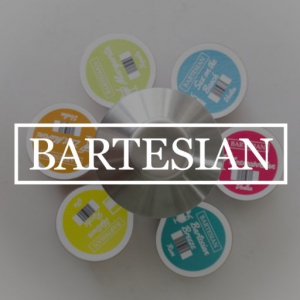
[00:57:23] Ray Latif: We're going to continue on this theme of booze. So this week's Elevator Talk features an interview with Ryan Close, who's the co-founder of Bartesian. Bartesian is a Kerg-type machine that makes cocktails on demand. Just think a K-cup filled with mixer that you mix with booze. And it's an interesting product. It's an interesting process. We met up with Ryan last month in LA and recorded this edition of Elevator Talk.
[00:57:54] Maker Oats: It's time for Elevator Talk, where we put a founder in an elevator with their dream investor. Let's hear what happens. Who are you? And what does your company do?
[00:58:04] Barry Nalebuff: My name is Ryan Close. I'm the co-founder of a company called Bartesian. And we make a cocktail maker, craft cocktail maker, that allows the user to enjoy craft cocktails at home, by the pool, at a restaurant, etc.
[00:58:19] Maker Oats: What is your company's mission?
[00:58:20] Barry Nalebuff: to get rid of high fructose corn syrup cocktails that are sugary and garbage and replace them with fantastic craft cocktails that are push of a button.
[00:58:31] Maker Oats: What is your product and how is it different?
[00:58:33] Barry Nalebuff: Yeah. I mean, right now, you know, we came up with a product to solve a problem, which was, you know, making cocktails at home sucks. It's often obscure ingredients that you need to find. You're buying bottles when you only need a few drops. You need to find places to store them in your house. And then ultimately you got to mix it all, create a mess, and the end result is inconsistent. So what our machine does is it solves all those issues. It houses the alcohol for you. The capsules contain all those liqueurs and bitters and juices that you require. And then you can still select the strength of the cocktail based on personal preference. And it makes it all for you in 18 seconds and tastes great.
[00:59:09] Maker Oats: Who is your target audience and how do you quantify the market opportunity?
[00:59:13] Barry Nalebuff: Yeah, that's a tough one. We originally sought out to create a consumer product. We felt that if Nespresso and Keurig and Tassimo were huge successes in the home, there's a need for single serve cocktails that allow the user to simplify that process. So we built that out, but then we realized through inbound traffic that there's applications in hotels, restaurants, coffee lounges that want to get into serving cocktails. So a lot of different options there.
[00:59:43] Maker Oats: What stage of growth is your company in?
[00:59:45] Barry Nalebuff: We are in production right now. We haven't launched officially. We're about to send our early adopters and Kickstarter customers their machines. So we'll be shipping those December of this year. They were incredibly patient with us and they're fantastic. They've given us great feedback along the way. So we'll finally get those machines to those folks. We were top 1% of Kickstarter in the history of their campaigns. So we're proud about that. We're going to be launching in fall of 2018 across North America retail wide. But before then, we're going to be selling to some specific hotel chains and restaurant chains to quantify the usage.
[01:00:24] Maker Oats: What has been the biggest surprise since starting your company?
[01:00:27] Barry Nalebuff: I'd say the complexity of the capsules. We originally had a team of hardware engineers, mechanical engineers, and designers. And we thought the capsules would be the easy part, where we realized quickly that they're the most complex. You know, creating a capsule that's juice-based, concentrate, that can be shelf-stable and ambient for six months plus has an incredible amount of challenges. Non-enzymic browning, oxygenization of the capsule. So these are the challenges that we had to bring on some really smart people, microbiologists, food scientists that could assist that process.
[01:01:07] Maker Oats: What do you need from a partner or an investor to go next level?
[01:01:10] Barry Nalebuff: So we've actually closed our round of funding. We were fortunate enough to have Beam Suntory, the second largest liquor company in the States and third largest in the globe partner with us. So again, their line of brands like Jim Beam, Sousa are tremendous. And so we're gonna have a co-branding program with them. So our capsules will have branding from their brands when we launch. But in terms of future investment, we're always looking for strategic partners. that can elevate the brand, get it into the hands of consumers at the hotel or restaurant level. So we're always looking for partners there.
[01:01:45] Maker Oats: Why should I invest in you?
[01:01:46] Barry Nalebuff: We originally started out, the two of us, where we were trying to develop the machine and prototype it. We overcame that challenge so we could eventually have a machine that functioned effectively. We then needed to raise our seed round to make the product and make the machine. We were able to execute that. We then had to go to retailers to get purchase orders. to ensure that the investors felt confident that there was interest and we were able to execute that. And then we also needed to find a really strong partner to help get the brand out there and we found that with Beam Centauri and we executed that. So at every stage and every level we've executed and I've executed and so there's a lot of confidence that we're going to continue that trend.
[01:02:31] Ray Latif: This is an interesting follow-up to our conversation last week about countertop appliances, and as well as our Elevator Talk last week with Minute Mixology, this whole idea of convenient, I guess, better, easier cocktail mixing.
[01:02:44] Ad Read: Yeah, I mean, I think there's certainly also a piece to this where, you know, we've heard so many different things that are trying to be the Keurig of fill-in-the-blank, right? It's, you know, similar to how in the tech world, everything's trying to be the Uber of whatever. I think creating cocktails on demand is certainly something that is, you know, it sounds interesting. I mean, it sounds like something that. You know, if you could press a button and out comes this, you know, cocktail that looks and, you know, tastes like what you would get in a high-end bar, you know, that'd be awesome. But I think, you know, where these types of machines are at, they're not catering to that. They're catering more to, like, a home user. And from that end, it's kind of a, you know, how many machines does one want to have at home or have the desire to shell out money for? So certainly some challenges ahead for it.
[01:03:34] Ray Latif: Yeah, I guess we'll see what happens with Bartesian, but thanks so much, Ryan. Before we end, I just wanted to mention, we have a brand spanking new website, Taste Radio. It's pretty awesome.
[01:03:44] Ad Read: Thanks, Ray. I mean, we built this new website because, you know, Taste Radio has taken on this life and we wanted to breathe some more life into it visually and give the listeners a way to explore and then also to contact us on the site.
[01:03:58] Ray Latif: Yeah, definitely. It's intended to be a little more interactive, give our listeners an opportunity to share some ideas, thoughts, feedback, a little bit more than we had in the past. And if you do have ideas, if you do want to sponsor Taste Radio, there's an easy way to do it right on the site. So get in touch with us. Let us know what you think of the site. And yeah, we'll go from there. All right, thank you so much for listening and thank you so much to our sponsor, Sovereign Flavors, the leader in building premium food and beverage products customized to your needs. Thanks so much to our guests, Barry Nalebuff, Carol Ortenberg, Will Willis, and Ryan Close. For questions, comments, ideas for future podcasts, please visit Taste Radio or email us at asktasteradio.com. On behalf of John, John, and Mike, I'm Ray Latif. We'll talk to you next time.