[00:00:02] Lance Collins: My whole thing is, it's not the big that eat the small, it's the fast that eat the slow. And we're really fast in our decisions, and I think we make the right ones.
[00:00:12] Ad Read: This week's episode of Taste Radio is sponsored by Project Nosh. The natural, organic, sustainable, and healthy foods community reads Project Nosh for product, innovation, and investment news.
[00:00:23] Body Armor: Project Nosh hosts the Nosh live conference twice a year in New York City and Los Angeles to gather the community to discuss moving the industry forward while finding partners to make it happen.
[00:00:33] Ad Read: To know what's happening in the industry, for advertising and lead generation opportunities, and to subscribe to the free daily newsletter, check out the recently redesigned ProjectNosh.com. And now, Taste Radio.
[00:00:52] Ray Latif: Hey everyone, thanks for listening to BevNET's Taste Radio. I'm Ray Latif, and with me are John Craven, Jon Landis, and Mike Schneider. We're recording from our studio in Watertown, Mass., and in this week's episode, we're joined by Uber entrepreneur Lance Collins, who's the founder of iconic beverage brands Fuse, Nos, Body Armor, and Core. We also hear from Jordan Silbert, who's the founder and CEO of Qdrinks, a pioneering brand of premium cocktail mixers. Just a reminder to our listeners, for questions, comments, ideas for future podcasts, please send an email to askattasteradio.com.
[00:01:25] Ad Read: How great was it when we just had someone in the office a couple hours ago, Danielle from Beacon Blend, a smoothie brand here, and she listens to the podcast. And Ray was like, oh, do you have questions?
[00:01:36] Ray Latif: She's like, I'm a big fan of the podcast. And I'm like, well, if you have any questions, comments, ideas for future podcasts, Did you tell her to review us on iTunes, Ray, and explain how to open iTunes? Shoot, I forgot to do that. Daniel, if you're listening, please review us on iTunes. Just open up iTunes and click whatever buttons Ray normally says. Yes, yes. Don't forget to leave us five stars. All right. Another banner week. See, we asked last week for folks to send us more samples, especially those folks from Expo West who haven't sent anything in yet. And here in front of us is a cornucopia. of samples, food, snacks, sodas, coffees, all kinds of cool things. But one of the coolest things is the new special edition GT's kombucha, the bloom, as it were.
[00:02:25] Body Armor: GT Dave, thank you for being born.
[00:02:27] Ray Latif: Yes, it's made with elderflower. That was weird. It's made with elderflower, jasmine, and violet. That's the spring edition, the 2018 spring edition, and it's pretty darn good.
[00:02:37] Taste Radio: Yeah, they've been doing great work with those seasonals. Definitely my personal favorites as far as the GTs go.
[00:02:45] Ray Latif: Yeah, it's, I mean, eight grams of sugar, two servings per, it's eminently drinkable, chuggable maybe. And it's just, I don't know, it just feels like a good healthy way to- It's a different take too. Yeah, it's a different take.
[00:02:56] Body Armor: It seems like a different take. I mean, I think if you put the seasonals all together, there's some common thread. I don't know what it is, but I like it.
[00:03:02] Ray Latif: Yeah, there's something about this is less kombucha-y and more like of a refreshment beverage. I don't know how else to, does that make sense? No? That's what you think, yeah. It's all about your palate, right? It is. What's in your palate? Like, what are you digging on today, Mike?
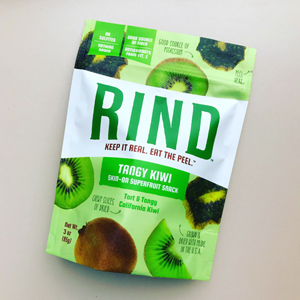
[00:03:16] Body Armor: Well, two things, Ray. Earlier in the week, we discovered Rind Snacks. They sent some stuff in where you can dried fruit, eat the rind kind of thing and r-i-n-d, Rind Snacks and been digging on those.
[00:03:29] Ad Read: I mean, I eat the whole kiwi. I always eat the peel.
[00:03:32] Body Armor: Oh, you do?
[00:03:33] Ad Read: Yeah.
[00:03:33] Body Armor: I eat lime rinds and orange peels too. I like that flavor. And then also this brand Growing Roots sent us some stuff and we've got like organic coconut and organic corn seed clusters. Landis liked the corn ones. He thought it tasted like Kix.
[00:03:48] Ad Read: They are. Kix aren't for kids anymore. Growing Roots is making them for adults.
[00:03:53] Taste Radio: That old breakfast cereal?
[00:03:54] Ad Read: Yeah.
[00:03:54] Taste Radio: Try it. I mean, I'm sorry. This just seems like a stretch. Organic corn and seed clusters, maple bourbon flavor. That's not Kix. Telling me it tastes like Kix. Except for the maple bourbon.
[00:04:05] Ray Latif: What you didn't know was Kix was the gateway drug. Is it really crunchy? Kix made by Jack Daniel. That's what kind of scared me about it. I felt like it was going to stick to my teeth. They look like Kix too. These are sticky. They're a little sticky? Yeah. The coconut. Yeah. The pineapple coconut rum. Yeah. But they do, I like the packaging. I like the packaging a lot. These do taste like a cocktail. It tastes like a pina colada. It's also some Cold Brew on the table. Even more Cold Brew. How's that possible? I don't know, but.
[00:04:36] Taste Radio: Yeah, we got the Sandows of London, their new Cold Brew soda.
[00:04:42] Body Armor: It's pretty tasty. Those guys have done some repackaging and they've also released some new products. And I think it's always fun to hear from our friends in the UK. And I really like what they're doing from a branding perspective with their swag. Those guys in Ugly have been doing some pretty cool things in terms of trying to extend their brands through swag and through the messaging and through the lifestyle.
[00:05:04] Ad Read: I definitely ganked the sticker that came with those sodas.
[00:05:07] Body Armor: You got it.
[00:05:07] Ad Read: I was looking for it. It's a coffee bean doing a dab.
[00:05:13] Ray Latif: That's pretty cool. Another Cold Brew that came in this week is this brand called Point Blank, and it comes in a jet black Tetra Pak. Black cap and all and I like the packaging a lot and the the liquid inside is even better Were they were they positioning as an energy drink? Yeah, they call it natural energy. They're really very focused on that aspect of the product I think they should probably play up the other coffee a little bit more that coffee is really good coffee was good Yeah, and I didn't I didn't get a chance to try it Okay
[00:05:44] Ad Read: They're actually a couple dudes who have been working behind the scenes on a lot of operational stuff and have developed some pretty interesting processes for brewing and bottling in the septic lines. And they have a very interesting thing going on over there in London, a couple guys out of Canada. So I agree though, it's a quality product.
[00:06:06] Body Armor: While we're riffing on Cold Brew, we got riff on riff. Yeah, let's riff on riff for a minute here. I mean, the interesting thing about this is it's almost a soda bottle here. I think this is an Oregon brand and with interesting flavors, artisanal black coffee with notes of dark chocolate and toffee, notes of Bing cherry and blueberry. I mean, you know, these are flavors we haven't seen a lot of in the coffee scene.
[00:06:28] Ad Read: Are they actually adding anything to it or is it just that is that the tasting notes for the variety of bean?
[00:06:34] Body Armor: It is the tasting notes for the variety of bean, Landis. It is Cold Brew, Cold Brew coffee. water and coffee.
[00:06:42] Ad Read: So they're just adding tasting notes to... I mean, that's a lot more approachable than just having like some region of Guatemala on the front of your bottle that nobody really understands or really knows the properties of the coffee that's grown there. I mean, it's certainly artisanal when you use those origin terms, but this is definitely, I think, a lot more of an approachable messaging for consumers to understand the nuances between the flavors.
[00:07:09] Body Armor: It's got like a 70s London psychedelic look to it too that kind of pulls you in. Kind of interesting look on the package. I like it. I want to try it. I have to give a... We got to let Marty try it first.
[00:07:20] Ray Latif: I love that the ingredients are Cold Brew coffee and then in parentheses, water comma coffee. I like that.
[00:07:26] Ad Read: I have to give a shout out too to Secret Aardvark. They gave me a bottle of their sauce at Expo West and I checked a bag just to bring it home. So I've been using it on my lunch for the last couple of weeks. It is hands down the best hot sauce I've ever had in my life.
[00:07:38] Body Armor: I love that stuff. Are you sure we're allowed to talk about that? Secret Aardvark?
[00:07:41] Ad Read: Secret Aardvark, man. They're amazing. They're out of Portland, Oregon too.
[00:07:45] Ray Latif: Awesome. Nice, nice. Thanks for sending us stuff, Brands. Continue, please. Yes, folks. You can send us samples to BevNET, 44 Pleasant Street, Suite 110 in Watertown, Mass. 02472. That wasn't shameless. It wasn't at all. No. So shameless. I feel shame. Can we riff on Lance Collins? Let's riff. Since we're riffing anyway.
[00:08:07] Body Armor: Yeah, let's riff it up.
[00:08:09] Ray Latif: So folks might know Lance Collins. He's described himself as, quote, an entrepreneurial junkie. And despite remarkable success in the beverage business, he's still itching for his next fix. The founder of Fuse, Nos, Body Armor and core, he's quite wealthy. But he's still chasing the juice, so to speak, and addicted to the next big idea, all of which keeps him as scrappy as ever. John Craven, you've known Lance for over a decade, well before he sold Fuse and Nos to the Coca-Cola company in 2007, where he reported $250 million. Has he changed much?
[00:08:43] Taste Radio: Well, I mean, he moved from New Jersey to Beverly Hills. No, I think Lance is somebody who, you know, it's always impressive to see someone who's been successful and used a certain playbook and he's still there, you know, certainly with the same playbook, knows, you know, where to make shortcuts and accelerate. and probably avoid a bunch of mistakes that he learned, you know, the first time around. But, you know, he's still there with his sleeves rolled up and, you know, it's almost like he's, you know, addicted to this stuff, you know, the beverage business and being an entrepreneur who's out there hustling day in and day out. So, you know, I think that's always something that's been really impressive about him.
[00:09:29] Ray Latif: Definitely. And as you mentioned, he does have that nice house in Beverly Hills. We went up there to meet him and recorded this interview where he spoke about his amazing journey as an entrepreneur, including his staggering success and colossal failure. Think $10 million losses, folks. His approach to branding and innovation and why he aims to be, quote, the pulse before the trend. All right, we're in Beverly Hills at the home of Lance Collins. It's myself, John Craven, and Jon Landis. Lance, thank you so much for having us in your home. You're welcome. Thanks for having me. So a pretty amazing career you've had, but you're still working your butt off with Core. You've been known as a disruptor and innovator with brands like Fuse and Body Armor. How do you identify white space and ways to differentiate in some of the crowded categories that we talked about, like with Fuse in enhanced water and Body Armor in sports drinks?
[00:10:23] Lance Collins: Well, you know, I started about 30 years ago, so I'm really dating myself. I had a few minor successes in the beginning. I had a spring water company called Crystal Ice, and I crystallized locale drinks. I sold them to all the Snap distributors throughout the East Coast. It was me, myself, and I. I learned a lot. I actually had no overhead, so I made some money out of the gate, which is very surprising. And then I worked with Paula Grant, who was my designer and my partner. So I was going to do an all-natural sports drink, if that doesn't sound familiar. And the name was Game Face. And the tagline was, put your game face on. And I got all my Snapple friends to carry the brand. I advertised on WFAN, I had billboards everywhere, and I launched this drink in 1986. I was giving cases to accounts then, and they would take 10 cases in, and they'd call me back three weeks later and say, can you pick these cases up? I haven't sold a bottle. It was in the heyday of Michael Jordan and Gatorade. So the whole idea was I didn't want partners then and I probably spent my whole net worth doing that. The good news is my wife divorced me because she couldn't take the financial pressure. And then I like I've added to that I never give up. So I started all over again and You know, the definition of luck is preparation, meaning, opportunity. And I work with Paula. I snuck up at the World Trades – not the World Trades Center, the Empire State Building. She was working there with my chief marketing officer, Eric Bernecker. We came up with this idea, FUSE, a fusion of healthy ingredients. And we figured Sobe was healthy perception at the time. and we thought we were going to be healthy reality. The problem was for six months we couldn't get a distributor because all the Snapple guys were selling Sobey. As luck would have it, and it's better lucky than smart, Sobey was sold to Pepsi. And then there was a giant sucking sound of all that Sobey case coming out of the Snapple distributors. So the head guy at Snapple, Joe Rosamilia, who had the biggest territory and was the head of the Snapple advisory committee, called me up. And he had just sold his Snapple franchise to Treyarch. And he said, come on down to my country club, Lance. He said, I want to see that Foos stuff. and he was a big investor in Soby. So, you know, I went down, met him at his country club. He walked into the lunchroom. He had two golf clubs on. He could never play golf. I played with a couple of times. And he sat down and he said, let me see that Fuse stuff. I said, it's Fuse, Joe, Fuse. It's a fusion of great health benefits and everything else and taste. So I tasted him on it. He had just made a ton of money on Sobe and just sold the biggest NAPA distributor to Triarch. So he was flush with money. So he said, he said, this is going to be perfect for the Sobe replacement. This is actually an upgrade. I said, I know it's an upgrade. It's healthier. It tastes better. The graphics are wonderful. I think the branding is super. And he said, basically, how much do I have to write a check for to be your partner? And at the time I was, I was pretty tapped out because of divorce and, and for a game pace game phase was a big disaster. So how much did you lose with game face? About $10 million of my own money. Yeah. So that was a lot of money back then. That was too. Yeah. That was a lot of money back now. Yeah. So I started over and went and fused. Joe said, you know, how much money to be your partner? I said, well, you're not going to be my partner. You're going to be 49% if the check's big enough. And I'm 51% because I'm not losing control. So he said, how much? And I said, $4 million. He got his checkbook, he wrote the check, gave it to me, and wrote on the check, Lance 51, Joe 49, and it was written out, Diffused Nutrition, LLC. So that was my first out of the gate. And how'd that work out for you? I sold a million cases our first year through the Snapple network, a million five actually, and then it was just a six-year progression to 150 million. I had also developed a product line, a platform against Paula's wish. It was called Nas Energy. And that took off like a bat out of you know what. And, you know, we attracted the attention of the Coca-Cola company because we had a lot of independent Coke bottlers and Coke wasn't getting any for it. And we had Coke Philly, we had Coke Great Plains in Oklahoma, we had United Coke, we had Swire, we had every independent Coke bottler. And Coke was freaking out because they weren't making any money on those sales. They basically called me and said, you know, you're violating our Minute Maid contract. So if you want to stay in the game with our bottlers, you got to come down and talk to us. And they had come out with a product called Yubi. And probably no one knows about it because they never saw the light of day. It was a terrible executed product. They were getting sued by Sobe for Yubi. You couldn't even drink it. It was so bad. So anyway, that was in 2006. And then in 2007, March, it was my first big score. I had mortgaged my house twice. And, you know, it was like a dream come true. And I really didn't want to sell the company because I didn't control the board then. We had the folks from Castanea in there, and they had to drag along, tag along. So if I got anything north of X, They could drag me into the deal. And we were really growing fast. So in 2007, we sold the company in March of 2007 to Coca-Cola. And, you know, it was a life changer. And I worked for them for three years. And they wanted me to be the chief global innovation officer, which I turned down because my experience with Coke was if you design a horse by committee, you get a camel. So I did that, they were great to me, and saw the world, did my bucket list, and had some really creative ideas. And I would say around my expiration of my non-compete, I had some pretty good ideas, and I was watching from the sidelines. And I looked around and I didn't see anything that really impressed me. Products that, you know, like Neuro, it looked like a sex toy and, you know, other innovations out there that I want to say, because people get mad at me, but I thought I could do it better. So I called Paul and Paul said, are you crazy? You want to do this again?
[00:17:06] Ray Latif: And that'd be most question, you know, most people would ask you that question, you know, you've had a very successful exit, right? Even if you have some great ideas, why would you want to get back into the business that almost broke you and cost you $10 million right off the bat?
[00:17:18] Lance Collins: Well, I thought I kind of knew the formula then. And, you know, I had a reputation at that point. I could raise money easier than when I started. I had Paulo back from London to design Body Armor. And believe me, Body Armor in the beginning was a disaster. It had an over-cap wrap, so if you're lucky enough to open it, during a sporting activity, you'd have to drink it. And we had every ingredient in the world in that drink. We had CoQ10, amino acids, coconut water, just an overabundance of electrolytes. I think I recall you saying you needed a Swiss army knife to open the bottle back in the day. Yeah, you needed a Swiss army knife. So we rushed to change the packaging, change the formulas. And at the time I was trying to get Mike Rapoli, who's a very, very dear friend of mine. Also has been on the podcast as well. Right. And Mike was doing Pirate's Booty and he had Health Kitchen in New York and he was active with all those investments and he said, I'm never going back in the beverage business. Well, he sold Pirate's Booty. He closed Health Kitchen and I convinced him to come in with his big bazooka and do the Gatorade dance. We thought Gatorade was a big farce and that we're the guys that could penetrate that market. Well, I'm curious.
[00:18:38] Ray Latif: I mean, Body Armor, you know, you already quote unquote failed once in the sports drink category. There are mega players in, in Powerade and Gatorade already dominating that business. You know, what did you see as an opportunity as white space?
[00:18:54] Lance Collins: Well, I was a new brand. I was scared. about that. And it was Body Armor super drink. So I kind of wanted more than a sports drink. But when Mike entered, you know, Mike always says it wasn't for Lance, it wouldn't be Body Armor. If it wasn't for me, there wouldn't be Body Armor. So Mike came in with all his strategy and said, no, this is a sports drink. And the roadmap to our brand is going to be through athletes and, you know, not celebrities. We're going to have every good athlete and we're going to get them to invest. And between your reputation and my reputation, we'll just, you know, we'll finance it in the right way. And Mike was hell bent on the idea that Gatorade was artificial, that it was a farce, that, you know, they were very tricky with their marketing. And all these mothers are feeding their kids, you know, synthetic colors, red 40, blue six, yellow five. And, you know, some of these kids that sweat, you'll see red colors under their white t-shirts. So Mike went on this mission and I went out with him and I was his mentor. Now he's my mentor because I learned a lot from Mike. And he got his team, you know, he's got a great team from Vitamin Water. And, you know, I followed him. He opened the office in New York. I was in LA. I was going back and forth like a yo-yo. And finally I said, you're going to run this. You're doing everything great. I want to do this brand called Core. And Core was a product I had since 2010.
[00:20:27] Ray Latif: When you're thinking about some of these brands and when you're planning them out for the future, are you thinking about the brand first and the liquid second, the brand first and the product second? You know, what can be marketable to a broad set of consumers?
[00:20:40] Lance Collins: Yeah, well, first of all, branding's very important. And the way, you know, the trademark is the first thing you gotta do.
[00:20:48] Ray Latif: Is that the first thing you do when you think of a movie?
[00:20:50] Lance Collins: Yeah, I think of the trademark. Like, I got Body Armor when I watched this movie Heat. Al Pacino had the big shootout with Robert De Niro. Great movie. And he said, go get the Body Armor. And I said, wow. I was with my dad. I said, that'd be a great trademark for a drink. Unfortunately, I got sued by Under Armour as soon as Mike joined the company, but we did win. So that was great. And then, you know, Core was something that, you know, I was on The Big Idea with Donnie Doherty, and then he did an interview with Madonna. And he was talking about how Madonna always keeps her relevance, even though she's a little long in the tooth. And he says, because she's true to her core. And I said, wow, that's great. What a mantra, true to your core. And then the next day I went to this Michael Millikan conference here in Beverly Hills. And all they talked about was core values, core strategy, core focus. And I'm thinking, I don't like this conference, but I like this core. So on the break, I called my lawyer in Washington and I said, Jeff, is core available in class 32 beverages? So he goes, let me call you back. So he calls me back. He goes, yeah, I think it's available. I think you got a good shot. So we filed it. And I said, file core organic, core fitness, every core you can think of, core hydration. So luckily I had the money to finance all these marks. So with that, I was still with Body Armor. And I wanted to put Korn into Body Armor, and Michael didn't want to do that because he wanted to focus on the sports drink at the time, and he was right. So I said, I'll tell you what, can I go back to California and do Korn? And I'll resign as being co-operating manager. You're the best. You're a genius. I know you're going to bring us to the promised land in Body Armor. and maybe I'll get my money out one day. And he laughed, he said, go have fun with core. So I went back, I actually had a dream about how the core bottle would be. It was, you know, tapered and I, you always look at it right now, always sleep with a pattern and a pen next to your bed. Cause you forget, you make a mental note, you lose it, forget it. So, especially in a dream. So I had a dream sequence, I called Paula. I said, Paula, let's do this bottle. Like, you know, let's taper it and let's have an overcap and, you know, sketch the overcap. And, you know, that was the first sign of trouble. We had to execute the idea. And we made like 40 different Lucite molds to make sure the shape was perfect. Paula worked on the design of the cap. And we had to get like engineers, you know, guys that worked at NASA to really get the cap right because it was a very complex package. But we knew in the beginning that we couldn't just have a silhouette of a smart water bottle and you walk into a store and you see all that clear water and you're just not going to do anything. I mean, we had to be different, distinctive. and with eye appeal on the shelf. So 70% of the time, consumers don't make up their minds. It's an impulse thing when they walk in and see a shelf. So this product, out of the gate, we tested it in California. We got a 300 store test in 7-Eleven. And the packaging was different and distinctive. And if you do one unit a day in 7-Eleven, you stay in two units a day, you're doing a good job. Three units is great. Four units is fantastic. We're doing eight units a day. There's only one product that was outselling us. That was SmartWater 9. So we expanded in 7-Eleven all over the country based on the results and the packaging. In fact, You know, Bernie didn't come on until six months later. I didn't know if I needed marketing because I had all this great packaging. But as you achieve scale, you know, and you get out there, you need Bernie and you need Paula. And Bernie's, he's been a great, uh, he obviously his background with vitamin water and smart water.
[00:24:45] Ray Latif: Experienced operators are key to any growing any business.
[00:24:48] Lance Collins: And he, he knows how to create brand awareness.
[00:24:51] Ray Latif: Yeah.
[00:24:51] Lance Collins: And now we're really excited because we're the number three premium water in the country. That's pretty good after three years. And our growth trajectory, you know, I can use a company like Bayh, where Bayh was in their sixth year. And we're sitting here going into our fourth year. So, you know, we've been very successful to now. And then as an entrepreneur, you got to look at operations. You got to look at, I'm very involved in cost of goods. You have to get your cost of goods to a point where you can stay in business. And initially we started this thing, we're 30% gross margin, now we're close to 50. And we built a state-of-the-art plant. Can't tell you where it's at right now, but we're going online in May.
[00:25:35] Ray Latif: Can we go back for a second? I want to ask you about keeping a pen and paper next to your bed. You have a lot of ideas.
[00:25:42] Lance Collins: Yeah.
[00:25:42] Ray Latif: I think you probably have more trademarks than, or do you have more trademarks than we were talking about?
[00:25:46] Lance Collins: Yeah, I sold Life Water to Pepsi. Okay. You know, rehab is now, my trademark was, is now with Monster. Healthy Energy was FRS and I noticed that Celsius is using it, so no big deal. God bless them. What are the trademarks, Paula? We got a few.
[00:26:08] Ray Latif: But what makes it better? Well, which are the ones that you decide to move forward on versus the ones that you sell?
[00:26:13] Lance Collins: Body Armor was a great trademark. I love that. It pretty much begs your core proposition, which is redundant because I have core. And then my other great trademark, I think, is core. We look at the trademark, we see if it's got bandwidth, it can go into other platforms, which we feel is pretty important. If you saw my innovation slide, you would see all the platforms that we can potentially go into in the next three, four years. Right now, we have to be very careful because we have water, we have the core hydration water, which is a big success. We've partnered with Dr. Pepper and all our legacy distributors. And now we think that the brand is extendable to core organics. My wife kind of is an organic person and she saw other products in the enhanced water category and said, why don't we do something that You know, all these sugar taxes and all this stuff and people, you know, are running away from sugar. Why don't we do something that tastes great, that's organic, it's got less than half a gram of sugar. It's got 4% organic coconut water in it. It's got all organic flavors. And we actually just revamped the whole line because we're always evolving. And that's one thing about an entrepreneur. you always got to look at the product and see, can I get better? And that's the evolution of the revolution as I call it.
[00:27:41] Ad Read: I'm interested to get your take on this because you've been launching beverage brands for 30 years. As you said, the market today doesn't look anything like it did 10 years ago, 20 years ago. There's a lot of new innovative categories that have emerged in the last decade. What do you think are some of the challenges or opportunities that are present today that haven't been present forever?
[00:28:05] Lance Collins: I think the biggest thing is, again, you got to go back to the branding, you go back to the product, you go back to the packaging. But as an entrepreneur starting out, the big thing is you got to have the jet fuel to get the jet off the runway. And that means you got to have money and you got to have a great sales team. All one goal will win. You need a great marketing team that's going to be connected to your sales team. You need corporate development. You need a great ops team so you can make the product the right way. QC. Again, there's so many new categories of kombucha and probiotics. Stuff that we're looking at, actually. But cold delivery is a different animal to me. And we're more like scale, ready to drink. But we're looking at probiotics. We're looking at kombucha. I don't know if we're going to go there. And we're looking at other stuff. We got a lot of irons in the fire, but we can't do everything. So focus, core focus is important.
[00:29:08] Ray Latif: So we've had a few entrepreneurs in the podcast. They've talked about motivation, what gets them up in the morning, how they really get focused about what they're doing with their business and their brand. And I'm curious to hear about what motivates you every day.
[00:29:20] Lance Collins: Well, to be honest with you, when I start brands, my back is against the wall. I'm back in the fuse days when I started Fuse, except I didn't have to mortgage my house twice to make payroll. But it's a unique feeling. And when your back's against the wall, like in Body Armor the first year, it was a tough experience. And thank God I brought Mike in to straighten a lot of things out. But that was fear and that was stress. And then you start to win. And that's motivating and you don't want to go backwards. So you want to keep this momentum going.
[00:29:55] Ad Read: It sounds like competition is really important to you. You launch products in enhanced water and sports drinks and bottled teas, all, you know, established categories with established brands in them. Do you see that as an opportunity saying, well, you know, the water category is $20 billion. I want my piece of the pie. Is that kind of a mentality you have?
[00:30:18] Lance Collins: Yeah, I mean, you got to look at the drivers of your success, right? So you got health and wellness is the number one mantra. I try to be the pulse before the trend. And yeah, premium waters, we came out when they were just starting to explode. You know, distribution's major and important because if you go to a Kroger or Safeway or a national chain Walmart, you need to have national distribution. You can't really do it on a direct basis. You'll never get the merchandising off a DSD truck. So, you know, I'm not as big as Coke and Pepsi, but my whole thing is, it's not the big that eat the small, it's the fast that eat the slow. And we're really fast on our decisions, and I think we make the right ones.
[00:31:04] Taste Radio: So now that you've done this a couple of times, you know, and you're in, geez, I don't know what number beverage company this is for you. Do you start thinking about sort of what's next for you or how do you approach something like this?
[00:31:17] Lance Collins: Well, I have a plan. I got a 10-year plan. So who knows? Maybe at some point we sell to the multinationals. Maybe we don't. If we're making money, it's fun. It's fun to win. That's the best thing. Whatever we do in the future, we'll be comfortable. We're still going to get up every day and fight the competition and try to do things better and get the focus of our distributors. which is really important. We got a really good national account team that is very active. We can't rely on anyone but our team to get into planograms and schematics. I have some ideas for the future, but at some point, I gotta hang up my cleats. And it's like Kobe. You see, he won an Oscar, right? That's pretty amazing. And he's a big investor in Body Armor and really a great partner as well. Mike brought him in and they're really good friends. So it's all this you can't, you know, you can't dream up. This is all exciting stuff from Body Armor to core to whatever we do in the future. You know, I got a really, really good team. So maybe I come up with ideas and innovation, but I might not run the company anymore because that's, that's a big task. You'll just keep trademarking things. I did two today.
[00:32:42] Taste Radio: Did you get any good ideas from our conversation here? Did we say anything insightful for a trademark?
[00:32:47] Lance Collins: I want to say one idea. I wrote it down. I could, I could share the mark with you. Perfect.
[00:32:55] Ray Latif: Lance, this has been fantastic. Really appreciate the time. Thanks so much for having us in your home and good luck with the core. Thank you guys. And thank you for coming.
[00:33:03] Lance Collins: It was a lot of fun. Yeah. Appreciate it.
[00:33:04] Ray Latif: Appreciate it.
[00:33:07] Ad Read: That was a phenomenal interview. Are you sleeping with a notepad and pen and paper next to your bed? Of course I do.
[00:33:13] Body Armor: That's a really good idea. I mean, who doesn't? Grab your phone too and write some notes down now.
[00:33:18] Ray Latif: I just record my voice and then play it back. That's weird.
[00:33:22] Body Armor: Yeah. Speaking of weird, We almost didn't make it to the interview.
[00:33:29] Ray Latif: We almost didn't make it to the interview.
[00:33:30] Body Armor: Side story here. So I think the rules are maybe a little bit different in Beverly Hills. We were driving up the hill toward Lance's amazing house. And I hear this guy in the back just go, and it's Landis. And he's going, Mike, Mike, Mike. we got to the stop sign, I stopped, I was there first, and then the car on the other side, which was a Mercedes, I think there might be a hierarchy, we're in some beat minivan, and it's not really like who stops first, it's who has a better car, because this Mercedes didn't stop and it just kept going, it was like, Mike, Mike, Mike, Mike, you gotta stop!
[00:34:04] Ad Read: Well, we were also a little distracted looking at all the houses, and you can't look at them head on, you gotta kind of drive past them, because they're all kind of hidden, too. I Matrixed right around them.
[00:34:14] Body Armor: Thanks Jon Landis. Thanks Landis.
[00:34:18] Ray Latif: I got a little distracted when we went into Lance's garage and we saw the jet black Ferrari with the license plate core 007, but I was more distracted by the big, big stacks of core, you know, like the cases and cases of core. Talk about getting your hands dirty. This guy's got pallets of core in his garage next to the Ferrari. He's out there bringing that stuff. I mean, it's incredible that he's still doing that. Like if I had that garage, I would never see a single product.
[00:34:43] Body Armor: He kept half the BevNET team hydrated at Expo West as well. Like he just, we went out there and we're talking to him in his driveway and he's, you know, he's talking about how blessed he is and how amazing the community is. And I'm like, carrying these two things at core. And I'm like, this is heavy. I really want to talk to Lance.
[00:35:00] Ray Latif: But that's what it is. You know, you gotta hustle all the time. You gotta be ready with the product all the time.
[00:35:04] Ad Read: And if you can hustle your product, your local Whole Foods and a Ferrari, man, more power to you.
[00:35:11] Ray Latif: Core 007, I love that license plate. But I mean, I think this is, this really speaks to speed. And he talked about speed in the interview. He said, you know, it's not the big eat the small. It's the fast eat the slow. talk about a key talking Point Blank a lesson for entrepreneurs of all stages. It's like, especially in this day and age, the bigger companies, you don't worry about them as much because they're just not as nimble. You've got to be faster than the guy coming up in his garage and making his next product and his next brand. And Lance is very keen to that. He's always ready to take that next step and do it faster than the next guy.
[00:35:50] Ad Read: Well, it's definitely a fair point for folks who have the funding to be able to pull that kind of thing off. You know, if you're small and scrappy and you got to stay the size that you are just to maintain your business. And obviously, you know, you don't, you're limited on those options, but I think the, the lesson here more is understand what you're doing three steps ahead before you are. So you can move faster.
[00:36:13] Body Armor: So many great entrepreneurs like Lance are building something and then the next seed is already germinating and it's growing and they're working on that in parallel and you just haven't seen it yet. He's a guy who just can't not do it. Like Craven said, he's got to continuously keep going and going and going. It was cool to be able to just kind of feel that energy during the interview.
[00:36:34] Ray Latif: And it has a lot to do with trademarks as well, doesn't it? I mean, he is the master of trademarks, as he mentioned in the interview. He's got a bunch of them and he's got more on the way. He just registered for two more that day that we were at his house. So pretty amazing.
[00:36:49] Body Armor: Patents and trademarks can be a huge advantage for a company. And, you know, knowing how to get those things done is really important. I mean, back in the day when I was working with Skyhook, it was a big thing for us as a smaller, scrappier company to have a lot of trademarks. And we could do a lot of powerful things with them. We had a lot of leverage against, you know, larger companies because we were able to patent our intellectual property.
[00:37:10] Ray Latif: Indeed. Well, great interview, and really appreciate Lance taking the time to be with us. Interesting story on BevNET that was recently published, that Core has raised over $39 million over the past few years. Check it out, BevNET.com. Well, with Jordan Silbert, we didn't get to record at his house in Beverly Hills, but here in the studio of BevNET HQ, and it wasn't that bad. It was pretty good. I enjoyed the confines of the conference room here. There's no infinity pool. There's no infinity pool. There certainly is not. We're working on that.
[00:37:40] Body Armor: Can't see Los Angeles either.
[00:37:42] Ray Latif: But I really did enjoy my conversation with Jordan, who's the founder and CEO of QDrinks, which is a premium cocktail mixture brand that has played a key role in the growth and evolution of the category, and by extension, the carbonated beverage aisle as a whole. It's been a decade since he launched the brand, and while he admits that he's not the most patient entrepreneur, Jordan has played the long game nonetheless, stressing financial discipline and embracing a hustle and perseverance that has paid dividends for QDrinks. In our interview, I spoke with Jordan about how Qdrinks has helped usher in a new era for cocktail mixers while he's careful with every dollar and the advisors and mentors that helped shape the brand's success. All right, we're here at BevNET headquarters in Watertown, Mass., in the conference room, also known as the BevNET Taste Radio Studios, and I'm speaking with the one and only Jordan Silbert. Jordan, how are you? I am fantastic, Ray. How are you doing? Pretty good, pretty good. Jordan's the founder and CEO of Q Drinks. What is Q Drinks, Jordan?
[00:38:43] Jordan Silbert: Q, the whole thing started with a question. Literally, the company started with a question. That's what Q stands for. I was drinking and Probably drinking too much one night with some really good friends back in my backyard in Brooklyn, and we were drinking gin and tonics. And after a while, I realized that the gin was really good, and my friends were terrific. It was a gorgeous summer night, and the only thing that wasn't perfect about the night was the tonic water. You know, it was a plastic bottle of Schweppes, and the label was peeling off and filled with high fructose corn syrup and artificial ingredients. And I had a question. It was like, why isn't the tonic water as good as the gin? And I said, you know what? I'm going to make a better tonic water. I'm going to make a tonic water It's as good as any gin out there, and so I did. It took me a long time, but eventually sold it into some really fancy restaurants in New York City. Gramsci Tavern, Blue Hill Stone Barn, Milk and Honey, Little Ranch. Then got the attention of a gin company who brought me to an event at Rockefeller Center, where the New York Times was. Got a big write-up in the New York Times and the next week I had 800 places around the world wanting to buy my stuff. And I said no to just about everyone. I had like bars in Japan calling me. And I had this tonic water that was actually better. And I said no to basically everybody except a couple of fancy bars in New York City that I could deliver to myself and the flagship Whole Foods store in Austin, Texas. And now, geez louise, we're at tens of thousands of retailers around the country. and thousands and thousands of better bars and restaurants. And the whole thing just started with a question. So that's where the Q came from.
[00:40:11] Ray Latif: So you launched Q Drinks in 2007. It's 2018 right now. How has the market evolved for cocktail mixers and particularly how has it affected the development of your brand?
[00:40:22] Jordan Silbert: So I guess there's two components to the answer. I guess the first one is let's put a structural kind of perspective on the whole thing. Remember when somebody's using a tonic water or a ginger beer or a ginger ale or a cola, they're mixing it with a spirit. And spirit, as you guys know, has seen a massive premiumization over the last decade or two. Right now, something like two-thirds of all spirit purchases in terms of dollars are absolute vodka and above. So people are spending a lot of money on premium spirits and are every year buying more and more of those expensive spirits. And it just fundamentally doesn't make sense to spend $30 on your vodka or $30 on your gin and then mix it with something That's lousy, that costs 99 cents, that's filled with high fructose corn syrup, that's designed to be as cheap to produce as possible. So that just doesn't make sense. So that structure has always been in place and it's becoming more exacerbated over the years. I just looked at the data this morning that premium spirits and super premium spirits grew much more quickly last year than lower end spirits. So that keeps happening. Some of that is the mixer has been following that and it's just lagged behind it so it's like a, or a trailing indicator, or whatever it's called. So there's that's going on. At the same time, there's also been this rise of mixology and craft cocktails that's happened. And I rattled off those first places that brought in our product, Milk and Honey, Gramercy Tavern, Blue Hill Stone Barn. They were literally on the cutting edge of food and drink in America when I sold in to them.
[00:41:56] Ray Latif: And this was 11 years ago? Yeah, yeah.
[00:41:59] Jordan Silbert: And by the way, it's not like I'm this phenomenal salesperson. I'm a pretty good salesperson. But they wanted to buy it. At the time, you know, a good bartender could muddle fresh basil or muddle fresh mint. They could squeeze fresh grapefruit juice. They can even infuse rosemary into a bottle of vodka if you just put a sprig of rosemary in and let it sit for a couple days. But what they couldn't do is make tonic water, because in tonic water you need to find an industrial facility that can highly carbonate the product. See, when I first started making up in my kitchen, I made a syrup, and I don't know if you've seen, but there are a lot of these mixology places now have these tonic syrups, and it's basically quinine infused into their sugar or alcohol, and then put gin in, and then club sodium, stir it up real fast. But the bubbles drove me nuts, so I found an actual soda plant that would make this stuff for me. And that's what a bartender couldn't do. So when I showed up at Gramercy Tavern or Milk and Honey and said, hey, try my stuff, it was something that they were interested in. So a lot of it is just the market catching up to it. Now you go to just about any bar or restaurant. from Grandmaster Tavern to Cheesecake Factory to Buffalo Wild Wings, and they have a specialty cocktail list. So they're trying to provide their customers with a more special experience from a drinking perspective than they were 10 or 15 years ago. So a lot of that's the market has caught up with us. And my concept that, hey, you're spending all this attention and money on the better spirit, but three quarters of your drink is actually the mixer That kind of just took a little while for other people to figure out. And now it's happening. It's amazing. I was shouting from rooftops 10, 11 years ago, pay attention to my tonic water. And now. It seems like everybody is paying attention. We're getting major, major restaurant chains with more restaurants than I can even imagine approaching us and saying, hey, how do we integrate this into our programs? We think this is something that our guests actually want now, and we think we can make a little more money doing it. And it's a kind of a service that we should be providing people who choose to come out to dinner or drink at our place.
[00:43:57] Ray Latif: So you mentioned that you had to be a little patient to wait for the market to catch up to where it is today. How do you do that in a way that is sustainable for your business and in a way that will allow you to continue operating and potentially be profitable without losing your shirt, basically?
[00:44:17] Jordan Silbert: So I guess first, to clarify, most people who know me would say that I didn't use patience in my answer. Patience is not one of my strongest virtues. So some of it is how do you get the market to go where you want it to go, or how do you accelerate the market? And the real first answer is, work like hell and push like hell. And for 11 years I've been sprinting and working incredibly hard, myself and my relatively small team. The place we've been patient, and I guess I wouldn't necessarily use that word, is that we've been really careful about spending money, and we were very careful about any expenditure. Part of that is when we started. We started the company in 2007, and we grew like crazy that first year. Remember, I had all these places around the world who wanted to buy my stuff, and it wasn't me doing it. I didn't have distributors. I didn't know anybody in the industry. It was more that I made this better mousetrap that people wanted to buy. And we were trying to meet demand and trying to grow as quickly as possible. At one point, one of our very first fundraising rounds was right during the 2008 financial crisis. And I had what to me then, and even now to me, seems like a ton of money. in checks that people had sent me. And that day, the market went down, I don't know, 10, 12 percent, and I got call after call from people asking me to rip up their checks. And what I need, I obviously did that. And what I did, both me and my business partner moved in with our girlfriends. Now, both of us are married quite happily with two kids to our then girlfriends, now wives, and went without salary for, I don't know, it was like seven or eight months, and just head down, make the business continue to grow. And by the way, we were up some ungodly amount that last 12 months, and we had a really good story. It was just no one was investing people, you know, putting money under mattresses. And we had this unbelievable story, the product we knew was right, because we had that kind of structural thing. There should be good tonic for good gin. There should be good ginger ale for good whiskey. There should be good ginger beer for good vodka. We had that, and people were buying it, and we had all these large retailers coming to us saying, hey, we want to stock your stuff. We couldn't get anybody to invest. And as a result, since then, we've been really, really careful with every dollar. and have known that, you know, this whole thing could blow up at any time and we want to make sure that we could ride out any storm because we're really confident that our product is right, that we're pretty good at our jobs, and there's a huge opportunity in the market. So we've been really, really careful with every dollar we spent and never really hired until about a year ago, hired aggressively. to take on the market. About a year ago, we did our first private equity round, and things have since changed, and we're now really sprinting nonstop as quickly as we can in multiple directions to take advantage of the opportunity.
[00:47:14] Ray Latif: You said for the most part it was yourself and your business partner. I got to think that you had some pretty good mentors and advisors along the way, and I wanted to talk to you about some of those folks that were really influential in your life. Who were some of those folks, and why were they so important in your life?
[00:47:30] Jordan Silbert: So as the father of two young kids now, it's pretty hard to start without your parents. And I guess that'd be the first people that I think influenced me. My father, both grandfathers, the father from the side of the family that was in the US as a great-grandfather, all of them started and ran their own business. So some of it was just kind of inherent in my DNA. And then it was... The household that I grew up in, my mother was a potter until she got pregnant with me and didn't want to be around all the chemicals. But growing up, we had all this pottery that she did, you know, bowls, plates, cups, things like that. And I was a rambunctious little boy and, you know, played baseball and football in the house and it was a disaster. The only thing I was just not allowed to break, it wasn't the TV, it wasn't the fine china that had been passed down from the great grandmother or anything like that. It was the stuff that my mother had made as a potter. That was what was valuable in our household. That was the one thing that I sure as hell make sure that the football doesn't hit. So I grew up in a household that to make something, that was the value. That was what was most valuable. So I grew up with, again, father, grandfather, all these people who had started their own business. And then what was valued in our own house was the stuff that my mother had actually made. So I guess that would be the first kind of overlay on who has been the most influential. The next one I couldn't I've done any of this without my business partner, Ben Carlin, who, for whatever reason, I tend to be the front man, and I'm the one talking to media moguls like you guys. But he has, I've known him since we've been nine best friends in the world, and he had worked for a couple startups before this, as had I, but he has been incredibly influential in knowing when to push, when to, you know, just grit your teeth and do it yourself yet again. And he's been incredibly helpful along the whole journey. So those would be the two kind of, my parents and Ben are kind of on the kind of the softer not business side. On the kind of entrepreneur food and beverage side, it'd be the two honest tea guys, Seth and Barry. Barry is on our board. Barry Nelbuff. Barry Nelbuff's on our board. And Seth has been very helpful and inspirational from the very beginning. He's given me some really good advice. Has Seth Goldman, has he been an advisor with the company too? Not officially. You know, when I'm down in D.C. or Bethesda, I can say, hey, come by and just love to hear your perspective on this and let me tell you what I'm going through. But he gave me some good advice, among others, is Be sure you're made a better mousetrap, because there's so many disadvantages to being the little guy, that your stuff better be better. And locate your office pretty near your house, because you're going to be working a lot. And you better make the commute short. And then Barry has been on our board as long as we've had a board, and has been an advisor before that. And he's incredibly helpful, but also tolerant and patient, and more than anything, open-minded. One of the things that I've learned as an entrepreneur is you can't just do what everybody else has done every single time. You need to think and say, why shouldn't I do this? Because honestly, you're not going to win playing the same game that everybody else does. There's too many disadvantages to being the small guy or a guy who doesn't come from the industry or doesn't know anything.
[00:50:57] Ray Latif: You said you went seven, eight months without a salary, you and Ben. It's a dangerous, it's a scary thing to do, especially if you do have obligations.
[00:51:07] Jordan Silbert: So look, I did this when I did not have kids. I moved in with a girlfriend, so I didn't have obligations. Gin companies were sending me bottles of gin at that point, so I had everything I needed to drink. I stayed at my girlfriend's house. She had often had food in the refrigerator, and I really didn't spend that much money. So I used the advantage of where I am. I couldn't do that right now, but I could do it then. Now I would have different trade-offs.
[00:51:34] Ray Latif: Would you do it again at this point in your life?
[00:51:36] Jordan Silbert: Absolutely, absolutely. I would change a lot of things, but I'm having a blast. I'm building something, and I'm learning so much. I now forget about all the technical components where I can go into a bottling plant and say, no, that's not working. Oh, why don't you fix it this way? What about trying this? Forgetting about all that. And even forgetting about how to build a business and all the P&Ls and the modeling and all of that. But it's the human stuff that is so fascinating, how to build a team, how to motivate a team. That, you know, I went to a fancy business school. They don't teach you any of that. And it's nothing that you can learn in any way besides having gone through it. So when you think about why someone sticks with it, I think at the end of the day, a lot of it comes down to confidence. Like, I just have a confidence that I'm going to figure out how to win in some way. And I just got to keep paying attention, keep staying in the game. And at some point, win's going to come in the right direction and be at my back. And geez louise, watch out.
[00:52:36] Ray Latif: Thank you so much for sharing your story with us, and thanks so much for coming out today. It's very much appreciated. My pleasure, and I'll keep complimenting your outfits as well.
[00:52:46] Jordan Silbert: Thank you.
[00:52:50] Ray Latif: So who's been to a cocktail bar recently? I hate cocktails, they're terrible. But oftentimes when you go to cocktail bars, especially in this area, you see Qdrinks behind the bar. And that was a turning point, I think, for a lot of brands in the category. Everyone wants to be as much behind the bar as they do on the shelf. It's really important and Qdrinks kind of led the way with that.
[00:53:10] Taste Radio: Yeah, I think, you know, it's certainly impressive what they've done. you know, no offense to tonic water. I mean, I think, you know, Jordan talked about this in the interview, but he made it into something that certainly in an on-premise situation, especially at nicer, you know, bars, restaurants, they're proud to show that they have cue on the menu and behind the bar. And I think that's something that it was great hearing him, you know, talk about just, you know, the reality where in cocktails, you know, high percentage of a drink that uses tonic water, like that's what makes it up and, it's kind of been an insignificant part of the drink. And, you know, Q and Jordan have certainly, you know, paved the way for, you know, now there's a host of brands that are that are after that. And, you know, I think it certainly is just a new dimension to see, you know, a non-alcoholic product doing that. I mean, I can't think of anything that's done that probably outside of honestly Red Bull with Red Bull and vodka, right? I mean, it's kind of the only other real branded product, you know, forgetting about everyone calling Cola Coke, right?
[00:54:13] Ad Read: I think we saw YNATE try a similar strategy, but they probably just didn't have the patience to put in the, you know, the years that it takes to pull that kind of strategy off.
[00:54:21] Taste Radio: Well, I think that's, you know, I would point to that as, you know, an example of other stuff that's been tried in that space are things that you don't normally mix with alcohol. You know, sure, taking your product and trying to put it on premise as a mixer, you know, we see plenty of brands do that, you know, definitely more in sort of the heyday of energy drinks and functional beverages. But, you know, here you basically replace something that, you know, it's a staple, right? I mean, it's like an afterthought, right? I mean, what was the best brand before Q, like Schweppes or something?
[00:54:50] Ad Read: Canada Dry.
[00:54:50] Taste Radio: So, you know, again, I give him real credit for making his way even onto like the cocktail menus where they want to highlight the ingredients.
[00:54:57] Ray Latif: Right. Also, I mean, it just helped with his marketing budget, I'm sure. I mean, he's a guy who said he pays attention to every single dollar just in case the floor drops out at some point. And, you know, having launched the brand right around the time of the recession in 2008, taught him a lot about being fiscally responsible with his money and his investors' money as well. And, you know, playing that long game, It seems like, you know, that's a really smart way of doing it. Even if you are flush with cash, you know, be intelligent and be appreciative of that investment money that you have.
[00:55:29] Ad Read: I first talked to Jordan, I was maybe at BevNET for like three months and it wasn't even my job to call people to come to BevNET Live, but it became my job. And he was maybe like the third person I called. And when he picked up the phone, he's like, Hey, John, listen, I don't really need to spend money to come to this. I know what's going on. Listen, I've been around. I started in my kitchen and now I'm in an office in Brooklyn. And I'm like, okay, okay, okay. I don't need to pay a thousand dollars. You should have me on stage. I'm good. And I ended up meeting him in person a couple months after that. And we had some very, very big laughs over it. took me off my game at the moment. And I was like, did not know what I was getting myself into a game in your third call.
[00:56:17] Body Armor: Wow.
[00:56:18] Ad Read: But I, but I gotta, I gotta say, you know, like two lessons, really the power of saying no is something that every brand owner needs to harness. And even if you're saying it in a crazy way, like screaming at someone who you don't know on the phone, but You need to be able to understand that you have the control to do what you need to do with your money. And the other lesson is, I think, be real with people. Because Jordan and I were real with each other. And it was a hard day for both of us when we first met on the phone. But we all- Sounds like it was harder for you. Over the years, we've definitely buried the hatchet a number of times. And he's, I think, a model for a lot of these entrepreneurs, just in the fact that He had an idea. He was ahead of his time. It took a lot of heavy lifting, a lot of work, and he put in the years to get it done.
[00:57:07] Body Armor: Anybody else want to get these two in a room and see what happens?
[00:57:11] Ad Read: I think I know what's going to happen, actually. They're going to drink a lot of cocktails, something like that, anyway. And also, we got Jordan up on stage a couple of times in the last couple of years. So, you know, he was right in the end.
[00:57:23] Ray Latif: All right, folks, that brings us to the end of episode 107. Thank you so much for listening, and thanks for our guests, Lance Collins and Jordan Silbert. Once again, if you have questions, comments, ideas for future podcasts, please send us an email to ask at Taste Radio. On behalf of John, Mike, and John, I'm Ray, and we'll talk to you next time.