[00:00:02] Lizzi Ackerman: It's all about a relationship. And from the beginning, it's establishing that relationship, providing them with value. And that transaction, that conversion, that's the last step. That's so far down. At that point, we should already be friends. And now we're exchanging something of value. And that's where the real trust should have been established way before that.
[00:00:23] Mike Brown: Looking for talent in beer, beverages, or natural foods? The leaders of the industry grow their teams with the BevNET, Brewbound, and Project Nosh job boards. Post your job listing to the BevNET job board today. Go to BevNET.com slash jobs to get started. And now, Taste Radio.
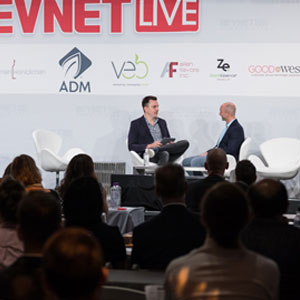
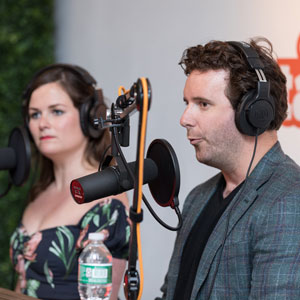
[00:00:52] Ray Latif: Hey, everyone. Thanks for listening to BevNET's Taste Radio. I'm Ray Latif and with me are John Craven, Jon Landis and Mike Schneider. We're recording from BevNET Live Summer 2018 at Metropolitan West in New York City. And in this week's episode, we hear about the incredible journey of cult coffee brand Death Wish Coffee from founder and CEO Mike Brown. We're also joined by Matt LaCasse and Lizzi Ackerman, the co-founders of fast-growing pancake mix brand Birch Benders always, for questions, comments, ideas for future podcasts, please send us an email to ask at Taste Radio. We're in the homestretch, so to speak.
[00:01:26] Mike Brown: Thank God.
[00:01:28] Ray Latif: That was Landis.
[00:01:30] Mike Brown: You guys can't recognize my voice because I've just been talking to people nonstop over the past five days.
[00:01:36] Ray Latif: Yes, indeed. It's been a long week, but it's been a great week between Nosh Live and BevNET Live. Just a fun event, an informative event, educational, entertaining. Any other adjective you guys want to use for this? John Craven? Tiring? No.
[00:01:52] Death Wish: No, I think it's been action-packed, energy-filled. I would say. As I'm running out of gas here on this podcast. But no, I mean, I think, you know, we had a great crowd at both the events. And I think feedback was very positive. And, you know, just the community and the audience that was at these events. I don't know. I mean, I'm really, I guess, pleased and impressed that we've been able to get people's time and trust and, you know, pull this thing off and pull it off.
[00:02:24] Mike Brown: Yeah.
[00:02:24] Ray Latif: Year after year. So, I mean, you know, we had some great main stage material. We had the live stream lounge going. We have Taste Radio. We have the competitions. You know, I really enjoyed your conversation, John, with Mike Kirban. It feels like it's been some time since we've had him on the stage, and he's just as great and engaging as he ever has been. And, you know, this is a guy who is running a company that's supposedly nearing a $2 billion sale, which he also addressed in his talk.
[00:02:52] Death Wish: Yeah, he's a chill dude. No, Mike, you know, I've known Mike since the very beginning Vita Coco and, you know, one of the nicest guys in the business. And, you know, it's just awesome to kind of look back at a company that much like, you know, the brands and entrepreneurs we see today was just a wild and crazy idea. And, you know, here it is in a mature state, very successful state. you know, kind of makes you look around the room today and, you know, the other days at Nosh. And, you know, some of the people here are going to go down, you know, a similar path, which is pretty awesome. And, you know, they're obviously just at the beginning now.
[00:03:30] Ray Latif: So, yeah, I mean, you think about 2004 when Vita Coco launched. And if there had been a New Beverage Showdown in 2004, you might have seen him up on stage. And it sort of makes me think about some of the folks we saw, the 12 semifinalists in New Beverage Showdown. And could they be a Mike Kirban one day? Could they be Vita Coco one day? Mike Schneider, you were the judge in the semifinal round of New Beverage Showdown 15. What are your thoughts on how these brands presented?
[00:03:56] Death Wish: Exciting class of brands first, Ray. I mean, it was really hard to make decisions because everyone presented very well. I would have liked to see more market opportunity in these presentations. So for future New Beverage Showdown contestants, make sure that you clarify what you think your market opportunity is. We saw a lot of sort of collision of categories. You know, you see the collision of probiotics and teas and coffee fruits and sodas and people not really knowing what exactly they are out there. You know, you had the Origin Almond, for instance, cool product, excellent tasting. And they are a little bit confused about what category they should go into. They've got this New Beverage that They're not really sure how to, you know, how to get it to first trial. It says Origin Almond, but it tastes more like a cold pressed juice or a shake. And the flavors are phenomenal. It's maybe a little bit akin to what's what's going on with with rebel. And those people walked away from the stage as winners. You know, they they got great advice and they even the ones that didn't make it into the finals, they walked away from the stage with great feedback. And I saw them having conversations with investors and suppliers and service providers about what are they going to do next and coming away like feeling really energized.
[00:05:07] Mike Brown: Yeah, totally. Speaking of which, Jacob DeLeon, super fan of Taste Radio, looking at him right now, networking superstar. The founder of Origin Almond. Origin Almond, and I've been watching him meet all sorts of awesome people, including talking to Paula Grant from Flood Creative right now.
[00:05:26] Death Wish: He is a power networker. And you see beforehand, he comes up to me New Beverage school and he's saying, OK, well, I need to talk to Mike Schneider, not the judge. But I want to know what you think about the product and where should I head with this thing? And he's asked the hard questions of everybody that he's gone to. And it's been really impressive to see this class of New Beverage Showdown contestants do their thing.
[00:05:47] Ray Latif: It has been. And you could totally feel the passion. Passion was where the judges kept bringing up in the semifinal round. And you can feel it, it's palpable on the floor here at BevNET Live. You know, someone asked me yesterday, how much more room do you guys have here? Because it was packed, packed during the expo, packed during lunch. And I said, I don't know, maybe another 50 people or so. But it just goes to show the enthusiasm, the energy for entrepreneurship in this industry. And I love that we have sort of a vehicle to showcase that enthusiasm, to showcase that excitement.
[00:06:18] Death Wish: Yeah, Jack Craven, thanks for putting this thing together back in the day. I mean, we were talking a lot about how far this thing's come. And, you know, the days of first one didn't really have lighting and audio and things like that.
[00:06:29] Mike Brown: But by the way, when someone asks you how many more people you can fit in here, the correct answer is how many tickets do you want?
[00:06:37] Death Wish: We're looking into a second level of seats on top of the main level.
[00:06:43] Ray Latif: I didn't hear that it was overcrowded. I think what I heard was that there's an awesome opportunity to meet so many cool people in this business, whether it's an investor, a distributor, advisor, and I'm just really happy to be part of it.
[00:06:54] Mike Brown: And I talked to a couple people who went to both Nosh and BevNET and obviously they're different events, they're different sizes, but it wasn't about being more or less people. The people who were at both told me there's an atmosphere in Nosh that is unique. And then when you walk into BevNET, the air is different. You can feel the energy in the room is just different because this is New Beverage space and it's a different community and a different group of people.
[00:07:20] Death Wish: And the way that we're doing the sampling at Nosh, everybody thought was a real differentiator. I mean, we had it so that the founders could walk away. The Pinata team did a fantastic job of, you know, helping out with explaining the products and preparing. And we had, you know, the team prepare the products and the founders were networking while the sampling was happening. I don't know if we've seen that at another event.
[00:07:39] Mike Brown: And a huge shout out to Scoop, our caterer, who probably doesn't listen to this, but my God, I love you, man.
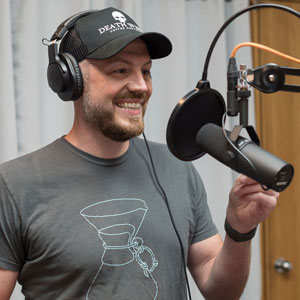
[00:07:46] Ray Latif: Well done. Scoop dog? Scoop dog. All right, I think it's time to kick it back to Future Ray, or kick it future to back Ray, one of the two. So confused. Yes, yes. But we're going to go back to Watertown, Mass, and I'll be talking to myself very soon. All right, we're back here at BedNet headquarters in Watertown, Mass, inside the Taste Radio studio. We're going to get to our featured interviews. A disillusioned accountant turned failed coffee shop owner who out of desperation became an e-commerce savant. This is the story of Mike Brown and his company Death Wish Coffee. Launched in 2012 and promoted as The World's Strongest Coffee, Death Wish built a thriving direct-to-consumer platform, become the number one wished-for coffee on Amazon, and is rapidly expanding into brick and mortar. We recently sat down with Brown, who joined us here in the Taste Radio studio, and discussed the company's Origin Almond early struggles, its unusual branding, the evolution of its e-commerce strategy and approach to community building, and, of course, the brand Super Bowl led. All right, we're in the Taste Radio Studio here at BedNet headquarters, and Mike and I are joined by Mike Brown, who's the founder and CEO of Death Wish Coffee. Mike, thanks so much for joining us. Thank you very much for having me. Yeah, this is great. You have a great setup here. Appreciate that. Thank you. You are the first guest in the brand spanking new Taste Radio Studio. How do you feel about that?
[00:09:10] Lizzi Ackerman: pretty honored. I'm glad I get to be the test dummy.
[00:09:15] Ray Latif: No, you're certainly not the test dummy. I think this is going to go well, at least I hope so. But I mean, you know, we've got some nice padding on the walls. Now we've got some curtains, we've got a TV up on the wall.
[00:09:24] Death Wish: We do have that beat up old VW in the corner that we were going to put them in and drive real fast.
[00:09:29] Ray Latif: Nice. It's legit. Legit setup. Thank you very much. Death Wish Coffee, a cult brand that's growing really fast right now. And I'm curious, you know, when we did our pre-interview, you said you were not a coffee drinker until much later in your life. When was the first time you had a cup of coffee?
[00:09:46] Lizzi Ackerman: Yeah, the first time I had a coffee was back in, I think I was 24, 25. I was in my second year as a accountant. I was an entry level accountant for the state of New York and I was having a tough time really making it through the day. From never drinking coffee to having it the first time, it like sent me through the ceiling and I was like, ah, this is the best stuff ever. It was like, I can't believe this is legal.
[00:10:11] Death Wish: It's like Legend of Zelda. You find the first piece of the Triforce.
[00:10:15] Lizzi Ackerman: Yeah. Yeah. You know, I've not much longer after that first cup of coffee, I realized that accounting wasn't for me. And maybe I had all that extra energy to spend. I need to spend it somewhere, somewhere else. This was around 2007. And. market hadn't really crashed yet. So I still was finding some opportunities out there where businesses were coming up for sale. And the one business I did find that popped up for sale was a coffee shop in a town next to mine. And I pursued it for a bit, but it ended up getting purchased by someone else. And that was fine. And then not long afterwards, a coffee shop came up for sale in Saratoga Springs, which was a much better area. much more street traffic. And I went in to talk to the owner. He basically said, I've been waiting for you to come walk through this door.
[00:11:05] Ray Latif: Now, you alluded to this, you bought the coffee shop pre-recession.
[00:11:08] Lizzi Ackerman: Right.
[00:11:09] Ray Latif: But then the recession hit.
[00:11:10] Lizzi Ackerman: Yep, I bought in, exactly. So the recession hit shortly thereafter. I was able to, you know, drag it along for Between, let's see, 2011, that's when I became into real trouble, where if something didn't happen at that point, I was going to close the doors. And that's when Death Wish Coffee... came into fruition, it was more of a desperation attempt for me at the time is like, I got to do something else. This coffee shop isn't going to support me or my baristas or my store manager. If I can make an extra $5,000 a month, I can use that money to pay off the bills, pay my employees. So I was like, well, I could just, you know, online selling is getting so big right now. Hopefully I can sell some coffee online and roll that money into the business. That was the plan. It was like an extra $5,000 a month. It sounds so simple. It does sound simple.
[00:11:59] Death Wish: Sure, just an extra $5,000.
[00:12:01] Lizzi Ackerman: I definitely wasn't planning on this becoming a business of its own. I had an idea for a coffee in my mind based on my customers' requests every day. They'd always come in and be like, hey, Mike, give me a cup of your Strongest Coffee. And I'm like, well, do you want the most caffeinated coffee or do you want the one that tastes the strongest? They'd give me a look like confused, like, isn't the darkest, strongest flavor? Doesn't that have the most caffeine? I'm like, well, not technically. And then, eh, there'd be a lot of confusion. And I'd try to explain to them how, you know, these dark roast coffees, sometimes the caffeine's kind of stripped out through the roasting process. And it really depends what type of bean you get, and sometimes the lighter roasts have more caffeine. So it was confusing. So I was like, well, what if I can just put a coffee together that's dark, strong in flavor, has that robustness about it, and also has a decent amount of caffeine on the back end so it really gets people through the day? Because that's what my customers were looking for. And at that time, there wasn't a product on the market. So I put one together. Where'd your customers come from?
[00:13:02] Ray Latif: How'd you get people to buy your coffee?
[00:13:05] Lizzi Ackerman: How'd you get them to the website? That was the first challenge is how do I get people here? How do I get them to discover this brand? At the time, Facebook ads were relatively new. I had read about them. I was on social media. So I was doing a bit of research and I thought, Hey, I'll just try a Facebook ad. So I think I put. $20 behind an ad at that time $20 went a long way. So I did start to see in the back of my website traffic go up and not long after I had my first sale and First of all, I didn't have the coffee beans in my store. I knew what the coffee beans were, and I knew how I wanted to roast it, but I didn't actually have them. I didn't have the packaging.
[00:13:46] Ray Latif: Isn't there a term for that?
[00:13:48] Lizzi Ackerman: Selling without actually having- Paperware? I didn't have the packaging, I didn't have the bags, I didn't have the labels. I basically just had a website. And once I sold that, I had to go to Staples, buy the bag, buy the labeling software, call my roasters, get it roasted and shipped to me so I can repackage it and ship it to my first customer. And, but no, I did that in a pretty short, short order of time, probably within a day or two. And I mean, luckily that customer gave me a good review and it was a review that I highly leveraged. You know, I took that review and I, I put it all over, you know, that was my next Facebook ad is that guy's review. And I put it on the website and I started driving traffic based on that review. And as I got more and more, I made a list of testimonials and I even went to my friends and family and I had, I had them try the coffee and give me their honest review and I posted that as testimonials. And that really kind of started, you know, started to build a little bit of trust in the website.
[00:14:44] Death Wish: Do you think about the user experience when someone comes to your website about how they get from, you know, learning the awareness of Death Wish, what is Death Wish, to getting it into the cart, to how many do they put in the cart, to do they actually make that transaction? And then from there, you know, the loyalty behind that. That's all I think about.
[00:15:06] Lizzi Ackerman: That's what goes on in my head all the time. It is that customer experience. It starts at that high level, right? Awareness. How do I get people aware of the coffee? So I mean, at this point in my company now, we're still not great at it, but at least I have the framework in my mind. How do we make them aware of the products? So it's podcasts like these, it's Facebook lead generation ads, blog posts, SEO. and anything we can do on Taste Radio, just to get people aware of it. Once they're aware of it, what's next? You want to move them down into, I guess you'd call it a sales funnel. Interest or consideration, yeah. Interest or consideration, and you want to... I mean, online it's a little easier, so you can capture their email address, right? You can capture their pixel. So if they hit your website, they're cookied, and then we can drag them in through ads and other... Retargeting. And other places. Yeah, all about retargeting. There's other ways you can do it as well. Now with Facebook Messenger, that's opening up a lot of doors for us to communicate with potential leads.
[00:16:05] Death Wish: How close are you to the metrics? What do you think is important? What are your most important metrics? What do you ask to see every morning?
[00:16:13] Lizzi Ackerman: One of my most important, I don't look at this every morning, but I do look at it weekly is our, we have like a customer satisfaction ranking. We do send out surveys at the end of the purchase process to our customers who have received the product. I think they get it like six weeks later. And one of the main questions is, at least the one I pay attention to, would you recommend our product to friends and family? We have about a 90, between a 95 and 98% five-star rating on that question, which is very telling to me. I mean, everything from, you know, we're delivering value through the whole chain. We haven't let them down at any point. It's all about a relationship. And from the beginning, it's establishing that relationship, providing them with value. And that trans like that transaction, that conversion, that's the last step. That's so far down at that point, we should already be friends, you know, and now we're exchanging something of value. And that's where the real trust should have been established way before that.
[00:17:13] Ray Latif: You learned a lot about customer acquisition and data acquisition from a Good Morning America piece on Jetfish Coffee from a few years back. And there were some bumps and bruises with that, but tell us a little bit about how you ended up on the show and the result.
[00:17:30] Lizzi Ackerman: So at that time, one of our main channels for driving awareness to our product was reaching out to influencers. Basically, I typed up a form letter that said, we have this many social media followers and this many people on our mailing list. And if you could please write a review of our product, we would love to share it with our audience. So we'd send that out to- With a bag of coffee. With a bag of coffee, yes. To news reporters, bloggers, just websites, big websites, small websites, anyone we could think of. I think I had a list of like 50 to send out and about 99%, 98% said no. But the one or 2% that did say yes and wrote those articles and that gave us a good review, we did what we said we were going to do. And I feel like... At that time, and actually even now, because I've heard people in the marketing world talk about it, small business owners talk about this recently, is all these bloggers and news reporters, they follow what each other are doing. And if they write about something interesting, others want to write about it too. So I believe there's a blog called Cool Material. They wrote a little feature on our product. And I think someone at NPR had noticed that article and called up and interviewed me about the product, and I told them all about it. And then from NPR went to MTV, and MTV to, boy, it went all over. CNN, MSNBC, and then Good Morning America called not long after. And they said, it was about 10 in the morning when they called, and they said they wanted to open the show with our coffee the next day. And I was like, the next day? I'm like, well, when do you want to come up and get it? And they're like, oh, we'll be up in four hours. So I had four hours to prepare for Good Morning America to come to my store and interview me about my coffee. And it was, at the time, it was just me. And I had hired one of my former baristas to help me out on the social media and customer service side. And at this point, we were only selling five, 10 bags a day, tops. So I closed the store, I got everyone together, I'm like, clean, clean like you've never cleaned before. This place has to look spotless. And sure enough, four hours later, we did the interview over the phone, pretty much, like I talked into a microphone, but they talked to me through a cell phone, did the interview. And the next day, sure enough, they opened Good Morning America with Death Wish coffee mugs and our coffee, and they told The World how great it was and how smooth it was. And that's when the orders started to come in. And I haven't found a marketing channel better than these morning shows ever, including the Super Bowl. But we'll get to that in a second. These morning shows are, they're dynamite for small brands, especially coffee brands. and sales started rolling in to the point. How many orders did you get? Thousands. I wish I only think if I can remember the exact number. And the only reason I don't think I can remember the exact number is because after that Good Morning America piece, the interviews didn't slow down or stop. They started to come in more frequently and the media attention really ramped up at that point where we were on like the big news. I think David Letterman mentioned Death Wish Coffee. And all of a sudden I have, five piles of orders about three foot high. And at this point we were so... Good thing you have packaging at this point. Yeah, we had nothing at this point. We were so new that each order, the only way we knew how to fulfill an order was to print out a page that had the order on it and the customer's information. and then individually print out a shipping label. So it was very manual and very slow. And there was just stacks and stacks and stacks of orders. A lot of which you couldn't fill though, right? No, we couldn't fulfill them. We didn't have, I mean, we did eventually, but it took us up to 30 days. a little over 30 days to fulfill all these orders. Wow. That was nuts. I didn't have enough people. I didn't have enough packaging, enough beans, enough shipping supplies. So what do you do? I went to every post office in the area and I took all their postage supplies, like free postage supplies, off their shelves. And I started grabbing customers in my store who Basically, they were friends of mine because they'd come in all the time and they felt bad for me. And they're like, yeah, we'll come down and help you out. So I was grabbing customers, bringing them in the basement. It was a real creepy basement of my coffee shop. And they were like working for me for like 10, 12 bucks an hour.
[00:21:58] Death Wish: But how do you avoid a backlash? You said initially that the most powerful thing you had was a customer testimonial. And now you're in this situation where, oh, it's going to take more than 30 days. They might not get their coffee. What do you do?
[00:22:11] Lizzi Ackerman: Yeah, that was almost the end of the business right there. But I was in such debt at that time and the revenue in my PayPal account and my bank account was going up so quickly. I think the first day I had almost $50,000. And before that I had almost zero. So I was like, all right, I just went from zero to $50,000 in one day. I can't shut this off. I can't shut off this hose. I got to keep it going and do anything and everything I can to try to fulfill these orders. And like I said, eventually we did, we did get a ton of bad reviews. I did end up refunding the shipping to a lot of the customers. I responded to every customer and I was very upfront with them. I told them exactly what happened. Hey, I was just a small two person team out of the base of my coffee shop. Good Morning America called and we're up to our ears and orders and we're having a hard time fulfilling it. Most of the people understood. Some people were like, pretty much giving my money back. This is awful service, blah, blah, blah. You're not ready for this. You're in over your head, but, and they're right, but they're right. But most of them, most of them are very understanding. And I did end up refunding a lot of orders. Amazon ended up kicking me off their platform. eBay kicked me off their platform for life. I'm still- Still banned. Well, I'm like, I like a limited account now.
[00:23:29] Death Wish: Death Wish on the blacklist.
[00:23:30] Lizzi Ackerman: I'm They liked that answer. So they let me back on their platform not long after. And then, yeah, after that, it was about, yeah, cleaning up these reviews. How do you clean up a bunch of bad reviews? Pretty much the only way to do it is with a bunch of good reviews. So I got some, for Amazon anyways, I got some automation review automation software. So that doesn't mean they're fake reviews. They're all good reviews. I just had, it was basically every order that came in, I used up. a company called Seller Labs. They have a product called Feedback Genius. And basically how that works is it's an autoresponder. So anytime anyone orders a product, Feedback Genius will send them a, hey, it's basically a customer service tool. Did you like your product? Blah, blah, blah. Here's a link. Please leave a review or something along those lines. And because we did all FBA after that and because we have a great product, the reviews, great reviews started coming in not much longer after that. And a product people could get.
[00:24:40] Ray Latif: Yes, finally a product people could get but like I said that took some time So you're getting some traction and you're getting traction from word-of-mouth from testimonials from social marketing You didn't do too much traditional marketing at the time Until you got the Super Bowl ad now, how the heck did you get a Super Bowl ad? I mean super let's cost like five million dollars, don't they?
[00:24:59] Lizzi Ackerman: Yeah, pretty much right there So yes, March, 2013 was a Good Morning America. Right after that, once we got back on our feet, we moved to a small warehouse. It was about 15,000 square feet. And then we ended up renting another place next door, which is about 750 square feet. Once we grew out of that other space. So now we're operating out of about a little over 2000 square feet, still relatively small, but I'd hired some people after that. And I think I had a team of six, which is still pretty relatively small. And we had a. I was on Facebook once again, and I saw a Facebook ad for Intuit small business, big game competition, which is a basically the opportunity of a lifetime for a small business. And I saw it go through my newsfeed and I was like, enter this and you could have your business on Super Bowl. And they had did it two years prior with a company called GoldieBlox. Yeah. And the Goldie blocks, man, I remember seeing that commercial and they had some controversy. Cause I think they used like a beastie boys track and they didn't, they sure did pay them for it. But even with that, they had so much, so much brand recognition after that. And I remember they were in toys or us or everywhere. I was like, Oh man, this is, this is an opportunity of a lifetime. So I told my team when I saw it, I'm like, guys, we're winning it this year. And I was from day one, I was a hundred percent confident I was going to win. Maybe I was a hundred percent foolish, but I really felt like, felt like this is going to happen. And there are a few of them who are like, Mike, you're an asshole. But whatever, they, they went along with me and I put everything, I put the whole business into it, a whole business. Like our focus shifted from, okay, we're a coffee company to, hey, we're going to win this Super Bowl. And that's what it was, you know, probably 20 hours a day. That's what we were doing. Why was it there for how long? Months, like months. It was nonstop. What were you doing? So the whole point of the competition was driving attention to your brand through a link on Intuit's QuickBooks page. So basically, it was great for... into it because they got tons of traffic like all flooding into their website to check out their products and stuff. But once you're there, it's kind of like American Idol where you'd go and you'd vote for the company you thought you would like to see represent small businesses in the Super Bowl. So yeah, we were doing Facebook ads. We were doing, we were calling our friends.
[00:27:22] Death Wish: America chose Death Wish.
[00:27:25] Lizzi Ackerman: I had my mom writing letters to her. She was going through her yearbook. Actually, I didn't ask her to do this. She just started doing it. She saw how passionate I was about it. She was going through her yearbook and just writing down names and then reaching out to these people who she hadn't seen since high school. My mom's in her seventies now and asking them to vote for deathish coffee.
[00:27:46] Ray Latif: And so you were able to attract enough attention to your brand at the Intuit site that you eventually won.
[00:27:53] Lizzi Ackerman: Yeah, eventually it kept getting narrowed down at the time when we were at, they notified us that we were in the top 10. That's when everyone on my team was like, Mike's an asshole. I was like, Oh wait a minute. Mike really might have something here. We really might have a chance.
[00:28:08] Death Wish: That asshole got it right.
[00:28:09] Lizzi Ackerman: Yeah, pretty much. And from there, it was December and into it basically told us we didn't win. And they came to our facility and they're like, yeah, you know, we're going to tell the winner tomorrow, but we, you know, we wanted to do a follow-up interview with you. And they really fooled us. Oh, they basically said we didn't win and then came down and told us, Oh, wait a minute. You guys did win. Oh, wow. Right. And man, That was probably one of the better days of my life.
[00:28:36] Ray Latif: So what was the impact? I mean, it sounds like, you know, Super Bowl ad is going to, you know, put your brand into the stratosphere. What would happen post Super Bowl?
[00:28:45] Lizzi Ackerman: Well, let's take it back a little bit, just a little bit before then, we start having flashbacks of Good Morning America, when we got all these orders and we almost were out of business. So we had to make sure everything was automated, right? You woke up in the middle of the night screaming. Yeah, I know. But actually before then we had set up our business to be scalable by putting systems and processes in place where we were. directly responsible for fulfilling our own product anymore. Like we worked with Fulfillment Center. You know, we had roasters on call, third-party roasters to help us roast our coffee and package it and get it out. We had a month to fulfill our inventory, our warehouses. So it was like all hands on deck trying to logistically manage everything and to make sure we had enough product in our channels for the Super Bowl.
[00:29:32] Ray Latif: Revenue has increased significantly since the Super Bowl led. You are the number one brand on Amazon, coffee brand, is that correct?
[00:29:40] Lizzi Ackerman: Yes, we're the number one selling coffee brand on Amazon. We have been for the last three years. We're the most highly reviewed coffee on Amazon. Probably the most five-star reviews last time I checked across all of our products. And yeah, we're the most subscribed for a grocery product, which someone told me the other day, which is pretty amazing.
[00:29:57] Ray Latif: It's really interesting because, you know, I would think Death Wish has a little bit of a niche vibe to it, honestly. I mean, it sounds like, you know, a high Strongest Coffee that's got a little bit of a hardcore vibe will appeal to a small set of consumers, but you're finding a broader set. And honestly, I was half expecting to see, you're wearing a t-shirt right now, I was expecting to see sleeves tattooed throughout your arms because that's the kind of vibe I see on social media. and on your, in other campaigns that Death Wish does. But what Mike is wearing right now is a Chemex shirt.
[00:30:26] Lizzi Ackerman: He is wearing a Chemex shirt.
[00:30:27] Death Wish: Which tells us that he is indeed a coffee pedant. Indeed.
[00:30:31] Lizzi Ackerman: Yeah, that's true. I'm probably the black sheep on my team in the opposite direction. I mean, my entire team has the sleeves, you know, both arms, both legs, and even the women on my team are very tattooed up. And I think they, because I think their personality show through in the brand a lot more than mine does. Even though it's, you know, I started it, you know, it's, it's not about me. It is about the whole team. Mike's the mastermind. I'm more like the guy in the back and like, there's a problem, you know, tell him I can, he can probably, I shouldn't say probably maybe figuring it out, but, but they, they, they have really taken over the brand in a good way.
[00:31:08] Ray Latif: But so yeah, and you've completely embraced that into your branding and into your marketing. You know, are you concerned at all that that doesn't really lend itself to a broader audience, especially now that Death Wish is moving into, you know, retail and brick and mortar?
[00:31:22] Lizzi Ackerman: Believe me, that is a huge concern. And based on our analytics, you know, it's something we look for is like, is this, we do market towards a certain persona. You know, we have that person persona, extra extreme, bold.
[00:31:36] Death Wish: Yeah.
[00:31:36] Lizzi Ackerman: Not even more, not hips are really more like the, you know, the truck driver, more, you know, motorcycling man, motorcycles, right. Tattoos, you know, likes to have a good time, but needs, it needs that kick in the ass to get up in the morning and to pursue his passion. But so many people resonate with that persona, not just that person.
[00:31:53] Ray Latif: Yeah. I mean, I noticed on your podcast, you've got a whole host of interesting characters and I want to talk about your podcast in terms of, you know, how that helps define your brand as well. But I mean, you've got people like Wyclef. I think you had an adult film star on your podcast a few weeks back. You know, how does your podcast help define who you are as a brand and really strengthen the ties you have to your consumers?
[00:32:20] Lizzi Ackerman: So the podcast for me, and I think all brands will be doing this eventually, is I think brands will have to be the media companies of the future. You know, they have to deliver value to their customer in any way possible. Our whole motto at Death Wish Coffee is, you know, fuel your passion or fueled by death. You know, which means fuel your passion. We just don't want to fuel your day with our coffee. We want to fuel your day with stuff you're interested in. So as our customers, we have a pretty robust Facebook group, and as we hear, you know, what they like, the people they're interested in, the topics they're interested in, we go out and we try to embrace that and find how we can fulfill their need for that type of information. So we go out and look for and try to generate this content for them. It's just delivering value, as much value as possible.
[00:33:10] Ray Latif: Mike, this has been fantastic. Thank you so much for making the visit up to BevNET headquarters. Really appreciate the time. Good luck with Deathwish going forward and please send us some beans. We'd love to... I'm gonna overrun you guys with coffee beans.
[00:33:22] Lizzi Ackerman: I need to make some bad latte art.
[00:33:24] Death Wish: I gotta make some bad latte art with your coffee, Mike.
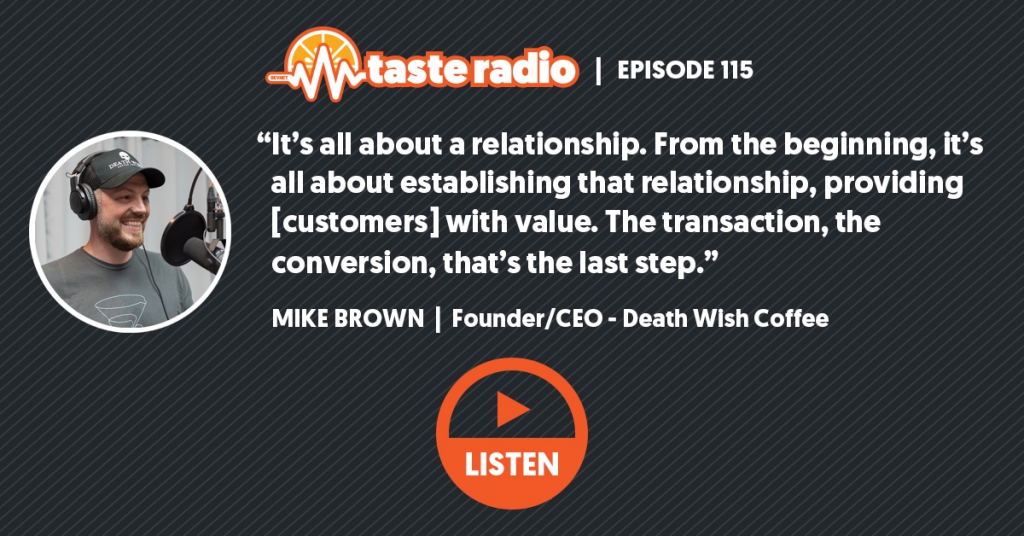
[00:33:29] Ray Latif: Fantastic. All right. Thanks so much again. Thank you. Even though Mike has had some pretty remarkable success and some pretty remarkable failures, you know, from Good Morning America to the Super Bowl ad, you know, it's clear he understands that building that relationship with his customers is critical, is key. I mean, he talked about that. He said, from the beginning, it's all about establishing that relationship, providing your customers with value. That transaction, the conversion, that's the last step.
[00:33:58] Death Wish: Mike's not exactly your typical user experience guy, you know, user experience first. He's an accountant, he buys a coffee shop and then he decides that he's going to make a product and go direct to consumer via his website and quickly learned that the key here is the audience. The key is what the audience thinks about your coffee. And he almost, as he said, he almost deep six the whole business by not being able to provide product when he when he got into Good Morning America.
[00:34:27] Ray Latif: Yeah. And he learned a lot about having to fix those mistakes and prepare himself for larger opportunities. You know, customer service was critical. He knew he was going to get a lot of people being angry at him and, you know, giving him bad reviews. But he said, OK, well, how do we How do we fix this? And it was really telling people the truth, which I thought was great. I mean, he said, look, you know, we're a small coffee shop. We didn't know we were going to get this kind of response. We only had a few hours, literally, to prepare for this interview with Good Morning America. And a lot of people understood it. And it was because he was a straight shooter about it, I think. And then he did something that might sound really simple, but was really important, you know, getting better reviews. He said, OK, well, if I've got a lot of bad reviews, I've got to clean up with some good reviews. Again, that sounds like a pretty simple solution, but it was a really important one for the business.
[00:35:15] Death Wish: The product changed, so obviously he was able to pay off the promises and deserve those good reviews. Well, I think there's also something to be said for, you know, the positioning of the product and the branding, which, you know, I think Death Wish Coffee, you know, at least, I guess, up until recently, you know, the positioning of it is so different than anything else you see in kind of these third wave coffee roasters that I suppose were, you know, ultimately the competitors of Death Wish Coffee, as well as, you know, it had a standout sort of function, you know, more caffeine. So I think that's something that with this, you know, he's talking a lot about, you know, the reviews and sort of the the workflow of selling it. But, you know, got to give the guy credit for figuring out how to make a bag of coffee beans, you know, memorable as well.
[00:36:03] Ray Latif: Indeed. And he's made it even more memorable through media. You know, we talked a little about the podcast And I said, you know, what are you looking for in terms of your podcast? And they also have some really cool videos that they do online on YouTube, and they have a pretty robust social media strategy as well. And he said something really interesting. He said, you know, brands will have to be the media companies of the future. and deliver value to their customers in any way possible. And sometimes, you know, if you look at his lineup of speakers, his lineup of interviewees on his podcast, some of them have absolutely nothing to do with coffee, but they have everything to do with the brand and what Deathwish stands for and is all about.
[00:36:43] Death Wish: In the interview, he talks about going to great lengths to perfect his product and to find the proper bean. And he's done the same thing with his content and created really great content and gotten some big names like the adult film star and Wyclef and then, your favorite Ray, the Million Dollar Man, Ted DiBiase. A lot of brands are trying to go down this path and it's not that easy. I mean, I talked to Perfect Bar during Nosh Live and they've got their own agency and they're building out their own content around to become this lifestyle brand or to pay off being this lifestyle brand. And it's an expensive game and one that it's interesting to see how they've played it.
[00:37:19] Ray Latif: Well, the other interesting thing is, you know, when you're sometimes looking for big name ambassadors and someone who's going to really rocket your brand to the stratosphere and you're thinking about people like Beyonce or somebody else. I mean, sometimes those folks just aren't aligned with who you are and what your brand is all about and who your customers are. And it felt like, you know, Wyclef, when he did that podcast interview, wasn't doing it because he was getting paid or getting something out of it, because he was a fan of Death Wish. He liked what they were doing and felt in some way that It was authentic to him, it was authentic to the brand.
[00:37:49] Death Wish: The interesting thing about Mike is that when we stood next to him, you don't think of him as kind of the ultimate consumer of Death Wish. He's this guy who just really loves coffee and he's a coffee nerd and he's also kind of a hacker who's figured out a lot of things about about messaging and about product over time and obviously through success and ultimately through failure. And we talk a lot about a founder being the seed of the brand. And in this case with Mike, he's not really the seed of the brand. So you don't necessarily have to be that person. You just need to be passionate about your product and have an understanding about who your audience is and deliver on the promises.
[00:38:26] Ray Latif: Indeed. Now if you're making coffee in the morning, occasionally you're making pancakes as well. And if you ask most folks about pancake mix, Jemima and Bisquick will inevitably come to mind. They are, of course, the two best-known brands in what's been a sleepy category for decades. But retailers aren't sleeping Birch Benders, a fast-growing brand of just-add water pancake and waffle mixes that launched in 2011 and has since become the number one pancake and waffle mix brand in the natural channel. The brand, which markets traditional and functional mixed varieties, including its best-selling paleo variety, is also the fastest-growing brand in the category across all channels and is available nationwide at more than 8,000 retailers, including Target, Whole Foods, Safeway, and Sprouts. At Nosh Live Summer 2018, we spoke with founders Matt LaCase and Lizzi Ackerman about how they identified opportunities to innovate in a sleepy category and how best to incorporate current and emerging trends into their business strategy. All right, I'm here at Nosh Live Summer 2018 with the founders Birch Benders, Lizzi Ackerman and Matt Lacase. Thank you so much for being with me.
[00:39:29] The World: Thanks for having us.
[00:39:31] Ray Latif: So, you're here at Nosh Live. This is not your first time at the conference. How are you enjoying this one so far?
[00:39:37] Strongest Coffee: It's a great conference, always good to be at one of these events. It's a ton of fun, great people, really inspirational speakers, and delicious food as well. It has to be, right? Of course.
[00:39:46] The World: Oh, yeah. Yeah. And it's always more, every year these events get a little more fun because you get to know more people in this industry. And it's such a tight industry, so it's not just learning from all the incredible speakers, but it's also seeing your friends. Indeed. And catching up.
[00:40:01] Ray Latif: So Pancake Mix has been, it seems to have been kind of a sleepy category, sleepy area for a long time. And I'm really curious as to how you guys saw an opportunity to innovate in that space. You know, where did you see the white space?
[00:40:17] Strongest Coffee: That's a great question. So, I mean, to kind of start out, we're the, you know, consummate entrepreneurs. We knew we wanted to start a business, basically had a long list of different potential businesses we could start. And we had this idea to start a, our first value proposition was to create the first natural and organic Just Add Water pancake mix. And when we started exploring the category, we realized there just had been very little innovation for a very long period of time. It was incredibly sleepy. The numbers were doing nothing.
[00:40:45] The World: It was interesting because when we looked at conventional pancake mixes, everything was just said water, but it was full of junk, like just ingredients you don't want to eat. hydrogenated oils and bleach flours and just crappy stuff. But then when we looked at natural mixes, they were clean, but there was nothing that was just like water. So why can't we have both? Why can't we have convenience and natural and organic quality?
[00:41:07] Strongest Coffee: Yeah. And the other big reasons why we chose to go into this business in particular is very low barriers to entry. To start the company, all we had to do was, you know, incorporate and then go to the grocery store, buy a bunch of flours, and we could start experimenting in our kitchen.
[00:41:22] The World: Which is exactly what we did.
[00:41:24] Ray Latif: So, you know, you guys are the consumers of your brand. You wanted a better for you pancake mix. You wanted a clean label pancake mix. But I'm curious as to how you approach the business and the market opportunity. I mean, what kind of data did you source? How did you assess, you know, the size of the audience and what were your sourcing methods?
[00:41:43] The World: Well, when you start, unless you're really well funded, you can't afford data. When we started, we just tried to get our MVP out there. We got into Lucky's Market was the first store we got into, and then a handful of Whole Foods. And Matt and I would just demo twice a day, every day for like 18 months. And at the time we thought, you know, we're supporting sales because the product was not selling as much without us. Our price packed architecture wasn't spot on yet, but we had a good tasting product and people would be brutally honest about what they liked and what they didn't. So they'd be like, you know. It tastes really good, but gosh, that's way too expensive. Or we used to sell it in jars. It was like add water to a fill line on the jar, shake and pour. We had got one guy in Boulder just go, shame on you for selling it in a plastic jar. How wasteful, like classic Boulder. But anyway, we were learning a lot about what was working and what wasn't. And each iteration, we take that feedback and incorporate it.
[00:42:37] Strongest Coffee: In identifying the market opportunity, again, it was certainly just more holistic. It was looking and saying, OK, there's a bunch of established pancake mix companies out there that are clearly running a very good business. We ought to be able to do what they're doing, only better, as our young minds thought. And so we just jumped in. And again, the idea was to create a brand that would be able to extend beyond the pancake mix category. That was just our foot in the door. And so even if the pancake mix category was small and underserved, we would be able to take our brand and move it into other aisles of the grocery store. So while the pancake mix category is not the biggest in The World, it's pretty small compared to a lot of other categories. We're able to take Birch Benders's brand name and innovate with other products under that label.
[00:43:25] The World: And we're also able to, we've been able to grow the category substantially. I think we're responsible for like 68% of the positive dollar growth in natural pancakes right now.
[00:43:35] Ray Latif: So Lizzie, I want to go back to a point you mentioned about feedback. You took a lot of feedback from your customers. You listened quite a bit. How did you discern between the feedback that you wanted to incorporate into your business strategy and the feedback that you felt like wasn't necessarily part of your path?
[00:43:55] The World: It's a hard thing because there is so much noise and everyone wants to give their opinions. One thing would be that we always paid attention when we got a consistent comment, such as, your price is too high. Your price is probably too high if people keep saying that. So the more that people repeated one thing, then we would take that to heart more. But at the end of the day, you have to trust your gut about things. Like I think of the gut as a muscle, and if you work it harder, it's gonna be stronger and more reliable. So, you know, we've gotten so much feedback over time and sometimes we listen and sometimes we don't. Sifting through and thinking about what really matters, what do you hear more that you should maybe put more weight on. And then at the end of the day, trust yourself. An example of that, you know, in recent history is like with our paleo mix, which is the number one mix in the natural channel. that we had no data showing that it could work in conventional grocery. It doesn't exist because it never has been until recently. But Matt and I had this gut feeling that, you know what, we think the SKU will work in conventional as well. We want to lead with that. And the data doesn't support that because no one's done that before. But we went with our gut. And so far, we've been right. It's been our number one wherever we put it.
[00:45:08] Strongest Coffee: One of my favorite quotes out of the Netflix playbook is, you have to be smart enough to read the data, but intuitive enough to ignore it. And that's just so critically important because the data won't show the potential of new innovation simply because it's not being captured by the data yet. As Henry Ford said, if he listened to his customers, The World have asked for a faster horse instead of an automobile. The customers can't anticipate their desires of the future. They're not necessarily the visionaries. That's the job of the entrepreneur is to bring to life the vision that they themselves create.
[00:45:40] Ray Latif: So what do you think you knew early on that has really changed over time in terms of how you operate and also how you innovate?
[00:45:51] Strongest Coffee: I think the important thing is just Knowing that you will learn new things and you don't have all the answers and you just always need to keep your head on a swivel. If you don't have flexible thinking as you enter a business, there's simply no way you're really going to succeed. One of my favorite authors, Clayton Christensen, he has a stat that like 93% of successful consumer goods companies pivot with their products. The product that they initially launch with is not the product that brings them success.
[00:46:19] The World: And as an example of how we did that, we started with jars of pancake mix. We thought that was going to change The World. When we were onto something with Just Add Water convenience, but the jar format ended up not being our winner. When we switched to pouches and when we got our price lower, that's when things took off. And then things further took off for us when we started playing with functional ingredients and offering functional benefits like paleo protein. We've really got traction there.
[00:46:46] Strongest Coffee: But for, I mean, strategically thinking for all those, you know, young entrepreneurs out there that are looking to start a business, it's really important not to go in and raise a ton of money at first with your first product that you come up with, because 93% of the times your product will change. And if you raise too much money to go in with this initial product, a pivot can be detrimental or catastrophic to your business. So you really want to test it. You want to test your product with as few resources as possible until you realize that you're starting to get traction. And you've iterated, most likely iterated on your product a couple of times. And once you start getting traction, that's when you can go out and increase your resources.
[00:47:26] The World: Yeah. You know, as an entrepreneur, it's very, like, tense. you're excited by your idea and it's really tempting to just want to get it out to all stores really quickly. But unless you're sure that you have the right products with real traction, you probably don't want to pitch to Target immediately. You probably want to stay in fewer retailers and make sure you've nailed that price pack architecture. Because if you don't, once you're in distribution and if it's not moving, and if you get discontinued, it is really, really hard to to be able to just get back in. You kind of only get one shot, so it's better to make your mistakes on a small scale, get it right, and then start going to the larger retailers.
[00:48:06] Ray Latif: So did you have an idea of who your customer was from the get-go? Did you understand who your audience was or how did that evolve over time?
[00:48:16] Strongest Coffee: That's a really great question and also a point where entrepreneurs need to keep their head on a swivel. Again, the consumers they think they may be going after in the very beginning may not be the ones to take to their products at first. You want to sell to the innovators. It's really hard to sell your product to the mass population in the beginning. You need to sell to trendsetters because they're the ones that start trends and you're not going to go disrupt Aunt Jemima by making a different Aunt Jemima. You're going to do it by making a more innovative product.
[00:48:44] The World: At the same time, you don't want to just go for every trend. We like to look at trends that we think have the potential to become lifestyles, not just the cool thing of the moment. So we want to go for things that we really stand behind. And as millennials, that matters to us, that making products and flavor varieties with functional benefits that we believe in, not just throwing it out there because we think it's hot right now, but maybe it won't be next year.
[00:49:12] Ray Latif: So Paleo at one point was considered sort of an early trend that maybe not have a lot of staying power. What made you see longevity with Paleo as a trend?
[00:49:23] Strongest Coffee: We were kind of surprised at how widely accepted Paleo was.
[00:49:27] The World: But it's at the same time, it's just so intuitively good for you that we really saw this lasting power there and sort of, yeah, took a chance on developing that product. That was the hardest product we've ever developed. It was so
[00:49:41] Strongest Coffee: It took 99 different recipe attempts in our kitchen.
[00:49:45] The World: Flour everywhere for weeks on end.
[00:49:49] Strongest Coffee: But it was worth it, and we were... Well, we thought it was gonna be a natural product only when we developed it, and we developed it in partnership with Whole Foods, and, you know, it started turning really, really well in Whole Foods and then in the rest of the natural channel, to the extent where we thought we could play with it in the conventional channel and now the club channel, and it's... Everywhere we've put it, it's been our number-one-selling SKU.
[00:50:09] The World: So it's in all regions of Costco, for instance.
[00:50:13] Ray Latif: So how many retail stores are you guys in at this point? Just over 8,000. That's a pretty healthy number right there. It wasn't always 8,000 though. And I'm curious as to when you really felt like you were achieving traction. And when was that tipping point when you realized this was going from a small brand to potentially a very big brand with a lot of appeal?
[00:50:35] Strongest Coffee: So I would say even more important of a metric than the number of retailers you're in as a small brand, the most important metric in my mind is your velocities, your productivity in those stores, also known as units per store per week, or dollars per point of distribution. I think that is probably the most important metric to measure, because you can go out and buy a bunch of really cheap distribution and get in 10,000 stores, but unless your products are turning really well relative to the rest of the category, you're going to lose that distribution and you're not going to have a long standing business. And so making sure that you have great velocities in a small number of stores, improving it out on a small scale is imperative before you expand to a larger number of doors.
[00:51:17] The World: And when we started hearing from retailers like that, how well the units per store per week were for all of our SKUs, we knew we were on to something. And that's still the metric that we're really, really concerned with. Like as Matt said, we could be in 10,000 or 12,000 retailers right now, but we're trying to just make sure that we're winning in every retailer that we're in and that we're getting in the right retailers at the right time. Because there are some retailers that probably it just doesn't make sense to put our stuff in yet. So really, and focusing on having the best possible partnership with the retailers we work with, we take that very Seriously.
[00:51:54] Ray Latif: There was a point at which Target knocked on your door and that was a really big point for the brand. Can you talk a little bit about that and how you determined that at that point was the right time to partner with Target and to have your products in their stores?
[00:52:08] The World: Yeah, that was, I think it was 2015 Expo West that they approached us. And it was really, it was sort of perfect timing. Our brand was starting to take off. You know, what was crazy is a little bit after they approached us and we found out we're going to be getting into all the targets and we're really excited. And then the avian bird flu happened and egg supply went from being a couple of dollars a pound to over $20 a pound and you can't even get your hands on it. And all of our products had eggs at the time. So I remember I call our egg supplier and I'm like, well, you don't have any supply. What do we do? And he was like, well, the other brands that I know that use eggs are just shutting down those lines, you know? And I'm like, you're telling me we're just going to go out of business? That's not an option. And we know that we're getting into Target. So we reformulated all our products to remove eggs. And it was an incredible challenge. But nobody ended up noticing. And it kind of I guess I bring it up because you're always going to face challenges like that when you're running a company. But if you're determined enough, like you make it work. We knew that we needed Target and that this would be a great opportunity. So we just figured it out and it was scary and it all worked out in the end.
[00:53:18] Ray Latif: In terms of the timing, though, you were still relatively small. I mean, you were still a relatively small brand.
[00:53:23] The World: Yeah, it sucked. I mean, we had three months to, like, reformulate every product and we had to, like, throw out the other stuff. It was crazy.
[00:53:30] Strongest Coffee: You know, as you grow, you continuously get these kind of landmark accounts. You know, your first account is always going to be the most exciting. I remember when we got our first Whole Foods account, I actually cried about myself in my car.
[00:53:45] The World: But I guess when you get those opportunities, you have to make it work. Even if you face these obstacles, you need to make that those opportunities don't always come up. So you have to say yes and get excited and make it happen.
[00:53:58] Strongest Coffee: Generally speaking, this is also another great way to measure if you're getting traction. If a retailer comes to you, that means your product has checked the boxes that they internally hold. So that's a great indicator that you're really getting traction. target came to us and they said, you know, we think this is a great product. We'd love to put you in our stores.
[00:54:16] The World: You're not going to say no to that.
[00:54:17] Strongest Coffee: Yeah. Like almost 10, nine times out of 10 or 10 times out of 10. That means they really believe in your product. It's probably going to sell pretty well. It's very different if they come to you than if you go pitch to them relentlessly, even if you don't know if your product is ready. Um, and so it's, it's a sort of validation of The World that you've done on your product offering that they understand and get the value proposition behind it.
[00:54:39] The World: I think it's important as an entrepreneur to get a little over your head sometimes. That's not a bad thing. I mean, if you're not pushing yourself to a place where you're a little bit uncomfortable, you're probably not innovating hard enough. So I'm comfortable with being uncomfortable and saying yes when it means that we're going to have to figure it out, but we always do.
[00:54:57] Strongest Coffee: I imagine that all of the young entrepreneurs out there, they better be very comfortable with being uncomfortable.
[00:55:02] The World: Yeah. If you're like feeling resting easy, you're probably not pushing hard enough. So we've said yes to things that make me nervous, but I know that we're going to make it work at the end of the day. Even if all the egg supply goes away or something terrible happens, we'll figure it out always.
[00:55:18] Ray Latif: So what have you learned from working with a large retailer like Target versus say, you know, a Whole Foods?
[00:55:26] Strongest Coffee: It's great, in my opinion, because it's really the first times that you can start getting great data back because the sample size is large enough where you can really start to understand on a macro level how your product performs. It's not just, as we mentioned earlier, your mom saying, honey, these pancakes are great. You can really see how it performs across 1,600 stores. And having that sort of sample size, it's incredibly relevant. It's actionable data that you can use and innovate with.
[00:55:58] The World: And, you know, yeah, as you go to the bigger retailers, it also makes you get, you have to take your, make sure you've perfected your supply chain, because conventional retailers and mass retailers are not as understanding. They're really not understanding at all about light shipments. You can't mess up. There's no holding your hand. Not that there really is with Whole Foods either, but there's really none. Like you get it there on time, every time. So there's a whole new level You have to be prepared for that.
[00:56:34] Ray Latif: Very cool. Well, Lizzie, Matt, this has been fantastic. Thank you so much for being on Taste Radio. Thanks for putting up with the background noise. We have a lot going on these next few days, and I really appreciate you guys taking the time.
[00:56:46] The World: Thank you so much for having us.
[00:56:47] Ray Latif: Really appreciate it. All right.
[00:56:49] Strongest Coffee: And good luck to all the entrepreneurs out there.
[00:56:50] The World: Yeah, go crush it.
[00:56:51] Ray Latif: Love it. On this podcast, we've talked a lot about understanding your audience, understanding your consumer, understanding the opportunity. And as Lizzie and Matt talked about, that's really important. But Lizzie, to her credit, said that at the end of the day, you've got to trust your gut about things and think of the gut as a muscle. And if you work it harder, it's going to be stronger and more reliable, which I thought was a great point.
[00:57:15] Death Wish: The gut is one of the most formidable weapons that an entrepreneur has in their quiver, if you will. I mean, having a strong gut, and she talks a little bit about improving that over time, and it's really not about improving your gut to me as much as it is learning to listen to your gut, because your gut's always going to be telling you something, and you have to figure out the difference between logic and emotion, and that's a challenge for every new entrepreneur, and they figured this out early.
[00:57:43] Ray Latif: As important as it is to trust your gut, it's also really important to identify who the innovators are, who those influencers are. And Matt talked a little bit about this. He said, you know, you don't want to sell to the laggards out there, which to me meant you've got to be reaching out to those folks and targeting those folks that are going to be advocates for your brand. And also the folks who are on the cusp, on the cutting edge of what's next and what's really moving the needle in terms of innovative food trends and ingredients.
[00:58:12] Death Wish: I think that's right when you're coming out of the gate. The innovators, the folks who wanna try something new, are the ones you want to start talking about you, but what you need is for them to talk to whoever your core audience is, because those aren't always the most loyal followers of your brand. What happens with a lot of the folks who want the new, the innovative, is they continuously look for the new and the innovative, and when you're no longer the new and the innovative, if they walk away and you don't have a core,
[00:58:44] Ray Latif: they've gone. At the same time, sometimes you got to push the envelope. And Lizzie talked about how it's important for an entrepreneur to get a little over your head sometimes. That's not a bad thing. And pushing yourself to a place where you're a little uncomfortable. And if you're not doing that, you're probably not innovating hard enough. Case in point, Natasha Case, Coolhaus Ice Cream.
[00:59:03] Death Wish: They innovate constantly and they do it through seasonal flavors. They put seasonal flavors into play to see how people will like them. One of the flavors that they put into market was one that they just thought would be fun. It was milkshake and fries. They know everybody dips fries into their milkshakes. They put this flavor out there. People like it. They can't keep it on the shelves. And then a light goes off and they say, wait, we can't keep this thing on the shelves. Let's try this as a regular flavor. And when it goes in as a regular flavor, still can't keep it on the shelves. Pushing beyond the comfort zone, innovating.
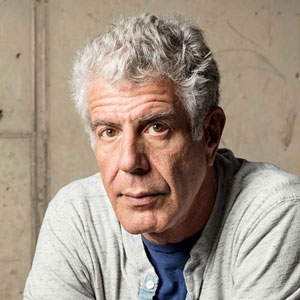
[00:59:34] Ray Latif: Boom. Exactly. So before we sign off, we just want to say a few words about Anthony Bourdain. As many of you know, we lost Anthony Bourdain last week. On a personal level, he was a huge influence on my life. I felt like he was one of those people that really encouraged you and forced you to look at food and The World at large in a different way. changed the way people think about travel. He changed the way that folks think about storytelling. I remember watching the first episode of No Reservations and later with Parts Unknown. His style, his pace, his mastery of the English language was so compelling. And it was clear that he wanted us to learn. And he wanted us to have those experiences and see things in a way that we wouldn't have thought of before. And it really required someone of his talent to do that. He'll be sorely missed.
[01:00:40] Death Wish: I like the way that he always sought out local. The World, you know, I think of The World local, I think of Anthony Bourdain. He really got behind the scenes to try to figure out what was going on. in the lives of the people who made the food that he tried in the locality that he was in and why they did it and the process behind it. And he was such a great storyteller because he was very authentic about the way that he actually cared about the lives of the people that he was talking with. We're very fortunate to have had 61 years of Anthony Bourdain, his stories. The man's an icon and has influenced so many of us. And, you know, it's really hard to understand what he was going through inside. It must've been very hard to be him and always have to be on and be Anthony Bourdain and never be able to just walk away and be Tony the Chef again, you know? And our hearts go out to his family and all of his fans. Indeed.
[01:01:38] Ray Latif: All right, folks, that brings us to the end of episode 115. Thanks so much for listening, and thanks for our guests, Mike Brown, Lizzi Ackerman, and Matt Lacase. Tune in next week to episode 116 when we're joined by Bill and Lee Keith, the co-founders of Perfect Bar. Once again, for questions, comments, ideas for future podcasts, please send us an email to askattasteradio.com. On behalf of John, Mike, and John, I'm Ray and Mike'll talk to you next time.



 To pair with the coffee, we also have a serving of pancakes. While Aunt Jemima and Bisquick may be the two best known brands in what’s traditionally been a sleepy category, retailers aren’t sleeping on Birch Benders, which launched in 2011 and markets traditional and functional pancake mixes, including its best-selling Paleo variety. The fastest-growing brand in the category across all channels, Birch Benders products are now available nationwide in more than 8,000 retailers, including Target, Whole Foods, Safeway, Sprouts. We spoke with founders Matt LaCasse and Lizzi Ackerman about how they identified and assessed the market opportunity for a premium pancake mix, why gut instinct is a key component of the brand’s innovation strategy and how they overcame a global egg shortage that nearly derailed a critical retail partnership.