[00:00:02] Bill Weiland: Well, I think, first of all, understanding that when there's an emerging growth category that people tend to exaggerate the outcomes, you know, 10 years down the road. I happen to think that if you read 10 reports on what percentage of food will be e-commerce versus retail in 10 years, I think they're all going to project too high. Healthy soup in a bottle?
[00:00:26] Ria Latif: Talk about an amazing concept. Yep, that's Simply Soupreme. Plant-based soup in a convenient bottle that was designed to be enjoyed cold, but you could certainly warm it if you'd like.
[00:00:35] Presence Marketing: It's the grab-and-go soup that's taking healthy sipping by storm. The 12-ounce bottles are gluten-free, dairy-free, non-GMO, and carrageenan-free. All are fewer than 200 calories, less sodium than traditional soups, and are made from locally sourced produce. They also contain healthy fats to keep you energized and full.
[00:00:55] Ria Latif: With tasty choices such as zesty carrot ginger, savory beet thyme, sweet butternut apple, and refreshing cucumber mint, getting healthy on the go is so easy and so Simply Soupreme.
[00:01:05] Presence Marketing: So when you don't have time to sit or eat healthy, like any of us do, yeah, just grab a bottle and enjoy your moment sip by sip with Simply Soupreme. Hey Mike, one last quick note before the episode gets underway. What is it Landis? We got swag!
[00:01:19] Ria Latif: As soon as this hit the office, we thought, who should be the first to get their hands on this stuff? And the obvious answer is our amazing podcast audience. We've been raving about the content, sharing with friends and colleagues, helping us grow this thing from a grassroots level. Thank you so much.
[00:01:32] Presence Marketing: Yeah, so we don't want this swag sitting in boxes around our office. We want to get it out the door. So you're asking yourself, how do you get your hands on this stuff? Mike, tell them how.
[00:01:41] Ria Latif: Yeah, to start, we're going to be selecting a few folks a week who sign up for the new Taste Radio newsletter.
[00:01:46] Presence Marketing: Yeah, so just head on over to Taste Radio.com slash subscribe. There's a short form there. Fill it out, cross your fingers, and look for a box.
[00:01:53] Ria Latif: And you know, we're going to have more fun ways to win swag in the future, too. This is just the beginning. Right now, we're just really excited to get this stuff out the door into your hands.
[00:02:02] Presence Marketing: Thank you, guys. And now Taste Radio.
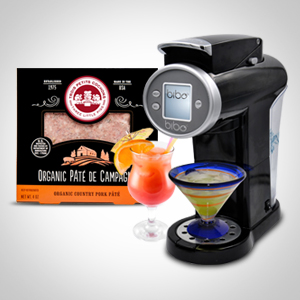
[00:02:12] Ria Latif: Hey everyone, thanks for listening to BevNET's Taste Radio. I'm Ria Latif, and with me are John Craven, Jon Landis, Mike Schneider, and Carol Ortenburg. In this week's episode, we're joined by two of the most dynamic and influential leaders in their respective fields, with industry insider and noted investor Bill Weiland, who's the founder and CEO of natural products broker Presence Marketing, and Alex Whitmore, the founder and CEO of Taza Chocolate, a maker of premium organic chocolate. As always, for questions, comments, ideas for future podcasts, please send us an email to askattasteradio.com. Well, folks, in a few short days, the 2018 Summer Fancy Food Show opens up. It's held in New York City at the Jacob Javits Center. And it's one of the more influential trade shows to take place in the food and beverage industry. Specialty foods for sure. You also see a lot of natural organic products that we featured here on the show and talked about on Project Nosh and BevNET as well. And we actually got a few products sent here to the office and it was so timely considering that the convention, the trade show begins in just a few days, as I mentioned. We've got in front of us some products from Les Trois Petits Cochons. Mike, did I say that correctly? You're the French expert here. No, Ray, B minus. B minus in French, I'm sure. Okay. Les Petits Cochons. Les Trois Petits Cochons. Les Trois. That's right. Les Trois Petits. No, I can't say it either. Well, anyway, they're a maker of pâté and charcuterie. We've got a whole bunch. Wait, Olivier Giroux? That's much better. They're a big maker of pate and charcuterie. In front of us, we've got a whole bunch of mousse pate. We've got some salami. We've got some dried cured ham. We've got some caper berries and some moutarde basque. How do they say moutarde basque in English? Like that. Okay.
[00:03:58] Alex Whitmore: In English?
[00:03:59] Ria Latif: Yeah. Basque mustard. Yeah, Basque mustard. This is all the stuff I try to avoid at the Fancy Food Show, so thanks, Ray. Well, Landis is opening up the package in front of us.
[00:04:08] Presence Marketing: I mean, I'm not going to the Fancy Food Show. What is that, cat food you got over there? Oh, come on. I'm getting married on June 30th, so I'm getting all my charcuterie in now.
[00:04:16] Ria Latif: Get some in. Let us know how this is, Landis. While you're diving into that, I do want to talk about our recent visit to the Taza Chocolate headquarters, their factory in Somerville, Mass. As I mentioned, we have Alex Whitmore on this show, and Mike, Carol, and I visited the factory a few days ago, and it was an impressive place. I mean, the aromas alone, oh my goodness. Easily the best smelling place in Somerville, and there are a lot of good places in Somerville to get food. Yes, there are. You know, pretty impressive place, as I mentioned. Carol, what do you think about the facility?
[00:04:48] Alex Whitmore: It's amazing. I was there about a decade ago when they were still hand wrapping chocolate bars and then went back a couple of years ago. And it's just wonderful to see how much it's grown and still a lot of the roots of where it started maintained and preserved, but just really continued to grow as the demand for that product has just continued to rise.
[00:05:10] Ria Latif: Yeah, I mean, they're still making Taza Chocolate using that stone ground production that they're known for. And we saw the stone wheels, those hand carved stone wheels that they use to grind the cacao beans. And it was pretty cool just to see that they're really committed to using that production method. Yeah, you also find in the interview that everything they do is very much on brand. Taza Chocolate is, I'd call it a textured chocolate. The stone ground flavor gives you this interesting texture. And there are many textures to their business as well. I mean, Alex talks about, you know, starting other businesses to help fuel his business during the interview. And I don't want to spoil too much of it, but it's fascinating. Thank you very much. And Alanis is here spoiling his dinner. What do you think of, what did you eat there? Did you eat the pate? Oh, my kryptonite is on the table. He seemed at least like a half pound of meat while you were doing that.
[00:05:58] Alex Whitmore: How many calories is that?
[00:06:00] Presence Marketing: I see 510 on the back of that one. For the whole package. Well, you're going to get there, don't worry.
[00:06:05] Alex Whitmore: How many servings in one package? Let the man speak.
[00:06:07] Presence Marketing: Come on. Two servings in a package, pork and chicken liver mousse with truffles. I'm not getting the truffle, which I kind of like, because, you know, when you get the truffle, it's always because it's like kind of fake truffle, right? Okay, what are you opening next?
[00:06:20] Ria Latif: Keep that chicken liver away from me. That's my kryptonite. Oh, give that right to Dick. You want to see projectile then? Oh my God. That will happen, I can't eat that stuff. I'm gonna dip into some of these. I hope no one's eating their lunch while they're listening to this. I'm gonna dip into some of these caper berries. And while we're talking about caper berries, we've got one other interesting thing on this table, on our radio table here. And I don't know if Joe and Josh, our wonderful production team, are gonna appreciate the fact that we have a cocktail, a countertop cocktail machine, right next to the board, where we could have a sticky situation anytime soon. I'm protecting it. We've got the Bebo. The Bebo. as I mentioned, is a countertop cocktail machine that was designed to craft single serve mixed drinks at the touch of a button. And I'm quoting the company by saying that.
[00:07:09] Alex Whitmore: I don't know about the touch of one button. It seemed like you guys were pushing a lot of buttons and getting into a lot of- Ray pushed all my buttons.
[00:07:17] Ria Latif: Landis and Ray almost had fisticuffs trying to put this thing together.
[00:07:20] Alex Whitmore: Fisticuffs, good one.
[00:07:20] Ria Latif: Yeah, there was almost a fight. We had to call security. We have security. We called Craven in.
[00:07:27] Alex Whitmore: HR.
[00:07:28] Ria Latif: But I have to tell you, second time around when you made these things, can you shake the shaker just for our sound effect here? All right. See, just to show you that we actually are making cocktails here.
[00:07:39] Alex Whitmore: We're having a race, Landis, versus the machine. Or it's beans in a cup, you know, either or.
[00:07:42] Presence Marketing: I mean, you can call them cocktails if you want. The real issue with it is that you have to use the packets that come with it, and I don't think that they're very... And then still add alcohol separately and shake it.
[00:07:53] Ria Latif: Well, they sent us packets and there are these packets. They almost look like a Juicero packet where you stick it into the machine and you press a button and then you get your cocktail. And they send us, there is vodka and they sent us tequila and with it two mixing agents or mixing packs as well. Yeah, it's not as simple as it seems.
[00:08:10] Presence Marketing: But the instructions say to add your own vodka.
[00:08:12] Alex Whitmore: The back of the margarita says add your own tequila separately.
[00:08:16] Presence Marketing: You still have to add your own alcohol to it. It tells you to add a shot to a shaker here and then put the packet with the... and it has a reservoir of water that it mixes with the packet and goes on top of the ice with the liquor.
[00:08:42] Ria Latif: I thought you were making the cocktail when you're shaking. I thought you were making it yourself.
[00:08:45] Presence Marketing: I mean, I did. I just hit a button. It helps me get there.
[00:08:48] Taza Chocolate: I mean, what seems weird to me is that you have to have like a commitment and a desire to make cocktails to buy this machine and the packets in the first place, but you don't care enough to just make them from scratch, which isn't that much harder and probably has similar upfront costs.
[00:09:06] Alex Whitmore: especially as consumers care more and more about what's in their food and want to make unique things that they can Instagram or put on Pinterest, you know, being constrained to it. But also as like an, I don't know about you guys, but as an urban consumer, I just don't know if I have room for this on my countertop versus like a bottle of whiskey and uh,
[00:09:26] Presence Marketing: Well, I got a soda stream that's about as big as this thing, and that thing is very useful for making cocktails. But the one place I can maybe see this thing working is like in a, you know, Holiday Inn or something where like, you know, you're in the lobby and they don't have a bar and you want to give customers an opportunity to have cocktails. Couldn't they just give you a Bud Light? Yeah, I guess so.
[00:09:44] Alex Whitmore: I actually was at the garden last week listening to the Paul Simon concert, and they had two cocktails that was a similar situation. You pressed a button, it dispensed out of one tap a mix, and the other tap was the spirit. So yeah, Landis, I think food service, you're right, could be a really interesting opportunity.
[00:10:01] Presence Marketing: They could accidentally serve a bunch of 15-year-olds cocktails. Maybe. And John Craven's point, if they serve Bud Light, at least people would know what they were getting, because you really don't know what to expect when you make a cocktail with
[00:10:13] Taza Chocolate: Well, this is like, I don't know, the, what, third cocktail making machine we've had in the office. It feels like it's probably, I don't know, we've talked about more than a couple of different beverage specific appliances beyond just Juicero. I mean, it just seems kind of hard to believe that you would buy an appliance with just a singular purpose like this.
[00:10:34] Ria Latif: We punctured one of the packets and Craven was desperately trying to save it because he thought it was the booze, but there's no booze in the packet. I would not save this booze. Sorry. Well, let's shift gears back to the Three Little Pigs. Those caper berries are pretty good. And Craven just tossed the organic moose truffle. This whole packaged meat thing, it's just not for me. Nothing against this brand, but... It's a lot. I will say this, I'm actually impressed that some of these varieties are organic. I like the fact that they are organic. I mean, I do like this mousse and I do like pâté and I think they're going to find an audience with organic consumers for sure. Well, you're a high-flutin' guy, Ray. That's what they say.
[00:11:13] Alex Whitmore: I mean, there's a variety of organic pâtés and mousse and sliced meats on the market. And what's really hard, I think, for these brands is to differentiate on the shelf, especially when a consumer is maybe just walking up to the specialty food set, doesn't know exactly the brands or things like that. it then becomes a game of price and things like that. So, you know, there's a wide range of options for consumers right now. I think some of these products have the opportunity if you can position them as protein plays. Also interesting to note, they have launched some new products like sausages that you cook with, and that's a really interesting direction to go. That's something where consumers really are brand loyal, go to the store, pick out an item that they know they can feed their family. This is more of an occasional one-time use item.
[00:11:58] Ria Latif: Well, perhaps if Bebo adds a Negroni to the mix, they'd find a fan in Bill Weiland, who's not shy about his love of bitters and bitter-infused cocktails. He's just as passionate about the business of natural organic foods and beverages. As I mentioned, Bill is the founder and CEO of Presence Marketing, the largest independent broker for natural organic brands in the US. A veteran of the natural foods business for nearly 40 years, Bill is a noted pundit and trendsetter who has a long history of selling and promoting brands within important retail sets. As a co-founder of Bigger Ventures, a growth equity fund focused on promising early-stage natural and organic products, Bill Weiland his partners have invested in several fast-growing innovative brands including Rebel, High Brew Coffee and Bonafide Provisions. In a conversation recorded at BevNET Live Summer 2018, I spoke with Bill about cutting his teeth in the natural foods business, his perspective on how the industry has quote-unquote grown up, how he identifies disruptive brands and concepts, and why his dogs play such an important role in cultivating the product mix for presence. All right, I'm here at FevNet Live Summer 2018, and joined by Bill Weiland, the founder and CEO of Presence Marketing. Bill, thank you so much for joining me.
[00:13:11] Bill Weiland: It's my pleasure, thank you.
[00:13:13] Ria Latif: So, how you feeling? You just came off the stage and gave just a kick-ass presentation about leadership. We were scheduled for a certain time here, and then you were just swarmed, swarmed by people just trying to grab at you. It was like you were one of the Beatles or something like that. You've been in this business for a long time. You mentioned on stage that you've been doing this for 39 years. I'm curious about how you got into the food and beverage industry. What's your background?
[00:13:40] Bill Weiland: Well, you know, I'm a scrappy Irish kid. I've only got a week of college under my belt. But when I was 16 years old, my sister Mary suggested that I was a little tense until I had a sugar fix. And I promptly told her to shut up. And then she bet me I couldn't go a day without eating candy. She bet me $10, which was a king's ransom at the time. So I bet her. And at like 3 in the afternoon, I got the shakes. And I broke down and ate a Jolly Rancher. True story. And I said, OK, you might be on to something. So literally, she awakens this consciousness for me. I start learning about health, reading books from early health pioneers like Pavarola, Rudolf Valentin, who was Ayurveda before Deepak Chopra, Norman Walker on juice cleansing. And I started working in a natural food store. I did a seven-day juice fast right away when I was 16. So I just became so enamored with the prospect of making the planet a better place and making ourselves healthier through food and beverage choices, and I threw all in. I've never not had a job in the natural products industry since that moment.
[00:14:48] Ria Latif: So that's really interesting. I mean, you know, at the time that you really embraced natural and organic food, there really wasn't so much of a natural and organic category or industry, really. What made you think that this could be a, you know, a profitable and a realistic segment for growth in the food business?
[00:15:07] Bill Weiland: You know, I grew up one of 13 kids, so I grew up on hand-me-downs, and having a high rate of success financially was not necessarily a part of the original goal. I was just excited to be working with something I was passionate about. I did feel like the industry would continue to grow, but it's not like I mapped out this long-term vision. I just was excited to be working in a natural food store environment, which I did at the time, And then as I learned more about health and wellness, I just knew that I was going to work hard to continue to provide opportunities for people. But really, I'm such a live for the moment person, Ray, that even to this day, if you ask what our five-year plan is, I would say to you something like, well, I can tell you for sure what we're going to do tomorrow. We're not, I mean, we keep an eye on long term in the sense that we want to be anticipatory, but I'm not a long term planner. I like building value every day and being prepared for what's next. You certainly have to be cognizant of things like changing consumer notions that may affect how commerce runs through in the future. So we build that into what we do. So it allows us to give full framework and focus on today.
[00:16:26] Ria Latif: Again, 39 years in this business, you've seen it evolve so dramatically. What are some of the things that you think have changed the most and have they been for the better? What are the more challenging aspects of this industry now that it is on the radar of every food and beverage conglomerate in the world, really?
[00:16:46] Bill Weiland: Well, think about it. When we got started, I mean, the industry was millions, not, you know, billion or billions. And progress is great. So I've always been a fan of providing clean food in as many outlets as possible for consumers. So we've been building and adjusted our focus over time to expand from natural food store environment to conventional and food service and others. And we'll continue to do that. But I got to say, competition in its purest form does breed greater success because people are challenged and that's when they do their best work. So I love the pies getting sliced differently, but it's also growing. So it's like most things in life. you will have the level of success that you are prepared to extract. So you come to the table as a retail provider, as a service provider online, you have to have a comfort zone that you are bringing something of value to consumers so they will keep coming back for your service. And same if you're a brand. So I call it, that's why I call it no private baby zone, Ray. It's like you either have something special know how to build it, or you don't. And if you know how to build something special, you're starting off with a strong competitive advantage.
[00:18:08] Ria Latif: Knowing how to build something special, we talk about it a lot on this podcast, which is surround yourself with people who have done it before. Surround yourself with experienced, passionate people. And in your career, You've mentored folks, you've supported early stage entrepreneurs. I'm curious about who supported you. You know, how do you find your quote unquote rabbis and mentors in this business? And who were they?
[00:18:31] Bill Weiland: You know, my family was instrumental. You know, my sisters, Mary and Jane, and my brother-in-law, James Curley, who's, you know, a strong person in the natural products industry and has been for many decades. These guys were part of the framework for my original impassioned you know, pursuits in the business community. And I've become quite the chameleon in the sense, Ray, that I listen to everybody and I value everybody's contributions. So it would be difficult for me to say I have a classic mentor. I mean, we've been working with traditional medicinals for The 28 years we've been in business and Drake Sadler to watch how he built his company was inspiring. Spectrum we started working with in 1990 and Jethron Phillips also an inspiration. But I have hundreds and hundreds of people Maybe it's four digits at this point that I would say it's like a collective. It's like they say it takes a village to raise a child. It takes a extended village to raise a successful entrepreneur. And I believe that the best way to proceed in life in general, personal and professional, is be a thoughtful and conscious listener. You know, sometimes you hear things, but you're not really absorbing it. So being an active listener is something I developed very early in my career, and I have learned little bits and pieces from so many people, and then applying those principles and learning from what would be considered ill-fated attempts or mistakes with other things I tried to do in the early years. I'm a quick study. And so I thought, OK, that didn't go so well. I'm going to try this. So it's just committing to that process of always being forward looking in the sense of what are you going to bring to the world tomorrow and how can I be a higher quality contributor?
[00:20:21] Ria Latif: How do you identify sustainable trends on the market? What's that process like?
[00:20:26] Bill Weiland: So as you know, I do that bankable trends report, Ray, and I say to people, you know what? We're going to bet $1,000. We are literally never going to call in wrong. And part of it is because I don't get too excitable about a little bit of information. You know, three years ago, when people thought crickets were the next sushi, it took me all of about 10 minutes to suggest that crickets aren't the next sushi. They're the next bug. going nowhere. And maple water is coconut water without the benefits, I confidently said. It's also going nowhere. But the truth is, there's a way to find your audience if you have a high value proposition. And on an international scale, you know, people eat insects, right? And different types of bugs. and maple water someday as a broader swath. Maybe it's tree water with birch and there's, you know, flavored varieties, sparkling varieties, you know, that industry. I'm helping coach brands in that industry to try and bring something special to the table. But the good news is that consumers are more educated and that if you have a deep nutrition proposition or a product that brings some type of redeeming value to people from a quality standpoint, you already are in position now to mobilize branding, marketing, sales, et cetera, to build some success.
[00:21:36] Ria Latif: You mentioned two trends or at least an ingredient and a beverage type that aren't necessarily getting the kind of traction that some other ingredients and beverages are getting. But what have been some of the more surprising trends, categories that you've seen over the years that you didn't anticipate?
[00:21:56] Bill Weiland: Well, I would say those are two separate setups there. One in the sense of what would be surprising, and that would be surprising from the market standpoint. We have really good recon. We see a lot of this stuff on the horizon. Now remember, our expertise is natural and value-added. I'm not necessarily the guy that's going to capture the next sparkling ice. But in terms of what's going to resonate with the natural consumer, we're onto it. So something like bone broth, which It took people by surprise. Three years ago I suggested before there was any commerce in the channel at all on bone broth that it would be a $600 million category by 2020 and I'm sticking with that. We're building that category aggressively now. Another one would be grain free. People think it's about paleo. I say, look, paleo is a moment in time. It's a little restrictive. There aren't gonna be paleo sets at retail in 10 years, but there will be grain-free products all over the store forever because there's a unique proposition where you can eat something like a blueberry muffin or a tortilla that heretofore were not meaningful calories, and you make them out of things like almond and coconut and cassava and seeds, and all of a sudden, you have calories that count. So those are a couple, and I would say water. You know, people talk about water and environmental issues. I got news for you guys. If you really look at recycling, first of all, 93% of all plastic isn't recycled, and then the energy it takes to turn bottles into park benches and just the whole thing. It's such a ridiculous proposition in terms of how we're addressing pollution. What's gonna clean up the environment is technology. How about we figure out a way to swoop these continent-sized bulbs of plastic off the surface of the ocean without disturbing the ecosystem, put them in a big metal chamber and harness the power of lightning so we can turn a giant amount of material into black dust. Something like that is what's going to really make a difference. So technology and then packaging. You know, someday I want to eat a bag of chips, whip it on the ground when I'm done, and have a bush grow. because it's fully compostable with embedded seeds. So I like real solutions, you know, people start to talk and they put ideas on the table. I like getting a full broad stroke view and helping direct the conversation towards actual solutions.
[00:24:12] Ria Latif: So you mentioned a couple of things there when you said bone broth, which there's a handful of brands out there on the market, and Eternal Water, which there are literally hundreds of brands, maybe thousands of water brands. And I'm curious as to how you identify differentiation, true differentiation between brands in categories, both that are small and very broad.
[00:24:36] Bill Weiland: So I'll take those last two. So something like bone broth, you know, we are investors and represent bonafide and it's a very authentically kettled bone broth. You know, we've got four varieties, super high quality stuff packaged and not just BPA free, but estrogenics free packaging. It's a great name and old school word bonafide that just represents authenticity and quality. And we're having great success and Ancient Nutrition doing a terrific job on the supplement side. Turns out the collagen building factors in bone broth, which don't survive high heat very well, do survive dehydration process. So when you're buying bone broth frozen, you're getting as good as fresh. And when you're buying these powdered versions, you're getting as or nearly as good as fresh with the same active materials you're looking for, the proline, the glycine, the arginine to build collagen, connective tissue, et cetera.
[00:25:34] Ria Latif: So when you invested in Bonafide, what made Bonafide a better brand proposition than, say, another bone broth?
[00:25:43] Bill Weiland: Well, we auditioned several brands, Ray, when we first got into Bone Broth several years ago, and just the combination of the founders, Reb and Sharon, really terrific. They've got a restaurateur background, and Sharon's a nutritionist, and she's really knowledgeable, and they're just, they're great. And the product was called Real Bone Broth, and we helped them, you know, rebrand, rename, and get funded and positioned. But we just thought that it was the right combination of quality, We felt confident in the new brand and the people behind it are terrific. So we knew it was go time.
[00:26:16] Ria Latif: Do you put more faith and more stock into the entrepreneurs, the founders themselves being able to lead a business? Or do you think about your relationship with that founder and that entrepreneur as being more important?
[00:26:31] Bill Weiland: I'm actually excited if the founders really have something dynamic that they bring, like either they're very skilled in leadership, or most often you're likely to find that founders are skilled in things like product development, bringing their story to life. And that's usually good enough for me. I get along with everybody. So on the relationship side, I don't have to have perfect personal chemistry with somebody to have great business tidings and friendship as well. So I'm real comfortable when I've got an entrepreneur that has a certain set of skills that we think are marketable. And more importantly, that they've got a category they've chosen to get into and have a product proposition that is scalable.
[00:27:21] Ria Latif: So getting back to water, which I kind of interrupted there, how do you differentiate in water? How do you differentiate in something that is just such a big category with such low margins? And then, you know, you could ask the same thing about tea or coffee, some of these huge categories where you do see a lot of innovation, you do see a lot more people coming into those businesses. How do you stand out?
[00:27:40] Bill Weiland: Well, in water, first of all, it's segmented, meaning there's people who prefer spring water. There's people who would rather have a vapor distilled water with electrolytes added back. And so first, it's like making your play. We're investors in Eternal Water also represent a longstanding brand, Mountain Valley, both spring waters. I really love them. They're high pH, super high quality, protected sources. And so, you know, having a value proposition there is important. And when you're drinking tap water and you've got a steel bottle and you think you're helping the environment, you're also shaving years off your life. If you're filling it with tap water, you're getting chlorine and fluoride and all kinds of contaminants. And heck, Flint is just tip of the iceberg. We have all these decaying piping systems around the country. So we've got lead in water. So water filters don't do a good enough job. So bottled water, to me, is the greatest solution, unless you live near a protected spring, if you want to optimize your health. So brands, like in any category really, there's all kinds of competition. So how do you stand out? You have unique features that you're bringing to the table. Maybe you've decided that you have a great source and authenticity and can provide a better price point, so it's a value play. Maybe you just think that your branding is so good. I think about the guys at Hippies. And, you know, it's a crunchy, puff snack. There's plenty of them out there. And it's made from chickpeas, but it's the branding. The flavors are great, too, but it's really more the name, the branding, the people behind it. They knew how to come in and muscle into that category and bring something fun that consumers were going to connect with. So there's a lot of ways that you can make your plays. Ray, it's just deciding where you see a competitive advantage and then leveraging that.
[00:29:24] Ria Latif: I think that's the first time I've heard someone advocate buying bottled water. And I'm not saying that's a bad thing, but I mean, that's a really interesting perspective that you have.
[00:29:32] Bill Weiland: Absolutely. I say quit picking on bottled water, people. Do your research and understand it. I'm all about solutions. Remember, if we make strides in technology to do some of the things I've just suggested, how about turning crude plastic into fuel, right? I think there's some people working on things like that right now. We're taking styrofoam and turning it into styrene and selling it back to industry. I mean, that level of engineering is what's really going to make a dent, not counting on municipalities and citizens to recycle products. I mean, first of all, plastic, bottled water is not a high percentage contributor to plastic waste. Remember what I said, not high percentage. So there's all kinds of other issues in textiles and fabrics and all that stuff that have plastic compounds in other industries. I'm saying, look, let's be thoughtful about how we prepare products from the beginning, energy efficient, reusing product, melting it down and turning it into productive fuels. But let's also honor our bodies and be willing to put the best products, food and beverage, into our system so we can keep doing more cool stuff for the world.
[00:30:45] Ria Latif: This is going to be a weird segue, but I want to ask about your dogs. You mentioned your dogs up on stage today.
[00:30:51] Bill Weiland: Pookie and Coco. My girlfriend Alma calls her Cocos, so I go with it. So let's say Pookie and Cocos.
[00:30:58] Ria Latif: They're your dogs, man. I've heard they play an important role in how you cultivate your product mix presence. Can you elaborate?
[00:31:08] Bill Weiland: Well, that would be a bit of an understatement, Ray. Me and Pookie communicate telepathically, and Coco will eat and basically consume anything, right? Pookie has a chef's palate like me. And so when me and Pookie are looking at new products and we're doing the tasting, we just have a look in our eyes and I know when we found something special. So no doubt about it, Pookie is my animal spirit, plays a huge role in our family's lives, an instrumental and often unheralded contributor to Presence Marketing's success.
[00:31:43] Ria Latif: I didn't expect that answer, but I'll accept it. That's fine. Now, we're also seeing more direct-to-consumer brands coming to market, certainly as e-commerce becomes a much more important channel for the food and beverage industry. What do you think about how e-commerce as a channel is evolving, and what do you think it will take to be successful in that business?
[00:32:05] Bill Weiland: Well, I think, first of all, understanding that when there's, you know, an emerging growth category that people tend to exaggerate the outcomes, you know, 10 years down the road. I happen to think that if you read 10 reports on what percentage of food will be e-commerce versus retail in 10 years, I think they're all going to project too high. So I also think that the most dominant players in e-commerce likely are going to be current retail providers or partners joining forces like Amazon and Whole Foods. So people want convenience. It's great to have stuff delivered to your house, but there's already economic challenges that may never be overcome getting refrigerated and frozen products in a cost-effective fashion to people. And I think sometimes that people... underestimate that, you know, we're social creatures and people still want to get out and about. And then they want to see it, feel it, touch it, buy their fresh food. You know, they have a bad experience with some wilted basil when they order from some of these services. And they say, you know what, I'm just going to go to the store myself and go off hours or not deal with traffic. So I think e-commerce is vital. And I think depending on your product category, there's a different discussion to be had about all kinds of different segments and the relevance of e-commerce in the future. I do think if you're a shelf-stable product, you certainly should be carefully surmising where your opportunities are today and for the future with e-commerce. There's probably a day when people are getting off the subway and they've got a kiosk and they're scanning with their phone. and the food's going to be delivered to their house, but my point is it would be a local retail provider who has partnered or co-opped or developed their own service in-house, and I still think retail stores are going to be a tremendous percentage of where food rolls through and ends up on consumers' tables.
[00:34:04] Ria Latif: great stuff. I have one more question and that's about the future of Presence Marketing, which obviously is about the future of you. You've been at this for almost four decades. What keeps you excited and when's the right time to say, hey, I'm ready to move on?
[00:34:22] Bill Weiland: Well, you know, Ray, we're winning. And I was born in the year of the tiger. So some might say I have tiger blood running through my veins. But we love providing jobs and having success, you know, building brands. We're a job creating machine. We're investors. We're helping make a difference. We get better every day. And so we're built for the long haul. We love what we do. Some people say, Bill, are you ever going to sell? And I say, you know what? If we got the right deal, maybe, but the right deal would mean not just a price, let's say, but it would be somebody who would value what we do and allow me to continue running it kind of like a General Mills Annie's acquisition. You know, make us, has a chance to make us better. So that's why I'll never say never, but we've never marketed ourselves for sale. I'm happy to say that there's no sunset date for me. I believe I will be working full time as suggested earlier at 60, 65, 70, 75, 80. You can stop me anytime you want. So yeah, I love Presence Marketing. I love our teams, love what we do. We're having a lot of success. I expect to continue doing it for a long time.
[00:35:29] Ria Latif: Outstanding. Well, I'm looking forward to staying in touch and talking to you for a really long time as well. It's almost time for the cocktail hour here. Should we get some bitters? I'm all in. Outstanding.
[00:35:38] Bill Weiland: Let's do it.
[00:35:38] Ria Latif: Thank you so much for taking the time to speak with us. Really appreciate it and hope to be talking again really soon.
[00:35:44] Bill Weiland: It's my absolute pleasure. Thank you very much.
[00:35:46] Ria Latif: All right. From a giant in the natural foods industry to one in the business of artisanal chocolate. Okay, while it might be a stretch to call Taza Chocolate a giant, the brand is certainly a big and influential name in the premium chocolate set. At Tazza's facility in Somerville, Mass., just a few miles from Bethnet HQ, as I mentioned, the company churns out its bold flavored organic chocolate using the same stone ground production methods since it launched in 2006. The brand has been at the forefront of the premium chocolate category, driven by high-quality standards in sourcing and ingredients. In our trip over to the Tazza factory, we met up with founder and CEO Alex Whitmore to discuss the founding story behind the brand, how its focused and uncompromising approach to quality has differentiated Tazza from the competition, the evolution of its product mix, and why it's taken so long for the company to accept outside investment.
[00:36:38] Alex Whitmore: Hi all, Carol here. I am with Mike and Ray Latif the Taza Chocolate Factory in Somerville, Massachusetts. And joining us on the podcast today is Alex Whitmore, the founder and CEO of Taza Chocolate.
[00:36:51] High Brew: Hey guys, glad you could be here. Thanks for having us. Yeah.
[00:36:55] Alex Whitmore: Who doesn't want to visit Taza Chocolate factory? This was a real hard one. So good.
[00:36:59] Ria Latif: And get a tour. That tour was pretty amazing. Thank you so much for taking us on that, Alex. I felt like such a VIP, such a special person.
[00:37:04] High Brew: You do this about twice a week, you said? That's just me. I mean, we have a whole factory store and tour operation. We give over 20 tours a week. We have public tours going through all the time. You can book them online at Taza Chocolate. Okay. I need to come back very soon. Yeah. Lots of free samples. Yes, exactly. Tons of free samples. You can pretty much taste every product we manufacture here in our plant on the tour.
[00:37:25] Ria Latif: You mentioned on the tour in the beginning, maybe it wasn't what it was today.
[00:37:29] High Brew: Yeah, well, we started this company about 13 years ago, and people don't remember what the food industry and the food world was like 13 years ago, but there were very few farmers markets. It was a totally different landscape. And when we were first starting out, I really wanted to make a really unique artisanal product. I was very inspired by European food traditions and stuff, but also by Mexican food traditions. And when I first started out, I did not know what I was doing. Definitely made some bad product and there was a lot of, the learning curve was steep, I'll just say that. Sleepovers? Yep. Late nights. Late nights here in the factory back when it was just a small 1600 square foot space that we were renting out. We had our desks in that space. We had a sofa in there. We had a couple of phones for making sales calls and of course our stone mills as well. There weren't as many shared kitchens as well, which is one of the reasons you started your own facility, correct? Yeah. I mean, the whole idea of shared, you know, food production kitchens was nascent. I mean, or maybe not even born yet. I don't even remember. But yeah, you pretty much had to either do it in your basement or in your home kitchen or rent a small space for cheap somewhere that you could afford, which is what we did.
[00:38:41] Alex Whitmore: Now, you didn't start off in Taza Chocolate or food industry at all, right?
[00:38:47] High Brew: No, although I always have loved eating chocolate.
[00:38:53] Alex Whitmore: So how did you wind up in this crazy world of food and beverage?
[00:38:58] High Brew: Yeah, good question. It was actually the idea of starting my own company, which is kind of what led me to this. I was really inspired by a woman named Robin Chase. She was the founder of Zipcar. I worked for Zipcar for several years and very inspired by this whole idea that you could come up with a harebrained idea like car sharing and then actually go and make it happen. I saw her get ousted by her board of directors, which is one of the many reasons I kind of built our company the way we did, which was very bootstrapped, scrappy. We didn't raise any outside equity finance capital, but I really wanted to take the energy I had in me to build something that was my own. And somehow I decided chocolate was that thing.
[00:39:44] Alex Whitmore: And how did you settle on Stone Ground Chocolate? Like, let's narrow in even further. You weren't just starting any old chocolate company.
[00:39:51] Ria Latif: And what is Stone Ground Chocolate for our listeners out there who are not familiar with Taza?
[00:39:55] High Brew: Yeah, absolutely. So Taza Chocolate, the name of our company, comes from the Spanish Taza de Chocolate, which means cup of chocolate.
[00:40:02] Ria Latif: Did you say that again? That was really nice. I like that.
[00:40:08] High Brew: So, yeah, so I went to school, Vassar College, studied anthropology, total liberal arts degree, you know, no real practical training there. But I remembered from my studies that the roots of chocolate were in Mesoamerica Taza Chocolate became culturally important for the first time in the Mesoamerican region, the area where Guatemala and Mexico is today. And I ended up taking a trip down there with a friend of mine, Joel, and I was completely blown away by what I saw, which is this amazing chocolate consumption tradition that they have there. They drink chocolate. almost daily, some people daily. And it's consumed in a totally different way than Europeans and people from the States consume chocolate in like a candy format. And so that was total inspiration to me. And at the time I thought, you know, young, I can change the world. I'm gonna teach everyone in the United States to drink chocolate. It's gonna be amazing. And so we started this company, Taza Chocolate, to try to get that to happen. And I had this vision for starting Taza Chocolate cafe. So I got a job at a cafe and I realized, God, I really don't wanna have a cafe. And so we started making this traditional Mexican style stone ground chocolate. And we realized when we were doing that, that there was actually this incredible, we were kind of at the leading edge of this wave of people who are really wanting to know more about where their food came from. wanted less processed foods, wanted organic foods, and this was back in 2006. And so the idea for Taza Chocolate and for stone ground chocolate, which is that really simple minimal processing of the cocoa bean and the ingredients, which came from that Mesoamerican region, you know, that really dovetailed in well with some major consumer trends in the US market.
[00:41:54] Alex Whitmore: You mentioned you were at the beginning of this consumer awareness of where their food comes from and what's in it, but there also was less diversity in terms of chocolate. And when you came out with your stone ground chocolate, it was a totally different texture and flavor than what consumers were used to in conventional products. What was kind of the reception at the beginning and how did you, how'd you teach consumers, you know, this is different, but here's why.
[00:42:19] High Brew: And was it an advantage or a disadvantage at first to be very different? That's a great question. So when we first started this, I was terrified that no one was going to like Taza Chocolate because everyone was going to be like, Taza Chocolate sucks. It's gritty. You know, it's not smooth and it's not what I expect it to be. It's not what I want it to be. And I had that terror for like the first five years of having the company that one day is just going to shut down. Like it was just going to be like kind of a flash in the pan thing. Oh, people, you know, it was a novelty thing to have this rustic gritty texture chocolate and people were into it for a while. But you know, now they're just going to go back to having smooth chocolate again. it's all going to end. And that of course didn't happen. You know, when we first started, it was actually a huge advantage. Um, there was basically one other player that had developed any success as like a specialty chocolate maker in the U S market. That company was called Sharpen burger and it was bought by Hershey. And, uh, it is since kind of petered off as a brand, as a player in the category, but we were very inspired by them in a lot of ways, but we're totally different. They're very inspired by traditional European processing, and we were very inspired by this Mesoamerican kind of authentic traditional processing. And so we actually found this to be a huge advantage. And I think for the same reason it was a huge advantage when we started, it remains as a huge advantage for us as a business today, especially in the current marketplace environment that exists where there's literally hundreds of brands in every category that are new and competing on lots of different claims and product attributes. 13 years ago, there's no Instagram and no, you know, really no Internet. So how do you get the message out there about Stone Ground Chocolate? Well, there was the Internet. You forget about that. It was kind of there.
[00:44:12] Alex Whitmore: Mike, let's not go that dramatic. Didn't you work at an internet company?
[00:44:16] High Brew: Yeah, so it's amazing. There was, right when we were starting out, that was really the big explosion of farmer's markets. And so we took advantage of that. Farmer's markets were the big thing. Everyone was like, oh, farmer's markets. And so the farmer's markets started popping up everywhere. And we would buy table space at pretty much every farmers market in the Boston area. At one point, I think we were up to doing like 15 farmers markets a week. That was the web at the time, Carol. And so we would just table and we would sample our products and we would sell them. We would sell our chocolate bars at farmers markets. And we did that. We also did like open house events here at the factory. And then we started working with lots of small, great local retailers like Cambridge Naturals, Harvard Bookstore, local cafes, coffee shops. And we put our products on the shelf there. And then eventually we started working with the local Whole Foods region. And then we just really slowly built it out from there, selling our stone ground organic chocolate bars.
[00:45:16] Ria Latif: I'm interested to hear about how you define proof of concept, how you figured out that you did have some traction with Taza, that people liked the product, because you said, you know, you were afraid that people would not like it. When did you realize that this was something that was a viable concept?
[00:45:32] High Brew: We, one day we were, we were upstairs making Taza Chocolate back in our old space before we have our, the new plant that we have today. And our office manager shouted out while I was, I was doing something in the factory space. And she said, stop that Alex. No, she almost said that. Alex, we got hate mail. Oh no. And so, and this is when I knew we were onto something. We got this letter from, it was from this guy with like a French name. And he had purchased some of our products for his wife as a gift. And he thought there was something terribly wrong. with the products, and he was really upset about it. He said that you should notify the CEO. There's something wrong in production. Taza Chocolate is not right. It needs to be corrected. And he was very upset, and we ended up sending him like a refund.
[00:46:29] Alex Whitmore: And there was nothing wrong, to be clear.
[00:46:33] High Brew: No, I mean, he just wasn't used to the stone ground texture that really is a trademark of our brand. And I think realizing how passionate people are about the foods that they eat and how passionate people are about chocolate in particular, you really get a very strong reaction. And so we knew that the people who really liked us, I mean, they were buying a lot of our products. They were coming back for more. They were telling all their friends. And that was a really powerful force for us as a company early on. And likewise, the people who really didn't like it, they were talking about it too, because it was so different. And so there was just this dialogue about this product that you don't normally get with a food product. There was just passion about it being either very right or very wrong.
[00:47:21] Ria Latif: And so you had the haters talking about you and that was doing as much for you as the lovers were doing for you.
[00:47:27] High Brew: Yeah, I think so. Because like, how could chocolate be bad, right? Right. It's like, that's the first thing you hear when someone hates Taza Chocolate product. Like, wow, you hate, you really hated Taza Chocolate product. So entrepreneurs listening, if you get hate mail, it means you're onto something.
[00:47:39] Ria Latif: It reminds me of the Johnny Cupcake story where, you know, when you walk in and you find out it's a t-shirt company, you're either delighted or you hate it. And everybody talks about it. It's kind of similar. That's funny.
[00:47:50] Alex Whitmore: Last year when you and I chatted about the launch of the Dark Bark, you said that from the beginning you knew you wanted to be highly differentiated and perhaps you even were a little too highly differentiated. First, that can be scary to make that choice that you're going to go all out there. It can be tough for entrepreneurs to make that choice that they're going to really put it on the line. But also, if you could go back, would you make something that was more accessible to start off with?
[00:48:20] High Brew: I'll answer the second question first. No, if we had done that, we wouldn't have found our identity. We would have, we're bold. We do bold things. We make gritty chocolate. We make really intense flavors. We sell 95% Taza Chocolate bars. That's our number one skew, the Wicked Dark Bar. And I think you talk about, you know, other people starting food businesses might be afraid of making such bold decisions like that. I think if you're an entrepreneur to begin with, you're already throwing yourself out there pretty intensely. It's hard to be an entrepreneur. You have to have a very high risk tolerance. There's a lot of stresses involved in starting a business. There's a lot of risk involved in general. And so if you're going for it, you might as well make something that is really truly unique and different and is truly a new offering into the marketplace. If you're going to make a, you know, a product that's just like, okay, this is another, Cold brew, iced coffee, drink. I think you can find ways to be successful doing that. It's just not necessarily the way I think about innovation. And it's not the way I think about making a better food system.
[00:49:36] Alex Whitmore: But you have over the years thought about how do I make my product more accessible, whether it's in terms of price point or packaging or product innovation to more consumers. And that kind of inspired some of the impetus behind the dark bark last year.
[00:49:51] High Brew: Yeah, well, we definitely have learned the lesson over the years that we can't just operate in a vacuum in here. We have to listen to our consumer. We have to listen to what's happening in the marketplace. We have to study our syndicated data. And we really have to be mindful of how the consumer is changing. If you're just starting out, you know, the consumer is what the consumer is, but we've been doing this for 13 years. So we have evolved over time and we've had to as the marketplace and as the as the categories evolved. And so, you know, when we're thinking about innovation, we want to make sure that we are leveraging opportunities in terms of the way our consumer is evolving and making sure we're delivering our product in the way they want to receive it. And for instance, with the Dark Bark, we wanted to make sure we were giving a more convenient package for our customer to enjoy their stone ground chocolate.
[00:50:42] Alex Whitmore: We talked about making the product itself more accessible and listening to what consumers needs. How have you just evolved the brand from this specialty product to something that speaks to a wider range of consumers?
[00:50:56] High Brew: We make a niche product. It's a stone ground organic chocolate product. It's absolutely delicious and it's not for everyone. And I think some of the most successful younger brands today are doing something very similar. They're making a very targeted product offering, which is great because it allows you to really focus on your customer and provide them exactly what they need. I think as we've evolved over the last 13 years, the marketplace was very different back then and it's evolved considerably. We've had to evolve our products and Some of the products that we started out with back then are just as relevant today, and they serve almost the exact same need. They're very specialty. You'll find them in wine and cheese shops. I'm talking maybe about our chocolate Mexicano discs, you know, delicious products, very artisanal, super high quality. And that really hasn't changed a whole lot. However, the explosion in the natural category has been huge in the way that we've evolved our product lines to serve those different kind of explosive categories. That evolution has been very interesting and it continues. And it's something that the quality doesn't go away. It really just the product offering, the flavors will evolve over time. But the product, the core fundamental product, that stone ground chocolate has never changed. So how long did it take you to figure out that you were a niche product?
[00:52:22] Ria Latif: You said when you started, you were a wide-eyed entrepreneur who was going to get everybody drinking chocolate. And now you're in this spot where you really understand your audience and who you're for.
[00:52:32] High Brew: It's important to know who you are. I think that's something that as we've built this business, we've learned to focus more and more and more on exactly who we are and who we want to be. If you don't have that kind of focus, it's very easy to make bad decisions with your brand or go down a wrong path. But if you stay focused on that core of who you are and who you want to be for yourself and for your consumer, That gives you tremendous focus.
[00:53:02] Ria Latif: Who does Tazza want to be? How do you articulate it to the employees and to the world?
[00:53:06] High Brew: Yeah, we are the boldest chocolate maker in the world. We make the most bold flavored products. We make the most bold textured products. They're the best quality that you can buy. They have the best ingredients and they're absolutely different from every other product on the shelf. And we're always going to be that.
[00:53:24] Ria Latif: One of the things that really hasn't changed over the years are your standards for quality. It seems like in our tour, you talked a lot about your sourcing, organic sourcing, how you process Taza Chocolate. All of it seems like it's- The quality of the ingredients. Absolutely, the quality of the ingredients. All of it really embodies that definition of artisanal. How have you been able to maintain those standards, frankly, without losing your shirt?
[00:53:49] High Brew: Great question. You're awesome. Tazza shirt.
[00:53:51] Alex Whitmore: He is wearing a company branded shirt right now.
[00:53:54] High Brew: They're pretty cool shirts. We have wicked high standards here and our wicked high standards are something we've always maintained specifically with regards to our ingredient sourcing, which you alluded to. We spend a lot of time and energy investing in sourcing the best quality ingredients because we very minimally process our products. We're stone ground. It's very minimally processed. We need to have the best quality ingredient going in, otherwise it's not going to taste good. There's nothing to hide behind really in our processing. So we very lightly roast the cocoa, we very minimally grind everything, and that's what you get as a consumer. So we have invested tremendously in working directly with cocoa producers in several different regions of the world. We've gone as far as starting ancillary businesses to support that effort. I personally have been involved in starting several different cocoa processing and export companies in several different countries. I'm also a co-founder of Uncommon Cocoa, which is a cocoa supply chain company that serves other craft chocolate makers with really high quality cocoa beans. And that's something that is very much core to us. You know, we've, we're a manufacturer and a lot of brands these days don't do their own manufacturing. So not only do we have our Taza Chocolate brand, but we also have our whole manufacturing facility right here and all of our supply chain operations staff working here and abroad, getting the quality of products that we need to make our stone ground chocolate.
[00:55:26] Ria Latif: You know, how have you been able to stay disciplined in your operations and your costs and stay lean while continuing to grow?
[00:55:35] High Brew: Well, to your question about the kind of more vertical integration into our supply chain, we're very passionate about sourcing really high quality ingredients. I've always been very passionate about it to the point of it being not necessarily sensible. And in a lot of ways, what we've done by starting those other companies is trying to commercialize all of that additional activity in another way so it could not only benefit Taza Chocolate with really high quality ingredients, but it can also kind of take on its own value by providing ingredients to other manufacturers and generating revenue that way. And so that's something that I've kind of created that outlet with those other businesses for all of that additional effort. With regards to the financing, you know, it's been a struggle. You know, we started this company with a total invested capital of $250,000. And that brought us for the first basically 12 and a half years of our existence, along with additional bank debt that we've layered on top of that over the years as we've grown. And basically, as we did that, we really had to be profitable for many years. And without that profitability, it never would have been possible. Profitability? There's such a thing in the food and beverage business? You know, it's funny, you talk about raising capital, but we're, I feel like there's an environment, a monetary climate and an environment in the food industry in general right now, the food industry used to have to be profitable because no one was investing in the food industry because it wasn't an incredibly attractive growth industry like it is today. I think there's been a lot of changes. And when we started out 13 years ago, no one wanted to invest in Taza Chocolate startup. if you wanted to start Taza Chocolate company, you had to go to friends and family and, and, you know, there was no one, there were no VCs or any of that out there for food companies. Of course, now it's, it's crazy. It's, it's like a circus. So you're living the dream.
[00:57:29] Ria Latif: You're, you're, you're a profitable company here and you're, but you're looking at taking on investment.
[00:57:34] High Brew: Why does a profitable company to do that when you've, when you've got all these other revenue streams, what's, what's the purpose? So we haven't always been profitable some we've been profitable for many years in our history and some years in recent years as well. We haven't been profitable. So. I think we're in an environment right now where there's a lot of investment in growth that's happening by brands, large and small, that they're seeking growth. And they're really investing in a lot of marketing dollars, a lot of spending. And you hear about food prices not going up. This is one of the many reasons why that might be happening. is very aggressive competition out there for growth. And I think that's happening across many categories, if not all categories. And that's creating a lot of pressure to invest in marketing, spending, and not increase your prices. Everyone's seeking that growth. And so a company like ours, we've grown over many years, we've been profitable for many of those years. Now we're seeing more intense competition than ever, and we're also trying to see growth. And so to do that, sometimes you need to invest in marketing, and that's why we chose to raise additional outside capital, which we did this year. That was the route we took, and we ended up finding a really great partner. It's actually a nonprofit family foundation that made the investment in us, just one group. And it goes to benefit this nonprofit organization. And we're all really excited about that as a company. So it kind of fits in with our values. And it takes us to where we need to be from a financing standpoint to achieve our goals.
[00:59:12] Alex Whitmore: And thinking about how everything has changed, you know, let's say you hadn't started Taza then. Could you start the company the same way now? Or do you think that the current market like makes that impossible?
[00:59:23] High Brew: I don't know the answer to that question. I think it would be a lot harder to do now what we did then, which was bootstrap the company essentially for the first dozen years with only $250,000 in invested capital. But I think it is possible, but I think it'd be much harder.
[00:59:41] Alex Whitmore: But now you have all these awesome things like Instagram and Facebook.
[00:59:47] High Brew: Yeah, but you also have a much higher level of competition, much more dense amount of competition in the marketplace across categories. I mean, I think if you found a category that was sleepy, it would be easier. Have you ever had any offers to buy the company? Yes. Short and sweet. Why have you turned them down? I am passionate about what we do. I couldn't imagine going to work at another job right now. I feel like there's so much more opportunity for growth here. There's so many exciting places I want to take the brand and things that we want to accomplish. And I'm having a lot of fun doing it.
[01:00:25] Ria Latif: And you really want to make that hazelnut cream work, right? something we talked about off air, but we'll talk about it another time. Yeah. Well, Alex, we started our visit with, uh, some samples of chocolate and they are really delicious. And I really appreciate you taking the time to be with us, sharing your chocolate with us, sharing your factory with us. And now we're really happy to share your story with our listeners. So thank you very, very much.
[01:00:46] High Brew: Ray. Thank you for, for speaking with me today. And, and Mike and Carol, it's been great having you.
[01:00:53] Ria Latif: All right, folks, that brings us to the end of episode 117. Thank you so much for listening, and thanks to our guests, Bill Weiland and Alex Whitmore. Tune in next week for episode 118, when we look back at a few notable interviews from the first half of 2018, including those with Just Founder Josh Tetrick, Rebel CEO Sheryl O'Loughlin, RxBAR co-founder Peter Rahal, and Jägermeister CEO Jeff Popkin. Once again, for questions, comments, ideas for future podcasts, please send us an email to askatasteradio.com. On behalf of John, Mike, John, and Carol, I'm Ray, and we'll talk to you next time.