[00:00:00] SPEAKER_??: you
[00:00:08] Ad Read: This week's episode of Taste Radio is brought to you by Symrise Califormulations.
[00:00:12] Zoë Sakoutis: If you're looking to bring new beverages to life, look no further than Califormulations.
[00:00:17] Ad Read: Califormulations is a Symrise creative incubator concept that gives beverage entrepreneurs access to the development expertise of one of the largest and most experienced flavor companies in the world.
[00:00:27] Zoë Sakoutis: Califormulations is a complete bench-to-bottle solution that bundles rapid prototyping, formulation development, and scale-up support into a single package.
[00:00:36] Ad Read: Symrise Califormulations, Symrise gives entrepreneurs access to resources that are not normally available to new and emerging brands, including full beverage formulation development, consumer insights, regulatory support, purchasing power, and of course, world-class beverage flavors. And they do it all from an inspirational studio in Laguna Beach, California. To learn more about this new and exciting offer, Symrise Califormulations.com. And now Taste Radio.
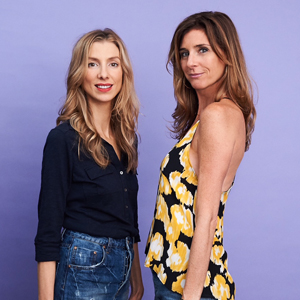
[00:01:11] Ray Latif: Hey, everyone. Thanks for listening to BevNET's Taste Radio. I'm Ray Latif, and you're tuning into episode 133 of the podcast. This week, we're joined by Zoë Sakoutis and Erica Huss, the founders of pioneering cold press juice brand, Blueprint. Just a reminder to our listeners, if you like what you hear on Taste Radio, please share the podcast with friends and colleagues. And of course, we'd love it if you'd rate us on iTunes. There are a handful of times in the life of a beverage journalist when a product will stop you in your tracks. Blueprint had that effect on me. A brand of cold-pressed juices and cleanses, Blueprint's package, while minimalist and straightforward, was oozing elegance. The color of the liquid was bold and beautiful, and the taste, it was otherworldly. In an instant, I realized that juice could be a luxurious drink. I wasn't alone in my opinion of the brand, which helped mainstream juice cleansing and pioneered a new tier of super premium juices. Blueprint was beloved by consumers, retailers, and investors, including Hain Celestial, which acquired the company from founders Zoe Sakoutis and Erica Huss in 2012. While the popularity of cleansing and cold-pressed juice has waned in recent years, Blueprint's impact and influence continues to be felt. Consider that it was Blueprint that ushered in the front of the label transparency that is such a common sight in the food and beverage industry today. On a recent trip to New York City, I sat down with Zoe and Erica, who I first met early in my career at BevNET. We discussed the business of Blueprint from launch to sale, including the demand and challenges of running a fast-growing business, and how a voicemail left by none other than former Starbucks chairman and CEO Howard Schultz factored into their decision to sell the company. Later in our conversation, we spoke about Airzo, a brand of vitamin-infused biscuits launched by Zoe and Erica post-Blueprint, and why it was ultimately unsuccessful. We also dive into their latest project, a wellness-focused podcast called Highway to Well. All right, it's Ray from Taste Radio, and I'm on the mics with Zoe Sakoutis and Erica Huss, who are best known as the founders of Blueprint. Guys, thank you so much for being with me. It's been a while.
[00:03:36] Erica Huss: It has been.
[00:03:37] Ray Latif: I think the first time I met you guys in person, it was at Expo West. I know exactly where it was. Yes, I remember it exactly as well. In the event room at Expo. It was. It was the event room at Expo West.
[00:03:46] Zoë Sakoutis: Oh, I remember that too.
[00:03:47] Ray Latif: Can I tell the story about what happened? Please, sure. Okay, so I walk into that event room. And Expo West was a totally different place.
[00:03:54] Erica Huss: This is 2013.
[00:03:56] Ray Latif: And I was like, hey, it's really nice to meet you guys. I really think highly of your Brad Avery innovative, love the packaging. And then we look across the room to the folks at Suva Gym.
[00:04:07] Zoë Sakoutis: Oh my god, that's right.
[00:04:10] Ray Latif: You weren't as happy with seeing them sharing that room with you.
[00:04:14] Erica Huss: That was just an odd conversation, honestly. It was too soon. It was too soon.
[00:04:18] Zoë Sakoutis: It was too soon.
[00:04:19] Erica Huss: We were fish out of water. It was like our first expo experience and we were a bit overwhelmed by the whole thing. And then, you know, we'd had a relationship with you that was strictly email. We were like pen pals and then...
[00:04:30] Zoë Sakoutis: Sujo was our number one competitor for those who don't know. But yeah, so it was too soon to sort of make friends with the competition. Yeah.
[00:04:38] Ray Latif: So... They had a similar label, which, you know, your label just stood out.
[00:04:43] Zoë Sakoutis: Similar is a nice way to put it. Concept, similar. Execution, similar. A little bit more money behind it.
[00:04:52] Ray Latif: Yes.
[00:04:52] Zoë Sakoutis: To say the least. Zoe, you sound like you're still a little... Maybe I still have some healing to do. No, I'm kidding.
[00:05:00] Ray Latif: Let's go back to the beginning though. Zoe, you launched Blueprint in 2007. What was the inspiration behind Blueprint?
[00:05:09] Zoë Sakoutis: So at the time, I was a raw foodist. I was very into health and nutrition. I was very into sort of this idea that you could heal yourself with food and wheatgrass therapy. Fermented, creepy things. I mean, it was very early. So it was like in 2000, I was like a raw foodist and no one knew what the hell I was talking about. And they were just like, who is this whack job?
[00:05:31] Erica Huss: So I was the girl at work who'd come in with these like snacks and little clear cellophane packages with no labels. And we're like, what is that?
[00:05:37] Ray Latif: You said fermented creepy?
[00:05:39] Zoë Sakoutis: Just like rejuvelac and like shit that you drink at like the Ann Wigmore Institute, you know, where everyone is terminal. And you're just like, I'm here to learn. But so yeah, so I was very much into that scene. It was very early and everyone was very, as Erica pointed out, curious, aggressively curious, I would say, and that they were, you know, I mean, when you tell people, like, I'm not eating anything cooked, it's kind of a bizarre, upsetting thing to hear because I think indirectly, they assume that you're telling them that everything they're doing is wrong, which is challenging.
[00:06:11] Ray Latif: So certainly back in 2007, you can say that now.
[00:06:14] Zoë Sakoutis: And this is back in like pre yeah, this is way before that. So in 2000, and I would say five, six, I started to figure out a way to make it a little bit more legit. Because people were interested in the inquiries were turning into kind of like, it was taking time. And I was like, maybe I should start charging for this. So I, you know, I got a little bit more serious about it and thinking about it. You know, the sad thing was that there's a lot of benefit in eating this way, right? Or at least understanding the concept of like how you can use food as a tool, as a way to heal yourself, which is back then kind of a bizarre concept, which is kind of crazy for us to hear now, because it was so saturated. But at the time, it was just like, the word wellness wasn't even a concept. So anyway, so I was trying to figure out how to sort of like take this, because at the same time I was living in the city and I was also partying and I was also enjoying my life and socializing and working, you know, having worked in the food and beverage service industry since like birth, you know, I liked, I sort of straddled those two worlds. And so I wanted to take this concept that was very much, you know, a fringe, sort of creepy underground hippie concept. and package it up in a way and sort of present it to people like myself and like Erika and like you who are kind of quote-unquote living normal lives in an urban environment and present it in a way that's not so dogmatic and actually looks nice. You know, you're kind of like proud to carry it around. That sort of brought me to 2006 where I found my way into a juice kitchen in Dumbo, Brooklyn, which I won't mention who owns that juice bar because they're still sort of on the scene. So I was lucky enough to sort of get in that kitchen and utilize the staff and everything else. And I found this great group of women in Connecticut, Greenwich, Connecticut, to test this idea on, which at the time was like a juice cleanse, right, that you could carry around. It was like a three-day juice cleanse. And I did, and they kept coming back, and it had a lot of traction. And I was like, oh my God, there's something here. People are really into this, and they're very thirsty, no pun intended, for more. And so they wanted the product, they wanted the knowledge, they wanted to learn more. And so by the end of 2006, I was like, okay, there's, again, a little press inquiry. I understand how much money people are willing to pay for this. And so then Erika and I had been talking and at this point, it was like, hey, Erika. Erika was working in PR at the time. And I needed a press release, actually.
[00:08:53] Erica Huss: I think your words were, what's a press release?
[00:08:55] Zoë Sakoutis: Yeah, I was like, time out New York when time out New York. This is like so early and so before social media, but they're like, We want to do a story on Blueprint. Like, what is this? And, you know, they asked me if I had a press release and I literally was like, what's a press release? I was like, wait, I know somebody who is in PR. So I called my friend at the time, Erica, and said, can you write me a press release? And would you like to be my business partner? That's how she proposed. It was really beautiful.
[00:09:17] Ray Latif: It sounds beautiful. Congratulations on all your relationship for the past 20 years. Cleansing, though, was not necessarily a mainstream concept. It's since, you know, penetrated the mainstream over the past few years. It seemed to be something that people who were affluent would do, celebrities would do. And then it turned out that other people who like to party, who overindulge from time to time, would be interested in. What made cleansing such an interesting opportunity for business and a scalable business? I mean, because it seems like kind of a niche concept.
[00:09:57] Erica Huss: Well, I think what made it interesting, at least at the time, was because it was It was literally so transparent and simple and it was common sense. It wasn't, we weren't talking about a miracle pill or a magic bullet. We were talking literally about this is fresh juice and vegetables and it's pressed into 10 times the capacity that you would get just from eating the same things whole. Fiber conversation aside, that's like a whole other thing. But the idea that it was something that you could use that was so simple, you could use it as a tool. You could do it once if you just needed to kind of like reset yourself, you know, after a big holiday or whatever, or as kind of an ongoing maintenance tool, maybe once a week, you know, for one day or five days every quarter. And I think the idea was Again, to put it out in the world in a way that made it just more accessible and made it really easy to understand, it was like, oh, well, you know, I can actually kind of continue to live my life. I don't have to take a time out. I don't have to go away to some spa for, you know, three weeks, which nobody has actual time or resources to do on a practical level. You don't have to become a raw foodist. I don't have to become a raw foodist. I don't have to become an ist of any kind. I can literally just do something for a couple of days and then go back to my life. So it was the simplicity, I think, literally the transparency. I mean, when I'm talking about clear bottles of actual vegetable juice. And I'm also talking about the way that we presented it, which is there's no bullshit here. This is fruits and vegetables. And you definitely are not getting as many as you are with this bottle that we're putting in front of you. So give it a shot. We made it taste good. We made it really easy to understand. And it, I think, just grew from there very organically.
[00:11:28] Ray Latif: And the business was a direct-to-consumer subscription business. You weren't selling in stores at the time. Not subscription. Not subscription.
[00:11:34] Zoë Sakoutis: No, so it was just a direct-to-consumer program. So it was, we made it and we shipped it right to your door. And when you say ship, you mean we drove it to your door in a zip car. Eventually, we shipped it right to your door. In the beginning, Erica and I were driving around Manhattan in zip cars, again, pre-Uber.
[00:11:51] Ray Latif: With a whole bunch of raw juice. Yeah, that's right. In the back. And coolers. Yeah, the air conditioning on blast, I'm assuming.
[00:11:58] Zoë Sakoutis: I think it had a lot to do with the fact that, you know, we never really looked at it as a single product that we were trying to push. It was more of like a lifestyle and an experiential program. So it was a way for people to kind of incorporate into their lifestyle instead of having to upheave their lifestyle and change everything. We started with direct-to-consumer in New York, and then we shipped nationwide.
[00:12:20] Ray Latif: And then you pioneered the packaged cold pressed juice category. Yeah. You were the first cold pressed juice brand in Whole Foods. I believe it was Whole Foods who came to you first and said, Hey, we want you in our stores. What was that opportunity like? And how did you, you know, how did that happen? Tribeca Moms. Yeah.
[00:12:37] Erica Huss: Tribeca Moms. It was like December of 2010, or like in the fall of 2010. We had been doing direct-to-consumer. We were in New York. We were shipping to LA at that point. And I think, yeah, we were shipping nationwide at that point. But Whole Foods just came knocking and said, we are Tribeca Whole Foods. We have all of these moms that are coming in every day asking why we don't carry your juice. We don't know what it is. We don't understand how to do it. Like, can you figure this out with us?
[00:13:03] Zoë Sakoutis: And so at the time we got a three-day shelf life out of it because of the press process, so the hydraulic press. So up until that point, everybody was just getting their juice at the juice bar and it was like, drink it immediately before the enzymes die. And so because we were pressing it, it gave us a little bit of a runway.
[00:13:24] Ray Latif: And you weren't pasteurizing the juice either.
[00:13:26] Zoë Sakoutis: No, no, no.
[00:13:27] Erica Huss: There's some clarifications that need to be made. We're going to do a little PSA for your listeners. The difference between pasteurization and pressing and all that shit that people still don't understand.
[00:13:35] Zoë Sakoutis: Right. But so when Whole Foods said figure out how to get this on our shelves, we were like, okay. And then we did illegally in the beginning. No one really knew it was... We didn't know. They didn't know. you can't have an unpasteurized juice on the shelf of the store unless it's your own store, right? So our challenge...
[00:13:56] Ray Latif: So after Whole Foods came knocking, the FDA came knocking.
[00:13:59] Zoë Sakoutis: No, no, no. The FDA was even more clueless. I mean, they were just like, Whole Foods didn't understand. They were like, great, it seems to be selling. And in the background, we're like, oh, shit, we need to figure out how to process this juice.
[00:14:10] Ray Latif: I love that's the baseline. Hey, if it sells, just put it on shelf.
[00:14:14] Zoë Sakoutis: Yeah, they weren't that buttoned up. But they didn't know. I mean, it was truly a new category.
[00:14:18] Ray Latif: They were just like, what is this?
[00:14:20] Zoë Sakoutis: They're like, it's $10 a bottle and we're getting what percentage? Great. Right. Behind the scenes, we were kind of like, okay, the whole magic of this product is that it's not heat pasteurized. It's not treated. It's about the enzymes. It's about it being live and vibrant and nourishing. And so we experimented with a lot of different processes like UV light, just anything to avoid heat pasteurization. And then We discovered, I mean literally through like just our own research, a process called HPP, which stands for many different things like high hydrostatic pressure. So basically it's a process where you surround the bottle of juice or whatever the product is in water and you apply pressure to the outside of the bottle. And that is supposed to sort of, you know, inhibit pathogen growth and kill all the bad things and sort of keep all of the good things. And so at the time, it was only being used on, you know, deli meats and shellfish and guacamole and hummus. Like people had never heard of it, you would never even know, you don't even have to put on packaging that something's been HPP'd. Anyway, so we figured out that if we could just apply this to juice, we could really take off in sort of retail capacity, wholesale capacity. And so we did, and we experimented, and it worked. And then we kind of paved the way for what you see on the shelves now, which is kind of insane.
[00:15:46] Erica Huss: But it's also a lot of bottles on the shelves that say they are cold pressed, which may be true, but then they're also pasteurized. And that's where I think the confusion lies. Gently pasteurized, flash pasteurized, anything that says pasteurized means it has been heated. I don't care if it says gently or magically or with a baby.
[00:16:03] Zoë Sakoutis: The confusion is that HPP, a lot of people are saying high pressure pasteurization. Right. So Pasteur was the man who created, so it's not heat. So it's a very, it's confusing. And I think people need to clarify that. So HPP is not heat.
[00:16:18] Ray Latif: And I recall the first conversation we ever had, I believe it was also at Expo West a year prior in 2012, we were on a call. with the guys from Harmless Harvest who are also attempting to use HPP to make their product safe, their coconut water. I don't know if I put it rudely or if I was pretty direct with my question. Did we hang up on you? No, but I felt like you were a little upset with me because I said, well, how do you explain this process of HPP to a mainstream consumer? It seems like a pretty complicated...
[00:16:51] Zoë Sakoutis: It's complicated.
[00:16:52] Ray Latif: It seems like a pretty complicated definition and process. And you were like, well, you know, I think it's, you're trying to make it more complicated than it is. And I'm like, maybe I am. I'm kind of new here. So maybe I should shut up.
[00:17:04] Erica Huss: We were kind of jerks.
[00:17:06] Ray Latif: No, you weren't. I think like you're protective over your brand and your process and your products, which was great. And I think afterwards, one of the folks from Harvest Harvest said, it's using cold pressure to make a raw product safe is basically what he said. Yeah. And I thought, okay, now I get it. And HPP really helped you to scale. Correct.
[00:17:23] Erica Huss: I mean, you went from... What allowed us to actually be in retail according to the proper guidelines.
[00:17:28] Ray Latif: Right.
[00:17:29] Erica Huss: And so we were able to expand very quickly with Whole Foods, which was amazing. And they were fantastic partners. We had regional growth and then we expanded very quickly to, you know, all the regions to national over the course of, I mean, by the end of like the following year, I think.
[00:17:43] Zoë Sakoutis: Yeah, but I just want to say that actually before Whole Foods asked us, you know, how to get it on the shelves, we're already trying to figure out how to keep our juice safe. Yeah, I mean, that was the number one concern.
[00:17:55] Ray Latif: We'll talk about pioneering ingredients on the front of your label very clearly defined ingredients. You know, we see it all the time now, or, you know, you'll say, I think it was, you know, say one lemon and two cherries and grapefruit, etc. And now you see that on so many other products. RX Bar, obviously, does that now. Suja did that, you know, not to bring up Suja again, but, you know, you see that on so many cold press juice brands at the time and now as well. Who designed that label? And, you know, what went into the design process? You know, did you guys concept that?
[00:18:28] Zoë Sakoutis: Well, first, thank you for giving us propers on that because it is such a, it is just like the norm now. And it's so funny that at the time it was like groundbreaking. You know, we put our brand name was the smallest font on the front of the package and the ingredients were the largest and they were on the front and not on the back. And that was definitely, yeah, I mean, it was pretty. new. And so we worked with an amazing creative agency called Doubleday and Cartwright. It's actually my husband's agency.
[00:18:58] Ray Latif: And so they- You like the label so much you married him?
[00:19:01] Zoë Sakoutis: I know. They're not cheap. But they were pretty clever. And so we worked with them pretty closely on developing that.
[00:19:11] Erica Huss: But even prior to that, I mean, the original labels were still, you know, when it was cleansed and the bottles had a corresponding number to, you know, the juice you were supposed to drink in order. Even that very like early 1.0 version of the label also said on the front, this is spinach, kale, pineapple, whatever it was, because the whole idea, again, I hate to use the word for the fourth time, but transparency. We weren't trying to pull any punches. We weren't trying to suggest that there was a magical ingredient that, you know, was proprietary. What was proprietary was the way that we were creating it and the balance of ingredients that we were offering. And to Zoe's point, kind of cleaning it up and presenting this, you know, 2 or 3.0 version, because by the time we were in Whole Foods, we actually had created this second category. We weren't blueprint cleanse anymore. We were blueprint juice because we had to kind of indicate and clarify that you can actually just buy this one-off bottle and it's not part of a program, but you're still getting the same super clean, very simple ingredients. And yeah, we wanted to lead with, you know, the ingredients being large and, you know, the brand being kind of secondary to that. And the FDA was like, you can't do that. You have to make your font bigger. Well, which font? The brand name font. I mean, we had to like, we had to change a lot of things that weren't necessarily artistically what we wanted to present. But in order to kind of like, you know, the 8.0 or 16.0 millimeters, there were lots of little tweaks that we had to make that weren't necessarily our creative vision.
[00:20:36] Zoë Sakoutis: They were slowly catching up and forcing us to make tiny adjustments. But for the most part, yeah, it was definitely original.
[00:20:42] Ray Latif: Yes, very much original. I still remember the first time I saw a Blueprint bottle. I think it was in our review queue at BevNET. And I ran into the office of one of the guys who was reviewing the product and I said, what is this? I've got to try this. I've got to drink this. It just looks amazing. It's just one of those things you pick it up and you see it and you say, this is something I have to try. It just looks so pure and so natural and so straightforward, so transparent, even before like transparency was a big thing. We'll be right back with Zoe and Erica after this short break.
[00:21:16] Howard Schultz: Nosh Live is a two-day business and networking event for the natural foods industry held this winter in Santa Monica on November 29th and 30th. Learn more at noshlive.com.
[00:21:28] Ray Latif: As you were scaling and as you were growing, it seemed like you needed a strategic partner to keep up with your vision of making cold-pressed juice and cleanse available to mainstream America. So how did you decide upon Hain Celestial as that strategic partner?
[00:21:45] Zoë Sakoutis: Well, capacity was not our issue, thankfully. So we always had a handle on that. We opened a facility on the West Coast. We had one in the East Coast. What happened was we were always paranoid because this category is such a low barrier to entry. You know, there were a million copycats by 2011, 2010, but they were all kind of, they were small and we didn't care. It was very easy to enter and it was not as easy to actually maintain and to scale. But so by about 2011, we were like, okay, there's definitely going to be a big player here. We're doing too well for there not to be a giant fish right behind us. So it's like, the question for us was like, when is Pepsi coming in? When is Coke coming in? When is the major competitor coming in? I mean, at the time, our largest competitor was like Organic Avenue or like local pressed juicery. And so it was a good business model in that, you know, we never had to raise cash. We were positive from day one and we were able to continue growing, not at like a crazy clip, but like, you know, we didn't have the funding to really put our foot on the gas pedal, but we were doing fine. Then we got a phone call from Mr. Howard Schultz of Starbucks. And we were like, oh, shit, I guess we know who our competitor is now.
[00:22:58] Ray Latif: And so... Was it him on the phone?
[00:23:00] Zoë Sakoutis: Yeah.
[00:23:01] Ray Latif: He left a voicemail. He left a voicemail.
[00:23:03] Zoë Sakoutis: And I was like, when we came back, literally, I had that on my on my voicemail for so long. I was like, let's listen to it again. So you're like, this is serious. He was like, this is Howard Schultz. I just want to say I have tremendous respect for what you've built. And I can probably recite it.
[00:23:20] Erica Huss: We can recite it.
[00:23:21] Zoë Sakoutis: And I would love to explore, you know, I mean, he was basically saying, like, I'm getting in the game and I'm looking around and like, I'm about to pick my pony and I would love for it to be you. You want to play? And so we were kind of... What year was this? 2011. This was, was it 2011? Yeah, it was 2011. That's right. Okay. And so you're putting some pieces together, I can see. Yes, yes. So we were put in play and we didn't necessarily... Involuntarily put in play.
[00:23:51] Ray Latif: Involuntarily, thank you.
[00:23:51] Zoë Sakoutis: We didn't ask to be, but then we were there. And so we found ourselves in this position of like, oh man, so we had to go through this courtship process with them, which was kind of fascinating. I mean, We got the grand tour. It was very interesting. And so we went through that process. At the end of it, I mean, it was all lovely and Howard Schultz is a wonderful human being and it was a great experience. But at the end of the day, it wasn't the right partner for us. It wasn't the right offer. I mean, we were like on the eve of a lot of growth. We had cracked the HPP code and we're like, come on, like, we know what's ahead of us.
[00:24:27] Ray Latif: I guess you can tell me now what was revenue at the time?
[00:24:29] Zoë Sakoutis: At the time, it was like 20 something, say like 20 million, I don't know.
[00:24:34] Ray Latif: And so, so can I assume that Starbucks lowballed you on the offer?
[00:24:37] Zoë Sakoutis: I guess it just depends who you ask. I mean, according to them, it was a very fair offer. But I think so anyway, so at that point, after we decided we're going to continue on without you, but yikes, now we know who our competitor is. And then like, you know, a few weeks later, they announced that they had acquired Evolution.
[00:24:57] Ray Latif: Evolution Fresh.
[00:24:58] Zoë Sakoutis: Evolution Fresh, West Coast. And so we said, okay, I guess now we have to finally go out and find our partner. And so then we really, you know, we engaged a banker and we're like, okay, let's do it. Let's do a little pony show. And we, we sort of went around and we entertained a number of deals and structures. So from you know, minority to majority to full acquisition. And for whatever reason, I mean, you know, for obvious reasons, I guess at the time, Hain Celestial being a natural foods brand and Erwin being very charming and charismatic, I think, you know.
[00:25:30] Ray Latif: The CEO of Hain Celestial, former CEO of Hain Celestial.
[00:25:32] Zoë Sakoutis: Former, almost former, right? He's kind of in the middle now. But for that reason, we, you know, we chose them. It was the right choice, I think at the time. And so that is how we were put in play involuntarily. Yes.
[00:25:44] Ray Latif: You used the qualifier at the time in terms of being acquired by Hain Celestial.
[00:25:50] Erica Huss: I mean, we only knew what we knew then, and it was the right conversation at the right time. I think had we not necessarily had the Starbucks experience motivating us, we might have played things differently, but it's very hard to look back and say we would have done things differently. We had, you know, a lot of conversations and it felt like it was checking a lot of the boxes that we needed to check. the decision to go with Hain. And hindsight is 20-20, but we went with the information we had available to us, and that was the right decision at the time that we made it.
[00:26:21] Zoë Sakoutis: The one thing that we knew about ourselves, which I will give us a lot of credit for, is that, again, we hadn't raised any money up until that point. And I think we both knew that we were probably not going to do great in an environment where we took on like a minority partner, majority partner. And then we had to kind of coexist with them and sort of share the steering wheel. We were very comfortable and confident doing what we had been doing. And I think we were doing a fine job at it. You know, everybody sort of hears these stories, which are just so classic about the company coming in, and then you kind of lose all of your authority and decision making power. And I think we were kind of terrified of that. So. Isn't that what happened though? Well, you know what, here's the thing, it was an acquisition. So it was like, you have to assume at that point, you're not steering the ship anymore. Like that's it. So you better be happy with that number. Even though we stayed on, you know, our contract was to stay on for two years, and there was like a small earn up, you have to consider that gravy. And, and we did. And I think in that way, our expectations were somewhat managed. To your point, again, it was like, that was the best decision. the moment because I think we were not going to be comfortable with a sort of larger earn out hanging over our head with someone else at the helm.
[00:27:34] Ray Latif: Right. So the Blueprint brand has evolved. It's changed quite a bit since you guys left the company. What do you think of Blueprint right now? I mean, are you happy with how things have turned out? Are you happy with Haynes stewardship of the brand? If so, why? If not, what would you have done differently?
[00:27:52] Erica Huss: I think in any circumstance where the founder departs, you're never going to get the same sense of the brand's authenticity and real personality. And I think in this case, maybe it's a more extreme example because the brand really did have so much personality. What I think actually is like an interesting side note on that is that we very deliberately did not make the brand personality Zoe and Erica. We very deliberately kept our names and our faces very separate from the company and from the brand, which, you know, at the time made total sense and it worked for us. And social media didn't exist, so it wasn't so much about aligning, you know, the face of a founder with the product and with the brand. We really felt like, you know, we're putting our heart and soul into this and it resonates in everything that you see and touch and feel and experience with this product so that the brand can live on its own and really thrive whether we're a part of it or not. Interestingly, I do feel like that element is missing and I think it has been since our departure. I think that even though we thought maybe it was pretty clear and simple kind of how we were inserting ourselves and our ethos and our sort of philosophies into it, it's clearly not that clear and simple because I don't know that they've been able to maintain that since our exit. Again, I don't think it's unique to this situation. I think maybe it's slightly more unique just because Blueprint was big on personality, and I don't know that the same sense of the brand really exists anymore.
[00:29:18] Ray Latif: I mean, one of the other reasons why today's blueprint has gotten into other beverage categories like kombucha or like a tea or plant-based milks is because people aren't buying as much cold-pressed juice anymore. People are pointing to the high sugar counts as being an issue, a very serious issue. Why did that catch up with juice? I mean, when cold-pressed juice was so hot, there was still a lot of sugar in the products. I mean, a lot of the products at least. What happened?
[00:29:47] Zoë Sakoutis: Well, it's interesting because honestly, I think there are more options. I think there are different ways to sort of check that box now. I think everyone is interested in the wellness space right now in a much larger way than they were in 2008. It was the spark of something and I think it was one of the very few ways that people could engage. And now I think that there are simply more options. I mean, I think there are other ways to go about it. I think there's more knowledge around it. I think, you know, I think people want it to feel better, right? So just like sub out the word cleansing for a moment and say, like, what did people have at their disposal to feel better at the time? And it was really nothing. I mean, that's why I think it was so successful because it answered a big need, especially after the crash. And so now it's like, I think there are so many tools to feel better now, you know, from like keto to, you know, there are different things. And I think that's the short answer.
[00:30:46] Erica Huss: And I also think that to that point. I mean, the reason that more options exist now is because the science has caught up a little bit. And I think that six years ago, eight years ago, you know, blueprint era, it was you're changing from your crappy diet to one that is purely fruits and vegetables for the foreseeable, you know, three, five, seven, however long you stay on it days, or even just you're swapping out your crappy can of soda for a clean bottle of fruit and vegetable juice. But the science and the research around sugar wasn't nearly the conversation it is now. And I think the sugar conversation is really what has put the cold-pressed juice category in a different place. Because yeah, apple juice, there's a lot of sugar in it. And there's a lot of apple juice in a lot of green juices. So even though it's not cane sugar, it's still not great for you. And especially as people are learning more about gut health and what they can tolerate on an individualized basis, and it's all very, very different. There's more of a red flag around sugar, which I think in turn just contributes to, you know, there's less of an appetite for a sweeter juice. I mean, green juices without sugar are delicious, and I don't think anybody's going to argue with the health benefits of that, but no one wants to drink them, or a very small percentage of that community wants to drink them.
[00:31:55] Zoë Sakoutis: Well, and listen, like we got into it with this idea of, okay, this is a program, you're going to cleanse, like you're going to spend three days before you start the juice program eating healthier, and you're going to ease out of it by eating healthier. We had a food program at one point. I mean, so we were, you know, and our juices, you know, not all of them were that high in sugar. I think now what's happened is that people got sort of dollar signs in their eyes and a lot of the juice category or a lot of the juice companies now are just like, It's cold-pressed juice, just whatever, put it on the shelf.
[00:32:26] Erica Huss: It's got pineapple and it's got pear and it's got berries.
[00:32:28] Zoë Sakoutis: I mean, some of these combinations are just like sickeningly sweet. And I mean, sometimes they're adding like agave to like a fruit and vegetable juice. Just so I think there's, yeah, I think the concern is real.
[00:32:40] Ray Latif: Do you still drink juice?
[00:32:42] Zoë Sakoutis: No, I wouldn't touch it. Not really. Really? I'm kidding. I don't drink it regularly, no. Oddly, I just bought a juicer. I had to buy a juicer because honestly, I couldn't find a juice. This is how ironic this is. After starting a juice company, because there wasn't anything, because it was so labor intensive. It was like, oh my God, I can't live the way, I can't consume what I want to consume because it's too labor intensive. Let's figure out how to do this. And then to now like how many years later, look around and see nothing but cold pressed juice on the shelf. I don't want to drink any of it because it's so fucking sweet. It is and so I literally just bought a juicer.
[00:33:22] Ray Latif: Is it a cold press juicer?
[00:33:24] Zoë Sakoutis: No, it's just a centrifugal, whatever, like Breville.
[00:33:26] Erica Huss: The one that we used to smack talk when we were trying to sell pressed juice. Like, oh, you don't want centrifugal juice?
[00:33:31] Zoë Sakoutis: Yeah, but I mean, like, I'm not, I'm not gonna buy a cold pressed juice on my, it's so labor intensive. It takes like 12 hours. But anyway, so, so I have my juicer, I make my juices the way I want to make them, which is like, mainly vegetables and like a little bit of fruit. And then I use my blender and I'll crack open my coconuts and I do my coconut chips.
[00:33:47] Erica Huss: Yeah, I use my blender every day. I make stuff at home. And so, you know, again, talking about the learning curve and the science, like I learned through my own, you know, health journey that like drinking cold-pressed juice is not great for me. Like it's, I'm not necessarily, I can do it, but not at the, not at the clip that I was doing it when, you know, we were peak blueprint.
[00:34:04] Zoë Sakoutis: So, yeah. Well, this is another example of the science catching up because at the time you were, you were not going to all of the sort of Eastern, you know, acupuncture, doctors, whatever that you are now. So every Eastern, you know, acupuncture, whatever it is, like Chinese medicine, they're always like, they're like, don't eat salad. Don't drink anything cold. Yes. So it's just like, Oh yeah.
[00:34:28] Ray Latif: Oh yeah. I guess that whole iced coffee craze is just, you know, Chinese medicine folks are really not happy about that.
[00:34:36] Zoë Sakoutis: Every time I go to an acupuncture store, like a Chinese medicine, they're just like, I'm sorry to tell you, but you really need to eat meat and you should probably never eat anything cold again.
[00:34:46] Erica Huss: I was supposed to eat all mutton and no salad.
[00:34:49] Ray Latif: That's like a whole other story. Again, ancient nutrition in a different kind of way.
[00:34:54] Zoë Sakoutis: Yeah, totally.
[00:34:54] Ray Latif: Yeah. So you were consumers of cold pressed juice back when you were with Blueprint back when you started the company. And that played into the business, obviously. After Blueprint, you launched another company. It was a food company called Erzo.
[00:35:08] Erica Huss: It's actually called Airzo.
[00:35:09] Ray Latif: Oh, Airzo.
[00:35:10] Zoë Sakoutis: Depends on who you're asking.
[00:35:12] Ray Latif: Okay. Airzo. Erica. Zoe. Oh my. Airzo.
[00:35:16] Zoë Sakoutis: Did I just blow your mind? It was a marriage of our...
[00:35:20] Ray Latif: I don't know. Our first names. Because it wasn't good. That's why you didn't know. I'm slow on the uptake. What was Airzo?
[00:35:27] Erica Huss: Airzo was the coming together of two categories, vitamins and food. And the hypothesis was originally actually around prenatal vitamins specifically, but how do we make a vitamin, probably the most important vitamin a person can take, a woman who is either preparing to be pregnant or actually pregnant or even nursing, so a pretty big lifespan of that consumer. They have to take these horse pills every day that make them gag. They're already nauseous. It's like this terrible chain reaction. So how do we make it into something that actually is enjoyable and tasty to eat? Let's kind of merge these categories and give them a full dose of vitamins and put the science next to, you know, the best prenatal pills out there, put the white paper next to it, which we did, and put it in like a delicious breakfast biscuit, not dissimilar to like a Belvita or an oat-based... An elevated Belvita. An elevated Belvita.
[00:36:18] Ray Latif: Was the inspiration for the brand and for the food based on your lives?
[00:36:24] Erica Huss: I was pregnant at the time and I was tired of listening to her complain about prenatal vitamins. Let's make a biscuit.
[00:36:31] Ray Latif: It seems like it had a very specific function, a very specific consumer. Were you worried that it wasn't really a scalable prospect?
[00:36:38] Zoë Sakoutis: Well, that was just our entry point, correct? I think that the idea was never to stay in the prenatal category at all. I mean, it was really just, you know, that was kind of the origin story. So it was an easy entry point. The larger idea was to sort of cross categories and go into kids and to actually we had formulated a kid's animal cracker. It was amazing.
[00:36:54] Erica Huss: It was so good and delivered and they loved it.
[00:36:58] Zoë Sakoutis: We probably should have started with that.
[00:36:59] Erica Huss: I mean, gummies, there's a lot of, you know, people are not crazy about giving their kids gummies every day. It sort of just like sets the palette for having, you know, sugar cravings and kids don't like pills. So we really felt like we were creating a solution for all of the stages of life.
[00:37:13] Zoë Sakoutis: The stages of life. Yeah, because when you get older, I mean, you also need to take a ton of supplements and you know, old people like to eat biscuits. Let's face it. My grandma loves her crackers.
[00:37:24] Ray Latif: So you got the company off the ground. Unfortunately, it didn't work out. Why didn't it work out? I mean, especially considering that it sounds like there was a scalable opportunity sort of sneaking nutrition into everyday foods.
[00:37:37] Zoë Sakoutis: Honestly, I think it was a combination of things. One, maybe being a little bit ahead. The concept was a little confusing. It was a little before its time. I really think we will see something like this soon. Pills and gummies. It's like, come on, someone's going to elevate that at some point. There's nothing more than we like today than our foods having a function. Like food just can't be just food anymore. Like it has to check like 30 other boxes and it has to be, you know, some kind of like peak performance promise in there. So I think we're a little bit early. The timing was a little confusing.
[00:38:11] Ray Latif: The timing, how?
[00:38:12] Zoë Sakoutis: So when we started, so we spent a solid year of just doing R&D and we spent a lot of money on regulatory. A lot. A lot. I mean, we kind of cracked the code, right? So this was a lot of the work that we did was in the regulatory piece. From an FDA standpoint, it's very, very complicated to put a full dose of vitamins into a food form. Specifically vitamin D. So it was very tricky to figure out that formula. And we had a lot of very clever lawyers who helped us kind of create this patchwork effect. And that is also what dictated the type of food that we could have been, which was breakfast. Long story short, the product came out a little bit more expensive than we wanted it to be because it needed to be premium. I mean, we couldn't sort of... What was the price point? God, what were we...
[00:39:04] Erica Huss: It was about $10. It was between $9 and $10 for a box and a box was basically like five servings. So not crazy. I mean, not... Like six servings, I think. Yeah, six servings. That's right. So a month's supply wasn't going to run you much more than, we kind of did the math, sorry, we did the math to say, well, a month's supply of premium vitamins combined with a month's supply of whatever your, you know, breakfast snack is. Right, your breakfast bar. Yeah, you're not coming out that far ahead, but there was enough of a disparity that I think it gave people pause.
[00:39:33] Zoë Sakoutis: Right. So I think that Erica and I, we funded it ourselves. And I think we went out too late to investors. So I think we went out pitching a little bit too late in the game. That was a grueling process. I have to say, we're just like, this is a soul destroying process. Thank God we never had to do this with Blueprint. Because every conversation ended with like, Oh, what a great idea. You guys will have no problem raising money with your track record.
[00:39:57] Ray Latif: Yeah, that was a big part of it. Right? I mean, you were successful entrepreneurs, you created a very strong brand with Blueprint, I'm sure that, you know, you had a lot of cachet.
[00:40:06] Erica Huss: If we had a nickel for every time we heard, we don't invest in companies, we invest in the founders, we invest in people, then we would have a lot of nickels, but we ended up with no nickels.
[00:40:15] Zoë Sakoutis: No, it was really kind of shocking. And a lot of these, um, a lot of the, a lot of the guys we approached, we knew from Blueprint days, and they were always just like, Hey, let us know when you guys have your next project. We were like, We're here. So they literally were just like, Hey, we have a bag of nickels for you.
[00:40:33] Ray Latif: Buy yourself a cup of coffee.
[00:40:35] Zoë Sakoutis: Yeah, here's a tip. And then like literally every conversation, I don't know, we probably pitched like 40 people. 37 actually. Okay. That's not a small, depending on who you ask, some people will say that's like nothing and you have to pitch like 100 people.
[00:40:49] Ray Latif: But I get something about institutional investors or strategic investors versus, but you went to individual people you're talking about.
[00:40:55] Zoë Sakoutis: No, no, no. A little bit of everything.
[00:40:56] Ray Latif: Wow. But a little bit of everything.
[00:40:58] Zoë Sakoutis: But mainly, so anyway, so the timing piece was like, okay, with our own money, we've sort of accomplished X, Y, and Z, like the regular, we have the packaging of the product, we have all this stuff. A beautiful brand, a beautiful story. Right, and then we have this new PO from Target, and they wanna go in every store. So we're like, easy, we're totally gonna get this funded. But at this point, we were definitely done investing our own money.
[00:41:20] Erica Huss: Yeah, we were over the self-imposed deadline by several months already. It was becoming like physical, I mean.
[00:41:27] Zoë Sakoutis: I'm a little risk averse. So by that point, we were kind of confident based on our previous conversations that we're going to have no problem raising cash. And then we couldn't, even with a full chain order to launch with Target. And so everyone was just like, great, let me know how you do in Target. And we're like, wait a minute, we're not going to fund this production run.
[00:41:46] Erica Huss: It was a very, very difficult decision to make. But we felt like if we funded the run ourselves and then came out on the other side of it and still didn't have the traction that we wanted, it was going to be an even more monumental frustration and miserable scenario than it had kind of It was a self-imposed deadline again, and in a different storyline, maybe somebody else would have just said no, like pedal to the metal, let's just stay with it. But we kind of knew where our threshold for this was, and we had already passed it. And it was a tough decision, but it was I still feel it was the right decision.
[00:42:20] Zoë Sakoutis: Yeah, I was not comfortable funding a full chain rollout with no backer.
[00:42:25] Ray Latif: It almost seems like You didn't know what was on the other side of that door if you did get into Target. Were people going to buy it? You were worried that it wasn't going to work.
[00:42:37] Erica Huss: Well, right, because the thing is, especially with Target, it's amazing when they want you on the shelf, but that doesn't guarantee that you're going to get back off of it.
[00:42:44] Ray Latif: Right.
[00:42:44] Erica Huss: And that's a big gamble. And especially to Zoe's point, when we're the underwriters of that, it was an enormous gamble.
[00:42:53] Zoë Sakoutis: You know, Target is not Whole Foods. Our experience with Blueprint was Whole Foods. And they're not to say Target's not lovely, but they offer a different type of support. And so Whole Foods is a wonderful partner and they are like, you can demo and you have to, you know, we're going to totally support you. We're going to help educate around your product. I mean, they're your true partner in it. And they're wonderful in that way. You know, their elbows are a little bit sharper. They don't do any demoing. And this is a product that really requires a lot of education, which is also a very expensive piece of it that we were kind of like, we want someone else to take this risk with us. And so Whole Foods at the time, this is our partner, I guess our partner going out is going to be Target. Like how comfortable are we with that? And so, because at the time Whole Foods was being acquired. So there was a big internal thing going on with Whole Foods and Amazon. So they weren't really an option at the time. So that was a little bit upsetting too.
[00:43:48] Erica Huss: The sum total of it is it was like, it was a great concept, good product, solid execution, wrong time. If for so many reasons. Yeah.
[00:43:56] Ray Latif: If you had an extra $5 million in your bank accounts, would you have kept going?
[00:44:00] Zoë Sakoutis: No. No, I think it's, I think it was really just like, who wants to share the risk with us?
[00:44:05] Ray Latif: Right.
[00:44:05] Zoë Sakoutis: We've kind of risked enough and you know, you want support. So it's just financial support.
[00:44:10] SPEAKER_??: Right.
[00:44:12] Howard Schultz: We'll be back with more from Blueprint founders Zoë Sakoutis and Erica Huss after this quick break.
[00:44:32] Ray Latif: So after Blueprint, after Airzo, it just feels like there was some unfinished business. You guys wanted to do more. You wanted to enhance that lifestyle brand, that lifestyle sort of approach to who you were and what you're about and share that with more folks. And it didn't really coalesce into a business or a company. It coalesced into a podcast, which you guys recently launched called Highway to Well.
[00:44:58] Zoë Sakoutis: Let's call it Low Risk.
[00:45:01] Ray Latif: Also, low barriers to entry.
[00:45:05] Zoë Sakoutis: Zero startup capital. I love it.
[00:45:08] Ray Latif: Tell us about how you do well. You know, what is it? Who are you trying to reach?
[00:45:12] Erica Huss: Well, look, Zoe and I, we've been work wives since the year 2006 and a half, and we can't quit each other, and we know that, and we're totally cool with that. So there's no shortage of ideas. There's no shortage of, you know, conversations that start just over, you know, drinks and socializing and end up with like, oh my God, wouldn't it be cool if X, Y, Z. So we knew that we wanted to do something together, and we both felt a little bit of, I think, product fatigue. And, you know, we'd also been doing a little bit of advisory work together and on our own. And so the product box has been checked for a while for us, not forever necessarily, but for the time being. And we kind of started talking about, like, You know, we have these conversations about this wellness world and it's totally exploded while we've been heads down in product land. So let's figure out a way that we can access it from kind of a different touch point and maybe have a conversation about it. And why not just kind of have those conversations with other people that we've been in the trenches with or who have been in similar trenches. That's been the idea all along, is to talk with entrepreneurs who have built amazing companies, but also talk to experts who are kind of cracking open topics that people are still either afraid to talk about or unaware they even should be talking about. And we like to have a little fun, so it's not going to be boring.
[00:46:30] Ray Latif: It is a fun show. I mean, I like your approach. I like the fact that it's not too straightforward. You know, I mean, I think you listen to a lot of wellness podcasts and they're just like, this is what you should do.
[00:46:40] Erica Huss: We're trying very hard to not be preachy because there's kind of enough of that out there.
[00:46:43] Ray Latif: Yeah, there's a lot of that out there.
[00:46:45] Zoë Sakoutis: Well, there's a lot of product out there too. So anyway, but yeah, the podcast world is a fun world. I think it's a friendly world too. That's another thing. I mean, apparently I have some healing still to do. But in the podcast world, it's not so cutthroat, right? I mean, the juice wars were real and they were very intense. It's so funny to have like this very healthy, like we all love each other, you know, sort of behind the scenes. It's like, It was real cutthroat. I'm not going to name names. But now, I mean, I think there's sort of this feeling of like rising tides in the podcast world. And it's like, okay, podcast listeners are podcast listeners. So like, let's just spread them around.
[00:47:25] Erica Huss: There's room for a lot of podcasts in your queue where there's not room for that many bottles in your fridge.
[00:47:30] Zoë Sakoutis: Yeah, but I think this is a nice sandbox for us to play in because it, you know, it allows us to have fun. It allows us to stay engaged in a world that's obviously very interesting to us. It allows us to continue conversations with people, you know, relationships that we've had from Blueprint days. And it allows us to sort of merge these two worlds of business and wellness.
[00:47:53] Erica Huss: I mean, we worked really hard to earn our position of authority with the Blueprint consumers and with our clients. And again, I mean, ironically, like social media didn't exist when we were sort of at the heyday, right? So Zoe and Erica were so much less relevant than Blueprint itself. And now we're kind of like, no way, this is HTW. This is Highway to Well with Zoe and Erica. This is us. These are the people that, you know, we were kind of like to some degree, these sort of mysterious figureheads because we weren't putting ourselves in pictures.
[00:48:22] Zoë Sakoutis: No, we did not want to be the two juice girls.
[00:48:24] Erica Huss: We did not want to be the two juice girls.
[00:48:26] Ray Latif: So you weren't the Tom and Tom of Nantucket Nectars? Correct. That's right.
[00:48:31] Erica Huss: Now we have a chance to actually like, you know, have our own voice and our own conversations and inject a little bit of our own personalities into what we're doing, which, you know, again, maybe not boring.
[00:48:42] Zoë Sakoutis: So now we're going to be the pod mothers of wellness. Yes, that's what we are. I like it.
[00:48:47] Ray Latif: Yeah, I do. And you know, who's the target listener for the podcast, especially when those Gen Z and millennial, some of the millennial consumers don't necessarily know the blueprint of old, you know, they know the blueprint of today, which is again, a very different kind of brand.
[00:49:02] Erica Huss: one of the main things that we're trying to do, and that's kind of why we've adopted this name and this tagline of like, we want to be your navigators on the highway to well, because there is a ton of information. There's a ton of marketing and confusing kind of language out there, and some products and concepts are real, and some of them are really just kind of coattails and trying to cash in on, you know, and being me too brands. We're trying to cut through some of the bullshit. We're trying to inform and educate people at the same time. And the listeners are, we're not looking for people who are super well-versed that already know everything and we're trying to find the one thing that they don't know. We're actually really trying to kind of democratize this conversation a little bit and make it in the same way that we were trying to make juice approachable to a larger audience, trying to make wellness approachable to a larger audience. We can tell a joke, we can talk about poop for an hour and a half, and we can have some fun with this and still actually leave you with a little tidbit to take away from listening to us for, you know, 45 minutes.
[00:49:56] Ray Latif: Well, kudos, because I could never talk about poop for an hour and a half. We want to be approachable. We want these subjects to be approachable.
[00:50:02] Zoë Sakoutis: Sure. You know, it's the same thing with Blueprint, right? We talked about we're selling juice, but do you know how much time we spent talking with our consumers? Especially when it was a cleanse program, it was direct to consumer. Do you know how much time we spent talking to them? about poop and about what comes out after all that green juice goes in. It was part of the program. But there is a real need.
[00:50:23] Erica Huss: And again, to your point, like these topics don't need to be taboo and weird. And I mean, we're learning so much too. We're having these amazing conversations with experts on, you know, we had a couple of weeks ago, an episode just like cracking open the conversation about periods and why this needs to be like an icky topic that only girls can discuss with the door closed behind them is ridiculous. I know, Ray's visibly shifting in his chair, no eye contact.
[00:50:48] Ray Latif: I'm underneath the table, listeners. All right, I'll listen to that episode. It's fascinating. I'm sure. I'll report back.
[00:50:54] Zoë Sakoutis: You know, my friend just told me he listened to it, my guy friend who's single, and constantly asking me to set him up. I was like, I found it very difficult to get through, but... I will say this. I learned more about women on that show in 45 minutes. And it's going to come in handy. Yep.
[00:51:14] Ray Latif: So, you know, gentlemen, I'll listen to it and I'll talk to my single guy friends about it too. And I'll be like, Hey, this is why you don't understand women because Because period. Yeah, I didn't say it, you did.
[00:51:26] Zoë Sakoutis: Okay. Yeah, but you know, we're also still figuring out our listener. I think we're also still sort of, you know, finding our rhythm. We'll see.
[00:51:36] Ray Latif: Erica, you mentioned that, you know, you'll never say never about getting back into the fruit and beverage industry.
[00:51:41] Erica Huss: There are lots of interesting kind of innovative categories and products out there that we certainly are happy to be, and I'm not speaking for you, I'm certainly happy to be a part of, but in terms of actually doing our own thing, my own thing, all it really takes is, it's the idea. I don't see myself starting something because I want to get back in. I think of myself as starting something because I can't not. That's really as simple as it is. It's just, it has to be like, that's the idea that I can't go to sleep without thinking about.
[00:52:11] Ray Latif: To end this, you've seen the ups, you've seen the downs, you've seen success, you've seen failure, to use that word, even though it's not necessarily failure. I'm sure you get asked this all the time, but I'll ask it anyway. What's the best piece of advice you could give to an entrepreneur that's trying to break into the business?
[00:52:29] Erica Huss: Well, I don't even like to use the word failure. I think actually our good friend Megan said it best. There's only winning and learning. There is not losing. And I do think that's true. I think, you know, the challenges that we faced with Airzo taught us, taught me way more than, you know, even the successes that we saw with Blueprint. But I think that that is the advice is, you don't ever stop learning and you take every opportunity to, to find what the learning is. And I've never been afraid to ask questions and I've never been afraid to be honest about what I don't know. And that's really the only way that you can, that I can feel like I can move forward. So that's the advice I'd give somebody. Zoe?
[00:53:10] Zoë Sakoutis: So I think that the, you know, the best advice I could give is to remember that for every successful entrepreneur or founder you see out there and for every successful product that they've put out, there are probably a number of unsuccessful products under their belt that you'll never hear about. So I think it's just important to remember that not everyone just sort of is batting, you know, a thousand, a thousand. You're welcome. Thank you.
[00:53:36] Howard Schultz: What is that?
[00:53:37] Zoë Sakoutis: What is this weird baseball reference? Thank you. But I think it's just important to remember that, yes, it's not all it's not all roses and you have to just be persistent.
[00:53:51] Ray Latif: I think that's great advice. And I think that this has been a great podcast. One of my favorites, True Story. Thank you so much for taking the time to do this. Congrats on Highway to Will. Thank you. Can't wait to listen to the aforementioned episode, learn a little bit more about the fairer gender, is that what they say?
[00:54:13] Zoë Sakoutis: Fairer sex, yes. We are both entering into territory we should not. Listen, I'll stick to periods, you stick to baseball, it's fine.
[00:54:19] Ray Latif: Fair enough. I'm totally okay with that. In all seriousness, thank you again for being with me. Thanks again for appearing on Taste Radio. Hopefully it won't be another five years before we see each other. If you're ever in Boston, please come and see us. Promise. Thank you.
[00:54:33] Erica Huss: Thanks.
[00:54:34] Ray Latif: Thank you. That brings us to the end of episode 133. Thanks so much for listening and thanks to our guests, Zoë Sakoutis and Erica Huss. Tune in on Friday, October 19th for episode four of Taste Radio Insider, which features an interview with Hugh Duffy, the co-founder of UK-based Sandow's Cold Brew. You can catch both Taste Radio and Taste Radio Insider on Taste Radio.com, iTunes, Stitcher, Google Play, SoundCloud, and Spotify. For questions, comments, ideas for future podcasts, please send us an email to ask at Taste Radio.com. On behalf of the entire Taste Radio team, thank you for listening and we'll talk to you next time.