[00:00:00] SPEAKER_??: you
[00:00:08] Jeffrey Klineman: This episode of Taste Radio is presented by BevNET Events.
[00:00:11] John Craven: Join us this November 29th and 30th for Nosh Live, a natural food industry conference gathering A-list speakers from top brands, investors, retailers, and more to navigate the food industry, discover what's next, and find your vital partnership.
[00:00:26] Jeffrey Klineman: Beverage pros, you know we have you covered. BevNET Live takes place on December 3rd and 4th to talk about innovation, trends, and challenges in the beverage space while encouraging partnership through extraordinary networking opportunities. The events are at the Lowe's Santa Monica Beach Hotel for the 10th time. To learn more, visit www.bevnetlive.com and noshlive.com. We hope to see you there.
[00:00:48] John Craven: And now, Taste Radio.
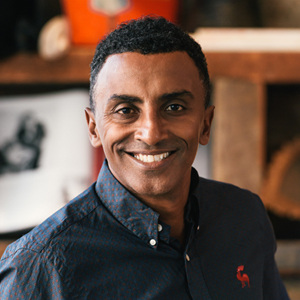
[00:01:01] Ray Latif: Hey everyone, I'm BevNET Managing Editor Ray Latif and you're listening to the top podcast for the food and beverage industry, Taste Radio. This is episode 134 of the podcast, which features an interview with acclaimed chef, restaurateur, and TV personality Marcus Samuelsson, who spoke about the inspiration behind his cooking and what's shaping the next evolution of food. I also sat down with Fair Trade USA founder and CEO Paul Rice, who discussed the aims, successes, and challenges of the organization, which recently celebrated its 20-year anniversary. Just a reminder to our listeners, if you like what you hear on Taste Radio, please share the podcast with friends and colleagues. And of course, we'd love it if you'd rate us on iTunes. It's hard to find a place to start when you're introducing Marcus Samuelsson, who's one of the most respected and influential chefs in the restaurant business, but I'll try. Marcus is perhaps best recognized from his numerous appearances on foodie TV shows, including Top Chef Masters, Chopped, and The Taste. Born in Ethiopia and raised in Sweden, he first caught the attention of the culinary world at the age of 24 and is known for infusing culture and art into his style of cooking. He's the owner and head chef of the acclaimed Red Rooster Harlem in New York City, along with several other restaurants across the For Marcus is also a philanthropist, actively involved in UNICEF, and a socially conscious entrepreneur aligning himself with organizations like Fair Trade USA. I met up with Marcus in New York City at the celebration of Fair Trade USA's 20th anniversary, where we spoke about his involvement and shared values with the nonprofit. We also discussed his new TV show, No Passport Required, which explores immigrant culture and cuisine in America, what he believes are the most important factors driving change in the restaurant business, his take on foodie journalism, and the advice he has for newcomers to the food business, including his younger self. All right, it's Ray from Taste Radio, and I'm here in New York City in Tribeca, and sitting in front of me is the one and only Marcus Samuelsson. Marcus, thank you so much for being with me.
[00:03:14] Marcus Samuelsson: Thank you for having me.
[00:03:15] Ray Latif: We're here at the 20th anniversary celebration of Fair Trade USA. Yeah. You have been an important part of the organization for some time now. How'd you get involved with the organization?
[00:03:27] Marcus Samuelsson: I think from the very first time was actually from, in terms of the coffee, right? And I started to look at, wow, they're stamping this, they're putting the trademark on how to make it fair for the coffee producers in Ethiopia and places like that. I just thought that was amazing.
[00:03:46] Ray Latif: As an Ethiopian yourself.
[00:03:47] Marcus Samuelsson: As an Ethiopian, not just as an Ethiopian, but as a person that constantly been in Africa and see where so much of what we eat here comes from and consume it comes from, but it's not been a fair value proposition of the chocolate, of the peanuts, of coffee, etc, etc, of the rice, right? So to see somebody that stands up and say, hey, We're going to make a humane face on this is bylaws. This is not something that is very easy to talk about in the public.
[00:04:16] John Craven: Sure.
[00:04:16] Marcus Samuelsson: But here's an organization that's going to say, you know, we're going to stamp this and we're going to make sure that these companies are held accountable. And we're going to make sure that the consumer knows. So the consumer has a choice. So the informed consumer. with obviously the growth of internet and Instagram and social media has been a major part of, I think, the success of Fair Trade, but also that the food world and the world gets smaller through food. I've always been a believer of that. If you know things about Ethiopia, you're not going to trash Ethiopia. If you know the coffee, if you know how we eat our bread, and that goes for every country. So I think the benefiter is not always the grower or the farmer. The benefiter is also countries like Sweden, like America, that need to understand that, oh, there's a value proposition here of doing things right. And I might have to pay a little bit more for that. I think that's okay.
[00:05:09] Ray Latif: You're a restaurateur, Fair Trade USA is involved with a lot of consumer product companies. We know that consumers are willing to pay a premium for a Fair Trade stamped product. Is the same true for food served in a restaurant? And how do you tell a story? How do you explain the importance Fair Trade ingredients on a menu?
[00:05:30] Marcus Samuelsson: I definitely think that Fair Trade, you say, has been a major part of pushing the dialogue about consumer products, but also menu items that are treated, but also from door to door, done the right way, right? For me, it's not about the menu proposition at the restaurant should be about great food, entertainment, and hospitality. So it's not about marking everything that this is Fair Trade. But it's about in other communicative way telling a narrative about the menu in the restaurant so people feel like, hey, they're doing the right thing. And the right thing is the bylaws that Fair Trade USA has already set out. You can't make it too heavy for the diner when they're in the dining room, because at that point, they might be celebrating an anniversary or a different moment. But you could on your website, you could through social media stories. There are so many ways today to communicate to your audience what you're doing, what we do in this restaurant. And it's been helpful for us also, as we search for new ingredients, whether it's rice, whether it's seafood, whether it's new protein, or once we see that stamp, we feel we calm down a little bit. We know then that this has been done well.
[00:06:45] Ray Latif: As I mentioned, you're a restaurateur. You've been in the restaurant business for over two decades. You know, we've seen vast changes in the way that people eat and how they eat. What do you see as the next evolution of dining?
[00:06:57] Marcus Samuelsson: Well, I think this idea about transparency and connectivity, you build communities through dining, right, breaking bread, that will only grow. And the consumer makes choices every day. Right. When you book a table, when you order something to your house. So whoever who can A, back it up with a product, but also B, somewhere tell that story will have a consumer for a very long time. And then obviously you have to make it delicious, but it starts very often where the raw ingredients come from. So having something like Fair Trade to vouch for that, it's a big part of that.
[00:07:36] Ray Latif: Having been in this business for a long time, I'm sure you've seen a lot. Where today do you draw the most inspiration for cooking?
[00:07:43] Marcus Samuelsson: For me, it's nature. It's always going to come back to nature and how we take care of nature. And as a chef, we have a role of that. You know, being a restaurateur means being a chef talks about restoring your community. And if we don't take care of nature, we're not going to get the next great meal. So for me, it's all about being that bridge between developing cooks that are respecting nature, whether it's the ocean or whether it is the forest. And how do you convert that? And how can we make it a sustainable proposition that is healthy, both for our staff and for our community around us? And have been in the industry for a long time, but also have been keeping being inspired by stories that are today more local. They could be global, but they're local in its and precise and specific in its being. That helps me inform what tomorrow's show is going to be as well.
[00:08:32] Ray Latif: Have you been influenced by New Dornic cuisine and, you know, this whole idea of foraging within... Foraging has been around for many, many, many, many thousands of years, so I grew up foraging.
[00:08:41] Marcus Samuelsson: I think what inspires me is people and the fact that we're not that different. We have rituals that may look different depending on... where you are in the world, but we all want to have a great meal and we all want to thank the person who did it for us and we want the ingredients from that to come down from a very healthy, sustainable ecosystem. And I think that will always be the right thing. And I thank Fair Trade putting a focus on it and making us all think about it.
[00:09:11] Ray Latif: So we had Christopher Kimball from America's Test Kitchen, Milk Street on the podcast a few weeks ago. And he is a big believer that there's no such thing as ethnic cooking. There's no such thing as ethnic cuisine. And, you know, what does that mean to you, though? You know, I mean, is there still a cultural way of cooking?
[00:09:28] Marcus Samuelsson: Is there still a cultural cuisine? I think rituals has been around longer than countries, right? Because countries comes and goes, but rituals don't come and go. That's something that you pass down through family, through almost like tribal movements, you know? So the way we cook in Ethiopia is very different than somebody cooks in Sweden, but it has the same purpose. You want to preserve your culture based on the terroir of that, and you want to pass it on to the next generation.
[00:09:58] Ray Latif: A good segue is your new TV series, No Passport Required. Why'd you call it that?
[00:10:05] Marcus Samuelsson: Well, I mean, to celebrate America and the immigrant culture of this country, how much the immigrants have contributed to food, but also to entrepreneurship and also about, you know, showing real America. It's extremely diverse and extremely delicious.
[00:10:20] Ray Latif: You show, you focus on immigrant cultures and cuisine. What was the inspiration behind the series?
[00:10:26] Marcus Samuelsson: Well, for me the inspiration was so much about looking at this moment in America, what's happening, and I felt as an immigrant, I felt... definitely more challenged and out of that is about content and inspiring people coming back with something that shows the diversity, the beauty of Arab culture in Detroit or Mexicans in Chicago or Haitians in Miami and showing that we offer a lot and we're gonna continue to offer a lot and we are Americans just like anyone else.
[00:10:55] Ray Latif: We'll be right back with Marcus Samuelsson after this short break.
[00:10:59] York City: Nosh Live is a two-day business and networking event for the natural foods industry held this winter in Santa Monica on November 29th and 30th. Learn more at noshlive.com.
[00:11:12] Ray Latif: We were talking about your new TV series, No Passport Required, your inspiration behind launching a TV show. You've been on TV, you're quote-unquote TV celebrity chef, I don't know what you want to call it. How has that changed your perspective on being a chef?
[00:11:27] Marcus Samuelsson: Well, I mean, I came to this country truly believing that I could, if you just give me the chance, I want to contribute into the food space. I'm a cook. And I also believe in telling stories. And TV or Instagram or the restaurant are all different mediums to tell stories and bring people together. So I don't think I've changed my perspective on my mission. It's always about telling people stories and sharing. Now, they might feel, the way the mediums to do that will change. Working with Eater and working with PBS for me are both great iconic labels in the business in terms of storytelling. And I felt like PBS approach versus Eater's approach is very different. And it was an opportunity to tell, you know, quick stories online, but also an opportunity to long, thick storytelling on more linear TV.
[00:12:23] Ray Latif: You mentioned Eater, and I asked Roy Choi this question about the influence of food journalism on the food business. What's your take?
[00:12:34] Marcus Samuelsson: Well, food journalism is a very important part of how we tell stories, how they connect chefs and with the public, right? You know, I think as chefs, we need journalists to keep telling stories and as journalists, they need chefs to keep creating, right? So it's gonna always be this push and pull, but I think it's a healthy relationship and we need storytellers to get our dialogue out there. And the journalist does a great job of doing that. The platforms will change and will continue to change. I don't know what the next version of Instagram is, but I'm sure there's something that's going to come. I think as long as it reaches an audience that want to come back and engage with you as a chef, tell great stories, also ask tough questions.
[00:13:22] Ray Latif: Yeah, some of those tough questions can get under the skin of some folks.
[00:13:26] Marcus Samuelsson: Of course, I mean, we both come from tribes that are caring, right? I've never met a journalist who don't care about their profession. I've never met a chef who don't care about their staff and their food, right? Right. So, you know, when you have, it's going to be a little bit, you know, it's like a tennis match, right? Between two passionate tennis players. It's going to be a lot of back and forth. But end of the day, we both love food.
[00:13:48] Ray Latif: So how do you handle the negative criticism?
[00:13:50] Marcus Samuelsson: Well, I mean, part of being a chef is that you know you're going to get negative criticism. Of course, it hurts. It's hurtful. But it also can, the right level of criticism can also shape you into understanding what is she trying to say? What is he trying to say? What can I do better? How can I improve? So you can't live in New York City and cook and don't think you're not going to get criticized. You know, that doesn't, and I live in Harlem, so I know that every day. So it's like part of having a dialogue with the public, which is such an amazing thing, but you cannot do that only thinking you're not gonna get criticized.
[00:14:27] Ray Latif: Right. Now, we talked about journalists, talked about the customers themselves, the diners, seems like they're becoming increasingly fickle, wanna always be exposed to new and interesting things. How do you continue to stay relevant? I mean, how do you, look at current trends?
[00:14:44] Marcus Samuelsson: Well, as a chef, I don't really do that. You know, like, I don't, I can never follow all the different trends. You know, I grew up in Sweden. I'm from Africa. I live in New York. Those are probably local trends in all those communities that I'm not following. But I am a follower of what my gut tells me and how we as a team has to improve on sustainability and treating people well. And There's certain bylaws that always will be relevant regardless if the trends might change. We live in this system where we have to think about more plant-based protein and thinking about sustainability as a vertical and as we cook with. As a chef, I have a role in that, whether that's trendy or not. I will always be passionate about spirituality of cooking. whether that's trendy or not, spirituality and food has been around for 4,000 years. So I try not to look at whether it's Brussels sprouts or kale or spam, you know, because I can't follow that. But what I can follow is my own compass and bringing people together.
[00:15:47] Ray Latif: In the consumer package business, we often hear about brands looking to democratize access to better food, to healthier food. And in the restaurant business, you know, in your business, in some cases, fine dining offers that level of better food, that healthier food. Can you democratize that?
[00:16:07] Marcus Samuelsson: Well, I think there's many ways to do that, right? Especially, like, I thought about democratization of food when I moved to Harlem. But it took me eight years to open Red Rooster. I really thought about where do I position myself in the city. I thought about not being at the highest level of fine dining because making the restaurant more affordable for the community. I thought about how can we work locally with farmers markets. And when we started versus what we have today, we have six farmers market now in Harlem. And we have several different payment system with that. So, you know, creating Harlem Meetup is a food festival around that. So, you know, 40% of the festivals are free. So those are ways to democratize the conversation. But I think it's a hustle, right? Harlem inspires me. People are working every day. And I think the New York hustle and Harlem specifically has another level of hustle on top of that. But both are very inspirational. Both are things like, wow, it can be done. So I think I take that as a chef with the platform. Okay, how can I utilize that platform to something positive?
[00:17:13] Ray Latif: What's been some of the success stories that you've seen in being able to, quote unquote, democratize access to better food?
[00:17:19] Marcus Samuelsson: Well, we were in, through Alamirap, we were able to have a young chef being, she delivers cookies to Shake Shack, for example, right? So we were connecting a young local chef that started her cookie business in her apartment, and now she is the one that's delivering her cookies, so being sold at Shake Shack. Those are small, tiny success stories that are massive for her journey to start her own business.
[00:17:42] Ray Latif: We have a lot of entrepreneurs that listen to our podcast. You yourself are an entrepreneur. What advice do you have for entrepreneurs that are out there right now, looking to hustle, looking to get out there?
[00:17:53] Marcus Samuelsson: Well, first of all, dream and think through your idea. Dream big and then network. Go to events like this and give your cards out, be available, because you never know who's going to fall in love with a journey with you. And the only way to do that is to network. And there's so many ways to do that today through social media. So dream big. think about the why and why you're doing this and how are you different in the offering and value proposition.
[00:18:21] Ray Latif: Now that's advice that you would give to young entrepreneurs. What advice would you give to your younger self when you first started?
[00:18:27] Marcus Samuelsson: Well, I came with $300 and a big dream. When I stood at JFK, I wanted to come into this country. Maybe I would have come with $600.
[00:18:39] Ray Latif: That might have made a little bit of a difference.
[00:18:41] John Craven: I think so.
[00:18:42] Ray Latif: Yeah, exactly. Great. Marcus, this has been fantastic. I really can't thank you enough for taking the time to be with me on Taste Radio. Really appreciate it. And congratulations on everything you've done and everything you will do.
[00:18:52] Marcus Samuelsson: Thank you so much for being here. Thank you.
[00:18:53] SPEAKER_??: Bye.
[00:18:56] Ray Latif: It's been 20 years since Paul Rice dreamed up the idea of an organization that could certify and set standards for products that promote fair wages for coffee farmers and protect the environment. That organization is Fair Trade USA, and it has since played an influential role in how companies across the food and beverage industry source ingredients and market their brands. Americans are increasingly aware of Fair Trade certified label and what it represents, and a growing number of consumers are factoring it into their purchasing decisions. That shift is changing the way that companies of all sizes are incorporating Fairtrade ingredients into their innovation strategies. I sat down with Paul following the celebration of Fair Trade USA's 20th anniversary and discussed the origins of the organization, why it takes the position of, quote, trade, not aid, how it is aligned with companies that generate over a half a billion dollars in additional income for farmers and workers, why there isn't a single umbrella organization for Fair Trade certification, and what he believes is the most impactful accomplishment of his career. All right, it's Ray from Taste Radio and sitting in front of me is Paul Rice, the CEO and founder of Fair Trade. Paul, thank you so much for joining me. Thanks, Ray. Great to be here. We're here and you're here in New York City to celebrate the 20th anniversary of Fair Trade. Congratulations on that. Thank you. A pretty remarkable accomplishment. When you started the company, when you started the organization, that is, did you ever think that you'd make it 20 years?
[00:20:26] For Marcus: Well, you know, when we got started, it was kind of an uphill battle. We were out talking to coffee companies at that time and trying to convince them to join the Fair Trade movement and connect more directly with farmers and pay a better price. And back in those early days, there were very few companies who thought that Fair Trade would make it or that frankly, that American consumers would pay an extra penny a cup for a cup of coffee just to help some farmer. So, no, I wasn't sure in those early days that we'd make it past year one or even past year two, but we got there. We grew in those early days thanks to companies who really believed in the values of Fair Trade, who really believed that it was the right thing to do to just make sure that farmers were taken care of. Of course what they found, those early movers, was that Fair Trade wasn't just good for farmers. it ended up being good for business. It ended up actually helping them secure quality and it helped them tell a better story to the consumer. And so, yeah, here we are 20 years later.
[00:21:36] Ray Latif: So if you could describe the overarching mission Fair Trade in a nutshell, you know, what is it?
[00:21:43] For Marcus: Fair Trade all about great tasting products that improve people's lives and help protect the environment. So it's actually a standard, like, the organic standard. Our farmers have to comply with a rigorous set of social and environmental and labor criteria. So those criteria, the Fair Trade standard governs everything from wages and worker safety and health on the farms to how the land and water resources and forest resources are treated. a strong environmental stewardship component to it. So when farmers meet that very high bar of the Fair Trade standard, they get audited and certified, and then that allows them to sell to any buyer in the world who agrees in turn to pay a premium, right? So the fundamental premise of Fair Trade is that market price For a commodity in the hills of Nicaragua or the fields of Ethiopia, market price isn't always fair. Market price doesn't always guarantee that those hard-working farmers are getting a decent living wage. So that's what Fair Trade is trying to do. It's trying to link companies, consumers, and farmers in such a way that we get great products and they get a decent living.
[00:22:58] Ray Latif: And you've learned about this firsthand, or you learned about the benefits of Fair Trade firsthand. I believe it was in 1983 when you took that one-way ticket to Nicaragua. I saw on a video yesterday, you had a great mustache. What happened to that mustache?
[00:23:14] For Marcus: Yeah, it's gone, it's gone, long gone. Pablo, I've still got Pablo inside, but the mustache is gone.
[00:23:22] Ray Latif: Do you still go out to farms and do you still help with the audits or look at ways to improve conditions for farmers?
[00:23:28] For Marcus: I do, you know, I draw my inspiration from my visits to the field, to visit farmers, to hear their stories, to see how they're doing, their struggles and the progress that they're making. in their communities. I got started, as you mentioned, in 1983. I went to Nicaragua. I wanted to work with farmers. I didn't grow up in a farming family myself, but my grandfather was a farmer in Oklahoma during the Great Depression and lost his farm and became a farm worker. And so my mom grew up in extreme poverty. I grew up hearing her stories of what that was like. And I guess from a very young age, I always I felt this attachment, this affinity to hard-working farming folk and how hard it is and what a risky business it is because you never know from one year to the next how the harvest is going to turn out and what price you're going to make. So that kind of inspired me as a young adult to move to Nicaragua. I thought I would stay for a year or two. I wanted to work with farmers, get some field experience. I ended up working with coffee farmers there and I stayed for 11 years. It was an amazing adventure, it was an amazing journey. Toward the end of my time there, I had a chance to start Nicaragua's very first Fair Trade co-op. And we brought together, over the course of the first few years, 3,000 farming families who came together to pool their coffee and process it and add value and then export direct. And that was kind of the key to success, was that we jumped over several layers of middlemen and went straight to the international market with our product. And our slogan at the time was trade, not aid. So our belief was that if we could trade directly with the global market, we could improve the living standards of our farmers and we wouldn't need international aid as a way to kind of help develop our communities. So it was hugely successful and that co-op is there to this day, now more than 30 years later and just a great example of what small impoverished farmers around the world can do if they get organized and learn how to navigate the global market.
[00:25:42] Ray Latif: Yeah, one of the things that really struck me yesterday during your speech was you said, you know, the essence of Fair Trade is empowerment. At the same time, you know, trade not aid. Is there a point at which there's a balance between charity, between aid and empowering farmers through business means?
[00:26:04] For Marcus: Yeah, absolutely. And, you know, I don't want to disrespect the great international aid investments that are going on out there and charitable donations. There's certainly an important role for them, certainly in in moments of disaster, right? Like the earthquake in Haiti and the recent tsunami in Indonesia and so on, right? Like there's such an important role for aid to play in relief efforts and in emergency efforts and even in agricultural development, right? We see great international... agencies supporting farmer training. And I think that would be for me the lens through which to look at these programs. Are they helping farmers develop their own capacity to solve their own problems? So in Fair Trade, we believe that by bringing farmers together and helping them develop their skills and then helping them tap into the global market, they can kind of architect their own futures without becoming dependent on government or on foreign aid for development. So I think there's a complementarity there. But yes, at the core of the Fair Trade philosophy is this belief that fundamentally farmers don't want or need our charity, they just need us to pay them a decent price for their coffee or their tea and the other products that they grow.
[00:27:22] Ray Latif: One of the numbers you put out there is that $550 million in additional dollars have gone back to farmers since you launched Fair Trade in 1998. Yeah. What does that number actually represent? Is it, I mean, is it actual dollars? Is it actual money that's going back to the farmers? Or, you know, what does that number actually mean?
[00:27:42] For Marcus: Yeah. So when we work with a brand like Honest Tea, or Green Mountain Coffee or Runa Tea, all of the brands that we work with across all of the product categories that we're certifying now, agree to pay a little bit more money over market price back to the farmers, right? That's kind of at the heart of Fair Trade is this partnership between the brands up here and the farmers. such that the brands are paying a little bit more to these farmers for taking care of their workers and stewarding the land, right? So there's a cost there, and they get rewarded for it. So that money is sometimes called the Fair Trade Community Development Fund, and it's... a few pennies per pound, right? In The Taste of coffee and tea and bananas, all of our products have a set premium that's paid back to them. So we track that, we audit that transaction every year. The companies that we work with actually have to open their books and prove to us that they paid that extra community development premium back to the farmer. So we think of that as one of the key indicators of our success, how much more money is Fair Trade able to generate for those farmers and workers that go toward community development. And, you know, last year, the total was around $65 million. Cumulatively now, we're up to $550 million. I think we're on track this year to dramatically increase our impact on farmers. It'll be around $85 to $90 million this year alone. So that's the money that Americans are paying back to those farmers that are growing the great products, and that money goes to to build schools and health centers and to help improve housing. to bring clean water into villages for the first time. So even though it's just perhaps a penny a cup for us up here, it ends up having a huge ripple effect and a huge impact on the lives of farmers and their families.
[00:29:38] Ray Latif: You mentioned Honest Tea, which was one of the early brands that had signed on with Fair Trade USA, at least early beverage brands. That relationship continues through to today. It's very strong. I saw Seth Goldman last night at the celebration. He's a big proponent of what you guys do and continues to be. Honest Tea is now part of the Coca-Cola family. And Coke has put some emphasis behind what they're doing, what Honest Tea stands for and how it plays into the future of Coca-Cola. So how do you leverage that relationship with Honest Tea to get Coke to start embracing Fair Trade across its entire product portfolio?
[00:30:18] For Marcus: So it's interesting to look at the array of companies that have signed up and joined the Fair Trade movement. Today we're working with about 1,400 brands and retailers from small local companies like Brooklyn Coffee Roasters or up in your neck of the woods, Equal Exchange Coffee Company, to major transnational companies like PepsiCo and Coca-Cola we're in Whole Foods and we're also in Walmart and everyone in between. So it's really interesting to see how Fair Trade as a product offering and as a movement has gone mainstream and really gone big. And as you might guess, many of the brands that have come to our movement are brands that have started in the natural food space and who have really had a value proposition of health and wellness to the consumer. So companies like Honest Tea, which has been organic tea from the very beginning and organic sugar, was kind of a natural fit Fair Trade. And they joined us before the acquisition by Coca-Cola. So that happens a lot, where we'll end up working with companies when they're small and mission-driven and still run by the founder, and then they get acquired. And I think in the movement, everyone Everyone's typical reaction when they hear the news of an acquisition like that is to groan and go, oh no, they're going to change their mission. What's cool, Ray, is that that has not happened. You know, we worked with Ben & Jerry's before the acquisition and then they were acquired by Unilever. We worked with Honest Tea before the acquisition and now they're acquired by Coca-Cola. And in our experience invariably when these larger companies take on a... a cultural brand or a sustainable brand, their intent isn't to take the life out of it, take the mission out of it, quite the contrary, it's to scale it up. And that's what we've seen with Honest Tea, where Coca-Cola has really given Honest Tea much greater distribution, the resources to actually grow the brand and... and extend the impact that Honest Tea is having on both sugar farmers and tea farmers around the world. So actually the acquisition has been good for Fair Trade, good for farmers, and to your point now it has kind of... earned us at Fair Trade right to have a conversation with Coca-Cola at the corporate level around how we might support their sustainability efforts in other products. So we're feeling pretty good about it.
[00:32:49] Ray Latif: You mentioned that a lot of these products grew up in the natural channel and John McKenna, the CEO and co-founder of Whole Foods had said that our customers may not have known they wanted Fairtrade until they had it. And once they had it, they wanted more of it. And then you mentioned that 63% of U.S. consumers recognize the label, but how many of them actually buy because of the label?
[00:33:14] For Marcus: That's a great question. And, you know, the Consumer Insights research that we've done and that others have done suggests that around 20% of American shoppers today are buying Fair Trade products, either on a regular or occasional basis. So that's about 40 million people that are buying Fair Trade products.
[00:33:34] Ray Latif: Intentionally?
[00:33:35] For Marcus: Because it's Fair Trade? So that's the next question, right, is how many of them are buying that product primarily because it's Fair Trade maybe they're buying it because it's organic Fair Trade is kind of like a bonus prize. There's clearly a correlation and a connection, a strong connection between Fairtrade, organics and quality. So if you look at, for example, the coffee companies, we're working today with over 400 coffee companies. companies like Green Mountain Coffee and Peet's and very high-end, high-quality companies. We're not working with Folgers or Maxwell House. Maybe we will someday, right? But there's a correlation between the companies at the high end of the market who are serving specialty beverages, same in tea, same in chocolate, and who are looking for a way to connect with the farmer and to ensure the quality of the product and to pay that farmer a fair price because they know the quality of that coffee is determined first and foremost on the farm. So that farmer needs to get enough money in order to be able to produce high quality. And so you see a correlation between Fair Trade and specialty quality or very high quality. And then many of our farmers are also organic. So from a consumer perspective, you may be buying that Fairtrade organic Sumatran coffee because you love Sumatran and it's your favorite flavor. Or you may be buying it because you're totally down for organics and you just learned that it's Fair Trade you saw that label and you took it home and you looked it up and now you know what Fair Trade. Or you may be buying it because you're Fair Trade and the Sumatran attribute is is secondary. I think there's a confluence of all of those. I think what John McKenna said is spot on, right? That a lot of consumers come into the Fair Trade space not knowing it, because they were just after their favorite organic Sumatran coffee. And then they discovered, oh wow, and this coffee also... helps the farmers keep their kids in school. What a cool thing. And so what we're seeing across all of the product categories that we're certifying now, and we're certifying over 40 products, by the way, from coffee and tea to sugar and chocolate and all kinds of fruits and vegetables and now fish and apparel and all kinds of products and really going for a Fair Trade lifestyle opportunity for consumers. What we're seeing across all of those product categories is growing awareness around social and environmental issues and a desire by consumers to shop with their values, right? I think people increasingly today feel like they want to buy products and support companies that are doing the right thing in the world and products that aren't doing harm, products that are making a difference. So I think Fair Trade and things like it are riding that groundswell of consumer interest in products that not only taste great, but also feel consistent with our values.
[00:36:31] Ray Latif: We'll be back with more from Paul Rice after this quick break.
[00:36:35] York City: Natural foods companies, hire your next great team member by listing your job on the Project Nosh job board. To learn more and list your job, visit Nosh.com slash jobs.
[00:36:48] Ray Latif: So we talked to a lot of entrepreneurs who do have a social mission, who do want to do better for the world, who want to buy Fair Trade ingredients, but they can't necessarily do it because, or at least they'll say they can't necessarily do it because it's too expensive, or that they just don't have a sustainable, they need scale before they can really contribute to that social mission. So, you know, how do you work? How does Fair Trade work with smaller brands, with young entrepreneurs on achieving, you know, the shared mission, the shared values that you may have?
[00:37:22] For Marcus: So it's really easy for companies to come into the Fair Trade movement. The additional, the cost that companies pay, you know, the price back to the coffee farmer ends up being an extra penny per cup, right? So that from a, from a cost perspective, it's super easy for coffee companies, for tea companies, for others to get on board. And what we see in most of these companies is that they recover far more from their investment in farmers through the more secure supply chain that they're able to create, right? So we think of Fair Trade as a shared value model. In other words, instead of thinking of Fair Trade as trying to take money from companies and redistribute it back to farmers, We think of Fair Trade as creating new value, right? It's creating supply chain security for the company. It's creating a more reliable volume of supply. It's also creating a story that companies are telling to consumers. So that's all new value that helps companies perhaps charge a little bit more for that product or just build a stronger and more loyal customer base that will support them over time. So at the same time, the farmers are getting more money. So that's why we call it shared value, because it's new value being created that's shared by both companies, consumers, and farmers and workers. And that's really, I think, the secret sauce of Fair Trade, that we see it not as a model that takes money out of the pockets of companies. We want companies to be successful and profitable while they're being sustainable, and we think Fair Trade is a great platform for that.
[00:38:58] Ray Latif: It seems like it. Entrepreneurs seem to also have a lot of options when it comes to Fair Trade. I mean, there's your organization, Fair Trade USA, there's Fair Trade America, there's Fair for Life, there's Direct Trade Certified, Direct Trade Certified being more focused on coffee, if I'm correct. You all seem to have the same overarching mission. Why don't you guys all get together and work together and have the same, under one roof?
[00:39:23] For Marcus: We do get together, so across the Fair Trade movement and beyond, there's a lot of collaboration. For example, we are members of something called the ISEAL Alliance, which is an alliance of independent certifiers. And with us are organizations like Fair Trade International, like Rainforest Alliance, The organic certifiers are all under the ICL Alliance. Sustainable forestry, sustainable marine certification, all there as well. So we definitely see ourselves as part of a much larger movement of sustainability through products, right? So if you think about it, essentially what we're all going for is the creation of products that help sustain the world, right? and creating a consumer experience where consumers through something as simple as a daily cup of coffee can actually reach halfway across the world and help sustain an environment and sustain a family. So we're all kindred spirits in that regard and sure there's also a competitive dynamic at times between the different certification labels but I would say the spirit is actually predominantly one of collaboration because we're all at the end of the day, trying to use business for good. Why don't we all, you know, merge? Well, because monopolies are inherently inefficient. Actually, it's a good thing that the companies have multiple choices, right? And it, I mean, so at Fair Trade, we're turning 20 this week. We account for about 92% of Fair Trade certified products in the United States. So yeah, there's competition, but we've been around the longest and have kind of the strongest following. But actually, I like that there are other players in this space. I think it's helped us become more innovative and more creative in terms of the new products that we think about. I mean, just as an example, you know, a couple of years ago, if you'd asked me, do you think you'll ever be doing Fair Trade apparel? I would have said, no, no, Fair Trade is about coffee. I'm a coffee guy. I worked with coffee farmers. That's my passion. We're about coffee and tea and agricultural products. And that was kind of, you know, where we got to in the first decade for 15 years was that we certify food, full stop. But then the apparel industry came to us and said, what you've built in food is amazing, can we do that, can we transfer that model to the world of factories? Can we transfer that model where workers get a better deal and consumers get to experience the high quality products that also are consistent with their value. And so we went in that direction. So I share that story just to say that I think the innovation that we've tried to embrace in extending Fair Trade comes from having a kind of a hundred flowers movement out there, lots of different organizations pursuing sustainability in their own way.
[00:42:22] Ray Latif: You never thought you'd get into apparel or maybe, you know, apparel wasn't necessarily on your horizon. What other industries are you looking at right now? I mean, we're constantly in our business talking about the emergence of the cannabis industry. And before we hopped on the mics, I asked you briefly about cannabis and it doesn't seem to be in your purview. And I'm curious as to why. And if not cannabis, you know, what is an industry that you guys really wanted to have an effect on?
[00:42:49] For Marcus: When we think about new product opportunities for Fair Trade certification, we look at it primarily through the lens of what are the conditions of farmers and workers in that industry? Is there a problem to solve? Is there some way that Fair Trade can help address poverty in those villages, poverty in those communities around the world by connecting the brands that source those commodities. And honestly, one of the interesting, exciting opportunities that we've just embraced is in spirits. So rum is our newest beverage to Fair Trade certified. We're working with one of the world's leading rum brands, a Nicaraguan company called Flor de Caña, which is a product near and dear to my heart, because I lived in Nicaragua for 11 years, so I've probably had more Flor de Caña rum than any other alcoholic beverage ever.
[00:43:50] Ray Latif: I think some of the guests last night had some of that rum as well.
[00:43:54] For Marcus: You don't want to put any Coca-Cola in that. It's just good like it is. It was literally flowing last night. So here's the thing. Rum is made with sugarcane. And sugarcane in Mexico and Nicaragua and the rest of Central America is harvested by hand. So imagine a man or a woman out in the fields in 20-foot-high sugarcane, so they're dwarfed by these huge sugarcane stalks, and they're swinging a machete. 6, 8, 10, maybe 12 hours a day cutting down the sugarcane to be processed and turned into eventually these delicious rums that we pay outrageous prices for, right? That sugarcane worker historically made maybe $3 a day, maybe $4 a day, out there in the sun, in hot and dangerous work. So if ever there was a problem to solve, if you will, if ever there was an industry that needed Fair Trade to help improve the working conditions and the wages of its workers, it's the sugarcane industry. Flor de Caña is an internationally renowned brand in the spirits industry, not only for the quality of their rum, but also because they have a historic commitment to the welfare of their workers and the well-being of their workers and the environment. So it was a good fit for us and we were very proud to start working with them. We have now certified all of their sugar cane, plantations in Nicaragua. And we're starting now the journey of certifying the neighboring farms as well. But already with the start that we've made with them over The Taste year, we're able to certify their rum. And so just really proud to support a great brand. and tell a great story. And I think that is illustrative of how we think about new product opportunities. The question is, is there a compelling humanitarian story in that industry? And Fair Trade help solve it? And as I said before, we're certifying now 40 different product categories. And it's really the leading luminaries in each of those industries that have come to us and said, we want to make a case for why Fair Trade should be in our industry. And we want to be a part of that. So that's kind of the way we think about growth.
[00:46:17] Ray Latif: Paul, this has been really great. And I really appreciate you taking the time. One of the things that really struck me last night was when you talked about coffee prices, the international price for coffee has tanked. And it's almost at the same level as it was 20 years ago, which is just strange. I mean, how did that happen? And what is Fair Trade USA doing to, I guess, right the wrong?
[00:46:40] For Marcus: Thanks for asking about that. I started working with coffee farmers myself in the highlands of Nicaragua back in the 80s. So this is a product that I have a particularly strong personal attachment to. I travel all over the world. I visited coffee farmers in Indonesia, in Tanzania, in all up and down Latin America from Mexico to Brazil and everywhere in between. So I get a chance to meet with coffee farmers and to hear about their lives and their struggles. Coffee prices are incredibly... volatile, right? There's a coffee exchange, just like a New York Stock Exchange, so you can buy and sell coffee futures on that exchange, and that contributes a lot to the volatility of coffee. Which, by the way, coffee is the second most heavily traded commodity in the world, after oil. And there are 25 million people in the world today that make their living growing and harvesting coffee. So actually, coffee is... a really important product, not just for those of us who need it every day to get up and go in the morning, but more importantly for communities and families all over the world. Coffee is grown in over 45 countries. It's a major export crop in so many of those countries. It's a big deal. Coffee's a big deal for many, many millions of people around the world. And because the commodity prices are so volatile, typically what we see is occasional price spikes where coffee prices might spike in the global market up to $2 a pound or even a little higher. And then we see often a dramatic plummeting in coffee prices. When we got started 20 years ago, coffee prices were low and they were low for five years. They were down around 60 cents a pound in the global market. Farmers typically make about half of the global market price for coffee. So at that time in The Taste 90s, early 2000s, coffee farmers were literally going hungry because prices in the global market had fallen so low. Today, we are back in that coffee crisis moment. So, in The Taste two weeks, coffee prices have fallen below a dollar a pound in the global market. which means what we're hearing from farmers is that prices in their local markets have fallen to as low as 50 or 60 cents per pound. Just to give you a point of comparison, the Fair Trade minimum price is $1.60. And that minimum price is set based on our research into the cost of sustainable production. So we believe that it costs a farmer on average about $1.60 per pound to produce coffee sustainably in a way that protects the land and allows those farmers to eat three times a day and keep their kids in school. So with coffee prices where they are today, less than half that, it means that farmers are not even covering their cost of production. It means that farmers are maybe only eating twice a day instead of three times a day. It means that farmers are going to have to pull their kids out of school to put them to work because they need that extra cash. So it's a very dire humanitarian problem on the horizon. And you know what Americans don't know is that, you know, when we go out and spend three, four, maybe even five dollars for a cup of great coffee, the farmer is only getting between one and two cents for that cup. We paid three bucks for it, the farmer only got a penny, right? That's how the value chain works. The farmers are kind of at the very lowest end in terms of what they receive and then the middlemen are there. And of course the manufacturers and the company that made the cup and then, you know, made the lid on the cup, that's all part of the cost. But what you need to know as a coffee drinker is that the farmer only got a penny out of that $3 latte. So to Fair Trade that just means another penny. That's all we're asking. We're only asking consumers to pay one more penny per cup. in order to make sure that those farmers are able to eat three times a day, keep their kids in school, take care of the land, and keep investing in their community. It's such an easy solution. And now more than ever, we need Fair Trade and things like it to ensure that those farmers are able to survive this current price crisis.
[00:51:14] Ray Latif: Paul, this has been just a fantastic conversation. I really appreciate you taking the time. Just one last question. In these 20 years that you've been doing this, or at least that you've been working and running Fair Trade, what would you say your most proud accomplishment is?
[00:51:31] For Marcus: So I've been working with farmers for more than 30 years now. And one of the things that I love about my job, one of the reasons why I feel like the luckiest guy around, is that I get to go back and visit. those farming families that I've known in many cases for 20 years or more. And to be able to go to a farmer's home and see the improvements that they've made in their home. Farmers who perhaps had a dirt floor home before and now have made enough money to pave the floor of a dirt floor home or to put a tin roof over their heads instead of a thatched roof. Farmers who've been able to send their kids on to high school and on to college. Farmers that have dug wells and brought clean drinking water into their villages for the first time. I get to see that and I feel like my life is charmed because I get to see it on a regular basis and I get to take industry executives and philanthropists who are supporting our work, and people from the media. I get to take delegations to see just how remarkable this Fair Trade movement is and how meaningful it is in the lives of literally millions of families around the world. And these are families who work hard. They're not sitting back waiting for us to solve their problems. They're working hard, doing the best that they can to grow the best products. that they can to delight us so that we as consumers feel like Fair Trade is truly fair for us too, right? We don't want to buy products that don'The Taste good. So for the farmers it's about producing the very best handcrafted coffees and teas and other products they can so that we're delighted and so that they earn the right to provide a better living for their families. I think the greatest accomplishment of my work in Fair Trade, of the Fair Trade movement, and it makes me feel like the luckiest guy around because I get to do this every day.
[00:53:37] Ray Latif: It's really inspiring, and I can tell how much it means to you. And just kudos and congratulations on these 20 years. And I think it was Marcus Samuelsson who was up on stage introducing you last night and said, you know, to the next 20 years. And I agree with that.
[00:53:53] For Marcus: Thank you, Ray. Such a pleasure to be with you today.
[00:53:57] Ray Latif: Thank you. That brings us to the end of episode 134. Thanks to our guests, Marcus Samuelsson and Paul Rice. Tune in on Friday, October 26th for episode five of Taste Radio Insider, which features an interview with Spindrift founder and CEO Bill Kralman and Caroline Kibler, the company's SVP of marketing. You can catch The Taste Radio and Taste Radio Insider on Taste Radio.com, iTunes, Stitcher, Google Play, SoundCloud, and Spotify. For questions, comments, ideas for future podcasts, please send us an email to ask at Taste Radio.com. On behalf of the entire Taste Radio team, thanks for listening. We'll talk to you next time.