[00:00:00] SPEAKER_??: you
[00:00:08] Ad Read: This week's episode of Taste Radio is brought to you by Symrise Califormulations.
[00:00:12] Brew Coffee: If you're looking to bring new beverages to life, look no further than Califormulations.
[00:00:17] Ad Read: Califormulations is a Symrise creative incubator concept that gives beverage entrepreneurs access to the development expertise of one of the largest and most experienced flavor companies in the world.
[00:00:27] Brew Coffee: Califormulations is a complete bench-to-bottle solution that bundles rapid prototyping, formulation development, and scale-up support into a single package.
[00:00:36] Ad Read: Symrise Califormulations, Symrise gives entrepreneurs access to resources that are not normally available to new and emerging brands, including full beverage formulation development, consumer insights, regulatory support, purchasing power, and of course, world-class beverage flavors. And they do it all from an inspirational studio in Laguna Beach, California. To learn more about this new and exciting offer, Symrise Califormulations.com. And now Taste Radio.
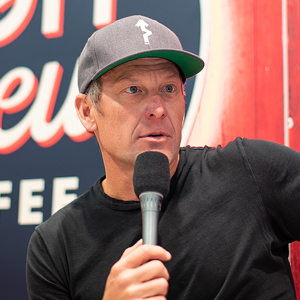
[00:01:11] Ray Latif: Hey everyone, I'm BevNet Managing Editor Ray Latif and you're listening to the top podcast for the food and beverage industry, Taste Radio. This is episode 136, which features an interview with former Tour de France champion, podcaster, and investor Lance Armstrong, who joined us for an intriguing interview about redemption and renewal. Tune in on Friday, November 9th for episode 7 of Taste Radio Insider, which features an interview with Hugh Thomas and Joe Ben, the founders of sparkling water brand Ugly Drinks. Just a reminder to our listeners, if you like what you hear on Taste Radio, please share the podcast with friends and colleagues. And of course, we'd love it if you could rate us on iTunes. Lance Armstrong is back, sort of. The once world-renowned athlete who was infamously stripped of his Tour de France titles and professional standing has reemerged as the creator of WeDo, an endurance sport brand that produces two popular podcasts, including a cycling-focused show called The Move. While he's persona non grata at professional cycling events, Armstrong's analysis of the races has become a popular way for fans to augment their thirst for the tour, as well as a few other races. As that podcast has grown, cold brew brand Brew Coffee has started to sponsor it. From a product direction standpoint, it makes sense. The coffee company has started to aim for the cycling community as one of its consumer groups. From a relationship standpoint, it makes sense as well. Lance Armstrong himself, High Brew a product of Austin, Texas, Lance Armstrong is even an investor High Brew as a limited partner in a local investment firm. But still, it presents a question for all food and beverage brands. Notably, who do you want to work with? What are the kinds of things that a product endorser can and should bring to the brand? And just how long does it take for a tarnished spokesman to rehabilitate his image and get back in the race? BevNET editor-in-chief Jeff Klineman spoke with Armstrong recently at the High Brew booth at the 2018 National Association of Convenience Stores show. And as you'll hear, the pair didn't hold much back when it came to exploring these questions.
[00:03:17] Jeff Klineman: Hi, this is Jeff Klineman, editor-in-chief of BevNET. I'm here with Lance Armstrong, the athletic great and also a podcaster. And so it's rare that we get the opportunity to interview a podcaster on our podcast.
[00:03:35] Lance Armstrong: I know it's weird being on the other side of the table. I spent 20 years being on this side, and now I've spent two or three years on your side, and now I'm back on this side.
[00:03:46] Jeff Klineman: Which do you like better?
[00:03:49] Lance Armstrong: Uh, ask me at the end. You know what it's like. I mean, there are days where you could have a show or I could have a guest that I'm super excited about and it's just, you just catch that person on a day where they're not that talkative or they weren't that, didn't want to share that much and so then you're like, ah. Then you get days where you're like, okay, this guest is going to completely suck. Yeah. And then they just destroy you. And they just burn it down. And that's, those are the days that are the...
[00:04:16] Jeff Klineman: It's amazing when you can get deep. And I've been thinking a lot about this interview. And first of all, I just want to congratulate you on finishing the second year of Stages and...
[00:04:31] Lance Armstrong: Which is now called The Move.
[00:04:32] Jeff Klineman: Oh, okay.
[00:04:32] Lance Armstrong: It went from Stages... Stages to The Move. Okay. We made The Move to the name The Move.
[00:04:37] Jeff Klineman: Sure.
[00:04:37] Lance Armstrong: Yeah. No, we had a great summer. It was... It was interesting because year one, diving back into cycling after all that has happened with me and the sport and my peers, we didn't know if... We'd have any listeners, right? And so the support was overwhelming. And then to come back with year two with a proven product. Yeah. But also just to upgrade the show from a video perspective, add Georgine Cappy as my co-host essentially. It just, we had a lot of fun.
[00:05:11] Jeff Klineman: So you told CNBC a few months ago that you were expecting that the show might pull in between $700,000 and $1 million over the course of the tour. How'd you guys make out in the end?
[00:05:29] Lance Armstrong: We were on the low end of that. We had great support from advertisers like High Brew Coffee. So we really had three revenue streams, right? We had advertising, we had membership, and then we had merchandise. And so the interesting thing is that most of those numbers, we know what those numbers are. Merchandise just continues to sell and sell and sell. So the numbers, it's not a perfect science on what that number is, but compare and contrast to year one when the number was zero. You're way up there. Yes, but when you had a year one that had five or six million downloads, then in year two, we were able to go get support.
[00:06:09] Jeff Klineman: Yeah, and it's got to be great to have advertisers on board. Is that one of the real proof points you were looking for with this?
[00:06:19] Lance Armstrong: Yeah. Yes and no. I mean, we're in a comfortable position in that we could do the show for zero. But if you're going to bring in advertisers and such to support you, to me, the most important thing is that you really believe in the product. I can't talk about the product. I mean, if it was a jewel and they pay X amount, I couldn't say that out loud because I don't believe in that. Maybe I'm sure a lot of people do, but that's not my thing. So it really had to be, you know, it had to be authentic and organic and real. Otherwise, I mean, at this point in my life, my listeners are just going to turn off. They're like, this guy's full of shit again. And so it had to be products like High Brew PowerDot that I had tried and tested and grown to love. And, you know, it made it a lot easier.
[00:07:09] Jeff Klineman: So you use the word again here. And I want to ask, I mean, is it difficult to thread the needle in terms of performance products? when it comes to endorsement?
[00:07:22] Lance Armstrong: It's a great question. I don't think so. I mean, I think there's probably a segment of the population that would snicker or would find that ironic. But I think the vast majority, and I really, really believe this, know enough of the story, know enough of the history, know enough that regardless of the dark side of our game and the day, it was a very serious performance-oriented game. And that doesn't just mean training, but that means, you know, aerodynamics and diet and nutrition and so many other things that I still think the world, and if they follow the story now, they'll still see that I'm still a performance athlete. I'm a lot slower than I used to be, but it's not as if I retired or my world fell apart and I sat on a couch. No, I doubled down on performance, right? So that's what I do every day. Before I flew here to Las Vegas today, I got up early and ran eight. and got on the plane and flew here. So it's still step one of my day.
[00:08:18] Jeff Klineman: Yeah, and there's a lot of talk about how well caffeine enhances performance, if nothing else. Of course.
[00:08:28] Lance Armstrong: We've known that for a very long time. Sure. And so there's obviously a lot of different ways to consume caffeine. Caffeine's been a part of my regimen for a long time. Yeah. The thing that's really cool about not just coffee and caffeine, but High Brew, is that and I don't know if you know this or not, but in cycling, cycling and coffee. That's like peanut butter and chocolate.
[00:08:51] Jeff Klineman: Yeah, well, you've got a bike store with a cafe.
[00:08:54] Lance Armstrong: Right, with a cafe. But even if you didn't have a bike store with a cafe, so many people go out for a bike ride and stop for a coffee. Or hopefully now they stop in a Convenience Stores and grab a High Brew. But it's not as if we're talking about pickles and cycling. I mean, this is a very, very natural and organic relationship that goes back, I mean, gosh, you can go back to photos 100 years ago, guys on the tour just sitting there sipping espressos and coffee was key.
[00:09:22] Jeff Klineman: Yeah. Yeah, so let's pull back to the podcast for a minute. Who are you trying to reach through the podcast, through We Do, through the things you're doing now?
[00:09:35] Lance Armstrong: Well, there are two shows, right? So there's the original show is a one-hour interview style show called The Forward that has nothing to do with cycling. In fact, it is very I don't want to say anti-cycling, but we don't talk about cycling.
[00:09:48] Jeff Klineman: You're talking, in many cases, with your friends.
[00:09:51] Lance Armstrong: Yeah, or just people that I've found interesting over the years or I've followed. I mean, it could be, or just a story that you've read about that you're like, oh my God, I would love to sit down and talk to that person, right? Sure. I could talk to Malcolm Gladwell, who I've looked up to for a long, long time. Or I could talk to Michael Morton, who spent 26 years in prison for allegedly killing his wife in Austin, Texas. And then via the Innocence Project and DNA evidence, science becoming more and more modern, he's freed. So we as Austinites, we knew that story. We felt like we were in prison with him. And so to have the chance to get his number, call him, go have a conversation, that was literally my favorite podcast in years. I mean, it was what he had to say about life inside as an innocent man to change your life. And so that's that show. And then the second show is the endurance slash sports show, which is The Move. And that one's obviously more event-specific, covering the events, being very candid about what my view of the event is, which makes it, you know what it's like. I mean, with two mics and a recorder, anybody can have a show. And with that, you can say whatever the hell you want to say. Who do you want to be listening to your show? The first show is really just for anybody. The second show, I mean, take the tour, for example. In those three weeks, people watch the race on NBC or whatever country they're in because we're global, and then it would be a fan that just wanted a unique perspective or a unique take on the day's action. So just like happens more in mainstream sports, NFL, then there's the post-game wrap-up, and that's what our show is about, where we go back and reflect on what happened and either support or a lot of times criticize. the day's action, take questions and comments from listeners and viewers and play with that, but keep it super light.
[00:11:51] Jeff Klineman: Hardcore cycling fans, would you say?
[00:11:56] Lance Armstrong: Mostly, mostly, but I get a lot of people that come up to me and they're like, dude, I don't know anything about cycling. I watched those seven years that you raced. I don't watch anymore. So now I just listen to your show. Yeah. So like now we know what happened. We don't need to watch it because we don't know the players. But Lance just told me what happened.
[00:12:13] Jeff Klineman: So hardcore Lance fans. Hardcore cycling fans.
[00:12:18] Lance Armstrong: Just people that are. Yeah. And it's also we try to keep it light. We didn't have. It's a funny show. Even if you didn't. weren't a fan, you'd still think it's funny.
[00:12:27] Jeff Klineman: No, you can see you stomping around in Airstream. Yeah. I get super animated. Cranky. I was the cranky one this year. So it's this idea that, you know, there are people out there who'd want to have a beer with you and watch the tour with you because, you know, it'd almost be like watching with the drummer from Spinal Tap or something, you know?
[00:12:50] Lance Armstrong: We did that this year. The last day of the tour, we took the show on the road. We went to... You went to someone's house. We went to Albuquerque, New Mexico, to these people's house. You know, we had a contest, and they won, and so we flew down there and, you know, did the whole thing. Like, went to Walter White's house before. You should go by Walter White's house. It's the trippiest thing. It's all fenced off. These people outside, like, do not stop.
[00:13:16] Jeff Klineman: No photos. And you hadn't been there before?
[00:13:18] Lance Armstrong: No, I'd never been there before.
[00:13:20] Jeff Klineman: Not even when you were riding?
[00:13:21] Lance Armstrong: No, not even back then. But, yeah, we did it, and, like, we watched it. They invited, like, 20 of their friends, watched it in the living room, and then did the podcast in front of almost what ended up being a live audience.
[00:13:34] Jeff Klineman: So cycling as a sport, we know you're responsible for an enormous amount of its popularity. in the U.S. But it appears to have gone past the tour now, you know, from everything from, like, loose gravel to bikepacking. E-bikes. Yep. I mean, is this a way for you in your current situation to stay part of the sport? Yeah.
[00:14:04] Lance Armstrong: I mean, yes, outside of me commenting and commentating about the sport or the sport at the highest level. Because all of these things really sit under this umbrella corporation of WeDo, which is all, and WeDo is an answer to a question like, if the question is, you know, who wants to do an Ironman? Or who wants to ride 100 miles? Or who wants to do the Dirty Kanza, which is a 200-mile gravel race? Like, most people see those things and go, who would ever, who wants to do that? But millions of people say, we do. But in and amongst all of that crowd, that's not the tip of the spear. Most of those people are just finishers. If they go do the Dirty Kanza, the 200-mile gravel race, they are just trying to finish because they get something at the end that they finish, a belt buckle, a cowboy hat, a t-shirt. I don't know what they get, a bottle opener. I don't know what they give them, but they give them Brew Coffee. For 200 miles on gravel, you better have a lot of caffeine. David, you could never do that.
[00:15:05] Ray Latif: We'll be right back with Lance Armstrong after this short break.
[00:15:09] High Brew: Nosh Live is a two-day business and networking event for the natural foods industry held this winter in Santa Monica on November 29th and 30th. Learn more at noshlive.com.
[00:15:22] Jeff Klineman: Do you think people are starting to try and gain advantages in those kinds of races already? Oh, gosh, I don't know. I mean, look, we had we just went through an Olympics where the walking team was disqualified. Oh, I did not. And the curling team was disqualified.
[00:15:41] Lance Armstrong: You know, I get asked that question a lot, really more specifically to cycling, but I'm so far removed from the elite side of not just cycling, but all sport that I don't know. And when I get up every day, you know, I go out and do my daily grind, my daily exercise. It's all about me. Like, it's just all about, you know, starting my day that way.
[00:16:02] Jeff Klineman: That's a big change because it used to be all about competition. All about winning. Yep. Yeah, not even all about competition, all about winning.
[00:16:10] Lance Armstrong: All about winning. But you know what happens? At some point in life, you get to be 47 years old and you have five kids and you've got to manage a business and a family and your own exercise and travel and relationships. And so it's, I'm not 22 anymore.
[00:16:26] Jeff Klineman: I know that. Do you bring a sense of competition to your ratings though?
[00:16:34] Lance Armstrong: Yeah. I mean, I don't talk about it. I don't tell the team like, hey, why are we not in the top five on iTunes? Why didn't we get this interview? Well, that one, you know what it's like to try to schedule, to catch up with people and if they're coming to your town or you're just trying to align that, that's oftentimes the problem. With regards to the competition, there's no doubt like when I see my show on iTunes that's top three but up there with you know, 30 for 30 and Bill Simmons and all of these shows. I'm like, all right, that's cool. Like I'm, that feels like an achievement.
[00:17:12] Jeff Klineman: Now, as you become an elite podcaster, I can promise you. speaking as a less-than-elite podcaster, that competition to make those gets becomes more intense.
[00:17:26] Lance Armstrong: No, no, no. I know.
[00:17:27] Jeff Klineman: I mean, you've been chased by the Packer reporters in the past.
[00:17:30] Lance Armstrong: Yeah. But now, it's like the Wild Wild West in the podcast world. I mean, there's so many shows out there. When it's this easy, and I'm looking at the gear that we're using to create this podcast, when it's that easy, anybody can do it, right? you have the gear, then you say, well, how do I, what channel am I going to put it on? Well, that's easy too. You've got iTunes, you've got SoundCloud, you've got Google Play, you've got YouTube, you've got Facebook. I mean, it's from content creation to production, to directing, to acting, to distribution. It's easy. Yeah. Which is awesome, but it also means that you're going to have a lot of competition.
[00:18:07] Jeff Klineman: So the how is easy, but I think that there are a lot of people out there who want to know why you would want to do this.
[00:18:15] Lance Armstrong: I mean... Well, I mean, again, they're two different shows, you know. The why on the cycling show is... I think people can figure that out. The other show, which is non-cycling, is a better question. And honestly, when we started, I didn't... think that I would be that into it. But as we got into the three or four months in, I really, all the way from finding a guest to doing homework for the first time in my life. like real homework, to keeping the show flowing. It's super challenging. I get nervous before a big show. I mean, that's the reason that I do it. And hopefully the product, the finished product is stuff that people enjoy.
[00:18:59] Jeff Klineman: There's an idea that you may be doing it to try and stay relevant to the conversations around culture and athletics.
[00:19:12] Lance Armstrong: I mean, that doesn't even register. I mean, if you just look at The Move show, The Move and Cycling, whether people like it or not, I will be relevant now and forever. And I'm not bragging. I'm just saying that's just... I've traveled this world and I've listened to my audience. I know what they think and so I wasn't going to curl up in a fetal position and go away. I was never, ever, ever going to do that. If in year one, so summer of 17, we had five downloads instead of five million, yeah, maybe I would have said, you know what? Nobody wants to hear and so I should go do something else. But because we were so generously supported, you know, we're just going to keep cranking it. And again, I think this is very different than being on NBC or being on CNN or Eurosport or any other or writing for the New York Times. We can say anything. Yeah. And that's what people love. It's kind of wonderful. Yeah, it's amazing. If it's an F-bomb, or if it's just a really, really critical position, or if it's just something you observe, whatever. You can say anything.
[00:20:22] Jeff Klineman: It's amazing. Why do you have to use it as a vehicle to sell things, though? You mean via ads?
[00:20:29] Lance Armstrong: Yeah, via ads. Here I talked about how easy this was. Between year one and year two, we really ramped up production. If you saw the amount of, we did this show out of an Airstream trailer, and what people see is us sitting at a table. But if you saw all of the gear that is now inside of that Airstream studio, it's bananas. So as we try to up production and make the experience better for the viewer or the listener, it's expensive.
[00:21:01] Jeff Klineman: Lance, I just gotta ask though, I mean, we always have this question when we talk with brands about bringing on this celebrity endorser or that one, you know, what happens if they screw up? Right.
[00:21:17] Lance Armstrong: You know? That is always, they ask that question now more than ever. Right. For obvious reasons. I mean, I just walked past Kobe Bryant five booths over, right? Yeah. Nobody at Nike or Sprite or Chevrolet or anybody else asked that question with him 20 years ago. Nobody asked that question with me. But it's a very, very valid question.
[00:21:39] Jeff Klineman: So how would you answer it now, coming from sort of being publicly acknowledged as an endorser who's screwed up? What's the value that you bring to these brands?
[00:21:55] Lance Armstrong: Yeah, to aligning now as opposed to before? Well, first of all, we can all still screw up. So I feel like that part of my life is certainly behind me. But you'd have to ask our partners. But I think most of them, A, realize that, most importantly, people deserve a second chance. And for sure they recognize, I mean, I know what our other partners recognized with the numbers, right? So just the sheer size of the audience that it was attractive to them. But I mean, I think top line, I get what you're saying. And if anybody, whether it be High Brew Coffee or a listener or a viewer gives me a second chance, I don't take that for granted. And so I think I did for 15 years. This is very different now.
[00:22:45] Jeff Klineman: Yeah. And you're delivering, I have to say, having listened to some of it, you're delivering really interesting content, particularly around the tour. Yeah.
[00:22:56] Lance Armstrong: It's a different look at it. But it's also, it depends on the day, right? I mean, we can only be as good as the actor in the play. And there are the actors in the play. So if it's a day where it was a boring scene, then the show is probably going to be boring. Oh, I don't think so. Well, then you have to have to make it stuff up and you have to have you have to spice it up. You can make it a lot more fun. The days where there's and you don't ever want to see crashes. You don't want to see conflict. You don't want to see anything like that. But unfortunately, you can just go back and look at the numbers on those days. They're they're astronomical. And so and then you can go to the numbers on a day where where it was quote-unquote boring, and it's a different number.
[00:23:38] Jeff Klineman: People love a car crash. The Move a bike crash.
[00:23:41] Lance Armstrong: I know. It's like hockey. Like, they went to a fight and a hockey match broke out.
[00:23:45] Jeff Klineman: Do you worry, though, that maybe that's some of your audience? Is people looking to see what kind of negative thing's gonna come next?
[00:23:54] Lance Armstrong: No, I think that's across... I think if you went to NBC, who covers it here in the U.S., that's pretty standard. But, I mean, your audience. I think they're a similar audience. I think we get people, we pull them from the people that sit in their couch at six in the morning to watch the Tour de France. I think when it's done, they just move on over to us. Okay.
[00:24:17] Jeff Klineman: Was there any part of you that wanted to say, look, the lawsuit's settled. You made as many apologies to people as you possibly could. You're doing really quiet but impactful work with people in cancer wards. You're in a one-on-one situation with them. You're financially secure now that the suits are over. Maybe I should just chill with the portfolio and relax and be happy. Why does the world need to hear from me? I don't do chill very well.
[00:24:59] Lance Armstrong: Chill's not my... I chill from about 9 p.m. to 6 a.m. when I'm boots up, and that's about as chill as I get. The rest of the time, it's... I mean, we're moving. We're moving Forward and The that's... Admittedly, we've stumbled into this. I mean, starting the show in the beginning, the first show was an experiment at best, and then having... just this gut instinct to do a tour show. I was like, are we crazy? All right, let's try it. I mean, it just started happening. If anybody thinks that three years ago, somebody had a whiteboard and was like, okay, here's what we're going to do. Six months from now, here's what we're gonna do. Summer of 17. I mean, literally, we're making up this shit as we go along here. And having fun, right?
[00:25:43] Jeff Klineman: Yeah. I mean, how many people are sitting there going, Lance Armstrong podcast.
[00:25:49] Lance Armstrong: Right.
[00:25:49] Jeff Klineman: You know, that's the ticket.
[00:25:52] Lance Armstrong: I know. But I get a lot of people, and it's great. I mean, the airports, or even just walking here today, you know, it's done better than I ever thought it would.
[00:26:00] Jeff Klineman: You mentioned going by Walter White's house. I mean, he's the classic American antihero. Do you think we're in this era where, I mean, we've got an antihero as the president, right? Do you think we're in this era where people want to hear from those who carry their flaws in balance with what they've added?
[00:26:25] Lance Armstrong: You're way smarter than me. I don't have nearly the ability to break that down. But I'll give it to you. It sounded kind of cool.
[00:26:37] Jeff Klineman: I think you may be smarter than you're giving yourself credit for there, Lance. I don't know. Thank you very much. Absolutely.
[00:26:45] Lance Armstrong: For spending this time with us. Good luck with the show. Thank you. Thanks to High Brew Coffee for letting us crash their booth here. Thank you very much, Lance.
[00:26:57] Ray Latif: That brings us to the end of episode 136. Thank you for listening, and thanks to our guest, Lance Armstrong. You can catch both Taste Radio and Taste Radio Insider on Taste Radio.com, iTunes, Stitcher, Google Play, SoundCloud, and Spotify. As always, for questions, comments, ideas for future podcasts, please send us an email to ask at Taste Radio.com. On behalf of the entire Taste Radio team, thanks for listening, and we'll talk to you next time.